Tuesday, April 08, 2014

Top five novels set in Greece

Henriette Lazaridis Power is a first-generation Greek-American who has degrees in English literature from Middlebury College; Oxford University, where she was a Rhodes Scholar; and the University of Pennsylvania. She taught at Harvard for ten years, serving as an academic dean for four of those. She is the founding editor of The Drum, a literary magazine publishing exclusively in audio form. A competitive rower, Power trains regularly on the Charles River in Boston.

Her latest novel is The Clover House.

One of the author's top five novels set in Greece, as shared at the Huffington Post:
Louis de Berniéres: Corelli's Mandolin (1995)

Another novel about the war, this one centering on the Italian occupation of the island of Cephallonia. Theirs was a reluctant occupation, and de Berniéres tells a moving tale of shifting allegiance and developing community among the occupiers and the occupied. Throw in a love story, vividly-drawn characters, and de Bernieres' evocative descriptions of the Ionian landscape, and you have a satisfying and moving narrative.
Read about another entry on the list.

Captain Corelli's Mandolin is among Michael Dobbs's six best books, Omid Djalili's six best books, and Olivia Williams's six best books.

Writers Read: Henriette Lazaridis Power.

The Page 69 Test: The Clover House.

Read--Coffee with a Canine: Henriette Lazaridis Power & Finn.

--Marshal Zeringue

What is Yvette Manessis Corporon reading?

Featured at Writers Read: Yvette Manessis Corporon, author of When the Cypress Whispers.

Her entry begins:
You know that incredible feeling when you fall deeply and madly in love with a book? When you feel you are in the room with the characters, when your chest is so full of emotion that you can’t breathe and the tears spill down your cheeks and wet the page? Yeah, that’s how I feel about Ann Patchett’s Bel Canto.

Bel Canto has been on my “to read” list for quite some time and I finally pulled it out and read it on a recent vacation in Mexico. There I was, sitting on the sand in Cancun, surrounded by my friends and husband, but Ann Patchett...[read on]
About When the Cypress Whispers, from the publisher:
On a beautiful Greek island, myths, magic, and a colorful cast of mortals come together in a lushly atmospheric debut celebrating the powerful bond between an American woman and her Greek grandmother.

The daughter of Greek immigrants, Daphne has been brought up to believe in the American dream. When her husband dies in a car accident, leaving her with an inconsolable baby and stacks of bills, she channels everything she has into opening her own Greek restaurant. Now an acclaimed chef and restaurateur, she has also found a second chance at love with her wealthy, handsome fiancé.

Although American by birth, Daphne spent many blissful childhood summers on the magical Greek island of Erikousa, which her grandmother still calls home. At her Yia-yia's side, she discovered her passion for cooking and absorbed the vibrant rhythms of island life, infused with ancient myths and legends lovingly passed down through generations. Somehow her beloved grandmother could always read her deepest thoughts, and despite the miles between them Daphne knows Yia-yia is the one person who can look beyond Daphne's storybook life of seeming perfection to help her stay grounded. With her wedding day fast approaching, Daphne returns to Erikousa and to Yia-yia's embrace.

The past and the present beautifully entwine in this glorious, heartfelt story about a woman trapped between the siren call of old-world traditions and the demands of a modern career and relationship. When Daphne arrives on Erikousa with her daughter, Evie, in tow, nothing is the way she recalls it, and she worries that her elderly Yia-yia is losing her grip on reality. But as the two of them spend time together on the magical island once again, her grandmother opens up to share remarkable memories of her life there—including moving stories of bravery and loyalty in the face of death during World War II—and Daphne remembers why she returned. Yia-yia has more than one lesson to teach her: that security is not the same as love, that her life can be filled with meaning again, and that the most important magic to believe in is the magic of herself.
Learn more about the book and author at Yvette Corporon's website.

Writers Read: Yvette Manessis Corporon.

--Marshal Zeringue
Six of the most memorable robots in literature

At The Barnes & Noble Book Blog Becky Ferreira tagged the six most memorable robots in literature, including:
Neuromancer/Wintermute (Neuromancer, by William Gibson)

Trust William Gibson to come up with the weirdest robots you could ever expect to meet in the literary mainframe. This novel is a seminal work of the “cyberpunk” genre, and it is breathtaking in both its prophetic accuracy and its relentless cheesiness (we mean that in a good way—viva the 80s!). In Gibson’s dystopian future, Wintermute and Neuromancer are twin super-computers, physically separated due to Turing laws prohibiting massive A.I. systems. The whole story teeters around getting these two together, and it’s an adventure you won’t be sorry you tagged along for.
Read about another entry on the list.

Neuromancer made Joel Cunningham's top five list of books that predicted the internet, Sean Beaudoin's list of ten books that changed his life before he could drive, Chris Kluwe's list of six favorite books, Inglis-Arkell's list of ten of the best bars in science fiction, PopCrunch's list of the sixteen best dystopian books of all time and Annalee Newitz's lists of ten great American dystopias and thirteen books that will change the way you look at robots.

--Marshal Zeringue

Pg. 69: Zachary Lazar's "I Pity the Poor Immigrant"

Featured at the Page 69 Test: I Pity the Poor Immigrant: A Novel by Zachary Lazar.

About the book, from the publisher:
The stunning new novel by the author of Sway is another "brilliant portrayal of life as a legend" (Margot Livesey).

In 1972, the American gangster Meyer Lansky petitions the Israeli government for citizenship. His request is denied, and he is returned to the U.S. to stand trial. He leaves behind a mistress in Tel Aviv, a Holocaust survivor named Gila Konig.

In 2009, American journalist Hannah Groff travels to Israel to investigate the killing of an Israeli writer. She soon finds herself inside a web of violence that takes in the American and Israeli Mafias, the Biblical figure of King David, and the modern state of Israel. As she connects the dots between the murdered writer, Lansky, Gila, and her own father, Hannah becomes increasingly obsessed with the dark side of her heritage. Part crime story, part spiritual quest, I Pity the Poor Immigrant is also a novelistic consideration of Jewish identity.
Learn more about I Pity the Poor Immigrant at the Little, Brown and Company website.

Lazar's novel Sway is on the list of forty-six essential rock reads.

My Book, The Movie: Sway and the Page 69 Test: Sway.

The Page 69 Test: Evening's Empire.

The Page 69 Test: I Pity the Poor Immigrant.

--Marshal Zeringue

Monday, April 07, 2014

Max Watman's "Harvest," the movie

Featured at My Book, The Movie: Harvest: Field Notes from a Far-Flung Pursuit of Real Food by Max Watman.

The entry begins:
Harvest: Field Notes from a Far-Flung Pursuit of Real Food, the movie, would go something like this:

INT. Office. Overflowing bookshelves, a farm table desk, notes and scraps of paper pinned to the walls next to paintings and bull horns. MAX WATMAN sits at a desk piled with books and notebooks. He’s typing. We see the screen and it says, “Can I raise a steer in my yard?” He rocks back in his desk chair and laughs, pours himself a drink and walks out the door.

EXT. Backyard of a small house in a quaint village. Max squints across his tenth of an acre as if it were a ranch. He proceeds to pace off the yard, making notes.

Then the credits roll. Max is sticking wire flags in the ground. I would like the music to be loud. It’s probably quite costly and not an easy thing to buy songs from the Rolling Stones, but since this is imaginary, let’s just go ahead and blast “Can’t You Hear Me Knocking.”

The credits would be in a simple font, in a bright color that leaps off the grass background of the yard, shot from above.

As Max Watman: Donald...[read on]
Visit Max Watman's website.

My Book, The Movie: Harvest.

--Marshal Zeringue

Ten top books on memory

Charles Fernyhough is an award-winning writer and psychologist. His book A Thousand Days of Wonder: A Scientist's Chronicle of His Daughter's Developing Mind was a Parade magazine pick of the week and has been translated into seven languages. The author of two novels, The Auctioneer and A Box of Birds, Fernyhough has written for the Guardian, the Financial Times, and the Sunday Telegraph; contributes to public radio's Radiolab; blogs for Psychology Today; and is a part-time Professor of Psychology at Durham University, UK.

Fernyhough's latest book is Pieces of Light: How the New Science of Memory Illuminates the Stories We Tell About Our Pasts.

One of the author's top ten books on memory, as shared at the Guardian:
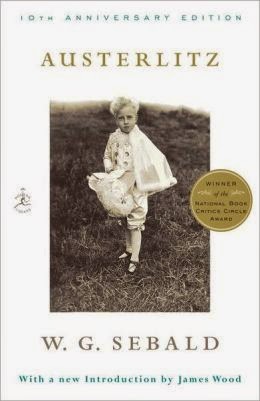
Austerlitz by WG Sebald

The medium of memory is narrative, and the best writers on the topic can mimic its reconstructive processes. Sebald creates fictions that are like memories themselves: fragments of fact and imagination restlessly reorganised into shifting renditions of the past. Austerlitz's memories of his childhood in Sebald's final novel build to an anxious, enigmatic portrait of a mind trying to place itself in time.
Read about another book on the list.

Austerlitz is among Susheila Nasta's top ten cultural journeys and the top ten works of literature according to Peter Carey.

The Page 99 Test: Charles Fernyhough's Pieces of Light.

--Marshal Zeringue

What is Zachary Lazar reading?

Featured at Writers Read: Zachary Lazar, author of I Pity the Poor Immigrant.

His entry begins:
As it happens, just as my own Jewish-themed novel is about to be published, I have been teaching Philip Roth's The Ghost Writer, which has long been a favorite of mine, to my students at Tulane. I told my class that certain books, when you read them at a young enough age, kind of work their way into your writerly DNA and influence just about everything you write thereafter, whether you're aware of it or not. In this case, the influence of The Ghost Writer on my novel I Pity the Poor Immigrant is very obvious to me now, though I...[read on]
About I Pity the Poor Immigrant, from the publisher:
The stunning new novel by the author of Sway is another "brilliant portrayal of life as a legend" (Margot Livesey).

In 1972, the American gangster Meyer Lansky petitions the Israeli government for citizenship. His request is denied, and he is returned to the U.S. to stand trial. He leaves behind a mistress in Tel Aviv, a Holocaust survivor named Gila Konig.

In 2009, American journalist Hannah Groff travels to Israel to investigate the killing of an Israeli writer. She soon finds herself inside a web of violence that takes in the American and Israeli Mafias, the Biblical figure of King David, and the modern state of Israel. As she connects the dots between the murdered writer, Lansky, Gila, and her own father, Hannah becomes increasingly obsessed with the dark side of her heritage. Part crime story, part spiritual quest, I Pity the Poor Immigrant is also a novelistic consideration of Jewish identity.
Lazar's novel Sway is on the list of forty-six essential rock reads.

My Book, The Movie: Sway and the Page 69 Test: Sway.

The Page 69 Test: Evening's Empire.

Writers Read: Zachary Lazar.

--Marshal Zeringue

Coffee with a canine: Susan Gloss & Izzy

Featured at Coffee with a Canine: Susan Gloss & Izzy.

The author, on how Izzy got her name:
Izzy was named for Izzy Stradlin, the guitarist for Guns N' Roses. My husband was really into metal bands when he was a teenager. Although I was never into the super heavy stuff, I did love GNR as sort of "gateway metal" and had...[read on]
About Gloss's new novel Vintage, from the publisher:
At Hourglass Vintage in Madison, Wisconsin, every item in the boutique has a story to tell ... and so do the women whose lives the store touches.

Yellow Samsonite suitcase with ivory, quilted lining, 1950s

A small-town girl with a flair for fashion, Violet Turner had always dreamed of owning a shop like Hourglass Vintage. But while she values the personal history behind each beautiful item she sells, Violet is running from her own past. Faced with the possibility of losing the store to an unscrupulous developer, she realizes that despite her usual self-reliance she cannot save it alone.

Taffeta tea-length wedding gown with scooped neckline and cap sleeves, 1952

Eighteen-year-old April Morgan is nearly five months along in an unplanned pregnancy when her hasty engagement is broken. When she returns the perfect vintage wedding dress to Violet's shop, she discovers a world of new possibilities, and an unexpected sisterhood with women who won't let her give up on her dreams.

Orange silk sari with gold paisley design, 1968

Betrayed by her husband, Amithi Singh begins selling off her vibrant Indian dresses, remnants of a life she's determined to leave behind her. After decades of housekeeping and parenting a daughter who rejects her traditional ways, she fears her best days are behind her . . . until she discovers an outlet for her creativity and skills with a needle and thread.

An engaging story that beautifully captures the essence of friendship and style, Vintage is a charming tale of possibility, of finding renewal, love, and hope when we least expect it.
Visit Susan Gloss's website, blog, Facebook page and Twitter perch.

Read--Coffee with a Canine: Susan Gloss and Izzy.

--Marshal Zeringue

Pg. 99: Richard Bach Jensen's "The Battle against Anarchist Terrorism"

Featured at the Page 99 Test: The Battle against Anarchist Terrorism: An International History, 1878-1934 by Richard Bach Jensen.

About the book, from the publisher:
This is the first global history of the secret diplomatic and police campaign that was waged against anarchist terrorism from 1878 to the 1920s. Anarchist terrorism was at that time the dominant form of terrorism and for many continued to be synonymous with terrorism as late as the 1930s. Ranging from Europe and the Americas to the Middle East and Asia, Richard Bach Jensen explores how anarchist terrorism emerged as a global phenomenon during the first great era of economic and social globalization at the end of the nineteenth and beginning of the twentieth centuries and reveals why some nations were so much more successful in combating this new threat than others. He shows how the challenge of dealing with this new form of terrorism led to the fundamental modernization of policing in many countries and also discusses its impact on criminology and international law.
Read an excerpt from The Battle against Anarchist Terrorism.

The Page 99 Test: The Battle against Anarchist Terrorism.

--Marshal Zeringue

Sunday, April 06, 2014

The 13 best John Steinbeck books

Susan Shillinglaw is professor of English at San Jose State, former director of the SJSU Steinbeck Center, Scholar in Residence at the National Steinbeck Center in Salinas, and author of the recently published On Reading “The Grapes of Wrath” (Penguin 2014) and Carol and John Steinbeck: Portrait of a Marriage (Nevada, 2013).

One title from her list of the thirteen best John Steinbeck books, as shared at Publishers Weekly:
The Grapes of Wrath (1939)

Clamors for top billing in this group, but it’s to be savored as the grand finale of Steinbeck’s labor trilogy. The novel earned plaudits immediately upon publication: a Pulitzer Prize and a National Book Award; brief mention in Eleanor Roosevelt’s “My Day” column (she defended the novel’s factual accuracy); and political recognition—the novel helped bring the La Follette committee to California to investigate migrant housing conditions. One of the three or four books in America that had a direct impact on social policy (consider also Uncle Tom’s Cabin, The Jungle, and Silent Spring—the one book that Steinbeck said he wished he had written). This novel endures because, with hand extended, Steinbeck invites readers to see the migrants as he saw them—people who had dignity and grace, who stepped forward with gritty will. Steinbeck writes with a grace and flexibility that masks the layers of suggestion he packs into it (five layers, he said).
Read about another book on the list.

The Grapes of Wrath also appears on Jill Boyd's list of five of the worst fictional characters to invite to Thanksgiving, a list of three of Ali Khamenei's favorite novels, Segun Afolabi's top 10 list of "on the move" books, Mark O'Connell's list of the ten best songs based on books, John Kerry's list of five books on progressivism, Stephen King's five best list of books on globalization, John Mullan's list of ten of the best pieces of fruit in literature, and Honor Blackman's six best books list. It is one of Frederic Raphael's top ten talkative novels.

--Marshal Zeringue

Pg. 69: Michelle Huneven's " Off Course"

Featured at the Page 69 Test: Off Course: A Novel by Michelle Huneven.

About the book, from the publisher:
A bear climbs onto a cabin’s deck, presses his nose to the sliding door. Inside, a young woman stands to face him. She comes closer, and closer yet, until only the glass stands between them...

The year is 1981, Reagan is in the White House, and the country is stalled in a recession. Cressida Hartley, a gifted Ph.D. student in economics, moves into her parents’ shabby A-frame cabin in the Sierras to write her dissertation. In her most intimate and emotionally compelling novel to date, Michelle Huneven—author of Blame, which was a finalist for the National Book Critics Circle Award—returns with her signature mix of fine-grained storytelling, unforgettable characters, and moral complexity.

Cress, increasingly resistant to her topic (art in the marketplace), allows herself to be drawn into the social life of the small mountain community. The exuberant local lodge owner, Jakey Yates, with his big personality and great animal magnetism, is the first to blur Cress’s focus. The builder Rick Garsh gives her a job driving up and down the mountain for supplies. And then there are the two Morrow brothers, skilled carpenters, who are witty, intriguing, and married.

As Cress tells her best friend back home in Pasadena, being a single woman on the mountain amounts to a form of public service. Falling prey to her own perilous reasoning, she soon finds herself in dark new territory, subject to forces beyond her control from both within and without.

Unsentimental, immersive, and beautifully written—"Huneven’s prose is flawless," according to The New Yorker—Off Course evokes the rapture of new love, the addictive draw of an intense, impossible connection, and what happens when two people simply can’t let go of each other or of their previous commitments. As her characters struggle with and delight in one another, Huneven subtly exposes the personal and social forces at play: issues of class, money, and family, as well as the intricate emotional and economic transactions between parents and children, between husbands and wives, between lovers, and between friends.

Michelle Huneven is one of our most searching, elegant novelists—Richard Russo has called her "a writer of extraordinary and thrilling talent." In Off Course, she introduces us to an intelligent young woman who discovers that love is the great distraction, and impossible love the greatest distraction of all.
Learn more about the author and her work at Michelle Huneven's website.

The Page 69 Test: Blame.

The Page 69 Test: Off Course.

--Marshal Zeringue

David McCallum's 6 best books

To an older generation, David McCallum is perhaps best known for his portrayal of U.N.C.L.E. agent Ilya Kuryakin in the hit TV series The Man from U.N.C.L.E. (1964). To a younger audience, he is best known for his character Dr. Donald "Duckie" Mallard on the hit CBS series, NCIS (2003).

One of McCallum's six best books, as shared with the Daily Express:
TREASURE ISLAND by Robert Louis Stevenson

This was one of the best books I read in English lessons and with its heady mix of pirates, villains, shipwrecks and treasure is among the greatest adventure stories ever written.

I could identify with the main character, the young boy Jim Hawkins and I loved the way the writing conjured up such vivid images.
Read about another book on the list.

Treasure Island also appears on Bear Grylls's top ten list of adventure stories, Eoin Colfer's top 10 list of villains in fiction, Charlie Fletcher's top ten list of swashbuckling tales of derring-do, Robert McCrum's list of the ten best first lines in fiction, John Mullan's list of ten of the best pirates in fiction, and among Mal Peet's top ten books to read aloud, Philip Pullman's six best books, and Eoin Colfer's six favorite books.

--Marshal Zeringue

Saturday, April 05, 2014

Helen Wan's "The Partner Track," the movie

Featured at My Book, The Movie: The Partner Track by Helen Wan.

Her entry begins:
The Partner Track is the story of an ambitious young Asian American woman competing for partnership at a high-stakes international law firm. It’s about how sex, race, class, and outsider status impact people’s lives as they climb the American corporate ladder.

Since my novel’s publication, I’ve been invited to speak at a great many Fortune 100 corporations, law firms, universities, and other places around the country, and always, during the audience Q&A, someone asks, “So when’s the movie coming out?” This leads to a fun, sometimes heated, Audience Participation Casting Game for the book, which I’m happy to summarize below (along with my own Wish List):

First, in my ideal fantasy world, the TV or film adaptation of The Partner Track would be written and produced by the amazing Shonda Rhimes. No one is better at telling authentic workplace stories with ensemble casts who actually look and talk like real people in the modern world. I love everything she touches. I’d believe anything she told me.

Ingrid: It’s hard to talk about who’d play Ingrid without discussing the casting conundrum presented by any story with an Asian American protagonist. “Lucy Liu!” someone always calls out from the audience (a little smugly, as if they are the first person ever to have thought of this). Now I’m a Lucy Liu fan -- and think it’s brilliant there’s an Asian American Dr. Watson -- but...[read on]
Learn more about the book and author at Helen Wan's website, Facebook page, and Twitter perch.

My Book, The Movie: The Partner Track.

--Marshal Zeringue

Ten of the best bad mothers in literature

Charlotte Runcie writes about arts and culture, particularly books, theatre, music and TV. One of her ten best bad mothers in literature, as shared at the Telegraph:
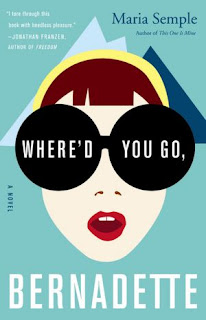
Bernadette – Where'd You Go, Bernadette by Maria Semple

Where'd You Go, Bernadette was the hugely funny pageturner of 2012, and featured an artistic but absent-minded architect mother (Bernadette) to a gifted daughter. Bernadette is a bit hopeless and there is a troubling bit where she goes AWOL, but ultimately she shows how much she really loves her daughter.

BADNESS RATING: 1/5
Read about another entry on the list.

Where’d You Go, Bernadette is among Joel Cunningham's seven notable epistolary novels and Chrissie Gruebel's five top books for readers inspired by Nora Ephron.

--Marshal Zeringue

Pg. 99: Maria Mutch's "Know the Night"

Featured at the Page 99 Test: Know the Night: A Memoir of Survival in the Small Hours by Maria Mutch.

About the book, from the publisher:
In this soul-stirring debut memoir, Maria Mutch explores the miraculous power that care and communication have in the face of the deep, personal isolation that often comes with disability. A chronicle of the witching hours between midnight and six a.m., this meditative book takes place during the twoyear period in which Mutch’s son Gabriel, who is autistic and also has Down syndrome, rarely slept through the night. In this tapestry composed of interwoven memories, we see both Gabriel’s difficult childhood and Maria’s introduction to the world of multiple disability parenting.

As a counterpoint to Gabriel’s figurative isolation is the story of Admiral Richard Byrd, the polar explorer who journeyed alone into the Antarctic wilderness in the 1930s. His story creates a shared and powerful language for the experience of feeling alone.

In these three characters—mother, son, and explorer—Mutch reveals overlapping and layered themes of solitude that, far from driving us apart, enlighten, uplift, and connect.
Learn more about the book and author at Maria Mutch's website.

The Page 99 Test: Know the Night.

--Marshal Zeringue

Ten books that may have you crying for days

At The Barnes & Noble Book Blog Ester Bloom recommended ten books that may make you cry for days, including:
Bridge to Terabithia, by Katherine Patterson

Adolescents and tweens have a dark side that the best writers for children, like Roald Dahl and Judy Blume, have explored for decades. But nobody does tragedy quite like Patterson, especially here, in this story about family, imagination, and the way new friends can help us become at last who we were meant to be.
Read about another book on the list.

Also see Charlie Jane Anders's list of fifteen moments from science fiction and fantasy that will make absolutely anyone cry, Melissa Albert's five favorite YA books that might make one cry, Dell Villa's top eight books to read when you’re in the mood to cry for days, and Hallie Ephron's ten best books for a good cry.

--Marshal Zeringue

Friday, April 04, 2014

Pg. 69: Daniel Levine's "Hyde"

Featured at the Page 69 Test: Hyde by Daniel Levine.

About the book, from the publisher:
What happens when a villain becomes a hero?

Mr. Hyde is trapped, locked in Dr. Jekyll’s surgical cabinet, counting the hours until his inevitable capture. As four days pass, he has the chance, finally, to tell his story—the story of his brief, marvelous life.

Summoned to life by strange potions, Hyde knows not when or how long he will have control of “the body.” When dormant, he watches Dr. Jekyll from a remove, conscious of this other, high-class life but without influence. As the experiment continues, their mutual existence is threatened, not only by the uncertainties of untested science, but also by a mysterious stalker. Hyde is being taunted—possibly framed. Girls have gone missing; someone has been killed. Who stands, watching, from the shadows? In the blur of this shared consciousness, can Hyde ever be confident these crimes were not committed by his hand?
Visit Daniel Levine's website and Facebook page.

The Page 69 Test: Hyde.

--Marshal Zeringue
Five literary characters who tell it like it is

At The Barnes & Noble Book Blog Hanna McGrath tagged five fictional characters who tell it like it is, including:
John Givings (Revolutionary Road, by Richard Yates)

The son of Frank and April Wheeler’s real estate agent, Helen Givings, John Givings is the embodiment of everything the Wheelers long to be. He laughs in the face of conformity, he says what he thinks, he’s spontaneous and emotional. (And, well, he also happens to have just gotten out of a mental hospital.) It’s these characteristics that attract the Wheelers to John and move them to divulge their plans to move to France. Later, when April finds out she’s pregnant and Frank gets a promotion, their plans change. What comes next has to be one of the most intense dinner table confrontations of all time. When John hears the news that the couple won’t be moving, he belligerently lays into them, criticizing their fear of change and their conformity to the “norms” of suburban life. He gives voice to every insecurity that the couple has been unable to articulate about themselves, and the effect of his tirade is absolutely devastating, setting into motion a series of events from which the Wheelers never recover. Maybe John’s delivery was a bit extreme (OK, a lot extreme), but for people who’ve been keeping such a lid on such a huge pot of rage, even a gentle nudge toward the truth may have had the same result.
Read about another entry on the list.

Revolutionary Road also appears on John Mullan's list of ten of the best Aprils in literature, Selma Dabbagh's top ten list of stories of reluctant revolutionaries, Jenny Eclair's six best books list, Laura Dave's list of books that improve on re-reading, Tad Friend's seven best fiction books about WASPs, and James P. Othmer's list of six great novels on work.

--Marshal Zeringue

What is Lindsay Smith reading?

Featured at Writers Read: Lindsay Smith, author of Sekret.

Her entry begins:
Right now I’m held captive by Rene Denfeld’s The Enchanted, a gorgeous and lush prison tale (if you can reconcile that) told from the perspective of an inmate whose carefully constructed fantasy keeps him alive through incredible darkness. There are secrets aplenty and so many fascinating ways of reexamining...[read on]
About Sekret, from the publisher:
An empty mind is a safe mind.

Yulia's father always taught her to hide her thoughts and control her emotions to survive the harsh realities of Soviet Russia. But when she's captured by the KGB and forced to work as a psychic spy with a mission to undermine the U.S. space program, she's thrust into a world of suspicion, deceit, and horrifying power. Yulia quickly realizes she can trust no one--not her KGB superiors or the other operatives vying for her attention--and must rely on her own wits and skills to survive in this world where no SEKRET can stay hidden for long.
Visit Lindsay Smith's website and Twitter perch.

Writers Read: Lindsay Smith.

--Marshal Zeringue

Five notable books on hoaxes, frauds, and con men

One title on the Barnes & Noble Review's list of five top books on hoaxes, frauds, and con men:
The Forger's Spell
by Edward Dolnick

After an ordinary Dutch painter convinced a wealthy connoisseur that his work was actually the lost oeuvre of Dutch Master Johannes Vermeer, the greatest art fraud ever perpetrated began. Dolnick, who previously wrote about the theft of Edvard Munch's The Scream in The Rescue Artist, uses his art-world expertise to spin a nonfiction thriller as captivating as any novel.
Read about another book on the list.

The Page 69 Test: The Forger's Spell.

--Marshal Zeringue

Thursday, April 03, 2014

Hazel Gaynor's "The Girl Who Came Home," the movie

Featured at My Book, The Movie: The Girl Who Came Home by Hazel Gaynor.

The entry begins:
It’s almost impossible to imagine The Girl Who Came Home as a movie, because that pesky James Cameron got there first (and Roy Ward Baker before him)! Is there room in this world for another Titanic movie we ask? Quite possibly – yes, but it would be a very brave director who took that one on!

That said, I have, of course, (as I imagine most writers do at one stage or another) imagined my scenes being played out on the big screen, accompanied by a sweeping John Williams’ score. And yes, I also see Oscar nominations. What to wear? What to wear? In actual fact, while I was writing my novel (and unbeknown to me at the time), a TV documentary was being made about the people who inspired the novel. Waking the Titanic was aired on Irish TV channel TG4 to coincide with the Titanic centenary in April 2012 and tells the story of the Addergoole Fourteen. Watching that documentary was like seeing my words come to life and was a very special moment.

While some of The Girl Who Came Home would clearly have to filmed on Titanic (I wonder if Cameron still has that replica he built in New Mexico?), much of the action takes place...[read on]
Visit Hazel Gaynor's website, Facebook page, and Twitter perch.

The Page 69 Test: The Girl Who Came Home.

My Book, The Movie: The Girl Who Came Home.

--Marshal Zeringue

Pg. 69: Ayelet Waldman's "Love and Treasure"

Featured at the Page 69 Test: Love and Treasure by Ayelet Waldman.

About Love and Treasure, from the publisher:
A spellbinding new novel of contraband masterpieces, tragic love, and the unexpected legacies of forgotten crimes, Ayelet Waldman’s Love and Treasure weaves a tale around the fascinating, true history of the Hungarian Gold Train in the Second World War.

In 1945 on the outskirts of Salzburg, victorious American soldiers capture a train filled with unspeakable riches: piles of fine gold watches; mountains of fur coats; crates filled with wedding rings, silver picture frames, family heirlooms, and Shabbat candlesticks passed down through generations. Jack Wiseman, a tough, smart New York Jew, is the lieutenant charged with guarding this treasure—a responsibility that grows more complicated when he meets Ilona, a fierce, beautiful Hungarian who has lost everything in the ravages of the Holocaust. Seventy years later, amid the shadowy world of art dealers who profit off the sins of previous generations, Jack gives a necklace to his granddaughter, Natalie Stein, and charges her with searching for an unknown woman—a woman whose portrait and fate come to haunt Natalie, a woman whose secret may help Natalie to understand the guilt her grandfather will take to his grave and to find a way out of the mess she has made of her own life.

A story of brilliantly drawn characters—a suave and shady art historian, a delusive and infatuated Freudian, a family of singing circus dwarfs fallen into the clutches of Josef Mengele, and desperate lovers facing choices that will tear them apart—Love and Treasure is Ayelet Waldman’s finest novel to date: a sad, funny, richly detailed work that poses hard questions about the value of precious things in a time when life itself has no value, and about the slenderest of chains that can bind us to the griefs and passions of the past.
Learn more about the author and her work at Ayelet Waldman's website.

Writers Read: Ayelet Waldman.

The Page 69 Test: Love and Treasure.

--Marshal Zeringue

Six of the best books on deception

Walter Kirn is the author of Thumbsucker and Up in the Air, both made into major films, and 2014's Blood Will Out: The True Story of a Murder, a Mystery, and a Masquerade.

One of his six favorite books on deception, as shared with The Week magazine:
The Talented Mr. Ripley by Patricia Highsmith

Tom Ripley wants to be someone he's not, and he solves the problem with devilish elegance, killing his idol and stealing his identity. The novel then becomes a farce as Ripley relies on ever-fancier footwork to keep his creepy charade from falling apart. Since we can't help but root for him, we feel like creeps as well.
Read about another entry on the list.

The Talented Mr Ripley is on stephen May's top ten list of impostors in fiction, Simon Mason's top ten list of chilling fictional crimes, Melissa Albert's list of eight books to change a villain, Koren Zailckas's list of eleven of literature's more evil characters, Alex Berenson's five best list of books about Americans abroad John Mullan's list of ten of the best examples of rowing in literature, Tana French's top ten maverick mysteries list, the Guardian's list of the 50 best summer reads ever, the Telegraph's ultimate reading list, and Francesca Simon's top ten list of antiheroes.

--Marshal Zeringue

Coffee with a canine: Helen Peppe & Pilot, Dancer, Runja, and Skye

Featured at Coffee with a Canine: Helen Peppe & Pilot, Dancer, Runja, and Skye.

The author, on how her dogs got their names:
My boxer’s name is Pilot. She is named after the Elton John song “Take Me to the Pilot.” My rescued dachshund/miniature schnauzer/poodle mix is named Dancer after Elton John’s song “Tiny Dancer.” Skye, my youngest rescue, a dachshund/terrier mix, is named after Elton John’s song “Skyline Pigeon.” My three year old black German shepherd is named Runja [photo right]. She is from her breeder's R litter and her name means run yes. I got her hoping she would be my running companion. She has some arthritis issues however, so she is just my all-around companion.

I used to have a pit bull mix named Wizard after Elton John’s version of “Pinball Wizard.” He died of a bone disease. He was supposed to be my running partner, too. I’ve since decided that it’s better for all of us if...[read on]
About Pigs Can't Swim, from the publisher:
An outrageous, hilarious, and touching memoir by the youngest of nine children in a hardscrabble, beyond-eccentric Maine family.

With everything happening on Helen Peppe’s backwoods Maine farm, life was wild--and not just for the animals. Sibling rivalry, rock-bottom poverty, feral male chauvinism, sex in the hayloft: everything seemed--and was--out of control. In telling her wayward family tale, Peppe manages deadpan humor, an unerring eye for the absurd, and poignant compassion for her utterly overwhelmed parents. While her feisty resilience and candor will inevitably remind readers of Jeannette Walls or Mary Karr, Peppe's wry insight and moments of tenderness with family and animals are entirely her own. As Richard Hoffman, the author of Half the House: A Memoir puts it: "Pigs Can't Swim is an unruly, joyous troublemaker of a book."
To read more about Pigs Can't Swim, go to PigsCantSwim.com.

To see more of Helen Peppe's photography, see Helen Peppe Photography on Facebook.

Read--Coffee with a Canine: Helen Peppe & Pilot, Dancer, Runja, and Skye.

–Marshal Zeringue

Pg. 99: Eileen Cronin's "Mermaid: A Memoir of Resilience"

Featured at the Page 99 Test: Mermaid: A Memoir of Resilience by Eileen Cronin.

About the book, from the publisher:
A gorgeously crafted memoir about resilience, family, and forging your own way, by a woman born without legs.

At the age of three, Eileen Cronin first realized that only she did not have legs. Her boisterous Catholic family accepted her situation as “God’s will,” treating her no differently than her ten siblings, as she “squiddled” through their 1960s Cincinnati home. But starting school, even wearing prosthetics, Cronin had to brave bullying and embarrassing questions. Thanks to her older brother’s coaching, she handled a classmate’s playground taunts with a smack from her lunchbox. As a teen, thrilled when boys asked her out, she was confused about what sexuality meant for her. She felt most comfortable and happiest relaxing and skinny dipping with her girlfriends, imagining herself “an elusive mermaid.” The cause of her disability remained taboo, however, even as she looked toward the future and the possibility of her own family.

In later years, as her mother battled mental illness and denied having taken the drug thalidomide—known to cause birth defects—Cronin felt apart from her family. After the death of a close brother, she turned to alcohol. Eventually, however, she found the strength to set out on her own, volunteering at hospitals and earning a PhD in clinical psychology.

Reflecting with humor and grace on her youth, search for love, and quest for answers, Cronin spins a shimmering story of self-discovery and transformation.
The Page 99 Test: Mermaid.

--Marshal Zeringue

Wednesday, April 02, 2014

Eight notable royal figures in literature

At The Barnes & Noble Book Blog Nicole Hill tagged eight notable royal figures in fiction, including:
Princess Buttercup (The Princess Bride, by William Goldman)

Oh, go ahead, bow down to her if you want. “Bow to the Queen of Slime, the Queen of Filth, the Queen of Putrescence. Boooo. Boooo.” Thankfully for the Ancient Booer, Buttercup never becomes Humperdinck’s queen. In fact, her time as princess (consort) is quite short-lived, unless hitching your wagon to a Dread Pirate Roberts carries some title of swashbuckling nobility. But she burned bright while it lasted. I mean, she found true love—you think that happens every day?
Read about another entry on the list.
\
The Princess Bride is among Rosie Perez's six favorite books, Stephanie Perkins' top ten most romantic books, Matthew Berry's six favorite books, and Jamie Thomson's top seven funny books.

--Marshal Zeringue

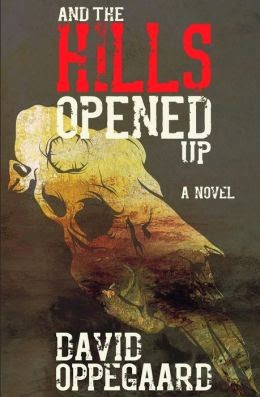
David Oppegaard's "And the Hills Opened Up," the movie

Featured at My Book, The Movie: And the Hills Opened Up by David Oppegaard.

The entry begins:
I think And the Hills Opened Up would make a great movie. A horror-western crossover, I sometimes pitch the novel as HBO’s Deadwood meets a classic Stephen King town under siege novel. A large cast of characters do battle with an unearthed demon in an 1890’s mining town.

That said, I’d love to see what Deadwood’s creator/producer David Milch would do with it. Music would be produced by T-Bone Burnett, who recently did such a great job with True Detective. Bryan Cranston would make a kickass Hank Chambers, the mining company foreman. The outlaw Elwood Hayes could be played by...[read on]
Oppegaard is the author of the Bram Stoker-nominated The Suicide Collectors, Wormwood, Nevada, and The Ragged Mountains.

Visit David Oppegaard's website and blog.

The Page 69 Test: The Suicide Collectors.

The Page 69 Test: Wormwood, Nevada.

The Page 69 Test: And the Hills Opened Up.

My Book, The Movie: And the Hills Opened Up.

--Marshal Zeringue

Pg. 69: Holly Robinson's "Beach Plum Island"

Featured at the Page 69 Test: Beach Plum Island by Holly Robinson.

About the book, from the publisher:
“Your brother should know the truth.”

These are the last cryptic words that Ava Barrett’s father says before he dies. But Ava doesn’t have a brother, as far as she knows, so how can she tell him the truth? She dismisses the conversation and dedicates herself to bringing her family together for her father’s funeral. This is no easy task, since her sister, Elaine, has been estranged from the family and still harbors resentment against their stepmother and half-sister, Gigi. Ava, on the other hand, is a single mother who sees Gigi as a troubled teen in need of love and connection.

Ava, too, could use more love in her life and finds it where she least expects it. But the biggest surprise of all is that Gigi holds the key to the mystery surrounding her father’s dying words, and joins Ava in uncovering a secret that rapidly unravels the very fabric of their entire family…
Learn more about the book and author at Holly Robinson's website.

The Page 69 Test: The Wishing Hill.

The Page 69 Test: Beach Plum Island.

--Marshal Zeringue

Ten best books for young readers which are about black characters

Tanya Byrne is the author of Heartshaped Bruise and Follow Me Down, her third novel will be published later this year.

One of her ten best books for children and teenagers which are about black characters, as shared at the Guardian:
A Wizard of Earthsea by Ursula K Le Guin

This was first published in 1968, but is still much loved today and tells the story of a young mage named Ged who is sent to a special school for wizards.
Read about another entry on the list.

A Wizard of Earthsea is among five books that changed Gary Corby and Lev Grossman's top five fantasy novels.

--Marshal Zeringue

What is Ayelet Waldman reading?

Featured at Writers Read: Ayelet Waldman, author of Love and Treasure.

Her entry begins:
I just reread Philip Roth's The Ghost Writer, because my husband, Michael Chabon and I were invited to participate in a book club hosted by Tobias Wolff at Stanford. The idea behind the book club is genius – Wolff invites writers to talk about the books of other writers. We get so tired of the (solipsistic) exercise of pontificating about our own work. It's a real pleasure to talk about the work of another, and to remember that it's because we love reading that we're in this business to begin with.

The Ghost Writer is among my favorite of Roth's novels (the other is Operation Shylock) though his memoir Patrimony is the one of his books that I most enjoy rereading, especially now that my parents are older). It's in this novel that...[read on]
About Love and Treasure, from the publisher:
A spellbinding new novel of contraband masterpieces, tragic love, and the unexpected legacies of forgotten crimes, Ayelet Waldman’s Love and Treasure weaves a tale around the fascinating, true history of the Hungarian Gold Train in the Second World War.

In 1945 on the outskirts of Salzburg, victorious American soldiers capture a train filled with unspeakable riches: piles of fine gold watches; mountains of fur coats; crates filled with wedding rings, silver picture frames, family heirlooms, and Shabbat candlesticks passed down through generations. Jack Wiseman, a tough, smart New York Jew, is the lieutenant charged with guarding this treasure—a responsibility that grows more complicated when he meets Ilona, a fierce, beautiful Hungarian who has lost everything in the ravages of the Holocaust. Seventy years later, amid the shadowy world of art dealers who profit off the sins of previous generations, Jack gives a necklace to his granddaughter, Natalie Stein, and charges her with searching for an unknown woman—a woman whose portrait and fate come to haunt Natalie, a woman whose secret may help Natalie to understand the guilt her grandfather will take to his grave and to find a way out of the mess she has made of her own life.

A story of brilliantly drawn characters—a suave and shady art historian, a delusive and infatuated Freudian, a family of singing circus dwarfs fallen into the clutches of Josef Mengele, and desperate lovers facing choices that will tear them apart—Love and Treasure is Ayelet Waldman’s finest novel to date: a sad, funny, richly detailed work that poses hard questions about the value of precious things in a time when life itself has no value, and about the slenderest of chains that can bind us to the griefs and passions of the past.
Learn more about the author and her work at Ayelet Waldman's website.

Writers Read: Ayelet Waldman.

--Marshal Zeringue

Tuesday, April 01, 2014

Ten top fictional tricksters

At The Barnes & Noble Book Blog Nicole Hill tagged fiction’s best pranksters, tricksters, and fiends, including:
Matilda (Matilda, by Roald Dahl)

It’s not the size of the prank that matters; it’s the conviction. Young Matilda’s tricks are of the righteous variety, and thus, supergluing her father’s hat to his head is a noble enterprise. Of course, possessing telekinesis makes it a lot easier to pull things over on both her awful parents and her psychotic, murderous headmistress Miss Trunchbull. If only we were all so endowed.
Read about another entry on the list.

Matilda appears among Chrissie Gruebel's top ten actually insane children’s book characters, Jeremy Strong's ten funniest fictional families, James Dawson's top ten books to get you through high school, and Christopher Timothy's six best books.

--Marshal Zeringue

Pg. 69: Gae Polisner's "The Summer of Letting Go"

Featured at the Page 69 Test: The Summer of Letting Go by Gae Polisner.

About the book, from the publisher:
Just when everything seems to be going wrong, hope—and love—can appear in the most unexpected places.

Summer has begun, the beach beckons—and Francesca Schnell is going nowhere. Four years ago, Francesca’s little brother, Simon, drowned, and Francesca’s the one who should have been watching. Now Francesca is about to turn sixteen, but guilt keeps her stuck in the past. Meanwhile, her best friend, Lisette, is moving on—most recently with the boy Francesca wants but can’t have. At loose ends, Francesca trails her father, who may be having an affair, to the local country club. There she meets four-year-old Frankie Sky, a little boy who bears an almost eerie resemblance to Simon, and Francesca begins to wonder if it’s possible Frankie could be his reincarnation. Knowing Frankie leads Francesca to places she thought she’d never dare to go—and it begins to seem possible to forgive herself, grow up, and even fall in love, whether or not she solves the riddle of Frankie Sky.
Visit Gae Polisner's website.

Writers Read: Gae Polisner.

The Page 69 Test: The Summer of Letting Go.

--Marshal Zeringue

Pg. 99: Dan Stone's "Goodbye to All That?"

Featured at the Page 99 Test: Goodbye to All That?: A History of Europe Since 1945 by Dan Stone.

About the book, from the publisher:
In the decade after 1945, as the Cold War freeze set in, a new Europe slowly began to emerge from the ruins of the Second World War, based on a broad rejection of the fascist past that had so scarred the continent's recent history. In the East, this new consensus was enforced by Soviet-imposed Communist regimes. In the West, the process was less coercive, amounting more to a consensus of silence. On both sides, much was deliberately forgotten or obscured.

The years which followed were in many ways golden years for western Europe. Democracy became embedded in Germany, and eventually triumphed over dictatorship in Spain, Portugal, and Greece. Britain and France faced up to the necessity of decolonization. The European Economic Community was founded and went from strength to strength, as the economies of western Europe bounced back from the devastation of the war. The countries of the East lagged far behind and seemed caught in a perpetual game of catch-up, but even there conditions had improved since the end of the war, albeit at a much slower rate. Above all, throughout this period the European world continued to be sustained by the broad anti-fascist consensus that had emerged in the years after 1945.

However, as Dan Stone shows in this new history of the continent since the war, this fundamental consensus began to break down in the wake of the oil shocks of the 1970s, a process which has rapidly accelerated since the end of the Cold War. Globalization, deregulation, and the erosion of social-democratic welfare capitalism in the West, and the collapse of the purported Communist alternative in the East, have all fatally undermined the post-war anti-fascist value system that predominated across Europe in the first four decades after the end of the Second World War.

Ominously, this has been accompanied by a rise in right-wing populism and a widespread revision of the anti-fascist narrative on which this value system was based. The danger of this shift is now evident: financial and social crisis, an increasing inability on the part of European populations to resist historical myth-making, and the re-emergence of fascist ideas. The result, as Dan Stone warns, is socially divisive, politically dangerous, and a genuine threat to the future of a civilized Europe.
Learn more about Goodbye to All That? at the Oxford University Press website.

The Page 99 Test: Goodbye to All That?.

--Marshal Zeringue

Seven epic romances in YA lit

At The Barnes & Noble Book Blog, Dahlia Adler tagged seven of the most epic romances in YA lit, including:
Aristotle and Dante from Aristotle and Dante Discover the Secrets of the Universe, by Benjamin Alire Sáenz

A lot of friends think they’d do anything for each other, but Aristotle and Dante are a pair who actually get the chance to make good on that, time and time again. They’re the kind of couple who learn from each other, grow from each other, and prove that love isn’t about who you thought you were, but who the right person can help you to be.
Read about another entry on the list.

--Marshal Zeringue

Elisa Ludwig's "Pretty Sly," the movie

Featured at My Book, The Movie: Pretty Sly by Elisa Ludwig.

The entry begins:
I'd love to see an actress with a bit of an edge take on the role of Willa Fox, who is after all, a teen outlaw living on her wits as she crosses the country to look for her mother. One of my top choices would be Kiernan Shipka. On Mad Men she does such a great job of playing a teen caught up in her parents' drama. I think she'd capture Willa's bubbliness and naivete but also bring intelligence and resourcefulness to the part.

As for Aidan, Willa's bad boy love interest, I think someone like Nick...[read on]
Visit Elisa Ludwig's website and view the trailer for Pretty Sly.

The Page 69 Test: Pretty Sly.

My Book, The Movie: Pretty Sly.

--Marshal Zeringue