Tuesday, October 12, 2010

Pg. 99: Hooman Majd's "The Ayatollahs' Democracy"

The current feature at the Page 99 Test: The Ayatollahs' Democracy: An Iranian Challenge by Hooman Majd.

About the book, from the publisher:
A New York Times best-selling author offers a personal, candid tour of the political and social landscape in Iran.

Hooman Majd offers a dramatic perspective on a country with global ambitions, an elaborate political culture, and enormous implications for world peace. Drawing on privileged access to the Iranian power elite, Majd argues that despite the violence of the disputed 2009 elections, a group of influential ayatollahs—including a liberal, almost-secular opposition—still believes in the Iranian republic; for them, “green” represents not a revolution but a civil rights movement, pushing the country inexorably toward democracy, albeit a particular brand of “Islamic democracy.” With witty, candid, and stylishly intelligent reporting, Majd, himself the grandson of an esteemed ayatollah, introduces top-level politicians and clerics as well as ordinary people (even Jewish community leaders), all expressing pride for their ancient heritage and fierce independence from the West. In the tradition of Jon Lee Anderson’s The Fall of Baghdad, The Ayatollahs’ Democracy is a powerful dispatch from a country at a historic turning point.
Read more about The Ayatollahs' Democracy, and visit Hooman Majd's website.

The Page 69 Test: The Ayatollah Begs to Differ.

Writers Read: Hooman Majd.

The Page 99 Test: The Ayatollahs' Democracy.

--Marshal Zeringue

Ten of the best wolves in literature

At the Guardian, John Mullan named a list of ten of the best wolves in literature.

One entry on the list:
The Call of the Wild, by Jack London London narrates the adventures of a dog called Buck, who ends up in Alaska as the companion of a good-hearted gold-panner. When his master is killed, Buck must learn to live in the woods among the local wolves. He discovers the wolf within himself and finally becomes the leader of the pack.
Read about another title on the list.

The Call of the Wild is one of Charlie English's top ten snow books and one of Thomas Bloor's top ten tales of metamorphosis.

--Marshal Zeringue

Monday, October 11, 2010

Pg. 69: Patricia Gussin's "And Then There Was One"

The current feature at the Page 69 Test: And Then There Was One by Patricia Gussin.

About the book, from the publisher:

One is the loneliest number. Nine years ago, Katie and Scott Monroe were blessed beyond their wildest dreams with identical triplets, Sammie, Alex, and Jackie. Three beautiful daughters and two adoring parents formed the picture-perfect party of five. But this tight-knit family unravels when the three little girls go to see a movie, but only one emerges from the darkness of the theater. How could Sammie and Alex vanish without a trace? Plunged into the abyss of a parent’s worst fear, Katie and Scott hang by a thread—waiting, worrying, not knowing, and confronting the terrifying realization that the kidnapping may not have been a random act. Who took Sammie and Alex? Why? Where are they? When will they be found? And what if they’re never found, or not found alive? When Jackie, the remaining triplet, crumbles under the weight of grief and survivor’s guilt, Katie and Scott struggle to hold out hope and hold on to what remains of their family. Until—or unless—Sammie and Alex are found safe, this picture-perfect family can’t be put back together again.
Visit Patricia Gussin's website.

The Page 69 Test: Shadow of Death.

My Book, The Movie: Twisted Justice.

The Page 69 Test: The Test.

My Book, The Movie: The Test.

Writers Read: Patricia Gussin.

The Page 69 Test: And Then There Was One.

--Marshal Zeringue

What is Joseph Skibell reading?

The current featured contributor at Writers Read: Joseph Skibell, author of the novels A Blessing on the Moon, The English Disease, and the newly published A Curable Romantic.

His entry begins:
Usually it’s a choice between reading or playing the guitar for me, and lately the guitar has been winning. So mostly I’ve been reading Bach’s Complete Sonatas and Partitas for Unaccompanied Violin (Dover Publications). I’m working my way through the first fugue. In terms of difficulty, the piece is at the outer rim of my musical abilities. I don’t even have a classical guitar. I’ve been playing it on an Italian Plum-Colored Electric Parker Mojo Fly.

Though written for violin, the collection has long been a staple of the guitarist’s repertoire, a fact I learned reading – or rather rereading (I didn’t notice the detail the first time through) – Glenn Kurtz’s gorgeously written memoir Practicing: A Musician’s Return to Music.

Kurtz was, from childhood on, an accomplished guitarist, dedicated, passionate, disciplined. Written with an astute eye and ear for detail, the memoir describes his first lessons at guitar camp, his time at the New England Conservatory of Music, his attempts to begin a solo career in Vienna, and even his...[read on]
Among the early praise for A Curable Romantic:
“While the characters struggle in their humanness, God weeps overhead and angels make deals with demons ... This is a funny, poignant, thoughtful, and ultimately satisfying work by an author who stands with the best of them.”
—Bruce Cockburn, singer/songwriter, guitarist, Slice o Life

“Brilliant ... Astonishingly original ... What life on earth might actually mean.”
—Dara Horn

“I loved the novel for its realism, for its romantic tension, and for its sentence by sentence brilliance.”
—Max Apple, author of Free Agents and The Oranging of America and Other Stories

“Joseph Skibell’s comic intelligence embraces fifty years of European Jewish history in a brilliant tour de force that is hilarious, insightful, and inventive.”
—Rodger Kamenetz, author of Burnt Books and The Jew in the Lotus

“Wholly original … intellectual comedy of the highest order.”
—J.M. Coetzee
Read more about A Curable Romantic and visit Joseph Skibell's website.

Writers Read: Joseph Skibell.

--Marshal Zeringue

Ten of the best baseball books

Yankees fan and Christian Science Monitor book editor Marjorie Kehe came up with a ten best list of baseball books.

One title on her list:
The Boys of Summer, by Roger Kahn.

Roger Kahn writes about the mid-20th-century Brooklyn Dodgers – the team that integrated Major League Baseball and also the team that Kahn covered for the New York Herald Tribune. A Monitor reviewer wrote of "The Boys of Summer" that it "isn't a book; it's a love affair between a man, his team, and an era."
Read about another book on the list.

The Boys of Summer is one of Tim McCarver's five best baseball books.

Also see Roger Kahn's five best list of outstanding memoirs, Tom Werner's six favorite baseball books, Fay Vincent's five best list of baseball books, and Nicholas Dawidoff's five best list of baseball novels.

--Marshal Zeringue

Sunday, October 10, 2010

Pg. 99: Gyan Prakash's "Mumbai Fables"

The current feature at the Page 99 Test: Mumbai Fables by Gyan Prakash.

About the book, from the publisher:
A place of spectacle and ruin, Mumbai exemplifies the cosmopolitan metropolis. It is not just a big city but also a soaring vision of modern urban life. Millions from India and beyond, of different ethnicities, languages, and religions, have washed up on its shores, bringing with them their desires and ambitions. Mumbai Fables explores the mythic inner life of this legendary city as seen by its inhabitants, journalists, planners, writers, artists, filmmakers, and political activists. In this remarkable cultural history of one of the world's most important urban centers, Gyan Prakash unearths the stories behind its fabulous history, viewing Mumbai through its turning points and kaleidoscopic ideas, comic book heroes, and famous scandals.

Starting from the catastrophic floods and terrorist attacks of recent years, Prakash reaches back to the sixteenth-century Portuguese conquest to reveal the stories behind Mumbai's historic journey. Examining Mumbai's role as a symbol of opportunity and reinvention, he looks at its nineteenth-century development under British rule and its twentieth-century emergence as a fabled city on the sea. Different layers of urban experience come to light as he recounts the narratives of the Nanavati murder trial and the rise and fall of the tabloid Blitz, and Mumbai's transformation from the red city of trade unions and communists into the saffron city of Hindu nationalist Shiv Sena. Starry-eyed planners and elite visionaries, cynical leaders and violent politicians of the street, land sharks and underworld dons jostle with ordinary citizens and poor immigrants as the city copes with the dashed dreams of postcolonial urban life and lurches into the seductions of globalization.

Shedding light on the city's past and present, Mumbai Fables offers an unparalleled look at this extraordinary metropolis.
Read an excerpt from Mumbai Fables, and learn more about the book at the Princeton University Press website.

Visit Gyan Prakash's faculty webpage.

Writers Read: Gyan Prakash.

The Page 99 Test: Mumbai Fables.

--Marshal Zeringue

Sheila Hancock's 6 best books

Sheila Hancock first found fame in BBC sitcom The Rag Trade in 1961 and has been a fixture on stage and TV ever since. She played "Grandma" in the 2008 movie, The Boy in the Striped Pajamas.

Hancock named her six best books for the Daily Express. One title on her list:
American Pastoral
by Philip Roth

A brilliant novel about the amazing growth of America, with its huge immigrant population, by a great American man of letters. I read this recently and it not only moved me but had a profound impact on me. I was shaking when I finished it. A warning for our time.
Read about another title on Hancock's list.

American Pastoral is one of Maria Semple's six best books and one of Ward Just's five favorite novels about the pursuit of money. It appears on John Mullan's list of ten of the best riots in literature.

--Marshal Zeringue

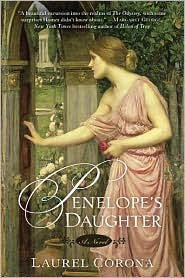
Pg. 69: Laurel Corona's "Penelope's Daughter"

The current feature at the Page 69 Test: Penelope's Daughter by Laurel Corona.

About the book, from the publisher:
The award-winning author of The Four Seasons retells The Odyssey from the point of view of Odysseus and Penelope's daughter.

With her father Odysseus gone for twenty years, Xanthe barricades herself in her royal chambers to escape the rapacious suitors who would abduct her to gain the throne. Xanthe turns to her loom to weave the adventures of her life, from her upbringing among servants and slaves, to the years spent in hiding with her mother's cousin, Helen of Troy, to the passion of her sexual awakening in the arms of the man she loves.

And when a stranger dressed as a beggar appears at the palace, Xanthe wonders who will be the one to decide her future-a suitor she loathes, a brother she cannot respect, or a father who doesn't know she exists...
Learn more about the book and author at Laurel Corona's website and diary.

The Page 69 Test: The Four Seasons.

My Book, The Movie: The Four Seasons.

The Page 69 Test: Penelope's Daughter.

--Marshal Zeringue

Saturday, October 09, 2010

What is Hooman Majd reading?

This weekend's featured contributor at Writers Read: Hooman Majd, author of The Ayatollah Begs to Differ and The Ayatollahs' Democracy: An Iranian Challenge.

His entry begins:
I’m reading Harold Schechter’s Killer Colt: Murder, Disgrace, and the Making of an American Legend, a couple of weeks before it’s released. It’s the story of the Colt brothers, one the famous firearm manufacturer, the other a cold-blooded murderer (something I didn’t know). I love true crime books, and Schechter is a master of the genre—his books read like novels but every detail is meticulously researched and true. As a New Yorker, I’m always fascinated with Gilded Age New York—for it’s a city that is still recognizable in so many places—and apart from providing me with a history lesson about my city, this book also satisfies my enduring curiosity about...[read on]
Among the early praise for The Ayatollahs' Democracy:
“Regardless what you happen to think of Majd's political analysis (I happen to mostly agree with it), he has the most detailed and gripping reporting of the Iranian elections to date…. I encourage the White House to get a copy of Majd's book. And for Dish readers to pre-order it.”
—Patrick Appel, The Atlantic.com

“The first fifty pages of this book would make a Sundance-winning film, but the meat of the book explores, in vividly readable style, the evolving concept of Islamic democracy, the widespread support for nuclear power, and the historical pride and resistance to western intervention. A well-connected insider with the eye of a master psychologist, Majd gives us a nuanced, in-depth portrait of a country both far more sophisticated and far less rigid than western policymakers have yet appreciated.”
—Lesley Hazleton, author of After the Prophet: The Epic Story of the Shia-Sunni Split
Read more about The Ayatollahs' Democracy, and visit Hooman Majd's website.

Watch Jon Stewart's interview with Hooman Majd on The Daily Show.

The Page 69 Test: The Ayatollah Begs to Differ.

Writers Read: Hooman Majd.

--Marshal Zeringue

Top ten British memoirs

At the Guardian, Robert McCrum named his top ten British memoirs.

Part of his essay:
Every reader will have their wartime favourites. Modern memory still owes a huge debt to the first world war. The most memorable sequence of Blackadder was possibly the closing episode, which sees the annihilation of the cast on the Somme.

Stephen Fry, a graduate of that series, remains indestructible. Fry has written so often about himself that his Fry Chronicles feel slightly redundant, though highly entertaining. He represents another staple of the genre: the name-dropping romp. The classic texts are David Niven's Bring On The Empty Horses and Clive James's Unreliable Memoirs, whose chief intention is to amuse. In their day, both Niven and James were bestsellers.
Read about another book on the list.

--Marshal Zeringue

Thomas W. Young's "The Mullah's Storm," the movie

Now showing at My Book, The Movie: The Mullah's Storm by Thomas W. Young.

The entry begins:
If a director chose to bring The Mullah's Storm to the screen, he or she wouldn't need a lot of special effects. With the exception of the opening scene involving the shootdown of a C-130 transport plane, the bulk of the film would require only two strong leading actors--one male and one female--a few extras, and mountains and snow. Lots of mountains and lots of snow.

The two main characters, Air Force navigator Michael Parson and a woman Army translator--Master Sergeant Gold--embark on a journey of survival through the Hindu Kush in Afghanistan. While fleeing for their lives, they must also hold onto a prisoner--an important Taliban mullah--who was bound for prison and interrogation when their aircraft went down.

Parson can handle himself on the ground--he's a lifelong outdoorsman from Colorado. But as a flyboy, he's not a Special Forces badass. The actor playing him would need to show competence and military bearing, but with a hint of vulnerability. I've always thought...[read on]
Read an excerpt from The Mullah's Storm, and learn more about the book and author at Thomas W. Young's website and blog.

My Book, The Movie: The Mullah's Storm.

--Marshal Zeringue

Friday, October 08, 2010

Pg. 99: Darin Strauss' "Half a Life"

The current feature at the Page 99 Test: Half a Life by Darin Strauss.

About the book, from the publisher:
"Half my life ago, I killed a girl."

So begins Darin Strauss' Half a Life, the true story of how one outing in his father's Oldsmobile resulted in the death of a classmate and the beginning of a different, darker life for the author. We follow Strauss as he explores his startling past—collision, funeral, the queasy drama of a high-stakes court case—and what starts as a personal tale of a tragic event opens into the story of how to live with a very hard fact: we can try our human best in the crucial moment, and it might not be good enough. Half a Life is a nakedly honest, ultimately hopeful examination of guilt, responsibility, and living with the past.
Learn more about the book and author at Darin Strauss's website.

The Page 99 Test: Half a Life.

--Marshal Zeringue

5 best books by Nobel winners who didn't win their medal for literature

At the Huffington Post, Sammy Perlmutter tagged the five best books from Nobel winners who didn't win their medal for literature.

One book on the list:
Long Walk to Freedom, by Nelson Mandela

In 1993, the Nobel Peace Prize was "awarded jointly to Nelson Mandela and Frederik Willem de Klerk 'for their work for the peaceful termination of the apartheid regime, and for laying the foundations for a new democratic South Africa'." In 1995, Mandela published "Long Walk to Freedom: The Autobiography of Nelson Mandela," which gives a detailed portrait a seminal figure of the 20th century.
Read about another book on the list.

--Marshal Zeringue

Pg. 69: Betsy Thornton's "Dream Queen"

The current feature at the Page 69 Test: Dream Queen by Betsy Thornton.

About the book, from the publisher:
It’s the 1990s and Chloe Newcombe flies from New York City to Arizona to see her bad-boy brother, Danny, who’s living in the desert town of Dudley. When she arrives in Arizona, things seem a little off. Who is the strange man she sees Danny talking to at the airport? Why is Danny’s high-spirited girlfriend, Kristi, so edgy? Then, when the van starts acting up, they have to stop at a garage in a small town off the freeway to get it fixed. Chloe and Kristi go to a restaurant to wait for Danny. But he never shows up.

The police don’t seem very concerned about Danny’s disappearance. So finally, Chloe arrives in Dudley, where she goes to bed, exhausted and worried about her brother. Things only get worse the next morning, when she wakes up to find Kristi has vanished too.

Chloe’s search for her brother takes her to Tucson, Los Angeles, Phoenix, and then back to a mysterious house in Dudley, where she is forced to confront truths about herself and the past that change her life forever.

This is the thrilling prequel to Betsy Thornton’s highly praised, atmospheric mystery series set in Arizona, featuring Chloe Newcombe, Thornton’s capable and winning heroine.
Read an excerpt from Dream Queen, and learn more about the author and her work at Betsy Thornton's website.

The Page 69 Test: A Song for You.

The Page 69 Test: Dream Queen.

--Marshal Zeringue

Thursday, October 07, 2010

What is Laurel Corona reading?

The current featured contributor at Writers Read: Laurel Corona, author of The Four Seasons and the newly released Penelope’s Daughter.

Her entry begins:
There’s an expression, “busman’s holiday” that I heard when I lived in the UK years back, referring to a bus driver traveling by bus on his vacation. I think that’s why, when I’m drafting a novel--which I seem to be doing much of the time the last few years--I don’t read much. I think reading uses the brain in a way similar to writing, and it is not restorative, or even physically possible much of the time, to read for pleasure because my eyes, brain, and psyche are just too tired. With The Shape of the World, the novel I’m working on now, I discovered that audiobooks are the perfect solution. When I need a break, I put on my running shoes or go to the gym and have a great multitasking experience.

Right now, I’m listening to Margaret George’s Helen of Troy. I got the book in hard copy a few years back, when I was first thinking about writing a novel based on the Odyssey. I wanted to see how she had handled the fact that not much is known about the era of the Homeric legends. Then, I only read the first fifty pages--just enough to say, “yes, I can do this too.” (Proof of that is Penelope's Daughter, my newly released second novel.) As an audiobook it is delightful. The narrator’s voice is so appealing that it’s easy to love Helen even when she’s making foolish decisions. The book is so...[read on]
Among the early reviews for Penelope's Daughter:
"This novel revisits the story of the Trojan War and its aftermath. As it opens, the war has long ended, and the family of the missing Odysseus is still awaiting his return. Daughter Xanthe is left under the care of servants. She has barricaded herself in her room as a protection against unwanted suitors, passing the time by weaving. The story unfolds as she works at her loom, the designs serving as a framework to her tale. As Xanthe shares her history of ancient Greece, a complex picture emerges. Though the war has ended, the people of Ithaca are still immersed in a battle for their future. In Homer’s saga, women who once wept for their lost men are given the voice and power they deserve. In Corona’s tale, women turn a tragedy into opportunity, finding a way to thrive in a world full of men. Penelope’s Daughter provides new insight into the lives of Homer’s women while giving voice to the inventiveness, creativity, and ingenuity of all those left behind."
Booklist
Visit Laurel Corona's website and diary.

The Page 69 Test: The Four Seasons.

My Book, The Movie: The Four Seasons.

Writers Read: Laurel Corona.

--Marshal Zeringue

Five of the best books on Rome

Harry Sidebottom was brought up in racing stables in Newmarket where his father was a trainer. He had a basket saddle on a donkey before he could walk. He was educated at various schools and universities, including Oxford, where he took his Doctorate in Ancient History at Corpus Christi College. In similar fashion he has taught at various universities including Oxford, where he is now Fellow and Director of Studies in Ancient History at St Benets Hall, and Lecturer in Ancient History at Lincoln College.

At FiveBooks, with Anna Blundy, he discussed five books on Ancient Rome. One of the titles:
The Roman Revolution by Ronald Syme

It’s about the fall of the Republic, the overthrow of the Republic and the re-establishment of the monarchy. It’s centred on the life and career of Octavian, who becomes the First Emperor Augustus. It’s a strange and distinctive book, self-consciously literary. Syme, who was something of an old poseur, said his main influence when writing the book was Stendhal, Le Rouge et Le Noir. He employs a method that scholars call prosopography, which is basically the study of marriage links between people, geographic origins of upper-class people, office holdings and stuff. From it he started making patterns of faction politics in the late Republic. It may not be right, but it almost reads like a novel and it’s absolutely fascinating. You get the feeling of going beneath the surface of the straightforward story of the great man Octavian, and you start wondering who the powerbrokers were, who were the behind-the-scenes men? Who were his backers and opponents? It’s a classic of modern scholarship and it’s also about the rise of fascism – he uses Octavian as an allegory of the rise of Mussolini. It’s an incredible book. Slightly daunting because it’s very long. I read it just before I did finals and I’m convinced I got a first in that paper because I’d just read that. It’s got a lovely literary style. As he got older his literary style became a parody of itself. It was always quite brief and Tacitean, but by the end of his life he was writing bizarre sentences like ‘But. Not to men of understanding.’ I’m a Roman historian and I’ve read his later books and thought: I haven’t the faintest idea what you’re arguing.
Read about another book on the list.

--Marshal Zeringue

Pg. 99: Jennifer C. Hunt's "Seven Shots"

The current feature at the Page 99 Test: Seven Shots: An NYPD Raid on a Terrorist Cell and Its Aftermath by Jennifer C. Hunt.

About the book, from the publisher:
On July 31, 1997, a six-man Emergency Service team from the NYPD raided a terrorist cell in Brooklyn and narrowly prevented a suicide bombing of the New York subway that would have cost hundreds, possibly thousands of lives.

Seven Shots tells the dramatic story of that raid, the painstaking police work involved, and its paradoxical aftermath, which drew the officers into a conflict with other rank-and-file police and publicity-hungry top brass. Jennifer C. Hunt draws on her personal knowledge of the NYPD and a network of police contacts extending from cop to four-star chief, to trace the experience of three officers on the Emergency Service entry team and the two bomb squad detectives who dismantled the live device. She follows their lives for five years, from that near-fatal day in 1997, through their encounters inside the brutal world of departmental politics, and on to 9/11, when they once again put their lives at risk in the fight against terrorism, racing inside the burning towers and sorting through the ash, debris, and body parts. Throughout this fast paced narrative, Hunt maintains a strikingly fine-grained, street-level view, allowing us to understand the cops on their own terms—and often in their own words. The result is a compelling insider’s picture of the human beings who work in two elite units in the NYPD and the moral and physical danger and courage involved.

As gripping as an Ed McBain novel—and just as steeped in New York cop culture and personalities—Seven Shots takes readers on an unforgettable journey behind the shield and into the hearts of New York City police.
Read an excerpt from Seven Shots and visit the Seven Shots website.

The Page 99 Test: Seven Shots.

--Marshal Zeringue

Wednesday, October 06, 2010

Pg. 69: Gail Bowen's "The Nesting Dolls"

The current feature at the Page 99 Test: The Nesting Dolls by Gail Bowen.

About the book, from the publisher:
Just hours before her body is found in a car in a parking lot, a young woman hands her baby to a perfect stranger and disappears. The stranger is the daughter of Delia Wainberg, a lawyer in the same firm as Joanne Kilbourn's husband. One close look at the child suggests that there might be a family relationship, and soon the truth about the child Delia gave up for adoption years ago comes out. The boy must be Delia's grandson. Then his mother is found dead, sexually assaulted and murdered. Not only is there a killer on the loose, but the dead woman's partner is demanding custody of the child.
Read an excerpt from The Nesting Dolls, and learn more about the book and author at Gail Bowen's website and blog.

Learn Bowen's answer to the question: How do you choose your characters’ names?

The Page 99 Test: The Nesting Dolls.

--Marshal Zeringue

Gerald Elias' "Danse Macabre," the movie

Now showing at My Book, The Movie: Devil's Trill and Danse Macabre by Gerald Elias.

The entry begins:
Move over, De Niro and Pacino. For Daniel Jacobus in Devil's Trill and Danse Macabre I want Alan Arkin, in my mind one of America's greatest actors ever, who can play any kind of role convincingly. That's why I want him for Jacobus, flinty and sarcastic on the outside, heart of gold on the inside, afflicted with blindness and old age, a profound artist yet coarse and neglectful in his worldly tastes. Think of Arkin's portrayal of a deaf mute in...[read on]
Learn more about the book and author at Gerald Elias' website.

Interview: Gerald Elias.

The Page 69 Test: Devil's Trill.

Writers Read: Gerald Elias.

The Page 69 Test: Danse Macabre.

My Book, The Movie: Devil's Trill and Danse Macabre.

--Marshal Zeringue

Top ten writers on the telephone

Nicholas Royle's first novel, Quilt, is a study of grief in which the news of a father's death is delivered suddenly and brutally by telephone.

For the Guardian, he named a top ten list of writers on the telephone.

One entry on his list:
JD Salinger (1919-2010)

Salinger has Holden Caulfield, narrator of The Catcher in the Rye (1951), express a deep truth: "What really knocks me out is a book that, when you're all done reading it, you wish the author that wrote it was a terrific friend of yours and you could call him up on the phone whenever you felt like it." Salinger is loved and admired for this single book. Famously reclusive, however, he was the last author in the world you could have called up whenever you felt like it.
Read about another writer on Royle's list.

The Catcher In The Rye appears on TIME magazine's list of the top ten books you were forced to read in school, Tony Parsons' list of the top ten troubled males in fiction, Dan Rhodes' top ten list of short books, and Sarah Ebner's top 25 list of boarding school books; it is one of Sophie Thompson's six best books. Upon rereading, the novel disappointed Khaled Hosseini, Mary Gordon, and Laura Lippman.

--Marshal Zeringue

What is Cherish D'Angelo reading?

The current featured contributor at Writers Read: Cherish D'Angelo, author of the contemporary romantic suspense novel Lancelot's Lady.

Her entry begins:
I have a couple of novels on the go and one marketing book, all by various authors. One thriller I'm reading that totally sucked me in is The Dark Tide by Andrew Gross. You may know Andrew from his partnership with James Patterson on the Women's Murder Club series that started with 1st to Die. It was made into a television series.

I've been a fan of Andrew's work for many years, so I knew that The Dark Tide would be an awesome treat. And it hasn't let me down yet. The Dark Tide hooked me from the first chapter, with its subtle foreshadowing on the first few pages. By the end of that chapter, you know something bad is going to happen. By chapter two, it does. Talk about being...[read on]
About Lancelot's Lady:
A Bahamas holiday from dying billionaire JT Lance, a man with a dark secret, leads palliative nurse Rhianna McLeod to Jonathan, a man with his own troubled past, and Rhianna finds herself drawn to the handsome recluse, while unbeknownst to her, someone with a horrific plan is hunting her down.
Learn more about Lancelot's Lady and Cherish D'Angelo (aka Cheryl Kaye Tardif) at the official website and author's blog.

View the Lancelot's Lady video trailer.

My Book, The Movie: Lancelot's Lady.

Writers Read: Cherish D'Angelo.

--Marshal Zeringue

Tuesday, October 05, 2010

Pg. 99: Joshua Busby's "Moral Movements and Foreign Policy"

The current feature at the Page 99 Test: Moral Movements and Foreign Policy by Joshua W. Busby.

About the book, from the publisher:
Why do advocacy campaigns succeed in some cases but fail in others? What conditions motivate states to accept commitments championed by principled advocacy movements? Joshua Busby sheds light on these core questions through an investigation of four cases – developing country debt relief, climate change, AIDS, and the International Criminal Court – in the G-7 advanced industrialized countries (Canada, France, Germany, Italy, Japan, the United Kingdom, and the United States). Drawing on hundreds of interviews with policy practitioners, he employs qualitative, comparative case study methods, including process-tracing and typologies, and develops a framing/gatekeepers argument, emphasizing the ways in which advocacy campaigns use rhetoric to tap into the main cultural currents in the countries where they operate. Busby argues that when values and costs potentially pull in opposing directions, values will win if domestic gatekeepers who are able to block policy change believe that the values at stake are sufficiently important.
Read an excerpt from Moral Movements and Foreign Policy, and learn more about the book at the Cambridge University Press website.

The Page 99 Test: Moral Movements and Foreign Policy.

--Marshal Zeringue

Five of the best cosy mysteries

At FiveBooks, Sophie Roell talked with author M. C. Beaton about five special cozy mysteries.

One book on Beaton's list:
Topkapi: The Light of Day by Eric Ambler

This really is the funniest, best-written book ever. It’s about a wee silly man called Arthur, a sneak thief, who gets caught up in a plan to rob the Topkapi Palace in Istanbul. Peter Ustinov was in the film of the same name and he did it brilliantly. The book is written in such a way that you end up rooting for this awful little man. He’s a great craftsman, Eric Ambler: I think he’s better than John le Carré.
Read about another of Beaton's picks.

--Marshal Zeringue

Pg. 69: Rose Melikan's "The Mistaken Wife"

The current feature at the Page 69 Test: The Mistaken Wife by Rose Melikan.

About the book, from the publisher:
It is the autumn of 1797. The war between the British and the French is being fought not just openly but also in secret by a network of spies. Reluctant heiress Mary Finch is no stranger to adventure, but even she hesitates before accepting this assignment: to travel secretly to Paris and disrupt vital Franco-American negotiations. She must rely wholly upon a stranger while deceiving her "dearest friend," Captain Robert Holland. Once in France, Mary's safety rests on a knife-edge, and her colleague has secrets of his own. Undaunted, she sets about her task with wit, stealth, and determination. But she is not the only spy in Paris, and there is more than one British life in jeopardy if she fails. As implacable enemies join forces against her, Mary may lose everything.
Learn more about the book and author at Rose Melikan's website.

The Page 69 Test: The Mistaken Wife.

--Marshal Zeringue

Monday, October 04, 2010

What is Gyan Prakash reading?

The current featured contributor at Writers Read: Gyan Prakash, the Dayton-Stockton Professor of History at Princeton University and author of Mumbai Fables.

His entry begins:
I am currently reading Carlos Ruiz Zafón’s fabulous novel, The Shadow of the Wind, having just finished reading his immensely imaginative and enjoyable The Angel’s Game. I did not know about him, and picked up The Angel’s Game quite by chance at the airport as something to read on a long intercontinental flight. And what a nice accidental pick it was! The time passed by quickly as I fell completely under the spell cast by Zafón’s story of a writer who lives by writing sensationalist crime stories under a pseudonym. As the writer digs beneath surface appearances to find deeper truths about the world around him, things became more mysterious and magical, and yet believable. The novel uses the conceit of...[read on]
Among the early praise for Mumbai Fables:
"A fascinating exploration of my favorite city, full of insider knowledge and sharp insights."
--Salman Rushdie

"Gyan Prakash brilliantly combines the historian's savoir faire with the savvy seductions of the urban raconteur. Mumbai Fables splendidly explores the shape-changing, scene-setting experience of a city that dares to restlessly reinvent its horizons. It is the challenge of the 'present' and the survival of the everyday, Prakash argues, that gives Mumbai its myth and reality. 'It's now or never,' the city seems to sing, 'tomorrow will be too late.'"
--Homi K. Bhabha, Harvard University

"Blending historical research with a novelistic spirit, Mumbai Fables fluidly unfolds the development of the city in a rich narrative that makes the story come alive. Prakash challenges our understanding of Mumbai's cosmopolitanism and his colorful descriptions enhance our view of the city in manifold ways. This is a great book."
--Rahul Mehrotra, RMA Architects and Massachusetts Institute of Technology

"This fabulous book is lively and engaging, as well as profound and important. In clear and compelling prose Prakash unearths dynamic features of one of the most important cities in the world, achieving a large-scale portrait, from its origins to today. Rich with stories, this is a masterful sweep through a great city's history."
--Philip J. Ethington, University of Southern California
Read an excerpt from Mumbai Fables, and learn more about the book at the Princeton University Press website.

Visit Gyan Prakash's faculty webpage.

Writers Read: Gyan Prakash.

--Marshal Zeringue

Ten of the best vendettas in literature

At the Guardian, John Mullan named a list of ten of the best vendettas in literature.

One entry on the list:
Grangerford vs Shepherdson

The young hero of Mark Twain's Huckleberry Finn escapes from his drunken father and flees down the Mississippi with runaway slave Jim. When their raft sinks our two adventurers are helped by the Grangerfords, and get sucked into their decades-long vendetta against the neighbouring Shepherdsons.
Read about another vendetta on the list.

Huckleberry Finn is among Katie Couric's favorite books, James Gray's six best books, and John Mullan's list of ten of the best child narrators in literature. It is one of Stephen King's top ten works of literature. Director Spike Jonze and the Where the Wild Things Are film team tagged Huckleberry Finn on their list of the top 10 rascals in literature.

--Marshal Zeringue

Pg. 99: Peter H. Wood's "Near Andersonville"

The current feature at the Page 99 Test: "Near Andersonville": Winslow Homer’s Civil War by Peter H. Wood.

About the book, from the publisher:
The admired American painter Winslow Homer rose to national attention during the Civil War. But one of his most important early images remained unknown for a century. The renowned artist is best known for depicting ships and sailors, hunters and fishermen, rural vignettes and coastal scenes. Yet he also created some of the first serious black figures in American art. Near Andersonville (1865–66) is the earliest and least known of these impressive images.

Peter Wood, a leading expert on Homer’s images of blacks, reveals the long-hidden story of this remarkable Civil War painting. His brisk narrative locates the picture in southwest Georgia in August 1864 and provides its military and political context. Wood underscores the agony of the Andersonville prison camp and highlights a huge but little-known cavalry foray ordered by General Sherman as he laid siege to Atlanta. Homer’s image takes viewers “behind enemy lines” to consider the utter failure of “Stoneman’s Raid” from the perspective of an enslaved black Southerner.

By examining the interplay of symbolic elements, Wood reveals a picture pregnant with meaning. He links it to Abraham Lincoln’s presidential campaign of 1864 and underscores the enduring importance of Homer’s thoughtful black woman. The painter adopted a bottom-up perspective on slavery and emancipation that most scholars needed another century to discover. By integrating art and history, Wood’s provocative study gives us a fresh vantage point on Homer’s early career, the struggle to end slavery, and the dramatic closing years of the Civil War.
Learn more about "Near Andersonville": Winslow Homer’s Civil War at the Harvard University press website.

Peter H. Wood is Professor Emeritus of History at Duke University.

The Page 99 Test: "Near Andersonville".

--Marshal Zeringue

Sunday, October 03, 2010

Matt Hilton's "Judgment and Wrath," the movie

Now showing at My Book, The Movie: Judgment and Wrath by Matt Hilton.

The entry begins:
OK, I admit to playing the ‘what if they made my book into a movie’ game and have mulled this over with some of my readers on occasion. It’s surprising who comes to mind, and there seems to be a mix of opinions.

Judgment and Wrath is an action thriller, with Joe Hunter protecting a young couple after they are targeted by a demented contract killer who believes himself to be the fallen angel ‘Dantalion’. Here are my choices for casting Judgment and Wrath, the second in the Joe Hunter thriller series, as well as some others I’ve had suggested to me by my readers.

Joe Hunter: ...[read on]
Read more about Judgment and Wrath, and visit Matt Hilton's website and blog.

Writers Read: Matt Hilton.

The Page 69 Test: Judgment and Wrath.

My Book, The Movie: Judgment and Wrath.

--Marshal Zeringue

6 books that made a difference to Kazuo Ishiguro

Kazuo Ishiguro's novels include Never Let Me Go and The Remains of the Day, which won the Booker Prize and was adapted into an award-winning film. Ishiguro’s work has been translated into forty languages. In 1995, he received an Order of the British Empire for service to literature, and in 1998 was named a Chevalier de l’Ordre des Arts et des Lettres by the French government.

He told O, The Oprah Magazine about the books that made a difference to him.

One novel on the list:
Right Ho, Jeeves
by P.G. Wodehouse

The best Jeeves novel, and as such a masterpiece of comic escapism. The plot is standard Wodehouse: a country-house farce in which Bertie Wooster attempts to help his pathetic geek friend, Gussie, find the courage to propose to his true love. It's hard to say why this is great literature. There's no attempt to engage with the complexities of life. But the book does several things supremely well: There's Bertie's first-person voice, a pitch-perfect mix of posh English and American Jazz Age slang; it has a beautiful structure, with one hilarious, expertly staged setup folding seamlessly into the next. And Wodehouse does make you believe (at least momentarily) in a world where trivial problems have the status of huge ones, and the huge ones have vanished altogether. Pure delight.
Read about another title on Ishiguro's list.

Right Ho, Jeeves is on John Mullan's list of ten of the best disastrous performances in literature.

--Marshal Zeringue

Pg. 69: Trish MacGregor's "Esperanza"

The current feature at the Page 69 Test: Esperanza by Trish J. MacGregor.

About the book, from the publisher:
Tess Livingston met Ian Ritter at a roadside stop high in the Andes, waiting for a bus to the mysterious town of Esperanza.

Tess is an FBI agent who remembers being on the track of a group of international counterfeiters. But she doesn’t remember booking a trip to Esperanza. Ian is a journalist who was planning to vacation to the Galapagos Islands. He, too, isn’t quite sure why he has a ticket to Esperanza.

Their meeting will change their lives forever. For they have been brought together because they hold the key in a mystical war between the kind spirits of the dead who guard humanity, and the hungry ghosts who exist only to possess living human bodies, and return however briefly to life.

In the midst of this war, Tess and Ian will find a love that can transcend time, and a cause that not even death will overcome.
Visit Trish J. MacGregor's website and blog.

Writers Read: Trish J. MacGregor.

The Page 69 Test: Esperanza.

--Marshal Zeringue

Saturday, October 02, 2010

Pg. 99: Claudia Card's "Confronting Evils"

The current feature at the Page 99 Test: Confronting Evils: Terrorism, Torture, Genocide by Claudia Card.

About the book, from the publisher:
In this new contribution to philosophical ethics, Claudia Card revisits the theory of evil developed in her earlier book The Atrocity Paradigm (2002), and expands it to consider collectively perpetrated and collectively suffered atrocities. Redefining evil as a secular concept and focusing on the inexcusability – rather than the culpability – of atrocities, Card examines the tension between responding to evils and preserving humanitarian values. This stimulating and often provocative book contends that understanding the evils in terrorism, torture and genocide enables us to recognise similar evils in everyday life: daily life under oppressive regimes and in racist environments; violence against women, including in the home; violence and executions in prisons; hate crimes; and violence against animals. Card analyses torture, terrorism and genocide in the light of recent atrocities, considering whether there can be moral justifications for terrorism and torture, and providing conceptual tools to distinguish genocide from non-genocidal mass slaughter.
Read an excerpt from Confronting Evils, and learn more about the book at the Cambridge University Press website.

Claudia Card is the Emma Goldman Professor of Philosophy at the University of Wisconsin - Madison.

The Page 99 Test: Confronting Evils.

--Marshal Zeringue

Five best: international crime fiction

Geoffrey O'Brien is a poet, editor, and cultural historian. He is editor in chief for the Library of America. His nonfiction books include The Fall of the House of Walworth, Hardboiled America, Dreamtime, The Times Square Story, Red Sky Café, and Sonata for Jukebox.

For the Wall Street Journal, he named a five best list of international crime fiction.

One novel on his list:
The Oxford Murders by Guillermo Martínez, 2005

Set among mathematicians in an Oxford that seems, at first, as comfortingly abstract as a calculus equation, this Argentinian novel is a puzzle mystery that pays homage to that very old school of mystery-writing that thrived on mystification and decipherment: G. K. Chesterton, the creator of Father Brown, is appropriately invoked at one crucial point (along with such other high-level game-players as Gödel, Wittgenstein, and Lewis Carroll, not to mention an ancient contingent of Gnostics and Pythagoreans). The gaming in "The Oxford Murders" runs deep, but the book plays eminently fair with its mélange of serial murders, logical paradoxes and ominous encrypted messages. Most remarkable is the level of emotion stirred as the strands of convoluted speculation finally converge. While the novel is steeped in the most primordial pleasures of detective fiction, Guillermo Martínez found some brilliant new uses for those old devices.
Read about another book on the list.

--Marshal Zeringue

What is Anna Elliott reading?

This weekend's featured contributor at Writers Read: Anna Elliott, author of the Twilight of Avalon Trilogy from Simon & Schuster's Touchstone imprint. The trilogy comprises Twilight of Avalon, Dark Moon of Avalon, and the upcoming Sunrise of Avalon.

Her entry begins:
What I read tends to depend on where I am in my own writing process. When I'm in the midst of drafting my own Celtic fantasy books or short stories, I tend to read books that are as different as possible from what I'm writing. Reading a book too similar in tone or period or style to my own work can influence my own voice a bit, or limit my own imagination. So since I've been writing a few free short stories set in the world of Arthurian Britain, I've been reading mostly contemporary fiction these last few months. One of my absolute favorites that I recently finished was Backseat Saints, by Joshilyn Jackson. It's the story of Rose Mae Lolley, a fierce and fiery woman who after years trapped in an abusive marriage finally determines to break free. Joshilyn Jackson's writing is just gorgeous--lush and rich and lyrical and poignant. And with flashes of humor that...[read on]
Among the early praise for Dark Moon of Avalon:
"Elliott brings the Arthurian world to rich life, creating a Britain both familiar and distinctly alien to fans of medieval romances."
--Publishers Weekly

"Passion, conflict, danger and magic combine for an irresistible love story which will keep you turning the pages!"
--Michelle Moran, author of Nefertiti & Cleopatra's Daughter
Read the prologue to Dark Moon of Avalon, and watch the video trailer.

Learn more about the book and author at Anna Elliott's website and blog.

The Page 69 Test: Dark Moon of Avalon.

Writers Read: Anna Elliott.

--Marshal Zeringue

Friday, October 01, 2010

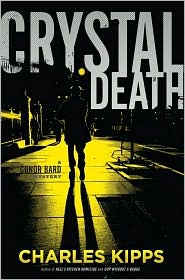
Pg. 69: Charles Kipps's "Crystal Death"

The current feature at the Page 69 Test: Crystal Death by Charles Kipps.

About the book, from the publisher:
Conor Bard—the fortysomething-year-old homicide detective who doesn't always play by the rules—is working on the streets of New York City's Diamond District when he becomes involved in a deadly game of international intrigue.

Crystal Death begins as Detective Conor Bard is called off the stage of the Rhythm Bar, where his rock band is performing, to investigate the murder of a beautiful young Israeli diamond dealer in midtown Manhattan. Bard quickly learns that a priceless red diamond (yes, there are red diamonds) is missing and that the South African government is determined to find it.

The list of murder suspects grows quickly as Conor Bard and his new partner, Rosita Rubio, struggle to unravel the conflicting information they uncover.

Could the cold, calculating inspector from Johannesburg actually be the killer? Is he inserting himself into the investigation to cover his tracks? Or perhaps the lovesick jeweler, whose persistent advances were met with indifference by the victim, faced one rejection too many? Other suspects include an Indian diamond cutter who may or may not be linked to the red diamond; a billionaire collector from Abu Dhabi who will go to any lengths to own rare gems; a ruthless international smuggler; and a stunning Indian businesswoman whom Conor Bard falls for, of course.

Crystal Death gives readers a look inside the international diamond trade and paints an unsentimental, accurate picture of the life of a New York City detective. Fans of Hell's Kitchen Homicide will welcome this second installment in the Conor Bard mystery series. The characters are genuine, the streets are real, and Kipps's TV pedigree is evident once again in the fast pace and gritty reality of the story.
Watch the video for Crystal Death, and learn more about the book and author at Charles Kipps's website.

The Page 69 Test: Hell’s Kitchen Homicide.

The Page 69 Test: Crystal Death.

--Marshal Zeringue

Best and worst childbirth scenes in sci-fi & fantasy

At io9, Charlie Jane Anders and Kelly Faircloth developed a list of the best and worst childbirth scenes in science fiction and fantasy.

One novel--from a collection that includes mostly television shows and movies--among the best scenes:
Dune by Frank Herbert:

The birth of Alia Atreides is awesomely aware, because her mother drinks the Water Of Life while pregnant. As a result, she's born a fully fledged Bene Gesserit Reverend Mother — in spite of some people who want to get rid of her before she's born. She's already as intelligent as an adult, which makes her trip ex utero strange and unique and totally mystical.
Read about another novel on the list.

Dune is also on John Mullan's list of ten of the best deserts in literature.

--Marshal Zeringue

Pg. 99: Shane McCorristine's "Spectres of the Self"

Today's feature at the Page 99 Test: Spectres of the Self: Thinking about Ghosts and Ghost-Seeing in England, 1750–1920 by Shane McCorristine.

About the book, from the publisher:
Spectres of the Self is a fascinating study of the rich cultures surrounding the experience of seeing ghosts in England from the Reformation to the twentieth century. Shane McCorristine examines a vast range of primary and secondary sources, showing how ghosts, apparitions, and hallucinations were imagined, experienced, and debated from the pages of fiction to the case reports of the Society for Psychical Research. By analysing a broad range of themes from telepathy and ghost-hunting to the notion of dreaming while awake and the question of why ghosts wore clothes, Dr McCorristine reveals the sheer variety of ideas of ghost seeing in English society and culture. He shows how the issue of ghosts remained dynamic despite the advance of science and secularism and argues that the ghost ultimately represented a spectre of the self, a symbol of the psychological hauntedness of modern experience.
Read an excerpt from Spectres of the Self, and learn more about the book at the Cambridge University press website.

The Page 99 Test: Spectres of the Self.

--Marshal Zeringue