Wednesday, November 09, 2022

Ten books that celebrate feral girls

Erin Slaughter is the author of the story collection A Manual for How to Love Us, forthcoming in March 2023, and two books of poetry: The Sorrow Festival (2022), and I Will Tell This Story to the Sun Until You Remember That You Are the Sun (2019). Slaughter is editor/co-founder of literary journal and chapbook press The Hunger and holds an MFA from Western Kentucky University. Originally from Texas, she lives in Tallahassee, Florida, where she is a PhD candidate at Florida State University and was awarded the Edward H. and Marie C. Kingsbury Fellowship.

At Electric Lit Slaughter tagged ten novels and stories about women living at the edge of their animal desires, including:
Marilou is Everywhere by Sarah Elaine Smith

What’s more feral than an adolescent girl living in precarity, bathing in rivers and being raised by her reckless teenage brothers in the woods of rural Appalachia? In Marilou is Everywhere, Smith’s gorgeous, lush prose is wild as the weedy landscape of the young narrator’s mind. The untended grief that penetrates Cindy’s sense of self is fierce and unrelenting below the mask of her quiet compliance; there’s a self-annihilating streak inside of her, a desire to vanish from her body and the place she has been allotted in the world. Then, a neighbor’s teenage daughter disappears, and the mystery of her disappearance overtakes the small town, driving its citizens to desperate ends. Cindy has a clue that could help rescue the missing girl, but she keeps it unspoken while caring for the girl’s declining mother as penance for her guilt. In a refreshing turn, the novel evades the obvious trajectory of “speaking up as empowerment,” instead forcing Cindy (and the reader) to interrogate different kinds of privilege and accountability, and how one person chained to solipsism can set off a domino effect toppling the lives of those around them.
Read about another entry on the list.

Marilou is Everywhere is among Smith Henderson's ten American masterpieces that are actually crime fiction.

The Page 69 Test: Marilou Is Everywhere.

My Book, The Movie: Marilou Is Everywhere.

--Marshal Zeringue

Pg. 99: Michael W. Nagle's "The Forgotten Iron King of the Great Lakes"

Featured at the Page 99 Test: The Forgotten Iron King of the Great Lakes: Eber Brock Ward, 1811-1875 by Michael W. Nagle.

About the book, from the publisher:
Eber Brock Ward (1811–1875) began his career as a cabin boy on his uncle’s sailing vessels, but when he died in 1875, he was the wealthiest man in Michigan. His business activities were vast and innovative. Ward was engaged in the steamboat, railroad, lumber, mining, and iron and steel industries. In 1864, his facility near Detroit became the first in the nation to produce steel using the more efficient Bessemer method. Michael W. Nagle demonstrates how much of Ward’s success was due to his ability to vertically integrate his business operations, which were undertaken decades before other more famous moguls, such as Andrew Carnegie and John D. Rockefeller. And yet, despite his countless successes, Ward’s life was filled with ruthless competition, labor conflict, familial dispute, and scandal. Nagle makes extensive use of Ward’s correspondence, business records, contemporary newspaper accounts, and other archival material to craft a balanced profile of this fascinating figure whose actions influenced the history and culture of the Great Lakes and beyond.
Follow Michael W. Nagle on Facebook.

The Page 99 Test: The Forgotten Iron King of the Great Lakes.

--Marshal Zeringue

Pg. 69: Phillip Margolin's "Murder at Black Oaks"

Featured at the Page 69 Test: Murder at Black Oaks: A Robin Lockwood Novel (Volume 6) by Phillip Margolin.

About the book, from the publisher:
In Phillip Margolin's Murder at Black Oaks, Attorney Robin Lockwood finds herself at an isolated retreat in the Oregon mountains, one with a tragic past and a legendary curse, and surrounded by many suspects and confronted with an impossible crime.

Defense Attorney Robin Lockwood is summoned by retired District Attorney Francis Melville to meet with him at Black Oaks, the manor he owns up in the Oregon mountains. The manor has an interesting history - originally built in 1628 in England, there's a murderous legend and curse attached to the mansion. Melville, however, wants Lockwood's help in a legal matter - righting a wrongful conviction from his days as a DA. A young man, Jose Alvarez, was convicted of murdering his girlfriend only for Melville, years later when in private practice, to have a client of his admit to the murder and to framing the man Melville convicted. Unable to reveal what he knew due to attorney client confidence, Melville now wants Lockwood's help in getting that conviction overturned.

Successful in their efforts, Melville invites Lockwood up to Black Oaks for a celebration. Lockwood finds herself among an odd group of invitees - including the bitter, newly released, Alvarez. When Melville is found murdered, with a knife connected to the original curse, Lockwood finds herself faced with a conundrum - who is the murder among them and how to stop them before there's another victim.
Visit Phillip Margolin's website and Facebook page.

My Book, The Movie: Woman with a Gun.

The Page 69 Test: Woman with a Gun.

The Page 69 Test: Violent Crimes.

My Book, The Movie: Violent Crimes.

My Book, The Movie: The Third Victim.

The Page 69 Test: The Third Victim.

The Page 69 Test: The Perfect Alibi.

The Page 69 Test: A Reasonable Doubt.

My Book, The Movie: A Reasonable Doubt.

The Page 69 Test: Murder at Black Oaks.

--Marshal Zeringue

Tuesday, November 08, 2022

Q&A with Lisa Unger

From my Q&A with Lisa Unger, author of Secluded Cabin Sleeps Six:
How much work does your title do to take readers into the story?

Titling a book may be more difficult than actually writing one. (Well, not really.) But I have loved titles that wound up on the cutting room floor in favor of something that I loved less but made more sense for the book. (The Stranger Inside was originally The Nightjar.) I have slapped a working title on a manuscript, thinking I’d have time to come up with something better, only to have an editor fall in love with it. (Beautiful Lies) Sometimes it’s collaborative, lots of emails back and forth until someone comes up with an idea that makes everyone go “Aha!” For example, Confessions on the 7:45 was originally Black Butterfly. After a lot of back-and-forth, it was my editor who came up with Confessions on the 7:45 – which may be one of my all-time favorites.

For Secluded Cabin Sleeps Six, all the credit goes to Margaret Marbury, VP of Editorial at Park Row. This one was a little painful. Originally, it was Blow Your House Down and I was weirdly attached to it, though you’d think I’d know better by now. But everybody – my editor, my agent, my husband, even my mother -- loved Secluded Cabin Sleeps Six. Everyone except for me! But over the years I have come to understand that the title of a book falls less in the area of the author and more in the area of the marketing department. So, I deferred to the judgement of people I trust, and it slowly started to grow on me. Now I can’t go a day without hearing what a fabulous title it is. And it really does capture the vibe of the book. So...[read on]
Visit Lisa Unger's website.

Q&A with Lisa Unger.

--Marshal Zeringue

Pg. 99: Jonathan Freedland's "The Escape Artist"

Featured at the Page 99 Test: The Escape Artist: The Man Who Broke Out of Auschwitz to Warn the World by Jonathan Freedland.

About the book, from the publisher:
People won’t believe what they can’t imagine...

In April 1944, Rudolf Vrba became the first Jew to break out of Auschwitz—one of only four who ever pulled off that near-impossible feat. He did it to reveal the truth of the death camp to the world—and to warn the last Jews of Europe what fate awaited them at the end of the railway line. Against all odds, he and his fellow escapee, Fred Wetzler, climbed mountains, crossed rivers and narrowly missed German bullets until they had smuggled out the first full account of Auschwitz the world had ever seen—a forensically detailed report that would eventually reach Franklin Roosevelt, Winston Churchill and the Pope.

And yet too few heeded the warning that Vrba—then just nineteen years old—had risked everything to deliver. Some could not believe it. Others thought it easier to keep quiet. Vrba helped save 200,000 Jewish lives—but he never stopped believing it could have been so many more.

This is the story of a brilliant yet troubled man—a gifted “escape artist” who even as a teenager understand that the difference between truth and lies can be the difference between life and death, a man who deserves to take his place alongside Anne Frank, Oskar Schindler and Primo Levi as one of the handful of individuals whose stories define our understanding of the Holocaust.
Follow Jonathan Freedland on Twitter.

My Book, The Movie: The 3rd Woman.

The Page 99 Test: The Escape Artist.

--Marshal Zeringue

Six top crime novels that revolve around art or the art world

Kate Belli writes historical mysteries and contemporary thrillers. Fascinated by history from an early age, she earned a PhD in American art and has variously worked as an antiques appraiser, a museum curator and a college professor. Belli has lived all over, from Florence, Italy, to Brooklyn, New York, to the Deep South, to a cottage next to Monet’s gardens in Northern France. Today she lives and works in Central Pennsylvania with her husband and son.

Belli's new novel is Treachery on Tenth Street.

At CrimeReads she tagged six "crime novels with a plot that revolves around art or the art world," including:
The Masterpiece, Fiona Davis

Toggling between the bohemian glamour of New York City in the 1920s and the city’s grime and disarray in the 1970s, The Masterpiece follows the lives of two women, Clara and Virginia. While Clara is a painter and illustrator teaching at an art school within Grand Central Terminal in the 1920s, Virginia is a recently divorced woman working at the information booth of the Terminal in the 1970s. When Virginia stumbles across the abandoned art school within the Terminal, she finds a watercolor signed “Clyde,” and embarks on a quest to both find the identity of the painter and one to save the threatened Terminal. Highlighting the important work of historic female artists and historic preservationists, The Masterpiece explores seemingly separate aspects of the art world and mixes them together in a satisfying, suspenseful way.
Read about another entry on the list.

My Book, The Movie: The Masterpiece.

--Marshal Zeringue

Monday, November 07, 2022

What is Debra Bokur reading?

Featured at Writers Read: Debra Bokur, author of The Lava Witch.

Her entry begins:
The War of Art by Steven Pressfield

This slender volume of wisdom on writing and creative pursuits by author Steven Pressfield is never far out of reach on the desk in my writing room. Before embarking on any major writing project, I prepare by giving The War of Art a fresh read. In a series of short chapters — many no more than a paragraph long — Pressfield confronts the topic of creative block/procrastination as a malevolent force he names “Resistance.” Depending upon your own mental fortitude when faced by a blank piece of paper, flickering computer screen, or any project, it’s an unapologetic kick in the backside combined with hardcore practical advice and a lovely dose of...[read on]
About The Lava Witch, from the publisher:
Celebrated travel writer Debra Bokur reveals the dark side of paradise while exploring the nuanced culture and captivating beauty of Hawaii in The Bone Field, the second installment in her acclaimed series featuring Maui detective and Hawaiian cultural expert Kali Māhoe.

A series of strange cold-case ritual murders leads Maui detective Kali Māhoe on a trail of legendary vengeful spirits and more human monsters in paradise.


Kali Māhoe, Hawaiian cultural expert and detective with the Maui Police Department, has been called to a bizarre crime scene. In the recesses of a deep trench on Lanai Island, a derelict refrigerator has been unearthed. Entombed inside are the skeletal remains of someone buried decades ago. Identification is a challenge. The body is headless, the skull replaced with a chilling adornment: a large, ornately carved wooden pineapple.

The old field soon yields more long-buried secrets, and Kali is led along an increasingly winding path that brings to light an unlikely suspect, an illegal cock-fighting organization, and a strange symbol connected to a long-disbanded religious cult. Her task is to dispel the dark shadows lingering over the Palawai Basin plains, and to solve a puzzle that no one wants exposed by the bright, hot tropical light.

To discover the answer, Kali will be drawn deeper in the mysteries of the island's ancient legends—stories that tell of an enraged rooster god and man-eating monsters. For Kali, a detective of sound logic and reason, it's not easy to consider the unknown for explanations for what appears to be a series of illogical links in a twisting chain of deadly events. Or safe. Because the dormant pineapple fields of Lanai have yet to give up their darkest and most terrifying secrets.
Visit Debra Bokur's website.

Q&A with Debra Bokur.

The Page 69 Test: The Fire Thief.

My Book, The Movie: The Fire Thief.

My Book, The Movie: The Bone Field.

The Page 69 Test: The Bone Field.

My Book, The Movie: The Lava Witch.

Writers Read: Debra Bokur.

--Marshal Zeringue

Seven top Marilyn Monroe books

At Vulture Nathan Smith tagged seven of "the best books that deconstruct, analyze, and even transmogrify the star known as Marilyn Monroe." One title on the list:
Blonde, by Joyce Carol Oates

“The sole voice of Blonde is Norma Jeane’s,” says Oates of her lauded 2000 novel, Blonde. The book is a fictional exploration of Marilyn Monroe’s life
that strips away the veneer of Hollywood moviemaking and leaves the unpolished Norma Jeane searching for security and certainty. At almost 1,000 pages, it’s an epic work that uses the rough storyboards of Monroe’s life to create a richly humanistic and relatable narrative. But be warned that it’s also a real sober read. In it, there is Monroe’s traumatic childhood, her many abortions, suicide attempts, alcoholism and drug problems, lovers and abusers, and precarious mental health. There’s also never-ending sweat in Blonde: the sweat in trying to be Marilyn Monroe, in searching for personal and professional autonomy, in simply needing to survive deep and gnawing traumas. The book aims to confront as Oates tasks us with reconciling this brutalized woman with the sanitized, glamorous femininity of star Marilyn Monroe. For those who enjoy the new film adaptation, it’s worth committing to Oates’s sustained novel on Monroe as it beautifully augments her tragedy, loneliness, and unending search for stability.
Read about another entry on the list.

Blonde also appears among Rose Tremain's six best books, John O’Farrell's top ten celebrity appearances in fiction, Michel Schneider's top ten books on Marilyn Monroe, Ron Hansen's five best literary tales of real-life crimes, and Janet Fitch's book list.

--Marshal Zeringue

Pg. 69: K. Eason's "Nightwatch over Windscar"

Featured at the Page 69 Test: Nightwatch over Windscar by K. Eason.

About the book, from the publisher:
Set in the universe of Rory Thorne, the second book in this sci-fi series follows unlikely allies who must discover the secrets of ancient ruins.

Iari is good at killing monsters. As a templar in the Aedis, a multi-species religious organization committed to protecting the Confederation, eliminating extra-dimensional horrors is her job. But after she helped stop separatists from sabotaging the entire Confederation, she discovered a new sort of monster: the rogue-arithmancer, political kind.

Promoted and sent north to the tundra of Windscar, Iari leads a team of templars to investigate ancient, subterranean ruins, which local legend claims are haunted, and which have mysterious connections to the dangerous arithmancy used by the wichu separatists. Iari isn’t worried about ghosts. She’s worried about surviving separatists and a fresh attempt to upend the Confederation.

Included in Iari’s team are Char, a decommissioned battle-mecha and newly-joined templar, and Gaer, ostensible ambassador and talented arithmancer. As they delve into the ruins, they find remnants of long-ago battles, bits of broken armor and mechas—which unexpectedly reanimate and attack. It seems there is still dangerous arithmancy in Windscar–but the source isn’t who Iari expected, and they’re far worse than the separatists….
Visit K. Eason's website.

The Page 69 Test: How Rory Thorne Destroyed the Multiverse.

Q&A with K. Eason.

The Page 69 Test: Nightwatch over Windscar.

--Marshal Zeringue

Pg. 99: Margaret K. Nelson's "Keeping Family Secrets"

Featured at the Page 99 Test: Keeping Family Secrets: Shame and Silence in Memoirs from the 1950s by Margaret K. Nelson.

About the book, from the publisher:
From teen pregnancy and gay sexuality to Communism and disability, the startling secrets that families kept during the Cold War era

All families have secrets but the facts requiring secrecy change with time. Nowadays A lesbian partnership, a “bastard” son, an aunt who is a prostitute, or a criminal grandfather might be of little or no consequence but could have unraveled a family at an earlier moment in history. Margaret K. Nelson is interested in how families keep secrets from each other and from outsiders when to do otherwise would risk eliciting not only embarrassment or discomfort, but profound shame and, in some cases, danger. Drawing on over 150 memoirs describing childhoods in the period between the aftermath of World War II and the 1960s, Nelson highlights the importance of history in creating family secrets and demonstrates the use of personal stories to understand how people make sense of themselves and their social worlds.

Keeping Family Secrets uncovers hidden stories of same-sex attraction among boys, unwed pregnancies among teenage girls, the institutionalization of children with mental and physical disabilities, participation in left-wing political activities, adoption, and Jewish ancestry. The members of ordinary families kept these issues secret to hide the disconnect between the reality of their own family and the prevailing ideals of what a family should be. Personal accounts reveal the costs associated with keeping family secrets, as family members lie, hurl epithets, inflict abuse, and even deny family membership to protect themselves from the shame and danger of public knowledge. Keeping Family Secrets sheds light not only on decades-old secrets but pushes us to confront what secrets our families keep today.
Learn more about Keeping Family Secrets at the NYU Press website.

The Page 99 Test: Parenting Out of Control.

The Page 99 Test: Like Family.

The Page 99 Test: Keeping Family Secrets.

--Marshal Zeringue

Sunday, November 06, 2022

Q&A with Susan Walter

From my Q&A with Susan Walter, author of Over Her Dead Body: A Novel:
How much work does your title do to take readers into the story?

Oooh I love this question! But I can’t answer it fully because that would give too much away. If you have ever heard someone reply to a request or a command with “over my dead body!” you know that it means “never will I ever!” Louisa Lake George, the ageing casting director our actress-protagonist meets on her late night dog walk, is a multi-millionaire. She is also deathly ill, and has to get her affairs in order ASAP. Upon meeting Louisa, we learn she had a falling out with her children and wants to cut them out of her will. Her nephew warns that if she doesn’t do what’s customary (leave her fortune to her kids) the family will implode: “It will be like the Hunger Games, with everyone out for blood.” But she refuses. It’s an “over my dead body” moment – literally! There are other layers to this title...[read on]
Visit Susan Walter's website.

Q&A with Susan Walter.

--Marshal Zeringue

Emily J. Edwards's "Viviana Valentine Gets Her Man," the movie

Featured at My Book, The Movie: Viviana Valentine Gets Her Man by Emily J. Edwards.

The entry begins:
The best part about writing a detective story during the 1950s is getting to immerse your main characters into one of the most interesting and tumultuous times of American media. Daydreaming about my characters on the silver screen was as natural as having those same characters talk about Humphrey Bogart taking a turn in The Maltese Falcon.

Viviana Valentine Gets Her Man is a mid-century, Private Investigator murder mystery. Viviana is the Girl Friday to New York City’s best P.I., Tommy Fortuna. One day, they gain a new client, the industrialist Tallmadge Blackstone, who has asked Tommy to trail his young daughter, Tallulah. The next day, a body shows up in Tommy’s office, and Tommy is M.I.A. Viviana takes on the cases in an effort to keep the police from pinning the murder on her boss.

When I was writing, it was most important for me to imagine not who was going to play my leading lady, Viviana Valentine, but who was going to play the supporting cast. While Viv was very hard to #DreamCast for a film version (but you’ll see who I chose eventually!), the supporting characters were not.

First and foremost, I knew that the character of Tommy Fortuna, Viv’s boss, best friend, and private investigator, had to have that effortless cool and a rugged masculinity, but more than anything, he believes in Viviana and her capabilities. I needed someone who had his own identity and sure looked good in a suit, but would watch Viviana work with a smile on his face and awe in my heart– but also be able to deliver a one-liner without flinching. In my mind, Dustin Milligan, better known as Ted from Schitt's Creek, made an excellent Tommy Fortuna.

Secondly, I had to cast one of Tommy’s clients, a mean sonofab**** who has oodles of money and looked like he was up to no good. His name is Tallmadge Blackstone and at one point in the novel, he looks very large and menacing. Now, most...[read on]
Visit Emily J. Edwards's website.

My Book, The Movie: Viviana Valentine Gets Her Man.

--Marshal Zeringue

Sixty top campus novels from the last 100 years

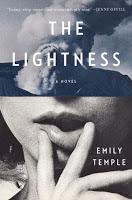
Emily Temple is the author of The Lightness and the Managing Editor at Literary Hub.

She earned her MFA in fiction from the University of Virginia, where she was the recipient of a Henfield Prize.

[My Book, The Movie: The Lightness; The Page 69 Test: The Lightness]

At Lit Hub Temple tagged the 60 best campus novels from the last 100 years, including:
Julie Schumacher, Dear Committee Members (2014)

A campus novel in the form of a series of recommendation letters from a very put-upon (and irritated) professor. As funny as it sounds.
Read about another entry on the list.

Dear Committee Members is among Louise Dean's top ten novels about novelists, Emily Temple's fifteen great campus novels published in the last decade, Jenn Ashworth and Richard V. Hirst's ten top modern epistolary novels, Maureen Corrigan's top 12 books of 2014, Kate DiCamillo's 3 favorite books of 2014, and Ellen Wehle's four top novels "in which teachers and students run just a little bit off the rails."

The Page 69 Test: Dear Committee Members.

--Marshal Zeringue

Saturday, November 05, 2022

Coffee with a canine: Alysa Wishingrad & Cleo and Lucy.

Featured at Coffee with a Canine: Alysa Wishingrad & Cleo and Lucy.

The author, on how she and the dogs were united:
A friend of a friend rescued them in Alexandria, Egypt. She’s a flight attendant and had friends and family in Egypt who were devoted to rescuing street dogs – of which there are countless numbers.

Cleo was found in a box with her siblings at just a few days old. They all had parvo, she was the only one to survive.

Lucy was found wandering the streets...[read on]
About Wishingrad's The Verdigris Pawn, from the publisher:
A boy who underestimates his power . . .

A girl with a gift long thought lost . . .

A Land ready for revolution . . .


The heir to the Land should be strong. Fierce. Ruthless. At least, that’s what Beau’s father has been telling him his whole life, since Beau is the exact opposite of what the heir should be. With little control over his future, Beau is kept locked away, just another pawn in his father’s quest for ultimate power.

That is, until Beau meets a girl who shows him the secrets his father has kept hidden. For the first time, Beau begins to question everything he’s ever been told and sets off in search of a rebel who might hold the key to setting things right.

Teaming up with a fiery runaway boy, their mission quickly turns into something far greater as sinister forces long lurking in the shadows prepare to make their final move—no matter what the cost. But it just might be Beau who wields the power he seeks . . . if he can go from pawn to player before the Land tears itself apart.
Visit Alysa Wishingrad's website.

Coffee with a Canine: Alysa Wishingrad & Cleo and Lucy.

--Marshal Zeringue

Seven top memoirs about leaving home

Sarah Fawn Montgomery is the author of Halfway from Home (2022). She is also the author of Quite Mad: An American Pharma Memoir (2018) and the poetry chapbooks Regenerate: Poems of Mad Women (2017), Leaving Tracks: A Prairie Guide (2017), and The Astronaut Checks His Watch (2014). Her work has been listed as notable in Best American Essays for the last several years, and her poetry and prose have appeared in numerous journals and anthologies. Montgomery holds an MFA in creative writing from California State University-Fresno and a PhD in English in creative writing from the University of Nebraska-Lincoln. She is an Assistant Professor at Bridgewater State University in Massachusetts.

At Electric Lit Montgomery tagged seven "books about searching for place, self, and belonging," including:
Dog Flowers by Danielle Geller

Danielle Geller inherits restlessness along with eight suitcases that contain the contents of her mother’s life. After her mother dies of alcohol withdrawal during an attempt to get sober, Geller begins to piece together the story of her mother’s life from what she leaves behind. Archiving her mother’s possessions—diaries, letters, photos, clothing, and other artifacts—Geller weaves images and text together in an innovative exploration of legacy and loss, given and chosen family, in an effort to understand her mother and herself. As Geller forges a life for herself, confronting her family’s troubled history and her role as caregiver, she is compelled back to her mother’s home on a Navajo reservation. Exploring matrilineal heritage, the delicate balance of sisterhood, and intergenerational trauma, Geller teaches readers how to honor the homes we have left in the past while showing us how to build a home and family for ourselves in the future.
Read about another entry on the list.

--Marshal Zeringue

Pg. 99: Kenneth Gross's "Dangerous Children"

Featured at the Page 99 Test: Dangerous Children: On Seven Novels and a Story by Kenneth Gross.

About the book, from the publisher:
Gross explores our complex fascination with uncanny children in works of fiction.

Ranging from Victorian to modern works—Lewis Carroll’s Alice in Wonderland, Carlo Collodi’s Pinocchio, Henry James’s What Maisie Knew, J. M. Barrie’s Peter and Wendy, Franz Kafka’s “The Cares of a Family Man,” Richard Hughes’s A High Wind in Jamaica, Elizabeth Bowen’s The Death of the Heart, and Vladimir Nabokov’s Lolita—Kenneth Gross’s book delves into stories that center around the figure of a strange and dangerous child.

Whether written for adults or child readers, or both at once, these stories all show us odd, even frightening visions of innocence. We see these children’s uncanny powers of speech, knowledge, and play, as well as their nonsense and violence. And, in the tales, these child-lives keep changing shape. These are children who are often endangered as much as dangerous, haunted as well as haunting. They speak for lost and unknown childhoods. In looking at these narratives, Gross traces the reader’s thrill of companionship with these unpredictable, often solitary creatures—children curious about the adult world, who while not accommodating its rules, fall into ever more troubling conversations with adult fears and desires. This book asks how such imaginary children, objects of wonder, challenge our ways of seeing the world, our measures of innocence and experience, and our understanding of time and memory.
Learn more about Dangerous Children at the University of Chicago Press website.

The Page 69 Test: Shylock Is Shakespeare.

My Book, The Movie: Shylock Is Shakespeare.

Writers Read: Kenneth Gross (July 2007).

Writers Read: Kenneth Gross (November 2011).

The Page 99 Test: Dangerous Children.

--Marshal Zeringue

Pg. 69: Roger A. Canaff's "City Dark"

Featured at the Page 69 Test: City Dark: A Thriller by Roger A. Canaff.

About the book, from the publisher:
A vanished mother, the grip of darkness, a lifelong mystery. Forty years later, a prosecutor faces them all again, this time as a murder suspect in a pulse-pounding legal thriller of psychological suspense.

On a steaming night in 1977, New York City is plunged into darkness and two boys, Joe and Robbie, are abandoned by their mother, Lois. Forty years to the day after this unforgivable moment, Joe is a hard-drinking ADA and Lois has resurfaced: Joe wakes from another alcoholic fog to learn she’s been found murdered on a Coney Island beach.

Joe throws himself into his work, struggling to reconcile his memories of Lois with the relative stranger found by the NYPD. And when another murder hits close to home and DNA links Joe to both crimes, he sinks deeper into the abyss. Joe can’t remember a thing. His last hope as the evidence mounts against him is Aideen Bradigan, a brilliant and dogged lawyer from his past.

It will take Aideen’s drive and Joe’s own shrewd legal mind to uncover a potentially terrifying truth―and to shatter the devastating secrets that claw back to that fateful night in the dark.
Visit Roger A. Canaff's website.

My Book, The Movie: City Dark.

The Page 69 Test: City Dark.

--Marshal Zeringue

Friday, November 04, 2022

Five mysteries featuring the bond between humans & animals

Amber Camp writes cozy mysteries that reflect her love of animals and quirky small towns. A lifelong lover of books, she started writing her own stories as a teenager and found she loves to write as much as she loves to read. Camp lives in Northwest Arkansas with her husband and daughter and works as a registered nurse at a small rural hospital. She has a menagerie of animals that includes dogs, cats, horses, chickens and what has been described as the Mule from Hell, which may or may not be a slight exaggeration.

Camp's new novel is Canter with a Killer.

At CrimeReads she tagged five "great mysteries that combine a compelling whodunit with the passion and dedication of animal rescue," including:
T.C. LoTempio, Purr M for Murder

This delightful cozy mystery follows Sydney McCall as she returns home to help her sister, Kat, run the local animal shelter. In an attempt to save the shelter from financial ruin, Sydney and Kat organize a cat café fundraiser. Unfortunately, their landlord, Trowbridge Littleton, threatens to shut it down before they can even get started. When Sydney goes to Trowbridge to try to salvage their efforts, she stumbles on his very recently deceased body. It doesn’t take long for the local homicide detective to suspect that the sisters might have found a permanent solution to their problems. Sydney jumps into action to clear their names before they become the next victims. She is aided by a great cast of shelter volunteers and rescue animals, including a truly wonderful orange tabby named Toby.
Read about another mystery on the list.

--Marshal Zeringue

Q&A with Serena Burdick

From my Q&A with Serena Burdick, author of The Stolen Book of Evelyn Aubrey:
How much work does your title do to take readers into the story?

When I first wrote this book seventeen years ago, I titled it Evelyn. Since then, it’s gone through many title changes. At one point it was called An Educated Woman—the protagonist is a female writer trying to make it in alongside her famous writer husband, so this made sense—but in the end, The Stolen Book of Evelyn Aubrey, was more layered. Evelyn’s journal goes missing in 1910. In 2006, her great, great granddaughter, Abby, while searching for the father she never knew, learns about this lost journal and begins searching for it. She also learns about a literary scandal that went down when Evelyn disappeared the day her husband’s final book was published. The Stolen Book of Evelyn Aubrey is a book about a book, as well as a dual-timeline with Evelyn’s story told through her missing journal. Hence the...[read on]
Visit Serena Burdick's website.

My Book, The Movie: The Girls with No Names.

Writers Read: Serena Burdick.

The Page 69 Test: The Girls with No Names.

Q&A with Serena Burdick.

--Marshal Zeringue

What is Lev AC Rosen reading?

Featured at Writers Read: Lev AC Rosen, author of Lavender House: A Novel.

His entry begins:
I've been reading Joseph Hansen's David Brandstetter series, which was just re-issued. They begin with Fadeout, and follow an insurance investigator in California in the 70s (technically I think the first one was published in 69?). The series lasted a while, but is generally forgotten, possibly because Brandstetter, the detective character, is gay. Not much is made of it, though obviously the homophobia of the time is sometimes part of the story. He often encounters other queer folks on his cases, too. But the excitement of reading a queer mystery written over fifty years ago aside, the books are also just gorgeous. Beautifully written. There's still one...[read on]
About Lavender House, from the publisher:
A delicious story from a new voice in suspense, Lev AC Rosen's Lavender House is Knives Out with a queer historical twist.

Lavender House, 1952: the family seat of recently deceased matriarch Irene Lamontaine, head of the famous Lamontaine soap empire. Irene’s recipes for her signature scents are a well guarded secret—but it's not the only one behind these gates. This estate offers a unique freedom, where none of the residents or staff hide who they are. But to keep their secret, they've needed to keep others out. And now they're worried they're keeping a murderer in.

Irene’s widow hires Evander Mills to uncover the truth behind her mysterious death. Andy, recently fired from the San Francisco police after being caught in a raid on a gay bar, is happy to accept—his calendar is wide open. And his secret is the kind of secret the Lamontaines understand.

Andy had never imagined a world like Lavender House. He's seduced by the safety and freedom found behind its gates, where a queer family lives honestly and openly. But that honesty doesn't extend to everything, and he quickly finds himself a pawn in a family game of old money, subterfuge, and jealousy—and Irene’s death is only the beginning.

When your existence is a crime, everything you do is criminal, and the gates of Lavender House can’t lock out the real world forever. Running a soap empire can be a dirty business.
Visit Lev AC Rosen's website.

The Page 69 Test: Camp.

Writers Read: Lev AC Rosen.

--Marshal Zeringue

Thursday, November 03, 2022

Top ten books about fathers and sons

Blake Morrison was born in Skipton, Yorkshire, and educated at Nottingham University, McMaster University and University College, London. After working for the Times Literary Supplement, he went on to become literary editor of both The Observer and the Independent on Sunday before becoming a full-time writer in 1995.

A Fellow of the Royal Society of Literature, and former Chair of the Poetry Book Society and Vice-Chair of PEN, Morrison has written fiction, poetry, journalism, literary criticism and libretti, as well as adapting plays for the stage. His best-known works are probably his two memoirs, And When Did You Last See Your Father? and Things My Mother Never Told Me.

At the Guardian Morrison tagged ten top books about fathers and sons, including:
Patrimony by Philip Roth

This was a memoir I had read, one of its threads being illness, as mine was too. In describing his father Herman’s brain tumour, diagnosed at the age of 86, Roth’s gift is to offset a story that’s sad and sometimes grim (one section has him cleaning up his father’s shit) with generosity and humour, recalling, for instance, how women made a play for Herman in his widowhood, only to find that he was still married, “if not to my mother any longer, to their marriage”. Though Roth, as a young man, had to grow away from his father in order to write, he’s struck by how their lives are “enmeshed and spookily interchangeable” – a point brought home when he has an emergency quadruple bypass during Herman’s illness.
Read about another entry on the list.

--Marshal Zeringue
Pg. 99: Una McIlvenna's "Singing the News of Death"

Featured at the Page 99 Test: Singing the News of Death: Execution Ballads in Europe 1500-1900 by Una McIlvenna.

About the book, from the publisher:
Across Europe, from the dawn of print until the early twentieth century, the news of crime and criminals' public executions was printed in song form on cheap broadsides and pamphlets to be sold in streets and marketplaces by ballad-singers. Singing the News of Death: Execution Ballads in Europe 1500-1900 looks at how and why song was employed across Europe for centuries as a vehicle for broadcasting news about crime and executions, exploring how this performative medium could frame and mediate the message of punishment and repentance. Examining ballads in English, French, Dutch, German, and Italian across four centuries, author Una McIlvenna offers the first multilingual and longue durée study of the complex and fascinating phenomenon of popular songs about brutal public death.

Ballads were frequently written in the first-person voice, and often purported to be the last words, confession or 'dying speech' of the condemned criminal, yet were ironically on sale the day of the execution itself. Musical notation was generally not required as ballads were set to well-known tunes. Execution ballads were therefore a medium accessible to all, regardless of literacy, social class, age, gender or location. A genre that retained extraordinary continuities in form and content across time, space, and language, the execution ballad grew in popularity in the nineteenth century, and only began to fade as executions themselves were removed from the public eye. With an accompanying database of recordings, Singing the News of Death brings these centuries-old songs of death back to life.
Visit Una McIlvenna's website and follow her on Twitter.

The Page 99 Test: Singing the News of Death.

--Marshal Zeringue

Pg. 69: T. Greenwood's "Such a Pretty Girl"

Featured at the Page 69 Test: Such a Pretty Girl by T. Greenwood.

About the book, from the publisher:
In 1970s New York, her innocence is seductive.
Four decades later, it’s a crime...


Living peacefully in Vermont, Ryan Flannigan is shocked when a text from her oldest friend alerts her to a devastating news item. A controversial photo of her as a pre-teen has been found in the possession of a wealthy investor recently revealed as a pedophile and a sex trafficker—with an inscription to him from Ryan’s mother on the back.

Memories crowd in, providing their own distinctive pictures of her mother Fiona, an aspiring actress, and their move to the West Village in 1976. Amid the city’s gritty kaleidoscope of wealth and poverty, high art, and sleazy strip clubs, Ryan is discovered and thrust into the spotlight as a promising young actress with a woman’s face and a child’s body. Suddenly, the safety and comfort Ryan longs for is replaced by auditions, paparazzi, and the hungry eyes of men of all ages.

Forced to reexamine her childhood, Ryan begins to untangle her young fears and her mother’s ambitions, and the role each played in the fraught blackout summer of 1977. Even with her movie career long behind her, Ryan and Fiona are suddenly the object of uncomfortable speculation—and Fiona demands Ryan’s support. To put the past to rest, Ryan will need to face the painful truth of their relationship, and the night when everything changed.
Visit T. Greenwood's website.

My Book, The Movie: Rust and Stardust.

The Page 69 Test: Rust and Stardust.

Writers Read: T. Greenwood (August 2019).

The Page 69 Test: Keeping Lucy.

My Book, The Movie: Keeping Lucy.

Q&A with T. Greenwood.

The Page 69 Test: Such a Pretty Girl.

--Marshal Zeringue

Wednesday, November 02, 2022

Debra Bokur's "The Lava Witch," the movie

Featured at My Book, The Movie: The Lava Witch by Debra Bokur.

The entry begins:
The Lava Witch has a slightly larger cast of characters than the first two books in the Dark Paradise Mystery series, and it wasn’t easy to narrow down some of my imaginary casting choices.

That said, I’d love to see the character of Charlie Holmes played by young actor Jace Norman, who appeared in Nickelodeon’s popular show Henry Danger; or possibly by Tanner Buchanan, who showed range and potential in the political thriller Designated Survivor.

For Maya Holmes, actress Isabella Gomez (of the Netflix series One Day at a Time) would be my choice. And Don Cheadle is...[read on]
Visit Debra Bokur's website.

Q&A with Debra Bokur.

The Page 69 Test: The Fire Thief.

My Book, The Movie: The Fire Thief.

Writers Read: Debra Bokur.

My Book, The Movie: The Bone Field.

The Page 69 Test: The Bone Field.

My Book, The Movie: The Lava Witch.

--Marshal Zeringue

Nine great books for the amateur virologist

At Vulture David Vogel tagged nine great books "that introduce a wider historical context for the way we deal with global illness," including:
The Viral Underclass: The Human Toll When Inequality and Disease Collide, Steven W. Thrasher (2022)

The perfect book for this moment in time. Using his years of studying the effects of the HIV epidemic, Thrasher shows how viral epidemics expose the flaws in the modern American social system in the forms of racism, homophobia, classism, and ableism. Combining years of research with the personal stories of people living with these diseases or fighting for justice for those who are, this book speaks perfectly to the intersection of virology and activism.
Read about another entry on the list.

--Marshal Zeringue

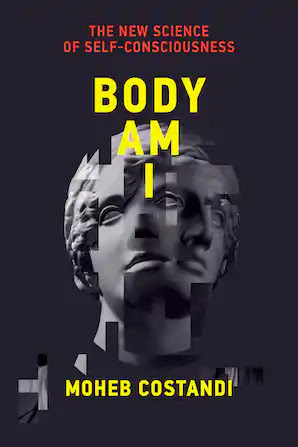
Pg. 99: Moheb Costandi's "Body Am I"

Featured at the Page 99 Test: Body Am I: The New Science of Self-Consciousness by Moheb Costandi.

About the book, from the publisher:
How the way we perceive our bodies plays a critical role in the way we perceive ourselves: stories of phantom limbs, rubber hands, anorexia, and other phenomena.

The body is central to our sense of identity. It can be a canvas for self-expression, decorated with clothing, jewelry, cosmetics, tattoos, and piercings. But the body is more than that. Bodily awareness, says scientist-writer Moheb Costandi, is key to self-consciousness. In Body Am I, Costandi examines how the brain perceives the body, how that perception translates into our conscious experience of the body, and how that experience contributes to our sense of self. Along the way, he explores what can happen when the mechanisms of bodily awareness are disturbed, leading to such phenomena as phantom limbs, alien hands, and amputee fetishes.

Costandi explains that the brain generates maps and models of the body that guide how we perceive and use it, and that these maps and models are repeatedly modified and reconstructed. Drawing on recent bodily awareness research, the new science of self-consciousness, and historical milestones in neurology, he describes a range of psychiatric and neurological disorders that result when body and brain are out of sync, including not only the well-known phantom limb syndrome but also phantom breast and phantom penis syndromes; body integrity identity disorder, which compels a person to disown and then amputate a healthy arm or leg; and such eating disorders as anorexia.

Wide-ranging and meticulously researched, Body Am I (the title comes from Nietzsche's Thus Spoke Zarathustra) offers new insight into self-consciousness by describing it in terms of bodily awareness.
Visit Moheb Costandi's website.

The Page 99 Test: Body Am I.

--Marshal Zeringue

Q&A with Sarah Darer Littman

From my Q&A with Sarah Darer Littman, author of Some Kind of Hate:
How much work does your title do to take readers into the story?

Quite a bit! Both the title, Some Kind of Hate, and the dark, ominous cover art serve to warn anyone that picks up the book that this will not be a light, easy read. That’s intentional - as are the content warning at the beginning of the book and the author’s note at the end. The novel is told from dual perspectives - Declan, a teen boy who becomes radicalized to right-wing extremism after an event that could destroy his future, and Jake, his friend and baseball teammate who happens to be Jewish.

What's in a name?

Jake’s surname is Lehrer, an homage to...[read on]
Visit Sarah Darer Littman's website.

Q&A with Sarah Darer Littman.

--Marshal Zeringue

Tuesday, November 01, 2022

Thirteen books about the joy in a life filled with non-human creatures

E.B. Bartels is a nonfiction writer, a former Newtonville Books bookseller, and a GrubStreet instructor, with a BA from Wellesley College and an MFA from Columbia University.

Good Grief: On Loving Pets, Here and Hereafter, Bartels’s debut narrative nonfiction book about the world of loving and losing animals, exploring the singular nature of our bonds with our companion animals, and how best to grieve for them once they’ve passed away, is out now from Mariner Books.

Bartels lives outside Boston with her husband, Richie, and their many, many pets: a red-footed tortoise (Terrence), a chihuahua-pitbull mix (Seymour), a small flock of pigeons (Bert, Lieutenant Dan, and Murray), and fifteen African cichlids (all named Milton).

At Lit Hub she tagged thirteen books about the joy that comes with a life filled with non-human creatures, including:
Hollow Kingdom by Kira Jane Buxton

In the dystopian world of Hollow Kingdom, humans have all perished to a mysterious virus and only non-human animals are left. A domesticated crow named Shit Turd, teams up with a dog, Dennis, who also lived with S.T.’s former owner (RIP Big Jim). While the book is written from the perspective of the crow, you watch S.T. come around to Dennis over the course of the book, seeing his thinking change from “wow, what a dumb dog” to “this is my most loyal friend.” No one loves you like a dog.
Read about another entry on the list.

My Book, The Movie: Hollow Kingdom.

The Page 69 Test: Hollow Kingdom.

--Marshal Zeringue

Pg. 99: Andrew S. Mathews's "Trees Are Shape Shifters"

Featured at the Page 99 Test: Trees Are Shape Shifters: How Cultivation, Climate Change, and Disaster Create Landscapes by Andrew S. Mathews.

About the book, from the publisher:
An exploration of the anthropogenic landscapes of Lucca, Italy, and how its people understand social and environmental change through cultivation

In Italy and around the Mediterranean, almost every stone, every tree, and every hillside show traces of human activities. Situating climate change within the context of the Anthropocene, Andrew Mathews investigates how people in Lucca, Italy, make sense of social and environmental change by caring for the morphologies of trees and landscapes. He analyzes how people encounter climate change, not by thinking and talking about climate, but by caring for the environments around them. Maintaining landscape stability by caring for the forms of trees, rivers, and hillsides is a way that people link their experiences to the past and to larger scale political questions. The human-transformed landscapes of Italy are a harbinger of the experiences that all of us are likely to face, and addressing these disasters will call upon all of us to think about the human and natural histories of the landscapes we live in.
Visit Andrew S. Mathews's website.

The Page 99 Test: Trees Are Shape Shifters.

--Marshal Zeringue

Pg. 69: Briana Una McGuckin's "On Good Authority"

Featured at the Page 69 Test: On Good Authority: A Novel of Suspense by Briana Una McGuckin.

About the book, from the publisher:
Repressed desires, irresistible obsessions, and perception-twisting games.

When lady’s maid Marian Osley and footman Valentine Hobbs assume their positions at the cliff-top estate of Valor Rise, they already share a history. Raised together as paupers in a London workhouse, they escaped through games of imaginary crimes and sublime punishment. Now they’ve been unexpectedly reunited―in subservience to the brooding Wythe Bornholdt and his frail wife, Diana. A master and mistress with their own dark secrets.

In private, Marian and Valentine return to their playful and addictive games―now tinged with BDSM. But when lecherous Wythe sees something he desires in Marian, he turns the pair’s diversions violently against them.

The line between servitude and bondage is drawn, and the dynamics of dominance and submission will shift in this sensually charged novel of Gothic suspense.
Visit Briana Una McGuckin's website.

Q&A with Briana Una McGuckin.

My Book, The Movie: On Good Authority.

The Page 69 Test: On Good Authority.

--Marshal Zeringue