Wednesday, November 11, 2020

Ten of the best eco-fiction novels

Nina Munteanu is a Canadian ecologist and internationally published novelist of eco-fiction, science fiction and fantasy. In addition to eight published novels, Munteanu has written award-nominated short stories, articles and non-fiction books, which have been translated into several languages throughout the world. Her latest novel is A Diary in the Age of Water.

At Tor.com, Munteanu tagged ten "impactful, highly enjoyable works of eco-fiction," including:
The Windup Girl by Paolo Bacigalupi

This is a work of mundane science fiction that occurs in 23rd century post-food crash Thailand after global warming has raised sea levels and carbon fuel sources are depleted. Thailand struggles under the tyrannical boot of predatory ag-biotech multinational giants that have fomented corruption and political strife through their plague-inducing genetic manipulations.

The book opens in Bangkok as ag-biotech farangs (foreigners) seek to exploit the secret Thai seedbank with its wealth of genetic material. Emiko is an illegal Japanese “windup” (genetically modified human), owned by a Thai sex club owner, and treated as a sub-human slave. Emiko embarks on a quest to escape her bonds and find her own people in the north. But like Bangkok—protected and trapped by the wall against a sea poised to claim it—Emiko cannot escape who and what she is: a gifted modified human, vilified and feared for the future she brings.

The rivalry between Thailand’s Minister of Trade and Minister of the Environment represents the central conflict of the novel, reflecting the current conflict of neo-liberal promotion of globalization and unaccountable exploitation with the forces of sustainability and environmental protection. Given the setting, both are extreme and there appears no middle ground for a balanced existence using responsible and sustainable means. Emiko, who represents that future, is precariously poised.
Read about another entry on the list.

The Windup Girl is among Kaira Rouda's seven "literary couples whose relationships are deeply disturbing in the most fascinating ways possible," Michael Johnston's five top books about extreme worlds, the Guardian editors' five best climate change novels, Maddie Stone's seven great novels that show the real terrifying prospect of climate change, Diana Biller's 22 great science fiction and fantasy stories that can help you make sense of economics, Torie Bosch's twelve great pandemic novels, Madeleine Monson-Rosen's top 15 books that take place in science fiction and fantasy versions of the most fascinating places on Earth and Annalee Newitz's lists of books to prepare you for the economic apocalypse and the 35 essential posthuman novels.

--Marshal Zeringue

Tuesday, November 10, 2020

Pg. 69: Kristin Bair's "Agatha Arch is Afraid of Everything"

Featured at the Page 69 Test: Agatha Arch is Afraid of Everything: A Novel by Kristin Bair.

About the book, from the publisher:
A quirky, nervous wreck of a New England mom is forced to face her many fears in this touching, irresistible novel from author Kristin Bair.

Agatha Arch’s life shatters when she discovers her husband in their backyard shed, in flagrante delicto, giving the local dog walker some heavy petting. Suddenly, Agatha finds herself face to face with everything that frightens her…and that’s a loooooong list.

Agatha keeps those she loves close. Everyone else, she keeps as far away as possible. So she’s a mystery to nearly everyone in her New England town. To her husband, she’s a saucy, no-B.S. writer. To her Facebook Moms group, she’s a provocateur. To her neighbor, she’s a standoffish pain in the butt. To her sons, she’s chocolate pudding with marshmallows. And to her shrink, she’s a bundle of nerves on the brink of a cataclysmic implosion.

Defying her abundant assortment of anxieties, Agatha dons her “spy pants”–a pair of khakis whose many pockets she crams with binoculars, fishing line, scissors, flashlight, a Leatherman Super Tool 300 EOD, candy, and other espionage essentials–and sets out to spy on her husband and the dog walker. Along the way, she finds another intriguing target to follow: a mysterious young woman who’s panhandling on the busiest street in town.

It’s all a bit much for timorous Agatha. But with the help of her Bear Grylls bobblehead, a trio of goats, and a dog named Balderdash, Agatha may just find the courage to build a better life.
Visit Kristin Bair's website.

My Book, The Movie: Agatha Arch is Afraid of Everything.

Q&A with Kristin Bair.

The Page 69 Test: Agatha Arch is Afraid of Everything.

--Marshal Zeringue

Ten great books with “What if?” moments

With more than two million copies of her books sold worldwide, number one bestseller Clare Mackintosh is the multi-award-winning
author of I Let You Go, which was a Sunday Times bestseller and the fastest-selling title by a new crime writer in 2015. It also won the Theakston Old Peculier Crime Novel of the Year in 2016.

Both Mackintosh’s second and third novels, I See You and Let Me Lie, were number one Sunday Times bestsellers. All three of her books were selected for the Richard & Judy Book Club.

Mackintosh’s latest novel is After the End.

At Lit Hub, she tagged ten of the best books with “what if?” moments, including:
Kate Atkinson, Life After Life (Back Bay Books)

Ursula’s lives are infinite, but each makes its mark in the world. Set against the backdrop of both world wars, Atkinson examples how fate and choice—sometimes as seemingly insignificant
as whether Ursula cuts across the fields or not—have the power to change the future.
Read about another entry on the list.

Life After Life is among Emily Temple's fifty best contemporary novels over 500 pages, Miriam Parker indisputably best dogs in (contemporary) literature, Liese O'Halloran Schwarz's top ten books about self-reinvention, Caitlin Kleinschmidt tagged twelve moving novels of the Second World War, Jenny Shank's top five innovative novels that mess with chronology, Dell Villa's top twelve books from 2013 to give your mom, and Judith Mackrell's five best young fictional heroines in coming-of-age novels.

--Marshal Zeringue

Pg. 99: Michael Geheran's "Comrades Betrayed"

Featured at the Page 99 Test: Comrades Betrayed: Jewish World War I Veterans under Hitler by Michael Geheran.

About the book, from the publisher:
At the end of 1941, six weeks after the mass deportations of Jews from Nazi Germany had begun, Gestapo offices across the Reich received an urgent telex from Adolf Eichmann, decreeing that all war-wounded and decorated Jewish veterans of World War I be exempted from upcoming "evacuations." Why this was so, and how Jewish veterans at least initially were able to avoid the fate of ordinary Jews under the Nazis, is the subject of Comrades Betrayed.

Michael Geheran deftly illuminates how the same values that compelled Jewish soldiers to demonstrate bravery in the front lines in World War I made it impossible for them to accept passively, let alone comprehend, persecution under Hitler. After all, they upheld the ideal of the German fighting man, embraced the fatherland, and cherished the bonds that had developed in military service. Through their diaries and private letters, as well as interviews with eyewitnesses and surviving family members and records from the police, Gestapo, and military, Michael Geheran presents a major challenge to the prevailing view that Jewish veterans were left isolated, neighborless, and having suffered a social death by 1938.

Tracing the path from the trenches of the Great War to the extermination camps of the Third Reich, Geheran exposes a painful dichotomy: while many Jewish former combatants believed that Germany would never betray them, the Holocaust was nonetheless a horrific reality. In chronicling Jewish veterans' appeal to older, traditional notions of comradeship and national belonging, Comrades Betrayed forces reflection on how this group made use of scant opportunities to defy Nazi persecution and, for some, to evade becoming victims of the Final Solution.
Learn more about Comrades Betrayed at the Cornell University Press website.

The Page 99 Test: Comrades Betrayed.

--Marshal Zeringue

Q&A with D. S. Butler

From my Q&A with D. S. Butler, author of House of Lies (Detective Karen Hart Book 4):
How much work does your title do to take readers into the story?

I think titles are hugely important. Along with the cover art, they are the first thing to grab a reader’s attention. Every book I’ve written has undergone title changes along the way. Coming up with the most fitting title is a joint effort with my publishers, who I have to admit, come up with better options than me most of the time! House of Lies was one of many possible titles we considered. Chidlow House is important to the storyline, and I think the title House of Lies both conveys the sinister setting and duplicitous nature of some of the characters in the book.

What's in a name?

The individual character names in this book don’t have underlying meanings, but I had fun naming the house. In the area the book is set there are numerous old country houses and manors, and I enjoyed making up my own and naming it. I picked Chidlow House as the word Chidlow is thought to be...[read on]
Visit D.S. Butler's website.

My Book, The Movie: Bring Them Home.

The Page 69 Test: Bring Them Home.

Writers Read: D. S. Butler (November 2018).

The Page 69 Test: House of Lies.

Q&A with D. S. Butler.

--Marshal Zeringue

Monday, November 09, 2020

Ten contemporary books by Korean American writers

Caroline Kim was born in Busan, South Korea, but moved to America at a young age.

Her newly released collection of short stories, The Prince of Mournful Thoughts and Other Stories, won the 2020 Drue Heinz Literature Prize.

At Electric Lit, Kim tagged "ten contemporary books that enlarge our understanding of Korean America and introduce characters who, until now, haven’t existed seriously in literature," including:
The Kinship of Secrets by Eugenia Kim

I thought a lot about the pain of separation and Korea’s division at the 38th parallel as I was reading this novel of two sisters torn apart by the vagaries of Korean history. When the family in the novel immigrates to America, they leave one child behind, for pragmatic reasons (easier to support a smaller family) and also as a placeholder, a promise to the grandmother that the family will return. They have no idea that soon the Korean War will erupt and keep them apart much longer than they anticipated. I loved this book because it showed me what life was like in Korea during the war and in its immediate aftermath, how people survived and even thrived.
Read about another entry on the list.

The Page 69 Test: The Kinship of Secrets.

--Marshal Zeringue

Pg. 99: Steven Fielding, Bill Schwarz, & Richard Toye's "The Churchill Myths"

Featured at the Page 99 Test: The Churchill Myths by Steven Fielding, Bill Schwarz, and Richard Toye.

About the book, from the publisher:
This is not a book about Winston Churchill. It is not principally about his politics, nor his rhetorical imagination, nor even about the man himself. Instead, it addresses the varied afterlives of the man and the persistent, deeply located compulsion to bring him back from the dead, capturing and explaining the significance of the various Churchill myths to Britain's history and current politics.

The authors look at Churchill's portrayal in social memory. They demonstrate the ways in which politicians have often used the idea of Churchill as a means of self-validation - using him to show themselves as tough and honest players. They show the man dramatized in film and television - an onscreen persona that is often the product of a gratuitous mixing of fact and fantasy, one deliberately shaped to meet the preferences of the presumed audience. They discuss his legacy in light of the Brexit debate - showing how public figures on both sides of the Leave/Remain debate were able to use elements of Churchill's words and character to argue for their own point-of-view.
Learn more about The Churchill Myths at the Oxford University Press website.

The Page 99 Test: Churchill's Empire.

My Book, The Movie: Churchill's Empire.

The Page 99 Test: Winston Churchill: A Life in the News.

The Page 99 Test: The Churchill Myths.

--Marshal Zeringue

Q&A with Bennett R. Coles

From my Q&A with Bennett R. Coles, author of Dark Star Rising:
How surprised would your teenage reader self be by your novel?

I’ve been a science fiction fan since, like, forever and I never really grew out of my childhood fascination with dinosaurs. By high school I’d realized that sailing ships were pretty cool and I’d mostly made up my mind that I was going to join the Navy. 

So if you said, “Hey, Teenage Ben, in 2020 you’re going to publish a novel with a swashbuckling star frigate hunting down space pirates… with dinosaurs,” Teenage Ben would probably nod thoughtfully and say, “Yeah, that sounds like me.” 

Do you find it harder to write beginnings or endings? Which do you change more? 

Interesting question. With Dark Star Rising I knew...[read on]
Visit Bennett R. Coles's website.

The Page 69 Test: Dark Star Rising.

My Book, The Movie: Dark Star Rising.

Q&A with Bennett R. Coles.

--Marshal Zeringue

Sunday, November 08, 2020

Nine great works of prison fiction

Nicci French is the pseudonym for the writing partnership of journalists Nicci Gerrard and Sean French.

At CrimeReads, they tagged nine great works--films and books--of prison fiction, including:
Darkness at Noon, by Arthur Koestler

One of the puzzles of Stalin’s show trials in the 1930s was why senior officials like Bukharin confessed to crimes against the Soviet system that they couldn’t possibly have committed. In his 1940 novel, Koestler (himself an ex-Communist) tried to account for this by narrating the interrogation of Rubashov an ex-Bolshevik modeled on Bukharin. Koestler’s account of the strange bond between prisoner and interrogator suggests that torture and threats aren’t necessary. Bukharin is so trapped by his own role as a revolutionary that he can’t turn against it even as a victim. This analysis was very influential—not least on George Orwell’s similar story in Nineteen Eighty-Four. As it happens, we now know that in reality the confessions were produced by brutal torture accompanied by threats against the victims’ families, but that’s another story.
Read about another entry on the list.

Darkness at Noon is among John Gray's five best books on atheism and faithJoseph Epstein's five best revolutionaries in novelsChristopher Hitchens' six best books, and Ernest Lefever's five best Cold War classics.

--Marshal Zeringue

Pg, 99: Maria Sobolewska and Robert Ford's "Brexitland"

Featured at the Page 99 Test: Brexitland: Identity, Diversity and the Reshaping of British Politics by Maria Sobolewska and Robert Ford.

About the book, from the publisher:
Long-term social and demographic changes - and the conflicts they create - continue to transform British politics. In this accessible and authoritative book Sobolewska and Ford show how deep the roots of this polarisation and volatility run, drawing out decades of educational expansion and rising ethnic diversity as key drivers in the emergence of new divides within the British electorate over immigration, identity and diversity. They argue that choices made by political parties from the New Labour era onwards have mobilised these divisions into politics, first through conflicts over immigration, then through conflicts over the European Union, culminating in the 2016 EU referendum. Providing a comprehensive and far-reaching view of a country in turmoil, Brexitland explains how and why this happened, for students, researchers, and anyone who wants to better understand the remarkable political times in which we live.
Learn more about Brexitland at the Cambridge University Press website.

The Page 99 Test: Brexitland.

--Marshal Zeringue

Pg. 69: Glen Erik Hamilton's "A Dangerous Breed"

Featured at the Page 69 Test: A Dangerous Breed: A Novel by Glen Erik Hamilton.

About the book, from the publisher:
Van Shaw’s past and present collide when an ingenious blackmailer pushes him to the brink in this electrifying fifth novel in Glen Erik Hamilton’s gritty and emotionally powerful thriller series.

An invitation addressed to his long-dead mother sparks Van Shaw’s curiosity about the woman he barely knew. As he digs into young Moira Shaw's past, he uncovers startling details about her life, including her relationship to a boy named Sean Burke—a boy Moira may have been seeing when she became pregnant. Could this Burke be the biological father who abandoned Van before he was born? Although Van knows all too well that some doors shouldn’t be opened, he decides to investigate the man—only to discover that Burke has an even darker family history than Van's own.

But Van’s got more immediate problems. His friend Hollis is in a jam, and helping him out accidentally steers Van into the path of a master extortionist named Bilal Nath. Nath demands that the talented thief mastermind a daring heist targeting a Seattle biotechnology firm, or the blackmailer will destroy the lives of people Van loves. Will Van be forced to steal a viral weapon with the potential to kill thousands?

With Bilal Nath coercing him into a possible act of domestic terrorism, Van turns to his formidable crew of lawbreaking friends—including Hollis, Big Will Willard, and Willard's sly and seductive niece Elana—for help. Yet even this team may not be enough. To outwit a brilliant sociopath, Van might just need a cold-blooded killer . . . a criminal whose blood may run through his own veins.
Visit Glen Erik Hamilton's website.

The Page 69 Test: A Dangerous Breed.

--Marshal Zeringue

Saturday, November 07, 2020

Seven books about families in exile

Christopher Louis Romaguera is an intern at Electric Literature. He has a monthly column at The Ploughshares Blog.

At Electric Lit he tagged seven books about lost homes and the stories passed from generation to generation, including:
The Lost Book of Adana Moreau by Michael Zapata

In so many ways, The Lost Book of Adana Moreau is a story about stories. It follows two protagonists and goes through multiple storylines and migrations. Saul tries to carry out his grandfather’s dying wish of delivering a manuscript to the long deceased author’s kin. He has to uncover the steps, interviewing people and chasing down their stories. One line in the novel in particular embodies exile literature: “Incan history breathed, and I breathed too because of it. At some point, he said that maybe in a way were both right, that ‘history casts itself across our existence like a shadow of another world.’” The history of these characters breathes into the present, fleshing out the present, for a beautiful climax of intertwined storylines and homes.
Read about another entry on the list.

The Lost Book of Adana Moreau is among Diane Zinna's eight books about connections that transcend age.

The Page 69 Test: The Lost Book of Adana Moreau.

--Marshal Zeringue

Pg. 99: Jonathan Daniel Wells's "The Kidnapping Club"

Featured at the Page 99 Test: The Kidnapping Club: Wall Street, Slavery, and Resistance on the Eve of the Civil War by Jonathan Daniel Wells.

About the book, from the publisher:
In a rapidly changing New York, two forces battled for the city’s soul: the pro-slavery New Yorkers who kept the illegal slave trade alive and well, and the abolitionists fighting for freedom.

We often think of slavery as a southern phenomenon, far removed from the booming cities of the North. But even though slavery had been outlawed in Gotham by the 1830s, Black New Yorkers were not safe. Not only was the city built on the backs of slaves; it was essential in keeping slavery and the slave trade alive.

In The Kidnapping Club, historian Jonathan Daniel Wells tells the story of the powerful network of judges, lawyers, and police officers who circumvented anti-slavery laws by sanctioning the kidnapping of free and fugitive African Americans. Nicknamed “The New York Kidnapping Club,” the group had the tacit support of institutions from Wall Street to Tammany Hall whose wealth depended on the Southern slave and cotton trade. But a small cohort of abolitionists, including Black journalist David Ruggles, organized tirelessly for the rights of Black New Yorkers, often risking their lives in the process.

Taking readers into the bustling streets and ports of America’s great Northern metropolis, The Kidnapping Club is a dramatic account of the ties between slavery and capitalism, the deeply corrupt roots of policing, and the strength of Black activism.
Visit Jonathan Daniel Wells's website.

The Page 99 Test: The Kidnapping Club.

--Marshal Zeringue

Q&A with Kristin Bair

From my Q&A with Kristin Bair, author of Agatha Arch is Afraid of Everything:
How much work does your title do to take readers into the story? 

The original title of this book was Agatha Arch’s Fothermucking Heart. Throughout the story, Agatha uses the made-up word “fothermucking” when she’s really mad or upset (instead of the alternative). I loved and still love the original, but my editorial team at Alcove Press was understandably worried that it might put off some readers. Not everyone appreciates a good potty-mouth like I do. After some back and forth, we agreed that Agatha Arch is Afraid of Everything was an equally powerful title. It introduces the reader to the fact that Agatha is on a journey and hints at the question, “Will she find her courage?” 

What's in a name? 

The name Agatha means good or honorable. Despite the fact that Agatha doesn’t seem to possess either of these qualities at the beginning of the story, I wanted her name to reflect the true Agatha—the one hidden behind all the fears. Arch, as a verb, is...[read on]
Visit Kristin Bair's website.

My Book, The Movie: Agatha Arch is Afraid of Everything.

Q&A with Kristin Bair.

--Marshal Zeringue

Friday, November 06, 2020

Six books featuring dark anti-heroines

Susie Yang was born in China and came to the United States as a child. After receiving her doctorate of pharmacy from Rutgers, she launched a tech startup in San Francisco that has taught 20,000 people how to code. She has studied creative writing at Tin House and Sackett Street. She has lived across the United States, Europe, and Asia, and now resides in the UK. White Ivy is her first novel.

At CrimeReads, Yang tagged six books featuring dark anti-heroines who test the limits of morality, including:
Fates and Furies, by Lauren Groff

Mathilde is one half of a seemingly perfect couple in this wonderfully layered novel about the deceptions of marriage. The fascinating thing about this book is that we don’t get Mathilde’s perspective until halfway through the book. In the beginning, we only know her as a beautiful, supportive wife of a successful playwright, yet when the book does switch over to Mathilde’s point of view, I physically got chills. Mathilde is ruthless, calculating, and determined—she hides her less-than-innocent background from her husband, lies to him about her relationship with her mother-in-law, about her fertility, about even her role in writing her husband’s plays. There is no question that Mathilde’s frigid—even cruel—interior is unlikeable, yet I still found her voice utterly compelling.
Read about another entry on the list.

Fates and Furies is among Katie Lowe's ten favorite books about angry women, Jeff Somers's ten novels that teach you something about marriage and six of President Obama's favorite books.

--Marshal Zeringue

Pg. 99: Simon Miles's "Engaging the Evil Empire"

Featured at the Page 99 Test: Engaging the Evil Empire: Washington, Moscow, and the Beginning of the End of the Cold War by Simon Miles.

About the book, from the publisher:
In a narrative-redefining approach, Engaging the Evil Empire dramatically alters how we look at the beginning of the end of the Cold War. Tracking key events in US-Soviet relations across the years between 1980 and 1985, Simon Miles shows that covert engagement gave way to overt conversation as both superpowers determined that open diplomacy was the best means of furthering their own, primarily competitive, goals. Miles narrates the history of these dramatic years, as President Ronald Reagan consistently applied a disciplined carrot-and-stick approach, reaching out to Moscow while at the same time excoriating the Soviet system and building up US military capabilities.

The received wisdom in diplomatic circles is that the beginning of the end of the Cold War came from changing policy preferences and that President Reagan in particular opted for a more conciliatory and less bellicose diplomatic approach. In reality, Miles clearly demonstrates, Reagan and ranking officials in the National Security Council had determined that the United States enjoyed a strategic margin of error that permitted it to engage Moscow overtly.

As US grand strategy developed, so did that of the Soviet Union. Engaging the Evil Empire covers five critical years of Cold War history when Soviet leaders tried to reduce tensions between the two nations in order to gain economic breathing room and, to ensure domestic political stability, prioritize expenditures on butter over those on guns. Miles's bold narrative shifts the focus of Cold War historians away from exclusive attention on Washington by focusing on the years of back-channel communiqués and internal strategy debates in Moscow as well as Prague and East Berlin.
Learn more about Engaging the Evil Empire at the Cornell University Press website.

The Page 99 Test: Engaging the Evil Empire.

--Marshal Zeringue

Pg. 69: Corey Sobel's "The Redshirt"

Featured at the Page 69 Test: The Redshirt by Corey Sobel.

About the book, from the publisher:
Shortlisted for 2020 Center for Fiction's First Novel Prize

Corey Sobel challenges tenacious stereotypes in this compelling debut novel, shedding new light on the hypermasculine world of American football. The Redshirt introduces Miles Furling, a young man who is convinced he was placed on earth to play football. Deep in the closet, he sees the sport as a means of gaining a permanent foothold in a culture that would otherwise reject him. Still, Miles's body lags behind his ambitions, and recruiters tell him he is not big enough to compete at the top level. His dreams come true when a letter arrives from King College.

The elite southern school boasts one of the best educations in America and one of the worst Division One football programs. King football is filled with obscure, ignored players like Miles -- which is why he and the sports world in general are shocked when the country's top recruit, Reshawn McCoy, also chooses to attend the college. As brilliant a student as he is a player, the intensely private Reshawn refuses to explain why he chose King over other programs.

Miles is as baffled as everyone else, and less than thrilled when he winds up rooming with the taciturn Reshawn. Initially at odds with each other, the pair become confidants as the win-at-all-costs program makes brutal demands on their time and bodies. When their true selves and the identities that have been imposed on them by the game collide, both young men are forced to make life-changing choices.
Visit Corey Sobel's website.

The Page 69 Test: The Redshirt.

--Marshal Zeringue

Thursday, November 05, 2020

Kristin Bair's "Agatha Arch is Afraid of Everything," the movie

Featured at the My Book, The Movie: Agatha Arch is Afraid of Everything;by Kristin Bair.

The entry begins:
I’ve had an absolute blast dreamcasting Agatha Arch is Afraid of Everything! Before sitting down to write this post, I hadn’t given any thought to how a movie version would work. But now that I’ve spent time putting together my perfect lineup for the big screen, I actually have an idea for how to structure the movie script. (And I just may write it.) 

In the story, Agatha is a fearful author-mom who discovers her husband in flagrante delicto with their town’s most beloved dog walker. The discovery unleashes her greatest fears and sets Agatha on a journey she never anticipated. Reese Witherspoon would make a great producer for Agatha Arch. I adore the projects she chooses—Big Little LiesLittle Fires EverywhereThe Thing About Jellyfish. And I’d love to see Olivia Wilde direct it. Her directorial debut, Booksmart, offered big laughs and lots of heart. 

Here’s how I’d cast Agatha Arch is Afraid of Everything

Agatha Arch — Elizabeth Moss for the Oscar here! Agatha is a smart, furious, scared, and somewhat antagonistic author mom. On the edge, but funny. Over the top, but poignant. There’s a fine line to straddle here so Agatha doesn’t come off as campy; Elizabeth Moss could...[read on]
Visit Kristin Bair's website.

My Book, The Movie: Agatha Arch is Afraid of Everything.

--Marshal Zeringue

Top ten books about books

Antoine Laurain is a novelist, screenwriter, journalist, director and collector of antique keys. A truly born and bred Parisian, after studying film, he began his career directing short films and writing screenplays. His passion for art led him to take a job assisting an antiques dealer in Paris. The experience provided the inspiration for his first novel, The Portrait, winner of the Prix Drouot.

The Reader’s Room is Laurain's latest book.

At the Guardian, Laurain tagged nine novels and one work of nonfiction that offer "an insight into the strange world of creating books, the bizarre job that is being a novelist and the magic that can exist (sometimes literally) within the books that we read." One title on the list:
Flaubert’s Parrot by Julian Barnes

Geoffrey Braithwaite, a doctor obsessed with Gustave Flaubert, decides to make a pilgrimage to Normandy, the land of his idol. In Rouen, at the Flaubert museum, he is overcome with emotion to find the very parrot who inspired Loulou from the tale A Simple Heart. But at Croisset, Flaubert’s home, there is yet another stuffed parrot. This is the real Loulou, confirms the curator. But which is the true Loulou? A novel filled with humour and unexpected encounters.
Read about another entry on the list.

Flaubert’s Parrot is among Álvaro Enrigue's ten notable books based on other books.

--Marshal Zeringue

Pg. 99: Vicki Squire's "Europe's Migration Crisis"

Featured at the Page 99 Test: Europe's Migration Crisis: Border Deaths and Human Dignity by Vicki Squire.

About the book, from the publisher:
Rejecting claims that migration is a crisis for Europe, this book instead suggests that the 'migration crisis' reflects a more fundamental breakdown of a modern European tradition of humanism. Squire provides a detailed and broad-ranging analysis of the EU's response to the 'crisis', highlighting the centrality of practices of governing migration through death and precarity. Furthermore, she unpacks a series of pro-migration activist interventions that emerge from the lived experiences of those regularly confronting the consequences of the EU's response. By showing how these advance alternative horizons of solidarity and hope, Squire draws attention to a renewed humanism that is grounded both in a deepened respect for the lives and dignity of people on the move, and an appreciation of longer histories of violence and dispossession. This book will be of interest to scholars and researchers working on migration in political science, international relations, European studies, law and sociology.
Learn more about Europe's Migration Crisis at the Cambridge University Press website.

The Page 99 Test: Europe's Migration Crisis.

--Marshal Zeringue

Q&A with Matthew Hart

From my Q&A with Matthew Hart, author of The Russian Pink: A Novel:
How much work does your title do to take readers into the story? 

The title evokes a world both glamorous and dark, and in that way plunges the reader immediately into the matter of the book. The plot revolves around a colossally huge pink diamond. Pinks, as they’re called in the jewel trade, are among the most valuable objects on Earth, and this one is almost immeasurably valuable and rare. The reader witnesses the discovery of the diamond in the opening lines, and a few pages later, understand that Russians are involved. The action is set during a presidential election, so in that context the word “Russian” carries a special whiff of subterfuge and crime. 

What's in a name?

Characters name themselves. That’s one of the truths I grasped quickly. You can’t just fasten any name you like onto a character. You find...[read on]
The Page 69 Test: The Russian Pink.

Q&A with Matthew Hart.

--Marshal Zeringue

Wednesday, November 04, 2020

Pg. 69: S. L. Huang's "Critical Point"

Featured at the Page 69 Test: Critical Point (Cas Russell, Volume 3) by S. L. Huang.

About the book, from the publisher:
S. L. Huang's Critical Point is a breakout SF thriller for fans of John Scalzi and Greg Rucka.

Math-genius mercenary Cas Russell has stopped a shadow organization from brainwashing the world and discovered her past was deliberately erased and her superhuman abilities deliberately created.

And that's just the start: when a demolitions expert targets Cas and her friends, and the hidden conspiracy behind Cas's past starts to reappear, the past, present, and future collide in a race to save one of her dearest friends.
Visit S. L. Huang's website.

The Page 69 Test: Zero Sum Game.

The Page 69 Test: Null Set.

Writers Read: S. L. Huang (September 2019).

The Page 69 Test: Critical Point.

--Marshal Zeringue

Pg. 99: Stefan J. Link's "Forging Global Fordism"

Featured at the Page 99 Test: Forging Global Fordism: Nazi Germany, Soviet Russia, and the Contest over the Industrial Order by Stefan J. Link.

About the book, from the publisher:
As the United States rose to ascendancy in the first decades of the twentieth century, observers abroad associated American economic power most directly with its burgeoning automobile industry. In the 1930s, in a bid to emulate and challenge America, engineers from across the world flocked to Detroit. Chief among them were Nazi and Soviet specialists who sought to study, copy, and sometimes steal the techniques of American automotive mass production, or Fordism. Forging Global Fordism traces how Germany and the Soviet Union embraced Fordism amid widespread economic crisis and ideological turmoil. This incisive book recovers the crucial role of activist states in global industrial transformations and reconceives the global thirties as an era of intense competitive development, providing a new genealogy of the postwar industrial order.

Stefan Link uncovers the forgotten origins of Fordism in Midwestern populism, and shows how Henry Ford’s antiliberal vision of society appealed to both the Soviet and Nazi regimes. He explores how they positioned themselves as America’s antagonists in reaction to growing American hegemony and seismic shifts in the global economy during the interwar years, and shows how Detroit visitors like William Werner, Ferdinand Porsche, and Stepan Dybets helped spread versions of Fordism abroad and mobilize them in total war.

Forging Global Fordism challenges the notion that global mass production was a product of post–World War II liberal internationalism, demonstrating how it first began in the global thirties, and how the spread of Fordism had a distinctly illiberal trajectory.
Learn more about Forging Global Fordism at the Princeton University Press website.

The Page 99 Test: Forging Global Fordism.

--Marshal Zeringue

Seven books about the making & unmaking of women politicians

Heidi Pitlor is the author of the novels The BirthdaysThe Daylight Marriage, which was optioned for film, and Impersonation.

[The Page 69 Test: The Daylight MarriageMy Book, the Movie: The Daylight MarriageQ&A with Heidi Pitlor.]

A former senior editor at Houghton Mifflin Harcourt, Pitlor has been the series editor of The Best American Short Stories since 2007. She is also the editorial director of the literary studio, Plympton. Her writing has been published in The New York TimesThe Boston GlobeLit HubPloughsharesThe Huffington Post, and elsewhere. She lives outside Boston.

At Electric Lit, Pitlor tagged seven books about women in government managing their public image, including:
When Women Win: Emily’s List and the Rise of Women in American Politics by Ellen R. Malcolm and Craig Unger

How are women groomed to run for and win campaigns? This fascinating book traces the inception and rise of Emily’s List, an organization whose goal is to help get women, like Elizabeth Warren, elected to public office.
Read about another entry on the list.

--Marshal Zeringue

Tuesday, November 03, 2020

Q&A with Sarah Tolmie

From my Q&A with Sarah Tolmie, author of The Fourth Island:

How much work does your title do to take readers into the story? 

If your book is set on an island — and explores what has been called “island knowledge” — you need the word island in the title. This book is set in the Aran islands, off the west coast of Ireland. There are three of them. This story imagines a fourth one: The Fourth Island. The title came to me early on. Various people suggested adding in “Aran” but I resisted. It seemed to me more evocative without it. 

What's in a name? 

Names are critical. They are critical in verisimilar or historical fiction (and there’s a lot of that in this book) and differently critical in fantastic fiction (and there’s a lot of that, too). In the first case you need plausibility and accuracy; in the second you need good sound. As a poet I am always fussy about how words and names sound. Names in this book are...[read on]
Visit Sarah Tolmie's website.

The Page 69 Test: The Fourth Island.

My Book, The Movie: The Fourth Island.

Q&A with Sarah Tolmie.

--Marshal Zeringue

Pg. 99: Andrew Demshuk's "Bowling for Communism"

Featured at the Page 99 Test: Bowling for Communism: Urban Ingenuity at the End of East Germany by Andrew Demshuk.
About the book, from the publisher:
Bowling for Communism illuminates how civic life functioned in Leipzig, East Germany's second-largest city, on the eve of the 1989 revolution by exploring acts of "urban ingenuity" amid catastrophic urban decay. Andrew Demshuk profiles the creative activism of local communist officials who, with the help of scores of volunteers, constructed a palatial bowling alley without Berlin's knowledge or approval. In a city mired in disrepair, civic pride overcame resentment against a regime loathed for corruption, Stasi spies, and the Berlin Wall.

Reconstructing such episodes through interviews and obscure archival materials, Demshuk shows how the public sphere functioned in Leipzig before the fall of communism. Hardly detached or inept, local officials worked around centralized failings to build a more humane city. And hardly disengaged, residents turned to black-market construction to patch up their surroundings.

Because such "urban ingenuity" was premised on weakness in the centralized regime, the dystopian cityscape evolved from being merely a quotidian grievance to the backdrop for revolution. If, by their actions, officials were demonstrating that the regime was irrelevant, and if, in their own experiences, locals only attained basic repairs outside official channels, why should anyone have mourned the system when it was overthrown?
Learn more about Bowling for Communism at the Cornell University Press website.

The Page 99 Test: The Lost German East.

The Page 99 Test: Demolition on Karl Marx Square.

The Page 99 Test: Bowling for Communism.

--Marshal Zeringue

Seven books featuring characters with imaginary friends

Evie Green is a pseudonym for a British author who has written professionally for her entire adult life. She lives by the sea in England with her husband, children, and guinea pigs, and loves writing in the very early morning, fueled by coffee.

Green's new novel is We Hear Voices.

At CrimeReads she tagged seven titles featuring characters with imaginary friends, including:
Memoirs of an Imaginary Friend by Matthew Dicks

The child at the centre of this story, Max, is also eight, and also a loner. In this world imaginary friends have the appearance and
powers that the children (or in one case here, an adult) imagined for them. So Budo, our narrator, is pleased to look almost like a regular human, and thanks to his creator Max Delaney, has the power to go through doors (but not walls) and to head off to other places when Max doesn’t need him. Budo is devoted to Max, who is neurodivergent, and when Max vanishes at a time when Budo isn’t with him, has to turn detective and ultimately face a choice between confronting his own greatest fear, and saving his human.
Read about another entry on the list.

--Marshal Zeringue

Monday, November 02, 2020

Pg. 69: Jessica Gross's "Hysteria"

Featured at the Page 69 Test: Hysteria by Jessica Gross.

About the book, from the publisher:
In Hysteria, we meet a young woman an hour into yet another alcohol-fueled, masochistic, sexual bender at her local bar. There is a new bartender working this time, one she hasn't seen before, but who can properly make a drink. He looks familiar, and as she is consumed by shame from her behavior the previous week― hooking up with her parents' colleague and her roommate's brother― she also becomes convinced that her Brooklyn bartender is actually Sigmund Freud. They embark on a relationship, and she is forced to confront her past through the prism of their complex, revealing, and sometimes shocking meetings. With the help of Freud―or whoever he is―she begins to untangle her Oedipal leanings, her upbringing, and her desires. Jessica Gross's debut is unflinchingly perceptive and honest, darkly funny, and unafraid of mining the deepest fears of contemporary lives.
Visit Jessica Gross's website.

The Page 69 Test: Hysteria.

--Marshal Zeringue

Q&A with Cathy Marie Buchanan

From my Q&A with Cathy Marie Buchanan, author of Daughter of Black Lake:
How much work does your title do to take readers into the story?

The title Daughter of Black Lake works on a few levels. Hobble is daughter to Black Lake’s healer, Devout. The pair of them narrate the story and their relationship is central to the book. And with that old adage about it taking a village to raise a child, Hobble can be thought of as daughter to the entire community of bog dwellers at Black Lake. Lastly, in a way that readers will not appreciate until the final pages of the book, Hobble can be thought of as, quite literally, the daughter of Black Lake.

What's in a name?

We’ve all met people with the surname Carpenter or Hunter, or perhaps with the first name Grace or Charity. We know many...[read on]
Learn more about the book and author at Cathy Marie Buchanan's website.

The Page 69 Test: The Painted Girls.

My Book, The Movie: The Painted Girls.

Writers Read: Cathy Marie Buchanan (February 2013).

My Book, The Movie: Daughter of Black Lake.

Q&A with Cathy Marie Buchanan.

--Marshal Zeringue

Pg. 99: Roland Betancourt's "Byzantine Intersectionality"

Featured at the Page 99 Test: Byzantine Intersectionality: Sexuality, Gender, and Race in the Middle Ages by Roland Betancourt.

About the book, from the publisher:
While the term “intersectionality” was coined in 1989, the existence of marginalized identities extends back over millennia. Byzantine Intersectionality reveals the fascinating, little-examined conversations in medieval thought and visual culture around matters of sexual and reproductive consent, bullying and slut-shaming, homosocial and homoerotic relationships, trans and nonbinary gender identities, and the depiction of racialized minorities. Roland Betancourt explores these issues in the context of the Byzantine Empire, using sources from late antiquity and early Christianity up to the early modern period. Highlighting nuanced and strikingly modern approaches by medieval writers, philosophers, theologians, and doctors, Betancourt offers a new history of gender, sexuality, and race.

Betancourt weaves together art, literature, and an impressive array of texts to investigate depictions of sexual consent in images of the Virgin Mary, tactics of sexual shaming in the story of Empress Theodora, narratives of transgender monks, portrayals of same-gender desire in images of the Doubting Thomas, and stereotypes of gender and ethnicity in representations of the Ethiopian Eunuch. He also gathers evidence from medical manuals detailing everything from surgical practices for late terminations of pregnancy to save a mother’s life to a host of procedures used to affirm a person’s gender.

Showing how understandings of gender, sexuality, and race have long been enmeshed, Byzantine Intersectionality offers a groundbreaking look at the culture of the medieval world.
Learn more about Byzantine Intersectionality at the Princeton University Press website.

The Page 99 Test: Byzantine Intersectionality.

--Marshal Zeringue

Eight of the best books about Donald Trump

Peter Conrad taught English literature at Christ Church, Oxford, for four decades. He has written more than twenty books, including Orson Welles: The Stories of His Life; The Hitchcock Murders; How the World Was Won: The Americanization of Everywhere; Creation: Artists, Gods, and Origins; Modern Times, Modern Places: Life and Art in the Twentieth Century; and Mythomania: Tales of Our Times from Apple to ISIS.

At the Guardian, Conrad tagged eight of the best books about Donald Trump. One title on the list:
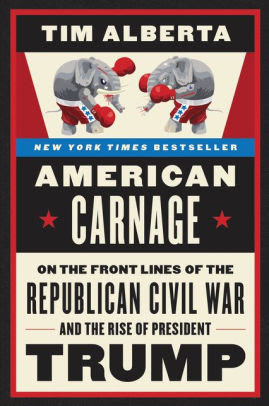
American Carnage: On the Front Lines of the Republican Civil War and the Rise of President Trump
Tim Alberta

This anatomy of moral cowardice and seamy self-interest watches the Republicans shrug off their principles as they surrender to Trump’s hostile takeover of their party and make “a deal with the devil”. The obsequious Mike Pence once told friends that he “loathed Trump”, and Lindsey Graham aptly defined him as “a race-baiting, xenophobic religious bigot”; then they and their cronies got down to some slavish bootlicking. It will be fun to watch them belying their lies if and when he loses.
Read about the other entries on the list.

--Marshal Zeringue

Sunday, November 01, 2020

Louise Guy's "A Life Worth Living," the movie

Featured at My Book, The Movie: A Life Worth Living by Louise Guy.

The entry begins:
What a thrill it must be to have a book turned into a movie! I think most authors can picture their story on the big screen as, for many, the visual images have been playing in their minds for months (years even) as they’ve been immersed in writing the story.

A Life Worth Living follows the very contrasted lives of identical twins, Leah and Eve. When a terrible incident occurs, a spur of the moment decision is made, which directly impacts the future of their loved ones. This decision weighs heavily on one sister, as the past, present, and future all collides.

In going down the fantasy road of dream casting A Life Worth Living, the first thing required is to move the story’s location! Set in Australia, I would move it to a US setting and a Hollywood production company. Keeping some Australian ties, Blossom Films, Nicole Kidman’s production company, would be the perfect fit for this story. They are so good at showcasing strong female leads and I believe would do a fantastic job of recreating the horrific situation Leah and Eve find themselves in and the subsequent fall out as the story takes an unexpected twist.

With two sets of twins, A Life Worth Living is probably a casting agent’s nightmare! For Leah and Eve, I imagine one actress would play both roles. When writing Leah’s storyline, I pictured Scarlett Johansson in the role and thought she’d do an excellent job playing both parts. Sean, Eve’s husband, is...[read on]
Visit Louise Guy's website.

The Page 69 Test: A Life Worth Living.

My Book, The Movie: A Life Worth Living.

--Marshal Zeringue

Seven of the best scary stories of recent years

Daisy Johnson was born in 1990. Her debut short-story collection, Fen, was published in 2016. In 2018 she became the youngest author ever to be shortlisted for the Man Booker Prize with her debut novel Everything Under. She is the winner of the Harper’s Bazaar Short Story Prize, the A. M. Heath Prize and the Edge Hill Short Story Prize.

Johnson's latest novel is Sisters.

At the Guardian, she tagged seven of the best scary stories of recent years, including:
For many readers, Jackson is the best of all horror writers, a master of tension and unravelling sanity. In the biography Shirley Jackson: A Rather Haunted Life, Ruth Franklin unravels some of the myths that surrounded the writer and also shows us a picture of a life that in some ways contains many of the things Jackson was writing about. Plagued with a fear of the outside world and an obsessive, panicked need to write, Jackson at times appears as one of her own characters – paranoid, compulsive, afraid.
Read about another entry on the list.

Shirley Jackson: A Rather Haunted Life is one of Leah Schnelbach's ten sci-fi and fantasy must-reads from the 2010s.

The Page 99 Test: Shirley Jackson: A Rather Haunted Life.

--Marshal Zeringue

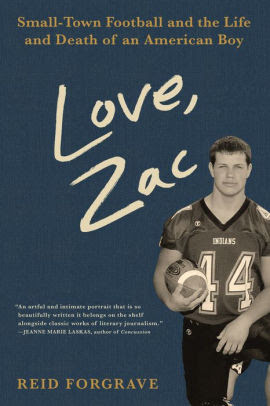
Pg. 99: Reid Forgrave's "Love, Zac"

Featured at the Page 99 Test: Love, Zac: Small-Town Football and the Life and Death of an American Boy by Reid Forgrave.

About the book, from the publisher:
Zac Easter could be your neighbor, your classmate, your son.

In December 2015, Zac Easter, a twenty-four-year-old from small-town Iowa, decided to take his own life rather than continue his losing battle against the traumatic brain injuries he had sustained as a no-holds-barred high school football player.

For this deeply reported and powerfully moving true story, award-winning writer Reid Forgrave was given access to Zac’s own diaries and was able to speak with Zac’s family, friends, and coaches. He explores Zac’s tight-knit, football-obsessed Midwestern community; he interviews leading brain scientists, psychologists, and sports historians; and he takes a deep dive into the triumphs and sins of the sports entertainment industry.

Forgrave shows us how football mirrors America, from the fighting spirit the game has helped inscribe in our national character to the side effects of the traditional notions of manhood that it affirms. But above all, Love, Zac is a warning to parents and those entrusted with the care of our kids not to ignore concussions and warning signs of CTE (chronic traumatic encephalopathy). For parents struggling to decide whether to allow their kids to play football, this eye-opening, heart-wrenching, and ultimately inspiring story may be one of the most important books they will read.
Visit Reid Forgrave's website.

The Page 99 Test: Love, Zac.

--Marshal Zeringue

Q&A with K. Eason

From my Q&A with K. Eason, author of How the Multiverse Got Its Revenge.
How much work does your title do to take readers into the story?

I do not enjoy coming up with titles. Sometimes they just...happen. Most of the time they do not, and my working titles don't survive. My agent and I collaborated to get How the Multiverse Got Its Revenge when the publisher rightfully nixed the working version. As a title, it does a lot of work--it links to How Rory Thorne Destroyed the Multiverse in obvious structural ways, but it also describes the flavor and trajectory of the story inside. This is a story of consequences, and what happens after you break things. This is about what happens when happily ever after isn't.

What's in a name?

Personal names in the Thorne Chronicles are...[read on]
Visit K. Eason's website.

The Page 69 Test: How Rory Thorne Destroyed the Multiverse.

Q&A with K. Eason.

--Marshal Zeringue