Sunday, July 10, 2016

Pg. 99: James Wolfinger's "Running the Rails"

Featured at the Page 99 Test: Running the Rails: Capital and Labor in the Philadelphia Transit Industry by James Wolfinger.

About the book, from the publisher:
Philadelphia exploded in violence in 1910. The general strike that year was a notable point, but not a unique one, in a generations-long history of conflict between the workers and management at one of the nation's largest privately owned transit systems. In Running the Rails, James Wolfinger uses the history of Philadelphia’s sprawling public transportation system to explore how labor relations shifted from the 1880s to the 1960s. As transit workers adapted to fast-paced technological innovation to keep the city’s people and commerce on the move, management sought to limit its employees’ rights. Raw violence, welfare capitalism, race-baiting, and smear campaigns against unions were among the strategies managers used to control the company’s labor force and enhance corporate profits, often at the expense of the workers’ and the city’s well-being.

Public service workers and their unions come under frequent attack for being a "special interest" or a hindrance to the smooth functioning of society. This book offers readers a different, historically grounded way of thinking about the people who keep their cities running. Working in public transit is a difficult job now, as it was a century ago. The benefits and decent wages Philadelphia public transit workers secured—advances that were hard-won and well deserved—came as a result of fighting for decades against their exploitation. Given capital’s great power in American society and management's enduring quest to control its workforce, it is remarkable to see how much Philadelphia’s transit workers achieved.
Learn more about Running the Rails at the Cornell University Press website.

The Page 99 Test: Running the Rails.

--Marshal Zeringue

Pg. 69: Tiffany Reisz's "The Bourbon Thief"

Featured at the Page 69 Test: The Bourbon Thief by Tiffany Reisz.

About the book, from the publisher:
Betrayal, revenge and a family scandal that bore a 150–year–old mystery

When Cooper McQueen wakes up from a night with a beautiful stranger, it's to discover he's been robbed. The only item stolen—a million-dollar bottle of bourbon. The thief, a mysterious woman named Paris, claims the bottle is rightfully hers. After all, the label itself says it's property of the Maddox family who owned and operated the Red Thread Bourbon distillery since the last days of the Civil War, until the company went out of business for reasons no one knows… No one except Paris.

In the small hours of a Louisville morning, Paris unspools the lurid tale of Tamara Maddox, heiress to the distillery that became an empire. Theirs is a legacy of wealth and power, but also of lies, secrets and sins of omission. Why Paris wants the bottle of Red Thread remains a secret until the truth of her identity is at last revealed, and the century-old vengeance Tamara vowed against her family can finally be completed.
Visit Tiffany Reisz's website.

The Page 69 Test: The Bourbon Thief.

--Marshal Zeringue

Saturday, July 09, 2016

Twelve novel adaptations that Hollywood should take another shot at

At io9 Andrew Liptak tagged twelve novels that deserve better adaptations than Hollywood produced, including:
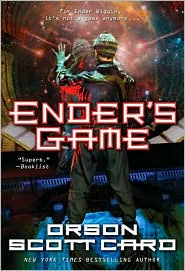
Ender’s Game

Ender’s Game, despite the controversy over Orson Scott Card’s political views, is one of the genre’s best-known novels, and it was a film that was stuck in development hell for decades. When the technology to film the complicated battle room scenes became practical, the result was an adaptation that was fairly faithful to the book, but that lacked all of its intensity.

After watching it, I felt like it was the best that we’d ever get, but after so many years of waiting, it felt deflated. We never quite feel the intensity of the training and how Ender was utterly broken by the end of it.

If we could get another version of this? Stick with Ender’s Game as a characters story, rather than getting caught up in the CGI fest that the movie ultimately became.
Read about another entry on the list.

Ender's Game is among Andrew Liptak top eleven sci-fi reads that might tempt video gamers to put down the controller and try reading, Chris Kluwe's six favorite books, and Jennifer Griffith Delgado's 11 most mind-blowing surprise endings in science fiction.

--Marshal Zeringue

What is Craig A. Monson reading?

Featured at Writers Read: Craig A. Monson, author of Habitual Offenders: A True Tale of Nuns, Prostitutes, and Murderers in Seventeenth-Century Italy.

His entry begins:
I’m certainly not alone in having discovered the utility of Google Books’ Library Project. As a writer of history, I spent decades planning research trips around libraries likely to contain specific volumes. (Before online catalogs it could be difficult even to discover where copies might be.) If I was lucky, my target library (usually in a major Italian city) would own a copy. If I was not, it did not—or the volume had been lost, misshelved, reserved for restoration or rebinding. Modern-day, in-house digitization isn’t always a solution to such problems. Last month I arrived at a Roman institution to discover a fragile collection had been digitized: at the click of a mouse, the manuscripts would be accessible on the institution’s computers; the originals had been permanently withdrawn from circulation. Alas, the digital copy had somehow contracted a virus. Until funds for disinfection become available—unlikely, given the state of the Italian economy—these sources remain out of reach.

Small wonder, then, that Google Books’ Library Project seems like some sort of miracle. I am regularly amazed, not only by how wide the enterprise has cast its net, but especially by the small fry caught up in it....[read on]
About Habitual Offenders, from the publisher:
In April 1644, two nuns fled Bologna’s convent for reformed prostitutes. A perfunctory archiepiscopal investigation went nowhere, and the nuns were quickly forgotten. By June of the next year, however, an overwhelming stench drew a woman to the wine cellar of her Bolognese townhouse, reopened after a two-year absence—where to her horror she discovered the eerily intact, garroted corpses of the two missing women.

Drawing on over four thousand pages of primary sources, the intrepid Craig A. Monson reconstructs this fascinating history of crime and punishment in seventeenth-century Italy. Along the way, he explores Italy’s back streets and back stairs, giving us access to voices we rarely encounter in conventional histories: prostitutes and maidservants, mercenaries and bandits, along with other “dubious” figures negotiating the boundaries of polite society. Painstakingly researched and breathlessly told, Habitual Offenders will delight historians and true-crime fans alike.
Learn more about the book and author at the University of Chicago Press website.

The Page 99 Test: Nuns Behaving Badly.

The Page 99 Test: Habitual Offenders.

Writers Read: Craig A. Monson.

--Marshal Zeringue

Five of the best Jazz Age romances

Corrina Lawson tagged five top Jazz Age romances at the B&N Reads blog, including:
The Gin Lovers, by Jamie Brenner

New York City is in the midst of the Roaring Twenties, and you’d think a society woman would have her pick of fun adventures, but Charlotte is stuck in a loveless marriage. Until, that is, the arrival of her younger sister-in-law turns out to be her entry into the hidden speakeasys of the city and an answer to finding love. The story is great journey into this long-ago period and is sprinkled with appearances of some of the real people from the era, and it breathes life into various fascinating worlds in 1920’s New York.

This was originally published as a serial novel, which means the pace is refreshingly brisk. It’s also about something I love in romances: the heroine coming to realize her own strength.
Read about another entry on the list.

--Marshal Zeringue

Kelly Oliver's "Wolf," the movie

Featured at My Book, The Movie: Wolf by Kelly Oliver.

The entry begins:
I’m a big fan of Hollywood blockbusters. And, I’ve written several nonfiction books about film. When I wrote my first novel, Wolf, I thought a lot about its cinematic quality. It’s a dialogue and action driven novel with strong characters. The titular character of the mystery series is Jessica James, the cowgirl philosopher who with more wit than grace finds herself in the middle of art scams, murder plots, mafia revenge, rape conspiracies, and high-stakes poker games. Tripping over her own feet, but not over her sharp tongue, she stumbles upon the murderer in the nick of time. I could imagine Jessica being played by Jennifer Lawrence, who is known in real life for her smart-mouth and falling on the stairs.

Jessica James has a kickass best friend, Lolita Durchenko, who is a black-belt in karate and known around Chicago as the “poker Tsarina” for her high-stakes games. Because I loved...[read on]
To learn more about Oliver or The Jessica James Mysteries, visit Kelly Oliver's website.

My Book, The Movie: Wolf.

--Marshal Zeringue

Friday, July 08, 2016

Nadiya Hussain's 6 best books

Nadiya Hussain is a British-Bangladeshi baker, columnist and author, who won the sixth series of BBC's The Great British Bake Off (airing in the US as The Great British Baking Show). One of her six best books, as shared at the Daily Express:
THE LOVELY BONES by Alice Sebold

I was about 16 when a Waterstones bookshop opened in our town and this was the first book I picked up. I was so engrossed I read it at work in a six-hour shift. It’s told by the ghost of a young girl who was murdered and is about how her family fell apart. It’s a different take on a crime.
Read about another entry on the list.

The Lovely Bones is among Judith Claire Mitchell's ten best (unconventional) ghosts, Laura McHugh's ten favorite books about serial killers, and Tamzin Outhwaite's six best books.

--Marshal Zeringue

Pg. 69: Anne A. Wilson's "Clear to Lift"

Featured at the Page 69 Test: Clear to Lift by Anne A. Wilson.

About the book, from the publisher:
Navy helicopter pilot Lt. Alison Malone has been assigned to a search and rescue team based at Naval Air Station Fallon, Nevada, near the rugged peaks of the Sierra Nevada, and far from her former elite H-60 squadron. A rule follower by nature, Alison is exasperated and outraged every time she flies with her mission commander, "Boomer" Marks, for whom military procedures are merely a suggestion. Alison is desperate to be transferred out of the boonies, where careers stagnate, and back to her life and fiancé in San Diego.

Alison's defenses start to slip when she meets mountain guide Will Cavanaugh during a particularly dicey mission. Will introduces her to a wild, beautiful world of adventure that she has never known before. Stranded on a mountain during a sudden dangerous blizzard, Alison questions every truth she thought she knew about herself. When Will braves the storm to save her life, she must confront the fact that she has been living a lie. But is it too late to change course?

Full of action and adventure, dangerous and heart-stopping rescues, blizzards and floods, family secrets and second chances, Clear to Lift by Anne A. Wilson is a thrilling woman's journey as she finds confidence, truth, love, and herself against the majestic backdrop of the Sierra Nevada.
Visit Anne A. Wilson's website.

The Page 69 Test: Hover.

The Page 69 Test: Clear to Lift.

--Marshal Zeringue

Top ten novels about deranged killers

Chet Williamson has written horror, science fiction, and suspense since 1981. Among his novels are Second Chance, Hunters, Defenders of the Faith, Ash Wednesday, Reign, Dreamthorp, and the recently released Psycho Sanitarium, an authorized sequel to Robert Bloch's classic Psycho.

One of Williamson's ten top novels about deranged killers, as shared at the Guardian:
Paris Trout by Pete Dexter (1988)

The titular character of Dexter’s novel is a respected white businessman in Georgia after the second world war, who murders a 14-year-old black girl. The book is made up of his descent into murderous madness and the deterioration of his relationships with his wife and the members of the community. It ends in a blaze of violence that leaves the reader exhausted.
Read about another entry on the list.

--Marshal Zeringue

Pg. 99: Craig A. Monson's "Habitual Offenders"

Featured at the Page 99 Test: Habitual Offenders: A True Tale of Nuns, Prostitutes, and Murderers in Seventeenth-Century Italy by Craig A. Monson.

About the book, from the publisher:
In April 1644, two nuns fled Bologna’s convent for reformed prostitutes. A perfunctory archiepiscopal investigation went nowhere, and the nuns were quickly forgotten. By June of the next year, however, an overwhelming stench drew a woman to the wine cellar of her Bolognese townhouse, reopened after a two-year absence—where to her horror she discovered the eerily intact, garroted corpses of the two missing women.

Drawing on over four thousand pages of primary sources, the intrepid Craig A. Monson reconstructs this fascinating history of crime and punishment in seventeenth-century Italy. Along the way, he explores Italy’s back streets and back stairs, giving us access to voices we rarely encounter in conventional histories: prostitutes and maidservants, mercenaries and bandits, along with other “dubious” figures negotiating the boundaries of polite society. Painstakingly researched and breathlessly told, Habitual Offenders will delight historians and true-crime fans alike.
Learn more about the book and author at the University of Chicago Press website.

The Page 99 Test: Nuns Behaving Badly.

The Page 99 Test: Habitual Offenders.

--Marshal Zeringue

Thursday, July 07, 2016

What is Christian McKay Heidicker reading?

Featured at Writers Read: Christian McKay Heidicker, author of Cure for the Common Universe.

His entry begins:
Gone with the Wind by Margaret Mitchell

You never know if an über-popular book is going to crackle (Beloved, East of Eden) or crumble in your mouth like gluten-free bread (Ben-Hur, DaVinci Code). I started reading Wind because I wanted to find out if Margaret Mitchell was actually racist or if she was simply being honest about her characters and the era in which they lived. (The good people of Goodreads definitely lean toward the former.) Having just written a book with a main character with whom I did not see eye-to-eye, I was worried people might perceive his shortcomings as my own, and I wanted to see if there were others like me.

I stopped looking for clues hundreds of pages ago. I’m too delighted by the work. It’s funny. It’s intense. And thirty-eight hours into a fifty-hour audiobook, it hasn’t skipped a beat. Scarlett O’ Hara is one of the most fascinating train wrecks I’ve ever had the privilege of watching. Rhett Butler is a master conversationalist. I don’t want to meet either of them, but I love them.

Somewhere along the way, I think I may have found a clue as to what Mitchell thinks of...[read on]
About Cure for the Common Universe, from the publisher:
Prepare to be cured by this quirky and hilarious debut novel about a sixteen-year-old loner who is sent to rehab for video game addiction—perfect for fans of Ned Vizzini and Jesse Andrews.

Sixteen-year-old Jaxon is being committed to video game rehab…ten minutes after meeting a girl. A living, breathing girl named Serena, who not only laughed at his jokes but actually kinda sorta seemed excited when she agreed to go out with him.

Jaxon’s first date. Ever.

In rehab, Jaxon can’t blast his way through galaxies to reach her. He can’t slash through armies to kiss her sweet lips. Instead, he has four days to earn one million points by learning real-life skills. And he’ll do whatever it takes—lie, cheat, steal, even learn how to cross-stitch—in order to make it to his date.

If all else fails, Jaxon will have to bare his soul to the other teens in treatment, confront his mother’s absence, and maybe admit that it’s more than video games that stand in the way of a real connection.

From a bright new voice in young adult literature comes the story of a young man with a serious case of arrested development—and carpal tunnel syndrome—who is about to discover what real life is all about.
Visit C. M. Heidicker's website.

Cure for the Common Universe is among Shaun Byron Fitzpatrick's top seven geeky love stories that prove nerd love is the best love.

The Page 69 Test: Cure for the Common Universe.

Writers Read: Christian McKay Heidicker.

--Marshal Zeringue

Pg. 69: J.C. Lane's "Tag, You’re Dead"

Featured at the Page 69 Test: Tag, You're Dead by J.C. Lane.

About Tag, You're Dead, from the publisher:
Six young people play a dangerous Game of Tag in public, chasing through the crowds, streets, and buildings of Chicago. This secret, one-of-a-kind, wildly expensive Game offers a macabre twist to the childhood version…if you get Tagged, you get Dead.

Three “Its” have their reasons for buying a place in the Game. Surgically enhanced Brandy is obsessed with destroying a naturally beautiful girl. Untalented Robert covets his target’s position as superstar of the basketball team. Brainiac Charles craves a battle against an intellectual equal. Given their elite social status, they reject any possible downside to the contest. Each expects the satisfaction of killing their prey, then walking away.

Hand-picked innocents play as “Runners,” under threat to their loved ones should they refuse to participate: lovely, small-town Laura; celebrated athlete Tyrese; and Amanda, gamer extraordinaire. Alone, hunted by their adversary, each feels a single hope…to survive.

Technological wizardry controls the Game. As soon as Runners receive the “Go” signal on smartwatches locked to their wrists, the Game rockets them through the city, from the El to Michigan Avenue to the Lincoln Park Zoo. There is no time to rest. Every thirty minutes the Runner’s location is transmitted to the It, which steadily diminishes the Runner’s chance of ever reaching Home Base alive.

The Game will not end until someone is Tagged, so the Runners must choose how to play. Will they accept death? Murder their Its? Or find a way to use individual strengths to stop the Game before anyone dies?
Visit J.C. Lane's website.

My Book, The Movie: Tag, You're Dead.

Writers Read: J.C. Lane.

The Page 69 Test: Tag, You're Dead.

--Marshal Zeringue

Simone Zelitch's "Judenstaat," the movie

Featured at My Book, The Movie: Judenstaat by Simone Zelitch.

The entry begins:
Not that I’m biased, but Judenstaat would make a terrific movie. Its heroine is a film archivist, and there’s plenty of opportunity for black-and-white historical footage to be interspersed with the noir-style, semi-grubby, Eastern-bloc-style late 1980s present. I even have a soundtrack. My very hip older sister recently compiled a Judenstaat mix-tape of Schumann, Eisler, East-German underground punk rock, Yiddish ballads, and some Queen (one character’s favorite band!).

As for casting, Judit Klemmer the archivist/widow heroine would need to be introverted, dogged, and secretly beautiful . Claire Danes (with brown hair) would be perfect. I can imagine her wrapped in her dead husband’s overcoat, and casually addressing his ghost. She could play Judit as a college girl, in awe of her Hannah Arendt-like, brilliant, cynical, professor, Anna Lehman (as played by Kathy...[read on]
Visit Simone Zelitch's website.

The Page 69 Test: Judenstaat.

My Book, The Movie: Judenstaat.

--Marshal Zeringue

Six books that will inspire you to lace up your hiking boots

At the B&N Reads blog Monique Alice tagged six books that will inspire you to lace up your hiking boots, including:
A Walk in the Woods: Rediscovering America on the Appalachian Trail, by Bill Bryson

A Walk in the Woods has become a hiking classic in the nearly 20 years since its first publication, and it’s easy to see why. Travel writer Bill Bryson shares his journey to rediscover his home country after living abroad for many years. On his way from Georgia to Maine via the Appalachian Trail, he encounters a whole cast of characters: some funny, some infuriating, and some four-legged. Bryson’s deep love of the forests of the American East is well balanced by his snarky humor and malcontentedness. A Walk in the Woods is sure to snag an honorary place on your bookshelf after hiking season is through.
Read about another book on the list.

A Walk in the Woods is among Nick Offerman’s twelve favorite books, Will Howarth's best books for lovers of Henry Thoreau's "Walden", and Eric Blehm's ten favorite books.

--Marshal Zeringue

Wednesday, July 06, 2016

What is Sarvenaz Tash reading?

Featured at Writers Read: Sarvenaz Tash, author of The Geek's Guide to Unrequited Love.

Her entry begins:
I just finished Illuminae by Amie Kaufman and Jay Kristoff which so lived up to all the hype. It was probably the most insanely creative book I've ever read: so layered with plot and characterization and structure; and so beautifully presented. (This book 100% begs to be read in print, by the way)....[read on]
About The Geek's Guide to Unrequited Love, from the publisher:
John Hughes meets Comic Con in this hilarious, unabashedly romantic, coming-of-age novel about a teenager who is trying to get his best friend to fall in love with him from the author of Three Day Summer.

Peter Parker and Gwen Stacy...
Archie and Veronica...
Althena and Noth...
...Graham and Roxy?

Graham met his best friend, Roxana, when he moved into her neighborhood eight years ago, and she asked him which Hogwarts house he’d be sorted into. Graham has been in love with her ever since.

But now they’re sixteen, still neighbors, still best friends. And Graham and Roxy share more than ever—moving on from their Harry Potter obsession to a serious love of comic books.

When Graham learns that the creator of their favorite comic, The Chronicles of Althena, is making a rare appearance at this year’s New York Comic Con, he knows he must score tickets. And the event inspires Graham to come up with the perfect plan to tell Roxy how he really feels about her. He’s got three days to woo his best friend at the coolest, kookiest con full of superheroes and supervillains. But no one at a comic book convention is who they appear to be...even Roxy. And Graham is starting to realize fictional love stories are way less complicated than real-life ones.
Visit Sarvenaz Tash's website.

The Page 69 Test: The Geek's Guide to Unrequited Love.

Writers Read: Sarvenaz Tash.

--Marshal Zeringue

Pg. 69: Jane Rogers's "Conrad & Eleanor"

Featured at the Page 69 Test: Conrad & Eleanor: A Novel by Jane Rogers.

About the book, from the publisher:
From the multi-award-winning and critically acclaimed author of The Testament of Jessie Lamb comes this riveting novel about the devastating secrets revealed in the midst of a disintegrating marriage.

The story of a marriage, and of two lives in science.

When Conrad fails to return from a conference, Eleanor wonders if it is because of the affair she is having? Or perhaps it is because his research into transgenic monkey hearts is stalling; perhaps he is sick of having the less successful career of the two of them? She is a leading expert in stem cell research. Their grown-up children suspect Eleanor of murdering their father; El secretly fears that what has driven Con away is his discovery of their daughter Cara’s parentage.

While his family in Manchester, England, scrabble for clues and reasons, Conrad—alone, confused, and on the run from a crazed animal rights activist—loses himself in the cold foggy streets of Bologna. He revisits the stages of his long marriage to El, from the happiness of the year of Cara’s birth to the grief and anger he now feels. Both partners are forced to re-examine their relationship, and, in the process, to move closer to an understanding of what it is that matters most to each of them.

Conrad and Eleanor is a radical, remarkably nuanced look at marriage.
Visit Jane Rogers's website.

The Page 69 Test: Conrad & Eleanor.

--Marshal Zeringue

Five top stories about science gone sideways

At the B&N Sci-Fi & Fantasy blog Nicole Hill tagged five top stories in which "big science failed to see the flaws in its glorious inventions, until it was far, far too late," including:
Afterparty, by Daryl Gregory

To round out the list, let’s return to the theme of narcotics deployed with a remarkable lack of foresight. In this particular rendition of the near future, “smart drugs” are what all the kids are doing. And by doing, I mean creating. Much like meth or Shrinky Dinks, these drugs have been rendered so simple to produce by technological advances that anyone can design their own neuron-altering cocktail. Things do not go off without a hitch, as protagonist Lyda learns after she helps create a drug that engenders a complete, biochemically produced belief in God that proves deadly.
Read about another entry on the list.

Afterparty is among Adam Rowe's six top sci-fi and fantasy medical thrillers and Joel Cunningham's eleven fictional drugs with side effects that include creeping us out.

My Book, The Movie: Afterparty.

The Page 69 Test: Afterparty.

--Marshal Zeringue

Pg. 99: Charles Barr & Alain Kerzoncuf’s "Hitchcock Lost and Found"

Featured at the Page 99 Test: Hitchcock Lost and Found: The Forgotten Films by Alain Kerzoncuf and Charles Barr.

About the book, from the publisher:
Known as the celebrated director of critical and commercial successes such as Psycho (1960) and The Birds (1963), Alfred Hitchcock is famous for his distinctive visual style and signature motifs. While recent books and articles discussing his life and work focus on the production and philosophy of his iconic Hollywood-era films like Notorious (1946) and Vertigo (1958), Hitchcock Lost and Found moves beyond these seminal works to explore forgotten, incomplete, lost, and recovered productions from all stages of his career, including his early years in Britain.

Authors Alain Kerzoncuf and Charles Barr highlight Hitchcock’s neglected works, including various films and television productions that supplement the critical attention already conferred on his feature films. They also explore the director’s career during World War II, when he continued making high-profile features while also committing himself to a number of short war-effort projects on both sides of the Atlantic. Focusing on a range of forgotten but fascinating projects spanning five decades, Hitchcock Lost and Found offers a new, fuller perspective on the filmmaker’s career and achievements.
Learn more about Hitchcock Lost and Found: The Forgotten Films at the publisher's website.

The Page 99 Test: Hitchcock Lost and Found.

--Marshal Zeringue

Tuesday, July 05, 2016

What is J.C. Lane reading?

Featured at Writers Read: J.C. Lane, author of Tag, You're Dead.

Her entry begins:
At the Chicago ALA in 2013 I picked up an ARC of Between the Devil and the Deep Blue Sea, by debut author April Genevieve Tucholke. Because of a variety of factors, including my own book release, a bout with cancer, and other life kinds of things, I am only now reading this wonderful book. I can’t believe I’ve waited this long. Tucholke’s writing has drawn me in, from the characters to the narrative to the whole feeling of the story. Her prose is interesting and captivating, and the feel of the book is both beautiful and eerie. I’m still...[read on]
About Tag, You're Dead, from the publisher:
Six young people play a dangerous Game of Tag in public, chasing through the crowds, streets, and buildings of Chicago. This secret, one-of-a-kind, wildly expensive Game offers a macabre twist to the childhood version…if you get Tagged, you get Dead.

Three “Its” have their reasons for buying a place in the Game. Surgically enhanced Brandy is obsessed with destroying a naturally beautiful girl. Untalented Robert covets his target’s position as superstar of the basketball team. Brainiac Charles craves a battle against an intellectual equal. Given their elite social status, they reject any possible downside to the contest. Each expects the satisfaction of killing their prey, then walking away.

Hand-picked innocents play as “Runners,” under threat to their loved ones should they refuse to participate: lovely, small-town Laura; celebrated athlete Tyrese; and Amanda, gamer extraordinaire. Alone, hunted by their adversary, each feels a single hope…to survive.

Technological wizardry controls the Game. As soon as Runners receive the “Go” signal on smartwatches locked to their wrists, the Game rockets them through the city, from the El to Michigan Avenue to the Lincoln Park Zoo. There is no time to rest. Every thirty minutes the Runner’s location is transmitted to the It, which steadily diminishes the Runner’s chance of ever reaching Home Base alive.

The Game will not end until someone is Tagged, so the Runners must choose how to play. Will they accept death? Murder their Its? Or find a way to use individual strengths to stop the Game before anyone dies?
Visit J.C. Lane's website.

My Book, The Movie: Tag, You're Dead.

Writers Read: J.C. Lane.

--Marshal Zeringue

Five top science fiction novels about sheep

Robert Kroese's new novel is The Big Sheep.

For Tor.com the author tagged five science fiction novels about sheep, including:
Do Androids Dream of Electric Sheep? by Philip K. Dick

This one’s a gimme. Philip Dick’s novel about what it means to be human—or a sheep—is a science fiction classic. Alternately disturbing and hilarious, it’s one of Dick’s best. It was also the inspiration for the film Blade Runner, which is a classic in its own right.
Read about another entry on the list.

Do Androids Dream of Electric Sheep? also appears on Ceridwen Christensen's list of eleven stories of love and robots, Ryan Britt's list of six of the best detectives from science fiction literature, Weston Williams's list of fifteen classic science fiction books, Allegra Frazier's list of four great dystopian novels that made it to the big screen, Ryan Menezes's list of five movies that improved the book, Amanda Yesilbas and Charlie Jane Anders's list of the twelve most unfaithful movie versions of science fiction and fantasy books, Katharine Trendacosta and Charlie Jane Anders's list of the ten greatest personality tests in sci-fi & fantasy, John Mullan's list of ten of the best titles in the form of questions, Charlie Jane Anders and Michael Ann Dobbs's list of ten classic sci-fi books that were originally considered failures and Robert Collins's top ten list of dystopian novels.

--Marshal Zeringue

Pg. 69: Simone Zelitch's "Judenstaat"

Featured at the Page 69 Test: Judenstaat by Simone Zelitch.

About the book, from the publisher:
Simone Zelitch has created an amazing alternate history in Judenstaat. On April 4th, 1948 the sovereign state of Judenstaat was created in the territory of Saxony, bordering Germany, Poland, and Czechoslovakia.

Forty years later, Jewish historian Judit Klemmer is making a documentary portraying Judenstaat's history from the time of its founding to the present. She is haunted by the ghost of her dead husband, Hans, a Saxon, shot by a sniper as he conducted the National Symphony. With the grief always fresh, Judit lives a half-life, until confronted by a mysterious, flesh-and-blood ghost from her past who leaves her controversial footage on one of Judenstaat's founding fathers--and a note:

"They lied about the murder."

Judit's research into the footage, and what really happened to Hans, embroils her in controversy and conspiracy, collective memory and national amnesia, and answers far more horrific than she imagined.
Visit Simone Zelitch's website.

The Page 69 Test: Judenstaat.

--Marshal Zeringue

Susie Steiner's "Missing, Presumed," the movie

Featured at My Book, The Movie: Missing, Presumed by Susie Steiner.

The entry begins:
I've probably given this more thought than I ought to, as Missing, Presumed has been optioned for television here in the UK. It was hard to think of an actress for Manon, as in my mind she's such a big character and no actress seemed to fill her boots. But I've recently watched Keeley Hawes in UK dramas Line of Duty and The Durrells and think she has the knack for comedy that Manon needs.

Will Carter clearly needs to be played by someone devastatingly handsome, so James...[read on]
Visit Susie Steiner's website.

Writers Read: Susie Steiner.

The Page 69 Test: Missing, Presumed.

My Book, The Movie: Missing, Presumed.

--Marshal Zeringue

Monday, July 04, 2016

Five top steamy YA New York–set summer stories

At the BN Teen blog, Jenny Kawecki tagged five top Young Adult novels for readers who love love stories, summer adventures, and New York City, including:
Great, by Sara Benincasa

Naomi isn’t looking forward to another summer spent with her socialite mother and the designer-clad teens she’ll never quite fit in with. But things are different this year: Naomi gets caught up in the fabulous, almost magical life of her neighbor, internet-famous fashion blogger Jacinta. But when Jacinta’s world turns out to be a carefully constructed web of lies, and her friendship is based on ulterior motives (namely, getting closer to Delilah Fairweather), Naomi has to decide if being used by her is worth the thrills. Full of Long Island parties and lovely twists, Great is the Great Gatsby retelling you didn’t know you needed.
Read about another entry on the list.

Great is among Sabrina Rojas Weiss's four top YA retellings of classic works and Dahlia Adler's six great Young Adult retellings of classics.

--Marshal Zeringue

What is Larry Watson reading?

Featured at Writers Read: Larry Watson, author of As Good as Gone: A Novel.

His entry begins:
I teach as well as write, and over the summer, I’ll be reading and rereading books by and about Ernest Hemingway. Among the works about Hemingway will be Michael Reynolds’ five volume biography. It’s a readable, fascinating look at the life and the fiction, and the ways they converge and differ. Hemingway could be a jerk as well as a genius, and while I know full well that those qualities are not incompatible, that good character is not a requirement to creating great art—or playing great baseball or making great music—I still wish that the people whose work I admire could themselves be admirable. In that regard, I’m still like the hero-worshipping kid I once was. Fortunately, Hemingway was...[read on]
About As Good as Gone, from the publisher:
Calvin Sidey is always ready to run, and it doesn’t take much to set him in motion. As a young man, he ran from this block, from Gladstone, from Montana, from this country. From his family and the family business. He ran from sadness, and he ran from responsibility. If the gossip was true, he ran from the law.

It’s 1963, and Calvin Sidey, one of the last of the old cowboys, has long ago left his family to live a life of self-reliance out on the prairie. He’s been a mostly absentee father and grandfather until his estranged son asks him to stay with his grandchildren, Ann and Will, for a week while he and his wife are away. So Calvin agrees to return to the small town where he once was a mythic figure, to the very home he once abandoned.

But trouble soon comes to the door when a boy’s attentions to seventeen-year-old Ann become increasingly aggressive and a group of reckless kids portend danger for eleven-year-old Will. Calvin knows only one way to solve problems: the Old West way, in which scores are settled and ultimatums are issued and your gun is always loaded. And though he has a powerful effect on those around him--from the widowed neighbor who has fallen under his spell to Ann and Will, who see him as the man who brings a sudden and violent order to their lives--in the changing culture of the 1960s, Calvin isn’t just a relic; he’s a wild card, a danger to himself and those who love him.

In As Good as Gone, Larry Watson captures our longing for the Old West and its heroes, and he challenges our understanding of loyalty and justice. Both tough and tender, it is a stunning achievement.
Visit Larry Watson's website.

The Page 69 Test: As Good as Gone.

My Book, The Movie: As Good as Gone.

Writers Read: Larry Watson.

--Marshal Zeringue

Pg. 99: Kelly Oliver's "Hunting Girls"

Featured at the Page 99 Test: Hunting Girls: Sexual Violence from The Hunger Games to Campus Rape by Kelly Oliver.

About the book, from the publisher:
Katniss Everdeen (The Hunger Games), Bella Swan (Twilight), Tris Prior (Divergent), and other strong and resourceful characters have decimated the fairytale archetype of the helpless girl waiting to be rescued. Giving as good as they get, these young women access reserves of aggression to liberate themselves—but who truly benefits? By meeting violence with violence, are women turning victimization into entertainment? Are they playing out old fantasies, institutionalizing their abuse?

In Hunting Girls, Kelly Oliver examines popular culture's fixation on representing young women as predators and prey and the implication that violence—especially sexual violence—is an inevitable, perhaps even celebrated, part of a woman's maturity. In such films as Kick-Ass (2010), The Girl with the Dragon Tattoo (2011), and Maleficent (2014), power, control, and danger drive the story, but traditional relationships of care constrict the narrative, and even the protagonist's love interest adds to her suffering. To underscore the threat of these depictions, Oliver locates their manifestation of violent sex in the growing prevalence of campus rape, the valorization of woman's lack of consent, and the new urgency to implement affirmative consent apps and policies.
Visit Kelly Oliver's website.

The Page 99 Test: Women as Weapons of War.

The Page 99 Test: Animal Lessons.

The Page 99 Test: Hunting Girls.

--Marshal Zeringue

Sunday, July 03, 2016

Five of the best short stories

Danny Heitman, a columnist for The Baton Rouge Advocate, is the author of A Summer of Birds: John James Audubon at Oakley House. One of his five favorite short stories, as shared at the Christian Science Monitor:
Eudora Welty’s “Why I Live at the P.O.”

In college English class, I laughed to the point of tears while reading this comic monologue of a self-absorbed narrator discussing her Southern gothic family. My professor advised us not to analyze the tale, but simply enjoy it. Good advice for savoring Welty, one of the great pleasure-givers in the English language.
Read about another entry on the list.

Also see: Tessa Hadley's top ten short stories, Rosamund Bartlett's five top books on Russian short stories, Chris Priestley's top ten scary short stories, Jane Ciabattari's five must-read short-story collections, and Alison MacLeod's top ten short stories.

--Marshal Zeringue

J. C. Lane's "Tag, You’re Dead," the movie

Featured at My Book, The Movie: Tag, You're Dead by J.C. Lane.

The entry begins:
Just thinking about this makes me crazy with excitement. I would so love to see this book as a movie. As millions of other people have thought about their own books (right?), Tag, You’re Dead would lend itself very well to the big screen!

Tag, You’re Dead has six protagonists – all teenagers. I scoured the web and my brain for teenage actors who would fit the parts, and came up short. All of the actors I considered were too old, or just not quite right for some other reason. Perhaps the best way to cast this movie would be to find six people who are unknown, so that casting would be even throughout the story. Plus, I would feel so great if this book could be a launching pad for six great young actors. But I’ll give my own casting a shot.

Race and body type are important for several of the characters, as those characteristics play parts in the story. For instance, Tyrese Broadstreet is a big, athletic African-American basketball player (described as “glorious”). I think of him as a younger Michael B. Jordan (or the other Michael Jordan, for that matter). His counterpart, Robert Matthews, is equally as big, also a basketball player, but white. Someone like a teenage Charlie...[read on]
Visit J.C. Lane's website.

My Book, The Movie: Tag, You're Dead.

--Marshal Zeringue

Seventeen books for the wedding season

One of seventeen books to read during wedding season, as recommended by TheReadDown:
The Engagements

An exhilarating novel about Frances Gerety, the real pioneering ad woman who coined the famous slogan “A Diamond is Forever,” and four unique marriages that will test how true—or not—those words might be.
Read about another entry on the list.

Also see seven of the best romances for wedding season; the seven best literary wedding themes; six top books about weddings and marriage; the six most momentous weddings in fiction; six top books about marriage; and the ten best weddings in literature.

--Marshal Zeringue

Pg. 69: Susie Steiner's "Missing, Presumed"

Featured at the Page 69 Test: Missing, Presumed by Susie Steiner.

About Missing, Presumed, from the publisher:
At thirty-nine, Manon Bradshaw is a devoted and respected member of the Cambridgeshire police force, and though she loves her job, what she longs for is a personal life. Single and distant from her family, she wants a husband and children of her own. One night, after yet another disastrous Internet date, she turns on her police radio to help herself fall asleep—and receives an alert that sends her to a puzzling crime scene.

Edith Hind—a beautiful graduate student at Cambridge University and daughter of the surgeon to the Royal Family—has been missing for nearly twenty-four hours. Her home offers few clues: a smattering of blood in the kitchen, her keys and phone left behind, the front door ajar but showing no signs of forced entry. Manon instantly knows that this case will be big—and that every second is crucial to finding Edith alive.

The investigation starts with Edith’s loved ones: her attentive boyfriend, her reserved best friend, her patrician parents. As the search widens and press coverage reaches a frenzied pitch, secrets begin to emerge about Edith’s tangled love life and her erratic behavior leading up to her disappearance. With no clear leads, Manon summons every last bit of her skill and intuition to close the case, and what she discovers will have shocking consequences not just for Edith’s family but for Manon herself.

Suspenseful and keenly observed, Missing, Presumed is a brilliantly twisting novel of how we seek connection, grant forgiveness, and reveal the truth about who we are.
Visit Susie Steiner's website.

Writers Read: Susie Steiner.

The Page 69 Test: Missing, Presumed.

--Marshal Zeringue

Saturday, July 02, 2016

Five novels inspired by sensational chapters in history

Jeff Somers is the author of Lifers, the Avery Cates series from Orbit Books, Chum from Tyrus Books, and We Are Not Good People from Pocket/Gallery. He has published over thirty short stories as well. One of Somers's five most surprising books that turn out to be based on things that actually happened, as shared at B&N Reads:
The Black Dahlia, by James Ellroy
Historical Inspiration: Elizabeth Short

Ellroy’s modern classic was the book that made people sit up and take notice of him as a serious author instead of just a successful genre writer, and the novel takes its inspiration from the oldest unsolved murder in the history of Los Angeles, that of Elizabeth Short. She was nicknamed the Black Dahlia by newspapers covering her case in 1947, a case that has many theories and players but no real answers. Ellroy used the notorious murder as a jumping-off point for depicting his version of 1940s L.A. as a quagmire of corruption and sin, resulting in one of the best noir novels ever written, a story that skillfully blends fiction and fact into a mesmerizing tableau of modern horror.
Read about another entry on the list.

The Black Dahlia appears among Lynda La Plante's six best books and Jonathan Kellerman's six favorite books, and on David Bowman's list of five great noir novels from the post-Chandler generations.

--Marshal Zeringue

What is Susie Steiner reading?

Featured at Writers Read: Susie Steiner, author of Missing, Presumed.

Her entry begins:
I loved Shirley Barrett's debut, Rush Oh, set on a whaling station in Australia at the turn of the century. All the detail about how killer whales and whalers worked together to hunt humbacks is riveting. It's also a coming of age novel, with a loveable narrator and lots of gentle humour.

I've also just read...[read on]
About Missing, Presumed, from the publisher:
At thirty-nine, Manon Bradshaw is a devoted and respected member of the Cambridgeshire police force, and though she loves her job, what she longs for is a personal life. Single and distant from her family, she wants a husband and children of her own. One night, after yet another disastrous Internet date, she turns on her police radio to help herself fall asleep—and receives an alert that sends her to a puzzling crime scene.

Edith Hind—a beautiful graduate student at Cambridge University and daughter of the surgeon to the Royal Family—has been missing for nearly twenty-four hours. Her home offers few clues: a smattering of blood in the kitchen, her keys and phone left behind, the front door ajar but showing no signs of forced entry. Manon instantly knows that this case will be big—and that every second is crucial to finding Edith alive.

The investigation starts with Edith’s loved ones: her attentive boyfriend, her reserved best friend, her patrician parents. As the search widens and press coverage reaches a frenzied pitch, secrets begin to emerge about Edith’s tangled love life and her erratic behavior leading up to her disappearance. With no clear leads, Manon summons every last bit of her skill and intuition to close the case, and what she discovers will have shocking consequences not just for Edith’s family but for Manon herself.

Suspenseful and keenly observed, Missing, Presumed is a brilliantly twisting novel of how we seek connection, grant forgiveness, and reveal the truth about who we are.
Visit Susie Steiner's website.

Writers Read: Susie Steiner.

--Marshal Zeringue

Five books in which special powers have unfortunate side effects

Sarah Fine is a clinical psychologist and the author of the Servants of Fate and Guards of the Shadowlands series. Her latest novel is Reliquary.

At Tor.com Fine tagged five books in which superpowers have unfortunate side effects, including:
Dead Until Dark by Charlaine Harris

In the long running and compulsively readable Sookie Stackhouse series, the eponymous heroine simply wants to live a normal life in her little home town of Bon Temps, Louisiana. Only problem—she can hear the thoughts of the people around her. Sounds like a cool power, except it means she’s privy not only to everyone’s secrets, but also their thoughts about her. Worse, she can’t always hide it, and so everyone knows there’s something off about Sookie. Having that endless cacophony in her head is sometimes more than she can take, leading her to seek the company of vampires, whose thoughts she can’t hear. Bloody shenanigans ensue.
Read about another entry on the list.

Dead Until Dark is among Rebecca Jane Stokes's top ten books about women in peril…who fought back.

--Marshal Zeringue

Pg. 99: Ann Patty's "Living with a Dead Language"

Featured at the Page 99 Test: Living with a Dead Language: My Romance with Latin by Ann Patty.

About the book, from the publisher:
An entertaining exploration of the richness and relevance of the Latin language and literature, and an inspiring account of finding renewed purpose through learning something new and challenging

After thirty-five years as a book editor in New York City, Ann Patty stopped working and moved to the country. Bored, aimless, and lost in the woods, she hoped to challenge her restless, word-loving brain by beginning a serious study of Latin at local colleges.

As she begins to make sense of Latin grammar and syntax, her studies open unexpected windows into her own life. The louche poetry of Catullus calls up her early days in 1970s New York, Lucretius elucidates her intractable drivenness and her attraction to Buddhism, while Ovid’s verse conjures a delightful dimension to the flora and fauna that surround her. Women in Roman history, and an ancient tomb inscription give her new understanding and empathy for her tragic, long deceased mother. Finally, Virgil reconciles her to her new life—no longer an urban exile, but a rustic scholar, writer and teacher. Along the way, she meets an impassioned cast of characters: professors, students and classicists outside of academia who keep Latin very much alive.

Written with humor, heart, and an infectious enthusiasm for words, Patty’s book is an object lesson in how learning and literature can transform the past and lead to an unexpected future.
Visit Ann Patty's website.

The Page 99 Test: Living with a Dead Language.

--Marshal Zeringue

Friday, July 01, 2016

Ten great foxes in children’s books

Ali Sparkes is a British children's author.

One of her top ten foxy fables, as shared at the Guardian:
Fox in Sox by Dr Seuss

In gloriously weird illustration, the fox in Dr Seuss’s superb tongue twisting tale is once again represented as a clever sweet-talker. Poor Mr Knox hasn’t a hope of escaping the Fox In Socks’s increasingly bonkers word games… or has he?
Read about another entry on the list.

Fox in Sox is among Whitney Collins's top five children’s books that make you feel like you're drunk.

--Marshal Zeringue

What is Robert H. Patton reading?

Featured at Writers Read: Robert H. Patton, author of Cajun Waltz.

His entry begins:
Not unusually, I’ve got a mishmash of things on my desk, my office floor, my bedside table, and my iPad. To take them in order:

My desk is crowded with a bunch of nonfiction that I’m reading as background for a series of historical novels I’m doing for Thomas Dunne. The series is based on a book I wrote a few years back about Revolutionary War privateering, so the stuff is mostly related to maritime matters of trade, warfare, and political skullduggery in the colonial era. Atop the pile is N.A.M. Rodgers’s classic study of the Georgian Royal Navy, The Wooden World, and a fine new naval history of the American Revolution by Sam Willis, The Struggle for Sea Power, just released by Norton. Willis covers a broad canvas from Canada to the Caribbean to the European Continent with clarity, smarts, and an appealing light touch. Anyone interested in the subject should check it out.

Down on my floor there’s A Sea of Words by Dean King, a nicely arranged lexicon of nautical terms and technical jargon relating to colonial ships and seamen. King is a fanatical expert (I mean that as a compliment) on the Aubrey-Maturin novels of Patrick O’Brian. If...[read on]
About Cajun Waltz, from the publisher:
The lyrics of a Cajun waltz may be dark as midnight with heartache and trouble, but still the music swings. The same goes for what happens after a shifty musician and a lonely shopgirl let destiny sweep them into an ill-suited marriage in swampy southwest Louisiana on the eve of the Depression.

Love doesn’t much figure between Richie Bainard and Esther Block. They build a business together while dreaming opposite dreams of fulfillment. But like a gumbo simmering with peppers and spice, desires finally come to a boil.

Three generations of the volatile clan grapple with the region’s economic struggles and racial tensions. The Bainard children, twins Bonnie and R.J. and their half-brother, Seth, pursue separate cravings for money, sex, and religion. The chase in each case runs off the rails thanks to an ex-marine with a soft heart and a brutish devotion, a dazzling young stepmother of mixed race and mixed motives, and a high school tart who proves tougher and truer than all of them. Ultimately it takes the mass devastation of Hurricane Audrey in 1957 to cleanse the reckless passions. The aftermath is painful but pure, like an old blues song that puts tears in your eyes while you dance.
Visit Robert H. Patton's website.

My Book, The Movie: Cajun Waltz.

Writers Read: Robert H. Patton.

--Marshal Zeringue

Pg. 69: Christian McKay Heidicker's "Cure for the Common Universe"

Featured at the Page 69 Test: Cure for the Common Universe by Christian McKay Heidicker.

About the book, from the publisher:
Prepare to be cured by this quirky and hilarious debut novel about a sixteen-year-old loner who is sent to rehab for video game addiction—perfect for fans of Ned Vizzini and Jesse Andrews.

Sixteen-year-old Jaxon is being committed to video game rehab…ten minutes after meeting a girl. A living, breathing girl named Serena, who not only laughed at his jokes but actually kinda sorta seemed excited when she agreed to go out with him.

Jaxon’s first date. Ever.

In rehab, Jaxon can’t blast his way through galaxies to reach her. He can’t slash through armies to kiss her sweet lips. Instead, he has four days to earn one million points by learning real-life skills. And he’ll do whatever it takes—lie, cheat, steal, even learn how to cross-stitch—in order to make it to his date.

If all else fails, Jaxon will have to bare his soul to the other teens in treatment, confront his mother’s absence, and maybe admit that it’s more than video games that stand in the way of a real connection.

From a bright new voice in young adult literature comes the story of a young man with a serious case of arrested development—and carpal tunnel syndrome—who is about to discover what real life is all about.
Visit C. M. Heidicker's website.

Cure for the Common Universe is among Shaun Byron Fitzpatrick's top seven geeky love stories that prove nerd love is the best love.

The Page 69 Test: Cure for the Common Universe.

--Marshal Zeringue

Larry Watson's "As Good As Gone," the movie

Featured at My Book, The Movie: As Good as Gone: A Novel by Larry Watson.

The entry begins:
I’ve been asked in the past, when there’s been a flurry of film interest in a novel of mine, whom I’d like to see play certain characters. And though it’s just an exercise in fantasy (after all, the producers will decide that the female octogenarian poker player will work better as a nine-year-old boy who’s a chess genius) I’ve never been able to play along. I can see my characters very clearly, and I just can’t substitute another face in my imagination. In As Good As Gone, however, I can get in on the game because a few reviewers have already been casting the movie in their remarks about the novel.

Clint Eastwood, Sam Elliott, and Robert Duvall have all been suggested as the right actor to play Calvin Sidey, the cantankerous aging cowboy who has signed on to watch his grandchildren while their parents are away. I admire those actors, and I’m sure any of them would be terrific.

And for Calvin’s love interest, Beverly Lodge...[read on]
Visit Larry Watson's website.

The Page 69 Test: As Good as Gone.

My Book, The Movie: As Good as Gone.

--Marshal Zeringue