Thursday, December 10, 2015

Five go-to fantasy novels with gender equal societies

Kelley Grant's latest novel is Desert Rising. At Tor.com she tagged five epic fantasies with gender equal societies, including:
Hawk Haven/Bright Bay—Jane Lindskold’s Through Wolf’s Eyes

The society Lindskold created in Hawk Haven is not egalitarian, but it is gender equal. There are distinct class differences, but both women and men inherit and both sexes compete to see who will become heir to the throne. Men and women of the upper class ally in marriage to consolidate power in the political sphere. In the lower classes, husbands and wives are equal partners in business and life. This works well with the character of Firekeeper, raised by wolves and confused by society’s restrictions. Adding gender restrictions would have created another burden on the character. This is an excellent example of a fat, juicy, epic fantasy series creating depth with unrestricted gender roles.
Read about another entry on the list.

--Marshal Zeringue

Wednesday, December 09, 2015

Pg. 99: Thomas Dixon's "Weeping Britannia"

Featured at the Page 99 Test: Weeping Britannia: Portrait of a Nation in Tears by Thomas Dixon.

About the book, from the publisher:
There is a persistent myth about the British: that we are a nation of stoics, with stiff upper lips, repressed emotions, and inactive lachrymal glands. Weeping Britannia - the first history of crying in Britain - comprehensively debunks this myth.

Far from being a persistent element in the 'national character', the notion of the British stiff upper lip was in fact the product of a relatively brief and militaristic period of our past, from about 1870 to 1945. In earlier times we were a nation of proficient, sometimes virtuosic moral weepers. To illustrate this perhaps surprising fact, Thomas Dixon charts six centuries of weeping Britons, and theories about them, from the medieval mystic Margery Kempe in the early fifteenth century, to Paul Gascoigne's famous tears in the semi-finals of the 1990 World Cup. In between, the book includes the tears of some of the most influential figures in British history, from Oliver Cromwell to Margaret Thatcher (not forgetting George III, Queen Victoria, Charles Darwin, and Winston Churchill along the way).

But the history of weeping in Britain is not simply one of famous tear-stained individuals. These tearful micro-histories all contribute to a bigger picture of changing emotional ideas and styles over the centuries, touching on many other fascinating areas of our history. For instance, the book also investigates the histories of painting, literature, theatre, music and the cinema to discover how and why people have been moved to tears by the arts, from the sentimental paintings and novels of the eighteenth century and the romantic music of the nineteenth, to Hollywood weepies, expressionist art, and pop music in the twentieth century.

Weeping Britannia is simultaneously a museum of tears and a philosophical handbook, using history to shed new light on the changing nature of Britishness over time, as well as the ever-shifting ways in which we express and understand our emotional lives. The story that emerges is one in which a previously rich religious and cultural history of producing and interpreting tears was almost completely erased by the rise of a stoical and repressed British empire in the late nineteenth century. Those forgotten philosophies of tears and feeling can now be rediscovered. In the process, readers might perhaps come to view their own tears in a different light, as something more than mere emotional incontinence.
Learn more about Weeping Britannia at the Oxford University Press website.

The Page 99 Test: Weeping Britannia.

--Marshal Zeringue

The five worst mothers in literature

Jeff Somers is the author of Lifers, the Avery Cates series from Orbit Books, Chum from Tyrus Books, and We Are Not Good People from Pocket/Gallery. He has published over thirty short stories as well. One of Somers's five worst mothers in literary history, as shared at B & N Reads:
Fiona Brewer (About a Boy, by Nick Hornby)

Sometimes a humorous novel can distract us from the horrible people populating it, as with Nick Hornby’s touching, funny, and somewhat disturbing story of an awkward, unhappy boy and a slick, unhappy man. Fiona Brewer initially seems a bit strange in an amusing way, and fiercely protective of her son—but then you realize she attempted suicide in a way that pretty much guaranteed her son would walk in on her cold, dead body, and that most of his social anxiety and awkwardness is due to her own cynical view of the world. In the end, Fiona does not completely belong in the Hall of Fame for bad mothers, for she rallies over the course of the book to demonstrate true love for her son, which leaves her a long way from the sullen, unhappy, and resolutely selfish woman we meet in the beginning.
Read about another entry on the list.

About a Boy is among The Telegraph's top eight books every dad should read, Jamie Fewery's ten best fictional fathers, and Kay S. Hymowitz's five best books on the won't-grow-up modern male.

--Marshal Zeringue

Stephanie Thornton's "The Conqueror's Wife," the movie

Featured at My Book, The Movie: The Conqueror's Wife: A Novel of Alexander the Great by Stephanie Thornton.

The entry begins:
I'm not much of a movie-goer, but I can tell you that Sam Claflin (Finnick Odair of Hunger Games fame) would make a perfect Alexander the Great if The Conqueror's Wife was ever made into a movie.

I also imagined Gwendoline Christie (Brienne of Tarth of Game of Thrones fame) as Alexander's kid sister Thessalonike as...[read on]
Visit Stephanie Thornton's website.

The Page 69 Test: The Conqueror's Wife.

Writers Read: Stephanie Thornton.

My Book, The Movie: The Conqueror's Wife.

--Marshal Zeringue

Six of the best Scout Finches from sci-fi & fantasy

Ryan Britt is the author of Luke Skywalker Can't Read and Other Geeky Truths. One entry on his list of six of the best Scout Finches -- "headstrong, stalwart, and true" young characters -- from science fiction and fantasy, as shared at the B&N Sci-Fi & Fantasy Blog:
Arya Stark (Game of Thrones/A Song of Ice and Fire)

Arya’s close bond with her dad, Ned, recalls something of an Atticus/Scout relationship right off the bat. True, Scout never had to adopt male dress to get by in a brutal world where murder and torture are the norm. However, if we think about Westoros as an analog to the American South of the 1930s, maybe it’s not too far off? Either way, it’s hard to believe that Arya would exist without Scout’s literary precedent.
Read about another entry on the list.

A Game of Thrones is among Charlotte Seager's top five spoiled suppers in literature, Melissa Grey's five top female characters of under-appreciated strength, Non Pratt's top ten toxic friendships in literature, Becky Ferreira's eight best siblings in literature, and Nicole Hill's top six books on gluttony. A Song of Ice and Fire is among Ferreira's six favorite redheads in literature and six best books with dragons, Joel Cunningham's seven top books featuring long winters. The Red Wedding in A Storm of Swords is one of Ferreira's top six most momentous weddings in fiction. The Lannister family from A Game of Thrones is one of Jami Attenberg's top ten dysfunctional families in literature.

--Marshal Zeringue

Tuesday, December 08, 2015

Pg. 99: Johanna Schoen's "Abortion After Roe"

Featured at the Page 99 Test: Abortion after Roe: Abortion after Legalization by Johanna Schoen.

About the book, from the publisher:
Abortion is--and always has been--an arena for contesting power relations between women and men. When in 1973 the Supreme Court made the procedure legal throughout the United States, it seemed that women were at last able to make decisions about their own bodies. In the four decades that followed, however, abortion became ever more politicized and stigmatized. Abortion after Roe chronicles and analyzes what the new legal status and changing political environment have meant for abortion providers and their patients. Johanna Schoen sheds light on the little-studied experience of performing and receiving abortion care from the 1970s--a period of optimism--to the rise of the antiabortion movement and the escalation of antiabortion tactics in the 1980s to the 1990s and beyond, when violent attacks on clinics and abortion providers led to a new articulation of abortion care as moral work. As Schoen demonstrates, more than four decades after the legalization of abortion, the abortion provider community has powerfully asserted that abortion care is a moral good.
Learn more about Abortion after Roe at the University of North Carolina Press website.

The Page 99 Test: Abortion after Roe.

--Marshal Zeringue

What is Andrew Pettegree reading?

Featured at Writers Read: Andrew Pettegree, author of Brand Luther: How an Unheralded Monk Turned His Small Town into a Center of Publishing, Made Himself the Most Famous Man in Europe--and Started the Protestant Reformation.

His entry begins:
City of Wisdom and Blood by Robert Merle

Even though so many of the world’s people now speak English, it is a happy fact that Anglophone readers have access to an even increasing range of non-English literature. The astonishing success of Hans Fallada’s Alone in Berlin, or the Suite Française of Irène Némirovsky's, has emboldened publishers to seek out other unknown gems: and never more productively than with the decision of the Pushkin Press to take on Robert Merle’s extraordinary sage of the French Wars of Religion, Fortune de France. This project originated as a labour of love of its translator, Jefferson Kline, Professor of French at Boston University. Kline recognised the extraordinary beauty of Merle’s creation, a chronicle of French society in war and peace, seen through the eyes of its swashbuckling young hero, Pierre de Siorac. The son of a minor noble in the south of France, Pierre follows his father into...[read on]
About Brand Luther, from the publisher:
A revolutionary look at Martin Luther, the Reformation, and the birth of publishing, on the eve of the Reformation’s 500th anniversary

When Martin Luther posted his “theses” on the door of the Wittenberg church in 1517, protesting corrupt practices, he was virtually unknown. Within months, his ideas spread across Germany, then all of Europe; within years, their author was not just famous, but infamous, responsible for catalyzing the violent wave of religious reform that would come to be known as the Protestant Reformation and engulfing Europe in decades of bloody war.

Luther came of age with the printing press, and the path to glory of neither one was obvious to the casual observer of the time. Printing was, and is, a risky business—the questions were how to know how much to print and how to get there before the competition. Pettegree illustrates Luther’s great gifts not simply as a theologian, but as a communicator, indeed, as the world’s first mass-media figure, its first brand. He recognized in printing the power of pamphlets, written in the colloquial German of everyday people, to win the battle of ideas.

But that wasn’t enough—not just words, but the medium itself was the message. Fatefully, Luther had a partner in the form of artist and businessman Lucas Cranach, who together with Wittenberg’s printers created the distinctive look of Luther’s pamphlets. Together, Luther and Cranach created a product that spread like wildfire—it was both incredibly successful and widely imitated. Soon Germany was overwhelmed by a blizzard of pamphlets, with Wittenberg at its heart; the Reformation itself would blaze on for more than a hundred years.

Publishing in advance of the Reformation’s 500th anniversary, Brand Luther fuses the history of religion, of printing, and of capitalism—the literal marketplace of ideas—into one enthralling story, revolutionizing our understanding of one of the pivotal figures and eras in human history.
Learn more about Brand Luther at the publisher's website.

The Page 99 Test: The Book in the Renaissance.

The Page 99 Test: The Invention of News.

The Page 99 Test: Brand Luther.

Writers Read: Andrew Pettegree.

--Marshal Zeringue

Seven top books that explore the dark side of the Moon

Jeff Somers is the author of Lifers, the Avery Cates series from Orbit Books, Chum from Tyrus Books, and We Are Not Good People from Pocket/Gallery. He has published over thirty short stories as well. One of Somers's top seven books that explore the dark side of the Moon, as shared at the B & N Sci-Fi & Fantasy Blog:
Life As We Knew It, by Susan Beth Pfeffer

The moon exists in perfect balance with our planet; although it is drifting away in microscopic increments, if it were much closer, its gravitational effects here on Earth would be catastrophic. In Pfeffer’s Last Survivors series, an asteroid hits the moon and pushes it into closer orbit. The resulting tsunamis, volcanic activity, and lowered temperatures send us into a death spiral, as food shortages, disease, and mass casualties unravel civilization itself. The narrator is 16-year old Miranda, who describes the tribulations of her family’s quest for survival in a quiet town in Northeastern Pennsylvania. The story reminds us that our existence is an incredibly lucky one—and incredibly fragile.
Read about another entry on the list.

--Marshal Zeringue

Pg. 69: Holly Messinger's "The Curse of Jacob Tracy"

Featured at the Page 69 Test: The Curse of Jacob Tracy by Holly Messinger.

About the book, from the publisher:
St. Louis in 1880 is full of ghosts, and Jacob Tracy can see them all. Ever since he nearly died on the battlefield at Antietam, Trace has been haunted by the country's restless dead. The curse cost him his family, his calling to the church, and damn near his sanity. He stays out of ghost-populated areas as much as possible these days, guiding wagon trains West from St. Louis, with his pragmatic and skeptical partner, Boz.

During the spring work lull, Trace gets an unusual job offer. Miss Fairweather, a wealthy English bluestocking, needs someone to retrieve a dead friend's legacy from a nearby town, and she specifically wants Trace to do it. However, the errand proves to be far more sinister than advertised. When confronted, Miss Fairweather admits to knowing about Trace's curse, and suggests she might help him learn to control it—in exchange for a few more odd jobs. Trace has no interest in being her pet psychic, but he's been looking twenty years for a way to control his power, and Miss Fairweather's knowledge of the spirit world is too valuable to ignore. As she steers him into one macabre situation after another, his powers flourish, and Trace begins to realize some good might be done with this curse of his. But Miss Fairweather is harboring some dark secrets of her own, and her meddling has brought Trace to the attention of something much older and more dangerous than any ghost in this electrifying and inventive debut.
Visit Holly Messinger's website.

The Page 69 Test: The Curse of Jacob Tracy.

--Marshal Zeringue

Monday, December 07, 2015

Pg. 99: Bonnie Lander Johnson's "Chastity in Early Stuart Literature and Culture"

Featured at the Page 99 Test: Chastity in Early Stuart Literature and Culture by Bonnie Lander Johnson.

About the book, from the publisher:
In this book, Bonnie Lander Johnson explores early modern ideas of chastity, demonstrating how crucial early Stuart thinking on chastity was to political, medical, theological and moral debates, and that it was also a virtue that governed the construction of different literary genres. Drawing on a range of materials, from prose to theatre, theological controversy to legal trials, and court ceremonies - including royal birthing rituals - Lander Johnson unearths previously unrecognised opinions about chastity. She reveals that early Stuart theatrical and court ceremonies were part of the same political debate as prose pamphlets and religious sermons. The volume also offers new readings of Milton's Comus, Shakespeare's The Winter's Tale, Henrietta Maria's queenship and John Ford's plays. It will appeal to scholars of early modern literature, theatre, political, medical and cultural history, and gender studies.
Learn more about Chastity in Early Stuart Literature and Culture at the Cambridge University Press website.

Cover story: Chastity in Early Stuart Literature and Culture.

The Page 99 Test: Chastity in Early Stuart Literature and Culture.

--Marshal Zeringue

What is Stephanie Thornton reading?

Featured at Writers Read: Stephanie Thornton, author of The Conqueror's Wife: A Novel of Alexander the Great.

Her entry begins:
I'm currently reading a whole slew of books for research on my next book, but for fun I'm reading three very different books. There's always a historical fiction book on my list so right now I'm thoroughly enjoying Z: A Novel of Zelda Fitzgerald by Therese Anne Fowler which provides a closer look between the notoriously wild couple that was F. Scott Fitzgerald and...[read on]
About The Conqueror's Wife, from the publisher:
We are the women who loved Alexander the Great. We were lovers and murderers, innocents and soldiers.
And without us, Alexander would have been only a man.
Instead he was a god.


330s, B.C.E., Greece: Alexander, a handsome young warrior of Macedon, begins his quest to conquer the ancient world. But he cannot ascend to power, and keep it, without the women who help to shape his destiny.

His spirited younger half-sister, Thessalonike, yearns to join her brother and see the world. Instead, it is Alexander’s boyhood companion who rides with him into war while Thessalonike remains behind. Far away, crafty princess Drypetis will not stand idly by as Alexander topples her father from Persia’s throne. And after Alexander conquers her tiny kingdom, Roxana, the beautiful and cunning daughter of a minor noble, wins Alexander’s heart…and will commit any crime to secure her place at his side.

Within a few short years, Alexander controls an empire more vast than the civilized world has ever known. But his victories are tarnished by losses on the battlefield and treachery among his inner circle. And long after Alexander is gone, the women who are his champions, wives, and enemies will fight to claim his legacy…
Visit Stephanie Thornton's website.

The Page 69 Test: The Conqueror's Wife.

Writers Read: Stephanie Thornton.

--Marshal Zeringue

Ten top books behind contemporary big-screen adaptations

One title on Melissa Albert's list of top new adaptations, as shared at B&N Reads:
The Danish Girl, by David Ebershoff

Eddie Redmayne brings his post-Oscar glow to the story of Lili Elbe, artist and transgender pioneer, told in this adaptation of Ebershoff’s 2000 novel. The natural drama of Elbe’s life-altering journey, and its effects on her marriage, are well-suited to the big screen, but also make for a compelling read. Her story is one of love, ambition, and identity, and an unconventional look at an unconventional 20th-century woman.
Read about another entry on the list.

--Marshal Zeringue

Triss Stein's "Brooklyn Secrets," the movie

Featured at My Book, The Movie: Brooklyn Secrets: An Erica Donato Mystery by Triss Stein.

The entry begins:
Cast a fantasy movie of Brooklyn Secrets? That’s much more my speed than fantasy sports. And it’s all mine, so I can play with actor’s ages, ignore their unlikely interest and summon up the best of the best. This has not been part of my writing process but I may just have to keep these names/faces/personalities in mind for the work-in-progress.

Erica, my protagonist, is a Brooklyn girl through and through, but whose life has brought her a long way from the old neighborhood. She is a single mother of a teen-age daughter, a grad student in urban history (Brooklyn!) endlessly writing her dissertation, always pressed for money and time. She is gutsy, determined, a little too impulsive, and a bit of a smart aleck. (Brooklyn!)

So. Amy Brenneman fifteen years ago. She is easily convincing as smart, conscientious, perhaps impulsive, perhaps overwhelmed. She can be humorous. She is attractive but real, not excessively glam, and could be less attractive- Erica having a hard day! - as needed. I think she would be (would have been) perfect.

Chris, Erica’s daughter is fifteen. Need I say more? She is a wise, maturing young lady one minute, trying to take care of her mother. And the next she is a kid who still sometimes sleeps with her stuffed animals. She is intellectually curious and stubborn just like her mother. In her first romance. Done right, it’s a role...[read on]
Visit Triss Stein's website.

The Page 69 Test: Brooklyn Secrets.

My Book, The Movie: Brooklyn Secrets.

--Marshal Zeringue

Sunday, December 06, 2015

The top five spoiled suppers in fiction

At the Guardian, Charlotte Seager tagged the top five spoiled suppers in literature, including:
The red wedding in A Storm of Swords by George RR Martin

This meal has earned a reputation as one of the most shocking and bloody in fiction. As the house of Frey seek to avenge Robb Stark’s broken promise to marry Lord Walder’s daughter, Edmure Tully’s wedding meal is destroyed as Catelyn Stark watches the merciless slaughter of her family. Her son Robb’s death, as he is skewered by arrows, is particularly bitter, his screams “swallowed by the pipes and horns and fiddles”. Catelyn’s own death is equally agonising – “she watched the blood run down her long fingers, over her wrists, beneath the sleeves of her gown” – but her last thoughts are of her family as the curtain falls on one of the most harrowing banquets in literature.
Read about another entry on the list.

A Game of Thrones is among Melissa Grey's five top female characters of under-appreciated strength, Non Pratt's top ten toxic friendships in literature, Becky Ferreira's eight best siblings in literature, and Nicole Hill's top six books on gluttony. A Song of Ice and Fire is among Ferreira's six favorite redheads in literature and six best books with dragons, Joel Cunningham's seven top books featuring long winters. The Red Wedding in A Storm of Swords is one of Ferreira's top six most momentous weddings in fiction. The Lannister family from A Game of Thrones is one of Jami Attenberg's top ten dysfunctional families in literature.

--Marshal Zeringue

Pg. 99: Lisa Edwards's "Please Don't Bite the Baby, and Please Don't Chase the Dogs"

Featured at the Page 99 Test: Please Don't Bite the Baby (and Please Don't Chase the Dogs): Keeping Our Kids and Our Dogs Safe and Happy Together by Lisa Edwards.

About the book, from the publisher:
Please Don't Bite the Baby (and Please Don't Chase the Dogs), chronicles certified professional dog trainer Lisa Edwards’ endearing and entertaining journey to ensure that her household survives and thrives when she introduces her son to her motley pack of animals. As Lisa knows all too well, the dog/child relationship is simultaneously treasured, misunderstood, and sometimes feared. In a twist, Lisa's dog training techniques inevitably seep into how she navigates her first year with baby to mixed but enlightening results.

Lisa includes her best training techniques for the everyday pet owner itemized at the end of each chapter. This book is important for parents, grandparents, and caregivers who have dogs and young children together and want to ensure safety for all.
Visit Lisa J. Edwards's website.

Writers Read: Lisa Edwards.

Coffee with a Canine: Lisa J. Edwards & Pinball.

The Page 99 Test: Please Don't Bite the Baby (and Please Don't Chase the Dogs).

--Marshal Zeringue

Seven books to help you cope with heartbreak

At SheKnows, Phoebe Fox tagged seven books to help you cope with a broken heart, including:
Maybe in Another Life by Taylor Jenkins Reid

If you’re curled up in a tight little ball of self-recrimination and doubt after your breakup, wondering what you could have done differently, then grab Reid’s imaginative, whimsical third novel.

When Hannah Martin runs across an old flame on the heels of a disastrous breakup, she faces a seemingly minor decision: Go home with him that night, or not? Hannah chooses both, and Reid cleverly bifurcates the book from that point into two very different paths that result, Sliding Doors style. But in Reid’s original take on the concept, there’s no “right” decision. We make the choices we make in each moment, and while even the smallest one may butterfly-effect into major consequences, Maybe in Another Life ingeniously shows how happiness lies not in the path we’re on, but what we make of it as we’re walking.

A compulsively readable, relatable story of love, friendship and family, Reid’s engaging novel suggests that happiness is the ultimate choice. Her book leaves you feeling that no matter how dark the sky may seem now, the sun may burst out from just behind the next cloud.
Read about another book on the list.

Also see Bailey Swilley's top five books to get you through a breakup and back in the game.

--Marshal Zeringue

Pg. 69: Jack McDevitt's "Thunderbird"

Featured at the Page 69 Test: Thunderbird by Jack McDevitt.

About the book, from the publisher:
The Nebula Award–winning author of the Alex Benedict novels and the Priscilla Hutchins novels returns to the world of Ancient Shores in a startling and majestic epic.

A working stargate dating back more than ten thousand years has been discovered in North Dakota, on a Sioux reservation near Devils Lake. Travel through the gate currently leads to three equally mysterious destinations: (1) an apparently empty garden world, quickly dubbed Eden; (2) a strange maze of underground passageways; or (3) a space station with a view of a galaxy that appears to be the Milky Way.

The race to explore and claim the stargate quickly escalates, and those involved divide into opposing camps who view the teleportation technology either as an unprecedented opportunity for scientific research or a disastrous threat to national—if not planetary—security. In the middle of the maelstrom stands Sioux chairman James Walker. One thing is for certain: Questions about what the stargate means for humanity’s role in the galaxy cannot be ignored.

Especially since travel through the stargate isn’t necessarily only one way…
Learn more about the book and author at Jack McDevitt's website.

The Page 69 Test: Firebird.

The Page 69 Test: Thunderbird.

--Marshal Zeringue

Saturday, December 05, 2015

Six top historical fantasy novels that don’t skimp on the details

Sam Reader is a writer and conventions editor for The Geek Initiative. He also writes literary criticism and reviews at strangelibrary.com. One of his top six historical fantasy novels that don’t skimp on the details, as shared at the B & N Sci-Fi & Fantasy Blog:
The Shards of Heaven, by Michael Livingston

When done well, historical fantasy can change the way you think about events and stories you’ve heard of a hundred times before.

But doing it really well—a process that involves an incredible amount of background research and a dedication to authenticity (except for, you know, the fantasy parts)—makes it one of the more exhaustive genres of fantasy to write.

My recent read of The Shards of Heaven, a book that works so well in part because author Michael Livingston is first and foremost a historian, reminded me exactly how deep this particular subgenre can go....
Read about another entry on the list.

My Book, The Movie: The Shards of Heaven.

The Page 69 Test: The Shards of Heaven.

Writers Read: Michael Livingston.

--Marshal Zeringue

What is Jean Flowers reading?

Featured at Writers Read: Jean Flowers, author of Death Takes Priority.

One title she tagged:
Dead Wake: The Last Crossing of the Lusitania, by Erik Larson, for a nonfiction book group that has been meeting monthly in my home for more than 20 years. Like all his narratives, Larson's detailed presentation of the WWI disaster reads like the best fiction. Here the characters are a luxury ocean liner and a German U-boat. I'm always amazed when a writer can...[read on]
About Death Takes Priority, from the publisher:
After caring for her dying aunt and being dumped by her fiancé, Cassie Miller decides to return to her small hometown in the Berkshires to lick her wounds and live in the house where she was raised. Leaving behind her managerial position in the Boston main postal office, Cassie trades in her tailored suits and high heels for the comfortable blue shirt and red, white, and blue striped scarf of the Postmaster for North Ashcot, Massachusetts.

Everything is business as usual until Cassie arrives at work one day to find that someone has broken into the post office building. The only items stolen: stacks of telephone books. Who steals phone books? Two days later, the body of an unidentified man is found in the woods. And when the handsome antiques dealer she just had lunch with is taken into custody, Cassie is suddenly drawn into the case. With a crime enveloped in mystery, she needs to track the killer—before another victim’s fate is sealed in the dead letter office…
Visit Jean Flowers/Camille Minichino's website.

Writers Read: Jean Flowers.

--Marshal Zeringue

Four books that changed Alison Lester

Alison Lester (Australian Children's Laureate, 2012-2013) is one of Australia's most popular and bestselling creators of children's books. One of four books that changed the author, as shared at the Sydney Morning Herald:
The Poisonwood Bible
Barbara Kingsolver

I read an enormous number of books, so sometimes they blend together. But The Poisonwood Bible always stands tall in my memory. It's huge, colourful and intricate, full of wisdom and observations and the stupid father with his nutty ideas that the family has to go along with made me more of a feminist than I was before.
Read about another entry on the list.

The Poisonwood Bible appears on Lucy Inglis's top ten list of books that explore pioneer life, Allegra Frazier's top five list of books to remind you of warmer climes, Segun Afolabi's top ten list of "on the move" books, and John Mullan's list of ten of the best snakes in literature.

--Marshal Zeringue

Friday, December 04, 2015

Pg. 69: Stephanie Thornton's "The Conqueror's Wife"

Featured at the Page 69 Test: The Conqueror's Wife: A Novel of Alexander the Great by Stephanie Thornton.

About the book, from the publisher:
We are the women who loved Alexander the Great. We were lovers and murderers, innocents and soldiers.
And without us, Alexander would have been only a man.
Instead he was a god.


330s, B.C.E., Greece: Alexander, a handsome young warrior of Macedon, begins his quest to conquer the ancient world. But he cannot ascend to power, and keep it, without the women who help to shape his destiny.

His spirited younger half-sister, Thessalonike, yearns to join her brother and see the world. Instead, it is Alexander’s boyhood companion who rides with him into war while Thessalonike remains behind. Far away, crafty princess Drypetis will not stand idly by as Alexander topples her father from Persia’s throne. And after Alexander conquers her tiny kingdom, Roxana, the beautiful and cunning daughter of a minor noble, wins Alexander’s heart…and will commit any crime to secure her place at his side.

Within a few short years, Alexander controls an empire more vast than the civilized world has ever known. But his victories are tarnished by losses on the battlefield and treachery among his inner circle. And long after Alexander is gone, the women who are his champions, wives, and enemies will fight to claim his legacy…
Visit Stephanie Thornton's website.

The Page 69 Test: The Conqueror's Wife.

--Marshal Zeringue

Ten top 2015 novels by women that deserve more attention

At Literary Hub Bethanne Patrick tagged ten underrated 2015 novels by women, including:
The Suicide of Claire Bishop, Carmiel Banasky

I don’t often quote from other critics’ reviews, but Kirkus said this so well: “Come for the author’s gift with language, but don’t expect it to give you peace of mind.” Like Yuknavitch, Banasky works in experimental territory—but there the comparison stops. If Yuknavitch uses lots of media and pastiche, Banasky uses opacity and tentacles to get her points across about memory, loss, broken minds, and broken promises.
Read about another entry on the list.

The Page 69 Test: The Suicide of Claire Bishop.

--Marshal Zeringue

Pg. 99: Robbie Aitken & Eve Rosenhaft's "Black Germany"

Featured at the Page 99 Test: Black Germany: The Making and Unmaking of a Diaspora Community, 1884-1960 by Robbie Aitken and Eve Rosenhaft.

About the book, from the publisher:
This groundbreaking history traces the development of Germany's black community, from its origins in colonial Africa to its decimation by the Nazis during World War II. Robbie Aitken and Eve Rosenhaft follow the careers of Africans arriving from the colonies, examining why and where they settled, their working lives and their political activities, and giving unprecedented attention to gender, sexuality and the challenges of 'mixed marriage'. Addressing the networks through which individuals constituted community, Aitken and Rosenhaft explore the ways in which these relationships spread beyond ties of kinship and birthplace to constitute communities as 'black'. The study also follows a number of its protagonists to France and back to Africa, providing new insights into the roots of Francophone black consciousness and postcolonial memory. Including an in-depth account of the impact of Nazism and its aftermath, this book offers a fresh critical perspective on narratives of 'race' in German history.
Learn more about Black Germany at the Cambridge University Press website.

The Page 99 Test: Black Germany.

--Marshal Zeringue

Gini Koch's "Alien in Chief," the movie

Featured at My Book, The Movie: Alien in Chief by Gini Koch.

The entry begins:
The question of “who would you cast” has been coming up since the first book in my Alien/Katherine “Kitty” Katt series, Touched by an Alien, came out. In part because the aliens in my series, at least the ones living on Earth, are all drop-dead gorgeous.

The female A-Cs, who Kitty nicknames the Dazzlers, are all sapiosexual and feel that brains and brain capacity are the greatest attribute. Therefore, they feel that Stephen Hawking is flat out the hottest person on the planet. The male A-Cs like our smart, gutsy women. The A-Cs in general have no skin color or sexuality hang-ups, though they do have some religious ones.

So, I get to pick really great looking actors for my list...here we go with my top choices.

Katherine “Kitty” Katt, my accidental badass heroine who saves the day with her knowledge of comics and pop culture, hairspray, and rock ‘n’ roll: Emma Stone

Jeff Martini, my alien hero who’s also the most powerful empath on the planet, the Head of Field for Centaurion Division, and a carefree, cocky flirt (or is he?): Chris....[read on]
Learn more about the book and author at Gini Koch's website.

The Page 69 Test: Touched by an Alien.

The Page 69 Test: Alien in Chief.

My Book, The Movie: Alien in Chief.

--Marshal Zeringue

Thursday, December 03, 2015

Twenty-seven underrated books of 2015

Slate Book Review critics recommended 27 books you’d probably love if only you knew about them, including:
Miriam Krule recommends The Life and Death of Sophie Stark, by Anna North

Anna North’s provocative second novel has been hailed as a book about “genius,” but for me it was more about the basics: the craft of telling a good story. And Sophie Stark is a great story, it’s just not about Sophie. Its chapters are alternatingly told from the perspectives of the people who knew and admired her, and with each one we get a better picture of the ways in which people knowingly and unknowingly influence the people they love. The book opens at a Moth-like storytelling event with a tale from Sophie’s soon-to-be girlfriend; stories are told and retold, and with each telling new insight is unraveled. With each new chapter we get another bit of Sophie’s life, but what we’re really getting are the bits of the lives she’s influenced—all masterfully crafted by North.
Read about another book on the list.

The Page 69 Test: The Life and Death of Sophie Stark.

--Marshal Zeringue
Pg. 99: Kathleen Gallagher Cunningham's "Inside the Politics of Self-Determination"

Featured at the Page 99 Test: Inside the Politics of Self-Determination by Kathleen Gallagher Cunningham.

About the book, from the publisher:
There are currently over 100 stateless nations pressing for greater self-determination around the globe. The vast majority of these groups will never achieve independence. Many groups will receive some accommodation over self-determination, many will engage in civil war over self-determination, and in many cases, internecine violence will plague these groups. This book examines the dynamic internal politics of states and self-determination groups. The internal structure and political dynamics of states and self-determination groups significantly affect information and credibility problems faced by these actors, as well as the incentives and opportunities for states to pursue partial accommodation of these groups.

Using new data on the internal structure of all self-determination groups and their states and on all accommodation in self-determination disputes, this book shows that states with some, but not too many, internal divisions are best able to accommodate self-determination groups and avoid civil war. When groups are more internally divided, they are both much more likely to be accommodated and to get into civil war with the state, and also more likely to have fighting within the group. Detailed comparison of three self-determination disputes in the conflict-torn region of northeast India reveals that internal divisions in states and groups affect when these groups get the accommodation they seek, which groups violently rebel, and whether actors target violence against their own co-ethnics.

The argument and evidence in this book reveal the dynamic effect that internal divisions within SD groups and states have on their ability to bargain over self-determination. Kathleen Gallagher Cunningham demonstrates that understanding the relations between states and SD groups requires looking at the politics inside these actors.
Learn more about the book and author at Kathleen Gallagher Cunningham's website.

The Page 99 Test: Inside the Politics of Self-Determination.

--Marshal Zeringue

Ten top novels about unfaithful wives

Piers Paul Read is the author of works of fiction, reportage, history, biography and journalism. He is best known for Alive: The Story of the Andes Survivors published in 1974, but has won a number of literary awards for his novels. His new novel is Scarpia. One of the author's top ten novels about unfaithful wives, as shared at the Guardian:
The Good Soldier (1915) by Ford Madox Ford

Working title: The Saddest Story. A novel admired by novelists for its shifting perspectives. John Dowell is another unreliable narrator who reveals to the reader things he is not aware of himself. Skilful, intriguing, though not wholly convincing: characters take extreme actions for some fairly flimsy reasons.
Read about another entry on the list.

The Good Soldier also appears on Jean Hanff Korelitz's top six list of her favorite books about failed marriages, Penelope Lively's six favorite books list, John Mullan's lists of ten of the best spas in literature, ten of the best failed couplings in literature, and ten great novels with terrible original titles, and on the Guardian's list of ten of the best unconsummated passions in fiction and Adam Haslett's list of the five best novelists on grief. One line from the novel appears among Stanley Fish's top five sentences.

The Page 99 Test: The Good Soldier.

--Marshal Zeringue

What is Joseph Wallace reading?

Featured at Writers Read: Joseph Wallace, author of Slavemakers.

His entry begins:
Given that my new novel is set in some (indeterminate) post-apocalyptic future, it might seem strange that my recent reading choices have looked backward—specifically to historical fiction.

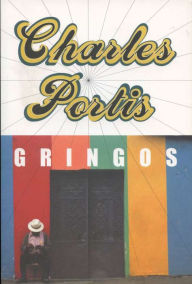
I just finished reading Gringos, a not-very-well-known 1991 novel by the American writer Charles Portis, most famous for his novel True Grit. (And that fame comes more from the two hit movie versions than from the book itself.) True Grit, bleak, violent, and told in tough vernacular prose by a teenage girl named Mattie Ross, is a strange masterpiece, but I think I might like Gringos—a kind of shaggy-dog novel—even better.

Gringos throws together a multinational bunch of colorful characters—pot hunters, archaeologists, smugglers, cult members—in the Wild West-style cities and jungles of southern Mexico. Then it sits back to see what happens next. American expat Jimmy Burns is the narrator, and his laconic voice as he observes the insanity around him makes him great company. The book is smart and funny and insightful about the way...[read on]
About Slavemakers, from the publisher:
The new postapocalyptic thriller from the author of Invasive Species

IT’S THEIR TERRITORY NOW.

Twenty years ago, venomous parasitic wasps known as “thieves” staged a massive, apocalyptic attack on another species—Homo sapiens—putting them on the brink of extinction.

But some humans did survive. The colony called Refugia is home to a population of 281, including scientists, a pilot, and a tough young woman named Kait. In the African wilderness, there’s Aisha Rose, nearly feral, born at the end of the old world. And in the ruins of New York City, there’s a mysterious, powerful boy, a skilled hunter, isolated and living by his wits.

As the survivors journey through the wastelands, they will find that they are not the only humans left on earth. Not by a long shot.

But they may be the only ones left who are not under the thieves’ control…
Visit Joseph Wallace's website.

The Page 69 Test: Slavemakers.

Writers Read: Joseph Wallace.

--Marshal Zeringue

Wednesday, December 02, 2015

Pg. 69: Triss Stein's "Brooklyn Secrets"

Featured at the Page 69 Test: Brooklyn Secrets: An Erica Donato Mystery by Triss Stein.

About the book, from the publisher:
Erica Donato, Brooklyn girl, urban history grad student, and single mom, is researching the 1930s when Brownsville was the home of the notorious organized criminals the newspapers called Murder Inc. She quickly learns that even in rapidly changing Brooklyn, Brownsville remains much as it was. It is still poor, it is still tough, and it still breeds fighters and gangs.

Doing field research, Erica stops in at the landmark local library and meets Savanna, a young woman who is the pride of her mother and her bosses, and is headed for an elite college and a future. A few days later, she is found beaten and left for dead. Her anguished mother is everywhere, insisting someone knows something. After a massive, angry demonstration, a young girlfriend of Savanna’s is found dead too. Is there a connection? Did perfect Savanna have a few secrets?

Erica is curious. But she’s focused on the 1930s and has located a few women who are happy to share memories. Two are childhood friends who disagree on much, but guard secrets too—ones kept for a lifetime. Never one to resist looking deeper than her research requires, Erica keeps encountering an apparent derelict white man, a vengeful rejected girlfriend, the role of boxing as a way out of poverty, and fading evidence of long-ago crimes.
Visit Triss Stein's website.

The Page 69 Test: Brooklyn Secrets.

--Marshal Zeringue

Pg. 99: Patricia Appelbaum's "St. Francis of America"

Featured at the Page 99 Test: St. Francis of America: How a Thirteenth-Century Friar Became America's Most Popular Saint by Patricia Appelbaum.

About the book, from the publisher:
How did a thirteenth-century Italian friar become one of the best-loved saints in America? Around the nation today, St. Francis of Assisi is embraced as the patron saint of animals, beneficently presiding over hundreds of Blessing of the Animals services on October 4, St. Francis's Catholic feast day. Not only Catholics, however, but Protestants and other Christians, Hindus, Buddhists, Jews, and nonreligious Americans commonly name him as one of their favorite spiritual figures. Drawing on a dazzling array of art, music, drama, film, hymns, and prayers, Patricia Appelbaum explains what happened to make St. Francis so familiar and meaningful to so many Americans.

Appelbaum traces popular depictions and interpretations of St. Francis from the time when non-Catholic Americans "discovered" him in the nineteenth century to the present. From poet to activist, 1960s hippie to twenty-first-century messenger to Islam, St. Francis has been envisioned in ways that might have surprised the saint himself. Exploring how each vision of St. Francis has been shaped by its own era, Appelbaum reveals how St. Francis has played a sometimes countercultural but always aspirational role in American culture. St. Francis's American story also displays the zest with which Americans borrow, lend, and share elements of their religious lives in everyday practice.
Learn more about St. Francis of America at the University of North Carolina Press website and Patricia Appelbaum's blog.

Writers Read: Patricia Appelbaum.

The Page 99 Test: St. Francis of America.

--Marshal Zeringue

Ten top revenge reads

Natasha Carthew's latest book is The Light That Gets Lost. At the Guardian, she tagged her top ten revenge reads, including:
Mockingjay by Suzanne Collins

Katniss is out for revenge! She has only one thing on her mind, to kill President Snow. Against all odds, Katniss Everdeen has survived the Hunger Games twice. But now that she’s made it out of the bloody arena alive, she’s still not safe. The Capitol is angry. The Capitol also wants revenge...There’s nothing like retaliation when both sides are in the game.
Read about another entry on the list.

The Hunger Games also appears on Anna Bradley ten best list of literary quotes in a crisis, Laura Jarratt's top ten list of YA thrillers with sisters, Jeff Somers's top eight list of revolutionary SF/F novels, Tina Connolly's top five list of books where the girl saves the boy, Sarah Alderson's top ten list of feminist icons in children's and teen books, Jonathan Meres's top ten list of books that are so unfair, SF Said's top ten list of unlikely heroes, Rebecca Jane Stokes's top ten list of fictional families you could probably abide during holiday season and top eight list of books perfect for reality TV fiends, Chrissie Gruebel's list of favorite fictional fashion icons, Lucy Christopher's top ten list of literary woods, Robert McCrum's list of the ten best books with teenage narrators, Sophie McKenzie's top ten list of teen thrillers, Gregg Olsen's top ten list of deadly YA books, Annalee Newitz's list of ten great American dystopias, Philip Webb's top ten list of pulse-racing adventure books, Charlie Higson's top ten list of fantasy books for children, and Megan Wasson's list of five fantasy series geared towards teens that adults will love too.

--Marshal Zeringue

Ginger Strand's "The Brothers Vonnegut," the movie

Featured at My Book, The Movie: The Brothers Vonnegut: Science and Fiction in the House of Magic by Ginger Strand.

The entry begins:
The Library Journal review of my nonfiction book The Brothers Vonnegut said it was ripe for adaptation into a film. I couldn’t agree more. In fact, I’ve spent hours Googling “hot young actors.” Not for prurient reasons, really. I was trying to identify actors who might want to produce it. After all, what hot young actor wouldn’t want to play Kurt Vonnegut?

The events of the book unfold in the late 1940s, when Kurt Vonnegut, as yet unpublished, is working in PR at General Electric. His older Bernard, a hotshot scientist at GE, got him the job. Bernard has invented something fantastic: cloud seeding to make rain. But the military has gotten involved and Bernard is having doubts about letting his invention be weaponized. Watching him struggle, Kurt, after years of bombing out with editors, starts writing a new kind of story, about scientists and the military and inventions getting weaponized. That lands him his first magazine acceptance, and the rest is history.

The young Kurt—GE company man by day, would-be writer by night—is not the Kurt Vonnegut you see in your head. Before the Mark Twain suit and Einstein hair, Kurt Vonnegut was a tall, thin, dapper young man. In his twenties, he looked a bit like a lighter-haired Zac Efron. Think Zac Efron in a gray flannel suit, toting a manual typewriter and smoking like...[read on]
Learn more about the book and author at Ginger Strand's website.

The Page 99 Test: Killer on the Road.

The Page 99 Test: The Brothers Vonnegut.

My Book, The Movie: The Brothers Vonnegut.

--Marshal Zeringue

Tuesday, December 01, 2015

What is David Silverman reading?

Featured at Writers Read: David Silverman, author of Fighting God: An Atheist Manifesto for a Religious World.

His entry begins:
I’m currently just finishing Islam and the Future of Tolerance by Maajid Zawaz and Sam Harris. I had hoped to gain some insight on the Paris murders and how to stop Islamic terrorism from a Muslim point of view.

I was not disappointed, but neither was I thrilled. I was hoping for answers that hit hard, but what I got was the need to push pluralism, the fact that people can see different interpretations in the same book. That’s a start, but it doesn’t go all the way.

The ISIS terrorists are not bloodthirsty evil people out to kill babies. They think they are doing good. They think they are bringing peace and love. They are killing people, but they...[read on]
About Fighting God, from the publisher:
Fighting God is a firebrand manifesto from one of the most recognizable faces of atheism. In his book, Silverman--a walking, talking atheist billboard known for his appearances on Fox News--discusses the effectiveness, ethics and impact of the in-your-face-atheist who refuses to be silent.

Silverman argues that religion is more than just wrong: it is malevolent and does not deserve our respect. It is our duty to be outspoken and do what we can to bring religion down. Examining the mentality, methods and issues facing the firebrand atheist, Silverman presents an overwhelming argument for firebrand atheism and reveals:

- All religion is cafeteria religion and almost all agnostics are atheists.
- American society grants religion a privileged status, despite the intentions of the Founding Fathers.
- Christian politicians have adversely (and un-Constitutionally) affected our society with regard to science, health, women's rights, and gay rights.
- The notion of "atheist Jews" is a lie forced on us by religion.
- It is not "Islamophobia" to observe dangerous teachings and disproportionate violence in Islam.
- Atheists are slowly but surely winning the battle.

Fighting God is a provocative, unapologetic book that takes religion to task and will give inspiration to non-believers and serve as the ultimate answer to apologists.
Learn more about Fighting God at the publisher's website, and follow David Silverman on Facebook and Twitter.

Writers Read: David Silverman.

--Marshal Zeringue

Pg. 69: Kathy Flann's "Get a Grip"

Featured at the Page 69 Test: Get a Grip by Kathy Flann.

About the book, from the publisher:
The stories in Get a Grip depict a range of imagined lives. There are Estonian brothers trekking from their blighted neighborhood to a college interview. There’s a TV meteorite hunter in town to search for otherworldly treasure. We meet a widow addicted to physical pain and a successful ad executive who loses all his worldly possessions in one day. All of the characters work out their struggles in the Baltimore region, channeling, in turns, the area’s charm, its despair, its humor, its self-doubt, its compassion. Get a Grip is a book about who we are when the cameras are off and the phone has died.
Learn more about the book and author at Kathy Flann's website.

The Page 69 Test: Get a Grip.

--Marshal Zeringue

Ten top examples of dialogue in crime fiction

Andrew Martin’s new novel is The Yellow Diamond. At the Guardian he tagged ten of the best examples of dialogue in crime fiction, including:
Be Cool by Elmore Leonard

This is the second book concerning the misadventures in showbiz of Chili Palmer, who is encountered here getting off on the wrong foot with the dangerous Raji:
‘You wear your shades at night,’ Chili said, ‘so I’ll think you’re cool, but I can’t tell if you’re looking at me.’

Raji put his glasses down on his nose, down and up. ‘See? I’m looking the fuck right at you, man. You have something to say to me fuckin say it so we be done here.’
It’s the sudden lurch towards confrontation that Leonard’s so good at.
Read about another entry on the list.

--Marshal Zeringue

Pg. 99: Noha Mellor's "The Egyptian Dream"

Featured at the Page 99 Test: The Egyptian Dream: Egyptian National Identity and Uprisings by Noha Mellor.

About the book, from the publisher:
The story of Egyptian identity from the beginning of the twentieth century is one constructed by statesmen, intellectuals and Islamic thinkers. This book argues that the current fragmentation of Egypt's political scene reflects the increasing social division in a country where 'the people' are demanding a redefinition of their national identity. Scrutinising the society behind the uprisings that began in 2011 and their diverse economic, ideological and sectorial demands, it also looks at the desperate state's attempt to construct a unified Egyptian identity - an attempt which has resulted in further splitting Egyptian society.
Learn more about The Egyptian Dream at the Edinburgh University Press website.

The Page 99 Test: The Egyptian Dream.

--Marshal Zeringue