Thursday, October 26, 2017

Fifty YA novels for readers at any age

At B&N Reads Tara Sonin tagged fifty YA novels adults will love, too, including:
Up To This Pointe, by Jennifer Lia Longo

Harper Scott’s ancestor died trying to get to the South Pole, so she has always tried to do the opposite: stick to a plan, to what she’s good at, and never take unnecessary risks. But when Harper’s plan goes up in flames, she finds herself headed exactly where she never thought she’d go—to Antarctica, to wait out a broken heart in their six-month winter. One of the most honest, beautiful, and crushing depictions of friendship you will ever read.
Read about another entry on the list.

Up To This Pointe is among Abbe Wright's fourteen books about the Arctic and Antarctica.

The Page 69 Test: Up to This Pointe.

--Marshal Zeringue

What is Carrie Jones reading?

Featured at Writers Read: Carrie Jones, author of Enhanced: Flying Series (Volume 2).

Her entry begins:
My mother always used to make fun of me for the random nature of the books I would read. I would grab a TV Guide and read through every single half-hour television program synopsis with a ridiculous amount of care and then move on to one of her steamy Danielle Steele novels before reading the John Irving that was on my stepdad’s nightstand. Apparently, not much has changed as I look at the books I’m reading today. Wait. No. There’s no TV Guide. Do they still make those?

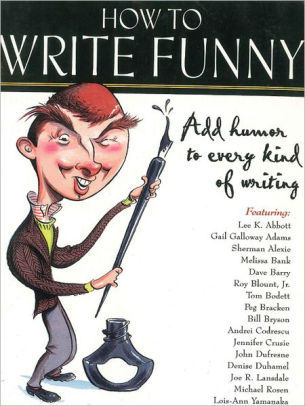
The first book is a series of essays, How To Write Funny edited by John B Kachuba. It has essays by Sherman Alexie, Dave Barry, and Bill Bryson, among others. The first sentence of J.Kevin Wolfe’s essay, “The Six Basics of Writing,” is the one that’s resonating right now because it’s so blunt with a light twist of the unexpected in its last word.  What is that sentence? It is, “Deep inside each of us lurks...[read on]
About Enhanced, from the publisher:
The adventures of cheerleader-turned-alien-hunter Mana continue in this sequel to Flying by the New York Times bestselling author of Need, Carrie Jones.

Seventeen-year-old Mana has found and rescued her mother, but her work isn't done yet. Her mother may be out of alien hands, but she's in a coma, unable to tell anyone what she knows.

Mana is ready to take action. The only problem? Nobody will let her. Lyle, her best friend and almost-boyfriend (for a minute there, anyway), seems to want nothing to do with hunting aliens, despite his love of Doctor Who. Bestie Seppie is so desperate to stay out of it, she's actually leaving town. And her mom's hot but arrogant alien-hunting partner, China, is ignoring Mana's texts, cutting her out of the mission entirely.

They all know the alien threat won't stay quiet for long. It's up to Mana to fight her way back in.
Visit Carrie Jones' website.

Coffee with a Canine: Carrie Jones & Tala.

Writers Read: Carrie Jones.

--Marshal Zeringue

Pg. 99: Paul Halpern's "The Quantum Labyrinth"

Featured at the Page 99 Test: The Quantum Labyrinth: How Richard Feynman and John Wheeler Revolutionized Time and Reality by Paul Halpern.

About the book, from the publisher:
In 1939, Richard Feynman, a brilliant graduate of MIT, arrived in John Wheeler's Princeton office to report for duty as his teaching assistant. A lifelong friendship and enormously productive collaboration was born, despite sharp differences in personality. The soft-spoken Wheeler, though conservative in appearance, was a raging nonconformist full of wild ideas about the universe. The boisterous Feynman was a cautious physicist who believed only what could be tested. Yet they were complementary spirits. Their collaboration led to a complete rethinking of the nature of time and reality. It enabled Feynman to show how quantum reality is a combination of alternative, contradictory possibilities, and inspired Wheeler to develop his landmark concept of wormholes, portals to the future and past. Together, Feynman and Wheeler made sure that quantum physics would never be the same again.
Visit The Quantum Labyrinth website.

My Book, The Movie: The Quantum Labyrinth.

Writers Read: Paul Halpern.

The Page 99 Test: The Quantum Labyrinth.

--Marshal Zeringue

Wednesday, October 25, 2017

Pg. 69: Ryan Kirk's "Nightblade's Vengeance"

Featured at the Page 69 Test: Nightblade's Vengeance (Blades of the Fallen) by Ryan Kirk.

About the book, from the publisher:
In a thrilling fantasy series from the author of the Nightblade novels, revenge becomes a quest for a young female warrior.

In a feudal land, a Kingdom is at risk. With no heir to the fragile throne, its future rests with the powerful members of the dying king’s Council, including Minori, a nightblade warrior, and Kiyoshi, a dayblade healer. The two men are bound by the sword but divided by two opposing principles: rule the land, or serve it. In their challenge for supremacy, a spark has been lit.

Her name is Asa. Her creed is revenge.

A fierce nightblade warrior, she’s spent a decade in pursuit of the enigmatic general who killed her father in a violent revolt—then mysteriously vanished from all records. Now, her desire for reckoning has led her to the village of Two Falls—and straight into the heart of an impending civil war. Minori and Kiyoshi are vying for her loyalty. And Asa must choose sides.

As fresh betrayals unfold and a new uprising looms, Asa knows that chasing a ghost is no longer just a personal quest for retribution. It’s going to alter the fate of the entire Kingdom.
Visit Ryan Kirk's website.

Writers Read: Ryan Kirk.

The Page 69 Test: Nightblade's Vengeance.

--Marshal Zeringue

Coffee with a canine: S.F. Henson & Francie

Featured at Coffee with a Canine: S.F. Henson & Francie.

The author, on how Francie got her name:
Our last dog--Atticus Hairyson Henson--was named after Atticus Finch ... and my favorite Beatle (George Harrison), so we decided to stick with the literary and music theme. Her full name is Francis Lane Henson, Francie for short. Francie comes from A Tree Grows in Brooklyn, a favorite book of both mine and my husband's, and Lane from "Penny Lane." She gets...[read on]
About Henson's Devils Within, from the publisher:
Killing isn’t supposed to be easy. But it is. It’s the after that’s hard to deal with.

Nate was eight the first time he stabbed someone; he was eleven when he earned his red laces—a prize for spilling blood for “the cause.” And he was fourteen when he murdered his father (and the leader of The Fort, a notorious white supremacist compound) in self-defense, landing in a treatment center while the state searched for his next of kin. Now, in the custody of an uncle he never knew existed, who wants nothing to do with him, Nate just wants to disappear.
Visit S.F. Henson's website.

Coffee with a Canine: S.F. Henson & Francie.

--Marshal Zeringue

Margaret Duffy's "Murders.com," the movie

Featured at My Book, The Movie: Murders.com by Margaret Duffy.

The entry begins:
Murders.com is the latest in a series featuring Patrick Gillard and Ingrid Langley. Each title has been a complete story but also part of the on-going tale of a couple right from when they meet again after divorce to the present when they have re-married and have children. Patrick first joined the police when he left school but it wasn’t exciting enough for him so he enlisted in the Devon and Dorset Regiment, now subsumed into The Rifles. After serious injury he was offered a job with MI5 on the recommendation of a senior officer, now working with that organisation. But, as he was still recovering, his duties would initially involve socialising (spy-hunting at aristocratic social events). He was told to find a female working partner because a lone man, a somewhat saturnine and dangerous individual at that, was too conspicuous. Having lost all confidence with women as a result of his injuries he approached his ex-wife, Ingrid, for help on the grounds that they had always got on famously in public. In a word, he was desperate. After hesitation, she agreed and that was where it all began. Eventually they work for the National Crime Agency.

An on-going series like this doesn’t lend itself to one movie, a TV series would be better. If this ever happens I would definitely want Paul...[read on]
Visit Margaret Duffy's website.

The Page 69 Test: Murders.com.

My Book, The Movie: Murders.com.

--Marshal Zeringue

Twelve top books about the human brain

Jason Tougaw is the author of The One You Get: Portrait of a Family Organism and The Elusive Brain: Literary Experiments in the Age of Neuroscience.

At Electric Lit he tagged twelve great books about the human brain, including:
Paul Beatty, The Sellout

Beatty’s narrator tells his hilarious LA story about reviving both racial segregation and slavery from inside the Supreme Court, while he smokes outlandish amounts of artisanal weed he’s been growing, along with watermelons, back in LA. This is a story told by a guy who’s incredibly high, a guy experimenting with his brain chemistry while he addresses the most sober institution in the United States. It’s also a story told by a guy whose father was a fairly unhinged academic who conducted psychological studies on him, starting at an early age. The narrator’s father is like Dr. Frankenstein or Jean-Jacques Rousseau with his creepy fantasy about raising the perfect little girl. He experimented on his son to explore some hazy theories about the construction of race and the internalization of racism. Beatty turns the hard problem into social satire about the racism that plagues American culture.
Read about another entry on the list.

--Marshal Zeringue

Tuesday, October 24, 2017

Pg. 99: Deborah Parker & Mark Parker's "Sucking Up"

Featured at the Page 99 Test: Sucking Up: A Brief Consideration of Sycophancy by Deborah Parker and Mark Parker.

About the book, from the publisher:
Suck-up. Ass-kisser. Brownnoser. Bootlicker. Lickspittle. Toadeater... Found in every walk of life, both real and imagined, sycophants surround us. But whether we grumble about sycophancy or grudgingly tolerate it as a price of getting along in a complex society, we rarely examine it closely. This book humorously considers that slavish art from the historical past to our current political environment, and particularly through the revealing lens of literature. Some of the grandest examples of yes-men appear in these pages--from Dante’s flatterers and Dickens’s Uriah Heep to Kellyanne Conway, who urged us to "go buy Ivanka’s stuff," and the obsequious soul who apologized to Vice President Cheney for being shot by him.

More relevant now than ever, as sucking up becomes the master trope of the Trump era, this choice romp through the spectacular world of bowing and scraping will entertain and enlighten.
Learn more about Sucking Up at The University of Virginia Press website.

The Page 99 Test: Sucking Up.

--Marshal Zeringue

Ten top contemporary horror novels

At the B&N Sci-Fi & Fantasy Blog Theresa DeLucci tagged ten hair-raising horror novels not written by Stephen King, including:
The Missing, by Sarah Langan

Terror comes to a small, wealthy community in Maine…and this is where any comparison to Stephen King must end. Langan’s Corpus Christi escapes an environmental disaster only to have the town come under the spell of an infectious evil that drives hosts to homicidal frenzy. This is not your typical zombie apocalypse story and Langan’s characters are not your typical good guys in white hats. They are just as messy and damaged as the infected. Langan’s greatest skill is her lovingly lurid prose; you’ll likely lose your appetite after this read.
Read about the other entries on the list.

My Book, The Movie: The Missing.

--Marshal Zeringue

What is Ryan Kirk reading?

Featured at Writers Read: Ryan Kirk, author of Nightblade's Vengeance (Blades of the Fallen).

His entry begins:
I'm a reader who enjoys reading both nonfiction and fiction at the same time. I'm always reading at least one of each. Recently, on the fiction side, I've been reading the Wheel of Time series by Robert Jordan. Although I've been a fantasy fan for many years, I only picked up Wheel of Time recently. As a reader, I love the scope of the story and the incredible depth of the world. As a writer, I'm ...[read on]
About Nightblade's Vengeance, from the publisher:
In a thrilling fantasy series from the author of the Nightblade novels, revenge becomes a quest for a young female warrior.

In a feudal land, a Kingdom is at risk. With no heir to the fragile throne, its future rests with the powerful members of the dying king’s Council, including Minori, a nightblade warrior, and Kiyoshi, a dayblade healer. The two men are bound by the sword but divided by two opposing principles: rule the land, or serve it. In their challenge for supremacy, a spark has been lit.

Her name is Asa. Her creed is revenge.

A fierce nightblade warrior, she’s spent a decade in pursuit of the enigmatic general who killed her father in a violent revolt—then mysteriously vanished from all records. Now, her desire for reckoning has led her to the village of Two Falls—and straight into the heart of an impending civil war. Minori and Kiyoshi are vying for her loyalty. And Asa must choose sides.

As fresh betrayals unfold and a new uprising looms, Asa knows that chasing a ghost is no longer just a personal quest for retribution. It’s going to alter the fate of the entire Kingdom.
Visit Ryan Kirk's website.

Writers Read: Ryan Kirk.

--Marshal Zeringue

Fifteen of the best political plays and novels

At the Guardian Tim Adams and Robert McCrum tagged fifteen of the best political novels and plays, including:
Midnight’s Children by Salman Rushdie (1981)

Rushdie’s novel took a post-colonial “empire fights back” spirit, and a deep personal understanding of the politics of Indian partition, and exploded them into something teeming with imaginative life. Drawing inspiration from the magic realism of Gabriel García Márquez, his book found a voice, rooted in lived experience, to capture the sometimes brutal and often fantastical fallout of independence and its implications. Anglo-Indian narrator Saleem Sinai is “handcuffed to history” by the hour of his birth – at midnight on the day of India’s independence. He inhabits a hybrid consciousness, with a telepathic connection to the other children of midnight, and tells its stories for all he is worth.
Read about another entry on the list.

Midnight's Children also appears among five books that changed Vikram Chandra, Sheena Iyengar's six best books, Luke Leitch's ten most successful literary sequels ever, and John Mullan's lists of ten of the best noses in literature and ten of the best visits to the cinema in literature.

--Marshal Zeringue

Monday, October 23, 2017

Pg. 99: Craig Callender's "What Makes Time Special?"

Featured at the Page 99 Test: What Makes Time Special? by Craig Callender.

About the book, from the publisher:
As we navigate through life we instinctively model time as having a flowing present that divides a fixed past from open future. This model develops in childhood and is deeply saturated within our language, thought and behavior, affecting our conceptions of the universe, freedom and the self. Yet as central as it is to our lives, physics seems to have no room for this flowing present. What Makes Time Special? demonstrates this claim in detail and then turns to two novel positive tasks. First, by looking at the world "sideways" - in the spatial directions -- it shows that physics is not "spatializing time" as is commonly alleged. Even relativity theory makes significant distinctions between the spacelike and timelike directions, often with surprising consequences. Second, if the flowing present is an illusion, it is a deep one worthy of explanation. The author develops a picture whereby the temporal flow arises as an interaction effect between an observer and the physics of the world.

Using insights from philosophy, cognitive science, biology, psychology and physics, the theory claims that the flowing present model of time is the natural reaction to the perceptual and evolutionary challenges thrown at us. Modeling time as flowing makes sense even if it misrepresents it.
Learn more about What Makes Time Special? at the Oxford University Press website.

The Page 99 Test: What Makes Time Special?.

--Marshal Zeringue

S. Shankar's "Ghost in the Tamarind," the movie

Featured at My Book, The Movie: Ghost in the Tamarind: A Novel by S. Shankar.

The entry begins:
Ghost in the Tamarind is a novel about India—its world is Indian and so are (mostly) the characters, including the two main ones, Ramu and Ponni.

Might, then, a Bombay actor with an international reputation be best as Ramu? The young Amitabh Bachchan (how far the great have fallen) is one of my all time favorites. He was a stupendous actor, with tremendous screen presence, and though in his younger days was known mostly for dark and brooding roles, he was capable of great nuance. Surely, he would have been able to express that combination of anger, guilt and naivety (or is it innocence?) that is Ramu. However, I digress—that Amitabh Bachchan is thirty years in the past.

How about a contemporary American actor of Indian descent? Perhaps...[read on]
Visit S. Shankar's website.

The Page 69 Test: Ghost in the Tamarind.

My Book, The Movie: Ghost in the Tamarind.

--Marshal Zeringue

Twenty-one top novels based on or inspired by Shakespeare

At B&N Reads Jeff Somers tagged 21 novels based on or inspired by Shakespeare, including:
The Taming of the Drew, by Stephanie Kate Strohm

Inspired by: The Taming of the Shrew. One thing about Shakespeare’s plays: they sure were written in the 16th century. Offering all the sass and smart language of the Bard, plus some refreshingly inverted sexual politics, this take on the classic comedy switches the sex roles reads like a literary version of 10 Thing I Hate About You.
Read about the other entries on the list.

The Page 69 Test: The Taming of the Drew.

My Book, The Movie: The Taming of the Drew.

Coffee with a Canine: Stephanie Kate Strohm & Lorelei Lee Strohm-Lando.

--Marshal Zeringue

Pg. 69: Margaret Duffy's "Murders.com"

Featured at the Page 69 Test: Murders.com by Margaret Duffy.

About the book, from the publisher:
Patrick has a new desk job and seems to be out of harm's way ... but not for long.

Patrick has a new role, much to Ingrid Langley's relief. It seems like a safe desk job, but when the head of the Metropolitan Police's Commander Rolt is found barely alive, Patrick is pulled into frontline action. And when further, discoveries are made, Patrick and Ingrid are in danger yet again, hunting one of the Met's most-wanted criminals.
Visit Margaret Duffy's website.

The Page 69 Test: Murders.com.

--Marshal Zeringue

Sunday, October 22, 2017

Pg. 99: Aidan Forth's "Barbed-Wire Imperialism"

Featured at the Page 99 Test: Barbed-Wire Imperialism: Britain's Empire of Camps, 1876-1903 by Aidan Forth.

About the book, from the publisher:
Camps are emblems of the modern world, but they first appeared under the imperial tutelage of Victorian Britain. Comparative and transnational in scope, Barbed-Wire Imperialism situates the concentration and refugee camps of the Anglo-Boer War (1899-1902) within longer traditions of controlling the urban poor in metropolitan Britain and managing "suspect" populations in the empire. Workhouses and prisons, along with criminal tribe settlements and enclosures for the millions of Indians displaced by famine and plague in the late nineteenth century, offered early prototypes for mass encampment. Venues of great human suffering, British camps were artifacts of liberal empire that inspired and legitimized the practices of future regimes.
Learn more about Barbed-Wire Imperialism at the University of California Press website.

The Page 99 Test: Barbed-Wire Imperialism.

--Marshal Zeringue

Six of the best books of poetry

Alice McDermott is the author of several novels, including After This; Child of My Heart; Charming Billy, winner of the 1998 National Book Award; and At Weddings and Wakes. That Night, At Weddings and Wakes, and After This were all finalists for the Pulitzer Prize. Her new novel is The Ninth Hour.

One of McDermott's six favorite books of poetry, as shared at The Week magazine:
The Complete Poems of Emily Dickinson

It took me a while to appreciate Dickinson's brief poems. I read them now for their crooked rhythms and weird rhymes, and as a stay against long-windedness.
Read about another entry on the list.

--Marshal Zeringue

What is Linda Gordon reading?

Featured at Writers Read: Linda Gordon, author of The Second Coming of the KKK: The Ku Klux Klan of the 1920s and the American Political Tradition.

Her entry begins:
I’m loving Yuri Slezkine’s The House of Government, one of an unfortunately small and quirky category of history books that I enjoy, a book that takes a piece of the background and makes it the foreground, the plot, the interpretation and everything else. It’s a biography of a building, possibly the largest apartment building in Europe, built in Moscow in 1931 to house Communist big-wigs. It provided 505 furnished apartments, and all the services of a small town—cafeteria, grocery, medical clinic, bank, gym, etc. , not to mention a theater seating 1300 and a cinema seating 1500. In 1935 it had 2,655 residents. The story begins with portraits of the pre-Bolshevik young revolutionaries—often teenagers high on utopian dreams revealed in remarkably intimate...[read on]
About The Second Coming of the KKK, from the publisher:
By legitimizing bigotry and redefining so-called American values, a revived Klan in the 1920s left a toxic legacy that demands reexamination today.

A new Ku Klux Klan arose in the early 1920s, a less violent but equally virulent descendant of the relatively small, terrorist Klan of the 1870s. Unknown to most Americans today, this "second Klan" largely flourished above the Mason-Dixon Line—its army of four-to-six-million members spanning the continent from New Jersey to Oregon, its ideology of intolerance shaping the course of mainstream national politics throughout the twentieth century.

As prize-winning historian Linda Gordon demonstrates, the second Klan’s enemies included Catholics and Jews as well as African Americans. Its bigotry differed in intensity but not in kind from that of millions of other WASP Americans. Its membership, limited to white Protestant native-born citizens, was entirely respectable, drawn from small businesspeople, farmers, craftsmen, and professionals, and including about 1.5 million women. For many Klanspeople, membership simultaneously reflected a protest against an increasingly urban society and provided an entrée into the new middle class.

Never secret, this Klan recruited openly, through newspaper ads, in churches, and through extravagant mass "Americanism" pageants, often held on Independence Day. These "Klonvocations" drew tens of thousands and featured fireworks, airplane stunts, children’s games, and women’s bake-offs—and, of course, cross-burnings. The Klan even controlled about one hundred and fifty newspapers, as well as the Cavalier Motion Picture Company, dedicated to countering Hollywood’s "immoral"—and Jewish—influence. The Klan became a major political force, electing thousands to state offices and over one hundred to national offices, while successfully lobbying for the anti-immigration Reed-Johnson Act of 1924.

As Gordon shows, the themes of 1920s Klan ideology were not aberrant, but an indelible part of American history: its "100% Americanism" and fake news, broadcast by charismatic speakers, preachers, and columnists, became part of the national fabric. Its spokespeople vilified big-city liberals, "money-grubbing Jews," "Pope-worshipping Irish," and intellectuals for promoting jazz, drinking, and cars (because they provided the young with sexual privacy).

The Klan’s collapse in 1926 was no less flamboyant, done in by its leaders’ financial and sexual corruption, culminating in the conviction of Grand Dragon David Stephenson for raping and murdering his secretary, and chewing up parts of her body. Yet the Klan’s brilliant melding of Christian values with racial bigotry lasted long after the organization’s decline, intensifying a fear of diversity that has long been a dominant undercurrent of American history.

Documenting what became the largest social movement of the first half of the twentieth century, The Second Coming of the Ku Klux Klan exposes the ancestry and helps explain the dangerous appeal of today’s welter of intolerance.
Visit Linda Gordon's website.

Writers Read: Linda Gordon.

--Marshal Zeringue

Saturday, October 21, 2017

The ideal biographies of each US president

At B&N Reads Jeff Somers tagged the perfect biographies of every US president, including:
Lyndon Johnson: The Years of Lyndon Johnson, by Robert Caro

Lyndon Johnson was a masterful politician, a consummate wheeler-dealer, and a ruthless part boss who surprised everyone by pursuing ambitious policies once he found himself in office. He was also a flawed man who allowed the Vietnam War to completely consume his presidency before his work was done. Caro’s incredible book series about Johnson is huge—but as you read you come to realize it could probably be twice as long, so packed with achievement was Johnson’s career both pre- and post-presidency.
Read about another entry on the list.

Caro's Johnson biographies are among Steve Richards and Gaby Hinsliff's fifteen best political biographies and diaries. Master of the Senate (vol. 3) is among Jonathan Alter's six favorite books. The Passage of Power (vol. 4) is among five top books about the civil rights movement.

--Marshal Zeringue

Pg. 69: D. Nolan Clark's "Forbidden Suns"

Featured at the Page 69 Test: Forbidden Suns by D. Nolan Clark.

About the book, from the publisher:
In the cold of space, the fire of revenge still burns.

Aleister Lanoe has been on a mission since before he can remember. Honing his skills as a fighter pilot and commander through three centuries of constant warfare, he has never met a foe he cannot best.

But now he faces a mission which may be his last: take vengeance on the alien race who has coldly and systematically erased all the sentient life in its path.

In all his years at war, the stakes have never been higher…
Learn more about the book and author at David Wellington's website.

The Page 69 Test: Forsaken Skies.

The Page 69 Test: Forgotten Worlds.

The Page 69 Test: Forbidden Suns.

--Marshal Zeringue
Ten polemical masterpieces that transformed the west

At the Guardian Will Hutton tagged ten of the best manifestos and tracts, including:
Animal Farm by George Orwell (1946)

This paradigm-changing novel by the democratic socialist and Observer writer George Orwell is a satire aimed at undermining Stalin and, as crucially, the admiration in which he was held by many in the British intelligentsia. The animals, led by two young pigs, Napoleon and Snowball, take over Manor Farm in an act of revolution and proceed to run it in the name of equality. What happens in practice is that Napoleon drives out Snowball and abandons all his plans for social improvement, works the gallant horse Boxer to death and turns into exactly the same figure as the farmer the animals displaced. “All animals are equal,” proclaims the now very fat pig, “but some are more equal than others.” Animal Farm became a byword for how Stalinism worked in practice, and snuffed out any realistic chance the British communist party had of becoming a major political force.
Read about another entry on the list.

Animal Farm is among Alexei Sayle's ten top books about revolutionaries, Lindsey Lewis Smithson's six essential books that were almost never published, Alex Clark's ten best quotable novels, Piers Torday's top ten books with animal villains, Robson Green's six best books, Heather Brooke's five books on holding power to account, Chuck Klosterman's most important books; it appears on John Mullan's list of ten of the best pigs in literature and Charlie Jane Anders and Michael Ann Dobbs's list of well-known and beloved science fiction and fantasy novels that were rejected over and over.

--Marshal Zeringue

Pg. 99: Walter S. Judd & Graham A. Judd's "Flora of Middle-Earth"

Featured at the Page 99 Test: Flora of Middle-Earth: Plants of J.R.R. Tolkien's Legendarium.

About the book, from the publisher:
Few settings in literature are as widely known or celebrated as J.R.R. Tolkien's Middle-Earth. The natural landscape plays a major role in nearly all of Tolkien's major works, and readers have come to view the geography of this fictional universe as integral to understanding and enjoying Tolkien's works. And in laying out this continent, Tolkien paid special attention to its plant life; in total, over 160 plants are explicitly mentioned and described as a part of Middle-Earth. Nearly all of these plants are real species, and many of the fictional plants are based on scientifically grounded botanic principles.

In Flora of Middle Earth: Plants of Tolkien's Legendarium, botanist Walter Judd gives a detailed species account of every plant found in Tolkien's universe, complete with the etymology of the plant's name, a discussion of its significance within Tolkien's work, a description of the plant's distribution and ecology, and an original hand-drawn illustration by artist Graham Judd in the style of a woodcut print. Among the over three-thousand vascular plants Tolkien would have seen in the British Isles, the authors show why Tolkien may have selected certain plants for inclusion in his universe over others, in terms of their botanic properties and traditional uses. The clear, comprehensive alphabetical listing of each species, along with the visual identification key of the plant drawings, adds to the reader's understanding and appreciation of the Tolkien canon.
Learn more about Flora of Middle-Earth at the Oxford University Press website.

The Page 99 Test: Flora of Middle-Earth.

--Marshal Zeringue

Friday, October 20, 2017

Thirty YA books that speak out against sexual harassment/assault

At the BN Teen Blog Dahlia Adler tagged thirty YA books that address sexual harassment and/or assault, including:
All the Rage, by Courtney Summers

In Summers’ unflinching fifth novel, everyone has turned on Romy for accusing the town’s golden boy of rape; there’s only so much one can fight when the criminal is also the son of the sheriff, and everyone thinks you deserve whatever you got. Then one night, Romy wakes up with no memory of the party the night before, and the friend she was with is missing. Now she gets to see what it looks like when a girl is harmed and people actually give a damn, and it also means navigating life without the one old friend who seemed to believe in her. But when she realizes there’s a stronger link between her and the disappearance than she knew, she has to make a choice between standing up and sharing truth no one wants to hear or losing herself completely.
Read about another entry on the list.

All the Rage is among Kayla Whaley's fifty crucial feminist YA titles.

The Page 69 Test: All the Rage.

--Marshal Zeringue

What is Paul Halpern reading?

Featured at Writers Read: Paul Halpern, author of The Quantum Labyrinth: How Richard Feynman and John Wheeler Revolutionized Time and Reality.

His entry begins:
I’m currently reading, and greatly enjoying, The Magic Mountain, by Thomas Mann, which had been recommended to me by many people.  It is fabulously written, full of many profound insights about the nature of time and the brevity of life.  I’m finding Mann’s description of a sanatorium (health spa for patients with tuberculosis and other illnesses) in the Swiss Alps fascinating because of the connection with my own book.  Feynman’s first wife Arline had tuberculosis and sadly died at a young age in a sanatorium.  With his incredibly rich descriptive prose, it is no wonder that Mann...[read on]
About The Quantum Labyrinth, from the publisher:
In 1939, Richard Feynman, a brilliant graduate of MIT, arrived in John Wheeler's Princeton office to report for duty as his teaching assistant. A lifelong friendship and enormously productive collaboration was born, despite sharp differences in personality. The soft-spoken Wheeler, though conservative in appearance, was a raging nonconformist full of wild ideas about the universe. The boisterous Feynman was a cautious physicist who believed only what could be tested. Yet they were complementary spirits. Their collaboration led to a complete rethinking of the nature of time and reality. It enabled Feynman to show how quantum reality is a combination of alternative, contradictory possibilities, and inspired Wheeler to develop his landmark concept of wormholes, portals to the future and past. Together, Feynman and Wheeler made sure that quantum physics would never be the same again.
Visit The Quantum Labyrinth website.

My Book, The Movie: The Quantum Labyrinth.

Writers Read: Paul Halpern.

--Marshal Zeringue

S.F. Henson's "Devils Within," the movie

Featured at My Book, The Movie: Devils Within by S.F. Henson.

The entry begins:
My writing brain works in a strange way. Sometimes the characters appear fully formed. I can see their faces and hear their voices and know exactly who would play them in a move version of the book. And sometimes it takes a little work for me to learn the characters and figure out who they are. The writing process for Devils Within ended up being a mix of these two methods. It took a while to see some of the characters while others popped into my head complete.

The main character, Nate Fuller, is one I had to work to uncover, which pretty much sums him up as a character. Throughout the book, he's figuring out who he is and learning things about himself. If I were able to cast someone to play movie Nate, I would be pretty open to finding the right actor for the role, but I do think that Tyler Young would be a good Nate.

Then there's Nate's friend, Brandon Kingsley. He pushes Nate, but he has his own problems too. I've always pictured Michael...[read on]
Visit S.F. Henson's website.

My Book, The Movie: Devils Within.

--Marshal Zeringue

Ten top imaginary drugs in fiction

Jeff Noon's latest novel is A Man of Shadows.

One of his top ten "modern examples from the pharmacopoeia of dangerous delights" in fiction, as shared at the Guardian:
Dylar (White Noise by Don DeLillo)

This may be the ultimate drug of escape, for the simple fact that it removes the human fear of death. Soon people are desperate to find black-market supplies of the still experimental substance. Philosophical questions abound. If we have no sense of our own mortality, can we still call ourselves human? Would religion have a place, would art be created in anything like the same quantities? And then there are the side effects, which consist mainly of losing the ability to “distinguish words from things”. The very mention of the phrase “speeding bullet” is enough to cause a user to dive to the floor for cover. Now that’s scary.
Read about the other entries on the list.

White Noise is among Brian Boone's twenty top books that are absolute dorm room essentials.

--Marshal Zeringue

Thursday, October 19, 2017

Pg. 99: Gregory A. Daddis's "Withdrawal"

Featured at the Page 99 Test: Withdrawal: Reassessing America's Final Years in Vietnam by Gregory Daddis.

About the book, from the publisher:
A "better war." Over the last two decades, this term has become synonymous with US strategy during the Vietnam War's final years. The narrative is enticingly simple, appealing to many audiences. After the disastrous results of the 1968 Tet offensive, in which Hanoi's forces demonstrated the failures of American strategy, popular history tells of a new American military commander who emerged in South Vietnam and with inspired leadership and a new approach turned around a long stalemated conflict. In fact, so successful was General Creighton Abrams in commanding US forces that, according to the "better war" myth, the United States had actually achieved victory by mid-1970. A new general with a new strategy had delivered, only to see his victory abandoned by weak-kneed politicians in Washington, DC who turned their backs on the US armed forces and their South Vietnamese allies.

In a bold new interpretation of America's final years in Vietnam, acclaimed historian Gregory A. Daddis disproves these longstanding myths. Withdrawal is a groundbreaking reassessment that tells a far different story of the Vietnam War. Daddis convincingly argues that the entire US effort in South Vietnam was incapable of reversing the downward trends of a complicated Vietnamese conflict that by 1968 had turned into a political-military stalemate. Despite a new articulation of strategy, Abrams's approach could not materially alter a war no longer vital to US national security or global dominance. Once the Nixon White House made the political decision to withdraw from Southeast Asia, Abrams's military strategy was unable to change either the course or outcome of a decades' long Vietnamese civil war.

In a riveting sequel to his celebrated Westmoreland's War, Daddis demonstrates he is one of the nation's leading scholars on the Vietnam War. Withdrawal will be a standard work for years to come.
Learn more about Withdrawal at the Oxford University Press website.

The Page 99 Test: Westmoreland's War.

The Page 99 Test: Withdrawal.

--Marshal Zeringue

David Biespiel's "The Education of a Young Poet," the movie

Featured at My Book, The Movie: The Education of A Young Poet by David Biespiel.

The entry begins:
The cast is going to have to be an ensemble of unknowns. Something like the cast of Richard Linklater’s Dazed and Confused  meets the cast of...[read on]
Visit David Biespiel's website.

Writers Read: David Biespiel.

The Page 99 Test: The Education of A Young Poet.

My Book, The Movie: The Education of A Young Poet.

--Marshal Zeringue

Pg. 69: S. Shankar's "Ghost in the Tamarind"

Featured at the Page 69 Test: Ghost in the Tamarind: A Novel by S. Shankar.

About the book, from the publisher:
Who can you love? What do you owe to love and what to the world at large?

Such are the questions that drive the story of Ramu, a Brahmin man, and Ponni, a woman of the Dalit “untouchable” caste. Set against the backdrop of twentieth-century South India, the novel takes readers from the 1890s village where Ramu’s grandmother grew up to the Emergency years of 1970s Madras. Against this sweeping canvas unfolds the drama of Ramu and Ponni’s forbidden love, inescapably intertwined with the great struggle against caste oppression. Caught up in the entanglements of love and politics, the couple risk everything to fight for a better society. Will they succeed?

Steeped in history, this memorable inter-caste love story shows ordinary people moved to uncommon courage in their desire to make a difference in a ruthless world.
Visit S. Shankar's website.

The Page 69 Test: Ghost in the Tamarind.

--Marshal Zeringue

Six top novel novels about novelists

Sarah Skilton is the author of Bruised, a martial arts drama for young adults; and High and Dry, a hardboiled teen mystery. At the B&N Reads blog she tagged six novels about novelists, including:
The Resurrection of Joan Ashby, by Cherise Wolas

Joan Ashby’s writing career is off to dazzling start. Adored by critics and readers alike for her dark prose, she’s poised to become a lifelong literary star. Children were never in the picture—until Joan’s husband Martin changes the rule they agreed to and urges her to succumb to motherhood. Raising her two boys isn’t easy, and her creative ambitions struggle against “the consumptive nature of love.” Wolas’ powerhouse debut novel promises to take readers on an emotional ride, while tackling questions about the ways in which women are sometimes forced to choose between love of family and self-actualization.
Read about another entry on the list.

--Marshal Zeringue

Wednesday, October 18, 2017

Pg. 99: Sarah Adler-Milstein & John M. Kline's "Sewing Hope"

Featured at the Page 99 Test: Sewing Hope: How One Factory Challenges the Apparel Industry's Sweatshops by Sarah Adler-Milstein and John M. Kline.

About the book, from the publisher:
Sewing Hope offers the first account of a bold challenge to apparel-industry sweatshops. The Alta Gracia factory in the Dominican Republic is the anti-sweatshop. It boasts a living wage three times the legal minimum, high health and safety standards, and a legitimate union—all verified by an independent monitor. It is the only apparel factory in the global south to meet these criteria.

The Alta Gracia business model represents an alternative to the industry’s usual race-to-the-bottom model with its inherent poverty wages and unsafe factory conditions. Workers’ stories reveal how adding US$0.90 to a sweatshirt’s production price can change lives: from getting a life-saving operation to a reunited family; from purchasing children's school uniforms to taking night classes; from obtaining first-ever bank loans to installing running water. Sewing Hope invites readers into the apparel industry’s sweatshops and the Alta Gracia factory to learn how the anti-sweatshop started, how it overcame challenges, and how the impact of its business model could transform the global industry.
Learn more about Sewing Hope at the University of California Press website.

The Page 99 Test: Sewing Hope.

--Marshal Zeringue

What is Abeer Y. Hoque reading?

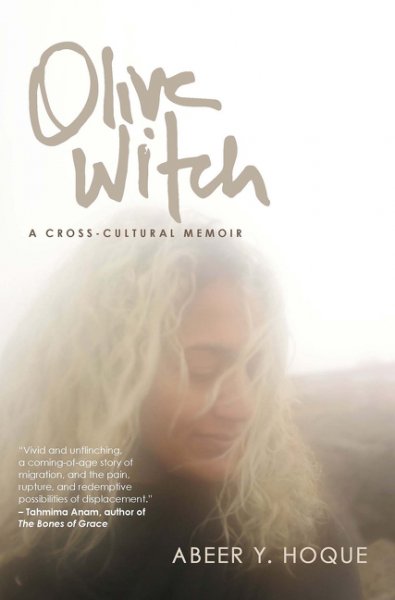
Featured at Writers Read: Abeer Y. Hoque, author of Olive Witch: A Memoir.

Her entry begins:
I have been on a Booker Long List reading kick this summer/fall. Colson Whitehead’s The Underground Railroad, was an often brutal, sometimes beautiful genre-mashing slave narrative. Reading the novel, it’s impossible not to draw parallels between pre-Civil-War times and the Great Migration and Jim Crow and Civil Rights and now 2017, the year of white supremacy in the White House....[read on]
About Olive Witch, from the publisher:
In the 1970s, Nigeria is flush with oil money, building new universities, and hanging on to old colonial habits. Abeer Hoque is a Bangladeshi girl growing up in a small sunlit town, where the red clay earth, corporal punishment and running games are facts of life. At thirteen she moves with her family to suburban Pittsburgh and finds herself surrounded by clouded skies and high schoolers who speak in movie quotes and pop culture slang. Finding her place as a young woman in America proves more difficult than she can imagine. Disassociated from her parents, and laid low by academic pressure and spiralling depression, she is committed to a psychiatric ward in Philadelphia. When she moves to Bangladesh on her own, it proves to be yet another beginning for someone who is only just getting used to being an outsider - wherever she is. Arresting and beautifully written, with poems and weather conditions framing each chapter, Olive Witch is an intimate memoir about taking the long way home.
Learn more about the book and author at Abeer Y. Hoque's website.

The Page 99 Test: Olive Witch.

Writers Read: Abeer Y. Hoque.

--Marshal Zeringue

Five top books about the human and the divine

Karen Lord is the award-winning, Barbadian author of Redemption in Indigo, The Best of All Possible Worlds and The Galaxy Game, and editor of the anthology New Worlds, Old Ways: Speculative Tales from the Caribbean. One of her five favorite books that "show the perils and joys of a life lived beyond the boundaries of self, a life that finds the divine in the human, and the human in the divine," as shared at Tor.com:
Till We Have Faces, by C. S. Lewis

Set in an ancient civilization where religion can be more powerful than kings, this story is the Cupid and Psyche myth retold from the point of view of Orual. She is an ugly princess, and Psyche is her beautiful half sister who is first worshipped by her people then beloved by a god so beautiful (or bestial) that mortal eyes cannot look upon him. Orual’s jealousy and love leads Psyche to betray her divine lover and be cast out in exile. Having lost her sister, Orual returns to her kingdom, learns to use the power of a mask, and gradually becomes a warrior and ruler of her people. Also bound to the god of love, she completes the same tasks imposed on Psyche, and discovers in the end what is needed for the human to meet the divine face to face.
Read about another entry on the list.

--Marshal Zeringue