Monday, December 04, 2006

Index: structural racism in fiction

NOTE: updated March 21, 2007

Back in April 2006 I issued a call for fiction that might help us better understand "structural racism."

The scholar (and Friend of the Blog) Andrew Grant-Thomas first introduced the subject to me, and here he offers a working definition of structural racism.

A number of informed thinkers suggested works of fiction (and other writings) that capture the dynamic described by Grant-Thomas, and I hope to gather more recommendations.

Do you know a good work of fiction that depicts structural racism? Let me know the title--along with an explanation for why it applies--and I may add it to the list. Send your suggestion to bolling [dot] binx [at] gmail [dot] com.

By author and title:

Alexie, Sherman. The Toughest Indian in the World
Alvarez, Julia. How the Garcia Girls Lost Their Accents
Baldwin, James [1], [2]
Barnes, Julian. Arthur & George
Beatty, Paul. Tuff
Beatty, Paul. White Boy Shuffle
Bullins, Ed
Chesnutt, Charles. The House Behind the Cedars
Chesnutt, Charles. The Marrow of Tradition
Douglass, Frederick. Narrative of the Life of Frederick Douglass
Ellison, Ralph. Invisible Man [1], [2] [3]
Gaines, Ernest
Himes, Chester. If He Hollers Let Him Go
Hopkinson, Nalo. Brown Girl in the Ring
Hurston, Zora Neale. Seraph on the Suwanee
Johnson, James Weldon. The Autobiography of an Ex-Colored Man
Johnson, Mat. Drop
Johnson, Mat. Hunting in Harlem
Jones, Gayl. Eva's Man
Lahiri, Jhumpa. Interpreter of Maladies
Lee, Andrea. Sarah Phillips
Marshall, Paule. Brown Girl, Brownstones
Morrison, Toni. Beloved
Morrison, Toni. The Bluest Eye
Mosley, Walter
Paredes, Américo. George Washington Gomez
Petry, Ann. The Street
Randall, Alice. The Wind Done Gone
Rodriguez, Luis. Always Running: La Vida Loca, Gang Days in L.A.
Ruiz, Mona. Two Badges: The Lives Of Mona Ruiz
Santiago, Danny. Famous All Over Town
Sembène, Ousmane. God's Bits of Wood
Thomas, Piri. Down These Mean Streets

Twain, Mark. The Tragedy of Pudd'nhead Wilson
Walker, Alice. By the Light of My Father's Smile
Ward, Douglas Turner. "Day of Absence"
Williams, John A.
The Man Who Cried I Am
Wilson, August
Wright, Richard. Black Boy
Wright, Richard. "Bright and Morning Star"
Wright, Richard. Uncle Tom’s Children

By contributor:
Alonzo, Juan
Baker, Lee D.
Collins, Michael S.
Dawson, Michael [1], [2]
Grant-Thomas, Andrew
Irving, Toni
Johnson, Kevin
King, Lovalerie
Matsuda, Mari
Louis, Errol

Pearson, Kim

Zack, Naomi

--Marshal Zeringue

Sunday, December 03, 2006

Pg. 69: "Season of Betrayal"

Margaret Lowrie Robertson's debut novel is Season of Betrayal, which is set in Lebanon and features snipers, mortar shelling, car bombs, suicide bombers, and international news correspondents.

Margaret should know about these things--she's a former international reporter for CNN and CBS, and she's married to Nic Robertson, a senior international correspondent based in CNN's London bureau.

I asked her to apply the "page 69 test" to her novel. Here is what she reported:
Season of Betrayal is set in Beirut 1983 and, as it turns out, the sixty-ninth page is something of a literary triptych: a trio of tales, each with a distinct trajectory of its own. The first section shows another crack in the façade of Lara and Mac McCauley’s marriage. They’ve recently arrived in Beirut, where he’s a correspondent for an American newsweekly. But this posting is already proving disastrous. At their housewarming party, as guests nibble hors d’oeuvres and discuss Middle East politics, Lara spies Mac slipping out to the balcony, where his Lebanese translator waits in the shadows. Page 69 picks up in the middle of their post-party fight.

I glared at him.

“Besides, she’s got a boyfriend.”

He lunged at me, trying to tickle me.

“I saw you, Mac,” I cried, brushing away his fingers. “You promised me, last year in Rome, you promised you wouldn’t.”

“What? Don’t be such a goose.”

He stuck his lower lip out in exaggerated pleading, picked up the boxer shorts and put them over his head, the elastic waistband framing his face like a picture frame, and, with arms extended, called, “Come on, Lu. Please. Don’t be mad.”

Angry as I was, he looked so comical, I couldn’t help laughing, first a little, then helplessly, as his fingers found their target and plucked my ribs like a guitar.

The backdrop is Lebanon’s ongoing brutal civil war in and the countdown to disaster for the US Marines peacekeeping force. Trying to help restore stability in a fractured land, the Marines often found themselves in positions Washington hadn’t anticipated. February 1983 brought a confrontation with Israeli troops, still occupying a slice of Lebanon, following their invasion a year earlier. Though allies, the Israelis made several preliminary probes of US lines, as if to test resolve. This second section refers to an incident recounted earlier in the chapter, when a Marine colonel blocked Israeli tanks at a US checkpoint.

I never met Col. Johnson, but Martin and Fahti and Doug did, and, for a while anyway, he was something of a folk hero in Lebanon. The American who stood up to the Israelis. Afterward, the Israelis tried to make light of the incident, accusing the Beirut press corps of exaggerating a routine event. The ranking Israeli officer at the scene claimed at one point that Johnson was drinking. The attempt to vilify him backfired. Here was splendid irony: apparently, the man was a teetotaler.

Lara, the narrator, is an outsider -- unlike her husband and the others, she’s not a journalist. Gripped by fear and self-doubt, she finds it difficult to rise to the challenges of life in a war zone. This third section refers to her attempts to create purpose in her life and build a routine out of the chaos. She talks about the editor who’s teaching her how to edit video news footage. But it’s less about her needing a job, than a place to be, in the psychological shelter of other people.

Despite the frantic pace, the TV Kansai edit room felt a safe spot in a sea of insanity. Nothing seemed to crack Gifford’s composure. His large, loud, Australian presence was reassuring, especially on days when the city foamed with violence. No matter what the distraction outside, he kept going, invulnerable in this self-contained world, working his TV magic, constructing video tales by marrying bits of tape and sound with Yoshi’s recorded narrative.

Journalists, war zones, good marriages going bad... all hinged together on this particular page. Does it pass the McLuhan test? It sure works for me.
Many thanks to Margaret for the input.

Among the advance reviews and praise for Season of Betrayal:
"...There are no heroes in this wrenching novel; no one behaves well and everyone’s motives are suspect. With years of experience in news broadcasting, including a year in Beirut as a stringer for CBS radio, Robertson writes with authenticity about a city and a people destroyed by civil war. The contrast she draws between the grand scale of the Lebanese civil war and the small scale of Lara’s battle to win back Mac is quite effective. An exceptional first novel, gripping and real.
Library Journal, starred review (October 2006)

"Ms. Robertson writes with a crisp, clear, tough voice reminiscent of Joan Didion's journalism. Her portrait of Beirut -- at once vivid and meticulous -- displays a reporter's gift for detail."
Wall Street Journal (October 21, 2006)

"Season Of Betrayal is a captivating journey into war-torn Beirut and the equally dangerous frontlines of human relationships. Margaret Lowrie Robertson brings her keen reporter's eye to this evocative and moving story of love, loss, and of course betrayal."
— Anderson Cooper
Curious about Margaret's five favorite Middle East novels? Click here.

Previous "page 69 tests":
Sy Montgomery, The Good Good Pig
Allison Burnett, The House Beautiful
Stephanie Coontz, Marriage, A History
Ed Lynskey, The Dirt-Brown Derby
Cindy Dyson, And She Was
Simon Blackburn, Truth
Brian Freeman, Stripped
Alyson M. Cole, The Cult of True Victimhood
Jeff Biggers, In the Sierra Madre
Jeff Broadwater, George Mason, Forgotten Founder
Alicia Steimberg, Andrea Labinger (trans.), The Rainforest
Michael Grunwald, The Swamp
Darrin McMahon, Happiness: A History
Leo Braudy, From Chivalry to Terrorism
David Nasaw, Andrew Carnegie
Leah Hager Cohen, Train Go Sorry
Chris Grabenstein, Slay Ride
David Helvarg, Blue Frontier
Marina Warner, Phantasmagoria
Bill Crider, A Mammoth Murder
Robert W. Bennett, Taming the Electoral College
Nicholas Stern et al, Stern Review Report
Kerry Emanuel, Divine Wind
Adam Langer, The Washington Story
Michael Scott Moore, Too Much of Nothing
Frank Schaeffer, Baby Jack
Wyn Cooper, Postcards from the Interior
Ivan Goncharov, Oblomov
Maureen Ogle, Ambitious Brew
Cass Sunstein, Infotopia
Paul W. Kahn, Out of Eden
Paul Lewis, Cracking Up
Pagan Kennedy, Confessions of a Memory Eater
David Greenberg, Nixon's Shadow
Duane Swierczynski, The Wheelman
George Levine, Darwin Loves You
John Barlow, Intoxicated
Alicia Steimberg, The Rainforest
Alan Wolfe, Does American Democracy Still Work?
John Dickerson, On Her Trail
Marcus Sakey, The Blade Itself
Randy Boyagoda, Governor of the Northern Province
John Gittings, The Changing Face of China
Rachel Kadish, Tolstoy Lied
Eric Rauchway, Blessed Among Nations
Tim Brookes, Guitar and other books
Ruth Padel, Tigers in Red Weather
William Haywood Henderson, Augusta Locke
Jed Horne, Breach of Faith
Robert Greer, The Fourth Perspective
David Plotz, The Genius Factory
Michael Allen Dymmoch, White Tiger
Patrick Thaddeus Jackson, Civilizing the Enemy
Tom Lutz, Doing Nothing
Libby Fischer Hellmann, A Shot To Die For
Nelson Algren, The Man With the Golden Arm
Bob Harris, Prisoner of Trebekistan
Elaine Flinn, Deadly Collection
Louise Welsh, The Bullet Trick
Gregg Hurwitz, Last Shot
Martha Powers, Death Angel
N.M. Kelby, Whale Season
Mario Acevedo, The Nymphos of Rocky Flats
Dominic Smith, The Mercury Visions of Louis Daguerre
Simon Blackburn, Lust
Linda L. Richards, Calculated Loss
Kevin Guilfoile, Cast of Shadows
Ronlyn Domingue, The Mercy of Thin Air
Shari Caudron, Who Are You People?
Marisha Pessl, Special Topics in Calamity Physics
John Sutherland, How to Read a Novel
Steven Miles, Oath Betrayed
Alan Brown, Audrey Hepburn's Neck
Richard Dawkins, The Ancestor's Tale

--Marshal Zeringue

"Shakespeare's Philosophy"

Just released: Shakespeare's Philosophy: Discovering the Meaning Behind the Plays, by Colin McGinn.

From the publisher:
Shakespeare has always been celebrated for the depth of his themes, the vividness of his characters, and the beauty of his poetry. However, the philosophical nature of his opus has often been overlooked.

Focusing on Shakespeare's six most regarded plays—A Midsummer Night's Dream, Hamlet, Othello, Macbeth, King Lear, and The Tempest—noted philosopher Colin McGinn provides a brilliant analysis of the major philosophical themes embedded in Shakespeare's work, including the possibility of human knowledge and the threat of skepticism; the nature and persistence of the self; the character of causation as it shapes human affairs; the existence and nature of evil; and the power of language to influence and shape the human mind. McGinn contends that Shakespeare was strongly influenced by the philosophy of Montaigne, a convinced skeptic and unflinching psychological inquirer, whose work was being translated into English at the time Shakespeare composed his greatest works. Shakespeare's unique contribution to the exploration of human nature was a profound appreciation of the opacity of other minds and the mysteries of the soul, presenting a view of the self as theatrical in nature, more a matter of artistic creation than a natural given. His major tragedies are patterned along these philosophical concerns.

Interweaving close textual analysis and conceptual exploration, Shakespeare's Philosophy pursues questions of character against a background of their philosophical significance. As McGinn says of Shakespeare, "The Shakespeare that emerges is both profoundly human and bracingly abstract. He is a philosophical dramatist. There is not a sentimental bone in his body. He has the curiosity of a scientist, the judgment of a philosopher, and the soul of a poet."
Click here to read an excerpt from Shakespeare's Philosophy.

Coming soon here on the blog: McGinn subjects The Power of Movies to the "page 69 test."

--Marshal Zeringue

Pg. 69: "The Good Good Pig"

Sy Montgomery is a naturalist, author, documentary scriptwriter, and radio commentator.
"To research books, films and articles," according to her website, "Sy Montgomery has been chased by an angry silverback gorilla in Zaire and bitten by a vampire bat in Costa Rica. She has worked in a pit crawling with 18,000 snakes in Manitoba and handled a wild tarantula in French Guiana. She has been deftly undressed by an orangutan in Borneo, hunted by a tiger in India, and swum with piranhas, electric eels and dolphins in the Amazon.

"But her newest book for adult readers is a love story—a true one—about home, about family, and particularly, about a pig."
I asked Sy to put The Good Good Pig: The Extraordinary Life of Christopher Hogwood to the "page 69 test." She replied that page 69 is indeed a good introduction to her book. Here's an excerpt from the page, followed by her elaboration of how it fits the book:
Elsewhere...pigs are widely admired. A Hindu creation legend tells us that the great god Vishnu took the form of a boar in order to lift up the Earth on his strong back from the waters of the primeval flood; he is often depicted with a boar's head on a human body. In Papua New Guinea, many tribes measure their wealth by the number of pigs they have. Women sometimes suckle orphaned pigs along with their own infants. In some of these areas, the pigs are not eaten. Instead they are admired for their beauty and fecundity, and especially for their handsome, curving tusks.

[Our pig] Christopher was yet to grow tusks. But already he was, I thought, very beautiful: his black and white coat glossy, his eyes bright and expressive, his black hooves shiny and trim. But his beauty was more than skin (or even lard) deep. Though we didn't realize it at the time, Christopher was already bringing to us the blessings for which pigs have been credited for centuries: strength, luck, friends, even family.

In fact, The Good Good Pig is about all the blessings a runt piglet named Christopher Hogwood brought into my life. It is a memoir about the things that really matter: community and family. And it is a testament to the fact that family is not about blood, but about love. The book is an affirmation that the definition of family can be far richer than simply the opposite-sex, same-ethnicity person you legally marry and your biological children. In my case, my family included many members of other species: from dogs to birds (who are more closely related to dinosaurs than to humans) as well as children I didn't bear (or adopt), and a husband who was different enough from me that my parents disowned me for marrying him.

One I day I hope that all people realize that a great soul can come to us in any form. In my case, he came home in a shoebox, a runt deemed too sickly to live--and grew into a 750 pound hog who lived to age 14, pampered and adored by our entire New Hampshire village. Neighborhood kids came to wash and groom him at "Pig Spa." Local restaurants brought him gourmet slops. Local voters wrote his name in at town elections. Our one town cop kept apples in the cruiser in case he met up with Chris (who was an escape artist) on the road. But the real beneficiary of all this affection was those of us who loved him--as those of us who love animals well know. He was, as a neighbor told me, "a great big Buddha master" who "taught us how to love what life gives you" and this book is the story of what he showed us.
Many thanks to Sy for the input.

Click here to read an excerpt from The Good Good Pig.

The book has collected many positive reviews and endorsements, including:
"I LOVE this book! It takes us into the world of one pig with such delicacy, such gentleness and yet such depth, that you will never be able to look a pig in the eye again without recognizing the unique person living within. You become somebody who sees why Sy Montgomery loved a pig beyond all measure. When you finish her book, so will you."
—Jeffrey Masson, Ph.D., author of When Elephants Weep and The Pig who Sang to the Moon

"I wasn't sure what to expect when I picked up Sy Montgomery's story of Christopher the pig. The love affair between dogs and cats and people is richly documented. Pigs are another matter. What I found was a charming, touching, funny and ultimately very powerful tale of an extraordinary, even complicated pig and his impact on some very loving, perceptive and extraordinary people. This story is heartwarming but packs a wallop. "THE GOOD GOOD PIG" is a very welcome and original addition to the best stories about the remarkable bond between some people and some animals, and Sy Montgomery has done her pig well."
—Jon Katz, author of Katz on Dogs and The Dogs of Bedlam Farm
The Christian Science Monitor named
The Good Good Pig to its "Best Nonfiction 2006" list.

For a Q & A with Sy--including the questions: "What led you to become, in the words of the Boston Globe, 'part Indiana Jones and part Emily Dickinson'? Who were some of your influences, both literary and scientific?"--click here.


Sy Montgomery's many other books include Journey of the Pink Dolphins: An Amazon Quest, The Wild Out Your Window, Walking With the Great Apes: Jane Goodall, Dian Fossey, Birute Galdikas, Encantado: Pink Dolphin of the Amazon, Quest for the Tree Kangaroo: An Expedition to the Cloud Forest of New Guinea, Search for the Golden Moon Bear, The Man-Eating Tigers of Sundarbans, The Snake Scientist, and The Tarantula Scientist.

Adam Langer wrote of
Journey of the Pink Dolphins: "I don’t know who else conveys a love for nature with as much passion and humor as Montgomery does in this voyage to the Amazon in search of the magical, titular creatures."

Previous "page 69 tests":
Allison Burnett, The House Beautiful
Stephanie Coontz, Marriage, A History
Ed Lynskey, The Dirt-Brown Derby
Cindy Dyson, And She Was
Simon Blackburn, Truth
Brian Freeman, Stripped
Alyson M. Cole, The Cult of True Victimhood
Jeff Biggers, In the Sierra Madre
Jeff Broadwater, George Mason, Forgotten Founder
Alicia Steimberg, Andrea Labinger (trans.), The Rainforest
Michael Grunwald, The Swamp
Darrin McMahon, Happiness: A History
Leo Braudy, From Chivalry to Terrorism
David Nasaw, Andrew Carnegie
Leah Hager Cohen, Train Go Sorry
Chris Grabenstein, Slay Ride
David Helvarg, Blue Frontier
Marina Warner, Phantasmagoria
Bill Crider, A Mammoth Murder
Robert W. Bennett, Taming the Electoral College
Nicholas Stern et al, Stern Review Report
Kerry Emanuel, Divine Wind
Adam Langer, The Washington Story
Michael Scott Moore, Too Much of Nothing
Frank Schaeffer, Baby Jack
Wyn Cooper, Postcards from the Interior
Ivan Goncharov, Oblomov
Maureen Ogle, Ambitious Brew
Cass Sunstein, Infotopia
Paul W. Kahn, Out of Eden
Paul Lewis, Cracking Up
Pagan Kennedy, Confessions of a Memory Eater
David Greenberg, Nixon's Shadow
Duane Swierczynski, The Wheelman
George Levine, Darwin Loves You
John Barlow, Intoxicated
Alicia Steimberg, The Rainforest
Alan Wolfe, Does American Democracy Still Work?
John Dickerson, On Her Trail
Marcus Sakey, The Blade Itself
Randy Boyagoda, Governor of the Northern Province
John Gittings, The Changing Face of China
Rachel Kadish, Tolstoy Lied
Eric Rauchway, Blessed Among Nations
Tim Brookes, Guitar and other books
Ruth Padel, Tigers in Red Weather
William Haywood Henderson, Augusta Locke
Jed Horne, Breach of Faith
Robert Greer, The Fourth Perspective
David Plotz, The Genius Factory
Michael Allen Dymmoch, White Tiger
Patrick Thaddeus Jackson, Civilizing the Enemy
Tom Lutz, Doing Nothing
Libby Fischer Hellmann, A Shot To Die For
Nelson Algren, The Man With the Golden Arm
Bob Harris, Prisoner of Trebekistan
Elaine Flinn, Deadly Collection
Louise Welsh, The Bullet Trick
Gregg Hurwitz, Last Shot
Martha Powers, Death Angel
N.M. Kelby, Whale Season
Mario Acevedo, The Nymphos of Rocky Flats
Dominic Smith, The Mercury Visions of Louis Daguerre
Simon Blackburn, Lust
Linda L. Richards, Calculated Loss
Kevin Guilfoile, Cast of Shadows
Ronlyn Domingue, The Mercy of Thin Air
Shari Caudron, Who Are You People?
Marisha Pessl, Special Topics in Calamity Physics
John Sutherland, How to Read a Novel
Steven Miles, Oath Betrayed
Alan Brown, Audrey Hepburn's Neck
Richard Dawkins, The Ancestor's Tale

--Marshal Zeringue

Jonathan Yardley's 2006 book picks

Today Washington Post book critic Jonathan Yardley joins the parade of end-of-year book listers. Here is one fiction title and one nonfiction title from his list.
How the white South responded to the civil rights movement is the subject of There Goes My Everything: White Southerners in the Age of Civil Rights, 1945-1975, by Jason Sokol, a young scholar who has done exhaustive research in primary sources and who has shown how difficult it is to generalize about white Southerners in that time of astonishing social, political and cultural upheaval. He gives all due attention to those who reacted bitterly, noisily and sometimes violently to black protest, but he also shows how some whites were embarrassed by these troublemakers and sought other ways to deal with change. Without ever losing sight of the indisputable justice and necessity of the civil rights movement, Sokol manages to understand those who were caught on the sidelines yet found their lives irreversibly altered.
....
[I]t was my pleasure to discover an uncommonly accomplished first novel, The Dream Life of Sukhanov, by Olga Grushin, a young writer who was born in the Soviet Union but now lives here in Washington. In English more fluent and graceful than that written by many well-known American writers, she tells the story of a Soviet cultural bureaucrat who dances along a fine line between capitulation to the inflexible demands of the communist system and his own artistic beliefs and longings. She sees him as clearly as Jason Sokol sees his conflicted white Southerners, and her sympathy for his dilemma is matched by her withering account of his willingness to let a taste for luxury and position override his convictions.
Click here to read about Yardley's other 2006 favorites.

--Marshal Zeringue

Saturday, December 02, 2006

Pg. 69: "The House Beautiful"

Allison Burnett is a screenwriter, journalist, poet, director, and novelist and short story writer.

His novels are Christopher: A Tale of Seduction, a finalist for the 2004 PEN Center USA Literary Award in Fiction, and The House Beautiful: A Novel of High Ideals, Low Morals, and Lower Rent.

Allison took up my invitation to put The House Beautiful to the "page 69 test" and came up with this result:
This is page 69 as it appears in my novel The House Beautiful. While this passage does not convey the lunatic comedy of the narrator, B.K. Troop -- a middle-aged, fat, bald, chemically imbalanced, gay alcoholic -- it does convey other aspects of the narrative. B.K. Troop has inherited a Manhattan brownstone, which he has turned into an artists colony. His hope is to serve as mentor, if not muse, to young, struggling artists. The most prized among his tender charges is his newest lodger, Adrian Malloy, a young poet whom B.K. believes to be the reincarnation of John Keats. The problem is that Adrian is much more interested in the beautiful painter Miranda Buchner than he is in writing poetry. And Miranda is much more interested in the brooding philosopher Michael Shannon than she is in Adrian.

In this scene, B.K., in the role of mentor, has forced Adrian to read Keats’s “Ode on Melancholy.” They have just sat down together in the back-yard garden to begin, at long last, Adrian’s first tutorial. Unfortunately, a distraction appears:

I plopped down at his side and invited him to share his impressions.

"Well," he began, "I guess Keats is saying that it's okay to get depressed, that it comes with life, and you might as well not fight it."

"Excellent! What else?"

The boy bit his lip and thought hard. "That’s it."

The poem’s mystery and magic and music had utterly eluded him. I was disappointed. As I parted my lips to offer some heuristic prodding, the boy suddenly spun around and looked up at the sky. His eyes flared with wonder. I turned and looked, too. Oh, no. I should have guessed it. Miranda. Bare-shouldered, she gazed down from her bathroom window. But not at him. She studied Michael, of course, who sat scribbling in a notebook at the patio table. She was going to spit on him again. It had been childish, but at least it had made him notice her. She swept her fine hair away from her face, gathered saliva, then changed her mind in mid-spit and swallowed.

"Hi," she said.

For a moment the unshaven hulk did not move. Then his brow tensed and his head cocked, rather like that of a naturalist who believes he has heard, but knows it is unlikely, the call of a rare, reclusive thrush. When his eyes met hers, the girl did not immediately grope for words. For a change, she remained silent, letting him think of something to say. It worked. Curiosity took hold.

"What're you doin' up there?" he asked almost tenderly.

She would not be lured into nervous chatter. "Nothing," she said. "Watching you write."

He exchanged his fountain pen for a cigarette and tilted back his chair. He shielded his eyes for a better view. I glanced over and saw that Adrian was about to speak, but I stopped him with a poke to the ribs.

“Button your gabber," I whispered. “There might be a sonnet in this. Think Romeo and Juliet.”
Many thanks to Allison for the input.

Click here to read an excerpt from The House Beautiful and here for early reviews.

The House Beautiful is the second Burnett novel narrated by B.K. Troop. B.K.'s debut came in Christopher, which received praise like this:
“Either he’s channeling Truman Capote’s spirit, or Allison Burnett has created, all by himself, one of the more assured narrative voices in recent memory. His B. K. Troop is a pitch-perfect creation: bitchy-funny with a twist of rue.”
—Louis Bayard, author of Fool’s Errand and Endangered Species

Christopher is the literary equivalent of sparkling banter whose aftermath is trenchant poignancy. The deep, sad truths of this slyly funny novel continue to gather force long after you’ve finished reading.”
—Kate Christensen, author of In the Drink and Jeremy Thrane
Why would a heterosexual male writer named Allison choose "a witty, erudite, chemically imbalanced, alcoholic, predatory, middle-aged gay man named B.K. Troop" to narrate his novels? Click here and here for the answer.

Among the forthcoming films written by Allison: Lakeshore Entertainment's Untraceable starring Diane Lane. To learn how I feel about her, click here.

Previous "page 69 tests":
Stephanie Coontz, Marriage, A History
Ed Lynskey, The Dirt-Brown Derby
Cindy Dyson, And She Was
Simon Blackburn, Truth
Brian Freeman, Stripped
Alyson M. Cole, The Cult of True Victimhood
Jeff Biggers, In the Sierra Madre
Jeff Broadwater, George Mason, Forgotten Founder
Alicia Steimberg, Andrea Labinger (trans.), The Rainforest
Michael Grunwald, The Swamp
Darrin McMahon, Happiness: A History
Leo Braudy, From Chivalry to Terrorism
David Nasaw, Andrew Carnegie
Leah Hager Cohen, Train Go Sorry
Chris Grabenstein, Slay Ride
David Helvarg, Blue Frontier
Marina Warner, Phantasmagoria
Bill Crider, A Mammoth Murder
Robert W. Bennett, Taming the Electoral College
Nicholas Stern et al, Stern Review Report
Kerry Emanuel, Divine Wind
Adam Langer, The Washington Story
Michael Scott Moore, Too Much of Nothing
Frank Schaeffer, Baby Jack
Wyn Cooper, Postcards from the Interior
Ivan Goncharov, Oblomov
Maureen Ogle, Ambitious Brew
Cass Sunstein, Infotopia
Paul W. Kahn, Out of Eden
Paul Lewis, Cracking Up
Pagan Kennedy, Confessions of a Memory Eater
David Greenberg, Nixon's Shadow
Duane Swierczynski, The Wheelman
George Levine, Darwin Loves You
John Barlow, Intoxicated
Alicia Steimberg, The Rainforest
Alan Wolfe, Does American Democracy Still Work?
John Dickerson, On Her Trail
Marcus Sakey, The Blade Itself
Randy Boyagoda, Governor of the Northern Province
John Gittings, The Changing Face of China
Rachel Kadish, Tolstoy Lied
Eric Rauchway, Blessed Among Nations
Tim Brookes, Guitar and other books
Ruth Padel, Tigers in Red Weather
William Haywood Henderson, Augusta Locke
Jed Horne, Breach of Faith
Robert Greer, The Fourth Perspective
David Plotz, The Genius Factory
Michael Allen Dymmoch, White Tiger
Patrick Thaddeus Jackson, Civilizing the Enemy
Tom Lutz, Doing Nothing
Libby Fischer Hellmann, A Shot To Die For
Nelson Algren, The Man With the Golden Arm
Bob Harris, Prisoner of Trebekistan
Elaine Flinn, Deadly Collection
Louise Welsh, The Bullet Trick
Gregg Hurwitz, Last Shot
Martha Powers, Death Angel
N.M. Kelby, Whale Season
Mario Acevedo, The Nymphos of Rocky Flats
Dominic Smith, The Mercury Visions of Louis Daguerre
Simon Blackburn, Lust
Linda L. Richards, Calculated Loss
Kevin Guilfoile, Cast of Shadows
Ronlyn Domingue, The Mercy of Thin Air
Shari Caudron, Who Are You People?
Marisha Pessl, Special Topics in Calamity Physics
John Sutherland, How to Read a Novel
Steven Miles, Oath Betrayed
Alan Brown, Audrey Hepburn's Neck
Richard Dawkins, The Ancestor's Tale

--Marshal Zeringue

Five funny American classics

Nicely enhancing my recent list of comic novels dominated by foreign authors and American writers who are still alive, Andrew Ferguson has come up with a brief list of funny books by dead Americans.

Here are two titles from his list:
You Know Me Al by Ring Lardner (1916)

Ring Lardner thought of himself as primarily a sports columnist whose stuff wasn't destined to last, and he held to that absurd belief even after his first masterpiece, "You Know Me Al," was published in 1916 and earned the awed appreciation of Virginia Woolf, among other very serious, unfunny people. Ostensibly a collection of letters to a friend back home in Bedford, Ind., it traces the first season of a rookie hurler for the Chicago White Sox. Jack Keefe is at once cocky and guileless, suspicious and gullible, innocent and--you get hints of this along the way--doomed. But really, really funny.

Westward Ha! by S.J. Perelman (1948)

Seventy years ago "nonsense" was an honored subclass of American humor, heavy on pointless paradox and wordplay for its own sake. The closest thing to nonsense that's worth reading today: the short pieces of S.J. Perelman, onetime scriptwriter for the Marx Brothers. His work can seem bloodless and slight--he created nothing as heartfelt as Jack Keefe or as charming as Thurber's Columbus--but for sheer verbal virtuosity, for his dizzy manipulation of language, Perelman deserves a place at the top of the trade. "Westward Ha!" is an account of a trip to the Far East ("The whole business began with an unfavorable astrological conjunction, Virgo being in the house of Alcohol"). As a travel book it is more closely tethered to reality than most Perelman stuff and thus easier to enjoy. The witty illustrations by his friend Al Hirschfeld are lagniappe.
Click here to see Ferguson's other picks.

Andrew Ferguson is a senior editor of the Weekly Standard and a columnist for Bloomberg.com. His book, Land of Lincoln: Adventures in Abe's America, will be published in May.

--Marshal Zeringue

Alex Beam tries out the page 69 test

Last month Boston Globe columnist Alex Beam gave the "page 69 test" a workout.

One book he applied it to:
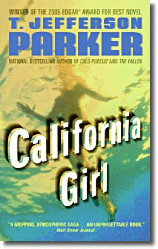
The most gripping novel I've read in recent weeks is T. Jefferson Parker's "California Girl," a "Mystic River"-like coming-of-age tale set in Orange County.

The murder story spans 50 years, during which time the protagonists hear a cabaret act performed by a not- too-talented folk singer named Charlie Manson, and one of them even shakes the hand of the up-and-coming congressman Richard Nixon.

On page 69, Nick, one of the four Becker brothers, discovers the headless body of beauty queen Janelle Vonn in an abandoned orange-packing house. And therein lies a tale.
Click here to read the rest of Beam's article.

--Marshal Zeringue

Roz Chast's reading list

Roz Chast, a staff cartoonist at The New Yorker, has come up a short list of favorite books for The Week magazine.

Here is half of her list:
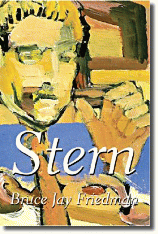
Stern by Bruce Jay Friedman

Perhaps the most hilarious book I’ve ever read. A blackly, bleakly comic novel about the adventures—“plight” might be a better word—of a suburban everyman. Friedman has been compared to Philip Roth—they both mine a certain vein of Jewish humor—but Friedman is more idiosyncratic and definitely more surreal.

The Talented Mr. Ripley by Patricia Highsmith

A deeply scary but compelling novel about a charming, amoral sociopath named Tom Ripley whose sexual confusion is the very least of his “issues.” A beautiful book about envy, money, power, sex, and murder.

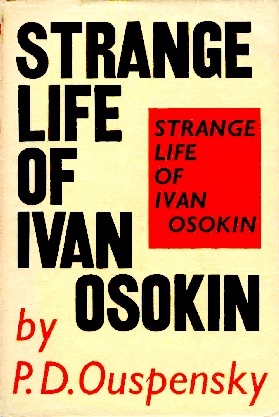
The Strange Life of Ivan Osokin by P.D. Ouspensky

A philosophical novel that asks whether we are perhaps destined to live this life over and over until we get it right—which is why we sometimes get the feeling that we have been here before.
Click here to read about the other three titles.

Roz Chast's most recent book, Theories of Everything, is a compilation of her work from the last three decades.

--Marshal Zeringue

Friday, December 01, 2006

Pg. 69: "Marriage, A History"

Stephanie Coontz teaches history and family studies at The Evergreen State College in Olympia, Washington, and is Director of Research and Public Education for the Council on Contemporary Families, which she chaired from 2001-04.

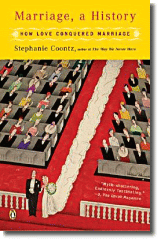
Her most recent book is Marriage, A History: From Obedience to Intimacy, or How Love Conquered Marriage (2005), which I asked her to put to the "page 69 test." She did, and this is what she reported:
Page 69 of my book, Marriage, A History: How Love Conquered Marriage, is the end of a chapter. Summing up the stories I have been telling about courtship and marriage in the distant past, I say: “For thousands of years…the economic functions of marriage were far more important to the middle and lower classes than were its personal satisfactions, while among the upper classes, the political functions of marriage took first place.”

Contrary to popular belief, “traditional” marriage was not based on love. Marriage was the way people sealed political and military alliances, raised capital, sought social status, or expanded their family labor force. Very seldom in the past did young people have any choice over their mates, and when they did, they were more practical than romantic. Most of the great “love affairs” of history, such as Anthony and Cleopatra, were in fact ruthless, coldly calculating plays for wealth and power.

Only 200 years ago did we see the emergence of the radical idea of the love match – that young people should be allowed to choose their own mates, and encouraged to do so on the basis of love. Social conservatives of the day – defenders of the traditional marriage of calculation and convenience – were horrified. They predicted that chaos would reign if people made decisions on the basis of their hearts. How, they demanded, would society get the “right” people married to each other or prevent the “wrong” people from demanding a right to marry? They warned that if love became the basis for marriage, individuals would claim a right to not to marry at all, or to divorce when love died.

The radical implications of the love match were held in check for the next 100 years by the unreliability of birth control and the harsh penalties for illegitimacy, the rigid roles imposed on men and women by Victorian morality, and the legal and economic subordination of women. But in the last 30 years almost all the economic, political, and cultural factors that used to force people to enter and stay in marriage have been overturned.

The result is a paradox: When a marriage works well, it is fairer, more intimate, and more passionate than people of the past would ever have dared to dream, but when it doesn’t work well, it seems less bearable.

The final chapters explain how the transformation of marriage forces us to rethink all the “rules” that we once took for granted about who marries, who doesn’t marry, what makes for a successful marriage, and what things lead to divorce. For better and for worse, marriage will never be the same.
Many thanks to Stephanie for the input.

Click here to read an excerpt, browse the Table of Contents, and read reviews of Marriage, A History.

For recent op-eds--including "Too Close For Comfort" (New York Times, November 7, 2006)--and other articles by and about Stephanie Coontz, click here.

Stephanie has a book review titled "Having It All" in the current Washington Post Book World. It's about "two new books [which] sum up the opportunities that women now have to mix and match their personal and professional lives: Why Smart Men Marry Smart Women, by Christine B. Whelan, and Single by Chance, Mothers by Choice, by Rosanna Hertz." (Hertz's book is the subject of a forthcoming "page 69" item here on the blog.)

Coontz's other books include The Way We Never Were: American Families and the Nostalgia Trap (1992, 2000), The Way We Really Are: Coming to Terms with America's Changing Families (1997), and The Social Origins of Private Life: A History of American Families. She also edited American Families: A Multicultural Reader (1999).

Previous "page 69 tests":
Ed Lynskey, The Dirt-Brown Derby
Cindy Dyson, And She Was
Simon Blackburn, Truth
Brian Freeman, Stripped
Alyson M. Cole, The Cult of True Victimhood
Jeff Biggers, In the Sierra Madre
Jeff Broadwater, George Mason, Forgotten Founder
Alicia Steimberg, Andrea Labinger (trans.), The Rainforest
Michael Grunwald, The Swamp
Darrin McMahon, Happiness: A History
Leo Braudy, From Chivalry to Terrorism
David Nasaw, Andrew Carnegie
Leah Hager Cohen, Train Go Sorry
Chris Grabenstein, Slay Ride
David Helvarg, Blue Frontier
Marina Warner, Phantasmagoria
Bill Crider, A Mammoth Murder
Robert W. Bennett, Taming the Electoral College
Nicholas Stern et al, Stern Review Report
Kerry Emanuel, Divine Wind
Adam Langer, The Washington Story
Michael Scott Moore, Too Much of Nothing
Frank Schaeffer, Baby Jack
Wyn Cooper, Postcards from the Interior
Ivan Goncharov, Oblomov
Maureen Ogle, Ambitious Brew
Cass Sunstein, Infotopia
Paul W. Kahn, Out of Eden
Paul Lewis, Cracking Up
Pagan Kennedy, Confessions of a Memory Eater
David Greenberg, Nixon's Shadow
Duane Swierczynski, The Wheelman
George Levine, Darwin Loves You
John Barlow, Intoxicated
Alicia Steimberg, The Rainforest
Alan Wolfe, Does American Democracy Still Work?
John Dickerson, On Her Trail
Marcus Sakey, The Blade Itself
Randy Boyagoda, Governor of the Northern Province
John Gittings, The Changing Face of China
Rachel Kadish, Tolstoy Lied
Eric Rauchway, Blessed Among Nations
Tim Brookes, Guitar and other books
Ruth Padel, Tigers in Red Weather
William Haywood Henderson, Augusta Locke
Jed Horne, Breach of Faith
Robert Greer, The Fourth Perspective
David Plotz, The Genius Factory
Michael Allen Dymmoch, White Tiger
Patrick Thaddeus Jackson, Civilizing the Enemy
Tom Lutz, Doing Nothing
Libby Fischer Hellmann, A Shot To Die For
Nelson Algren, The Man With the Golden Arm
Bob Harris, Prisoner of Trebekistan
Elaine Flinn, Deadly Collection
Louise Welsh, The Bullet Trick
Gregg Hurwitz, Last Shot
Martha Powers, Death Angel
N.M. Kelby, Whale Season
Mario Acevedo, The Nymphos of Rocky Flats
Dominic Smith, The Mercury Visions of Louis Daguerre
Simon Blackburn, Lust
Linda L. Richards, Calculated Loss
Kevin Guilfoile, Cast of Shadows
Ronlyn Domingue, The Mercy of Thin Air
Shari Caudron, Who Are You People?
Marisha Pessl, Special Topics in Calamity Physics
John Sutherland, How to Read a Novel
Steven Miles, Oath Betrayed
Alan Brown, Audrey Hepburn's Neck
Richard Dawkins, The Ancestor's Tale

--Marshal Zeringue

Comic novels

I have a new post up at Spot-on on "great comic novels."

Two classics--Oblomov by Ivan Goncharov and Bouvard et Pécuchet by Gustave Flaubert--were easy picks in the category.
After that, it was much harder to decide which novels to discuss. From England, should I go with P.G. Wodehouse or Lucky Jim? I went with the latter. Which got me thinking about other comic academic novels set closer to home, like Richard Russo's Straight Man and Jane Smiley's Moo.

What about Southern comic novels? I mention a few ... and neglect hundreds.

And I briefly mention my favorite erotic comic novel, Hollywood comic novel, two superb collections of short stories, and a few other books.

Click here to read the post.

--Marshal Zeringue

Rilke's last poem

Over at the Open University blog, Richard Stern offers his own translation of Rilke's last poem, "Komm du, du Letzer." Check it out.

Stern notes that "Rilke managed to write [the poem] two weeks before the unmitigated agony of his leukemia killed him. ('I want my own death, not a doctor's,' was his response to those who urged him to take morphine.)"

--Marshal Zeringue

TLS: books of the year

The Times Literary Supplement runs a round-up of this year's favorite reading by Alberto Manguel, Marina Warner, Paul Muldoon, Craig Raine, A. N. Wilson, and Elaine Showalter.

Here are Showalter's picks:

In a great vintage year for books, two stood out for me. First, Irène Némirovsky’s posthumous novel about the Nazi occupation of France, Suite Française (Chatto), brilliantly conceived and artfully composed along the lines of War and Peace, fully deserves the Tolstoyan comparison. Shortly before her arrest and deportation to Birkenau, where she was gassed in August 1942, Némirovsky noted in her journal that she must try to write about the everyday details of life in Occupied France that would fascinate readers in ten, or 110, years. Tragically unfinished, Suite Française, with its dispassionate portraits of the psychology of collaboration and the persistence of hope, is a timeless masterpiece.

The American science fiction writer who is the subject of Julie Phillips’s biography James Tiptree, Jr.: The double life of Alice Sheldon (St Martin’s Press), was by no means a great artist, but this account of her life and especially the ten years or so she spent publishing under a male pseudonym that became a fully fledged male persona, is riveting in its illumination of the psychological conflicts and contradictions of modern female authorship. Phillips’s insightful treatment of a “writer who – like many women writers – concealed herself in order to tell the truth” makes this a thought-provoking and paradigmatic book.

--Marshal Zeringue