Here at the site we’ve seen some very smart suggestions for stories illuminating what it’s like to live in a society where the executive can jail a citizen without getting a judge’s approval.
I started the series over what’s at stake in the debate over habeas corpus because even though legal and political circles are much engaged on the subject—see, for example, here and here and here—the popular imagination doesn’t seem much interested. Perhaps the citizenry doesn’t realize what is at risk here, so (I reasoned) maybe a parable or two can help.
Of course, the stories can work two ways. As some pundits and government officials have suggested, maybe habeas corpus isn’t a luxury America can afford given the threat of terrorism. TV viewers have seen plotlines that favor that notion in (among others) 24, Alias, and the BBC’s MI-5. So far, only one suggestion of a novel from this camp has hit the site: Frederick Forsyth’s The Day of the Jackal.
Most of the other suggested fiction is about the danger of allowing the authorities to imprison individuals without explaining to a judge the reason for doing so.
Pete Anderson recommended “Franz Kafka's The Trial, which unforgettably shows how an innocent man can be unfairly persecuted by a totalitarian state.” Jeremy Dibbell came up with “Orwell's 1984 and Huxley's Brave New World... both are interesting treatments of ‘what could happen’ after diving down those slippery slopes.” Darkness at Noon was the choice of two political scientists.
Jonathan Freiman of Yale Law School and the firm Wiggin and Dana recommended The Count of Monte Cristo.
Robert A. Ferguson, George Edward Woodberry Professor in Law, Literature and Criticism at Columbia Law School, recommended a story I did not previously know of: Edward Everett Hale's "The Man Without A Country." It’s great stuff—read it here or here—especially since it was written with a different purpose than the one suggested by Professor Ferguson.
Two writers of legal thrillers jumped in with novels with plots involving petitions for habeas corpus, which in this case are challenges to the constitutionality of a conviction or sentence. Scott Turow recommended his own “novel Reversible Errors [which] centers on a habeas proceeding for a man on death row, brought when another man confesses to the crime.” And Alafair Burke suggested Kermit Roosevelt's In the Shadow of the Law.
The invitation is open for suggestions of more novels that illuminate what's at stake when a polity allows--or does not allow--the executive to imprison citizens without judicial review. If you know of a good book and can explain how it fits the bill--and you make your case before May 15--you might just be the winner of a copy of Cary Federman's just-released The Body and the State: Habeas Corpus and American Jurisprudence (SUNY Press, 2006), a $65 value.
Email your suggestions to mazeringue [at] excite [dot] com.
--Marshal Zeringue
Thursday, April 20, 2006
Wednesday, April 19, 2006
Two medieval novels from the Islamic tradition
Professor Joseph Lowry of the University of Pennsylvania generously replied to my inquiry regarding Arabic novels about life in a theocracy:
Joseph Lowry is Assistant Professor of Near Eastern Languages and Civilizations at Penn. His recent publications include: Law and Education in Medieval Islam: Studies in Memory of George Makdisi, eds. J. Lowry, D. Stewart and S. Toorawa. Cambridge: E. J. W. Gibb Memorial Trust, 2005; "The Legal Hermeneutics of al-Shafi‘i and Ibn Qutayba: A Reconsideration," Islamic Law and Society 11:1 (2004); "Ritual Purity," Encyclopaedia of the Qur’an, v. 4 (Leiden: Brill, in progress); "Histories and Polyphonies: Deep Structures inal-Tayyib Salih’s Mawsim al-hijra ila al-shamal," Edebiyât 12 (2001); co-author, Interpreting the Self: Autobiography in the Arabic Literary Tradition, D. Reynolds, ed. (Berkeley: University of California Press, 2001).
Thanks to Joe Lowry for the stimulating suggestions.
--Marshal Zeringue
I can at least suggest two medieval philosophical novels from the Islamic tradition. Although they are not about life in a theocracy per se, they certainly both contemplate, in their various ways, life under a government that sees maintenance of a particular religious faith as a duty. Medieval Islamic government was not really a theocracy in the narrow sense, except briefly perhaps during and shortly after the lifetime of the Prophet Muhammed (d. 632).There is an article in the Guardian about Ibn Tufayl's Hayy Ibn Yaqzan that should be well worth your time; click here to read it, and here are the opening paragraphs to tickle your interest:
They are both beautifully translated by Professor [Lenn] Goodman of Vanderbilt University and have excellent introductions and notes and will be immediately appealing--I hope--to non-specialists. I am reading them with my Islamic philosophy class this semester.
These are:
Ibn Tufayl's Hayy Ibn Yaqzan, tr. Lenn Goodman (Los Angeles: gee tee bee press)
The Case of the Animals vs. Man before the King of the Jinn, tr. Lenn Goodman (Los Angeles, gee tee bee press)
The Case of the Animals vs. Man before the King of the Jinn is the subject of a graduate seminar in Arabic at UCLA this spring. As the course listing summarizes it:There is a tale for our troubled times about a man on a desert island, who keeps goats, builds a shelter and finally discovers footprints in the sand. But it is not called Robinson Crusoe. It was written by a wise old Muslim from Andalusia and is the third most translated text from Arabic after the Koran and the Arabian Nights.
It is called Hayy ibn Yaqzan or "Alive, Son of Awake", and it was a sensation among intellectuals in Daniel Defoe's day. As has happened before during times of tension between Islam and the west, it is again emerging from the shadows and that is a matter for celebration, whether in New York or Baghdad.
an allegorical story in which the animals complain to the just king of the jinn about the cruel treatment meted out to them by human beings. The debate--a satire on Men and Animals--in addition to theological disputes reflects fascinating psychological and ecological themes. In the course of the debate, the animals refute man’s claim of superiority over them by denouncing the rampant injustice and immorality of human society. The fable is a good example of [the author] Ikhwan’s socio-political criticism of Islamic society couched in animal characters without offending the sensibilities of their readers.Both books sound fascinating to me.
Joseph Lowry is Assistant Professor of Near Eastern Languages and Civilizations at Penn. His recent publications include: Law and Education in Medieval Islam: Studies in Memory of George Makdisi, eds. J. Lowry, D. Stewart and S. Toorawa. Cambridge: E. J. W. Gibb Memorial Trust, 2005; "The Legal Hermeneutics of al-Shafi‘i and Ibn Qutayba: A Reconsideration," Islamic Law and Society 11:1 (2004); "Ritual Purity," Encyclopaedia of the Qur’an, v. 4 (Leiden: Brill, in progress); "Histories and Polyphonies: Deep Structures inal-Tayyib Salih’s Mawsim al-hijra ila al-shamal," Edebiyât 12 (2001); co-author, Interpreting the Self: Autobiography in the Arabic Literary Tradition, D. Reynolds, ed. (Berkeley: University of California Press, 2001).
Thanks to Joe Lowry for the stimulating suggestions.
--Marshal Zeringue


Tuesday, April 18, 2006
"The Man Who Cried I Am"
University of Chicago professor Michael Dawson helps advance and refine our search for fiction that might illuminate the understanding of "structural racism."
 Although I would prefer novels, I am willing to consider other fiction--whatever helps advance our understanding.
The Man Who Cried I Am, Williams' third (or fourth) novel, was published in 1967 to wide acclaim. Twenty years later he told an interviewer that readers were shocked by the novel's description of a plan for a final solution to the ''Negro problem.''
In 1981 Gabriel Motola, professor of English literature at the City University, told the New York Times:
William Julius Wilson called Black Visions "the most comprehensive and definitive study of African-American political thought ever published."
Thanks to Michael Dawson for the suggestion and input.
For previous entries on this theme, see Andrew Grant-Thomas raises an issue, "Arthur & George", and Walter Mosley.
--Marshal Zeringue
Mosley's work sorta works, although it's better at showing inter-personal racism backed by state and other forms of power. Maybe John A. Williams’ novels (The Man Who Cried I Am, etc). If you're willing to include plays and short stories it opens up the field quite a bit.
 Although I would prefer novels, I am willing to consider other fiction--whatever helps advance our understanding.
The Man Who Cried I Am, Williams' third (or fourth) novel, was published in 1967 to wide acclaim. Twenty years later he told an interviewer that readers were shocked by the novel's description of a plan for a final solution to the ''Negro problem.''
What I wrote then reflected what I saw happening in the 60's--that the problems and violence of those years were being blamed on America's black people. There was general feeling that blacks were superfluous, that if there were no blacks, there'd be no troubles.Before retiring in the early 1990s, Williams was a professor of English and journalism at Rutgers University in Newark, and had written more than 20 books.
In 1981 Gabriel Motola, professor of English literature at the City University, told the New York Times:
John is in the same class as Kurt Vonnegut, John Cheever and Arthur Miller, those who deal with the social issues and how they affect the individual, the social issues that tend to restrict people from moving up the economic and social ladders and restrict their very basic freedoms. John is one of the few writers of today who is worth paying attention to....Michael Dawson, one of the nation’s leading experts on race and politics, is a Professor in the Department of Political Science at the University of Chicago. He is the author of Black Visions: The Roots of Contemporary African-American Political Ideologies and Behind the Mule: Race and Class in African-American Politics. He also is the author of numerous articles on African-American political behavior and race and American politics.
William Julius Wilson called Black Visions "the most comprehensive and definitive study of African-American political thought ever published."
Thanks to Michael Dawson for the suggestion and input.
For previous entries on this theme, see Andrew Grant-Thomas raises an issue, "Arthur & George", and Walter Mosley.
--Marshal Zeringue
Monday, April 17, 2006
Walter Mosley
Last week I ran an item proposed by Andrew Grant-Thomas of the Kirwan Institute for the Study of Race and Ethnicity: he asked for suggestions of novels that might capture the phenomenon of "structural racism."
I suggested Julian Barnes' Arthur & George might be one such book. But now I'm not so sure. Racism is clearly obvious in the novel, yet it's more evident as old-fashioned bigotry and institutional racism than in a way that fits the criteria outlined above. Or, perhaps, I just haven't unpacked it in the right way.
Similar doubts weigh heavily on my other possible candidate for this subject: Walter Mosley's Easy Rawlins series.
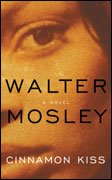
Mosley is the author of twenty-three critically acclaimed books and his work has been translated into twenty-one languages. His popular mysteries featuring Easy Rawlins began with Devil in a Blue Dress in 1990. The series includes A Red Death, White Butterfly, Black Betty, A Little Yellow Dog, Bad Boy Brawly Brown, Six Easy Pieces, Little Scarlet, and Cinnamon Kiss.
Race is everywhere in these books. In Cinnamon Kiss Easy, who we first meet in 1948, is a Los Angeles PI with a day job as a school janitor in post-Watts LA. Following a lead in downtown LA, he suddenly notices two policemen eyeballing him.
But part of Easy's (and Mosley's) genius is that he illustrates these structural inequities and inefficiencies by exploiting them. In Little Scarlet, for example, the (white) authorities ask Easy to assist solving a crime to help prevent Watts from exploding (again). He has his own reasons for working the case, and he also wants to help prevent the black community from destroying itself. But there’s also this idea that if he gets inside the power structure—if only temporarily and warily—some things will change, for them and for him.
In a recent article in The Nation, Mosley makes a similar point in about contemporary national politics. Although obviously no fan of the current administration, he notes:
Mosley makes a similar point with his science-fiction stories. He shows how the world might look if and when these barriers are removed or overcome:
On the novelist's obligation to employ politics in his fiction, see this piece from the Washington Post.
Surely there are a multitude of novels out there that illuminate structural racism in a way that dry scholarship cannot. If you know one, send me the title and an explanation for why it fits. And, if I'm wrong about Mosley's contribution to the subject, let me know that, too.
--Marshal Zeringue
Structural racism, to [Grant-Thomas'] way of thinking, is the idea that the joint interaction of institutions also can and often does produce bad outcomes, often unintentionally. For example, a university shows some extra admissions love to applicants who took advanced placement courses in high school. Race-neutral on its face, right? But we know that every state has both top high schools that offer a lot of AP courses and not-so-elite schools that have few, if any, such courses. And we know that black and Latino kids are almost always more numerous in the schools with few AP courses; those schools are disproportionately located in the poor neighborhoods those kids live in and financed by local property taxes; those taxes are paid by people with low incomes and even less wealth; and those current racial gaps in wealth have their roots in historical policies and practices that systematically transferred wealth from whites to nonwhites.... The point is that you cannot single out any one institution—much less a particular group of individuals—as the racist culprit here, but, together, they produce and transmit serious inequality all the same.Surely there are many novels that fit the bill, I thought. Now I'm learning it's tougher coming up with titles than I expected.
I suggested Julian Barnes' Arthur & George might be one such book. But now I'm not so sure. Racism is clearly obvious in the novel, yet it's more evident as old-fashioned bigotry and institutional racism than in a way that fits the criteria outlined above. Or, perhaps, I just haven't unpacked it in the right way.
Similar doubts weigh heavily on my other possible candidate for this subject: Walter Mosley's Easy Rawlins series.

Mosley is the author of twenty-three critically acclaimed books and his work has been translated into twenty-one languages. His popular mysteries featuring Easy Rawlins began with Devil in a Blue Dress in 1990. The series includes A Red Death, White Butterfly, Black Betty, A Little Yellow Dog, Bad Boy Brawly Brown, Six Easy Pieces, Little Scarlet, and Cinnamon Kiss.
Race is everywhere in these books. In Cinnamon Kiss Easy, who we first meet in 1948, is a Los Angeles PI with a day job as a school janitor in post-Watts LA. Following a lead in downtown LA, he suddenly notices two policemen eyeballing him.
Most Americans wouldn't understand why two well-dressed men would have to explain why they were standing on a public street. But most Americans cannot comprehend the scrutiny that black people have been under since the days we were dragged here in bondage. Those two cops felt fully authorized to stop us with no reason and no warrant. They felt that they could question us and search us and cart us off to jail if there was the slightest flaw in how we explained our business. Even with all the urgency I felt at that moment I had a small space to hate what those policemen represented in my life. But I could hate as much as I wanted: I still didn't have the luxury to defy their authority.That's just obvious—even if (perhaps, unconscious)—racism at work. Yet time and again Mosley takes that reality and shows how it distorts nearly every aspect of our lives. The cops' suspiciousness feeds simmering rage and self-doubt, which means there's always the potential for violence when that rage boils over. And even when there isn't physical violence, the friction on regular public discourse is so evident that it makes regular interaction between members of different races unnecessarily inefficient. The corrosiveness of racism is of course worst for its direct victims, but society as a whole pays a price that's not always acknowledged.
But part of Easy's (and Mosley's) genius is that he illustrates these structural inequities and inefficiencies by exploiting them. In Little Scarlet, for example, the (white) authorities ask Easy to assist solving a crime to help prevent Watts from exploding (again). He has his own reasons for working the case, and he also wants to help prevent the black community from destroying itself. But there’s also this idea that if he gets inside the power structure—if only temporarily and warily—some things will change, for them and for him.
In a recent article in The Nation, Mosley makes a similar point in about contemporary national politics. Although obviously no fan of the current administration, he notes:
the Bush Administration has put black faces into high-profile jobs that carry clout on the international playing field. I don't have to like Colin Powell or Condoleezza Rice to appreciate that once a black person has been put into a position of power, the second time around is much, much easier.Isn't he saying here that racism is structural, and that affirmative action (even the kind that the Bush administration has practiced for this relative handful of prominent figures) is one way to ameliorate its effects?
Mosley makes a similar point with his science-fiction stories. He shows how the world might look if and when these barriers are removed or overcome:
In science fiction you don't have to accept the world the way it is. You don't have to run around saying, "I'm constrained by these notions of society, by these notions of history, by these general notions of morality." All of these notions or any one of them can go out of the window, and I think that's for anybody. For black people in particular, the future is all we have because the past has been taken away from us and the present is defined in certain ways. You can't write today about our president, or our senator, or our multi-billionaire industrialist. Black people tend to get pushed into certain cubbyholes that at least white people in the culture don't, and so what you can do with science fiction is you can make a whole different world. You could say, for instance, that in the year 2060 there are only black people. You don't even have to say why. In that way, you can begin to create worlds which become interesting and also become yours in a certain way.Also on this point, see Mosley's article, "Black to the Future."
On the novelist's obligation to employ politics in his fiction, see this piece from the Washington Post.
Surely there are a multitude of novels out there that illuminate structural racism in a way that dry scholarship cannot. If you know one, send me the title and an explanation for why it fits. And, if I'm wrong about Mosley's contribution to the subject, let me know that, too.
--Marshal Zeringue
Sunday, April 16, 2006
"Boy books" and "girl books"
Can fiction be divided into "boy books" and girl books?"
Among the courses I used to teach at a liberal arts college was a seminar on "Film, Fiction, and Politics." The basic point of the course was to get students to think about the general way we approach the causes of political events. For example, an orthodox political science course might look at the distribution of city services and expenditures and try to figure out who gets what and why. That's more or less the point of the classic Who Governs?, by Robert A. Dahl, who asks: "In a political system where nearly every adult may vote but where knowledge, wealth, social position, access to officials, and other resources are unequally distributed, who actually governs?"
Or, an international politics course might try to figure out the causes of, say, the Iraq War: is the crucial variable in the origin of that conflict a man (George W. Bush, or perhaps Saddam), the state (something inherent in American democracy, or perhaps the actions of well-organized interest groups), or the distribution of power (say, the imagined rise in Iraqi power and the fear that it caused in America)?
In the seminar, instead of an actual city or a contemporary war, we took the well-defined world in a story and tried to figure out: given what happens to this or that character, is the cause down to one or more other persons, or do we have to look to wider causes? When we read parts of the Iliad, we tried to figure out if the cause of the war was simply Paris running off with Menelaus's wife, and if the continuation and course of the war was because of the rage of Achilles or because of something like the dynamics of conflict, the competition for scarce resources, or the culture of the ancient world.
Likewise, an excellent story of Murakami's set near the end of the Manchurian campaign was fodder for speculation over whether the atrocities depicted in the story were because of the local commander, the nature of Japanese militarism, a function of battlefield necessity, or a few other causes that I can't recall.
Most of the stories were written by men and most of the students in the seminar were women. I can't explain the latter, though my then-colleague (and Friend of the Blog) Andrew spent quite a bit of time working through various hypotheses on the matter.
That most of the stories were by men came up in the seminar during a stretch where all the stories and the films involved some unhappy violence, and one female student asked why we weren't reading any happy stories. The answer was simple: we needed stories where the conflict was pretty obvious, and the fighting and bloodshed was all in the service of that clarity.
This discussion evolved into the question of whether there are "boy books" and "girl books." My take on the question goes something like this: yes, many if not most books are identifiably more appealing to men or to women, though the vast majority of good books will be read with pleasure by both genders. And there are many books that just don't fit into either camp: my exhibit A for that argument would be Anna Karenina.
Moreover, while I like many novels that seem to fall squarely in the camp of "boy books," I think it would foolish to try to predict my reading habits based on that little nugget of information; see here, here, here, and especially here.
Anyway, I think the issue is one of those things that is interesting to chew on and it can support some long and interesting conversations, but if you try to be too rigorous about it you can really take the fun of it without really learning much.
Which brings me to this recent item in the Guardian. A couple of British academics interviewed a large (but perhaps unscientific) sample of men about the novels that had changed their lives. While I haven't read the study and am only going with the newpaper's account of it, it seems they drew some questionable inferences from the responses. The opening paragraph claims:
Of course, my conjecture is far less scientific than that of the scholars who did the report. But look at the list: Camus' The Outsider is at the top. Could that really be the most common novel that changed men's lives? Perhaps. But #5 is Graham Greene's Brighton Rock. What's up with that? It's not nearly his best novel, nor is it one of his enjoyable "entertainments." Why did that make the list? Is it taught in British schools?
Likewise, The Catcher in the Rye is the sort of thing that changed the life of many adolescents--you read it in school and realize that you aren't the only one with a wonky outlook on the world--but is it really a book that "means the most to" an adult male? I mean an adult male who is not an assassin. (John Lennon's killer, Mark David Chapman, and Ronald Reagan's would-be assassin, John Hinckley, were both major Catcher fans.)
Nick Hornby's High Fidelity makes the list and actually is one of the few that feels like a genuine answer. (It's followed by Ulysses, an answer I'd be better prepared to accept if the respondents were hooked up to a polygraph.) High Fidelity is a "boy book" and the sort of novel that would mean a great deal to many adult males. And, yes, like The Outsider, it's about "indifference, alienation and lack of emotional responses"--but not at all in the same way.
Like I said, it's a topic worth chewing on....
Did Camus' The Outsider change your life?
Thanks to Friend of the Blog "Cochise" for pointing me toward the Guardian article.
--Marshal Zeringue
Among the courses I used to teach at a liberal arts college was a seminar on "Film, Fiction, and Politics." The basic point of the course was to get students to think about the general way we approach the causes of political events. For example, an orthodox political science course might look at the distribution of city services and expenditures and try to figure out who gets what and why. That's more or less the point of the classic Who Governs?, by Robert A. Dahl, who asks: "In a political system where nearly every adult may vote but where knowledge, wealth, social position, access to officials, and other resources are unequally distributed, who actually governs?"
Or, an international politics course might try to figure out the causes of, say, the Iraq War: is the crucial variable in the origin of that conflict a man (George W. Bush, or perhaps Saddam), the state (something inherent in American democracy, or perhaps the actions of well-organized interest groups), or the distribution of power (say, the imagined rise in Iraqi power and the fear that it caused in America)?
In the seminar, instead of an actual city or a contemporary war, we took the well-defined world in a story and tried to figure out: given what happens to this or that character, is the cause down to one or more other persons, or do we have to look to wider causes? When we read parts of the Iliad, we tried to figure out if the cause of the war was simply Paris running off with Menelaus's wife, and if the continuation and course of the war was because of the rage of Achilles or because of something like the dynamics of conflict, the competition for scarce resources, or the culture of the ancient world.
Likewise, an excellent story of Murakami's set near the end of the Manchurian campaign was fodder for speculation over whether the atrocities depicted in the story were because of the local commander, the nature of Japanese militarism, a function of battlefield necessity, or a few other causes that I can't recall.
Most of the stories were written by men and most of the students in the seminar were women. I can't explain the latter, though my then-colleague (and Friend of the Blog) Andrew spent quite a bit of time working through various hypotheses on the matter.
That most of the stories were by men came up in the seminar during a stretch where all the stories and the films involved some unhappy violence, and one female student asked why we weren't reading any happy stories. The answer was simple: we needed stories where the conflict was pretty obvious, and the fighting and bloodshed was all in the service of that clarity.
This discussion evolved into the question of whether there are "boy books" and "girl books." My take on the question goes something like this: yes, many if not most books are identifiably more appealing to men or to women, though the vast majority of good books will be read with pleasure by both genders. And there are many books that just don't fit into either camp: my exhibit A for that argument would be Anna Karenina.
Moreover, while I like many novels that seem to fall squarely in the camp of "boy books," I think it would foolish to try to predict my reading habits based on that little nugget of information; see here, here, here, and especially here.
Anyway, I think the issue is one of those things that is interesting to chew on and it can support some long and interesting conversations, but if you try to be too rigorous about it you can really take the fun of it without really learning much.
Which brings me to this recent item in the Guardian. A couple of British academics interviewed a large (but perhaps unscientific) sample of men about the novels that had changed their lives. While I haven't read the study and am only going with the newpaper's account of it, it seems they drew some questionable inferences from the responses. The opening paragraph claims:
The novel that means most to men is about indifference, alienation and lack of emotional responses. That which means most to women is about deeply held feelings, a struggle to overcome circumstances and passion....But look at the list of books the men chose and you might agree with my surmise that these are the books that most of the men probably read in secondary school; and because they had read relatively few books at that point in life and because adolescents are particularly impressionable, of course many men would name one of these books. But the book that "changed their lives" is not the same as the "novel that means most to" them: I would venture that most adult men have since found a number of books that mean more to them than those that influenced them as teenagers.
Of course, my conjecture is far less scientific than that of the scholars who did the report. But look at the list: Camus' The Outsider is at the top. Could that really be the most common novel that changed men's lives? Perhaps. But #5 is Graham Greene's Brighton Rock. What's up with that? It's not nearly his best novel, nor is it one of his enjoyable "entertainments." Why did that make the list? Is it taught in British schools?
Likewise, The Catcher in the Rye is the sort of thing that changed the life of many adolescents--you read it in school and realize that you aren't the only one with a wonky outlook on the world--but is it really a book that "means the most to" an adult male? I mean an adult male who is not an assassin. (John Lennon's killer, Mark David Chapman, and Ronald Reagan's would-be assassin, John Hinckley, were both major Catcher fans.)
Nick Hornby's High Fidelity makes the list and actually is one of the few that feels like a genuine answer. (It's followed by Ulysses, an answer I'd be better prepared to accept if the respondents were hooked up to a polygraph.) High Fidelity is a "boy book" and the sort of novel that would mean a great deal to many adult males. And, yes, like The Outsider, it's about "indifference, alienation and lack of emotional responses"--but not at all in the same way.
Like I said, it's a topic worth chewing on....
Did Camus' The Outsider change your life?
Thanks to Friend of the Blog "Cochise" for pointing me toward the Guardian article.
--Marshal Zeringue
Saturday, April 15, 2006
"Darkness at Noon"
Within twelve hours of each other two political scientists recommended to me the same novel to illustrate what life might be like in a country where the executive does not have to check with an independent judge before throwing someone in prison. The recommenders--Harry Pohlman of Dickinson College and Mary Thornberry of Davidson College--both pointed to Arthur Koestler's Darkness at Noon. Professor Thornberry put it succinctly:

Mary Thornberry is Chair of the Department of Political Science at Davidson College and author of numerous scholarly articles and reviews.
Thanks to both professors for the recommendation.
--Marshal Zeringue
A vivid picture of what happens when the state is allowed to imprison people without challenge. Even the most loyal supporters are not immune from the state's oppression.A couple of years ago Michael Schaub at Bookslut wrote about the novel:

Darkness at Noon is a near-perfect novel. It opens with Rubashov's arrest--which takes place, of course, in the middle of the night, a trademark of not just the Cheka, but of all secret police forces in all dictatorships. There's a picture of No. 1 hanging on the wall above Rubashov's bed, and it's clear there are pictures like this above all the beds in the nation. It's a chilling image, and the reader can't help but imagine Stalin's face in the frame, staring out with the familiar bright eyes and big mustache. The rest of the novel follows Rubashov's imprisonment and interrogation, and it follows it to its logical, sadly inevitable conclusion. The last two paragraphs--you can imagine what happens--are among the most quoted in the literature of Soviet communism, and there's no way it could be more chilling, more coldly effective and heartbreakingly true. (One of the best works to reference the closing of Darkness at Noon is Martin Amis's brilliant history/memoir Koba the Dread: Laughter and the Twenty Million. I mention it here because, like Koestler's novel, absolutely no one should go without reading it; it's the first great nonfiction book of the century.) ....
When it comes to political fiction, we've become willing to sacrifice good prose for good ideas. Take Orwell, whose genius was unquestionable, and whose fiction is--well, if you're being charitable, you could say "below average." The reason that Nineteen Eighty-four and Animal Farm are (and ought to be) taught in schools, and it has nothing to do with Orwell's narrative skills. Koestler demonstrates you needn't sacrifice prose for ideas, and that's a valuable lesson for all aspiring activist writers.
One note: Darkness at Noon is certainly meant to suggest the Soviet Union and Stalin is obviously the model for "No. 1"; yet while the characters have Russian names, no country is actually named in the book.
Harry Pohlman is A. Lee Fritschler Professor of Public Policy and Chair of the Political Science Department at Dickinson College. He is the author of The Whole Truth?: A Case of Murder on the Appalachian Trail and the textbook Constitutional Debate in Action.Mary Thornberry is Chair of the Department of Political Science at Davidson College and author of numerous scholarly articles and reviews.
Thanks to both professors for the recommendation.
--Marshal Zeringue
Friday, April 14, 2006
"Arthur & George"
Julian Barnes’ Arthur & George is one of the better novels I’ve read in the past year. Arthur is Arthur Conan Doyle, the creator of Sherlock Holmes; George Edalji is a small-town son of vicar who grows up to become a lawyer in Birmingham. Almost half the novel passes before they meet, which they finally do when George is convicted and jailed for the evisceration of large farm animals and the case comes to the attention of Conan Doyle.
I was almost finished the novel before I learned that it is very closely based on an actual historical episode. You can learn the basic outline of the case here.
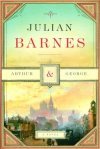
Right about now, frequent readers of the blog may be thinking: a man jailed? Is this yet another post about a novel about habeas corpus? The answer: No, Edalji’s arrest and trial and conviction are all in accord with the accepted legal practices of Victorian England.
Yet Arthur & George may be a useful novel to help understand what Andrew Grant-Thomas and others call “structural racism.”
One of the paradoxes of the Edalji case is that while his initial implication in the attacks on farm animals stemmed from the obvious racism of a few members of the local police—George Edalji was the son of a man born in India and a Scottish mother—his very appearance is what convinced Conan Doyle that Edalji could not have committed the crimes: he was not only very slight in build but chronically short-sighted, which would have made it very difficult to sneak up on and stab large farm animals.
So, there is considerable old-fashioned racism in Arthur & George: without it, there probably would not have been a story. But the reason I think the novel may be useful for understanding structural racism is that most people who mattered in the administration of justice at the time would not be considered racists, and indeed would have looked down on racists. Incredibly enough, George himself—because racism is illogical and George is supremely rational—does not believe racism has anything to do with his predicament.
And yet…. There is obviously considerable latent and institutional racism at work at almost every stage in George’s path to grief. It is unbelievable that an exceedingly mild-mannered educated and articulate son of a Church of England vicar would wind up in prison based on the (very slender) evidence arrayed against George—were George a white man. But George is dark, like his father the vicar; moreover, the vicar is married to a white, Scottish woman.
Although this kind of racism isn’t conscious “Archie Bunker-style racism,” I don't think it meets the criteria for structural racism sketched by Grant-Thomas. We're still talking mostly about inside-the-head racism, even if it is institutionalized. I think there are perhaps elements of the story that would support a broader charge of structural racism but closer analysis of events would be required. I am curious about what other readers would make of the case.
No one today would think a young, bookish lawyer with Indian coloring and features would be capable of such a crime based on the thin evidence and lack of motive in the Edalji case. The stereotype would in fact work to his advantage. But I don’t think we can say the same about a young man with African coloring and features.
Do you have an interpretation of the book that would support—or undermine—the applicability of structural racism to the Edalji case? Even without reading the book, can you imagine what conditions would be necessary to make such a claim given what you've learned about the novel here and from reviews? Email me with your thoughts and conjectures. Grant-Thomas has a useful example of how structural racism applies to some American schools here; even if Arthur & George doesn't fit the bill, maybe the reasons why it doesn't will help refine the theory.
In addition to its usefulness in social, legal, and racial history, Arthur & George is a wonderful read. Much of the novel is taken up with Arthur Conan Doyle's romantic life and the pages turn in anticipation of how Sir Arthur will navigate some personal ethical minefields. As Barnes says (of the Edalji case), "It's about what you can prove, not just in the criminal sense but the emotional sense."
See a profile and interview with Julian Barnes here. Listen to Maureen Corrigan's "Fresh Air" review of the novel here.
--Marshal Zeringue
I was almost finished the novel before I learned that it is very closely based on an actual historical episode. You can learn the basic outline of the case here.

Right about now, frequent readers of the blog may be thinking: a man jailed? Is this yet another post about a novel about habeas corpus? The answer: No, Edalji’s arrest and trial and conviction are all in accord with the accepted legal practices of Victorian England.
Yet Arthur & George may be a useful novel to help understand what Andrew Grant-Thomas and others call “structural racism.”
One of the paradoxes of the Edalji case is that while his initial implication in the attacks on farm animals stemmed from the obvious racism of a few members of the local police—George Edalji was the son of a man born in India and a Scottish mother—his very appearance is what convinced Conan Doyle that Edalji could not have committed the crimes: he was not only very slight in build but chronically short-sighted, which would have made it very difficult to sneak up on and stab large farm animals.
So, there is considerable old-fashioned racism in Arthur & George: without it, there probably would not have been a story. But the reason I think the novel may be useful for understanding structural racism is that most people who mattered in the administration of justice at the time would not be considered racists, and indeed would have looked down on racists. Incredibly enough, George himself—because racism is illogical and George is supremely rational—does not believe racism has anything to do with his predicament.
And yet…. There is obviously considerable latent and institutional racism at work at almost every stage in George’s path to grief. It is unbelievable that an exceedingly mild-mannered educated and articulate son of a Church of England vicar would wind up in prison based on the (very slender) evidence arrayed against George—were George a white man. But George is dark, like his father the vicar; moreover, the vicar is married to a white, Scottish woman.
Although this kind of racism isn’t conscious “Archie Bunker-style racism,” I don't think it meets the criteria for structural racism sketched by Grant-Thomas. We're still talking mostly about inside-the-head racism, even if it is institutionalized. I think there are perhaps elements of the story that would support a broader charge of structural racism but closer analysis of events would be required. I am curious about what other readers would make of the case.
No one today would think a young, bookish lawyer with Indian coloring and features would be capable of such a crime based on the thin evidence and lack of motive in the Edalji case. The stereotype would in fact work to his advantage. But I don’t think we can say the same about a young man with African coloring and features.
Do you have an interpretation of the book that would support—or undermine—the applicability of structural racism to the Edalji case? Even without reading the book, can you imagine what conditions would be necessary to make such a claim given what you've learned about the novel here and from reviews? Email me with your thoughts and conjectures. Grant-Thomas has a useful example of how structural racism applies to some American schools here; even if Arthur & George doesn't fit the bill, maybe the reasons why it doesn't will help refine the theory.
In addition to its usefulness in social, legal, and racial history, Arthur & George is a wonderful read. Much of the novel is taken up with Arthur Conan Doyle's romantic life and the pages turn in anticipation of how Sir Arthur will navigate some personal ethical minefields. As Barnes says (of the Edalji case), "It's about what you can prove, not just in the criminal sense but the emotional sense."
See a profile and interview with Julian Barnes here. Listen to Maureen Corrigan's "Fresh Air" review of the novel here.
--Marshal Zeringue
Thursday, April 13, 2006
Andrew Grant-Thomas raises an issue
Andrew Grant-Thomas wrote in with a very interesting query:
As Andrew notes at the top of his message, one goal of this blog is to highlight fiction that illuminates social issues. So, while also thinking about novels that portray life in theocracies and in societies where the executive's power to imprison is unchecked by the judiciary, I've also been noodling on his question.
I've come up with two candidates that may fit the bill. One is a recent work of literary fiction from Great Britain and the other is a crime fiction series set in Los Angeles. I'll post my case for these works in the next few days.
Do you know a work of fiction that brings home the impact and prevalence of structural racism? Send in your title, along with an explanation how the book captures the issue, and we'll share it with your fellow readers.
--Marshal Zeringue
UPDATE: I've taken a stab at novels that might fit the bill: Julian Barnes' Arthur & George and the Easy Rawlins series by Walter Mosley. Check it out.
A nice piece of fiction can often drive home a given idea in a more penetrating way than even the most tightly argued essay. No argument from you, I'm guessing. I'm looking for suggestions for a novel or two, short stories maybe, that capture a particular social dynamic I spend a fair bit of time thinking about -- "structural racism."Andrew Grant-Thomas is Deputy Director of the Kirwan Institute for the Study of Race and Ethnicity at The Ohio State University. Previously he was Director of the Color Lines Project at Harvard University. He holds a PhD in Political Science and a MA in International Relations from the University of Chicago and a BA in Literature from Yale University.
At least in the US we mostly think about racism nowadays in terms of individuals (old-school, Archie Bunker-style racism), or policies and practices (institutional racism) that treat people better or worse on the basis of race or ethnicity.
Structural racism, to my thinking, is the idea that the joint interaction of institutions also can and often does produce bad outcomes, often unintentionally. For example, a university shows some extra admissions love to applicants who took advanced placement courses in high school. Race-neutral on its face, right? But we know that every state has both top high schools that offer a lot of AP courses and not-so-elite schools that have few, if any, such courses. And we know that black and Latino kids are almost always more numerous in the schools with few AP courses; those schools are disproportionately located in the poor neighborhoods those kids live in and financed by local property taxes; those taxes are paid by people with low incomes and even less wealth; and those current racial gaps in wealth have their roots in historical policies and practices that systematically transferred wealth from whites to nonwhites.... The point is that you cannot single out any one institution -- much less a particular group of individuals -- as the racist culprit here, but, together, they produce and transmit serious inequality all the same.
The novels that come to my mind that may capture at least some of this structural dynamic -- Native Son, Grapes of Wrath (maybe), anything by James Baldwin -- tend to be from another era and, I think, also tend to be constrained by inordinate attention to the inside-the-head and intra-institutional stuff that, while still very important, can deflect attention from the inter-institutional dynamic structural racism highlights. For obvious reasons, novels written before, say, 1980 also tend to focus on black-white dynamics.
I'm guessing that the last 10-15 years have seen any number of works that approach this question of racial and ethnic inequality in what I'm calling a structural way, and do so with reference to Latinos and Asian Americans -- and maybe even to poor and working-class whites -- as well as to blacks. Unfortunately, it's just a guess, since I'm also one of those individuals you had in mind in creating this blog -- people who'd happily lap up a lot more novels, short stories and poetry if they felt they could afford the time. So…suggestions welcome.
As Andrew notes at the top of his message, one goal of this blog is to highlight fiction that illuminates social issues. So, while also thinking about novels that portray life in theocracies and in societies where the executive's power to imprison is unchecked by the judiciary, I've also been noodling on his question.
I've come up with two candidates that may fit the bill. One is a recent work of literary fiction from Great Britain and the other is a crime fiction series set in Los Angeles. I'll post my case for these works in the next few days.
Do you know a work of fiction that brings home the impact and prevalence of structural racism? Send in your title, along with an explanation how the book captures the issue, and we'll share it with your fellow readers.
--Marshal Zeringue
UPDATE: I've taken a stab at novels that might fit the bill: Julian Barnes' Arthur & George and the Easy Rawlins series by Walter Mosley. Check it out.
Wednesday, April 12, 2006
Tom Wolfe or John Updike?
Previously here on the site: Tolstoy or Dostoevsky?
Today: Tom Wolfe or John Updike?
In what turned into a running feud, Tom Wolfe once called Norman Mailer and John Updike "two old piles of bones." The insult was not unprompted. When Wolfe's A Man in Full appeared in the winter of 1998, Updike, in the New Yorker, described it as "entertainment, not literature, even literature in a modest aspirant form."
Later, John Irving joined the fray. "I think of the three of them now--because there are now three--as Larry, Curly and Moe," Wolfe said in 2000 after unflattering remarks about his writing by Irving. "It must gall them a bit that everyone--even them--is talking about me."
My opinion?
I've read only Wolfe's A Man in Full and I Am Charlotte Simmons and a very few of his essays. I've read much more Updike, both novels and essays, though probably a smaller portion of his prodigious output than of Wolfe's.
The first thing I should say about the two Wolfe novels is: I couldn't put them down. They're thick books, but I read them in very short order, diving into the pages whenever I had a spare moment.
Besides getting wrapped up it, the main thing I recall about A Man in Full was that Wolfe seemed to have a hard time ending it.
My memory of I Am Charlotte Simmons is clearer. It has many faults--it feels like a "message" book*, Wolfe is inordinately (and, though he gets a lot correct, unjustifiably) proud of what he thinks he knows about contemporary college life, and there are many passages where the writing made me wince--but all that has been well-aired elsewhere. Anyway, as I say, I couldn't put it down. That should be enough for any author.
I think Updike is a much better writer, hardly an "old pile of bones." I don't race through an Updike novel--because I too often stop to reread a page or paragraph, to marvel at his artistry. There never seems to be word out of place, a sentence that might be written in any other, better, way. He's a magician.
And, like Tolstoy, he brings me into the experience of his characters so that I understand what their world is like. I know next to nothing about the life of 19th century Russians or middle-aged married/philandering Northeastern suburbanites, but these writers open those worlds to me. When I read their books I think: Yes, of course, it must be exactly like that for these characters.
Villages (2004) is Updike's 21st novel and the one I recall best. There are too many reviews available just a click away for me to offer my own. Here are links to two of them, Michiko Kakutani's blistering dismissal and Walter Kirn's more favorable appreciation, with which I'm pretty much in accord. And here is a passage from Fay Weldon's review:
--Marshal Zeringue
*The message I refer to is the fuddy-duddy one about how things aren't as good as they once were. There is a much more subtle argument in the novel about neuroscience, a subject that Wolfe researched in some depth. I don't think he's solved the mind-body problem or should even have as much confidence about it as he seems to, but he certainly deserves a lot of credit for weaving that philosophical issue into an entertaining novel. Be on the lookout for the political philosopher Eduardo Velásquez's brilliant essay (forthcoming) on I Am Charlotte Simmons and the question of the soul, the source of much enlightenment on the issue.
Today: Tom Wolfe or John Updike?
In what turned into a running feud, Tom Wolfe once called Norman Mailer and John Updike "two old piles of bones." The insult was not unprompted. When Wolfe's A Man in Full appeared in the winter of 1998, Updike, in the New Yorker, described it as "entertainment, not literature, even literature in a modest aspirant form."
Later, John Irving joined the fray. "I think of the three of them now--because there are now three--as Larry, Curly and Moe," Wolfe said in 2000 after unflattering remarks about his writing by Irving. "It must gall them a bit that everyone--even them--is talking about me."
My opinion?
I've read only Wolfe's A Man in Full and I Am Charlotte Simmons and a very few of his essays. I've read much more Updike, both novels and essays, though probably a smaller portion of his prodigious output than of Wolfe's.
The first thing I should say about the two Wolfe novels is: I couldn't put them down. They're thick books, but I read them in very short order, diving into the pages whenever I had a spare moment.
Besides getting wrapped up it, the main thing I recall about A Man in Full was that Wolfe seemed to have a hard time ending it.
My memory of I Am Charlotte Simmons is clearer. It has many faults--it feels like a "message" book*, Wolfe is inordinately (and, though he gets a lot correct, unjustifiably) proud of what he thinks he knows about contemporary college life, and there are many passages where the writing made me wince--but all that has been well-aired elsewhere. Anyway, as I say, I couldn't put it down. That should be enough for any author.
I think Updike is a much better writer, hardly an "old pile of bones." I don't race through an Updike novel--because I too often stop to reread a page or paragraph, to marvel at his artistry. There never seems to be word out of place, a sentence that might be written in any other, better, way. He's a magician.
And, like Tolstoy, he brings me into the experience of his characters so that I understand what their world is like. I know next to nothing about the life of 19th century Russians or middle-aged married/philandering Northeastern suburbanites, but these writers open those worlds to me. When I read their books I think: Yes, of course, it must be exactly like that for these characters.
Villages (2004) is Updike's 21st novel and the one I recall best. There are too many reviews available just a click away for me to offer my own. Here are links to two of them, Michiko Kakutani's blistering dismissal and Walter Kirn's more favorable appreciation, with which I'm pretty much in accord. And here is a passage from Fay Weldon's review:
Exactly.This book gives great pleasure. Some writers get more boring with age, but John Updike just gets more perspicacious. The wealth of connections and imagery increases with the years; the practice of literary expression makes the prose yet more perfect. ....
[N]o other novelist creates his alternative universes with such a delicate grace, recreating the smells and textures of other places, other people, other times, tracing the remembrance of sexual desire with such melancholy relish, granting significance to the everyday and ordinary.
--Marshal Zeringue
*The message I refer to is the fuddy-duddy one about how things aren't as good as they once were. There is a much more subtle argument in the novel about neuroscience, a subject that Wolfe researched in some depth. I don't think he's solved the mind-body problem or should even have as much confidence about it as he seems to, but he certainly deserves a lot of credit for weaving that philosophical issue into an entertaining novel. Be on the lookout for the political philosopher Eduardo Velásquez's brilliant essay (forthcoming) on I Am Charlotte Simmons and the question of the soul, the source of much enlightenment on the issue.
Tuesday, April 11, 2006
Kermit Roosevelt's "In the Shadow of the Law"
Alafair Burke recommended a novel for our series on novels about what’s at stake in the debate over habeas corpus:
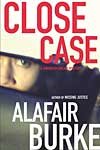 at Hofstra Law School. The daughter of acclaimed crime writer James Lee Burke, she currently serves as a legal and trial commentator for radio and television programs, including Court TV. She lives in New York City.
You can read an excerpt from Close Case, her third book in the Samantha Kincaid series, here.
Laura Lippman on Close Case:
Click here to listen to Alafair and James Lee Burke interviewed on NPR.
Thanks to Alafair for the recommendation.
--Marshal Zeringue
Kermit Roosevelt's In the Shadow of the Law.
Laura Miller praised In the Shadow of the Law at Salon.com:
The book's characters work in one of the profession's least exciting and heroic (if most remunerative) sectors: corporate law, on Washington's K Street, no less. They are not, for the most part, on the side of the angels, and some of them are downright nasty. You can learn a lot from Roosevelt about how corporations protect themselves from the consequences of their deeds (and misdeeds), and about the ways the legal whizzes who help them justify their own complicity. None of this is pretty, but you have to admire the sheer, diabolical ingenuity of it.
In an issue of Time magazine with the detainees at Guantanamo as the cover story—a coincidence, I take it, since the habeas issues at Gitmo and in the novel are very different—Lev Grossman praised Roosevelt’s debut novel:
It wouldn't be wrong to call In the Shadow of the Law a legal thriller, but it would sell the book short. There are suspenseful, devious plots aplenty—one about a last-minute death-row appeal, another about a corporation's dodging blame for an industrial accident—but it's Shadow's cast of characters, largely overworked junior lawyers, that will keep you up at night. Roosevelt (a descendant of Theodore and a former Supreme Court clerk) writes about the law more passionately and entertainingly than anyone since Scott Turow.Alan Dershowitz also endorsed Roosevelt’s novel:
I recommend this book with real enthusiasm. Why? Precisely because it doesn't glamorize its subject. Roosevelt's gritty portrayal of the transformation of bright-eyed and colorful young associates into dim-eyed and gray middle-aged partners (no one seems to make it to his or her golden years) rings true of all too many corporate law factories, which have turned what used to be called a ''learned profession'' into a service industry that does little more than help the superrich get even richer. Roosevelt knows the world of which he writes. He has experienced the cynicism, careerism and opportunism of the zero-sum pyramid scheme called ''making partner,'' though from the somewhat rarefied perspective of a Supreme Court clerk who apparently became an associate only to gain experience for academia.Alafair Burke is the author of three well-received novels. A former deputy district attorney in Portland, Oregon, she now teaches criminal law
 at Hofstra Law School. The daughter of acclaimed crime writer James Lee Burke, she currently serves as a legal and trial commentator for radio and television programs, including Court TV. She lives in New York City.
You can read an excerpt from Close Case, her third book in the Samantha Kincaid series, here.
Laura Lippman on Close Case:
Close Case is a terrific, multilayered novel, one that constantly surprises and delights. Everything is just right—the quotidian details about prosecutors, cops, and reporters, the richness of the Portland setting, the seamless plotting. Alafair Burke has outdone herself.Her website notes that Alafair is a graduate of Stanford Law School. In this profile/interview of her father, he (appropriately) lets us know she graduated first in the class.
Click here to listen to Alafair and James Lee Burke interviewed on NPR.
Thanks to Alafair for the recommendation.
--Marshal Zeringue
Monday, April 10, 2006
More novels about life in theocracies
Professor David Cook takes an expansive view of theocracies and comes up with several interesting additions to our list of novels about life in theocracies.
His first two suggestions come out of South Africa during the apartheid era which began under Prime Minister Daniel François Malan, a minister of the Dutch Reformed Church.

David Cook is an Assistant Professor in Rice University's Department of Religious Studies. His interests include the study of early Islam, Muslim apocalyptic literature and movements for radical social change, dreams, historical astronomy, Judeo-Arabic literature and West African Islam. His most recent books are Understanding Jihad, and Contemporary Muslim Apocalyptic Literature. He is currently working on a book on the theme of Islamic martyrdom for Cambridge University Press, and has published on the subject of martyrdom operations.
Thanks to David for ranging across the globe and through history to come up with these titles.
--Marshal Zeringue
His first two suggestions come out of South Africa during the apartheid era which began under Prime Minister Daniel François Malan, a minister of the Dutch Reformed Church.
I guess that would depend upon the definition of a theocracy, but I suppose that any novels about apartheid S. Africa (like Paton's Cry, the Beloved Country or Michener's The Covenant) would fit the bill.Yes, these titles depend upon a broad understanding of what constitutes a theocracy--and that makes these choices all the more interesting as well as illuminating the issue that started this whole series here on the site.
What about Irving Stone's The Agony and the Ecstasy (most of Michelangelo's life under the Papal States, a medieval theocracy)?
Effectively the Pitcairn Island community of the descendants of the mutineers of the Bounty turned into a theocracy, so perhaps the last volume of Charles Nordhoff and James Norman Hall's, The Bounty Trilogy, might qualify.
Also any of the works of George MacDonald (The Lay of the Last Minstrel, etc, all set in Scotland).
But maybe my definition of a theocracy is a bit broad.

David Cook is an Assistant Professor in Rice University's Department of Religious Studies. His interests include the study of early Islam, Muslim apocalyptic literature and movements for radical social change, dreams, historical astronomy, Judeo-Arabic literature and West African Islam. His most recent books are Understanding Jihad, and Contemporary Muslim Apocalyptic Literature. He is currently working on a book on the theme of Islamic martyrdom for Cambridge University Press, and has published on the subject of martyrdom operations.
Thanks to David for ranging across the globe and through history to come up with these titles.
--Marshal Zeringue
Sunday, April 09, 2006
The Great Michigan (U.P.) Novel, part 2
Last month I nominated John Smolens’ Cold as The Great Michigan (U.P.) Novel. Click here to read that post.
John shared some of his thoughts about the novel that I only briefly touched on and I wanted to share them here.
On the role of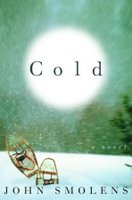 the blizzard and severe weather in the novel:
Visit his website at http://www.johnsmolens.com/.
--Marshal Zeringue
John shared some of his thoughts about the novel that I only briefly touched on and I wanted to share them here.
On the role of
 the blizzard and severe weather in the novel:
Weather and climate are extremely important in this book. A friend wrote to me and said he thought the blizzard was the main character of the story. I believe we learn much about how the world “works” through observing natural phenomena. The study of the elements, of animal behavior, the stars, they all contribute to our sense of order. The Upper Peninsula of Michigan is one of those places where the climate is often extreme. The blizzard, the wind, the snow, the cold are not exaggerated in this novel; winters are like that…. If you live in that kind of environment for years …, you can’t help but be influenced by it.On the relationship of the cold weather to the warmth/cold in hearts of several of the characters:
[T]his seems to be behind much of the story. I was pleased and relieved when I wrote the final scene, where Liesl and Del are together, caring for Noel’s little girl. And then Liesl hears the bear in the woods. She doesn’t really see the bear but she senses it. The bear is important in this novel; it’s the true creature of the north. Wanting to see a bear in the woods is an act of hope. This scene is full of love, enough, I hope, to compensate for so little in the rest of the book.On the origin of the idea for the story:
On writing fiction:We moved to Marquette, Michigan, here in the Upper Peninsula five years ago (the winter the new snowfall record was set!). I teach English and direct our Master of Fine Arts program at Northern Michigan University. When I first got here, I learned that there was a prison in the woods outside of town, which was built in the middle 1800s. There's one history that's been written about the place, which I read that first winter; and there's many stories that locals tell. The unusual thing about this prison is not the number of attempted escapes that have taken place over the years, but how frequently escapees have turned themselves in. This is due to the climate. They get cold, they get lost in the woods, and in many instances they've eventually found their way into a small town and asked to be taken into custody.
And then there's the local term "walkaway." A walkaway is a prisoner who does just that: simply walks away from some work detail. This has happened often over the years, though recently the prison has constructed more fences to insure that it won't happen in the future. A sailing friend of mine, Lars Weyer, is a retired prison guard, and he has helped me develop some understanding of how the prison is run. The prisoners are classified according to the crimes they were convicted of; and Norman Haas is what is known as a "trustee." Historically, trustees have considerable freedom of movement about the prison, and they are often taken out to work on roads at other public sites. It's quite conceivable that Norman might just walk away from prison in a blizzard. What makes him different is that he has the determination, fortitude, and luck to make his way home. I began Cold with Norman emerging from the woods in heavy snow. I knew he was being observed by someone in a small house—I didn't know who. And that's when I met Liesl Tiomenen.
I can't really explain what attracted me to writing fiction. In fact, I wasn't much of a reader until my late teens. I know many writers claim they knew they were going to write from the age of three, but as a child I was too busy playing baseball or hockey or just getting dirty to read a book. When asked why he wrote, John Updike's response was "Why not?" For me, life would seem empty if I weren't thinking about what a character might find if she walked through the door unexpectedly. Writers lead a double life—their own, plus the one the puts stories on paper. I think of a story, a character, a scene, a sentence as a gift. We are granted only so many such gifts. They may first come to us in a rather rough state, but then it's our responsibility to work and rework the language until there's nothing left to do. I envy musicians because they have so many opportunities to play with other musicians. Writing is a very solitary endeavor, which I suppose is necessary. It's more like painting; one person, one canvas, which is blank until the first line is drawn, the first dab of paint is applied. The reward is in the loss of self, the total concentration and emersion into words as you put them on paper. I think some of the things that Liesl felt about making pottery comes from how I feel about writing.In addition to Cold, John Smolens is the author of the novels Fire Point (2004), Invisible World (2002), Angel’s Head (1994) and Winter by Degrees (1988), and the short story collection My One and Only Bomb Shelter (2000).
Visit his website at http://www.johnsmolens.com/.
--Marshal Zeringue
Saturday, April 08, 2006
The Great Kansas Novel
Jonathan Holden, appointed Kansas' first poet laureate on July 1, 2005, has been recognized as one of America's foremost poets. He is a University Distinguished Professor of English and Poet-in-Residence at Kansas State University, Manhattan, Kansas. He recommended several interesting contenders for The Great Kansas Novel.
First up is the nonfiction PrairyErth, a Deep Map by William Least Heat-Moon.
Paul Theroux praised it in the New York Times. Read an excerpt here, and read the author’s interview with Powells.com here. From the publisher:
Or maybe the Great Kansas Novel is Holden’s own, Brilliant Kids (University of Utah Press, 1992), though it's not set in Kansas but in Chautauqua, New York.
Perhaps the most famous story set in Kansas (although written by a native New Yorker who learned about life on the plains while living in South Dakota) is the children’s book, The Wizard of Oz by L. Frank Baum. You can read the novel online here or download it here. There are actually thirteen Oz books.
Yet Holden’s bottom line for The Great Kansas Novel is the genre-bending nonfiction novel, In C old Blood by Truman Capote. From the publisher:
Patti Hill interviewed Capote in 1957 for The Paris Review. You may read the whole thing here, but I can't resist printing this excerpt:
--Marshal Zeringue
For The Great Alaska Novel, click here.
For The Great Texas Novel, part 2 click here.
For The Great New York (City) Novel, click here.
For The Great Florida Novel, click here.
For The Great Illinois Novel, click here.
For The Great Michigan Novel, click here.
For The Great California Novel, click here.
For The Great Oregon Novel, click here.
For The Great Texas Novel, part1, click here.
For The Great Louisiana Novel, click here.
First up is the nonfiction PrairyErth, a Deep Map by William Least Heat-Moon.
Paul Theroux praised it in the New York Times. Read an excerpt here, and read the author’s interview with Powells.com here. From the publisher:
Bill McKibben has called this book "the deepest map anyone ever made of an American place"--a majestic survey of land and time and people in a single county of the Kansas plains. It takes the author--by car, on foot, and in mind--into the core of our continent and backward and forward through a brilliant spectrum of time and place. There is no other book like it.Holden also suggested two books (again, neither a novel) by William Stafford. His memoir, Down in My Heart, chronicles his experiences as a conscientious objector during World War II. From the publisher:
From 1942 to 1945, William Stafford was interned in camps for conscientious objectors in Arkansas and California for his refusal to be inducted into the U.S. Army. Down in My Heart is an account of the relationships among the men in the camps and their day-to-day activities -- fighting forest fires, building trails and roads, restoring eroded lands -- and their earnest pursuit of a social morality rooted in religious and secular pacifist ideals.Or maybe the great Kansas book is Stafford’s 1963 National Book Award-winning poetry collection, Traveling Through the Dark. Read Stafford's acceptance speech here and read the title poem here.
Or maybe the Great Kansas Novel is Holden’s own, Brilliant Kids (University of Utah Press, 1992), though it's not set in Kansas but in Chautauqua, New York.
Perhaps the most famous story set in Kansas (although written by a native New Yorker who learned about life on the plains while living in South Dakota) is the children’s book, The Wizard of Oz by L. Frank Baum. You can read the novel online here or download it here. There are actually thirteen Oz books.
Yet Holden’s bottom line for The Great Kansas Novel is the genre-bending nonfiction novel, In C
 old Blood by Truman Capote. From the publisher:
"One Night on a Kansas Farm," the 1966 review in the New York Times by Conrad Knickerbocker, is well worth reading. Also, click here to read a very thoughtful appreciation of the novel by Amy Standen.On November 15, 1959, in the small town of Holcomb, Kansas, four members of the Clutter family were savagely murdered by blasts from a shotgun held a few inches from their faces. There was no apparent motive for the crime, and there were almost no clues.
Five years, four months and twenty-nine days later, on April 14, 1965, Richard Eugene Hickock, aged thirty-three, and Perry Edward Smith, aged thirty-six, were hanged for the crime on a gallows in a warehouse in the Kansas State Penitentiary in Lansing, Kansas.
In Cold Blood is the story of the lives and deaths of these six people.
Patti Hill interviewed Capote in 1957 for The Paris Review. You may read the whole thing here, but I can't resist printing this excerpt:
Thanks to Jon Holden for the suggestions.INTERVIEWER Did you have much encouragement [of your writing] in [your] early days, and if so, by whom?
CAPOTE Good Lord! I’m afraid you’ve let yourself in for quite a saga. . . . I was thought somewhat eccentric, which was fair enough, and stupid, which I suitably resented. . . . Well, finally, I guess I was around twelve, the principal at the school I was attending paid a call on my family, and told them that in his opinion, and in the opinion of the faculty, I was “subnormal.” He thought it would be sensible, the humane action, to send me to some special school equipped to handle backward brats. Whatever they may have privately felt, my family as a whole took official umbrage, and in an effort to prove I wasn’t subnormal, pronto packed me off to a psychiatric study clinic at a university in the East where I had my I.Q. inspected. I enjoyed it thoroughly and—guess what—came home a genius, so proclaimed by science. I don’t know who was the more appalled: my former teachers, who refused to believe it, or my family, who didn’t want to believe it—they’d just hoped to be told I was a nice normal boy.
--Marshal Zeringue
For The Great Alaska Novel, click here.
For The Great Texas Novel, part 2 click here.
For The Great New York (City) Novel, click here.
For The Great Florida Novel, click here.
For The Great Illinois Novel, click here.
For The Great Michigan Novel, click here.
For The Great California Novel, click here.
For The Great Oregon Novel, click here.
For The Great Texas Novel, part1, click here.
For The Great Louisiana Novel, click here.
The collected works of Aaron Klopstein
Aaron Klopstein "committed suicide at the age of 33 in Greenwich Village by shooting himself with an Amazonian blow gun, having published two novels entitled Once More the Cicatrice and The Sea Gull Has No Friends, two volumes of poetry, one book of short stories and a book of critical essays entitled Shakespeare in Baby Talk."--from Raymond Chandler Speaking, University of California Press, 1997.Actually, there (apparently) was no Aaron Klopstein; Chandler made him up...like two of the more awful titles for imaginary novels as well as (what should be) the giveaway "book of critical essays entitled Shakespeare in Baby Talk."
And maybe those not as gullible as I am immediately raised an eyebrow at the Amazonian blow gun as instrument of suicide.
This bit of esoterica comes from an interesting site called "The Neglected Books Page."
Check it out.
--Marshal Zeringue
Friday, April 07, 2006
"The Day of the Jackal"
What is life like in societies which don't guarantee that a person detained by the authorities must be brought before a court of law so the legality of the detention may be examined? Most of the fictional accounts of that scenario suggested to this site have been about the darker side of what can happen.
Michael Crittenden writes in about a thriller with a scenario suggesting lives might be saved if the authorities can keep a detainee out of sight of the judiciary: Frederick Forsyth’s The Day of the Jackal.
Although the novel may support varied views of habeas corpus, there is no doubt where the author stands on the matter. See this radio essay by Forsyth broadcast in 2004, and his response to Britain's plan to introduce control orders to keep foreign and British terrorist suspects under house arrest where there isn't enough evidence to put them on trial.
Thanks to Mike for the suggestion.
--Marshal Zeringue
Michael Crittenden writes in about a thriller with a scenario suggesting lives might be saved if the authorities can keep a detainee out of sight of the judiciary: Frederick Forsyth’s The Day of the Jackal.
So on to Day of the Jackal and its role in the habeas corpus debate. I'll assume most folks understand the basic premise of the novel, which follows the massive manhunt for the assassin known as the Jackal hired by the OAS to take out De Gaulle after the Algeria mess.Michael R. Crittenden is a reporter at Congressional Quarterly Weekly.
The scenes I'm focusing on come after the Jackal has been hired by the OAS high command, who to ensure the secrecy of the plot lock themselves in a hotel in Rome so they cannot be kidnapped (this happens to another OAS higher up earlier in the novel, who the French intelligence secret away and "disappear"). The French government's Action Service knows there is something afoot, but don't know how to discover the plot without breaking into the OAS high command, which is relatively impossible. Seems conducting a firefight attack on foreign soil wouldn't go over to well.
The weakness they discover is Kowalski, an OAS bodyguard and bag man who is the only member of the party to leave the hotel, and that's sporadically to pick up the mail and run errands for his masters holed up in the hotel. So the French intelligence services set up a sting on Kowalski, tricking him into thinking his young daughter is dying of leukemia and getting him to make a surprise trip to France and out of Rome.
When he gets to France--the name of the exact town escapes me--Action Service agents take Kowalski captive and secret him away to an unlabeled government prison where they begin to question him after he wakes up days later from his many injuries (severe concussion, various broken bones etc.). The scenes involving the questioning are starkly brutal, as the questioning process involves metal clamps attached to Kowalski's nipples and genitals which conduct the electricity controlled by his interrogators. In a room smelling of vomit and sweat and cigarette smoke they question him for hours between sending painful shocks through his system, eventually breaking him and killing him in the process.
In the eyes of the government agents, the imprisonment, torture and death were a success: Kowalski's incoherent and painful ramblings ended up giving them the codename "jackal" and that the assassin was blond and a foreigner. So it's an example of when the suspension of habeas corpus benefited the republic by giving them the clues that helped them prevent the assassination of De Gaulle.
On the other hand, you get the sense in the way Forsyth describes the interrogation and the pain the thug goes through, that he doesn't necessarily approve of it or at least leaves open the idea that it's a line that governments have to make a conscious decision to cross. To this point there is a scene with a doctor and the head intelligence agent who derides the agent's methods and warns that the brutality would either turn the prisoner into a vegetable or kill him. So in this case the argument is for the suspension of habeas corpus, but with the caveat that to do so one must descend to the level of the various criminals and terrorists you are trying to stop.
Although the novel may support varied views of habeas corpus, there is no doubt where the author stands on the matter. See this radio essay by Forsyth broadcast in 2004, and his response to Britain's plan to introduce control orders to keep foreign and British terrorist suspects under house arrest where there isn't enough evidence to put them on trial.
Thanks to Mike for the suggestion.
--Marshal Zeringue
Thursday, April 06, 2006
The "Duck of Minerva" on novels about theocracies
The Duck of Minerva is a blog run by some academics who specialize in international politics. I figured anyone who could riff on Hegel* that way just might have some interesting suggestions for our series on novels which illustrate what theocracy might be like.
Two of these scholars weighed in with suggested fiction.
Daniel Nexon:
Daniel Nexon (PhD., Columbia) is an Assistant Professor at Georgetown University. He has published articles and chapters on international relations theory, globalization, and American foreign policy. His broad interests involve the relationship between culture and international politics, as well as on comparative-historical analysis of international institutions and politics, and he is currently exploring how the dynamics of historical empires do and do not shed light on the dilemmas of US international primacy.
Patrick Thaddeus Jackson (PhD., Columbia) is currently Assistant Professor of International Relations in the School of International Service at the American University in Washington, D.C. He is the author of numerous scholarly articles; his book Stopping Asia at the Elbe: Postwar German Reconstruction and the Invention of Western Civilization is forthcoming from the University of Michigan Press.
--Marshal Zeringue
Two of these scholars weighed in with suggested fiction.
Daniel Nexon:
Philip Pullman's His Dark Materials Series envisions--through the lens of SF/Fantasy--an alternate world where Calvinism triumphs in early-modern Europe producing a diffuse theocratic system. Pullman's books are, in essence, an extended rant against theocracy and religion itself.Patrick Thaddeus Jackson:
I'm a fan of Robert Heinlein's Revolt in 2100, which is a collection of short stories rather than a novel. The stories in the book are part of Heinlein's "future history" sequence, an alternative future for the world (and for the United States in particular) which is marked by the election of a zealot named Nehemiah Scudder to the presidency. The stories are about the consolidation of his reign and its eventual demise—and its replacement by something quite different. The lead story, entitled "If This Goes On --" is in my opinion a better and more incisive analysis of the dark side of American national identity than almost any work of social science with which I am familiar. Indeed, it was that story that inspired me to put together a course on the interplay between social science and science fiction.Thanks to Daniel and Patrick for these suggestions. For other novels about life in a theocracy, see here, here, and here.
Not really religious as much as fascist is the dystopia presented in Alan Moore's brilliant V For Vendetta. Far richer and more complex than the recent film, Moore's graphic novel poses the political choice as fascism or anarchy, and brooks no compromises. V is a revolutionary figure, but also a prophetic one, and the regime against which he struggles has more than a few theocratic overtones. The solution that the novel preaches, a kind of radical existentialist transformation of the self, presents itself as the only reasonable alternative in such extreme situations: survival by transcendence of the spirit, as it were. That, and blowing a lot of stuff up :-)
For a somewhat different take -- this novel is not principally set in a theocracy but several of its major characters are either refugees from one or striving to reestablish one -- you might point your readers to Iain M. Banks' Look to Windward. It's set in a liberal-socialist utopia called the Culture which has intervened in a religiously-oriented society for the purpose of "improving" it; things went horribly wrong and that provides the backdrop for a sustained set of examinations of what is gained and what is lost when religion is replaced by technologically-enhanced hedonism.
Daniel Nexon (PhD., Columbia) is an Assistant Professor at Georgetown University. He has published articles and chapters on international relations theory, globalization, and American foreign policy. His broad interests involve the relationship between culture and international politics, as well as on comparative-historical analysis of international institutions and politics, and he is currently exploring how the dynamics of historical empires do and do not shed light on the dilemmas of US international primacy.
Patrick Thaddeus Jackson (PhD., Columbia) is currently Assistant Professor of International Relations in the School of International Service at the American University in Washington, D.C. He is the author of numerous scholarly articles; his book Stopping Asia at the Elbe: Postwar German Reconstruction and the Invention of Western Civilization is forthcoming from the University of Michigan Press.
--Marshal Zeringue
*"When philosophy paints its gray on gray, then has a form of life grown old, and with gray on gray it cannot be rejuvenated, but only known; the Owl of Minerva first takes flight with twilight closing in." --G. W. F. Hegel, "Preface," Philosophy of Right
Wednesday, April 05, 2006
The Booker Prize's "Henry Fonda" year
When I started the series on "bad Booker beats" (see here, here, and here) I thought it might shed some light on worthy (Man) Booker prize nominees that failed to capture the top prize. The idea was not to perpetuate the worst aspect of literary prizes--the competitive comparison of works of art--but to amplify one of their better features--the discussion of quality fiction that encourages more readers to read more quality books.
My most optimistic hopes for the series are fulfilled by this superb consideration of the issue by Perry Middlemiss:
My most optimistic hopes for the series are fulfilled by this superb consideration of the issue by Perry Middlemiss:
Leaving aside minor judging glitches such as 1991, when Ben Okri's magic realism beat out the better "real realism" of Rohinton Mistry, the major Booker Prize gaffe occurred in 1986 when Kingsley Amis got the gong. I like to think of this as the Booker’s “Henry Fonda” year.
In 1981 Henry Fonda was the ageing doyen of a famous acting family and near the end of his career when he appeared in “On Golden Pond” with his daughter Jane and Katherine Hepburn. Fonda was nominated for a Best Actor Award in a relatively weak year (Dudley Moore?) which had one stand-out performance, that of Burt Lancaster in “Atlantic City”. I don’t know what odds were given on Fonda going in to the ceremony but having seen both films that year I thought Lancaster was a shoe-in. And then sentiment over-ruled logic and Fonda was given the Oscar, for a performance which reeked of sentimentality and which was carried by Fonda's two female co-stars. Fonda died within a few months of the award ceremony.
In 1986 Kingsley Amis was on the Booker list for the third time and hardly likely to win for his novel The Old Devils. Beloved by the old school of British critics, Amis had produced little of worth since his debut, Lucky Jim, in 1954. He had never won anything and the prospects of him ever doing so looked decidedly thin. His time was past and he was falling out of favour as authors such as his son Martin, Julian Barnes and Ian McEwan were in the ascendant.
I’ve only read four of the six novels included on the 1986 Booker shortlist and can safely say that, of the four, the Amis ranks a very distant fourth. Best of the lot was Paul Bailey’s Gabriel’s Lament, a semi-autobiographical novel depicting the damage that fathers can inflict on their sons. Somehow or other, the Booker judges in 1986 thought Amis’s novel the best of the year: better than the Bailey, Margaret Atwood’s The Handmaid’s Tale, and An Artist of the Floating World by Kazuo Ishiguro. And this leaves out novels by Robertson Davies and Timothy Mo which I haven't read. Both, I suspect, in a class above Amis’s phoned-in effort. It was a strong year, yet we are left with a novel about middle-class, middle-aged has-beens drinking themselves to death. A novel about Amis and his friends, presumably.
A major mistake.
Perry Middlemiss's websites are treasures for book lovers, particularly those readers interested in Australian and Commonwealth fiction. Click here for his pages on "everything pertaining to the Booker Prize."
Thanks to Perry for such a stimulating discussion.
I hope his argument will spur readers to consider Bailey’s Gabriel’s Lament, Atwood’s The Handmaid’s Tale, and Ishiguro's An Artist of the Floating World. And don't pity Amis--he won the prize, after all--but do him the honor of reading his Lucky Jim, perhaps the greatest comic campus novel.
--Marshal Zeringue
Tuesday, April 04, 2006
Jane Smiley's 100 novels
Jane Smiley plans to read 100 novels in an attempt to "illuminate the whole concept of the novel." In the first of a series of articles for The Guardian, she explains the basis for her selection.
It's my confident opinion that Smiley is one of our great living novelists. Maybe I shouldn't write that having read only three of her novels. But A Thousand Acres, her retelling of King Lear set in the American Midwest, was a brilliantly executed piece of art which won her a Pulitzer prize. From tragedy she shifted to comedy, turning out Moo, a comic campus novel that reminded critics of Balzac for her attention to the social atmosphere of a large agricultural university. And then with her twelfth book, Good Faith, she moved beyond the tragic and the comic and toward Dickensian realism, successfully capturing the American small town of 1982.
Of her series on the 100 novels she says something that is also true of this blog's aspirations:
--Marshal Zeringue
It's my confident opinion that Smiley is one of our great living novelists. Maybe I shouldn't write that having read only three of her novels. But A Thousand Acres, her retelling of King Lear set in the American Midwest, was a brilliantly executed piece of art which won her a Pulitzer prize. From tragedy she shifted to comedy, turning out Moo, a comic campus novel that reminded critics of Balzac for her attention to the social atmosphere of a large agricultural university. And then with her twelfth book, Good Faith, she moved beyond the tragic and the comic and toward Dickensian realism, successfully capturing the American small town of 1982.
Of her series on the 100 novels she says something that is also true of this blog's aspirations:
My purpose will be served if a reader is moved to try a novel she has never heard of before, or one she never thought she would like, if she is moved to reread a novel she loves in a new way, or try again with a novel she has not been able to get through.And then--for a blogger who has been asking readers to think of novels that illuminate what life is like in theocracies or in societies that lack the protections afforded by habeas corpus, and to consider novels that might help understand issues in philosophy--it was heartening to read Smiley's take:
Another thing I learned is that novels, even those from apparently distant times and places, remain current and enlightening, and also comforting.... My 100 novels were not outdated at all, but testified over and over, to the perennial nature of regular human thought - not only are there problems and conflicts that persist in not being solved, there are also the insight and common sense people have brought to bear on those problems. It was not only that misery loves company, but also that Jane Austen is a good guide to personal integrity; Anthony Trollope does know how marriage works; Honoré de Balzac is indispensable when Jacques Chirac refers to the relationship between France and England as un amour violent. It's worth remembering The Makioka Sisters when the newspaper reports a typhoon in Japan. It's worth knowing that serious thoughts are being thought, and also that serious fun is being made of fools everywhere. It's also worth knowing, in dangerous times, that dangers have come and gone and we still have these books.Thanks to Friend of the Blog "Cochise" for alerting me to the Smiley series.
--Marshal Zeringue
"The Man without a Country"
Robert A. Ferguson has a very interesting suggestion for our search for novels that illustrate what's at stake in the current legal debate over the right of the executive to imprison suspects without judicial intervention or oversight:
The story effectively gets at Professor Ferguson's point in part by its realistic style--it reads like a well-written non-fiction essay--and because it was written, at the time of the Civil War, apparently to boost patriotism. Hale's protagonist is redeemed in an ironic twist, yet the irony is of another order when read from our later vantage point. It's a fine story and well worth your attention.
Robert A. Ferguson is George Edward Woodberry Professor in Law, Literature and Criticism at Columbia Law School. His publications include Law and Letters in American Life (1987); The American Enlightenment 1750-1820 (1997), and Reading the Early Republic (2004), as well as numerous articles on American literature, legal history, and the relationship of law and legal institutions to American writing.
Thanks to Robert Ferguson for this valuable suggestion.
For previously nominated books in the "what's at stake in the debate over habeas corpus" series, click here, here, here, and here.
--Marshal Zeringue
It is a short story rather than a book, but you might use Edward Everett Hale's "The Man Without A Country." It is the most popular story of the second half of the nineteenth century and is still anthologized everywhere. Philip Nolan is kept in perpetual prison aboard ship because bureaucracy and governmental policy want to forget about him after his original sentence. Moreover, the whole story is wrapped in patriotic rhetoric of the kind that is being misused today.There are several free sites where you can read the story. Click here or here. The story was originally published in The Atlantic Monthly, December 1863, which is available in facsimile form here.
The story effectively gets at Professor Ferguson's point in part by its realistic style--it reads like a well-written non-fiction essay--and because it was written, at the time of the Civil War, apparently to boost patriotism. Hale's protagonist is redeemed in an ironic twist, yet the irony is of another order when read from our later vantage point. It's a fine story and well worth your attention.
Robert A. Ferguson is George Edward Woodberry Professor in Law, Literature and Criticism at Columbia Law School. His publications include Law and Letters in American Life (1987); The American Enlightenment 1750-1820 (1997), and Reading the Early Republic (2004), as well as numerous articles on American literature, legal history, and the relationship of law and legal institutions to American writing.
Thanks to Robert Ferguson for this valuable suggestion.
For previously nominated books in the "what's at stake in the debate over habeas corpus" series, click here, here, here, and here.
--Marshal Zeringue
Monday, April 03, 2006
Scott Turow's habeas-inflected thriller
I asked best-selling author Scott Turow to recommend a novel that might help us better understand what's at stake in the debate over habeas corpus. His suggestion:
--Marshal Zeringue
My novel Reversible Errors centers on a habeas proceeding for a man on death row, brought when another man confesses to the crime.Wendy Lesser raved about Turow and Reversible Errors in a New York Times review:
IT must be frustrating to be Scott Turow. Since 1987, when he published Presumed Innocent, he has been hailed as a master of the courtroom thriller, a best-selling author, a Time magazine cover boy--all of which has managed to suggest, backhandedly, that serious readers needn't buy his books. But serious readers should be reading Turow, because he is not just one of our best crime novelists; he is also one of our better novelists. Like John le Carré, his British equivalent, he has been maMichiko Kakatuni wrote:de to suffer for his choice of the thriller genre. Yet this genre is one of the few in which the old-fashioned virtues of the novel (suspense, rich characterization, satisfying conclusions) can still be practiced without seeming out-of-date. What Turow has done, in book after book, is to give us page turners that are also pleasing literary artifacts, mysteries that are also investigations into complicated social questions and complex human emotions.
Nothing he has written in the 15 intervening years has beaten the suspense quotient of Presumed Innocent; that was a perfectly constructed mystery, or as close to it as we are likely to get. But in each novel since then, Turow has deepened the psychological and social atmosphere that surrounds and inflects his plots.... Reversible Errors...may well offer us the richest blend yet.

Thanks to Scott for weighing in. He's now in the running for a free copy of The Body and the State: Habeas Corpus and American Jurisprudence (SUNY Press, 2006). Know a novel that illuminates the issues around habeas corpus? Let me know: see details here.the real appeal of Mr. Turow's legal thrillers has always resided in his ability to create complex, conflicted characters, and to make palpable the world of the law: how the system works and doesn't work, how lawyers use and abuse it. And in Reversible Errors, he gives us a highly sympathetic if unlikely hero, an engaging supporting cast and an intimate sense of the incestuous and highly competitive world that these people all inhabit. ....
Mr. Turow is able to show how time and age and the vagaries of fate have affected each of his principal characters, and he uses his own firsthand knowledge of the legal system to lend the world they inhabit a piercing verisimilitude.
--Marshal Zeringue
"Sapientia" and the benefits of theocracy
Invited to suggest a work of fiction about life in a theocracy, Gayatri Chakravorty Spivak wrote:
A summary of the play: .
Among her publications are Of Grammatology (translation with critical introduction of Jacques Derrida's De la grammmatologie), Imaginary Maps, Breast Stories, Old Women (translations with critical material of the fiction of Mahasweta Devi), In Other Worlds, The Post-Colonial Critic, Outside in the Teaching Machine, A Critique of Postcolonial Reason, and Death of a Discipline.
Thanks to Gayatri Spivak for the recommendations.
For the novels about life under theocracies suggested by Joseph Epstein and Todd Gitlin, click here. For the recommendations from K. Anthony Appiah, click here.
--Marshal Zeringue
If you don't mind a play, I'd give you Sapientia by Hrotswitha von Gandersheim, which has remained inspiring to feminists because of its use of a theocracy to suggest rational resistance against its enemy.Hrotswitha, or Hrotsvit, was a Catholic nun who lived in the thriving abbey of Gandersheim in Saxony in the latter part of the tenth century.
A summary of the play:
Sapientia tells the story of a mother, Sapientia, and her three daughters Fides, Spes, and Karitas, confronted by pagan Roman emperor Hadrian, who wants them to renounce their Christianity. Each female character refuses to foreswear her faith, and the three daughters are tortured and killed; then the mother dies in grief. The details of the torture of these martyrs are typical of medieval legends of saints' lives and martyr dramas. Each woman is offered the chance to give up her Christian beliefs. After she refuses, she is subjected to various tortures such as being boiled in tar and pitch and having her body mutilated with knives. In every case, the women are emotionally and spiritually unscathed by the torture, joyfully willing to suffer for their faith until death. Such stories and plays were intended to serve as inspiration to believers, illustrating the power of God to strengthen and aid the faithful in times of trouble or persecution.Gayatri Spivak is Avalon Foundation Professor in the Humanities at Columbia University
 .
Among her publications are Of Grammatology (translation with critical introduction of Jacques Derrida's De la grammmatologie), Imaginary Maps, Breast Stories, Old Women (translations with critical material of the fiction of Mahasweta Devi), In Other Worlds, The Post-Colonial Critic, Outside in the Teaching Machine, A Critique of Postcolonial Reason, and Death of a Discipline.
Thanks to Gayatri Spivak for the recommendations.
For the novels about life under theocracies suggested by Joseph Epstein and Todd Gitlin, click here. For the recommendations from K. Anthony Appiah, click here.
--Marshal Zeringue
Hostage story
The release last week of Christian Science Monitor freelance reporter Jill Carroll after 82 days as the captive of armed militants in Iraq was greeted with relief in most corners. Some of that relief faded quickly and shamelessly, no less so for being predictable, when armchair pundits rushed to analyze why Carroll did not unequivocally condemn her captors in a video she made when she apparently knew she would be released. The New York Times reported the "video had raised questions about whether Ms. Carroll was suffering from Stockholm syndrome...."
Click here for a brief recap of the sordid media episode; click here for Jill Carroll's statement about her captivity and release.
Could we please put a moratorium on the use of "Stockholm syndrome" by anyone who doesn't have psychological training and hasn't actually examined the hostage? Otherwise it makes me think of the moron newscaster in one of the Die Hard movies who does not even know which country Stockholm is in.
Anyway, enough of that messy nonfiction known as real life.
This blog is about books, not current events. I only mention the Carroll episode because it reminded me of one the finest novels published in our present young century: Ann Patchett's Bel Canto.
From Patchett's website:
--Marshal Zeringue
Click here for a brief recap of the sordid media episode; click here for Jill Carroll's statement about her captivity and release.
Could we please put a moratorium on the use of "Stockholm syndrome" by anyone who doesn't have psychological training and hasn't actually examined the hostage? Otherwise it makes me think of the moron newscaster in one of the Die Hard movies who does not even know which country Stockholm is in.
Anyway, enough of that messy nonfiction known as real life.
This blog is about books, not current events. I only mention the Carroll episode because it reminded me of one the finest novels published in our present young century: Ann Patchett's Bel Canto.
From Patchett's website:
Somewhere in South America, at the home of the country's vice president, a lavish birthday party is being held in honor of Mr. Hosokawa, a powerful Japanese businessman. Roxanne Coss, opera's most revered soprano, has mesmerized the international guests with her singing. It is a perfect evening -- until a band of gun-wielding terrorists breaks in through the air-conditioning vents and takes the entire party hostage. But what begins as a panicked, life-threatening scenario slowly evolves into something quite different, as terrorists and hostages forge unexpected bonds and people from different countries and continents become compatriots. Friendship, compassion, and the chance for great love lead the characters to forget the real danger that has been set in motion and cannot be stopped.Click here to read an excerpt of the novel and interview with the author.
--Marshal Zeringue
Sunday, April 02, 2006
More novels about jails without judges
Jeremy Dibbell came up with two more novels about life in societies that lack habeas-protected individual rights:
Know of a novel that does a better job than the television show 24 of illustrating why the executive branch sometimes needs to arrest and detain individuals without a judge giving the OK? Please share the title.
Alternatively, suggest a novel set in a society without habeas-protected individual rights. Previous suggestions include The Count of Monte Cristo and Kafka's The Trial.
Send me the title and an explanation (of up 150 words) of why the novel fits the bill and you just might win a scholarly book valued at $65. More details are here.
Coming soon: Columbia Law Professor Robert Ferguson's suggestion.
--Marshal Zeringue
Orwell's 1984 and Huxley's Brave New World. I prefer the Orwell to the Huxley, but both are interesting treatments of "what could happen" after diving down those slippery slopes.Thanks to Jeremy, who blogs over at Charging RINO, for the suggestions.
Know of a novel that does a better job than the television show 24 of illustrating why the executive branch sometimes needs to arrest and detain individuals without a judge giving the OK? Please share the title.
Alternatively, suggest a novel set in a society without habeas-protected individual rights. Previous suggestions include The Count of Monte Cristo and Kafka's The Trial.
Send me the title and an explanation (of up 150 words) of why the novel fits the bill and you just might win a scholarly book valued at $65. More details are here.
Coming soon: Columbia Law Professor Robert Ferguson's suggestion.
--Marshal Zeringue
Who is Osama bin Laden?
"Who is Osama bin Laden?" is no longer an interesting question.
Where is Osama bin Laden, and why is he still alive? Now that's an interesting two-part question.
When was Osama's first appearance in a work of fiction? Not a very interesting question, but it's the sort of thing that's easier to find out in the Internet Age than it was not that long ago.
(I remember asking the first question, back in the late 1990s, when well-informed Friend of the Blog Kurt van der Walde mentioned the terrorist. I was a little embarrassed when Kurt enlightened me, but it wasn't as if Osama was a major figure in the media back then.)
As far as I can tell, Osama's first appearance in the Washington Post was on the front page in 1996: "Saudi Islamic Radicals Target U.S., Royal Family," by Edward Cody; August 15, 1996.
The New York Times picked him up a little earlier: "Sudan Linked To Rebellion In Algeria," by Chris Hedges, December 24, 1994. Datelined Khartoum, The Sudan, the article opens:
My entry:
Ridley is one of my favorite writers of contemporary noir fiction and I recommend this novel if you appreciate the genre.
Do you know of an earlier mention? Let me know (email: bolling dot binx at gmail dot com) and get your reading knowledge, or your sleuthing skills, praised here on the blog.
--Marshal Zeringue
Where is Osama bin Laden, and why is he still alive? Now that's an interesting two-part question.
When was Osama's first appearance in a work of fiction? Not a very interesting question, but it's the sort of thing that's easier to find out in the Internet Age than it was not that long ago.
(I remember asking the first question, back in the late 1990s, when well-informed Friend of the Blog Kurt van der Walde mentioned the terrorist. I was a little embarrassed when Kurt enlightened me, but it wasn't as if Osama was a major figure in the media back then.)
As far as I can tell, Osama's first appearance in the Washington Post was on the front page in 1996: "Saudi Islamic Radicals Target U.S., Royal Family," by Edward Cody; August 15, 1996.
The New York Times picked him up a little earlier: "Sudan Linked To Rebellion In Algeria," by Chris Hedges, December 24, 1994. Datelined Khartoum, The Sudan, the article opens:
The Sudan's Islamic Government, censured for its human rights violations and its support for various armed Islamic militant groups, is now helping Muslim fundamentalists in their effort to topple the Algerian Government, according to Western intelligence reports.Then, thirteen paragraphs down and after more prominent mention of Carlos the Jackal, a terrorist who Sudanese officials had tried unsuccessfully to expel, came this passing mention:
Osama Bin Laden, a wealthy Saudi financier who bankrolls Islamic militant groups from Algeria to Saudi Arabia, also lives under heavy guard in Khartoum.But when did Osama first appear in a novel?
My entry:
"Please ... Please ..." The FBI, the police, drug-lord hit men, Osama bin Laden, and probably Mossad--they were all at that very moment converging on Buddy's position.These lines appear in John Ridley's, Everybody Smokes in Hell, published August 17, 1999.
Ridley is one of my favorite writers of contemporary noir fiction and I recommend this novel if you appreciate the genre.
Do you know of an earlier mention? Let me know (email: bolling dot binx at gmail dot com) and get your reading knowledge, or your sleuthing skills, praised here on the blog.
--Marshal Zeringue
Saturday, April 01, 2006
Coming attractions
Coming attractions:
Suggestions from Columbia Law Professor Robert Ferguson and from Jeremy Dibbell of works of fiction about life in societies without habeas corpus protections.
An interesting take by Perry Middlemiss on a Booker Prize competition decided wrongly.
The Great Kansas Novel
Fiction about life in a theocracy suggested by a couple of political scientists who blog at The Duck of Minerva and by the scholar Gayatri Chakravorty Spivak.
The start of a series on the coolest women in crime fiction written by men.
Continuing the series initiated with the recent post on Tolstoy or Dostoevsky?: John Updike or Thomas Wolfe?
The Great Michigan Novel, Part 2
Novels by poets: Jay Parini
--Marshal Zeringue
"Midnight's Children"
Before he became known to the world--with the kind of publicity you can't (and wouldn't want to) buy--for having written The Satanic Verses, Salman Rushdie was known to readers as author of Midnight's Children. The book is surrealist fiction that tracks the history of India from 1910 to the declaration of the Emergency in 1976 through the eyes of Saleem Sinai, born on the stroke of midnight, August 15, 1947, when the Partition of India and Pakistan took effect.
Twenty-five years after the publication of Midnight's Children, Rushdie has written a new introduction in which he looks backs on how the novel came about and the reaction that it provoked in people from his father to Prime Minister Indira Gandhi. Read this new introduction here.
--Marshal Zeringue
Twenty-five years after the publication of Midnight's Children, Rushdie has written a new introduction in which he looks backs on how the novel came about and the reaction that it provoked in people from his father to Prime Minister Indira Gandhi. Read this new introduction here.
--Marshal Zeringue
Subscribe to:
Posts (Atom)


 Posts


