Tuesday, January 01, 2013

Pg. 69: Christine Wade's "Seven Locks"

The current feature at the Page 69 Test: Seven Locks by Christine Wade.

About the book, from the publisher:
The Hudson River Valley, 1769: A man mysteriously disappears without a trace, abandoning his wife and children on their farm at the foot of the Catskill Mountains. At first many believe that his wife, who has the reputation of being a scold, has driven her husband away, but as the strange circumstances of his disappearance circulate, a darker story unfolds. And as the lines between myth and reality fade in the wilderness, and an American nation struggles to emerge, the lost man’s wife embarks on a desperate journey to find the means to ensure her family’s survival...
Learn more about the book and author at Christine Wade's website.

The Page 69 Test: Seven Locks.

--Marshal Zeringue

Monday, December 31, 2012

Best books of 2012 -- Houston Chronicle

One title among the Houston Chronicle's best books of 2012:
The Snow Child
Eowyn Ivey

There are many books out there about childless couples, but Eowyn Ivey's is one of the more unique ones we've come across. Mabel and Jack have no children, and though they're older than most homesteaders, they've decided to start over in Alaska in 1918. Things are tough, and they're doing everything they can just to get by. When they build a child of snow in a rare fit of joy, Mabel and Jack have no idea that everything will change for them.
Read about another book to make the grade.

Learn more about the book and author at Eowyn Ivey's website and blog.

Writers Read: Eowyn Ivey.

--Marshal Zeringue

Fiona Deans Halloran's "Thomas Nast," the movie

Now showing at My Book, The Movie: Thomas Nast: The Father of Modern Political Cartoons by Fiona Deans Halloran.

The entry begins:
Because this book treats Thomas Nast’s life – not just his work or an episode in his era – it requires someone whose acting exhibits the same sense of dislocation, the same observant and socially jaundiced wit, and the same tendency to mulish obstinacy in the face of opposition.

To be honest – I think first of John Leguizamo.

Hear me out.

Leguizamo played Toulouse-Lautrec in Baz Luhrmann’s Moulin Rouge. In that role, Leguizamo appeared as a short, hot-tempered, rather bizarre artist. You begin to see why I thought of him. But add to that Leguizamo’s comedy, his interest in politics, especially the politics of immigration and culture. Add his awesome capacity for...[read on]
Learn more about Thomas Nast at The University of North Carolina Press website.

My Book, The Movie: Thomas Nast.

--Marshal Zeringue

Three notable books on faith in the U.S.

Ayad Akhtar is the author of the novel American Dervish. One of three books on faith in the U.S. that he tagged for NPR:
Blue-Eyed Devil: A Road Odyssey Through Islamic America by Michael Muhammad Knight

People don't think of Islam as something native to American soil. But Blue-Eyed Devil reveals a more complex picture. In his second book — part memoir, part travelogue, part detective story — Michael Muhammad Knight, a white American convert to Islam at 16, scours the nation, first in his Buick Skylark and later in a Greyhound bus, trying to solve the mysterious disappearance of Fard Muhammad, the legendary founder of the Nation of Islam. In the process, Knight uncovers Islam's surprising, fascinating history in this country, and meets a bevy of nubile Muslim ladies along the way. At once gonzo journalist, punk poet and questing mystic, Knight's personal journey from Malcolm X's mosque in Harlem to a mysterious grave in Southern California is, after all is said and done, a heartfelt search for self.
Read about a novel Akhtar selected for NPR.

Visit Ayad Akhtar's website.

--Marshal Zeringue

Pg. 99: Jennifer Saul's "Lying, Misleading, and What is Said"

The current feature at the Page 99 Test: Lying, Misleading, and What is Said: An Exploration in Philosophy of Language and in Ethics by Jennifer Mather Saul.

About the book, from the publisher:
Many people (both philosophers and not) find it very natural to think that deceiving someone in a way that avoids lying--by merely misleading--is morally preferable to simply lying. Others think that this preference is deeply misguided. But all sides agree that there is a distinction. In Lying, Misleading, and What is Said, Jennifer Saul undertakes a close examination of the lying/misleading distinction. Saul begins by using this very intuitive distinction to shed new light on entrenched debates in philosophy of language over notions like what is said. Next, she tackles the puzzling but widespread moral preference for misleading over lying, and arrives at a new view regarding the moral significance of the distinction. Finally, Saul draws her conclusions together to examine a range of historically important and interesting cases, from a consideration of modern politicians to the early Jesuits.
Learn more about Lying, Misleading, and What is Said at the Oxford University Press website.

Writers Read: Jennifer Mather Saul.

The Page 99 Test: Lying, Misleading, and What is Said.

--Marshal Zeringue

Sunday, December 30, 2012

What is Lisa O'Donnell reading?

The current featured contributor at Writers Read: Lisa O'Donnell, author of The Death of Bees.

Her entry begins:
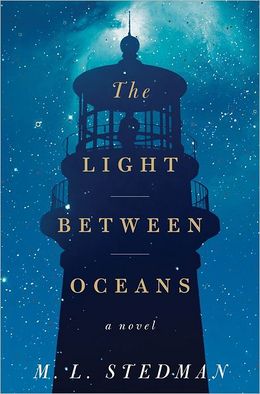
I’m reading The Light Between Oceans but I can’t give too much away without clanging about with spoilers. Needless to say the writing is beautiful.

I’m also reading...[read on]
About The Death of Bees, from the publisher:
Today is Christmas Eve.
Today is my birthday.
Today I am fifteen.
Today I buried my parents in the backyard.
Neither of them were beloved.

Marnie and her little sister, Nelly, are on their own now. Only they know what happened to their parents, Izzy and Gene, and they aren't telling. While life in Glasgow's Maryhill housing estate isn't grand, the girls do have each other. Besides, it's only a year until Marnie will be considered an adult and can legally take care of them both.

As the New Year comes and goes, Lennie, the old man next door, realizes that his young neighbors are alone and need his help. Or does he need theirs? Lennie takes them in—feeds them, clothes them, protects them—and something like a family forms. But soon enough, the sisters' friends, their teachers, and the authorities start asking tougher questions. As one lie leads to another, dark secrets about the girls' family surface, creating complications that threaten to tear them apart.

Written with fierce sympathy and beautiful precision, told in alternating voices, The Death of Bees is an enchanting, grimly comic tale of three lost souls who, unable to answer for themselves, can answer only for one another.
Learn more about the book and author at Lisa O'Donnell's website.

The Page 69 Test: The Death of Bees.

Writers Read: Lisa O'Donnell.

--Marshal Zeringue

Five notable books on secret agents

William Stevenson was trained in aerial espionage as a British naval fighter pilot during World War II. A distinguished journalist and war correspondent, he is the author of sixteen books, including A Man Called Intrepid, Intrepid’s Last Case, Ninety Minutes at Entebbe, and, most recently, Past to Present: A Reporter's Story of War, Spies, People, and Politics.

For the Wall Street Journal, he named a five best list of books about secret agents, including:
Family of Spies
by Pete Earley (1988)

An old-fashioned Washington reporter brings his superb investigative skills to this gripping narrative about U.S. naval warrant officer John Walker, who, from 1967 to 1985, compromised American security with unprecedented sweep. Among millions of secrets he handed to the Russians were details of U.S. troop movements during the Vietnam War and some of the actual authentication codes needed to launch U.S. nuclear strikes. The story of how Walker recruited family and friends to do his dirty work for 20 years, and then discarded them as "misfits and weaklings" who brought him down, makes better reading than most novels. Since it is all based on Earley's interviews and astute analysis, it is also an education. No other book I know of exposes the banality that drives unscrupulous spies like Walker, a quality Earley describes as "moral weightlessness." Money was the primary incentive for this biggest of U.S. traitors in recent times. Almost equally important was ego. When Walker was arrested, he firmly believed that the government wouldn't be "so stupid" as to prosecute him. "I was too important as a [potential] double agent," he told Earley later.
Read about another book on the list.

--Marshal Zeringue

Pg. 69: Sofka Zinovieff's "The House on Paradise Street"

The current feature at the Page 69 Test: The House on Paradise Street by Sofka Zinovieff.

About the book, from the publisher:
In 2008 Antigone Perifanis returns to her old family home in Athens after 60 years in exile. She has come to attend the funeral of her only son, Nikitas, who was born in prison, and whom she has not seen since she left him as a baby.

At the same time, Nikitas’s English widow Maud – disturbed by her husband’s strange behaviour in the days before his death – starts to investigate his complicated past. She soon finds herself reigniting a bitter family feud, and discovers a heartbreaking story of a young mother caught up in the political tides of the Greek Civil War, forced to make a terrible decision that will blight not only her life but that of future generations...
Learn more about the book and author at Sofka Zinovieff's website.

The Page 69 Test: The House on Paradise Street.

--Marshal Zeringue

Saturday, December 29, 2012

Mary Jane Clark's "Footprints in the Sand," the movie

Now showing at My Book, The Movie: Footprints in the Sand by Mary Jane Clark.

The entry begins:
How thrilling it would be if Footprints in the Sand were made into a movie! And while I’d be thrilled to sit in a movie theatre and watch Piper Donovan played by any in an array of wonderful young actresses, the biggest kick would be to see...[read on]
Learn more about Footprints in the Sand at Mary Jane Clark's website and Facebook page.

Mary Jane Clark's other novels include the KEY News media thriller series and two previous titles in the Wedding Cake mystery series. A veteran writer and producer for CBS News, Clark worked for almost three decades at the network’s New York City headquarters. Her books are published in twenty-three languages.

My Book, The Movie: Footprints in the Sand.

--Marshal Zeringue

Five top road trip books

One title on the Barnes & Noble Review's list of five top books on road trips:
On the Road
by Jack Kerouac

"The air was soft, the stars so fine, the promise of every cobbled alley so great, that I thought I was in a dream." Sal Paradise and Dean Moriarty -- fictional stand-ins for Kerouac and his friend Neal Cassady -- roam America's wide open spaces on a visionary quest for experience and enlightenment. This fictionalized rendering of their restless journeys became a touchstone for the Beat sensibility, and an almost sacred icon for an emerging youth culture. (And in a legendary meeting of the Beat and Hippie generations, Cassady would later emerge as the driver of Ken Kesey's LSD-fueled "Furthur" bus, immortalized by Tom Wolfe in The Electric Kool-Aid Acid Test).
Read about another book on the list.

On the Road is one of Ted Conover's six favorite road books.

--Marshal Zeringue

Pg. 99: Maria Wyke's "Caesar in the USA"

This weekend's feature at the Page 99 Test: Caesar in the USA by Maria Wyke.

About the book, from the publisher:
The figure of Julius Caesar has loomed large in the United States since its very beginning, admired and evoked as a gateway to knowledge of politics, war, and even national life. In this lively and perceptive book, the first to examine Caesar's place in modern American culture, Maria Wyke investigates how his use has intensified in periods of political crisis, when the occurrence of assassination, war, dictatorship, totalitarianism or empire appears to give him fresh relevance. Her fascinating discussion shows how—from the Latin classroom to the Shakespearean stage, from cinema, television and the comic book to the internet—Caesar is mobilized in the U.S. as a resource for acculturation into the American present, as a prediction of America’s future, or as a mode of commercial profit and great entertainment.
Read Chapter 1 of Caesar in the USA, and learn more about the book at the University of California Press website.

The Page 99 Test: Maria Wyke's Caesar: A Life in Western Culture.

The Page 99 Test: Caesar in the USA.

--Marshal Zeringue

Friday, December 28, 2012

Publishers Weekly's 12 best mystery/thrillers of 2012

Publishers Weekly named its twelve best mystery/thrillers of 2012.

One title on the list:
The Gods of Gotham
Lyndsay Faye (Putnam/Amy Einhorn)

Set in 1845, this first in a new series introduces Timothy Wilde, a former bartender and member of New York City's newly formed police force, whose investigation into the murder of a 12-year-old Irish boy leads him deep into the heart of human darkness.
Read about another book on the list.

Learn more about the book and author at Lyndsay Faye's website.

Writers Read: Lyndsay Faye (April 2012).

The Page 69 Test: The Gods of Gotham.

--Marshal Zeringue

What is Marcel Chotkowski LaFollette reading?

The current featured contributor at Writers Read: Marcel Chotkowski LaFollette, author of Science on American Television: A History.

Her entry begins:
Familiar feelings: Tired, anxious to return home, in need of one more stretch before boarding a plane. Expectations low, I strolled through the airport bookstore and scanned the shelves. Then I spied two familiar names and a novel I had missed when it first appeared. Purchase made. Electronic reading device stowed. Comfort located within two paper covers.

Thank you Douglas Preston and Lincoln Child. Your Gideon's Corpse sustained, entertained, and informed me all the way home, just as your other novels (beginning with Relic) have done through the years. The air-hours dwindled as your physicist-hero careened through whitewater and cadged his way into secure government facilities, attempting to derail a terrorist plot. When there was...[read on]
About Science on American Television, from the publisher:
As television emerged as a major cultural and economic force, many imagined that the medium would enhance civic education for topics like science. And, indeed, television soon offered a breathtaking banquet of scientific images and ideas—both factual and fictional. Mr. Wizard performed experiments with milk bottles. Viewers watched live coverage of solar eclipses and atomic bomb blasts. Television cameras followed astronauts to the moon, Carl Sagan through the Cosmos, and Jane Goodall into the jungle. Via electrons and embryos, blood testing and blasting caps, fictional Frankensteins and chatty Nobel laureates, television opened windows onto the world of science.

But what promised to be a wonderful way of presenting science to huge audiences turned out to be a disappointment, argues historian Marcel Chotkowski LaFollette in Science on American Television. LaFollette narrates the history of science on television, from the 1940s to the turn of the twenty-first century, to demonstrate how disagreements between scientists and television executives inhibited the medium’s potential to engage in meaningful science education. In addition to examining the content of shows, she also explores audience and advertiser responses, the role of news in engaging the public in science, and the making of scientific celebrities.

Lively and provocative, Science on American Television establishes a new approach to grappling with the popularization of science in the television age, when the medium’s ubiquity and influence shaped how science was presented and the scientific community had increasingly less control over what appeared on the air.
Learn more about Science on American Television at the University of Chicago Press website.

Marcel Chotkowski LaFollette is an independent historian based in Washington, DC.

Writers Read: Marcel Chotkowski LaFollette.

--Marshal Zeringue

Top 10 slipstream books

From Wikipedia:
Slipstream is a kind of fantastic or non-realistic fiction that crosses conventional genre boundaries between science fiction, fantasy, and mainstream literary fiction.

The term slipstream was coined by cyberpunk author Bruce Sterling in an article originally published in SF Eye #5, in July 1989. He wrote: "...this is a kind of writing which simply makes you feel very strange; the way that living in the twentieth century makes you feel, if you are a person of a certain sensibility." Slipstream fiction has consequently been referred to as "the fiction of strangeness," which is as clear a definition as any of the others in wide use.
In 2003 Arthur C. Clarke award-winning author Christopher Priest named his top 10 slipstream books for the Guardian.  One title on the list:
The Street of Crocodiles by Bruno Schulz

Schulz was a Polish writer, murdered in an almost offhand way by the Gestapo during the second world war. His canvas was small: few of his stories ventured outside the setting of his parents' house or the provincial town in which he lived, but his scope was cosmic. One story, The Comet, achieves a Wellsian grandeur, a Kafkaesque intrigue when the author's father, who figures in most of the stories, emerges as a hero of science.
Read about another book on the list.

--Marshal Zeringue

Pg. 69: Carola Dunn's "The Valley of the Shadow"

The current feature at the Page 69 Test: The Valley of the Shadow: A Cornish Mystery by Carola Dunn.

About the book, from the publisher:
A cryptic message spurs Eleanor, Megan, and Nick Gresham on a frantic search for a refugee's missing family

While out on a walk, Eleanor Trewynn, her niece Megan, and her neighbor Nick spot a young, half-drowned Indian man floating in the water. Delirious and concussed, he utters a cryptic message about his family being trapped in a cave and his mother dying. The young man, unconscious and unable to help, is whisked away to a hospital while a desperate effort is mounted find the missing family in time.

The local police inspector presumes that they are refugees from East Africa, abandoned by the smugglers who brought them in, so while the countryside is being scoured for the family, Eleanor herself descends into a dangerous den of smugglers in a desperate search to find the man responsible while there is still time.
Learn more about the book and author at Carola Dunn's website and blog.

Read--Coffee with a Canine: Carola Dunn and Trillian.

The Page 69 Test: Manna from Hades (the 1st Cornish Mystery).

The Page 69 Test: A Colourful Death (the 2d Cornish Mystery).

The Page 69 Test: The Valley of the Shadow.

--Marshal Zeringue

Thursday, December 27, 2012

Five top crime fiction debuts, 2012 -- Miami Herald

At the Miami Herald, Oline H. Cogdill named her picks of the best of 2012’s crime fiction debuts.

One title on the list:
A Land More Kind Than Home, Wiley Cash:

Crime fiction melds with Southern gothic for an emotional, lyrical story about two brothers that explores the power of forgiveness, the strength of family bonds and how religion can be misused.
Read about another title to make the grade.

Learn more about the book and author at Wiley Cash's website.

Writers Read: Wiley Cash.

My Book, The Movie: A Land More Kind Than Home.

--Marshal Zeringue

Gil Troy's "Moynihan's Moment," the movie

Now showing at My Book, The Movie: Moynihan's Moment: America's Fight Against Zionism as Racism by Gil Troy.

The entry begins:
Funny you should ask about my book the movie, because from the start I have been convinced this book has Broadway and Hollywood potential. Daniel Patrick Moynihan was a larger than life character. He viewed every letter he wrote, every interaction he had, every move he made, as a performance. To bring this performance artist back to life would be a great public service – especially at this time, when we need a Moynihan to inspire us, to stir us, to stand for great ideals.

Smart money would say cast Daniel Day Lewis, so he can keep himself busy for another two years studying a character with fascinating verbal tics and a love of language – but my first thought, even though it is an act of ethnic cross-dressing, is Al Pacino, because his manic energy could be channeled and become Moynihanesque.

One of my fantasies is a two-man Frost-Nixon type Broadway show, capturing the elaborate dance between Henry Kissinger – played by Anthony Hopkins or Jeremy...[read on]
Learn more about the book and author at Gil Troy's website and blog.

Writers Read: Gil Troy.

The Page 99 Test: Moynihan's Moment.

My Book, The Movie: Moynihan's Moment.

--Marshal Zeringue

Ten best dog books of 2012

Dorri Olds is a New York-based writer and web designer, ably assisted by her purebred Cavalier King Charles Spaniel Buddy James.

At Petside.com, she named ten of the best dog books of 2012, including:
The Dog Lived (and So Will I) by Teresa Rhyne

This is a memoir about a Beagle named Seamus who was found roaming the streets in Moreno Valley, California. Seamus was picked up by Animal Control and taken to the County Animal Shelter where, despite his microchip, was never claimed. Enter the Mary S. Roberts Pet Adoption Center, who came to his rescue. Rhyne falls in love with the abandoned dog and willingly takes on his Dennis the Menace style of trouble-making. It’s worth reading this book just to learn Seamus’s full name: Seamus Luxury Leisure Danger Trouble Hunger Cuteness Rhyne-Kern (the Famous). Alas, Seamus gets cancer. So does Rhyne. But the book is still hilarious—and poignant, sorrowful, affecting, inspirational and a winner.
Read about another book on the list.

Visit Teresa Rhyne's website and The Dog Lived (and so Will I) blog.

See--Coffee with a Canine: Teresa Rhyne & Seamus.

Writers Read: Teresa Rhyne.

My Book, The Movie: The Dog Lived (and So Will I).

--Marshal Zeringue

Pg. 99: Patricia Fara's "Erasmus Darwin"

The current feature at the Page 99 Test: Erasmus Darwin: Sex, Science and Serendipity by Patricia Fara.

About the book, from the publisher:
Dr Erasmus Darwin seemed an innocuous Midlands physician, a respectable stalwart of eighteenth-century society. But there was another side to him.

Botanist, inventor, Lunar inventor and popular poet, Darwin was internationally renowned for breathtakingly long poems explaining his theories about sex and science. Yet he become a target for the political classes, the victim of a sustained and vitriolic character assassination by London's most savage satirists.

Intrigued, prize-winning historian Patricia Fara set out to investigate why Darwin had provoked such fierce intellectual and political reaction. Inviting her readers to accompany her, she embarked on what turned out to be a circuitous and serendipitous journey.

Her research led her to discover a man who possessed, according to Samuel Taylor Coleridge, 'perhaps a greater range of knowledge than any other man in Europe.' His evolutionary ideas influenced his grandson Charles, were banned by the Vatican, and scandalized his reactionary critics. But for modern readers, he shines out as an impassioned Enlightenment reformer who championed the abolition of slavery, the education of women, and the optimistic ideals of the French Revolution.

As she tracks down her quarry, Patricia Fara uncovers a ferment of dangerous ideas that terrified the establishment, inspired the Romantics, and laid the ground for Victorian battles between faith and science.
Read more about Erasmus Darwin: Sex, Science and Serendipity at the Oxford University Press website.

Writers Read: Patricia Fara.

The Page 99 Test: Erasmus Darwin.

--Marshal Zeringue

Wednesday, December 26, 2012

Publishers Weekly's top nonfiction books of 2012

One of Publishers Weekly's top nonfiction books of 2012:
How the French Invented Love: Nine Hundred Years of Passion and Romance
Marilyn Yalom (Harper Perennial)

Yalom's witty and enchanting tour of French literature—from Abélard and Héloïse in the 12th century to Marguerite Duras in the 20th and Philippe Sollers in the 21st—asks how the French manage their romances, marriages, affairs, and obsession with love and sex, and will send readers in search of these classic texts.
Read about another book on the list.

Visit Marilyn Yalom's website.

--Marshal Zeringue