Monday, November 06, 2006

Pg. 69: "Infotopia"

Cass Sunstein is the Karl N. Llewellyn Distinguished Service Professor, Law School and Department of Political Science at the University of Chicago.

The author of many books and articles, his most recent title is Infotopia: How Many Minds Produce Knowledge.
I asked Cass to apply the "page 69 test" to Infotopia. Here is his reply:
On a representativeness scale of 0 to 10, where 0 is "not at all" and 10 is "perfectly," I'd give p. 69 a 7.

P. 69 does offer a brisk discussion of when members of a group will tell the group what it needs to know. It notes that people will ask whether it's worthwhile, to the group member, to disclose the information -- and often it isn't. If you tell your employer something he doesn't want to hear, disclosure of that information might be all pain and no gain for you. "And if each group member thinks this way, the group will receive only a fraction of the available information." This is a big problem for many groups. Thus p. 69 adds, "There is a lesson here about how to improve deliberation. Suppose that group members are rewarded for telling the truth. If so, then deliberation is likely to benefit from the knowledge of many more minds." (The group might be a company, a labor union, a church group, a faculty, those in the White House.)

A lot of the book is about how and why groups utterly fail to get the information that they need -- about how and why private and public institutions (1) do not elicit the information their own members have, (2) amplify the errors of their most confused members, or (3) go to unjustified extremes. P. 69 captures some of this. It's not entirely representative, though, because the book looks at a lot of other ways to get dispersed information -- as, for example, through wikis (see Wikipedia, for example), blogs (!), open source software, and prediction markets.

Also, I think p. 69 is somewhat less fun than the rest of the book (p. 217, which is exactly 10 more than 69 times 3, is somewhat more fun). But 7, on that 10-point scale, seems to me pretty good for a random page.
Many thanks to Cass for the input.

Among the praise for Infotopia:
"This extraordinary work synthesizes the latest in how we know, with the latest in what the web has become to map more compellingly than any other book the promise and risk of the information society. As with everything Sunstein writes, this beautiful and clear book has something to teach the experts, and lots to teach the rest of us."
--Lawrence Lessig, author of Free Culture and The Future of Ideas

"In our knowledge-based world, extracting useful information from society is more important than ever. Sunstein convincingly reveals the limitations of popular processes like deliberation while showing how collectives--under certain conditions--can effectively solve many problems. An engaging read, full of eye-opening examples, Infotopia shows how and why our efforts to harness knowledge must evolve."
--Michael J. Mauboussin, Chief Investment Strategist, Legg Mason Capital Management and author of More Than You Know: Finding Financial Wisdom in Unconventional Places
The part of Infotopia that deals with prediction markets of course has relevance to elections. For Sunstein's recent gloss on these markets and tomorrow's election, see here and here.

Here's another election-related question:
Suppose that a multimember court has decided (a) that a state must allow same-sex marriage, (b) that a state may not continue affirmative action programs, or (c) that a popular environmental statute is unconstitutional. Suppose too that the opinion is written -- and that a national election will be held in two weeks. Suppose finally that the court is aware that the ruling will have at least some degree of relevance to voters. Should the court refuse to issue the opinion until after the election?
Click here to read Sunstein's answer to that question.

Among the topics he has addressed recently in non-academic venues: the costs and benefits to climate change, Barack Obama's book, Obama's political future, "mortality salience"--if people are reminded of their own mortality, their views and behavior tend to change--and what that means for the politics of terrorism, and what Michael Lewis's Moneyball tells us about academic hiring.

Click here to access a number of working papers that Sunstein wrote for the AEI-Brookings Joint Center for Regulatory Studies on subjects like the divergent American reactions to terrorism and climate change.

Previous "page 69 tests":
Paul W. Kahn, Out of Eden
Paul Lewis, Cracking Up
Pagan Kennedy, Confessions of a Memory Eater
David Greenberg, Nixon's Shadow
Duane Swierczynski, The Wheelman
George Levine, Darwin Loves You
John Barlow, Intoxicated
Alicia Steimberg, The Rainforest
Alan Wolfe, Does American Democracy Still Work?
John Dickerson, On Her Trail
Marcus Sakey, The Blade Itself
Randy Boyagoda, Governor of the Northern Province
John Gittings, The Changing Face of China
Rachel Kadish, Tolstoy Lied
Eric Rauchway, Blessed Among Nations
Tim Brookes, Guitar and other books
Ruth Padel, Tigers in Red Weather
William Haywood Henderson, Augusta Locke
Jed Horne, Breach of Faith
Robert Greer, The Fourth Perspective
David Plotz, The Genius Factory
Michael Allen Dymmoch, White Tiger
Patrick Thaddeus Jackson, Civilizing the Enemy
Tom Lutz, Doing Nothing
Libby Fischer Hellmann, A Shot To Die For
Nelson Algren, The Man With the Golden Arm
Bob Harris, Prisoner of Trebekistan
Elaine Flinn, Deadly Collection
Louise Welsh, The Bullet Trick
Gregg Hurwitz, Last Shot
Martha Powers, Death Angel
N.M. Kelby, Whale Season
Mario Acevedo, The Nymphos of Rocky Flats
Dominic Smith, The Mercury Visions of Louis Daguerre
Simon Blackburn, Lust
Linda L. Richards, Calculated Loss
Kevin Guilfoile, Cast of Shadows
Ronlyn Domingue, The Mercy of Thin Air
Shari Caudron, Who Are You People?
Marisha Pessl, Special Topics in Calamity Physics
John Sutherland, How to Read a Novel
Steven Miles, Oath Betrayed
Alan Brown, Audrey Hepburn's Neck
Richard Dawkins, The Ancestor's Tale

--Marshal Zeringue

A literary guide to Washington, D.C.

A few months ago Lorin Stein wrote up a wonderful literary guide to Washington, D.C. for Salon.

Aptly enough, he opens with Henry Adams, grandson and great-grandson of presidents:

Most so-called Washington novels are short on local history or geography. As a rule, the children of officialdom are taught to pretend the city isn't there. They love it, of course, the way a monkey in the zoo loves its wire-and-carpeting mom -- because it's there. But it's a doubtful, embarrassed kind of love.

Henry Adams, a Bostonian who started visiting Washington in 1850, when he was 12, records this feeling in his autobiography, The Education of Henry Adams (1907). He can't explain why he loves this place the grown-ups despise: "The May sunshine and shadow had something to do with it; the thickness of foliage and the heavy smells had more; the sense of atmosphere, almost new, had perhaps as much again; and the brooding indolence of a warm climate and a negro population hung in the atmosphere heavier than the catalpas."

I remember the first time I read this sentence -- I was 15, it was summer, the catalpas were stinking -- because even though I grew up in the District, and so had my father before me, I'd never read or heard anyone mention that the city had any physical charm to speak of, only that it was hot.

Adams grew up to write -- anonymously -- what is still the great Washington novel, Democracy (1880). The heroine, a young society widow named Madeleine Lee, falls under the spell of a powerful Illinois senator with a shady past. If you're going to read one novel about improper campaign contributions, read Democracy. Readers who know Adams through Education and his histories won't recognize him here.

Another politically-connected writer gets a nod as well: Gore Vidal, grandson of a senator from Oklahoma:

There has never been a Washington novel of ideas. These are books about careers, money and sex -- usually in that order.

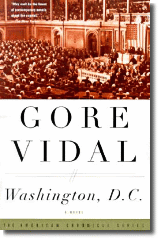
Sometimes sex comes second, of course. Take, for example, Gore Vidal's Washington, D.C. (1967), a multigenerational orgy of depravity set during the 1940s and '50s in "the estates that ringed the city, the Italianate palaces on Massachusetts Avenue, the small restored houses in the Georgetown slums which had lately become fashionable," a world Vidal knows from growing up there.

Washington, D.C. traces the rise of the handsome, amoral Clay Overbury, who is destined to be the first media president. (JFK's name is never mentioned.) As Overbury casually claws his way to the top, other thinly veiled public figures betray their wives and husbands, pimp their daughters, sleep with their siblings and sell out their best friends. Vidal's Washington is camp on the level of the Capitol Dome or the Washington Monument at cherry blossom time -- grand, absurd and disarmingly alive.

The Man Who Loved Children (1940) by Christina Stead is Stein's pick for "a great coming-of-age novel." This book was previously mentioned here on the blog.

As has the work of George Pelecanos:
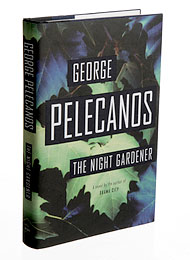
he's the one novelist I know who has made it his business to chronicle the city as a whole. Over the course of 12 books, and as many murder investigations (most recently The Night Gardener), Pelecanos has traced the history of D.C. since World War II, when the papers first christened the city "Murder Capital."

Pelecanos takes the convention of the salt-and-pepper detectives seriously -- he gets at what it's really like, and why it's really complicated, for blacks and whites to share each other's space in the District. And his books chart the disappearance of this shared space -- to white flight, poverty, black flight and gentrification. Pelecanos writes with fetishistic attention to real-life details, as if he expected lunch counters, record shops and nightclubs to be rebuilt from his descriptions. Sometimes the main point of an interrogation seems to be getting his reader inside a favorite local bar -- back when it was still good. Sometimes his characters launch into earnest mini-lectures on the crack epidemic of the '80s, or a history of hardcore or go-go -- the way a Balzac character will launch into an outline of paper manufacture when he's supposed to be proposing marriage -- but this should only recommend Pelecanos to visitors who want to see beyond the Capitol and the Mall, who want to notice more than the heat.

Among the other books that rate for Stein: Larry McMurtry's Cadillac Jack, William Peter Blatty's The Exorcist, Andrew Holleran's Grief, Paul Kafka's Dupont Circle, "Ann Beattie's irresistible first novel" Chilly Scenes of Winter, and the linked story collections of Edward P. Jones, Lost in the City and All Aunt Hagar's Children.

Click here to read Stein's essay.

Other items in Salon's literary guide series include:
A literary guide to Vancouver
A literary guide to Baltimore
A literary guide to Argentina
A literary guide to Afghanistan
A literary guide to Louisiana
A literary guide to Australia
A literary guide to Norway
A literary guide to Turkey
A literary guide to Japan
A literary guide to Martha's Vineyard
A literary guide to West Texas
A literary guide to Togo
A literary guide to Brooklyn
A literary guide to Miami

--Marshal Zeringue

Sunday, November 05, 2006

Maureen Ogle and the page 69 test

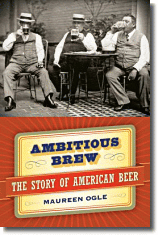
In a day or two I'll run an item on the "page 69 test" as applied to Maureen Ogle's Ambitious Brew.

Meanwhile, Maureen writes at her blog about the test and how she applied it to some books other than her own:

By page 69, has the writer hit her stride and is spewing endorphins and creativity like crazy?

Is page 69 the point at which the novelist gathers all the plot threads and they begin rolling toward their inexorable conclusion?

I dunno....

I applied the test to
1. books I've already read
2. books I started but didn't finish, and
3. books that I've not yet read.

Click here to see what she discovered. And watch this space for the page 69 test as Maureen applied it to Ambitious Brew.

--Marshal Zeringue

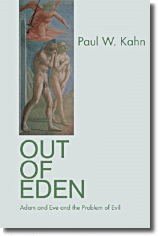
Pg. 69: "Out of Eden"

Paul W. Kahn is Robert W. Winner Professor of Law and the Humanities, and Director of the Orville H. Schell, Jr. Center for International Human Rights at Yale Law School.

His most recent book is Out of Eden: Adam and Eve and the Problem of Evil, which David Luban "called an extraordinary, deeply original reflection on the nature of evil."

I asked Paul to apply the "page 69 test" to his book. Here is his reply:
Page 69 begins one of my favorite sections of the book – one in which I take on something that most people would think quite impossible. I offer a unified theory of the shifting forms of religious experience in the West. We move from the Judaic experience of the sacred as separated from man by a gap that can be bridged only by law and sacrifice, to the early Christian experience of the sacred as immanent (the body of Christ), and on to the Protestant experience of the sacred as that which survives the self-reflection of Enlightenment doubt. This is a characteristic movement of Western thought: to conceive of order first as the product of an intelligent maker, then as not made but rather as an organic whole of which we are already a part, and finally to apply the critique of reason self-reflexively.

I am interested in this history because each form of the sacred produces its own conception of evil. Evil, I argue, is always a failure of the sacred. Thus, as the shape of the experience of the sacred shifts, so does the form of evil. For example, evil for the Jews is idolatry; it is to locate the sacred in that which is really nothing at all. For the Christians, though, evil is the failure to take up the presence of Christ. It is to remain bound to law as the only way to cross the gap between the finite and the infinite, after Christ has announced the end of law.

The history of the forms of the sacred allows us to see that evil is neither a pathology of reason nor one of interest. Rather, evil arises out of the pursuit of the infinite by a finite being. The myth of Adam and Eve tells us that we cannot help but seek to return to Eden, where we did not experience the knowledge of our own death. Evil and the flight from death have been conjoined from the beginning. When finite man transcends death through an experience of the sacred, we call it love. When he flees from death, claiming for himself the power of the infinite, he becomes evil.
Many thanks to Paul for the input.

Here is the publisher's description of the book:

In Out of Eden, Paul W. Kahn offers a philosophical meditation on the problem of evil. He uses the Genesis story of the Fall as the starting point for a profound articulation of the human condition. Kahn shows us that evil expresses the rage of a subject who knows both that he is an image of an infinite God and that he must die. Kahn's interpretation of Genesis leads him to inquiries into a variety of modern forms of evil, including slavery, torture, and genocide.

Kahn takes issue with Hannah Arendt's theory of the banality of evil, arguing that her view is an instance of the modern world's lost capacity to speak of evil. Psychological, social, and political accounts do not explain evil as much as explain it away. Focusing on the existential roots of evil rather than on the occasions for its appearance, Kahn argues that evil originates in man's flight from death. He urges us to see that the opposite of evil is not good, but love: while evil would master death, love would transcend it.

Offering a unique perspective that combines political and cultural theory, law, and philosophy, Kahn here continues his project of advancing a political theology of modernity.

Out of Eden will be available this week.

Also from Princeton University Press, Kahn's Putting Liberalism in Its Place (2004):

"In this lucid, powerfully reasoned, deeply original major new contribution to contemporary political thought, Paul Kahn X-rays the liberal faith, summoning it to a new honesty regarding its own purposes, unacknowledged motivations, blind spots and limitations, and challenging it to a find a new, if perhaps more modest, place in the world."--Jonathan Schell, author of The Unconquerable World and The Fate of the Earth

Previous "page 69 tests":
Paul Lewis, Cracking Up
Pagan Kennedy, Confessions of a Memory Eater
David Greenberg, Nixon's Shadow
Duane Swierczynski, The Wheelman
George Levine, Darwin Loves You
John Barlow, Intoxicated
Alicia Steimberg, The Rainforest
Alan Wolfe, Does American Democracy Still Work?
John Dickerson, On Her Trail
Marcus Sakey, The Blade Itself
Randy Boyagoda, Governor of the Northern Province
John Gittings, The Changing Face of China
Rachel Kadish, Tolstoy Lied
Eric Rauchway, Blessed Among Nations
Tim Brookes, Guitar and other books
Ruth Padel, Tigers in Red Weather
William Haywood Henderson, Augusta Locke
Jed Horne, Breach of Faith
Robert Greer, The Fourth Perspective
David Plotz, The Genius Factory
Michael Allen Dymmoch, White Tiger
Patrick Thaddeus Jackson, Civilizing the Enemy
Tom Lutz, Doing Nothing
Libby Fischer Hellmann, A Shot To Die For
Nelson Algren, The Man With the Golden Arm
Bob Harris, Prisoner of Trebekistan
Elaine Flinn, Deadly Collection
Louise Welsh, The Bullet Trick
Gregg Hurwitz, Last Shot
Martha Powers, Death Angel
N.M. Kelby, Whale Season
Mario Acevedo, The Nymphos of Rocky Flats
Dominic Smith, The Mercury Visions of Louis Daguerre
Simon Blackburn, Lust
Linda L. Richards, Calculated Loss
Kevin Guilfoile, Cast of Shadows
Ronlyn Domingue, The Mercy of Thin Air
Shari Caudron, Who Are You People?
Marisha Pessl, Special Topics in Calamity Physics
John Sutherland, How to Read a Novel
Steven Miles, Oath Betrayed
Alan Brown, Audrey Hepburn's Neck
Richard Dawkins, The Ancestor's Tale

--Marshal Zeringue

James Ellroy, shrinking violet

Deborah Solomon interviewed James Ellroy for the New York Times Magazine. A couple of their exchanges:
Do you think of yourself as a novelist or as a crime writer?

I am a master of fiction. I am also the greatest crime writer who ever lived. I am to the crime novel in specific what Tolstoy is to the Russian novel and what Beethoven is to music.

How do you know since you say you don’t read other books?

I just know. There is a line from a wonderful Thomas Lux poem: “You’re alone and you know a few things.” I just know that I am that good.
--Marshal Zeringue

Saturday, November 04, 2006

Pg. 69: "Cracking Up"

Paul Lewis is Professor of English at Boston College and the author of the new book, Cracking Up: American Humor in a Time of Conflict.

I asked him to apply the "page 69 test" to his book. Here is his reply:
Cracking Up focuses on provocative American humor since 1980: jokes, satires and parodies intended to do more than amuse. Coming early in a chapter on the positive humor movement, page 69 introduces readers to a merry band of consultants and public speakers determined to bring mirth into our classrooms, offices, hospitals and homes. Inspired by Norman Cousins, the editor and writer who in 1977 claimed to have cured himself of collagen disease with large doses of vitamin C and laughter, these advocates come prepared with red clown noses and an inclination to pun. Specifically, the page mentions Ron Culberson, “Director of Everything! At FUNsulting,” Larry Wilde, “America’s Good Humor Man,” and the “caring clowns based at Rex Hospital in Raleigh, North Carolina: ‘She’s Nola Nurse, RN! In case you don’t know what RN stands for, in her case it means really nutty.’” Written from a skeptical position from which it asks whether these practitioners promise too much and try too hard, the chapter moves onto discussions with movement figures, an account of a Laughing Club workout, the story of my participation in conferences sponsored by pro-humor organizations, and descriptions of humor-stimulating products (such as fake dog poop, yellow smiley face plastic shapes, and fart-sound-producing machines). Jolly, jolly, ho-ho-ho!

Elsewhere the book explores strains of intentional humor designed to terrify or persuade. Just as Norman Cousins inspired a generation of humor boosters, so Freddy Krueger, the killing joker of Nightmare on Elm Street fame, provided a much-imitated model for such villains as The Joker, Hannibal Lecter and the Vampire Lestat. With these extremes—Freddy vs. Norman—established and with questions asked about whether they represent contrasting responses to a set of widely shared anxieties—Cracking Up moves out across landscapes of recent political and social argument. Chapters called “Shut Up! No, You Shut Up! Fighting With and About Humor” and “Ridicule to Rule: The Strange Case of G. W. Bush” consider how the Freddy and Norman impulses (that is, the use of humor to terrify or soothe) figure in our angry politics. Topics discussed include jokes used to sell alcohol and tobacco to kids; the battle between the forces of political correctness and anti-political correctness; and the hotly debated question of whether Jesus ever laughed. Intentional humorists contrasted include Rush Limbaugh and Garry Trudeau, Ronald Reagan and Bill Clinton, Jay Leno and Jon Stewart. By exploring realms of controversial, manipulative and disturbing laughter, Cracking Up challenges common sense notions about how American humor has been operating in recent years.
Many thanks to Paul for the input.

Whet your appetite for Cracking Up with these Op-Eds by Lewis:
"Liberal Bias of the Late-Night Comics?" The Providence Journal, October 21, 2006.
"Funny Thing About Elections," Philadelphia Inquirer, September 8, 2006.
"Rush Limbaugh: Court Jester for the Apocalypse," Courier-Journal.com, August 6, 2006.
“Politics as ‘bait and witch,’” Philadelphia Inquirer, June 22, 2006.
“The Nattering Nabobs of... Patriotism?” Philadelphia Inquirer, March 8, 2006.
“Islamic Rage: Sometimes, It Hurts To Laugh,” Hartford Courant, February 6, 2006.
Paul Lewis is also the author of Comic Effects: Interdisciplinary Approaches to Humor in Literature.

Here's a cool item from Paul's biography: he's the neologist who coined the word Frankenfood.

Previous "page 69 tests":
Pagan Kennedy, Confessions of a Memory Eater
David Greenberg, Nixon's Shadow
Duane Swierczynski, The Wheelman
George Levine, Darwin Loves You
John Barlow, Intoxicated
Alicia Steimberg, The Rainforest
Alan Wolfe, Does American Democracy Still Work?
John Dickerson, On Her Trail
Marcus Sakey, The Blade Itself
Randy Boyagoda, Governor of the Northern Province
John Gittings, The Changing Face of China
Rachel Kadish, Tolstoy Lied
Eric Rauchway, Blessed Among Nations
Tim Brookes, Guitar and other books
Ruth Padel, Tigers in Red Weather
William Haywood Henderson, Augusta Locke
Jed Horne, Breach of Faith
Robert Greer, The Fourth Perspective
David Plotz, The Genius Factory
Michael Allen Dymmoch, White Tiger
Patrick Thaddeus Jackson, Civilizing the Enemy
Tom Lutz, Doing Nothing
Libby Fischer Hellmann, A Shot To Die For
Nelson Algren, The Man With the Golden Arm
Bob Harris, Prisoner of Trebekistan
Elaine Flinn, Deadly Collection
Louise Welsh, The Bullet Trick
Gregg Hurwitz, Last Shot
Martha Powers, Death Angel
N.M. Kelby, Whale Season
Mario Acevedo, The Nymphos of Rocky Flats
Dominic Smith, The Mercury Visions of Louis Daguerre
Simon Blackburn, Lust
Linda L. Richards, Calculated Loss
Kevin Guilfoile, Cast of Shadows
Ronlyn Domingue, The Mercy of Thin Air
Shari Caudron, Who Are You People?
Marisha Pessl, Special Topics in Calamity Physics
John Sutherland, How to Read a Novel
Steven Miles, Oath Betrayed
Alan Brown, Audrey Hepburn's Neck
Richard Dawkins, The Ancestor's Tale

--Marshal Zeringue
The five best books about weather

Christopher C. Burt, author of Extreme Weather: A Guide and Record Book, named the five best books about weather for Opinion Journal.

Among his picks:

Divine Wind by Kerry Emanuel

I'm not sure if there has ever been a book that integrated weather with art, literature and science so effectively as "Divine Wind." Kerry Emanuel, an eminent earth scientist at the Massachusetts Institute of Technology, brings these disciplines together elegantly in this book about hurricanes. The science of hurricanes is covered in great detail, interspersed with exceptional illustrations, literary excerpts and case studies of some of the most infamous tropical storms on record. One chapter relates the remarkable story of a hurricane in 1609 that separated the British vessel Sea Venture from its Jamestown-bound fleet and wrecked it on the shores of Bermuda. Presumed lost for many months, the crew miraculously survived--news of which excited all of England, including William Shakespeare, who used the story as the basis of "The Tempest."

The Rough Guide To Weather by Robert Henson

How, you may ask, could a travel publisher produce one of the best books about weather? The logic is there of course: Nothing can torpedo a holiday more effectively than lousy weather. But this book goes well beyond outlining what to expect weather-wise in Hawaii in December or Paris in July. It is a dense and informative treatise on global climate phenomena, and it explains how to interpret forecasts and climate models. The author, Robert Henson, is not only a meteorologist (at the National Center for Atmospheric Research) but also a lucid and engaging writer. As for the travel-guide aspect: Half the book is devoted to country-by-country climate descriptions and monthly weather data tables for more than 150 destinations. A terrific resource for both travelers and weather buffs.

Click here to see the other books on Burt's list.

--Marshal Zeringue

Friday, November 03, 2006

"Golden Arches East"

I've got a review of Golden Arches East: McDonald's in East Asia over at my Spot-on blog.

Here are the opening paragraphs:

Golden Arches East: McDonald's in East Asia was a surprise hit when it was first published almost ten years ago. An ethnographic study that not only advanced the scholarship in anthropology, it also appealed to and enlightened readers outside the academic world. Part of the reason for its success with the latter audience is obvious, at least in retrospect: we may know little about Asian societies but we do know McDonald's, and the book taught us a lot about these societies by showing how they adapted to an American institution and how that institution adjusted to them.

This book was a fresh study in "localization" as well as "globalization."

Now in a second edition with a new "Update" chapter by the editor, the Harvard anthropologist James L. Watson, Golden Arches East remains a valuable and accessible book. [click here to read the rest]

--Marshal Zeringue

"The Camp of the Saints"

Peter Stothard, Editor of the Times Literary Supplement, writes in his blog:

By then, "the White race was nothing more than a million sheep," beaten down by decades of anti-White propaganda.

In 1973 the French writer Jean Raspail wrote a novel of the future in which Europe is overrun by Asian boatpeople who have lost the will to drive them away. While journalists and churchmen argue the fine points of multiculturalism, their own culture is destroyed.

The Camp of the Saints is one of those books more cited than read, and more and more cited these days, it seems.

I long ago remember promising myself that I would get a copy and see for myself. [click here to read the rest of his post]

As it happens, I read this book back in the 1990s. In fact, I assigned it in my Introduction to International Politics class.

It's one of those books whose principle value is illuminating its readers' reactions. Immigration is a thorny issue where the usual left-right and liberal-conservative boundaries break down, and there really are strong points on the (many) opposing sides of the political debate. I can appreciate many of the arguments of those with whom I don't agree about what should be done (or not done) about immigration. But enthusiastic fans of this book's message get no sympathy from me.

--Marshal Zeringue

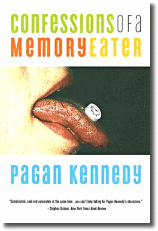
Pg. 69: "Confessions of a Memory Eater"

Pagan Kennedy is the author of Confessions of a Memory Eater and seven other books.

What if you could return to the most delicious moments of your past and live inside them again with crystal clarity? What if you could decide to simply pop a pill and leave the difficulty of the present for a time of your choosing? The day you aced an impossible performance or heard the words “I love you” from someone you adore. Would you hold your baby in your arms again for the first time? Or visit with a loved one who died? What if your relationship was falling apart? Would you choose to relive those first few weeks of outrageous passion with your lover?

What if you were diagnosed with a fatal disease? And what if there was a drug that enabled you, instead of spending your last days on earth surrounded by well-meaning relatives, to escape, to travel back to the time you were strongest in your life? Would you take the drug? What would you do to get it? [read more about the novel and sample the praise it's received here]

This set-up to Kennedy's Confessions of a Memory Eater--and the drug itself--sounds irresistible. So of course I asked Pagan to apply the "page 69 test" to her book. Here is her reply:

Excerpt from page 69:

You need to know one thing before you read this excerpt:

"Mem" is a drug that hurls its user back into any memory he chooses, so that he can re-experience any moment in vivid Technicolor.

"Already, the Mem was beginning to tangle my thoughts. I closed my eyes and a vision seemed to crash over my eyelids; I was a small boy, bobbing in the waves at Nag's Head, splashing, making drops of water fly up so that they dangled a moment in the sun; my small chest puffed out to contain the ache of my joy. Christ, what a relief to be back on the drug. Like walking into your house after an awful day. Home again. 'I have to stay high forever,' I thought, quite distinctly, as the boy levitated on a wave, because it seemed intolerable that I would be banished from this place -- I had begun to think of all the memories I visited on Mem as rooms in one big house, my house....

I was no longer an 'I' but instead a collection of memories that played themselves over and over. It was as if I'd found a way to live as a song or a film or a book."

My comments:

This novel, for me, was a kind of science lab. I had an experiment I wanted to carry out: I wanted to invent a powerful memory drug and give it to several different people (my characters) to see what happened to them. I hoped that, in my lab, I would find the answers to some questions that haunted me: What if we had much better recall of our past -- how would that change the rules of being human? Would we begin to think of the happiest moments of our lives as Disneyland rides, ecstatic experiences that we could enjoy over and over again -- to the point where we would ignore the present and future? And would we develop a different sense of self? Would each of us become a kind of "greatest hits" collection of our memories?

I'm gratified to see that on Page 69 I was wrestling with these questions; I was also trying to give a reader a visceral sense of what it might be like to be high on memory.

In that last sentence -- where the narrator believes that the drug allows him to live as a book instead of as a man -- I am winking at the reader, of course. Furiously.
Many thanks to Pagan for the input.

Click here to read "The Proust Pill," Pagan's essay in The Boston Globe (June 2006) about the writing of Confessions. For a Boston Phoenix feature about the novel, click here.

Entertainment Weekly gave a rave review to Confessions. For more reviews, click here.

Pagan's previous books span a variety of genres, including novels and non-fiction narratives. Her most recently published book, a biography titled Black Livingstone: A True Tale of Adventure in the 19th-Century Congo, made the New York Times Notable list of 2002. A novel, Spinsters, was short-listed for the Orange Prize.

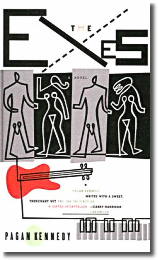
Of her 1998 novel The Exes, Salon's reviewer wrote:
What Nick Hornby did for the insufferable record geek in "High Fidelity," Kennedy does for the touring rock musician: makes him (and her) real and layered. It offers a basic 4/4 beat, something you can groove to, but underneath is a lovely swirl of counter-melodies and sounds that are unfamiliar but engaging.
This bit of recognition is pretty cool: Pagan Kennedy is in the dictionary.

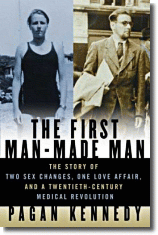
In winter 2007, Bloomsbury will be publishing The First Man-Made Man: The Story of Two Sex Changes, One Love Affair and a Twentieth Century Medical Revolution.

Previous "page 69 tests":
David Greenberg, Nixon's Shadow
Duane Swierczynski, The Wheelman
George Levine, Darwin Loves You
John Barlow, Intoxicated
Alicia Steimberg, The Rainforest
Alan Wolfe, Does American Democracy Still Work?
John Dickerson, On Her Trail
Marcus Sakey, The Blade Itself
Randy Boyagoda, Governor of the Northern Province
John Gittings, The Changing Face of China
Rachel Kadish, Tolstoy Lied
Eric Rauchway, Blessed Among Nations
Tim Brookes, Guitar and other books
Ruth Padel, Tigers in Red Weather
William Haywood Henderson, Augusta Locke
Jed Horne, Breach of Faith
Robert Greer, The Fourth Perspective
David Plotz, The Genius Factory
Michael Allen Dymmoch, White Tiger
Patrick Thaddeus Jackson, Civilizing the Enemy
Tom Lutz, Doing Nothing
Libby Fischer Hellmann, A Shot To Die For
Nelson Algren, The Man With the Golden Arm
Bob Harris, Prisoner of Trebekistan
Elaine Flinn, Deadly Collection
Louise Welsh, The Bullet Trick
Gregg Hurwitz, Last Shot
Martha Powers, Death Angel
N.M. Kelby, Whale Season
Mario Acevedo, The Nymphos of Rocky Flats
Dominic Smith, The Mercury Visions of Louis Daguerre
Simon Blackburn, Lust
Linda L. Richards, Calculated Loss
Kevin Guilfoile, Cast of Shadows
Ronlyn Domingue, The Mercy of Thin Air
Shari Caudron, Who Are You People?
Marisha Pessl, Special Topics in Calamity Physics
John Sutherland, How to Read a Novel
Steven Miles, Oath Betrayed
Alan Brown, Audrey Hepburn's Neck
Richard Dawkins, The Ancestor's Tale

--Marshal Zeringue
The reviewer who would edit Elmore Leonard

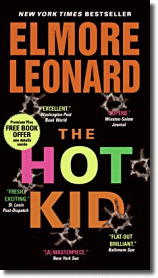
Charmaine Chan reviewed Elmore Leonard's The Hot Kid for the South China Morning Post.

The good folks at the offical Elmore Leonard website reprint a few paragraphs from the review, including this line:
Written with a keen ear, although some sentences would have benefited from closer editing, The Hot Kid is rollicking fun until.... [emphasis added]
Click here to see what Dutch's people had to say about that.

--Marshal Zeringue

Thursday, November 02, 2006

What is Frank Rich reading?

Author and New York Times columnist Frank Rich recently talked to the Christian Science Monitor about what he was listening to and viewing for entertainment. And reading:
I've been reading all the Iraq books. My favorite - it's not actually about Iraq, it's about terrorism - is [The Looming Tower: Al-Qaeda and the Road to 9/11] by Lawrence Wright. It's incredibly well-written and mesmerizing. Of current affairs books, it's that one blew me away. I do try to read fiction. I love fiction. It's an escape from the news. One of the things I reread from college this year and got much more out of now than I did then is E.M. Forster's A Passage to India. It's one of the greatest novels ever written, and it also speaks a little to what's going on now in the world in terms of the West meeting an alien culture with good intentions, and things going wrong. I also like contemporary fiction. Another book I loved this year was [Kazuo] Ishiguro's Never Let Me Go.
Click here to read about what Rich is watching and listening to.

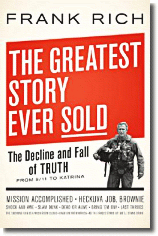
Frank Rich's The Greatest Story Ever Sold was published by Penguin in September. To learn more about it and other books by the author, click here.


--Marshal Zeringue

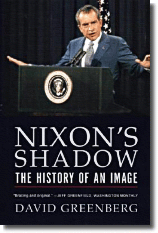
Pg. 69: "Nixon's Shadow"

David Greenberg is assistant professor of History and Journalism & Media Studies at Rutgers University. His books include Nixon's Shadow: The History of an Image and Calvin Coolidge (forthcoming).

The esteemed biographer-poet-novelist Jay Parini praised Nixon's Shadow: "Digging into a plethora of sources, including print archives, biographies, newsreels, movies, plays, songs and cartoons, [Greenberg] turns the image of Nixon around like a many-sided jewel, seeing how the light shines differently through each facet."

The eminent historian Robert Dallek, author of An Unfinished Life: John F. Kennedy, 1917-1963, on Nixon's Shadow-- "Groundbreaking....A landmark in Nixon scholarship."

I asked David to apply the "page 69 test" to his book. Here is his reply:
Nixon's Shadow is not a biography of Nixon but a history of his public image. Each of the eight chapters looks, in sequence, at a different group of Americans and the image of Nixon it formed and disseminated in the general culture. I hope that cumulatively these chapters not only add up to a richer picture of Nixon but also tell us something about how image making in postwar American politics has evolved and functions.

Page 69 is from the second chapter, on the 1950s liberals who were the original "Nixon haters" and their image of "Tricky Dick," a moniker that dates to that period. It's arguably the most important chapter in the book, since these were the ones who came closest to getting Nixon right -- even though in the book I am hard on them for the ways in which ideological predilections shaped their views.

It is also interesting that on page 69 I discuss the 1960 election, in which Nixon's image -- especially his five o'clock shadow in the debates against Kennedy -- did him harm. Notably, the title of the book is, among other things, a reference to this "shadow."
Many thanks to David for the input.

For more information and more praise about the book, click here.

Click here to listen to NPR's Alex Chadwick talk with David Greenberg about Nixon's Shadow.

In a recent post over at The New Republic's Open University blog, David discussed the Euston Manifesto and its American counterpart: click here for the story.

Over at this site (about halfway down the page) David tells the story about how he missed a chance to write for a TV show that would come to be known as..."The West Wing."

David writes the "History Lesson" column over at Slate. Click here to peruse some of his columns.

David Greenberg's Calvin Coolidge should hit the bookstores in December 2006.

Previous "page 69 tests":
Duane Swierczynski, The Wheelman
George Levine, Darwin Loves You
John Barlow, Intoxicated
Alicia Steimberg, The Rainforest
Alan Wolfe, Does American Democracy Still Work?
John Dickerson, On Her Trail
Marcus Sakey, The Blade Itself
Randy Boyagoda, Governor of the Northern Province
John Gittings, The Changing Face of China
Rachel Kadish, Tolstoy Lied
Eric Rauchway, Blessed Among Nations
Tim Brookes, Guitar and other books
Ruth Padel, Tigers in Red Weather
William Haywood Henderson, Augusta Locke
Jed Horne, Breach of Faith
Robert Greer, The Fourth Perspective
David Plotz, The Genius Factory
Michael Allen Dymmoch, White Tiger
Patrick Thaddeus Jackson, Civilizing the Enemy
Tom Lutz, Doing Nothing
Libby Fischer Hellmann, A Shot To Die For
Nelson Algren, The Man With the Golden Arm
Bob Harris, Prisoner of Trebekistan
Elaine Flinn, Deadly Collection
Louise Welsh, The Bullet Trick
Gregg Hurwitz, Last Shot
Martha Powers, Death Angel
N.M. Kelby, Whale Season
Mario Acevedo, The Nymphos of Rocky Flats
Dominic Smith, The Mercury Visions of Louis Daguerre
Simon Blackburn, Lust
Linda L. Richards, Calculated Loss
Kevin Guilfoile, Cast of Shadows
Ronlyn Domingue, The Mercy of Thin Air
Shari Caudron, Who Are You People?
Marisha Pessl, Special Topics in Calamity Physics
John Sutherland, How to Read a Novel
Steven Miles, Oath Betrayed
Alan Brown, Audrey Hepburn's Neck
Richard Dawkins, The Ancestor's Tale

--Marshal Zeringue

Books about books and booksellers

Michael Dirda, book critic at the Washington Post, yesterday held another of his online book discussions. Click here to read it.

One exchange:
Minnetonka, Minn.: Michael, I have just finished Infinite Riches by David Magee a book about books and booksellers. Do you have any favorite books about collecting or the book business?

Michael Dirda: That's a lovely book. My two favorite books by book sellers are David Randall's Dukedom Large Enough and Charles Everitt's wonderful Adventures of a Treasure Hunter. The first deals with Scribners Rare Book Shop and the establishment of the Lilly Library; the second with an old time book scout's exploits in the search for Americana. I understand, but haven't read, the recent biography of John Carter, which might also be good. The Rosenbach biography is a bit of a slog. Oh, but H.P. Kraus's A Rare Book Saga is brisk and fun.
My own enthusiastic suggestion: Penelope Fitzgerald's The Bookshop.

Here is the start of Valentine Cunningham's rave in the New York Times:

Penelope Fitzgerald's novel ''The Bookshop'' is a little gem, a vintage narrative -- first published in 1978 -- of parochial English life in the late 1950's, a classic whose force as a piece of physical and moral map making has not merely lasted but has actually improved with the passage of years.

It is 1959. Instant coffee is fresh on the market; ''Lolita'' is just out; the snazziest young women in London are starting to swap their stockings for tights. But damp little Hardborough on the eroded seacoast of Suffolk, locked in the eastern flatlands George Crabbe's poems made famous, with its very odd population of rapping poltergeists and zany proles as well as posher folks who're used to getting their own masterful way, is a place by no means ready for the shock of the new, certainly not in the shape of a bookshop that Florence Green, a widow, has determined to set up in a ruin called ''the Old House.'' ''The Bookshop'' is Florence's sad ''Rake's Progress,'' a tragicomedy of good will and literate courage thwarted, a pained and smarting story of the old exterminating angels of the English class system in full and damaging flight. [click here to read the rest]

--Marshal Zeringue

Lorrie Moore on Jonathan Franzen

In conjunction with the publication of its Fall Books issue, the New Yorker asked a few of its regular contributors what they were reading.

Among the respondents--Lorrie Moore:
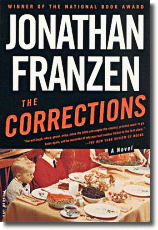
Despite the hoopla surrounding Jonathan Franzen’s The Corrections, I was unprepared for two aspects of it that no one had mentioned to me: how funny it was, and how feminist. (The ending, in which the widowed mother, shed of her marriage, is now ready to make a better life for herself at the age of seventy-five, is like a stiletto of ice slipping neatly into, and then between, the ribs.) On my bedside table now is Franzen’s The Discomfort Zone, a wondrous book of lively, intelligent, intimate—and funny—narrative essays, which has received in the Times two of the most bewildering reviews I’ve ever read. Franzen is never the hero of his own anecdotes, and he observes the world (and himself) the way the baby of a family often does: with a kind of ruthless, custodial affection. He is able to see how three different centuries have converged upon Americans and how disorienting that can be. Even the cover charms: on the jacket is a Victorian “Map of a Man’s Heart,” reprinted from McCall’s and looking like some jokey geography thought up by Lewis Carroll, with its “Broad Range of Interests,” its “Province of Deep Thought,” its “Memory of Mother Moat” and “Ravine of the Limited Take-Home.” There are few ways in, though the “Tunnel of Fetch and Carry” will get one across the memory of mom. It all makes me think that people do not have the wit and humor that they used to.

Also from the New Yorker: What is Malcolm Gladwell reading?

Click here to read Lorrie Moore's story "Paper Losses."

--Marshal Zeringue

Wednesday, November 01, 2006

Pg. 69: "The Wheelman"

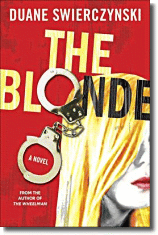
Duane Swierczynski is editor-in-chief of the Philadelphia City Paper and author of The Wheelman , The Blonde, and other books about crime and vice. Among the praise for The Wheelman:
"Fast-moving and funny, The Wheelman is a Mr. Toad's Wild Ride in an R-rated amusement park."
--Booklist
I asked Duane to apply the "page 69 test" to The Wheelman. Here is what he reported:
What a great idea for a series of essays: open to a seemingly arbitrary page (I can only imagine why Marshal chose “69” out of all possible numbers) in your novel, then talk about what’s there.

Of course, I flip to page 69 in my second novel, The Wheelman and…

Well, yeah. I figured it’d be something like this:
“Yes. Mother. Fuck.”

Lisa.

Mikal.
Leave it to me to open page 69 with some naughty language.

The speaker is a Russian mob boss whose beloved son has been murdered; he’s meeting in a greasy diner with an Italian mob boss, and both have come to realize that their kids’ lives are intertwined:
The fathers hadn’t known about the connection between the two.

Lisa Perelli had been dating La Salle University senior Andrew Whalen for three months—ever since the end of winter break, when one of Lisa’s friends had dumped Whalen and she was there to pick up the pieces. They got along famously. Lisa already knew Andrew’s ticks; she’d heard Kimberly complain enough about them. She knew how to circumvent them, use them, fashion him into what she wanted. Mostly.

By sheer coincidence, Andrew Whalen played in a rock band with Mikal Fieuchevsky, the son of a suspected Russian mafiya vor based in Northeast Philadelphia.

The Southeastern Pennsylvania Crime Commission did not see this as sheer coincidence. They had been wiretapping Andrew Whalen’s dorm and home phone lines since January 10, 2003, when news of the Whalen-Perelli affair first made it back to headquarters. The Crime Commission saw it as a direct link between the dying Italian mob and the leaner, younger, tougher Russian mob. The relationship was a rouse, they reasoned; Whalen got his dick…
Well that’s enough of that. Things get a little randy, as they say, at this point.

I can be such a pottymouth.

Anyway—it’s funny this popped as page 69. Because I’m more about the show than the tell. Action, action, action. Never let the reader grow bored. Always keep him off balance. With this as my goal, I try to keep exposition (like the selection above, where I’m explaining stuff) to a minimum. This no doubt comes out of my journalism background, where the trick is to artfully blend showing and telling, quotes and exposition, action and background.

This page is a lot of telling. Bummer.

Then again, maybe this page is representative of The Wheelman. The novel follows Lennon, a mute Irish getaway driver who makes one little mistake—one could argue it wasn’t even a mistake—and the universe jumps down his throat sideways. Lennon’s universe is a cruel and random universe, where chances encounters rule the day and your only way out is a cocktail or nerves, skill and sheer luck. This encounter between the Russian mafiya vor and the old school Italian wiseguy is straight out of this universe. Total chaos; not an ounce of rational design.

A cruel, random universe.

Much like this essay series.

I love it.
Thanks to Duane for the input.

Here's just a taste of the praise that rolled in for The Wheelman:
“Duane Swierczynski is one of the best new things to happen to crime fiction in a long time. A kick-ass writer with wicked cool skills and the instincts of a seasoned veteran. Keep your eyes on him. He’s going places.”
—Victor Gischler, Edgar-nominated author of Gun Monkeys

“I canceled a night out and stayed up all night reading. That’s how much I loved this book . . . at every turn, I was blindsided. Hilarious and bloody violent.”
—
Ken Bruen, Shamus Award–winning author of The Guards
Here's the advance word from Booklist on The Blonde, due out this month:
Swierczynski's The Wheelman (2005) was an adrenaline-charged thrill ride through the streets of Philadelphia, and this one is, too. But where Wheelman offered an inventive take on a traditional crime scenario--the heist gone wrong--The Blonde serves up more high--concept fare. Jack Eisley, dreading a meeting with his wife's ball-busting divorce lawyer, meets an attractive blond who informs him that she just poisoned his drink. If he wants the antidote, she adds, he'd better stay close, because if she doesn't have someone within 10 feet of her at all times, she'll die. Unfortunately for Jack, she is not a psycho. She is infected with fast-replicating and highly infectious nanomachines--and followed by a government agent who already has one head in his duffel bag. Her predicament, which soon becomes Jack's--thanks to an injudicious kiss--requires entertaining, nonstop problem solving. If the premise sounds hard to swallow, it's worth taking the bait. This is another fast, funny, and action-packed outing from a writer who, fortunately for us, doesn't seem to know how to slow down.
How's this for a crime writer's cred?: A receipt for This Here’s a Stick-Up, Duane’s nonfiction book on American bank robbery, was found in the getaway car of a San Francisco bandit who’d hit at least thirty California banks.

In case you wondered: our author is indeed "the only Duane Swierczynski in this country."

And, yes, he's the "Duane Swierczynski" who makes an appearance in Michael Connelly's Echo Park.

Previous "page 69 tests":
George Levine, Darwin Loves You
John Barlow, Intoxicated
Alicia Steimberg, The Rainforest
Alan Wolfe, Does American Democracy Still Work?
John Dickerson, On Her Trail
Marcus Sakey, The Blade Itself
Randy Boyagoda, Governor of the Northern Province
John Gittings, The Changing Face of China
Rachel Kadish, Tolstoy Lied
Eric Rauchway, Blessed Among Nations
Tim Brookes, Guitar and other books
Ruth Padel, Tigers in Red Weather
William Haywood Henderson, Augusta Locke
Jed Horne, Breach of Faith
Robert Greer, The Fourth Perspective
David Plotz, The Genius Factory
Michael Allen Dymmoch, White Tiger
Patrick Thaddeus Jackson, Civilizing the Enemy
Tom Lutz, Doing Nothing
Libby Fischer Hellmann, A Shot To Die For
Nelson Algren, The Man With the Golden Arm
Bob Harris, Prisoner of Trebekistan
Elaine Flinn, Deadly Collection
Louise Welsh, The Bullet Trick
Gregg Hurwitz, Last Shot
Martha Powers, Death Angel
N.M. Kelby, Whale Season
Mario Acevedo, The Nymphos of Rocky Flats
Dominic Smith, The Mercury Visions of Louis Daguerre
Simon Blackburn, Lust
Linda L. Richards, Calculated Loss
Kevin Guilfoile, Cast of Shadows
Ronlyn Domingue, The Mercy of Thin Air
Shari Caudron, Who Are You People?
Marisha Pessl, Special Topics in Calamity Physics
John Sutherland, How to Read a Novel
Steven Miles, Oath Betrayed
Alan Brown, Audrey Hepburn's Neck
Richard Dawkins, The Ancestor's Tale

--Marshal Zeringue
Top 10 QI books

The popular BBC television show "QI" (short for Quite Interesting), starring Stephen Fry and Alan Davies, has spawned a book titled The Book of General Ignorance by John Lloyd and John Mitchinson.

The two Johns came up with a top 10 list of books for the sort of person who would enjoy a show like "QI." Here are a few titles from their list:
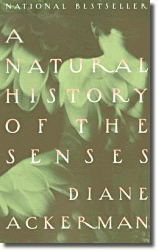
A Natural History of the Senses by Diane Ackerman

A simple idea - using an examination of each of our five senses to tell the history of our species - but perfectly realised. Ackerman is a poet and naturalist: both find their outlet here. Whether she's explaining why the Empress Josephine used violet perfume, exploring our craving for chocolate or describing the launch of a space shuttle, Ackerman changes the way we see, hear, feel and taste the world.

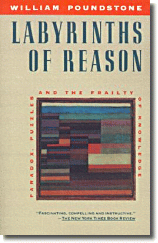
Labyrinths of Reason by William Poundstone

Subtitled 'Paradoxes, Puzzles and the Frailty of Knowledge', this is a profound and endlessly fascinating collection of philosophical experiments that leave the reader unable to settle back into old and lazy ways of thinking. Poundstone is a sceptic in the richest sense of the term and whether he's writing on Sherlock Holmes or parallel worlds, his writing remains sparklingly clear and accessible. Dental floss for the brain.

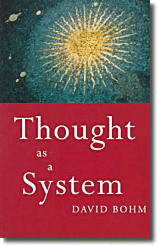
Thought As A System by David Bohm

Another mind-expanding book about thinking. Bohm was a leading quantum physicist and worked on the Manhattan project. He became a close friend of the Indian philosopher Krishnamurti and this book is a record of Bohm's seminars where he reviewed their work together. It is a genuinely visionary meeting of east and west and of philosophy with spirituality and politics. Anyone who worries about our future needs to read it.

Drawing on the Right Side of the Brain by Betty Edwards

After a hard day in the library, there's nothing quite like an hour's drawing to unravel mental knots. For 20 years this book has been quietly teaching people, still terrorised by their memories of school art classes, that they can draw. It is clear, unpatronising and in the space of a day the results are remarkable. Nobody ever regrets learning to draw. A classic that actually does change your life for the better.
To read the six other quite interesting titles, click here.

--Marshal Zeringue