Friday, September 08, 2006

A new novel by J.K. Rowling's favorite writer

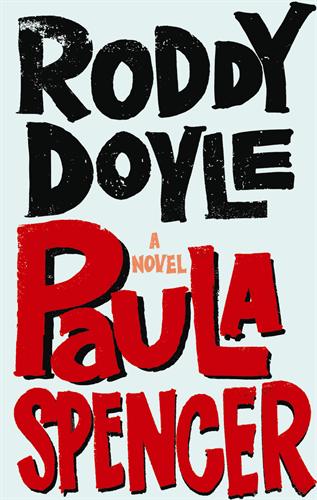
There is a new novel due out by J.K. Rowling's favorite living writer, Roddy Doyle. Harry Potter's creator says of Doyle:
I love all his books. I often talk about him and Jane Austen in the same breath. I think people are slightly mystified by that because superficially they're such different writers. But they both have a very unsentimental approach to human nature. They can be profoundly moving without ever becoming mawkish.
Now, ten years after Doyle published The Woman Who Walked Into Doors, he's coming out with a sequel, Paula Spencer. And it sounds like a book that should please Rowling.

Paula Spencer was "the woman who walked into doors," or so that was her flimsy cover story to explain her bruises by her sadist husband. A cleaning woman, who happens to be an alcoholic, Paula was raising four children in a working class suburb of Dublin.

Maeve Binchy reviewed the new novel for the Times (London). It catches up with Paula ten years later. The two of her kids who witnessed the worse abuse their (now dead) father committed on their mother have grown up and moved out, leaving the younger ones at home. Paula is still a cleaning woman, still an alcoholic, and still suffering from panic attacks.

Ireland has grown wealthy in the past ten years, yet that has meant little for Paula. Now only 48 years old, she still suffers pain in her joints from the beatings. Yet, Binchy writes:

it’s an amazingly cheerful story, full of real resilience. For Paula to have got to this stage is survival on an epic scale. Her language is appalling, she seems constantly to score own goals by saying the wrong thing, then realising that she has and, in trying to improve it, making things worse still.

But she is so utterly likeable that we cheer for her, and every tiny victory for her is a triumph for us as well.

She is like the kind of exasperating friend that everyone has known, the friend who has been through so much and taken so much abuse that you cannot really blame her for the next thing, but you still do.

As for a treatise on the difficulty of giving up drink . . . well, surely someone will make this book required reading for recovering alcoholics. Would any of us have gone near a bottle of vodka if we could know what it might be like trying to give it up? Paula tells it better than any Temperance Apostle I have heard of. And Roddy Doyle has done the impossible—he has made Paula Spencer even more unforgettable the second time round.

As best I can tell, Paula Spencer will be available in Canada later this month and in the U.S. in January 2007.

--Marshal Zeringue

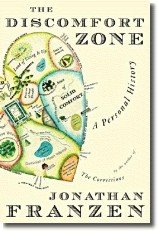
"The Discomfort Zone: A Personal History"

No author should have his reputation swim or (more likely) sink on the opinion of Michiko Kakutani, who was pretty rough of Jonathan Franzen's new memoir, The Discomfort Zone: A Personal History.

So, here I give you the first few paragraphs of Marjorie Kehe's review of the book in the Christian Science Monitor:
Reading Jonathan Franzen always reminds me of the day in sixth-grade math when Miss Worrell explained binary systems to us: twofold worlds alternating between on and off.
At least, that's how I experienced The Corrections, Franzen's award-winning novel of family life gone awry. There are the parts that are sidesplittingly funny and there are the parts that serve up jolts of cringe-inducing pain. And there are plenty of places where the reader is bounced mid-sentence from one sensation to the other.

Franzen's new book, The Discomfort Zone: A Personal History, a collection of essays about his life, offers the same kind of whipsaw reading experience. It's hilarious and it's painful. It's sharply insightful and it's also frustratingly obtuse.

No human being should have to experience the self-loathing that Franzen appears to feel for his youthful self. But then again neither should anyone be so exhaustingly and blindly self-involved. And yet Franzen is, and somehow manages to convey that to us in equal measures of humor and painful acuity.

Kehe gives brief, helpful synopses of the book's chapters here.

--Marshal Zeringue

Six books with an “autumnal” quality

Ward Just named six books for The Week magazine that he admires for their “'autumnal' quality, the sense that spring’s return is no sure thing."

Here's half of his list:
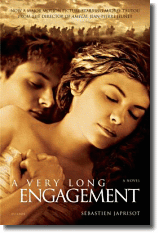
A Very Long Engagement by Sebastien Japrisot

A beautiful war novel and a transcendent love story, animated by the remarkable Mathilde, who doubts that her fiancé was killed in the line of duty and sets out to prove it. Once begun, this book cannot be put down. Wonderfully translated from the French by Linda Coverdale.

What We Talk About When We Talk About Love by Raymond Carver

Carver knew a great deal about many things. But mostly he knew about living in America—expectations, loss, the taste of bourbon in the morning, how we age, how we quarrel, how we make up or fail to make up. In short, how we survive.

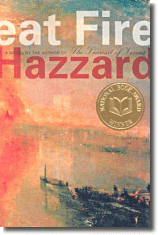
The Great Fire by Shirley Hazzard

The fire in question is the Second World War. The time is 1947, the setting Asia, and a reckoning of sorts is at hand when war hero Aldred Leith proposes to record the effects of the bomb at Hiroshima. A beautifully observed love story, a meditation on war and its discontents, the novel can be summed up in its last line: “Many had died. But not she, not he; not yet.”
Click here to read about Just's other three recommended titles.

Just’s new novel, Forgetfulness, has just been published.

Ward Just is the author of fourteen previous novels, including the National Book Award finalist Echo House and An Unfinished Season, winner of the Chicago Tribune’s Heartland Award. In a career that began as a war correspondent for Newsweek and the Washington Post, Just has lived and written in half a dozen countries, including Britain, France, and Vietnam. His characters often lead public lives as politicians, civil servants, soldiers, artists, and writers. It is the tension between public duty and private conscience that animates much of his fiction, including Forgetfulness.

Ron Charles reviewed Forgetfulness for the Washington Post:
Ward Just's thrillers are so subtle that they risk sounding dull, as though he's engaged in a battle against excess and bombast. The movement in his stories is slight, but the forces at work are tremendous. That muted power has never been more unsettling than in his new novel, a response to Sept. 11 that stretches the boundaries of an already voluminous genre. Even his wistful title, Forgetfulness, signals that Just is exploring something very different from what we find in John Updike's bestselling Terrorist. This story takes place deep in the shadow of Sept. 11, but it contains neither the raw bitterness of Ken Kalfus's A Disorder Peculiar to the Country nor the tender sadness of Jonathan Safran Foer's Extremely Loud and Incredibly Close. Instead, Just tries to portray the state of mind Emily Dickinson described when she wrote, "After great pain a formal feeling comes -- / The nerves sit ceremonious like tombs." (more)
--Marshal Zeringue

The poetry of Roger Federer

The novelist David Foster Wallace has penned a brilliant paean to Roger Federer, perhaps the greatest tennis player ever. You don't have to enjoy tennis to appreciate Wallace's essay, you only have to appreciate fine writing.

Here's a description of one of the writer's favorite moments in Federer's game:
It's the finals of the 2005 US Open, Federer serving to Andre Agassi early in the fourth set. There's a medium-long exchange of groundstrokes, one with the distinctive butterfly shape of today's power-baseline game, Federer and Agassi yanking each other from side to side, each trying to set up the baseline winner ... until suddenly Agassi hits a hard, heavy cross-court backhand that pulls Federer way out wide to his ad (left) side, and Federer gets to it but slices the stretch backhand short, a couple feet past the service line, which, of course, is the sort of thing Agassi dines out on, and as Federer is scrambling to reverse and get back to centre, Agassi is moving in to take the short ball on the rise, and he smacks it hard right back into the same ad corner, trying to wrong-foot Federer, which in fact he does - Federer's still near the corner but running toward the centreline, and the ball's heading to a point behind him now, where he just was, and there's no time to turn his body around ... and what Federer now does is somehow instantly reverse thrust and sort of skip backward three or four steps, impossibly fast, to hit a forehand out of his backhand corner, all his weight moving backward, and the forehand is a topspin screamer down the line past Agassi, who lunges for it but the ball's past him, and it flies straight down the sideline and lands exactly in the deuce corner of Agassi's side, a winner - Federer's still dancing backward as it lands. And there's that familiar little second of shocked silence from the New York crowd before it erupts, and John McEnroe on TV says (mostly to himself, it sounds like), "How do you hit a winner from that position?" And he's right. It was impossible. It was like something out of The Matrix.
If only sportswriters could write like that.

And here's Wallace's deft summary of the tennis ace:
Federer is a first-rate, kick-ass power-baseliner. It's just that that's not all he is. There's also his intelligence, his occult anticipation, his court sense, his ability to read and manipulate opponents, to mix spins and speeds, to misdirect and disguise, to use tactical foresight and peripheral vision and kinesthetic range instead of just rote pace - all this has exposed the limits, and possibilities, of men's tennis as it is now played. Federer is showing that the speed and strength of today's pro game are merely its skeleton, not its flesh. He has, figuratively and literally, re-embodied men's tennis, and for the first time in years the game's future is unpredictable.
Beautiful stuff.

David Foster Wallace was a serious junior tennis player and has a well-documented love of the sport. His 1,079-page novel Infinite Jest was partly set at a tennis academy, and his Esquire article about power-baseliner tennis pro Michael Joyce is part of the collection A Supposedly Fun Thing I'll Never Do Again. Click here to listen to his August 19, 2006 interview with NPR's Weekend Edition.

--Marshal Zeringue

Thursday, September 07, 2006

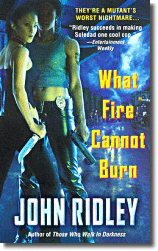
John Ridley's noir with a sci-fi kick

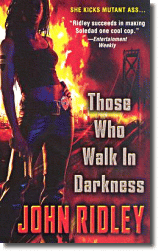
This is Soledad O'Roark. This is Bullet; the girl with the gun who'd been an operator on an element that'd taken out a telepath. Taken it out, mostly thanks to the gun. Hers. She'd been BAMF a record number of occasions in a record short span of time. This was one of the best cops ever to wear a shield.

So writes John Ridley of the LAPD's top mutant-hunter in What Fire Cannot Burn, the sequel to Those Who Walk in Darkness, O'Roark's debut appearance. O'Roark is among my elite group of the "coolest women in crime fiction written by men."

I don't read much science-fiction and I don't know what the sci-fi cognoscenti make of these books by Ridley, but I love them as terrific noir fiction that just happens to have a sci-fi kick.

About Those Who Walk in Darkness, from the publisher:

Officer Soledad "Bullet" O'Roark loathes her nickname--and the notoriety it represents. She didn't join L.A.P.D's elite M-Tac squad to fight the Brass or make rookie cops idolize her. She joined M-Tac to kill freaks.

Freaks, muties, metanormals--back in the day, they were called superheroes. They had amazing powers, lurid costumes, and snappy names: Nightshift, Civil Warrior, Nubian Princess, The Giggler. They seemed to be saviors and gods. But where there are heroes, there are villains. When a clash of superheroes and supervillains destroys San Francisco, the normal human population decides it will no longer live like spectators at the foot of Mt. Olympus.

Superhumans are now outlawed and hunted by cops. But it isn't easy to take down beings who are invulnerable or intangible, have super-strength or super-speed, or can throw flames from their body or telepathically control minds. The mortality rate for M-Tac units is nearly fifty percent--per mission. That's why Soledad has
customized hi-tech, unauthorized, very special ammo. Each freak has a different weakness, and her color-coded clips are designed to exploit every one of them. Soon Soledad is racking up a body count that makes her a legend on the force--and a nightmare in the freak underground.

But when Soledad guns down a radiant woman who can heal the sick, reverse catastrophes, and then fly away on great white wings, the cop may be starting the final war between normals and metanormals. Because Bullet O'Roark didn't just shoot down a freak. According to all witnesses, she's killed an angel.

For the inaugural post of the blog's "coolest women in crime fiction written by men" series, click here.

For John "Dawg" Pickard's case for "science fiction as literature," click here.

--Marshal Zeringue

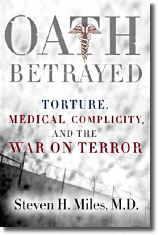
Pg. 69: "Oath Betrayed"

Friend of the Blog Cary Federman generously responded when I asked him to apply the page 69 test to whatever he was presently reading. He writes:

I am currently reviewing Steven Miles, Oath Betrayed: Torture, Medical Complicity, and the War on Terror for Nursing Inquiry. It’s a fascinating book about the role of members of the health professions in the war on terror, in particular, their participation in torture and their silence in the face of torture. In any event, page 69:

An autopsy on December 13 [2002] found that Dilawar’s death was a homicide, caused by extensive and severe “blunt force injuries to lower extremities complicating coronary artery disease” (inexplicably, “coronary artery disease” is typed on the death certificate in a different font). The Pentagon reported that the prisoner died of natural causes. Later, a coroner testified that Dilawar’s legs were “pulpified” and that the body looked as if it had been “run over by a truck.” Soldiers delivered the body and an English-language death certificate to his wife and two daughters in January 2003. The family could not read English….Dilawar has two or three death certificates…A year and a half after the death, the Pentagon released another death certificate, finalized on May 20, 2004, that does not describe the circumstances in which the body was found.

This terrifying excerpt does not deal with the heart of the book’s overall point, but it does nicely capture its spirit.

Many thanks to Cary for the analysis.

Previous entries in the "page 69" series:

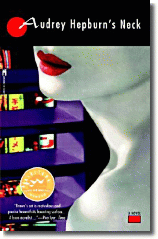
Alan Brown, Audrey Hepburn's Neck

Richard Dawkins, The Ancestor's Tale

--Marshal Zeringue

President Kennedy's favorite books as a child

According to the reference desk at the John F. Kennedy Presidential Library & Museum, these were President Kennedy's favorite books as a child:

Arabian Nights
Billy Whiskers series
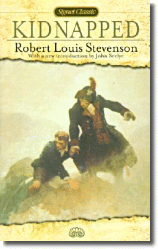
Kidnapped by Robert Louis Stevenson
Treasure Island by Robert Louis Stevenson
A Child's Garden of Verses by Robert Louis Stevenson
King Arthur and the Round Table by A.M. Hadfield
Lays of Ancient Rome by Thomas Macauley
The Jungle Book by Rudyard Kipling
Kim by Rudyard Kipling
Bambi by Felix Salten
Uncle Tom's Cabin by Harriet Beecher Stowe
Peter Pan by J.M. Barrier
Black Beauty by Anna Sewell
Story of a Bad Boy by Thomas B. Aldrich
Wing and Wing by James Fenimore Cooper
Biography of a Grizzly by Ernest T. Seton
At the Back of the North Wind by George MacDonald
Pilgrim's Progress by John Bunyan
Wonder Tales From East and West Introduction by Maud Wilder Goodwin

--Marshal Zeringue

Steal this idea

If the idea behind this post appeals to you, feel free to use it or tell your friends about it. But don't use the "CTL-C, CTL-V discount" and represent that you wrote the post: that's thievery, if it goes beyond fair use standards.

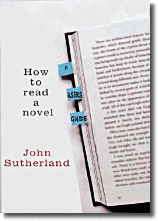
John Sutherland, from whom I borrow the inspiration for this post and to whom I give credit (as well as more readers--click here to read his essay), points out that you can copyright novels but not ideas.
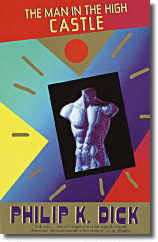
This means that plot lines, scenarios, character types, gimmicks are all there for the taking. A new idea in fiction, if it catches on, will quickly be snapped up by other writers. Take, for example, the alternative, or parallel, universe gimmick often used in science fiction. The pioneer is generally taken to be Ward Moore, whose Bring the Jubilee (1953) fantasises an America in which the south won the civil war, existing in some neighbouring universe alongside ours in which, of course, the north won. This was picked up by Philip K Dick in one of the greatest of science-fiction novels, The Man in the High Castle (1962), in which in one universe Japan, and in another the Allies, won the war - characters slip between the two. Since then there have been any number of creative plunderings of Moore's alternative universe gimmick: Len Deighton's SS-GB (1978) and Robert Harris's Fatherland (1992), in both of which Germany won the second world war, are two bestselling examples.
It's not always as simple as that, of course.
In 2001, the estate of Margaret Mitchell moved to have a burlesque of Gone with the Wind suppressed. Called The Wind Done Gone, Alice Randall's spoof retold Gone with the Wind from a slave's viewpoint. Randall, herself an African American, was sardonically reminding readers that Mitchell's novel (unlike the film, which MGM carefully sanitised) has admiring sections on the Ku Klux Klan (with whom Rhett rides) and diatribes against post-bellum "uppity darkies".... The Wind Done Gone was duly injuncted, and the injunction lifted after the novel's publishers, Houghton Mifflin, made an out-of-court settlement with the Mitchell estate.
There is more of interest in Sutherland's article (which is excerpted from his new book, How to Read a Novel), including a brief treatment of the uses of anonymity and pseudonymity in book marketing.

--Marshal Zeringue

Wednesday, September 06, 2006

Pg. 69: "Audrey Hepburn's Neck"

Marshall McLuhan suggested that you might choose your reading by turning to page 69 of a book and, if you like it, read it.

Would that exercise well serve someone who tried it with Alan Brown's Audrey Hepburn's Neck? Here's a passage from page 69:
Mangas are as popular as newspapers, and Chocolate Girl's battles with rapists, child molesters, gangsters, and rice smugglers are followed by most of Japan. And Toshi likes his boss. Nakamura is an odd and funny man. When Toshi comes to work, he never knows what to expect.

Today he walks in to find a big sheepdog trotting in circles in the middle of the room, kicking up dust. Mami follows it around, trying to pet it. Nakamura stands by his desk, smoking and grinning.

"Look, Toshi-chan. A dog. Come touch it," Mami says.

"Go ahead. Don't be shy. Try it," Nakamura says.

"Whose dog is it? Akira-kun?"

Akira is, as always, staring at his computer screen, his gold earrings and dyed blond hair hidden inside his sweatshirt hood. The beeps and groans of a computer game fill the room.

"Me? How could I have a pet? I live in a four-mat room."

"It's ours, for one hour," Nakamura says. "I rented it. We have a year's contract. One hour, once a week."
That passage indicates some of the flavor of the novel and imparts information about the setting: the world of manga (in which the protagonist Toshi works), and the crowded urban environment (a character lives in a "four-mat room," one can rent a dog for an hour a week because there really isn't enough room to have one full-time).

Yet the prospective reader does not learn about the heart of the novel, which is Toshi's close interactions (including romances, some fraught with various intentions lost in translation) with several Americans who live in Japan.

Previous entries in the "page 69 test" series:
Richard Dawkins' The Ancestor's Tale

--Marshal Zeringue

Ten anti-poverty books

Felix Dennis is a poet, a publisher (of Maxim, "the world's biggest selling men's lifestyle magazine," among many other titles), and one of the richest men in Britain. But he was once poor.

He is the author of two collections of poetry, A Glass Half Full and Lone Wolf, and How to Get Rich, which he describes as "the world's first anti-self help book."

"Money may be the root of all evil, but what would we do without it? The books [named here] are not a guide to the getting of money," Dennis writes. "Instead, they are books that goaded me into abandoning poverty. Which is a different thing--at least, for those of us who have been poor."

Here is a sample from Dennis's list:
Treasure Island by Robert Louis Stevenson

When all is said and done, what is this classic adventure (supposedly written for children, but read more often by adults) all about? It is about the getting of money. The hero is an annoying twerp. The so-called good-guys are cut from one-dimensional cloth. But the villain ... oh, the villain! Is there a better-drawn character in popular British fiction than Long John Silver? George Smiley cannot hold a candle to him. What a man! What a rotten, debased, money-driven, thieving, double-dealing pirate! And he redeems himself, too! The favourite book of my childhood and a model for my career since. (The edition illustrated by the great Ralph Steadman is the one to go for).

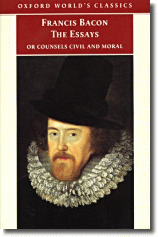
The Essays: Counsels Civil and Moral by Francis Bacon

Not a nice man. Not even a good writer, except in his ability to condense the mundane into wit: "Money is like muck, not good except it be spread." So why have his Essays remained by the side of my bed for years? Because he knows. Because he understands. Because he is as wise as he is vicious and as generous as he is wise. Along with Newton and Locke, Thomas Jefferson thought him "one the greatest men who has ever lived, without any exception". Bacon's counsels on wealth and negotiating are priceless. Were he alive today, he would eat Warren Buffett's lunch for breakfast.

The Wealth of Nations by Adam Smith

I have to be kidding, right? Who in their right mind would wade through an unabridged version (and most abridged versions are a menace) of such a tome? My answer is: anyone who wants to understand capitalism and the conditions in which entrepreneurs survive and prosper. Besides, it's not as heavy going as you might think - especially if you purchase an edition with a running commentary in the margin and a superb index. There is a damn good reason this book is still in print 230 years after its first publication. Don't let its scholarly reputation put you off.
Felix Dennis has an interesting biography.

Click here to read an excerpt from How to Get Rich. A few passages:
Money did not make me happy. But it definitely improved my sex life.

I got rich without the benefit of a college education or a penny of capital but making many errors along the way. I went from being a pauper—a hippie dropout on the dole, living in a crummy room without the proverbial pot to piss in, without even the money to pay the rent, without a clue as to what to do next—to being rich.

If you cannot bear the thought of causing worry to your family, spouse or lover while you plough a lonely, dangerous road rather than taking the safe option of a regular job, you will never get rich.

Fear of failure is almost certainly the reason that you have not already begun to make yourself rich. It haunts all of us.
Dan Chiasson's profile of Maxim and Dennis in Slate a couple of years ago included this passage:
Dennis has wondered aloud whether he "may be one of the best poets of the first quarter of the 21st century"—a glass-half-full self-assessment if ever there was one—and compared himself, favorably, to Shakespeare. Tom Wolfe compares him to Kipling, denigrating, by the way, "the poor old mallarme'd and ezrapounded world of contemporary poetry." Indeed, there is something pastoral, even pre-modern, about most of Dennis' poems: They seem like the sort of thing A.E. Housman might have written if he had once published a biography of Bruce Lee.
--Marshal Zeringue

An interview with Ha Jin

Ha Jin's novels include War Trash (2004), which won the PEN/Faulkner Award and was a finalist for the Pulitzer Prize, and Waiting (2000), which won the PEN/Faulkner Award and the National Book Award.

Last year he granted an interview to the literary magazine AGNI. Two exchanges from the interview stood out for me:
Could you give examples of interesting quirks between the two languages? What you can you do in Chinese that you can’t do in English?

English is very speculative, very eloquent. It has a flowing feeling. Chinese is more down to earth and closer to things in that sense. Some of the abstract ideas and words [in English] are absent from the Chinese language—at least originally. For instance, the word “identity” is very hard to translate. You can put it in different words but it’s not the same word as identity—some concepts like that. On the other hand, the Chinese language can describe a lot of things like feelings. There are so many words [laughs] about different shades of feelings and tastes. Chinese has a lot of words that English doesn’t have. In that sense, Chinese is quite a physical language. Another thing, in English we always try to avoid clichĂ©s and idioms. But Chinese has thousands and thousands of idioms and very often a person’s mastery of the language depends on how many idioms are mastered. That’s an opposite attitude.

Does it free your writing students when you tell them that [a "sense of failure is essential to a writer from the very beginning"]?

It doesn’t matter. People should be discouraged. There are a lot of professions that are perhaps even better than writing. I don’t believe that people can’t live a much better life if they don’t write. There are great professions that can make you happy as a person and more useful to others. Writing is not a great profession as a lot of writers proclaim. I write because this is something I can do. Another thing—very often I think a lot of writers write because they have failed to do other things. How many writers can’t drive? A lot. They’re not practical. They are not capable in everyday life.

Read the rest of the interview here.

In this brief interview (2004) with the New York Times the author talked about how his experience as a soldier in the Chinese army informed War Trash.

--Marshal Zeringue

More of Curtis Sittenfeld's favorite books

A couple of months ago I posted an item about a few of Curtis Sittenfeld's favorite books; click here to read it.

In 2005 she shared with Barnes & Noble a list of her ten favorite books. Here's a sample:

Old School by Tobias Wolff -- This is another boarding school novel, and it is (for me) humbling and brilliant. It came out about a year before mine did and is set at an all-boys school in the early '60s. The boys are obsessed with famous writers, several of whom visit the campus. Wolff is just dazzlingly smart and such a beautiful writer.

Happy Baby by Stephen Elliott -- I actually reviewed this book for The New York Times Book Review, and before I started reading, I didn't think I'd be crazy about it--it's about a boy who becomes a ward of the state of Illinois, and it has some dark drug and sex stuff. But I absolutely loved it. It's told very matter-of-factly and is really poignant.

Sarah Phillips by Andrea Lee -- This novel in stories, which was published in 1984, follows a black girl from an upper-middle-class background through private high school and onto Harvard. It's fantastic -- it's so intelligently written, the details are perfect, and I really like the fact that Sarah is a nuanced character who sometimes acts out of self-interest and isn't always endearing but always seems real. Andrea Lee is also the author of the collection Interesting Women, and the characters in that (adult women) have a similar edge or a complexity that to me makes them so much more interesting than cutesy chick-lit types.

Click here to read the rest of Sittenfeld's list.

Click here to read a 2005 profile of Sittenfeld in the Washington Post.

Click here to read a 2005 interview with her on Earthgoat, a blog by graduates of the Iowa Writers' Workshop, and here for their 2006 interview with her.

For a 2006 profile of Sittenfeld in TIME magazine, click here.

--Marshal Zeringue

Tuesday, September 05, 2006

What was the inspiration for "Cloud Atlas"?

In 2004 the Washington Post "Book World" interviewed David Mitchell about Cloud Atlas.

Asked, "What was the inspiration for Cloud Atlas?," Mitchell talked about as unlikely a trio of books as I can imagine in response to a single question:

There wasn't really a single Eureka moment. For me, novels coalesce into being, rather than arrive fully formed. That said, three important sources spring to mind. First, If on a Winter's Night a Traveler, by Italo Calvino--an experimental novel in which a sequence of narratives is interrupted but never picked up again -- made a big impression on me when I was an undergraduate. I wondered what a novel might look like if a mirror were placed at the end of a book like Calvino's so that the stories would be resolved in reverse.

Second, a mention of the Moriori people in Jared Diamond's multidisciplinary Guns, Germs, and Steel led to a trip to the Chatham Islands and an encounter with New Zealand historian Michael King's A Land Apart. His idea that there is nothing inevitable about civilization caught my curiosity. Knowledge can be forgotten as easily as, perhaps more easily than, it can be accrued. As a people, the Moriori "forgot" the existence of any other land and people but their own. When I heard this, my novelistic Geiger counter crackled.

Third, a book by Frederick Delius's amanuensis, Eric Fenby, Delius: As I Knew Him, was worlds away from the Moriori but gave me the idea of Fenby's evil twin, and the struggle between the exploited and the exploiter.

Perhaps all human interaction is about wanting and getting. (This needn't be as bleak as it sounds--a consequence of getting can be giving, which presumably is what love is about.) Once I had these two ideas for novellas, I looked for other variations on the theme of predatory behavior--in the political, economic and personal arenas. These novellas seemed to marry well with the structure I had in mind: Each block of narrative is subsumed by the next, like a row of ever-bigger fish eating the one in front.

In this gem of a post, Wayne Terwilliger described Cloud Atlas as "simply brilliant: a technical high-wire act of styles and genres that embraces the widest scope of human history (& history still to come)."

--Marshal Zeringue

Ned Kelly Award winners

The Rap Sheet has news of the 2006 Ned Kelly Awards, presented by the Crime Writers’ Association of Australia. Click here to read about the winners.

The top prize was a tie: Crook as Rookwood by Chris Nyst shared the honor with The Broken Shore by Peter Temple.

Last year Sue Turnbull praised The Broken Shore:
If you only read one crime novel this year, read The Broken Shore. It's not just a good yarn--there are plenty of those-- what Peter Temple achieves here is much, much more, capturing a specifically Australian perspective in prose as spare as it is precise. This book is the best yet from a writer who has already won a well-deserved reputation as one of our finest crime writers.
And then there's Turnbull's take on Crook as Rookwood:
Nyst knits a convoluted plot in which every stitch counts and the pay-off is guaranteed. However, his real triumph is the nice observation of people and places, from Marrickville to the Gold Coast, the seductions of Sydney Harbour to the brutalities of prison. Nyst's ear for the vernacular is acute, locating the grim poetry in the Australian patois. Take the title. Rookwood is the location of the cemetery where you are likely to end up if you are crook. Next time someone asks how you are, you know what to say. Spread the good word.
--Marshal Zeringue

Turkish author under fire

It was only yesterday that I posted an item on a few of the literary delights of Turkey.

Now comes news from the Berliner Zeitung (courtesy of signandsight) of a Turkish writer facing four-and-a-half years in prison if found guilty of insulting the founder of modern Turkey.
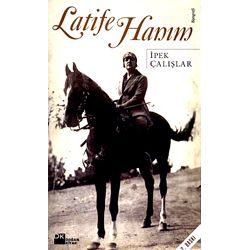
Ă–mer Erzeren reports on new charges being brought against an author in Turkey. "After Orhan Pamuk and Elif Shafak, now the Istanbul journalist Ipek Calislar is being arraigned. Prosecutors are calling for four and a half years' imprisonment for 'crimes against Ataturk,' stipulated in a law dating back to 1951. Calislar is the author of 'Latife Hanim' (Mrs Latife), a biography of the wife of Mustafa Kemal Ataturk, the founder of the Turkish Republic. The trial is scheduled to start in October. The case rests on Calislar's portrayal of an incident from the early days of the Republic. During an attempted putsch, Latife organised Ataturk's escape by dressing him in a chador, while she fooled the putschists by dressing in men's clothing and impersonating her husband."
Read more about the case here.

--Marshal Zeringue
Six top spy books

Peter Millar, who reviews thrillers for the Times (London), nominates six top spy books...and only one features Agent 007.

Here's half Millar's list:
Casino Royale by Ian Fleming

The first Bond, destined (even in the new version) never to be filmed properly: 007 messes up and doesn’t get the girl.

The Scarlet Pimpernel by Baroness Orczy

Perhaps the first spy novel, an aristocrat saves toffs from the guillotine.

Funeral in Berlin by Len Deighton

The East End anti-Bond Harry Palmer (immortalised by Michael Caine).

Click here to see Millar's other titles.

--Marshal Zeringue

"Plato's Republic: A Biography"

Plato defeated me in college, and I remain beaten. The stuff baffles me.

Now Simon Blackburn, usually a cause of enlightenment for me on philosophical questions, has written a book titled Plato's Republic: A Biography.

I'm afraid the excerpt from the book does not make me any more confident that I understand Plato, but it does make it clearer why I've long been befuddled by the philosopher. (Read the passage below and you'll see what I mean.) I'm tempted to have another go at Plato.

The entire excerpt (it appears to be from the introduction) is available here; a few choice paragraphs follow:

An equally shocking thing about it in some people's eyes is that, in writing Republic, Plato utterly betrayed his teacher Socrates. Socrates is the first and greatest liberal hero and martyr to freedom in thought and speech. For writers like John Stuart Mill and George Grote - practical, liberal, utilitarian thinkers - this was the real Socrates, the eternal spirit of reflection, criticism and potentially of opposition to the state itself. But in Republic he is an out-and-out dogmatist, rather than the open-minded, patient, questioning spirit his admirers love. He is shown as the spokesman for a repressive, authoritarian, static, hierarchical society in which everything up to and including sexual relations and birth control is regulated by the political classes, who deliberately use lies for the purpose. He presents a social system in which the liberal Socrates would have been executed much more promptly than he was by the Athenian democracy. In Republic the liberal Socrates has become the spokesman for a dictatorship. In presenting this figure Plato even betrayed his own calling, being once a poet, who now calls for the poets to be banned.

A work may have many defects yet be forgiven if the author comes through as a creature of sweetness and light, just as Plato's literary creation, the Socrates of the earlier dialogues, does. But there is not much help here. True, there must have been enough sweetness and light in Plato to create the figure of the heroic, liberal Socrates in the first place. But if that figure evaporates, as it does in Republic, there is not much else to go into the balance. We know very little about Plato, and what there is to know is not generally appealing. If he is put in historical context, we may find an archetypal grumpy old man, a disenchanted aristocrat, hating the Athenian democracy, convinced that the wrong people are in charge, with a deep fear of democracy itself, constantly sneering at artisans, farmers and indeed all productive labour, deeply contemptuous of any workers' ambition for education, and finally manifesting a hankering after the appalling military despotism of Sparta.

But as so often with Plato, there is a complication to that picture, nicely brought out in Nietzsche's reaction to the fact that, on Plato's deathbed, he turned out to have been reading the comic writer Aristophanes: "there is nothing that has caused me to meditate more on Plato's secrecy and sphinx-like nature, than the happily preserved petit fait that under the pillow of his deathbed there was found no Bible, nor anything Egyptian, Pythagorean, or Platonic - but a book of Aristophanes. How could even Plato have endured life - a Greek life which he repudiated - without an Aristophanes?"

We are told that Jesus wept, but not that he ever laughed. With Plato, as with Socrates, laughter is often nearer than it seems. This is a good sign. Perhaps the grumpy old man was not quite so grumpy after all. But this does not really matter, for it is the concrete, enduring book that concerns us, not its shadowy and departed author. And it is a good dictum that while many books are wrongly forgotten, no book is wrongly remembered. So we need to work harder to come to terms with the unquestioned staying power of Republic. We need to understand something of the hold this book has had and continues to have on the imagination of readers.

--Marshal Zeringue
Monday, September 04, 2006

A literary guide to Turkey

Michelle Goldberg, author of Kingdom Coming: The Rise of Christian Nationalism, writes that "Turkey is both one of the [Middle East's] great success stories and the birthplace of many of its miseries, since it was the breakup of the Ottoman Empire and the subsequent Western redrawing of national boundaries that gave the world such unfortunate artificial configurations as Iraq."

Goldberg's literary guide to Turkey continues:
If you want to understand how the multiethnic Ottoman Empire gave way to the fierce nationalisms of the modern Middle East, there's no better book than David Fromkin's A Peace to End All Peace (1989). Fromkin tells the story of how, after World War I, the European victors carved up the Ottoman Empire into the countries that exist today. His sprawling history portrays the prewar ferment among the modernizing young Turks, the exploits of Mustapha Kemal--now known as Ataturk--the army officer and revered founder of modern Turkey, the adventures of Lawrence of Arabia and the intrigues of various kingmaking Western Orientalists.
There is enough non-fiction in daily life, so Goldberg suggests a few tantalizing novels as well.
Turkey's most famous writer is Orhan Pamuk, and his hallucinatory 2002 novel Snow-- first published in English in 2004--is a parable of the country's current struggle over religion and democracy, in which liberalism is backed by the undemocratic might of the military. The story begins with an exiled poet and former student radical named Ka returning to Turkey from Germany and traveling to the eastern city of Kars. He's ostensibly investigating a string of female suicides, but he's really hoping to kindle an affair with Ipek, a ravishing former classmate.
That female suicide epidemic, Goldberg notes, is unfortunately all too real.

Goldberg also recommends "the brilliant Elif Shafak [who] writes novels that are audaciously postmodern and politically courageous." One Shafak title available in translation is
The Gaze (1999), an utterly strange, surprisingly riveting novel that goes back and forth between the story of an obese women and her dwarf lover in modern Istanbul and that of a freak show more than a hundred years earlier.
In April 2007 Shafak will publish (in English) The Bastard of Istanbul, from which Goldberg quotes this brilliant passage:
My father is Barsam Tchakhmakhchian, my great-uncle is Dikran Stamboulian, his father is Varvant Istanboluian, my name is Armanoush Tchakhmakhchian, all my family tree has been Something Somethingian, and I am the grandchild of genocide survivors who lost all their relatives in the hands of Turkish butchers in 1915, but I myself have been brainwashed to deny the genocide because I was raised by some Turk named Mustapha!
Read the rest of Goldberg's essay here: it's a wonderful eyes-open pitch for Turkey and its literature.

There are two excerpts from Kingdom Coming here.

Other items in Salon's series include:
A literary guide to Japan
A literary guide to Martha's Vineyard
A literary guide to West Texas
A literary guide to Togo
A literary guide to Brooklyn
A literary guide to Miami
--Marshal Zeringue

The book that inspired the young Julia Alvarez

Julia Alvarez grew up in the Dominican Republic before emigrating to the United States at the age of 10. She is the award-winning author of How the GarcĂ­a Girls Lost Their Accents, ¡Yo!, and the National Book Critics Circle Award finalist, In the Time of the Butterflies.

She also wrote Finding Miracles as well as three other books for young readers, The Secret Footprints, a picture book; How TĂ­a Lola Came to (Visit) Stay, a middle-grade novel; and Before We Were Free, a young adult novel. She is a writer-in-residence at Middlebury College and lives in Vermont.

In a Q & A (read the whole interview here), she talked about the book that inspired her when she was growing up:
I was not much of a reader growing up.... But my “old maid” aunt who was a reader did bring me back a book from a trip she took to the United States. It was The Arabian Nights, which is the story of a girl, Scheherazade, who lives in a kingdom where the sultan, who is full of hatred for women, takes a wife every night and then beheads her in the morning. Scheherazade’s father hides her in his library, where she reads all his books and learns thousands of stories! When she learns about what is happening to all the women in her kingdom, she decides she wants to help them. And so she begs her father to let her visit the sultan’s tent and see if she can change his mind. At first her father refuses, but finally he relents.

And so, that first night when Scheherazade (I always did wish she had an easier name to spell and pronounce!) is taken before the sultan, she asks him if he’d like to hear one of her wonderful stories. “Sure,” he says, “it’s a while before sunrise.” But wouldn’t you know it, just as the sun is coming up, Scheherazade is smack in the middle of an exciting tale. She laments the fact that the sultan is going to miss out on the satisfying ending, since it’s her time to die.

But no way is he going to let her die now. “You must finish your story tonight!” he commands. So Scheherazade is granted another day of life. The next night, she finishes her story, but it’s still not daylight, so she begins another one, which, of course, she is still telling when the sun comes up again. The sultan again grants her a dispensation–and this goes on for one thousand and one nights. By that time, the sultan has fallen in love with Scheherazade because of her wonderful stories, and his hatred has been transformed into love. He is a changed man. Scheherazade has not only saved the women in her kingdom and herself, but she has managed to change the sultan through the power of her stories.

I loved this story. I was spellbound by Scheherazade’s ability to spin tales: Ali Baba and the forty thieves; Sinbad the sailor; Aladdin and his magic lamp . . . These are just a few of the thousand and one stories Scheherazade tells the sultan to save her life. Back in the Dominican Republic, I had a tall fourposter bed. I used to love to sit on that bed under the mosquito net or crawl under the bed with the bedskirt all around me and pretend that I was in the sultan’s tent and I had to think up a great story, or else. No pressure I’ve ever experienced as a writer can match the pressure I felt as a young girl of nine or ten to tell a good story to save my life.
--Marshal Zeringue
August contributors

au-gust (Ă´-gst) Inspiring awe or admiration.
Au-gust (Ă´gst) The eighth month of the year in the Gregorian calendar.
My appreciation goes out to everyone who has offered comments and suggestions to the blog. Special thanks to the following individuals for taking the time and effort to contribute items to the blog last month:

The novelist Marcus Sakey for sharing some insights into his bookshelf.

Ray Taras for his review of Amitav Ghosh's The Hungry Tide.

Eduardo Velásquez for essay on the aspects of philosophy in Fight Club.

Wayne Terwilliger for his thoughtful take on the Booker Prize wrongly decided.

Deborah Klosky for her contribution to the thread on what's at stake in the debate over habeas corpus.

Nathan and Nicholas for their insights on books for ages 8-12.

--Marshal Zeringue
"The Believer Book of Writers Talking to Writers"

Last year the Believer magazine published The Believer Book of Writers Talking to Writers, edited by Vendela Vida.

I haven't actually laid eyes on the book, but here are a few "astonishing insights and profound quips" one should find in its pages:

George Saunders: "I see writing as part of an ongoing attempt to really, viscerally, believe that everything matters, suffering is real, and death is imminent."

Ian McEwan: "The dream, surely, that we all have, is to write this beautiful paragraph that actually is describing something but at the same time in another voice is writing a commentary on its own creation, without having to be a story about a writer."

Jamaica Kincaid: "All of these declarations of what writing ought to be, which I had myself--though, thank god I had never committed them to paper--I think are nonsense. You write what you write, and then either it holds up or it doesn't hold up. There are no rules or particular sensibilities. I don't believe in that at all anymore."

Janet Malcolm: "The narrator of my nonfiction pieces is not the same person I am--she is a lot more articulate and thinks of much cleverer things to say than I usually do."

Paul Auster: "In my own case, I certainly don't walk into my room and sit down at my desk feeling like a boxer ready to go ten rounds with Joe Louis. I tiptoe in. I procrastinate. I delay. I come in sideways, kind of sliding through the door. I don't burst into the saloon with my six-shooter ready. If I did, I'd probably shoot myself in the foot."

Tobias Wolff: "Each time out should be a swing for the fences. Don't do base-running drills. You can do those on your own time."

--Marshal Zeringue
Sunday, September 03, 2006

Sofia Coppola's favorite books

I recently wrote a valentine to the director Sofia Coppola.

Back in 2001 she told The Week about her six favorite books. Here are two of them:
Music for Torching by A.M. Homes

Really hilarious and mean—a marriage in crisis, lots of unhinged characters, everyone’s out to lunch. A couple mired in their suburban life burns their house down to try to make it all go away, to start again—only to end up stuck repairing the building instead.

The Hawkline Monster by Richard Brautigan (a compilation of three books).

My brother’s the one who got me into Brautigan’s Gothic western. This story of cowboy hitmen assigned to kill a monster is crazy, weird, and funny.
Click here to read about Coppola's other four favorites.

Coppola's new film, Marie Antoinette, is due this fall--with Kirsten Dunst in the title role. The advance reviews are not promising...but I'll not be deterred.

--Marshal Zeringue
Six top satires on despotism

Peter Millar, who reviews thrillers for the Times (London), named six favorite satires on despotism.

Here is half of his list:
The Comedians by Graham Greene
Underrated satire on Papa Doc’s Haiti. Avoid the Paul Theroux “spoiler” introduction.

The Tin Drum by GĂĽnter Grass
A child’s response to growing Nazi brutality is to stop growing. Not diminished by recent revelations about Grass’s past.

Consider Phlebas by Iain M. Banks
Galactic war between materialist culture and fanatically religious three-legged Idirans — a poignant take on the “clash of cultures.”
Click here to see Millar's other three choices. (I'll bet you'll have guessed one or two but perhaps not all three.)

--Marshal Zeringue
Saturday, September 02, 2006

Was al-Qaeda born of boredom?

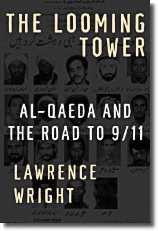
An earlier post included part of an excerpt from Lawrence Wright's new book, The Looming Tower: Al-Qaeda and the Road to 9/11. That excerpt drew from the part of the book which discussed the intellectual inspiration provided to al-Qaeda by an Egpytian writer and educator named Sayyid Qutb.

Ideas and inspirations don't exist in a vacuum, of course, and it is important to understand the context in which the movement grew. In Saudi Arabia, one reviewer of Wright's book points out, that context was partly defined by...boredom.

I was an occasional visitor to Saudi Arabia in the 1980s. Its capital, Riyadh, was reminiscent of Houston with mosques and without the charm. A kind of consumerism had gripped the place, but with an Islamic flavour: the women in the shopping malls were mostly covered, and the stores closed for prayers. In shiny new office blocks, young men sat behind empty desks and transmitted an air of profound ennui.

Into this dreary society, made more cynical perhaps by the worldly excesses of many of its leaders, was launched a myth. The myth was of the Arab Afghans, of the doughty fighters from Saudi Arabia and other Arab countries who repelled a superpower in Afghanistan.

Their leader, Osama bin Laden, son of a Saudi construction magnate, was hailed as a legendary figure. In fact, as this brilliant book by Lawrence Wright of The New Yorker makes clear, the Arab Afghans were a sideline in the fighting, occasionally a liability to their Afghan allies and set apart mainly by their obsession with dying.

When the fighters returned, the myth was amplified by the young Saudis who found in their intense religiosity a refuge from daily tedium. In a country of an austere state-sponsored religious puritanism, young men were left with very limited life choices. “Exposed to so few alternative ways of thinking even about Islam, they were trapped in a two-dimensional spiritual world; they could only become more extreme or less so,” he writes.

Click here to read more of this review. As the reviewer (Stephen Fidler) notes, Wright's book is about much more than Qutb's role or even Osama's.

[Another] part of Wright’s book describes the history of the few Americans who recognised early the threat posed by al-Qaeda. It is a story of missed opportunities, of bureaucratic and personal infighting, of orders that made it harder to share information among intelligence and law enforcement agencies. Even if everything had worked perfectly, there is no guarantee that 9/11 would have been thwarted. But Wright’s book reinforces the sense that, had things been different, it could have been.

The tragedy is epitomised in the life and death of John O’Neill, the FBI executive described here as “an adulterer, a philanderer, a liar, an egotist and a materialist”, but whose ultimately fruitless battle against al-Qaeda came to dominate his life. Retired from the bureau, disillusioned and seeking his own form of spiritual solace, he died when the Twin Towers collapsed on September 11.

--Marshal Zeringue

Chuck Palahniuk's latest top 10 favorite books

Can't get enough of Chuck Palahniuk?

Click here for a list of Palahniuk's latest top 10 favorite books from Blackbook magazine.

Two titles from the list:
Death In Yellowstone by Lee Whittlesey and The Brutal Language Of Love by Alicia Erian
Brian McCombie covered Death in Yellowstone for Booklist:
Whittlesey believes that far too many people enter our national parks with "a false sense of security." He then goes on to chronicle the deaths in Yellowstone National Park of more than 250 people. Most of the deaths, Whittlesey argues, occurred because of human mistakes and "negligence." In this sense, the book is meant to teach and warn about the many dangers that exist in Yellowstone itself, and wild areas in general. The catalog of deaths includes all manner of dying at the hands of nature (hot springs, bears, bison, avalanches, exposure, and forest fires top the list), as well as deaths strictly caused by human actions (murders, suicides, carbon monoxide poisoning, car and plane accidents, and so forth). A little morbid, but strangely fascinating.
About The Brutal Language Of Love, from the publisher:
From the first sentences of these nine stunning stories, Alicia Erian has you firmly in her grasp. In “Alcatraz” we meet a middle-school spelling champion who spends her afternoons taking baths with the boy next door. In “Almonds and Cherries,” a young woman turns an unexpectedly arousing bra-shopping experience into a short film, with ramifications for everyone around her. In “Lass,” a new wife with a history of bad decisions finds herself powerfully drawn to another man—her father-in-law.

Alicia Erian explores that peculiar part of the psyche and the complications of the heart that make you do things when you know better. The powerful, unsettling, deeply resonant stories in The Brutal Language of Love mark the emergence of a major new talent.
Click here to read an excerpt from the collection, and click here for a Q & A with the author.

--Marshal Zeringue

The greatest letter-writer in English

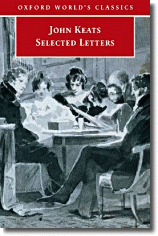
"If I had to nominate someone as the greatest letter-writer in English--I would rather not, since the choice is so wide, but if I had to--my vote would go to John Keats," writes John Gross, a former editor of the Times Literary Supplement and the author of The Rise and Fall of the Man of Letters.
His letters are superb literature in their own right. The most famous of them are closely related to his poetry. You can watch him teasing out what it means to be a poet and coming up with memorable formulations. But his intuitions go beyond art. They bear on life, too, on his vision of the world as "a vale of soul-making." And if that makes him sound unduly solemn, one should add that his insights are embedded in the soil of everyday existence. Given his illness and his early death, the letters can hardly help being ultimately tragic, but they are also remarkable for warmth, openness and spirited observation. They are cheerful as well as profound.
Gross nominates four other great letter writers from history; click here to see who he came up with.

A selection of Keats' letters is available online here.

A brief profile of Keats, available here, includes this nugget:
Keats was only just over five feet tall, and very sensitive about his stature. Upon reading a favourable review of arch-rival Lord Byron's work, he is said to have exclaimed: "You see what it is to be six foot tall and a Lord!"
--Marshal Zeringue
Friday, September 01, 2006

"Vampires are the imaginary numbers of modern literature"

The screenwriter-director John August runs a pretty interesting blog which offers, as he puts it, "a ton of useful information about screenwriting."

Using a casual review of Barry Mazur’s book, Imagining Numbers--it's "only okay"--as his take-off point, August riffs on how vampires are the imaginary numbers of modern literature:

Neither vampires nor imaginary numbers exist, yet we treat them like they do, simply because it suits our purposes. Imaginary numbers let us posit hypothetical mathematical scenarios; vampires let us imagine hypothetical human scenarios. Want an addiction analogy? Vampires. Epidemic? Vampires. Alienation? Vampires. Need to have your protagonist exist both now and two hundred years in the past? Just make him a vampire.

Modern literature has substituted vampires into every conceivable genre. And I don’t think it’s any accident that our bitey friends have become the go-to supernatural beings. Werewolves are only part-time monsters. Ghosts lack a consistent mythology. Vampires, well, they’re just like us.

But different. They’re imaginary numbers, who can’t be reduced beyond their glamorous other-ness.

There's more here.

Aside from his actual movies, perhaps John's greatest contribution to contemporary storytelling is to get a long list of scribblers (see #113) to commit to never having one of their characters crawl through an air vent.

--Marshal Zeringue

"Even the longest novel has to begin with a single line"

"Even the longest novel has to begin with a single line," writes John Sutherland, "and that line sets the narrative on the path to its destination."

The prospective reader has, then, a number of initial "encounters" with the novel before reading it. Reviews and word of mouth may form a distant introduction. The first sight of the cover and the title, a quick-read scan of the blurb and shoutlines on the jacket form another. But the first "close" encounter will be the first line of the text. This is the moment of coupling. The following are two of the more famous first lines, or sentences, in fiction: they are much quoted and will be found in all self-respecting anthologies of quotation as stand-alone statements about the human condition.

"All happy families are alike. All unhappy families are unhappy in their own way."

"It is a truth universally acknowledged, that a single man in possession of a good fortune must be in want of a wife."

The first is from Tolstoy's Anna Karenina, the second from Jane Austen's Pride and Prejudice. Neither assertion is at all plausible, outside the socially artificial world which the novelist has created and into which the sentences usher us. They are, in more than one sense, fictional. It is not, even in the little world of Longbourn, true that every single man in possession of a fortune, etc, must be in search of a wife. Bingley may be; Darcy certainly is not. He seems, if anything, to be infused with misogynistic Byronism. What is his first comment on Miss Bennet at the Meryton ball? "She is tolerable; but not handsome enough to tempt me; and I am in no humour at present to give consequence to young ladies who are slighted by other men." (Swine.) These are scarcely the words of a man with a fortune in search of a wife. They indicate, rather, a rich man well aware that the mothers of England are stalking him. What the apparently universal truth at the opening of the novel lays down are the distorted parameters within which a free spirit like Elizabeth Bennet is obliged to operate - and a wholly mercenary spirit like Mrs Bennet is all too happy to operate.

So, too, with the Tolstoy. It is manifestly not true that there is only one kind of family happiness. Is the happiness of the Vicar of Wakefield's domestic circle the same as that tentative happiness reached by the hero and heroine at the conclusion of Ian McEwan's 1997 novel Enduring Love? What Tolstoy's pseudo-pontifical "truism" sets up is the large question hovering over the life choices that Anna makes. Would she have been happier had she accepted her bourgeois, limited existence and the compromised happiness it guaranteed? Or is she justified in yearning, and reaching for, something larger, with all the attendant risks? Would it really have been a happy ever-after had she never returned to Moscow and Vronsky? Had she, that is, embraced the destiny of a respectable wife and mother? Is not "happy family", in Tolstoy's world, as created in Anna Karenina, a contradiction in terms? Within the novels these over-arching statements - which echo, more or less ironically, until the last page - create a climate, or rule of life, within which the narrative operates. They put the reader on the track. They are not, to echo Austen, universal truths.

Click here to read the rest of Sutherland's ruminations on first lines, including another famous first sentence: "Call me Ishmael."

--Marshal Zeringue

Indie bookstores

What's going on with the fortunes of independent bookstores? I noticed seemingly conflicting reports on the sector--particularly in Chicago--on two Chicago-based blogs this week.

Wednesday, Pete Lit eulogized the soon-to-be shuttered Brent Books here.

Then yesterday, at The Outfit, Sara Paretsky remarked on various indications of vitality in the business.

These reports aren't necessarily contradictory: Pete points out that Brent Books was not adequately serving those who wanted to shop there, while Sara indicates that her favored indies are more energetic and attentive.

Still, the contrast caught my eye.

--Marshal Zeringue
Six books on pilot pioneers

Midge Gillies recently named six top books on pilot pioneers. Here is half of her list:
Lindbergh by A. Scott Berg
A thrilling biography of the all-American hero whose life was marred by his son’s kidnapping.

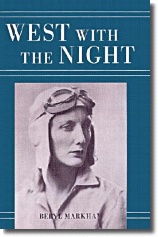
West With the Night by Beryl Markham
Lyrical evocation of flying over Africa and alone across the Atlantic.

The Wild Blue Yonder: The Picador Book of Aviation, ed. Graham Coster
A wide-ranging anthology that includes Alcock and Brown’s daredevil Atlantic crossing.
Click here to see the other three titles to make Gillies's list.

Midge Gillies is the author of Amy Johnson: Queen of the Air.

Want to know more about Amy Johnson but aren't really interested in reading Gillies's book? Click here to read John Preston's admiring review of the book.

--Marshal Zeringue