Tuesday, August 15, 2006

Of related interest

A few items of related interest to recent blog posts:
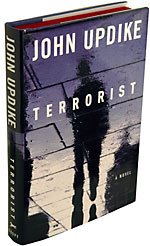
  • In this post I speculated that the teenaged titular character of John Updike's Terrorist runs into trouble because he seeks a connection with his long-disappeared father, who he idealizes as he idealizes Islam, when he should focus his search for identity on his mother, a good provider with a quasi-bohemian spirit, who I think Updike created as a proxy for America (or modernity). I also argued that the teenager's quest is exploited by a few killers to further their goals of mass murder, and that had the teenager just a year or two more to learn to see the world clearly, he would avoid trouble. While I was writing about a story, this article by Dahlia Lithwick at Slate explores some related issues in the real world of politics and the law.
  • The novelist and law professor Alafair Burke recommended Kermit Roosevelt's In the Shadow of the Law for our series on what's at stake in the debate over habeas corpus. Now, law professor Tung Yin, who won a contest related to that series, has a review of In the Shadow of the Law on his blog. His bottom line: "Roosevelt's novel is far more realistic than many legal novels, but in the end it is a novel and that's how it should be judged--a very good novel about people who happen to be lawyers."
  • A recent post pointed to John Updike's New Yorker review of Wizard of the Crow by Ngugi wa' Thiong'o. This item in the Independent discusses the heartbreaking path Wa Thiong'o has followed to survive and finally see his book published.

--Marshal Zeringue

The Man Booker longlist

The Guardian posted the longlist for the 2006 Man Booker prize last night. Click here to see who made it--and who didn't.

Punters' angle:

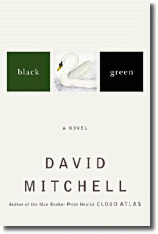
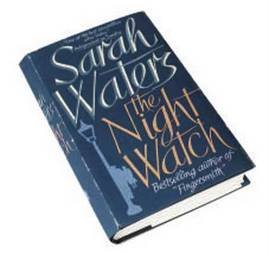
[Bookies] William Hill made David Mitchell 5/1 favourite for Black Swan Green, [Peter] Carey second for Theft: a Love Story, and Sarah Waters third for The Night Watch at 7/1.

Odds of 8/1 were quoted on Barry Unsworth and 10/1 for Jacobson.

Waterstone's fiction buyer Rodney Troubridge told the Guardian: "It's wonderful to see one of our funniest, most acerbic writers, Howard Jacobson, get listed. The booksellers' favourite will be David Mitchell. The public's favourite will be Sarah Waters."

Yesterday on the blog: The Man Booker Prize matters because it’s so unfair

--Marshal Zeringue

Monday, August 14, 2006

The most shoplifted novelist in New York

"[Paul] Auster's 11 novels, three screenplays and three autobiographies have made him the literary godfather of Brooklyn," writes Craig Offman, who sat down for lunch with Auster last year.

Offman also claims that Auster's "literature has already achieved one crucial measure of popularity: along with William S. Burroughs and Charles Bukowski, he is reportedly the most shoplifted novelist in New York."

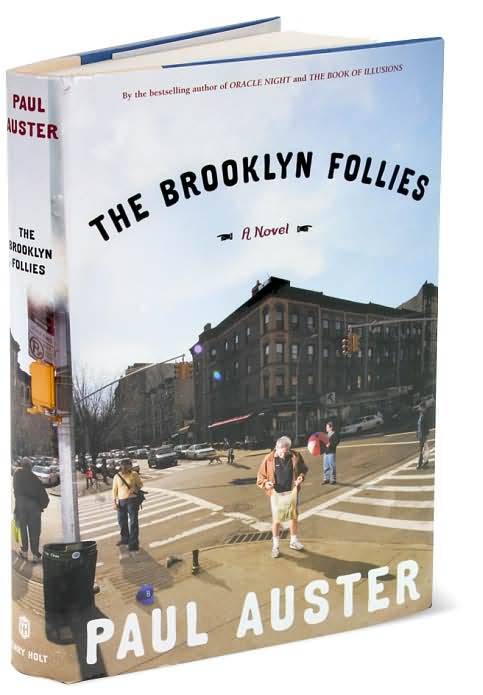
Since Offman's interview, Auster has published The Brooklyn Follies.

Click here to read more about: Auster's not-so-hot opinion of Borges; his friends Peter Carey and Salman Rushdie; his take on his wife's novel ("a masterpiece"); his son, who in 1998 pleaded guilty to lifting $3,000 from the body of a dead drug dealer in a nightclub; and his advice on making a movie ("You just have to keep your movie as inexpensive as possible.").

Phillip Lopate's literary guide to Brooklyn does not mention Auster but Cary Federman's take on The Great New York City Novel does.

The philosopher Colin McGinn, ruminating on Auster's Timbuktu, suggests we might think about the good life differently if we considered it from the point of view of a dog.

--Marshal Zeringue

A literary guide to West Texas

James Hynes, author of Kings of Infinite Space and The Lecturer's Tale, elaborated on his favorite Texas books for Salon.

Larry McMurtry and Cormac McCarthy get passing, grudging mentions before Hynes gets to his real enthusiasms, including:
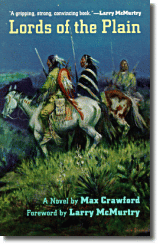
Max Crawford's magnificent 1985 novel of the Comanche Wars, Lords of the Plain. Narrated by a liberal-minded cavalry officer in a pitch-perfect imitation of plainspoken 19th century American prose (think Francis Parkman), this may be the most culturally and politically astute novel ever written about the Indian Wars. It's a thrilling, tragic story, full of adventure and vivid characterizations, but what's best about it is its unforgettable evocation of the llano estacado, or "staked plain," the huge, featureless plateau that takes up much of the Texas Panhandle, and of the gorgeous caprock canyons at its eastern edge, such as Palo Duro and Blanco canyons. Indeed, now that the city of Lubbock sits spang dab (as we say in Texas) in the middle of the llano, the book's long and loving descriptions are probably more beautiful than the llano itself is today.
Hynes then looks south to oil country, the milieu of "pulp genius, Jim Thompson." Hynes mentions Thompson's memoirs and his best-known novel, The Killer Inside Me (1952), though it finds it more than a little freaky.
Much less creepy, but still gritty and emotionally blunt and often violent, is Thompson's South of Heaven (1967), based loosely on his experiences working on a natural gas pipeline in the 1920s. Unusually for a Thompson novel, the narrator, Tommy Burwell, is no psychopath, but an ordinarily decent if headstrong young man; the novel also features a plucky heroine, some nasty bad guys, and 600 rowdy hobos, desperate for work. What's best about the novel is Thompson's sharp, working-man's evocation of the hard, dangerous labor of laying pipe. His descriptions of working with dynamite, jackhammers and something called a mormon board are nearly as powerful as anything in Orwell--in fact, minus the novel's rickety plot about a payroll heist, this book might even have been called Down and Out in Midland and Odessa.
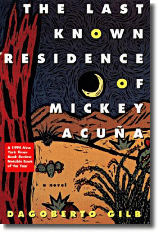
Finally, Hynes praises Dagoberto Gilb's 2003 book of essays, Gritos, and first novel, The Last Known Residence of Mickey Acuña (1994). In this noir-inflected novel,
the title character, an unemployed Chicano, washes up in the El Paso YMCA. Here he waits for an important letter and bounces entertainingly off a large, colorful cast of burnouts, no-hopers and never-wuzzers. There's something of Beckett about the book, if you can imagine a combative, horny, smart-mouthed Beckett who sometimes writes in Spanglish and can be flat-out hilarious.
Gritos is
Gilb's version of West Texas, with its tension between the city and the desert, and between his working-class Chicano roots and middle-class literary success, is more up-to-date than McMurtry's. Gilb won't let you forget that before it was its own country, Texas was part of Mexico, and he's a master of the sharp political crack, calling El Paso "the Chicano Ellis Island" and pointing out that Anglos are in the "vast minority" there. It's a prickly, sometimes infuriating book, but there's no gainsaying Gilb's ferocious honesty, especially on the centrality of Mexicans to the story of Texas, and likewise on the subject of who gets to decide who's a Texas writer--or an American one, for that matter.

To read the entire Hynes essay, click here.

Bryan Curtis made his case for The Great Texas Novel here; Don Graham, an authority on Texas literature at the University of Texas, argued for some other novels here.

The Dallas Morning News suggested ten Texas titles to watch for this summer; click here to read about those books.

Click here to read an earlier post on a literary guide to Miami and click here for a literary guide to Brooklyn. Click here for a literary guide to Togo.

--Marshal Zeringue

The Man Booker Prize matters because it’s so unfair

The longlist for the Man Booker Prize should be announced today. To mark the occasion in the (London) Times, former Booker judge Michael Holroyd recalled some of his conflicts with the founder of the prize.

Holroyd contends that the first big leap in getting the book-reading public to care about the Booker Prize was the result of
provocative speeches made by its winners, who criticised Booker for its business ethics. When John Berger’s G won in 1972, he handed half his prize to the Black Panthers and attacked Booker for “sweating blacks” in the West Indies.
Holroyd would later urge Michael Caine, the chairman of Booker McConnell and sponsor of the prize, to award the losers on the shortlist a modest monetary prize. Holroyd tried to appeal to Caine's sense of justice and even implied he was miserly. Caine didn't buy it.
"Do you know, Michael,” he asked, “why the Booker Prize is so successful?” I murmured something about its similarity to the Prix Goncourt in France, but he raised his hand and silenced me. “They love it,” he said, “because it’s so unfair!”
If only more American readers and writers cared so much about, say, the Pulitzer Prize to worry about whether it was unfair.

Click here to read the full Holroyd article.

Last year's winner of the Man Booker Prize was The Sea by John Banville.

Other Booker-related posts on the blog include:
Martyn Goff, the (now-retired) administrator of the Booker Prize since 1969, thought the 1980 prize went to the wrong nominee.

An Australian academic thought that the judges usually got it right.

Australia's preeminent Booker-watcher, Perry Middlemiss, wrote up a very smart argument for why Kingsley Amis was probably the worst choice for the prize in 1986.
A few days ago Middlemiss was bold enough to predict which titles would make the Man Booker shortlist. Click here to see what he came up with.

Michael Holroyd was mentioned recently on the blog: I disagreed with his opinion on which writer, Shaw or Shakespeare, would be more useful in the post 9/11 world. Click here to read more about the question.

--Marshal Zeringue

Günter Grass shocks Germany

German Nobel Prize-winning author Günter Grass has admitted that he was a member of the Nazi Waffen-SS during World War II.

The London Times has a lengthy treatment of the news here.

For a sense of how the news is playing out in Germany, click here for a helpful round-up of commentator opinion at signandsight.

--Marshal Zeringue

Sunday, August 13, 2006

Five firsthand accounts of World War II

Stanley Weintraub, author of the forthcoming Eleven Days in December: Christmas at the Bulge, 1944, shared with Opinion Journal his list of the five best personal accounts of the Second World War.

I've read only one of his picks; it's a slender book that everyone should read:

Hiroshima by John Hersey (Knopf, 1946)

Based on interviews with six atomic-bomb survivors, Hiroshima relates, with passionate dispassion, their experiences on the morning of the blast and its grim aftermath. (The account was first published in August 1946, when it filled an entire issue of the New Yorker.) Hersey offers no personal conclusions--he lets the victims do that, and their thoughts range from pain and anger and indifference to a concession that the Bomb "ended the bloodshed." Immensely moving in its flat tone, which belies its immediacy, Hiroshima may be the most unforgettable work of journalism in the 20th century.

Another title Weintraub recommends:

Baa Baa Black Sheep by Gregory Boyington (Putnam, 1958)

Marine Fighting Squadron 214 was known as the "Black Sheep" because it had been cobbled together from replacement pilots by the pugnacious Gregory "Pappy" Boyington. The rag-tag but deadly squadron lost its colorful leader--a drinker and brawler on the ground, an ace in the air--when Boyington was shot down in early 1944 in the South Pacific. Captured by the Japanese and badly injured, he somehow survived 20 months of prison-camp brutality. For a decade after the war, the Medal of Honor winner lived on beer, bombast and brag. But then he produced Baa Baa Black Sheep. Based on records of his missions, embellished and cocky in some places, ruefully self-deprecating in others, the book tells a story that might not be as it really was but is as it should have been.

Click here to read Weintraub's other three picks.

Other war-related posts here on the blog include:
Robert Stone's choice of great contemporary war novels
James Webb's favorite books on the military
Michael O'Hanlon's review of Thomas Rick's Fiasco
Five top books on Gettysburg
Books on 20th century wars

--Marshal Zeringue

Martin Peretz's latest valentine to Al Gore

Martin Peretz, co-owner and editor-in-chief of The New Republic, has long promoted the notion that Al Gore, a former student of Peretz's at Harvard in the 1960s, would make a great president. Peretz first endorsed Gore in the 1988 Democratic primaries when Gore challenged Dukakis.

The most recent installment in this long campaign is a brief item by Peretz on TNR's blog: click here to read it. (Click here for a more elaborate version of the argument.)

Peretz implies that the brisk sales of Gore's latest book, An Inconvenient Truth, mean that the former vice-president might enjoy wide electoral support.

He may be correct.

Last month I posted an item about the film version of An Inconvenient Truth here.

Click here for Peretz's TNR biography.

Are you struck by the odd coincidence of the letters in "Marty Peretz" and the "Meretz Party?" So was I, and I got Emily Yoffe of Slate interested in explaining the relationship. Click here to see what she came up with.

--Marshal Zeringue

Saturday, August 12, 2006

Proust vs the 19th century realists

I came across this wonderful passage in Arnold Weinstein's Recovering Your Story: Proust, Joyce, Woolf, Faulkner, Morrison. Weinstein, a literature professor at Brown University, explains the divide between Proust and the great realist novels of the nineteenth century so clearly that I thought it worth posting here. The passage is a little lengthy for a blog post, but it's worth your attention:

Consider, for a moment, what the great novels of the nineteenth century offer us: a form of historical portraiture. Balzac chronicles the "new" capitalist order in his Le Père Goriot of 1835, in which
the traditional allegiances of family and love are brutally torn asunder by the cash nexus. Dickens gives us his version of the same story in book after book, perhaps never more perfectly than in the adventures and misadventures of Pip in Great Expectations. Of course, such novels have memorable characters, but their mission seems to be one of social illumination, to reveal to a hungry and curious readership the real workings of their contemporary society. Stendhal's accounts of post-Napoleonic France map out with great acuity the new political horizons. Tolstoy tackles nothing less than the great Napoleonic wars themselves, in his saga War and Peace, in which individual subject, family, gesture, and fate are inscribed in the convulsions of Europe at war, of Russia under siege. These are all large-souled enterprises, bent on delivering a new kind of map, one that registers the tremors produced (in people and in societies) by changing values, by political upheaval, by social unrest. Readers flocked to these stories, which often appeared in serial form, in order better to grasp their own conditions. The novel was in its prime; you read this "walking mirror" to gauge your own circumstances by understanding the world around you.

Fast-forward to 1912, when Proust publishes Swann's Way (Du Côté de chez Swann): "What is going on here?" The rules of the game have changed, and the result is a complex, convoluted narrative whose bottom seems to have dropped out. "Where's the beef?" one might legitimately ask. What, where is the story? Capitalism, Napoleon, London and Paris and St. Petersburg have gone up in smoke. Stendhal's moving mirror is still there, but the depiction of society--Realism's central agenda--no longer matters, has disappeared from the page. In its stead, one encounters . . . a piece of pastry [la madeleine] dipped in tea. Many readers in 1912, and many readers since 1912, have thought that Proust's book was absurdly narrow in its charge, too limited in its focus, locked into the thoughts and sensations of one (neurotic) figure, and hence locked out of fiction's supposed goal: to paint a picture of the world we live in.

Of course, Proust is doing exactly that, but in new ways: painting the world we live in. But that world is the self. Here is indeed the brave new world. Proust's mission, far from being narrow or solipsistic, is to show you that the self is a world, is the world we live in, the world we can never get out of, and-most provocatively of all-it is the world we do not know, the world we can live in and die in without ever knowing.

This passage is from a more extensive excerpt you can read here; and if you're looking for a spur to finally digging into Proust's massive novel, it's right near the beginning.

A short profile in the Guardian notes that Proust "draws mixed responses:"
Henry James characterised reading Proust as "inconceivable boredom associated with the most extreme ecstasy which it is possible to imagine"; Joseph Conrad bluntly saw "no emotion" in it, while Virginia Woolf had a momentary fear that Proust had achieved all that was possible in the novel. He did meet Joyce, in difficulty and length as well as style perhaps his true successor, but rather than swapping tips on sentence structure each simply moaned about his respective health.
Arnold Weinstein clearly remembers the first time he read James Joyce's acclaimed novel, Ulysses. "I thought it was gibberish. I read 100 pages and put it down. It was unthinkable that anyone could possibly make sense of it." Of course, that opinion changed.

--Marshal Zeringue

Friday, August 11, 2006

The downside of pyrokinetic powers

It must be cool to be able to light a cigarette from across the room. Then again, it's got to be a drag to think about your smouldering glances literally lighting up your lust object.

Earlier this year Hanna Kite wrote in TIME Asia Magazine about a popular Japanese novel that's going on my "to read" list.

Last year, a newspaper deliveryman in Japan was brought to trial for killing a seven-year-old girl. After drowning his victim, he used her cell phone to take a digital photo of the body and to send the image to her mother with a text message saying, "I've got your daughter." In a country where truth is often weirder and more gruesome than fiction, few writers can compete with the stories on the evening news. The chilling exception is Miyuki Miyabe, one of Japan's most popular authors. In Crossfire, her third novel to be translated into English, Miyabe's heroine, Junko, sets out on a killing spree through the suburbs of Tokyo to avenge a young couple's death. Junko has pyrokinetic powers—she incinerates her enemies by releasing a burst of energy that turns them into piles of ash. The story of Junko's quest for justice—and her ethical qualms about the bystanders killed along the way—is interwoven with the tale of the investigation by arson detective Chikako Ishizu.

Miyabe doesn't hide her literary inspirations. When the investigator tells a colleague of the horrors she's seen, he responds, "This isn't a Stephen King novel. Would you lay off?" Like King, Miyabe grounds her paranormal happenings in the nitty-gritty details and constraints of the real world. Junko can light a cigarette from across the room using willpower, but she also waitresses at a local café to pay her rent.

Read the rest of the review here.

--Marshal Zeringue

"Men in Black"

Do you ever consider the possibility that the color of a character's clothes in a novel bears some significance?

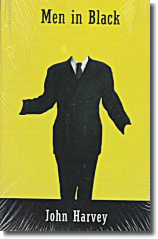
I’ve been skimming around a scholarly book titled Men in Black, by University of Cambridge English professor John Harvey, which will make me pay closer attention to that question.

I’m not really recommending the book—there’s enough nonfiction in our daily lives, and I think you would more wisely spend your reading time with one of this John Harvey’s “Charlie Resnick” procedurals—but there are some interesting bits in the book.

“Men’s clothes went black in the nineteenth,” reads the flyleaf: “Dickens, Ruskin, Baudelaire all asked why it was, in an age of supreme wealth and power, that men wanted to dress as if going to a funeral.” A couple of hundred pages later, Harvey suggests an answer:

[O]ne may say that if there is a dominant meaning in the widespread use of black, that meaning is associated at once with intensity and with effacement: with importance, and with the putting on of impersonality. Alone or in ranks, the man in black is the agent of a serious power; and of a power claimed over women and the feminine. Black may be a shadow fallen on the feminine part of man. The ultimate allusion of black is to death, and in the high-black periods, the power the men in black have served has been dead- or death-serious both at home and in the state…. [Yet] in spite of the “dark” values black has often had, one would no more want it cut out of clothing than one would want people to have no weight or no shadow. Which is as well for the many people who, without being ascetic or power-assertive or spiritual, happen still to look best in black, having in themselves a colour, an intensity, a light.
By the way, the Barry Sonnenfeld-directed movie Men in Black followed Harvey's book by a couple of years, and I expect Professor Harvey would like to think of it as confirmation of his thesis.

Consider some black clothes from literary history:

Although Stendhal’s The Red and the Black (1830) anticipates the large-scale adoption of black fashion in Europe by some years, in addition to the titular black of the powerful clergy Julian Sorel wears the seminarian’s black suit (though Harvey points out, Julian has his “suppressed vivacity.”)

In Madame Bovary (1856), Emma dreams of an imaginary “husband dressed in a black velvet coat with long tails,” and later takes a lover who she “wanted…to dress all in black, and grow a pointed beard, to look like the portraits of Louis XIII.”

The significance of black clothes in literary history is obvious at least as early as Hamlet (1600?). From Act 1, Scene II:
'Tis not alone my inky cloak, good mother,
Nor customary suits of solemn black…
That can denote me truly…
… I have that within which passeth show;
These but the trappings and the suits of woe.
A few centuries later Dickens makes extensive use of black. From his—bleak yet humorous-- description of Pip’s sister’s funeral in Great Expectations, Chapter 35:

At last I came within sight of the house, and saw that Trabb and Co. had put in a funereal execution and taken possession. Two dismally absurd persons, each ostentatiously exhibiting a crutch done up in a black bandage--as if that instrument could possibly communicate any comfort to anybody--were posted at the front door….
Then later:

The remains of my poor sister had been brought round by the kitchen door, and, it being a point of Undertaking ceremony that the six bearers must be stifled and blinded under a horrible black velvet housing with a white border, the whole looked like a blind monster with twelve human legs, shuffling and blundering along, under the guidance of two keepers….
Harvey even delineates at some length the significance of black clothes in Kafka. And there are many, many more instances from literary history to support his thesis.

Closer to our own time, Harvey reminds us of a slice of dialogue from Quentin Tarantino’s Reservoir Dogs:

MR. PINK
Why can’t we pick out our own color?

JOE
I tried that once, it don’t work. You get four guys fighting over who’s gonna be Mr. Black.

There is a great deal more in the book; so much more, in fact--as Michiko Kakutani points out in her review of the book here--that the "problem with writing this sort of book [is] the subject can become a metaphor for just about anything and everything that crosses the author's line of vision."

Which happened to me as I read Harvey on Mr. Jaggers in Great Expectations. As a lawyer, Jaggers would be expected to wear black, and Pip recognizes him by "his dark complexion, his deep-set eyes, his bushy black eyebrows, his large watch-chain, his strong black dots of beard and whisker...."

Jaggers? Black? I could not help but think of that fine lyricist Sir Michael Jagger who, with Keith Richards, wrote Paint It Black (1966).

But Harvey does not usually overshoot his thesis or oversell his evidence.

Bonus note on color in literature: if you happen to read Zamyatin’s We--and I recommend that you do--look for the many uses of yellow; it signifies sex.

--Marshal Zeringue

The 100 Favorite Mysteries of the 20th Century

Some time ago members of the Independent Mystery Booksellers Association's online discussion group tried to come up with the 100 favorite mysteries of the 20th century. They spent nearly two months considering and debating hundreds of titles recommended by mystery booksellers throughout the country.

Click here to see what they came up with.

(To spread the recognition and allow more titles to make the list, they chose only one book per author.)

My first reaction was one of dismay: I've read only about a quarter of the titles listed.

But there's a sunny side to that fact: I now have a handy list of about seventy-five novels to work on.

--Marshal Zeringue

Thursday, August 10, 2006

"Terrorist"

John Updike's Terrorist is different from his previous twenty-plus novels: unusual for the author, plot rivals style in this novel and it reads much like a thriller.

In my inaugural post at Spot-on.com I develop a few ideas about the novel and its place among Updike's work.

My major point is that while Updike doesn't shy away from the role of religion in the making of the eponymous terrorist, this novel is really about America--or, to put it more broadly, the clash of modernity with the idea of purity in religious fundamentalism.

I also offer a conjecture about what Updike had in mind in naming his protagonist.

Click here to read the essay.

And while you're at Spot-on.com, click around and read the pieces about politics and current events offered by the site's various contributors.

Chris Nolan, Spot-on's founding editor, shared her enthusiasm for a modern classic here.

Deborah Klosky, who writes for Spot-on from Spain, came up with some suggestions for the series on what's at stake in the debate over habeas corpus which will appear here on the site in a few days.

The novelist Michael Cunningham recently made a case that Updike may be our greatest living novelist; see here for that argument.

John Updike or Tom Wolfe? Click here for my take.

--Marshal Zeringue
"Howl" ... fifty years later

After Allen Ginsberg’s reading of “Howl” on October 6, 1955 at the Six Gallery in San Francisco, Lawrence Ferlinghetti sent him a note, repeating Emerson’s message to Whitman upon reading Leaves of Grass: “I greet you at the beginning of a great career.” But Ferlinghetti added a line: “When do I get the manuscript?”

--from "A History of Howl" at the City Lights website

Ferlinghetti got the manuscript and in 1956 published the first edition of Howl and Other Poems.

James Sullivan, whose Boston Globe review of The Poem That Changed America: "Howl" Fifty Years Later, edited by Jason Shinder, appears here, wrote:

Fifty years later, the Beat Generation's most famous poem--arguably the most influential poem of any kind of the 20th century--has, like its late creator, come to represent a quaint notion of social-outsider status, an ecstatic, overly earnest, easily parodied celebration of self-destructive youth.

Or has it?

The Poem That Changed America goes a long way toward answering what "Howl" meant and what it has come to mean, with essays by Rick Moody ("On the Granite Steps of the Madhouse with Shaven Heads"), Sven Birkerts ("Not Then, Not Now"), Billy Collins ("My 'Howl'"), Phillip Lopate ("'Howl' and Me"), Marge Piercy ("The Best Bones for Soup Have Meat on Them"), Robert Pinsky ("No Picnic"), and many more.

Greil Marcus reviewed The Poem That Changed America for the New York Times; click here to read his review.

Ginsberg died in 1997; click here to read his New York Times obituary.

Ferlinghetti had the foresight to contact the ACLU before publishing "Howl," correctly anticipating it might be censored. As part of ACLU Banned Books Week 2001, he discussed the publication of the book and the ensuing obscenity trial. Click here to listen to his remarks.

--Marshal Zeringue

Wednesday, August 09, 2006

"The Bullet Trick"

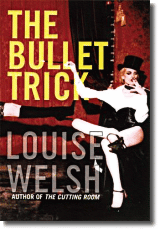
Last month I shared my enthusiasm for Louise Welsh's literary crime fiction.

The Scotsman has since weighed in on the Glaswegian writer.

Click here to go to a short item on January Magazine's "The Rap Sheet" blog. There you'll find links to the profile in The Scotsman as well to an "exclusive" excerpt from Welsh's new novel, The Bullet Trick.

(Note: "The Rap Sheet" link to January's short-but-sweet review of Welsh's first novel brought me to the The Scotsman profile; if that's not been corrected, try this link instead.)

--Marshal Zeringue

An 1861 review of "Great Expectations"

Of the Dickens I've read--which is not even most of his work--Great Expectations is far and away my favorite. There is an interesting review of the novel, from the year of its original publication, in the Atlantic Monthly.

Click here to read the entire 1861 review.

Here's a taste:
We have read it, as we have read all Mr. Dickens's previous works, as it appeared in installments, and can testify to the felicity with which expectation was excited and prolonged, and to the series of surprises which accompanied the unfolding of the plot of the story. In no other of his romances has the author succeeded so perfectly in at once stimulating and baffling the curiosity of his readers. He stirred the dullest minds to guess the secret of his mystery; but, so far as we have learned, the guesses of his most intellectual readers have been almost as wide of the mark as those of the least apprehensive. It has been all the more provoking to the former class, that each surprise was the result of art, and not of trick; for a rapid review of previous chapters has shown that the materials of a strictly logical development of the story were freely given. Even after the first, second, third, and even fourth of these surprises gave their pleasing electric shocks to intelligent curiosity, the denouement was still hidden, though confidentially foretold. The plot of the romance is therefore universally admitted to be the best that Dickens has ever invented. Its leading events are, as we read the story consecutively, artistically necessary, yet, at the same time, the processes are artistically concealed. We follow the movement of a logic of passion and character, the real premises of which we detect only when we are startled by the conclusions.
For a (much) more recent and briefer--though no less ardent--review, click here for Elizabeth McCracken's 1997 appreciation in Salon.

Great Expectations is also the basis for one of my favorite twice-told tales.

David Lean directed a flm version of Great Expectations (1946), which, Roger Ebert approvingly notes,
has been called the greatest of all the Dickens films, and which does what few movies based on great books can do: Creates pictures on the screen that do not clash with the images already existing in our minds. Lean brings Dickens' classic set-pieces to life as if he'd been reading over our shoulder: Pip's encounter with the convict Magwitch in the churchyard, Pip's first meeting with the mad Miss Havisham, and the ghoulish atmosphere in the law offices of Mr. Jaggers, whose walls are decorated with the death masks of clients he has lost to the gallows.
Read Ebert's review here.

I recently watched this film and I think Ebert got it right. What a boon to lazy students who will watch the film instead of reading the book!

Most critics didn't like the 1998 version (starring Ethan Hawke and Gwyneth Paltrow) but I thought it was worth watching. Ebert did, too:
Great Expectations begins as a great movie (I was spellbound by the first 30 minutes) but ends as only a good one, and I think that's because the screenplay, by Mitch Glazer, too closely follows the romantic line. Dickens, who of course had more time and space to move around in, made it the story of a young man's coming of age, and the colorful characters he encountered--from the escaped prisoner of the opening scenes (played here by Robert De Niro) to good old, proud old Joe. The moment this movie declares itself as being mostly about affairs of the heart, it limits its potential.
Read his review here.

Several versions of Great Expectations are available for free online. Click here and follow the links to access them.

--Marshal Zeringue

What was Neil Gaiman reading last fall?

Last fall the Chrisitian Science Monitor checked in with novelist Neil Gaiman about what he was listening to, watching, and reading. About the latter:
I'm three-quarters of the way through the new Gene Wolfe short-story collection, Starwater Strains. I think he's probably the most interesting living American writer. You'll get people like [book reviewer] Michael Dirda at the Washington Post saying exactly the same thing. His short stories are an astonishing mixture of science-fiction, of fantasy, of horror--stories that are good, profound, and dangerous, and you're entirely not sure why. It's a cumulative effect.
Click here for Gaiman's other responses.

--Marshal Zeringue
Tuesday, August 08, 2006

E.L. Doctorow, Homer, and the history of fiction

I have a few blog items on E.L. Doctorow and on Homer in the draft (or idea) stage. Stay tuned.

Meanwhile, for your delectation, click here for a thoughtful essay by Doctorow on the interplay of history and fiction. He makes his point with illustrations from The Iliad, Shakespeare's Richard III, and Tolstoy's War and Peace. It's intelligent stuff.

One note--if the essay inspires you to rush out and read The Iliad, a word of caution: there is a book cover of Lattimore's translation of The Iliad accompanying the essay. There's nothing wrong with that edition, yet I strongly urge you toward the more-lively-while-no-less-respected Fagles translation.

Here's an example, drawn from a scholarly review (which takes note of the Fitzgerald translation, too), of what I mean:
There is no question that Fagles' speeded-up, pared-down idiom is appealing to a contemporary ear. After Fagles, Lattimore sounds leaden and stilted (although still providing the most exact guide to the literal Greek), Fitzgerald a bit too fussy and self-consciously poetic. For a quick comparison of the three, here are their versions of the famous line from Book 3 about the fate of the Dioscuri. First Lattimore, who sticks doggedly to the syntax of the original: "but the teeming earth lay already on them." Fitzgerald strengthens the impact by making the Dioscuri the subject: "But her brothers lay/ motionless in the arms of life-bestowing earth." Fagles' version does the same but achieves the simplicity and directness that for us spell poignancy: "but the earth already held them fast/ long dead in the life-giving earth of Lacedaemon."
--Marshal Zeringue
A thriller is not a mystery is not a crime novel

I often can't figure out which genre many of my books belong in.

The easiest category is usually "literary fiction." Updike, Roth, Ian McEwan, Joyce Carol Oates, et al belong to that club.

But what to do about a novel like Kate Atkinson's Case Histories or Dennis Lehane's Mystic River? These books have mystery or crime plots yet, with their exceptional literary achievement, they defy classification in the conventional mystery or thriller categories.

And do we call John le Carré 's A Perfect Spy, perhaps the best book published in 1986 in any category, (merely) a spy novel?

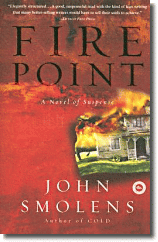
Another example is John Smolens' Fire Point, which I thought of as an excellent "literary thriller" ... except the cover calls it "a novel of suspense."

The call gets even tougher when the book, however terrific the writing, is packaged to appeal to readers who (as my friend Andrew calls it) "read for plot."

Is it a mystery or a thriller? Or is it crime?

I take the easy way out if the story involves a police detective trying to solve a crime: I think of these books as "procedurals" (or policiers, if I'm in the mood to use one of the five French words I know).

Or if the book qualifies as noir--I'm using 40% of my vocabulaire in this one post--I'll leave it at that and not bother to figure if it's a thriller, a mystery, or a crime novel.

The veteran Chicago Tribune book critic Dick Adler tried to help mark some boundaries over at "The Rap Sheet:"
The line between mystery and thriller is certainly a vague one: as I said in my introduction to Dreams of Justice, to my mind, mysteries most often have continuing casts of central characters who reach some solution to the crimes committed by a mixture of rational deduction and inspiration. Thrillers more often deal with larger, single events, occasionally political, and usually end in scenes of violence.
Fair enough.

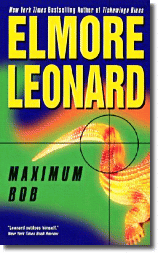
And it's always nice when the author tells you where his books belong. As does the great Elmore Leonard, who says you usually know who did the deed in his books so there is no mystery; he writes crime.

--Marshal Zeringue

Monday, August 07, 2006

A literary guide to Togo

"Togo is the Zembla of West Africa: If it did not exist," Matt Steinglass writes in Salon, "it would have been invented by the author of an absurdist experimental novel, prompting generations of unwary readers to leaf through their atlases in search of the place."

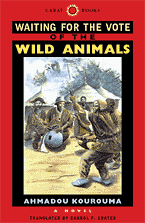
In fact, Togo does exist; but that didn’t stop the great Ivorian novelist Ahmadou Kourouma from inventing it. Kourouma’s brilliant 1998 roman à clef, Waiting for the Vote of the Wild Animals, is a folk-absurdist chronicle of the life of Koyaga, a champion wrestler from a northern hill tribe (as Togo's longtime dictator Eyadéma was) who is recruited into the French army, fights in Vietnam (as Kourouma did), and winds up commanding a clique of disgruntled ex-officers in his country's first coup. He then gradually descends into the familiar dictatorial narrative of gold-plated extravagance and familial intrigue. Koyaga is tutored in the fine arts of torture, repression and opulent state dinners by a panoply of African greats, including Ivory Coast's Houphouët-Boigny, Guinea’s Sékou Touré, Congo's Mobutu, and the Central African Republic's Bokassa. (They appear in clever guises: "The Man whose Totem is the Crocodile," "The Man whose Totem is the Leopard," and so on.)

The novel follows Koyaga's history through the Cold War years of Western-sponsored corruption, and into the '90s, when the old wrestler finds himself lost in a new world of IMF-mandated structural adjustment programs and exiles returning from Europe demanding transparency and decentralization. But its real genius is stylistic: The narrator, Bingo, is Koyaga's griot, a praise-singing storyteller who recites the leader's history over the course of a six-day, five-night banquet. The language, thick with African idiom and oral tradition, throws the postcolonial political narrative into high relief, like Woody Guthrie reciting the life and times of Richard Nixon.

Sounds like excellent stuff. Read the publisher's description of Waiting for the Vote of the Wild Animals here.

And here's another intriguing title from Steinglass:

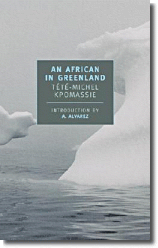
Tété-Michel Kpomassie ... grew up in a typical family of the Mina ethnicity in the 1940s and '50s, herding goats and picking coconuts on a coastal plantation. When a priestess of the local python god demanded that he be apprenticed to her, he fled the country, setting out for a far land he had become obsessed with since discovering a book about it in a missionary bookshop: Greenland. It took him eight years to work his way up through West Africa and Europe, but he made it, and spent two years living among the Inuit, driving a dog sled and hunting seal in a kayak. An African in Greenland, his 1981 account of those years, is one of the more original volumes of amateur anthropology ever written, as well as a ripping good travel yarn. And it's a curious meditation on Africa, Europe, the Arctic, and the tenuous and arbitrary ways in which different cultures regard each other as "savage."
Read the publisher's description of An African in Greenland, along with some snippets of critical praise and an author bio, here.

There are more inviting books--including "a more realistic introduction to Togo, ... the book beloved of every Peace Corps volunteer"--suggested in the article: click here to read it.

Click here to read about Salon's literary guide to Brooklyn and here for its literary guide to Miami.

Click here for a blog item about Wizard of the Crow by Kenya-born Ngugi wa'Thiong'o.

Hazy about the location of the "Zembla" mentioned in the first line above? "Zembla" is derived from the Russian "zemlia," meaning "land." Zembla is the name of a "distant northern land" in Nabokov's novel Pale Fire. It is also the first--and maybe the last--stop on the web for all things Nabokov.

--Marshal Zeringue
Sunday, August 06, 2006

Books coming this fall

While I'm not sure I'm even finished posting lists of summer/beach books (see here, here, here, and here), the Denver Post has already published a fairly extensive list of books to be released this fall.

On that list, one of my favorite L.A. cops:

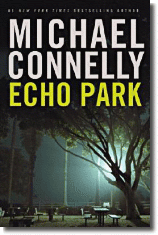
Echo Park, by Michael Connelly (Little, Brown, 384 pages, $26.99)

Good ol' Harry Bosch comes face to face with a killer after reopening one of his own cold cases. (October)

Click here for a description of the book from Michael Connelly's official site.

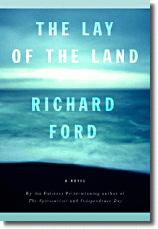
The Lay of the Land, by Richard Ford (Knopf, 448 pages, $26.95)

Continuing with the story of Frank Bascombe--featured in the Pulitzer Prize-winning Independence Day--Ford has the real estate agent contending with his health and marital and family issues. (October)

Click here and here to see what I had to say about this book's predecessors.

Lisey's Story, by Stephen King (Scribner, 528 pages, $28)

A writer's widow tries to sort out his life, including his "dark place" where he went for inspiration and her own. (October)

Click here to see King's favorite books of 2005 and here to read about a thriller he and I both loved.

Moral Disorder, by Margaret Atwood (Doubleday, 304 pages, $24.95)

Here are 10 stories of parents, siblings, children, friends and enemies. (September)

Atwood's The Blind Assassin is one of my favorite novels of recent years; it also made this list of books about maverick women. Her The Handmaid's Tale was the first book that came to mind when I was thinking of novels about life in a theocracy.

One Good Turn, by Kate Atkinson (Little, Brown, 432 pages, $24.99)

When former detective Jackson Brodie--of Case Histories fame--sees an apparent case of road rage, a whole new can of worms is opened. (October)

Click here to see why I so eagerly await this novel.

The Road, by Cormac McCarthy (Knopf, 288 pages, $24)

A man and his young son struggle for survival in a landscape left bleak by some unnamed devastation. Their relationship is the only "good" thing in a world of evil and destruction. (September)

Click here and here for a couple of views of McCarthy's Blood Meridian.

There are quite a few more fiction titles on this list as well as coming nonfiction from John Grisham, Jonathan Franzen, Bill Bryson, Joan Didion, and others. Click here to read the article.

--Marshal Zeringue
Joseph Epstein on a few fine books

Joseph Epstein had an inspired nomination when I asked him about novels about life in a theocracy: click here to see what he came up with.

In 2002 he named a few favorite books for The Week magazine. Among them:

Anna Karenina by Leo Tolstoy

The world’s greatest novel, far and away, tout court. It is the novel the author of Madame Bovary might have written if he had had a more generous heart.

Plutarch: Lives of Noble Grecians and Romans, Volume I

The world’s first, and still best, major biographer—for the excellent reason that, in the figures of the ancient world, he had the richest of all possible subjects. Plutarch’s are studies filled with atrocious behavior, astonishing courage, and much useful moralizing on both by the author.

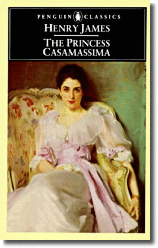
The Princess Casimassima by Henry James

The James novel that shows how wide was his range, and range of sympathies. It is also the book that refutes any claims that this great writer was a snob.

Click here to see the rest of Epstein's list.

To read what Louis Begley thinks of Anna Karenina and Madame Bovary, click here. For this blog's official view of the former, click here.

Epstein's latest book is Friendship: An Exposé.

--Marshal Zeringue
Saturday, August 05, 2006

"Nothing in a novel dates as quickly as the sex scenes."

"Nothing in a novel dates as quickly as the sex scenes," writes Mark Steyn in Macleans.

Exhibit "A" in Steyn's argument is D.H. Lawrence's Lady Chatterley's Lover.

In 1960, 200,000 copies of Lady Chatterley's Lover were sold in Britain on the first day the ban was lifted--in part because of the treasures therein implied by Mervyn Griffith-Jones, prosecuting counsel, in his famous question to the jury: "Is this a book you would wish your wife or servants to read?"
Today, even thirteen-year-old boys could not be tempted by the prosecutor's unintended come-on.

Yet the promiscuity that seems to trouble Steyn more involves not sex but commas. Of course, to interest us in his (justified) punctuation peeve he wraps his complaint around a disagreement about how well Alan Furst writes about sex. Steyn quotes two New York Times reviewers who claim that Furst is especially adept at sex scenes, but then cites an Atlantic Monthly reviewer who argues just the opposite. And Steyn provides a few examples from Furst's novels to support the latter.

Tom Wolfe, Ian Fleming, and Judith Krantz get the treatment, too.

Steyn's article is good clean fun: check it out.

Of course, Steyn and I are probably not helping by perpetuating what is almost certainly a wrongheaded apprehension of Lawrence's Lady Chatterley's Lover. The novelist Doris Lessing, in her fascinating introduction to the new Penguin Classic edition of Lady Chatterley's Lover, suggests that novel, created in the shadow of war as Lawrence was dying of tuberculosis, is a plea for intimacy and one of the most powerful anti-war novels ever written. Click here to read an edited version of Lessing's introduction in The Guardian.

--Marshal Zeringue
Friday, August 04, 2006

Salman Rushdie's "6 March 1989"

On March 6, 1989, Ayatollah Khomeini, the spiritual leader of Iran, issued a fatwa against Salman Rushdie over the "blasphemous" content of his novel, The Satanic Verses. Rushdie issued a poetic response in the Fall 1989 issue of Granta.

Click here to read the (brief) poem.

Did he think at the time he wrote the poem that it would take nine years before the Iranian government lifted the fatwa? Unlikely, I think.

Last year he sat for an interview with Emma Brockes of the Guardian and discussed, among other things, the hangover from living nearly a decade with a death sentence looming over his head.
I [Brockes] tell him that I imagine his hate gland was so stimulated by the experience that it might have been hard to stop hating when it was all over, and he says, "it was the other way, actually. I had a kind of education in hate, because of being the object of it. But I also had an education in the opposite, because what happened in those years was that an enormous number of people really grouped around me to help me get through it. It was extraordinary to be the recipient of that very courageous affection. And what I took away from those years was the affection more than the hostility. I understood that the hostility was capable of damaging me a lot. I didn't want to become some embittered old hack getting his revenge for the rest of my life. And I didn't want to become some scared creature cowering in a corner. I remember telling myself not to carry the hatred around, although I know where it is. I have it in a trunk in storage."
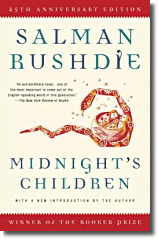
The Satanic Verses caused the greater political stir but most readers consider Midnight's Children to be Rushdie's best book.

--Marshal Zeringue

A philosopher's favorite philosophy books

A good friend of mine who studied under Mary Warnock told me she once mentioned that her (famously dry) husband Geoffrey had to take a personality test before he began his military service...and he failed.

Lady Mary Warnock is a crossbench life peer, moral philosopher, and author of several books on philosophy, including The Intelligent Person's Guide to Ethics and an autobiography, Mary Warnock: A Memoir.

She is obviously a very smart woman with a fine sense of humor; I strongly suspect her late husband had his charms as well.

She shared a list of her favorite philosophy books with the Guardian. The list includes:

The Object of Morality by G.J. Warnock

I make no apology for choosing a book by GJ Warnock, though he was my husband. He was a master of style and clarity, high virtues in philosophical writing. Like Alisdair McIntyre, and like Aristotle, he invites us to look at the nature of that man-made structure, morality, and to contemplate the need we have for it if the world is not to be even more intolerable than it often is. Those who are inclined to deny that morality can exist without a religious foundation should read every word of this book.

And number one on Warnock's list:

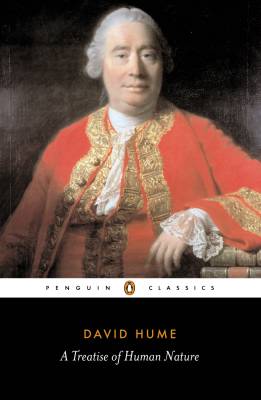
A Treatise on Human Nature by David Hume

If I had to choose just one philosophical book, this would be it. It covers a huge range of continuing philosophical topics: knowledge, perception, imagination, personal identity, causation, emotions, the foundations of morality and justice. Hume is the most endearing of all philosophers as well as the most sceptical. His scepticism covers even his own conclusions but his thoroughly 18th-century down-to-earth good sense permits him to persevere. I would dearly love to have met him.

Click here for a free online copy of Hume's works and here for other "Great Books" online.

To read about Mary Warnock's other choices, click here.

Most, if not all, of Warnock's suggestions will require a great deal of time and serious attention. Interested in chewing on an important piece of philosophy that won't take too long to read? Try one of my favorites, Kant's "What is Enlightenment?" (Was ist Äufklarung? 1784).

Think philosophers have nothing to contribute to your more prosaic questions like, say, should the recently crowned Wimbledon woman champion have won as much as much as the men's champion? (She didn't: Roger Federer won £655,000, while Amelie Mauresmo won £625,000.) Mary Warnock shared her view of the matter before the men's final:
It is surely unnecessary even to raise the question: self-evidently, the women finalists should have been paid as much as the men will be today. The 'ladies', with their supposed delicate physique and inferior skills, have vanished from the face of the earth. The women have offered to play as many sets as the men, so their playing fewer sets cannot be used as an excuse for rewarding them less well. Actually, they are much better entertainment than the men, so they should be paid more; theirs is the subtle, thoughtful, beautiful game. The men's finals will, as usual, be a repetitive and overlong bore.
--Marshal Zeringue

Thursday, August 03, 2006

"Pound for Pound"

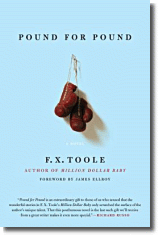
One of Esquire's "Six Most Remarkable Things in Culture This Month" is Pound for Pound, a novel by . The magazine's favorite jab from the novel:

"Cooley felt something give in his ribs, wasn't sure if it was a separation or a break. Garza came back with another left to the ribs, and Cooley felt something crack on his right side, sensed it in his spine, gagged, had to fight off shock like it was another opponent. Cut flesh doesn't hurt like broken bone. Stab and horn wounds cause delayed hurt, but broken bones are quick as a bumblebee bite."

—From the posthumously published boxing novel Pound for Pound, by F. X. Toole, author of Million Dollar Baby

Learn more about Pound for Pound here. Click here to read an excerpt.

David Abrams has a thorough appreciation of the novel and its author in January magazine: click here to read it.

A few of the other august August cultural finds in Esquire involve books. Click here to check them out.

--Marshal Zeringue

Nathan and Nicholas on books for ages 8-12

Recently I posted a list of The Ten Best Books for ages 8-12 that appeared in a British newspaper. At the time I wondered if American pre-teens knew and read these books. Subsequently I put the question to a couple of experts.

Nathan and Nicholas are from Northern Virginia and started in on their second decade last December. Reliable sources inform me that they “are totally into the fantasy stuff, choosing to spend three weeks this summer at a fantasy-themed camp.”

It turns out that Nathan and Nicholas were familiar with about half of the titles, which is more than I thought would appeal to kids in both Britain and America.

Here are some of their comments about books on the list:

The Switch by Anthony Horowitz: “read Raven's Gate by Horowitz and liked it (though it was kind of weird); haven't read this title”

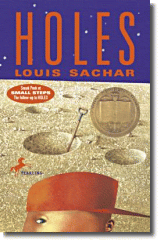
Holes
by Louis Sachar: “great book; plan to read Small Steps (the continuing story of Armpit) soon”

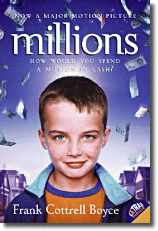
Framed Frank by Cottrell Boyce: “haven't read this title, but have read this author's Millions and liked it”

Clay
by David Almond: “haven't read it, but a classmate has”

The Edge Chronicles by Paul Stewart: “have heard of the series, but haven't read it; know that one of The Edge Chronicles was in the Top 5 Children's Fantasy books list, making it a likely read”

Wolf Brother by Michelle Paver: “haven't heard of it; sounds interesting”

My sources tell me that Nathan and Nicholas like:
Christopher Paolini's Eragon and Eldest; Cornelia Funke's Dragon Rider, The Thief Lord, Inkheart; D'Lacey's Icefire and The Fire Within; Colfer's Artemis Fowl series and his The Supernaturalist; Blue Balliett's Chasing Vermeer; John Feinstein's Last Shot and Vanishing Act; Carl Hiaasen's Hoot and Flush; and Avi's Crispin: The Cross of Lead, etc.

Nathan and Nicholas are good readers (they are in a boys' book club where they read a book weekly and meet to discuss it). They definitely like the fantasy genre.
Many thanks to Nathan and Nicholas for the feedback and many interesting suggestions, and thanks to the sources (who shall remain anonymous) for the help with facilitating this information.

Click here for a brief item about some classic children's books.

--Marshal Zeringue
Wednesday, August 02, 2006

Fidel in fiction

Yesterday J. Kingston Pierce, editor of "The Rap Sheet," posted a very interesting item provoked by news that Fidel Castro is having health problems.

Pierce came up with a number of interesting crime novels in which Fidel has figured.

My nomination for the best novel in that category: James Ellroy's American Tabloid, maybe the best American novel of any kind published in 1995. In it, Fidel plays a sizable role, albeit offstage.

While not a crime novel, Graham Greene's Our Man in Havana is one of better comic novels I've ever read. It brings home the (sizable) absurdist elements in the otherwise serious history of the English-speaking governments' interactions with Cuba.

--Marshal Zeringue

"The Three Musketeers"

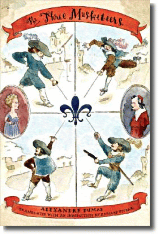
"The Three Musketeers is a perfect example of the novel we can remember without having read," writes Michael Wood in Slate about a new translation of the novel. "But does the actual book resemble our memories?"

Professor Wood is certainly correct: I haven't read the novel but I remember the story (and I'm not even sure where I remember it from). Actually, as his question suggests, my memory of the story is not very accurate.

I do remember, however, that I was never really sure about the particulars or the moral of the story. For one thing, these musketeers seemed to use their swords more than their muskets. More confounding to the young mind, that d'Artagnan fellow sure seemed to be part of the gang, so why weren't they the four musketeers? (Clearly, I was a very literal-minded youngster.)

Wood, using the occasion of the release this month of a new translation by Richard Pevear, resolves all these issues and much more. If the 752-page is not on your reading list yet you would like to know more about a classic story you almost certainly misremember, click here.

There is a useful mini-biography of Musketeers author Alexandre Dumas, père here.

Earlier on the blog: law professor Jonathan Freiman suggested that Dumas' The Count of Monte Cristo would be a good novel for our series on fiction that demonstrates what's at stake in the debate over habeas corpus.

--Marshal Zeringue
Sara Paretsky revisits Sinclair's "The Jungle"

Over at "The Outfit," a group blog run by some Chicago-based crime writers, Sara Paretsky has posted an interesting item on the occasion of the centennial of the publication of Upton Sinclair’s The Jungle.

She toured the area where the great meatpacking plants of Chicago once operated.
At the height of the Yards activity, [she writes] the meatpacking plants were popular tourist attractions: as many tourists visited the stockyards as did the 1893 Worlds Fair. Americans couldn’t get enough of the majesty of their industrial machine; seeing 35000 animals killed in a day was proof of the power of the Industrial Age.
It's an interesting item: click here to read it.

Last month I posted a brief item--"Birth of a fast food nation"--on The Jungle; click here to read it.

--Marshal Zeringue

Tuesday, August 01, 2006

Novelists and playwrights do different things

"It's a curious fact that very few writers have ever been able to write both good novels and good plays," argues Philip Hensher in the Guardian.
James Joyce's only play, Exiles, is so weak it is rarely staged. (It happens to be playing now at London's National Theatre; ticket prices vary from £28 to £10.)

Henry James wrote a few plays but it took awhile to convince someone to produce his work on stage; finally, Guy Domville got a chance before a live audience:

The first night of Guy Domville was one of the most famous theatrical disasters of the 19th century. The play staggered on for only five weeks, almost never to be staged again. A glance at the text shows why: the plot is something about a Catholic priest renouncing his vocation, delivered in the novelist's famous subtle dialogue, which proved impossible to speak on stage with any conviction.
And there are very few notable playwrights who have found success with the novel.

Why can't writers of one form thrive in the other? It's simple:
A novelist and a playwright might seem to be doing similar things. In fact, the tasks are quite different. Dialogue and external action are only two of the novelist's tasks; they have to flesh out the world with evocations of place, of physical appearance, the sense of time passing. A playwright's task is more austere. There's no alluding to people's thoughts in the lazy way of novelists: playwrights have to do everything through the way their people talk, and the way they move and act in tangible ways. A playwright venturing into the novel won't necessarily know how to write a description, where you can usefully allude to something unseen, or how to move from place to place. A playwright's tools are more refined; a novelist's toolbox is bigger.
There are exceptions. Hensher singles out Michael Frayn among contemporary writers.
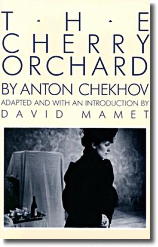
And there is one author who decisively disproves the idea that you can't be both a great dramatist and a great novelist. Whether Chekhov's plays are greater than his short stories, or vice versa, can be debated endlessly. For my part, I think the stories take it by a nose. But what you can't doubt is that, for once, the experience of writing plays fed into the fiction; the power of Chekhov's fiction shaped his drama. Many of his short stories begin with a lovely, dramatically striking tableau: the curtain metaphorically rises and, say, "Paul Rashevich paced up and down, stepping softly on the rug-covered floor" (At a Country House). The later plays find ways to put the physical richness and density of the stories on to a stage: think of the ensemble cast and allusively interior quality of The Cherry Orchard.
Then again, Chekhov's genius is for the short story, not the novel. But the difference between good novelists and good short story writers is a theme for another day.

Click here to read the complete Hensher article.

Click here for a brief profile of Chekhov, who said: "Don't tell me the moon is shining; show me the glint of light on broken glass."

--Marshal Zeringue

"Dog Days"

Ana Marie Cox is one of my favorite people. And I've never even met her.

But I was a faithful follower of "Wonkette," the inside-Washington blog she founded and edited until moving on earlier this year. Her writing was not only smart but crisp and confessional (though how genuine her confessions were is another thing), and she used the language employed in real life by the denizens of the Capitol, not the bland version they save for the form letters that go out to constituents. (There are exceptions, of course, to the blandness of those constituent letters.)

Also, she would never (OK, rarely) stoop to a stunt like titling an August 1st blog entry, "Dog Days."

And so I eagerly scooped up her debut novel when it hit the bookshelves at the start of the year.

Dog Days closely tracks an actual story that played out over several months in Washington, a story Wonkette not only owned but was instrumental in creating. For its pains, in fact, Wonkette is now involved in a legal battle that grew out of the whole sordid mess.

Knowing a great deal of the actual story already, the plot of the fictional version did not surprise me much; but I do love the way Cox tells a tale.

Had I not been a faithful Wonkette reader, I suspect I would share the high opinion Christopher Buckley (who knows a funny Washington novel when he sees one) spelled out in his New York Times review.

Click here to read Buckley's review, which not only includes a good synopsis of the novel but is an entertaining essay in itself.

Click here for P.J. O'Rourke's less positive review of Dog Days in the Washington Post, and here for Carol Memmott's review in USA Today.

Why are they called the "dog days of August?" Click here to find out.

--Marshal Zeringue

Summer reading recommendations

Heaven help you if you've been reading this site and cannot think of a book to pick up and read this summer. And if heaven won't help you, the Independent will: they've come up with 50 recommended titles for summer reading, plus another handful from their favorite authors.

Many of the recommended titles have already popped up here on the site; here are a few that have not:

The Night Watch by Sarah Waters

Waters forsakes her favourite Victorian period for her fourth and finest novel, a fractured love story set during the Second World War. Every background detail, every voice is perfect. The lives of four very different Londoners--among them a crime novelist and a female ambulance driver---overlap and interlock in a tale told backwards so brilliantly that although we already know the "end", we keep breathlessly turning the pages. A tour-de-force that really should have won the Orange Prize.

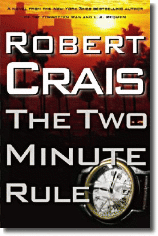
The Two Minute Rule by Robert Crais

Los Angeles beckons with the promise of sun, surf and Hollywood celebrities. But even this paradise has its darker side, and one of the top crime writers portraying the underside of the city is Robert Crais. A prisoner is released from the big house just as his son is murdered in a drive-by shooting, and he decides to help solve the murder much to the displeasure of the LAPD. Crais knows his town well, having written scripts for film and TV before becoming a best-selling author. He's the king of LA crime and long may he reign.

Midnight Mover by Bobby Womack

The drugs, the hookers, the music... the flares! Eye-popping, tell-all memoir by the legendary soul singer and guitarist who worked with The Stones, ferried Janis Joplin around in his limo, got high with Sly Stone and fought with John Lennon. Womack didn't so much walk on the wild side as build a sorcerer's castle there. Yet at his creative peak in the 1970s, he was one of the greatest tunesmiths and session players in the world. Essential reading for music lovers.

Click here to read the rest of the long list of recommendations from the Independent.

To read an excerpt from The Night Watch by Sarah Waters, click here.

Click here to read an excerpt from The Two Minute Rule by Robert Crais.

To read an excerpt from Midnight Mover by Bobby Womack, click here.

--Marshal Zeringue