Friday, May 23, 2014

What is Paul Durham reading?

Featured at Writers Read: Paul Durham, author of The Luck Uglies.

His entry begins:
I tend to read within the genre that I write, so that means I've been devouring a lot of middle grade fiction lately. On my desk at the moment is The Hero's Guide to Being an Outlaw by Christopher Healy, the third book in his League of Princes trilogy. I read the first two books in the series with my daughter and they inspired her to write her first fan letter. Chris writes humor as well as anyone and...[read on]
About The Luck Uglies, from the publisher:
Rye O'Chanter has seen a lot of strange things happen in Village Drowning. She and her friends have grown up on Drowning's treacherous streets—its twisted rooftops and forgotten cemeteries are their playground.

Now a terrifying encounter on the night of the Black Moon has Rye convinced that the monstrous, supposedly extinct Bog Noblins have returned from the forest Beyond the Shale. There's nobody left who can protect the village. There was once—an exiled secret society so notorious that its name can't be spoken out loud.

The Luck Uglies.

As Rye dives into Drowning's maze of secrets, rules, and lies, she begins to question everything she's been told about the village's legend of outlaws and beasts . . . and what she'll discover is that it may take a villain to save them from the monsters.
Visit Paul Durham's website.

Writers Read: Paul Durham.

--Marshal Zeringue

Thursday, May 22, 2014

Alan Beechey's "This Private Plot," the movie

Featured at My Book, The Movie: This Private Plot by Alan Beechey.

The entry begins:
My mystery series features a trio of crime-solvers: Oliver Swithin, an author of children’s books; his girlfriend Effie Strongitharm, a detective sergeant at Scotland Yard; and his uncle, Tim Mallard, who’s a detective superintendent and also Effie’s boss.

Oliver’s appearance is partly based on a real actor, Robert Longden, as he looked in a 1980 TV adaptation of Agatha Christie’s Why Didn’t They Ask Evans?—blond floppy hair, not the firmest features, and (a quote from This Private Plot) “looking as if he had just removed his glasses, even while he was still wearing them.” A more recent choice? See the way James Spader was groomed in 1994’s Stargate.

Effie is the hardest to cast. She looks like a much-loved girlfriend from my teenage years, especially her amazing display of naturally curly hair. Nancy Allen in 1980’s Dressed to Kill has an uncanny resemblance. Keri Russell with her Felicity locks gets close. So does Frieda from...[read on]
Visit Alan Beechey's website and blog.

The Page 69 Test: This Private Plot.

Read--Coffee with a Canine: Alan Beechey & Leila.

My Book, The Movie: This Private Plot.

--Marshal Zeringue

Pg. 69: Alex Grecian's "The Devil's Workshop"

Featured at the Page 69 Test: The Devil's Workshop by Alex Grecian.

About the book, from the publisher:
They thought he was gone, but they were wrong. Jack the Ripper is loose in London once more.

Scotland Yard’s Murder Squad faces the most shocking case of its existence, in the extraordinary new historical thriller from the author of the acclaimed national bestsellers
The Yard and The Black Country.

London, 1890. A small group of the city’s elite, fed up with the murder rate, have made it their business to capture violent criminals and mete out their own terrible brand of retribution. Now they are taking it a step further: They have arranged for four murderers to escape from prison, and into the group’s hands.

But the plan goes wrong. The killers elude them, and now it is up to Walter Day, Nevil Hammersmith, and the rest of Scotland Yard’s Murder Squad to hunt the convicts down before they can resume their bloody spree. But the Murder Squad may already be too late. The killers have retribution in mind, and one of them is heading straight toward a member of the Murder Squad, and his family.

And that isn’t even the worst of it. During the escape, one of the killers has stumbled upon the location of another notorious murderer, one thought gone for good, but who is now prepared to join forces with them.

And Saucy Jack has learned some new tricks while he’s been away.
Visit Alex Grecian's website.

The Page 69 Test: The Devil's Workshop.

--Marshal Zeringue

Ten top Norwegian books available in English translation

Dea Brøvig is the author of The Last Boat Home.

One of her top ten Norwegian books available in English translation, as shared at the Guardian:
Out Stealing Horses by Per Petterson (translated by Anne Born)

After suffering a personal tragedy, Trond retreats from the world, until a chance encounter sets him off into memory. In 1948, during a summer spent with his father in the countryside near the Swedish border, the 15-year-old Trond follows his friend into a field to steal horses, unaware of a shooting accident that has left a young boy dead. A tale of Norway during and after the second world war, of innocence lost and families destroyed, Petterson's portrayal of rural life is mesmerising, as is his pitch-perfect prose.
Read about another entry on the list.

Out Stealing Horses is among a top ten list of books written by librarians and the 20 most loaned books in Norway's libraries in 2008.

Read Ray Taras' review of Out Stealing Horses.

--Marshal Zeringue

Coffee with a canine: Molly Caro May & Bru

Featured at Coffee with a Canine: Molly Caro May & Bru.

The author, on how she and Bru were united:
I found Bru at the Heart of the Valley Animal Shelter. Didn’t intend to come home with a dog. But he was there, stretching in this small cage. All the other dogs were hyper. He gave me one loud deep bark and then eye-d me. I felt like we were having a conversation and I knew he needed a place to run. We lived on 107 acres. He seemed to deserve that sort of vastness. It took me one night to convince my husband that this was our dog. We had wanted to...[read on]
About The Map of Enough, from the publisher:
Molly Caro May grew up as part of a nomadic family, one proud of their international sensibilities, a tribe that never settled in one place for very long. Growing up moving from foreign country to foreign country, just like her father and grandfather, she became attached to her identity as a global woman from nowhere. But, with Molly on the verge of turning thirty years old, everything changes.

In The Map of Enough, Molly and her fiancé Chris suddenly move to 107 acres in Montana, land her family owns but rarely visits, with the idea of staying for only a year. surrounded by tall grass, deep woods, and the presence of predators, the young couple starts the challenging and often messy process of building a traditional Mongolian yurt from scratch. They finally finish just on the cusp of winter, in a snowstorm with temperatures below zero degrees. For Molly it is her first real home, yet a nomadic one, meant to be disassembled and moved at will.

Yurt life exposes the couple to nature, to the elements, to the wildlife all around them. It also feels contrary to the modern world, and this triggers in Molly an exploration of what home means to the emergent generation. In today’s age, have globalization and technology taught us that something better, the next best thing, is always out there? How does any young adult establish roots, and how do we decide what kind of life we want to lead? How much, ever, is enough?
Visit Molly Caro May's website.

The Page 99 Test: The Map of Enough.

Read--Coffee with a Canine: Molly Caro May & Bru.

--Marshal Zeringue

Wednesday, May 21, 2014

Pg. 99: Austin Sarat's "Gruesome Spectacles"

Featured at the Page 99 Test: Gruesome Spectacles: Botched Executions and America's Death Penalty by Austin Sarat.

About the book, from the publisher:
"How enviable a quiet death by lethal injection," wrote Justice Scalia, in a concurring opinion that denied review of a Texas death penalty case. But is it quiet? Renewed and vigorous debate over the death penalty has erupted as DNA testing has proven that many on death row are in fact innocent. In this debate, however, the guilty have been forgotten. In his new book, Gruesome Spectacles: Botched Executions and America's Death Penalty, renowned legal scholar Austin Sarat describes just how unquiet death by execution can be. If we assume a death row prisoner is guilty, how can we be sure that we are fulfilling the Supreme Court's mandate to ensure that his execution is "the mere extinguishment of life" and not a cruel and unusual punishment?

Gruesome Spectacles is a history of botched, mismanaged, and painful executions in the U.S. from 1890–2010. Using new research, Sarat traces the evolution of methods of execution that were employed during this time, and were meant to improve on the methods that went before, from hanging or firing squad to electrocution to gas and lethal injection. Even though each of these technologies was developed to "perfect" state killing by decreasing the chance of a cruel death, an estimated three percent of all American executions went awry in one way or another. Sarat recounts the gripping and truly gruesome stories of some of these deaths—stories obscured by history and to some extent, the popular press.
Learn more about Gruesome Spectacles at the Stanford University Press website.

The Page 99 Test: Gruesome Spectacles.

--Marshal Zeringue

Ten notable books that mimic the feeling of a summer vacation

Emma Straub is the author of Laura Lamont’s Life in Pictures and Other People We Married, and her fiction and nonfiction have been published in Vogue, Tin House, the New York Times, and the The Paris Review Daily. Her new novel is The Vacationers.

One of Straub's ten top books that mimic the feeling of a summer vacation, as shared at Publishers Weekly:
Arcadia by Lauren Groff

I will admit to having fantasies about running off to live on a commune. Groff’s brilliant second novel both makes me think that I should and, ultimately, probably shouldn’t. This is a great book to read if your vacation daydreams take you to upstate New York where you want to do nothing but smoke pot and bake bread.
Read about another entry on the list.

Arcadia is on Ewan Morrison's top ten list of books about communes and Jami Attenberg's top ten list of dysfunctional families in literature.

The Page 69 Test: Arcadia.

--Marshal Zeringue

Pg. 69: Eileen Brady's "Muzzled"

Featured at the Page 69 Test: Muzzled by Eileen Brady.

About the book, from the publisher:
Making rounds to homes one wet spring morning, veterinarian Dr. Kate Turner rescues a family’s hamster from a vacuum cleaner, then visits an estate whose owners breed champion Cavalier King Charles spaniels. Instead of sharing traditional tea with the couple, she confronts a bloody scene of bodies and twenty-seven blue-ribbon dogs running wild.

Police initially suspect a murder-suicide, but when Dr. Kate proves the famous best-in-show champion is missing, a darker reality intrudes. She remembers her grandfather saying that there are two motives for murder—love and money. While treating local pets, Dr. Kate discovers suspects and motives everywhere in this charming town filled with people who wanted the couple dead.

Was the couple murdered for money their champion could bring to another breeder? How is their daughter, anxious to rid herself of the pampered dogs, handling the wealth she inherits? Would the celebrity filmmaker living nearby kill to end a multi-million dollar lawsuit? Did long-buried personal secrets cause the deaths? And what’s going on at the office behind her back? Is Dr. Kate now in danger?
Visit Eileen Brady's website.

The Page 69 Test: Muzzled.

--Marshal Zeringue

Six absorbing new memoirs

At The Barnes & Noble Book Blog Melissa Albert tagged six top new memoirs, including:
Exodus, by Deborah Feldman

In 2012′s Unorthodox, Feldman broke free of the strict Hasidic community she’d been raised in, and that had engineered the loveless marriage she could no longer abide. Exodus finds her foundering as an outcast, trading her native Brooklyn for the country, and searching for herself in a world where she’s only ever been identified by her community. This tale of self-actualization against all odds will make for an inspiring summer read.
Read about another entry on the list.

The Page 99 Test: Exodus.

--Marshal Zeringue

What is Jenny Milchman reading?

Featured at Writers Read: Jenny Milchman, author of Ruin Falls.

Her entry begins:
They say the shortest story ever written is by Ernest Hemingway, and it goes like this: For sale, baby shoes, never worn.

I am reading The Other Life by Ellen Meister, which references the Hemingway short-short-short. The heroine of this novel, Quinn, is pregnant with a baby who may or may not have a life-threatening deformity. It’s not the kind of book I write, or usually read, and when I started to consider why, it led me to...[read on]
About Ruin Falls, from the publisher:
In a suspenseful follow-up to her critically acclaimed Cover of Snow, Jenny Milchman ratchets up the tension with this edge-of-your-seat story of a mother determined to find her missing children.

Liz Daniels has every reason to be happy about setting off on a rare family vacation, leaving behind her remote home in the Adirondack Mountains for a while. Instead, she feels uneasy. Her children, eight-year-old Reid and six-year-old Ally, have met their paternal grandparents only a handful of times. But Liz’s husband, Paul, has decided that, despite a strained relationship with his mother and father, they should visit the farm in western New York where he spent his childhood.

On their way to the farm, the family stops at a hotel for the night. In the morning, when Liz goes to check on her sleeping children, all her anxiety comes roaring back: Ally and Reed are nowhere to be found. Blind panic slides into ice-cold terror as the hours tick by without anyone finding a trace of the kids. Soon, Paul and Liz are being interviewed by police, an Amber Alert is issued, and detectives are called in.

Frantic worry and helplessness threaten to overtake Liz’s mind—but in a sudden, gut-wrenching instant she realizes that it was no stranger who slipped into the hotel room that night. Someone she trusted completely has betrayed her. Though she knows that Ally and Reid are safe, Liz will stop at nothing to find them and get them back. From her guarded in-laws’ unwelcoming farmhouse to the deep woods of her own hometown, Liz follows the threads of a terrible secret to uncover a hidden world created from dreams and haunted by nightmares.
Learn more about the book and author at Jenny Milchman's website.

My Book, The Movie: Cover of Snow.

The Page 69 Test: Cover of Snow.

Writers Read: Jenny Milchman (January 2013).

Writers Read: Jenny Milchman.

--Marshal Zeringue

Tuesday, May 20, 2014

Hannah Dennison's "Murder at Honeychurch Hall," the movie

Featured at My Book, The Movie: Murder at Honeychurch Hall by Hannah Dennison.

The entry begins:
What a treat to be able to share my dream cast for Murder at Honeychurch Hall. Since the book is set in England, the characters would ideally be British actors. I come from a screenwriting background so yes I too, have an actor in mind when I begin creating my character. Or at the very least, it’s someone I know.

Here are mine:

My protagonist is Kat Stanford, age 39. She’s just quit hosting an antique roadshow called Fakes & Treasures to start her own business. Kat’s got a great sense of humor. She’s self-deprecating and has a reputation for being clumsy. Tamsin Greig (as Beverly Lincoln in HBO's Episodes) would be perfect.

Iris Stanford, Kat’s 70-yeard old mother, harbors a slew of secrets, one being the reason she moved to Honeychurch Hall in the first place, and the second—Iris secretly writes steamy bodice-rippers under the pseudonym of Krystalle Storm. Gemma...[read on]
Visit Hannah Dennison's website.

The Page 69 Test: Murder at Honeychurch Hall.

My Book, The Movie: Murder at Honeychurch Hall.

--Marshal Zeringue

Six notable YA retellings of classics

At The Barnes & Noble Book Blog, Dahlia Adler tagged six great Young Adult retellings of classics, including:
Great, by Sara J. Benincasa

If I hadn’t been excited enough at the prospect of reading a contemporary YA retelling of F. Scott Fitzgerald’s 1925 classic, The Great Gatsby, the fact that Benincasa wrote it with a female Gatsby and a same-sex romance definitely put me over the top. It’s an impressively close retelling, artfully brought into the modern age via blogging and the Hamptons. Readers of the original will easily spot the parallels, and the characterizations of Gatsby, Daisy, Jordan, and the rest are transferred so well to their teen counterparts, you might forget that The Great Gatsby didn’t feature adolescents in the first place.
Read about the other books on the list.

--Marshal Zeringue

Pg. 69: Paula Stokes's "The Art of Lainey"

Featured at the Page 69 Test: The Art of Lainey by Paula Stokes.

About the book, from the publisher:
To win back the one she loves, she'll have to go to "war."

Soccer star Lainey Mitchell is gearing up to spend an epic summer with her amazing boyfriend, Jason, when he suddenly breaks up with her—no reasons, no warnings, and in public no less! Lainey is more than crushed, but with help from her friend Bianca, she resolves to do whatever it takes to get Jason back.

And that's when Lainey and Bianca stumble across a copy of The Art of War. The girls are sure they can use the military handbook to lure Jason back into Lainey's arms. So Lainey channels her inner warlord, recruiting spies to gather intel and persuading her coworker Micah to pose as her new boyfriend to make Jason jealous.

After a few "dates," it looks like her plan is going to work! But now her relationship with Micah is starting to feel like more than just a game. Can fighting for what she wants help Lainey find what she really needs?
Learn more about the book and author at Paula Stokes's website, Facebook page, and Twitter perch.

The Page 69 Test: The Art of Lainey.

--Marshal Zeringue

Pg. 99: James Turner's "Philology"

Featured at the Page 99 Test: Philology: The Forgotten Origins of the Modern Humanities by James Turner.

About the book, from the publisher:
Many today do not recognize the word, but "philology" was for centuries nearly synonymous with humanistic intellectual life, encompassing not only the study of Greek and Roman literature and the Bible but also all other studies of language and literature, as well as religion, history, culture, art, archaeology, and more. In short, philology was the queen of the human sciences. How did it become little more than an archaic word? In Philology, the first history of Western humanistic learning as a connected whole ever published in English, James Turner tells the fascinating, forgotten story of how the study of languages and texts led to the modern humanities and the modern university.

This compelling narrative traces the development of humanistic learning from its beginning among ancient Greek scholars and rhetoricians, through the Middle Ages, Renaissance, and Enlightenment, to the English-speaking world of the nineteenth and early twentieth centuries. Turner shows how evolving researches into the texts, languages, and physical artifacts of the past led, over many centuries, to sophisticated comparative methods and a deep historical awareness of the uniqueness of earlier ages. But around 1800, he explains, these interlinked philological and antiquarian studies began to fragment into distinct academic fields. These fissures resulted, within a century or so, in the new, independent "disciplines" that we now call the humanities. Yet the separation of these disciplines only obscured, rather than erased, their common features.

The humanities today face a crisis of relevance, if not of meaning and purpose. Understanding their common origins--and what they still share--has never been more urgent.
Learn more about Philology at the Princeton University Press website.

The Page 99 Test: Philology.

--Marshal Zeringue

Monday, May 19, 2014

What is Reed Farrel Coleman reading?

Featured at Writers Read: Reed Farrel Coleman, author of The Hollow Girl.

His entry begins:
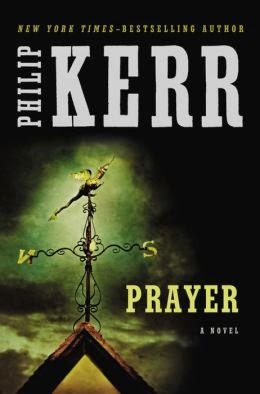
I have been long smitten by the work of the UK author Philip Kerr. His Bernie Gunther novels, along with Larry Block’s Scudder series, served as the inspiration for my soon to be retired protagonist, Moe Prager. But I am currently about one third done with Kerr’s new stand-alone Prayer. The story of a FBI agent’s odyssey in the world of big religion, big churches, and murder. Loving it. Also...[read on]
About The Hollow Girl, from the publisher:
The final novel in one of the most critically acclaimed PI series in the annals of crime fiction!

Drunk, alone, and racked with guilt over the tragic death of his girlfriend Pam, Moe Prager is destined for oblivion. But destiny takes a detour when a shadowy figure from Moe's past reappears to beg for Moe's help in locating her missing daughter. As a reluctant, distracted Moe delves into the case, he discovers that nothing is as it seems and no one involved is quite who or what they appear to be. This is especially true of the missing daughter, an early internet sensation known ironically as the Lost Girl or the Hollow Girl. The case itself is hollow, as Moe finds little proof that anyone is actually missing.

Things take a bizarre twist as Moe stumbles across a body in a trendy Manhattan apartment and the Hollow Girl suddenly re-emerges on video screens everywhere. It's a wild ride through the funhouse as Moe tries to piece together a case from the half-truths and lies told to him by a fool's parade of family members, washed-up showbiz types, uncaring cops, a doorman, and a lovesick PI. Even as the ticking clock gets louder, Moe is unsure if it's all a big hoax or if someone's life is really at stake. The question isn't whether or not Moe can find the Hollow Girl, but whether the Hollow Girl was ever there at all.
Visit Reed Farrel Coleman's website.

Writers Read: Reed Farrel Coleman.

--Marshal Zeringue

Six top books about being a woman

Writer and performer Sandra Tsing Loh is a contributing editor to The Atlantic, host of the syndicated radio show The Loh Down on Science, and the author of several books including the newly released memoir, The Madwoman in the Volvo: My Year of Raging Hormones. One of her six favorite books about being a woman, as shared at The Week magazine:
Where Love Goes by Joyce Maynard

A divorced mom pushes her cart in a grocery store, fantasizing about a passionate man who will throw her down and love her wildly. Miraculously, there is such a man in the very next aisle. Will they meet? Will he woo her? How could it go wrong? This is a page-turner I read every few years about the desires, mistakes, and complexities of midlife. Never gets old.
Read about another entry on the list.

--Marshal Zeringue

Jennifer Buhl's "Shooting Stars," the movie

Featured at My Book, The Movie: Shooting Stars: My Unexpected Life Photographing Hollywood's Most Famous by Jennifer Buhl.

The entry begins:
It’s 2014. Movies—what are those? Television is where it’s at this decade, and HBO’s Shooting Stars is (errr, could be) poised to be the next big thing. The hip new TV show would be adapted from Shooting Stars, the book, in a similar way that Sex in the City was taken from Candice Bushnell’s stories. It is about characters—the main ones being paparazzi—and their pursuit of celebrities and the shot. As characters develop, the show delves into the paparazzi’s personal lives behind the camera, which sometimes overlap into celebrities’ lives. Shooting Stars models Entourage, a show about movie stars’ lives behind the camera and like Entourage, for “movie stars appearances” uses pretend movie stars, D-listers, reality show stars, and the occasional celebrity cameo.

Shooting Stars’ main character, la paparazza Jennifer Buhl, is played by Hollywood’s newest tough girl, Jennifer...[read on]
Visit Jennifer Buhl's website.

My Book, The Movie: Shooting Stars.

--Marshal Zeringue

Coffee with a canine: Alan Beechey & Leila

Featured at Coffee with a Canine: Alan Beechey & Leila.

The author, on how Leila got her name:
My oldest son had a classmate call Leila at his nursery school, and he once said that he’d like to use the name for a pet. I think it was meant as a compliment. And well-deserved. When the real Leila was about four, it was discovered that she had serious hearing difficulties, which hadn’t been detected earlier because she’d simply managed to work around them. So for courage and resourcefulness, a worthy namesake. (If Leila had been a male, she’d have been...[read on]
About Alan Beechey's book, This Private Plot, from the publisher:
If a blackmail letter drives a man to suicide, is the sender guilty of murder? “Yes,” says Oliver Swithin, author of bestselling Finsbury the Ferret children’s stories and amateur sleuth, who is on holiday in an ancient village.

A midnight streak with his naked girlfriend—Scotland Yard’s Effie Strongitham—abruptly ends in the discovery of a corpse. Retired radiobroadcaster Dennis Breedlove has hanged himself from the old gibbet. Evidence suggests blackmail may have driven this celebrity to suicide. Irresistibly intrigued, Oliver believes discovering the dead man’s secret will lead to the identity of the blackmailer. But in Britain today, when shame is a ticket to fame, why suicide?

What if it wasn’t?

When the mystery abruptly turns inside out, black-clad strangers attack Oliver in the night. The Vicar behaves strangely. So do the village’s five unmarried Bennet sisters, a mysterious monk, the persistent, self-effacing Underwood Tooth, and Oliver’s Uncle Tim, Effie’s superior at the Yard and a part-time Shakespearean actor. Plus Oliver’s aunt and his mother. Who else might play a role in This Private Plot? Two William Shakespeares?

It’s time to put the laugh back into slaughter with the long-awaited third chapter in the career of Oliver Swithin. Yet under the clever wordplay and bawdy jokes lies an inventive and, yes, scholarly plot.
Visit Alan Beechey's website and blog.

The Page 69 Test: This Private Plot.

Read--Coffee with a Canine: Alan Beechey & Leila.

--Marshal Zeringue

Pg. 69: Elisabeth Gifford's "The Sea House"

Featured at the Page 69 Test: The Sea House: A Novel by Elisabeth Gifford.

About the book, from the publisher:
In 1860, Alexander Ferguson, a newly ordained vicar and amateur evolutionary scientist, takes up his new parish, a poor, isolated patch on the remote Scottish island of Harris. He hopes to uncover the truth behind the legend of the selkies—mermaids or seal people who have been sighted off the north of Scotland for centuries. He has a more personal motive, too; family legend states that Alexander is descended from seal men. As he struggles to be the good pastor he was called to be, his maid Moira faces the terrible eviction of her family by Lord Marstone, whose family owns the island. Their time on the island will irrevocably change the course of both their lives, but the white house on the edge of the dunes keeps its silence long after they are gone.

It will be more than a century before the Sea House reluctantly gives up its secrets. Ruth and Michael buy the grand but dilapidated building and begin to turn it into a home for the family they hope to have. Their dreams are marred by a shocking discovery. The tiny bones of a baby are buried beneath the house; the child's fragile legs are fused together—a mermaid child. Who buried the bones? And why? To heal her own demons, Ruth feels she must discover the secrets of her new home—but the answers to her questions may lie in her own traumatic past. The Sea House by Elisabeth Gifford is a sweeping tale of hope and redemption and a study of how we heal ourselves by discovering our histories.
Visit Elisabeth Gifford's website.

The Page 69 Test: The Sea House.

--Marshal Zeringue

Sunday, May 18, 2014

Eleven books with shocking endings

One title from Kirkus Reviews's list of eleven books whose final pages will shock you:
THREATS
by Amelia Gray

"Still, a striking debut novel from a writer eager to shake domestic fiction out of its comfort zone."

A man struggles to deal with the death of his wife and the odd messages that appear in her wake.
Read about another entry on the list.

The Page 69 Test: Threats.

--Marshal Zeringue