Thursday, January 11, 2024

Pg. 99: Ryan Darr's "The Best Effect"

Featured at the Page 99 Test: The Best Effect: Theology and the Origins of Consequentialism by Ryan Darr.

About the book, from the publisher:
A theological history of consequentialism and a fresh agenda for teleological ethics.

Consequentialism—the notion that we can judge an action by its effects alone—has been among the most influential approaches to ethics and public policy in the Anglophone world for more than two centuries. In The Best Effect, Ryan Darr argues that consequentialist ethics is not as secular or as rational as it is often assumed to be. Instead, Darr describes the emergence of consequentialism in the seventeenth century as a theological and cosmological vision and traces its intellectual development and eventual secularization across several centuries. The Best Effect reveals how contemporary consequentialism continues to bear traces of its history and proposes in its place a more expansive vision for teleological ethics.
Learn more about The Best Effect at the University of Chicago Press website.

The Page 99 Test: The Best Effect.

--Marshal Zeringue

Five top thrillers with social commentary

Amber and Danielle Brown both graduated from Rider University where they studied Communications / Journalism and sat on the editorial staff for the On Fire!! literary journal. They then pursued a career in fashion and spent five years in NYC working their way up, eventually managing their own popular fashion and lifestyle blog. Amber is also a screenwriter, so they live in LA, which works out perfectly so Danielle can spoil her plant babies with copious amount of sunshine. Perfect Little Lives is their latest novel.

At CrimeReads the authors tagged five great thrillers that balance suspense with social commentary. One title on the list:
All The Sinners Bleed by S.A. Cosby

All of S.A. Cosby’s novels have something interesting to say about society while being wrapped in a tight, page-turning narrative, but All The Sinners Bleed is truly a masterpiece when it comes to delicately addressing two of the most buzzed about political topics right now: school shootings and black kids being killed by white police officers.

In this story, the main character—the first responder who is called to deal with the tragedy—is a black sheriff in a small, racist town. The suspense builds once we follow the sheriff as he tries to figure out why this seemingly innocent student suddenly decided to shoot up the school. But this is not your average mystery novel narrated by a detective. The character work is steep and layered. The book also doesn’t harp on the topics it brings up, it throws them out there and then allows you to have the discussion, which is exactly S.A. Cosby’s style.
Read about another entry on the list.

All The Sinners Bleed is among Publishers Weekly's best mysteries and thrillers of 2023.

--Marshal Zeringue

Wednesday, January 10, 2024

Pg. 69: Vicki Delany's "The Sign of Four Spirits"

Featured at the Page 69 Test: The Sign of Four Spirits by Vicki Delany.

About the book, from the publisher:
Gemma Doyle won’t be spooked when a body shows up at the psychic fair in bestselling author Vicki Delany’s ninth Sherlock Holmes Bookshop mystery.

When a psychic fair arrives in West London, Gemma Doyle, owner of the Sherlock Holmes Bookshop and Emporium, wants nothing to do with it. But somehow, at the urging of Donald Morris, an enthusiastic Sherlockian, she finds herself talked into attending a séance, along with baker and best friend Jayne Wilson, store assistant, Ashleigh, and former pop star Bunny Leigh.

But to her surprise, Gemma finds herself banned from the séance and shown the door. Curious, she listens in from outside the room. The medium informs a disappointed Donald that Sir Arthur Conan Doyle will not be able to make it tonight. Then, Gemma hears a voice cut off, a cry for help, a scream. Gemma bursts into the library to see that someone has collapsed on the table—dead. The windows are all locked, and Gemma was guarding the only door. Someone in this room is a murderer. But who?

The game is once again afoot for Gemma Doyle, as she hunts a killer. But, this time, is the killer of flesh and blood or had the medium summoned doom from beyond the veil?
Visit Vicki Delany's website, Facebook page, and Twitter perch.

The Page 69 Test: Rest Ye Murdered Gentlemen.

The Page 69 Test: A Scandal in Scarlet.

The Page 69 Test: Murder in a Teacup.

Writers Read: Vicki Delany (September 2021).

The Page 69 Test: Deadly Summer Nights.

The Page 69 Test: The Game is a Footnote.

Writers Read: Vicki Delany (January 2023).

Writers Read: Vicki Delany.

The Page 69 Test: The Sign of Four Spirits.

--Marshal Zeringue

Pg. 99: Brian Balogh's "Not in My Backyard"

Featured at the Page 99 Test: Not in My Backyard: How Citizen Activists Nationalized Local Politics in the Fight to Save Green Springs by Brian Balogh.

About the book, from the publisher:
How a woman-led citizens’ group beat a Southern political machine by enlisting federal bureaucrats and judges to protect their neighborhood from unchecked economic development

This social history of local political activism tells the story of the decades-long fight to save Green Springs, Virginia, illuminating the economic tradeoffs of protecting the environment, the origins of NIMBYism, the changing nature of local control, and the surprising power of history to advance public policy.

Rae Ely faced long odds when she launched a campaign in 1970 to stop a prison, then a strip mine, in Green Springs. The local political machine supported both projects, promising jobs for impoverished Louisa County, Virginia. But Ely and her allies prevailed by repurposing the same tactics used by the Civil Rights movement—the appeal to federal agencies and courts to circumvent local control—and by using new historical interpretations to create the first rural National Historic Landmark District.

The Green Springs protesters fought to preserve the historic character of their neighborhood and the surrounding environment in a quest that epitomized the conflict in late twentieth-century America between unbridled economic development for all and protecting the quality of life for an economically privileged few. Ely’s tactics are now used by neighborhood groups across the nation, even if they have been applied in ways she never intended: to resist any form of development.
Learn more about Not in My Backyard at the Yale University Press website.

The Page 99 Test: Not in My Backyard.

--Marshal Zeringue

Twenty-five classic winter books

Emily Burack is the Senior News Editor for Town & Country, where she covers entertainment, culture, the royals, and a range of other subjects.

At Town & Country she tagged twenty-five of the best classic winter books to read by the fire, including:
Tinkers by Paul Harding

Paul Harding’s Pulitzer Prize-winning novel, Tinkers, is about George, an elderly clock repairman, who is on his deathbed.
Read about another entry on the list.

Tinkers is among Maria Smilios's five top books that reckon with illness & time.

The Page 69 Test: Tinkers.

--Marshal Zeringue

Tuesday, January 09, 2024

What is Vicki Delany reading?

Featured at Writers Read: Vicki Delany, author of The Sign of Four Spirits.

Her entry begins:
I don’t often read historical novels, but in preparing this list I realized that all three of the books I’ve recently read are historical. You can take from that whatever you like.

I loved The Garden of Evening Mists by Tan Twang Eng so much, I went to Malaysia. That was his second book and his third came out recently. The House of Doors didn’t have the emotional impact on me that the earlier book did, but I enjoyed it very much. It’s set in Penang, in Malaysia, in 1910 and in 1921. An upper-class Englishwoman (so called in those colonial times even though she’d never even been to England) encounters Sun Yat Sen in 1910 and tells the story to W. Somerset Maugham in 1921. Perhaps what I like most about the author’s writing is his incomparable sense of time and place. Everywhere I went on that trip to Malaysia I was...[read on]
About The Sign of Four Spirits, from the publisher:
Gemma Doyle won’t be spooked when a body shows up at the psychic fair in bestselling author Vicki Delany’s ninth Sherlock Holmes Bookshop mystery.

When a psychic fair arrives in West London, Gemma Doyle, owner of the Sherlock Holmes Bookshop and Emporium, wants nothing to do with it. But somehow, at the urging of Donald Morris, an enthusiastic Sherlockian, she finds herself talked into attending a séance, along with baker and best friend Jayne Wilson, store assistant, Ashleigh, and former pop star Bunny Leigh.

But to her surprise, Gemma finds herself banned from the séance and shown the door. Curious, she listens in from outside the room. The medium informs a disappointed Donald that Sir Arthur Conan Doyle will not be able to make it tonight. Then, Gemma hears a voice cut off, a cry for help, a scream. Gemma bursts into the library to see that someone has collapsed on the table—dead. The windows are all locked, and Gemma was guarding the only door. Someone in this room is a murderer. But who?

The game is once again afoot for Gemma Doyle, as she hunts a killer. But, this time, is the killer of flesh and blood or had the medium summoned doom from beyond the veil?
Visit Vicki Delany's website, Facebook page, and Twitter perch.

The Page 69 Test: Rest Ye Murdered Gentlemen.

The Page 69 Test: A Scandal in Scarlet.

The Page 69 Test: Murder in a Teacup.

Writers Read: Vicki Delany (September 2021).

The Page 69 Test: Deadly Summer Nights.

The Page 69 Test: The Game is a Footnote.

Writers Read: Vicki Delany (January 2023).

Writers Read: Vicki Delany.

--Marshal Zeringue

Pg. 99: Sabrina Fuchs Abrams's "New York Women of Wit in the Twentieth Century"

Featured at the Page 99 Test: New York Women of Wit in the Twentieth Century by Sabrina Fuchs Abrams.

About the book, from the publisher:
Seen as too smart, too sassy, too sexy, and too strident, female humorists have been resisted and overlooked. New York Women of Wit in the Twentieth Century corrects this tendency, focusing on the foremothers of women’s humor in modern America, who used satire, irony, and wit as indirect forms of social protest.

This book focuses on the women who stood on the periphery of predominantly male New York intellectual circles in the twentieth century. Sabrina Fuchs Abrams argues that the advent of modernism, the women’s suffrage movement, the emergence of the New Woman and the New Negro Woman, and the growth of urban centers in the 1920s and ’30s gave rise to a new voice of women’s humor, one that was at once defiant and conflicted in defining female identity and the underlying assumptions about gender roles in American society. Her study gives special attention to the contributions of the satirists Edna St. Vincent Millay (pseudonym Nancy Boyd), Tess Slesinger, Dorothy Parker, Jessie Redmon Fauset, Dawn Powell, and Mary McCarthy.

Grounded in theories of humor, feminist and critical race theory, and urban studies, this book will find an audience among scholars and students interested in women writers, feminist humor, modern American literature, and African American studies.
Learn more about New York Women of Wit in the Twentieth Century at the Penn State University Press website.

The Page 99 Test: New York Women of Wit in the Twentieth Century.

--Marshal Zeringue

Seven coming-of-age novels from around the world

Aube Rey Lescure is a French-Chinese-American writer. She grew up between Provence, northern China, and Shanghai, and graduated from Yale University in 2015. She worked in foreign policy before becoming an itinerant writer.

Her debut novel is River East, River West.

At Electric Lit the author tagged seven books from around the globe "about young people growing up too fast, too hard, too weird, too tenderly because they live in places where the setting is a driving force for complicated youths." One title on the list:
Spain: Dogs of Summer by Andrea Abreu, translated from the Spanish by Julia Sanches

This novel’s original Spanish title is Panza de Burro, or “donkey’s belly,” a Canarian description of the low-lying cloud cover clinging to the volcanic landscape of northern Tenerife. The ten-year-old narrator and her best friend Idora live in a working class town where many of the adults’ livelihoods are tied to the resort economy of the island’s south. For the girls, the sea is a three hour walk away. They spend much of their languid, suffocating summer failing to get to it, settling instead for a made-believe “canal beach” with concrete slabs and a trickle of water littered with ubiquitous pine needles.

The town’s roads are steep (“a vertical neighborhood on a vertical mountain”), the houses multicolored and half finished, the minimarket a distributor of junk food and mean gossip. The narrator resents the holiday residences her mother needs to clean, from which she feels separated by “a barrier of clear clingfilm.” The girls eat and purge and gorge on berries and pears that make them shit endlessly, they grind their bodies on everything, including each other, they roam in the heat and volcanic haze. The clouds are always low, hovering right above their heads, their oppression a pressure cooker, presaging the boiling point towards which the novel is gathering force.
Read about another entry on the list.

--Marshal Zeringue

Monday, January 08, 2024

Pg. 69: Sara Driscoll's "That Others May Live"

Featured at the Page 69 Test: That Others May Live by Sara Driscoll.

About the book, from the publisher:
The stakes are higher than ever before as FBI handler Meg Jennings and her K-9 partner, Hawk, race to find survivors after a building collapses in Sara Driscoll’s gripping, timely new mystery featuring a K-9 search-and-rescue unit in Washington DC. For friends of harder-edged crime fiction by authors like Melinda Leigh, Kendra Elliot, Iris Johansen, and Robert Krais.

There are situations that fill even the most seasoned FBI K-9 handlers with shock and horror. Meg Jennings is preparing for another workday when she gets word of a catastrophic scene in downtown Washington, D.C. Part of a twelve-story condo building has collapsed, and the rest of the structure could soon follow. Every search-and-rescue worker and K-9 team is needed on-site immediately to find survivors—and assess the casualties.

Putting aside her fears for her firefighter fiancé, who’s already inside the unstable building, Meg turns to the task at hand. If anyone is still alive within the rubble, she and Hawk, working alongside other K-9 teams, must find them. Every hour, every moment counts—and a wrong move could trigger a deadly chain reaction for those buried beneath. But beyond the present danger is a deeper threat, as evidence indicates that this wasn’t a random tragedy, but an act of domestic terrorism. And identifying the culprit and the motivation, in time to stop another attack, means taking on an enemy with terrifying skills—and nothing left to lose.
Learn more about the FBI K-9 Novels.

The Page 69 Test: Lone Wolf.

The Page 69 Test: Storm Rising.

The Page 69 Test: No Man's Land.

The Page 69 Test: Leave No Trace.

The Page 69 Test: That Others May Live.

--Marshal Zeringue

Pg. 99: Miles P. Grier's "Inkface"

Featured at the Page 99 Test: Inkface: Othello and White Authority in the Era of Atlantic Slavery by Miles P. Grier.

About the book, from the publisher:
In Inkface, Miles P. Grier traces productions of Shakespeare's Othello from seventeenth-century London to the Metropolitan Opera in twenty-first-century New York. Grier shows how the painted stage Moor and the wife whom he theatrically stains became necessary types, reduced to objects of interpretation for a presumed white male audience. In an era of booming print production, popular urban theater, and increasing rates of literacy, the metaphor of Black skin as a readable, transferable ink became essential to a fraternity of literate white men who, by treating an elastic category of marked people as reading material, were able to assert authority over interpretation and, by extension, over the state, the family, and commerce. Inkface examines that fraternity’s reading of the world as well as the ways in which those excluded attempted to counteract it.
Learn more about Inkface at the University of Virginia Press website.

The Page 99 Test: Inkface.

--Marshal Zeringue

Thirteen of the best dark academia titles

At B&N Reads Kat Sarfas tagged thirteen top "moody, atmospheric novels [that] transport you to the hallowed halls of higher education and the cut-throat competition, shadowy secret societies, and forbidden romance within." One title on the list:
Babel: Or the Necessity of Violence: An Arcane History of the Oxford Translators' Revolution by R. F. Kuang

A dark academia standalone that dives into the power of language and the evils of imperialism, student revolutions and a history of violence, Babel swirls with magic, lore, and Kuang’s signature attention to detail. It’s smart, witty and terrifying; the type of book you can’t stop reading and can’t stop recommending!
Read about another entry on the list.

Babel is among Phoebe Wagner's five top SFF books about radical community.

--Marshal Zeringue

Sunday, January 07, 2024

Ten notorious literary slogs that are worth the effort

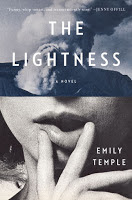
Emily Temple is the author of The Lightness and the Managing Editor at Literary Hub. She earned her MFA in fiction from the University of Virginia, where she was the recipient of a Henfield Prize.

[My Book, The Movie: The Lightness; The Page 69 Test: The Lightness]

At Flavorwire in 2012 she tagged ten "notorious literary slogs — long, difficult, and/or complicated enough to scare even the strongest reader — that are definitely worth the effort." One title on the list:
Moby-Dick, Herman Melville

Melville’s classic is many people’s literary white whale – but come on, you have to read the book that spawned the metaphor you use to describe it. Sure, it’s long, and there are large passages packed with mind-numbing information about the nitty-gritty of whaling techniques, but it’s also quite funny, something we no one told us before we took the plunge. It’s an adventure story, it’s a horror story, it’s a strange romance — and it’s time.
Read about another entry on the list.

Moby-Dick appears among Aidan Cottrell-Boyce's top ten novels & stories about prophets, James Stavridis's five best books to know the sea, Robert McCrum's top ten Shakespearean books, Bridget Collins's top ten Quakers in fiction, John Boyne's six best books, Kate Christensen's best food scenes in fiction, Emily Temple's ten literary classics we're supposed to like...but don't, Sara Flannery Murphy ten top stories of obsession, Harold Bloom's six favorite books that helped shape "the American Sublime,"  Charlotte Seager's five well-known literary monomaniacs who take things too far, Ann Leary's top ten books set in New England, Martin Seay's ten best long books, Ian McGuire's ten best adventure novels, Jeff Somers's five top books that will expand your vocabulary and entertain, Four books that changed Mary Norris, Tim Dee's ten best nature books, the Telegraph's fifteen best North American novels of all time, Nicole Hill's top ten best names in literature to give your dog, Horatio Clare's five favorite maritime novels, the Telegraph's ten great meals in literature, Brenda Wineapple's six favorite books, Scott Greenstone's top seven allegorical novels, Paul Wilson's top ten books about disability, Lynn Shepherd's ten top fictional drownings, Peter Murphy's top ten literary preachers, Penn Jillette's six favorite books, Peter F. Stevens's top ten nautical books, Katharine Quarmby's top ten disability stories, Jonathan Evison's six favorite books, Bella Bathurst's top 10 books on the sea, John Mullan's lists of ten of the best nightmares in literature and ten of the best tattoos in literature, Susan Cheever's five best books about obsession, Christopher Buckley's best books, Jane Yolen's five most important books, Chris Dodd's best books, Augusten Burroughs' five most important books, Norman Mailer's top ten works of literature, David Wroblewski's five most important books, Russell Banks' five most important books, and Philip Hoare's top ten books about whales.

--Marshal Zeringue

Pg. 99: Lindsay Schakenbach Regele's "Flowers, Guns, and Money"

Featured at the Page 99 Test: Flowers, Guns, and Money: Joel Roberts Poinsett and the Paradoxes of American Patriotism by Lindsay Schakenbach Regele.

About the book, from the publisher:
A fascinating historical account of a largely forgotten statesman, who pioneered a form of patriotism that left an indelible mark on the early United States.

Joel Roberts Poinsett’s (1779–1851) brand of self-interested patriotism illuminates the paradoxes of the antebellum United States. He was a South Carolina investor and enslaver, a confidant of Andrew Jackson, and a secret agent in South America who fought surreptitiously in Chile’s War for Independence. He was an ambitious Congressman and Secretary of War who oversaw the ignominy of the Trail of Tears and orchestrated America’s longest and costliest war against Native Americans, yet also helped found the Smithsonian. In addition, he was a naturalist, after whom the poinsettia—which he appropriated while he was serving as the first US ambassador to Mexico—is now named.

As Lindsay Schakenbach Regele shows in Flowers, Guns, and Money, Poinsett personified a type of patriotism that emerged following the American Revolution, one in which statesmen served the nation by serving themselves, securing economic prosperity and military security while often prioritizing their own ambitions and financial interests. Whether waging war, opposing states’ rights yet supporting slavery, or pushing for agricultural and infrastructural improvements in his native South Carolina, Poinsett consistently acted in his own self-interest. By examining the man and his actions, Schakenbach Regele reveals an America defined by opportunity and violence, freedom and slavery, and nationalism and self-interest.
Learn more about Flowers, Guns, and Money at the University of Chicago Press website.

The Page 99 Test: Flowers, Guns, and Money.

--Marshal Zeringue

Saturday, January 06, 2024

Q&A with Angela Brown

From my Q&A with Angela Brown, author of Olivia Strauss Is Running Out of Time: A Novel:
How much work does your title do to take readers into the story?

If I’m being honest, I really love the title and think it captures so much about the story that readers will discover within the book’s pages. The title arrived to me very early on – I was only about twenty or so pages into the first draft – and never strayed from it (my agent and editor ultimately loved it, too, so at no point in the process of writing or production did the title ever change). There are really three things I admire about the title Olivia Strauss Is Running Out of Time. First, I love that it’s sort of a big, clunky type title (my favorite kind!) which I think perfectly suits the protagonist, Olivia. She’s a bit of a mess at the start of the story, and so I don’t think a very neat and tidy and simple title would quite suit her. I also love that her full name is included in the title. It lets readers know right away that this is very much her story. At the start, Olivia is a bit self-absorbed, too – something she really works at changing throughout the text – so for that reason I also like that her name is the very first thing readers see when they pick up the book. Lastly, the second part of the title captures...[read on]
Visit Angela Brown's website.

The Page 69 Test: Olivia Strauss Is Running Out of Time.

Q&A with Angela Brown.

--Marshal Zeringue

Five novels featuring multiple points of view

Caz Frear grew up in Coventry, England, and spent her teenage years dreaming of moving to London and writing a novel. After fulfilling her first dream, it wasn’t until she moved back to Coventry thirteen years later that the second finally came true. She has a degree in History & Politics, and when she’s not agonizing over snappy dialogue or incisive prose, she can be found shouting at Arsenal football matches or holding court in the pub on topics she knows nothing about.

[The Page 69 Test: Sweet Little LiesThe Page 69 Test: Stone Cold HeartThe Page 69 Test: Shed No Tears]

Five Bad Deeds is her latest novel.

At CrimeReads Frear tagged five crime novels featuring many different points of view. One title on the list:
One Good Turn – Kate Atkinson

Atkinson brings her trademark wit and unique understanding of people’s flaws and foibles to this complex crime romp, sparked by a violent road rage incident at the Edinburgh Festival. While Jackson Brodie returns as the main protagonist, this is also the story of Martin, Gloria, Archie and Hamish, all witnesses to the incident, plus many, many more. While the cast of characters is huge, each is brilliantly drawn. Very much an ensemble piece.
Read about another entry on the list.

--Marshal Zeringue

Friday, January 05, 2024

What is Grant Ennis reading?

Featured at Writers Read: Grant Ennis, author of Dark PR: How Corporate Disinformation Harms Our Health and the Environment.

His entry begins:
I’m reading the pre-release English translation of Dr Mélissa Mialon’s Big Food & Co: How the Pursuit of Profit At-All-Costs Harms Our Health. It’s excellent. Dr. Mialon names names and “brings receipts” in exposing the corruption of the global food environment. She pulls no punches in showing that the charities that we expect to be on the side of public health are captured by industries that harm us all, and through her unflinching critique provides...[read on]
About Dark PR: How Corporate Disinformation Harms Our Health and the Environment, from the publisher:
“Think global, act local!” “Be the change you want to see in the world!” “Every little bit counts!” We can all get on board with such sentiments, right? That, of course, is exactly what corporate spin-masters across the world are banking on. By weaponizing such seemingly innocuous yet powerful narratives, change becomes a matter of personal choice, something each of us must slave away at day by day: switching off lightbulbs to save the environment or exercising to shed the weight we’ve gained from consuming junk food. All the while, the corporate welfare tap continues to flow, with over $6 trillion worth of annual subsidies dished out to industries that directly contribute to the deaths of over 5.5 million people each year through diabetes, road deaths, global warming, and other crises. But such framing is just the tip of the iceberg when it comes to the corporate disinformation playbook. This playbook is the dark matter of activist work: the unseeable element shaping harmful spin across all issues. It has never been reverse engineered – until now. In Dark PR, Grant Ennis – drawing on his decades of experience working in the environmental, philanthropy, and public health sectors – reveals exactly how multinationals go about hoodwinking and manipulating us. In doing so, he lifts the lid on the nine devious frames contained within the cross-industry corporate disinformation playbook: through denialism, normalization, victim-blaming, multifactorialism, and a variety of other tried-and-tested tactics, corporations divert citizens’ attention away from the real causes of global problems, leading them into counter-productive blind-alley “solutions” like ethical consumerism and divestment. Sadly, though, buying Fair Trade chocolate has not and never will save the world. Only by collectively organizing to lobby our governments can we break this destructive cycle of lies and deadly incentives and reclaim control of our lives.
Learn more about Dark PR at the publisher's website, and connect with Grant Ennis on LinkedIn.

The Page 99 Test: Dark PR.

Writers Read: Grant Ennis.

--Marshal Zeringue

Pg. 99: María L. Cruz-Torres's "Pink Gold"

Featured at the Page 99 Test: Pink Gold: Women, Shrimp, and Work in Mexico by María L. Cruz-Torres.

About the book, from the publisher:
A rich, long-term ethnography of women seafood traders in Mexico.

The "shrimp ladies," locally known as changueras in southern Sinaloa, Mexico, sell seafood in open-air markets, forming an extralegal but key part of the economy built around this "pink gold.” Over time, they struggled to evolve from marginalized peddlers to local icons depicted in popular culture, even as they continue to work at an open-air street market.

Pink Gold documents the shrimp traders' resilience and resourcefulness, from their early conflicts with the city, state, and federal authorities and forming a union, to carving out a physical space for a seafood market, and even engaging in conflicts with the Mexican military. Drawing from her two decades of fieldwork, María L. Cruz-Torres explores the inspiring narrative of this overlooked group of women involving grassroots politics, trans-border and familial networking, debt and informal economic practices, personal sacrifices, and simple courage. She argues that, amid intense economic competition, their success relies on group solidarity that creates interlocking networks of mutual trust, or confianza, that in turn enable them to cross social and political boundaries that would typically be closed to them. Ultimately, Pink Gold offers fresh insights into issues of gender and labor, urban public space, the street economy, commodities, and globalization.
Learn more about Pink Gold at the University of Texas Press website.

The Page 99 Test: Pink Gold.

--Marshal Zeringue

Eight top novels about memory loss

Emily Schultz is the author of Sleeping With Friends and the forthcoming, Brooklyn Kills Me. She is the co-founder of Joyland Magazine. Her last novel, Little Threats, was named an Apple Books Best of 2020 pick. Her novel, The Blondes, was named a Best Book of 2015 by NPR and Kirkus. The Blondes was produced as a scripted podcast starring Madeline Zima (Twin Peaks), and created by Schultz and Brian J Davis. Translated into French, German, and Spanish it had over one million listeners worldwide.

At Electric Lit Schultz tagged eight novels that "begin with the idea that memory loss could be something more than the act of forgetting. Each of these books take a risk, and offer something original, strange, and fantastic." One title on the list:
Remainder by Tom McCarthy

If, like me, you were browsing bookstores every weekend in the late-aughts, no doubt you spotted this book featured it in your local Staff Picks section—and for good reason. Remainder may be equal parts fever dream and intellectual exercise, but there’s more to it than that.

A man is severely injured in a mysterious accident and receives an enormous sum in legal compensation. He has no idea what to do with it. He winds up having a moment of déjà vu, what could be a dream, or maybe an actual memory, and decides to entirely recreate it—right down to the cracks in the wall and the smell of liver frying in a pan down the hall. But this involves buying an apartment building, and hiring actors to live there, practicing for this one significant scene. There’s intense foreboding as he descends further into his obsession: trying to recreate something that may or may not have ever been real. (And yes, McCarthy’s novel came out before the film Synecdoche, New York.)
Read about another entry on the list.

Remainder is among Ali Millar's top ten books about starting afresh and Emily Temple's fifty best novels about madness.

The Page 69 Test: Remainder.

--Marshal Zeringue

Thursday, January 04, 2024

Pg. 69: Lucy Connelly's "Death at a Scottish Wedding"

Featured at the Page 69 Test: Death at a Scottish Wedding (A Scottish Isle Mystery) by Lucy Connelly.

About the book, from the publisher:
Something old, something new, something borrowed and someone’s blue…

Finally feeling like Sea Isle, Scotland is becoming her new home, American doctor Emilia McRoy is delighted when she is invited to a wedding at Morrigan's Castle. Her friends have warned her that it's a three-day party and it's bound to get wild, not to mention the impending snowstorm. Constable Ewan Campbell, owner of the castle, ensures their safety with the blizzard. What he didn’t ensure, is that all of his guests would survive the night alive. When Emilia explores the impressive castle, she finds a dead man in one of the turrets.

The snowstorm hits and the local police can’t reach the castle until it lets up. With no one able to leave, the family insists they carry on with the wedding, which makes Emilia's job as the coroner a bit easier—the suspects are in one place––and complicated because the killer has Emilia in his sights. The fact no one claims to know the victim isn't helping. Why would someone no one knows be murdered at a castle in the middle of nowhere?

It’s up to Emilia to uncover the mystery who the victim is, so the killer doesn’t get away Scot free.
Visit Lucy Connelly's website.

The Page 69 Test: Death at a Scottish Wedding.

--Marshal Zeringue

Pg. 99: Emma Bridges's "Warriors' Wives"

Featured at the Page 99 Test: Warriors' Wives: Ancient Greek Myth and Modern Experience by Emma Bridges.

About the book, from the publisher:
Epic poetry and tragic drama provide us with some of the richest ancient Greek depictions of women who are married to soldiers. In tales of the Trojan War, as told by Homer, Aeschylus, Sophocles, and Euripides, we encounter these mythical warriors' wives: Penelope, isolated but resourceful as she awaits the return of Odysseus after his lengthy absence; the war widow Andromache, enslaved and displaced from her homeland after the fall of Troy; the unfaithful and murderous Clytemnestra; and Tecmessa, a war captive who witnesses her partner's breakdown and suicide in the aftermath of battle. Warriors' Wives compares the experiences of these mythical characters with those of contemporary military spouses. Emma Bridges traces aspects of the lives of warriors' wives--mythical and real, ancient and modern--from the moment of farewell, through periods of separation and reunion, to the often traumatic aftermath of war, to consider the emotional, psychological, and social impacts of life as a military spouse. By unearthing a wealth of contemporary evidence for the lives of the often silenced and unacknowledged partners of those who serve in the military, and by examining this alongside the ancient stories of warriors' wives, Warriors' Wives sheds fresh light on the experience of being married to the military.
Learn more about Warriors' Wives at the Oxford University Press website.

The Page 99 Test: Warriors' Wives.

--Marshal Zeringue

Five mystery series that explore nature and the environment

Lark O. Jensen, a former lawyer who is now a full-time writer, has published 53 books so far, including mysteries and romantic novels. She has written several cozy mystery series including the Barkery & Biscuits Mysteries and Superstition Mysteries for Midnight Ink, and the Kendra Ballantyne, Pet-Sitter Mysteries and Pet Rescue Mysteries for Berkley Prime Crime. She also writes romances for Harlequin, including Harlequin Romantic Suspense.

Jensen's latest Alaska Untamed Mystery is Cry Wolf.

At CrimeReads Jensen tagged five "of the best mystery series that explore nature and the environment," including:
Then there are the wonderful Timber Creek K-9 Mysteries by Margaret Mizushima, where Deputy Mattie Cobb and her K-9 partner Robo are also involved in helping to solve crimes in the wilds of Colorado. Wildlife appears there too, such as the mountain lions in Stalking Ground—dangerous as well as fascinating. And descriptions of the icy, mountainous area around Timber Creek while seeking bad guys, and good ones too, is always inspirational, including in Striking Range.
Read about another entry on the list.

--Marshal Zeringue

Wednesday, January 03, 2024

Pg. 99: Grant Ennis's "Dark PR"

Featured at the Page 99 Test: Dark PR: How Corporate Disinformation Harms Our Health and the Environment by Grant Ennis.

About the book, from the publisher:
“Think global, act local!” “Be the change you want to see in the world!” “Every little bit counts!” We can all get on board with such sentiments, right? That, of course, is exactly what corporate spin-masters across the world are banking on. By weaponizing such seemingly innocuous yet powerful narratives, change becomes a matter of personal choice, something each of us must slave away at day by day: switching off lightbulbs to save the environment or exercising to shed the weight we’ve gained from consuming junk food. All the while, the corporate welfare tap continues to flow, with over $6 trillion worth of annual subsidies dished out to industries that directly contribute to the deaths of over 5.5 million people each year through diabetes, road deaths, global warming, and other crises. But such framing is just the tip of the iceberg when it comes to the corporate disinformation playbook. This playbook is the dark matter of activist work: the unseeable element shaping harmful spin across all issues. It has never been reverse engineered – until now. In Dark PR, Grant Ennis – drawing on his decades of experience working in the environmental, philanthropy, and public health sectors – reveals exactly how multinationals go about hoodwinking and manipulating us. In doing so, he lifts the lid on the nine devious frames contained within the cross-industry corporate disinformation playbook: through denialism, normalization, victim-blaming, multifactorialism, and a variety of other tried-and-tested tactics, corporations divert citizens’ attention away from the real causes of global problems, leading them into counter-productive blind-alley “solutions” like ethical consumerism and divestment. Sadly, though, buying Fair Trade chocolate has not and never will save the world. Only by collectively organizing to lobby our governments can we break this destructive cycle of lies and deadly incentives and reclaim control of our lives.
Learn more about Dark PR at the publisher's website.

The Page 99 Test: Dark PR.

--Marshal Zeringue

Seven titles on the dark side of true crime

Kate Brody lives in Los Angeles and holds an MFA from NYU. Her work has been published (or is forthcoming) in The New York Times, Literary Hub, Crime Reads, Noema, The Literary Review, The Guardian, Write or Die, and Largehearted Boy, among others. Rabbit Hole is her debut novel.

At Electric Lit Brody tagged seven true crime titles:
all share a few elements: colorful characters, evocative settings, heroes and villains. But most importantly, they are molded. What do I mean by this? Like memoir, they are of life but they do not necessarily resemble life. They are shaped, aesthetic objects.
One entry on the list:
The Comfort of Monsters by Willa Richards

When Dee McBride goes missing in Milwaukee during the “Dahmer summer” of 1991, her disappearance is largely ignored. Media and police resources are instead devoted to obsessing over the details the man Richards refers to only as “the serial killer.” The Comfort of Monsters is a pitch-black book about familial loss, grief, and lurid public interest in grizzly tragedies. Richards explores the way that families and even entire communities can become victimized by tabloid interest in sensational crimes. If you love true crime, you may actually hate this book. The brilliance of Richards’s novel is her refusal to allow the narrative to mimic the fake and tidy structure of a true crime story. Instead, it hems closely to real life and honestly depicts the festering wounds that come with not knowing.
Read about another title on the list.

Q&A with Willa C. Richards.

--Marshal Zeringue
Tuesday, January 02, 2024

What is M.M. DeLuca reading?

Featured at Writers Read: M.M. DeLuca, author of The Night Side.

Her entry begins:
I like to keep up with shortlisted and Booker prizewinning books, so I've just finished reading this year's winner, Prophet Song by Paul Lynch. I'm a huge fan of dystopian novels. I started out my writing career in that genre and Prophet Song ranks up there with classics like Atwood's The Handmaid's Tale, sharing many parallels like a strong, heroic woman as the main character and the fact that every horrific and unimaginable incident portrayed in the story is happening somewhere in the world today . This is an incredibly important novel for our times, aimed at jogging us out of our complacency. Many of us have become desensitized towards the horrors that brutal political regimes can unleash on a country. We're accustomed to watching the devastation of war and the resulting societal collapse, on TV from the safety of our living rooms. We witness the agonies of streams of displaced men, women and children driven from their homes, and risking their lives to reach safety, and we believe it can never happen to us. Reading this book sends us...[read on]
About The Night Side, from the publisher:
Twenty years of secrets. One deadly truth.

When Ruby Carlson was eighteen, she ran away from her home in Stoneybrook, Montana, and vowed she'd never return. Never return to life under the control of her manipulative mother, Ida, a self-styled medium and psychic scammer who made a career out of ruining people's lives. Never return to the small town where enemies lurk at every turn.

But now, twenty years later, Ruby is back. Her mother is missing, presumed dead, and Ruby reluctantly returns to a home filled with chilling memories to settle Ida's affairs. Did she really commit suicide by drowning, or is this another dark scheme? Ruby thought she knew everything about her mother, but finds herself unraveling a web of lies and secrets to reveal a story more twisted than anyone could have imagined...
Visit M.M. DeLuca's website.

My Book, The Movie: The Night Side.

The Page 69 Test: The Night Side.

Writers Read: M.M. DeLuca.

--Marshal Zeringue

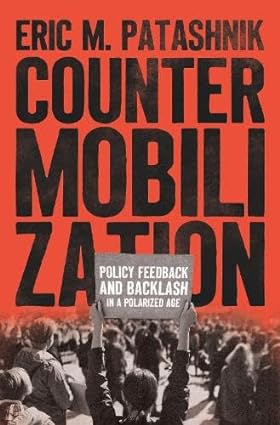
Pg. 99: Eric M. Patashnik's "Countermobilization"

Featured at the Page 99 Test: Countermobilization: Policy Feedback and Backlash in a Polarized Age by Eric M. Patashnik.

About the book, from the publisher:
An essential look at how and why backlash movements are inherent to US policymaking.

The most successful policies not only solve problems. They also build supportive coalitions. Yet, sometimes, policies trigger backlash and mobilize opposition. Although backlash is not a new phenomenon, today’s political landscape is distinguished by the frequency and pervasiveness of backlash in nearly every area of US policymaking, from abortion rights to the Affordable Care Act.

Eric M. Patashnik develops a policy-centered theory of backlash that illuminates how policies stimulate backlashes by imposing losses, overreaching, or challenging existing arrangements to which people are strongly attached. Drawing on case studies of issues from immigration and trade to healthcare and gun control, Countermobilization shows that backlash politics is fueled by polarization, cultural shifts, and negative feedback from the activist government itself. It also offers crucial insights to help identify and navigate backlash risks.
Learn more about Countermobilization at the University of Chicago Press website.

The Page 99 Test: Countermobilization.

--Marshal Zeringue
Eight winter reads rooted in the American West

At Sunset magazine Krista Simmons tagged eight "amazing books set in the American West that will make for great wintry reads," including:
City Under One Roof by Iris Yamashita

Goodreads Description: “A stranded detective tries to solve a murder in a tiny Alaskan town where everyone lives in a single high-rise building, in this gripping debut by an Academy Award–nominated screenwriter.

When a local teenager discovers a severed hand and foot washed up on the shore of the small town of Point Mettier, Alaska, Cara Kennedy is on the case. A detective from Anchorage, she has her own motives for investigating the possible murder in this isolated place, which can be accessed only by a tunnel.

After a blizzard causes the tunnel to close indefinitely, Cara is stuck among the odd and suspicious residents of the town—all 205 of whom live in the same high-rise building and are as icy as the weather. Cara teams up with Point Mettier police officer Joe Barkowski, but before long the investigation is upended by fearsome gang members from a nearby native village.

Haunted by her past, Cara soon discovers that everyone in this town has something to hide. Will she be able to unravel their secrets before she unravels?”
Read about another entry on the list.

Q&A with Iris Yamashita.

The Page 69 Test: City Under One Roof.

--Marshal Zeringue

Monday, January 01, 2024

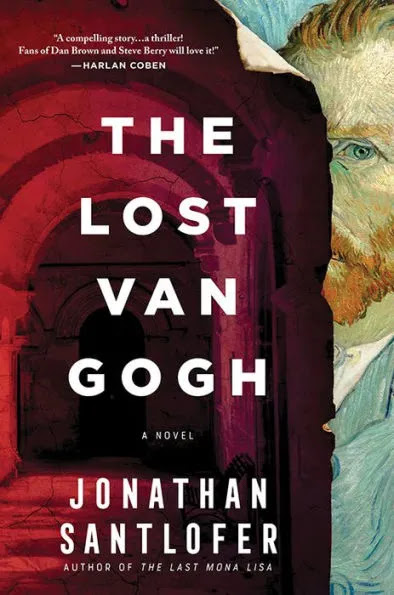
Pg. 69: Jonathan Santlofer's "The Lost Van Gogh"

Featured at the Page 69 Test: The Lost Van Gogh: A Novel by Jonathan Santlofer.

About the book, from the publisher:
From the author of the much-praised The Last Mona Lisa comes another thrilling story of masterpieces, masterminds, and mystery.

For years, there have been whispers that, before his death, Van Gogh completed a final self-portrait. Curators and art historians have savored this rumor, hoping it could illuminate some of the troubled artist's many secrets, but even they have to concede that the missing painting is likely lost forever.

But when Luke Perrone, artist and great-grandson of the man who stole the Mona Lisa, and Alexis Verde, daughter of a notorious art thief, discover what may be the missing portrait, they are drawn into a most epic art puzzles. When only days later the painting disappears again, they are reunited with INTERPOL agent John Washington Smith in a dangerous and deadly search that will not only expose secrets of the artist's last days but draws them into one of history's darkest eras.

Beneath the paint and canvas, beneath the beauty and the legend, the artwork has become linked with something evil, something that continues to flourish on the dark web and on the shadiest corridors of the underground art world.
Visit Jonathan Santlofer's website.

The Page 69 Test: The Lost Van Gogh.

--Marshal Zeringue

Pg. 99: Philip C. Almond's "The Buddha"

Featured at the Page 99 Test: The Buddha: Life and Afterlife Between East and West by Philip C. Almond.

About the book, from the publisher:
Alongside Jesus and Muhammad, the Buddha is the most significant figure in the history of religion. Philip Almond's engaging new book is the first to combine a history of early traditions about Siddhartha Gautama's life with an authoritative account of how he and the tantalizing philosophy inspired by him came to the attention of the West. It takes the reader on a remarkable journey encompassing (among other topics) Alexander the Great, the courts of the Mongol Khans, Jesuit missions to China and Japan, and intrepid European travellers and scholars from the modern era. Melding Pali and Sanskrit sources with vivid reception, Almond presents the Buddha's story as multi-layered: one of transition from a world of angels and demons, water and tree spirits, to an altogether different context where Buddhism mixed with the cultural preoccupations of those who tentatively – sometimes following false trails – tried to make sense of its fascinating complexity.
Learn more about The Buddha at the Cambridge University Press website.

The Page 99 Test: Afterlife: A History of Life after Death.

The Page 99 Test: The Antichrist: A New Biography.

The Page 99 Test: Mary Magdalene: A Cultural History.

The Page 99 Test: The Buddha.

--Marshal Zeringue

Ten of the best YA novels of all time

At Vogue Boutayna Chokrane tagged ten top YA books, including:
The Giver by Lois Lowry (1993)

Meet Jonas, a 12-year-old boy navigating a world void of conflict, hatred, or pain—a utopia, in other words, or so it seems. When Jonas assumes his post as the “Receiver of Memory,” he quickly understands what drastic sacrifices have been made in the pursuit of “Sameness.” In writing The Giver, Lowry was initially inspired by her father’s senility, as he continually forgot her sister’s death. She imagined a world where people didn’t have to remember their suffering and pain, provocatively asking: If you were to take all of those memories away, what would you be left with?
Read about another entry on the list.

The Giver made J.S. Dewes's list of five great books that do just fine without traditional villains, Carolyn Quimby's list of the 38 best dystopian novels everyone should read, W.L. Goodwater's top five list of books with manipulated memories, the Tor Teen blog's list of eleven top YA dystopian novels, Jeff Somers's top five list of science fiction novels that really should be considered literary classics, Jen Harper's top ten list of kids' books from the ’90s that have proven to be utterly timeless, John Corey Whaley's top ten list of coming of age books for teens, Shaun Byron Fitzpatrick's list of thirteen top, occasionally-banned YA novels, Guy Lodge's list of ten of the best dystopias in fiction, film, art, and television, Joel Cunningham's list of six great young adult book series for fans of The Hunger Games, and Lauren Davis's top ten list of science fiction’s most depressing futuristic retirement scenarios.

Coffee with a Canine: Lois Lowry & Alfie.

--Marshal Zeringue