Thursday, February 07, 2013

Pg. 69: L. E. Modesitt, Jr.'s "Imager’s Battalion"

The current feature at the Page 69 Test: Imager's Battalion by L. E. Modesitt, Jr.

About the book, from the publisher:
The sequel to the New York Times bestselling Princeps follows magical hero Quaeryt as he leads history's first Imager fighting force into war. Given the rank of subcommander by his wife's brother, Lord Bhayar, the ruler of Telaryn, Quaeryt joins an invading army into the hostile land of Bovaria, in retaliation for Bovaria's attempted annexation of Telaryn. But Quaeryt has his own agenda in doing Bhayar's bidding: to legitimize Imagers in the hearts and minds of all men, by demonstrating their value as heroes as he leads his battalion into one costly battle after another.

Making matters worse, court intrigues pursue Quaeryt even to the front lines of the conflict, as the Imager's enemies continue to plot against him.
Learn more about the author and his work at L. E. Modesitt, Jr.'s website.

The Page 69 Test: Princeps.

The Page 69 Test: Imager's Battalion.

--Marshal Zeringue

Ten notable music books

Howard Goodall is an award-winning composer of choral music, stage musicals, film and TV scores, is well known as a TV and radio broadcaster, and from 2007-11 was England’s first ever National Ambassador for Singing.

For the past 15 years Goodall has written and presented his own TV documentary series on the theory and history of music. For these he has been honored with a BAFTA, an RTS Judges’ Prize for Outstanding Contribution to Education in Broadcasting and over a dozen other international broadcast awards. In January 2013, Howard Goodall’s Story of Music, 6 hour-long films for BBC2 will be broadcast, with an accompanying book.

For the Guardian, Goodall named ten of his favorite music books, including:
Music: A very short introduction by Nicholas Cook [OUP 1998]

I am not sure how the deft Prof Cook manages to squeeze so much intelligence, cultural reference and perspective into so short a book. It is the Tardis of musical analysis. No sooner have you started it than it seems to be drawing to its conclusion but in between page 1 and 160 you eyes and ears are opened. If you only read one book on western music (apart from mine!) this is it.
Read about another book on the list.

--Marshal Zeringue

Carl Rollyson's "American Isis," the movie

Now showing at My Book, The Movie: American Isis: The Life and Art of Sylvia Plath by Carl Rollyson.

The entry begins:
Who would I want to play Sylvia Plath? Before I answer that question let me say a few words about Sylvia, the film starring Gwyneth Paltrow. It is a sorry thing. Poor Sylvia, she could not write as fluently as her Teddy boy. She baked cakes when she should have been penning poems. She gassed herself because she could not have him to herself. Poor Sylvia. The film is such a farrago of half-fact and simplistic psychologizing - not to mention that gratuitous nude scene with Paltrow perched on a sofa, bereft because Ted has abandoned her for the pregnant Assia Wevill.

What is astounding about Plath is her relish of multiple roles. But the biographies present her as a mass of contradictions - feminist and subservient wife, high-art poetess and hack writer, the Mademoiselle who wrote a potboiler (a term the Plath character uses for The Bell Jar in Sylvia).

The filmmakers, like her biographers, are simply parroting what her contemporaries said about her. Susan Sontag, a member of the same generation, lamented in an interview that Plath felt obliged to seek popular attention so cravenly. Plath, however, viewed literature as a campaign to be fought on all fronts. The extraordinary point about her is that...[read on]
View the video trailer for American Isis, and learn more about the book and author at Carl Rollyson's website, blog, and Facebook page.

The Page 99 Test: American Isis.

My Book, The Movie: American Isis.

--Marshal Zeringue

Wednesday, February 06, 2013

Free book: "Gifts of the Crow"

Atria Books and the Campaign for the American Reader are giving away a copy of the new paperback Gifts of the Crow: How Perception, Emotion, and Thought Allow Smart Birds to Behave Like Humans by John Marzluff and Tony Angell.

HOW TO ENTER: (1) send an email to this address:

(2) In the subject line, type Gifts of the Crow.

(3) Include your name (or alias or whatever you wish to be called if I email you to tell you you've won the book) in the body of the email.

[I will not sell or share your email address; nor will I be in touch with you unless it is to tell you you have won the book.  I promise.]

Contest closes on Thursday, February 28th.

Only one entry per person, please.

Winner must have a US mailing address.

Learn more about Gifts of the Crow at the publisher's website.

John Marzluff and Tony Angell's are also author and illustrator of In the Company of Crows and Ravens (2005).

The Page 99 Test: In the Company of Crows and Ravens.

The Page 99 Test: Gifts of the Crow.

--Marshal Zeringue

What is Cathy Marie Buchanan reading?

Today's featured contributor at Writers Read: Cathy Marie Buchanan, author of The Painted Girls.

Her entry begins:
I’m reading Geraldine Brooks’s latest. In Caleb’s Crossing, she takes the scant known facts about the first American Indian to graduate from Harvard (1665) and creates a rich, complex story with a reverence for learning at its core. It’s written as the confessional diary of Bethia Mayfield. The beautiful, convincing account follows her journey from girlhood to womanhood and Caleb’s from “savage” to...[read on]
About The Painted Girls, from the publisher:
A heartrending, gripping novel about two sisters in Belle Époque Paris.

1878 Paris. Following their father’s sudden death, the van Goethem sisters find their lives upended. Without his wages, and with the small amount their laundress mother earns disappearing into the absinthe bottle, eviction from their lodgings seems imminent. With few options for work, Marie is dispatched to the Paris Opéra, where for a scant seventeen francs a week, she will be trained to enter the famous ballet. Her older sister, Antoinette, finds work as an extra in a stage adaptation of Émile Zola’s naturalist masterpiece L’Assommoir.

Marie throws herself into dance and is soon modeling in the studio of Edgar Degas, where her image will forever be immortalized as Little Dancer Aged Fourteen. There she meets a wealthy male patron of the ballet, but might the assistance he offers come with strings attached? Meanwhile Antoinette, derailed by her love for the dangerous Émile Abadie, must choose between honest labor and the more profitable avenues open to a young woman of the Parisian demimonde.

Set at a moment of profound artistic, cultural, and societal change, The Painted Girls is a tale of two remarkable sisters rendered uniquely vulnerable to the darker impulses of “civilized society.” In the end, each will come to realize that her salvation, if not survival, lies with the other.
Learn more about the book and author at Cathy Marie Buchanan's website.

The Page 69 Test: The Painted Girls.

My Book, The Movie: The Painted Girls.

Writers Read: Cathy Marie Buchanan.

--Marshal Zeringue

Pg. 99: David Menconi's "Ryan Adams: Losering, a Story of Whiskeytown"

The current feature at the Page 99 Test: Ryan Adams: Losering, a Story of Whiskeytown by David Menconi.

About the book, from the publisher:
Before he achieved his dream of being an internationally known rock personality, Ryan Adams had a band in Raleigh, North Carolina. Whiskeytown led the wave of insurgent-country bands that came of age with No Depression magazine in the mid-1990s, and for many people it defined the era. Adams was an irrepressible character, one of the signature personalities of his generation, and as a singer-songwriter he blew people away with a mature talent that belied his youth. David Menconi witnessed most of Whiskeytown’s rocket ride to fame as the music critic for the Raleigh News & Observer, and in Ryan Adams, he tells the inside story of the singer’s remarkable rise from hardscrabble origins to success with Whiskeytown, as well as Adams’s post-Whiskeytown self-reinvention as a solo act.

Menconi draws on early interviews with Adams, conversations with people close to him, and Adams’s extensive online postings to capture the creative ferment that produced some of Adams’s best music, including the albums Strangers Almanac and Heartbreaker. He reveals that, from the start, Ryan Adams had an absolutely determined sense of purpose and unshakable confidence in his own worth. At the same time, his inability to hold anything back, whether emotions or torrents of songs, often made Adams his own worst enemy, and Menconi recalls the excesses that almost, but never quite, derailed his career. Ryan Adams is a fascinating, multifaceted portrait of the artist as a young man, almost famous and still inventing himself, writing songs in a blaze of passion.
Learn more about Ryan Adams: Losering, A Story of Whiskeytown at the author’s blog.

The Page 99 Test: Ryan Adams: Losering.

--Marshal Zeringue

Pg. 69: Phillip DePoy's "December’s Thorn"

The current feature at the Page 69 Test: December's Thorn by Phillip DePoy.

About the book, from the publisher:
"December's thorn, cruelest in the wood, Will give no rose, but still draw blood" —Traditional

Fever Devilin is an academic with a complicated past and an unusual view of the world. A folklorist by training, he's returned to his family home in Blue Mountain, a small town in the heart of Georgia's Appalachian Mountains, where nothing is ever quite what it seems, and the past is always complicated. Still recovering from a near-death experience, Fever is visited by a woman who claims to be his wife. And she's there to deliver some shocking news: Fever has a son.

His friends don't really believe the woman exists—they think she's another hallucination of a mind still slowly recovering from a long-term coma. Fever's fiancée is torn between being outraged and concerned for his mental health. None of this is helped by the fact that Fever, even in the best of times, has a tendency to see things that others don't and that may not, strictly speaking, exist. But when someone starts shooting very real bullets from a very real rifle in Fever's direction, the one thing that everyone can agree upon is that there's something very deadly going on. All Fever has to do is sort out who is trying to kill him—and why—before they succeed.
Learn more about the book and author at Phillip DePoy's website.

The Page 69 Test: The Drifter's Wheel.

The Page 69 Test: A Corpse's Nightmare.

Writers Read: Phillip DePoy (November 2011).

The Page 69 Test: December's Thorn.

--Marshal Zeringue

Ten addictive sci-fi and fantasy book series

Charlie Jane Anders, editor at io9, named ten book series so addictive, you never want them to end.

One entry on the list:
Iain M. Banks' Culture novels

Like Discworld, this is more of a shared universe than a series with the same characters in each book — but Banks creates a universe that's impossible to resist. There's the fascination of imagining just what it would be like to be a Special Circumstances operative, working with the super-intelligent and notoriously perverse artificial intelligences (or Minds) that run the Culture — but there's also all of the tricky questions that tend to arise when a massive, super-advanced post-scarcity civilization bumps up against more primitive cultures and worlds. Banks' plots are always fascinating and thrilling, but there's usually a fascinating set of philosophical questions buried in there as well.
Read about another series on the list.

Consider Phlebas, the first story in the Culture series, is one of Peter Millar's six favorite satires on despotism.

--Marshal Zeringue

Tuesday, February 05, 2013

Laurie Boyle Crompton's "Blaze," the movie

Now showing at My Book, The Movie: Blaze (or Love in the Time of Supervillains) by Laurie Boyle Crompton.

The entry begins:
If Blaze were made into a movie I'd love to see it cast with some talented unknowns who are trying to break into acting. Writing is a tough gig but acting seems next to impossible! I enjoy encouraging people to pursue their dreams even when they seem beyond reach and love the idea of Blaze helping to make dreams come true. Inexperience is fine, but cast members would need to have an excellent sense of humor because a movie about Blaze would have many, many funny moments.

I'd love to see someone like Tina Fey or Kristen...[read on]
Learn more about the book and author at Laurie Boyle Crompton's website and blog.

My Book, The Movie: Blaze.

--Marshal Zeringue

What is Maryka Biaggio reading?

The current featured contributor at Writers Read: Maryka Biaggio, author of Parlor Games.

Her entry begins:
I recently stumbled onto two excellent excuses for rereading one of my all-time favorite books, The Poisonwood Bible: First, Barbara Kingsolver would soon be in town for a talk and, second, the sponsor of her appearance, Oregon Literary Arts, was offering a three-week delve series on The Poisonwood Bible.

I immediately signed up for the delve group, and the discussions were lively and thought-provoking. We explored all manner of perspectives on the book: the artful rendering of the children’s and mother’s voices; the intertwining themes of religious intolerance and colonial arrogance; and the devastation wrought on the people of the Congo as well as...[read on]
About Parlor Games, from the publisher:
A sweeping historical novel about a beautiful con artist whose turn-of-the-century escapades take her around the world as she's doggedly pursued by a Pinkerton Agency detective

The novel opens in 1917 with our cunning protagonist, May Dugas, standing trial for extortion. As the trial unfolds, May tells her version of events.

In 1887, at the tender age of eighteen, May ventures to Chicago in hopes of earning enough money to support her family. Circumstances force her to take up residence at the city’s most infamous bordello, but May soon learns to employ her considerable feminine wiles to extract not only sidelong looks but also large sums of money from the men she encounters. Insinuating herself into Chicago’s high society, May lands a well-to-do fiancé—until, that is, a Pinkerton Agency detective named Reed Doherty intervenes and summarily foils the engagement.

Unflappable May quickly rebounds, elevating seduction and social climbing to an art form as she travels the world, eventually marrying a wealthy Dutch Baron. Unfortunately, Reed Doherty is never far behind and continues to track May in a delicious cat-and-mouse game as the newly-minted Baroness’s misadventures take her from San Francisco to Shanghai to London and points in between.

The Pinkerton Agency really did dub May the “Most Dangerous Woman,” branding her a crafty blackmailer and ruthless seductress. To many, though, she was the most glamorous woman to grace high society. Was the real May Dugas a cold-hearted swindler or simply a resourceful provider for her poor family?

As the narrative bounces back and forth between the trial taking place in 1917 and May’s devious but undeniably entertaining path to the courtroom—hoodwinking and waltzing her way through the gilded age and into the twentieth century—we're left to ponder her guilt as we move closer to finding out what fate ultimately has in store for our irresistible adventuress.
Learn more about the book and author at Maryka Biaggio's website.

My Book, The Movie: Parlor Games.

The Page 69 Test: Parlor Games.

Writers Read: Maryka Biaggio.

--Marshal Zeringue

Pg. 99: Carl Rollyson's "American Isis"

The current feature at the Page 99 Test: American Isis: The Life and Art of Sylvia Plath by Carl Rollyson.

About the book, from the publisher:
On the fiftieth anniversary of her death, a startling new vision of Plath—the first to draw from the recently-opened Ted Hughes archive

The life and work of Sylvia Plath has taken on the proportions of myth. Educated at Smith, she had an epically conflict-filled relationship with her mother, Aurelia. She then married the poet Ted Hughes and plunged into the sturm and drang of married life in the full glare of the world of English and American letters. Her poems were fought over, rejected, accepted and, ultimately, embraced by readers everywhere. Dead at thirty, she committed suicide by putting her head in an oven while her children slept.

Her poetry collection titled Ariel became a modern classic. Her novel The Bell Jar has a fixed place on student reading lists. American Isis will be the first Plath bio benefitting from the new Ted Hughes archive at the British Library which includes forty one letters between Plath and Hughes as well as a host of unpublished papers. The Sylvia Plath Carl Rollyson brings to us in American Isis is no shrinking Violet overshadowed by Ted Hughes, she is a modern day Isis, a powerful force that embraced high and low culture to establish herself in the literary firmament.
View the video trailer for American Isis, and learn more about the book and author at Carl Rollyson's website, blog, and Facebook page.

The Page 99 Test: American Isis.

--Marshal Zeringue

Pg. 69: Mignon F. Ballard's "Miss Dimple Suspects"

The current feature at the Page 69 Test: Miss Dimple Suspects by Mignon F. Ballard.

About the book, from the publisher:
With the country in the midst of World War II, you can be sure the small town of Elderberry, Georgia, will pull together to find a missing child. And you can be equally certain that first-grade teacher, Miss Dimple Kilpatrick, will be in the search party—especially since Peggy Ashcroft is one of her students. Miss Dimple carves out a search path all her own and once again, the sharp-as-a-tack teacher is right on point. But she finds Peggy too sick to walk and it’s too dark for Miss Dimple to find her way back.

Luckily, she comes upon the home of an elderly artist, Mae Martha, and her young companion, Suzy, who helps ensure that Peggy returns home safe and sound. A few days later, however, Miss Dimple receives a frantic call from Suzy: Mae Martha has been murdered and Suzy is seen as the most likely suspect, because her family is Japanese. Miss Dimple and her fellow teachers Annie and Charlie don't buy it; and set out to prove Suzy's innocence, only to discover danger where they least expect it.

Bringing warmth and nostalgia for small-town life, Mignon F. Ballard continues her "winning" (Publishers Weekly) cozy mystery series with Miss Dimple Suspects. Quick thinking and loyal to a fault, Miss Dimple is an amateur sleuth who will always stand up for what's right.
Learn more about the author and her work at Mignon Ballard's website.

My Book, The Movie: Miss Dimple Rallies to the Cause.

The Page 69 Test: Miss Dimple Rallies to the Cause.

Writers Read: Mignon F. Ballard (December 2011).

The Page 69 Test: Miss Dimple Suspects.

--Marshal Zeringue

Free book: "Pukka's Promise"

Houghton Mifflin Harcourt and the Campaign for the American Reader are giving away a copy of Pukka's Promise: The Quest for Longer-Lived Dogs by Ted Kerasote.

HOW TO ENTER: (1) send an email to:

(2) In the subject line, type Pukka's Promise.

(3) Include your name (or alias or whatever you wish to be called if I email you to tell you you've won the book) in the body of the email.

[I will not sell or share your email address; nor will I be in touch with you unless it is to tell you you have won the book.  I promise.]

Contest closes on Thursday, February 28th.

Only one entry per person, please.

Winner must have a US mailing address.

Learn more about Pukka's Promise: The Quest for Longer-Lived Dogs.

Visit Ted Kerasote's website, check out his book tour schedule, and follow him on Facebook.

Read--The Page 69 Test: Ted Kerasote's Merle's Door.

--Marshal Zeringue

The 10 most attractive men in literature

Rachel Syme is working on a book about F. Scott Fitzgerald, Sheilah Graham, and Hollywood in the 1930s. At Slate she came up with a list of the 10 most attractive men in literature. From her list:
Roland Mitchell in A.S. Byatt’s Possession is another scholar (again, I was bookish and pale), this time a romantic. The romance in this novel is born in a library, over hidden words, and perhaps that’s why I keep returning to Mitchell—he is a studious, quixotic man who gets excited by archival materials. Not something you find every day.
Read about another entry on the list.

Possession also appears on John Mullan's lists of ten of the best fossils in literature, ten of the most memorable libraries in literature, ten of the best fictional poets, ten of the best locks of hair in fiction, ten of the best graveyard scenes in fiction, and ten of the best lawyers in literature, and on Christina Koning's top six romances critic's chart and Elizabeth Kostova's top ten list of books for winter nights.

--Marshal Zeringue

Monday, February 04, 2013

Pg. 99: Lesley Hazleton's "The First Muslim"

The current feature at the Page 99 Test: The First Muslim: The Story of Muhammad by Lesley Hazleton.

About The First Muslim, from the publisher:
The extraordinary life of the man who founded Islam, and the world he inhabited—and remade.

Muhammad’s was a life of almost unparalleled historical importance; yet for all the iconic power of his name, the intensely dramatic story of the prophet of Islam is not well known. In The First Muslim, Lesley Hazleton brings him vibrantly to life. Drawing on early eyewitness sources and on history, politics, religion, and psychology, she renders him as a man in full, in all his complexity and vitality.

Hazleton’s account follows the arc of Muhammad’s rise from powerlessness to power, from anonymity to renown, from insignificance to lasting significance. How did a child shunted to the margins end up revolutionizing his world? How did a merchant come to challenge the established order with a new vision of social justice? How did the pariah hounded out of Mecca turn exile into a new and victorious beginning? How did the outsider become the ultimate insider?

Impeccably researched and thrillingly readable, Hazleton’s narrative creates vivid insight into a man navigating between idealism and pragmatism, faith and politics, nonviolence and violence, rejection and acclaim. The First Muslim illuminates not only an immensely significant figure but his lastingly relevant legacy.
Learn more about the book and author at The First Muslim website and The Accidental Theologist blog.

Hazelton's previous book, After the Prophet, was a finalist for the PEN-USA book award.

The Page 99 Test: After the Prophet.

Writers Read: Lesley Hazleton.

The Page 99 Test: The First Muslim.

--Marshal Zeringue

What is Cassandra Rose Clarke reading?

The current featured contributor at Writers Read: Cassandra Rose Clarke, author of The Mad Scientist's Daughter.

Her entry begins:
The Little Sister, Raymond Chandler

Sometimes I get in the mood to read Raymond Chandler. I’m not sure why this happens, although I suspect it’s because I love his prose so much, especially the descriptions and the weird metaphors. At one point in this book, he describes a woman as smelling like “the Taj Mahal at night.” I mean, what does that actually smell like? But it does suggest a certain type of perfume, and I like the interesting quasi-synesthesia of...[read on]
About The Mad Scientist's Daughter, from the publisher:
“Cat, this is Finn. He’s going to be your tutor.”

Finn looks and acts human, though he has no desire to be. He was programmed to assist his owners, and performs his duties to perfection. A billion-dollar construct, his primary task now is to tutor Cat. As she grows into a beautiful young woman, Finn is her guardian, her constant companion… and more.

But when the government grants rights to the ever-increasing robot population, however, Finn struggles to find his place in the world.
Learn more about The Mad Scientist's Daughter and its author at Cassandra Rose Clarke's website and blog.

My Book, The Movie: The Mad Scientist's Daughter.

Writers Read: Cassandra Rose Clarke.

--Marshal Zeringue

The 10 most attractive women in literature

Simon Akam's writing has appeared in publications including the New York Times, the New York Times Book Review, the Guardian, the Observer, the Washington Post, the Economist, the Times Literary Supplement, the Financial Times, the Independent, the New Statesman, the New Republic, the Literary Review, Intelligent Life and Tatler.

From his list of the ten most attractive women in literature, compiled for Slate:
A strand of criticism maintains that Ernest Hemingway could not draw plausible women, but for some readers the occasionally androgynous Hemingway heroine remains the ideal literary fantasy object. “Damned good-looking” Brett Ashley in The Sun Also Rises narrowly defeats Catherine Barkley from A Farewell to Arms on the back of a single simile: Brett, Hemingway writes, is “built with curves like the hull of a racing yacht.”
Read about another novel on the list.

The Sun Also Rises is on John Mullan's list of 10 of the best taxis in literature. It came in at #6 on the American Book Review list of the 100 best last lines from novels; it is a book that Andre Dubus III frequently returns to.

--Marshal Zeringue

Pg. 69: Erica Bauermeister's "The Lost Art of Mixing"

The current feature at the Page 69 Test: The Lost Art of Mixing by Erica Bauermeister.

About the book, from the publisher:
National bestselling author Erica Bauermeister returns to the enchanting world of The School of Essential Ingredients in this luminous sequel.

Lillian and her restaurant have a way of drawing people together. There’s Al, the accountant who finds meaning in numbers and ritual; Chloe, a budding chef who hasn’t learned to trust after heartbreak; Finnegan, quiet and steady as a tree, who can disappear into the background despite his massive height; Louise, Al’s wife, whose anger simmers just below the boiling point; and Isabelle, whose memories are slowly slipping from her grasp. And there’s Lillian herself, whose life has taken a turn she didn’t expect....

Their lives collide and mix with those around them, sometimes joining in effortless connections, at other times sifting together and separating again, creating a family that is chosen, not given. A beautifully imagined novel about the ties that bind—and links that break—The Lost Art of Mixing is a captivating meditation on the power of love, food, and companionship.
Learn more about the book and author at Erica Bauermeister's website.

The Page 69 Test: The School of Essential Ingredients.

The Page 69 Test: The Lost Art of Mixing.

--Marshal Zeringue

Cathy Marie Buchanan's "The Painted Girls," the movie

Now showing at My Book, The Movie: The Painted Girls by Cathy Marie Buchanan.

The entry begins:
It’s tricky business casting The Painted Girls, which tells the story of the real life model—Marie van Goethem—for Edgar Degas’s famous sculpture Little Dancer Aged Fourteen. As per the BBC documentary Private Life of a Masterpiece: Little Dancer Aged Fourteen, when Degas unveiled the artwork back in 1881, it was to reveal something very strange by the standards of the day—a highly realistic wax sculpture of a ballet girl dressed in a fabric tutu, slippers and bodice and wearing a wig of real hair. The public took one look and were horrified. They didn't see a young girl in her ballet clothes. They saw a whore and linked the little dancer with a life of corruption and young girls for sale. She was called a “flower of the gutter.” They said her face was “imprinted with the detestable promise of every vice.” Such notions were underpinned by a long history of often less than noble liaisons between the wealthy season ticket holders to the ballet and the young ballet girls.

Through Marie’s real life older sister Antoinette, The Painted Girls also tells the story of a teenage boy—Émile Abadie—who Degas drew on trial in the criminal court for a grisly murder. Degas titled the work Criminal Physiognomies, in keeping with prevailing “scientific” ideas about innate criminality and certain facial features—a forward thrusting jaw, a low forehead—that marked a person as having a tendency toward crime. In 1881 he exhibited the portrait alongside Little Dancer Aged Fourteen.

Are there teenage starlets out there bearing the “criminal physiognomies” Degas sought to capture in both artworks? I’m not so sure, but here’s my cast:

Marie van Goethem (14) – Elle Fanning, who is not a traditional beauty and who studies ballet

Antoinette van Goethem (18) – Jennifer...[read on]
Learn more about the book and author at Cathy Marie Buchanan's website.

The Page 69 Test: The Painted Girls.

My Book, The Movie: The Painted Girls.

--Marshal Zeringue

Sunday, February 03, 2013

Six notable books on the mannerisms of 20- & 30-somethings

Benjamin Nugent is the author of the new novel Good Kids, and American Nerd, a mix of history and memoir (Scribner, 2008). Born in Massachusetts in 1977, he was educated at Reed College and the Iowa Writers' Workshop. His essays have appeared in the New York Times Op/Ed page, the New York Times Magazine, and many other publications. His short stories have appeared in Tin House and The L Magazine. Director of Creative Writing at Southern New Hampshire University, he teaches in its MFA and undergraduate programs.

One of Nugent's six favorite books about the mannerisms and social rituals of his generation, as told to The Week magazine:
Indecision by Benjamin Kunkel

There are very few novelists who make me laugh out loud. Kunkel is one of them. It's also worth mentioning that until I read this story about a maddeningly fickle 28-year-old WASP, I was convinced it was impossible to write about people my age who weren't poor. Since then, my work's been full of inherited Volvos.
Read about another book on the list.

Indecision made Kay S. Hymowitz's five best list of books on the won't-grow-up modern male and Brian DeLeeuw's list of the five best debut novels of the past decade.

--Marshal Zeringue

Free book: "Gifts of the Crow"

Atria Books and the Campaign for the American Reader are giving away a copy of the new paperback Gifts of the Crow: How Perception, Emotion, and Thought Allow Smart Birds to Behave Like Humans by John Marzluff and Tony Angell.

HOW TO ENTER: (1) send an email to this address:
(2) In the subject line, type Gifts of the Crow. (3) Include your name (or alias or whatever you wish to be called if I email you to tell you you've won the book) in the body of the email.

[I will not sell or share your email address; nor will I be in touch with you unless it is to tell you you have won the book.  I promise.]

Contest closes on Thursday, February 28th.

Only one entry per person, please.

Winner must have a US mailing address.

Learn more about Gifts of the Crow at the publisher's website.

John Marzluff and Tony Angell's are also author and illustrator of In the Company of Crows and Ravens (2005).

The Page 99 Test: In the Company of Crows and Ravens.

The Page 99 Test: Gifts of the Crow.

--Marshal Zeringue

What is Charles Dubow reading?

The current featured contributor at Writers Read: Charles Dubow, author of Indiscretion.

His entry begins:
I am a big re-reader. There are certain books I read regularly once a year. Some only once a decade. Two that I haven’t reread in more than twenty years are John Dos Passos’s USA trilogy and Anna Karenina.

When I first read Dos Passos it was more a matter of filling out a set. I’d read many of the American expat writers from ‘20s—Hemingway, Fitzgerald, Flanner, Barnes—even Stein’s Autobiography of Alice B. Toklas, et al—but hadn’t yet tackled Dos Passos. Then, as now, he had fallen out of favor and was too often mentioned as a side note to the era but at the time he was writing he was bigger than either Hemingway or Fitzgerald, at least at the beginning. I realize I could have started with one of his shorter works but the fact of the matter was that I had access to USA, an old Modern Library edition of my mother’s from college and so that was what I went for. And boy, was I glad I did. You can admire the virility and purity of Hemingway, the beauty and wit of Fitzgerald but JDP was something altogether different. It was like reading electricity. Not only did his prose crackle but also the inventiveness with which he attempted to interact with the reader through devices like imitating how newsreels might sound on paper not only changed the dynamic between author and reader, it also...[read on]
About Indiscretion, from the publisher:
"Every story has a narrator. Someone who writes it down after it's all over. Why am I the narrator of this story? I am because it is the story of my life—and of the people I love most...."

Harry and Madeleine Winslow have been blessed with talent, money, and charm. Harry is a National Book Award–winning author on the cusp of greatness. Madeleine is a woman of sublime beauty and grace whose elemental goodness and serenity belie a privileged upbringing. Bonded by deep devotion, they share a love that is both envied and admired. The Winslows play host to a coterie of close friends and acolytes eager to bask in their golden radiance, whether they are in their bucolic East Hampton cottage, abroad in Rome thanks to Harry's writing grant, or in their comfortable Manhattan brownstone.

One weekend at the start of the summer season, Harry and Maddy, who are in their early forties, meet Claire and cannot help but be enchanted by her winsome youth, quiet intelligence, and disarming naivete. Drawn by the Winslows' inscrutable magnetism, Claire eagerly falls into their welcoming orbit. But over the course of the summer, her reverence transforms into a dangerous desire. By Labor Day, it is no longer enough to remain one of their hangers-on.

A story of love, lust, deception, and betrayal as seen through the omniscient eyes of Maddy's childhood friend Walter, a narrator akin to Nick Carraway in The Great Gatsby, Indiscretion is a juicy, richly textured novel filled with fascinating, true-to-life characters—an irresistibly sensual page-turner that explores having it all and the consequences of wanting more.

Indiscretion also marks the debut of a remarkably gifted writer and storyteller whose unique voice bears all the hallmarks of an exciting new literary talent.
Learn more about Indiscretion at the William Morrow website.

Writers Read: Charles Dubow.

--Marshal Zeringue

The 10 most notorious parts of famous books

One of the ten most notorious parts of famous books Gabe Habash named for PWxyz, the news blog of Publishers Weekly:
The part with the prostitute in The Catcher in the Rye by J.D. Salinger

Antsy kids can surely find more titillating outlets for their hormones today, but for decades you could find them under beds and in closets, hiding from their parents and reading The Catcher in the Rye for its juicier bits, which they heard from all their friends were juicy indeed. Holed up in the Edmont Hotel in New York City, Holden spends an ultimately unfulfilling evening out with older women, before inviting Sunny up to his room. Never mind that his invitation also goes unfulfilled, The Catcher in the Rye has experienced more censorship and controversy than just about every other book published in the last century.
Read about another entry on the list.

The Catcher In The Rye appears on Robert McCrum's list of the 10 best books with teenage narrators, Antoine Wilson's list of the 10 best narrators in literature, A.E. Hotchner's list of five favorite coming-of-age tales, Jay McInerney's list of five essential New York novels, Woody Allen's top five books list, Patrick Ness's top 10 list of "unsuitable" books for teenagers, David Ulin's six favorite books list, Nicholas Royle's list of the top ten writers on the telephone, TIME magazine's list of the top ten books you were forced to read in school, Tony Parsons' list of the top ten troubled males in fiction, Dan Rhodes' top ten list of short books, and Sarah Ebner's top 25 list of boarding school books; it is one of Sophie Thompson's six best books. Upon rereading, the novel disappointed Khaled Hosseini, Mary Gordon, and Laura Lippman.

--Marshal Zeringue

Saturday, February 02, 2013

Pg. 99: Stephen Davies's "The Artful Species"

The current feature at the Page 99 Test: The Artful Species: Aesthetics, Art, and Evolution by Stephen Davies.

About the book, from the publisher:
The Artful Species explores the idea that our aesthetic responses and art behaviors are connected to our evolved human nature. Our humanoid forerunners displayed aesthetic sensibilities hundreds of thousands of years ago and the art standing of prehistoric cave paintings is virtually uncontested.

In Part One, Stephen Davies analyses the key concepts of the aesthetic, art, and evolution, and explores how they might be related. He considers a range of issues, including whether animals have aesthetic tastes and whether art is not only universal but cross-culturally comprehensible.

Part Two examines the many aesthetic interests humans take in animals and how these reflect our biological interests, and the idea that our environmental and landscape preferences are rooted in the experiences of our distant ancestors. In considering the controversial subject of human beauty, evolutionary psychologists have traditionally focused on female physical attractiveness in the context of mate selection, but Davies presents a broader view which decouples human beauty from mate choice and explains why it goes more with social performance and self-presentation.

Part Three asks if the arts, together or singly, are biological adaptations, incidental byproducts of nonart adaptations, or so removed from biology that they rate as purely cultural technologies. Davies does not conclusively support any one of the many positions considered here, but argues that there are grounds, nevertheless, for seeing art as part of human nature. Art serves as a powerful and complex signal of human fitness, and so cannot be incidental to biology. Indeed, aesthetic responses and art behaviors are the touchstones of our humanity.
Learn more about the book and author at The Artful Species blog.

The Page 99 Test: The Artful Species.

--Marshal Zeringue

Five notable books on football

One title on the Barnes & Noble Review's list of five top books on football:
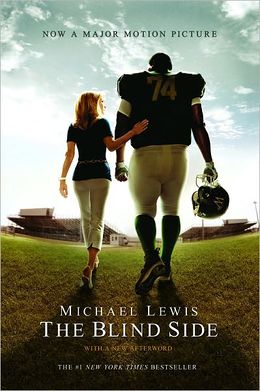
The Blind Side: Evolution of a Game
by Michael Lewis

A fine balance is struck between savvy analysis of maturation in NFL offensive strategy with the sentimental story of pro-bound left tackle Michael Oher's orphaned childhood and adoption into the family of an Ole Miss sports legend. Lewis again delivers the shakeups to conventional athletic wisdom that made his bestseller Moneyball a household name, juxtaposing the pursuit of emotional intelligence with its application upon the professional gridiron.
Read about another book on the list.

The Blind Side is one of Malcolm Gladwell's 6 best books.

The Page 69 Test: The Blind Side.

Also see: ten top football books, five top books about the Super Bowl, five top books about football (and its dark side).

--Marshal Zeringue

Pg. 69: Cathy Marie Buchanan's "The Painted Girls"

The current feature at the Page 69 Test: The Painted Girls by Cathy Marie Buchanan.

About the book, from the publisher:
A heartrending, gripping novel about two sisters in Belle Époque Paris.

1878 Paris. Following their father’s sudden death, the van Goethem sisters find their lives upended. Without his wages, and with the small amount their laundress mother earns disappearing into the absinthe bottle, eviction from their lodgings seems imminent. With few options for work, Marie is dispatched to the Paris Opéra, where for a scant seventeen francs a week, she will be trained to enter the famous ballet. Her older sister, Antoinette, finds work as an extra in a stage adaptation of Émile Zola’s naturalist masterpiece L’Assommoir.

Marie throws herself into dance and is soon modeling in the studio of Edgar Degas, where her image will forever be immortalized as Little Dancer Aged Fourteen. There she meets a wealthy male patron of the ballet, but might the assistance he offers come with strings attached? Meanwhile Antoinette, derailed by her love for the dangerous Émile Abadie, must choose between honest labor and the more profitable avenues open to a young woman of the Parisian demimonde.

Set at a moment of profound artistic, cultural, and societal change, The Painted Girls is a tale of two remarkable sisters rendered uniquely vulnerable to the darker impulses of “civilized society.” In the end, each will come to realize that her salvation, if not survival, lies with the other.
Learn more about the book and author at Cathy Marie Buchanan's website.

The Page 69 Test: The Painted Girls.

--Marshal Zeringue

What is Lesley Hazleton reading?

The current featured contributor at Writers Read: Lesley Hazleton, author of The First Muslim: The Story of Muhammad.

Her entry begins:
Colm Tóibín's new novel The Testament of Mary.

Tóibín makes Mary so achingly human that even as you read, mesmerized, his clear cold-eyed prose makes you want to weep. I have no idea how he does this, but I’m glad he does. He writes in her voice as she looks back, her own death nearing. You could say it’s the voice of a disillusioned Mary, but this woman has never had any illusions. Instead, she’s transcendently clear-eyed.

Among many other things, this short, almost terrifyingly lucid novel is a brilliant commentary on how 'history' is constructed. Mary watches in dismay as the disciples set about creating...[read on]
About The First Muslim, from the publisher:
The extraordinary life of the man who founded Islam, and the world he inhabited—and remade.

Muhammad’s was a life of almost unparalleled historical importance; yet for all the iconic power of his name, the intensely dramatic story of the prophet of Islam is not well known. In The First Muslim, Lesley Hazleton brings him vibrantly to life. Drawing on early eyewitness sources and on history, politics, religion, and psychology, she renders him as a man in full, in all his complexity and vitality.

Hazleton’s account follows the arc of Muhammad’s rise from powerlessness to power, from anonymity to renown, from insignificance to lasting significance. How did a child shunted to the margins end up revolutionizing his world? How did a merchant come to challenge the established order with a new vision of social justice? How did the pariah hounded out of Mecca turn exile into a new and victorious beginning? How did the outsider become the ultimate insider?

Impeccably researched and thrillingly readable, Hazleton’s narrative creates vivid insight into a man navigating between idealism and pragmatism, faith and politics, nonviolence and violence, rejection and acclaim. The First Muslim illuminates not only an immensely significant figure but his lastingly relevant legacy.
Learn more about the book and author at The Accidental Theologist blog.

Hazelton's last book, After the Prophet, was a finalist for the PEN-USA book award.

The Page 99 Test: After the Prophet.

Writers Read: Lesley Hazleton.

--Marshal Zeringue

Five notable books on missing persons and absent figures

Heidi Julavits's novels are The Uses of Enchantment, The Effect of Living Backwards, The Mineral Palace, and The Vanishers.

For the Wall Street Journal, she named a five best list of books on missing persons and absent figures, including:
The Woman in the Dunes
by Kobo Abe (1962)

The first chapter of Abe's novel is the equivalent of a missing-person report—an amateur entomologist has disappeared while on a seaside holiday. After seven years the authorities pronounce him dead. His case is closed. The reader soon learns, however, that a slightly worse fate has befallen this poor entomologist. He is alive and, seemingly for the foreseeable future, trapped with a strange woman at the bottom of a sandy hole. Escape attempts are fouled by collapsing sand walls and local law enforcement patrolling the dunes. The term "gritty realism" was wasted on 1970s minimalists like Raymond Carver and Ann Beattie. Kobo Abe's literally gritty realism—he is tirelessly attentive to sand in hair, eyes, food, ears, shoes, socks, sheets, water—evokes a grueling existence from which escape, even of the psychological detachment variety (as in Carver and Beattie), is impossible. His absurdist conceit—a man and a woman trapped in a hole, working incessantly to prevent sand from burying them alive—keenly echoes the struggles of the modern Everyperson, those with above-ground homes.
Read about another novel on the list.

--Marshal Zeringue

Cassandra Rose Clarke's "The Mad Scientist's Daughter," the movie

Now showing at My Book, The Movie: The Mad Scientist's Daughter by Cassandra Rose Clarke.

The entry begins:
I’m enough of a movie nerd that I picked out a dream director to go with my dream cast, so let’s start there. I would love to see The Mad Scientist’s Daughter movie directed by Wong Kar-wai, a Hong Kong director I’m sort of obsessed with. His films depict repressed longing and separated lovers beautifully, and he captures intense, subtle emotions through a blend of music and striking imagery. I would be thrilled to see how he’d adapt my book.

Next up is casting. The novel follows the main character, Cat, over the course of about thirty years, with a sizable chunk of time spent on when she’s in high school and college. For young Cat, I can’t think of anyone more perfect than...[read on]
Learn more about the book and author at Cassandra Rose Clarke's website and blog.

My Book, The Movie: The Mad Scientist's Daughter.

--Marshal Zeringue

Friday, February 01, 2013

Pg. 99: Keith O'Brien's "Outside Shot"

The current feature at the Page 99 Test: Outside Shot: Big Dreams, Hard Times, and One County's Quest for Basketball Greatness by Keith O'Brien.

About the book, from the publisher:
The Powerful True Story of a Small-Town Team, a Struggling American Community, and Their Fight for Redemption

The Cardinals of Scott County High School were beloved once---and with good reason. For years, the boys and their legendary coach gave fans in central Kentucky, deep in the heart of basketball country, just what they wanted: state titles, national rankings, and countless trips to Kentucky’s one-of-a-kind state tournament, where winning and losing can change a young man’s life.

But in 2009, with the economy sputtering, anger rising, and Scott County mired in a two-year drought, fans had begun to lose faith in the boys. They weren’t the heroes of Scott County anymore; they were “mini-athlete gods,” haunted by dreams, burdened by expectations, and desperate to escape through the only means they knew: basketball.

In Outside Shot, Keith O’Brien takes us on an epic journey, from the bluegrass hills and broken homes of rural America, to inner-city Lexington, to Kentucky’s most hallowed hall: Rupp Arena, where high school tournament games are known to draw twenty-thousand people, and where, for the players and their fans, it feels like anything is possible.

The narrative follows four of the team’s top seniors and their coach as they struggle to redeem themselves in the face of impossible odds: once-loyal fans now turned against them, parents who demand athletic greatness, and scouts who weigh their every move. It delves deep inside the lives of the boys, their families, and their community---divided along lines of race, politics, religion, and sports. And it chronicles not only the high-stakes world of Kentucky basketball, but the battle for the soul of small-town America.

A story of inspiration and poignancy, filled with moments of drama on and off the court, Outside Shot shows that if it’s hard to win basketball games, it can be even harder to win at life itself.
View the video trailer for Outside Shot, and visit Keith O'Brien's website.

The Page 99 Test: Outside Shot.

--Marshal Zeringue

What is Gina Robinson reading?

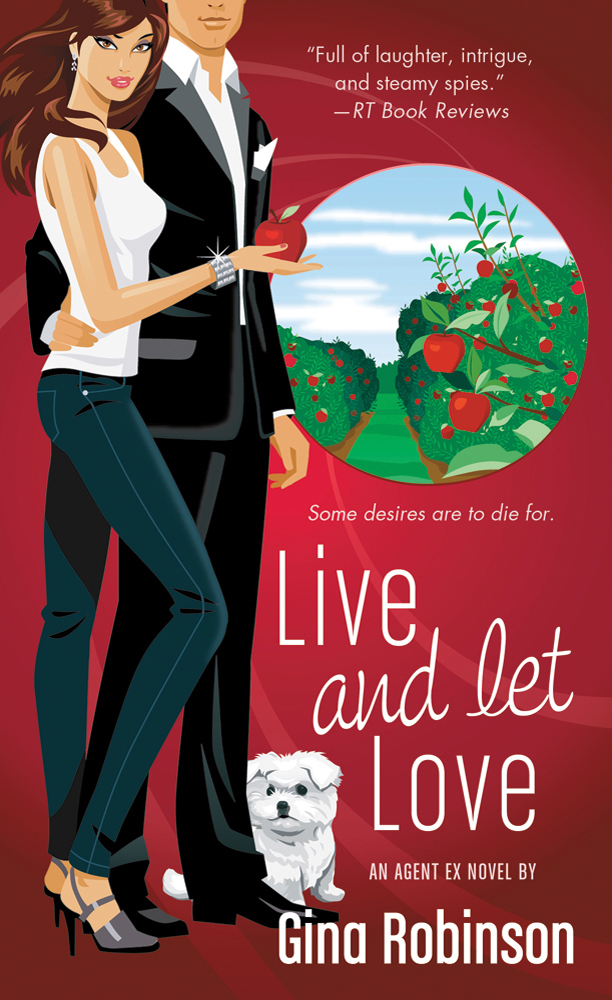
The current featured contributor at Writers Read: Gina Robinson, author of Live and Let Love.

Her entry begins:
Like most writers, I love to read. Unfortunately, when I'm in the middle of a project and on deadline, I don't have much time to read for pleasure. Also when I'm working on a book I avoid novels on similar topics and in the same subgenre as what I'm writing. I don't want to be unduly influenced by someone else's thoughts and interpretations. I recently turned my fourth Agent Ex novel, License to Love, in to my editor. In License to Love the hero is a magician and the heroine is a spy. Two professional deceivers—a match made in heaven. Even though The Night Circus is not in my genre, romantic suspense, it features magicians. And so it sat on the on the top of my TBR pile for most of the fall.

The Night Circus was one of those books I saw everywhere. Several times I picked it up and was tempted to buy it. But then I wasn't quite sure it was to my tastes. I'm not really into circuses, I thought. Though I loved Water for Elephants and that was about the circus. But still...[read on]
About Live and Let Love, from the publisher:
Though Willow Pierce has moved forward since her husband died two years ago, she can’t ignore her sixth sense that Jack is alive.When newcomer Con Russo comes to town, Willow is convinced he’s Jack. She’d never forget his eyes. Willow is determined to learn the truth about Con’s identity—even if it means brazenly seducing him.

Secret agent Jack Pierce was almost killed in an explosion that left him severely disfigured. Thanks to reconstructive surgery, he has a new face and a new life. But when the terrorist who tried to assassinate him suspects he’s still alive, Jack’s forced to go undercover—and destroy him for good. But before he can complete his mission, he must protect the only woman he’s ever loved...
Learn more about the book and author at Gina Robinson's website and blog.

The Page 69 Test: The Spy Who Left Me.

Writers Read: Gina Robinson (January 2012).

Writers Read: Gina Robinson.

--Marshal Zeringue

Pg. 69: Roberta Gately's "The Bracelet"

The current feature at the Page 69 Test: The Bracelet by Roberta Gately.

About the book, from the publisher:
Newly heartbroken and searching for purpose in her life, Abby Monroe is determined to make her mark as a UN worker in one of the world’s most unstable cities: Peshawar, Pakistan. But after witnessing the brutal murder of a woman thrown from a building, she is haunted by the memory of an intricate and sparkling bracelet that adorned the victim’s wrist.

At a local women’s shelter, Abby meets former sex slaves who have miraculously escaped their captors. As she gains the girls’ trust and documents their horrifying accounts of unspeakable pain and betrayal, she joins forces with a dashing New York Times reporter who believes he can incriminate the shadowy leader of the vicious human trafficking ring. Inspired by the women’s remarkable bravery—and the mysterious reappearance of the bracelet— the duo traces evidence that spreads from remote villages of South Asia to the most powerful corners of the West, risking their lives to offer a voice to the countless innocents in bondage.
Learn more about the book and author at Roberta Gately's website, and follow the author on Facebook and Twitter.

Gately has served as a nurse and humanitarian aid worker in war zones ranging from Afghanistan to Africa, about which she wrote a series of articles for the BBC World News Online. She is also the author of the novel Lipstick in Afghanistan.

Writers Read: Roberta Gately (November 2010).

The Page 69 Test: Lipstick in Afghanistan.

My Book, The Movie: Lipstick in Afghanistan.

My Book, The Movie: The Bracelet.

Writers Read: Roberta Gately. 

The Page 69 Test: The Bracelet.

--Marshal Zeringue

Top 10 fictional female friends who would make good real-life friends

Panayiota Kuvetakis is a student at UC Berkeley studying comparative literature and theater. For Writer's Bloq, she named a top ten list of fictional female friends we'd like to have as anything close to real-life friends, including:
Athena – The Odyssey

Our reliable ole’ friend, Pallas Athena, is the goddess of wisdom, warfare, courage, inspiration… civilization…law…justice… and essentially all things ever. Yet her widely impressive and multifarious super-powers are no match for her outstanding loyalty to her buddy, Odysseus. Throughout his journey, she’s got his back; she sticks up for him against Big Man Zeus, changes into a mortal on several occasions to direct him to safety, and is always there to create awesome costumes to disguise him from ravenous suitors seeking to usurp his fortune/wife. And like any good friend, she always knows how to take the back seat to let others find their own way in valuable, character-building experiences…even if they take them 19-20 years to complete.
Read about another entry on the list.

The Odyssey is among James Marriott and Mika Minio-Paluello's top ten journeys across the Mediterranean and Caspian Sea, Tony Bradman's top 10 list of father and son stories, John Mullan's lists ten of the best shipwrecks in literature, ten of the best monsters in literature, ten of the best examples of rowing in literature, and ten of the best caves in literature, as well as Madeline Miller's top ten list of classical books, Justin Somper's top ten list of pirate books, and Carsten Jensen's list of the top ten seafaring tales.

--Marshal Zeringue