Monday, February 09, 2009

Review: Joseph Boyden's "Through Black Spruce"

Ray Taras, who covers contemporary world literature for the blog, reviews Joseph Boyden's Through Black Spruce (Viking Canada, 2008; US release March 19, 2009, from Viking Penguin):
This second novel does not falter! After his highly acclaimed debut with Three Day Road (2005), which won several book prizes and made it to the shortlist of the Canadian Governor-General's literary award for fiction as well as to the longlist of the lucrative IMPAC Dublin prize, Joseph Boyden has followed up with a meticulously-crafted, suspense-driven story encompassing an extended aboriginal family. The novel focuses on the relationship between an uncle and his niece who are members of one of the Mushkegowuk Nations which live near Hudson Bay (see their engaging web site). Among the clever literary devices Boyden employs to have these characters tell us their stories is one in which the niece relates to her comatose uncle, lying in a hospital bed with the odds heavily stacked against him ever regaining consciousness, details of her trip "south" to Toronto and beyond, in search of her sister. It's a long shot that a novel anchored in hospital room narration will provide gripping and appealing material; there are more tried formulae for successfully captivating the reader. But Boyden chooses narrative designs that are eclectic and decentered, and he has hit his target with them.

Even if the bio on the book jacket is formulaic, making the compulsory reference to an author dividing his time between, in this case, northern Ontario and Louisiana, Boyden's lifestyle choices are more unconventional than that. His professional home is in New Orleans, where he completed graduate work in creative writing, then turned to teaching it. While the city has many unusual nooks and crannies, few are more so than living in a house built on pilings located between the Mississippi river and the levee—Boyden's home for a time. A spiritual, perhaps familial, home is Moosonee--or is it Moose Factory?-- many hours north of the northern Ontario "conurbations" of Cochrane and Timmins, to which it is linked by rail and air, but not road.

Of Métis background with a Toronto Jesuit education that has metastized into Big Easy bon vivant, Boyden derives synergy from the two homes. The authenticity of the voices he records in his novels is incontrovertible. It is not only the syntax the characters use: "Me, I preferred the first option, that Mother Nature was one angry slut" (p.2). It goes beyond the distinctive spoken and written language the Mushkegowuk Nations use. Boyden's inspired writing contributes robustly to achieving one of their educational goals--to "promote and maintain a Cree Vision for future generations through Language & Culture."

Through Black Spruce takes us from a hospital room to the primordial edges of James Bay. It includes a moving characterization of a First Nations' family--grandparents with granddaughters—affirming their traditions, living seasonally by a remote river feeding into the Bay, located in the sprawling tundra that only an experienced Native bush pilot can break down. The lyrics of Neil Young's "Helpless" serve as musical backdrop to these vivid depictions of northern Ontario. Other northern tropes include the first generation of undependable skidoos (as they were called at the time), a prized World War I rifle (representing the extension of the Three Day Road story), goose and moose, and tobacco. Then there is the violence: mostly Indian on Indian, and mostly the product of the drug trade. The novel describes multiple attempted killings, in northern Ontario but also in Toronto and New York. The fearsome Québec biker gangs drive the plot though they remain in the shadows.

The art of learning underpins this novel. Hunting is a skill taught by one generation to the next—uncle Will to his niece Annie—and from one gender to another—Annie to her Mohawk guardian Gordon who comes from Kahnawake, outside Montréal. Without hunting skills, this northern Ontario community would not exist. The general store in the town may sell luxury goods from the south, but it is still a pivot in the centuries-old fur trade that keeps the community intact.

Alongside Will's story of struggle and survival is the other side of the novel's dual narrative—Annie's odyssey in search of her sister. It takes her from sharing in an impromptu barbecue with homeless Indians in the streets and under the railway bridges of Toronto, to the urbane dance bars of Montréal, and eventually to the high octane life of fashion models in New York City. Party Girls International, as the novel's Manhattan supermodels call themselves, represents a pastiche of conspicuous consumerism—an unflattering contrast to the subsistence struggles of Mushkegowok in the backwoods of northern Ontario.

We may be inclined to believe that Manhattan brings out the worst in people even as they enrich themselves, but we do become skeptical about how seamlessly Annie slots in to replace her celebrated sister Suzanne as a supermodel. We never really meet Suzanne and Gus, the man who biked her away from Moosonee to fame, fortune, and danger. Yet thanks to intertextuality we may be able to learn more about the couple: Boyden told me that the two feature in a short story he has published (his first book, Born with a Tooth, a collection of short stories set in the north that was published in 2001, has been re-released). We may not appreciate the Big Apple lifestyles caricatured in Through Black Spruce, but their inclusion enhances the intricate narrative design the author fashions.

Add a new name, then, to Canada's star-studded cast of literary heavyweights. As 2008 Scotiabank Giller Prize recipient, Boyden joins the company of such previous winners as Margaret Atwood and Alice Munro, who also have taken up the subjects of Ontario, the north, and solitude--as did Glenn Gould in his extended radio documentary, "The Idea of North." Boyden's, however, is a First Nations' North.--Ray Taras
Ray Taras, a visiting scholar at Stanford University, is the author of the recently released Europe Old and New: Transnationalism, Belonging, Xenophobia.

He has reviewed the following fiction for the blog:
Per Petterson's To Siberia
Aravind Adiga's The White Tiger
Per Petterson's Out Stealing Horses
M.G. Vassanji's The Assassin's Song
3 Works by Dorota Masłowska
Andreï Makine's L’amour humain
Michel Houellebecq's The Possibility of an Island
Emmanuel Dongala's Johnny Mad Dog
Amitav Ghosh's The Hungry Tide

See also: Summarizing Sundance 2009: Part I, Part II, Part III, and Part IV.

--Marshal Zeringue

Pg. 99: Carolyn Meyer's "The True Adventures of Charley Darwin"

The current feature at the Page 99 Test: The True Adventures of Charley Darwin by Carolyn Meyer.

About the book, from the publisher:
The fascinating journey of a famous naturalist

Young Charley Darwin hated school—he much preferred to be outside studying birds’ eggs, feathers, and insects. And so, at the age of twenty-one, he boarded a ship called HMS Beagle and spent five thrilling but dangerous years sailing around the world, studying plant and animal life that was beyond anything he could have imagined. Here, just in time for Darwin’s 200th birthday and the 150th anniversary of the publication of his groundbreaking On the Origin of Species, historical novelist Carolyn Meyer tells the story of his unconventional adventures. It’s the story of a restless childhood, unrequited teenage love, and a passion for studying nature that was so great, Darwin would sacrifice everything to pursue it.
Learn more about the book and author at Carolyn Meyer's website.

Carolyn Meyer is the award-winning author of more than forty books for young people.

The Page 99 Test: The True Adventures of Charley Darwin.

--Marshal Zeringue

Five best books about Charles Darwin

James A. Secord, the editor of Darwin's Evolutionary Writings (Oxford, 2008), is the director of the Darwin Correspondence Project and professor of the history and philosophy of science at Cambridge University.

One book on his list:
Darwin Loves You
by George Levine
Princeton, 2006

Does Darwinism strip the world of meaning, reducing life to cutthroat competition and cold calculation? Fundamentalist atheists and evangelical Christians generally agree that it does, but such a perspective is far too narrow. In this highly personal book, the literary historian George Levine argues that Darwin's work, with its generous language that invites interpretation, has the potential to create aesthetic and moral value. Darwin writes of flying squirrels, pouting pigeons, peacocks' tails and the instincts of ants. But he also encourages wonder at small things, gradual forces and the power of individual action in a world of life and possibility.
Read about another title on Secord's list.

The Page 69 Test: Darwin Loves You.

--Marshal Zeringue

What is Lisa Yee reading?

The current featured contributor to Writers Read: Lisa Yee, author of Millicent Min: Girl Genius, Stanford Wong Flunks Big-Time, and So Totally Emily Ebers.

Her latest book, Absolutely Maybe, is her first young adult title.

Part of her entry:
The book I am listening to right now is The Snowball: Warren Buffett and the Business of Life. The other day I mistakenly told someone I was listening to Jimmy Buffet's biography. Whoops. Totally wrong Buffet.

What I am enjoying so much about Snowball is that master financier (Warren) Buffet's story is not just one of wheeling and dealing, but rather of an a odd little boy who grew up to be a powerful (and still odd) man. Author Alice Schroeder has a breezy writing style and even the high finance sections are easy to digest. But what she has done best is to make Buffet human. He seems like just a regular guy, albeit a genius. This is not just a great book about money and how one man amassed so much of it, it's great storytelling. [read on]
Learn more about Lisa Yee at her website, The Lisa Yee Blog, her MySpace page, and the new Absolutely Maybe MySpace page.

Writers Read: Lisa Yee.

--Marshal Zeringue

Sunday, February 08, 2009

Pg. 69: Alison Goodman's "Eon: Dragoneye Reborn"

The current feature at the Page 69 Test: Eon: Dragoneye Reborn by Alison Goodman.

About the book, from the publisher:
Action—a stunning magic system—swordplay galore!

Eon has been studying the ancient art of Dragon Magic for four years, hoping he’ll be able to apprentice to one of the twelve energy dragons of good fortune. But he also has a dark secret. He is actually Eona, a sixteen-year-old girl who has been living a dangerous lie for the chance to become a Dragoneye, the human link to an energy dragon’s power. It is forbidden for females to practice the Dragon Magic and, if discovered, Eon faces a terrible death. After a dazzling sword ceremony, Eon’s affinity with the twelve dragons catapults him into the treacherous world of the Imperial court where he makes a powerful enemy, Lord Ido. As tension builds and Eon’s desperate lie comes to light, readers won’t be able to stop turning the pages.
Read an excerpt from Eon: Dragoneye Reborn, and learn more about the author and her work at Alison Goodman's website and MySpace page.

The Page 69 Test: Eon: Dragoneye Reborn.

--Marshal Zeringue

Zachary Lazar's "Sway," the movie

Now showing at My Book, The Movie: Sway by Zachary Lazar.

The entry begins:
A few months ago, I came across this exchange on the internet, in which Dan DeLuca, a critic at the Philadelphia Enquirer, interviews Martin Scorsese:

DeLuca: Do you know about Sway, Zachary Lazar's novel about the Stones in the '60s?

Scorsese: I have a copy of it. I haven't read it yet. I have stacks of books which I intend to read while shooting, which is impossible. [Laughs].

I could do without the [Laughs] part...[read on]
Read an excerpt and learn more about Sway at the publisher's website.

Zachary Lazar's first novel is Aaron, Approximately. He graduated from Brown University, has been a Fellow at the Provincetown Fine Arts Works Center, and received the Iowa Writers Workshops James Michener/Copernicus Society Prize.

Ann Wilson, the lead singer of Heart, called Sway "a very dark, very interesting, intense book."

Check out Lazar's playlist matching songs to the chapters in Sway.

The Page 69 Test: Sway.

My Book, The Movie: Sway.

--Marshal Zeringue

Pg. 99: David Geherin's "Scene of the Crime"

The current feature at the Page 99 Test: Scene of the Crime: The Importance of Place in Crime and Mystery Fiction by David Geherin.

About the book, from the publisher:
Offering analysis of the fiction of 15 authors for whom the setting greatly contributes to their overall literary style, this book focuses on the many ways that “place” figures in modern crime and mystery novels.

The authors (and their settings) are: Georges Simenon (Paris), Donna Leon (Venice), Tony Hillerman (American Southwest), Walter Mosley (South Central Los Angeles), George P. Pelecanos (Washington, D.C.), Sara Paretsky (Chicago), James Lee Burke (Southern Louisiana), Carl Hiaasen (South Florida), Ian Rankin (Edinburgh), Alexander McCall Smith (Botswana), James McClure (South Africa), Maj Sjöwall and Per Wahlöö (Stockholm), Paco Ignacio Taibo II (Mexico City), Leonardo Sciascia (Sicily) and Lindsey Davis (Ancient Rome).
Learn more about Scene of the Crime at the publisher's website.

David Geherin is a professor of English at Eastern Michigan University.

The Page 99 Test: Scene of the Crime.

--Marshal Zeringue

Saturday, February 07, 2009

Pg. 69: Gwendolyn Zepeda's "Houston, We Have a Problema"

This weekend's feature at the Page 69 Test: Houston, We Have a Problema by Gwendolyn Zepeda.

About the book, from the publisher:
Jessica Luna is your typical 26 year old: she has man trouble, mom trouble, and not a clue what to do with her life (though everyone else in her family seems to have plenty of suggestions!) After a lifetime of being babied by her family, Jess is incapable of trusting herself to make the right choices. So instead, she bases all of her life decisions on signs. She looks to everything for guidance, from the direction her rearview-mirror-Virgin-de-Guadalupe sways to whatever Madame Hortensia, her psychic, sees in the cards.

When her sort-of boyfriend Guillermo, a gifted unmotivated artist, disappoints her again, Jessica thinks it's time to call it quits. Just to be sure, she checks in with Madame Hortensia who confirms that yes, it is time for a change. (Who knew $20 could buy so much security!) Right on cue, Jess meets Jonathan; he's the complete opposite of Guillermo--of all Jess's boyfriends, in fact. He's successful, has a stable job....and is white. Jess isn't sure if Jonathan is really the change Madame Hortensia saw. Sure he gives great career advice, but is he advising her on a career she actually wants? And yes he's all about commitment, but is it Jess or her mother who really wants marriage?

Jess runs back to Madame Hortensia for advice, but even she is out of answers. Now there's only one thing that's certain: no one--not her mother, her sister, her boyfriend or her psychic--can tell her what to do. For better or for worse, Jess will have to take the plunge and make her own decisions if she wants to have any future at all.
Read an excerpt from Houston, We Have a Problema, and learn more about the book and author at Gwendolyn Zepeda's website.

Gwendolyn Zepeda is the author of a short-story collection called To the Last Man I Slept with and All the Jerks Just Like Him and the children’s book, Growing Up with Tamales, a 2009 Charlotte Zolotow Award Highly Commended Title.

The Page 69 Test: Houston, We Have a Problema.

--Marshal Zeringue

Best books: Bryan Burrough

Bryan Burrough, a Vanity Fair correspondent, has just published his fourth book, The Big Rich: The Rise and Fall of the Greatest Texas Oil Fortunes.

For The Week, he named his six best books. One title on his list:
In Cold Blood by Truman Capote (Vintage, $15).

The original true-crime thriller, it inspired a generation of young writers—including me—to try to tell ­stories as if the reader were there. Capote’s masterpiece remains one of the best tales ever told. The murder of the Clutter family and the story of their wastrel young killers provide a grimy window into the American soul.
Read about another title on Bryan Burrough's list.

In Cold Blood
is also one of Jon Krakauer's most important books and Kansas' first poet laureate Jonathan Holden's pick for The Great Kansas novel.

--Marshal Zeringue

What is Helena Frith Powell reading?

The current featured contributor to Writers Read: Helena Frith Powell, author of All You Need to Be Impossibly French: A Witty Investigation Into the Lives, Lusts, and Little Secrets of French Women, Be Incredibly Sexy: A Crash Course in Getting Your Groove On--and Keeping It There, and other books.

Her new book, The Viva Mayr Diet, is due out this spring.

She writes the French Mistress column in The Sunday Times about living in France. She is a regular contributor to the Daily Mail, Mail on Sunday, Daily Telegraph, the Sunday Telegraph, Tatler Magazine, and Harper’s Bazaar.

One paragraph from her entry:
At the moment I am reading The Glass Palace by Amitav Ghosh and The Pyramid by the Swedish crime writer Henning Mankell, two very different books, but I am about to go to India and Sweden to interview them and so need to do some research. I have never read a crime book before apart from Raymond Chandler; it is fun, easy reading but I'm not sure I will ever be mad about the genre. I like the Ghosh enormously, it is atmospheric, tragic, almost epic in scope.[read on]
Visit Helena Frith Powell's website, and read about her top ten list of "sexy French books."

Writers Read: Helena Frith Powell.

--Marshal Zeringue

Friday, February 06, 2009

Pg. 99: Alex Vernon's "On Tarzan"

The current feature at the Page 99 Test: On Tarzan by Alex Vernon.

About the book, from the publisher:
Exploring our fascination with the King of the Jungle

On Tarzan is a sometimes playful, sometimes serious, and always provocative consideration of the twentieth century's best-known fictional character. It is also the first book-length investigation of a century's worth of Tarzan's incarnations and our varied imaginative responses to them. As Alex Vernon looks at how and why we have accorded mythical, archetypal status to Tarzan, he takes stock of the Tarzan books, films, and comics as well as some of the many faux- and femme-Tarzan rip-offs, the toys and other tie-in products, the fanzines, and the appropriation of Tarzan's image in the media.

Tarzan first appeared in 1912. To ponder his journey from jungle lord then to Disney boy-toy now is, as Vernon writes, to touch on "childhood, adolescence, and adulthood, especially for the male of the species; on colonialism and nationhood; on Hollywood and commerce, race and gender, sex and death, Darwin and Freud. On nature-is Tarzan friend or foe? On imagination and identity."

Vernon exposes the contradictions, ambiguities, and coincidences of the Tarzan phenomenon. Tarzan is noble and savage, eternal adolescent and eternal adult, hero to immigrants and orphans but also to nativist Americans. Edgar Rice Burroughs's Tarzan story is racist, but Tarzan himself is racially slippery. Although Tarzan asserts his white superiority over savage Africans, his adventures flirt with miscegenation and engage our ongoing obsession with all things primitive.

As the 2012 centennial of Tarzan's creation approaches, the ape-man's hold on us can still manifest itself in surprising ways. This entertaining study, with its rich and multilayered associations, offers a provocative model for understanding the life cycle of pop culture phenomena.
Read more about On Tarzan at the publisher's website.

Alex Vernon is an associate professor of English at Hendrix College. His books include The Eyes of Orion, Soldiers Once and Still, Arms and the Self, and Most Succinctly Bred.

The Page 99 Test: On Tarzan.

--Marshal Zeringue

Pg. 69: Sarah Ash's "Flight Into Darkness"

The current feature at the Page 69 Test: Flight into Darkness by Sarah Ash.

About the book, from the publisher:
From Sarah Ash, acclaimed author of the Tears of Artamon trilogy, comes the conclusion to the story begun in Tracing the Shadow, a fantasy masterpiece of truly epic proportions. In a clash of kingdoms and rebels, of magicians and inquisitors, two young mages must find the resolution and courage they need to save both the world...and themselves.

As an impulsive young man, Rieuk Mordiern accidentally freed Azilis—a guardian spirit charged with keeping the balance between the kingdoms of the living and the dead. And now his sole purpose is to bring her back: to restore the balance that he so carelessly upset. Only Azilis does not want to return. Instead she has attached herself to a very talented mortal—the renowned singer Celestine—becoming, as Celestine believes, her personal guardian.

And Celestine has never needed a guardian more. Her desire for revenge against the people who consigned her magician father to the flames is leading her farther down a dangerous path as she learns to use the powers he deeded her at his death. Powers that are bringing her to the attention of an Inquisition determined to stamp out every last trace of magic from the world.

But chaos is growing. Seven daemons from another realm, once imprisoned, are now threatening to return and lay siege to the mortal world. The boundaries between life and death are slowly eroding. And to prevent the end of all things, both Rieuk and Celestine must discover what it means to truly be a hero....
Read an excerpt from Flight into Darkness, and learn more about the author and her work at Sarah Ash's website.

Sarah Ash's fantasy novels include Children of the Serpent Gate, Lord of Snow and Shadows, Prisoner of the Iron Tower, Moths to a Flame, Songspinners, and The Lost Child.

The Page 69 Test: Flight into Darkness.

--Marshal Zeringue

Ten best: chess games in fiction

At the Guardian, John Mullan named ten of the best chess games in fiction.

One title on the list:
From Russia with Love by Ian Fleming

The evil genius of this James Bond novel is Kronsteen, whom we first encounter a few moves from victory in the final of the Moscow chess championship. "To him all people were chess pieces." He is called to an emergency meeting of Smersh, where Bond's destruction is planned, but first insists on finishing the endgame.
Read about another chess game on Mullan's list.

--Marshal Zeringue

Thursday, February 05, 2009

Pg. 99: Paul Sonnino's "Mazarin's Quest"

The current feature at the Page 99 Test: Mazarin's Quest: The Congress of Westphalia and the Coming of the Fronde by Paul Sonnino.

About the book, from the publisher:
In a provocative study, Paul Sonnino examines the diplomatic negotiations that took place in Westphalia from 1643 to 1648, which brought an end to the agonizing civil and religious conflict of the Thirty Years’ War.

Sonnino steps back from myriad historical readings of Westphalia to take the diplomats’ intentions and interactions strictly on their own terms. He places the reader alongside the pivotal figure of French minister Jules Cardinal Mazarin as he maneuvers for gain. The narrative thus offers a firsthand experience of the negotiations as they played out, as well as a penetrating look into the character, personality, and ideas of the crafty cardinal. Although Mazarin acquired the province of Alsace—making him a hero to French nationalists—he had a much more successful peace within his grasp, but lost it when he insisted on annexing the Spanish Low Countries. Sonnino also offers a new interpretation of the origins of the Fronde, linking the French domestic revolt to foreign policy, in Mazarin’s failure to secure peace with Spain.

Based on unprecedented archival documentation, Mazarin’s Quest provides an original and illuminating look at one of the most complicated diplomatic gatherings of all time.
Read an excerpt from Mazarin's Quest, and learn more about the book at the Harvard University Press website.

Visit Paul Sonnino's faculty webpage.

Paul Sonnino is Professor of History at the University of California, Santa Barbara.

The Page 99 Test: Mazarin's Quest.

--Marshal Zeringue

What is Brendan Short reading?

The current featured contributor to Writers Read: Brendan Short, author of the recently released Dream City, his first novel.

His entry begins:
I haven’t done the research, or even asked around, but I assume that many first-time novelists hit a period shortly after publication when they feel disoriented. The reviews have been written, the Amazon sales rank starts to rise, and the artistic impulse, after a scramble through the publishing world, emerges weary and timid. At least that is where I find myself—and why I have been drawn to spiritual books lately.

First, I recently finished Acedia & Me: Marriage, Monks and a Writer’s Life, by Kathleen Norris. This ambitious theological memoir tackles the concept of acedia—a kind of soul-weariness—which was recognized as a grave spiritual threat by early Christian contemplatives, but which now is largely seen as indistinct from depression. The prose glides beautifully from scholarship to reflection to moving personal narrative, an appropriately fluid structure given the stealth nature of acedia. It took Norris a long time to write the book, and I’m sure most readers will feel grateful that she stuck with it. I know I did.[read on]
Brendan Short holds an MFA from the Michener Center for Writers at the University of Texas. His fiction has appeared in several literary journals, including The Literary Review and River Styx, and has been nominated for a Pushcart Prize. From 2000 to 2001 he was Writer-in-Residence at St. Albans School in Washington, D.C.

Learn more about Dream City and its author at Brendan Short's website.

The Page 69 Test: Dream City.

Writers Read: Brendan Short.

--Marshal Zeringue
Best books: Maria Semple

Maria Semple has written for television shows including Arrested Development, Mad About You, and Ellen.

She recently applied the Page 69 Test to This One Is Mine, her first novel.

For The Week, she named her six best books. One title on her list:
American Pastoral by Philip Roth (Vintage, $15).

My favorite book from my favorite writer. His sentences are so simple and his style so conversational, still, every book tears me apart. What can I say, other than, Philip Roth, Philip Roth ... aaaaghhh, I don’t care what Claire Bloom says, I love you, Philip Roth!
See what other title made her best books list.

Among the praise for This One Is Mine:
Once I started this book, I couldn't put it down. It is funny, carefully observed, beautifully written, very knowing and in general a real treat. Stop wondering which book to buy. Buy this one.
—Merrill Markoe, Nose Down, Eyes Up
Read the CftAR interview with Maria Semple.

Learn more about the book and author at Maria Semple's website.

The Page 69 Test: This One Is Mine.

--Marshal Zeringue

Wednesday, February 04, 2009

Chris Marie Green's Vampire Babylon series, the movie

Now showing at My Book, The Movie: Chris Marie Green's Vampire Babylon series.

The entry begins:
Welcome to Hollywood after dark, where the stars shine brightly, the famous fall from their sparkling heavens, and the vampires lurk just under the ground, waiting for their own chance to “make it” in the biz.

So how does a writer go about populating an urban fantasy such as this? I would start with the hunters. The main heroine, Dawn Madison, is a lean, mean ex-stunt woman who’s returned to town to discover the whereabouts of her missing father. She’s got a lot of attitude that covers a few soft spots that she’d rather keep buried, as well as a real complex about her mother, a beautiful superstar whose unsolved murder made her a silver-screen legend. Even though Summer Glau has cornered the market on vulnerable scowls in action franchises, I’d love to see her wielding a machete at some vamps in the wilds of L.A.

Dawn’s co-worker at the paranormally inclined “firm” that employed her missing father is a far harder part to cast.....[read on]
For more about Vampire Babylon, including book videos and excerpts, stop by www.vampirebabylon.com.

About the Vampire Babylon series: Night Rising, Book One, was reissued in mass market format on January 27, 2009, and Midnight Reign and Break of Dawn are already available in trade editions. A Drop of Red, Book Four, will be released in trade on March 3, 2009.

My Book, The Movie: the Vampire Babylon series.

--Marshal Zeringue

Pg. 69: Jennifer Rardin's "One More Bite"

The current feature at the Page 69 Test: Jennifer Rardin's One More Bite.

About the book, from the publisher:
It's Jaz Parks. I've already smoked the guy who was the pain in the CIA's you-know-what for the past few years. But now, in the power vacuum left by the death of Edward "The Raptor" Samos, a struggle for supremacy has begun between his former allies.

The CIA feels the balance must be maintained. So when an agent planted among the Weres discovers a plot to assassinate the Coven's leader, my vampire boss and I are brought in to take out the woman hired to do the deed, a killer who might be as wily and Gifted as ourselves.

So it's off to the Scottish Highlands for some twisted fun among murderers, demons and half-crazed relatives. Sometimes being a top-secret CIA assassin isn't all it's cracked up to be.
Read an excerpt from One More Bite.

Learn more about the author and her work at Jennifer Rardin's website, MySpace page, and Facebook page.

My Book, The Movie: the Jaz Parks Series.

The Page 69 Test: One More Bite.

--Marshal Zeringue

Pg. 99: Daniel Solove's "Understanding Privacy"

The current feature at the Page 99 Test: Understanding Privacy by Daniel J. Solove.

About the book, from the publisher:
Privacy is one of the most important concepts of our time, yet it is also one of the most elusive. As rapidly changing technology makes information increasingly available, scholars, activists, and policymakers have struggled to define privacy, with many conceding that the task is virtually impossible.

In this concise and lucid book, Daniel J. Solove offers a comprehensive overview of the difficulties involved in discussions of privacy and ultimately provides a provocative resolution. He argues that no single definition can be workable, but rather that there are multiple forms of privacy, related to one another by family resemblances. His theory bridges cultural differences and addresses historical changes in views on privacy. Drawing on a broad array of interdisciplinary sources, Solove sets forth a framework for understanding privacy that provides clear, practical guidance for engaging with relevant issues.

Understanding Privacy will be an essential introduction to long-standing debates and an invaluable resource for crafting laws and policies about surveillance, data mining, identity theft, state involvement in reproductive and marital decisions, and other pressing contemporary matters concerning privacy.
Read an excerpt from Understanding Privacy, and learn more about the book at the Understanding Privacy website.

Daniel J. Solove is a professor of law at the George Washington University Law School. His previous books include The Future of Reputation: Gossip, Rumor, and Privacy on the Internet (Yale University Press 2007) and The Digital Person: Technology and Privacy in the Information Age (NYU Press 2004).

The Page 99 Test: The Future of Reputation.

The Page 99 Test: Understanding Privacy.

--Marshal Zeringue

Tuesday, February 03, 2009

What is Marci Shore reading?

The current featured contributor to Writers Read: Marci Shore, author of Caviar and Ashes: A Warsaw Generation's Life and Death in Marxism, 1918-1968 and the translator of Michal Glowinski‘s Holocaust memoir The Black Seasons. She is an Assistant Professor in the Department of History at Yale University where she teaches European cultural and intellectual history.

One book from her entry:
Barack Obama, Dreams from My Father

Especially impressive is the author’s honesty and humility—and his appreciation for the situations in which no ideal resolution seems possible, and for the complex personalities (his father’s above all) which reveal how the same person can do both good and bad. This is not a “conversion” story, not a narrative of “from darkness into light” or “from falsity to authenticity.” The author resists both ideological certainty and essentialized identity. This is the story of a young man who comes to appreciate more and more that people—human identity, human motivations—are complicated. He neither idealizes those whom he loves nor demonizes those who work against him. This is a coming-of-age story that offers no absolute answers to the problems of race, class, the third World, poverty, crime, or hate—but rather reveals a penetrating sensitivity to the complexity of the problems.[read on]
Visit Marci Shore's faculty webpage and read more about Caviar and Ashes at the publisher's website.

Writers Read: Marci Shore.

--Marshal Zeringue

Paul Auster's five most important books

Paul Auster's latest book is Man in the Dark.

He named his five most important books for Newsweek. And addressed a couple of related issues:
A book to which you always return:

"Don Quixote" by Miguel de Cervantes. It's the first great modern novel, a book in which every aspect of fiction is explored.

A classic book that, upon revisiting, disappointed:

"Huckleberry Finn" by Mark Twain. The first third is brilliant; the second third, an entertaining adventure story; the final third, a childish mess.
Read more about Auster's five most important books.

--Marshal Zeringue

Pg. 69: J. Sydney Jones' "The Empty Mirror"

The current feature at the Page 69 Test: The Empty Mirror by J. Sydney Jones.

About the book, from the publisher:
The summer of 1898 finds Austria terrorized by a killer who the press calls “Vienna’s Jack the Ripper.” Four bodies have already been found, but when the painter Gustav Klimt’s female model becomes the fifth victim, the police finger him as the culprit. The artist has already scandalized Viennese society with his erotically charged modern paintings. Who better to take the blame for the crimes that have plagued the city?

This is, however, far from an open-and-shut case. Klimt’s lawyer, Karl Werthen, has an ace up his sleeve. Dr. Hans Gross, the renowned father of criminology, has agreed to assist him in investigating the murders. Together, Gross and Werthen must not only clear Klimt’s name but also follow the trail of a killer that will lead them in the most surprising of directions. By uncovering the cause of the crimes that have shaken the city, the two men may risk damaging Vienna more than the murders did themselves.

Written by an acclaimed expert on Vienna and its history, The Empty Mirror introduces a new series of stunning historical mysteries that reveals the culture and curiosities of this fascinating fin de siècle metropolis.
Read an excerpt from The Empty Mirror, and learn more about the author and his work at the official J. Sydney Jones website.

J. Sydney Jones is the author of twelve books, including the nonfiction Hitler in Vienna, 1907--1913, the guides Viennawalks and Vienna Inside-Out, and the suspense novel Time of the Wolf. In 1968 he was a student in Vienna and later returned to live there for almost two decades. He currently lives near Santa Cruz, California.

The Page 69 Test: The Empty Mirror.

--Marshal Zeringue

Pg. 99: Jeffrey Lockwood's "Six-Legged Soldiers"

Today's feature at the Page 99 Test: Six-Legged Soldiers: Using Insects as Weapons of War by Jeffrey A. Lockwood.

About the book, from the publisher:
The emir of Bukhara used assassin bugs to eat away the flesh of his prisoners. General Ishii Shiro during World War II released hundreds of millions of infected insects across China, ultimately causing more deaths than the atomic bombs dropped on Japan. These are just two of many startling examples found in Six-legged Soldiers, a brilliant portrait of the many weirdly creative, truly frightening, and ultimately powerful ways in which insects have been used as weapons of war, terror, and torture.

Beginning in prehistoric times and building toward a near and disturbing future, the reader is taken on a journey of innovation and depravity. Award-winning science writer Jeffrey A. Lockwood begins with the development of "bee bombs" in the ancient world and explores the role of insect-borne disease in changing the course of major battles, ranging from Napoleon's military campaigns to the trenches of World War I. He explores the horrific programs of insect warfare during World War II: airplanes dropping plague-infested fleas, facilities rearing tens of millions of hungry beetles to destroy crops, and prison camps staffed by doctors testing disease-carrying lice on inmates. The Cold War saw secret government operations involving the mass release of specially developed strains of mosquitoes on an unsuspecting American public--along with the alleged use of disease-carrying and crop-eating pests against North Korea and Cuba. Lockwood reveals how easy it would be to use of insects in warfare and terrorism today: In 1989, domestic ecoterrorists extorted government officials and wreaked economic and political havoc by threatening to release the notorious Medfly into California's crops.

A remarkable story of human ingenuity--and brutality--Six-Legged Soldiers is the first comprehensive look at the use of insects as weapons of war, from ancient times to the present day.
Read more about Six-Legged Soldiers at the Oxford University Press website.

Learn more about Jeffrey Lockwood's research, publications, and teaching at his faculty webpage.

Jeffrey A. Lockwood is Professor of Natural Sciences & Humanities at the University of Wyoming, where he teaches in the department of philosophy and in the MFA program in creative writing. His work has been included in the popular anthology Best American Science and Nature Writing, and he is winner of both a Pushcart Prize and the John Burroughs Award. His books include Grasshopper Dreaming: Reflections on Killing and Loving and Locust: The Devastating Rise and Mysterious Disappearance of the Insect that Shaped the American Frontier.

The Page 99 Test: Six-Legged Soldiers.

--Marshal Zeringue

Interview: Maria Semple

Maria Semple has written for television shows including Arrested Development, Mad About You, and Ellen.

She recently applied the Page 69 Test to This One Is Mine, her first novel.

And, more recently, she responded to a few questions I sent her way, including:
Some book browsers decide if they're going to buy a book by reading page 1 or page 69 or page 99. For (many) others, it's the cover that proves critical. Your book jacket features Kimberly Brooks' painting "Mulholland Drive." Was that picture something you had in mind while writing the novel? If not, what sort of art were you thinking of for a book jacket? What do you hope the cover will convey to the person browsing the bookshelves?

I'm really glad you asked this question. Little, Brown had made up a cover of the book which was very dark. Black, in fact, with a deflated smiley-face balloon in the lower corner. I got what they were going for, and liked it. But it was so dark-- figuratively and literally. And I'm not a fan of dark art. Isn't that just so lame-sounding? But it's true. When I'm flipping through the TV channels, I'll skip past dark images and at least pause on bright ones. When I was working in TV, one of my perennial notes was to make the sets brighter. Not so much dark wood and shadows. It's comedy!

Back to the cover. I was going to let it go, figuring that the publisher knew best and authors famously have no say in their covers anyway. But then, our babysitter, Cari, came over one night and she was carrying a book-- God bless her, she's a big reader and would always be clutching Eat Pray Love, She's Come Undone, The Starter Wife, etc. I had this flash-- Cari would never walk through my front door carrying a book with a black cover!

So I called my editor and told her the idea I had always had for the cover: a painting of a woman looking straight at the viewer. One of my favorite museums is the National Portrait Gallery and I adore portraits. I figured it was in keeping with my title-- This One Is Mine-- that the husband would commission a portrait of his wife. That it's kind of a messed-up, weird, controlling, but still very nice thing to do.

My friend, Kimberly Brooks, who lived down the street from us in Los Angeles, is a fabulous painter and paints great portraits. I suggested we use one of Kimberly's paintings. My editor said they didn't like putting images of people on the covers of books, especially people's faces. It deprives the reader of the delicious process of imagining the character. Which I agreed with totally. I broke the news to Kimberly, who happened to be starting a new painting where a woman was sitting by a pool and shielding her face. She proceeded with her painting and, when it was done, we showed it to Little, Brown. Everybody loved it.

During the copy-editing phase, I was able to slip in a line where Teddy comes to the house and sees a portrait of Violet. She explains it's her, by the pool, and that David had it commissioned. So that's a little something I threw in for careful readers.
Read the complete Q & A.

Learn more about the book and author at Maria Semple's website.

See January Magazine's Author Snapshot: Maria Semple.

The Page 69 Test: This One Is Mine.

--Marshal Zeringue

Monday, February 02, 2009

Pg. 69: Padma Viswanathan's "The Toss of a Lemon"

The current feature at the Page 69 Test: The Toss of a Lemon by Padma Viswanathan.

About the book, from the publisher:
The year of the marriage proposal, Sivakami is ten. She is neither tall nor short for her age, but she will not grow much more. Her shoulders are narrow but appear solid, as though the blades are fused to protect her heart from the back. She carries herself with an attractive stiffness: her shoulders straight and always aligned. She looks capable of bearing great burdens, not as though born to yoke but perhaps as though born with a yoke within her.

Spanning the lifetime of one woman (1896–1962), The Toss of a Lemon brings us intimately into a Brahmin household, into an India we’ve never before seen. Married at ten, widowed at eighteen, left with two children, Sivakami must wear widow’s whites, shave her head, and touch no one from dawn to dusk. She is not allowed to remarry, and in the next sixty years she ventures outside her family compound only three times. She is extremely orthodox in her behavior except for one defiant act: She moves back to her dead husband’s house and village to raise her children. That decision sets the course of her children’s and grandchildren’s lives, twisting their fates in surprising, sometimes heartbreaking ways.

Inspired by her grandmother's stories, Padma Viswanathan masterfully brings to life a profoundly exotic yet utterly recognizable family in the midst of social and political upheaval. The Toss of a Lemon is the debut of a major new writer.
Read an excerpt from The Toss of a Lemon, and learn more about the book and author at Padma Viswanathan's website.

Padma Viswanathan is a fiction writer, playwright, and journalist. She was awarded first place in the 2007 Boston Review Short Story Contest.

The Page 69 Test: The Toss of a Lemon.

--Marshal Zeringue

Top 10 books about justice

"I write novels about justice, a rich and compelling subject because it always involves the great themes - the struggle between right and wrong, good and evil, and love and hate," wrote Lisa Scottoline in 2006 in the prefatory remarks to a list in the Guardian of her top 10 books about justice.

One title on the list:
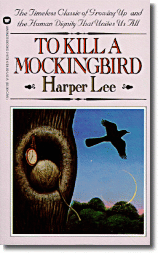
To Kill A Mockingbird by Harper Lee

Lee, a lawyer herself was also the daughter of a country lawyer and it's impossible not to see her admiration for the profession embodied in Atticus Finch. He's well-mannered, a great father, and a terrific defence lawyer who fought for justice, defending an innocent black man in a town marked by virulent racism.
Read about another title on Scottoline's list.

Note: When I posted an item about the list when it was first published, Michele Dickey very kindly informed me that Harper Lee is in fact not a lawyer herself: Lee attended law school at the University of Alabama but left before completing her degree.

--Marshal Zeringue

Pg. 99: Scott Kurashige's "The Shifting Grounds of Race"

The current feature at the Page 99 Test: The Shifting Grounds of Race: Black and Japanese Americans in the Making of Multiethnic Los Angeles by Scott Kurashige.

About the book, from the publisher:

Los Angeles has attracted intense attention as a "world city" characterized by multiculturalism and globalization. Yet, little is known about the historical transformation of a place whose leaders proudly proclaimed themselves white supremacists less than a century ago. In The Shifting Grounds of Race, Scott Kurashige highlights the role African Americans and Japanese Americans played in the social and political struggles that remade twentieth-century Los Angeles.

Linking paradigmatic events like Japanese American internment and the Black civil rights movement, Kurashige transcends the usual "black/white" dichotomy to explore the multiethnic dimensions of segregation and integration. Racism and sprawl shaped the dominant image of Los Angeles as a "white city." But they simultaneously fostered a shared oppositional consciousness among Black and Japanese Americans living as neighbors within diverse urban communities.

Kurashige demonstrates why African Americans and Japanese Americans joined forces in the battle against discrimination and why the trajectories of the two groups diverged. Connecting local developments to national and international concerns, he reveals how critical shifts in postwar politics were shaped by a multiracial discourse that promoted the acceptance of Japanese Americans as a "model minority" while binding African Americans to the social ills underlying the 1965 Watts Rebellion. Multicultural Los Angeles ultimately encompassed both the new prosperity arising from transpacific commerce and the enduring problem of race and class divisions.

This extraordinarily ambitious book adds new depth and complexity to our understanding of the "urban crisis" and offers a window into America's multiethnic future.

Read an excerpt from The Shifting Grounds of Race, and learn more about the book at the Princeton University Press website.

Scott Kurashige is an associate professor of American Culture, History, and Asian/Pacific Islander American Studies at the University of Michigan and currently a visiting scholar at Harvard University’s Charles Warren Center for Studies in American History. The Shifting Grounds of Race: Black and Japanese Americans in the Making of Multiethnic Los Angeles (Princeton University Press, 2008) received the American Historical Association’s 2008 Albert J. Beveridge Award “for the best book in English on the history of the United States, Latin America, or Canada from 1492 to the present.” His writings on race, politics, and culture can be found on Huffington Post.

The Page 99 Test: The Shifting Grounds of Race.

--Marshal Zeringue

Sunday, February 01, 2009

What is Jane Lindskold reading?

The current featured contributor to Writers Read: Jane Lindskold, bestselling author of the Wolf series, which began with Through Wolf’s Eyes and concluded with Wolf’s Blood, as well as many other fantasy novels.

Her latest novel is Thirteen Orphans.

Lindskold's entry begins:
I’m an avid reader. I read fiction. I read non-fiction. I read manga. When I can’t find a way to interact with actual print fiction, I listen to recorded books.

What follows is a quick look at a sample of the books I’ve enjoyed the most over the last month or so.

In fiction, three titles immediately spring to mind. The first is Implied Spaces by Walter Jon Williams. This novel is a wild trip into a Vingean future where computers are intelligent, and evolved humanity is taking advantage of virtual realities sustained by these computers to explore an amazing variety of life-styles.

There’s more than a little indebtedness to Roger Zelazny in Implied Spaces, especially Zelazny novels such as Lord of Light and Isle of the Dead, but Williams makes no effort to hide this debt. Those who know Zelazny’s work will find the author’s polite bow fairly quickly. Acknowledging Williams’s debt to both Vernor Vinge and Roger Zelazny isn’t to say that Williams’s novel is derivative. It isn’t. His plot is his own; his characters buzz with his own unique energy. A good book for any reader, familiar or not with this author’s work.[read on]
Visit Jane Lindskold's website.

The Page 69 Test: Thirteen Orphans.

Writers Read: Jane Lindskold.

--Marshal Zeringue

Pg. 69: Janice Y. K. Lee's "The Piano Teacher"

The current feature at the Page 69 Test: The Piano Teacher by Janice Y. K. Lee.

About the book, from the publisher:
In the sweeping tradition of The English Patient, a gripping tale of love and betrayal set in war-torn Hong Kong

In 1942, Will Truesdale, an Englishman newly arrived in Hong Kong, falls headlong into a passionate relationship with Trudy Liang, a beautiful Eurasian socialite. But their love affair is soon threatened by the invasion of the Japanese as World War II overwhelms their part of the world. Will is sent to an internment camp, where he and other foreigners struggle daily for survival. Meanwhile, Trudy remains outside, forced to form dangerous alliances with the Japanese—in particular, the malevolent head of the gendarmerie, whose desperate attempts to locate a priceless collection of Chinese art lead to a chain of terrible betrayals.

Ten years later, Claire Pendleton comes to Hong Kong and is hired by the wealthy Chen family as their daughter’s piano teacher. A provincial English newlywed, Claire is seduced by the heady social life of the expatriate community. At one of its elegant cocktail parties, she meets Will, to whom she is instantly attracted—but as their affair intensifies, Claire discovers that Will’s enigmatic persona hides a devastating past. As she begins to understand the true nature of the world she has entered, and long-buried secrets start to emerge, Claire learns that sometimes the price of survival is love.
Listen to an interview with Janice Y. K. Lee and an excerpt of The Piano Teacher.

Read an excerpt from The Piano Teacher, and learn more about the book and author at Janice Y. K. Lee's website.

Janice Y. K. Lee was born and raised in Hong Kong and graduated from Harvard College. A former features editor at Elle and Mirabella magazines, she currently lives in Hong Kong.

The Page 69 Test: The Piano Teacher.

--Marshal Zeringue

Pg. 99: Edwin G. Burrows' "Forgotten Patriots"

The current feature at the Page 99 Test: Forgotten Patriots: The Untold Story of American Prisoners During the Revolutionary War by Edwin G. Burrows.

About the book, from the publisher:
Between 1775 and 1783, some 200,000 Americans took up arms against the British Crown. Just over 6,800 of those men died in battle. About 25,000 became prisoners of war, most of them confined in New York City under conditions so atrocious that they perished by the thousands. Evidence suggests that at least 17,500 Americans may have died in these prisons-more than twice the number to die on the battlefield. It was in New York, not Boston or Philadelphia, where most Americans gave their lives for the cause of independence. New York City became the jailhouse of the American Revolution because it was the principal base of the Crown’s military operations. Beginning with the bumper crop of American captives taken during the 1776 invasion of New York, captured Americans were stuffed into a hastily assembled collection of public buildings, sugar houses, and prison ships. The prisoners were shockingly overcrowded and chronically underfed-those who escaped alive told of comrades so hungry they ate their own clothes and shoes. Despite the extraordinary number of lives lost, Forgotten Patriots is the first-ever account of what took place in these hell-holes. The result is a unique perspective on the Revolutionary War as well as a sobering commentary on how Americans have remembered our struggle for independence-and how much we have forgotten.
Read more about Forgotten Patriots at the publisher's website, and visit Edwin G. Burrows' faculty webpage.

Edwin G. Burrows is Distinguished Professor of History at Brooklyn College of the City University of New York. He is the co-author of Gotham: A History of New York City to 1898, which won the 1999 Pulitzer Prize for History.

The Page 99 Test: Forgotten Patriots.

--Marshal Zeringue