Monday, March 27, 2023

What is Elizabeth Wein reading?

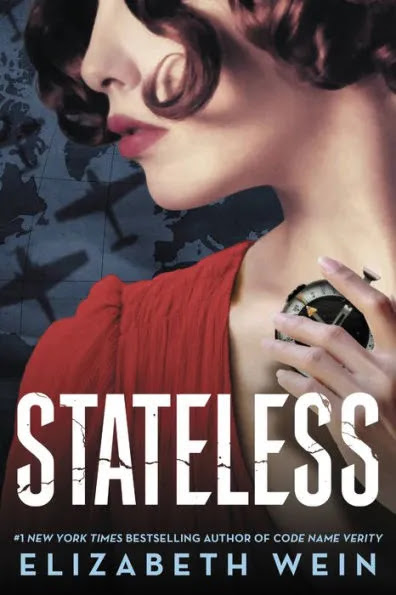
Featured at Writers Read: Elizabeth Wein, author of Stateless.

Her entry begins:
I am reading Seven Pillars of Wisdom by T.E. Lawrence. What a project.

I have great admiration for the movie Lawrence of Arabia; I once visited Cloud Hill, Lawrence’s eccentric home in southern England, and wished it were mine. We have a thing in our family where when you buy a tin of sardines and crackers in a local grocery store and eat it on a hike, that is a “Lawrence of Arabia picnic.” But I’d never thought about reading Lawrence’s autobiographical account of his World War I experience fighting the Turks until recently, when some internet rabbit-hole led me to an auction advertising a signed first edition for £27,000 or something equally ridiculous, and I...[read on]
About Stateless, from the publisher:
From the beloved #1 bestselling author of Code Name Verity, this thrilling murder mystery set in 1937 Europe soars with intrigue, glamour, secrets, and betrayal.

When Stella North is chosen to represent Britain in Europe’s first air race for young people, she knows all too well how high the stakes are. As the only participating female pilot, it’ll be a constant challenge to prove she’s a worthy competitor. But promoting peace in Europe feels empty to Stella when civil war is raging in Spain and the Nazis are gaining power—and when, right from the start, someone resorts to cutthroat sabotage to get ahead of the competition.

The world is looking for inspiration in what’s meant to be a friendly sporting event. But each of the racers is hiding a turbulent and violent past, and any one of them might be capable of murder…including Stella herself.
Visit Elizabeth Wein's website.

The Page 69 Test: Black Dove, White Raven.

The Page 69 Test: The Pearl Thief.

Writers Read: Elizabeth Wein (January 2019).

The Page 99 Test: A Thousand Sisters.

My Book, The Movie: Stateless.

The Page 69 Test: Stateless.

Writers Read: Elizabeth Wein.

--Marshal Zeringue

Seven crime novels that engage with reality TV

Molly Odintz is the Senior Editor for CrimeReads and the editor of Austin Noir, forthcoming from Akashic Books. She grew up in Austin and worked as a bookseller at BookPeople, and recently returned to Central Texas after five years in NYC. She likes cats, crime novels, and coffee.

At CrimeReads Odintz tagged seven "great thrillers and mysteries coming out over the past few years that engage with reality TV, its artifice, its struggles, and its discontents." One title on the list:
Alexandra Oliva, The Last One

I really enjoyed this one when it first came out. A contestant on a reality survival show emerges from the forest to find that the world itself has irrevocably changed, and has become, well, one big survival show. As she tries to make her way home to her family, she’ll test all her new skills and more in the struggle.
Read about another entry on the list.

The Last One is among Heather Chavez's seven novels where fun & games threaten to turn fatal.

The Page 69 Test: The Last One.

--Marshal Zeringue

Pg. 99: Zachary Jonathan Jacobson's "On Nixon's Madness"

Featured at the Page 99 Test: On Nixon's Madness: An Emotional History by Zachary Jonathan Jacobson.

About the book, from the publisher:
Was Richard Nixon actually a madman, or did he just play one?

When Richard Nixon battled for the presidency in 1968, he did so with the knowledge that, should he win, he would face the looming question of how to extract the United States from its disastrous war in Vietnam. It was on a beach that summer that Nixon disclosed to his chief aide, H. R. Haldeman, one of his most notorious, risky gambits: the madman theory.

In On Nixon's Madness, Zachary Jonathan Jacobson examines the enigmatic president through this theory of Nixon's own invention. With strategic force and nuclear bluffing, Nixon attempted to coerce his foreign adversaries through sheer unpredictability. As his national security advisor Henry Kissinger noted, Nixon's strategy resembled a poker game in which he "push[ed] so many chips into the pot" that the United States' foes would think the president had gone "crazy."

From Vietnam, Pakistan, and India to the greater Middle East, Nixon applied this madman theory. Foreign relations were not a steady march toward peaceful coexistence but rather an ongoing test of mettle. Nixon saw the Cold War as he saw his life, as a series of ordeals that demanded great risk and grand gestures. For decades, journalists, critics, and scholars have searched for the real Nixon behind these acts. Was he a Red-baiter, a worldly statesman, a war criminal or, in the end, a punchline?

Jacobson combines biography and intellectual and cultural history to understand the emotional life of Richard Nixon, exploring how the former president struggled between great effusions of feeling and great inhibition, how he winced at the notion of his reputation for rage, and how he used that ill repute to his advantage.
Visit Zachary Jonathan Jacobson's website.

The Page 99 Test: On Nixon's Madness.

--Marshal Zeringue

Coffee with a canine: Margaret Fenton & Roly, Lady and Mimi

Featured at Coffee with a Canine: Margaret Fenton & Roly, Lady and Mimi.

How Fenton and her Papillons were united, from the author:
Ten years ago, I wanted a dog. I’m allergic to cats so a dog was kinda the only option for a furry pet other than some form of rodent (no, thank you). My husband said he wasn’t a dog person and we couldn’t get one (Ha! So wrong). I literally begged and begged until he gave in, but his only stipulation was to get one like my brother had. At the time, my brother and his (now ex-) wife had a Papillion named Cinderella who was so beautiful and smart. So I found a lady here in Alabama who had Pap puppies for sale. I knew I wanted a male and she had three four-month-olds that were available. I went to her house and she took all the females out of the room and I sat on the floor with the three males. Roly walked over and sat in my lap. His birth-owner said, “I think that’s your dog.”

No truer statement has ever been uttered. So I bring Roly home and it takes, oh, about a month before my husband falls deeply, madly and truly in love with Roly. He looked at me and said, “Go get another one!” I called Roly’s birth-owner and she had Roly’s half-sister for sale, so we got her and that’s Lady. Mimi was my above-mentioned brother’s dog. He...[read on]
About Fenton's latest Claire Conover mystery, Little White Lies:
Claire Conover is drawn into another mystery when the office of black mayoral candidate Dr. Marcus Freedman is bombed. Marcus is found safe, but his campaign manager Jason O'Dell is found dead in the rubble. Claire's office gets a call about Jason's daughter who was left at her daycare, and she becomes Claire's latest charge as she investigates what happened.
Visit Margaret Fenton's website.

Coffee with a Canine: Margaret Fenton & Roly, Lady and Mimi.

--Marshal Zeringue

Sunday, March 26, 2023

Eight novels with characters who go to therapy

Lisa Zhuang is an intern at Electric Literature. She holds a BA in Creative Writing from Emory University and currently resides in mid-Missouri.

At Electric Lit she tagged eight books that "showcase characters who receive some kind of mental health care," including:
Queenie by Candice Carty-Williams

Queenie Jenkins’ no good, very bad year begins with a disastrous break-up with her white boyfriend Tom, followed soon by the realization that she was pregnant and just had a miscarriage. Things get worse when Queenie attempts to distract herself by sleeping with other men, one of whom turns out to be her close friend Cassandra’s boyfriend. As her personal life falls apart, her professional life grows stagnant, her editor refusing to take her pitches seriously and sending her off to write shallow fashion articles. Everything gets worse before it gets better, but eventually Queenie opts to visit a therapist, who slowly works with her to find value within herself.
Read about another entry on the list.

--Marshal Zeringue

Pg. 99: Stevan M. Weine's "Best Minds"

Featured at the Page 99 Test: Best Minds: How Allen Ginsberg Made Revolutionary Poetry from Madness by Stevan M. Weine.

About the book, from the publisher:
A revelatory look at how poet Allen Ginsberg transformed experiences of mental illness and madness into some of the most powerful and widely read poems of the twentieth century.

Allen Ginsberg’s 1956 poem “Howl” opens with one of the most resonant phrases in modern poetry: “I saw the best minds of my generation destroyed by madness.” Thirty years later, Ginsberg entrusted a Columbia University medical student with materials not shared with anyone else, including psychiatric records which documented how he and his mother, Naomi Ginsberg, struggled with mental illness.

In Best Minds, psychiatrist , researcher, and scholar Stevan M. Weine, M.D., who was that medical student, examines how Allen Ginsberg took his visions and psychiatric hospitalization, his mother’s devastating illness, confinement, and lobotomy, and the social upheavals of the post-war world and imaginatively transformed them.

Though madness is often linked with hardship and suffering, Ginsberg showed how it could also lead to profound and redemptive aesthetic, spiritual, and social changes. Through his revolutionary poetry and social advocacy, Ginsberg dedicated himself to leading others toward new ways of being human and easing pain.

Throughout his celebrated career Ginsberg’s writings and most public life made us feel as though we knew everything there was to know about him. However, much has been left out about his experiences growing up with a mentally ill mother, his visions, and his psychiatric hospitalization.

In Best Minds, with a forty-year career studying and addressing trauma, Weine provides a groundbreaking exploration of the poet and his creative process especially in relation to madness.

Best Minds examines the complex relationships between mental illness, psychiatry, trauma, poetry, and prophecy—using the access Ginsberg generously shared to offer new, lively and indispensable insights into an American icon. Weine also provides new understandings of the paternalism, treatment failures, ethical lapses, and limitations of American psychiatry of the 1940s and 1950s.

In light of these new discoveries, the challenges Ginsberg faced appear starker and his achievements, both as a poet and an advocate, are even more remarkable.
Learn more about Best Minds at the Fordham University Press website.

The Page 99 Test: Best Minds.

--Marshal Zeringue

Pg. 69: Amulya Malladi's "A Death in Denmark"

Featured at the Page 69 Test: A Death in Denmark: The First Gabriel Præst Novel by Amulya Malladi.

About the book, from the publisher:
Meet Gabriel Præst, an ex-Copenhagen cop (who dresses with panache), jazz aficionado, and relentless pursuer of truth as he explores Denmark’s Nazi-collaborator past and anti-Muslim present in a page-turning Nordic murder mystery with a cosmopolitan vibe

Everyone in Denmark knew that Yousef Ahmed, a refugee from Iraq, brutally murdered the right-wing politician Sanne Melgaard. So, when part-time blues musician, frustrated home renovator, and full-time private detective Gabriel Præst agrees to investigate the matter because his ex—the one who got away—asked him to, he knew it was a no-win case.

But as Gabriel starts to ask questions, his face meets with the fists of Russian gangsters; the Danish prime minister asks him for a favor; and he starts to realize that something may be rotten in the state of Denmark.

Wondering if Yousef was framed to heighten the local anti-Muslim sentiment, Gabriel follows a trail back in time to World War II when anti-Semitism was raging in Europe during the German occupation of Denmark. Fearing a nationalistic mindset has resurfaced, Gabriel rolls up the sleeves of his well-cut suit and gets to work. From the cobblestone streets of Copenhagen to the historic Strassen of Berlin where the sounds of the steel-toed boots of marching Nazis still linger, Gabriel finds that some very powerful Danes don’t want him digging into the case—as the secrets he unearths could shake the foundations of Danish identity.
Visit Amulya Malladi's website.

My Book, The Movie: A Death in Denmark.

The Page 69 Test: A Death in Denmark.

--Marshal Zeringue

Saturday, March 25, 2023

Seven novels featuring displacement in multicultural London

Cecile Pin grew up in Paris and New York City. She moved to London at eighteen to study Philosophy at University College London, followed by an MA at King’s College London. She writes for Bad Form Review, was longlisted for their Young Writer’s prize and is a London Writers Awards 2021 winner (Literary Fiction category). Her debut novel is Wandering Souls.

At Lit Hub she tagged seven favorite "novels that deal with displacement in London," including:
Girl, Woman, Other by Bernardine Evaristo

Winner of the Booker Prize, Girl, Woman, Other follows the lives of twelve characters – mostly women, mostly black – in Great-Britain. Almost all are either immigrants or children of immigrants, from Ghana, Nigeria, the Gambia, Barbados, Abyssinia, and Somalia. Besides London, we follow their lives in Cornwall and Newcastle throughout the last hundred years. We witness the discrimination they face, but also the joy they experience, the friendships they form.

Girl, Woman, Other is an ode to black womanhood and modern day Great-Britain. Like [Zadie Smith's] White Teeth, it is an ultimately joyous and triumphant tale, with an array of lovable characters.
Read about another entry on the list.

Girl, Woman, Other is among Kasim Ali's nine top books about interracial relationships.

--Marshal Zeringue

Pg. 99: Ari Joskowicz's "Rain of Ash"

Featured at the Page 99 Test: Rain of Ash: Roma, Jews, and the Holocaust by Ari Joskowicz.

About the book, from the publisher:
A major new history of the genocide of Roma and Jews during World War II and their entangled quest for historical justice

Jews and Roma died side by side in the Holocaust, yet the world did not recognize their destruction equally. In the years and decades following the war, the Jewish experience of genocide increasingly occupied the attention of legal experts, scholars, educators, curators, and politicians, while the genocide of Europe’s Roma went largely ignored. Rain of Ash is the untold story of how Roma turned to Jewish institutions, funding sources, and professional networks as they sought to gain recognition and compensation for their wartime suffering.

Ari Joskowicz vividly describes the experiences of Hitler’s forgotten victims and charts the evolving postwar relationship between Roma and Jews over the course of nearly a century. During the Nazi era, Jews and Roma shared little in common besides their simultaneous persecution. Yet the decades of entwined struggles for recognition have deepened Romani-Jewish relations, which now center not only on commemorations of past genocides but also on contemporary debates about antiracism and Zionism.

Unforgettably moving and sweeping in scope, Rain of Ash is a revelatory account of the unequal yet necessary entanglement of Jewish and Romani quests for historical justice and self-representation that challenges us to radically rethink the way we remember the Holocaust.
Learn more about Rain of Ash at the Princeton University Press website.

The Page 99 Test: Rain of Ash.

--Marshal Zeringue

Q&A with Mia Tsai

From my Q&A with Mia Tsai, author of Bitter Medicine:
How much work does your title do to take readers into the story?

On a scale of "says what it is exactly on the tin" to "metaphor several layers deep," Bitter Medicine scores in the middle. "Bitter medicine" describes the main theme of the book--the hard-to-swallow lessons you have to learn in life, whatever they may be--but it is also literal, as the title appears within the text. It's also a bit of editorializing about the taste of Chinese medicine, most of which has disagreed with my taste buds. More to the point, Elle, one of my main characters, is a descendant of the Chinese god of medicine and a pretty good doctor in her own right, so the title is relevant in multiple ways.

Prior to a big rewrite that pushed the novel more into the realm of fantasy, it was titled A Brush with Love, which worked for me because Elle is a calligrapher and a lot of what she values revolves around her art. But it could also be misconstrued as a romance about dentists. Bitter Medicine is definitely the better title, and...[read on]
Visit Mia Tsai's website.

Q&A with Mia Tsai.

--Marshal Zeringue

Friday, March 24, 2023

Eight of the best bad seed novels

Nathan Oates’s debut collection of short stories, The Empty House, won the Spokane Prize. His stories have appeared in The Missouri Review, Alaska Quarterly Review, Copper Nickel, West Branch, The Best American Mystery Stories, and elsewhere. He is an associate professor at Seton Hall University, where he teaches creative writing. He lives in Brooklyn, New York, with his family.

Oates’s new novel is A Flaw in the Design.

At CrimesReads he tagged eight novels featuring "bad seeds and the threat they pose to their families, their communities, and, in some cases, the world." One entry on the list:
The Talented Mr. Ripley, Patricia Highsmith

No list of bad seeds could ever leave out Tom Ripley, one of the most iconic figures in twentieth century fiction. This is my favorite of Highsmith’s novels, though she wrote many very good ones. That she manages to make me sympathize with a character who is a psychopath is something I studied and want to try to emulate. In some ways I think of the dangerous nephew in my own novel as a hybrid of Tom and his love-object/first victim, Dickie Greenleaf. A dangerous, devious boy, but also one, in my version, who is fabulously rich and entitled. Many of Highsmith’s narrators teeter on the edge of evil, and part of the pleasure of her books is watching them slip fully into their true, often terrible, selves.
Read about another title on the list.

The Talented Mr Ripley is on Lizzy Barber's list of seven titles about wealthy people behaving badly, Charlotte Northedge's top ten list of novels about toxic friendships, Elizabeth Macneal's list of five books that explore the dark side of fitting in, Saul A. Lelchuk's nine great thrillers featuring alter egos, Emma Stonex's list of seven top mystery novels set by the sea, Russ Thomas's top ten list of queer protagonists in crime fiction, Paul Vidich's list of five of the most enduring imposters in crime fiction & espionage, Lisa Levy's list of eight of the most toxic friendships in crime fiction, Elizabeth Macneal's list of five sympathetic fictional psychopaths, Laurence Scott's list of seven top books about doppelgangers, J.S. Monroe's list of seven suspenseful literary thrillers, Simon Lelic's top ten list of false identities in fiction, Jeff Somers's list of fifty novels that changed novels, Olivia Sudjic's list of eight favorite books about love and obsession, Roz Chast's six favorite books list, Nicholas Searle's top five list of favorite deceivers in fiction, Chris Ewan's list of the ten top chases in literature, Meave Gallagher's top twenty list of gripping page-turners every twentysomething woman should read, Sophia Bennett's top ten list of books set in the Mediterranean, Emma Straub's top ten list of holidays in fiction, E. Lockhart's list of favorite suspense novels, Sally O'Reilly's top ten list of novels inspired by Shakespeare, Walter Kirn's top six list of books on deception, Stephen May's top ten list of impostors in fiction, Simon Mason's top ten list of chilling fictional crimes, Melissa Albert's list of eight books to change a villain, Koren Zailckas's list of eleven of literature's more evil characters, Alex Berenson's five best list of books about Americans abroad John Mullan's list of ten of the best examples of rowing in literature, Tana French's top ten maverick mysteries list, the Guardian's list of the 50 best summer reads ever, the Telegraph's ultimate reading list, and Francesca Simon's top ten list of antiheroes.

--Marshal Zeringue

Pg. 99: Christine Kenneally's "Ghosts of the Orphanage"

Featured at the Page 99 Test: Ghosts of the Orphanage: A Story of Mysterious Deaths, a Conspiracy of Silence, and a Search for Justice by Christine Kenneally.

About the book, from the publisher:
The shocking secret history of twentieth-century orphanages—which for decades hid violence, abuse, and deaths within their walls

For much of the twentieth century, a series of terrible events—abuse, both physical and psychological, and even deaths—took places inside orphanages. The survivors have been trying to tell their astonishing stories for a long time, but disbelief, secrecy, and trauma have kept them from breaking through. For ten years, Christine Kenneally has been on a quest to uncover the harrowing truth.

Centering her story on St. Joseph’s, a Catholic orphanage in Vermont, Kenneally has written a stunning account of a series of crimes and abuses. But her work is not confined to one place. Following clues that take her into the darkened corners of several institutions across the globe, she finds a trail of terrifying stories and a courageous group of survivors who are seeking justice. Ghosts of the Orphanage is an incredible true crime story and a reckoning with a past that has stayed buried for too long, with tragic consequences.
Visit Christine Kenneally's website.

Writers Read: Christine Kenneally (November 2009).

The Page 99 Test: The First Word.

The Page 99 Test: Ghosts of the Orphanage.

--Marshal Zeringue

Pg. 69: Asale Angel-Ajani's "A Country You Can Leave"

Featured at the Page 69 Test: A Country You Can Leave: A Novel by Asale Angel-Ajani.

About the book, from the publisher:
A stunning debut novel following the turbulent relationship of a Black, biracial teen and her ferocious Russian mother, struggling to survive in the California desert.

When sixteen-year-old Lara and her fiery mother, Yevgenia, find themselves homeless again, the misnamed Oasis Mobile Estates is all they can afford. In this new community, where residents are down on their luck but rich in humor and escape plans, Lara navigates what it means to be the Black, biracial daughter of a Russian mother and begins to wonder what a life beyond Yevgenia’s orbit—insistence on reading only the right kind of books (Russian), having the right kind of relationships (casual, with lots of sex)—might look like.

Lara knows that something else lies beneath her mother’s fierce, independent spirit, but Yevgenia doesn't believe in sharing, least of all with her daughter. When a brutal attack exposes the cracks in their relationship, Lara and Yevgenia are forced to confront the family legacy of violence and the strain of inherited trauma on the bonds of their love.

A Country You Can Leave is a dazzling, sharp-witted story, suffused with yearning, as Lara and Yevgenia attempt to forge their own identities and thrive in a hostile land. Compelling and empathetic, wry and intimate, Asale Angel-Ajani's unforgettable debut novel examines the beauty and dangers of womanhood in multiracial America.
Visit Asale Angel-Ajani's website.

My Book, The Movie: A Country You Can Leave.

The Page 69 Test: A Country You Can Leave.

--Marshal Zeringue

Thursday, March 23, 2023

What is Frank Sennett reading?

Featured at Writers Read: Frank Sennett, author of Shadow State.

His entry begins:
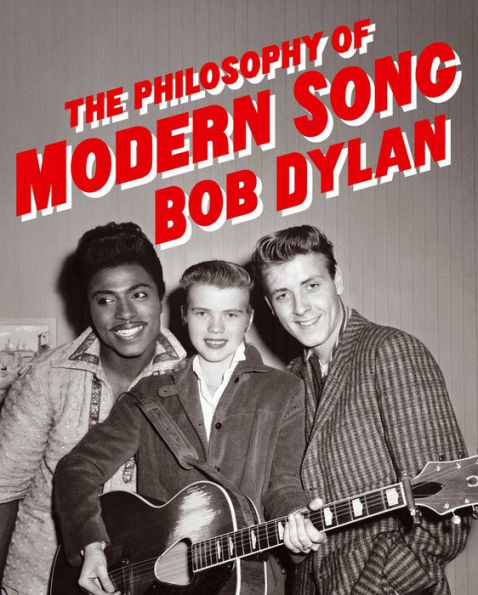
I'm two-thirds of the way through Bob Dylan's The Philosophy of Modern Song, which comprises 60-plus essays on songs that have hit his creative trip wires over the years. I'm listening to the audio version of the book, which intercuts Dylan's direct narration with passages read by actors such as Rita Moreno, Sissy Spacek, Jeff Bridges and John Goodman. It's a delightful flight of fancy, reminiscent of Dylan's old Sirius XM show, Theme Time Radio Hour. It's at turns moody and atmospheric, elliptical and playful, and always insightful. My favorite essay so far is the one in which Dylan adopts the persona of the narrator of "Blue Suede Shoes," written by Carl Perkins in 1955 and recorded most memorably by Elvis Presley the following year. In character, Dylan...[read on]
About Shadow State, from the publisher:
Perfect for fans of Matthew Quirk and Barry Eisler, in Frank Sennett’s hands, the world of a former military officer and Secret Service agent comes to harrowing life as a diabolical plot threatens everything he cherishes and believes.

Ex-Army Ranger sniper Rafe Hendrix leads the Secret Service detail of President Wyetta Johnson. Rafe and Wyetta became close when they served together in Afghanistan and he saved her life during a recon misadventure that cost her a leg.

The President’s wife visits a D.C. private-school classroom, and Hendrix is on sniper duty when a suicide bomber heads toward the First Lady. Hendrix disobeys a direct order and an unthinkable disaster unfolds. Though Hendrix may have saved the First Lady, he’s blamed for the carnage. And the violence hits harder than he ever could have imagined.

Rafe is cast adrift after the incident and he leaves D.C. for Fort Stockton, Texas. His prospects brighten when he meets veterinarian Melody Sanchez and their romance begins to bloom. But there’s still unfinished business waiting in the wings.

Someone from the past is bent on revenge—and he has Rafe firmly in his sights. His plan is as twisted as they come—grisly recreations of some of the most terrible events from the past. And now it’s up to Rafe to learn from history—or be doomed to repeat it.
Follow Frank Sennett on Twitter.

The Page 99 Test: Shadow State.

My Book, The Movie: Shadow State.

Writers Read: Frank Sennett.

--Marshal Zeringue

Top ten books about corruption

David Beckler's new Antonia Conti thriller is A Stolen Memory.

In the Guardian he writes:
When I wrote the first of the Antonia Conti novels, A Long Shadow, in 2013, I believed most readers didn’t think we had a problem with corruption in the UK. Some early feedback I got from publishers and agents mentioned it was a bit “far-fetched”. By the time it came out last year, public opinion had changed.
One of the author's top ten books about corruption:
The Border by Don Winslow

The last instalment of a trilogy that charts 40 years of the “war on drugs”. Our guide is Art Keller, who has risen to the highest echelons of the DEA. These are the stories of the drug producers, smugglers, and distributors on one side and the drug enforcement agencies and the politicians who ostensibly control them on the other. Between them are the people caught up in a conflict they want no part of but can’t escape. Above these are the ruthless cartels that control the drug trade and buy off politicians and police officers. We’re shown the devastating impact this has on the lives of the innocent and not-so-innocent. Winslow brings the strands together with great skill.
Read about another entry on the list.

--Marshal Zeringue

Pg. 99: Gary Smith's "Distrust"

Featured at the Page 99 Test: Distrust: Big Data, Data-Torturing, and the Assault on Science by Gary Smith.

About the book, from the publisher:
There is no doubt science is currently suffering from a credibility crisis.

This thought-provoking book argues that, ironically, science's credibility is being undermined by tools created by scientists themselves. Scientific disinformation and damaging conspiracy theories are rife because of the internet that science created, the scientific demand for empirical evidence and statistical significance leads to data torturing and confirmation bias, and data mining is fuelled by the technological advances in Big Data and the development of ever-increasingly powerful computers.

Using a wide range of entertaining examples, this fascinating book examines the impacts of society's growing distrust of science, and ultimately provides constructive suggestions for restoring the credibility of the scientific community.
Visit Gary Smith's website.

The Page 99 Test: Distrust.

--Marshal Zeringue

Amulya Malladi's "A Death in Denmark," the movie

Featured at My Book, The Movie: A Death in Denmark: The First Gabriel Præst Novel by Amulya Malladi.

The entry begins:
In A Death in Denmark, there is a tricky element to my protagonist Gabriel Præst. He shaves his head. While I wrote the book, I didn’t have an actor in mind, I never do, my characters are their own people—but once the book is done and people say, “this will make a great movie”—as a writer, you started to go through your mental rolodex of actors to see who would fit.

So, let’s talk about Gabriel. He’s an ex-Copenhagen cop turned Private Investigator. He loves good food and wine. Dresses well. Has an excellent sense of humor. And he plays the blues and jazz. He shaves his head and loves a good fedora. Is a snappy dresser—designer all the way. Lives in the famous Kartoffelrækkerne, the historical “potato” townhouses in the center of Copenhagen—a house that he was constantly renovating. Is not an alcoholic or a drug addict or tortured soul as so many Nordic Noir male protagonists are. He is a good father and close to his daughter. He is single and has lovers. He has authentic relationships with friends. And most importantly, he knows himself.

My first choice would be Danish actor Dar Salim, who received a Bodil Award nomination in the category Best Actor for the film Go With Peace, Jamil in 2008 and you can see him in the recent Danish Netflix crime drama, Loving Adults. He’s a...[read on]
Visit Amulya Malladi's website.

My Book, The Movie: A Death in Denmark.

--Marshal Zeringue

Wednesday, March 22, 2023

Seven top books featuring frightening fungi

Vanessa Armstrong is a book lover and writer. She lives in Los Angeles with her dog Penny, her daughter Maddie, and her husband Jon.

At Vulture she tagged seven "delicious sporror books to check out if you’re hankering for another tale [like The Last of Us] based on fungal fears." One title on the list:
Wanderers, by Chuck Wendig

At 775 pages, Wanderers is a honker of a book, made that much more so given it’s the first in a duology. The novel, which has understandably been compared to Stephen King’s The Stand, starts out when some people inexplicably enter a trance-like state where they perpetually sleepwalk toward some unknown destination. The Walkers, as they’re called, cause societal upheaval, and things only get worse when a fungal infection called White Mask threatens to kill all of humanity. We follow these cataclysmic events through a handful of those affected, and the mystery of the sleepwalkers eventually unfolds as the story progresses and more succumb to a fungal death.

Shroom Score: 6/10 spores. White Mask plays a pivotal role in the book but there are other post-apocalyptic shenanigans that make death by fungus only one of many issues its characters face.
Read about another entry on the list.

Wanderers is among Mark Skinner's ten top reads for Stranger Things fans.

--Marshal Zeringue

Pg. 99: Dean King's "Guardians of the Valley"

Featured at the Page 99 Test: Guardians of the Valley: John Muir and the Friendship that Saved Yosemite by Dean King.

About the book, from the publisher:
The dramatic and uplifting story of legendary outdoorsman and conservationist John Muir’s journey to become the man who saved Yosemite—from the author of the bestselling Skeletons on the Zahara: A True Story of Survival.

In June of 1889 in San Francisco, John Muir—iconic environmentalist, writer, and philosopher—meets face-to-face for the first time with his longtime editor Robert Underwood Johnson, an elegant and influential figure at The Century magazine. Before long, the pair, opposites in many ways, decide to venture to Yosemite Valley, the magnificent site where twenty years earlier, Muir experienced a personal and spiritual awakening that would set the course of the rest of his life.

Upon their arrival the men are confronted with a shocking vision, as predatory mining, tourism, and logging industries have plundered and defaced “the grandest of all the special temples of Nature.” While Muir is consumed by grief, Johnson, a champion of society’s most pressing debates via the pages of the nation’s most prestigious magazine, decides that he and Muir must fight back. The pact they form marks a watershed moment, leading to the creation of Yosemite National Park, and launching an environmental battle that captivates the nation and ushers in the beginning of the American environmental movement.

Beautifully rendered, deeply researched, and inspiring, Guardians of the Valley is a moving story of friendship, the written word, and the transformative power of nature. It is also a timely and powerful “origin story” as the toweringly complex environmental challenges we face today become increasingly urgent.
Learn more about the book and author at Dean King's website and Facebook page.

The Page 99 Test: The Feud.

The Page 99 Test: Guardians of the Valley.

--Marshal Zeringue

Pg. 69: Edward Ashton's "Antimatter Blues"

Featured at the Page 69 Test: Antimatter Blues: A Mickey7 Novel by Edward Ashton.

About the book, from the publisher:
Edward Ashton's Antimatter Blues is the thrilling follow up to Mickey7 in which an expendable heads out to explore new terrain for human habitation.

Summer has come to Niflheim. The lichens are growing, the six-winged bat-things are chirping, and much to his own surprise, Mickey Barnes is still alive—that last part thanks almost entirely to the fact that Commander Marshall believes that the colony’s creeper neighbors are holding an antimatter bomb, and that Mickey is the only one who’s keeping them from using it. Mickey’s just another colonist now. Instead of cleaning out the reactor core, he spends his time these days cleaning out the rabbit hutches. It’s not a bad life.

It’s not going to last.

It may be sunny now, but winter is coming. The antimatter that fuels the colony is running low, and Marshall wants his bomb back. If Mickey agrees to retrieve it, he’ll be giving up the only thing that’s kept his head off of the chopping block. If he refuses, he might doom the entire colony. Meanwhile, the creepers have their own worries, and they’re not going to surrender the bomb without getting something in return. Once again, Mickey finds the fate of two species resting in his hands. If something goes wrong this time, though, he won’t be coming back.
Visit Edward Ashton's website.

The Page 69 Test: Mickey7.

Q&A with Edward Ashton.

The Page 69 Test: Antimatter Blues.

--Marshal Zeringue

Tuesday, March 21, 2023

What is Frances Brody reading?

Featured at Writers Read: Frances Brody, author of A Mansion for Murder: A Kate Shackleton Mystery.

Her entry begins:
Ulysses by James Joyce

I have a dog-eared copy of the 1969 Penguin paperback edition of this book, so why am I reading it again?

For my birthday, I was given the Penguin Clothbound Classics edition, published in 2022 to mark the centenary of the book’s publication. What makes reading this edition a great pleasure is that I am not reading alone. I am listening on my iPad, to the recording made by RTÉ Radio, a division of the Irish national broadcasting organisation Raidió Teilifís Éireann.

I read, and I eavesdrop. Dublin voices bring Bloomsday to...[read on]
About A Mansion for Murder, from the publisher:
Old bones speak from the grave as a curse descends on Saltaire in acclaimed author Frances Brody’s thirteenth Kate Shackleton mystery, perfect for fans of Rhys Bowen and Jacqueline Winspear.

When Kate Shackleton disembarks at Saltaire station, in the West Riding of Yorkshire, she has no idea what to expect. A stranger, Ronnie Creswell, has written to say that he has urgent information about the past that will interest her, and he persuades her to make the journey to Milner Field, the grand house that is said to be cursed. But moments after Kate arrives at the lodge, a messenger brings devastating news to Ronnie’s parents: he has been found drowned in the mill reservoir.

Ronnie’s father suspects that this was no accident, and the post-mortem proves him right. Ronnie was murdered. Terrified and distraught, Mrs. Creswell refuses to stay at the Lodge a moment longer. But events take an even more shocking turn when ten-year-old Nancy Creswell, eyes and ears for her blind Uncle Nick, goes missing. An account of the fateful Saturday of Ronnie’s death arouses Kate’s suspicions, and furhter investigations could prove her right. But truth is never so straightforward at Milner Field. Uncle Nick spins an old story that could hold the key to finding Nancy alive—though the fabled curse may not have claimed its last victim yet. And only a set of old bones buried on the grounds will finally reveal the horrifying truth.
Visit Frances Brody's website.

The Page 69 Test: Dying in the Wool.

The Page 69 Test: A Woman Unknown.

The Page 69 Test: Murder on a Summer's Day.

The Page 69 Test: Death of an Avid Reader.

The Page 69 Test: A Death in the Dales.

Writers Read: Frances Brody.

--Marshal Zeringue

Six top crime-in-the-family thrillers

Katherine Higgs-Coulthard became a writer on the limb of a Sycamore tree when she was in elementary school. Since then she’s written in abandoned buildings, cemeteries, parks, and even on a tall ship, but her favorite place to write has always been the woods. Higgs-Coulthard graduated from the University of Nebraska with a bachelor's in education and earned a master's degree from Indiana University, before completing her doctorate in Education through Northeastern University. She has taught kindergarten, third, and fifth grades. Now she trains teachers at Saint Mary’s College and offers writing camps and classes for children and teens through Michiana Writers’ Center.

Higgs-Coulthard's new novel is Junkyard Dogs.

At CrimeReads she tagged six favorite crime-in-the-family thrillers, including:
Sharp Objects by Gillian Flynn

Most people know Gillian Flynn from her bestseller-turned-movie, Gone Girl. My favorite of Flynn’s works is still Sharp Objects because its unflinching take family dysfunction. When reporter Camille Preaker returns home to investigate the case of a missing girl, she finds herself right back in the drama of the family she’d moved across the country to escape. As she follows the clues to uncover what happened to the missing girl, she discovers terrifying connections to her own past. Although the language and tone are raw and explicit, they perfectly capture Camille’s disillusionment with the world and men in particular. Bonus—the book was made into a Netflix series featuring Amy Adams!
Read about another entry on the list.

Sharp Objects is among Zach Vasquez's seven dark novels about motherhood, Christina Dalcher's seven crime books that challenge the idea of inherent female goodness, Nicole Trope's six domestic suspense novels where nothing is really ever what it seems, Heather Gudenkauf's ten great thrillers centered on psychology, and Peter Swanson's ten top thrillers that explore mental health.

--Marshal Zeringue

Pg. 99: Sander van der Linden's "Foolproof"

Featured at the Page 99 Test: Foolproof: Why Misinformation Infects Our Minds and How to Build Immunity by Sander van der Linden.

About the book, from the publisher:
Informed by decades of research and on-the-ground experience advising governments and tech companies, Foolproof is the definitive guide to navigating the misinformation age.

From fake news to conspiracy theories, from inflammatory memes to misleading headlines, misinformation has swiftly become the defining problem of our era. The crisis threatens the integrity of our democracies, our ability to cultivate trusting relationships, even our physical and psychological well-being—yet most attempts to combat it have proven insufficient. In Foolproof, one of the world’s leading experts on misinformation lays out a crucial new paradigm for understanding and defending ourselves against the worldwide infodemic.

With remarkable clarity, Sander van der Linden explains why our brains are so vulnerable to misinformation, how it spreads across social networks, and what we can do to protect ourselves and others. Like a virus, misinformation infects our minds, exploiting shortcuts in how we see and process information to alter our beliefs, modify our memories, and replicate at astonishing rates. Once the virus takes hold, it’s very hard to cure. Strategies like fact-checking and debunking can leave a falsehood still festering or, at worst, even strengthen its hold.

But we aren’t helpless. As van der Linden shows based on award-winning original research, we can cultivate immunity through the innovative science of “prebunking”: inoculating people against false information by preemptively exposing them to a weakened dose, thus empowering them to identify and fend off its manipulative tactics. Deconstructing the characteristic techniques of conspiracies and misinformation, van der Linden gives readers practical tools to defend themselves and others against nefarious persuasion—whether at scale or around their own dinner table.
Visit Sander van der Linden's website.

The Page 99 Test: Foolproof.

--Marshal Zeringue

Q&A with Liam Callanan

From my Q&A with Liam Callanan, author of When in Rome: A Novel:

About the book, from the publisher:
How much work does your title do to take readers into the story?

In When in Rome, 52-year-old Claire Murphy heads to Rome to help some American nuns there sell their crumbling convent—built for 300, it only houses 3 (and at least one ghost). Once there, though, she falls in love with the city, the convent, and most unexpectedly, the nuns' life—so much so that she considers joining their ranks. Just then, her old college flame shows up. What to do? Well, when in Rome...

What's in a name?

The names in this book come from a variety of sources—friends, family, and some, out of the blue. The name of the protagonist's daughter, Dorothy, comes from...[read on]
Visit Liam Callanan's website.

Q&A with Liam Callanan.

--Marshal Zeringue

Monday, March 20, 2023

Asale Angel-Ajani's "A Country You Can Leave," the movie

Featured at My Book, The Movie: A Country You Can Leave: A Novel by Asale Angel-Ajani.

The entry begins:
A Country You Can Leave tells the story of Lara, a biracial Afro-Cuban-Russian girl, and her Russian mother, Yevgenia. It opens with their arrival at the Oasis Mobil Estates, a somewhat ne’re-do-well community located in the California Desert. As a mother and daughter duo trying to figure out their place in America, the novel is part love story and part a story of coming of age under difficult circumstances. But it’s also a novel of dark humor and outrageous characters that, I hope, stay with you for a long while.

As my novel is set in the desert, I imagine one of those films that have to convey the heat and the stretch of open blue skies in a way that was both artful and realistic. The actresses that I think would be great at playing the central mother and daughter characters would be Charlize Theron, playing the complex and fierce Russian mother, Yevgenia, and the British actress...[read on]
Visit Asale Angel-Ajani's website.

My Book, The Movie: A Country You Can Leave.

--Marshal Zeringue

Five top books about coming of age queer

Richard Mirabella is a writer and civil servant living in Upstate New York. His stories have appeared in American Short Fiction, Split Lip Magazine, wigleaf, and elsewhere.

His debut novel is Brother & Sister Enter the Forest.

At Lit Hub Mirabella tagged five "books about children learning about the troubles of the world, young adults trying to find their place as queer people in a straight society, and a few adults who don’t quite fit into the mold of expected adulthood, who are still trying to shake off the skins of their former selves." One title on the list:
Let’s Get Back to the Party by Zak Salih

A coming-of-age novel which finds the characters already grown, but not able to let the pain and trauma of their early lives go. I don’t recall reading a novel which so specifically details a particular delayed adulthood in gay men of a certain age, those who grew up during the AIDS crisis, who encountered the fear mongering and shaming of that time, the trauma of watching men, possible future versions of themselves, dying. Oscar and Sebastian are each dealing with this in their own way: Oscar with partying and lamenting what he sees as the death of gay culture, resisting assimilation, and Sebastian with a desire to connect and settle down. He also envies his young queer students, who are living openly, in a way he couldn’t at their age. This is an uneasy and singular novel of gay life. I found myself laughing and crying with recognition. I don’t need to see myself in a novel, and prefer not to, honestly, but here it was exhilarating.
Read about another entry on the list.

The Page 69 Test: Let's Get Back to the Party.

--Marshal Zeringue

Pg. 99: Leslie Reperant's "Fatal Jump"

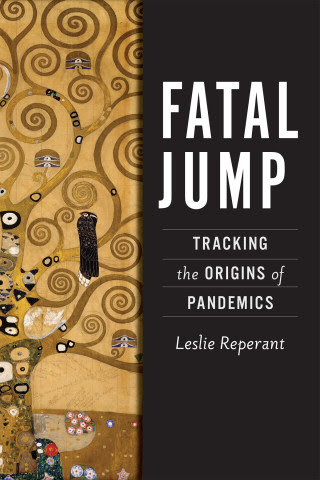
Featured at the Page 99 Test: Fatal Jump: Tracking the Origins of Pandemics by Leslie Reperant.

About the book, from the publisher:
Exploring the fateful chains of events that gave rise to humanity's infectious diseases and pandemics.

Why do global pandemics materialize? To address this question, we must delve into the world of pathogens that transcend their original host species and jump into new ones. Most pathogens fail to initiate infection or spread in the population when they jump. Only a few sustain onward chains of transmission, and even fewer sustain these indefinitely. Yet the rare pathogens that do make the leap have caused many of humanity's most dangerous infectious diseases.

In Fatal Jump: Tracking the Origins of Pandemics, veterinary disease ecologist Dr. Leslie Reperant investigates mysteries such as how African-originated monkeypox left its home continent, why COVID-19 could threaten measles control, and how pigs' fondness for mangoes enabled the deadly Nipah virus to spread. She shares behind-the-scenes insights into hugely destructive pathogens carried by rats, bats, ticks, and mosquitoes, as well as lesser-known vectors such as prairie dogs and camels. Drawing from the latest research, she discusses whether we can predict these deadly jumps before they happen and what factors—including environmental change, population dynamics, and molecular evolution—enable a zoonotic disease to reach full pandemic status. Rich with recent scientific discoveries and emerging theories, this book spans a diverse range of disciplines, weaving their insights into a holistic view of infectious disease.

With new pathogens emerging at an alarming pace, Fatal Jump reorients our perspective on pandemics from a human-centered standpoint to the bigger picture. We will understand what actions are necessary to control emergence only by recognizing the increasingly global nature of human society and the connections between the planet's environmental health and our own health.
Visit Leslie Reperant's website and follow her on Twitter.

The Page 99 Test: Fatal Jump.

--Marshal Zeringue

Pg. 69: Elizabeth Wein's "Stateless"

Featured at the Page 69 Test: Stateless by Elizabeth Wein.

About the book, from the publisher:
From the beloved #1 bestselling author of Code Name Verity, this thrilling murder mystery set in 1937 Europe soars with intrigue, glamour, secrets, and betrayal.

When Stella North is chosen to represent Britain in Europe’s first air race for young people, she knows all too well how high the stakes are. As the only participating female pilot, it’ll be a constant challenge to prove she’s a worthy competitor. But promoting peace in Europe feels empty to Stella when civil war is raging in Spain and the Nazis are gaining power—and when, right from the start, someone resorts to cutthroat sabotage to get ahead of the competition.

The world is looking for inspiration in what’s meant to be a friendly sporting event. But each of the racers is hiding a turbulent and violent past, and any one of them might be capable of murder…including Stella herself.
Visit Elizabeth Wein's website.

The Page 69 Test: Black Dove, White Raven.

The Page 69 Test: The Pearl Thief.

Writers Read: Elizabeth Wein (January 2019).

The Page 99 Test: A Thousand Sisters.

My Book, The Movie: Stateless.

The Page 69 Test: Stateless.

--Marshal Zeringue

Sunday, March 19, 2023

Five novels that get the pressures of flying right

Ward Larsen is a USA Today bestselling author, and seven-time winner of the Florida Book Award. A former fighter pilot, he has served as an airline captain, federal law enforcement officer, and is a trained aircraft accident investigator.

His latest book, Deep Fake, is a political thriller.

At CrimeReads Larsen tagged five novels that have an authentic portrayal of the pressures of flying, including:
In Falling, former flight attendant T.J. Newman does a terrific job of demonstrating how airline crewmembers work together and interact in a crisis. If you think about it, what better setting for an author to bring calamity than on a commercial airliner? Start with two hundred people from all walks of life, most of whom don’t know one another, and pack them into a thin metal tube. Accelerate to five hundred miles an hour, climb seven miles into the sky, then light the fuse and run. Newman’s experience shines through, creating an atmosphere that’s both edgy and believable. If nothing else, readers with have fresh incentive to pay attention to preflight safety briefings.
Read about another entry on the list.

Falling is among Louise Candlish's six top mysteries set on moving vehicles.

--Marshal Zeringue

Pg. 99: Paula Marantz Cohen's "Talking Cure"

Featured at the Page 99 Test: Talking Cure: An Essay on the Civilizing Power of Conversation by Paula Marantz Cohen.

About the book, from the publisher:
An invigorating exploration of the pleasures and social benefits of conversation

Talking Cure
is a timely and enticing excursion into the art of good conversation. Paula Marantz Cohen reveals how conversation connects us in ways that social media never can and explains why simply talking to each other freely and without guile may be the cure to what ails our troubled society.

Drawing on her lifelong immersion in literature and culture and her decades of experience as a teacher and critic, Cohen argues that we learn to converse in our families and then carry that knowledge into a broader world where we encounter diverse opinions and sensibilities. She discusses the role of food in encouraging conversation, the challenges of writing dialogue in fiction, the pros and cons of Zoom, the relationship of conversation to vaudeville acts, and the educational value of a good college seminar where students learn to talk about ideas. Cohen looks at some of the famous groups of writers and artists in history whose conversation fed their creativity, and details some of the habits that can result in bad conversation.

Blending the immediacy of a beautifully crafted memoir with the conviviality of an intimate gathering with friends, Talking Cure makes a persuasive case for the civilizing value of conversation and is essential reading for anyone interested in the chatter that fuels culture.
Visit Paula Marantz Cohen's website.

The Page 99 Test: Of Human Kindness.

The Page 99 Test: Talking Cure.

--Marshal Zeringue