Tuesday, September 09, 2014

What is Madeleine Kuderick reading?

Featured at Writers Read: Madeleine Kuderick, author of Kiss of Broken Glass.

Her entry begins:
I’ve recently read three books that all deal with tough issues and would make great discussion starters in the classroom.

Knockout Games, by award winning author G. Neri, presents an unflinching inside look at the random acts of violence that have surfaced in St. Louis and other cities. In the book, as in real life, teens attempt to knock out strangers with a single punch. The characters have no real motivation to play One Hit or Quit, other than to escape their boring lives and prove their manhood. They think it’s funny and don’t expect anything serious to come of it, until one of their games goes too far. This is a relentless and riveting read that exposes the risk of...[read on]
About Kiss of Broken Glass, from the publisher:
In the next 72 hours, Kenna may lose everything—her friends, her freedom, and maybe even herself. One kiss of the blade was all it took to get her sent to the psych ward for 72 hours. There she will face her addiction to cutting, though the outcome is far from certain.

When fifteen-year-old Kenna is found cutting herself in the school bathroom, she is sent to a facility for a mandatory psychiatric watch. There Kenna meets other kids like her—her roommate, Donya, who's there for her fifth time; the birdlike Skylar; and Jag, a boy cute enough to make her forget her problems . . . for a moment.

Madeleine Kuderick's gripping debut is a darkly beautiful and lyrical novel in verse, perfect for fans of Sonya Sones and Laurie Halse Anderson. Kiss of Broken Glass pulses with emotion and lingers long after the last page.
Visit Madeleine Kuderick's website.

Writers Read: Madeleine Kuderick.

--Marshal Zeringue

Monday, September 08, 2014

Four books that changed Justine Larbalestier

Justine Larbalestier is an Australian-American writer. Her novels include Razorhurst, Liar, How to Ditch Your Fairy, and the Magic or Madness trilogy.

One of four books that changed her, as shared at the Sydney Morning Herald:
If You Come Softly
Jacqueline Woodson

I give people If You Came Softly when they demand proof that novels for teens can be as good as the best novels for adults. In a scant 200 pages Woodson delves deep into New York City's geographical, class and racial fissures and then she breaks your heart.
Read about another book on the list.

--Marshal Zeringue

Pg. 69: Kathryn Erskine's "The Badger Knight"

Featured at the Page 69 Test: The Badger Knight by Kathryn Erskine.

About the book, from the publisher:
National Book Award winner Kathryn Erskine presents a unique novel about a sickly boy's epic journey through England and Scotland at the height of Medieval times.

Adrian is small for his age, even for an almost thirteen year old. It doesn't help that he has albinism, which makes those he meets wonder if he's an angel or a devil. His father is a bowyer, and all Adrian wants to do is become apprenticed and go off to war as an archer. But that's not what his father wants for him. Since Adrian can write, his father wants him to be a scribe. That's just about the last thing Adrian wants. When the Scots invade England and Adrian's best friend Hugh runs off to find his father and fight in battles, Adrian soon follows, intent on finding Hugh and joining him in glorious warfare against the pagans invading England from the north. When Adrian finds Hugh, who is caring for a wounded Scotsman, he's horrified that Hugh would aid an enemy. But soon, as Adrian gets to know Donald, he begins to question what he's been taught about the enemy and the nature of war. In this epic journey an afflicted boy finds an inner strength he never knew belonged to him.
Learn more about the book and author at Kathryn Erskine's website.

Check out Erskine's top 10 first person narratives.

Coffee with a Canine: Kathryn Erskine & Fletcher.

The Page 69 Test: The Badger Knight.

--Marshal Zeringue

Holly Schindler's "Feral," the movie

Featured at My Book, The Movie: Feral by Holly Schindler.

The entry begins:
Okay, I’ll admit it: I’m an enormous vintage movie buff. Can’t get enough of it. Love anything black and white. Also a big fan of Hitchcock (I think Rear Window might actually be my favorite).

My love of vintage movies influenced the writing of Feral, which falls squarely into the realm of the classic psychological thriller. The novel features a Hitchcockian pace and focus on character development (here, we’re exploring the inner workings of the main character, Claire Cain, as she attempts to restart her life following a brutal gang beating).

Like vintage psychological thrillers, Feral does borrow from other genres: mystery, horror, even paranormal, but the emphasis is on the “psychological” rather than thriller / action. Essentially, every aspect of Feral is used to explore Claire’s inner workings—that includes the wintry Ozarks setting. The water metaphor is employed frequently in psychological thrillers to represent the subconscious, and here is incorporated in the form of a brutal ice storm (that represents Claire’s “frozen” inner state). The...[read on]
Visit Holly Schindler's website, blog, Facebook page, and Twitter perch.

My Book, The Movie: Feral.

--Marshal Zeringue

Top ten underwater science fiction books

One of the ten top underwater science fiction books, at The Best Sci Fi Books:
Starfish
by Peter Watts – 1999

Emotionally damaged people are sent to work next to a giant rift in the ocean floor, harvesting energy for surface dwellers. The workers are a bio-engineered crew—people who have been altered to withstand the pressure and breathe the seawater to work in this weird, fertile undersea darkness.

This book taught me that you can make a protagonist as crazy as you want, as long as what she’s battling against is even crazier.

Brilliant, twisted fun by an ex-marine biologist. Go read it.
Read about another book on the list.

Starfish is the first book in the Rifters trilogy.

My Book, The Movie: Peter Watts's Rifters trilogy.

--Marshal Zeringue

Pg. 99: John D. Turner's "Banking in Crisis"

Featured at the Page 99 Test: Banking in Crisis: The Rise and Fall of British Banking Stability, 1800 to the Present by John D. Turner.

About the book, from the publisher:
Can the lessons of the past help us to prevent another banking collapse in the future? This is the first book to tell the story of the rise and fall of British banking stability over the past two centuries, shedding new light on why banking systems crash and on the factors underpinning banking stability. John Turner shows that there have only been two major banking crises in Britain during this time - the crises of 1825–6 and 2007–8. Although there were episodic bouts of instability in the interim, the banking system was crisis free. Why was the British banking system stable for such a long time? And, why did the British banking system implode in 2008? In answering these questions, the book explores the long-run evolution of bank regulation, the role of the Bank of England, bank rescues and the need to hold shareholders to account.
Learn more about Banking in Crisis at the Cambridge University Press website.

Follow John Turner on Twitter and visit his "Finance: Past, Present and Future" blog.

The Page 99 Test: Banking in Crisis.

--Marshal Zeringue

Sunday, September 07, 2014

Four top novels featuring bad academic behavior

At The Barnes & Noble Book Blog Ellen Wehle tagged four top novels "in which teachers and students run just a little bit off the rails," including:
Dear Committee Members, by Julie Schumacher

I laughed out loud when I read the tagline: “Finally, a novel that puts the ‘pissed’ back into ‘epistolary.’” A novel written entirely in letters can be tough to pull off, but Professor Jay Fitger is such an unforgettable character, so crude and cantankerous and, yes, pissed off, that the format never gets old. On the contrary, Fitger’s poison-pen letters to various university officials and employers just keep getting funnier—and more poignant. Trying to help a student who’s lost his financial aid, Fitger writes, “I’m making this last-minute request with every scrap of human warmth I’ve got left…I’m the tide propelling a shipwrecked man to your doorstep.” Ultimately, Fitger is so rancorous only because the world he loves so much is disappearing: the world of nonprofit, non-corporate higher education. If you’re still paying off student loans (your own or your child’s—or both), Dear Committee Members is sure to strike a chord.
Read about another entry on the list.

The Page 69 Test: Dear Committee Members.

--Marshal Zeringue

Pg. 69: Adam Selzer's "Play Me Backwards"

Featured at the Page 69 Test: Play Me Backwards by Adam Selzer.

About the book, from the publisher:
A committed slacker enlists the help of his best friend (who may or may not be the devil) to get his act together in this novel filled with humor, awkwardness, and honesty, ideal for fans of The Perks of Being a Wallflower.

Leon Harris isn’t exceptional and he isn’t popular. He’s the kind of guy that peaked in middle school, when once upon a time he was in the “gifted” program and on the fast track to Ivy League glory.

Now, a high school senior, he’s a complete slacker who spends his time hanging out in a third-rate ice cream parlor with his best friend, Stan, a guy who (jokingly, Leon thinks) claims to be Satan. Committed to his sloth, Leon panics when he finds out that Anna, the love of his life aka middle school girlfriend, might be moving back to town.

Determined to get his act together, Leon asks Stan for help. Stan gives him a few seemingly random and mysterious assignments. Date a popular girl. Listen to Moby-Dick, the audiobook. Find the elusive white grape slushee. Join the yearbook committee.

As each task brings Leon one step away from slacker city and one step closer to Anna, he starts to wonder if maybe he shouldn’t have promised Stan his soul after all…
Visit Adam Selzer's website.

The Page 69 Test: Play Me Backwards.

--Marshal Zeringue

J. M. Hayes's "The Spirit and the Skull," the movie

Featured at My Book, The Movie: The Spirit and the Skull by J. M. Hayes.

The entry begins:
Even with the infinite casting ability of someone whose choices are limited only by imagination, this was a tough job for me. The Spirit and the Skull is set 15,000 years ago on the North Alaskan tundra. The main characters are among the earliest immigrants into the New World, on their way to become American Indians. So I think they should look the part. The easiest way to do that is to cast American Indian actors. Since Westerns don't exactly crowd our theaters, TV series, or DVD selections these days, American Indian actors aren't so easy to find. Nevertheless, here goes.

Wes Studi – Raven
Raven is a forty-something Spirit Man and the central character in the novel. Wes Studi is older than that, but Raven would have lived his entire life exposed to wind, sun, weather, heat, and cold. I picture him as still lean and hard, but with a weathered face that's filled with character. Wes Studi has that kind of face, and one many people...[read on]
Learn more about the book and author at The Words & Worlds of J.M. Hayes website.

The Page 69 Test: The Spirit and the Skull.

Writers Read: J. M. Hayes.

My Book, The Movie: The Spirit and the Skull.

--Marshal Zeringue

What is Emmi Itäranta reading?

Featured at Writers Read: Emmi Itäranta, author of Memory of Water.

Her entry begins:
There are few authors whose work makes me look at my diary and pencil in a two-day slot for reading when they have a new book coming out. David Mitchell is one of them. While waiting for Mitchell's new novel The Bone Clocks, due out in September, I picked up his debut Ghostwritten.

Ghostwritten is a novel with a multitude of voices and characters, each equally compelling. Their interwoven lives and the way the book spans geography and time feel at times like blueprints for Mitchell's later grand opus, Cloud Atlas. But this familiarity works for rather than against the book. One of the reasons why I enjoy Mitchell's work so much is that all of his novels seem to take place in the same fictional universe (or possibly multiple, overlapping fictional universes). Characters...[read on]
About Memory of Water, from the publisher:
An amazing, award-winning speculative fiction debut novel by a major new talent, in the vein of Ursula K. Le Guin.

Global warming has changed the world’s geography and its politics. Wars are waged over water, and China rules Europe, including the Scandinavian Union, which is occupied by the power state of New Qian. In this far north place, seventeen-year-old Noria Kaitio is learning to become a tea master like her father, a position that holds great responsibility and great secrets. Tea masters alone know the location of hidden water sources, including the natural spring that Noria’s father tends, which once provided water for her whole village.

But secrets do not stay hidden forever, and after her father’s death the army starts watching their town—and Noria. And as water becomes even scarcer, Noria must choose between safety and striking out, between knowledge and kinship.

Imaginative and engaging, lyrical and poignant, Memory of Water is an indelible novel that portrays a future that is all too possible.
Visit Emmi Itäranta's website.

Writers Read: Emmi Itäranta.

--Marshal Zeringue

Saturday, September 06, 2014

Top ten watery tales for young readers

Berlie Doherty is the author of over 60 books for children, teenagers and adults.

One of ten top watery tales for young readers Goherty tagged for the Guardian:
River Boy by Tim Bowler

This is an elegiac novel for teenagers about coming to terms with death and bereavement. The river boy, and the river itself, help Jess to understand and accept that her grandfather has to die, and that mortality is essential to life.
Read about another book on the list.

--Marshal Zeringue

Pg. 69: Natalie Haynes's "The Furies"

Featured at the Page 69 Test: The Furies by Natalie Haynes.

About the book, from the publisher:
After losing her fiancé in a shocking tragedy, Alex Morris moves from London to Edinburgh to make a break with the past. Formerly an actress, Alex accepts a job teaching drama therapy at a school commonly referred to as "The Unit," a last-chance learning community for teens expelled from other schools in the city. Her students have troubled pasts and difficult personalities, and Alex is an inexperienced teacher, terrified of what she’s taken on and drowning in grief.

Her most challenging class is an intimidating group of teenagers who have been given up on by everyone before her. But Alex soon discovers that discussing the Greek tragedies opens them up in unexpected ways, and she gradually develops a rapport with them. But are these tales of cruel fate and bloody revenge teaching more than Alex ever intended? And who becomes responsible when these students take the tragedies to heart, and begin interweaving their darker lessons into real life with terrible and irrevocable fury?

Natalie Haynes' The Furies is a psychologically complex, dark and twisting novel about loss, obsession and the deep tragedies that can connect us to each other even as they blind us to our fate.
Visit Natalie Haynes's website.

The Page 69 Test: The Furies.

--Marshal Zeringue

Ten books to read before graduating college

At Publishers Weekly, Radhika Sanghani tagged ten books to make sure you've read before graduating college, including:
The Love Affairs of Nathaniel P by Adelle Waldman

College relationships are tough, but dating as a graduate is even worse. This novel hilariously - and sometimes depressingly - sums up what it's like to try to find romance when you're still trying to find yourself.

Nathaniel is not a great boyfriend but he's also a pretty common one. His obsessions with status, coolness and looks are part of 20-something life. Even if you don't have them, you will encounter people who do. Reading this will help you recognise/avoid/laugh at them.
Read about another book on the list.

The Page 69 Test: The Love Affairs of Nathaniel P..

--Marshal Zeringue

Pg. 99: Andrew Arsan's "Interlopers of Empire"

Featured at the Page 99 Test: Interlopers of Empire: The Lebanese Diaspora in Colonial French West Africa by Andrew Arsan.

About the book, from the publisher:
This work is the first comprehensive history of the Lebanese migrant communities of colonial French West Africa, a vast expanse that covered present-day Senegal, Côte d'Ivoire, Mali, Guinea, Benin and Mauritania. Where others have concentrated on the commercial activities of these migrants, casting them as archetypal middlemen, this work reconstructs not just their economic strategies, but also their social and political lives. Moreover, it examines the fraught responses of colonial Frenchmen to the unsettling presence of these interlopers of empire--responses which, with their echoes of metropolitan racism, helped to shape the ways in which Lebanese migrants represented themselves and justified their place in West Africa. This is a work which attempts not just to reshape broader understandings of diasporic life-of Janus-like existences lived in transit between distant locales, and de- pendent on the constant to-and-fro of people, news, and goods--but also to challenge the way we think about empires, and the relations between their constituent territories and diverse inhabitants.
Learn more about Interlopers of Empire at the Oxford University Press website.

The Page 99 Test: Interlopers of Empire.

--Marshal Zeringue

Friday, September 05, 2014

Pg. 69: Laird Hunt's "Neverhome"

Featured at the Page 69 Test: Neverhome by Laird Hunt.

About the book, from the publisher:
She calls herself Ash, but that's not her real name. She is a farmer's faithful wife, but she has left her husband to don the uniform of a Union soldier in the Civil War. NEVERHOME tells the harrowing story of Ash Thompson during the battle for the South. Through bloodshed and hysteria and heartbreak, she becomes a hero, a folk legend, a madwoman and a traitor to the American cause.

Laird Hunt's dazzling new novel throws a light on the adventurous women who chose to fight instead of stay behind. It is also a mystery story: why did Ash leave and her husband stay? Why can she not return? What will she have to go through to make it back home?

In gorgeous prose, Hunt's rebellious young heroine fights her way through history, and back home to her husband, and finally into our hearts.
Visit Laird Hunt's website, Facebook page, and Twitter perch.

The Page 69 Test: Neverhome.

--Marshal Zeringue

What is J. M. Hayes reading?

Featured at Writers Read: J. M. Hayes, author of The Spirit and the Skull.

His entry begins:
As I answer this, it's August 2014. So it seemed appropriate to reread Barbara Tuchman's The Guns of August and remind myself of how humans can turn tiny blunders and misunderstandings into colossal catastrophes. I'm also in the middle of 2312 by Kim Stanley Robinson. It won both the Hugo and Nebula awards. It's nice to see that Robinson predicts...[read on]
About The Spirit and the Skull, from the publisher:
Murder is unthinkable to The People—a Paleolithic tribe crossing Alaska. For The People, among the first undocumented immigrants to enter the Americas, murder isn’t merely tragic, it’s forbidden. Murder poisons the entire tribe and puts it at odds with nature, the Spirits, and the mighty Earth Mother. A murderer must be removed in order to set the world back in balance.

Raven is the aging Spirit Man to a band where a member has been garroted. Worse, witchcraft is involved—another appalling violation of The People’s beliefs. A woman claiming to be The Earth Mother declares only Raven can solve the crimes and restore The People to harmony. But Raven isn’t a Spirit Man by vocation. He’s an agnostic—his band needed someone for the job and he needed to secure his place with them. He begins having dreams of a strange man holding his, the Spirit Man’s, skull in his hands. How will a man who doubts the authenticity of The Earth Mother as a goddess satisfy her demands? What if she and the dreams of some future are both real and solving the crimes must lead to his death? An impossible situation becomes more terrible as Raven realizes he’s falling in love with a young woman of his band who, he suspects, is the guilty party.
Learn more about the book and author at The Words & Worlds of J.M. Hayes website.

The Page 69 Test: The Spirit and the Skull.

Writers Read: J. M. Hayes.

--Marshal Zeringue

Ten top bars and pubs in literature

For The Spirits Business, Amy Hopkins tagged ten top bars and pubs in literature, including:
The Oxford Bar – Inspector Rebus, Ian Rankin

The real-life The Oxford Bar is situated in Edinburgh, Scotland, and was made famous by prolific Scottish crime writer Ian Rankin and his Inspector Rebus series of novels. As the inspector’s favourite place to go for a drink, The Oxford is frequently visited by fans of the author’s work. Rankin firmly grounded his fictional character of John Rebus by spilling his plot line into real-life settings in or around Edinburgh.
Read about another entry on the list.

Euan Ferguson calls Black and Blue, the eighth Rebus novel, Rankin's finest book and puts John Rebus on his list of the ten best fictional sleuths; it is one of the ten most popular Scottish novels of the last 50 years.

Also see: Michael Gibney's top ten restaurants and bars in modern literature and Esther Inglis-Arkell's ten best bars in science fiction.

--Marshal Zeringue

Thomas H. Cook's "A Dancer in the Dust," the movie

Featured at My Book, The Movie: A Dancer in the Dust by Thomas H. Cook.

The entry begins:
I had no problem in deciding who I’d like to play Martine Aubert, the heroine—and she is exactly that—in my latest novel, A Dancer in the Dust. From the first line, and probably even before the first line, I had an actress in mind, namely, Jessica Chastain. I had very much enjoyed her performance in Zero Dark Thirty. She gave her character toughness, courage and iron-clad determination, and these, along with a terrible vulnerability and sense of impending loss, are exactly the qualities I imagined for Martine, a white, native Lubandan who stands against various schemes for her country’s “development.” Even love cannot distract her from...[read on]
Visit Thomas H. Cook's website.

Learn about Cook's top ten mystery books and his five top books on the writing life.

Writers Read: Thomas H. Cook.

My Book, The Movie: A Dancer in the Dust.

--Marshal Zeringue

Thursday, September 04, 2014

Pg. 99: Steven Conn's "Americans Against the City"

Featured at the Page 99 Test: Americans Against the City: Anti-Urbanism in the Twentieth Century by Steven Conn.

About the book, from the publisher:
It is a paradox of American life that we are a highly urbanized nation filled with people deeply ambivalent about urban life. An aversion to urban density and all that it contributes to urban life, and a perception that the city was the place where "big government" first took root in America fostered what historian Steven Conn terms the "anti-urban impulse." In response, anti-urbanists called for the decentralization of the city, and rejected the role of government in American life in favor of a return to the pioneer virtues of independence and self-sufficiency.

In this provocative and sweeping book, Conn explores the anti-urban impulse across the 20th century, examining how the ideas born of it have shaped both the places in which Americans live and work, and the anti-government politics so strong today. Beginning in the booming industrial cities of the Progressive era at the turn of the 20th century, where debate surrounding these questions first arose, Conn examines the progression of anti-urban movements. He describes the decentralist movement of the 1930s, the attempt to revive the American small town in the mid-century, the anti-urban basis of urban renewal in the 1950s and '60s, and the Nixon administration's program of building new towns as a response to the urban crisis, illustrating how, by the middle of the 20th century, anti-urbanism was at the center of the politics of the New Right. Concluding with an exploration of the New Urbanist experiments at the turn of the 21st century, Conn demonstrates the full breadth of the anti-urban impulse, from its inception to the present day. Engagingly written, thoroughly researched, and forcefully argued, Americans Against the City is important reading for anyone who cares not just about the history of our cities, but about their future as well.
Steven Conn is Professor and Director of the Public History Program at the Ohio State University. He is the author or editor of To Promote the General Welfare: The Case for Big Government; Metropolitan Philadelphia: Living in the Presence of the Past; History's Shadow: Native Americans and Historical Consciousness in the 19th Century; among other works.

Learn more about Americans Against the City at the Oxford University Press website.

The Page 99 Test: History's Shadow.

The Page 99 Test: Americans Against the City.

--Marshal Zeringue

Pg. 69: J. M. Hayes's "The Spirit and the Skull"

Featured at the Page 69 Test: The Spirit and the Skull by J. M. Hayes.

About the book, from the publisher:
Murder is unthinkable to The People—a Paleolithic tribe crossing Alaska. For The People, among the first undocumented immigrants to enter the Americas, murder isn’t merely tragic, it’s forbidden. Murder poisons the entire tribe and puts it at odds with nature, the Spirits, and the mighty Earth Mother. A murderer must be removed in order to set the world back in balance.

Raven is the aging Spirit Man to a band where a member has been garroted. Worse, witchcraft is involved—another appalling violation of The People’s beliefs. A woman claiming to be The Earth Mother declares only Raven can solve the crimes and restore The People to harmony. But Raven isn’t a Spirit Man by vocation. He’s an agnostic—his band needed someone for the job and he needed to secure his place with them. He begins having dreams of a strange man holding his, the Spirit Man’s, skull in his hands. How will a man who doubts the authenticity of The Earth Mother as a goddess satisfy her demands? What if she and the dreams of some future are both real and solving the crimes must lead to his death? An impossible situation becomes more terrible as Raven realizes he’s falling in love with a young woman of his band who, he suspects, is the guilty party.
Learn more about the book and author at The Words & Worlds of J.M. Hayes website.

The Page 69 Test: The Spirit and the Skull.

--Marshal Zeringue

What is Ben Winters reading?

Featured at Writers Read: Ben Winters, author of World of Trouble.

Part of his entry:
I’ve been binge reading Walter Mosley’s Easy Rawlins novels, which are the best kind of detective fiction. The cases are great, the characters are great, and together the books offer a deep ongoing critique of the world that we live in: of racism, classicism, sexism, violence.

Oh, and while I was...[read on]
About World of Trouble, from the publisher:
Critically acclaimed author Ben H. Winters delivers this explosive final installment in the Edgar Award winning Last Policeman series. With the doomsday asteroid looming, Detective Hank Palace has found sanctuary in the woods of New England, secure in a well-stocked safe house with other onetime members of the Concord police force.

But with time ticking away before the asteroid makes landfall, Hank’s safety is only relative, and his only relative—his sister Nico—isn’t safe. Soon, it’s clear that there’s more than one earth-shattering revelation on the horizon, and it’s up to Hank to solve the puzzle before time runs out ... for everyone.
Learn more about the book and author at the official Ben H. Winters website.

My Book, The Movie: The Last Policeman.

The Page 69 Test: The Last Policeman.

The Page 69 Test: Countdown City.

Writers Read: Ben Winters.

--Marshal Zeringue

Coffee with a canine: Matthew Gilbert & Toby

Featured at Coffee with a Canine: Matthew Gilbert & Toby.

The author, on Toby's role in the writing process:
He will start tapping my leg with his nose when he wants to go to the dog park. Over and over, until I give up and go. (Have you seen The Big Bang Theory? He’s like Sheldon knocking on a door.) It hinders my writing just a little bit, but it helps in the long run because it forces me to take a break. A good break means you’ll return...[read on]
About Gilbert's Off the Leash: A Year at the Dog Park, from the publisher:
OFF THE LEASH is a group portrait of dog people, specifically the strange, wonderful, neurotic, and eccentric dog people who gather at Amory Park, overlooking Boston near Fenway Park. And it’s about author Matthew Gilbert’s transformation, after much fear and loathing of dogs and social groups, into one of those dog people with fur on their jackets, squeaky toys in their hands, and biscuits in their pockets.

Gilbert, longtime TV critic at The Boston Globe, describes his reluctant trip into the dog park subculture, as the first-time owner of a stubbornly social Yellow Lab puppy named Toby. Like many Americans, he was happily accustomed to the safe distance of TV viewing and cell-phone web surfing, tethered to the digital leash. But the headstrong, play-obsessed Toby pulls him to Amory, and Amory becomes an exhilarating dose of presence for him. The joyous chaos of wrestling dogs and the park’s cast of offbeat dog owners – the “pack of freaks” – gradually draw him into the here and now. At the dog park, the dog owners go off the leash, too.

Dog-park life can be tense. When dogs fight, their owners – such as the reckless Charlotte – bare their teeth at each other, too. Amid the rollicking dog play, feelings tend to surface faster, unedited. But Gilbert shows how Amory is an idyllic microcosm, too, the home of enduring friendships and, as the droll but vulnerable Hayley knows, romantic crushes. Meeting daily, a gathering of dog owners can be like group therapy, or The Office, or a standup concert.

As a TV critic, Matthew Gilbert is well-known by his readership for his humorous and wry writing style. A charming narrative that will appeal to anyone who has ever enjoyed watching a puppy scamper through a park, OFF THE LEASH is a paean to dog lovers and their pets everywhere, perfect for fans of Marley & Me and Merle's Door.
Visit Matthew Gilbert's website and Twitter perch.

Coffee with a Canine: Matthew Gilbert & Toby.

--Marshal Zeringue

Ten top books about trains

Andrew Martin is the author of numerous articles, and books of both fiction and non-fiction, including Underground, Overground: a Passenger's History of the Tube and Belles & Whistles: Five Journeys Through Time on Britain's Trains. One of his top ten books about trains, as shared at the Guardian:
La Bête Humaine by Émile Zola (1890)

A hysterical tale of psychosis and sexual jealousy – forces symbolised by the presence of some extremely dangerous trains: the participants all live or work along the line between Paris and Le Havre. There are superb descriptions of St Lazare station at night: lamps along a platform like "smoky stars"; engines emitting "a general panting, whistle blows like the piercing screams of women being ravished". One critic wrote: "Too many trains and too many crimes." To some of us, that is a recommendation.
Read about another entry on the list.

--Marshal Zeringue

Wednesday, September 03, 2014

Shannon Stoker's "The Alliance," the movie

Featured at My Book, The Movie: The Alliance by Shannon Stoker.

The entry begins:
First off I have to say I change my mind on this topic a lot. Who I imagined during the first draft of The Registry is very different from who I imagined when I wrote The Alliance and I’m sure they will change again.

Mia – She is described as beautiful, so I would have to cast Cara Delevinge, who I think is probably the most beautiful woman in the world.

Andrew – I have the hardest time imagining him. I don’t think I have one particular actor in mind, but when I was first writing The Registry I pictured Shiloh Fernandez. Multiple people have told me they picture Liam...[read on]
Visit Shannon Stoker's website.

Coffee with a Canine: Shannon Stoker & Nucky.

Writers Read: Shannon Stoker.

The Page 69 Test: The Alliance.

My Book, The Movie: The Alliance.

--Marshal Zeringue

Pg. 69: Margaret Maron's "Designated Daughters"

Featured at the Page 69 Test: Designated Daughters by Margaret Maron.

About the book, from the publisher:
When Judge Deborah Knott is summoned to her ailing Aunt Rachel's bedside, she assumes the worst. Thankfully when she arrives at the hospice center she learns that Rachel hasn't passed; in fact, the dying woman is awake. Surrounded by her children, her extended family, and what seems like half of Colleton County, a semi-conscious Rachel breaks weeks of pained silence with snippets of stories as randomly pieced together as a well-worn patchwork quilt. But the Knott family's joy quickly gives way to shock: less than an hour later, Aunt Rachel is found dead in her bed, smothered with a pillow.

Who would kill a woman on her deathbed? Was it an act of mercy, or murder? As Deborah and her husband, Sheriff's Deputy Dwight Bryant, investigate they cross paths with an unlikely set of suspects: Rachel's longtime minister; her neighbor, the respected local doctor; the friendly single father who often sought her advice; and perhaps the most puzzling party of all, the Designated Daughters, a support group for caregivers that Rachel's own daughter belongs to.

Soon Deborah and Dwight realize that the key to solving this case is hidden in Rachel's mysterious final words. Her mixed-up memories harbored a dark secret-a secret that someone close to them is determined to bury forever.
Learn more about the book and author at Margaret Maron's website.

My Book, The Movie: Designated Daughters.

The Page 69 Test: Designated Daughters.

--Marshal Zeringue

What is Thomas H. Cook reading?

Featured at Writers Read: Thomas H. Cook, author of A Dancer in the Dust.

His entry begins:
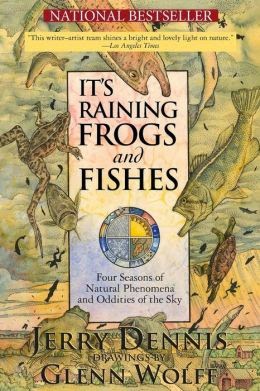
My reading has a tendency to be very varied. I routinely go from fiction to nonfiction and from a classic I had neglected to something quite recent. Over the last month, for example, I have read and am pleased to recommend It's Raining Frogs and Fishes by Jerry Dennis, a fascinating compendium of scientific information, everything from why the sky is blue to the quite unbelievable feat of migration accomplished by hummingbirds...[read on]
About A Dancer in the Dust, from the publisher:
Twenty years ago, Ray Campbell, now a cautious risk-management consultant, was a well-intentioned aid worker dedicated to improving conditions in Lubanda, a newly independent African country. He is forced to reconsider that year of living dangerously when a friend from his time in Lubanda is found murdered in a New York alley. Signs suggest that this most recent tragedy is rooted in the far more distant one of Martine Aubert, the only woman Ray ever truly loved and whose fate he’d sealed in a moment of grievous error: “In Lubanda, twenty years before, I’d rolled the dice for a woman who was not even present at the table, and on the outcome of that toss, a braver and more knowing heart than mine had been forfeited.”

Martine Aubert was a white, native Lubandan farmer whose dream for her homeland starkly conflicted with those responsible for its so-called development. But Ray’s failure to understand Martine’s commitment to her country had placed a noose around her neck, one tightened by a circle of vicious men, cruel taunts, and whistling machetes. It is Ray’s return to the passion he’d once felt for Martine that makes A Dancer in the Dust the enthralling and moving story of two loves: Ray’s love for Martine Aubert, and Martine’s love for a homeland that did not love her back.
Learn about Thomas H. Cook's top ten mystery books and his five top books on the writing life.

Visit Thomas H. Cook's website.

Writers Read: Thomas H. Cook.

--Marshal Zeringue

Five extremely dysfunctional fictional workplaces

At The Barnes & Noble Book Blog Molly Schoemann-McCann tagged five fictional workplaces more dysfunctional than yours, including:
The Ministry of Magic (The Harry Potter Series, by J. K. Rowling)

Sure, it seems like it would be fun to work at the Ministry of Magic, but remember, a job is still a job—working at the Ministry isn’t all hanging with hippogriffs and bopping around on the Floo Network. You’re bound to find yourself wading through reams of paperwork—whether you’re working in the Department of Magical Transportation or the Improper Use of Magic Office—since the Ministry is a spider’s nest of confusing (and occasionally malicious) bureaucracy. Plus, how many organizations have to worry about being hijacked by Death Eaters? Just this one and the DMV, I’m pretty sure.
Read about another entry on the list.

The Harry Potter books made Sophie McKenzie's top ten list of mothers in children's books, Nicole Hill's list of five of the best fictional bookstores, Sara Jonsson's list of the six most memorable pets in fiction, Melissa Albert's list of more than eight top fictional misfits, Cressida Cowell's list of ten notable mythical creatures, and Alison Flood's list of the top 10 most frequently stolen books.

Hedwig (Harry's owl) is among Django Wexler's top ten animal companions in children's fiction.

Butterbeer is among Leah Hyslop's six best fictional drinks.

Albus Dumbledore is one of Rachel Thompson's ten greatest deaths in fiction.

Hermione Granger is among Nicole Hill's nine best witches in literature and Melissa Albert's top six distractible book lovers in pop culture.

Dolores Umbridge is among Melissa Albert's six more notorious teachers in fiction, Emerald Fennell's top ten villainesses in literature, and Derek Landy's top 10 villains in children's books. The Burrow is one of Elizabeth Wilhide's nine most memorable manors in literature.

Harry Potter and the Prisoner of Azkaban appears on Amanda Yesilbas and Katharine Trendacosta's list ot twenty great insults from science fiction & fantasy and Charlie Jane Anders's list of the ten greatest prison breaks in science fiction and fantasy.

Harry Potter and the Philosopher's Stone also appears on John Mullan's lists of ten of the best owls in literature, ten of the best scars in fiction and ten of the best motorbikes in literature, and Katharine Trendacosta and Charlie Jane Anders's list of the ten greatest personality tests in sci-fi & fantasy, Charlie Higson's top 10 list of fantasy books for children, Justin Scroggie's top ten list of books with secret signs as well as Charlie Jane Anders and Michael Ann Dobbs's list of well-known and beloved science fiction and fantasy novels that publishers didn't want to touch. Harry Potter and the Goblet of Fire made Chrissie Gruebel's list of six top fictional holiday parties and John Mullan's list of ten best graveyard scenes in fiction.

--Marshal Zeringue

Tuesday, September 02, 2014

Pg. 99: Frank L. Smith III's "American Biodefense"

Featured at the Page 99 Test: American Biodefense: How Dangerous Ideas about Biological Weapons Shape National Security by Frank L. Smith III.

About the book, from the publisher:
Biological weapons have threatened U.S. national security since at least World War II. Historically, however, the U.S. military has neglected research, development, acquisition, and doctrine for biodefense. Following September 11 and the anthrax letters of 2001, the United States started spending billions of dollars per year on medical countermeasures and biological detection systems. But most of this funding now comes from the Department of Health and Human Services rather than the Department of Defense. Why has the U.S. military neglected biodefense and allowed civilian organizations to take the lead in defending the country against biological attacks? In American Biodefense, Frank L. Smith III addresses this puzzling and largely untold story about science, technology, and national security.

Smith argues that organizational frames and stereotypes have caused both military neglect and the rise of civilian biodefense. In the armed services, influential ideas about kinetic warfare have undermined defense against biological warfare. The influence of these ideas on science and technology challenges the conventional wisdom that national security policy is driven by threats or bureaucratic interests. Given the ideas at work inside the U.S. military, Smith explains how the lessons learned from biodefense can help solve other important problems that range from radiation weapons to cyber attacks.
Learn more about the book and author at Frank L. Smith III's website.

The Page 99 Test: American Biodefense.

--Marshal Zeringue

Six notable YA novels set in college

At The Barnes & Noble Book Blog, Dahlia Adler tagged six top YA novels set in college, including:
A Little Something Different, by Sandy Hall

I was already intrigued by this book for being the first to be released from Macmillan’s new crowdsourcing imprint, Swoon Reads, and hearing that it has fourteen different points of view. Then an employee at Barnes & Noble said the Magic Buzz Sentences to me when I was book shopping there: “It’s set in college,” and “It has some LGBT characters.” Fastest I have ever grabbed a book off a shelf. As in [Jennifer Echols's] Love Story, the characters are thrown together via freshman creative writing, but this sounds like a sweeter, lighter ride I can’t wait to crack open.
Read about another entry on the list.

Writers Read: Sandy Hall.

--Marshal Zeringue

Pg. 69: Shannon Stoker's "The Alliance"

Featured at the Page 69 Test: The Alliance: A Registry Novel by Shannon Stoker.

About the book, from the publisher:
To overthrow a brutal dictator and free her country, a brave young woman will risk her life and liberty to spark a revolution in this explosive final installment in Shannon Stoker’s electrifying Registry trilogy.

Mia Morrissey fled to Mexico to escape the government marrying her to someone she did not love. Now, she’s going risk everything so that the rest of America can be free.

Going undercover as part of a diplomatic mission, Mia returns to America. But life there is more dangerous than ever as the walls grow ever taller, and the forgotten country faces its most ruthless leader yet, Grant Marsden ... a shadow from Mia’s past. With the help of Andrew, Carter, and other members of the subversive group Affinity, she embarks on a perilous journey to defeat Grant, bring down the government, and destroy the Registry once and for all.

When a terrible betrayal exposes the operation, Mia discovers that her enemies have used her—and so have her friends. Alone and frightened, she’s uncertain who to trust—or whether the mission is worth what she’s sacrificing.

With the fate of her friends and the future of her country on the line, Mia knows that her next step may be the last for her ... and America.
Visit Shannon Stoker's website.

Coffee with a Canine: Shannon Stoker & Nucky.

Writers Read: Shannon Stoker.

The Page 69 Test: The Alliance.

--Marshal Zeringue

What is Brian Clegg reading?

Featured at Writers Read: Brian Clegg, author of Final Frontier: The Pioneering Science and Technology of Exploring the Universe.

His entry begins:
I came to my current read, Jon Ronson’s Them: Adventures with Extremists as a ‘more of the same read’ after being entranced a week ago by his book The Psychopath Test. As I mention in my review of that, it was recommended to me by a fellow panelist on a ‘How to Write Popular Science’ masterclass, and it’s one of those books that is hard not to consume at one sitting. While Them is along similar lines – a look at a serious issue, but undertaken in a light-hearted fashion that makes the book both funny and thought-provoking – I don’t think it works quite as well as The Psychopath Test. That book was perfectly balanced. Here, the central theme is...[read on]
About Final Frontier, from the publisher:
Star Trek was right — there is only one final frontier, and that is space...

Human beings are natural explorers, and nowhere is this frontier spirit stronger than in the United States of America. It almost defines the character of the US. But the Earth is running out of frontiers fast.

In Brian Clegg's The Final Frontier we discover the massive challenges that face explorers, both human and robotic, to uncover the current and future technologies that could take us out into the galaxy and take a voyage of discovery where no one has gone before… but one day someone will. In 2003, General Wesley Clark set the nation a challenge to produce the technology that would enable new pioneers to explore the galaxy. That challenge is tough — the greatest we’ve ever faced. But taking on the final frontier does not have to be a fantasy.

In a time of recession, escapism is always popular — and what greater escape from the everyday can there be than the chance of leaving Earth’s bounds and exploring the universe? With a rich popular culture heritage in science fiction movies, books and TV shows, this is a subject that entertains and informs in equal measure.
Follow Brian Clegg on Twitter, and visit his website and blog.

Coffee with a Canine: Brian Clegg and Goldie.

Writers Read: Brian Clegg (September 2009).

Writers Read: Brian Clegg (December 2011).

Writers Read: Brian Clegg.

--Marshal Zeringue

Stuart Rojstaczer's "The Mathematician's Shiva," the movie

Featured at My Book, The Movie: The Mathematician's Shiva by Stuart Rojstaczer.

The entry begins:
I just sent an advance copy of my novel, The Mathematician’s Shiva, to a producer with an IMDB credit list as long as a Hummer limo so, of course, I’ve thought about how my novel should be done by Hollywood. The rule of thumb is that bad books make good movies and good books make bad movies, but I think my novel, a good book, can be an exception to the rule and be a good movie. Here’s the elevator pitch. A math genius dies. Rumor has it she’s gone to her grave with a solution to a million-dollar problem that, out of spite, she revealed to no one. The math community descends upon her funeral desperately looking for the solution. There’s greed, chaos, mystery, comedy and lust. All I need is the right screenwriter – me, certainly – and the right cast and director. Here’s my wish list.

Rachela Karnokovitch. She is the queen bee, a mathematical genius to whom others defer to almost always. I need someone who can play royalty with a Polish accent. Meryl Streep? Helen Mirren? Those two would both be fabulous. Let them battle it out with screen tests.

Alexander “Sasha” Karnokovitch. The mostly dutiful son of Rachela, he’s an inveterate skirt chaser who somehow, in approaching middle age, must find a way to finally grow up. I need someone who can be dark, intense and also can tell a joke. It’s...[read on]
Visit Stuart Rojstaczer's website.

My Book, The Movie: The Mathematician's Shiva.

--Marshal Zeringue

Monday, September 01, 2014

Six notable biographies of underappreciated historical figures

A. Scott Berg has written five biographies including Lindbergh, a 1999 Pulitzer Prize winner, and Wilson, a portrait of the 28th U.S. president. One of his six favorite biographies of underappreciated historical figures, as shared at The Week magazine:
Nora by Brenda Maddox

James Joyce created, in Molly Bloom, one of literature's most provocative female characters. Nora Barnacle of Galway, Ireland, was Joyce's wife and muse as well as the inspiration for Molly and the female thoughts that suffuse his writing. Every reader of Maddox's book will forever view Joyce's life and work in a new light.
Read about another entry on the list.

--Marshal Zeringue

Pg. 69: Julie Schumacher's "Dear Committee Members"

Featured at the Page 69 Test: Dear Committee Members by Julie Schumacher.

About the book, from the publisher:
Finally a novel that puts the "pissed" back into "epistolary."

Jason Fitger is a beleaguered professor of creative writing and literature at Payne University, a small and not very distinguished liberal arts college in the midwest. His department is facing draconian cuts and squalid quarters, while one floor above them the Economics Department is getting lavishly remodeled offices. His once-promising writing career is in the doldrums, as is his romantic life, in part as the result of his unwise use of his private affairs for his novels. His star (he thinks) student can't catch a break with his brilliant (he thinks) work Accountant in a Bordello, based on Melville's Bartleby. In short, his life is a tale of woe, and the vehicle this droll and inventive novel uses to tell that tale is a series of hilarious letters of recommendation that Fitger is endlessly called upon by his students and colleagues to produce, each one of which is a small masterpiece of high dudgeon, low spirits, and passive-aggressive strategies. We recommend Dear Committee Members to you in the strongest possible terms.
Visit Julie Schumacher's website and Facebook page.

Writers Read: Julie Schumacher.

The Page 69 Test: Dear Committee Members.

--Marshal Zeringue

Coffee with a canine: Joanne Rocklin & Zoe

Featured at Coffee with a Canine: Joanne Rocklin & Zoe.

The author, on the Zoe-inspired dog in her new novel:
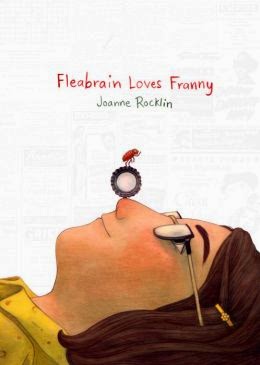
My new middle grade children's novel takes place in the 1950’s in Pittsburgh, during the worst polio epidemics of that era. Franny, my main character contracts the disease and can no longer walk. During her hospital stay she is introduced to the recently published Charlotte’s Web by E.B. White, and falls in love with the book, and, especially, the spider, Charlotte. She longs for a Charlotte of her own. Her wish is granted in the form of the brilliant and hilarious Fleabrain, her dog Alf’s flea. Alf, the patient and generous "host" of Fleabrain, is modeled after my good-natured and friendly Zoe....[read on]
About Fleabrain Loves Franny, from the publisher:
This gem of a novel takes place in Pittsburgh in 1952. Franny Katzenback, while recovering from polio, reads and falls in love with the brand-new book Charlotte’s Web. Bored and lonely and yearning for a Charlotte of her own, Franny starts up a correspondence with an eloquent flea named Fleabrain who lives on her dog’s tail. While Franny struggles with physical therapy and feeling left out of her formerly active neighborhood life, Fleabrain is there to take her on adventures based on his extensive reading. It’s a touching, funny story set in the recent past, told with Rocklin’s signature wit and thoughtfulness.
Visit Joanne Rocklin's website.

The Page 69 Test: Fleabrain Loves Franny.

Coffee with a Canine: Joanne Rocklin & Zoe.

--Marshal Zeringue

Pg. 99: Sandeep Jauhar's "Doctored"

Featured at the Page 99 Test: Doctored: The Disillusionment of an American Physician by Sandeep Jauhar.

About the book, from the publisher:
In his acclaimed memoir Intern, Sandeep Jauhar chronicled the formative years of his residency at a prestigious New York City hospital. Doctored, his harrowing follow-up, observes the crisis of American medicine through the eyes of an attending cardiologist.

Hoping for the stability he needs to start a family, Jauhar accepts a position at a massive teaching hospital on the outskirts of Queens. With a decade’s worth of elite medical training behind him, he is eager to settle down and reap the rewards of countless sleepless nights. Instead, he is confronted with sobering truths. Doctors’ morale is low and getting lower, and when doctors are unhappy, their patients are apt to be unhappy as well. Blatant cronyism determines patient referrals, corporate ties distort medical decisions, and unnecessary tests are routinely performed in order to generate income. Meanwhile, a single patient in Jauhar’s hospital might see fifteen specialists in one stay and still fail to receive a full picture of his actual condition.

Unwilling to accept the prevailing norms, Jauhar fights to keep his ideals intact. But he, too, finds himself ensnared in the system. Struggling to pay back student loans and support a wife and son on his hospital salary, he resorts to moonlighting for a profit-driven private practice that orders batteries of tests just to drum up fees and ward off malpractice lawsuits.

Provoked by his unsettling experiences, Jauhar has written an introspective memoir that is also an impassioned plea for reform. With American medicine at a crossroads, Doctored is the important work of a writer unafraid to challenge the establishment and incite controversy.
Learn more about the author and his work at Sandeep Jauhar's website.

The Page 69 Test: Intern: A Doctor’s Initiation.

The Page 99 Test: Doctored.

--Marshal Zeringue