Thursday, November 08, 2012

D. J. McIntosh’s "The Witch of Babylon," the movie

Now showing at My Book, The Movie: The Witch of Babylon by D. J. McIntosh.

The entry begins:
The Witch of Babylon is an antiquity thriller which pretty well signals feature film territory. I love movies and think cinematically as I write. But it’s actually music, a soundtrack, that would most influence the kind of movie The Witch might become and therefore I’d start with the person who would be my dream director – Michael Mann. No one better understands how to make music – contemporary blues/rock/pop - deepen a script and bring out the fear and passion characters feel. His original show, Miami Vice, remains, I think, one of the best TV series ever.

I don’t visualize movie stars when writing a character but it sure is fun to imagine! For my leading man, John Madison, Christian...[read on]
Learn more about the book and author at D.J. McIntosh's website, Facebook page, and Twitter perch.

The Page 69 Test: The Witch of Babylon.

Writers Read: D.J. McIntosh.

My Book, The Movie: The Witch of Babylon.

--Marshal Zeringue

Pg. 99: Matthew Gordon Lasner's "High Life"

The current feature at the Page 99 Test: High Life: Condo Living in the Suburban Century by Matthew Gordon Lasner.

About the book, from the publisher:
Today, one in five homeowners in American cities and suburbs lives in a multifamily home rather than a single-family dwelling. As the American dream evolves, precipitated by declining real estate prices and a renewed interest in city living, many predict that condos will become the predominant form of housing in the 21st century. In this unprecedented study Matthew Gordon Lasner explores the history of co-owned multifamily housing in the United States, from New York City's first co-op, in 1881, to contemporary condo and townhouse complexes coast to coast. Lasner explains the complicated social, economic, and political factors that have increased demand for this way of living, situating the trend within the larger housing market and broad shifts in residential architecture. He contrasts the prevalence and popularity of condos, townhouses, and other privately governed communities with their ambiguous economic, legal, and social standing, as well as their striking absence from urban and architectural history.
Learn more about High Life at the Yale University Press website.

Matthew Gordon Lasner is assistant professor of urban affairs and planning at Hunter College.

The Page 99 Test: High Life.

--Marshal Zeringue

Top ten books on militant Islamism

Jason Burke is the south Asia correspondent of the Guardian and the Observer newspapers. His books include The 9/11 Wars and Al-Qaeda: The True Story of Radical Islam. Lee Konstantinou called Burke’s Al-Qaeda" a really eye-opening look at how the terrorist organization was born and how it really operates."

Burke named a top ten list of books on militant Islamism for the Guardian, including:
Jihad: The Trail of Political Islam by Gilles Kepel

I read this in Pakistan, over a period of weeks shortly after the 9/11 attacks. Its sweep across the broad landscape of radical Sunni activism was a revelation. The book is one of the few genuinely rigorous academic overviews of the social and historical roots of the phenomenon of modern Muslim extremism – ranging geographically from the far east to Europe, and chronologically from the 1960s onwards – that also remains readable. Its primary thesis – that violent Islamic militancy is in large part a response to the failure of political Islamist activism – has stood the test of time. Kepel is famous in France but almost unknown outside. This is a shame. A classic.
Read about another title on the list.

See Burke's five top books on Islamic militancy.

--Marshal Zeringue

What is Max Glaskin reading?

The current featured contributor at Writers Read: Max Glaskin, author of Cycling Science: How Rider and Machine Work Together.

His entry begins:
Three weeks ago I put down The Sea by John Banville. I was glad to have finished it because at times I had feared I never would. It happens often for me. Of all the books I've ever started to read, I reckon that I've never reached the end of about half of them. (Maybe you feel the same about blog entries and this is as far as you'll go.) Then I feel a certain inadequacy. Increasingly I think that the problem is not in the books I pick up but in me.

I'd first started The Sea several years ago. It was a gift and I hadn't been involved in its choice. I gave up within 80 pages and gave it up to our second-hand bookshop, in exchange for the price of a coffee in the excellent café opposite, where I read the ephemeral sports section of the newspaper.

Then, this September, the book group to which I belong, chose...[read on]
About Cycling Science, from the publisher:
Every July hundreds of thousands flock to the Champs-Élysées in Paris—and millions more to their televisions and computers—to witness the dramatic conclusion of the grueling three weeks of the Tour de France. There is no better measure of the worldwide love of the bicycle. But of the 1.2 billion cyclists traversing the world’s roadways and trails, few of us take the time to consider the science behind the sport. The simple process of getting about on two wheels brings us in touch with a wealth of fascinating science, and here journalist Max Glaskin investigates the scientific wonders that keep cyclists in their saddles.

Cycling Science tours readers through a wide variety of topics, from tire rolling resistance and the difference between yield strength and ultimate strength, to the importance of aerodynamics and the impact that shaved legs have on speed. Each chapter explores a different subject—fundamentals, strength and stability, materials, power, aerodynamics, and the human factor—and is organized around a series of questions: What is the ideal frame shape? What is the biggest source of drag? What keeps a bicycle from falling over? How much power can a cyclist produce? Which muscles does cycling use? Each question is examined with the aid of explanatory diagrams and illustrations, and the book can be used to search for particular topics, or read through for a comprehensive overview of how machine and rider work together.

Athletes have much to gain from understanding the science of their sports, and Cycling Science will be a must-read for cyclists of all stripes—professionals, recreational riders, and anyone seeking to enhance their enjoyment of cycling.
Visit Max Glaskin's website, and follow Cycling Science on Twitter and Facebook.

Writers Read: Max Glaskin.

--Marshal Zeringue

Pg. 69: Courtney Miller Santo's "The Roots of the Olive Tree"

The current feature at the Page 69 Test: The Roots of the Olive Tree by Courtney Miller Santo.

About the book, from the publisher:
Meet the Keller family, five generations of firstborn women—an unbroken line of daughters—living together in the same house on a secluded olive grove in the Sacramento Valley of Northern California.

Anna, the family matriarch, is 112 and determined to become the oldest person in the world. An indomitable force, strong in mind and firm in body, she rules Hill House, the family home she shares with her daughter Bets, granddaughter Callie, great-granddaughter Deb, and great-great-granddaughter Erin. Though they lead ordinary lives, there is an element of the extraordinary to these women: the eldest two are defying longevity norms. Their unusual lifespans have caught the attention of a geneticist who believes they hold the key to breakthroughs that will revolutionize the aging process for everyone.

But Anna is not interested in unlocking secrets the Keller blood holds. She believes there are some truths that must stay hidden, including certain knowledge about her origins that she has carried for more than a century. Like Anna, each of the Keller women conceals her true self from the others. While they are bound by blood and the house they share, living together has not always been easy. And it is about to become more complicated now that Erin, the youngest, is back, alone and pregnant, after two years abroad with an opera company. Her return and the arrival of the geneticist who has come to study the Keller family ignites explosive emotions that these women have kept buried and uncovers revelations that will shake them all to their roots.

Told from varying viewpoints, Courtney Miller Santo's compelling and evocative debut novel captures the joys and sorrows of family—the love, secrets, disappointments, jealousies, and forgiveness that tie generations to one another.
Learn more about the book and author at Courtney Miller Santo's website.

The Page 69 Test: The Roots of the Olive Tree.

--Marshal Zeringue

Wednesday, November 07, 2012

Pg. 99: Mike Goldsmith's "Discord: The Story of Noise"

The current feature at the Page 99 Test: Discord: The Story of Noise by Mike Goldsmith.

About the book, from the publisher:
Noise is a widely recognized and ever-increasing problem--and a growing health concern--in the modern world. In Discord, Mike Goldsmith looks at the science and history of the long battle between people and noise--a battle that has changed our lives and molded our societies. He investigates how increasing noise levels relate to human progress, from the clatter of wheels on cobbles to the sound of heavy machinery; explains how our scientific understanding of sound and hearing has developed; and looks at noise in nature, including the remarkable ways in which some animals, such as shrimps, use noise as a weapon or to catch prey. Goldsmith also examines the importance of managing noise levels and developing suitable "soundscapes" in industry, schools, or public spaces. In addition, the book shows that noise, in the sense of dissonance, can also be used positively: composers have employed it from Baroque music to Rock feedback; medicine harnesses it to shatter kidney stones and treat cancer; and even the military uses it in (real and rumored) weapons. Goldsmith concludes by turning to the future, discussing ways in which new science and new ideas may change the way the world will sound.
Learn more about the book and author at Mike Goldsmith's website.

Goldsmith is the former Head of the Acoustic Group at the United Kingdom's National Physical Laboratory and an author of many books for general readers. Two of his books have been short-listed for the Aventis prize (now the Royal Society prize) for science books.

The Page 99 Test: Discord: The Story of Noise.

--Marshal Zeringue

Top 10 school stories

Andy Mulligan was brought up in South London, and educated at Oxford University. He worked as a theatre director for 10 years, before travels in Asia prompted him to re-train as a teacher. He has taught English and drama in India, Brazil, the Philippines and the UK. His Ribblestrop was shortlisted for the Roald Dahl funny prize in 2009 and Return to Ribblestrop won the Guardian children's fiction prize in 2011.

He named his top 10 school stories for the Guardian, including:
Half Brother by Kenneth Oppel

This book made me miss a plane, I was so riveted by it. A scientific couple adopt a baby chimp, as an experiment in primate development. Their young son thus has a new brother, and the bonding is real and profound…but fraught with complications. The novel jumps from the boy's life at school, as he tries to negotiate new friendships, to his mesmerising life at the family home – which has become a school of a very different kind. His true, furry friend is growing strong and unpredictable, and we know the friendship can't last. Don't read it in a waiting room: you'll lose track of time.
Read about another entry on the list.

--Marshal Zeringue

What is Jehanne Dubrow reading?

The current featured contributor at Writers Read: Jehanne Dubrow, author of Red Army Red.

Her entry begins:
The last time I wrote for the “Writers Read” blog, I was working on my fourth book, Red Army Red, a collection of poems about my childhood and adolescence in Cold War-era Poland; at the time, my reading list was full of books on the subject of Communism and the Iron Curtain. Now, I’m in the middle of drafting The Arranged Marriage, a book of prose poems that mythologizes my mother’s Jewish-Latina upbringing in Honduras, El Salvador, and southern Florida. Because I usually work in traditional forms like the sonnet or the villanelle, this new project has led me to study up on the history and craft of prose poetry.

Michel Delville’s The American Prose Poem has served as a great introduction. The book covers the development and establishment of the form within American poetics, including the influence of the avant-garde, the role of Modernism, and the connection between prose poetry and...[read on]
About Red Army Red, from the publisher:
Displaying a sure sense of craft and a sharp facility for linking personal experience to the public realms of history and politics, Jehanne Dubrow’s Red Army Red chronicles the coming of age of a child of American diplomats in Eastern Europe in the 1980s. In the last moments of the Cold War, Poland—the setting for many of the poems—lurches fitfully from a society characterized by hardship and deprivation toward a free-market economy. The contradictions and turmoil generated by this transition are the context in which an adolescent girl awakens to her sexuality. With wit and subtlety, Dubrow makes apparent the parallels between the body and the body politic, between the fulfillment of individual and collective desires.
Learn more about the book and author at Jehanne Dubrow's website and blog.

Writers Read: Jehanne Dubrow (April 2010).

Writers Read: Jehanne Dubrow.

--Marshal Zeringue

Coffee with a canine: Dayna Lorentz & Peter and Kerry

Now showing at Coffee with a Canine: Dayna Lorentz and Peter and Kerry.

The author, on how her dogs got their names:
Peter got his name from the foster mother who cared for him. We liked the name and kept it. He is most commonly referred to as Peetles or my Bud-dog, though recently I’ve taken to calling him Budsy-woofer.

Kerry’s full name is Kerry Edwards because we got her right before the 2004 election and were hoping that naming the dog this way would swing the election in our favor. She is called the Bird-dog because when we first got her and tried to crate train her, she would whistle like a bird when left in the crate. It was...[read on]
About Lorentz's Dogs of the Drowned City series:
Follow the adventures of Shep and his packmates as they struggle to survive a city-killing hurricane, only to have to fight wild dogs and other scavenging beasts for food and shelter in the drowned city that remains. Unlikely alliances are forged—between big dogs and yappers, between young pups and old timers, even between cats and dogs!—and each pet’s mettle tested in this tale of adventure, survival, and friendship. Ultimately, each survivor must choose his own path and discover what it means to go home when the only home he knew has been taken from him.
Visit Dayna Lorentz's website and blog.

Read--Coffee with a Canine: Dayna Lorentz & Peter and Kerry.

--Marshal Zeringue

Tuesday, November 06, 2012

Iris Anthony's "The Ruins of Lace," the movie

Now showing at My Book, The Movie: The Ruins of Lace by Iris Anthony.

The entry begins:
My novel, The Ruins of Lace, has seven point-of-view characters (one of them a dog), so there are quite a few roles to cast. The story takes place in seventeenth-century France, so part of my casting goal is to achieve the right look, not only in terms of actors having ‘European’ faces but also an aesthetic appropriate to the seventeenth century.

My lacemaker, Katharina Martens, is thirty years old, but she’s been locked away in an abbey making lace from a young age. The actress would have to show her years, but be able to also manifest a youthful, innocent aura. Emily Blunt would fit this role well.

The lacemaker’s sister, Heilwich Martens, is several years older than Katharina and much more care-worn. She’s been working for years to save enough money to buy her sister back from the abbey. The actress playing this part would need to exhibit steadfast loyalty as well as be someone who looks like she could...[read on]
Learn more about the book and author at Iris Anthony's website and blog.

Read--Coffee with a Canine: Iris Anthony and Larry.

My Book, The Movie: The Ruins of Lace.

--Marshal Zeringue

Pg. 99: Lee Cronk & Beth L. Leech's "Meeting at Grand Central"

The current feature at the Page 99 Test: Meeting at Grand Central: Understanding the Social and Evolutionary Roots of Cooperation by Lee Cronk and Beth L. Leech.

About the book, from the publisher:
From the family to the workplace to the marketplace, every facet of our lives is shaped by cooperative interactions. Yet everywhere we look, we are confronted by proof of how difficult cooperation can be--snarled traffic, polarized politics, overexploited resources, social problems that go ignored. The benefits to oneself of a free ride on the efforts of others mean that collective goals often are not met. But compared to most other species, people actually cooperate a great deal. Why is this?

Meeting at Grand Central brings together insights from evolutionary biology, political science, economics, anthropology, and other fields to explain how the interactions between our evolved selves and the institutional structures we have created make cooperation possible. The book begins with a look at the ideas of Mancur Olson and George Williams, who shifted the question of why cooperation happens from an emphasis on group benefits to individual costs. It then explores how these ideas have influenced our thinking about cooperation, coordination, and collective action. The book persuasively argues that cooperation and its failures are best explained by evolutionary and social theories working together. Selection sometimes favors cooperative tendencies, while institutions, norms, and incentives encourage and make possible actual cooperation.

Meeting at Grand Central will inspire researchers from different disciplines and intellectual traditions to share ideas and advance our understanding of cooperative behavior in a world that is more complex than ever before.
Learn more about Meeting at Grand Central at the Princeton University Press website.

The Page 99 Test: Meeting at Grand Central.

--Marshal Zeringue

Five notable tales of true crime

Errol Morris is an Oscar-winning documentary filmmaker. He has directed nine films, including The Fog of War, The Thin Blue Line, and most recently, Tabloid.

His new book is A Wilderness of Error: The Trials of Jeffrey MacDonald.

Morris named five top tales of true crime for the Wall Street Journal.  One title on the list:
Compulsion
by Meyer Levin (1956)

'Compulsion' is based on the notorious 1924 murder of Bobby Franks, a 14-year-old Chicago boy, by Nathan Leopold and Richard Loeb, two wealthy University of Chicago students hungry for thrills—in particular, for the thrill of committing the perfect crime. They ended up on trial for their lives, but were saved from execution by their defense attorney, Clarence Darrow. There is much of Levin himself in the novel, who wrote himself in as the reporter Sid Silver; he had been a classmate of the accused boys and had covered the case as a young reporter. But in "Compulsion" he is free to get beyond the news and pose deeper questions about the murder. Where Dreiser emphasized sociology, Levin turns to Freud as he seeks out the forces "that could conceivably be called an influence on the two killers who had enjoyed all the privileges that money and indulgent families could bestow." Levin believes that there is something revealing in the connection between crimes and the stories we tell about them. There is the sense that crime is bottomless, that no interpretation is complete. This is a sprawling work, ungainly in its endless quest for the causes of the crime. It's also impossible to put down.
Read about another book on the list.

Also see Errol Morris's five worthy books on photography and reality.

--Marshal Zeringue

What is Jon Wiener reading?

The current featured contributor at Writers Read: Jon Wiener, author of How We Forgot the Cold War: A Historical Journey across America.

His entry begins:
I’m still thinking about how we remember the Cold War. The new book by Kristen Iversen, Full Body Burden: Growing Up in the Nuclear Shadow of Rocky Flats, is an unforgettable work that brings together the personal and the political in the story of a little-known disaster at a plutonium factory west of Denver.

One of the highlights of my history grad seminar is...[read on]
About the book, from the publisher:
Hours after the USSR collapsed in 1991, Congress began making plans to establish the official memory of the Cold War. Conservatives dominated the proceedings, spending millions to portray the conflict as a triumph of good over evil and a defeat of totalitarianism equal in significance to World War II. In this provocative book, historian Jon Wiener visits Cold War monuments, museums, and memorials across the United States to find out how the era is being remembered. The author’s journey provides a history of the Cold War, one that turns many conventional notions on their heads.

In an engaging travelogue that takes readers to sites such as the life-size recreation of Berlin’s “Checkpoint Charlie” at the Reagan Library, the fallout shelter display at the Smithsonian, and exhibits about “Sgt. Elvis,” America’s most famous Cold War veteran, Wiener discovers that the Cold War isn’t being remembered. It’s being forgotten. Despite an immense effort, the conservatives’ monuments weren’t built, their historic sites have few visitors, and many of their museums have now shifted focus to other topics. Proponents of the notion of a heroic “Cold War victory” failed; the public didn’t buy the official story. Lively, readable, and well-informed, this book expands current discussions about memory and history, and raises intriguing questions about popular skepticism toward official ideology.
Read more about How We Forgot the Cold War at the University of California Press website, and read Chapter 1, "Hippie Day at the Reagan Library."

Learn more about the book and author at Jon Wiener's website.

Writers Read: Jon Wiener.

--Marshal Zeringue

Pg. 69: Matthew Costello's "Home"

The current feature at the Page 69 Test: Home by Matthew Costello.

About the book, from the publisher:
Besieged and attacked, a mother and her children must escape a post-apocalyptic nightmare world of cannibals and betrayal

Jack Murphy thought he’d found the perfect escape for his family from a world gone horribly mad. He thought wrong. Matthew Costello's Home begins mere minutes after the terrible sacrifice made by Jack to save his family at Paterville Camp. Barely escaping, Jack’s wife, Christie, and two children, Kate and Simon, must accept that their lives and their future have changed forever.

In this intimate and human survivalist horror story, the three of them will face even greater dangers, as well as yet-unknown horrors, to simply stay alive as together they search for a road “home” in this intense and original postapocalyptic thriller.
Learn more about the book and author at Matthew Costello's website.

Costello is an award-winning novelist, screenwriter and video game writer. His best-selling video games include The 7th Guest, Doom 3 and Pirates of the Caribbean. His horror novel, Beneath Still Waters, was filmed by Lionsgate. He also has written episodes and created TV formats for PBS, Disney, SyFy, and the BBC.

The Page 69 Test: Home.

--Marshal Zeringue

Monday, November 05, 2012

Pg. 99: Benjamin Wardhaugh's "Poor Robin's Prophesies"

The current feature at the Page 99 Test: Poor Robin's Prophesies: A Curious Almanac, and the Everyday Mathematics of Georgian England by Benjamin Wardhaugh.

About the book, from the publisher:
Author, astrologer, journalist, satirist, and 'well-willer to the mathematics', Poor Robin of Saffron Walden was a fantastic, yet invented, figure of British popular culture from the Restoration to the end of the Georgian period. Poor Robin's Almanac first appeared in 1662, developing an enthusiastic following and long outliving its original creator to last until 1828.

Benjamin Wardhaugh tells the great story of Georgian popular mathematics - through Poor Robin's remarkable life, from his humble beginnings as an almanac-writer through to best-selling stardom, controversy, and decline. Using the character, wit, and columns of Poor Robin, Wardhaugh explores the mathematics of ordinary people, from learning sums to using mathematics in weighing and measuring, in business, agriculture, map-making, and navigation.

This is a history of mathematics that is rarely thought about -- creative, popular, and led by practical and social needs. It is centered on the ordinary people that used it. Their names remain little-known; their solutions have vanished along with the situations that required them; but their energy and ideas - as captured by Poor Robin - create a wonderfully rich picture of what mathematics can be, and has been.
Learn more about the book and author at Benjamin Wardhaugh's website.

The Page 99 Test: Poor Robin's Prophesies.

--Marshal Zeringue

Amy Sohn's 6 favorite books

Amy Sohn's novels include Prospect Park West, My Old Man, and Run Catch Kiss. She has written television pilots for such networks as HBO, Fox, and ABC.

Her new novel is Motherland.

One of Sohn's six favorite books, as told to The Week magazine:
The Day of the Locust by Nathanael West

In writing scenes for my character Danny Gottlieb (who goes to L.A. to create a screenplay and loses his mind), I kept returning to West's classic Hollywood grotesques. Day of the Locust is dark, dirty, sexual, and chilling. And each sentence is clear and perfect.
Read about another novel on the list.

The Day of the Locust is on Megan Wasson's top 5 list of books about Los Angeles, Jerome Charyn's list of the five best tales of dislocation, Jane Ciabattari's list of the five best novels on Hollywood, Jonathan Kellerman's list of the top ten LA noir novels, and Peter Conn's list of the five best novels from the Great Depression; it also appears on Jonathan Evison's list of books about the Spirit of California and John Mullan's list of ten of the best riots in literature.

Visit Amy Sohn's website.

The Page 69 Test: Motherland.

--Marshal Zeringue

Howard Pollack's "Marc Blitzstein," the movie

Now showing at My Book, The Movie: Marc Blitzstein by Howard Pollack.

The entry begins:
The life of the American composer-librettist Marc Blitzstein (1905-1964) had its fair share of drama, from his early years as a piano prodigy and enfant terrible to his turbulent marriage to the brilliant writer Eva Goldbeck, their travels together through Europe (including deportation from Belgium for alleged subversive activities), Eva’s tragically young death from anorexia, the legendary 1937 Broadway premiere of The Cradle Will Rock (for which Blitzstein wrote the words and music), his involvement with Orson Welles, John Houseman, and the Mercury Theatre, his leftist and pro-Soviet activities, his years of service during World War II (including coaching the U.S. Army Negro Chorus and traveling the French countryside collecting Resistance songs in the service of William Wyler’s documentary The True Glory), his homosexual adventures and affairs, his landmark adaptation of Brecht-Weill’s The Threepenny Opera (which helped make “Mack the Knife” one of the great hits of the century), his confrontation with the House on Un-American Activities Committee, and his own tragic death at the hands of three seamen in Martinique in 1964.

The premiere of The Cradle alone has inspired not only the play It’s All True (1999) by Jason Sherman, but two unfilmed screenplays --- Rocking the Cradle (early 1980s) by Ring Lardner Jr. (one of the Hollywood Ten) and The Cradle Will Rock (1984) by Orson Welles (his final screenplay, and dedicated to Blitzstein’s memory) –- along with one script that made it to the screen, namely, Cradle Will Rock (1999), written and directed by Tim Robbins. Whereas Welles contemplated casting the witty, urbane, and irreverent Canadian comedian David Steinberg as Blitzstein, Tim Robbins chose...[read on]
Learn more about Marc Blitzstein by Howard Pollack at the Oxford University Press website.

Pollack is John and Rebecca Moores Professor of Music at the University of Houston and author of, among other books, John Alden Carpenter: A Chicago Composer; Aaron Copland: The Life and Work of an Uncommon Man; and George Gershwin: His Life and Work. His latest book is Marc Blitzstein: His Life, His Work, His World.

My Book, The Movie: Marc Blitzstein.

--Marshal Zeringue

Coffee with a canine: Jessica Pierce & Maya

Today's featured duo at Coffee with a Canine: Jessica Pierce, author of The Last Walk: Reflections on Our Pets at the Ends of Their Lives, and Maya.

Pierce, on how Maya got her name:
Maya is named after a guinea pig. Said guinea pig belonged to one of my daughter’s kindergarten friends. Our Vizsla, Odysseus, had been invited inside this friend’s house one day, during a play date. Ody proceeded down to their basement to visit the guinea pig. Later that night, the poor guinea pig died mysteriously. My daughter’s five year old friend was convinced that Ody had caused the little creature to have a delayed heart attack. Ody was branded a murderer. We adopted Maya shortly after the guinea pig debacle, and it just seemed fitting to honor the life of the deceased guinea pig. Maia is also a goddess in Greek mythology, and so the name...[read on]
About The Last Walk, from the publisher:
From the moment when we first open our homes—and our hearts—to a new pet, we know that one day we will have to watch this beloved animal age and die. The pain of that eventual separation is the cruel corollary to the love we share with them, and most of us deal with it by simply ignoring its inevitability.

With The Last Walk, Jessica Pierce makes a forceful case that our pets, and the love we bear them, deserve better. Drawing on the moving story of the last year of the life of her own treasured dog, Ody, she presents an in-depth exploration of the practical, medical, and moral issues that trouble pet owners confronted with the decline and death of their companion animals. Pierce combines heart-wrenching personal stories, interviews, and scientific research to consider a wide range of questions about animal aging, end-of-life care, and death. She tackles such vexing questions as whether animals are aware of death, whether they're feeling pain, and if and when euthanasia is appropriate. Given what we know and can learn, how should we best honor the lives of our pets, both while they live and after they have left us?

The product of a lifetime of loving pets, studying philosophy, and collaborating with scientists at the forefront of the study of animal behavior and cognition, The Last Walk asks—and answers—the toughest questions pet owners face. The result is informative, moving, and consoling in equal parts; no pet lover should miss it.
Learn more about The Last Walk: Reflections on Our Pets at the Ends of Their Lives at Jessica Pierce's website and blog.

Read--Coffee with a Canine: Jessica Pierce and Maya.

--Marshal Zeringue

Sunday, November 04, 2012

What is Gretchen McNeil reading?

The current featured contributor at Writers Read: Gretchen McNeil, author of Ten.

Her entry begins:
Since it's Halloween, and I'm about to start writing a new horror pitch after the holidays, I'm rereading some of my favorite scary stories for "inspiration." Here are my two favorites...

The Turn of the Screw by Henry James. I love a good ghost story (even though James himself insisted this novella isn't actually about ghosts...whatever), and this turn of the century tale of a governess with possibly supernatural charges is one of the best. Kids can be creepy, and Miles and Flora take that to a whole new level. You've got possession, murder, lust, revenge - all tied up in two very disturbed children. This novella is drippingly gothic, and James spins the setting and tension so tightly, the reader is practically in a frenzy to...[read on]
About Ten, from the publisher:
Shhhh!
Don't spread the word! Three-day weekend. House party.
White Rock House on Henry Island.
You do not want to miss it.

It was supposed to be the weekend of their lives—three days on Henry Island at an exclusive house party. Best friends Meg and Minnie each have their own reasons for wanting to be there, which involve their school's most eligible bachelor, T. J. Fletcher, and look forward to three glorious days of boys, bonding, and fun-filled luxury.

But what they expect is definitely not what they get, and what starts out as fun turns dark and twisted after the discovery of a DVD with a sinister message: Vengeance is mine.

Suddenly, people are dying, and with a storm raging outside, the teens are cut off from the rest of the world. No electricity, no phones, no internet, and a ferry that isn't scheduled to return for three days. As the deaths become more violent and the teens turn on each other, can Meg find the killer before more people die? Or is the killer closer to her than she could ever imagine?
Learn more about the book and author at Gretchen McNeil's website.

Writers Read: Gretchen McNeil.

--Marshal Zeringue

Top 10 dystopian novels

Back in 2005 Robert Collins, author of Soul Corporation, named a top ten list of dystopian novels for the Guardian.

One title on the list:
In The Country of Last Things by Paul Auster

I love short novels like this, which seem to do all the work of a heftier tome. Auster evokes a strange, apocalyptic world, set in an indeterminate country ravaged by an indeterminate catastrophe. The result is dreamlike and beautiful. A short, lyrical, melancholic meditation on what happens when the trappings of civilization are suddenly stripped away.
Read about another book on the list.

--Marshal Zeringue

Pg. 99: Christopher Morris's "The Big Muddy"

The current feature at the Page 99 Test: The Big Muddy: An Environmental History of the Mississippi and Its Peoples, from Hernando de Soto to Hurricane Katrina by Christopher Morris.

About the book, from the publisher:
In The Big Muddy, the first long-term environmental history of the Mississippi, Christopher Morris offers a brilliant tour across five centuries as he illuminates the interaction between people and the landscape, from early hunter-gatherer bands to present-day industrial and post-industrial society.

Morris shows that when Hernando de Soto arrived at the lower Mississippi Valley, he found an incredibly vast wetland, forty thousand square miles of some of the richest, wettest land in North America, deposited there by the big muddy river that ran through it. But since then much has changed, for the river and for the surrounding valley. Indeed, by the 1890s, the valley was rapidly drying. Morris shows how centuries of increasingly intensified human meddling--including deforestation, swamp drainage, and levee construction--led to drought, disease, and severe flooding. He outlines the damage done by the introduction of foreign species, such as the Argentine nutria, which escaped into the wild and are now busy eating up Louisiana's wetlands. And he critiques the most monumental change in the lower Mississippi Valley--the reconstruction of the river itself, largely under the direction of the Army Corps of Engineers. Valley residents have been paying the price for these human interventions, most visibly with the disaster that followed Hurricane Katrina. Morris also describes how valley residents have been struggling to reinvigorate the valley environment in recent years--such as with the burgeoning catfish and crawfish industries--so that they may once again live off its natural abundance.

Morris concludes that the problem with Katrina is the problem with the Amazon Rainforest, drought and famine in Africa, and fires and mudslides in California--it is the end result of the ill-considered bending of natural environments to human purposes.
Learn more about The Big Muddy at the Oxford University Press website.

The Page 99 Test: The Big Muddy.

--Marshal Zeringue

Pg. 69: Katherine Marsh's "Jepp, Who Defied the Stars"

The current feature at the Page 69 Test: Jepp, Who Defied the Stars by Katherine Marsh.

About the book, from the publisher:
FATE:
Is it written in the stars from the moment we are born?
Or is it a bendable thing that we can shape with our own hands?


Jepp of Astraveld needs to know.

He left his countryside home on the empty promise of a stranger, only to become a captive in a strange and luxurious prison: Coudenberg Palace, the royal court of the Spanish Infanta. Nobody warned Jepp that as a court dwarf, daily injustices would become his seemingly unshakeable fate. If the humiliations were his alone, perhaps he could endure them, but it breaks Jepp's heart to see his friend Lia suffer.

After Jepp and Lia attempt a daring escape from the palace, Jepp is imprisoned again, alone in a cage. Now, spirited across Europe in a henchman's carriage, Jepp fears where his unfortunate stars will lead him. But he can't even begin to imagine the strange, new world—with its beer-drinking moose, brilliant and eccentric master, and long-buried secrets about his own identity—that he's about to discover.

Masterfully written, grippingly paced, and inspired by real historical characters, Jepp, Who Defied the Stars is the tale of an unusual hero and his extraordinary quest to become the master of his own destiny.
For more about the book and author, check out Katherine Marsh's website or follow her on Twitter or on Facebook.

Marsh is also the author of the Edgar-award winning The Night Tourist, and a sequel, The Twilight Prisoner.

The Page 99 Test: The Night Tourist.

The Page 69 Test: Jepp, Who Defied the Stars.

--Marshal Zeringue

Saturday, November 03, 2012

Five notable books set at the beach

One title on the Barnes & Noble Review's list of five top books set at the beach:
Jaws
by Peter Benchley

If the idea of relaxing by the shore seems a little too ho-hum, then pick up Peter Benchley's first novel, published in 1974 and famously adapted for the big screen by Steven Spielberg. The book spent 40 weeks on the New York Times bestseller list, and why not? The author combines the stories of three men's lives with a gripping tale of a summer resort thrown into panic by the arrival of a hungry...well, you've probably heard. Wildly inaccurate when it comes to chondrichthyan behavior, it's the worst PR sharks ever had -- and yet a frightfully fun read. Staring out at the waves will acquire a whole new frisson.
Read about another novel on the list.

Jaws is one of six hugely popular books that accidentally screwed the world.

Also see: John Mullan's list of ten of the best beaches in literature.

--Marshal Zeringue

Carolee Dean's "Forget Me Not," the movie

Now showing at My Book, The Movie: Forget Me Not by Carolee Dean.

The entry begins:
Forget Me Not is a paranormal verse novel exploring cyber-bullying and teen suicide. Sixteen year old Ally Cassell finds herself on an abandoned hallway of Raven Valley High School after compromising photos of her are texted around the school. She spends the day writing in her journal, watching the other students out the window, and wondering how her secret romance with senior football star, Davis Connor, went so terribly wrong.

At the end of the day, she starts to leave the hallway to catch her bus, only to see Davis standing outside with his real girlfriend, Darla. Ally decides to stay on the hallway all night, and the next day when she wakes up, there are dead people on the hallway with her.

If I were allowed to cast the film adaptation, I'd choose Jennifer Lawrence to play Ally Cassell. Lawrence played Katniss Everdeen in the The Hunger Games, the brutal survival tale that pitted teens against each other in a battle to the death - good preparation for Dean's story about high school survival.

For the role of Davis Connor...[read on]
Learn more about the book and author at Carolee Dean's website.

My Book, The Movie: Forget Me Not.

--Marshal Zeringue

What is Adele Griffin reading?

The current featured contributor at Writers Read: Adele Griffin, author of All You Never Wanted.

Her entry begins:
I've got a book of poems I just finished, called Spit Back a Boy, by Iain Haley Pollock. I got to meet Iain a few weeks ago, just knew his work would be thoughtful-- it is. And my friend has me hooked reading the first volume of journals of Virginia Woolf-- this isn't really a book you dive into and forget about the world. I keep the book in the kitchen, it's a tea and read style book. But I can feel her life in quiet moments, in who she meets and...[read on]
About the book, from the publisher:
With my eyes closed and Alex's core friends all around me, it was like I'd become my big sister, or something just as good. And so who cared if they were calling it Alex's party? One thing I knew: it would be remembered as mine.

Alex has it all—brains, beauty, popularity, and a dangerously hot boyfriend. Her little sister Thea wants it all, and she's stepped up her game to get it. Even if it means spinning the truth to win the attention she deserves. Even if it means uncovering a shocking secret her older sister never wanted to share. Even if it means crying wolf.

Told in the alternating voices of Alex and Thea, Adele Griffin's mesmerizing new novel is the story of a sibling rivalry on speed.
Learn more about the book and author at Adele Griffin’s website and Facebook page.

Read--Coffee with a Canine: Adele Griffin and Edith.

Writers Read: Adele Griffin (June 2011).

Writers Read: Adele Griffin.

--Marshal Zeringue

Friday, November 02, 2012

Pg. 99: Bernadette Barton's "Pray the Gay Away"

The current feature at the Page 99 Test: Pray the Gay Away: The Extraordinary Lives of Bible Belt Gays by Bernadette C. Barton.

About the book, from the publisher:
In the Bible Belt, it’s common to see bumper stickers that claim One Man + One Woman = Marriage, church billboards that command one to “Get right with Jesus,” letters to the editor comparing gay marriage to marrying one’s dog, and nightly news about homophobic attacks from the Family Foundation. While some areas of the Unites States have made tremendous progress in securing rights for gay people, Bible Belt states lag behind. Not only do most Bible Belt gays lack domestic partner benefits, lesbians and gay men can still be fired from some places of employment in many regions of the Bible Belt for being a homosexual.

In Pray the Gay Away, Bernadette Barton argues that conventions of small town life, rules which govern Southern manners, and the power wielded by Christian institutions serve as a foundation for both passive and active homophobia in the Bible Belt. She explores how conservative Christian ideology reproduces homophobic attitudes and shares how Bible Belt gays negotiate these attitudes in their daily lives. Drawing on the remarkable stories of Bible Belt gays, Barton brings to the fore their thoughts, experiences and hard-won insights to explore the front lines of our national culture war over marriage, family, hate crimes, and equal rights. Pray the Gay Away illuminates their lives as both foot soldiers and casualties in the battle for gay rights.
Learn more about the book and author at Bernadette C. Barton's website.

The Page 99 Test: Pray the Gay Away.

--Marshal Zeringue

Top 10 reimagined classics

Ronald Frame is the author of thirteen internationally published works of fiction, and is an award-winning television and radio scriptwriter. His debut novel, Winter Journey, was the joint winner of the first Betty Trask Prize for Fiction. The Lantern Bearers was longlisted for The Man Booker Prize and won the Saltire Award for Scottish Book of the Year. Frame's latest novel is Havisham.

He named his top ten reimagined classics for the Guardian. One title on the list:
Gertrude and Claudius by John Updike

Mary McCarthy once likened Macbeth and his spouse to denizens of American suburbia, circa 1962, ambitiously cutting a swathe through their set of martini drinkers and greens-players. Ideally (for me) we would have been in New England, within recent memory, for this prequelling of Hamlet. But it's convincingly done, in (approx.) late-medieval terms, with the bonus that the characters don't act quite according to Shakespeare's template.
Read about another book on the list.

Gertrude and Claudius is one of Matt Haig's top 10 novels influenced by Shakespeare.

--Marshal Zeringue

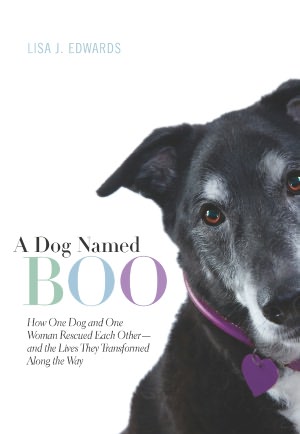
Coffee with a canine: Lisa Edwards & Boo, Porthos, and Pinball

The current featured quartet at Coffee with a Canine: Lisa Edwards & Boo, Porthos, and Pinball.

The author on how she and her dogs were united:
Boo’s litter was dropped off at a pet store doorstep. I was headed to buy Halloween candy when I saw the sign – “Puppies $49.95” and thought I’d just stop in for a puppy fix before heading home with the candy. Instead, I headed home with Boo.

Porthos chose us when we took Dante and Boo to pick out a new puppy and Porthos sat at my feet, sat for Dante, and then sat for Boo while his littermates ignored us almost completely save for a couple drive-by sniffings.

Pinball’s sister Callie was to be our dog after Dante died. However, she did not survive the Parvovirus and all the other dogs from that litter and their mother had been adopted from the shelter. In Callie’s memory we couldn’t leave Pinball there. In hindsight, given his craziness I am...[read on]
About Lisa Edwards's A Dog Named Boo:
She Thought She Was Rescuing an Abandoned Puppy.

Turns Out, He Was Rescuing Her.


The last thing Lisa Edwards needed was a new dog. But when she came across an abandoned litter on Halloween, her heart went out to the runt who walked into walls and couldn’t steady his feet.

Lisa—healing from past abuse and battling constant pain from a chronic medical condition—saw a bit of herself in little Boo. And when he snuggled, helpless, against her, she knew he was meant to be hers.

The dunce of obedience class with poor eyesight and a clumsy gait, Boo was the least likely of heroes. Yet with his unflappable spirit and boundless love, Boo has changed countless lives through his work as therapy dog—helping a mute six-year-old boy to speak, coaxing movement from a paralyzed girl, and stirring life in a ninety-four-year-old nun with Alzheimers. But perhaps Boo’s greatest miracle is the way he transformed Lisa’s life, giving her the greatest gift of all—faith in herself.

This is the inspiring true story of “the little dog who could,” but more than that, it’s the story of how one woman and one dog rescued each other—a moving tribute to hope, resilience and the transformative power of unconditional love.
Learn more about the book and author at the official A Dog Named Boo website and Boo's blog.

Read--Coffee with a Canine: Lisa Edwards & Boo, Porthos, and Pinball.

--Marshal Zeringue

Pg. 69: David Carnoy's "The Big Exit"

Today's feature at the Page 69 Test: The Big Exit by David Carnoy.

About the book, from the publisher:
Richie Forman is freshly out of prison. By night, he makes a living impersonating Frank Sinatra in San Francisco’s lounges and corporate parties. But then his ex-best friend—the man who stole his fiancée while he was in prison—is found hacked to death in his garage, and Richie is the prime suspect. In a murder mystery with the twists and turns of a microchip, Carnoy weaves his characters like a master. He has written an authentic, unputdownable thriller that is sure to chill and delight.
Learn more about the book and author at David Carnoy's website.

The Page 69 Test: The Big Exit.

--Marshal Zeringue

Thursday, November 01, 2012

Pg. 99: Sianne Ngai's "Our Aesthetic Categories"

The current feature at the Page 99 Test: Our Aesthetic Categories: Zany, Cute, Interesting by Sianne Ngai.

About the book, from the publisher:
The zany, the cute, and the interesting saturate postmodern culture. They dominate the look of its art and commodities as well as our discourse about the ambivalent feelings these objects often inspire. In this radiant study, Sianne Ngai offers a theory of the aesthetic categories that most people use to process the hypercommodified, mass-mediated, performance-driven world of late capitalism, treating them with the same seriousness philosophers have reserved for analysis of the beautiful and the sublime.

Ngai explores how each of these aesthetic categories expresses conflicting feelings that connect to the ways in which postmodern subjects work, exchange, and consume. As a style of performing that takes the form of affective labor, the zany is bound up with production and engages our playfulness and our sense of desperation. The interesting is tied to the circulation of discourse and inspires interest but also boredom. The cute’s involvement with consumption brings out feelings of tenderness and aggression simultaneously. At the deepest level, Ngai argues, these equivocal categories are about our complex relationship to performing, information, and commodities.

Through readings of Adorno, Schlegel, and Nietzsche alongside cultural artifacts ranging from Bob Perelman’s poetry to Ed Ruscha’s photography books to the situation comedy of Lucille Ball, Ngai shows how these everyday aesthetic categories also provide traction to classic problems in aesthetic theory. The zany, cute, and interesting are not postmodernity’s only meaningful aesthetic categories, Ngai argues, but the ones best suited for grasping the radical transformation of aesthetic experience and discourse under its conditions.
Learn more about Our Aesthetic Categories at the Harvard University Press website.

Sianne Ngai is Professor of English at Stanford University.

The Page 99 Test: Our Aesthetic Categories.

--Marshal Zeringue

Top 10 nautical books

Peter F. Stevens is the award-winning author of The Voyage of the Catalpa: A Perilous Journey and Six Irish Rebels' Escape to Freedom.

In 2003 he named his top ten nautical books for the Guardian.  One title on the list:
Moby Dick by Herman Melville

Captain Ahab storming about with his one leg, the mighty white whale consuming the whaler's every thought, densely detailed passages chronicling whaling men's lives, in which long stretches of shipboard boredom could vanish with one cry of "Thar' she blows!" - this 1851 briny American classic is the grandfather of all whaling epics.
Read about another book on the list.

Moby-Dick also appears among Katharine Quarmby's top ten disability stories, Jonathan Evison's six favorite books, Bella Bathurst's top 10 books on the sea, John Mullan's lists of ten of the best nightmares in literature and ten of the best tattoos in literature, Susan Cheever's five best books about obsession, Christopher Buckley's best books, Jane Yolen's five most important books, Chris Dodd's best books, Augusten Burroughs' five most important books, Norman Mailer's top ten works of literature, David Wroblewski's five most important books, Russell Banks' five most important books, and Philip Hoare's top ten books about whales.

--Marshal Zeringue

What is D.J. McIntosh reading?

The current featured contributor at Writers Read: D.J. McIntosh, author of The Witch of Babylon.

Her entry begins:
Because my second novel turns on the hunt for a rare 17th century book, I’ve turned to a book I first read some time ago written by John Dunning, an author who’s considered a master of the bibliophile mystery. He has a huge following and with good reason. Dunning’s ‘hero’ is Cliff Janeway, a book dealer and ex-cop. I always found this an unlikely combination but Dunning brings Janeway convincingly alive. In The Bookman’s Promise, Janeway takes pity on an elderly woman who claims her family is the rightful owner of a valuable first edition collection of works by the adventurer and historian, Sir Richard Burton. In the best tradition of quest novels, Janeway searches for both the collection and Burton’s mysterious handwritten journal that reveals a hidden secret - the spark that lit the American Civil War. I think history is...[read on]
About The Witch of Babylon, from the publisher:
Out of the searing heat and sandstorms of the infamous summer of 2003 in Baghdad comes The Witch of Babylon, a gripping story rooted in ancient Assyrian lore and its little-known but profound significance for the world.

John Madison is a Turkish-American art dealer raised by his much older brother, Samuel, a mover and shaker in New York's art world. Caught between his brother's obsession with saving a priceless relic looted from Iraq's National Museum and a deadly game of revenge staged by his childhood friend, John must solve a puzzle to find the link between a modern-day witch and an ancient one.

Aided by Tomas, an archaeologist, and Ari, an Iraqi photojournalist—two men with their own secrets to hide—John races against time to decipher a biblical prophecy that leads to the dark history behind the science of alchemy. Kidnapped by villainous fortune hunters, John is returned to Iraq, where a fabulous treasure trove awaits discovery—if he can stay alive long enough to find it.
Learn more about the book and author at D.J. McIntosh's website, Facebook page, and Twitter perch.

The Page 69 Test: The Witch of Babylon.

Writers Read: D.J. McIntosh.

--Marshal Zeringue

Maxine Kenneth's "Spy in a Little Black Dress," the movie

Now showing at My Book, The Movie: Spy in a Little Black Dress by Maxine Kenneth.

The entry begins:
When we first started writing Paris to Die For, the debut novel in our Jackie Kennedy (Jacqueline Bouvier) spy series, Anne Hathaway was the person I had fixed in my mind for the lead in a movie based on the book. Not only did she resemble Jackie physically, but she projected that same self-possession and adventurous spirit hiding beneath a “good girl” exterior. Our sub-agent for the movie rights, Rich Green of Creative Artists Agency, also suggested Natalie Portman, another great choice and one who, we were told, was interested in the project. Carey Mulligan, a very appealing young actress with Jackie-like qualities, had just burst on the scene in her breakout role in An Education, and was someone else we talked about for the role.

We couldn’t think of anyone more suited to play Jacques Rivage, the swarthy French roué who was Jackie’s co-agent and love interest, than...[read on]
Read more about Spy in a Little Black Dress.

Maxine Kenneth is the writing team of Maxine Schnall and Kenneth Salikof. Visit Maxine Schnall's website and Kenneth Salikof's Twitter perch.

My Book, The Movie: Spy in a Little Black Dress.

--Marshal Zeringue