Monday, September 25, 2006

Pg. 69: "Cast of Shadows"

Kevin Guilfoile's debut novel Cast of Shadows has snagged some very impressive praise.

"The chief ingredients of Kevin Guilfoile's creepy new thriller are the same ones Michael Crichton has used to fashion a hugely successful and lucrative career as a popular novelist...," wrote Michiko Kakutani in the New York Times. "What's striking about "Cast of Shadows" is that Mr. Guilfoile, in his first outing as a novelist, does all this with a lot more panache than Mr. Crichton has demonstrated in many years."

Writing in Salon, Laura Miller called the novel "a masterpiece of intelligent plotting, in which almost everything the characters do is perfectly reasonable...but all of it pushes them inevitably toward disaster.... In fact, only the reader ever learns the whole story and the terrible ironies it contains."

I asked the author to apply the "page 69 test" to his novel. Here's his reply:

I think page 69--or any page for that matter--should be representative of a novel. As a writer you shouldn't have to apologize for any page-length part of your manuscript. If you're not ready to stand behind it, then you should be ready to rewrite it. Unfortunately, being representative is not the same as being interesting. Taken out of context, some parts of your novel are going to fare better than others.

Cast of Shadows is a philosophical thriller about a fertility expert in Chicago who decides to clone his daughter's unknown assailant and then waits for him to grow up so he can see what the killer looked like. Dr. Davis Moore operates a clinic specializing in reproductive human cloning for couples who are worried about passing hereditary diseases and defects to their children. An unsuspecting couple arrives in his office at just the right (or wrong) time, and Moore decides to substitute DNA left at his daughter's crime scene for that of the anonymous donor. After Justin Finn is born Dr. Moore secretly follows the child's progress as he grows up.

On page 69, Justin's pediatrician has discovered that the boy's DNA doesn't match the donor's and Davis has to make her an accomplice if he wants to stop her from exposing him. I tried to keep the prose understated and in this chapter (and throughout the book) I hope the tension will be supplied by the reader, who can recognize the high stakes even when the characters sometimes cannot. Although page 69 includes an admiring physical description of a beautiful pediatrician (in novels what other kinds are there?), I don't know a bookstore browser with nothing invested in these characters (or their circumstances) would recognize the subtext here.

But as long as we're applying arbitrary tests, I pulled the UK paperback off the shelf (in Britain Cast of Shadows is called Wicker) and in that volume there are a couple grafs on page 69 that establish the novel's philosophical and emotional playing field rather concisely. The scene is Justin Finn's first birthday and Davis Moore has contrived an excuse to stop by the Finn home, which is preparing for a party.

Standing at the edge of the carpet, Davis studied the boy. He had watched him several times from his car, following Martha discreetly when she took Justin to Costco or the park. He looked like any other kid then, and like any other kid now, his red overalls stenciled with birthday pudding handprints. Justin lifted a giraffe to his forehead and made a curious grown-up face. When his mom laughed, he did it again.

Davis tried to imagine AK's killer at one year--a different house, a different mom, a different time, a different toy--making a face exactly like this. He thought about AK at this age, already having acquired the big green eyes and high cheekbones she would keep through adolescence. Her laugh on the old videos was a close relation to her teenage giggle, and her polite stubbornness was hardwired in the womb. Now he tried, but couldn't extrapolate a killer from those pudgy little hands and thin, blond hair.

Click here to read an excerpt from Cast of Shadows. Click here to listen to an audio excerpt.
Many thanks to Kevin for the input.
Click here for a Q & A with Kevin. The first question and answer:

Q: What was the genesis of this project? Did the complicated ethics involved in cloning strike you as good material for a thriller, or was the inclusion of cloning an afterthought? Did any newsmaking events inspire the premise?

A: A few years ago I saw one of the prosecutors in the OJ Simpson trial on television and I turned to my wife and said, “wouldn’t it be something if Christopher Darden had secretly cloned Nicole Simpson’s killer and fifteen years later he brought out this teenaged boy and said, ‘Does this little guy remind you of anyone?’” I started thinking about it as a concept for a novel and Cast of Shadows evolved from there.

In addition to the novel, Kevin has amassed a great deal of engaging writing, much of it blessedly available online. Click here to dive into his archives.
For more about Cast of Shadows and Kevin Guilfoile, click here and here.

The most intimate of the arts

John Banville reviewed three books of poetry by Robin Robertson this summer for the New York Review of Books. (Unfortunately, this review is available online only to the journal's subscribers.) Its opening paragraph impressed me:
W.H. Auden claimed, and surely he is right, that the poem is the only form of art one must either take or leave. One can look at a painting and wonder what to have for dinner, one can listen to a symphony and think about sex, and still have an artistic experience, albeit distractedly; but a poem read with an absent mind remains lifeless on the page, lacking the necessary inspiration of our full attention. Poetry therefore is the most intimate of the arts, and at its strongest can produce an almost physical reaction in the reader, a shying-away, as from the too close proximity of another's flesh. Rilke observes that 'beauty is nothing/ but the beginning of terror we can just about bear,' and something of the same might be said of the best poetry.
--Marshal Zeringue

Can men write romantic novels?

Can men write romantic novels?

A week or so ago I posted a brief item on the question.

Recently, two Telegraph writers faced off on the issue.

Liz Hunt says men cannot write romantic fiction:

You see, too often male writers get caught up in the story – "Events, dear boy, events" – whereas women writers better understand that they must keep the romance central, that it drives a narrative better and faster than any other device. For women, it is the ultimate reason to turn a page.

The Da Vinci Code, though thinly written (by a man), was attention-grabbing enough with its mutilated curator and self-flagellating albino monk, but I persevered with it because – I'm ashamed to admit – I was curious to find out what would happen between the hero Robert Langdon and his sidekick Sophie Neveu.

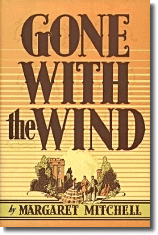
And, yes, of course, the fall of Atlanta was an interesting peripheral happening in Gone With the Wind. But my 15-year-old self wasn't interested in the historical context, I just wanted to know if Scarlett would ever understand that Rhett was the only man who understood her and truly loved her and therefore should not possibly be passed over in favour of weedy Ashley Wilkes.

Ray Connolly says of course men can write romantic fiction:
It seems to me that we're all romantics, and the idea that one sex is simply emotionally incapable of understanding the way the other thinks is to deny everything men and women share – and, worryingly from a creative point of view, to deny all authors the possibility of understanding anyone of the opposite sex. And I can't believe that.
In related news, back in April I ruminated on "boy books" and "girl books."

And in this post, the novelist Marcus Sakey speculates on the balance of male and female writers on his bookshelf.

--Marshal Zeringue

Sunday, September 24, 2006

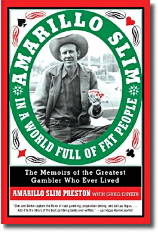
"Amarillo Slim in a World Full of Fat People"

Graham Sharpe, media relations director of British bookmaking firm William Hill, named his top gambling books for the Times (London).

Five of the titles are almost certainly better known to British audiences than to readers elsewhere. The one exception?

Amarillo Slim in a World Full of Fat People by Amarillo Slim Preston with Greg Dinkin

Memoirs of self-styled “greatest gambler who ever lived”.

From the publisher:
Amarillo Slim Preston has won $300,000 from Willie Neslon playing dominoes and $2 million from Larry Flynt playing poker. He has shuffled, dealt, and bluffed with some of twentieth-century's most famous figures. He beat Minnesota Fats at pool with a broom, Bobby Riggs at table tennis with a skillet, and Evel Knievel at golf with a carpenter's hammer. Amarillo Slim has gambled with 'em all, and left most of them wishing they hadn't.

The memoirs of a living American icon, Amarillo Slim in a World Full of Fat People is the story of life as a Texas road gambler and the discovery of the Wild West. It's also the story of how Slim won the World Series of Poker at Binion's Horseshoe, became a worldwide celebrity, and brought poker from smoky backrooms to mainstream America. Just let him tell it:

"If there's anything I'll argue about, I'll either bet on it or shut up. And since it's not very becoming for a cowboy to be arguing, I've made a few wagers in my day. But in my humble opinion, I'm no ordinary hustler. You see, neighbor, I never go looking for a sucker. I look for a champion and make a sucker out of him ..."

"I'm fixing to tell you a few things that I've been keeping to myself for a lot of years. If you're not careful, you just might learn how to get rich without ever having a job."

To read an excerpt from Amarillo Slim in a World Full of Fat People, click here.

--Marshal Zeringue

Richard Ford interview

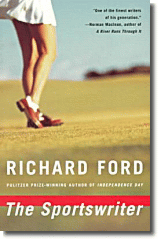
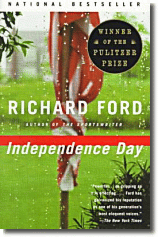
Phil Hogan of the Observer (London) visited with Richard Ford and interviewed him about The Lay of the Land, the closing novel of the trilogy that opened with The Sportswriter and includes the Pulitizer Prize-winning Independence Day.

This passage about the protagonist Frank Bascombe was one of the more interesting parts of the interview for me:
The three novels are structural siblings, in that each covers a day or two in the company of an ordinary man with things to do - a professional errand to run, a girlfriend to meet, a road trip to embark on. But he's not that ordinary and it's via Frank's ultra-attuned musings - on passing minutiae, on the road ahead, on the struggle of every man to transcend his own anxious circumstances - that the deluge of America itself pours in and expands the book's purpose to bursting point. When we first meet Frank, he has given up writing fiction for a less complicated life, first as a hack on a sports magazine and later as an [real] estate agent. I ask Ford whether he gave Frank a literary background to make him a more plausible thinker.

'I was determined not to write a book about a writer. But yes, I needed something to make him persuasive as the sort of transactive character I wanted him to be. With Frank's speaking voice - the intelligence that that voice implies - he is able to transact the culture for the reader. If Frank were a person, and you met him, and he sold you a house, he wouldn't seem like this guy on the page. He would seem like a totally embedded, insignificant character. But because he is a character in a novel, doing what characters in novels do - having a much more intense intellectual, emotional life than even human beings have - then he becomes exceptional.'

Having said that, Ford doesn't see anything incongruous about the idea of a contemplative estate agent. 'My view, and it's kind of a hopeful, progressive, humanist's view, is that anybody embedded in his or her life - a railroad worker, a ditch digger, whatever the hell - has more to offer us than we think they do. People have rich interior lives. People have possibilities that we don't, on the basis of convention, ever accord to them. Who are we to say someone who works on the railroad isn't going to have a rich interior life? That seems to me to be cynical about human beings.'

And this passage made me think of Alan Bennett's observation about all modesty being false:
[Ford] says if a 'numb nuts' like him can write a novel, anyone can; he thinks he wouldn't have won the Pulitzer if John Updike or Philip Roth had published a book that year (in fact, I discover later, Roth's Sabbath's Theater was shortlisted); he loves the Hallmark greetings cards company (which Frank is sniffy about) for its services to the millions of people who can't express their sentiments very well. 'I think it's wonderful,' he says.
Finally, there's the story about the novel with the bullet hole through it:

I ask him about a story I heard - that a publisher once sent him a novel to read in the hope of an endorsement and that he'd sent it back with a bullet hole through it. He laughs. 'They sent me a book by a writer who had reviewed The Sportswriter rather negatively. It was my wife who took the book out to the backyard and shot it with a pistol. Then by some coincidence, someone else sent a copy. It was so satisfying to watch her that I went out and shot the other one. The book is now on an editor's shelf at Knopf in New York, big hole blown in one side and blown out the other.'

Smiling, he says he can't remember the name of the book. 'But a .38 slug makes quite an impression.'

It would be a better story if we knew the title of the book.

Click here to read the entire interview.

--Marshal Zeringue

Saturday, September 23, 2006

Simon Winchester's favorite books on travel

Simon Winchester named his five favorite books on travel for Opinion Journal, including this one which Churchill claimed "above all was the book that taught him how to write:"
Eothen by Alexander Kinglake (1844)

For any connoisseur of the terror occasioned by the prospect of venturing into the faraway, there can be no finer or more gripping start to a travel story than in Kinglake's classic adventure, which he titled after the Greek for "from the east"--eothen. By passing, against all official advice, through an infection quarantine-barrier into the plague-ridden frontiers of the Ottoman Empire, this 25-year old, short and short-sighted Etonian committed himself to months of wandering, forbidden to return until the infection had burned itself out. He ventured to many still curious and unfamiliar territories (Cyprus, Beirut, the Holy Land, Damascus), describing them in an account, written a decade later, best termed impressionistic rather than reportorial. And all the better for it: "Eothen" remains the primus inter pares of all travel literature--Winston Churchill claiming that it above all was the book that taught him how to write.

Click here to read about Winchester four other favorites.

Chapter One of Eothen opens:
At Semlin I still was encompassed by the scenes and the sounds of familiar life; the din of a busy world still vexed and cheered me; the unveiled faces of women still shone in the light of day. Yet, whenever I chose to look southward, I saw the Ottoman’s fortress - austere, and darkly impending high over the vale of the Danube - historic Belgrade. I had come, as it were, to the end of this wheel-going Europe, and now my eyes would see the splendour and havoc of the East.
Eothen is available free online.

Winchester, who wrote The Professor and the Madman and Krakatoa, is more recently the author of A Crack in the Edge of the World: America and the Great California Earthquake of 1906.

Read a description of the book here, and an excerpt from it here.

--Marshal Zeringue

"Echo Park" video preview

Here's a new one, or at least it's the first time I've encountered such a thing: a 10 minute video of the opening chapter of Michael Connelly's Echo Park is available online.

Many publishers make excerpts available; clips from the audio-book version, too. But a mini-movie?

Click here to watch the video.

I'm not sure what to make of this marketing tactic. I'm already hooked on Connelly's books and don't need a preview to convince me to read the book. But would a newcomer be convinced by the video? Perhaps.

Also, I now have an image of what the protagonist Harry Bosch looks like--and it's not the mental image I had before.

--Marshal Zeringue

Science, fiction

Reader James Aach wrote in regarding the post about John Sutherland's contention that we can learn about science through fiction. Aach agrees with Sutherland, and so do I. I merely questioned Sutherland's assertion that Michael Crichton's State of Fear was the best example of a novel to introduce readers to the science about global warming.

Aach goes one better: he's an insider from the nuclear power industry who wrote Rad Decision, a thriller--which he says gets the technology right--based on his knowledge and experience.

You can read the novel for free online here.

Aach has also written an essay on the hurdles confronting writers who try to keep the science in their fiction authentic; click here to read it.

--Marshal Zeringue

Friday, September 22, 2006

What is Paul DiMeo reading?

Paul DiMeo, carpenter of "Extreme Makeover: Home Edition," recently talked to the Christian Science Monitor about what he was listening to and watching on television. And reading:

I just finished reading Chronicles: Volume One, by Bob Dylan.

I can't get enough Dylan. I had a hard time putting this book down. I also recently read Angels & Demons by Dan Brown. If you enjoyed The Da Vinci Code you won't be disappointed with this book. It was a very imaginative, intriguing, and suspenseful read.

Click here to read about DiMeo's tastes in music, movies, and television.
Click here to read an excerpt--and here to listen to a clip-- from Dylan's book.

--Marshal Zeringue

Will "State of Fear" make you smarter about global warming?

"It is unfashionable to assert it, but the novel does, I believe, still have a socio-educational value," writes John Sutherland in an edited excerpt from How to Read a Novel.

He may be right. My own view, however, is that the greatest "socio-educational value" derived from novel reading is in keeping readers from causing, or getting caught up in, all the varieties of trouble that could result if their noses weren't in books.

Sutherland is more positive:
Fiction can make us better, or at least, better informed citizens. In a technological age, for example, it is important that the population should know something about the machinery that makes modern life possible and how it works. Science fiction has done as much for the factual scientific education of the average reader as all the educational reforms introduced since CP Snow's 1959 polemic The Two Cultures lamented his fellow Britons' epidemic ignorance of the second law of thermodynamics. The fact, revealed in a survey by the magazine Wired in November 2005, that 40 per cent of Americans believe that aliens are in the habit of routinely visiting our planet and taking away sample earthlings for full body cavity probes, suggests that sf may also have a lot to answer for in dumbing down the citizenry.
So far, so good. But then Sutherland reaches for one of the weirder examples I can imagine using to advance his thesis.

Michael Crichton's career is a prime example for those, like myself, who want to believe that sf wises up more than it dumbs down. Crichton's The Andromeda Strain was the first true title in the genre to make it to number one on the New York Times bestseller list, in 1969. The novel's breakthrough is attributable to the fact that its descriptions of space hardware (what computers do, for example) made the concurrent moon landings comprehensible to the American population. Crichton's vastly successful Jurassic Park (1990) later introduced a whole generation, via the beloved dinosaur, to the intricacies of Crick and Watson's Nobel-winning discoveries about DNA and the complexities of chaos theory (something that Steven Spielberg prudently left out of the film version).

How much we can trust fiction, even fiction as laboriously researched as Crichton's, to be our educator, remains a moot question. On the strength of his 2004 bestseller, State of Fear, the novelist was invited to testify in 2005 before a US Senate committee investigating climate change. The book is a techno-thriller based on the premise that the greenhouse gas thesis is a gigantic scam, as fallacious as was eugenics in the early 19th century and alchemy in the 17th. And dangerous. The politicians and oil barons love him.

Crichton is unusual in being a novelist with degrees in medicine from Harvard. Why, then, wouldn't he know more about things scientific than some columnist? The fact is, no one knows the accuracy of what Crichton knows, or thinks he knows. Crichton is as likely to be wrong about climate change as he was about the imminent Japanese takeover of America, as outlined in his "Wake up, America!" novel, Rising Sun. Shortly after its publication, the Tokyo real estate market collapsed and the Japanese economy became a basket case.

Readers can still enjoy State of Fear, whether they go along with Crichton or not. And, whatever else, those who get through the book will probably know more about the issues than they did before and may even be stimulated to find out yet more.

Is State of Fear's contribution to the public dialogue on global warming really the best example Sutherland could come up with to back an argument that fiction makes us smarter?

--Marshal Zeringue

V.S. Naipaul on the achievements of the British Empire

Signandsight summarizes an interview from the Neue Zürcher Zeitung:
Literature Nobel Prize laureate V.S. Naipaul talks in an interview with Moritz Behrendt and Daniel Gerlach about irony, travel, the export of democracy and the achievements of the Empire. "We gained much through the Empire. We Indians got things we'd never heard of before. Courts, binding laws, ideas about the value of man. Achievements of the Renaissance and the Reformation. Before that there was not even such a thing as private property in India. Everything more or less belonged to the kings. India is where it is today because of the Empire."
If you read German, experience the entire interview is here.

That flavor of political argument is not exactly a departure for Naipaul. From a mini-profile in the Guardian:
Naipaul's life and work have been characterised by his status as an outsider, first as an Indian in Trinidad, and then as a Trinidadian Indian in England. His work consistently focuses on themes of exile and belonging, and he is cited as the defining voice of post-colonial fiction. While his novels garnered critical acclaim, his travel writing drew stinging political criticism; he was labelled a reactionary and Hindu propagandist for criticising Islamic culture in Among the Believers and Beyond Belief. His talent for controversy was matched by his former protege Paul Theroux, whose feud with Naipaul became public knowledge following the publication of his memoir, Sir Vidia's Shadow. However, even his fiercest critics admire his technical mastery, with Derek Walcott admitting that he is probably "our finest writer of the English sentence".
--Marshal Zeringue

New books by Florida authors

Rebecca Swain writes Shakespeare's Coffee, the Orlando Sentinel's books blog.

She recently attended the Southern Independent Booksellers Association convention and came away from it some recommendations. See her full list here; and here are a couple of titles from Florida writers:
Bermuda Schwartz by Bob Morris (St. Martin's) and Hurricane Punch by Tim Dorsey (Morrow), both out in February: These two Florida authors mix quirky humor with thrilling mysteries. In Bermuda, Zack Chasteen winds up in the middle of a series of murders, all connected to a strange underwater discovery. Gotta love anyone who can name check "The Dream of the Rood" and key lime pie within the first five pages. Meanwhile, Hurricane finds Serge A. Storms riding out a deadly hurricane season and dueling with a serial killer. So far it's fun, easy reading with a bit of a dark twist. Plus, making me yen for a good hurricane... the drink, people, the DRINK!
Click here to learn more about Tim Dorsey's Hurricane Punch.

Click here to learn more about Bob Morris' Bermuda Schwartz.

--Marshal Zeringue

"Trainspotting"

Yesterday I posted an item at Spot-on about the film version of Trainspotting as the best anti-drug film around.

I've not read the book, but that won't stop me from scribbling about it here.

The publisher isn't shy about singing the novel's praises:
Trainspotting is the novel that first launched Irvine Welsh's spectacular career—an authentic, unrelenting, and strangely exhilarating episodic group portrait of blasted lives. It accomplished for its own time and place what Hubert Selby, Jr.'s Last Exit to Brooklyn did for his. Rents, Sick Boy, Mother Superior, Swanney, Spuds, and Seeker are as unforgettable a clutch of junkies, rude boys, and psychos as readers will ever encounter.
And its reception was enthusiastic:
"Blisteringly funny...relatively few writers have rummaged through this particular enclave of British youth culture...even fewer have dug there so deeply."— Mark Jolly, The New York Times Book Review

"Irvine Welsh writes with skill, wit, and compassion that amounts to genius. He is the best thing that has happened to British writing for decades."—Nick Hornby, author of High Fidelity and About a Boy

"Irvine Welsh is the real thing—a marvelous admixture of nihilism and heartbreak, pinpoint realism (especially in dialect and tone), and almost archetypal universality."—David Foster Wallace, author of Infinite Jest

This bio of Welsh could stand updating.

The Guardian's profile of Welsh is worth checking out. There's this quote from the writer:
"It might just be because I'm fucking lazy or whatever, but I've no fucking respect for the writer's craft. It's a lot of fucking nonsense. It's all application. It's nothing to fucking do with skill."
And this note under "Influences":
Welsh has been much compared to Celine, and although the media has fed the myth of an unschooled natural literary phenomenon, he has namechecked authors such as William Burroughs, Alex Trocchi, Alasdair Gray, James Kelman, William McIlvanney and Alan Spence in interviews - while always insisting that music, such as Iggy Pop's, has been his greatest influence.
--Marshal Zeringue

Thursday, September 21, 2006

Pg. 69: "The Mercy of Thin Air"

Ronlyn Domingue's debut novel The Mercy of Thin Air recently caught my attention.

The book has grabbed considerable praise, including this gem from bestselling author Jodi Picoult: "This is that rarest of first novels--a truly original voice, and a truly original story."

Read a synopsis of The Mercy of Thin Air here.

I asked the author to apply the "page 69 test" to her novel. Here's her reply:

Mr. McLuhan’s page 69 theory sent me into a panic. Forget book jackets and blurbs. Does a book allow a glimpse at its soul on that page? I grabbed some favorite titles from my shelves: The Ogre, To Kill a Mockingbird, Winter’s Tale, Catfish and Mandala. In my opinion, they all passed the test. Oh no.

I fanned through my novel. Ah, well, page 69 is the first page of Part Two. Not a bad place to start. I read the paragraphs, paused, and decided I’d read my own book after all.

The excerpt reveals several recurring elements in The Mercy of Thin Air. (Frankly, I was surprised.) On this page alone, the reader finds a character’s refusal to deal with the past, unusual manifestations of the senses, intimacy and sexuality, and subtle observations of human interaction.

Who knew one little old page could divulge so much?

Set in 1920s New Orleans and present-day Louisiana, The Mercy of Thin Air is about Raziela Nolan, who is in the throes of a magnificent love affair when she dies in a tragic accident. In an instant, she leaves behind her one true love and her dream of becoming a doctor--but somehow, she still remains. Immediately after her death, Razi chooses to stay between--a realm that exists after life and before whatever lies beyond it. Seventy-five years later, in this ghost-like state, Razi takes residence with a troubled couple whose history mirrors her own. Her intervention in their lives forces her to face the truth of what happened to her beloved Andrew and the nature of her very existence.

I often say that my novel is part love story, part “ghost” story, and part exploration of our fragile human lives and memories. Thoughtful readers who’ve shared their comments tend to agree. Although, I have to say, they’ve found more layers in this book that I ever intended or imagined. What gifts they have given me. . .

From The Mercy of Thin Air, page 69

Amy didn’t watch the rest of the DVD Chloe had sent her, but I did. There were only a few minutes left. The footage was taken at a party. People waved at the camera and talked to Chloe, the voice behind the lens. The microphone hummed with music and chatter. The shot moved through a dining room next to a narrow kitchen doorway. On the wall behind Amy was a calendar, August 1992. She hugged the dark-haired young man, and he clearly didn’t want them to be interrupted. They shared a strangely intimate moment for such a celebratory atmosphere. He was talking, but his voice did not come through. I strained through the noise and read his lips--It’ll be okay, he said. We’ll have the whole drive up. Sex in at least one strange bed. He nudged her, and she smiled. Thanksgiving will be here before you know it. This is only temporary.

For several days after she hid the disc, the essence of another man billowed intermittently throughout the house. More often, she snapped her head toward doorways and furniture corners with no discernable reason why. Amy was not reacting to me, I knew: there was another reason for her jitters.

Within that time, Amy stopped watching Scott as he slept before she left for work. Then one morning, and another, and each one after, she didn’t kiss him goodbye. The only habit she kept was to keep him warm.

(c) Ronlyn Domingue, 2005

Many thanks to Ronlyn for the input.

The publisher offers a couple of excerpts--here and here--that grabbed my interest along with the author's comments above; I'll definitely move this novel up on my "to read" list.

Meg Wolitzer reviewed The Mercy of Thin Air for the Washington Post:

Character itself is the focus of Ronlyn Domingue's The Mercy of Thin Air, which, like Alice Sebold's The Lovely Bones, employs a dead narrator to comment on the activities of the living. But Domingue's Razi Nolan is a more stylized creature than Sebold's murdered Susie Salmon....

Because this is essentially a ghost story, Domingue loads up on atmosphere. She also provides an original and compelling plotline about certain clandestine all-female parties held in the 1920s at which young women are educated about contraception and sexual awareness: "Diaphragms are similar to pessaries but have a spring hinge that folds so they can be properly placed. They are not yet readily available here. You must be fitted by a doctor and taught to use them. If you haven't married yet, get a fake wedding ring. Most doctors won't tell you a thing if you don't have a husband."

Blending the practical matters of marriage with the sentimental, Domingue has fashioned an emotionally satisfying story of love and longing.

For more reviews, click here.

There are a number of print and audio interviews with Ronlyn Domingue available here.

Previous "page 69 tests":
Shari Caudron, Who Are You People?
Marisha Pessl, Special Topics in Calamity Physics
John Sutherland, How to Read a Novel
Steven Miles, Oath Betrayed
Alan Brown, Audrey Hepburn's Neck
Richard Dawkins, The Ancestor's Tale

--Marshal Zeringue

Céline's "Journey to the End of the Night"

Chris of "escapegrace," who calls Louis-Ferdinand Céline's Journey to the End of the Night "one of the darkest, most hilarious, bleakest, and most profound books I've ever read," posted a fine item about the book yesterday.

There are choice passages from the book as well as from Will Self's related essay in the New York Times.

Click here to read all about it.

--Marshal Zeringue

“The Greatest Story Ever Sold”

Gary Kamiya reviews Frank Rich's The Greatest Story Ever Sold in Salon today. It's a review Rich will love.

A better review is Ian Buruma's in the Sunday New York Times Book Review. It's better because Buruma uses his space to point out that it took that august newspaper's former theater critic to write some of the more penetrating and accurate analysis of foreign policy to appear in the paper in recent years (Kamiya makes this point, too), and that the New York Times itself did such a poor job of independently reporting the actions of the White House that led to the war in Iraq.

So much for that canard about the New York Times as a pillar of the liberal media.

Here's Buruma:

Rich’s subject is the creation of false reality. “The Greatest Story Ever Sold” is not about policies, or geopolitical analysis. The pros and cons of removing Saddam Hussein by force, the consequences of American military intervention in the Middle East and the threat of Islamist extremism are given scant attention. The author, an Op-Ed columnist for The New York Times, has his liberal views, which are not strikingly original. I happen to agree with him that Karl Rove and George Bush manipulated public fear and wartime patriotism to win elections, and that Dick Cheney and his neocon cheerleaders favored a war in Iraq long before 9/11 “to jump-start a realignment of the Middle East.” Whether Rich is right to say that this has “little or nothing to do with the stateless terrorism of Al Qaeda” is debatable. The neocons may well have believed that an American remake of the Middle East was the best way to tackle terrorism.

They were almost certainly mistaken. But the point of Rich’s fine polemic is that the Bush administration has consistently lied about the reasons for going to war, about
the way it was conducted and about the terrible consequences. Whatever the merits of removing a dictator, waging war under false pretenses is highly damaging to a democracy, especially when one of the ostensible aims is to spread democracy to others. If Rich is correct, which I think he is, the Bush administration has given hypocrisy a bad name.

Read the rest of the Buruma review here; read the Salon review here.

The Weekly Standard is not so impressed with Rich.

Last December, Bryan Curtis of Slate did a Rich-like analysis of...Frank Rich.

--Marshal Zeringue

Top 10 books on the English language

David Crystal is one the world's foremost linguistic experts. His latest book, The Fight for English assesses the debate over rights and wrongs in English usage, with examples from early modern English by way of Shakespeare and Samuel Johnson to modern developments such as email and texting.

Unhappy with the "zero tolerance" approach to punctuation offered by Lynn Truss's Eats, Shoots, and Leaves, David Crystal offers a view of the subject that is much more balanced. The book explains why he believes that when it comes to spelling and grammar, we should say no to zero tolerance.

Crystal chose his favorite books on the English language for the Guardian. Demonstrating he's not fickle, the top 5 are the same he named back in June.
Here are a couple of titles from the rest of the list:

A Comprehensive Grammar of the English Language by Randolph Quirk, Sidney Greenbaum, Geoffrey Leech, Jan Svartvik

This was the grammar I had been waiting for since the 1960s - the first real "reference grammar" of modern times. If you think of a dictionary as a reference lexicon - a book in which you can look up any word you want and find out all about it - then this book did the same for grammar - or, at least, it moved closer to that goal than any previous work had done. The Quirk Grammar, as it is often called, is still the book to which I most often refer when exploring a point of English grammatical usage.

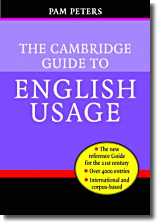
The Cambridge Guide to English Usage by Pam Peters

If you find it helpful to go to Fowler, Gowers, Partridge, or any of the other famous pundits of the past for advice about English usage, then you will value this book. It is the first usage guide to benefit from the computer age. It is solidly based on a corpus of real data, and it is the first book to be truly international, providing information about differences between British, American, Australian, and other regional variants of English. It points the way forward towards the new, internet-fuelled genre of usage guides that will surely emerge in the present century.

Click here to read about all 10 titles.

--Marshal Zeringue

Wednesday, September 20, 2006

More German noir from Philip Kerr

Philip Kerr has just come out with a new "Bernie Gunther" novel, The One from the Other.

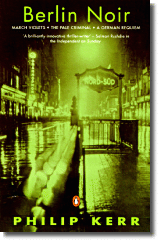
Patrick Anderson praises it, Kenneth Turan doesn't much like it, and Marilyn Stasio won't really let us in on her view. But everyone who knows the previous "Bernie Gunther" novels--collected together in Berlin Noir (1994)--has to be intrigued by this new book.

As Jeff Pierce wrote in back in May, "
If you were alive and reading detective fiction in the late 1980s and early ’90s, you probably recognize the name Bernie Gunther."

Turan captures the allure of Berlin Noir:
With "March Violets" in 1989, "The Pale Criminal" in 1990 and "A German Requiem" in 1991, British novelist Kerr had done something special. He had not only created a detective whose dialogue crackled in the best Raymond Chandler tradition, he had also set him in a milieu that was as unusual as it was convincingly re-created.

For Bernhard "Bernie" Gunther did not prowl the lonely streets of New York or Los Angeles. He set up shop, as the title of the 1994 omnibus collection indicates, in Germany, in the time period before and after World War II, a setting tailor-made for the ethical ambiguity and moral quandaries he would face.
The One from the Other may not live up to the trilogy, but how can anyone who read the "Bernie Gunther" novels not give it a chance?

(Thanks to FotB Kurt van der Walde for bringing this book to my attention.)

--Marshal Zeringue

"The Life and Times of the Thunderbolt Kid"

Bill Bryson's The Life and Times of the Thunderbolt Kid is due to hit the bookstores in October.

I'm a big fan of Bryson's and especially recommend his In a Sunburned Country, A Walk in the Woods, and A Short History of Nearly Everything.

Here's the publisher's pitch for The Life and Times of the Thunderbolt Kid:

From one of the most beloved and bestselling authors in the English language, a vivid, nostalgic, and utterly hilarious memoir of growing up in the 1950s

Bill Bryson was born in the middle of the American century—1951—in the middle of the United States—Des Moines, Iowa—in the middle of the largest generation in American history—the baby boomers. As one of the best and funniest writers alive, he is perfectly positioned to mine his memories of a totally all-American childhood for 24-carat memoir gold. Like millions of his generational peers, Bill Bryson grew up with a rich fantasy life as a superhero. In his case, he ran around his house and neighborhood with an old football jersey with a thunderbolt on it and a towel about his neck that served as his cape, leaping tall buildings in a single bound and vanquishing awful evildoers (and morons)—in his head—as "The Thunderbolt Kid."

Using this persona as a springboard, Bill Bryson re-creates the life of his family and his native city in the 1950s in all its transcendent normality—a life at once completely familiar to us all and as far away and unreachable as another galaxy. It was, he reminds us, a happy time, when automobiles and televisions and appliances (not to mention nuclear weapons) grew larger and more numerous with each passing year, and DDT, cigarettes, and the fallout from atmospheric testing were considered harmless or even good for you. He brings us into the life of his loving but eccentric family, including affectionate portraits of his father, a gifted sportswriter for the local paper and dedicated practitioner of isometric exercises, and OF his mother, whose job as the home furnishing editor for the same paper left her little time for practicing the domestic arts at home. The many readers of Bill Bryson’s earlier classic, A Walk in the Woods, will greet the reappearance in these pages of the immortal Stephen Katz, seen hijacking literally boxcar loads of beer. He is joined in the Bryson gallery of immortal characters by the demonically clever Willoughby brothers, who apply their scientific skills and can-do attitude to gleefully destructive ends.

Warm and laugh-out-loud funny, and full of his inimitable, pitch-perfect observations, The Life and Times of the Thunderbolt Kid is as wondrous a book as Bill Bryson has ever written. It will enchant anyone who has ever been young.

The Guardian generously offers four excerpts from the book: click here, here, here, and here.

Emma Brockes interviewed Bryson:
If [Paul] Theroux's travelogues offer butch intellect and PJ O'Rourke's hot polemic, then Bryson's shtick is his regular guy act, the sort of guy who expresses approval with the term "neat" and has tantrums outside locked guesthouses and responds to set-back with the air of a man thoroughly resigned to his own ridiculousness.
All that may be accurate--and Bryson admits to Theroux's influence (though finding him "too grumpy")--but the memoirist who I thought of as I read the excerpts was David Sedaris. With both men it's impossible to tell how much comic, creative license colors the facts. The big difference is that the funniest bits of Sedaris' stories usually play at his own expense, while Bryson's jokes are more frequently at the expense of others (though there is nothing cruel about them).

Here's an exception:

My mother's lack of recall was legendary. "Well, I had no idea you didn't like cottage cheese," my mom would say in something like amazement one day and the next night there would be cottage cheese again.

Just occasionally her forgetfulness strayed into rather more dismaying territory, especially when she was pressed for time. I recall one particularly rushed and disorganised morning when I was still quite small - small enough, at any rate, to be mostly trusting and completely stupid - when she gave me my sister's old capri pants to wear to school. They were a brilliant lime green, very tight, and had little slits at the bottom. They only came about three quarters of the way down my calves. I stared at myself in the back hall mirror in a kind of confused disbelief. I looked like Barbara Stanwyck in Double Indemnity.

"This can't be right, Mom," I said. "These are Betty's old capri pants, aren't they?"

"No, honey," my mom replied soothingly. "They're pirate pants. They're very fashionable. I believe Kookie Byrnes wears them on 77 Sunset Strip."

Kookie Byrnes, a munificently coiffed star on this popular weekly television show, was a hero to me, and indeed to most people who liked interestingly arranged hair, and he was capable of endearingly strange things, that's for sure. That's why they called him Kookie. Even so, this didn't feel right.

"I don't think he can, Mom. Because these are girls' pants."

"He does, honey."

"Do you swear to God?"

"Oom," she said distractedly. "You watch this week. I'm sure he does."

"But do you swear to God?"

"Oom," she said again.

So I wore them to school and the laughter could be heard for miles. It went on for most of the day. The principal, Mrs Unnaturally Enormous Bosom, who in normal circumstances was the sort of person who wouldn't get off her ass if her chair was on fire, made a special visit to have a look at me and laughed so hard she popped a button on her blouse.

Kookie Byrnes, of course, never wore anything remotely like capri pants. I asked my sister about this after school. "Are you kidding?" she said. "Kookie Byrnes is not homosexual."

Boyd Tonkin writes of the book:
Like Alan Bennett, another ironist posing as a sentimentalist, Bryson can play the teddy-bear and then deliver a sudden, grizzly-style swipe. Which doesn't make his book any less engaging a slice of baby-boomer heaven than its hype now pretends. Yet asperity vies with affection. While other superheroes of the time battled Commie agents, the Thunderbolt Kid had a more specific target in his sights: "I killed morons. Still do."
Tonkin catches the shiv disguised in the velvet nostalgia but Bel Mooney pretends to not see it.

Here is another excerpt about Bryson's mother's cooking.

--Marshal Zeringue

Tuesday, September 19, 2006

Erica Wagner's bad Booker beat

Erica Wagner, the literary editor of the Times (London), recently listed her Booker Prize top six.

The only one on the list that was not a winner:

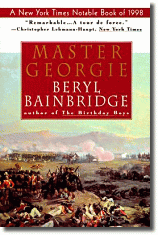
Master Georgie by Beryl Bainbridge (1998)

Ian McEwan won this year for the slight Amsterdam. A real shame.

See the 1998 shortlist here.

As I wrote here, "the interesting angle for me in 1998 was that McEwan published another novel, Enduring Love, and I had a slight preference for it over Amsterdam."

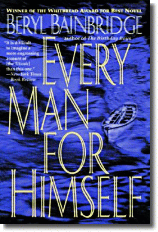
Bainbridge's Every Man For Himself is one of my favorite books by a living author, and The Birthday Boys is also very good.

The Guardian summed up the critical verdict on her work:
She has experimented in many genres - drawing on a Liverpool childhood for her early work, writing a travel book (English Journey) and recently excelling at historical fiction (Every Man For Himself was a brilliant retelling of the Titanic story, The Birthday Boys charted the Scott expedition, Master Georgie follows Liverpudlians in the Crimean War). Overlooked at the beginning of her career, her no-word-wasted style and tight plotting have now won her critical acclaim and a committed following.
Click here to read chapter one from Master Georgie, and click here to read news and reviews of Bainbridge's books in the New York Times.

Previous "bad Booker beats":
In praise of David Mitchell
Martyn Goff's bad Booker beat
The Booker Prize's "Henry Fonda" year
On the Booker and other literary prizes

--Marshal Zeringue

A literary guide to Australia

Emma Pearse, an Aussie expat who is on the editorial staff of New York magazine, has written Salon's literary guide to Australia.

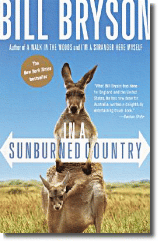
She opens--and closes--with Bill Bryson's very engaging In a Sunburned Country, a book that could and should be read even by those with no interest in Australia.

Pearse also recommends:

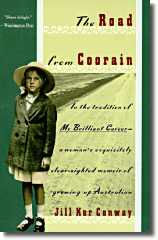
Jill Ker Conway's 1989 memoir, The Road From Coorain, an earnest account of growing up in a rural part of New South Wales. The country's most populous state, it boasts Sydney as its capital, and spans a vast chunk of our famed, lush central-east coast (Bondi just one of its many legendary beaches) and then deep into the barren mainland, much of which is bush or desert. Conway writes intricate, intimate descriptions of the flat, crackling landscape: From the purple desert peas and "nut-flavored" grasses that thrive around the vital Murray River, she sweeps readers into "the dead heart of the country," where her family lives off the land, cultivating grain, breeding sheep and cattle, and silently hoping for rain.

Hard work governs Conway's childhood, broken up in "a good season" by rowdy dances in the closest town. In the prevailing low times, however, depression seeps in. Conway writes of an unspoken divide between her extraordinarily beautiful mother and proud, hardworking father, a schism that plays over and over in Australian literature: "It seemed flatter and more barren than any land [my mother] had ever seen. She saw no landmarks to identify directions, only emptiness. My father saw a strong fertile soil, indications of grazed-out saltbush, dips and changes in the contours of the land and its soils, landmarks of all kinds."

Conway makes the perfect travel companion: She is unsparing and sincere as she writes of her experience traveling from the country's desert through country towns and outer urban areas until she arrives with her mother in Sydney. The majority of Australians have never lived on this land, but many of us learn about it through Conway. She writes of a time that has passed, but the contrast she conveys between urban and rural, bush and city, is as stark now as then and as essential to the contemporary Australian experience.

The death of her father when Conway is 11 is the impetus for her move from the country -- he dies while fixing a pump that might water the family's withering flock of sheep. It's as wrenching a story as Peter Carey's epic and audacious novel True History of the Kelly Gang (2000), which begins: "I lost my own father at 12 yr. of age and know what it is to be raised on lies and silences my dear daughter." The book, which was an international bestseller, imagines the life of infamous bushranger Ned Kelly, perhaps the most celebrated (real) figure in all of Australian history -- picture Jesse James, Paul Bunyan and Paul Revere rolled into one. Carey, one of our most celebrated authors, infuses Kelly with such wit and empathy that his book reads as much as a tempestuous coming-of-age tale as an opinionated retelling of a fraught and crucial time in Australian history.

Across the continent, Pearse locates another favorite:
Said to be the most isolated city in the world, Perth and its surrounding coastal and country towns provide the backdrop for most of Tim Winton's novels, the best of which is Dirt Music (2001) a slow, seething domestic drama set in a small, well-to-do fishing village. Georgie is a privileged, edgy ex-nurse and city girl, married to the town's star fisherman. She reads literature and binge-drinks and -- when she decides to end her monotony and hitchhike out of town -- meets Lu, a hunky musician with a sad past. The book conveys an insidious hopelessness even in the midst of remarkable natural beauty -- "sun-torched surfaces," quaint and quiet dirt roads and steady, open water. People with nicknames like Fox and Bird and Darkie drink themselves to unnecessary deaths or float for days across the thick blue of the ocean. Winton's choppy, rhythmic language captures the flowing and convoluted pace of western Australian life: "The grey sand was hot underfoot and the afternoon sun roasted the back of her neck until they came to a grove of tuarts whose shade and pad of fallen litter offered some relief."
Pearse recommends other titles; read her essay here.

Click here to read an excerpt from The Road From Coorain.

Click here to read an excerpt from In a Sunburned Country.

Click here to read an excerpt from True History of the Kelly Gang.

Click here to read an excerpt from Dirt Music.

Perry Middlemiss has brief biographies of Tim Winton, Peter Carey, and many other Australian writers here.

I discussed Tim Winton's Cloudstreet--"the best novel I read in 2005"--here.

Friend of the Blog "Dutch" shared some thoughts on books that made him curious about Australia before he lived there.

Other items in Salon's literary guide series include:
A literary guide to Norway
A literary guide to Turkey
A literary guide to Japan
A literary guide to Martha's Vineyard
A literary guide to West Texas
A literary guide to Togo
A literary guide to Brooklyn
A literary guide to Miami

--Marshal Zeringue

Books about Westminster insiders

Andrew Pierce, a political writer for the Times (London), came up with a list of six books about Westminster insiders. You have to know more about British politics than I do to judge if he's chosen well.

A few of the titles and brief descriptions are tantalizing. For example:

First Among Equals by Jeffrey Archer
Four men climb the greasy pole, with only one destined to be PM. Entertaining but clearly not autobiographical.

The Line of Beauty by Alan Hollinghurst
Coke-snorting gay Tory dances with Margaret Thatcher in Booker prizewinner.

And then there's this one:

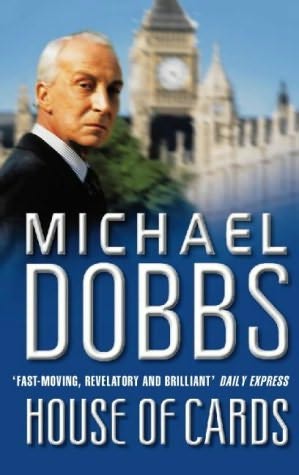
House of Cards by Michael Dobbs
Racy post-Thatcher thriller that drew on Dobbs’s experience working for the Tories.
Now, I don't know this novel but I have seen the BBC trilogy that was adapted from it, and it is one of the best political dramas I've ever viewed. Ian Richardson's portrayal of Francis Urquhart, the politician who will stop at nothing to become Prime Minister, is a piece of genius. If you have any taste for politics, this trilogy is a must see; and even if politics is not your bag, you might well consider it.

There is more about the novel and the dramatization--complete with spoilers--at the Wikipedia entry.

To read about the other three titles suggested by Pierce, click here.

One reviewer wrote that another Jeffrey Archer novel exhibited "the writing...of an enthusiastic, over-informed 11-year-old."

Last month, Wayne Terwilliger wrote here on the blog that he "found The Line of Beauty, though well written line by line, ultimately a tedious story of small-minded people acting nastily. (Yes, one could say the same about Madame Bovary but The Line of Beauty is not of that caliber.)"

--Marshal Zeringue

Monday, September 18, 2006

"Hannibal Rising"

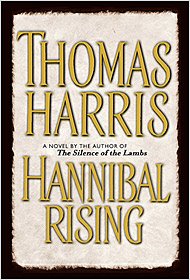
Hannibal "the Cannibal" Lecter is back. Or he will be back this coming Christmas season. (Forget the fava beans and chianti: break out the cranberry sauce and egg nog.)

The New York Times reports:
In a last-minute addition to its holiday-season list, Delacorte Press, an imprint of the Bantam Dell Publishing Group, is expected to announce today that it will publish “Hannibal Rising” on Dec. 5. The 356-page novel chronicles the early life of Dr. Lecter.
....
Close readers of Mr. Harris’s previous novels, which also include “The Silence of the Lambs” and “Red Dragon,” may recall that Dr. Lecter saw his entire family killed during World War II in Eastern Europe. The new novel, which covers the young Hannibal from age 6 through 20, will shed more light on the circumstances of those deaths, with a focus on Dr. Lecter’s memories of his younger sister, Mischa.
The film version, Young Hannibal: Behind the Mask, is due to be released in early 2007.

--Marshal Zeringue

Pg. 69: "Who Are You People?"

Who Are You People?: A Personal Journey into the Heart of Fanatical Passion in America digs into associations of Barbie collectors, Andy Griffith reenactors, Trekkies, ice fishermen, all-night board gamers, and a couple dozen more hobby cultures.

How good is this book?

Entertainment Weekly put it on its September 15 "must list"--right up there with the new Bob Dylan album and the Criterion collection release of Akira Kurosawa's 1954 classic Seven Samurai. (That's some impressive company.) And it's been praised far and wide.

Shari Caudron is the author of Who Are You People? I asked her to apply the "page 69 test" to her book.

Here's what she reported:

What does page 69 say about Who Are You People? Well, this book is about my journey to understand America’s passionate fanatics – those people who are crazy over-the-top in love with some thing, such as Barbie collecting or Star Wars or storm chasing or Josh Groban. Not having such a thing, I wanted to learn from people who did. My question: Could I find my own passion by better understanding the passions of others?

The narrative follows my search while also giving readers a peek inside a variety of passionate subcultures. I felt a tremendous responsibility to give readers an honest – but hopefully, respectful -- look at my reactions to these groups. After all, I was the stand-in for readers who might never have a chance to have such experiences.

As such, page 69 is fairly representative of the work overall. (She says with both relief and amazement.) You get to hear the narrator’s (my) thoughts; you get to meet one of the groups I profiled: pigeon racers in the Bronx; and you get to learn fascinating little tidbits about the sport – or at least those tidbits I found fascinating. Such as? Such as the fact that some winning pigeons can win up to two million dollars per race!

I uncovered this fact three years ago, and I’m still flat-out amazed by it.

Here’s an excerpt from that page:

Members of the Bronx Pigeon Club argue repeatedly, prefacing each new quarrel with the phrase, "You don't know nothin',” as in, "You don't know nothin' and you're too stupid to even know that." They tell snickering side stories about Crazy Al and Cosmo and someone named Eddie Cowboy, who thinks he knows everything even though he ain't never won a major race. They express concern for my well being.

"Joe!" they say, when the Great Musto lights his third long brown cigarette in ten minutes, "you're gonna give her cancer!"

Members of the Bronx Pigeon Club sit close and show me race charts. They stand and point to newspaper clippings. And they rearrange their seats with noisy, disorienting frequency. One minute, I'm sitting next to Reno. The next, Cecil Coston Jr., a young, newly retired police officer. If anyone starts to monopolize my time or attention, The Great Musto interjects and shoos them away.

"I said she's here to talk to me."

Picture a group of pigeons flocking over a tossed breadcrumb and you have some idea how I feel. In a word: pecked.

***
As you might expect if you thought about this kind of thing at all, once telecommunications and long-distance mail service came into use, pigeons were no longer needed for their delivery services and people began to race them for sport. Today, there are millions of flyers all over the world with Taiwan and South Africa being among the most zealous bird-racing countries. In Taiwan alone, winning birds can earn up to two million dollars per race. But in the world of pigeon racing, no country comes close to Belgium in terms of sheer devotion to the sport.

"Nine out of ten houses there have pigeon lofts," Joe says, shaking his head as if he cannot believe how far American civilization has fallen behind the rest of the world.

Many thanks to Shari for the input.

Interested in learning more about pigeon racing? Click here.

Click here to read an excerpt from Who Are You People?

Click here to read a Q & A with Shari Caudron.

Liane Hansen of National Public Radio's Weekend Edition Sunday featured Who Are You People? on her show August 6th. Listen to the interview here.

Previous "page 69 tests":
Marisha Pessl, Special Topics in Calamity Physics
John Sutherland, How to Read a Novel
Steven Miles, Oath Betrayed
Alan Brown, Audrey Hepburn's Neck
Richard Dawkins, The Ancestor's Tale

--Marshal Zeringue

Banned books in Malaysia

I recently chanced upon Bibliobibuli, a delightful books blog run by Sharon Bakar ("British but have lived in Malaysia for more than 20 years and very much at home here").

Among the many interesting subjects on the blog that caught my eye: "restricted" (ie, banned) books. A recent sample of restricted titles, with commentary by Sharon:

Another restricted novel - copies of The Marriage Market by Nisha Minhas bound for Malaysia prior to its October launch date were seized at Johor Bahru customs. As usual the letter (which I've seen) from the JB branch of the Kemetarian Dalam Negeri gave no reason at all.

Okay people, let's puzzle this. What could possibly be so abhorent about this piece of teen-fiction that Malaysians shouldn't be allowed to read it? I'm stumped.

Could it be because it's about a temporary marriage? Could it be because it's about a mixed-race relationship? Could it be the vestigal terror of the mat salleh man stealing our (Asian) women? Could it be because of the cover (the other cover shown here is a tad racier - white legs, brown legs - but still, when did legs become forbidden?)?

***

This time it's Things Fall Apart, Chinua Achebe's classic novel about the coming of colonialism to Nigeria.

It's a wonderful book and we used to teach it as part of our B.Ed TESL course. I haven't a clue why it might be deemed unsuitable for a Malaysian readership, have you?

***

Anthony Burgess' The Long Day Wanes (A Malayan Trilogy) is apparently on the restricted list too.

I have read it. I read it when I first came to Malaysia in 1984, loved it, based my decision to move to Kuala Kangsar ("Kuala Hantu" in the book) on it. Then my reading group chose it as one of the books of the month, a year or two back. They all enjoyed it too. There was no problem in getting copies - they were piled high in all the bookshops.

But a week or two ago, a friend tried Kinokuniya for a copy and was told, sorry the book wasn't available.

There's a more book talk at Bibliobibuli--and most of it is not so dispiriting--so check it out.

--Marshal Zeringue

"Woodrow Wilson's Right Hand"

Terry Hartle, a senior vice president with the American Council on Education, reviewed Godfrey Hodgson's Woodrow Wilson's Right Hand: The Life of Colonel Edward M. House for the Christian Science Monitor.

I sure wish this book had been around ten years ago. Back then I spent a great deal of time learning the story of House's impact on American foreign policy and alliance diplomacy. And it is a fascinating story.

I worked mainly with The Intimate Papers of Colonel House (ed. by Charles Seymour) and the collected papers of Woodrow Wilson, as well as a number of memoirs from contemporary U.S. and European sources.

Hartle's review makes me think my research would have gone much quicker had Hodgson's book been available. Here is the start of the review:

Senior advisers to the president of the United States are very public figures. Their impact on public policy is widely recognized, and the media often accords them more attention than cabinet secretaries and members of Congress.

This was not always so. Col. Edward House, arguably the most influential presidential adviser in American history, is virtually unknown today except among professional historians. But this quiet, private man had an enormous influence on President Woodrow Wilson and American foreign policy before, during and after
World War I.

According to the British scholar Godfrey Hodgson, House "was the ablest diplomat the U.S. had produced up to his time and one of the ablest it has ever bred." Strong praise, to say the least. But in Woodrow Wilson's Right Hand, Hodgson makes a strong case to support his view.

Click here to read the entire Hartle review.

Click here to read Hodgson's essay, "We'd Be Better Off If Our Foreign Policy Was Less Woodrow Wilson and More Colonel House."

--Marshal Zeringue

Sunday, September 17, 2006

"The Lay of the Land"

I'm eagerly looking forward to the October release of Richard Ford's The Lay of the Land.

From the publisher:

With The Sportswriter, in 1986, Richard Ford commenced a cycle of novels that ten years later—after Independence Day won both the Pulitzer Prize and the PEN/Faulkner Award—was hailed by The Times of London as “an extraordinary epic [that] is nothing less than the story of the twentieth century itself.” Now, a decade later, Frank Bascombe returns, with a new lease on life (and real estate), more acutely in thrall to life’s endless complexities than ever before.

His story resumes in the autumn of 2000, when his trade as a realtor on the Jersey Shore is thriving, permitting him to revel in the acceptance of “that long, stretching-out time when my dreams would have mystery like any ordinary person’s; when whatever I do or say, who I marry, how my kids turn out, becomes what the world—if it makes note at all—knows of me, how I’m seen, understood, even how I think of myself before whatever there is that’s wild and unassuagable rises and cheerlessly hauls me off to oblivion.” But as a Presidential election hangs in the balance, and a postnuclear-family Thanksgiving looms before him along with crises both marital and medical, Frank discovers that what he terms the Permanent Period is fraught with unforeseen perils: “All the ways that life feels like life at age fifty-five were strewn around me like poppies.”

A holiday, and a novel, no reader will ever forget—at once hilarious, harrowing, surprising, and profound. The Lay of the Land is astonishing in its own right and a magnificent expansion of one of the most celebrated chronicles of our time.
The Guardian boasts of an exclusive excerpt from the novel; click here to read it.

The New Yorker published Ford's “How Was It to Be Dead?,” a short story excerpted from The Lay of the Land. Here, in a Q & A with the New Yorker fiction editor Deborah Treisman, Ford talks about national holidays, real estate, and growing older with his character Frank Bascombe.
For a previous blog item on Independence Day click here. For more on Frank Bascombe, click here.

--Marshal Zeringue

What is Todd English reading?

Celebrity chef Todd English owns 17 restaurants around the country, including "Olives" in Boston, New York, and Washington. His newest eatery, "Riche by Todd English," opens in New Orleans in the coming week.

He recently talked to the Christian Science Monitor about what he was listening to and watching on television and at the cinema. And reading:
I'm reading Gael Greene's book Insatiable. It's about her career in New York as a food critic for New York Magazine. It's an insider's book on what being a restaurant critic is all about. I like Fiasco, about Thomas E. Ricks. I've just started reading it. He's a journalist, and it's about his take about what's going on [in Iraq]. He gives some real-life stories about what's happening.
Click here to read about English's tastes in music, movies, and television.
Interested in more books by or about foodies? Click here.

For more about Fiasco, click here.

"Riche by Todd English" is one among hundreds of employers in New Orleans looking for help.

--Marshal Zeringue

Saturday, September 16, 2006

Pg. 69: "Special Topics in Calamity Physics"

Based on her reviews (and not her photo), I'd already decided to read Marisha Pessl's Special Topics in Calamity Physics when I gave her novel the page 69 test.

Although I won't know for some time if the page presages the quality of the book, this does appear to be a case where McLuhan's advice would have a positive impact on my decision to follow through and read the book.

Here are the first few full paragraphs from page 69:

I stood for a moment in the aisle, unable to move until kids started pushing against my backpack and I was forced up the stairs. I had no idea how Charles knew my name. I did, however, know exactly why he’d rolled out the red carpet: he and his friends were hoping I’d join their Study Group. I’d toiled through a long history of Study Group invites extended by everyone from the Almond-Eyed Football Hero Who’d Have a Son by Senior Year to the Rita Hayworth Sunday Newspaper Coupon Model. I used to be thrilled when asked to join a Study Group, and when I arrived at the designated living room equipped with note cards, highlighters, red pens, and supplemental textbooks, I was euphoric as any Chorus Girl who’d been asked to understudy for the Lead. Even Dad was excited. As he drove me to Brad’s, or Jeb’s or Sheena’s, he’d start muttering about this being a wonderful opportunity, one that would allow me to spread my Dorothy Parker wings and single-handedly spearhead a contemporary Algonquin Round Table.

Once he dropped me off, though, it didn’t take long to realize I hadn’t been invited for my scathing wit. If Carla’s living room was the Vicious Circle, I was the waiter everyone ignored unless they wanted another scotch or there was something wrong with the food. Somehow, one of them had discovered I was a “geek” (a “cardigan” at Coventry Academy), and I’d be assigned to research one out of every two questions on the Study Sheet, sometimes the entire Study Sheet.

“Let her do that one, too. You don’t mind do you, Blues?”

The turning point came at Leroys….

OK, so our heroine is no Ferris Bueller. But I like that clever, perhaps even intelligent, self-awareness in a young narrator. I'll read this book.

Previous "page 69 tests":
John Sutherland, How to Read a Novel
Steven Miles, Oath Betrayed
Alan Brown, Audrey Hepburn's Neck
Richard Dawkins, The Ancestor's Tale

--Marshal Zeringue

Novels about the pursuit of money

Ward Just, who recently compiled a list of books he admires for their “'autumnal' quality, the sense that spring’s return is no sure thing," has now come up with his five "favorite novels about the pursuit of money."

Here are the two titles most recently published:

Something Happened by Joseph Heller (Knopf, 1974)

Inside the belly of the beast: "I get the willies when I see closed doors. Even at work, where I am doing so well now, the sight of a closed door is sometimes enough to make me dread that something horrible is happening behind it, something that is going to affect me adversely." Bob Slocum is a middle- management man for whom the office is a kind of purgatory. Most days he is terrified, in an existential dread: He is uncertain of his place in the scheme of things. Beautifully written, often to the rhythm of a metronome, Something Happened ends with a sentence as honed as a knife's blade: "Everyone seems pleased with the way I've taken command."

American Pastoral by Philip Roth (Houghton Mifflin, 1997)

Getting and spending has never been a salient feature of Philip Roth's books. Most of his characters have jobs, as writers or university professors or advertising men, but capitalism--its recklessness, its restraints and its rewards--has never been a main concern. That changed with American Pastoral, a great work of fiction that summons the life of Seymour "Swede" Levov, a play-by-the-rules businessman with all the blessings that hard work and good luck can bestow: a beautiful wife, an adorable daughter, robust good health, abundance. Swede lives in a kind of paradise, America in the Eisenhower years. Then the 1960s arrive, and the adorable daughter becomes a vicious revolutionary-terrorist whose specific aim is to turn daddy's paradise upside down; and she succeeds.

Click here to learn about Just's other titles.

Just’s new novel, Forgetfulness, has just been published.

Ward Just is the author of fourteen previous novels, including the National Book Award finalist Echo House and An Unfinished Season, winner of the Chicago Tribune’s Heartland Award. In a career that began as a war correspondent for Newsweek and the Washington Post, Just has lived and written in half a dozen countries, including Britain, France, and Vietnam. His characters often lead public lives as politicians, civil servants, soldiers, artists, and writers. It is the tension between public duty and private conscience that animates much of his fiction, including Forgetfulness.

--Marshal Zeringue