Sunday, March 10, 2019

Ten books that defined the 1960s

At LitHub Emily Temple tagged the ten books that defined the 1960s, including:
Kurt Vonnegut, Slaughterhouse-Five (1969)

Despite its strangeness, mixing science fiction, historical fiction, autobiography, and satire with a strong postmodern hand, Vonnegut’s Slaughterhouse-Five achieved cult status after its publication, which landed smack in the middle of the Vietnam War, the anti-war movement, and the civil rights movement. The novel, wrote critic Jerome Klinkowitz, “so perfectly caught America’s transformative mood that its story and structure became best-selling metaphors for the new age.” The repeated phrase “so it goes” entered the lexicon as well, a response to death and destruction that, according to the Times, “became a catchphrase for opponents of the Vietnam war.” But even outside of the context of Vietnam, this novel has become a touchstone for young readers, and despite its popularity, I’d still categorize it as a cult classic today—it remains a shibboleth for a certain kind of reader, at a certain age.
Read about another entry on the list.

Slaughterhouse-Five also made Ryan North's 6 favorite books list, Jesse Armstrong's top ten list of comic war novels, Joel Cunningham's top five list of short but deep novels, Tom Lamont's top ten list of time travelers, Melissa Albert's list of six favorite fictional book nerds, Jon Ronson's five top list of books on madness, Charlie Yu's top ten list of time travel books, John Mullan's list of ten of the best aliens in science fiction, Charlie Jane Anders and Michael Ann Dobbs's list of twelve great stories to help you to cope with mortality, Sebastian Beaumont's top 10 list of books about psychological journeys, and Tiffany Murray's top ten list of black comedies.

--Marshal Zeringue

Saturday, March 09, 2019

Pg. 99: Jean E. Jackson's "Managing Multiculturalism"

Featured at the Page 99 Test: Managing Multiculturalism: Indigeneity and the Struggle for Rights in Colombia by Jean E. Jackson.

About the book, from the publisher:
Indigenous people in Colombia constitute a mere three percent of the national population. Colombian indigenous communities' success in gaining collective control of almost thirty percent of the national territory is nothing short of extraordinary. In Managing Multiculturalism, Jean E. Jackson examines the evolution of the Colombian indigenous movement over the course of her forty-plus years of research and fieldwork, offering unusually developed and nuanced insight into how indigenous communities and activists changed over time, as well as how she the ethnographer and scholar evolved in turn.

The story of how indigenous organizing began, found its voice, established alliances, and won battles against the government and the Catholic Church has important implications for the indigenous cause internationally and for understanding all manner of rights organizing. Integrating case studies with commentaries on the movement's development, Jackson explores the politicization and deployment of multiculturalism, indigenous identity, and neoliberalism, as well as changing conceptions of cultural value and authenticity—including issues such as patrimony, heritage, and ethnic tourism. Both ethnography and recent history of the Latin American indigenous movement, this works traces the ideas motivating indigenous movements in regional and global relief, and with unprecedented breadth and depth.
Learn more about Managing Multiculturalism at the Stanford University Press website.

The Page 99 Test: Managing Multiculturalism.

--Marshal Zeringue

Alyssa Wees's "The Waking Forest," the movie

Featured at My Book, The Movie: The Waking Forest by Alyssa Wees.

The entry begins:
When I write, I don’t picture my characters as certain actors, and even now that I’m done writing The Waking Forest, I still don’t have much of a dream cast. But I do have a dream director: Guillermo Del Toro. The wonder and darkness of Pan’s Labyrinth, one of my favorite movies, inspired the way I...[read on]
Visit Alyssa Wees's website.

My Book, The Movie: The Waking Forest.

--Marshal Zeringue

Seven top thrillers about losing our grip on reality

Harriet Tyce grew up in Edinburgh and studied English at Corpus Christi College, Oxford University before practicing as a criminal barrister for the next decade. After having children she left the Bar and has recently completed with distinction an MA in Creative Writing - Crime Fiction at the University of East Anglia.

Blood Orange, Tyce's new psychological thriller, is her first novel.

At CrimeReads the author tagged seven thrillers about losing our grip on reality. One title on the list:
Sunset City by Melissa Ginsburg

When Charlotte Ford’s oldest friend is bludgeoned to death, she heads into the underbelly of Houston to discover what she can of her friend’s past, falling herself into self-destructive patterns of drugs, alcohol and dodgy sex.
Read about another entry on the list.

--Marshal Zeringue

Friday, March 08, 2019

What is Andrew Ridker reading?

Featured at Writers Read: Andrew Ridker, author of The Altruists: A Novel.

His entry begins:
I recently finished Falconer by John Cheever. I’ve long admired Cheever’s short fiction, but Falconer was unlike anything I’d ever read by him—or anyone, for that matter. In theory it’s the story of a man, Ezekiel Farragut, who is sent to jail for murdering his brother. But Cheever is less concerned with crime and punishment as he is the strange assortment of men who populate Falconer State Prison. Many pages of this short novel are given over to anecdotes delivered by the inmates and staff. These mini-stories are remarkable feats of voice, eccentric and yet wholly believable. Cheever was never...[read on]
About The Altruists, from the publisher:
A vibrant and perceptive novel about a father’s plot to win back his children’s inheritance

Arthur Alter is in trouble. A middling professor at a Midwestern college, he can’t afford his mortgage, he’s exasperated his much-younger girlfriend, and his kids won’t speak to him. And then there’s the money–the small fortune his late wife, Francine, kept secret, which she bequeathed directly to his children.

Those children are Ethan, an anxious recluse living off his mother’s money on a choice plot of Brooklyn real estate, and Maggie, a would-be do-gooder trying to fashion herself a noble life of self-imposed poverty. On the verge of losing the family home, Arthur invites his children back to St. Louis under the guise of a reconciliation. But in doing so, he unwittingly unleashes a Pandora’s box of age-old resentments and long-buried memories–memories that orbit Francine, the matriarch whose life may hold the key to keeping them together.

Spanning New York, Paris, Boston, St. Louis, and a small desert outpost in Zimbabwe, The Altruists is a darkly funny (and ultimately tender) family saga that confronts the divide between baby boomers and their millennial offspring. It’s a novel about money, privilege, politics, campus culture, dating, talk therapy, rural sanitation, infidelity, kink, the American beer industry, and what it means to be a “good person.”
Visit Andrew Ridker's website.

Writers Read: Andrew Ridker.

--Marshal Zeringue

Pg. 99: Margaret Mih Tillman's "Raising China's Revolutionaries"

Featured at the Page 99 Test: Raising China's Revolutionaries: Modernizing Childhood for Cosmopolitan Nationalists and Liberated Comrades, 1920s-1950s by Margaret Mih Tillman.

About the book, from the publisher:
A widespread conviction in the need to rescue China’s children took hold in the early twentieth century. Amid political upheaval and natural disasters, neglected or abandoned children became a humanitarian focal point for Sino-Western cooperation and intervention in family life. Chinese academics and officials sought new scientific measures, educational institutions, and social reforms to improve children’s welfare. Successive regimes encouraged teachers to shape children into Qing subjects, Nationalist citizens, or Communist comrades.

In Raising China’s Revolutionaries, Margaret Mih Tillman offers a novel perspective on the political and scientific dimensions of experiments with early childhood education from the early Republican period through the first decade of the People’s Republic. She traces transnational advocacy for child welfare and education, examining Christian missionaries, philanthropists, and the role of international relief during World War II. Tillman provides in-depth analysis of similarities and differences between Nationalist and Communist policy and cultural notions of childhood. While both Nationalist and Communist regimes drew on preschool institutions to mobilize the workforce and shape children’s political subjectivity, the Communist regime rejected the Nationalists’ commitment to the modern, bourgeois family. With new insights into the roles of experts, the cultural politics of fundraising, and child welfare as a form of international exchange, Raising China’s Revolutionaries is an important work of institutional and transnational history that illuminates the evolution of modern concepts of childhood in China.
Learn more about Raising China's Revolutionaries at the Columbia University Press website.

The Page 99 Test: Raising China's Revolutionaries.

--Marshal Zeringue

The fifty best small-screen adaptations of literary works

At LitHub Emily Temple tagged--and ranked--50 of the best small-screen adaptations of literary works to date. #2 on the list:
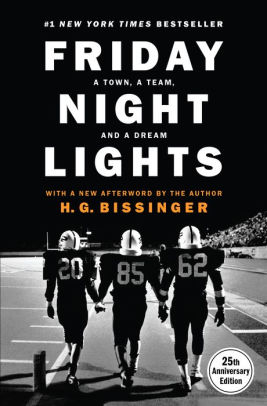
Friday Night Lights
NBC (2006-2011)
Based on: Friday Night Lights: A Town, a Team, and a Dream by H. G. Bissinger

Many people’s choice for Best Show Ever, regardless of its literariness. And why not? It was a show about football that people who didn’t care about football would watch, a realistic but twisty story of a small town in America and its many connected inhabitants, and a deeply absorbing drama. It made you care. That’s about the best thing you can say about a show. There was just that one storyline that we don’t talk about. And neither does Landry. Just doesn’t come up again. It’s fine. We’ve forgotten it.
Read about another entry on the list.

--Marshal Zeringue

Pg. 69: Soraya M. Lane's "The Spitfire Girls"

Featured at the Page 69 Test: The Spitfire Girls by Soraya M. Lane.

About the book, from the publisher:
Three skilled aviators determined to help win the war. Three brave women who know their place is not at home.

At the height of World War II, the British Air Transport Auxiliary need help. A group of young women volunteer for action, but the perils of their new job don’t end on the tarmac. Things are tough in the air, but on the ground their abilities as pilots are constantly questioned.

There is friction from the start between the new recruits. Spirited American Lizzie turns heads with her audacity, but few can deny her flying skills. She couldn’t be more different from shy, petite Ruby, who is far from diminutive in the sky. It falls to pragmatic pilot May to bring the women together and create a formidable team capable of bringing the aircraft home.

As these very different women fight to prove themselves up to the task at hand, they are faced with challenges and tragedies at every turn. They must fight for equal pay and respect while handling aircraft that are dangerously ill-equipped; meanwhile, lives continue to be lost in the tumult of war.

Determined to assist the war effort doing what they love, can May, Lizzie and Ruby put aside their differences to overcome adversity, and will they find love in the skies?
Visit Soraya Lane's website.

My Book, The Movie: The Spitfire Girls.

The Page 69 Test: The Spitfire Girls.

--Marshal Zeringue

Thursday, March 07, 2019

Vanessa McGrady's "Rock Needs River," the movie

Featured at My Book, The Movie: Rock Needs River: A Memoir About a Very Open Adoption by Vanessa McGrady.

The entry begins:
If they make my book into a movie, I’d love to see Drew Barrymore play me.

I could see Jared Leto/Adrien Brody/Viggo Mortenson as Bill, Kristen Stewart/Dakota Fanning as...[read on]
Visit Vanessa McGrady's website.

My Book, The Movie: Rock Needs River.

--Marshal Zeringue

Pg. 99: Kristen Ghodsee's "Second World, Second Sex"

Featured at the Page 99 Test: Second World, Second Sex: Socialist Women's Activism and Global Solidarity during the Cold War by Kristen Ghodsee.

About the book, from the publisher:
Women from the state socialist countries in Eastern Europe—what used to be called the Second World—once dominated women’s activism at the United Nations, but their contributions have been largely forgotten or deemed insignificant in comparison with those of Western feminists. In Second World, Second Sex Kristen Ghodsee rescues some of this lost history by tracing the activism of Eastern European and African women during the 1975 United Nations International Year of Women and the subsequent Decade for Women (1976-1985). Focusing on case studies of state socialist Bulgaria and nonaligned but socialist-leaning Zambia, Ghodsee examines the feminist networks that developed between the Second and Third Worlds and shows how alliances between socialist women challenged American women’s leadership of the global women’s movement. Drawing on interviews and archival research across three continents, Ghodsee argues that international ideological competition between capitalism and socialism profoundly shaped the world women inhabit today.
Learn more about Second World, Second Sex at the Duke University Press website.

My Book, The Movie: The Left Side of History.

The Page 99 Test: The Left Side of History.

Writers Read: Kristen Ghodsee.

The Page 99 Test: Second World, Second Sex.

--Marshal Zeringue

Ten top thrillers that explore mental health

Peter Swanson's new novel is Before She Knew Him.

At CrimeReads he tagged ten thrillers that explore mental health, including:
Sharp Objects by Gillian Flynn (2006)

Camille Preaker has to be one of the most mesmerizing protagonists to emerge out of the thriller genre in this new century. A journalist who struggles with self-harm goes back to her hometown to investigate a series of murders. Preaker goes down a dark rabbit hole to expose her own family’s twisted history.
Read about another entry on the list.

--Marshal Zeringue

What is David Downie reading?

Featured at Writers Read: David Downie, author of The Gardener of Eden.

His entry begins:
Please understand, when I write “read” I mean listen: blind in one eye, I have low vision in the other. So, I listen to books, most of them read to me by my wife, or I use Librivox.org for audio. Right now, we’re reading A Legacy of Spies by John le Carré. I love his early books—A Small Town in Germany, The Spy Who Came in From the Cold. Some of his later novels didn’t work for me. This one proves le Carré is still the measure of greatness, the best spy fiction writer, ever. The hero is Peter Guillam, now white haired, the last of the disciples of the fictional spymaster, Smiley. Wonderful, un-put-down-able so far, above all for...[read on]
About The Gardener of Eden, from the publisher:
A haunting and luminous novelthat explores the dark secrets lurking beneath the stunning natural beauty of a dying timber town.

A mysterious beachcomber appears one day on the coastal bluffs near the small town of Carverville, a place whose best days are long behind it. Who is he, and why has he returned after nearly forty years? Carverville’s prodigal son, James, serendipitously finds work at a gentrified motel, but his homecoming soon takes a sinister turn when he and a local teenager make a gruesome discovery on the beach. It forces him to reckon with the ghosts of his past—and the dangers of the present. Rumors, distrust, and conspiracies spread among the townsfolk, all of them seemingly trapped in their claustrophobic and isolated world. But is there something more sinister at work here than the mere fear of outsiders? In The Gardener of Eden, David Downie weaves an intricate and compelling narrative of redemption, revenge, justice, and love?and the price of secrecy—as a community grapples with its tortured past and frightening future.
Visit David Downie's website.

The Page 69 Test: The Gardener of Eden.

My Book, The Movie: The Gardener of Eden. 

Writers Read: David Downie.

--Marshal Zeringue

Wednesday, March 06, 2019

Top ten books about Hollywood

Wayne Holloway is a writer and director.

At the Guardian he tagged his favorite writing about California’s dream factory, including:
LA Quartet by James Ellroy (1987-1992)

Quintessential. Hardboiled hard-luck stories from the underbelly of the city. Written with such maverick prose, such anger and non-judgmental brutality that what you think you already know you don’t, at all. Taking the louche noir detective B movies and books we do know to their logical hyper-violent conclusion, Ellroy sometimes reads like a speedballing Ballard. Ellroy explores the eruption of organised crime and political black ops into Tinseltown. Ellroy combines fictional and real historical characters to weave together a paranoid, conspiratorial portrait of a town that shills the truth.
Read about another entry on the list.

--Marshal Zeringue

Pg. 99: Kieran Connell's "Black Handsworth"

Featured at the Page 99 Test: Black Handsworth: Race in 1980s Britain by Kieran Connell.

About the book, from the publisher:
In 1980s Britain, while the country failed to reckon with the legacies of its empire, a black, transnational sensibility was emerging in its urban areas. In Handsworth, an inner-city neighborhood of Birmingham, black residents looked across the Atlantictoward African and Afro-Caribbean social and political cultures and drew upon them while navigating the inequalities of their locale. For those of the Windrush generation and their British-born children, this diasporic inheritance became a core influence on cultural and political life. Through rich case studies, including photographic representations of the neighborhood, Black Handsworth takes readers inside pubs, churches, political organizations, domestic spaces, and social clubs to shed light on the experiences and everyday lives of black residents during this time. The result is a compelling and sophisticated study of black globality in the making of post-colonial Britain.
Kieran Connell is Lecturer in Contemporary British History at Queen’s University Belfast.

Learn more about Black Handsworth at the University of California Press website.

The Page 99 Test: Black Handsworth.

--Marshal Zeringue

Pg. 69: Serena Kent's "Death in Provence"

Featured at the Page 69 Test: Death in Provence: A Novel by Serena Kent.

About the book, from the publisher:
The first entry in a clever, lighthearted mystery series set in modern Provence—a delightful blend of Agatha Christie and Peter Mayle—featuring the irrepressible Penelope Kite, a young-at-heart divorcee with a knack for stumbling across dead bodies.

It’s love at first sight when Penelope Kite sees Le Chant d’Eau—The Song of Water—the stone farmhouse tucked high in the hills above the Luberon valley, complete with a garden, swimming pool, and sweeping mountain vistas. For years, Penelope put her unfaithful ex-husband and her ungrateful stepchildren first. Since taking early retirement from her job in forensics at the Home Office in England, she’s been an unpaid babysitter and chauffeur for her grandchildren. Now, she’s going to start living for herself. Though her dream house needs major renovations, Penelope impulsively buys the property and moves to St. Merlot.

But Penelope’s daydreams of an adventurous life in Provence didn’t include finding a corpse floating face down in her swimming pool. The discovery of the dead man plunges her headlong into a Provençal stew of intrigue and lingering resentments simmering beneath the deceptively sunny village. Having worked in the forensics office, Penelope knows a thing or two about murder investigations. To find answers, she must carefully navigate between her seemingly ubiquitous, supercilious (and enviably chic) estate agent, the disdainful chief of police, and the devilishly handsome mayor—even as she finds herself tempted by all the delicacies the region has to offer. Thank goodness her old friend Frankie is just a flight away ... and that Penelope is not quite as naïve as her new neighbors in St. Merlot believe.

Set against the exquisite backdrop of Provence, steeped in history, atmosphere, and secrets, Death in Provence introduces an irresistible heroine and a delightful new mystery series.
Visit Serena Kent's website.

The Page 69 Test: Death in Provence.

--Marshal Zeringue

Six notable fictional musicians

At the B&N Reads blog Brian Boone tagged six fictional musicians "so fantastic (or compelling in some way) that we wish they’d jump off the page and rock us until our heads explode," including:
Tucker Crowe, from Juliet, Naked

Nick Hornby writes about music so well, particularly in High Fidelity, and Juliet, Naked, which is really a novel about the pathological ownership fans take over the art they love. The impact of the story would actually be diminished if we could hear the songs recorded by reclusive, brilliant singer-songwriter Tucker Crowe, either his classic album, Juliet, or the sparse demos, Juliet, Naked. The novel tells the tale of Duncan, a Crowe superfan who gets awfully miffed when the object of his obsession strikes up a friendship with Annie, his girlfriend…who wrote the only online review of Juliet, Naked that isn’t full of fawning praise. Is Tucker Crowe as good as Duncan thinks? Or is he as adequate as Annie claims?
Read about another entry on the list.

--Marshal Zeringue

Tuesday, March 05, 2019

What is Phillip Margolin reading?

Featured at Writers Read: Phillip Margolin, author of The Perfect Alibi: A Novel.

His entry begins:
I am addicted to reading and I started reading several novels a week in elementary school. I don't limit myself to one genre so my choices are all over the place. Over ten years ago, I read Book One of Don Quixote by Miguel de Cervantes and really enjoyed it. For some reason, I never got around to reading Book Two. During a recent trip to Spain, I started feeling guilty and bought a new edition of the book. It is hilarious and not the least bit dated. I just finished rereading Book One and took a break to go on vacation, during which...[read on]
About The Perfect Alibi, from the publisher:
A young woman accuses a prominent local college athlete of rape. Convicted with the help of undisputable DNA evidence, the athlete swears his innocence and threatens both his lawyer and his accuser as he's sent to prison. Not long after, there's another rape and the DNA test shows that the same person committed both rapes—which is seemingly impossible since the man convicted of the first rape was in prison at the time of the second one. Now, the convicted athlete, joined by a new lawyer, is granted a new trial and bail. Shortly thereafter, his original lawyer disappears and his law partner is murdered.

Robin Lockwood is a young lawyer with a prestigious small law firm and a former MMA fighter who helped pay for Yale Law School with her bouts. She is representing the victim of the first rape for her civil lawsuit against her rapist, who is now convinced the rapist is stalking her and trying to intimidate her. At the same time, another client is up on a murder charge—one that should be dismissed as self-defense—but the D.A. trying the case is determined to bring it to trial. Now she has to mastermind two impossible cases, trying to find the hidden truth that links the two of them.

Phillip Margolin, the master of the legal thriller, returns in one of his twistiest, most compelling crime novels yet.
Visit Phillip Margolin's website and Facebook page.

My Book, The Movie: Woman with a Gun.

The Page 69 Test: Woman with a Gun.

The Page 69 Test: Violent Crimes.

My Book, The Movie: Violent Crimes.

My Book, The Movie: The Third Victim.

The Page 69 Test: The Third Victim.

The Page 69 Test: The Perfect Alibi.

Writers Read: Phillip Margolin.

--Marshal Zeringue

Pg. 99: Wendy Kline's "Coming Home"

Featured at the Page 99 Test: Coming Home: How Midwives Changed Birth by Wendy Kline.

About the book, from the publisher:
By the mid-twentieth century, two things appeared destined for extinction in the United States: the practice of home birth and the profession of midwifery. In 1940, close to half of all U.S. births took place in the hospital, and the trend was increasing. By 1970, the percentage of hospital births reached an all-time high of 99.4%, and the obstetrician, rather than the midwife, assumed nearly complete control over what had become an entirely medicalized procedure. Then, seemingly out of nowhere, an explosion of new alternative organizations, publications, and conferences cropped up, documenting a very different demographic trend; by 1977, the percentage of out-of-hospital births had more than doubled. Home birth was making a comeback, but why? The executive director of the American College of Obstetricians and Gynecologists publicly noted in 1977 the "rising tide of demand for home delivery," describing it as an "anti-intellectual-anti-science revolt." A quiet revolution spread across cities and suburbs, towns and farms, as individuals challenged legal, institutional and medical protocols by choosing unlicensed midwives to catch their babies at home. Coming Home analyzes the ideas, values, and experiences that led to this quiet revolution and its long-term consequences for our understanding of birth, medicine, and culture.

Who were these self-proclaimed midwives and how did they learn their trade? Because the United States had virtually eliminated midwifery in most areas by the mid-twentieth century, most of them had little knowledge of or exposure to the historic practice, drawing primarily on obstetrical texts, trial and error, and sometimes instruction from aging home birth physicians to learn their craft. While their constituents were primarily drawn from the educated white middle class, their model of care (which ultimately drew on the wisdom and practice of a more diverse, global pool of midwives) had the potential to transform birth practices for all women, both in and out of the hospital.
Learn more about Coming Home at the Oxford University Press website.

The Page 99 Test: Coming Home.

--Marshal Zeringue

Seven of the best tales of failure

Keggie Carew won the Costa Biography Award 2016 for her shape shifting memoir, Dadland. Before writing her career was in contemporary art. Her new book is Quicksand Tales.

At the Guardian she tagged seven tales of failure...and resilience. One title on the list:
As the daughter of a paramilitary guerrilla I’m familiar with the world of Laurent Binet’s HHhH, his novel about two Czechoslovakian parachutists trained in Britain and sent to assassinate Reinhard Heydrich, chief of the Nazi secret services, known as the “hangman of Prague”. Binet’s approach is to step into the book as he is writing it. Past and present converge here – and an extra frisson comes from knowing that the book is based on real-life characters and events. Though the mission succeeded, it resulted in a monstrous tragedy: in retaliation, the Nazis arrested thousands, killed every operative and razed an entire town.
Read about another entry on the list.

--Marshal Zeringue

David Downie's "The Gardener of Eden," the movie

Featured at My Book, The Movie: The Gardener of Eden by David Downie.

The entry begins:
The Gardener of Eden was made to be filmed by Alfred Hitchcock. I grew up watching Hitchcock’s movies and his TV show, Alfred Hitchcock Presents. Think of the terrifying shower scene in Psycho, the breathless crop-duster scene in North by Northwest, the horrible, obsessive pecking of gulls and the seaside setting in The Birds. Then fold in the dizzying, tower-top and the deeply creepy in-the-giant-redwoods scenes of Vertigo. Hitchcock was the “Master of Suspense,” the Michelangelo of the psychological thriller, a genre that relies as much on chiseled character development and a feeling of ratcheting tension as on action or violence.

So, when the hero of The Gardener of Eden, James Paul Adams first appears on the darkly beautiful, wave-lashed beach below the cliffs of Carverville, Hitchcock’s camera would pick out the flapping black hooded windbreaker that makes the mysterious, solitary figure look like a cross of Jesus Christ and Rasputin. The lens would then zoom on the shiny spent gun-shells clutched in James’s hands, his big, gnarled hands clasped behind his arched back, as if he were a prisoner cuffed from behind and made to march to the gallows.

Jimmy Stewart could play the role, though the rougher, gruffer, tougher...[read on]
Visit David Downie's website.

The Page 69 Test: The Gardener of Eden.

My Book, The Movie: The Gardener of Eden.

--Marshal Zeringue

Monday, March 04, 2019

Pg. 69: Marsha Forchuk Skrypuch's "Stolen Girl"

Featured at the Page 69 Test: Stolen Girl by Marsha Forchuk Skrypuch.

About the book, from the publisher:
Nadia is haunted by World War II. Her memories of the war are messy, coming back to her in pieces and flashes she can't control. Though her adoptive mother says they are safe now, Nadia's flashbacks keep coming.

Sometimes she remembers running, hunger, and isolation. But other times she remembers living with a German family, and attending big rallies where she was praised for her light hair and blue eyes. The puzzle pieces don't quite fit together, and Nadia is scared by what might be true. Could she have been raised by Nazis? Were they her real family? What part did she play in the war?

What Nadia finally discovers about her own history will shock her. But only when she understands the past can she truly face her future.

Inspired by startling true events, Marsha Forchuk Skrypuch delivers a gripping and poignant story of one girl's determination to uncover her truth.
Visit Marsha Forchuk Skrypuch's website.

My Book, The Movie: Making Bombs for Hitler.

The Page 69 Test: Making Bombs for Hitler.

My Book, The Movie: Stolen Girl.

Writers Read: Marsha Forchuk Skrypuch.

The Page 69 Test: Stolen Girl.

--Marshal Zeringue

Nina Krushcheva's six favorite books to help you understand the world

Nina Khrushcheva is Professor of International Affairs at New School University in New York. She is senior fellow of World Policy Institute and contributing editor to Project Syndicate: Association of Newspapers Around the World. After receiving PhD from Princeton University, she had a two-year research appointment at the School of Historical Studies of Institute for Advanced Study in Princeton and then served as Deputy Editor of East European Constitutional Review at NYU School of Law. Khrushcheva is the author of Imagining Nabokov: Russia Between Art and Politics and The Lost Khrushchev: A Journey Into the Gulag of the Russian Mind. Her new book is In Putin’s Footsteps: Searching for the Soul of an Empire Across Russia’s Eleven Time Zones (with Jeffrey Tayler).

One of Khrushcheva's six favorite books to help you understand the world, as shared at The Week magazine:
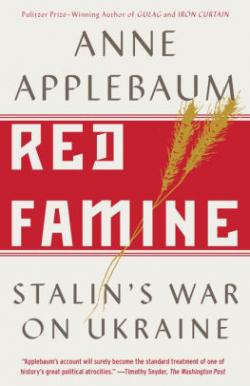
Red Famine: Stalin's War on Ukraine by Anne Applebaum (2017).

Applebaum is a master narrator of Soviet tragedies; her latest book is a moving account of the 1932–34 Ukrainian catastrophe known as the Holodomor (Death from hunger). The author's research shows that the famine, which killed millions, was caused deliberately by Josef Stalin to crush Ukrainian nationalism.
Read about another entry on the list.

--Marshal Zeringue

Pg. 99: David McGowan's "Animated Personalities"

Featured at the Page 99 Test: Animated Personalities: Cartoon Characters and Stardom in American Theatrical Shorts by David McGowan.

About the book, from the publisher:
Mickey Mouse, Betty Boop, Donald Duck, Bugs Bunny, Felix the Cat, and other beloved cartoon characters have entertained media audiences for almost a century, outliving the human stars who were once their contemporaries in studio-era Hollywood. In Animated Personalities, David McGowan asserts that iconic American theatrical short cartoon characters should be legitimately regarded as stars, equal to their live-action counterparts, not only because they have enjoyed long careers, but also because their star personas have been created and marketed in ways also used for cinematic celebrities.

Drawing on detailed archival research, McGowan analyzes how Hollywood studios constructed and manipulated the star personas of the animated characters they owned. He shows how cartoon actors frequently kept pace with their human counterparts, granting “interviews,” allowing “candid” photographs, endorsing products, and generally behaving as actual actors did—for example, Donald Duck served his country during World War II, and Mickey Mouse was even embroiled in scandal. Challenging the notion that studios needed actors with physical bodies and real off-screen lives to create stars, McGowan demonstrates that media texts have successfully articulated an off-screen existence for animated characters. Following cartoon stars from silent movies to contemporary film and television, this groundbreaking book broadens the scope of star studies to include animation, concluding with provocative questions about the nature of stardom in an age of digitally enhanced filmmaking technologies.
Learn more about Animated Personalities at the University of Texas Press website.

The Page 99 Test: Animated Personalities.

--Marshal Zeringue

What is Kristen Ghodsee reading?

Featured at Writers Read: Kristen Ghodsee, author of Second World, Second Sex: Socialist Women's Activism and Global Solidarity during the Cold War.

Her entry begins:
Right now, I am reading the excellent book, Cold War Anthropology: The CIA, The Pentagon and the Growth of Dual Use Anthropology, by David H. Price. I have long been interested in the impact of Cold War politics on the discipline of anthropology, and back in graduate school I remember reading an essay by Laura Nader about what she called the “Phantom Factor” in anthropology: the persistent (if hidden) presence of the United States’ Central Intelligence Agency (CIA) in the production of anthropological knowledge about the world. Both Nader and now Price document the uncomfortable relationship between the scholarly study of foreign cultures and the needs of the U.S. military in its efforts to prevent the spread of world communism. After World War II, the CIA had also funneled research monies through dummy funding agencies toward unsuspecting scholars and into many academic research centers and area studies institutes. The Price book exhaustively demonstrates how...[read on]
About Second World, Second Sex, from the publisher:
Women from the state socialist countries in Eastern Europe—what used to be called the Second World—once dominated women’s activism at the United Nations, but their contributions have been largely forgotten or deemed insignificant in comparison with those of Western feminists. In Second World, Second Sex Kristen Ghodsee rescues some of this lost history by tracing the activism of Eastern European and African women during the 1975 United Nations International Year of Women and the subsequent Decade for Women (1976-1985). Focusing on case studies of state socialist Bulgaria and nonaligned but socialist-leaning Zambia, Ghodsee examines the feminist networks that developed between the Second and Third Worlds and shows how alliances between socialist women challenged American women’s leadership of the global women’s movement. Drawing on interviews and archival research across three continents, Ghodsee argues that international ideological competition between capitalism and socialism profoundly shaped the world women inhabit today.
Learn more about Second World, Second Sex at the Duke University Press website.

My Book, The Movie: The Left Side of History.

The Page 99 Test: The Left Side of History.

Writers Read: Kristen Ghodsee.

--Marshal Zeringue

Sunday, March 03, 2019

Nine mysteries that will take you on a journey from Paris to the south of France

Deborah Lawrenson is one half of the team writing as Serena Kent, author of Death in Provence.

At CrimeReads she tagged nine mysteries that will take you on a journey from Paris to the south of France, including:
The Day of the Jackal by Frederick Forsyth

Not so much scenery as seen-and-heard in Frederick Forsyth’s gripping thriller that focuses like the viewfinder of the assassin’s rifle on the turbulent France of the early 1960s. The Jackal is a mercenary hired to kill President Charles De Gaulle by mutinying Foreign Legion paratroopers who have formed a secret army to prevent Algeria’s independence from French colonial rule. Forsyth was a Reuters correspondent in Paris at the time and his first-hand experience of the place and the tensions makes for a compelling read with the tang of authenticity.
Read about another entry on the list.

The Day of the Jackal is among Daniel Palmer's seven best conspiracy thrillers of the 1970s, Jeff Somers's five thrillers that resist easy fixes, Sam Bourne's five favorite classic thrillers, and Christopher Timothy's six best books.

--Marshal Zeringue

Claire Booth's "A Deadly Turn," the movie

Featured at My Book, The Movie: A Deadly Turn: Sheriff Hank Worth Mysteries (Volume 3) by Claire Booth.

The entry begins:
There are a few new characters in this newest installment of my Sheriff Hank Worth series. The first, Dale Raker, is a city police detective who teams with county sheriff Hank to investigate a murder. He’s a wide, solid native Missourian, and I think Eric Stonestreet would be perfect.

The other new character is an aging country music star. He’d been a huge success and is trying to make a go of it again in a Branson, Missouri theater. I would love, love, love to see Sam...[read on]
Visit Claire Booth's website.

My Book, The Movie: Another Man's Ground.

The Page 69 Test: Another Man's Ground.

My Book, The Movie: A Deadly Turn.

--Marshal Zeringue

Pg. 69: Phillip Margolin's "The Perfect Alibi"

Featured at the Page 69 Test: The Perfect Alibi: A Novel by Phillip Margolin.

About the book, from the publisher:
A young woman accuses a prominent local college athlete of rape. Convicted with the help of undisputable DNA evidence, the athlete swears his innocence and threatens both his lawyer and his accuser as he's sent to prison. Not long after, there's another rape and the DNA test shows that the same person committed both rapes—which is seemingly impossible since the man convicted of the first rape was in prison at the time of the second one. Now, the convicted athlete, joined by a new lawyer, is granted a new trial and bail. Shortly thereafter, his original lawyer disappears and his law partner is murdered.

Robin Lockwood is a young lawyer with a prestigious small law firm and a former MMA fighter who helped pay for Yale Law School with her bouts. She is representing the victim of the first rape for her civil lawsuit against her rapist, who is now convinced the rapist is stalking her and trying to intimidate her. At the same time, another client is up on a murder charge—one that should be dismissed as self-defense—but the D.A. trying the case is determined to bring it to trial. Now she has to mastermind two impossible cases, trying to find the hidden truth that links the two of them.

Phillip Margolin, the master of the legal thriller, returns in one of his twistiest, most compelling crime novels yet.
Visit Phillip Margolin's website and Facebook page.

My Book, The Movie: Woman with a Gun.

The Page 69 Test: Woman with a Gun.

The Page 69 Test: Violent Crimes.

My Book, The Movie: Violent Crimes.

My Book, The Movie: The Third Victim.

The Page 69 Test: The Third Victim.

The Page 69 Test: The Perfect Alibi.

--Marshal Zeringue

Saturday, March 02, 2019

What is Marsha Forchuk Skrypuch reading?

Featured at Writers Read: Marsha Forchuk Skrypuch, author of Stolen Girl.

The entry begins:
Because I write historical fiction, I never read any fiction set during an era I'm actively writing in, and while in the throes of novel writing, I have to go on a bit of a fiction diet to stay on track. I read a ton of research material, and for pleasure, I am a little bit addicted to books about consumer fraud. They're informative and utterly different from what I need to read as research and they don't seem to get me off track from my own writing deadlines.

Here are three recent ones that I loved:

Marion Nestle's Unsavory Truth reveals how the food industry controls the narrative about what we hear about food and nutrition. She details the research studies that have been funded by food industry groups (Coca Cola, Nestle, fruit councils, dairy councils, POM, nut councils, Hershey and so on) and how the results invariably can be used for marketing by the funder. As an example, high-bush blueberries...[read on]
About Stolen Girl, from the publisher:
Nadia is haunted by World War II. Her memories of the war are messy, coming back to her in pieces and flashes she can't control. Though her adoptive mother says they are safe now, Nadia's flashbacks keep coming.

Sometimes she remembers running, hunger, and isolation. But other times she remembers living with a German family, and attending big rallies where she was praised for her light hair and blue eyes. The puzzle pieces don't quite fit together, and Nadia is scared by what might be true. Could she have been raised by Nazis? Were they her real family? What part did she play in the war?

What Nadia finally discovers about her own history will shock her. But only when she understands the past can she truly face her future.

Inspired by startling true events, Marsha Forchuk Skrypuch delivers a gripping and poignant story of one girl's determination to uncover her truth.
Visit Marsha Forchuk Skrypuch's website.

My Book, The Movie: Making Bombs for Hitler.

The Page 69 Test: Making Bombs for Hitler.

My Book, The Movie: Stolen Girl.

Writers Read: Marsha Forchuk Skrypuch.

--Marshal Zeringue

Pg. 99: John Wall's "Streamliner"

Featured at the Page 99 Test: Streamliner: Raymond Loewy and Image-making in the Age of American Industrial Design by John Wall.

About the book, from the publisher:
Born in Paris in 1893 and trained as an engineer, Raymond Loewy revolutionized twentieth-century American industrial design. Combining salesmanship and media savvy, he created bright, smooth, and colorful logos for major corporations that included Greyhound, Exxon, and Nabisco. His designs for Studebaker automobiles, Sears Coldspot refrigerators, Lucky Strike cigarette packs, and Pennsylvania Railroad locomotives are iconic. Beyond his timeless designs, Loewy carefully built an international reputation through the assiduous courting of journalists and tastemakers to become the face of both a new profession and a consumer-driven vision of the American dream.

In Streamliner, John Wall traces the evolution of an industry through the lens of Loewy’s eclectic life, distinctive work, and invented persona. How, he asks, did Loewy build a business while transforming himself into a national brand a half century before "branding" became relevant? Placing Loewy in context with the emerging consumer culture of the latter half of the twentieth century, Wall explores how his approach to business complemented—or differed from—that of his well-known contemporaries, including industrial designers Henry Dreyfuss, Walter Teague, and Norman Bel Geddes. Wall also reveals how Loewy tailored his lifestyle to cement the image of "designer" in the public imagination, and why the self-promotion that drove Loewy to the top of his profession began to work against him at the end of his career. Streamliner is an important and engaging work on one of the longest-lived careers in industrial design.
Learn more about Streamliner, and visit John Wall's website.

Writers Read: John Wall.

The Page 99 Test: Streamliner.

--Marshal Zeringue

Samin Nosrat's ten favorite books

Samin Nosrat is a writer, teacher, and chef. Called “a go-to resource for matching the correct techniques with the best ingredients” by The New York Times, and “the next Julia Child” by NPR’s All Things Considered, she’s been cooking professionally since 2000, when she first stumbled into the kitchen at Chez Panisse restaurant. She lives, cooks, surfs, and gardens in Berkeley, California. Salt, Fat, Acid, Heat is her first book.

A documentary series based on Salt, Fat, Acid, Heat is now streaming on Netflix.

One of Nosrat's ten favorite books, as shared at Vulture.com:
The Taste of Country Cooking by Edna Lewis

I love Miss Lewis’s intimate, evocative writing about growing up on a farm in Freetown, Virginia. The true — and generally uncredited — progenitor of farm-to-table eating in this country, Miss Lewis is a legend, and all American cooks should get to know her writing and her recipes.
Read about another entry on the list.

--Marshal Zeringue

Friday, March 01, 2019

What is Amber R. Clifford-Napoleone reading?

Featured at Writers Read: Amber R. Clifford-Napoleone, author of: Queering Kansas City Jazz: Gender, Performance, and the History of a Scene.

Her entry begins:
With the publication of my second book, I found myself with time to tackle those stacks of books we all squirrel away for that day! I tend to read more non-fiction than fiction, but I make a point of reading fiction when I come to the end of a big project– a kind of reward for myself.

First, I was a 4-Her for most of my young life, from the age of 6 all the way through my undergraduate degree. I’ve gotten really interested in the history of 4-H, especially since my grandmother (a long-time 4-Her) passed away. Given my academic background, of course, what interests me is women, gender, and sexuality. I’m reading Gabriel Rosenberg’s The 4-H Harvest: Sexuality and the State in Rural America. Rosenberg suggests that 4-H was a political and economic project designed to enculturate young people into...[read on]
About Queering Kansas City Jazz, from the publisher:
The Jazz Age, a phenomenon that shaped American leisure culture in the early twentieth century, coincided with the growth of Kansas City, Missouri, from frontier town to metropolitan city. Though Kansas City’s music, culture, and stars are well covered, Queering Kansas City Jazz supplements the grand narrative of jazz history by including queer identities in the city’s history while framing the jazz-scene experience in terms of identity and space. Cabarets, gender impressionism clubs, and sites of sex tourism in Kansas City served as world-making spaces for those whose performance of identity transgressed hegemonic notions of gender, sexuality, race, and class. Amber R. Clifford-Napoleone takes an interdisciplinary approach to provide a critical deconstruction of how the jazz scene offered a space for nonnormative gender practice and performance and acted as a site of contested identity and spatial territory.

Few books examine the changing ideas about gender in the turn-of-the-century Great Plains, under the false assumption that people in middle-American places experienced cultural shifts only as an aftershock of events on the coasts. This approach overlooks the region’s contested territories, identities, and memories and fails to adequately explain the social and cultural disruptions experienced on the plains. Clifford-Napoleone rectifies this oversight and shows how Kansas City represents the complexity of the jazz scene in America as a microcosm of all the other people who made the culture, clubs, music, and cabarets of the age possible.
Learn more about Queering Kansas City Jazz at the University of Nebraska Press website.

Writers Read: Amber R. Clifford-Napoleone.

--Marshal Zeringue

Pg. 69: David Downie's "The Gardener of Eden"

Featured at the Page 69 Test: The Gardener of Eden by David Downie.

About the book, from the publisher:
A haunting and luminous novelthat explores the dark secrets lurking beneath the stunning natural beauty of a dying timber town.

A mysterious beachcomber appears one day on the coastal bluffs near the small town of Carverville, a place whose best days are long behind it. Who is he, and why has he returned after nearly forty years? Carverville’s prodigal son, James, serendipitously finds work at a gentrified motel, but his homecoming soon takes a sinister turn when he and a local teenager make a gruesome discovery on the beach. It forces him to reckon with the ghosts of his past—and the dangers of the present. Rumors, distrust, and conspiracies spread among the townsfolk, all of them seemingly trapped in their claustrophobic and isolated world. But is there something more sinister at work here than the mere fear of outsiders? In The Gardener of Eden, David Downie weaves an intricate and compelling narrative of redemption, revenge, justice, and love?and the price of secrecy—as a community grapples with its tortured past and frightening future.
Visit David Downie's website.

The Page 69 Test: The Gardener of Eden.

--Marshal Zeringue

Marsha Forchuk Skrypuch's "Stolen Girl," the movie

Featured at My Book, The Movie: Stolen Girl by Marsha Forchuk Skrypuch.

The entry begins:
Stolen Girl starts off with Nadia, a new immigrant to Canada, just after World War II. She doesn't know her past and is almost afraid of finding out about it. For a film treatment, there would need to be an actor playing her current age, which is 12, as well as who she was in her flashbacks, at about age 6 to 8. For the younger girl, the actor in...[read on]
Visit Marsha Forchuk Skrypuch's website.

My Book, The Movie: Making Bombs for Hitler.

The Page 69 Test: Making Bombs for Hitler.

My Book, The Movie: Stolen Girl.

--Marshal Zeringue

Five of the best novels about North Korea

D. B. John was born in Wales. He began training as a lawyer but switched to a career in publishing, editing popular children’s books on history and science. In 2009 he moved to Berlin, Germany, to write his first novel, Flight from Berlin. A visit to North Korea in 2012 inspired Star of the North. He lives in Angel, London.

At CrimeReads he tagged five exceptional novels about North Korea, including:
How I Became a North Korean by Krys Lee

This beautifully written story follows the lives of three stateless Koreans as they struggle to survive in a perilous Chinese frontier town on North Korea’s northern border, the most common escape route for defectors. Impossible to tell friend from foe, they fall prey to sex traffickers, missionaries who are not altogether benign, and thieves. The shadow over all of them is the ever-present danger being caught and returned to a gruesome fate. Memorably, the novel opens with a very shocking scene: a lavish banquet for the rolex-wearing elite in Pyongyang, hosted by the Dear Leader Kim Jong-il himself, becomes a crime scene when Kim shoots a love rival in the heart, forcing the victim’s son, Yongji, to flee if he’s to avoid being punished for his father’s offense. Crazy but true: in North Korea, guilt is hereditary…
Read about another entry on the list.

--Marshal Zeringue