Friday, January 15, 2016

What is Alison Collis Greene reading?

Featured at Writers Read: Alison Collis Greene, author of No Depression in Heaven: The Great Depression, the New Deal, and the Transformation of Religion in the Delta.

Her entry begins:
Every three years or so around the holidays, I promise myself I’ll read some new fiction, but instead I end up going back to an old favorite. This time it’s Louise Erdrich’s The Last Report on the Miracles at Little No Horse. It is just a beautiful book in every way, and Father Damien is one of my favorite characters in all of literature. Louise Erdrich draws rich characters and complex worlds, she’s intense and hilarious and surprising, and her language feels so organically beautiful that you never see the effort that goes into some of the most perfect sentences you’ve ever read. And yet her writing is also utterly...[read on]
About No Depression in Heaven, from the publisher:
In No Depression in Heaven, Alison Collis Greene demonstrates how the Great Depression and New Deal transformed the relationship between church and state. Grounded in Memphis and the Delta, this book traces the collapse of voluntarism, the link between southern religion and the New Deal, and the gradual alienation of conservative Christianity from the state.

At the start of the Great Depression, churches and voluntary societies provided the only significant source of aid for those in need in the South. Limited in scope, divided by race, and designed to control the needy as much as to support them, religious aid collapsed under the burden of need in the early 1930s. Hungry, homeless, and out-of-work Americans found that they had nowhere to turn at the most desolate moment of their lives.

Religious leaders joined a chorus of pleas for federal intervention in the crisis and a permanent social safety net. They celebrated the New Deal as a religious triumph. Yet some complained that Franklin Roosevelt cut the churches out of his programs and lamented their lost moral authority. Still others found new opportunities within the New Deal. By the late 1930s, the pattern was set for decades of religious and political realignment.

More than a study of religion and politics, No Depression in Heaven uncovers the stories of men and women who endured the Depression and sought in their religious worlds the spiritual resources to endure material deprivation. Its characters are rich and poor, black and white, mobile sharecroppers and wealthy reformers, enamored of the federal government and appalled by it. Woven into this story of political and social transformation are stories of southern men and women who faced the greatest economic disaster of the twentieth century and tried to build a better world than the one they inhabited.
Learn more about No Depression in Heaven at the Oxford University Press website.

The Page 99 Test: No Depression in Heaven.

Writers Read: Alison Collis Greene.

--Marshal Zeringue

Ten top feminist heroes in fiction

Maria Turtschaninoff is a Finnish fantasy author. One of her ten favorite feminist heroes in fiction, as shared at the Guardian:
Tenar in the Earthsea series by Ursula K. Le Guin

Tenar’s journey is a fascinating one. Trained from girlhood to be a priestess of a cruel human-sacrificing cult, she saves the erstwhile hero of the series, the mage Ged, as he enters the tombs of her gods. Later he saves her from her slavelike life as priestess. Tenar turns down the opportunity to learn magic and settles down to marry – but not Ged – and have children.

However, and this is where it gets really interesting, her story doesn’t end there. In the novel Tehanu, Tenar is an old woman and the protagonist of the story who, once again, ends up saving the great mage Ged. How often do we get to see grandmothers be heroines in fantasy literature?
Read about another entry on the list.

A Wizard of Earthsea is among BBC.com Culture’s best children’s books ever published in English, five books that changed Gary Corby, and Lev Grossman's top five fantasy novels.

--Marshal Zeringue

Pg. 99: Elaine Frantz Parsons's "Ku-Klux: The Birth of the Klan during Reconstruction"

Featured at the Page 99 Test: Ku-Klux: The Birth of the Klan during Reconstruction by Elaine Frantz Parsons.

About the book, from the publisher:
The first comprehensive examination of the nineteenth-century Ku Klux Klan since the 1970s, Ku-Klux pinpoints the group's rise with startling acuity. Historians have traced the origins of the Klan to Pulaski, Tennessee, in 1866, but the details behind the group's emergence have long remained shadowy. By parsing the earliest descriptions of the Klan, Elaine Frantz Parsons reveals that it was only as reports of the Tennessee Klan's mysterious and menacing activities began circulating in northern newspapers that whites enthusiastically formed their own Klan groups throughout the South. The spread of the Klan was thus intimately connected with the politics and mass media of the North.

Shedding new light on the ideas that motivated the Klan, Parsons explores Klansmen's appropriation of images and language from northern urban forms such as minstrelsy, burlesque, and business culture. While the Klan sought to retain the prewar racial order, the figure of the Ku-Klux became a joint creation of northern popular cultural entrepreneurs and southern whites seeking, perversely and violently, to modernize the South. Innovative and packed with fresh insight, Parsons' book offers the definitive account of the rise of the Ku Klux Klan during Reconstruction.
Learn more about Ku-Klux: The Birth of the Klan during Reconstruction at the University of North Carolina Press website.

The Page 99 Test: Ku-Klux: The Birth of the Klan during Reconstruction.

--Marshal Zeringue

Thursday, January 14, 2016

Pg. 69: Alyssa Palombo's "The Violinist of Venice"

Featured at the Page 69 Test: The Violinist of Venice: A Story of Vivaldi by Alyssa Palombo.

About the book, from the publisher:
Like most 18th century Venetians, Adriana d'Amato adores music-except her strict merchant father has forbidden her to cultivate her gift for the violin. But she refuses to let that stop her from living her dreams and begins sneaking out of her family's palazzo under the cover of night to take violin lessons from virtuoso violinist and composer Antonio Vivaldi. However, what begins as secret lessons swiftly evolves into a passionate, consuming love affair.

Adriana's father is intent on seeing her married to a wealthy, prominent member of Venice's patrician class-and a handsome, charming suitor, whom she knows she could love, only complicates matters-but Vivaldi is a priest, making their relationship forbidden in the eyes of the Church and of society. They both know their affair will end upon Adriana's marriage, but she cannot anticipate the events that will force Vivaldi to choose between her and his music. The repercussions of his choice-and of Adriana's own choices-will haunt both of their lives in ways they never imagined.

Spanning more than 30 years of Adriana's life, Alyssa Palombo's The Violinist of Venice is a story of passion, music, ambition, and finding the strength to both fall in love and to carry on when it ends.
Visit Alyssa Palombo's website.

The Page 69 Test: The Violinist of Venice.

--Marshal Zeringue

What is Leslie Budewitz reading?

Featured at Writers Read: Leslie Budewitz, author of Guilty as Cinnamon (Spice Shop Mystery Series #2).

Her entry begins:
Ever notice a hidden theme in your reading? In the last year, I read a dozen novels set in England, plus two set in Scotland, two in Ireland, one in Australia, and one divided between a post-war English village and Toronto. I didn’t plan to read my way through the UK and Commonwealth, but books have their own ideas.

Some are new installments in favorite series. I adore Alan Bradley’s Flavia de Luce, in Jayne Entwhistle’s delightful narration. Years ago, I took a mystery-writing workshop from Elizabeth George, and when I met her again at the New England Crime Bake, where she was guest of honor, I got to catch up on Lynley and Havers, with Just One Evil Act. (I’m saving the latest, A Banquet of Consequences, for...[read on]
About Guilty as Cinnamon, from the publisher:
Murder heats up Seattle’s Pike Place Market in the next Spice Shop mystery from the national bestselling author of Assault and Pepper.

Springtime in Seattle’s Pike Place Market means tasty foods and wide-eyed tourists, and Pepper’s Spice Shop is ready for the crowds. With flavorful combinations and a fresh approach, she’s sure to win over the public. Even better, she’s working with several local restaurants as their chief herb and spice supplier. Business is cooking, until one of Pepper’s potential clients, a young chef named Tamara Langston, is found dead, her life extinguished by the dangerously hot ghost chili—a spice Pepper carries in her shop.

Now stuck in the middle of a heated police investigation, Pepper must use all her senses to find out who wanted to keep Tamara’s new cafĂ© from opening—before someone else gets burned…
Visit Leslie Budewitz's website, Facebook page, and Twitter perch.

The Page 69 Test: Butter Off Dead.

Writers Read: Leslie Budewitz.

--Marshal Zeringue

Ten top failed romances in fiction

Rachel B. Glaser's books include the short story collection Pee On Water and the novel Paulina and Fran. One of her top ten failed romances in fiction, as shared at the Guardian:
Bad Sex by Clancy Martin

This dark novella drags the reader through a whirlwind of infatuation, sacrifice, lying, lusting, drinking, crying and nearly dying. In the opening chapter, Brett sleeps with her husband’s banker and her life is never the same. The dialogue and details are so real, at times it felt like a scandalous email from a troubled friend. The sentences are sparse. Not a word out of place. See the tropics and feel the feelings, vicariously, without the hangover.
Read about another entry on the list.

--Marshal Zeringue

Loren J. Samons II's "Pericles and the Conquest of History," the movie

Featured at My Book, The Movie: Pericles and the Conquest of History: A Political Biography by Loren J. Samons II.

The entry begins:
Casting a film about a historical figure obviously presents difficulties. As a historian, I admittedly have a tendency to look to the past for models—admirable things to take as examples and awful things to avoid, to paraphrase the Roman historian Livy. As a lover of older films, I tend to prefer previous generations of actors to the present field. Therefore I will indulge myself in casting Pericles and the Conquest of History using actors from the past.

The man himself must be someone with a compelling voice and imposing demeanor: the Athenians called Pericles “the Olympian.” He must be a convincing military leader and statesman, someone able both to inspire and to upbraid an audience, to lead a people to war and convince them to keep fighting despite significant losses and a plague ravaging their city. I would immediately chose Alec Guinness if he had just a touch more vocal power—the timbre of Gregory Peck or the resonance of Richard Burton. Guinness has the right look, though, and he did a passable job with Marcus Aurelius in the absolutely atrocious The Fall of the Roman Empire. So let’s go with Guinness and hope that the director (let’s choose David Lean, since we’re using Guinness!) can bring out the gravity the vocal performance requires. I have no doubt that Guinness could convey the...[read on]
Learn more about Pericles and the Conquest of History at the Cambridge University Press website.

The Page 99 Test: Pericles and the Conquest of History.

My Book, The Movie: Pericles and the Conquest of History.

--Marshal Zeringue

Wednesday, January 13, 2016

Pg. 99: Rick Shenkman's "Political Animals"

Featured at the Page 99 Test: Political Animals: How Our Stone-Age Brain Gets in the Way of Smart Politics by Rick Shenkman.

About the book, from the publisher:
A bestselling historian holds our political choices up to the glare of social science to show just how illogical our voting habits are—and how we can fix them, and by extension, our democracy

Can a football game affect the outcome of an election? What about shark attacks? Or a drought? In a rational world the answer, of course, would be no. But as bestselling historian Rick Shenkman explains in Political Animals, our world is anything but rational. Drawing on science, politics, and history, Shenkman explores the hidden forces behind our often illogical choices.

Political Animals challenges us to go beyond the headlines, which often focus on what politicians do (or say they'll do), and to concentrate instead on what's really important: what shapes our response. Shenkman argues that, contrary to what we tell ourselves, it's our instincts rather than arguments appealing to reason that usually prevail. Pop culture tells us we can trust our instincts, but science is proving that when it comes to politics our Stone Age brain often malfunctions, misfires, and leads us astray.

Fortunately, we can learn to make our instincts work in our favor. Shenkman takes readers on a whirlwind tour of laboratories where scientists are exploring how sea slugs remember, chimpanzees practice deception, and patients whose brains have been split in two tell stories. The scientists' findings give us new ways of understanding our history and ourselves—and prove we don't have to be prisoners of our evolutionary past."

In this engaging, illuminating, and often riotous chronicle of our political culture, Shenkman probes the depths of the human mind to explore how we can become more political, and less animal.
Visit Rick Shenkman's website.

The Page 99 Test: Just How Stupid Are We?.

The Page 99 Test: Political Animals.

--Marshal Zeringue

What is Chris Ewan reading?

Featured at Writers Read: Chris Ewan, author of Dark Tides: A Thriller.

His entry begins:
I am currently reading Night Watch by Terry Pratchett. I’ve never read any of Pratchett’s work before, which has been a major oversight by me and a persistent bugbear for my wife. My wife is a Discworld fan and has been telling me for years to try one of Pratchett’s books. She tends to remind me that I’m forever thrusting crime novels into her hands and telling her she must read them and that it’s way beyond time the tables were turned. She’s right, of course, and so not very long ago we took a drive out to the Discworld Emporium in Wincanton, Somerset, where my wife bought me a copy of Night Watch and I got my very own Discworld stamp to go along with it.

Turns out I am more of a fool than I realised because the book is a delight: droll, clever, full of energy and relentlessly inventive. I can already tell...[read on]
About Dark Tides, from the publisher:
When Claire Cooper was eight years old her mother mysteriously vanished during Hop-tu-naa, Halloween on the Isle of Man. At fourteen, Claire is still struggling to come to terms with her disappearance when she's befriended by a group of five teenagers who mark every Halloween by performing dares. But Claire's arrival begins to alter the group's dynamic until one year a prank goes terribly wrong, changing all their futures and tearing the friends apart.

Six years later, one of the friends is killed on Halloween in an apparent accident. But Claire, now a police officer, has her doubts. Is a single footprint found near the body a deliberate taunt? As another Halloween dawns, bringing with it another death and another footprint, Claire becomes convinced that somebody is seeking vengeance. But who? And which of the friends might be next? If she is going to stop a killer and unlock the dark secrets of her past, Claire must confront her deepest fears, before it's too late.

Chris Ewan, author of the stand alone thrillers Safe House and Dead Line, returns to the Isle of Man with Dark Tides-a thriller that will keep you up all night.
Learn more about the author and his work at Chris Ewan's website.

The Page 69 Test: The Good Thief's Guide to Paris.

The Page 69 Test: The Good Thief's Guide to Vegas.

The Page 69 Test: The Good Thief's Guide to Venice.

The Page 69 Test: Safe House.

Writers Read: Chris Ewan.

--Marshal Zeringue

Six notable books from an animal’s point of view

Sam Reader is a writer and conventions editor for The Geek Initiative. He also writes literary criticism and reviews at strangelibrary.com. One of his top six books from an animal’s point of view, as shared at the B & N Sci-Fi & Fantasy Blog:
The Plague Dogs, by Richard Adams

While best known for Watership Down, his mythological epic featuring a cast comprised mainly of rabbits, Adams’ The Plague Dogs deserves just as much of a place in discussions of his work, if only for being one of the bleakest things ever written with animal protagonists. The novel follows the exploits of Snitter and Rowf, two dogs who escape an animal testing facility somewhere in Northern England. As they attempt to find a new home and a human to take care of them, danger seems to follow them everywhere they go. Further complicating things are Snitter’s hallucinations (the result of experiments in the testing facility) and the possibility that the dogs are carriers of a bio-weapon, causing a country-wide man doghunt to bring them in. The Plague Dogs uses animal characters to explore the relationships between humans and beasts, leading to chilling scenes that only deepen its somber atmosphere.
Read about another entry on the list.

--Marshal Zeringue

Pg. 69: Clay Griffith & Susan Griffith's "The Geomancer"

Featured at the Page 69 Test: The Geomancer: Vampire Empire: A Gareth and Adele Novel by Clay Griffith and Susan Griffith.

About the book, from the publisher:
The first Gareth and Adele Novel, The Geomancer is the start of an ongoing, character-based, urban fantasy series set in the same Vampire Empire universe as the authors’ previous trilogy!

The uneasy stalemate between vampires and humans is over. Adele and Gareth are bringing order to a free Britain, but bloody murders in London raise the specter that Adele’s geomancy is failing and the vampires might return. A new power could tilt the balance back to the vampire clans. A deranged human called the Witchfinder has surfaced on the Continent, serving new vampire lords. This geomancer has found a way to make vampires immune to geomancy and intends to give his masters the ability to kill humans on a massive scale.

The apocalyptic event in Edinburgh weakened Adele’s geomantic abilities. If the Witchfinder can use geomancy against humanity, she may not have the power to stop him. If she can’t, there is nowhere beyond his reach and no one he cannot kill.

From a Britain struggling to rebuild to the vampire capital of Paris, from the heart of the Equatorian Empire to a vampire monastery in far-away Tibet, old friends and past enemies return. Unexpected allies and terrible new villains arise. Adele and Gareth fight side-by-side as always, but they can never be the same if they hope to survive.
Learn more about the book and authors at Clay Griffith and Susan Griffith's website.

The Page 69 Test: The Geomancer.

--Marshal Zeringue

Tuesday, January 12, 2016

Nancy K. Wallace's "Among Wolves," the movie

Featured at My Book, The Movie: Among Wolves by Nancy K. Wallace.

The entry begins:
It’s a dream come true to imagine your novel as a movie but it’s not an easy job to cast it! Among Wolves is a different kind of fantasy; which might make it easier to produce. This novel resides uneasily somewhere between historical truth and fiction. The only magic it contains is the intrinsic magic of the spoken word and its effect on the human heart. VOYA magazine’s review called Among Wolves “A love letter to the gatherers and protectors of stories and information.”

The setting of Llisé is a country very much like France during the 18th century, where the ruling class is opulently rich and the provincial peasants devastatingly poor. The rich record history and store it away in restricted Archives. The poor have bards who painstaking memorize the stories contained in their oral history and repeat them frequently, so they will never be forgotten.

Devin Roché, an archivist and also the youngest son of the Chancellor of Llisé, hopes to memorize the oral Chronicles from all the provinces and reconcile them with recorded history he has read in The Archives, which tells quite a different story. He is young, idealistic, and privileged. My daughters unanimously cast Freddie Highmore as Devin.

I picked Tom Selleck for the Chancellor’s role. His...[read on]
Visit Nancy K. Wallace's website and follow her on Twitter.

My Book, The Movie: Among Wolves.

--Marshal Zeringue

What is Lisa Goldstein reading?

Featured at Writers Read: Lisa Goldstein, author of Weighing Shadows.

Her entry begins:
Ancillary Mercy, Ann Leckie: This is the last book in the Ancillary trilogy. The world Leckie presents is a fascinating place, making this the most original space opera in years.

H Is for Hawk, by Helen Macdonald: This is really three books ­­ one an account of Macdonald training her goshawk Mabel; one about T.H. White, the author of The Once and Future King, with emphasis on his own book about goshawks; and one a narrative of the author's mourning after her father died unexpectedly. You wouldn't think these three things would fit together but they do, and amazingly well at times. The author writes with great compassion about White's sad life, his disastrous upbringing, his attempt to deny his homosexuality, his belief that it was only by being perfect that he could...[read on]
About Weighing Shadows, from the publisher:
Ann Decker fixes computers for a living, and in the evenings she passes the time sharpening her hacking skills. It’s not a very interesting life, but she gets by—until one day she’s contacted with a job offer for a company called Transformations Incorporated. None of her coworkers have ever heard of it before, and when Ann is finally told what the company does, she can hardly believe it: TI has invented technology to travel in time.

Soon Ann is visiting a matriarchy in ancient Crete, and then a woman mathematician at the Library of Alexandria. But Transformations Incorporated remains shrouded in mystery, and when Ann finally catches her breath, there are too many troubling questions still unanswered. Who are Transformations Incorporated, and what will they use this technology to gain? What ill effects might going back in time have on the present day? Is it really as harmless as TI says?

When a coworker turns up dead, Ann’s superiors warn her about a covert group called Core out to sabotage the company. Something just isn’t right, but before she has time to investigate, Ann is sent to a castle in the south of France, nearly a thousand years in the past. As the armies of the Crusade arrive to lay siege, and intrigue grows among the viscount’s family, Ann will discover the startling truth—not just about the company that sent her there, but also about her own past.
Visit Lisa Goldstein's website.

Coffee with a Canine: Lisa Goldstein & Bonnie.

The Page 69 Test: Weighing Shadows.

My Book, The Movie: Weighing Shadows.

Writers Read: Lisa Goldstein.

--Marshal Zeringue

Five of the best books about fantastical islands

Simon Sylvester is a writer, teacher and occasional filmmaker. His debut novel is The Visitors.

One of Sylvester's five favorite books about fantastical islands, as shared at Tor.com:
The Girl With Glass Feet by Ali Shaw

The wintry archipelago of St. Hauda’s Land is the setting for this magic realist coming-of-age tale. Ali Shaw captures both characters and landscapes caught in stasis, woodlands and frozen fens in hibernation. Magic flits between the branches, drifts of jellyfish light the icy waters, and Ida McLaird is slowly turning to glass. Ida’s search for a cure reopens old wounds but also brings the chance of redemption, her journey across the island taking her from heart-stopping danger to nothing less than true love.
Read about another entry on the list.

The Page 69 Test: The Girl with Glass Feet.

--Marshal Zeringue

Pg. 99: Alison Collis Greene's "No Depression in Heaven"

Featured at the Page 99 Test: No Depression in Heaven: The Great Depression, the New Deal, and the Transformation of Religion in the Delta by Alison Collis Greene.

About the book, from the publisher:
In No Depression in Heaven, Alison Collis Greene demonstrates how the Great Depression and New Deal transformed the relationship between church and state. Grounded in Memphis and the Delta, this book traces the collapse of voluntarism, the link between southern religion and the New Deal, and the gradual alienation of conservative Christianity from the state.

At the start of the Great Depression, churches and voluntary societies provided the only significant source of aid for those in need in the South. Limited in scope, divided by race, and designed to control the needy as much as to support them, religious aid collapsed under the burden of need in the early 1930s. Hungry, homeless, and out-of-work Americans found that they had nowhere to turn at the most desolate moment of their lives.

Religious leaders joined a chorus of pleas for federal intervention in the crisis and a permanent social safety net. They celebrated the New Deal as a religious triumph. Yet some complained that Franklin Roosevelt cut the churches out of his programs and lamented their lost moral authority. Still others found new opportunities within the New Deal. By the late 1930s, the pattern was set for decades of religious and political realignment.

More than a study of religion and politics, No Depression in Heaven uncovers the stories of men and women who endured the Depression and sought in their religious worlds the spiritual resources to endure material deprivation. Its characters are rich and poor, black and white, mobile sharecroppers and wealthy reformers, enamored of the federal government and appalled by it. Woven into this story of political and social transformation are stories of southern men and women who faced the greatest economic disaster of the twentieth century and tried to build a better world than the one they inhabited.
Learn more about No Depression in Heaven at the Oxford University Press website.

The Page 99 Test: No Depression in Heaven.

--Marshal Zeringue
Monday, January 11, 2016

Pg. 69: Larry D. Sweazy's "A Thousand Falling Crows"

Featured at the Page 69 Test: A Thousand Falling Crows by Larry D. Sweazy.

About the book, from the publisher:
Sonny Burton was forced to retire from the Texas Rangers after taking a bullet from Bonnie Parker in a shoot-out. The bullet so damaged Sonny’s right arm that he had to have it amputated.

While Sonny struggles with recuperating and tries to get used to the idea of living a life with only one arm, Aldo Hernandez, the hospital’s janitor, asks Sonny to help find his daughter and bring her back home. She has got herself mixed up with a couple of brothers involved in a string of robberies. Sonny agrees to help, but is more concerned about a wholly different criminal in town who has taken to killing young women and leaving them in local fields for crows to feast on.

Just as Sonny is able to track down Aldo’s daughter, he comes to an uncomfortable realization about who might be responsible for the string of murders and races to nab the killer before another girl is left to the crows.
Learn more about the book and author at Larry D. Sweazy's website and blog.

Coffee with a Canine: Larry D. Sweazy & Brodi and Sunny (April 2011).

Coffee with a Canine: Larry D. Sweazy & Brodi and Sunny (April 2013).

The Page 69 Test: The Badger’s Revenge.

The Page 69 Test: The Devil's Bones.

My Book, The Movie: The Devil’s Bones.

The Page 69 Test: The Coyote Tracker.

The Page 69 Test: The Gila Wars.

My Book, The Movie: Escape to Hangtown.

The Page 69 Test: Escape from Hangtown.

The Page 69 Test: A Thousand Falling Crows.

--Marshal Zeringue

What is Stephen R. Bown reading?

Featured at Writers Read: Stephen R. Bown, author of White Eskimo: Knud Rasmussen's Fearless Journey into the Heart of the Arctic.

His entry begins:
I’m always reading a handful of books at the same time, a good blend of fiction and non-fiction, mostly history and biography.

One book that particularly stands out for me this season is Bee Time by Mark Winston.

This book isn't really about bees - while not exclusively anyway. It is filled with metaphors, about life in general and humanity specifically. It isn't a quick superficial overview of the natural history of bees, or even a detailed comprehensive study of bees. But it is a wide-ranging exploration ideas related to bees and humans and the relationship between us and them, in art, food, science, agriculture. Winston is a lifelong scientist, a bee specialist not-surprisingly, who has distilled his life's work into this surprisingly erudite and fascinating book. I can't recommend it enough if you are looking something thought provoking and philosophical about the natural world. It is very rarely that a book that purports to be about a specific subject...[read on]
About White Eskimo, from the publisher:
Among the explorers made famous for revealing hitherto impenetrable cultures—T. E. Lawrence and Wilfred Thesiger in the Middle East, Richard Burton in Africa—Knud Rasmussen stands out not only for his physical bravery but also for the beauty of his writing. Part Danish, part Inuit, Rasmussen made a courageous three-year journey by dog sled from Greenland to Alaska to reveal the common origins of all circumpolar peoples. Lovers of Arctic adventure, exotic cultures, and timeless legend will relish this gripping tale by Stephen R. Bown, known as "Canada’s Simon Winchester."
Learn more about the book and author at Stephen R. Bown's website and Facebook page.

My Book, The Movie: The Last Viking.

The Page 99 Test: White Eskimo.

Writers Read: Stephen R. Bown.

--Marshal Zeringue

Ten top family thrillers

Jenny Milchman's books include Cover of Snow, Ruin Falls, and As Night Falls. One of the author's ten top family thrillers, as shared at The Strand Magazine:
Laura Lippman, I’d Know You Anywhere

Eliza Benedict is a married mother of two living in the suburbs when she receives a death row letter from the man who kidnapped her when she was fifteen. What does he want from her now, and what it will do the peaceful life she’s constructed?
Read about other entries on the list.

The Page 69 Test: I'd Know You Anywhere.

--Marshal Zeringue

Tracy Weber's "Karma’s a Killer," the movie

Featured at My Book, The Movie: Karma's a Killer by Tracy Weber.

The entry begins:
Karma’s a Killer is a lighthearted mystery starring yoga teacher/sleuth Kate Davidson, her best friend Rene, and love interest/pet food store owner Michael. Of course the true star of the series is a German shepherd named Bella, but I don’t know of any German shepherd movie stars, so I’ll leave her casting up to the director.

As for Kate, she has a girl next-door energy. She’s pretty—though not drop-dead gorgeous—and she has a quirky, self-deprecating sense of humor. Amy Adams has a lovely, funny energy that she brings to her roles. She’d perfectly portray Kate and the embarrassing situations she...[read on]
Visit Tracy Weber's website, blog, and Facebook page.

Coffee with a Canine: Tracy Weber and Tasha.

The Page 69 Test: Murder Strikes a Pose.

The Page 69 Test: A Killer Retreat.

The Page 69 Test: Karma's a Killer.

Writers Read: Tracy Weber.

My Book, The Movie: Karma's a Killer.

--Marshal Zeringue

Sunday, January 10, 2016

Pg. 99: Loren J. Samons II's "Pericles and the Conquest of History"

Featured at the Page 99 Test: Pericles and the Conquest of History: A Political Biography by Loren J. Samons II.

About the book, from the publisher:
As the most famous and important political leader in Athenian history, Pericles has featured prominently in descriptions and analysis of Athenian democracy from antiquity to the present day. Although contemporary historians have tended to treat him as representative of values like liberty and equality, Loren J. Samons, II demonstrates that the quest to make Athens the preeminent power in Greece served as the central theme of Pericles' career. More nationalist than humanist and less rationalist than populist, Pericles' vision for Athens rested on the establishment of an Athenian reputation for military success and the citizens' willingness to sacrifice in the service of this goal. Despite his own aristocratic (if checkered) ancestry, Pericles offered the common and collective Athenian people the kind of fame previously available only to heroes and nobleman, a goal made all the more attractive because of the Athenians' defensiveness about Athens' lackluster early history.
Learn more about Pericles and the Conquest of History at the Cambridge University Press website.

The Page 99 Test: Pericles and the Conquest of History.

--Marshal Zeringue

Six notable books about the creative process and its effects

David Thomson is the author of more than thirty books on film, including The New Biographical Dictionary of Film, Rosebud: The Story of Orson Welles, The Whole Equation: A History of Hollywood, and the recently released How to Watch a Movie. One of six favorite books about the creative process and its effects, as shared at The Week magazine:
The Authentic Death & Contentious Afterlife of Pat Garrett and Billy the Kid by Paul Seydor

Sam Peckinpah's 1973 Western was a disaster as a factory-made film, with the director and the studio both left thirsting for blood. Pat Garrett and Billy the Kid was hacked apart, but it found life again and now looks like a masterpiece. This is a story of the kind of collaboration that takes decades and many hands.
Read about another entry on the list.

--Marshal Zeringue

What is Nancy S. Steinhardt reading?

Featured at Writers Read: Nancy Shatzman Steinhardt, author of China's Early Mosques.

Her entry begins:
I read primarily academic books or books related to my academic interests. I read heavily in the area of Chinese art and architecture, and in Central Asian and East Asian art and architecture. Lately I have been reading biographies. I am currently reading Eduard Kogel's The Grand Documentation: Ernst Boerschmann and Chinese Religious Architecture (1906-1931), the biography a German architect who spent the early decades of the 20th century in China and drew and photographed numerous Chinese buildings that either no longer survive or no longer survive as...[read on]
About China's Early Mosques, from the publisher:
What happens when a monotheistic, foreign religion needs a space in which to worship in China, a civilisation with a building tradition that has been largely unchanged for several millennia? The story of this extraordinary convergence begins in the 7th century and continues under the Chinese rule of Song and Ming, and the non-Chinese rule of the Mongols and Manchus, each with a different political and religious agenda. The author shows that mosques, and ultimately Islam, have survived in China because the Chinese architectural system, though often unchanging, is adaptable: it can accommodate the religious requirements of Buddhism, Daoism, Confucianism, and Islam.
Learn more about China's Early Mosques at the Edinburgh University Press website.

Nancy S. Steinhardt is Professor of East Asian Art and Curator of Chinese Art at the University of Pennsylvania where she has taught since 1982. She received her PhD at Harvard in 1981 where she was a Junior Fellow from 1978-81. Steinhardt taught at Bryn Mawr from 1981-1982. She has broad research interests in the art and architecture of China and China's border regions, particularly problems that result from the interaction between Chinese art and that of peoples to the North, Northeast, and Northwest.

Steinhardt is author or co-author of Chinese Traditional Architecture (1984), Chinese Imperial City Planning (1990), Liao Architecture (1997), Chinese Architecture (2003), Reader in Traditional Chinese Culture (2005), Chinese Architecture and the Beaux-Arts (2011), Chinese Architecture in an Age of Turmoil, 200-600 (2014), and more than 70 scholarly articles.

The Page 99 Test: China's Early Mosques.

Writers Read: Nancy Shatzman Steinhardt.

--Marshal Zeringue

Pg. 69: Michael Cobley's "Ancestral Machines"

Featured at the Page 69 Test: Ancestral Machines: A Humanity's Fire novel by Michael Cobley.

About the book, from the publisher:
It was named Bringer of Battles, three hundred worlds orbiting a single artificial star, three hundred battlefields where different species vie for mastery and triumph. It is a cage where war is a game -- brutal, savage and sudden. In this arena, all must bend the knee to the Lords of Permutation and the ancient sentient weapons with which they have merged. Or suffer indescribable agonies.

Trapped in this draconian crucible of death, Brannan Pyke, captain and smuggler, must fight his way to freedom.

Because in the Bringer of Battles, the game of war is played to the death and beyond.
Visit Michael Cobley's website.

The Page 69 Test: Ancestral Machines.

--Marshal Zeringue

Saturday, January 09, 2016

Top 10 U.S.-set crime novels of 2015: MysteryPeople

At MysteryPeople Molly tagged her top ten U.S.-set crime novels of 2015, including:
The Bishop’s Wife and His Right Hand by Mette Ivie Harrison

Mette Ivie Harrison, previously the author of numerous young adult novels, is now two books into her Linda Wallheim series. The Bishop’s Wife, Harrison’s first in the series, tackles relationship violence in the Mormon community while exploring the lure of a traditional Mormon lifestyle. His Right Hand, her second Wallheim novel, takes on the negative consequences of too-strict gender roles as Wallheim seeks the murderer of a transgender Mormon man. Through the internal world of Linda, Harrison’s kindness, intelligence, and empathy show throughout both novels. I can’t wait to see where the series takes us next!
Read about another entry on the list.

The Page 69 Test: His Right Hand.

--Marshal Zeringue

Carolyn Brown's "The Wedding Pearls," the movie

Featured at My Book, the Movie: The Wedding Pearls by Carolyn Brown.

The entry begins:
Oh, my goodness, I would dance a jig in a pig trough under the red light on Main Street if The Wedding Pearls was made into a movie. I can see Josh Turner playing Branch if the country music industry would turn him loose long enough to do a movie. Amy Smart could play Tessa and Reese Witherspoon could be Lola. Amanda...[read on]
Visit Carolyn Brown's website and Facebook page.

The Page 69 Test: The Wedding Pearls.

Writers Read: Carolyn Brown.

My Book, the Movie: The Wedding Pearls.

--Marshal Zeringue

Six of the best books for grownup horse lovers

At B & N Reads Monique Alice tagged six top books for grownup horse lovers, including:
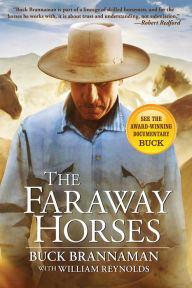
The Faraway Horses: The Adventures and Wisdom of One of America’s Most Renowned Horsemen, by Buck Brannaman

First of all, if you have not seen Buck, the 2011 documentary film about legendary horseman, Buck Brannaman, you need to get that done before the Horse Person Police come and take your Horse Lover ID card away. Once you’ve been reduced to a laughing, crying, cheering mess by the film, you’ll need no convincing to pick up this book. If you’ve been around horses and horse folk long enough, you know there are mere mortals who love horses and do our best to learn their ways, and there are those people who making riding look more natural than walking. These are the folks who seem more at ease at a bareback canter than in a rocking chair. Buck Brannaman is one of those folks, and he will convince you that you can be one, too. Buck’s strength is in breaking down what appears to be an innate gift into a concrete set of skills, and helping us translate our convoluted human commands into a kind-yet-assertive language readily understandable by our equine companions. With Buck’s help, prepare to be amazed, prepare to be inspired, and prepare to be a much, much better rider.
Read about another entry on the list.

Also see Molly Schoemann-McCann's nine favorite books about horses, Belinda Rapley's top ten horse books, and Megan Wasson's eight great books about horses.

--Marshal Zeringue

Pg. 99: Marty Crump's "Eye of Newt and Toe of Frog, Adder's Fork and Lizard's Leg"

Featured at the Page 99 Test: Eye of Newt and Toe of Frog, Adder's Fork and Lizard's Leg: The Lore and Mythology of Amphibians and Reptiles by Marty Crump.

About the book, from the publisher:
Frogs are worshipped for bringing nourishing rains, but blamed for devastating floods. Turtles are admired for their wisdom and longevity, but ridiculed for their sluggish and cowardly behavior. Snakes are respected for their ability to heal and restore life, but despised as symbols of evil. Lizards are revered as beneficent guardian spirits, but feared as the Devil himself.

In this ode to toads and snakes, newts and tuatara, crocodiles and tortoises, herpetologist and science writer Marty Crump explores folklore across the world and throughout time. From creation myths to trickster tales; from associations with fertility and rebirth to fire and rain; and from the use of herps in folk medicines and magic, as food, pets, and gods, to their roles in literature, visual art, music, and dance, Crump reveals both our love and hatred of amphibians and reptiles—and their perceived power. In a world where we keep home terrariums at the same time that we battle invasive cane toads, and where public attitudes often dictate that the cute and cuddly receive conservation priority over the slimy and venomous, she shows how our complex and conflicting perceptions threaten the conservation of these ecologically vital animals.

Sumptuously illustrated, Eye of Newt and Toe of Frog, Adder’s Fork and Lizard’s Leg is a beautiful and enthralling brew of natural history and folklore, sobering science and humor, that leaves us with one irrefutable lesson: love herps. Warts, scales, and all.
Learn more about Eye of Newt and Toe of Frog, Adder's Fork and Lizard's Leg at the University of Chicago Press website.

Writers Read: Marty Crump.

The Page 99 Test: Eye of Newt and Toe of Frog, Adder's Fork and Lizard's Leg.

--Marshal Zeringue

Friday, January 08, 2016

Fifteen of the best books of 2015: Elle UK

ELLE UK's literary editor tagged fifteen of the best books of 2015, including:
The Wolf Wilder by Katherine Rundell (Bloomsbury)

The only children’s book on my list but I couldn’t leave it out as it’s extraordinary; a magical snowy story set in Revolutionary Russia. Buy it for all the children you know but make sure you read it first.
Read about another book on the list.

The Page 69 Test: The Wolf Wilder.

--Marshal Zeringue

What is Tracy Weber reading?

Featured at Writers Read: Tracy Weber, author of Karma's a Killer.

Her entry begins:
I don’t have nearly as much time to read as I used to, so when I do pick up novel, I stick with one of my favorites. I’m currently reading The Alpine Vengeance by Mary Daheim. I love both of Mary’s series, but the Emma Lord Mystery series is my favorite. It takes place in the semifictional Pacific Northwest town of Alpine, which in reality is a now-defunct logging town that existed in the early twentieth century.

Small-town newspaper owner Emma Lord always manages to solve the crime while navigating the world of an “outsider” to small-town life. This series has especially come to life for me now that I’ve gotten to know Ms. Daheim. Her characters are as fun and quirky as she is and...[read on]
About Karma's a Killer, from the publisher:
When Seattle yoga teacher Kate Davidson agrees to teach doga (yoga for dogs) at a fundraiser for a local animal shelter, she believes the only damage will be to her reputation. But a few downward-facing dogs are the least of Kate’s problems when an animal rights protest at the event leads to a suspicious fire and a drowning.

The police arrest Dharma, a woman claiming to be Kate’s estranged mother, and charge her with murder. To prove Dharma’s innocence, Kate, her boyfriend Michael, and her German shepherd sidekick Bella dive deeply into the worlds of animal activism and organizational politics. As they investigate the dangerous obsessions that drive these groups, Kate and her sleuthing team discover that when it comes to murder, there’s no place like hOMe.
Visit Tracy Weber's website, blog, and Facebook page.

Coffee with a Canine: Tracy Weber and Tasha.

The Page 69 Test: Murder Strikes a Pose.

The Page 69 Test: A Killer Retreat.

The Page 69 Test: Karma's a Killer.

Writers Read: Tracy Weber.

--Marshal Zeringue

Pg. 69: Thomas Perry's "Forty Thieves"

Featured at the Page 69 Test: Forty Thieves by Thomas Perry.

About the book, from the publisher:
From Thomas Perry, the New York Times bestselling author of the Jane Whitefield series, comes a whip-smart and lethally paced standalone novel, Forty Thieves.

Sid and Ronnie Abel are a first-rate husband-and-wife detective team, both ex-LAPD. Ed and Nicole Hoyt are married assassins-for-hire living in the San Fernando Valley. Except for deadly aim with a handgun, the two couples have little in common—until they are both hired to do damage control on the same murder case. The previous spring, after days of torrential rain, a body was recovered from one of the city’s overwhelmed storm sewers. The victim was identified as James Ballantine, a middle-aged African American who worked as a research scientist for a large corporation and was well liked by his colleagues. But two bullets to the back of the head looked like nothing if not foul play. Now, with the case turning cold, Ballantine’s former employers bring in the Abels to succeed where the police have failed, while the Hoyts’ mysterious contractors want to make sure that the facts about Ballantine’s death stay hidden.

As the book races toward a high-octane climax, the Abels must fend for their own lives as they circle ever closer to the dangerous truth.
Learn more about the book and author at Thomas Perry's website and Facebook page.

The Page 69 Test: Silence.

The Page 99 Test: Nightlife.

The Page 69/99 Test: Fidelity.

The Page 69/99 Test: Runner.

The Page 69 Test: Strip.

The Page 69 Test: The Informant.

The Page 69 Test: The Boyfriend.

The Page 69 Test: A String of Beads.

The Page 69 Test: Forty Thieves.

--Marshal Zeringue

Ten top terrifying teachers in children’s books

Sophie Cleverly is the author of The Whispers in the Walls and other books in the Scarlet and Ivy series of mystery adventures set in a boarding school. One of ten top terrifying teachers in children’s books she tagged at the Guardian:
Professor Snape in the Harry Potter series by JK Rowling

Although later revelations in the series changed how some people view Snape, there’s no doubt that he deserves a place on this list. The Hogwarts potions master is a bully, regularly snapping at students and carrying a vendetta against Harry and his friends: “That is the second time you have spoken out of turn, Miss Granger,” said Snape coolly. “Five more points from Gryffindor for being an insufferable know-it-all.” But the raven-haired professor also has links to the dark arts and the notorious Death Eaters, and he isn’t afraid to use an unforgiveable curse...
Read about another entry on the list.

The Harry Potter books made Anna Bradley's list of the ten best literary quotes in a crisis, Nicole Hill's list of seven of the best literary wedding themes, Tina Connolly's top five list of books where the girl saves the boy, Ginni Chen's list of the eight grinchiest characters in literature, Molly Schoemann-McCann's top five list of fictional workplaces more dysfunctional than yours, Sophie McKenzie's top ten list of mothers in children's books, Nicole Hill's list of five of the best fictional bookstores, Sara Jonsson's list of the six most memorable pets in fiction, Melissa Albert's list of more than eight top fictional misfits, Cressida Cowell's list of ten notable mythical creatures, and Alison Flood's list of the top 10 most frequently stolen books.

Hermione Granger is among Brooke Johnson top five geeky heroes in literature, Nicole Hill's nine best witches in literature, and Melissa Albert's top six distractible book lovers in pop culture.

Neville Longbottom is one of Ellie Irving's top ten quiet heroes and heroines.

Mr. Weasley is one of Melissa Albert's five weirdest fictional crushes.

Hedwig (Harry's owl) is among Django Wexler's top ten animal companions in children's fiction.

Butterbeer is among Leah Hyslop's six best fictional drinks.

Albus Dumbledore is one of Rachel Thompson's ten greatest deaths in fiction.

Lucius Malfoy is among Jeff Somers's five best evil lieutenants (or "dragons") in SF/F.

Dolores Umbridge is among Melissa Albert's six more notorious teachers in fiction, Emerald Fennell's top ten villainesses in literature, and Derek Landy's top 10 villains in children's books. The Burrow is one of Elizabeth Wilhide's nine most memorable manors in literature.

Harry Potter and the Prisoner of Azkaban appears on Amanda Yesilbas and Katharine Trendacosta's list ot twenty great insults from science fiction & fantasy and Charlie Jane Anders's list of the ten greatest prison breaks in science fiction and fantasy.

Harry Potter and the Philosopher's Stone also appears on John Mullan's lists of ten of the best owls in literature, ten of the best scars in fiction and ten of the best motorbikes in literature, and Katharine Trendacosta and Charlie Jane Anders's list of the ten greatest personality tests in sci-fi & fantasy, Charlie Higson's top 10 list of fantasy books for children, Justin Scroggie's top ten list of books with secret signs as well as Charlie Jane Anders and Michael Ann Dobbs's list of well-known and beloved science fiction and fantasy novels that publishers didn't want to touch. Harry Potter and the Goblet of Fire made Chrissie Gruebel's list of six top fictional holiday parties and John Mullan's list of ten best graveyard scenes in fiction.

--Marshal Zeringue

Thursday, January 07, 2016

Nicole Trilivas's "Girls Who Travel," the movie

Featured at My Book, The Movie: Girls Who Travel by Nicole Trilivas.

The entry begins:
When I was writing the character of Kika Shores, I was picturing “it” girl and model, Cara Delevingne. I had never heard her speak in real life, but she gave me the perfect visual base to project my Kika on to. Cara's quirky facial expressions and wafting sense of joie de vivre seemed like a great template to start with, and I just built up from there.

I could never find the perfect person to portray Lochlon, but in my mind’s eye, I know exactly what he looks like: pale skin, dark hair, green eyes and scuff--not to mention a sexy...[read on]
Visit Nicole Trilivas's website.

Writers Read: Nicole Trilivas.

My Book, The Movie: Girls Who Travel.

--Marshal Zeringue

What is Marty Crump reading?

Featured at Writers Read: Marty Crump, author of Eye of Newt and Toe of Frog, Adder's Fork and Lizard's Leg: The Lore and Mythology of Amphibians and Reptiles.

Her entry begins:
As a field biologist for nearly 50 years, I have studied ecology and behavior of frogs in Costa Rica, Brazil, Ecuador, Argentina, and Chile. In another world, I must have lived in the Neotropics, for I am passionate about the region’s landscape, people, and fauna. I enjoy reading about the area, from W. H. Hudson’s novel Green Mansions to the travel/adventure tales by Wallace, Bates, Belt, and others.

I am currently halfway through Tree of Rivers: The Story of the Amazon by John Hemming (2008). Hemming, one of the world’s experts on the Amazon and its indigenous peoples, has given us a profound gift: the definitive story of the history of the region. Hemming’s writing, reflecting great scholarship and stunning prose, is serving as an inspiration to me in my nature writing—his is a superb combination of authoritative and vivid.

The first paragraph of Tree of Rivers reads: “The ancient certainties, the relative tranquility and the isolation of the Amazon’s indigenous peoples were shattered forever in the year 1500. Strange craft appeared at the mouth of the great river and sailed up it for a few days.... This was an ominous portent of misery in store for the native peoples.” The last paragraph of the book, a description of the beauty of the Amazon Basin, reads: “... In tall, undisturbed forest I find the cathedral-like gloom protective and comforting. There are always surprises, in baroque tangles of creepers, powerful buttress roots, fallen trees like sarcophagi, stands of palms, patches of thick undergrowth, or mysterious and silent streams. You gaze up great tree-trunks to massive branches with sunlight glittering on the leaves of the canopy. On rivers, every hour of the day brings...[read on]
About Eye of Newt and Toe of Frog, Adder's Fork and Lizard's Leg, from the publisher:
Frogs are worshipped for bringing nourishing rains, but blamed for devastating floods. Turtles are admired for their wisdom and longevity, but ridiculed for their sluggish and cowardly behavior. Snakes are respected for their ability to heal and restore life, but despised as symbols of evil. Lizards are revered as beneficent guardian spirits, but feared as the Devil himself.

In this ode to toads and snakes, newts and tuatara, crocodiles and tortoises, herpetologist and science writer Marty Crump explores folklore across the world and throughout time. From creation myths to trickster tales; from associations with fertility and rebirth to fire and rain; and from the use of herps in folk medicines and magic, as food, pets, and gods, to their roles in literature, visual art, music, and dance, Crump reveals both our love and hatred of amphibians and reptiles—and their perceived power. In a world where we keep home terrariums at the same time that we battle invasive cane toads, and where public attitudes often dictate that the cute and cuddly receive conservation priority over the slimy and venomous, she shows how our complex and conflicting perceptions threaten the conservation of these ecologically vital animals.

Sumptuously illustrated, Eye of Newt and Toe of Frog, Adder’s Fork and Lizard’s Leg is a beautiful and enthralling brew of natural history and folklore, sobering science and humor, that leaves us with one irrefutable lesson: love herps. Warts, scales, and all.
Learn more about Eye of Newt and Toe of Frog, Adder's Fork and Lizard's Leg at the University of Chicago Press website.

Writers Read: Marty Crump.

--Marshal Zeringue