Thursday, August 27, 2009

What is Richard Mahler reading?

The current featured contributor to Writers Read: Richard Mahler, author of The Jaguar's Shadow: Searching for a Mythic Cat and other books on travel, self-transformation, nature, social trends, and cooking, as well as thousands of articles to hundreds of websites, radio programs, and print publications, including the Los Angeles Times and Chicago Tribune.

His entry begins:
I'm a big fan of Malcolm Gladwell and am half-way through his Outliers: The Story of Success (Little, Brown & Co., 2008). Gladwell has a pitch-perfect ear for the telling anecdote and is not afraid to reveal himself through interaction with his interview subjects. I identify with him because he asks questions and confesses ignorance in the same way most of us would. More importantly, I find his topics simply fascinating. They are rich, unmined veins of human behavior and psychology: how little things in life add up to big differences, the power of subliminal thinking, and what contributes to a person excelling at what he or she does. I suppose writers have discussed these sorts of things before, in academic journals and specialized books, but Gladwell has a wonderful way of keeping the conversation as lively as a good dinner party while at the same time introducing the little-known facts and up-to-the-deadline research results that are the hallmark of a....[read on]
Visit Richard Mahler's website.

Among the praise for Mahler's The Jaguar's Shadow:
“We must decide whether we have room in our lives for life itself. Richard Mahler's obsession with jaguars will convince anyone that we must have them out in the night of our wilder dreams. We need jaguars far more than they need us. They may be heavy, but they're our secretive spotted brothers.”
—Charles Bowden, author of Exodus/Éxodo

“Mahler has provided the most comprehensive portrait yet of one of the most elusive felines in the world.”
—Kevin Hansen, author of Bobcat: Master of Survival
Writers Read: Richard Mahler.

--Marshal Zeringue

Best children’s books: James Patterson

Bestselling novelist James Patterson named a best children's books list for The Week magazine.

One title on his list:
The Stinky Cheese Man by Jon Scieszka (Viking Juvenile, $18).

What if the Ugly Duckling grew up to be even uglier? These ­wonderfully warped fairy tales have shown up in a couple of my Cross novels, when Alex Cross would read Stinky Cheese to his kids. They always laugh uproariously, as did my son Jack when he was younger.
Read about another book on Patterson's list.

--Marshal Zeringue

Louisa Edwards's "Can’t Stand the Heat," the movie

Now showing at My Book, The Movie: Can’t Stand the Heat by Louisa Edwards.

The entry begins:
Can’t Stand the Heat might be my first book, but I’ve already refined my casting technique! My all-time favorite procrastination game when starting a new Recipe for Love novel is to cast the entire thing. I do it for every book; I have extensive files full of links to headshots and publicity stills. Clearly, this blog and I were made for each other!

I’d need someone charismatic, energetic, and irrepressible to play my hotshot chef hero, Adam Temple. With his wavy dark hair and mischievous grin that only hints at the intensity lurking in his brown eyes, I think Dominic West would work very well. I can see him daring a restaurant reviewer to spend a day in his kitchen doing real work, can’t you?

For pretty redhead, Miranda Wake, my snarky food critic who needs to learn to unwind, I’d cast the ever-adorable...[read on]
Can’t Stand the Heat, Edwards's debut, will hit bookshelves on September 1, 2009. On the Steamy Side, the second Recipe for Love novel, will be out in March of 2010.

For excerpts and deleted scenes from the Recipe for Love novels, as well as a tantalizing free original prequel, recipes, and more, visit Louisa Edwards's website.

My Book, The Movie: Can’t Stand the Heat.

--Marshal Zeringue

Pg. 69: Sarah McCoy's "The Time It Snowed in Puerto Rico"

Today's feature at the Page 69 Test: The Time It Snowed in Puerto Rico by Sarah McCoy.

About the book, from the publisher:
It is 1961 and Puerto Rico is trapped in a tug-of-war between those who want to stay connected to the United States and those who are fighting for independence. For eleven-year-old Verdita Ortiz-Santiago, the struggle for independence is a battle fought much closer to home.

Verdita has always been safe and secure in her sleepy mountain town, far from the excitement of the capital city of San Juan or the glittering shores of the United States, where her older cousin lives. She will be a señorita soon, which, as her mother reminds her, means that she will be expected to cook and clean, go to Mass every day, choose arroz con pollo over hamburguesas, and give up her love for Elvis. And yet, as much as Verdita longs to escape this seemingly inevitable future and become a blond American bombshell, she is still a young girl who is scared by late-night stories of the chupacabra, who wishes her mother would still rub her back and sing her a lullaby, and who is both ashamed and exhilarated by her changing body.

Told in luminous prose spanning two years in Verdita’s life, The Time It Snowed in Puerto Rico is much more than a story about getting older. In the tradition of The House on Mango Street and Annie John, it is about the struggle to break free from the people who have raised us, and about the difficulties of leaving behind one's homeland for places unknown. At times joyous and at times heartbreaking, Verdita’s story is of a young girl discovering her power and finding the strength to decide what sort of woman she’ll become.
Read an excerpt from The Time It Snowed In Puerto Rico, and learn more about the book and author at Sarah McCoy’s website and blog.

The Page 69 Test: The Time It Snowed in Puerto Rico.

--Marshal Zeringue

Wednesday, August 26, 2009

Pg. 99: James Belich's "Replenishing the Earth"

The current feature at the Page 99 Test: Replenishing the Earth: The Settler Revolution and the Rise of the Anglo-World by James Belich.

About the book, from the publisher:
Why are we speaking English? Replenishing the Earth gives a new answer to that question, uncovering a "settler revolution" that took place from the early nineteenth century that led to the explosive settlement of the American West and its forgotten twin, the British West, comprising the settler dominions of Canada, Australia, New Zealand, and South Africa.

Between 1780 and 1930 the number of English-speakers rocketed from 12 million in 1780 to 200 million, and their wealth and power grew to match. Their secret was not racial, or cultural, or institutional superiority but a resonant intersection of historical changes, including the sudden rise of mass transfer across oceans and mountains, a revolutionary upward shift in attitudes to emigration, the emergence of a settler "boom mentality," and a late flowering of non-industrial technologies--wind, water, wood, and work animals--especially on settler frontiers. This revolution combined with the Industrial Revolution to transform settlement into something explosive--capable of creating great cities like Chicago and Melbourne and large socio-economies in a single generation.

When the great settler booms busted, as they always did, a second pattern set in. Links between the Anglo-wests and their metropolises, London and New York, actually tightened as rising tides of staple products flowed one way and ideas the other. This "re-colonization" re-integrated Greater America and Greater Britain, bulking them out to become the superpowers of their day. The "Settler Revolution" was not exclusive to the Anglophone countries--Argentina, Siberia, and Manchuria also experienced it. But it was the Anglophone settlers who managed to integrate frontier and metropolis most successfully, and it was this that gave them the impetus and the material power to provide the world's leading super-powers for the last 200 years.

This book will reshape understandings of American, British, and British dominion histories in the long 19th century. It is a story that has such crucial implications for the histories of settler societies, the homelands that spawned them, and the indigenous peoples who resisted them, that their full histories cannot be written without it.
Read more about Replenishing the Earth at the Oxford University Press website.

James Belich is professor of history at the Stout Research Centre, Victoria University of Wellington. He previously held the inaugural Keith Sinclair Chair in History at the University of Auckland, and has held visiting positions at Cambridge, Melbourne, and Georgetown Universities. His earlier books, all award-winners, include a two volume general history of New Zealand, Making Peoples and Paradise Reforged, and The New Zealand Wars and the Victorian Interpretation of Racial Conflict, winner of the Trevor Reese Prize for an outstanding work of imperial or commonwealth history published in the preceding two years.

The Page 99 Test: Replenishing the Earth.

--Marshal Zeringue

What is Gene M. Heyman reading?

The current featured contributor to Writers Read: Gene M. Heyman, author of Addiction: A Disorder of Choice (Harvard University Press).

His entry begins:
Camus, Albert (1996). The First Man. New York: Vintage Books.

My reading tends toward nonfiction, but I often have a novel going too. Over the years, my favorites have been Dickens and Philip Roth. Yesterday I finished Albert Camus' posthumously published, unfinished, last novel, The First Man. My impression is that Camus was less than half way done with the story and was planning to go back, revise, delete, and fill in hastily sketched scenes and characters. Nevertheless, the book is a “must read.” I can't imagine anyone who would not find pleasure and inspiration in the main character, Jacques.

The novel is autobiographical, but told in the third person. Jacques grows up in an impoverished French-Arab neighborhood in Algiers. He shares a small, bare apartment with his nearly deaf-mute mother, a tyrannical grandmother, a madcap, possibly brain-damaged, uncle, and an older brother. The brother is one of several blank spots in the book. We learn virtually nothing about him, although he is nearly the same age as Jacques. Possibly Camus planned to flesh him out after the narration was more underway. At the age of one, Jacques loses his father in World War I. The Camus family never recovers. They have few possessions, little family lore, no cultural traditions, and....[read on]
Gene M. Heyman is a research psychologist at McLean Hospital, a Lecturer in Psychology at Harvard Medical School, and an Adjunct Associate Professor in the Department of Psychology
at Boston College.

Among the early praise for Heyman's Addiction:
We have a justice system that treats drug use as a malevolent act of will (to be punished) and a medical profession that treats it as an unfortunate disease (to be cured). Who is right? In a magnificent new book, Addiction: A Disorder of Choice, Gene M. Heyman, a lecturer in psychology at Harvard Medical School, argues that it is not his fellow medical professionals.... Heyman shows that the ordinary dynamics of human decision-making are sufficient to bring addiction into line with what we know about other, non-addictive behaviors..."No one chooses to be an addict," as the saying goes. Mr Heyman shows that this is wrong--or at least that this is the wrong way of getting at the problem... Maybe nobody would choose to be an addict. But being an addict is not what substance abusers are choosing. They are choosing a momentary action, not a lifetime identity. This is a rich book that reverberates far beyond the field of addiction studies. Attentive readers will find in it lessons about debt-financed consumerism, environmental spoliation and the whole, vast range of self-destructive behavior that we engage in out of self-interest.
--Christopher Caldwell, Financial Times
Read an excerpt from Addiction, and learn more about the book at the Harvard University Press website.

Writers Read: Gene M. Heyman.

--Marshal Zeringue

Top 10 Turkish books

Selçuk Altun's first novel was published in Turkey in 2001. Songs My Mother Never Taught Me, his fourth, and the first to be translated into English, was published in 2008. His latest novel, Many and Many a Year Ago, is now available in the US.

One book on the list:
Istanbul, Memories of a City by Orhan Pamuk

A genre-defying jewel of literature, İstanbul and Pamuk time-travelling together. Captivatingly sorrowful, the book is enriched by photos, excerpts and anecdotes.
Read about another title on Altun's list.

--Marshal Zeringue

Pg. 69: H. R. F. Keating's "Inspector Ghote's First Case"

Today's feature at the Page 69 Test: Inspector Ghote's First Case by H. R. F. Keating.

About the book, from the publisher:
From Gold and Cartier Diamond Dagger–Winner H. R. F. Keating, the long awaited prequel to the acclaimed series

Newly promoted Inspector Ghote of the Bombay Police is thrilled to be granted casual leave until he takes up his post, as it allows him to spend time with his heavily pregnant wife, who is desperate to watch a showing of Hamlet at the cinema. Their plans are ruined, however, when Sir Rustom Engineer asks Ghote to investigate the suicide of his friend’s wife.

Worried about his wife’s imminent delivery, Ghote nevertheless travels to the home of Mr. Dawkins, where he is unconvinced by the story of Iris Dawkins’s death. Especially when he recognizes the officer in charge, Darrani, who is well known for his closed mindedness. Ghote investigates further, with a Hamlet-esque awareness of how deceiving appearances can really be.

The New York Times called Inspector Ghote “one of the great characters of the contemporary mystery novel” and H. R. F. Keating returns to his well-liked Indian detective with much energy and vision.
Read more about the author and the Inspector Ghote series at H. R. F. Keating's website.

The Page 69 Test: Inspector Ghote's First Case.

--Marshal Zeringue

Coffee with a canine: Edie Jarolim & Frankie

The current featured duo at Coffee with a Canine: Edie Jarolim & Frankie.

Jarolim has a new book out--Am I Boring My Dog?: And 99 Other Things Every Dog Wishes You Knew-- and is running a contest this week. To win a copy of Am I Boring My Dog?, visit the book's official website, recommend a book that would bore a dog--like War and Pee; Das Catipal; To the Dog House; and the Great Catsby--and take your chances.

One exchange from the Coffee with a Canine Q & A:
What's Frankie's role in your new book, Am I Boring My Dog?

Frankie was instrumental. He was my inspiration for writing it, and serves to illustrate many of the points I make. Because I was a first-time dog owner and thus clueless about dogs in general and Frankie in particular, I panicked when I first got him. As a result, I read lots of books and asked lots of questions.

Once I felt I had finally succeeded with Frankie -- if you can call having an 11-pound alien take over your life a success -- I realized I was in a unique position to help others who were as clueless as I was when I first adopted him. Unlike those who grew up with dogs, I knew just how much I didn’t know. That’s how "Am I Boring My Dog?" got started.[read on]
Visit the Will My Dog Hate Me? blog and Edie Jarolim's website.

Read--Coffee with a Canine: Edie Jarolim & Frankie.

--Marshal Zeringue

Tuesday, August 25, 2009

Pg. 99: Rick Grannis' "From the Ground Up"

The current feature at the Page 99 Test: From the Ground Up: Translating Geography into Community through Neighbor Networks by Rick Grannis.

About the book, from the publisher:
Where do neighborhoods come from and why do certain resources and effects--such as social capital and collective efficacy--bundle together in some neighborhoods and not in others? From the Ground Up argues that neighborhood communities emerge from neighbor networks, and shows that these social relations are unique because of particular geographic qualities. Highlighting the linked importance of geography and children to the emergence of neighborhood communities, Rick Grannis models how neighboring progresses through four stages: when geography allows individuals to be conveniently available to one another; when they have passive contacts or unintentional encounters; when they actually initiate contact; and when they engage in activities indicating trust or shared norms and values.

Seamlessly integrating discussions of geography, household characteristics, and lifestyle, Grannis demonstrates that neighborhood communities exhibit dynamic processes throughout the different stages. He examines the households that relocate in order to choose their neighbors, the choices of interactions that develop, and the exchange of beliefs and influence that impact neighborhood communities over time. Grannis also introduces and explores two geographic concepts--t-communities and street islands--to capture the subtle features constraining residents' perceptions of their environment and community.

Basing findings on thousands of interviews conducted through door-to-door canvassing in the Los Angeles area as well as other neighborhood communities, From the Ground Up reveals the different ways neighborhoods function and why these differences matter.
Visit Rick Grannis' personal homepage.

The Page 99 Test: From the Ground Up.

--Marshal Zeringue

Eight novels with characters who are changed by music

Cecil Castellucci, author of five books including the rock novel Beige, named eight YA novels with characters whose lives are changed by music.

One novel on the list:
"Audrey, Wait!" by Robin Benway

When Audrey breaks up with her musician boyfriend, he ends up writing a song about her that becomes an instant hit. Suddenly Audrey is notorious and everyone has an opinion about her. But do they want to know the real story behind the song?
Read about another book on Castellucci's list.

Also see: Writers Read: Robin Benway.

--Marshal Zeringue

Pg. 69: Laura Wiess' "How It Ends"

Today's feature at the Page 69 Test: How It Ends by Laura Wiess.

About the book, from the publisher:
Laura Wiess, the acclaimed author who once brought us "a girl to walk alongside Harper Lee's Scout and J. D. Salinger's Phoebe" (Luanne Rice), brings us another memorable young woman, this one at the center of an extraordinary novel of how love ends, how it begins, and what it's worth to protect it...

All Hanna's wanted since sophomore year is Seth. She's gone out with other guys, even gained a rep for being a flirt, all the while hoping cool, guitar-playing Seth will choose her. Then she gets him -- but their relationship is hurtful, stormy and critical, not at all what Hanna thinks a perfect love should be. Bewildered by Seth's treatment of her and in need of understanding, Hanna decides to fulfill her school's community service requirement by spending time with Helen, her terminally ill neighbor, who she's turned to for comfort and wisdom throughout her life. But illness has changed Helen into someone Hanna hardly knows, and her home is not the refuge it once was. Feeling more alone than ever, Hanna gets drawn into an audiobook the older woman is listening to, a fierce, unsettling love story of passion, sacrifice, and devotion. Hanna's fascinated by the idea that such all-encompassing love can truly exist, and without her even realizing it, the story begins to change her.

Until the day when the story becomes all too real...and Hanna's world is spun off its axis by its shattering, irrevocable conclusion.
Read an excerpt from How It Ends, and learn more about the book and author at the official Laura Wiess website.

Laura Wiess' books include Such a Pretty Girl and Leftovers.

The Page 69 Test: Such a Pretty Girl.

My Book, The Movie: Such a Pretty Girl.

The Page 69 Test: Leftovers.

The Page 69 Test: How It Ends.

--Marshal Zeringue

Monday, August 24, 2009

What is Chip Brantley reading?

The current featured contributor to Writers Read: Chip Brantley, author of The Perfect Fruit: Good Breeding, Bad Seeds and the Hunt for the Elusive Pluot.

His entry begins:
I'd been thinking about reading Roberto Bolaño's 2666 for a while and felt like making it my big summer commitment. But my friend Joel suggested easing into 2666 by starting with some of Bolaño's stories and his shorter (but, at 672 pages, still long) The Savage Detectives. So I read Last Evenings on Earth, which is a sinister and just incredible collection of short stories. I'm not sure how to articulate why I love them. You could break them up and examine them, and I'm not sure you'd be any closer to knowing how and why they work so well.

From there, I moved right into The Savage Detectives, with the goal of finishing it in a week or two. That was...[read on]
The cofounder of Cookthink.com, Chip Brantley is a former food writer for the San Francisco Examiner and features writer for the Albany Times Union. He has contributed to many other publications, including Slate, the Boston Globe, the Oxford American, and Gastronomica.

Among the early praise for The Perfect Fruit:
"[This] book is great. After reading it, you'll take your next stroll down the fruit and produce aisle in your grocery with a newfound appreciation of the bounty surrounding you."
Jim Noles

"Brantley’s engaging mixture of agronomy, reportage and food porn... goes down easy."
Publishers Weekly

"With great humor, a love of detail and the kind of curiosity that opens one roomful of questions after another, Brantley leads us through the history of plums, the San Joaquin Valley, fruit breeding and the deep connections between food and love."—Susan Salter Reynolds, in the Los Angeles Times
Visit Chip Brantley's website.

Writers Read: Chip Brantley.

--Marshal Zeringue

Ten of the best concerts in literature

At the Guardian, John Mullan named ten of the best concerts in literature.

One book on the list:
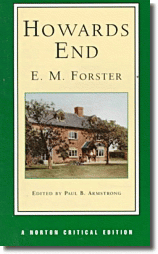
Howards End, by EM Forster

Poor Leonard Bast! If only he had not aspired to culture and attended that performance of Beethoven's Fifth symphony ("Gusts of splendour, gods and demigods contending with vast swords, colour and fragrance broadcast on the field of battle, magnificent victory, magnificent death!"). Wealthy, Bohemian Helen Schlegel takes Leonard's umbrella by mistake, and a disastrous entanglement ensues.
Learn more about this concert in Howards End: "A goblin, with increased malignity, walked quietly over the universe from end to end."

Read about another novel on Mullan's list.

--Marshal Zeringue

Pg. 69: Gerald Elias' "Devil's Trill"

Today's feature at the Page 69 Test: Devil's Trill by Gerald Elias.

About the book, from the publisher:
From concert violinist Gerald Elias comes this debut set in the classical music world about the theft of a priceless violin.

Daniel Jacobus is a blind, reclusive, crotchety violin teacher living in self-imposed exile in rural New England. He spends his time chain-smoking, listening to old LPs, and occasionally taking on new students, whom he berates in the hope that they will flee.

Jacobus is drawn back into the world he left behind when he decides to attend The Grimsley Competition at Carnegie Hall. The young winner of this competition is granted the honor of playing the Piccolino Stradivarius, a uniquely dazzling three-quarter-size violin that has brought misfortune to all who possessed it over the centuries. But the violin is stolen before the winner of the competition has a chance to play it, and Jacobus is the primary suspect.

With the help of his friend and former musical partner, Nathaniel Williams, his new student, Yumi Shinagawa, and several quirky sidekicks, Jacobus sets out to prove his innocence and find the stolen Piccolino Strad. Will he be successful? The quest takes him through the halls of wealth and culture, across continents to Japan, and leads him to a…murder.

Devil’s Trill gives the reader a peek into the world of classical music, with its backstabbing teachers and performers, venal patrons, and shady violin dealers. It is the remarkable beginning of a wonderful new series.
Read an excerpt from Devil's Trill, and learn more about the book and author at Gerald Elias' website.

Hear Elias perform Tartini's Devil's Trill Sonata.

The Page 69 Test: Devil's Trill.

--Marshal Zeringue

Pg. 99: Lawrence Glickman's "Buying Power"

The current feature at the Page 99 Test: Buying Power: A History of Consumer Activism in America by Lawrence B. Glickman.

About the book, from the publisher:
Far from ephemeral consumer trends, buying green and avoiding sweatshop-made clothing represent the most recent points on a centuries-long continuum of American consumer activism. A sweeping and definitive history of this political tradition, Buying Power traces its lineage back to our nation’s founding, revealing that Americans used purchasing power to support causes and punish enemies long before the word boycott even entered our lexicon.

Taking the Boston Tea Party as his starting point, Lawrence Glickman argues that the rejection of British imports by revolutionary patriots inaugurated a continuous series of consumer boycotts, campaigns for safe and ethical consumption, and efforts to make goods more broadly accessible. He explores abolitionist-led efforts to eschew slave-made goods, African American consumer campaigns against Jim Crow, a 1930s refusal of silk from fascist Japan, a range of contemporary boycotts, and emerging movements like fair trade and slow food. Uncovering previously unknown episodes and analyzing famous events from a fresh perspective, Glickman emphasizes both change and continuity in the long tradition of consumer activism. In the process, he illuminates moments when its multifaceted trajectory intersected with fights for political and civil rights. He also sheds new light on activists’ relationship with the consumer movement, which gave rise to lobbies like the National Consumers League and Consumers Union as well as ill-fated legislation to create a federal Consumer Protection Agency.

A powerful corrective to the notion that a consumer society degrades and diminishes its citizenry, Buying Power provides a new lens through which to view the history of the United States.
Learn more about Buying Power at the University of Chicago Press website.

Lawrence B. Glickman is professor of history at the University of South Carolina. He is the author of A Living Wage: American Workers and the Making of Consumer Society.

The Page 99 Test: Buying Power.

--Marshal Zeringue

Sunday, August 23, 2009

Elizabeth Kane Buzzelli's "Dead Floating Lovers," the movie

Now showing at My Book, The Movie: Dead Floating Lovers by Elizabeth Kane Buzzelli.

The entry begins:
Oh my God! Who's the actress from Fargo? Her--she's the perfect Deputy Dolly Wakowski--kind of square-bodied, kind of officious, but always a step ahead of the people who condescend to her. I love when the underdog makes a total ass of the big shot.

And for Emily Kincaid--since she's partly me she'll have to be gorgeous, thin, not over 35, and have the ability to make any man fall in love with her on sight. So, let's see:...[read on]
Learn more about the author and her work at Elizabeth Kane Buzzelli's website and blog.

My Book, The Movie: Dead Floating Lovers.

--Marshal Zeringue

Pg. 69: Brian DeLeeuw's "In This Way I Was Saved"

Today's feature at the Page 69 Test: In This Way I Was Saved by Brian DeLeeuw.

About the book, from the publisher:
On a chilly November afternoon, six-year-old Luke Nightingale's life changes forever. On the playground across from the Metropolitan Museum of Art, he encounters Daniel. Soon the boys are hiding from dinosaurs and shooting sniper rifles. Within hours, Luke and his mother, Claire, are welcoming Daniel into their Upper East Side apartment -- and their lives.

Daniel and Luke are soon inseparable. With his parents divorcing, Luke takes comfort in having a near-constant playmate. But there's something strange about Daniel, who is more than happy to bind himself to the Nightingales. The divorce has cut Luke's father out of the picture, and as his increasingly fragile mother struggles with the insidious family depression, Daniel -- shrewd, adventurous, and insightful -- provides Luke both recreation and refuge.

As Luke grows from a child to an adolescent to a young man, he realizes that as much as his mother needs him, Daniel needs him more. Jealous of Luke's other attachments, Daniel moves from gestures of friendship into increasingly sinister manipulations. In the end, Luke finds himself in a daily battle for control of his own life -- wondering whether he or Daniel will emerge victorious.

Brian DeLeeuw's debut is a haunting and provocative story of a family's love and madness that you will not be able to put down.
Read an excerpt from In This Way I Was Saved, and learn more about the book and author at Brian DeLeeuw's website.

The Page 69 Test: In This Way I Was Saved.

--Marshal Zeringue

Five best books: trial lawyers at work

The trial lawyer John Quinn is the founder and managing ­partner of Quinn Emanuel Urquhart Oliver & Hedges LLP in Los Angeles.

For the Wall Street Journal he named a five best list of books about trial lawyers at work. One book on the list:
A Civil Action
by Jonathan Harr
Random House, 1995

Crusaders don't win every courtroom drama, as Jonathan Harr makes clear in this account of a lawsuit brought against W.R. Grace and a Beatrice subsidiary by plaintiffs who claimed that the companies dumped cancer-causing toxins into the water supply of Woburn, Mass. In Harr's telling, the plaintiffs' lawyer, Jan Schlichtman, risked his career and his sanity by pursuing justice against corporate giants who were represented by an army of ­sophisticated litigators. In absorbing detail, Harr shows how ­Schlichtman pieced together the evidence. The author conveys as well the tension and drama of the pre-trial maneuvers that are the crucial battleground in most lawsuits. But the book's core is the story of Schlichtman's struggle against both limited resources and his own arrogance. "A Civil Action" far outshines the 1998 movie it inspired.
Read about another book on the list.

--Marshal Zeringue

Saturday, August 22, 2009

Pg. 99: Allison Burnett's "Undiscovered Gyrl"

This weekend's feature at the Page 99 Test: Undiscovered Gyrl by Allison Burnett.

About the book, from the publisher:
Only on the internet can you have so many friends and be so lonely.

Beautiful, wild, funny, and lost, Katie Kampenfelt is taking a year off before college to find her passion. Ambitious in her own way, Katie intends to do more than just smoke weed with her boyfriend, Rory, and work at the bookstore. She plans to seduce Dan, a thirty-two-year-old film professor.

Katie chronicles her adventures in an anonymous blog, telling strangers her innermost desires, shames, and thrills. But when Dan stops taking her calls, when her alcoholic father suffers a terrible fall, and when she finds herself drawn into a dangerous new relationship, Katie's fearless narrative begins to crack, and dark pieces of her past emerge.

Sexually frank, often heartbreaking, and bursting with devilish humor, Undiscovered Gyrl is an extraordinarily accomplished novel of identity, voyeurism, and deceit.
Read an excerpt from the novel, and visit the Undiscovered Gyrl website and Allison Burnett's website.

Allison Burnett is a screenwriter, journalist, poet, director, and novelist and short story writer.

His novels include Christopher: A Tale of Seduction, a finalist for the 2004 PEN Center USA Literary Award in Fiction, and The House Beautiful: A Novel of High Ideals, Low Morals, and Lower Rent.

The Page 69 Test: The House Beautiful.

Allison Burnett's "Christopher," the movie.

The Page 99 Test: Undiscovered Gyrl.

--Marshal Zeringue

What is Michael Gebert reading?

This weekend's featured contributor at Writers Read: Michael Gebert, creator of the Chicago-based food video podcast and blog Sky Full of Bacon, and writer about food and media for various publications.

His entry begins:
After 9/11 I found it hard to read fiction. There were two reasons for this. One was a conviction that today's fiction writers simply weren't up to the task-- look at Updike's book about a terrorist in which he imagines him to be pretty much exactly like every other Updike protagonist, or John LeCarre's last ten unreadable anti-US screeds. The world was so much richer as revealed by non-fiction writers, from Bernard Lewis with his polymath understanding of the Arab world to books like Rise of the Vulcans or The Looming Tower, so full of complex real-life characters. Honestly, what novelist in the last 30 years has conjured up characters as compelling as The Looming Tower's main figures-- the philandering FBI goodfella John O'Neill, his should-be ally but bureaucratic archenemy the CIA terror geek Michael Scheuer, the pitiless intellectual Dr. Zawahiri, the aimless rich kid turned terror celebrity Osama Bin Laden? What a wonderful movie it would make, if Hollywood had the balls.[read on]
Visit Michael Gebert's website to learn more about Sky Full of Bacon and links to his writing about food and media.

Writers Read: Michael Gebert.

--Marshal Zeringue

Pg. 69: Victor LaValle's "Big Machine"

The current feature at the Page 69 Test: Big Machine by Victor LaValle.

About the book, from the publisher:
A fiendishly imaginative comic novel about doubt, faith, and the monsters we carry within us.

Ricky Rice was as good as invisible: a middling hustler, recovering dope fiend, and traumatized suicide cult survivor running out the string of his life as a porter at a bus depot in Utica, New York. Until one day a letter appears, summoning him to the frozen woods of Vermont. There, Ricky is inducted into a band of paranormal investigators comprised of former addicts and petty criminals, all of whom had at some point in their wasted lives heard The Voice: a mysterious murmur on the wind, a disembodied shout, or a whisper in an empty room that may or may not be from God.

Evoking the disorienting wonder of writers like Haruki Murakami and Kevin Brockmeier, but driven by Victor LaValle’s perfectly pitched comic sensibility Big Machine is a mind-rattling literary adventure about sex, race, and the eternal struggle between faith and doubt.
Read an excerpt from Big Machine and learn more about the book and author at Victor LaValle's website.

The Page 69 Test: Big Machine.

--Marshal Zeringue

Friday, August 21, 2009

Critic's chart: six books featuring medical breakthroughs

Last year Thomas Stuttaford, The Times (London) doctor, named a critic's chart of six books featuring medical breakthroughs.

One title on the list:
The Greatest Benefit to Mankind by Roy Porter

Chronicles medical history in a readable but accurate and detailed way.
Read about another book on Stuttaford's list.

The Greatest Benefit to Mankind
also appears on Stephanie J. Snow's five best list of books on the history of medicine.

--Marshal Zeringue

Pg. 69: Lev Grossman's "The Magicians"

The current feature at the Page 69 Test: The Magicians by Lev Grossman.

About the book, from the publisher:
A thrilling and original coming-of- age novel about a young man practicing magic in the real world

Quentin Coldwater is brilliant but miserable. A senior in high school, he’s still secretly preoccupied with a series of fantasy novels he read as a child, set in a magical land called Fillory. Imagine his surprise when he finds himself unexpectedly admitted to a very secret, very exclusive college of magic in upstate New York, where he receives a thorough and rigorous education in the craft of modern sorcery.

He also discovers all the other things people learn in college: friendship, love, sex, booze, and boredom. Something is missing, though. Magic doesn’t bring Quentin the happiness and adventure he dreamed it would. After graduation he and his friends make a stunning discovery: Fillory is real. But the land of Quentin’s fantasies turns out to be much darker and more dangerous than he could have imagined. His childhood dream becomes a nightmare with a shocking truth at its heart.

At once psychologically piercing and magnificently absorbing, The Magicians boldly moves into uncharted literary territory, imagining magic as practiced by real people, with their capricious desires and volatile emotions. Lev Grossman creates an utterly original world in which good and evil aren’t black and white, love and sex aren’t simple or innocent, and power comes at a terrible price.
Read an excerpt from The Magicians, and learn more about the book and author at Lev Grossman's website and The Magicians website.

The Page 69 Test: The Magicians.

--Marshal Zeringue

Coffee with a canine: Hart Johnson & Joel

This weekend's featured duo at Coffee with a Canine: Hart Johnson & Joel.

Hart Johnson is a writer on the journey to publication and the blogger at Confessions of a Watery Tart.

As for Joel's story:
Do you have a tissue ready? He can be really skittish, jumping back if someone reaches too fast, and extremely slow to warm up to new people. We think he was probably abused, maybe not with abusive intent, but in the end, abuse is abuse. Looking at him, and knowing his quirks, we suspect somebody adopted or bought him because he was so CUTE, but when he is reprimanded he growls, and if you take something from him, he’ll bite. He also sleepwalks, and can be downright mean if he wakes suddenly because he is disoriented. We think the first owners didn’t have the patience or skills to learn that he needs to be treated more like a two-year-old--distraction, coaxing, bribery. Yelling or sternness doesn’t work.
Learn more about Hart Johnson and her writing at her blog, Confessions of a Watery Tart, and her Facebook page.

Read: Coffee with a Canine: Hart Johnson & Joel.

--Marshal Zeringue

Pg. 99: Jim Noles' "Mighty by Sacrifice"

The current feature at the Page 99 Test: Mighty by Sacrifice: The Destruction of an American Bomber Squadron, August 29, 1944 by James L. Noles, Sr and James L. Noles Jr.

About the book, from the publisher:
The high cost of the Allied air offensive during World War II.

On August 29, 1944, the 15th U.S. Army Air Force unleashed 500 bombers against oil and rail targets throughout central Europe. It dispatched the 20th Squadron of the 2nd Bombardment Group on what they regarded as an easy assignment: attack the Privoser Oil Refinery and associated railroad yards at Moravska Ostrava, Czechoslovakia. This "milk run" deteriorated into the bloodiest day in the 2nd Bombardment Group's history: not a single one of the 20th Squadron's B-17 Flying Fortress bombers returned from the mission. Forty airmen were killed, another 46 spent the rest of the war as POWs, and only four, with the aid of the OSS and anti-German partisans, and sympathetic Czech civilians managed to evade capture.

The ninety airmen on the mission to Moravska Ostrava provide a remarkable personal window into the Allies' Combined Bomber Offensive at its height during WWII. In a microcosm, their stories encapsulate how the U.S. Army Air Forces built, trained, and employed one of the mightiest war machines ever seen. Their stories also illustrate, however, the terrible cost in lives demanded by that same machine.
Learn more about the book and author at Jim Noles' website.

The Page 99 Test: Mighty by Sacrifice.

--Marshal Zeringue

Thursday, August 20, 2009

What is Steven Strogatz reading?

The current featured contributor to Writers Read: Steven Strogatz, author of Sync: The Emerging Science of Spontaneous Order and the newly released The Calculus of Friendship: What a Teacher and a Student Learned about Life while Corresponding about Math.

His entry begins:
At the moment I'm reading Panic In Level 4, the latest page turner by Richard Preston. Ever since The Hot Zone -- the scariest book I've ever read -- I've been a big fan of Preston's. He's one of our best science writers. I love his cinematic style, eye for detail, dry humor and understated language, especially when he discusses something really freaky or macabre.[read on]
Visit Steven Strogatz's website.

Among the early praise for The Calculus of Friendship:
"Steven Strogatz has written an unpretentious, charming, original, and inspiring book. In a disarmingly personal depiction, Strogatz leads us through a story of friendship between understated mentor and virtuosic student. The mathematical excursions are as much a pleasure to read as the moving narrative of the unusual friendship that the mathematics inspires."
--Janna Levin, author of A Madman Dreams of Turing Machines

"The gentle but unremittingly honest account of this friendship utterly absorbed me. Also, some of the calculus is hilarious."
--John Cleese
Writers Read: Steven Strogatz.

--Marshal Zeringue

Kate Walbert: best books

Kate Walbert, author of the new novel A Short History of Women, named a best books list of her favorite (unlikely) heroines for The Week magazine.

One novel on her list:
Housekeeping by Marilynne Robinson

Housekeeping would also be on my list of all-time best books. Sylvie, the eccentric, dreamy aunt to Ruth and Lucille, arrives to take care of the children, but her “housekeeping” leads to disaster. With its lyrical, deeply resonant prose, Robinson’s first novel is heart-rending, and her Sylvie unforgettable.
Read about another novel on Walbert's list.

--Marshal Zeringue

Pg. 69: Sheila Lowe's "Dead Write"

Today's feature at the Page 69 Test: Dead Write by Sheila Lowe.

About the book, from the publisher:
When it comes to solving murder, sometimes the pen can be mightier than the sword ...

Handwriting expert Claudia Rose heads to the Big Apple at the behest of Grusha Olinetsky, the notorious founder of an elite dating service whose members are mysteriously dying. Drawn into the feckless lives of the rich and single, Claudia finds herself in a twisted world of love and lies fueled by desperation. But is one among them desperate enough to kill?

Claudia must find clues in the suspects’ handwriting before more victims are scribbled into the killer’s black book...
Read an excerpt from Dead Write, and learn more about the book and author at the Claudia Rose Forensic Handwriting Mysteries series website.

My Book, The Movie: Sheila Lowe's Written in Blood and Poison Pen.

The Page 69 Test: Dead Write.

--Marshal Zeringue

Brett Battles interviews Timothy Hallinan

Timothy Hallinan and Brett Battles both have new books out in their acclaimed series.

Hallinan's Breathing Water, the third installment of his Poke Rafferty Bangkok thrillers, was released on Tuesday. Battles' Shadow of Betrayal, the third novel in the Jonathan Quinn series, was published last month.

At Author Interviews today: the second installment of a two-part Q&A in which the writers query each other about their series and their process. (Read the first installment: Tim Hallinan interviews Brett Battles.)

Visit Timothy Hallinan's website and blog, and Brett Battles' website and blog.

Read: Brett Battles interviews Timothy Hallinan.

--Marshal Zeringue

Wednesday, August 19, 2009

Pg. 99: Joseph Bergin's "Church, Society, and Religious Change in France"

The current feature at the Page 99 Test: Church, Society, and Religious Change in France, 1580-1730 by Joseph Bergin.

About the book, from the publisher:
This readable and engaging book by an acclaimed historian is the only wide-ranging synthesis devoted to the French experience of religious change during the period after the wars of religion up to the early Enlightenment. Joseph Bergin provides a clear, up-to-date, and thorough account of the religious history of France in the context of social, institutional, and cultural developments during the so-called long seventeenth century.

Bergin argues that the French version of the Catholic Reformation showed a dynamism unrivaled elsewhere in Europe. The traumatic experiences of the wars of religion, the continuing search within France for heresy, and the challenge of Augustinian thought successively energized its attempts at religious change. Bergin highlights the continuing interaction of church and society and shows that while the French experience was clearly allied to its European context, its path was a distinctive one.
Learn more about the book at the Yale University Press website.

Read about Joseph Bergin's teaching and research at his University of Manchester faculty webpage.

The Page 99 Test: Church, Society, and Religious Change in France, 1580-1730.

--Marshal Zeringue

Top ten graphic novels for teenagers

Malorie Blackman's has written more than 50 books, including Pig-Heart Boy, Hacker and Whizziwig. She also writes for theatre and TV. Her latest book, Double Cross, the fourth in the award-winning Noughts and Crosses series, has just been published in paperback in the UK.

For the Guardian, she named a top ten list of graphic novels for teenagers.

One book on the list:
Maus by Art Spiegelman

This is the story of Art Spiegelman's father Vladek, a Polish Jew who managed to survive Auschwitz. Vladek's story is intertwined with Art's present day story as Art tries to understand more about his father and therefore more about himself. In this story, Jews are portrayed as mice and Nazis are portrayed as cats, which works brilliantly as a metaphor. I'd recommend this to any teenager.
Read about another book on the list.

--Marshal Zeringue

Pg. 69: Joe Abercrombie's "Best Served Cold"

Today's feature at the Page 69 Test: Best Served Cold by Joe Abercrombie.

About the book, from the publisher:
Springtime in Styria. And that means war.

There have been nineteen years of blood. The ruthless Grand Duke Orso is locked in a vicious struggle with the squabbling League of Eight, and between them they have bled the land white. Armies march, heads roll and cities burn, while behind the scenes bankers, priests and older, darker powers play a deadly game to choose who will be king.

War may be hell but for Monza Murcatto, the Snake of Talins, the most feared and famous mercenary in Duke Orso's employ, it's a damn good way of making money too. Her victories have made her popular - a shade too popular for her employer's taste. Betrayed and left for dead, Murcatto's reward is a broken body and a burning hunger for vengeance. Whatever the cost, seven men must die.

Her allies include Styria's least reliable drunkard, Styria's most treacherous poisoner, a mass-murderer obsessed with numbers and a Northman who just wants to do the right thing. Her enemies number the better half of the nation. And that's all before the most dangerous man in the world is dispatched to hunt her down and finish the job Duke Orso started...

Springtime in Styria. And that means revenge.
Read an excerpt from Best Served Cold, and learn more about the author and his work at Joe Abercrombie's website and blog.

Writers Read: Joe Abercrombie.

The Page 69 Test: Best Served Cold.

--Marshal Zeringue

Jennie Bentley's "Spackled and Spooked," the movie

Now showing at My Book, The Movie: Spackled and Spooked by Jennie Bentley.

The entry begins:
My offer of a three book contract to write an in-house series of home renovation mysteries for Berkley Prime Crime came with a two page outline for what my editor envisioned the books would be like. That included the names and thumbnail sketches of the major and secondary characters, the setting, and the basic set-up for the first book as well as the series.

The only character that had an actual description attached was the love interest and hot handyman, Mike Ellis. He was supposed to look like Bill Pullman, I remember.

Nothing against Bill Pullman, but the image wasn’t working for me. Nor was the name, which hit too close to home for comfort. Literally. My husband’s name is Mike. So when Mike’s name changed to Derek, Bill Pullman changed to... something more like...[read on]
Read more about the book and author at Jennie Bentley's website and Facebook page.

My Book, The Movie: Spackled and Spooked.

--Marshal Zeringue

Tuesday, August 18, 2009

What is Rebecca Makkai reading?

The current featured contributor to Writers Read: Rebecca Makkai, a writer whose fiction has appeared in The Best American Short Stories 2008, edited by Salman Rushdie, and has been selected for The Best American Short Stories 2009.

Makkai's work has also been featured in magazines such as New England Review, The Threepenny Review, Shenandoah, and The Iowa Review.

One book from her entry is State by State: A Panoramic Portrait of America (eds. Matt Weiland and Sean Wilsey):
By far my favorite entry [from the book] – and the one I’ve gone back to reread at least ten times – is Alison Bechdel’s graphic essay on Vermont [detail at right]. This was a surprise for me. I’d never felt drawn to graphic novels or comics, mentally filing them under the vague rubric of “manga,” something very not me, some sort of pornography for the Dungeons and Dragons set. I stand corrected.

I loved Bechdel’s entry so much that I ran out and bought Fun Home, her graphic memoir. Bechdel’s closeted father died in what may or may not have been a suicide only a few days after Bechdel herself came out of the closet, and Fun Home is the story of their relationship and its aftermath. It’s funny and extremely intelligent, and – as a graphic novel – it does things that writing alone simply cannot do. In one early set of panels, the pictures show a preadolescent Bechdel running out of the house after one of her father’s rages, while the captions tell the story of Daedalus and Icarus. In fiction, this could only have been a heavy-handed simile or a labored metaphor. In a graphic novel, it’s delicate and effortless.[read on]
Read Makkai's story "The Worst You Ever Feel," from The Best American Short Stories 2008, and "The Briefcase," her story from the forthcoming The Best American Short Stories 2009.

Learn more about the author and her work at Rebecca Makkai's website.

Writers Read: Rebecca Makkai.

--Marshal Zeringue