Tuesday, July 18, 2006

Five worthwhile memoirs

Richard Lacayo and Lev Grossman of TIME recently named five memoirs worth reading, including:
My Life in France by Julia Child

She loved France. She loved French. She even loved the French. But what Julia Child, all 6 ft. 2 in. of her, loved most was the oddly captivating things the French ate, things that nobody ate where she was from, provincial Pasadena, Calif. When her husband Paul moved them both to Paris after World War II, she learned to cook snails and everything else expertly. Later, in books and on television, she fed those things to Americans, and we duly loved her for it. But this posthumous memoir, written with her grandnephew Alex Prud'homme, is about her years abroad, when she attended cooking school in Paris and co-wrote her classic Mastering the Art of French Cooking. It's--what else?--delicious.

Click here to read about the other four memoirs.

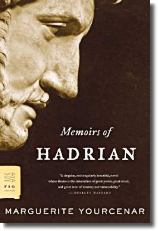
Actually French, but not an authentic memoir, is Marguerite Yourcenar's Memoirs of Hadrian, one of my favorite historical novels.

From the publisher:
In her magnificent novel, Marguerite Yourcenor recreates the life and death of one of the great rulers of the ancient world. The Emperor Hadrian, aware his demise is imminent, writes a long valedictory letter to Marcus Aurelius, his future successor. The Emperor meditates on his past, describing his accession, military triumphs, love of poetry and music, and the philosophy that informed his powerful and far-flung rule. A work of superbly detailed research and sustained empathy, Memoirs of Hadrian captures the living spirit of the Emperor and of Ancient Rome.
Brilliant stuff.

--Marshal Zeringue

Camus on the pitch?

Earlier this month, in the final game of the 2006 World Cup, France's attacking midfielder Zinedine Zidane took exception to a verbal provocation by Italian defender Marco Materazzi. Zidane's riposte was a head-butt to the chest of Materazzi. The Italian went sprawling, though it turned out--oh my!--that he wasn't seriously hurt. Zidane was ejected from the game.

C'est tout? Mais non.

Is there a sportswriter, Monday morning midfielder, or intellectual who has not bloviated on the head-butt heard round the world?

Bernard-Henri Lévy wrote in the Wall Street Journal:
Here is a man of providence, a savior, who was sought out, like Achilles in his tent of grudge and rage, because he was believed to be the only one who could avert his countrymen's fated decline. Better yet, he's a super-Achilles who--unlike Homer's--did not wait for an Agamemnon to come begging him to re-enlist ... no nasty remark will ever tell us why the planetary icon that Zinedine Zidane had become, a man more admired than the Pope, the Dalai Lama and Nelson Mandela put together, a demigod, a chosen one, this great priest-by-consensus of the new religion and the new empire in the making, chose to explode right there.
Uh, maybe.

Adam Gopnik, who I praised in this space just the other day, visits the issue in the current New Yorker. He retails (without necessarily endorsing) the theory that Zidane's act was "a bit Camusian":
Zidane...was lashing out not just at the Italian who had insulted him but at the unlivable role that he had been slotted into by the French. Forced to play the part of an ideal national hero, and knowing that he could never live up to the role, Zidane (who is still an Algerian kid from the projects at heart, and one who has played most of his career outside France), consciously or not, butted his way right out of it.
The problem, I think, with BHL's cogitations and Gopnik's ruminations is not that they are insufficiently historical or literary, or even too preoccupied with the morality of Zidane's act, but that they've latched on to the wrong historical antecedents and embraced the wrong moral.

My favorite take on the whole affair comes from Luke Dempsey, author of the forthcoming novel, A Supremely Bad Idea, in The New Republic. His bottom line:
Zidane lost nothing for France; he gained only for France, and for children everywhere; his was the great moral blow; he resisted, yet again, as the great French will do. I say, "Allez les Bleus!".... Allez Zizou, kids.... Vive la résistance!
--Marshal Zeringue

Monday, July 17, 2006

Joanna Briscoe's beach books

The novelist Joanna Briscoe shared her "Ten Best Beach reads" with the Independent. I haven't read the majority of her choices and I heartily disagree with one (but will maintain my silence about the title since a great many readers seem to have loved it and you may well, too).

I'm linking to her list because it contains one of the great crime classics:

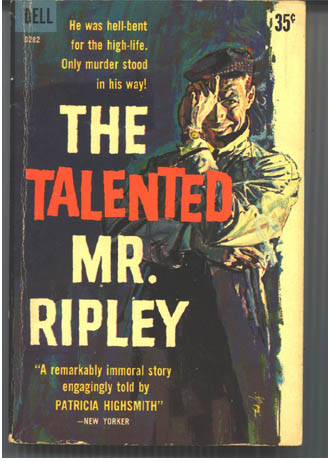
The Talented Mr Ripley by Patricia Highsmith

The Italian coastal scenes, beautiful cast and sense of summer languor that disguises evil impulses make this a disturbing but gorgeous read.

"Gorgeous," yes. The movie version was gorgeous, too. Yet this novel--unlike the movie--is a piece of genius, and I pity the person who saw the movie before reading the book. That's not because the movie was awful--it had its merits, I thought--but because the book leaves readers with at least two important questions that add to the reader's appreciation.

I won't spoil the book for you haven't yet read it--you can email me (bolling dot binx at gmail dot com) if you've read the novel yet don't know what I'm talking about--but the movie should have embraced the ambiguity around these questions. Audiences would have walked out of the cinema and been talking about the film for weeks, the critics would have treated it better, and the producers would have made a lot more money.

Click here for a link to the Village Voice's best beach books.

Click here for a post containing Scott Turow's 2006 beach books.

Joanna Briscoe is the author of Mothers and Other Lovers, which won the Betty Trask Award; Skin, which was runner-up for the Encore Award; and Sleep With Me.

--Marshal Zeringue

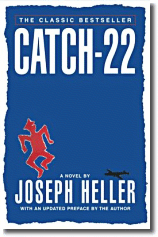
Chris Nolan on "Catch-22"

I checked in with Chris Nolan of "Spot-On" for a title for our series on what's at stake in the debate over habeas corpus. While not precisely relevant to the topic, as she notes, her suggestion engaged the spirit of the issue.

Moreover, her enthusiasm for a modern classic begged to be shared here:
My absolute all-time-book about government and how it can't be trusted and why you gotta keep on your toes at all times by being an involved committed citizen?

Joseph Heller's Catch-22 in which the crazy people love war but are considered sane and the sane people hate war and are considered insane. Not to mention all the profiteering, horrible bureaucracy and well, the true horrible sadness of the human condition (even without war) among those in the Army and the citizens they encounter as they wage war.

I'm not so sure that's related to habeas corpus--unless you count (as I'm sure Yossarian would) having a free mind as the most important aspect of any legal or social system. But it's my favorite book of all time. I've read it at least twice and my paperback copy is in shreds--gotta get a new one!
Chris Nolan is the founder and editor of "Spot-On," "your home for an independent, intelligent and insightful look at politics and current events." Her most recent column at the site takes up the "U.S. Senate debate on measures designed to expand federally funded research with the use of embryonic stem cells."

Nolan's work has appeared in the Washington Post, The New Republic, Fortune, Business 2.0 and Conde Nast Traveler and public radio's Marketplace. She is not the director of Memento.

--Marshal Zeringue

Frank Bascombe, meet Binx Bolling

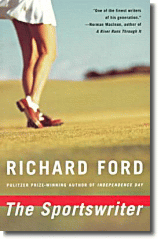
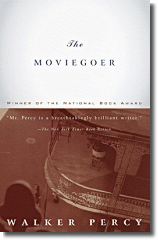
There is a terrific article by Gordon Burn in The Guardian about the echoes of Walker Percy's The Moviegoer in Richard Ford's The Sportswriter.

I love both novels: in this post (on Independence Day 2006) I praised Richard Ford's Independence Day, the sequel to The Sportswriter, and in this post (on Mardi Gras 2006) I claimed that The Moviegoer was the best Louisiana novel (even if it's not "The Great Louisiana Novel"). And then there's my email address.

But I'd never twigged to the similarities between the two novels. And they are considerable. Burn writes:
"My name is Frank Bascombe. I am a sportswriter," [The Sportswriter] begins. "Without knowing I had a natural calling I ... hit on the perfect one: to sit in the empty stands of a Florida ball park and hear the sounds of glove leather and chatter; talk to coaches and equipment managers in the gusty autumn winds ... to bone up on the relevant stats, then go home or back to the office, sit down at my desk and write about it. What could be better, I thought, and still think?"
And in The Moviegoer we read:
"I am a stock and bond broker ... Once I dreamed of going into law or medicine or even pure science. I even dreamed of doing something great. But there is much to be said for giving up such grand ambitions and living the most ordinary life imaginable, a life without the old longings; selling stocks and bonds; quitting work at five o'clock like everyone else; having a girl and perhaps raising a flock of Marcias and Sandras and Lindas ... Nor is the brokerage business as uninteresting as you might think. It is not a bad life at all."
Burn notes that there are many examples of Frank speaking like Binx, and there are multiple "coincidences in plotting."

Burn doesn't suggest the similarities are anything like plagiarism, and neither do I. I'd say it's more like an homage, though Ford, while noting the influence of Percy as well as other writers, apparently never explicitly intended any such salute.

Click here to read Gordon Burn's article.

--Marshal Zeringue

Sunday, July 16, 2006

Five biographies of business titans

David Nasaw, author of The Chief: The Life of William Randolph Hearst and the forthcoming Andrew Carnegie, suggested five top biographies of business moguls to Opinion Journal.

Number one:

Titan by Ron Chernow (Random House, 1998)

Piety and ruthlessness are often conjoined as defining character traits in saints, sinners and moguls. John D. Rockefeller's life, as Ron Chernow shows us, was saturated by religiosity and rapacity in almost equal quantities. Chernow is a master at peeling back the layers of obfuscation and denial to get to the man himself. As the story unfolds, we see how this most unsociable of moguls was deeply embedded in an extended family. Part of the strength of the interpretation is Chernow's ability to use insights into Rockefeller's family life--as son, brother, husband and father--in tracking his evolution from clerk to titan. The trick in writing a mogul biography is to concentrate on telling the story, not judging the life or moralizing about it, and at this Chernow succeeds.

Click here to read about the other four titles.

Click here to read an excerpt from Chernow's Titan. John D. Rockefeller died in 1937: click here to read his New York Times obituary.

Earlier this month, in the wake of Warren Buffet's announcement pledging $31 billion (or 85% of his fortune) to charity, Nasaw published an op-ed in the New York Times. He posed some questions--and offered no answers--about society and philanthropy like Buffett's, Bill Gates', and Andrew Carnegie's, who pledged to give away his entire fortune when he died:
While we can only applaud the decision by Mr. Buffett and Mr. Gates to give away so much of their fortunes, their gifts raise questions not unlike those that confronted Andrew Carnegie a century ago. Is society served by permitting so much capital to be accumulated by so few? Should we have to rely on the usually unfulfilled hope that fortunes of this magnitude will be put to a good cause? What becomes of a society that must rely on ''gifts'' from a handful of socially conscious billionaires to save its schools, cure disease and alleviate poverty?
David Nasaw teaches at the Graduate Center of the City University of New York.

--Marshal Zeringue

Saturday, July 15, 2006

My lunch with Francis Fukuyama

Sometime in the 1990s I joined Francis Fukuyama and a senior international relations scholar for lunch.

Fukuyama was then best known for his book The End of History and the Last Man, which argued that Western liberalism had emerged triumphant from the Cold War and would not face new ideological challenges. The other scholar was best known for embracing a tragic view of international history—things change, but the struggle for power is eternal—and ideology is not as significant as other levers of history.

There wasn’t much common ground and we all knew it. It was a quiet lunch.

The only time my counterparts started to warm up to a topic was over their shared antipathy to much contemporary international relations theory. Foolishly, I offered a mild defense of it and that killed that subject.

So, there’s really nothing salacious or interesting to report from that lunch.

More interesting is the account of Fukuyama’s “Lunch with the FT,” an interview over lunch with a writer from the Financial Times. Click here to read it—and click soon: there’s really no such thing as a free “Lunch with the FT,” so check out the interview before it’s available only to subscribers. Among other things, you’ll learn whether Fukuyama, once considered a standard-bearer of the neoconservatives, voted for Bush.

While not as informative, check out this “digested read” of Fukuyama’s latest book at The Guardian. The bottom line: "Je ne regrette rien."

As for the thesis of liberalism triumphant—both Fukuyama’s version as well as that shared (I’m quite sure) by most FT readers—see this bracing article by the scholar Chalmers Johnson.

--Marshal Zeringue

"When glory’s views the titled idiot guide..."

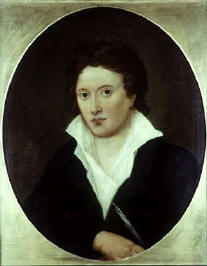
Percy Bysshe Shelley is mainly remembered as a romantic poet. Yet a newly discovered poem underscores his reputation as a radical writer--he was expelled from Oxford in large part for "repeatedly declining to disavow a publication entitled ‘The Necessity of Atheism’"--and a bitter critic of war and empire.

In the Times Literary Supplement H. R. Woudhuysen tells the story of the poem that some doubted ever really existed:

In 1809 the controversial naval officer Sir Home Popham invited Peter Finnerty, a radical Irish journalist and supporter of the United Irishmen, to join him on the British expedition to the Scheldt: its object was to attack Antwerp, then held by the French. Although Flushing fell, a large number of troops succumbed to a form of malaria on the island of Walcheren and the expedition ended in disaster with the deaths of around 4,000 men. Finnerty’s reports on these events in the Morning Chronicle led to his arrest and transportation back to England. In January 1810 he accused his “ancient enemy” Lord Castlereagh of trying to silence him and compounded the offence by repeating accusations against the politician about the abuse of United Irish prisoners in 1798. Finnerty was tried for libel in February 1811 and sentenced to eighteen months in Lincoln Gaol. It was not the first time he had gone to prison as a result of clashing with Castlereagh: he had previously spent two years in prison in Dublin for printing a seditious libel and had been made to stand in the pillory. This second libel case was reported in great detail and Finnerty’s plight attracted widespread support, prompting a debate during the summer in the House of Commons and a public subscription, initiated by Sir Francis Burdett, which reached £2,000 on his release. Among those who contributed to a fund to maintain the journalist while he was still in prison was Percy Bysshe Shelley, then an undergraduate at Oxford in his second term at University College. His name appears in a list of four subscribers, each pledging a guinea, printed in the Oxford University and City Herald on March 2, 1811. A week later the journal carried an advertisement for a Poetical Essay, “Just published, Price Two Shillings”; it was described as “On the Existing State of Things . . . for Assisting to Maintain in Prison Mr. Peter Finnerty, Imprisoned for a Libel” and was “by a Gentleman of the University of Oxford”. Similar advertisements for the book appeared in the national press, in The Morning Chronicle (on March 15 and 21) and in The Times (on April 10 and 11).
Only recently has a copy of that pamphlet been discovered.

The poem which follows consists of 172 lines of rhyming couplets.

It ranges over the devastations of war, the fearless voice of Sir Francis Burdett, the iniquities of Castlereagh, the tyranny of Napoleon and the oppressions of colonial India. Rather than remaining focused on Finnerty and Ireland, Shelley is concerned with England and the war:

Millions to fight compell’d, to fight or die
In mangled heaps on War’s red altar lie...
When legal murders swell the lists of pride;
When glory’s views the titled idiot guide.

Click here to read the entire article at the TLS.

Paul O'Brien, author of Shelley and Revolutionary Ireland, has another take on the newly discovered poem in The Guardian.

--Marshal Zeringue

Friday, July 14, 2006

Sober detectives

Via "Pete Lit" (see here and here) I've learned of a brand new blog developed by Sara Paretsky and some of her fellow Chicago-based crime writers: it's called "The Outfit."

Paretsky writes:
When I first created V I [Warshawski], I gave her my own Scotch, Johnny Walker Black. As the years have gone by, I find myself able to drink less and less—a glass of wine with dinner is my sorry limit. Without realizing it, I’ve cut back V I’s rations as well. A reader recently wrote to complain that V I Warshawski—wasn’t drinking enough. I’m going to up the girl detective’s intake—she works hard, she’s fitter than I am, tougher in every way—I’m going to give her back her whisky bottle. But she will remain, as she always has been, a careful drinker: she doesn’t drink and drive, and when she’s hit on the head, she always has a hot sweet drink, sans booze. I worry that while this makes her more credible as a person, though, it sadly diminishes her noir credentials.
These revelations appear at an interesting time: I was just wondering about all the fictional detectives who have traded in an alcohol addiction for a fitness obsession.

I've just started Peter Spiegelman's Black Maps: his detective, John March, runs (a lot) and, I take it (these details are only gradually being revealed), is now through with what was once a serious alcohol jones that may be linked to the untimely death of his wife.

Just before that, I read Laura Lippman's new (and best yet) "Tess Monaghan" novel, No Good Deeds. Tess drinks a little wine and is not above the occasional hit of marijuana, but her real addiction is rowing.

And taunting me from the bookshelf is the new James Lee Burke novel, Pegasus Descending, which features the recovering alcoholic Dave Robichaux, another detective who battles his booze demons by running.

Which reminds me that Samantha Kincaid, the D.A. created by Alafair Burke who features in three fine legal/crime mysteries, is a runner, too.

These exercising detectives might bear revisiting at some point. But now, back to the Spiegelman....

--Marshal Zeringue

Happy Bastille Day

What better opportunity to applaud Adam Gopnik's Paris to the Moon than Bastille Day, the French national holiday commemorating the Fête de la Fédération, held on the first anniversary of the storming of the Bastille on 14 July 1789?

Gopnik accomplishes that rare feat of understanding and explaining another culture so well that not only do unfamiliar outsiders come away smarter but the natives agree that the observer has got them right. (If you think that's easy, see, for example, the intelligent and well-intentioned Bernard-Henri Lévy's recent attempt at capturing America.)

From the publisher of Paris to the Moon:

Paris. The name alone conjures images of chestnut-lined boulevards, sidewalk cafés, breathtaking façades around every corner--in short, an exquisite romanticism that has captured the American imagination for as long as there have been Americans.

In 1995, Adam Gopnik, his wife, and their infant son left the familiar comforts and hassles of New York City for the urbane glamour of the City of Light. Gopnik is a longtime New Yorker writer, and the magazine has sent its writers to Paris for decades--but his was above all a personal pilgrimage to the place that had for so long been the undisputed capital of everything cultural and beautiful. It was also the opportunity to raise a child who would know what it was to romp in the Luxembourg Gardens, to enjoy a croque monsieur in a Left Bank café--a child (and perhaps a father, too) who would have a grasp of that Parisian sense of style we Americans find so elusive.

So, in the grand tradition of the American abroad, Gopnik walked the paths of the Tuileries, enjoyed philosophical discussions at his local bistro, wrote as violet twilight fell on the arrondissements. Of course, as readers of Gopnik's beloved and award-winning "Paris Journals" in The New Yorker know, there was also the matter of raising a child and carrying on with day-to-day, not-so-fabled life. Evenings with French intellectuals preceded middle-of-the-night baby feedings; afternoons were filled with trips to the Musée d'Orsay and pinball games; weekday leftovers were eaten while three-star chefs debated a "culinary crisis."

As Gopnik describes in this funny and tender book, the dual processes of navigating a foreign city and becoming a parent are not completely dissimilar journeys--both hold new routines, new languages, a new set of rules by which everyday life is lived. With singular wit and insight, Gopnik weaves the magical with the mundane in a wholly delightful, often hilarious look at what it was to be an American family man in Paris at the end of the twentieth century. "We went to Paris for a sentimental reeducation--I did anyway--even though the sentiments we were instructed in were not the ones we were expecting to learn, which I believe is why they call it an education."

Alain de Botton reviewed Paris to the Moon for the New York Times; click here to read the review.

Click here to read the first chapter.

And spare a thought today for Nicolas-Sébastien Roch de Chamfort (1741-1794), one of the first to enter the stormed Bastille. When the tide turned against the revolutionaries, Julian Barnes writes,
Chamfort was denounced, imprisoned, released, and threatened with fresh arrest; deciding to take the philosopher's way out, he put a pistol to his head. All he succeeded in doing was to smash his nose and put out his right eye. Then he took a razor--or in some accounts a knife--and hacked at his throat, wrists and ankles, before collapsing in a pool of blood which streamed under the door. Amazingly, he survived, and characteristically complained that poverty had yet again undone him: "Seneca was rich, he had everything he needed, including a warm bath to do it in, and the best of surroundings, whereas I'm just a poor devil who can't afford any of that ... Still, at least I've got a bullet in my head, that's the main thing." It was and it wasn't; indeed, he seemed on the way to recovery when the maladroitness of a doctor did for him.
--Marshal Zeringue

Thursday, July 13, 2006

Tung Yin, winner of "The Body and the State"

I received many helpful suggestions in the quest for good fiction that demonstrates what's at stake in the debate over habeas corpus.

Professor Cary Federman has generously contributed a copy of his new book, The Body and the State: Habeas Corpus and American Jurisprudence (SUNY Press, 2006), for me to award to the most valued recommendation.

I had a tough time deciding who should get the book--all of the recommendations were excellent and much appreciated--and finally settled on the suggestion by the University of Iowa College of Law professor Tung Yin for recommending Robert Littell's The Company:

the part of the novel that is relevant to the question you pose about the debate over habeas corpus has to do with a mole hunt within the CIA. One counter-espionage agent amasses bits of evidence pointing toward one of the main characters, Leo Krinsky, as being a Soviet mole. Krinsky is arrested, brought to the CIA headquarters, and interrogated without a lawyer, and when he professes his innocence (despite the seemingly strong circumstantial evidence against him), the counterespionage agent throws him into a literal dungeon, where the only water source is the toilet. The CIA agent is kept in there for weeks (or was it months?), enduring repeated interrogation. The whole experience is so brutal that when he's finally released, he looks like a shadow of himself, and his hair has turned white.

Considering that the novel was written before the 9/11 attacks and Guantanamo Bay, it's remarkable that Littell captured the essence of the problem of indefinite detention without access to counsel or courts via habeas corpus. If Krinsky were a Soviet mole, national security would call for his isolation so as to prevent damaging national secrets from being passed to the Soviet Union. But what if Krinsky were innocent? The point of habeas corpus is that the Executive Branch--in this novel, the CIA counterespionage agent--isn't the one to make the call as to whether to err on the side of overprotecting national security or overprotecting individual rights; it's for a neutral, third party such as the court to balance the competing concerns.

Congratulations to Tung Yin, and many thanks to everyone who helped with the project.

--Marshal Zeringue

Index: what's at stake in the debate over habeas corpus

NOTE: updated August 20, 2006

At the end of March 2006 I issued a call for fiction that might help American citizens understand and appreciate what's at stake in the debate over habeas corpus; read more about it here.

Many individuals responded with helpful suggestions. Below are their suggestions, followed by a list of contributors.

My sincere thanks to them all.

Do you know a good work of fiction that illustrates what's at stake in the debate over whether every citizen detained by the government must appear before a judge? Let me know the title--along with an explanation for why it applies--and I may add it to the list. Send your suggestion to bolling [dot] binx [at] gmail [dot] com.


By author and title:

Atwood, Margaret. The Handmaid's Tale
Bolt, Robert. A Man For All Seasons
Bradbury, Ray. Fahrenheit 451
Dumas, Alexandre. The Count of Monte Cristo
Federman, Cary. The Body and the State: Habeas Corpus and American Jurisprudence
Forsyth, Frederick. The Day of the Jackel
Garcia Marquez, Gabriel. News of a Kidnapping
Golding, William. Lord of the Flies
Hale, Edward Everett. "The Man without a Country"
Huxley, Aldous. Brave New World
Kafka, Franz. The Trial [
1], [2]
Kafka, Franz. "In the Penal Colony"
Keenan, Brian. Evil Cradling
Koestler, Arthur. Darkness at Noon [
1], [2]
Lewis, Sinclair. It Can't Happen Here
Littell, Robert. The Company
Malamud, Bernard. The Fixer
Orwell, George. Animal Farm
Orwell, George. 1984 [
1], [2]
Powers, Richard. Plowing the Dark
Roosevelt, Kermit. In the Shadow of the Law
Solzhenitsyn, Alexander. One Day in the Life of Ivan Denisovich
Turow, Scott. Reversible Errors
U.S. Constitution

By contributor:

Anderson, Pete
Burke, Alafair
Cahn, Amy Laura
Crittenden, Michael
Dibbell, Jeremy
Farber, Seth
Federman, Cary
Ferguson, Robert A.
Freiman, Jonathan
Hafetz, Jonathan
Huq, Aziz
Katyal, Neal
Klosky, Deborah
Pohlman, Harry
Thornberry, Mary
Turow, Scott
Yin, Tung

--Marshal Zeringue

Wednesday, July 12, 2006

Stefan Zweig's "The Royal Game"

Joan Acocella has a very interesting essay about Stefan Zweig in The New York Review of Books.

In the 1920s and 1930s Stefan Zweig was an immensely popular writer, a man who had to barricade himself in his house in Salzburg in order to avoid the fans lurking around his property in the hope of waylaying him. According to his publisher, he was the most widely translated author in the world. Today, while he is still read in Germany and also in France, his name is barely known to the average Anglophone reader. In the last few decades, however, there has been an effort on the part of several publishers to get Zweig back into print in English. In my opinion, no book of his deserves reissue more than his one novel, Beware of Pity (Ungeduld des Herzens, 1938).

Zweig was a friend and admirer of Sigmund Freud, his fellow Viennese, and it was no doubt Freud's writings, together with the experience of two world wars, that persuaded him of the fundamental irrationalism of the human mind. Absolutely central to his fiction is the subject of obsession. And so it is with Beware of Pity. To my knowledge, this book is the first sustained fictional portrait of emotional blackmail based on guilt.

I haven't read Beware of Pity but I have read Zweig's brilliant novella, The Royal Game, (or Chess Story, in the new translation of the original Schachnovelle) and highly recommend it.

In fact, much of what Acocella says about Beware of Pity rings true of The Royal Game, and the novella may be a better work with which a new reader might get acquainted with Zweig.

From the publisher:
Chess Story, also known as The Royal Game, is the Austrian master Stefan Zweig's final achievement, completed in Brazilian exile and sent off to his American publisher only days before his suicide in 1942. It is the only story in which Zweig looks at Nazism, and he does so with characteristic emphasis on the psychological.

Travelers by ship from New York to Buenos Aires find that on board with them is the world champion of chess, an arrogant and unfriendly man. They come together to try their skills against him and are soundly defeated. Then a mysterious passenger steps forward to advise them and their fortunes change. How he came to possess his extraordinary grasp of the game of chess and at what cost lie at the heart of Zweig's story.

Some regard Zweig's novella and Nabokov's The Defense as typical accounts of a strong link between chess and obsessive madness. Not Garry Kasparov:
This myth of the introverted chessplayer has a fine pedigree, but it's a myth nonetheless. Great authors like Nabokov and Zweig created misanthropic chess masters that stay in our memory thanks to the skill of their creators. Bits and pieces may have come from reality, but only the most depressing and extreme exceptions receive attention. The vast majority of chessplayers are social, friendly, and no more likely to jump out a window than a stock broker or salesman. I certainly consider myself a member of that majority and have no interest in propagating the myth of the "reclusive chess genius." I've never met one; but I was just nine years old when Bobby Fischer left serious chess.
Missed the link for Acocella's essay on Zweig's Beware of Pity? Click here.

Looking for other recommended novellas? Click here.

--Marshal Zeringue

Texas tales and tomes

Two of my favorite early contributions to the blog are Bryan Curtis' and Don Graham's takes on The Great Texas Novel.

So what's new in Texas books? Last month The Dallas Morning News suggested ten Texas books to watch for this summer, including books by Sarah Bird, Will Clarke, and Sandra Brown.

The list includes a couple of interesting-looking works of Texas-touched nonfiction.

The General & The Jaguar: Pershing's Hunt for Pancho Villa, by Eileen Welsome (Little, Brown).

Ms. Welsome, a Pulitzer Prize-winning journalist, takes on a brutal sideshow to World War I and the Mexican Revolution: Pancho Villa's raids into New Mexico and Texas, the deployment of Gen. "Black Jack" Pershing in response and the slide into an outright, racial war between the U.S. and Mexico. A timely story, vividly told.

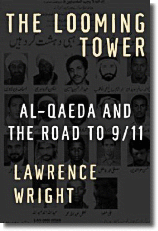
The Looming Tower: Al-Qaeda and the Road to 9/11, by Lawrence Wright (Knopf).

A New Yorker journalist, screenwriter (The Siege) and Dallas memoirist (In the New World), Mr. Wright traces the rise of militant jihadists from their origins in Egypt with the Muslim Brotherhood to the Twin Towers.

Click here to read about all ten DMN picks.

--Marshal Zeringue

Tuesday, July 11, 2006

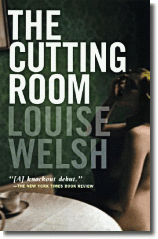
Louise Welsh

Louise Welsh has made a bigger name for herself at home in the British Isles than here in the United States. Which is a pity for American readers.

I really enjoyed her The Cutting Room, which won The Crime Writers' Association Creasey Dagger for the best first crime novel, and Tamburlaine Must Die. Both are more literary than one might expect of crime novels (and that is no disrespect intended toward crime novels, as any regular reader of the blog need not be reminded).

The publisher's comments on The Cutting Room:
When Rilke, a dissolute and promiscuous auctioneer, comes upon a hidden collection of seemingly violent photographs, he feels compelled to unearth more about the deceased owner who coveted them. What follows is a compulsive journey of discovery, decadence, and deviousness that leads Rilke into a dark underworld of transvestite clubs, seedy bars, and porn shops. In this hidden city haunted by a host of vividly drawn characters, Rilke comes face to face with the dark desires and illicit urges that lurk behind even the most respectable facades.
The publisher's comments on Tamburlaine Must Die:
It's 1593 and London is a city on edge. Under threat from plague and war, it's a desperate place where strangers are unwelcome and severed heads grin from spikes on Tower Bridge. Paranoia and fear grip this great city's streets. Playwright, poet, spy, and man of prodigious appetites, Christopher Marlowe is working on his latest literary effort and enjoying the English countryside at his patron's estate. But this idyll is soon cut short by a message from the Queen. He must return immediately to London, for a killer has escaped from between the pages of Marlowe's most violent play and is scandalizing the city. In the ensuing three days, Marlowe confronts dangerous government factions, double agents, necromancy, betrayal, and revenge in his search for the murderous Tamburlaine.
Both are relatively brief novels and you'll know if they are your cup of tea before spending much time with them. Click here to read the first chapter of The Cutting Room.

Welsh's third novel, The Bullet Trick, comes out this summer. The publisher calls it "an adults-only drama of the heart, guaranteed to keep you guessing until its final explosive flourish." I can't wait.

Click here to read a brief interview with Louise Welsh in The Observer.

If I've not sold you on Welsh's talent, click here to read a rave Salon article by Charles Taylor on The Cutting Room.

--Marshal Zeringue

The Great Books online

Access Foundation has made available online a large collection of so-called "Great Books."

Click here to learn about the Great Books project as well as to access over 240 important works of philosophy, science, and literature.

Thanks to Friend of the Blog "Cochise" for bringing this site to my attention.

--Marshal Zeringue

Monday, July 10, 2006

Birth of a fast food nation

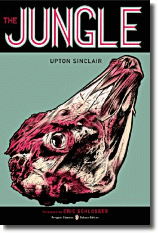
Upton Sinclair's The Jungle was published one hundred years ago, an anniversary celebrated by a new Penguin edition.

In Slate Karen Olsson offers up an interesting essay on The Jungle that may make you almost want to (re-)read the book but more probably will leave you content with feeling slightly better informed about a book you may have read in high school. Click here to read Olsson's essay.

From the publisher:
Upton Sinclair's dramatic and deeply moving story exposed the brutal conditions in the Chicago stockyards at the turn of the nineteenth century and brought into sharp moral focus the apalling odds against which immigrants and other working people struggled for their share of the American dream. Denounced by the conservative press as an un-American libel on the meatpacking industry, the book was championed by more progressive thinkers, including then president Theodore Roosevelt, and was a major catalyst to the passing of the Pure Food and Meat Inspection act, which has tremendous impact to this day.
The Jungle is available online for free here.

--Marshal Zeringue

Louis Auchincloss picks five novellas

Louis Auchincloss named his five best novellas for Opinion Journal.

Number one:

"Madame de Treymes" by Edith Wharton (Scribner's, 1907)

A notable form of fiction, the novella is approved more by the reading public of yesterday than of to day. Its length is hard to specify other than to say that it is usually not long enough to justify a separate publication under its own covers, yet it is certainly a useful form for any subject too simple for a novel but too complex to be fitted within the limits of a short story. Edith Wharton's "Madame de Treymes" is a remarkable example of the form. It is the story of the tactical defeat but moral victory of an honest and upstanding American in his struggle to win a wife from a tightly united but feudally minded French aristocratic family. He loses, but they cheat. It is essentially the same tale with the same moral as James's full-length novel "The American." In a masterpiece of brevity, Wharton dramatizes the contrast between the two opposing forces: the simple and proper old brownstone New York, low in style but high in principle, and the achingly beautiful but decadent Saint-Germain district of Paris. The issue is seamlessly joined.

Click here to read about Auchincloss's other four selections.

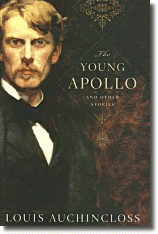
Louis Auchincloss was honored a few years ago as a "Living Landmark" by the New York Landmarks Conservancy. He has written more than sixty books, including the story collection Manhattan Monologues and the novel The Rector of Justin. He lives in New York City and is a recent president of the Academy of Arts and Letters. His latest book is The Young Apollo and Other Stories.

I've been noodling on a post about my own favorite novellas. In case I don't get around to writing it up any time soon, here are two novellas sure to make my top five: Leo Tolstoy's Hadji Murat and Joseph Conrad's Heart of Darkness.

--Marshal Zeringue

Sunday, July 09, 2006

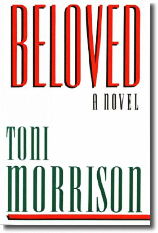
Jane Smiley on Toni Morrison's "Beloved"

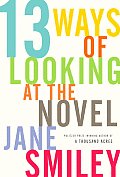
The Guardian's series of excerpts from Jane Smiley's Thirteen Ways of Looking at the Novel closes with an entry on Toni Morrison's Beloved. For previous entries from the series, see here, here, here, here, here, here, here, here, here, here, and here.

Smiley writes:

Beloved is not as easy to read as, say, To Kill a Mockingbird, but it is easy to get used to, and once the reader begins to distinguish among the elements, they fall into place quite clearly. As it opens, Sethe, in her late thirties, is living with her 18-year-old daughter, Denver, in a house that the neighbours avoid because it is haunted. The time is the early 1870s, right after the first wrenching dislocations of the civil war and its aftermath. Sethe and Denver live in an uneasy truce with the ghost until the arrival of Paul D, one of Sethe's fellow slaves on her former plantation in Kentucky. Paul exorcises the ghost, but then a mysterious female stranger shows up. She is 20 years old and strangely unmarked--she has no lines in her palms, for example, and her feet and clothing show no signs of hard travelling. She calls herself "Beloved ", and Sethe and Denver are happy to take her in.

Sethe, Denver, Paul D and every other character in the novel live simultaneously in their present and in their history--the chapters of the novel alternate between the two stories: that of the growing contest between Sethe and Beloved; and that of Sethe's life on the plantation, her escape, and the traumatic events that followed her crossing of the Ohio River and her appearance at the home of her mother-inlaw, Baby Suggs. A crucial, revealing and in some ways impossible to assimilate event takes place about halfway through the novel....

If you read Smiley's essay, you may learn more about the plot than you care to if you haven't yet read the novel.

There is something especially positive about a fine writer praising a peer:

One of the reasons Beloved is a great novel is that it is equally full of sensations and of meaning. Morrison knows exactly what she wants to do and how to do it, and she exploits every aspect of her subject. The characters are complex. Both stories are dramatic but in contrasting ways, and the past and the present constantly modify each other. Neither half of the novel suffers by contrast to the other. Especially worth noting is Morrison's style, which is graphic, evocative and unwhite without veering toward dialect. Even though Morrison rejects realism, using a heightened diction and a lyrical narrative method returning again and again to particular images and events and adding to them so they are more and more fully described, the reader never doubts the reality of what Morrison reports. Just as Sethe recognises Beloved toward the end of the novel, and knows at once that she has known all along who she is, the reader is shocked at the sufferings of the black characters and the brutality of the whites, but knows at once that every torture and cruelty is not only plausible but also representative of many other horrors that go unmentioned in the novel and have gone unmentioned in American history. Harriet Beecher Stowe was accused in her time of exaggerating the cruelties in Uncle Tom's Cabin, and she replied that in fact she whitewashed events to render them publishable. Morrison is her heir, in the sense that she dares to discuss and publish more (though certainly not all) of the truth.
Click here to read the entire Smiley essay.

Toni Morrison won the Nobel Prize in Literature 1993. Click here to read the presentation speech by Professor Sture Allén, Permanent Secretary of the Swedish Academy and here to read her banquet speech.

The paperback edition of Smiley's Thirteen Ways of Looking at the Novel will be available in September. Click here to read the excerpt, "What is a Novel?"

--Marshal Zeringue

Saturday, July 08, 2006

Anna Quindlen's favorite mystery novels

"In books I have traveled, not only to other worlds, but into my own," writes Anna Quindlen in How Reading Changed My Life. "I learned who I was and who I wanted to be, what I might aspire to, and what I might dare to dream about my world and myself."

The book includes a number of reading lists, such as:
"Ten Mystery Novels I'd Most Like to Find in a Summer Rental"

An Unsuitable Job for a Woman by P. D. James

Gaudy Night by Dorothy Sayers

The Beekeeper's Apprentice by Laurie King

Rebecca by Daphne du Maurier

Get Shorty by Elmore Leonard

Dancers in Mourning by Margery Allingham

The Way Through the Woods by Colin Dexter

The Adventures of Sherlock Holmes by Arthur Conan Doyle

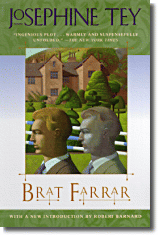
Brat Farrar by Josephine Tey

The Spy Who Came in From the Cold by John Le Carre

Click here to see other lists compiled by Quindlen, including:

10 Big Thick Wonderful Books that Could Take You a Whole Summer to Read (But Aren't Beach Books)

10 Non Fiction Books That Help Us Understand the World

10 Books that will Help a Teenager Feel More Human

The 10 Books I Would Save in a Fire (If I Could Only Save 10)

Ten Books for a Girl Who is Full of Beans (Or Ought to Be)

10 Books Recommended by a Really Good Elementary School Librarian

10 Good Book Club Selections

10 Modern Novels that Made Me Proud to be a Writer

--Marshal Zeringue

Raymond doesn't love everyone

Everyone loves Raymond Chandler (don't they?).

But Chandler didn't love everyone. Take James M. Cain:
Everything he touches smells like a billygoat. He is every kind of writer I detest, a faux naïf, a Proust in greasy overalls, a dirty little boy with a piece of chalk and a board fence and nobody looking. Such people are the offal of literature, not because they write about dirty things, but because they do it in a dirty way.
Harsh.

What would Aaron Klopstein make of that put-down?

With all due (considerable) respect for Chandler, I stand by my high opinion of Cain.

(Via Petelit via The Publishing Spot.)

--Marshal Zeringue

Friday, July 07, 2006

A literary guide to Miami

Steve Almond, author of the story collections My Life in Heavy Metal and The Evil B.B. Chow, wrote the Miami component for Salon's "Literary Guide to the World."

Much of account centers on T.D. Allman's Miami: City of the Future and Joan Didion's Miami, the two books his editor gave him for orientation when he arrived in the city to take up his job as a reporter.

But I was more taken with his brief survey of the crime fiction spawned in the region:
Miami has become a renowned breeding ground for crime writers, ranging from the zany (Carl Hiaasen) to the pulpy (Edna Buchanan) to the more literary (Les Standiford). The granddaddy of the genre is the late Charles Willeford, whose marvelous Miami Blues, published in 1984, introduced the world to Hoke Moseley, a foul-tempered, toothless detective whose drive to capture bad guys barely outstrips his existential burdens. One of many reasons to savor Miami Blues is its villain, a pitch-perfect psychotic by the name of Freddy J. Frenger Junior. (Those who remember Alec Baldwin's film version of Frenger saw only a pale version of his pathologies. Trust me.)
Allman also gives props to:
the other giant of South Florida crime fiction, John D. MacDonald, and in particular the 1964 novel The Deep Blue Good-by, which features his most beloved protagonist, a salvage expert and self-described "knight in tarnished armor" named Travis McGee. MacDonald, who counts among his legion of fans Stephen King, was named a Grand Master by the Mystery Writers of America in 1972, and won the American Book Award eight years later.
Here's the link to Allman's brief but worthwhile article.

Click here to read the case N.M. Kelby, author of Whale Season, makes for "The Great Florida Novel."

Click here to read one diplomat's account of the books that colored his sense of places he has known and would like to know.

--Marshal Zeringue

An introduction to Walter Mosley

Some time ago I posted an item on Walter Mosley.

Now I've run across a simple introduction to Mosley's work that's available online from the New Yorker. If you don't know Mosley's work but might be interested in a spur to reading his novels, click here. The piece is dated--it's from 2004--yet conveys the general thrust of Mosley's work.

Here's the paragraph on the "Easy Rawlins" series:
“Devil in a Blue Dress,” the first Easy Rawlins mystery, was published in 1990, and was followed in quick succession by “A Red Death” (1991), “White Butterfly" (1992), “Black Betty” (1994), and “A Little Yellow Dog” (1996). It was evident that, while the Rawlins books did formally belong to the hardboiled-mystery genre, they were not conventional procedurals. Rather, Mosley was using the genre to explore the African-American experience in Los Angeles from the forties (“Devil in a Blue Dress” is set in 1948) to the sixties (“A Little Yellow Dog” is set in 1962); Mosley himself has said that the theme of the novels is “the black migration from the Deep South to Los Angeles and this blue-collar existential hero moving through time.” Still, the novels were mysteries, usually murder mysteries, and Rawlins and his sidekick, the volatile, violent Mouse Alexander, navigate the streets and back rooms of Los Angeles like typical gumshoes. In 1997, the series came to an end, at least temporarily, with “Gone Fishin’,” a prequel set in Houston in 1939, which Mosley had written in the nineteen-eighties but never published. Five years after “Gone Fishin’,” Mosley revived Rawlins for one more novel, “Bad Boy Brawley Brown,” in 2002, and a collection of short stories, “Six Easy Pieces,” in 2003. A new volume in the series, “Little Scarlet,” is scheduled for publication in July.
Since Little Scarlet Mosley has published another "Easy Rawlins" mystery, Cinnamon Kiss.

Click here for the official Walter Mosley site.

--Marshal Zeringue

Thursday, July 06, 2006

A book for fans of "An Inconvenient Truth"

I recently saw the new Al Gore movie, An Inconvenient Truth. Its production values are much better than most documentaries and Gore's delivery is much improved since he last frequented the media.

The movie's message--widespread environmental and economic disaster looms unless something serious is done about global warming--comes through loud and clear. Five years ago Gore's argument would have been greeted by considerably more skepticism than it encounters today: simply, the thesis and supporting evidence have just gotten stronger.

(And it is not only politicians and scientists making this claim: Rolf Tolle, director of Lloyd's of London, recently told insurers, "If we don’t take action now to understand the changing nature of our planet, we will face extinction.")

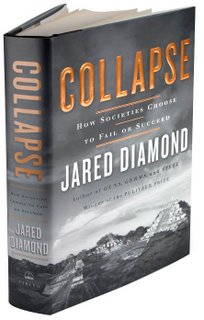
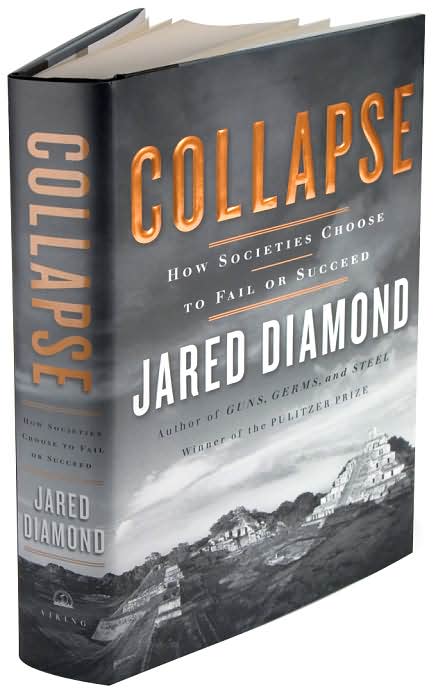
Although Gore doesn't mention it, his argument reminded me of Jared Diamond's fascinating Collapse. From the publisher:

In his million-copy bestseller Guns, Germs, and Steel, Jared Diamond examined how and why Western civilizations developed the technologies and immunities that allowed them to dominate much of the world. Now in this brilliant companion volume, Diamond probes the other side of the equation: What caused some of the great civilizations of the past to collapse into ruin, and what can we learn from their fates?

As in Guns, Germs, and Steel, Diamond weaves an all-encompassing global thesis through a series of fascinating historical-cultural narratives. Moving from the Polynesian cultures on Easter Island to the flourishing American civilizations of the Anasazi and the Maya and finally to the doomed Viking colony on Greenland, Diamond traces the fundamental pattern of catastrophe. Environmental damage, climate change, rapid population growth, and unwise political choices were all factors in the demise of these societies, but other societies found solutions and persisted. Similar problems face us today and have already brought disaster to Rwanda and Haiti, even as China and Australia are trying to cope in innovative ways. Despite our own society’s apparently inexhaustible wealth and unrivaled political power, ominous warning signs have begun to emerge even in ecologically robust areas like Montana.

Brilliant, illuminating, and immensely absorbing, Collapse is destined to take its place as one of the essential books of our time, raising the urgent question: How can our world best avoid committing ecological suicide?

Both Gore and Diamond (understandably) spend most of their time outlining the problem, yet both also point out that the looming catastrophe can be circumvented if it is addressed. Moreover, contrary to what is said by many of the people who are trying to wish away the problem, the costs of correcting the environmental damage are miniscule: we can fix the environment without harming the economy.

Click here to read an excerpt from Collapse, including a helpful section outlining the plan of the book.

Don't have time to dig into Collapse? Read Malcolm Gladwell's review in the New Yorker here. And click here for an extensive interview with Jared Diamond at Salon.

Diamond is a professor of geography (though he obviously knows quite a bit about other scientific fields). That is a demerit, according to Cambridge economist Partha Dasgupta: click here for his argument in the London Review of Books.

Gregg Easterbrook saw some merit in An Inconvenient Truth but much to dislike; click here for his reaction. (Roger Ebert liked it more.) Easterbrook also found much to like in Collapse yet, again--though with less confidence--many things to dislike:

Taken together, Guns, Germs, and Steel and Collapse represent one of the most significant projects embarked upon by any intellectual of our generation. They are magnificent books: extraordinary in erudition and originality, compelling in their ability to relate the digitized pandemonium of the present to the hushed agrarian sunrises of the far past. I read both thinking what literature might be like if every author knew so much, wrote so clearly and formed arguments with such care. All of which makes the two books exasperating, because both come to conclusions that are probably wrong.
Click here for the rest of Easterbrook's review.

Interested in Gore's thesis but suffer from theatrophobia? There's a book version of An Inconvenient Truth.

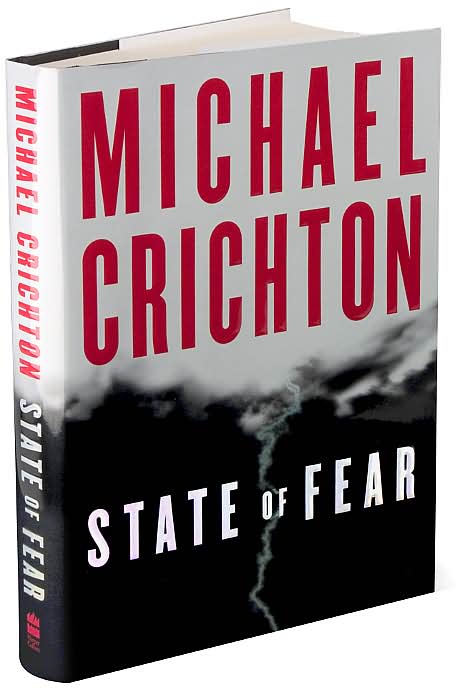
Not interested in Gore's movie or his thesis? Michael Crichton's latest novel, State of Fear, may be the thing for you. The author has quite a bit of information about the novel at his website, including excerpts and speeches.

For a rave review of State of Fear in the Wall Street Journal, click here. George Will praised the book in the Washington Post: click here for his column on the novel.

The reviewer for the Houston Chronicle did not like the book as much as Will did; click here for his review. The reviewer for the New York Times Book Review was unimpressed as well; click here for his review.

Click here to read an excerpt from State of Fear.

Also in the blog's series on "books for fans of [TV show or movie title here]":

A literary thriller for fans of Syriana
A novel for fan's of ABC's Lost (forthcoming)
Two novels for fans of HBO's Deadwood (forthcoming)

--Marshal Zeringue

Wednesday, July 05, 2006

Robert Stone picks five great contemporary war novels

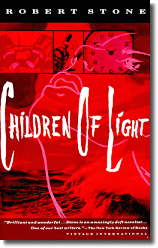
One of my favorite authors is Robert Stone, and his Children of Light (1986) is one of my favorite twice-told tales.

A few years ago Salon asked Stone to come up with a few great contemporary war novels.

He cited books by Kenn Miller, David Halberstam, Tim O’Brien, William Boyd, and Philip Caputo. Click here to see the titles and read Stone's capsule descriptions.

Stone won the National Book Award for Dog Soldiers, a book that would be high on my list of war novels. From the publisher:
In Saigon during the waning days of the Vietnam War, a small-time journalist named John Converse thinks he'll find action--and profit--by getting involved in a big-time drug deal. But back in the States, things go horribly wrong for him. Dog Soldiers perfectly captures the underground mood of America in the 1970s, when amateur drug dealers and hippies encountered profiteering cops and professional killers--and the price of survival was dangerously high.
Richard Locke reviewed Dog Soldiers for the New York Times; click here to read the review.

Time magazine's Lev Grossman and Richard Lacayo put the novel on their list of the 100 best English-language novels from 1923-2005.

More war books:
Earlier this year James Webb, former secretary of the Navy during the Reagan administration and author of eight books including a novel about the Vietnam War, listed his favorite books on the military. Click here for that post.

Click here to see Victor Davis Hanson's list of "the definitive books on the battles of the 20th century."

Click here to see Gabor Boritt's top books on Gettysburg.

And for one of my favorite novels about asymmetric war and terrorism, click here.

--Marshal Zeringue

Is it funny to see David Lodge embarrassed?

I've read a few David Lodge novels and quite a few of his essays. Without being able to recall any particular examples, my general sense is that he's a very good writer and a smart, humorous man; I always plan to read more of his work.

One book of Lodge's I have not read is Author, Author, his 2004 biographical novel about Henry James. And that's primarily because James, while a hero to some of my heroes (Joseph Conrad called him "master"), is not among my favorites.

Others may have not read Author, Author for a different reason: it was one of four or five Jamesian novels to come out at the same time and, while receiving good notice and reviews, it was considered weaker than Colm Tóibín's The Master, another biographical novel.

Lodge's response to the whole business: write an extensive essay about it and publish it in a book titled The Year of Henry James: The Story of a Novel.

Nicholas Blincoe briefly covers the episode here, and Terry Eagleton delves into the new book here. Both articles are worth reading, and The Year of Henry James sounds appealing to me. But I still don't want to read a novel with Henry James at the center of it.

Is it funny to see David Lodge embarrassed? Blincoe says yes, but only "in the Bizarro World of Literature, [where] fellow writers found an acute comedy of embarrassment in Lodge's situation: in the mortification that he must have felt as a good and heartfelt novel suffered in the shadow of another book."

Piling on: last month Tóibín's novel won €100,000 (£68,000) as part of the annual International Impac Dublin Literary Award, the world's richest literary prize for a single work of fiction in English.

--Marshal Zeringue

Tuesday, July 04, 2006

"Independence Day"

Richard Ford's excellent Independence Day (1996) won the PEN/Faulkner Award for Fiction as well as the Pulitzer Prize in fiction, the first novel to ever nab both awards.

From the introduction to a Salon interview with Ford:
The novel is the sequel to Ford's highly acclaimed The Sportswriter, which was the story of a man named Frank Bascombe who, devastated by the death of his young son, dropped quietly out of his own life. In Independence Day, Frank Bascombe more or less returns, moving into his ex-wife's old house, settling permanently--after a fling in France with a woman some 20 years his junior--into the suburbs to reconnect with his family and to sell real estate, which becomes for Bascombe a heady metaphor for the nature of attachment. He has moved into what he calls his "Existence Period," a tenuous equilibrium that seems to depend on keeping people and his own feelings at a comfortable remove.
Michiko Kakutani reviewed the book for the New York Times; her bottom line--"With Independence Day, Mr. Ford has written a worthy sequel to The Sportswriter and galvanized his reputation as one of his generation's most eloquent voices." Click here to read the complete review.

Click here to read an excerpt from Independence Day.

--Marshal Zeringue

Monday, July 03, 2006

Hemingway died on this day in 1961

Hemingway died on this day in 1961. (Some sources date his death on July 2nd.) Click here for the brief but informative obituary in the New York Times.

Hemingway won the 1954 Nobel Prize in Literature. Click here to read the Presentation Speech and here to read Hemingway's Banquet Speech.

The novelist N.M. Kelby convincingly argues that The Old Man and the Sea is The Great Florida Novel.

CNN.com hosts a Hemingway retrospective which has a pictorial biography and other interesting features.

--Marshal Zeringue

Superman's Jewish origins

"Superman's origin story has obvious parallels to the Old Testament tale of Moses," writes Louis B. Parks in his review of Simcha Weinstein's Up, Up and Oy Vey!:

A loving parent tries to save the life of a child by placing him in a basket—or space capsule—and sending him floating/blasting to safety. Found and adopted into a new family in his new world, Moses/Superman is still guided by the wisdom and counsel of his parent. He lives a double life with a secret identity. Moses eventually leads people from abuse to freedom. Superman rescues people from disasters and crime.
Superman's creators, Jewish immigrant sons Jerry Siegel and Joel Shuster, invented the superhero in 1938 Cleveland, Ohio. They never declared Superman was Jewish and their ambiguity was probably intentional. Parks again:

Though they didn't give their hero a specific ethnicity or religion, there are hints at his Jewishness. In some of his earliest stories, Superman sometimes foiled the plans of thinly disguised German Nazis, whose persecution of Jews already was infamous.

Americans may not have noticed, but apparently the Nazis snapped to the implications, quickly blasting the new comic. Weinstein writes that in 1940, Nazi propaganda minister Josef Goebbels denounced Superman as Jewish.

Weinstein also "recounts the Jewish influence on superheroes such as Batman, Captain America, the Hulk, the Fantastic Four, Spider-Man and X-Men, most of whom were created by Jewish artists."

Click here for the official site of Simcha Weinstein, the comic book rabbi.

--Marshal Zeringue

Sunday, July 02, 2006

Five top books on Gettysburg

Gabor Boritt, director of the Civil War Institute at Gettysburg College, is the author of the forthcoming The Gettysburg Gospel: The Lincoln Speech That Nobody Knows (Simon & Schuster). He picked five top books about Gettysburg for Opinion Journal.

Number one:

Gettysburg by Stephen W. Sears (Houghton Mifflin, 2003).

A first-class writer and splendid historian--a combination to be cherished--gives us the best book on America's most famous battle. Sears smoothly integrates up-to-date scholarship that has enriched our understanding of the battle since Edwin Coddington's "The Gettysburg Campaign" (1968), a classic but one that few can slog their way through. Sears has strong opinions. His Robert E. Lee fails to manage his subordinates well, and George Meade, "unexpectedly and against the odds," thoroughly outgenerals him. Only Civil War buffs will find things to argue about in this gripping account of the military moment that helped save the nation.

Click here to read about Boritt's other picks.

--Marshal Zeringue

Saturday, July 01, 2006

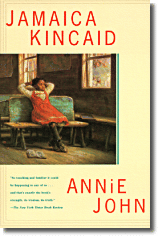
Jamaica Kincaid's "Annie John"

Jamaica Kincaid's Annie John is the subject of the most recent installment from Jane Smiley's Thirteen Ways of Looking at the Novel; for previous entries, see here, here, here, here, here, here, here, here, here, and here.

Smiley writes:

Annie John is a narrowly focused and intense portrayal of the inner life of an adolescent girl growing up in Antigua in the 1950s and 1960s. It begins in paradise. Annie is 10 years old. She lives an orderly and affection-filled existence with her mother and father in a small house he has built, which her mother keeps perfectly in order. Annie adores her mother and loves being in her presence, helping her with her daily tasks, dressing like her, being made to feel cherished and protected by her mother's knowledge and special rigour. The next nine chapters detail Annie's simultaneous disillusionment and quest for independence as she becomes "a young lady" (a very suspect category), a star student in a rigidly British educational system, and her mother's loved and hated antagonist. The last chapter details Annie's vivid ambivalence about her departure from the island and from her parents. She is now taller and stronger than her father, disdainful of her mother, and in a fever to leave the island, but the reader knows through the very richness of the novel that Annie can never quite leave behind the sharp combination of pleasure and pain that has been the strongest feature of her passionate childhood.
Kincaid herself of course grew up in Antigua where her education was "based on English classical literature, [which] was both a perfect education in literary taste and a perfect education in political ambiguity."

"Her style is precise, ironic and evocative," Smiley writes:

The superb precision of Kincaid's style makes it a paradigm of how to avoid lots of novelistic pitfalls. By staying very close to her protagonist, always moving the argument and the narrative forward, choosing concrete incidents and examples to portray, having a goal but not anticipating it, and knowing her subject in such depth that every episode seems to distil many other episodes that have to go undepicted, Kincaid never allows the reader to either wish for something more or to wish for something less.
Click here to read the entire article.

Click here to read a 1995 interview with Kincaid in Salon.

Click here to listen to a 1991 conversation Kincaid had with Don Swaim of CBS Radio about life, writing and family.

--Marshal Zeringue