Wednesday, February 21, 2024

Pg. 99: Michael Sierra-Arévalo's "The Danger Imperative"

Featured at the Page 99 Test: The Danger Imperative: Violence, Death, and the Soul of Policing by Michael Sierra-Arévalo.

About the book, from the publisher:
Policing is violent. And its violence is not distributed equally: stark racial disparities persist despite decades of efforts to address them. Amid public outcry and an ongoing crisis of police legitimacy, there is pressing need to understand not only how police perceive and use violence but also why.

With unprecedented access to three police departments and drawing on more than 100 interviews and 1,000 hours on patrol, The Danger Imperative provides vital insight into how police culture shapes officers’ perception and practice of violence. From the front seat of a patrol car, it shows how the institution of policing reinforces a cultural preoccupation with violence through academy training, departmental routines, powerful symbols, and officers’ street-level behavior.

This violence-centric culture makes no explicit mention of race, relying on the colorblind language of “threat” and “officer safety.” Nonetheless, existing patterns of systemic disadvantage funnel police hyperfocused on survival into poor minority neighborhoods. Without requiring individual bigotry, this combination of social structure, culture, and behavior perpetuates enduring inequalities in police violence.

A trailblazing, on-the-ground account of modern policing, this book shows that violence is the logical consequence of an institutional culture that privileges officer survival over public safety.
Visit Michael Sierra-Arévalo's website.

The Page 99 Test: The Danger Imperative.

--Marshal Zeringue

Third reading: D.W. Buffa on The World of Theodore H. White, Pt. 1

D.W. Buffa's latest novel is Lunatic Carnival, the tenth legal thriller involving the defense attorney Joseph Antonelli. He has also published a series that attempts to trace the movement of western thought from ancient Athens, in Helen; the end of the Roman Empire, in Julian's Laughter; the Renaissance, in The Autobiography of Niccolo Machiavelli; and, most recently, America in the twentieth century, in Neumann's Last Concert.

Buffa writes a monthly review for the Campaign for the American Reader that we're calling "Third Reading." Buffa explains. "I was reading something and realized that it was probably the third time that I knew it well enough to write something about it. The first is when I read it when I was in college or in my twenties, the second, however many years later, when I wanted to see if it was as good as I remembered, and the third when I knew I was going to have to write about it."

Buffa's "Third Reading" of Theodore H. White's The Making of the President series begins:
Graduating summa cum laude from Harvard in 1938, Theodore H. White received a fellowship which allowed him to travel to China, where he became correspondent for Time Magazine and then, a few years later, chief of Time’s China bureau. Toward the end of the war, he attended a meeting of the Chinese Communist Party where, in an “unheated, draft-leaking, mud-chinked assembly hall,” he met Mao Tse-tung and knew immediately “who was master, always had been master, always would be master.” Mao had not been elected by the Communist Party; he had chosen himself, but there “was no doubt in l944…that authority was his alone” and “that succession of leadership would pass at his will to whomever he chose.”

Years later, in The Making of the President 1960, White showed how different things were here. Power was not held by one man or one party; power was transferred by frequent and regular elections, and “no people has succeeded at it better, or over a longer period of time, than the Americans.” John F. Kennedy defeated Richard Nixon by a mere 112,000 votes out of nearly 69 million votes cast, but even before the vote had been counted, White knew with complete certainty that, “Good or bad, whatever the decision, America will accept the decision - and cut down any man who goes against it, even though for millions the decision runs contrary to their own votes. The general vote is an expression of national will, the only substitute for violence and blood. Its verdict is to be defended as one defends civilization itself.”

Beginning with the election of 1960, in which he reports how John F. Kennedy was elected, to...[read on]
Visit D.W. Buffa's website.

Third reading: The Great Gatsby

Third reading: Brave New World.

Third reading: Lord Jim.

Third reading: Death in the Afternoon.

Third Reading: Parade's End.

Third Reading: The Idiot.

Third Reading: The Decline and Fall of the Roman Empire.

Third Reading: The Scarlet Letter.

Third Reading: Justine.

Third Reading: Patriotic Gore.

Third reading: Anna Karenina.

Third reading: The Charterhouse of Parma.

Third Reading: Emile.

Third Reading: War and Peace.

Third Reading: The Sorrows of Young Werther.

Third Reading: Bread and Wine.

Third Reading: “The Crisis of the Mind” and A Man Without Qualities.

Third reading: Eugene Onegin.

Third Reading: The Collected Works of Thomas Babington Macaulay.

Third Reading: The Europeans.

Third Reading: The House of Mirth and The Writing of Fiction.

Third Reading: Doctor Faustus.

Third Reading: the reading list of John F. Kennedy.

Third Reading: Jorge Luis Borges.

Third Reading: History of the Peloponnesian War.

Third Reading: Mansfield Park.

Third Reading: To Each His Own.

Third Reading: A Passage To India.

Third Reading: Seven Pillars of Wisdom.

Third Reading: The Letters of T.E. Lawrence.

Third Reading: All The King’s Men.

Third Reading: The Roman History of Ammianus Marcellinus.

Third Reading: Naguib Mahfouz’s novels of ancient Egypt.

Third Reading: Main Street.

Third Reading: Theodore H. White's The Making of the President series.

--Marshal Zeringue

Tuesday, February 20, 2024

Eight top dystopian novels that explore hope in the climate crisis

Scott Guild received his MFA from the New Writers Project at the University of Texas at Austin, and his PhD in English from the University of Nebraska–Lincoln. He served for years as assistant director of Pen City Writers, a prison writing initiative for incarcerated students. He is currently an assistant professor at Marian University in Indianapolis, where he teaches literature and creative writing. Before his degrees, Scott was the songwriter and lead guitarist for the new wave band New Collisions, which toured with the B-52s and opened for Blondie.

Guild's new novel is Plastic.

At Electric Lit he tagged eight novels with a theme of hope, a "core value that their characters need in order to endure and fight the climate crisis, but difficult to maintain in the face of so many challenges." One title on the list:
Vigil Harbor by Julia Glass

The latest from National Book Award-winner Julia Glass, this sprawling novel is set in a small town on the coast of Massachusetts (the titular Vigil Harbor), an upper-class refuge from the turbulent America of the 2030s. Though the sea levels are rising, Vigil Harbor is built on a high headland that will let it survive centuries longer than many coastal communities. But there is trouble in this paradise, and the privileged residents will not be able to keep the outside world from intruding, whether through eco-terrorism, the arrival of mysterious strangers, or the piercing anxieties of their historical moment. With nine narrators and an intricate plot that includes dissolving marriages, long-hidden secrets, and a tsunami that threatens the Northeast, this ambitious novel takes a deeply human approach to the climate crisis, showing the hope, regret, and uncertainty of people living through unprecedented times.
Read about another entry on the list.

The Page 69 Test: Vigil Harbor.

Q&A with Julia Glass.

--Marshal Zeringue

Pg. 99: David L. Weimer & Aidan R. Vining's "Dog Economics"

Featured at the Page 99 Test: Dog Economics: Perspectives on Our Canine Relationships by David L. Weimer and Aidan R. Vining.

About the book, from the publisher:
Archaeologists, anthropologists, and evolutionary biologists study the origins of our relationship with dogs and how it has evolved over time. Sociologists and legal scholars study the roles of dogs in the modern family. Veterinarian researchers address the relationship in the context of professional practice, yet economists have produced scant scholarship on the relationship between humans and dogs. Dog Economics applies economic concepts to relationships between people and dogs to inform our understanding of their domestication. It interprets their contemporary role as both property and family members and explores factors that affect the demand for dogs as well as market failures of the American puppy market. Offering economic perspectives on our varied relationships with dogs, this book assesses mortality risks and addresses end-of-life issues that commonly arise. It develops a framework for classifying canine occupations, considers the impact of pet insurance on euthanasia, and assesses the social value of guide dogs.
Learn more about Dog Economics at the Cambridge University Press website.

The Page 99 Test: Dog Economics.

--Marshal Zeringue

Q&A with Katherine Harbour

From my Q&A with Katherine Harbour, author of The Dark Fable:
How much work does your title do to take readers into the story?

I think the title immediately takes readers into the story with the words ‘dark’ and ‘fable.’ The Dark Fable is the name of a secret society of thieves with supernatural abilities that originated in Medieval France. They usually work in darkness. A fable is a story. And stories are an important theme in this book. The Dark Fable, La Fable Sombre, has a creed: “We are the ink spilled over the stories of tyrants,” and the members of this crew of thieves find a way to trust one another, by telling the newest recruits their histories, their stories.

What’s in a name?

I wanted the names for my thieves to evoke...[read on]
Visit Katherine Harbour's website.

Writers Read: Katherine Harbour (June 2014).

The Page 69 Test: Thorn Jack.

Q&A with Katherine Harbour.

--Marshal Zeringue

Monday, February 19, 2024

Fifteen of the best books with unreliable narrators

At PopSugar Kaley Rohlinger tagged fifteen top books with unreliable narrators, including:
Atonement by Ian McEwan

The narrator of Ian McEwan's beloved classic Atonement doesn't reveal their identity until the end of the book, making it difficult to know whose bias tints the story until the very end. A single moment on a hot summer day between a young man and a young woman, observed by the woman's younger sister, will change all three of their lives forever.
Read about another entry on the list.

Atonement also appears on Ore Agbaje-Williams's list of seven scandalous betrayals in literature, Brittany Bunzey's list of 23 books about backstabbing and betrayal, Emma Rous's list of the ten top dinner parties in modern fiction, David Leavitt's top ten list of house parties in fiction, Abbie Greaves's top ten list of books about silence, Eliza Casey's list of ten favorite stories--from film, fiction, and television--from the early 20th century, Nicci French's top ten list of dinner parties in fiction, Mark Skinner's list of ten of the best country house novels, Julia Dahl's top ten list of books about miscarriages of justice, Tim Lott's top ten list of summers in fiction, Ellen McCarthy's list of six favorite books about weddings and marriage, David Treuer's six favorite books list, Kirkus Reviews's list of eleven books whose final pages will shock you, Nicole Hill's list of eleven books in which the main character dies, Isla Blair's six best books list, Jessica Soffer's top ten list of book endings, Jane Ciabattari's list of five masterpieces of fiction that also worked as films, and on John Mullan's lists of ten of the best birthday parties in literature, ten of the best misdirected messages in literature, ten of the best scenes on London Underground, ten of the best breakages in literature, ten of the best weddings in literature, and ten of the best identical twins in fiction. It is one of Stephanie Beacham's six best books.

--Marshal Zeringue

Pg. 99: George Fisher's "Beware Euphoria"

Featured at the Page 99 Test: Beware Euphoria: The Moral Roots and Racial Myths of America's War on Drugs by George Fisher.

About the book, from the publisher:
Beware Euphoria uncovers the roots of America's moral obsession with drug regulation, offering a lively and fascinating history of the nation's racialized fear of intoxication. Challenging the idea that early antidrug laws in the US arose from racial animus, George Fisher instead shows in textured detail how US drug laws were driven by a deep-seated cultural taboo against euphoria and a preoccupation with white moral integrity. From nineteenth-century opium dens to the war on cocaine and cannabis, and more, Fisher offers a vivid tour of the sites of conflict, along with a convincing case for how the moral discourses and social contexts of the day pit drugs against the law. Bringing this history up to the present, Fisher shows how the racial dynamic has changed dramatically. As harsher penalties swell prisons with mostly nonwhite dealers, antidrug laws have come under renewed scrutiny as a tool of racial oppression. The book closes with an examination of cannabis legalization, driven in part by the movement for racial justice.
Learn more about Beware Euphoria at the Oxford University Press website.

The Page 99 Test: Beware Euphoria.

--Marshal Zeringue

Lisa Black's "The Deepest Kill," the movie

Featured at My Book, The Movie: The Deepest Kill by Lisa Black.

The entry begins:
This story is, basically, the Laci Petersen murder if Laci Petersen’s dad was Bill Gates. Software pioneer Martin Post, the third richest man in America, has summoned expert forensic analysts Ellie Carr and Rachael Davies of the renowned Locard Institute. He believes his daughter's recent death was no accident. Was it a kidnapping gone wrong? Could their new defense initiative for the US military have played a part in her death? Martin believes his charmer son-in-law Greg is behind the murder, drawing Ellie and Rachael into the Posts’ increasingly dangerous family dynamic.

My casting of the main characters has not changed since the previous What Harms You.

Former pathologist Dr. Rachael Davies is thirty-eight, divorced, and raising her late sister’s toddler son. She’s given ten years of her life to build the Locard into what it is loves what it has become. My choice for her part would be Gabrielle Union—older than the role but looks too young for it, and way more beautiful than one would expect a scientist to be. But I think she’d be perfect for the intriguing and brilliant Rachael.

Ellie Carr, also a doctor (of forensics), left the FBI to follow her passion for CSI work. This is...[read on]
Learn more about the book and author at Lisa Black's website.

The Page 69 Test: That Darkness.

My Book, The Movie: Unpunished.

The Page 69 Test: Unpunished.

My Book, The Movie: Perish.

The Page 69 Test: Perish.

The Page 69 Test: Suffer the Children.

Writers Read: Lisa Black (July 2020).

The Page 69 Test: Every Kind of Wicked.

Q&A with Lisa Black.

My Book, The Movie: What Harms You.

The Page 69 Test: What Harms You.

My Book, The Movie: The Deepest Kill.

--Marshal Zeringue

Sunday, February 18, 2024

Cover story: "The Palatine Family and the Thirty Years' War"

Thomas Pert is a Leverhulme Early Career Fellow at the Centre for the Study of the Renaissance at the University of Warwick.

His new book is The Palatine Family and the Thirty Years' War: Experiences of Exile in Early Modern Europe, 1632-1648.

Here Pert explains the connection of the book's cover to the pages within:
The cover of my book The Palatine Family and the Thirty Years’ War is part of the painting The Triumph of the Winter Queen: Allegory of the Just by the Dutch artist Gerrit van Honthorst (1592-1656). Honthorst was the favourite portraitist of Elizabeth Stuart (1596-1662) - the daughter of King James VI and I of Scotland and England - and he would paint many depictions of Elizabeth, her husband Frederick the ‘Winter King’ of Bohemia, and their thirteen children during their exile at The Hague.

Following the Defenestration of Prague in 1618 and the outbreak of the Bohemian Revolt, Elector Frederick V of the Palatinate (1596-1632) accepted the crown of Bohemia from the rebels – a decision which widened a localised insurrection into a conflict which would devastate the lands of the Holy Roman Empire for three decades. In November 1620, Frederick’s army was crushed by imperial and Bavarian forces at the Battle of the White Mountain near Prague and he, Elizabeth, and their children had to abandon their new kingdom. In the months that followed, Frederick not only lost Bohemia, but Emperor Ferdinand II declared him an outlaw and stripped him of his hereditary lands, titles, and offices within the Empire. The exiled ‘Palatine Family’ would spend the rest of the Thirty Years’ War trying to recover their lost territories and titles, and this painting could be viewed as a statement of intent.

Elizabeth is depicted wearing a crown and holding a sceptre to demonstrate her (much-disputed) status as Queen of Bohemia. To the right of the image we see Elizabeth and Frederick’s eldest surviving son, Charles Louis (1618-80), wearing the ermine-trimmed robes and cap of a Prince Elector of the Holy Roman Empire signifying his claim to his dynasty’s confiscated lands and prestigious electoral title. One of Elizabeth’s other sons, Rupert (1619-82) is also shown in classical armour to signify an intent to fight for his family’s cause, and four of Elizabeth’s daughters are depicted either wearing or carrying laurel wreaths or palm branches, both of which were associated with victory and triumph. The wider painting contains even more symbolism. Elizabeth’s chariot is being drawn by three lions (such as those on the arms of the Kingdom of England), and she is shown riding over the body of Neptune - the Roman God of water and the sea. This could be a demonstration of her aim to seek help from her British homeland across the English Channel to bring about her family’s restoration, but it has also been suggested that it is a reference to the death of her eldest son Frederick Henry in a boating accident in 1629. Indeed, Frederick, Frederick Henry, and two other children who had died in 1625 and 1631 are shown bathed in a golden heavenly light looking down approvingly at Elizabeth and her ten surviving children.

The Triumph of the Winter Queen was produced at a very difficult time for the Palatine Family. Effective military and financial aid from England had not been forthcoming; their allies had suffered a string of defeats on the battlefield; they had been excluded from the 1635 Peace of Prague which aimed to bring the war to an end; and the childless Duke of Bavaria (to whom Emperor Ferdinand II had transferred Frederick’s lands and titles) had remarried and sired a son. In addition, the young and inexperienced Charles Louis was about to turn eighteen, meaning that he would be expected to shoulder the burdens of his exiled dynasty himself. As a result, by 1636, the Palatine Family risked becoming irrelevant on the European political-military stage. However, through the actions of various members of the dynasty, they were not sidelined by more powerful states, and some manner of restitution for the Palatine Family was ultimately deemed an essential component for any lasting peace treaty by the war’s end in 1648.

This painting demonstrates the commitment of Elizabeth and her children to obtaining their restoration at this tumultuous time when the Palatine Family had to counter the very real risk of permanent exclusion from their lost lands and titles, making it an ideal cover image for my book.
Learn more about The Palatine Family and the Thirty Years' War at the Oxford University Press website.

The Page 99 Test: The Palatine Family and the Thirty Years' War.

--Marshal Zeringue

Five top literary crime books featuring family dynamics

Megan Nolan was born in 1990 in Waterford, Ireland. Her essays and reviews have been published by the New York Times, White Review, Guardian, and Frieze amongst others.

Her debut novel, Acts of Desperation, was the recipient of a Betty Trask Award, shortlisted for the Sunday Times Young Writer of the Year Award and longlisted for the Dylan Thomas Prize.

Nolan's new novel is Ordinary Human Failings.

At CrimeReads she tagged five books that "combine the best of crime writing with the most reflective and thoughtful expositions of family dynamics." One title on the list:
Small Mercies by Dennis Lehane

I went through a slightly manic phase of reading all of Dennis Lehane’s novels last year and was amazed at how many of them are relentlessly excellent. I could write for years about his body of work, but found something especially moving about his most recent stand alone novel Small Mercies, which follows tough Irish Southie broad Mary Pat into an increasingly malevolent 1970’s Boston to find her missing and much loved seventeen year old daughter Jules. This is the era of busing protests, and even as Mary Pat is driven half mad by her desperation and fury about Jules’ disappearance, she is unable to ignore the poisonous prejudice and hatred that pervades her world. This is no glib morality tale of a white woman reckoning neatly with racism; her own intolerances are not the least of those she has to confront. Lehane is always able to write efficient, inventive page turners but where Small Mercies sets itself apart is its unsparing but not unsympathetic portrait of Mary Pat, the dissolution of her family, and what becomes of a person once they lose everything they have to lose.
Read about another entry on the list.

--Marshal Zeringue

Pg. 99: Alexa Bankert's "When Politics Becomes Personal"

Featured at the Page 99 Test: When Politics Becomes Personal: The Effect of Partisan Identity on Anti-Democratic Behavior by Alexa Bankert.

About the book, from the publisher:
Can we be good partisans without demonizing our political opponents? Using insights from political science and social psychology, this book argues for the distinction between positive and negative partisanship. As such, strong support for a political party does not have to be accompanied by the vilification of the opposing party and its members. Utilizing data from five different countries, Bankert demonstrates that positive and negative partisanship are independent concepts with distinct consequences for political behavior, including citizens' political participation and their commitment to democratic norms and values. The book concludes with the hopeful message that partisanship is an essential pillar of representative and liberal democracy.
Visit Alexa Bankert's website.

The Page 99 Test: When Politics Becomes Personal.

--Marshal Zeringue

Q&A with Sara Ochs

From my Q&A with Sara Ochs, author of The Resort: A Novel:
How much work does your title do to take readers into the story?

This is quite the loaded question when it comes to my debut, which actually has two different titles depending on where it’s being sold in the world. While my U.S. publisher is releasing the book under the title The Resort, it is actually already being sold in the U.K. and throughout Europe, Australia, and New Zealand as The Dive. A lot of this boils down to behind-the-scenes marketing and publicity (and can be attributed to people who are much savvier than me!), but it has certainly generated some confusion.

How surprised would your teenage reader self be by your new novel?

My teenage self would be...[read on]
Visit Sara Ochs's website.

Q&A with Sara Ochs.

--Marshal Zeringue

Saturday, February 17, 2024

Eight new books about sex, relationships and romance

The Zoomer Book Club's Nathalie Atkinson tagged eight new books about sex, relationships and romance, including:
REMEMBER LOVE by Cleo Wade

The popular artist, activist and Instagram poet who’s been called the “Millennial Oprah” assembles affirming poems and short essays in this guide to resilience and heartbreak (what she calls “tender times”). Like her signature all-caps handwritten posts on her avidly followed Instagram feed, she draws on themes of self-worth and encourages readers to look for stillness and acceptance within themselves to both love and let go.
Read about another entry on the list.

--Marshal Zeringue

Pg. 99: Jane Ohlmeyer's "Making Empire"

Featured at the Page 99 Test: Making Empire: Ireland, Imperialism, and the Early Modern World by Jane Ohlmeyer.

About the book, from the publisher:
Ireland was England's oldest colony. Making Empire revisits the history of empire in Ireland―in a time of Brexit, 'the culture wars', and the campaigns around 'Black Lives Matter' and 'Statues must fall'―to better understand how it has formed the present, and how it might shape the future.

Empire and imperial frameworks, policies, practices, and cultures have shaped the history of the world for the last two millennia. It is nation states that are the blip on the historical horizon. Making Empire re-examines empire as process―and Ireland's role in it―through the lens of early modernity. It covers the two hundred years, between the mid-sixteenth century and the mid-eighteenth century, that equate roughly to the timespan of the First English Empire (c.1550-c.1770s).

Ireland was England's oldest colony. How then did the English empire actually function in early modern Ireland and how did this change over time? What did access to European empires mean for people living in Ireland? This book answers these questions by interrogating four interconnected themes. First, that Ireland formed an integral part of the English imperial system, Second, that the Irish operated as agents of empire(s). Third, Ireland served as laboratory in and for the English empire. Finally, it examines the impact that empire(s) had on people living in early modern Ireland. Even though the book's focus will be on Ireland and the English empire, the Irish were trans-imperial and engaged with all of the early modern imperial powers. It is therefore critical, where possible and appropriate, to look to other European and global empires for meaningful comparisons and connections in this era of expansionism.

What becomes clear is that colonisation was not a single occurrence but an iterative and durable process that impacted different parts of Ireland at different times and in different ways. That imperialism was about the exercise of power, violence, coercion and expropriation. Strategies about how best to turn conquest into profit, to mobilise and control Ireland's natural resources, especially land and labour, varied but the reality of everyday life did not change and provoked a wide variety of responses ranging from acceptance and assimilation to resistance.

This book, based on the 2021 James Ford Lectures, Oxford University, suggests that the moment has come revisit the history of empire, if only to better understand how it has formed the present, and how this might shape the future.
Visit Jane Ohlmeyer's website.

The Page 99 Test: Making Empire.

--Marshal Zeringue

Pg. 69: Brandy Schillace's "The Framed Women of Ardemore House"

Featured at the Page 69 Test: The Framed Women of Ardemore House: A Novel by Brandy Schillace.

About the book, from the publisher:
An abandoned English manor. A peculiar missing portrait. A cozy, deviously clever murder mystery, perfect for fans of Richard Osman and Anthony Horowitz.

Jo Jones has always had a little trouble fitting in. As a neurodivergent, hyperlexic book editor and divorced New Yorker transplanted into the English countryside, Jo doesn’t know what stands out more: her Americanisms or her autism.

After losing her job, her mother, and her marriage all in one year, she couldn’t be happier to take possession of a possibly haunted (and clearly unwanted) family estate in North Yorkshire. But when the body of the moody town groundskeeper turns up on her rug with three bullets in his back, Jo finds herself in potential danger—and she’s also a potential suspect. At the same time, a peculiar family portrait vanishes from a secret room in the manor, bearing a strange connection to both the dead body and Jo’s mysterious family history.

With the aid of a Welsh antiques dealer, the morose local detective, and the Irish innkeeper’s wife, Jo embarks on a mission to clear herself of blame and find the missing painting, unearthing a slew of secrets about the town—and herself—along the way. And she’ll have to do it all before the killer strikes again…
Visit Brandy Schillace's website.

The Page 69 Test: The Framed Women of Ardemore House.

--Marshal Zeringue

Friday, February 16, 2024

Five of the best campus novels

At the Guardian Kate McCusker tagged five top campus novels, including:
On Beauty by Zadie Smith

The title of Zadie Smith’s third novel was taken from a poem by her husband Nick Laird. There is a long precedent of the novelist borrowing from the poet: the story goes that when they were students at Cambridge she turned up at his bedroom and asked for all of his notes the night before an exam. More recently, she borrowed the title of her 2018 essay collection Feel Free from her husband’s then unpublished poetry collection. But it’s hard to think of a better title for On Beauty: a brilliant novel about two clashing intellectuals set in a haughty New England liberal arts college. Part send-up of the self-seriousness of East Coast academia (the author herself makes a cameo), part paean to Howards End, it’s one of her best.
Read about another entry on the list.

On Beauty is among Michael Woodson's top ten campus novels, Michelle Webster-Hein's eight titles that wrestle with the complexities of religion, Ali Benjamin's top ten classic stories retold, Brian Boone's twenty books that are absolute dorm room essentials, Ann Leary's top ten books set in New England, and Tolani Osan's ten top books that "illuminate how disparate cultures can reveal the mystery and beauty in each other and make us aware of the hardships, dreams, and hidden scars of those we share space with."

--Marshal Zeringue

Pg. 99: Troy Tassier's "The Rich Flee and the Poor Take the Bus"

Featured at the Page 99 Test: The Rich Flee and the Poor Take the Bus: How Our Unequal Society Fails Us during Outbreaks by Troy Tassier.

About the book, from the publisher:
How can we make society more resilient to outbreaks and avoid forcing the poor and working class to bear the brunt of their harm?

When an epidemic outbreak occurs, the most physical and financial harm historically falls upon the people who can least afford it: the economically and socially marginalized. Where people live and work, how they commute and socialize, and more have a huge impact on the risks we bear during an outbreak. In The Rich Flee and the Poor Take the Bus, economist Troy Tassier examines examples ranging from the 430 BCE plague of Athens to the COVID-19 pandemic to demonstrate why marginalized groups bear the largest burden of epidemic costs—and how to avoid these systemic failures in the future.

The links between epidemics and social issues—such as inequality, discrimination, and financial insecurity—are not always direct or clear. Tassier reveals truths hidden in plain sight, from the way population density statistics can be misleading to the often-misunderstood differences between risk and uncertainty. The disproportionate harm experienced by marginalized individuals is not the product of their own decisions; instead, the collective choices of society and the tangled web of interactions across people and communities leave these groups most exposed to the perils of epidemics.

However, there is reason to hope. Utilizing a wealth of economic and population data, Tassier argues that we can leverage lessons learned from historic and recent outbreaks to design better economic and social policies and more just institutions to protect everyone in society when inevitable future epidemics arrive.
Visit Troy Tassier's website.

The Page 99 Test: The Rich Flee and the Poor Take the Bus.

--Marshal Zeringue

What is Margot Livesey reading?

Featured at Writers Read: Margot Livesey, author of The Road from Belhaven.

Her entry begins:
I am reading The Blue Window by Suzanne Berne. The novel takes place over a few days when Lorna, a therapist, drives to Vermont with her son Adam to visit her taciturn mother, Marika. All her adult life Lorna has grappled with the inexplicable fact that her mother left the family and completely ignored her children for many years. Now Adam has come home from university barely speaking because of some trauma he won’t reveal. As for Marika, in her eighties she now needs help but refuses to admit it. The chapters revolve between the three main characters to splendid effect. Adam’s gloom and doom - he refers to himself as A - makes him surprisingly sympathetic with his grandmother. Part of the skill of this wonderfully intelligent novel is...[read on]
About The Road from Belhaven, from the publisher:
From the New York Times best-selling author of The Flight of Gemma Hardy, a novel about a young woman whose gift of second sight complicates her coming of age in late-nineteenth-century Scotland

Growing up in the care of her grandparents on Belhaven Farm, Lizzie Craig discovers as a small child that she can see into the future. But her gift is selective—she doesn’t, for instance, see that she has an older sister who will come to join the family. As her “pictures” foretell various incidents and accidents, she begins to realize a painful truth: she may glimpse the future, but she can seldom change it.

Nor can Lizzie change the feelings that come when a young man named Louis, visiting Belhaven for the harvest, begins to court her. Why have the adults around her not revealed that the touch of a hand can change everything? After following Louis to Glasgow, though, she learns the limits of his devotion. Faced with a seemingly impossible choice, she makes a terrible mistake. But her second sight may allow her a second chance.

Luminous and transporting, The Road from Belhaven once again displays “the marvelous control of a writer who conjures equally well the tangible, sensory world . . . and the mysteries, stranger and wilder, that flicker at the border of that world.” —The Boston Globe
Visit Margot Livesey's website and Facebook page.

The Page 69 Test: The Flight of Gemma Hardy.

The Page 69 Test: Mercury.

Q&A with Margot Livesey.

The Page 69 Test: The Boy in the Field.

The Page 69 Test: The Road from Belhaven.

Writers Read: Margot Livesey.

--Marshal Zeringue

Thursday, February 15, 2024

Seven top books about sex, love, and intimacy

Annie Liontas is the genderqueer author of the novel Let Me Explain You and the coeditor of A Manner of Being: Writers on their Mentors. Their work has appeared in The New York Times Book Review, Gay Magazine, NPR, Electric Literature, BOMB, The Believer, Guernica, McSweeney’s, and other publications. A graduate of Syracuse University’s MFA program, they are a professor of writing at George Washington University. Liontas has served as a mentor for Pen City’s incarcerated writers and helped secure a Mellon Foundation grant on Disability Justice to bring storytelling to communities in the criminal justice system.

[The Page 69 Test: Let Me Explain You; My Book, The Movie: Let Me Explain You]

Liontas's new memoir is Sex with a Brain Injury: On Concussion and Recovery.

At Electric Lit they tagged "seven writers [who] write honestly and openly about intimacy, desire, queerness, loneliness, annihilating marriages, enduring and contradictory love, and, of course, soulmates." One title on the list:
Relationship Status: The One That Got Away

The Days of Afrekete by Asali Solomon

The Days of Afrekete opens with a dinner party—mushroom tarts, characters no one would actually want to have to sit next to, a smiling hostess who isn’t feeling especially generous. In the narrative present, Liselle is married to a white lawyer and politician who is being indicted for corruption; at any moment, the FBI might arrive and break up the party. At its heart, Solomon’s novel—inspired by Mrs. Dalloway, Sula, and Audre Lorde’s Zami—follows the searing, tempestuous affair between Liselle and Selena, two young Black women who grew up in Philadelphia. Theirs is a complicated love, a buried love, but one that refuses to be forgotten. And yet Liselle tries very hard to forget (so hard, in fact, that we wonder if Liselle is the one who got away—from herself). The Days of Afrekete is a novel that celebrates queer blackness while interrogating the necessity/cost of choosing security and comfort over selfhood. Solomon is mischievous, sly at dialogue, the friend you go to for tea. A novel as sexy as it is heartbreaking.
Read about another entry on the list.

--Marshal Zeringue

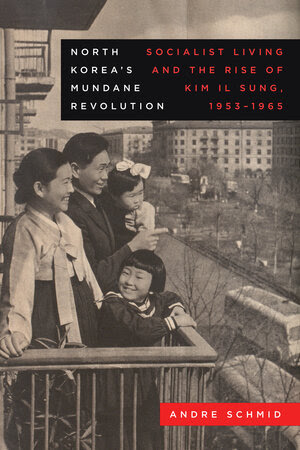
Pg. 99: Andre Schmid's "North Korea’s Mundane Revolution"

Featured at the Page 99 Test: North Korea’s Mundane Revolution: Socialist Living and the Rise of Kim Il Sung, 1953–1965 by Andre Schmid.

About the book, from the publisher:
When the crucial years after the Korean War are remembered today, histories about North Korea largely recount a grand epic of revolution centering on the ascent of Kim Il Sung to absolute power. Often overshadowed in this storyline, however, are the myriad ways the Korean population participated in party-state projects to rebuild their lives and country after the devastation of the war. North Korea's Mundane Revolution traces the origins of the country's long-term durability in the questions that Korean women and men raised about the modern individual, housing, family life, and consumption. Using a wide range of overlooked sources, Andre Schmid examines the formation of a gendered socialist lifestyle in North Korea by focusing on the localized processes of socioeconomic and cultural change. This style of "New Living" replaced radical definitions of gender and class revolution with the politics of individual self-reform and cultural elevation, leading to a depoliticization of the country's political culture in the very years that Kim Il Sung rose to power.
Learn more about North Korea’s Mundane Revolution at the University of California Press website.

The Page 99 Test: North Korea’s Mundane Revolution.

--Marshal Zeringue