Friday, November 18, 2022

Pg. 99: Stephen G. Rabe's "The Lost Paratroopers of Normandy"

Featured at the Page 99 Test: The Lost Paratroopers of Normandy: A Story of Resistance, Courage, and Solidarity in a French Village by Stephen G. Rabe.

About the book, from the publisher:
The fateful days and weeks surrounding 6 June 1944 have been extensively documented in histories of the Second World War, but less attention has been paid to the tremendous impact of these events on the populations nearby. The Lost Paratroopers of Normandy tells the inspiring yet heartbreaking story of ordinary people who did extraordinary things in defense of liberty and freedom. On D-Day, when transport planes dropped paratroopers from the 82nd and 101st Airborne Divisions hopelessly off-target into marshy waters in northwestern France, the 900 villagers of Graignes welcomed them with open arms. These villagers – predominantly women – provided food, gathered intelligence, and navigated the floods to retrieve the paratroopers' equipment at great risk to themselves. When the attack by German forces on 11 June forced the overwhelmed paratroopers to withdraw, many made it to safety thanks to the help and resistance of the villagers. In this moving book, historian Stephen G. Rabe, son of one of the paratroopers, meticulously documents the forgotten lives of those who participated in this integral part of D-Day history.
Learn more about The Lost Paratroopers of Normandy at the Cambridge University Press website and contact the author at his faculty email address.

The Page 99 Test: The Lost Paratroopers of Normandy.

--Marshal Zeringue

Thursday, November 17, 2022

What is Soraya M. Lane reading?

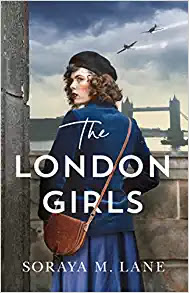
Featured at Writers Read: Soraya M. Lane, author of The London Girls.

Her entry begins:
I’m reading The Seven Husbands of Evelyn Hugo. Or more accurately, I’ve just finished reading it!

I honestly don’t know where to start with this book. It’s so uniquely different to anything I’ve ever read before, and I was about 10 pages in when I realised that it was going to be a very special read. I loved the way the story unfolded and how cleverly it was told, weaving the past with the present, and...[read on]
About The London Girls, from the publisher:
From the bestselling author of The Last Correspondent comes a remarkable story of three young women who defy the bombs to do their bit for Britain. Will they survive the dark streets of London to see the Allies win the war?

London, 1941.
The Blitz. When a Royal Navy memo arrives at head office, requesting female recruits to sign up as motorcycle dispatch riders, delivering highly classified orders across the country, three women jump at the chance to sign up for the most dangerous jobs in London.

Olivia grew up riding motorcycles with her brothers, and with them fighting abroad she feels it is her duty to join up. The thrill of adventure draws Ava, but with more enthusiasm than skill, will she learn to navigate the treacherous London streets safely? Having lost her family during one of the first air attacks, Florence knows how important it is to have help arrive on the scene―fast―and so she steps up, outmanoeuvring the men behind the wheel of an ambulance. When Olivia, Ava and Florence meet for the first time they know they have found something all of them need―family.

As bombs fall, decimating the city they love, these three brave women build a sisterhood amid the rubble, facing down anyone―even their own families―who objects to their service. And while romances bloom and fade, their connection grows ever stronger. But none of them dare consider the terrifying reality that one night Florence’s ambulance may be rescuing someone she loves…
Visit Soraya Lane's website.

My Book, The Movie: The Spitfire Girls.

The Page 69 Test: The Spitfire Girls.

The Page 69 Test: The Secrets We Left Behind.

Q&A with Soraya M. Lane.

My Book, The Movie: Under a Sky of Memories.

The Page 69 Test: Under a Sky of Memories.

Writers Read: Soraya M. Lane.

--Marshal Zeringue

Top ten books about unlikely revolutionaries

Andrea Wulf is an award–winning author of seven acclaimed books, including the Founding Gardeners and The Invention of Nature which were both on the New York Times Best Seller List. She has written for the New York Times, the Atlantic, the LA Times, Wall Street Journal, and the Guardian and many others.

Her latest book is Magnificent Rebels. The First Romantics and the Invention of the Self.

At the Guardian Wulf tagged ten "fiction and non–fiction books" with "'heroes' [who] are all unlikely revolutionaries." One title on the list:
The Underground Railroad by Colson Whitehead

At the heart of Whitehead’s novel is Cora, a slave who flees a Georgia plantation where she was born. She’s hunted, gang–raped and again and again faces capture and the horrors of slavery. The revolutionaries here are the black and white activists who in the early 19th century formed a secret network of safe houses and routes that help enslaved workers escape from plantations in the south to the northern states. In Whitehead’s imaginative and fictional retelling this metaphorical “underground railroad” becomes a literal system of underground tracks and stations. Besides Cora’s story, this harrowing and devastating novel evokes how ordinary people risked their lives to make the world a better place.
Read about another entry on the list.

The Underground Railroad is among Chris Mooney's six intelligent, page-turning, genre-bending classics, Rachel Eve Moulton's top ten literary thrillers, Nathan Englander’s ten desert island books, Greg Mitchell's top ten escapes in literature, and President Obama's summer 2016 reading list.

--Marshal Zeringue

Q&A with Joyce St. Anthony

From my Q&A with Joyce St. Anthony, author of Death on a Deadline (A Homefront News Mystery)::
What non-literary inspirations have influenced your writing?

Death on a Deadline is set during World War II. I’ve always been fascinated by that era, partly due to my mother. She and my dad met on a blind date in 1943 and were married two weeks later, and two weeks after that he was sent overseas. He died when I was two years old but my mother kept him alive by playing her Big Band records—Glenn Miller’s “String of Pearls” was her favorite song. I’ve wanted to write something set in the 1940s for a long time and I finally got my wish. My other non-literary inspiration is...[read on]
Visit Joyce St. Anthony's website.

Q&A with Joyce St. Anthony.

--Marshal Zeringue

Pg. 69: D. M. Rowell's "Never Name the Dead"

Featured at the Page 69 Test: Never Name the Dead: A Novel by D. M. Rowell.

About the book, from the publisher:
Old grudges, tribal traditions, and outside influences collide for a Kiowa woman as forces threaten her family, her tribe, and the land of her ancestors, in this own-voices debut perfect for fans of Winter Counts.

No one called her Mud in Silicon Valley. There, she was Mae, a high-powered professional who had left her Kiowa roots behind a decade ago. But a cryptic voice message from her grandfather, James Sawpole, telling her to come home sounds so wrong that she catches the next plane to Oklahoma. She never expected to be plunged into a web of theft, betrayal, and murder.

Mud discovers a tribe in disarray. Fracking is damaging their ancestral lands, Kiowa families are being forced to sell off their artifacts, and frackers have threatened to kill her grandfather over his water rights. When Mud and her cousin Denny discover her grandfather missing, accused of stealing the valuable Jefferson Peace medal from the tribe museum—and stumble across a body in his work room—Mud has no choice but to search for answers.

Mud sets out into the Wildlife Refuge, determined to clear her grandfather’s name and identify the killer. But Mud has no idea that she’s about to embark on a vision quest that will involve deceit, greed, and a charging buffalo—or that a murderer is on her trail.
Visit D. M. Rowell's website.

My Book, The Movie: Never Name the Dead.

Q&A with D. M. Rowell.

The Page 69 Test: Never Name the Dead.

--Marshal Zeringue

Wednesday, November 16, 2022

Five top SFF books about crashed spaceships

Lavie Tidhar is the World Fantasy Award-winning author of Osama (2011), The Violent Century (2013), the Jerwood Fiction Uncovered Prize-winning A Man Lies Dreaming (2014), and the Campbell Award-winning Central Station (2016), in addition to many other works and several other awards. He works across genres, combining detective and thriller modes with poetry, science fiction and historical and autobiographical material. His work has been compared to that of Philip K. Dick by the Guardian and the Financial Times, and to Kurt Vonnegut’s by Locus.

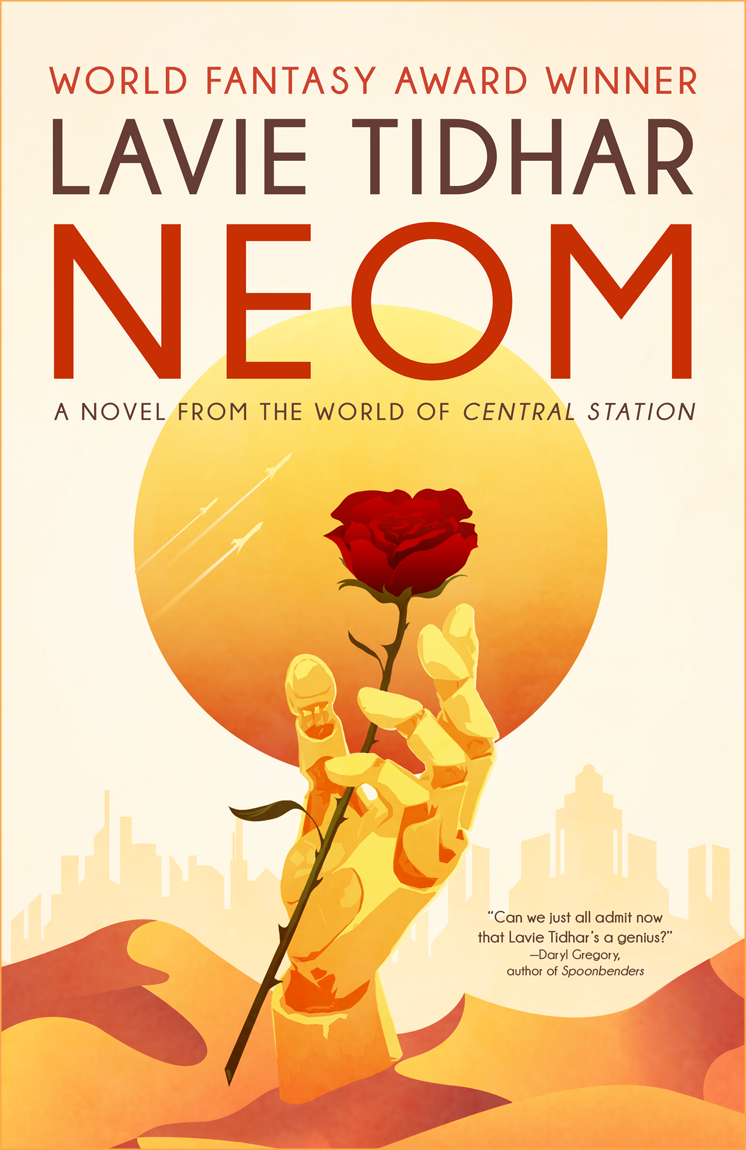
Tidhar's new SF novel is Neom.

At Tor.com he tagged five favorite SFF books about crashed spaceships, including:
The Martian starship in Richard K. Morgan’s Broken Angels

The follow-up novel to Morgan’s explosive debut Altered Carbon sees Takeshi Kovacs hired for a battlefield mission to first open up an alien portal, then take possession of a mysterious miles-long starship filled with winged, dead Martians. Which is all in a day’s work for Kovacs, of course. It’s such a tantalizing promise—will it open the galaxy up for humanity? Will it make life better all around? Not in a Richard Morgan novel it won’t. The recent Netflix adaptation skipped this one, which was a shame–but with anime versions in the works maybe we’ll still get to see it on the screen.
Read about another entry on the list.

--Marshal Zeringue

Pg. 99: Christian Bailey's "German Jews in Love"

Featured at the Page 99 Test: German Jews in Love: A History by Christian Bailey.

About the book, from the publisher:
This book explores the dynamic role of love in German-Jewish lives, from the birth of the German Empire in the 1870s, to the 1970s, a generation after the Shoah. During a remarkably turbulent hundred-year period when German Jews experienced five political regimes, rapid urbanization, transformations in gender relations, and war and genocide, the romantic ideals of falling in love and marrying for love helped German Jews to develop a new sense of self. Appeals to romantic love were also significant in justifying relationships between Jews and non-Jews, even when those unions created conflict within and between communities.

By incorporating novel approaches from the history of emotions and life-cycle history, Christian Bailey moves beyond existing research into the sexual and racial politics of modern Germany and approaches a new frontier in the study of subjectivity and the self. German Jews in Love draws on a rich array of sources, from newspapers and love letters to state and other official records. Calling on this evidence, Bailey shows the ways German Jews' romantic relationships reveal an aspect of acculturation that has been overlooked: how deeply cultural scripts worked their way into emotions; those most intimate and seemingly pre-political aspects of German-Jewish subjectivity.
Learn more about German Jews in Love at the Stanford University Press website.

The Page 99 Test: German Jews in Love.

--Marshal Zeringue

Third reading: D.W. Buffa on "The Europeans"

D.W. Buffa's recent novel is The Privilege, the ninth legal thriller involving the defense attorney Joseph Antonelli. The tenth, Lunatic Carnival, will be published soon. He has also just published Neumann's Last Concert, the fourth novel in a series that attempts to trace the movement of western thought from ancient Athens, in Helen; the end of the Roman Empire, in Julian's Laughter; the Renaissance, in The Autobiography of Niccolo Machiavelli; and, finally,  America in the twentieth century, in Neumann's Last Concert.

Buffa writes a monthly review for the Campaign for the American Reader that we're calling "Third Reading." Buffa explains. "I was reading something and realized that it was probably the third time that I knew it well enough to write something about it. The first is when I read it when I was in college or in my twenties, the second, however many years later, when I wanted to see if it was as good as I remembered, and the third when I knew I was going to have to write about it."

Buffa's "Third Reading" of Henry James's The Europeans begins:
No one remembers John Jay Chapman; scarcely anyone still remembered him in 1938 when Edmund Wilson, the twentieth century’s most important literary critic, reviewed a volume of Chapman’s letters published in 1907. Only Henry James, according to Wilson, “had anything like the same sureness of judgment, the same freedom from current prejudices and sentimentalities” as Chapman, who wrote of the “debasement of our politics and government by unscrupulous business interests,” which is “the whole history of America since the Civil War.”

Everything had changed, and nowhere with more tragic results than among those who were educated in the American university.

“In the seventies, the universities were still turning out admirable professional men, who had had the old classical education, a culture much wider than their professions, and the tradition of political idealism and public conscience which had presided at the founding of the Republic.” Ten years later, “the industrial and commercial development which followed the Civil War had reached a point where the old education was no longer an equipment for life.” Those who “had taken it seriously, were launched on careers of tragic misunderstanding. The rate of failure and insanity and suicide in some of the college ‘classes’ of the eighties shows an appalling demoralization.”

It was the world of business, Big Business, a world in which “seriousness about man and his problems was abrogated by Business entirely in favor of the seriousness of Business about things that were not serious.” A man who had been educated for the old America could either “become the slave of Business at one extreme or drink himself to death at the other, but in any case absorb, perhaps unconsciously, enough of the commercial ideal to neutralize any other with which he might have started out. For one of the most depressing features of the American world of this period was that it hardly knew what was the matter with it.”

Something fundamental had changed. Henry Adams, the great-grandson of one president and the grandson of another, thought to find the cause.

“The world did not double or treble its movement between 1800 and 1900,” he wrote in 1909, “but, measured by any standard known to science - by horse-power, calories, volts mass in any shape - the tension and vibration and volume and so-called progression of society were full a thousand times greater in 1900 than 1800; - the force had doubled ten times over, and the speed, when measured by electrical standards as in telegraphy, approached infinity, and had annihilated both space and time.”

None of this could have happened, this astonishing acceleration in the rate of movement, had there not been an acceptance, a belief, that wealth and its pursuit were more important than anything else. The predatory values of business could become the motive power, the driving force, in the new American Empire only if materialism was no longer thought a sin. That meant, if the question were seriously pursued, that what had happened to America, what had become by the end of the nineteenth century clear evidence of a world unhinged, had been there from the beginning, that America had been unbalanced from the start.

Henry James wrote about the tension between the idealism and the greed of Americans when it first appeared, when the speed of things first began to change the standards and the conditions of American life. The Europeans, published in l878 when James was thirty-five, is...[read on]
About Buffa's recent novel Neumann’s Last Concert, from the publisher:
Neumann’s Last Concert is a story about music and war and the search for what led to the greatest evil in modern history. It is the story of an American boy, Wilfred Malone, who lost his father in the early days of the Second World War and a German refugee, Isaac Neumann, the greatest concert pianist of his age when he lived in Berlin, but who now lives, anonymous and alone, in a single rented room in a small town a few miles from San Francisco.

Wilfred has a genius for the piano, “a keen curiosity not yet corrupted by vanity” and “a memory that forgot nothing essential.” Neumann, alone in his room, is constantly writing, an endless labyrinth of questions and answers, driving him farther and farther back into the past, searching for the causes, searching for the meaning, of what happened in Germany, trying to understand what had led him, a German Jew, to stay in Germany when he could have left but instead continued to perform right up to the night that during his last concert they took his wife away.

Neumann’s Last Concert is a novel about the great catastrophe of the 20th century and the way in which music, great music, preserves both the hope of human decency amidst the carnage of human insanity and the possibility of what human beings might still accomplish.
Visit D.W. Buffa's website.

Third reading: The Great Gatsby

Third reading: Brave New World.

Third reading: Lord Jim.

Third reading: Death in the Afternoon.

Third Reading: Parade's End.

Third Reading: The Idiot.

Third Reading: The Decline and Fall of the Roman Empire.

Third Reading: The Scarlet Letter.

Third Reading: Justine.

Third Reading: Patriotic Gore.

Third reading: Anna Karenina.

Third reading: The Charterhouse of Parma.

Third Reading: Emile.

Third Reading: War and Peace.

Third Reading: The Sorrows of Young Werther.

Third Reading: Bread and Wine.

Third Reading: “The Crisis of the Mind” and A Man Without Qualities.

Third reading: Eugene Onegin.

Third Reading: The Collected Works of Thomas Babington Macaulay.

Third reading: The Europeans.

--Marshal Zeringue

Tuesday, November 15, 2022

Eight great thrillers with effective twists

Caleb Roehrig is a former actor and television producer who cannot seem to live in one place. Currently dividing his time between Chicago and Helsinki, he is an expert at writing on planes and recovering from jet lag. His young adult titles include the acclaimed thrillers Last Seen Leaving, Death Prefers Blondes, and The Fell of Dark, as well as The Poison Pen—a tie-in to the CW’s popular Riverdale television series—and the Archie Horror original novel A Werewolf in Riverdale.

Roehrig's latest novel is Blood in the Water.

At CrimeReads he tagged eight favorite thrillers with effective twists, including:
Lock Every Door, by Riley Sager

Jules Larsen has nothing: no family, no job, and no place to live…until she finds an ad for a house-sitter at the Bartholomew, a glamorous apartment high-rise in Manhattan. At first, she believes it’s the answer to all her prayers; but after moving in, she realizes that nothing about her new luxury address is as it seems. Things go bump in the night, people disappear, and disturbing facts—about both the building and its residents—gradually come to light, leaving Jules afraid for her life and unsure who to trust. A Millennial take on Rosemary’s Baby, this book manages the incomparable feat of pulling the tablecloth out from under the tablecloth.
Read about another entry on the list.

--Marshal Zeringue

Pg. 99: Kyle Smith's "Cult of the Dead"

Featured at the Page 99 Test: Cult of the Dead: A Brief History of Christianity by Kyle Smith.

About the book, from the publisher:
A cultural history of how Christianity was born from its martyrs.

Though it promises eternal life, Christianity was forged in death. Christianity is built upon the legacies of the apostles and martyrs who chose to die rather than renounce the name of their lord. In this innovative cultural history, Kyle Smith shows how a devotion to death has shaped Christianity for two thousand years.

For centuries, Christians have cared for their saints, curating their deaths as examples of holiness. Martyrs’ stories, lurid legends of torture, have been told and retold, translated and rewritten. Martyrs’ bones are alive in the world, relics pulsing with wonder. Martyrs’ shrines are still visited by pilgrims, many in search of a miracle. Martyrs have even shaped the Christian conception of time, with each day of the year celebrating the death of a saint. From Roman antiquity to the present, by way of medieval England and the Protestant Reformation, Cult of the Dead tells the fascinating story of how the world’s most widespread religion is steeped in the memory of its martyrs.
Visit Kyle Smith's website.

The Page 99 Test: Constantine and the Captive Christians of Persia.

The Page 99 Test: Cult of the Dead.

--Marshal Zeringue

Pg. 69: Katie Sise's "The Break"

Featured at the Page 69 Test: The Break: A Novel by Katie Sise.

About the book, from the publisher:
Can she trust the people she loves? Can she trust herself? A new mother is pushed to the edge in a provocative thriller by the Amazon Charts bestselling author of Open House.

After the traumatic birth of her daughter at a New York City hospital, Rowan O’Sullivan returns home to her apartment with her perfect newborn, Lila. At her side are her husband, Gabe, and June, a part-time babysitter hired to help Rowan in any way she can.

But in this time of joy, Rowan can’t shake the feeling that something isn’t right. She feels dread. She’s breaking.

Rowan’s growing instability leads her to accuse June of unspeakable things. And when June disappears just days later, Rowan becomes a suspect. The neighbors heard the screaming. But only Rowan knows what really happened. If her mind can be trusted. Since Lila’s birth, her memory has been both unreliable and frightening.

To uncover what happened to June and protect her new baby, Rowan must try to untangle the deep recesses of her mind and face the dark things she’s so desperate to keep buried. When she does, no one is prepared for where the truth leads.
Visit Katie Sise's website.

Writers Read: Katie Sise (September 2018).

The Page 69 Test: The Break.

--Marshal Zeringue

Monday, November 14, 2022

Q&A with D. M. Rowell

From my Q&A with D. M. Rowell, author of Never Name the Dead:
How much work does your title do to take readers into the story?

I don’t think my book’s title, Never Name the Dead gives readers insight into the actual story, but for me it does mark it a Kiowa story. The title comes directly from text in the book. The protagonist, Mud discovers a body, when she tells her cousin Denny about the body, she stops abruptly before naming the man.

““… we will know who killed—.” I stopped before finishing the dead man’s name, remembering, we never name the dead.”

In the Kiowa culture, we do not say the name of the dead in fear of holding the spirit back from moving on. While the title wasn’t my first choice, I have come to like it. I think the title provides a hint of the Native American aspect in my mystery novel.

What's in a name?

I knew from the beginning that...[read on]
Visit D. M. Rowell's website.

My Book, The Movie: Never Name the Dead.

Q&A with D. M. Rowell.

--Marshal Zeringue

Nine books that take aim at the myth of the American hero

Brian O’Hare is a graduate of the U.S. Naval Academy and former U.S. Marine Corps officer. Currently, he’s an award-winning writer and filmmaker living in Los Angeles. His work has appeared in War, Literature and the Arts, Santa Fe Writers Project, and Hobart, and has been nominated for two Pushcart Prizes. He was recently named a Writing Fellow at the Virginia Center for the Creative Arts.

O’Hare's new story collection is Surrender.

At Electric Lit he tagged nine books that serve as guideposts on his quest to learn "why my father raised me to be a Marine. Why, after his profound trauma—the pain, the flashbacks, and finally, the humiliating exit—he deemed I share the same experiences." One title on the list:
Fobbit by David Abrams

In my limited experience, war is more uh-oh than glorious—Marines falling asleep and rolling trucks, shooting one another accidentally (mostly) and blowing themselves up with their own hand grenades; it’s an “industrial accident” on a grand scale. Or, war can be absurd—stealing desert uniforms by the truck-load, so your battalion returns home looking like “warriors,” or getting drunk on a can of warm Coca-Cola and contraband bourbon and then beating the shit outta each other in an abandoned bunker for fun. (And thinking it’s fun.) As portrayed in classics such as Catch-22 or Slaughterhouse-Five or HaÅ¡ek’s The Good Soldier Å vejk, war is inherently violent and absurd—like life itself, only more so. David Abrams captures this reality, too, in his satire about Forward Operating Base (or FOB; one who inhabits a FOB is a “Fobbit”) Triumph in Iraq. It’s a funny book about an unfunny subject. Dark humor weaves through the story of the good soldiers bravely manning the desks of freedom, like toxic smoke from a burn pit. Because not all war stories are about combat and brave deeds. Sometimes, the most dangerous mission is daring to be first in line for Friday night all-you-can-eat seafood. You just don’t get a medal for it.
Read about another entry on the list.

Fobbit is among Derek Miller's top ten books about the Iraq war, Jenny Shank's five unforgettable fictional characters with dirty jobs, Jesse Goolsby's top fifteen books about the wars in Iraq and Afghanistan, and Joel Cunningham's seven sharpest modern satires.

The Page 69 Test: Fobbit.

--Marshal Zeringue

Pg. 99: Simon P. James's "How Nature Matters"

Featured at the Page 99 Test: How Nature Matters: Culture, Identity, and Environmental Value by Simon P. James.

About the book, from the publisher:
How Nature Matters presents an original theory of nature's value based on part—whole relations. James argues that when natural things have cultural value, they do not always have it as means to valuable ends. In many cases, they have value as parts of valuable wholes — as parts of traditions, for instance, or cultural identities.

James develops his theory by investigating twelve real-world cases, ranging from the veneration of sacred trees to the hunting of dugongs. He also analyses some key policy-related debates and explores various fundamental issues in environmental philosophy, including the question of whether anything on earth qualifies as natural.

This accessible, engagingly written book will be essential reading for all those who wish to understand the moral and metaphysical dimensions of environmental issues.
Learn more about How Nature Matters at the Oxford University Press website.

The Page 99 Test: How Nature Matters.

--Marshal Zeringue

Sunday, November 13, 2022

Five of the best historical novels to remind you how strange the past really was

Born in London, Emily Mitchell moved to the United States as a teenager. She has since lived in Vermont, Osaka, London, New York, San Francisco,West Virginia, Ohio, and Washington DC.

She holds a B.A. from Middlebury College in Vermont. She worked at an editor at Index on Censorship magazine in London and at About.com in New York before getting her M. F. A. at Brooklyn College.

Mitchell is the author of a novel, The Last Summer of the World (2007), an imaginative account of art-photographer Edward Steichen’s work in aerial reconnaissance during World War One, which was a finalist for the 2008 New York Public Library Young Lions Prize and a best-book-of-the-year in the Madison Capital Times, the Austin American-Statesman, and the Providence Journal. She is also the author of a collection of short stories, Viral (2015). Her short fiction has appeared in Harper’s, Ploughshares, New England Review, TriQuarterly, and Alaska Quarterly Review, among other magazines. Her book reviews have appeared in the New York Times and the New Statesman. She has received fellowships from the Sewanee Writers Conference, the Breadloaf Writers Conference, Virginia Center for Creative Arts and the Ucross Foundation. She lives near Washington, DC and teaches writing at the University of Maryland.

At Shepherd Mitchell tagged five of the best historical novels to remind you how strange the past really was, including:
Wolf Hall by Hilary Mantel

From its first sentence, Mantel’s novel grabs you and plunges you deep into the world of 16th-century England in all its astounding cruelty and visceral complexity. It doesn’t let go until, really, the last sentence of the third book in
her Tudor trilogy, more than a thousand pages later. Part of the brilliance of this novel is Mantel’s choice of Thomas Cromwell as her protagonist. Cast as the villain in the standard account of Henry VIII’s tumultuous reign, the blacksmith’s son who became a king’s confidante is shown here to be a man before his time: committed to his beliefs but utterly pragmatic, ambitious, shrewd, loyal, far more interested in talent than heredity; in other words, modern, our ancestor, for better or for worse. Mantel’s gimlet-eyed view and razor wit make every page a total pleasure, even those dealing with some of the very darkest aspects of this time and place.
Read about another entry on the list.

Wolf Hall made Jody Hadlock's list of nine historical novels featuring real people as main characters, Benjamin Myers's top ten list of mentors in fiction, Jessie Burton's list of eleven of the best books about/with cats, Pete Buttigieg’s ten favorite books list, Ruby Bentall's six best books list, Rula Lenska's six favorite books list, Deborah Cadbury's top ten list of books about royal families, Peter Stanford's top ten list of Protestants in fiction, Melissa Harrsion's ten top depictions of British rain, the Telegraph's list of the 21 greatest television adaptations of novels, BBC Culture's list of the 21st century’s twelve greatest novels, Ester Bloom's ten list of books for fans of the television series House of Cards, Rachel Cantor's list of the ten worst jobs in books, Kathryn Williams's reading list on pride, the Barnes & Noble Review's list of books on baby-watching in Great Britain, Julie Buntin's top ten list of literary kids with deadbeat and/or absent dads, Hermione Norris's 6 best books list, John Mullan's list of ten of the best cardinals in literature, the Barnes & Noble Review's list of five books on dangerous minds and Lev Grossman's list of the top ten fiction books of 2009, and is one of Geraldine Brooks's favorite works of historical fiction; Matt Beynon Rees called it "[s]imply the best historical novel for many, many years."

--Marshal Zeringue

Pg. 69: Alysa Wishingrad's "The Verdigris Pawn"

Featured at the Page 69 Test: The Verdigris Pawn by Alysa Wishingrad.

About the book, from the publisher:
A boy who underestimates his power . . .

A girl with a gift long thought lost . . .

A Land ready for revolution . . .


The heir to the Land should be strong. Fierce. Ruthless. At least, that’s what Beau’s father has been telling him his whole life, since Beau is the exact opposite of what the heir should be. With little control over his future, Beau is kept locked away, just another pawn in his father’s quest for ultimate power.

That is, until Beau meets a girl who shows him the secrets his father has kept hidden. For the first time, Beau begins to question everything he’s ever been told and sets off in search of a rebel who might hold the key to setting things right.

Teaming up with a fiery runaway boy, their mission quickly turns into something far greater as sinister forces long lurking in the shadows prepare to make their final move—no matter what the cost. But it just might be Beau who wields the power he seeks . . . if he can go from pawn to player before the Land tears itself apart.
Visit Alysa Wishingrad's website.

Coffee with a Canine: Alysa Wishingrad & Cleo and Lucy.

The Page 69 Test: The Verdigris Pawn.

--Marshal Zeringue

Coffee with a canine: Barry Wilker & Sam

Featured at Coffee with a Canine: Barry Wilker & Sam.

The author, on how he and Sam were united:
How were you and Sam united?

We were united via kismet. We are a dog family. Our previous two PBGV’s (Petit Brussels Griffon Vendeens) died 2 years apart. We were waiting for the breeder to let us pick one from a new litter that was 6 months in the future. We became pretty morose. We lost our last PBGV in November of 2021. During the depths of depression, a neighbor became worried about us and came across Sam at 7 months old. Sam was up for adoption due to a divorce situation. We were interviewed here at our home and loved him immediately. He had been professionally trained so there was very little for us to do other than love him and get him used to having parents 24/7. It was...[read on]
About Wilker's new novel, The Lapone Sisters:
In the summer of 1976, three exceptionally different sisters begin walking their individual paths. Schmellda, the eldest daughter, launches into her personal tale of family and self-discovery. Setting out on her own for the first
time in her life, she remains a frumpy self-appointed mother hen to her younger sisters.

Sorina is her stunning and stuttering middle sibling, venturing out slowly in search of her dreams. The youngest, Esmerelda, is an outspoken, non-filtered, sharp-tongued fireball ready to fly from the nest. Their parents have provided a safely nurtured life for the three. It is in this happy environment that an unimaginable spiral of events begins that will change all their lives forever.

The girls compete, take road trips, and go to camp. They get makeovers, follow their hearts, and fall in love. Over the months, the sisters cross paths and wits with each other and encounter a menagerie of misfits, loners, losers, and dreamers, marking an adventure like no other. Their wry humor, hopes, and fledging philosophies take them, and you, to places never imagined.
Visit Barry Wilker's website.

Coffee with a Canine: Barry Wilker & Sam.

--Marshal Zeringue

Saturday, November 12, 2022

Eleven books about outsiders, weirdos, and underdogs

Sofija Stefanovic is a Serbian-Australian writer and storyteller based in Manhattan. She is the author of the memoir, Miss Ex-Yugoslavia. She hosts the popular literary salon, Women of Letters New York, and This Alien Nation — a monthly celebration of immigration. She’s a regular storyteller with The Moth, and her writing has appeared in The New York Times, Guardian.com, and Elle.com, among others.

At Electric Lit she tagged eleven books "featuring a broad range of outsiders that have captured my imagination over the years," including:
The Invention of Everything Else by Samantha Hunt

As a Serb, I grew up considering inventor Nikola Tesla our country’s greatest hero. An eccentric man, Tesla was under-appreciated despite inventing alternating current, radio, wireless communication, and remote control and he died a penniless outsider. I was delighted to find this strange and magical novel set in 1943 New York during the later years of Tesla’s life. This work of fiction reimagines the elderly inventor living in a hotel room and spending his days walking to Bryant Park to chat with pigeons. During a blackout in the hotel, the chambermaid Louisa discovers Tesla stealing electricity and a friendship is born.
Read about another entry on the list.

The Invention of Everything Else is among Rick Moody's six favorite books that take place in hotels.

The Page 99 Test: The Invention of Everything Else.

--Marshal Zeringue

Q&A with Emily J. Edwards

From my Q&A with Emily J. Edwards, author of Viviana Valentine Gets Her Man:
How much work does your title do to take readers into the story?

I think my favorite part about the titles of my first two books, but Viviana Valentine Gets Her Man in specific, is that they’re present-tense action titles. The title of the first book is also a bit of a spoiler, but the key essence of a mystery novel is that the mystery will be solved, so it’s not that spoiler-y. Viviana Valentine Gets Her Man is a given– but the core of any mystery novel is asking “How?” And even though there is absolutely no reason why it does this, it feels extremely old fashioned and of-the-time. I don’t think anyone is going to pick up this book and expect a modernly-set story. Something about the snappiness of the title lets you know that this is an historical mystery.

What's in a name?

If Viviana Valentine Gets Her Man was just called “Girl Friday Mysteries,” I don’t think you’d be as compelled to pick it up. You need to know who Viviana is and how...[read on]
Visit Emily J. Edwards's website.

My Book, The Movie: Viviana Valentine Gets Her Man.

Q&A with Emily J. Edwards.

--Marshal Zeringue

Pg. 99: Charles S. Cockell's "Interplanetary Liberty"

Featured at the Page 99 Test: Interplanetary Liberty: Building Free Societies in the Cosmos by Charles S. Cockell.

About the book, from the publisher:
On the Moon or Mars, where even the oxygen you breathe is made in a manufacturing process controlled by someone else, can you be free?

In Interplanetary Liberty: Building Free Societies in the Cosmos, Charles S. Cockell argues that beyond Earth, space is especially tyranny-prone. Yet rather than consign humanity to a dim future of extraterrestrial despotisms, he suggests that the construction of free societies is possible using uniquely blended and reformulated classical liberal ideas for the space frontier.

Considering politics, science, engineering, art, education, prisons, and other facets of society, this book lays out the general ethos and culture around which settlements might be constructed to secure the establishment and flourishing of freedom in the cosmos.
Follow Charles Cockell on Twitter.

The Page 99 Test: Interplanetary Liberty.

--Marshal Zeringue