Saturday, January 22, 2011

Pg. 69: Thelma Adams' "Playdate"

This weekend's feature at the Page 69 Test: Playdate by Thelma Adams.

About the book, from the publisher:
Inside their picture-perfect homes, the residents of this quiet California suburb are not at all what they seem.

Lance is a former weatherman, now a buff yogi, stay-at-home dad, and manager of his daughter’s Girl Scout troop’s cookie distribution. Belle is his precocious and quick-witted daughter. Darlene is a classic Type A work-a-holic, she has little time or patience for the needs of her husband and daughter.

And just down the street are Alec and Wren. Alec, a womanizing businessman, is also the financial backer—and sometimes more—behind Darlene’s burgeoning empire. Meanwhile, Wren is a doting mother and talented yogi, ready to lay down the mat for a quick session with Lance.

As looming Santa Ana winds threaten to turn brushfires into catastrophe; Playdate proves that relationships are complicated and the bonds between families, spouses and children are never quite what they seem. What happens next door, beyond the hedges, in the romper room and executive office—it’s all as combustible as a quick brushfire on a windy day.
Learn more about the book and author at Thelma Adams' website.

Thelma Adams has been Us Weekly’s film critic since 2000; after six years reviewing at the New York Post. She has written for Marie Claire, the New York Times, Cosmopolitan and Self.

The Page 69 Test: Playdate.

--Marshal Zeringue

Friday, January 21, 2011

Pg. 99: Scott Radnitz's "Weapons of the Wealthy"

The current feature at the Page 99 Test: Weapons of the Wealthy: Predatory Regimes and Elite-Led Protests in Central Asia by Scott Radnitz.

About the book, from the publisher:
Mass mobilization is among the most dramatic and inspiring forces for political change. When ordinary citizens take to the streets in large numbers, they can undermine and even topple undemocratic governments, as the recent wave of peaceful uprisings in several postcommunist states has shown. However, investigation into how protests are organized can sometimes reveal that the origins and purpose of "people power" are not as they appear on the surface. In particular, protest can be used as an instrument of elite actors to advance their own interests rather than those of the masses.

Weapons of the Wealthy focuses on the region of post-Soviet Central Asia to investigate the causes of elite-led protest. In nondemocratic states, economic and political opportunities can give rise to elites who are independent of the regime, yet vulnerable to expropriation and harassment from above. In conditions of political uncertainty, elites have an incentive to cultivate support in local communities, which elites can then wield as a "weapon" against a predatory regime. Scott Radnitz builds on his in-depth fieldwork and analysis of the spatial distribution of protests to demonstrate how Kyrgyzstan's post-independence development laid the groundwork for elite-led mobilization, whereas Uzbekistan's did not. Elites often have the wherewithal and the motivation to trigger protests, as is borne out by Radnitz's more than one hundred interviews with those who participated in, observed, or avoided protests.

Even Kyrgyzstan's 2005 "Tulip Revolution," which brought about the first peaceful change of power in Central Asia since independence, should be understood as a strategic action of elites rather than as an expression of the popular will. This interpretation helps account for the undemocratic nature of the successor government and the 2010 uprising that toppled it. It also serves as a warning for scholars to look critically at bottom-up political change.
Learn more about Weapons of the Wealthy at the Cornell University Press website.

Scott Radnitz is Assistant Professor in the Henry M. Jackson School of International Studies at the University of Washington.

The Page 99 Test: Weapons of the Wealthy.

--Marshal Zeringue

Coffee with a canine: Leona Wisoker & Leo and Shadow

This weekend's featured trio at Coffee with a Canine: Leona Wisoker & Leo and Shadow.

The author, on how the dogs joined her household:
Both are shelter rescues. Leo came from a no-kill shelter in Hampton called Animal Aid; he had been brought there as a very young puppy. He was adopted out once, and the couple returned him because he was "too rambunctious"--which is stupid, because of course a large-breed puppy is going to be destructively obnoxious for the first two years of his life. He was about a year and a half old when I found him, and he adopted me more than anything else. He was so thoroughly wired and excitable when I adopted him, and he is such a big dog, that the shelter was a little concerned whether I (at 5'1") could handle him; but the first thing he did when he got to his new home was to climb on the couch and go to sleep. And once we sorted out what food he did best on, about eighty percent of the wildness just disappeared. Shadow was adopted from the SPCA as a very young puppy. We picked him out around Christmas, and the shelter staff wouldn't let us take him home until after the holiday; they didn't want "puppy under the tree" syndrome, which I can understand. So we took a towel, laid it in Leo's bed, brought it with us every day to go cuddle the puppy in, then put it back in Leo's bed. So they knew each other before they ever met, and Shadow's name has proven very apt: he is, literally, "Leo's Shadow". He...[read on]
Leona Wisoker's short stories have appeared in Futures: Fire to Fly Magazine, Anotherealm.com, Alienskin.com, and more. She is a regular reviewer for Green Man Review and its spinoff, The Sleeping Hedgehog.

Her latest novel is Secrets of the Sands.

Read an excerpt from Secrets of the Sands, and learn more about the book and author at Leona Wisoker's website and blog.

The Page 69 Test: Secrets of the Sands.

Read--Coffee with a Canine: Leona Wisoker & Leo and Shadow.

--Marshal Zeringue

Five books that explain the myths & facts about China

Jeffrey N. Wasserstrom is a Professor of History at the University of California, Irvine, and a co-founder of The China Beat blog. His books include Global Shanghai, China's Brave New World, and Twentieth-Century China.

His latest book is China in the 21st Century: What Everyone Needs to Know.

For The Daily Beast, he came up with five essential books that will explain the myths and facts about China, including:
Warren I. Cohen’s America’s Response to China: A History of Sino-American Relations.

A venerable work whose first edition was published right before Nixon met Mao in the early 1970s and whose fifth edition appeared last year, with an update incorporating the first stages of Obama’s presidency. Its author is a leading diplomatic historian.

THE SURPRISE:

There’s been remarkable consistency in recent decades in the way that presidents, of both parties, shift from talking tough about China while running for office to working to maintain smooth relations with Beijing once elected. The fact that there is now congressional and popular pressure on the White House to take a harder line on various issues relating to China is nothing new.

THE NEWSWORTHY TAKEAWAY:

The book’s final chapter (newly written for the current edition), “America in the Age of Chinese Power,” has a very clear-eyed discussion of China’s relationship with North Korea.
Read about another book on the list.

The Page 69 Test: Jeffrey Wasserstrom's China's Brave New World.

The Page 99 Test: Jeffrey Wasserstrom's Global Shanghai, 1850–2010.

The Page 99 Test: China in the 21st Century.

--Marshal Zeringue

What is Whitney Strub reading?

The current featured contributor at Writers Read: Whitney Strub, Perversion for Profit: The Politics of Pornography and the Rise of the New Right.

His entry begins:
Life on the academic calendar, at least in my experience, means lots of reading but fairly little pleasure reading except during breaks and holidays. So I’m trying to make the most of this semester break with some things that’ll be tough to squeeze in once the grind resumes. Next up for me is Charles Willeford’s I Was Looking for a Street, a recently reissued autobiography from my nominee for America’s greatest-ever pulp novelist. I am a sucker for crime fiction in general, and few literary niches satisfy me more than the seedy, lurid 1950s hardboiled fiction that operated as both dimestore spectacle and unblinking critique of Ike’s America. Jim Thompson gets the most attention, but Willeford’s novels are even bleaker, taking perverse delight in exposing the much-vaunted “normalcy” of the decade as a fundamentally psychotic enterprise. His staggeringly grim—but hilarious—Pick Up might be...[read on]
Among the early praise for Perversion for Profit:
"This study of the politics of pornography in postwar America is marvelous. Paying close attention to both visual and textual sources, Whitney Strub brings them alive for the reader. His genealogy of outrage from comic books to pornography is utterly original. The documentation of the double standard between homosexual and heterosexual pornography is also an exceptionally useful contribution to ongoing gay and lesbian history projects. The book is convincingly and responsibly opinionated and full of life. The chapter on feminism and pornography is a masterpiece. It is a landmark chapter, one of the few historical essays that might achieve that rare accomplishment of actually ending a sterile debate."
—Rick Perlstein, author of Nixonland: The Rise of a President and the Fracturing of America and Before the Storm: Barry Goldwater and the Unmaking of the American Consensus

"This is a very impressive book. It is extraordinarily comprehensive, offering excellent discussions of both national political debates and outcomes and local manifestations. Ranging from Los Angeles and Memphis to La Crosse, Wisconsin, and numerous small towns, Whitney Strub has done an admirable job of situating his analysis in the local arenas where obscenity and pornography battles frequently take place. It fills an important gap in the literature and will make an original and significant contribution to the histories of pornography, obscenity, sexuality, postwar politics, and postwar culture."
—Andrea Friedman, Washington University in St. Louis, author of Prurient Interests: Gender, Democracy, and Obscenity in New York City, 1909-1945
Read more about Perversion for Profit at the publisher's website.

Writers Read: Whitney Strub.

--Marshal Zeringue

Thursday, January 20, 2011

Pg. 69: Caroline Leavitt's "Pictures of You"

The current feature at the Page 69 Test: Pictures of You by Caroline Leavitt.

About the book, from the publisher:
Two women running away from their marriages collide on a foggy highway, killing one of them. The survivor, Isabelle, is left to pick up the pieces, not only of her own life, but of the lives of the devastated husband and fragile son that the other woman, April, has left behind. Together, they try to solve the mystery of where April was running to, and why. As these three lives intersect, the book asks, How well do we really know those we love—and how do we forgive the unforgivable?
Learn more about the book and author at Caroline Leavitt's website and blog.

Caroline Leavitt's novels include: Girls In Trouble, Coming Back To Me, Living Other Lives, Into Thin Air, Family, Jealousies, Lifelines and Meeting Rozzy Halfway. Various titles were optioned for film, translated into different languages, and condensed in magazines.

The Page 69 Test: Pictures of You.

--Marshal Zeringue

Julie Christie's 7 favorite books

Julie Christie, the British movie legend whom Al Pacino called "the most poetic of all actresses," was born in Chukua, Assam, India.

She has appeared in over 40 films, including Away from Her, Finding Neverland, Harry Potter and the Prisoner of Azkaban, Afterglow, and Doctor Zhivago.

The producers of the "James Bond" series considered her for the role that subsequently went to Ursula Andress in Dr. No (1962), but dropped the idea because she was not busty enough.

She named her seven favorite books for The Week magazine. Two novels on her list:
Blindness and Seeing by Jose Saramago

My favorite books for some some years now. Stories in allegorical form by the late Portuguese writer about the manner in which western democracies exercise repression aided by the media. They are also galloping tales with wonderfully drawn characters.
Read about two more novels on her list.

--Marshal Zeringue

Pg. 99: Robert Kurzban's "Why Everyone (Else) Is a Hypocrite"

The current feature at the Page 99 Test: Why Everyone (Else) Is a Hypocrite: Evolution and the Modular Mind by Robert Kurzban.

About the book, from the publisher:
We're all hypocrites. Why? Hypocrisy is the natural state of the human mind.

Robert Kurzban shows us that the key to understanding our behavioral inconsistencies lies in understanding the mind's design. The human mind consists of many specialized units designed by the process of evolution by natural selection. While these modules sometimes work together seamlessly, they don't always, resulting in impossibly contradictory beliefs, vacillations between patience and impulsiveness, violations of our supposed moral principles, and overinflated views of ourselves.

This modular, evolutionary psychological view of the mind undermines deeply held intuitions about ourselves, as well as a range of scientific theories that require a "self" with consistent beliefs and preferences. Modularity suggests that there is no "I." Instead, each of us is a contentious "we"--a collection of discrete but interacting systems whose constant conflicts shape our interactions with one another and our experience of the world.

In clear language, full of wit and rich in examples, Kurzban explains the roots and implications of our inconsistent minds, and why it is perfectly natural to believe that everyone else is a hypocrite.
Learn more about the book and author at the official website for Why Everyone (Else) Is a Hypocrite.

The Page 99 Test: Why Everyone (Else) Is a Hypocrite.

--Marshal Zeringue

Wednesday, January 19, 2011

Malena Lott's "Fixer Upper," the movie

Now showing at My Book, The Movie: Fixer Upper by Malena Lott.

The entry begins:
Being married to a film critic, I get to watch a lot of movies, including small indies that don't come to the big screen or don't quite make it to Oklahoma. It makes the exercise of picking one actor per character challenging, but after some wine and thought, here's my just-right picks:

Jennifer Connelly would make an incredible MACY THOMPSON BAXTER, the protagonist in my humorous third novel, Fixer Upper, who leaves the posh life for the pastures when her husband, U.S. Senate hopeful Trevor Baxter, misses her surprise birthday party to work on his campaign instead. The dashing, debonair Trevor would be none other than cutie-patootie Greg Kinnear, who really does handsome jackass like no one else.

Back at Dust Bowl Vineyard and Winery in Wakefield, Oklahoma, we have an amazing group of women Macy can turn to as she starts renovating her life with her hot pink toolbelt, one villian and two guys who are very happy to see Macy back home.

Vintage-wearing straight-talker and baker TIFFANY (Macy's best friend): Amanda...[read on]
Visit Malena Lott's website and blog.

Malena Lott is an award-winning writer and the author of three novels, including Dating da Vinci.  

Fixer Upper is available in the Kindle store and will soon be available at other e-retailers.

The Page 69 Test: Dating da Vinci.

My Book, The Movie: Dating da Vinci.

Writers Read: Malena Lott.

My Book, The Movie: Fixer Upper.

--Marshal Zeringue

Top 10 dead bodies in literature

Jon McGregor is the author of the critically acclaimed If Nobody Speaks of Remarkable Things and So Many Ways to Begin. He is the winner of the Betty Trask Prize and the Somerset Maugham Award, and has been twice longlisted for the Man Booker Prize. He was born in Bermuda in 1976. He grew up in Norfolk and now lives in Nottingham.

His latest novel is Even the Dogs.

For the Guardian, he named his top ten dead bodies in literature--"stories of lost lives that coalesce around a 'central absence.'"

One entry on the list:
Inferno: The Divine Comedy by Dante Aligheri

To the modern mind, with its adherence to progress and change, the idea of death as leading to a state of perpetuity is properly terrifying. And there's no better exponent of this terror than Dante, surely, with his strange guided tour through scenes of boiling tar and flayed skins. The doomed souls who profess that, "cut off from hope, we live on desire" represent, for me, the authentically heroic voice of all those who, in impossible circumstances, fight on.
Read about another book on the list.

Inferno appears on John Mullan's list of ten of the best visions of hell in literature and Peter Stanford's list of the ten best devils in film and literature; The Divine Comedy is one of George Weigel's five essential books for understanding Christianity.

--Marshal Zeringue

Coffee with a canine: Caroline Plaisted & Cecil and Sidney

The current featured trio at Coffee with a Canine: Caroline Plaisted & Cecil and Sidney.

The author on how she and the dogs were united:
Ah – I mentioned before that I’ve had Borders for a long time now. My first was George and he was fantastic. When he was about six, he lived for a short while with an English Pointer called Henry. Sadly, Henry died of a heart attack when he was two. So George was back as a singleton for a while and then I heard that his sister had given birth to a litter – that’s when his nephew Percy came to live with us. Uncle George and Percy were great companions but then, after a tragic time during which George was bitten by an adder on the farm where we lived and nearly died, he then slipped a disk and life had to become more sedate for him. We then found he had an inoperable tumour and lost him. It’s that awful experience that only other pet owners can understand. So when Percy was about 14 months old, he was on his own. Percy was gorgeous and so handsome. When I told my breeder about losing George she announced that Percy’s mother had been mated with his father again and that, only the week before we lost George, another litter had been born. So, of course, I had to have Percy’s brother whom we named Arthur. Arthur and Percy were entirely devoted to each other – and to me! They adored each other and shared everything: a bed, a lead with coupled collars, bones (chewing opposite ends of the same one together), toys, adventures, cuddles, racing games, the space in front of the hearth, a love of life. Arthur and Percy never fell out. And then, I can feel a lump in my throat as I write this, Arthur suddenly fell ill with kidney failure. We managed to make his life better with medication and a special diet and I thought, hoped, all was OK for a few months. Then, one beautiful spring day, Arthur and Percy were racing around a field sniffing the scent of some boxing Hares that we’d seen in the field earlier. They had a great time running around being busy for about half an hour, coming back to me now and again to tell me how great it all was. And then Arthur came...[read on]
Caroline Plaisted writes mostly fiction, and mostly for children and teens. She and Cecil and Sidney live in the UK.

About her book 10 Ways to Cope with Boys:
Beth and Anna are finally sixteen,
finally have great hair,
and finally have boyfriends.


But when they take a magazine quiz about relationships, Beth find the questions rather trickier to answer than she expects. Anna seems to be having a brilliant time with her boyfriend, but obviously things aren't going so smoothly for Beth and her boyfriend, Joey. Even a trip to the London Dungeons is complete and utter torture!

It makes Beth wonder.... How much does she actually know about her boyfriend? And is a cute guy really worth all this stress?
Visit Caroline Plaisted's website.

Coffee with a Canine: Caroline Plaisted & Cecil and Sidney.

--Marshal Zeringue

What is Matthew Gallaway reading?

The current featured contributor at Writers Read: Matthew Gallaway, author of The Metropolis Case.

His entry begins:
I just finished (for the second time, because it's a favorite of mine) the first volume of The Man Without Qualities by Robert Musil. Written in the 1930s, the novel takes a somewhat satirical look at Vienna in the years leading up to the first world war, when a committee is assembled under the leadership of striving aristocratic idealist (the wife of a mid-level diplomat) to celebrate the 75th year in power of the Austrian Emperor Franz Joseph. As you might expect from the title, there's a detached, frank quality to the prose and observations that generally makes it feel as much like a philosophical treatise as a literary drama (I mean this in a good way); it's less likely that you will be "swept away" by the unfolding story here and more likely that you will find moments of enlightenment and beauty in Musil's discussion of his characters' psychologies and their relation to the society in which they live, particularly in his understated but often-breathtaking use of simple but poetic metaphor, e.g., "irrationalism...haunts our era like a night bird lost in the dawn." I...[read on]
Among the early praise for The Metropolis Case:
"It’s to the credit of Matthew Gallaway’s enchanting, often funny first novel that it doesn’t require a corresponding degree of obsession from readers, but may leave them similarly transported: the book is so well written — there’s hardly a lazy sentence here — and filled with such memorable lead and supporting players that it quickly absorbs you into its worlds.... The relationship between art and life is a hoary theme, yet Mr. Gallaway breathes new life into it. And at a time when some of the old antagonism between fine arts and popular culture has melted away, this fresh rendering of a familiar motif could just as easily speak to an electronica D.J. or a hip-hopper. It makes you wonder what Mr. Gallaway, who manages to inhabit so many different worlds, real and otherwise, convincingly in fewer than 400 pages, will pull off next."
Scott Timberg, New York Times

"The Metropolis Case is a terrifically engaging and elegantly panoramic novel that is sure to appeal to fans of majestic fiction such as Kostova's The Historian."
—Katharine Weber, author of True Confections and Triangle

“Even for a reader unacquainted with opera, The Metropolis Case enthralls. Theatrical history, training at Julliard, opening night at the Metropolitan—this is an engaging and unusual subject matter. The Metropolis Case is an intriguing debut from a fresh, unique voice.”
Bookpage
Read an excerpt from The Metropolis Case, and learn more about the book and author at Matthew Gallaway's website.

The Page 69 Test: The Metropolis Case.

My Book, The Movie: The Metropolis Case.

Writers Read: Matthew Gallaway.

--Marshal Zeringue

Tuesday, January 18, 2011

Pg. 69: Susan Henderson's "Up From the Blue"

The current feature at the Page 69 Test: Up From the Blue by Susan Henderson.

About the book, from the publisher:
Tillie Harris's life is in disarray—her husband is away on business, the boxes in her new home aren't unpacked, and the telephone isn't even connected yet. Though she's not due for another month, sudden labor pains force Tillie to reach out to her estranged father for help, a choice that means facing the painful memories she's been running from since she was a little girl.

An extraordinary debut from a talented new voice, Up from the Blue untangles the year in Tillie's life that changed everything: 1975, the year her mother disappeared.
Learn more about the book and author at Susan Henderson's website.

Up From the Blue has been selected as a Great Group Reads pick (by the Women’s National Book Association), an outstanding softcover release (by NPR), a Best Bets Pick (by BookReporter), Editor’s Pick (by BookMovement), Editor’s Choice (by BookBrowse), a Prime Reads pick (by HarperCollins New Zealand), and a Top 10 of 2010 (by Robert Gray of Shelf Awareness). It is currently being translated into Dutch and Norwegian. Henderson is the recipient of an Academy of American Poets award, and her work has — twice — been nominated for a Pushcart Prize.

The Page 69 Test: Up From the Blue.

--Marshal Zeringue

Ten of the most ludicrous depictions of evolution in science fiction history

At io9, Alasdair Wilkins came up with a list of the most ludicrous depictions of evolution in science fiction history.

One novel on the list, which is dominated by movies and television shows:
Darwin's Radio by Greg Bear

In fairness to Greg Bear, the premise of Darwin's Radio made a little more sense when he wrote it back in 1999. The book heavily depends on introns, non-coding DNA sequences that are actually the remnants of ancient viruses. These viruses are then activated, supposedly as some sort of evolutionary response to modify humans or just reduce the overcrowding on Earth. These ancient genes create what is essentially a biology-rewriting STD, which males spread to females when they conceive a child. Like I said, this made a little more sense back in 1999, when there was still some thought that non-coding DNA really did hold relics of ancient genes, but now we're pretty much certain that's not what this so-called junk DNA is.

Anyway, the actual pregnancy is then radically unlike anything we now experience, as the first, severely deformed fetus is miscarried after a couple months, leaving behind an egg with fifty-two chromosomes, six more than humans have. The parents themselves begin to physically change in preparation for caring for this entirely new form of human. All of this is bundled up in the notion of the titular "Darwin's radio", which itself is a new form of evolution that allows any species that possesses it - in this case, humans - to rapidly change their genome in response to a crisis, making them better at evolving than other species. This is explained as evolution itself evolving, which just about makes sense in the context of a science fiction novel, but doesn't really make any sense if assessed from a more strictly scientific perspective.
Read about a short story that made the list.

--Marshal Zeringue

Milton T. Burton's "Nights of the Red Moon," the movie

Now showing at My Book, The Movie: Nights of the Red Moon by Milton T. Burton.

The entry begins:
As for playing the lead role, were he twenty years younger Dabney Coleman would be perfect for Bo Handel. I had no actor in mind. I write about the sort of people I know from my own East Texas environment, and...[read on]
Read chapter one of Nights of the Red Moon, and learn more about the novel at the publisher's website.

Milton T. Burton is the author of  two previous crime novels. He has been variously a cattleman, a political consultant, and a college history teacher. Burton lives in Jacksonville, Texas.

Visit Milton T. Burton's blog.

My Book, The Movie: Nights of the Red Moon.

--Marshal Zeringue

Pg. 99: Louis Hyman's "Debtor Nation"

The current feature at the Page 99 Test: Debtor Nation: The History of America in Red Ink by Louis Hyman.

About the book, from the publisher:
Before the twentieth century, personal debt resided on the fringes of the American economy, the province of small-time criminals and struggling merchants. By the end of the century, however, the most profitable corporations and banks in the country lent money to millions of American debtors. How did this happen? The first book to follow the history of personal debt in modern America, Debtor Nation traces the evolution of debt over the course of the twentieth century, following its transformation from fringe to mainstream--thanks to federal policy, financial innovation, and retail competition.

How did banks begin making personal loans to consumers during the Great Depression? Why did the government invent mortgage-backed securities? Why was all consumer credit, not just mortgages, tax deductible until 1986? Who invented the credit card? Examining the intersection of government and business in everyday life, Louis Hyman takes the reader behind the scenes of the institutions that made modern lending possible: the halls of Congress, the boardrooms of multinationals, and the back rooms of loan sharks. America's newfound indebtedness resulted not from a culture in decline, but from changes in the larger structure of American capitalism that were created, in part, by the choices of the powerful--choices that made lending money to facilitate consumption more profitable than lending to invest in expanded production.

From the origins of car financing to the creation of subprime lending, Debtor Nation presents a nuanced history of consumer credit practices in the United States and shows how little loans became big business.
Read an excerpt from the book, and visit the official Debtor Nation website.

Louis Hyman received his PhD in American history in 2007 from Harvard University. His dissertation received the Harold K. Gross Prize for best dissertation in history at Harvard and the Krooss prize for best dissertation in business history nationally. Debtor Nation was revised and based on that dissertation during a fellowship at the American Academy of Arts and Sciences.

The Page 99 Test: Debtor Nation.

--Marshal Zeringue

Monday, January 17, 2011

What is Daniel H. Wilson reading?

The current featured contributor at Writers Read: Daniel H. Wilson, author of A Boy and His Bot.

His entry begins:
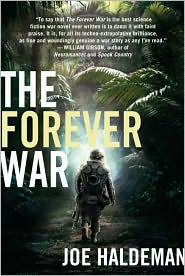
I'm reading three books right now. First, The Forever War by Joe Haldeman. This is widely regarded as a sci-fi classic, yet it slipped past my radar screen for all these years. Reading it now, I can see why so many people love it. Reading this book is like eating candy, and I've found myself slowing down as I realize that I'm nearing the finish. Next, I'm reading an advanced reading copy of Ready Player One by Ernie Cline. It's a crazy adventure into a future that is obsessed with the pop culture of the 1980s -- and I mean...[read on]
Among the early praise for A Boy and His Bot:
"Wilson brings the expertise of his adult titles How to Survive a Robot Uprising and How to Build a Robot Army (and a Ph.D. in robotics) to his first middle-grade novel, a campy down-the-robot-hole adventure.... With a goofy sense of humor and plenty of action, Wilson presents a coming-of-age journey with shades of Alice in Wonderland and The Wonderful Wizard of Oz."
--Publishers Weekly

"Drawing from his background as a CMU-trained robotics expert, Wilson creates a world every bit as amazing as Harry Potter’s. Actually, even more amazing, as it doesn’t depend on magic; it all could, conceivably, come true, and therein lies the real magic."
--Michael Belfiore
Daniel H. Wilson is an engineer who earned his PhD in robotics at Carnegie Mellon University. His books include Bro-Jitsu, How to Survive a Robot Uprising, Where's My Jetpack? and How to Build a Robot Army.

Visit Daniel Wilson's blog.

My Book, The Movie: A Boy and His Bot.

Writers Read: Daniel H. Wilson.

--Marshal Zeringue

Ten of the best beards in literature

At the Guardian, John Mullan named a list of ten of the best beards in literature.

One entry on the list:
Gandalf

Wizards have beards, so of course the virtuous magus of Tolkien's tales of Middle Earth has a striking growth of facial hair. According to The Hobbit, it hangs down beneath his waist. In The Lord of the Rings, Gandalf returns from the dead all dressed in white and with a "sweeping silver beard" to fight the bad – and equally beardy – wizard Saruman.
Read about another beard on Mullan's list.

The Lord of the Rings also made Charlie Jane Anders and Michael Ann Dobbs' list of ten classic SF books that were originally considered failures, Lev Grossman's list of the six greatest fantasy books of all time, and appears on John Mullan's lists of ten of the best towers in literature, ten of the best volcanoes in literature, ten of the best chases in literature, and ten of the best monsters in literature. It is one of Salman Rushdie's five best fantasy novels for all ages. It is a book that made a difference to Pat Conroy.

--Marshal Zeringue

Pg. 69: Leona Wisoker's "Secrets of the Sands"

The current feature at the Page 69 Test: Secrets of the Sands by Leona Wisoker.

About the book, from the publisher:
A thief chooses the wrong victim.
A desert lord abandons his lands.
A young woman accepts a stewardship.
They all find their destinies on the sands.

Idisio cuts the wrong purse and finds himself bound to serve a desert lord who just gave up his wealth, his lands, and his name to wander. His new master is the lone survivor of a massacred family and might be insane, but serving him is better than life on the streets.

Lady Alyea accepts the king's mission to assume stewardship of the desert lord's abandoned fortress. But the southern desert is a harsh world of violence, suspicion, and politically tangled family clans who worship the old gods. All her courtly manners are useless as she struggles to gain status in a deadly race for a prize she doesn't fully understand.

Out on the sands, the harsh glare of the sun reveals more about the world--and themselves--than they ever wanted to know.
Read an excerpt from Secrets of the Sands, and learn more about the book and author at Leona Wisoker's website and blog.

The Page 69 Test: Secrets of the Sands.

--Marshal Zeringue
Sunday, January 16, 2011

Pg. 99: John McMillian's "Smoking Typewriters"

The current feature at the Page 99 Test: Smoking Typewriters: The Sixties Underground Press and the Rise of Alternative Media in America by John McMillian.

About the book, from the publisher:
How did the New Left uprising of the 1960s happen? What caused millions of young people-many of them affluent and college educated-to suddenly decide that American society needed to be completely overhauled?

In Smoking Typewriters , historian John McMillian shows that one answer to these questions can be found in the emergence of a dynamic underground press in the 1960s. Following the lead of papers like the Los Angeles Free Press, the East Village Other, and the Berkeley Barb, young people across the country launched hundreds of mimeographed pamphlets and flyers, small press magazines, and underground newspapers. New, cheaper printing technologies democratized the publishing process and by the decade's end the combined circulation of underground papers stretched into the millions. Though not technically illegal, these papers were often genuinely subversive, and many of those who produced and sold them-on street-corners, at poetry readings, gallery openings, and coffeehouses-became targets of harassment from local and federal authorities. With writers who actively participated in the events they described, underground newspapers captured the zeitgeist of the '60s, speaking directly to their readers, and reflecting and magnifying the spirit of cultural and political protest. McMillian pays special attention to the ways underground newspapers fostered a sense of community and played a vital role in shaping the New Left's highly democratic "movement culture."

Deeply researched and eloquently written, Smoking Typewriters captures all the youthful idealism and vibrant tumult of the 1960s as it delivers a brilliant reappraisal of the origins and development of the New Left rebellion.
John McMillian is an assistant professor of history at Georgia State University in Atlanta, Georgia, where he specializes in studying 20th century social movements and the Vietnam War Era.

Visit McMillian's website, and learn more about the book at the Oxford University Press website.

The Page 99 Test: Smoking Typewriters.

--Marshal Zeringue