Thursday, October 21, 2010

Joan Frances Turner's "Dust," the movie

Now showing at My Book, The Movie: Dust by Joan Frances Turner.

The entry begins:
Whenever anyone asks me--as they occasionally do--who my dream cast for Dust might include, my answer is always an immediate, "I honestly have no idea but please, please, please let Rick Baker do the makeup." Having the man responsible for An American Werewolf in London, The Ring, Videodrome, Star Wars, The Howling and dozens of other films--not to mention, of course, the dancing zombies in Michael Jackson's "Thriller"--as my makeup and special effects impresario would be a genuine honor, and at that point they can honestly do whatever they like with the script. (Not that anyone ever consults the writer about such things, anyway.)

That said, imaginary-casting Dust is still great fun, for the simple reason that Hollywood thrives on prettiness and most of our players would have to be willing to get down in the dirt and spectacularly ugly. Assuming, since this is all fantasy, that I can cast without regard to time, place or real-world age, here's a few suggestions:

--Jessie: Our POV protagonist, Jessie is an "everywoman" zombie, an angry teenage girl turned angry young woman trapped in a slowly decaying body and searching, with little success, for a surrogate family like she never had alive. Busy Philipps, who played the tough, needy Kim Kelly on Freaks and Geeks, springs to mind right away, or possibly...[read on]
Read an excerpt from Dust, and learn more about the book and author at Joan Frances Turner's website and blog.

Writers Read: Joan Frances Turner.

The Page 69 Test: Dust.

My Book, The Movie: Dust.

--Marshal Zeringue

Ten classic sci-fi books that were originally considered failures

At io9, Charlie Jane Anders and Michael Ann Dobbs came up with a list of ten classic science fiction books that were originally considered failures.

One novel on the list:
Do Androids Dream of Electric Sheep? by Philip K. Dick

While lots of Dick's books have fallen out of print (only to be re-issued later), his most well known (The Man in the High Castle, A Scanner Darkly, VALIS) have always been in print. Not so with Electric Sheep. Originally published in 1968, Signet published a 75¢ paperback in 1971. The book didn't reappear, until Ballentine published it 11 years later as Blade Runner (which would have put you back $2.75).
Read about another novel on the list.

Do Androids Dream of Electric Sheep? also appears on Robert Collins' top ten list of dystopian novels.

--Marshal Zeringue

What is Paul Grossman reading?

The current featured contributor at Writers Read: Paul Grossman, author of The Sleepwalkers.

His entry begins:
I’m just finishing a very powerful Dutch novel from the Second World War called Comedy in a Minor Key. Although written by a German Jew who spent those years in hiding, it’s told from the point of view of the Dutch couple who keep such a man in their care. The result is most intimate, psychologically raw exploration I’ve ever encountered of what it must have felt like to have a...[read on]
Among the early praise for The Sleepwalkers:
"Simultaneously a work of historical fiction, a medical mystery, a thriller, and a work of crime noir, this debut novel powerfully captures the atmosphere of Berlin on the verge of Nazi takeover, the elegance and cultural brilliance amid the decadence, and the sense of impending doom."
--Library Journal, starred review

"With wonderful stories like these to tell, Paul Grossman is assured a long future. I look forward to his next one.”
--Olen Steinhauer, New York Times bestselling author of The Nearest Exit

“Fresh and riveting. This thriller isn’t only exciting---it's meaningful.”
--David Morrell, New York Times bestselling author of The Shimmer

“What a remarkable debut. The Sleepwalkers weaves together an unusual mystery with a vivid and uneasy setting. Paul Grossman has recreated German on the eve of the Third Reich with extraordinary skill, sensitivity, and narrative flair.”
--David Liss, bestselling author of The Devil's Company

“Richly imagined and sumptuously researched, The Sleepwalkers roars through 1932 Berlin like a Messerschmitt fighter.”
-Gregg Hurwitz, New York Times bestselling author of They’re Watching
Visit Paul Grossman's website.

Writers Read: Paul Grossman.

--Marshal Zeringue

Wednesday, October 20, 2010

Pg. 69: Todd Ritter's "Death Notice"

Today's feature at the Page 69 Test: Death Notice by Todd Ritter.

About the book, from the publisher:
Perry Hollow, Pennsylvania, has never had a murder. At least not as long as Kat Campbell has been police chief. And the first is brutal. George Winnick, a farmer in his sixties, is found in a homemade coffin on the side of the highway with his lips sewn shut and his veins and arteries drained of blood and filled with embalming fluid. Chilling as that is, it becomes even more so when Kat finds that the Perry Hollow Gazette obituary writer, Henry Goll, received a death notice for Winnick before he was killed.

Soon after, the task force from the Pennsylvania Bureau of Investigation shows up and everything takes an irreversible turn for the worse. Nick Donnelly, head of the task force, has been chasing the “Betsy Ross Killer,” so named because he’s handy with a needle and thread, for more than a year. Winnick seems to be his fourth victim. Or is he?

Kat has never handled a murder case before, but she’s not about to sit by while someone terrorizes her sleepy little town or her own son. But will her efforts be enough to stop a killer and bring calm to Perry Hollow.

A portrait of a small town in turmoil, where residents fear for their lives, Todd Ritter’s Death Notice is a gripping debut from a terrific new talent in crime fiction.
Learn more about Death Notice and its author at Todd Ritters' website.

Writers Read: Todd Ritter.

The Page 69 Test: Death Notice.

--Marshal Zeringue

Top ten time travel books

Charles Yu's debut novel is How to Live Safely in a Science Fictional Universe. He received the National Book Foundation’s 5 Under 35 Award for his story collection Third Class Superhero, and he has also received the Sherwood Anderson Fiction Award. His work has been published in the Harvard Review, The Gettysburg Review, Alaska Quarterly Review, Mississippi Review, and Mid-American Review, among other journals.

He named his top ten time travel books for the Guardian. One novel on the list:
The Restaurant at the End of the Universe by Douglas Adams

Who can forget the Future Semiconditionally Modified Subinverted Plagal Past Subjunctive Intentional tense? This book is my own Total Perspective Vortex on writing. Always something to go back to, in order to feel small, and to laugh, and to remember that whatever I think I might do in the future, Mr Adams probably already did it in the past. And did it funnier.
Read about another entry on the list.

Also see Linda Buckley-Archer's top ten time-travelling stories.

--Marshal Zeringue

Pg. 99: Greg Lastowka's "Virtual Justice"

The current feature at the Page 99 Test: Virtual Justice: The New Laws of Online Worlds by Greg Lastowka.

About the book, from the publisher:
Tens of millions of people today are living part of their life in a virtual world. In places like World of Warcraft, Second Life, and Free Realms, people are making friends, building communities, creating art, and making real money. Business is booming on the virtual frontier, as billions of dollars are paid in exchange for pixels on screens. But sometimes things go wrong. Virtual criminals defraud online communities in pursuit of real-world profits. People feel cheated when their avatars lose virtual property to wrongdoers. Increasingly, they turn to legal systems for solutions. But when your avatar has been robbed, what law is there to assist you?

In Virtual Justice, Greg Lastowka illustrates the real legal dilemmas posed by virtual worlds. Presenting the most recent lawsuits and controversies, he explains how governments are responding to the chaos on the cyberspace frontier. After an engaging overview of the history and business models of today's virtual worlds, he explores how laws of property, jurisdiction, crime, and copyright are being adapted to pave the path of virtual law.

Virtual worlds are becoming more important to society with each passing year. This pioneering study will be an invaluable guide to scholars of online communities for years to come.
Learn more about Virtual Justice at the Yale University Press website.

Greg Lastowka is a Professor of Law at Rutgers University. He teaches and researches the laws of intellectual property and new technology.

The Page 99 Test: Virtual Justice.

--Marshal Zeringue

Tuesday, October 19, 2010

Pg. 69: Michael Gregorio's "Unholy Awakening"

The current feature at the Page 69 Test: Unholy Awakening by Michael Gregorio.

About the book, from the publisher:
A woman’s body has been found at the bottom of a well. The death wounds are startling: two small, round punctures to the jugular vein....

Vampire fever is spreading throughout the countryside, and suspicions soon fall on the recently arrived Emma Rimmele. Investigator Hanno Stiffeniis must do everything he can to find the true culprit before the mob’s hysteria reaches its breaking point and turns violent.

Set in a nineteenth-century world where people truly believed in vampires, Unholy Awakening pits rational, scientific detection against unhindered, violent superstition.
Visit Michael Gregorio's website and blog.

Read Michael Gregorio's Q & A with R.N. Morris at The Rap Sheet.

The Page 69 Test: A Visible Darkness.

The Page 69 Test: Unholy Awakening.

--Marshal Zeringue

James Franco's 6 best books

James Franco is an actor, director, screenwriter and artist. His film appearances include Milk, Pineapple Express, the Spider-Man trilogy, Howl, and 127 Hours. His writing has appeared in Esquire, the Wall Street Journal, and McSweeney’s. His new short story collection, Palo Alto, has just been released by Scribner.

Franco told The Daily Beast about his six favorite books. One title on his list:
Ham on Rye – Charles Bukowski

He is funny and he’s honest. He is ugly and he knows it. He is sensitive. He is offensive and he doesn’t care. He has been beaten down so often physically and critically he can take anything. This book is one of the funniest and most moving childhood novels I have read.
Read about another novel on Franco's list.

--Marshal Zeringue

What is Mary Anna Evans reading?

The current featured contributor at Writers Read: Mary Anna Evans, author of the award-winning Faye Longchamp archaeological mysteries.

Her entry begins:
I'm sure I'm not the first writer to bemoan the fact that, though I write books because I love to read them, I find that writing my novels cuts deeply into time I might spend reading. And when I do read, it's frequently nonfiction that's related to the topic of my work-in-progress.

Since I write mysteries about an archaeologist and I am neither an archaeologist nor a historian, I set aside about a month at the beginning of each new project to bone up on the history and material culture of the area where the book is to be set. I call this activity "reading for a living."

I scour my own library, which includes tomes like The Encyclopedia of Southern Culture and the WPA guides to Florida, Mississippi, and New Orleans. I poke through the public library for material, getting some of the more esoteric stuff by interlibrary loan. (I believe it took four libraries to satisfy my insatiable need for information on tin-glazed medieval Islamic ceramic lustreware. Who would have thought that information would be so hard to get? It wasn't even on the internet. What's up with that?)

Despite its dearth of information on tin-glazed medieval Islamic ceramic lustreware, I crawl all over the internet, following my nose as I look for background material on my topic. At this point in the process, I don't care of the information is scholarly or pop culture schlock or even unsubstantiated rumor. I can sort out the truth later, but schlock and rumor are part of the human condition, so they have their place in fiction. Or so it seems to me.

For my new release, Strangers, I found...[read on]
The Faye Longchamp archaeological mysteries include Artifacts, Relics, Effigies, Findings, Floodgates, and Strangers.

Learn more about the author and her work at Mary Anna Evans' website.

The Page 69 Test: Floodgates.

Writers Read: Mary Anna Evans.

--Marshal Zeringue

Monday, October 18, 2010

Joanne Rendell's "Out of the Shadows," the movie

Now showing at My Book, The Movie: Out of the Shadows by Joanne Rendell.

The entry begins:
When I fantasize about Out of the Shadows coming out on the big screen, I can’t help but think of the 2002 movie Possession (Neil LaBute’s screen adaptation of A.S. Byatt’s novel of the same name). My novel tells the story of Clara Fitzgerald, a woman who thinks she is related to the author of Frankenstein, Mary Shelley. On her journey to learn the truth, Clara uncovers startling secrets about the past and her present. The book is told from alternating points of view between Clara and the young Mary Shelley preparing to write Frankenstein. Like Possession, it weaves a historical story into a very contemporary one and tries to tease out the echoes between past and present – and our possible future too.

Because of the similarities with Possession, I’d love to see Gywneth Paltrow playing Clara just as she played the lead in the LaBute movie. Paltrow has a fascinating and paradoxical quality about her: aloof yet vulnerable; feminine and beautiful but also regal and tough. Clara is a similarly paradoxical woman in Out of the Shadows. She’s an accomplished professor, a beautiful and tender woman. But she’s been...[read on]
Learn more about the book and author at Joanne Rendell's website.

The Page 69 Test: The Professors' Wives' Club.

The Page 99 Test: Crossing Washington Square.

My Book, The Movie: Out of the Shadows.

--Marshal Zeringue

Pg. 69: F. P. Wilson, J. Strand, J. Kilborn, & B. Crouch's "Draculas"

Today's feature at the Page 69 Test: Draculas by F. Paul Wilson, Jeff Strand, Jack Kilborn, and Blake Crouch.

About the novel:
Mortimer Moorecook, retired Wall Street raider, avid collector, is losing his fight against cancer. With weeks to live, a package arrives at the door of his hillside mansion - an artifact he paid millions for...a hominoid skull with elongated teeth, discovered in a farmer's field in the Romanian countryside. With Shanna, his beautiful research assistant looking on, he sinks the skull's razor sharp fangs into his neck, and immediately goes into convulsions.

OPENS THE DOOR TO AN ANCIENT EVIL...

A rural hospital.

A slow night in the ER.

Until Moorecook arrives strapped to a gurney, where he promptly codes and dies.

WHERE DEATH IS JUST THE BEGINNING.
Read an excerpt from Draculas, and visit the official Draculas website.

The Page 69 Test: Draculas.

--Marshal Zeringue

Ten of the best taxis in literature

For the Guardian, John Mullan named ten of the best taxis in literature.

One novel on the list:
Herzog by Saul Bellow

Antonia Fraser's revelations about Saul Bellow telling her how attractive she was in the back of a taxi reminds us of a passage in his own chef d'oeuvre. The affair between Moses Herzog and Ramona, a "mature" pupil in one of his evening classes, begins in the back of a cab. She invites the prof to feel her pulse and, when he reaches for her wrist, puts his hand instead to her breast. "We are not children."
Read about another title on the list.

Herzog also appears on Eli Gottlieb's list of the top 10 literary scenes from the battle of the sexes, John Mullan's list of ten of the best bad lawyers in literature, and Rebecca Goldstein's list of the five best novels of ideas.

--Marshal Zeringue

Pg. 99: John Quiggin's "Zombie Economics"

The current feature at the Page 99 Test: Zombie Economics: How Dead Ideas Still Walk among Us by John Quiggin.

About the book, from the publisher:
In the graveyard of economic ideology, dead ideas still stalk the land.

The recent financial crisis laid bare many of the assumptions behind market liberalism--the theory that market-based solutions are always best, regardless of the problem. For decades, their advocates dominated mainstream economics, and their influence created a system where an unthinking faith in markets led many to view speculative investments as fundamentally safe. The crisis seemed to have killed off these ideas, but they still live on in the minds of many--members of the public, commentators, politicians, economists, and even those charged with cleaning up the mess. In Zombie Economics, John Quiggin explains how these dead ideas still walk among us--and why we must find a way to kill them once and for all if we are to avoid an even bigger financial crisis in the future.

Zombie Economics takes the reader through the origins, consequences, and implosion of a system of ideas whose time has come and gone. These beliefs--that deregulation had conquered the financial cycle, that markets were always the best judge of value, that policies designed to benefit the rich made everyone better off--brought us to the brink of disaster once before, and their persistent hold on many threatens to do so again. Because these ideas will never die unless there is an alternative, Zombie Economics also looks ahead at what could replace market liberalism, arguing that a simple return to traditional Keynesian economics and the politics of the welfare state will not be enough--either to kill dead ideas, or prevent future crises.
Visit John Quiggin's website.

The Page 99 Test: Zombie Economics.

--Marshal Zeringue

Sunday, October 17, 2010

What is Darin Strauss reading?

The current featured contributor at Writers Read: Darin Strauss, author of Half a Life.

Two books mentioned in his entry:
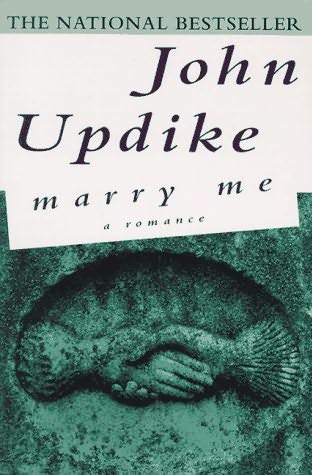
Updike's Marry Me [and] Tom Perotta's Little Children. Two stories of suburban infidelity. Updike is a world-class noticer; the prose is lovely, but the plot sags. Perotta's book is a perfectly-constructed, reader-loving machine. If you could combine the two novels, you'd have the greatest infidelity novel of all time. And that's what a writer should be: a...[read on]
Among the early praise for Half a Life:
Half a Life is an unusually honest, thoughtful and unsettling memoir, which readers and critics are destined to call 'brave'—for it is brave. But the book is more than simply brave, it is a searingly self-disciplined work of literature, and of self-examination. Darin Strauss does not permit himself even one sentence, even one moment, of lazy thinking, or mitigating excuses. He examines with rigorous honesty every moment of the most awful and tragic event of his life. After all that admirable work and all that attentive detail, when he does finally reach a place of cautious hope, the impact is staggering and unforgettable.”
—Elizabeth Gilbert, author of Eat, Pray, Love

“Darin Strauss' Half a Life is the best anything I've read—novel, memoir, story—in a very long time. Incredibly, it's also the most moving. (And inspiring, and challenging; it's a book that asks you to live up to it.) This book has the greatest weight-to-power ratio I've ever seen. Read it, be swallowed, come out changed. If you've faced a death, of course you should read it. But everyone faces a life, and so the rest of us should read it too.”
—David Lipsky, author of Absolutely American and Although Of Course You End Up Becoming Yourself
Darin Strauss is the international bestselling author of the New York Times Notable books Chang and Eng and The Real McCoy, and the national bestseller More Than It Hurts You. Also a screenwriter, he is adapting Chang and Eng with Gary Oldman, for Disney. The recipient of a 2006 Guggenheim Fellowship in fiction writing, he is a Clinical Associate Professor at NYU's creative writing program.

Visit Darin Strauss's website.

The Page 99 Test: Half a Life.

Writers Read: Darin Strauss.

--Marshal Zeringue

Five best books about terror in America from another era

Beverly Gage teaches at Yale University and is the author of The Day Wall Street Exploded.

For the Wall Street Journal, she named a five best list of books about terror in America from another era.

One title on the list:
Living My Life
by Emma Goldman (1931)

Emma Goldman(1869-1940) is best known today as a feminist forebear, an advocate of free love and birth control—just a couple of the controversial stands that made her America's most notorious anarchist a century ago. Written from exile in the 1930s, "Living My Life" traces a remarkably adventurous, contentious life, including her immigration to New York in the 1880s and her deportation back to Russia three decades later. Goldman confesses in the book that she helped her lover and fellow anarchist Alexander Berkman plan an assassination attempt on industrial Henry Clay Frick in 1892. As she became more prominent Goldman turned cagey on the subject of violence, urging Americans to understand the political outrage fueling anarchist terrorism but not quite calling for the commission of violent deeds. Her memoir sometimes reads like an encyclopedia of assassinations, strikes, and protests—many of them lost to contemporary memory. Still, the book reveals Goldman's flair for the dramatic and her grasp of the way her personal and political life resonated with the great revolutionary conflicts of her age.
Read about another book on the list.

Visit Beverly Gage's Yale faculty webpage, and learn more about The Day Wall Street Exploded at the Oxford University Press website.

The Page 99 Test: The Day Wall Street Exploded.

--Marshal Zeringue

Pg. 69: John Lutz's "Mister X"

The current feature at the Page 69 Test: Mister X by John Lutz.

About the book, from the publisher:
Fear Leaves A Mark

He mutilates his victims. Slices their throats. And carves an X into their flesh. Five years ago, he claimed the lives of six women. Then the killings abruptly stopped—no one knows why. Ex-homicide detective Frank Quinn remembers. Which is why he’s shocked to see one of the dead women in his office. Actually, she’s the identical twin of the last victim, and she wants Quinn to find her sister’s murderer. But when the cold case heats up, it attracts the media spotlight—and suddenly the killings start again…
Read an excerpt from Mister X, and learn more about the book and author at John Lutz's website.

The Page 69 Test: Mister X.

--Marshal Zeringue

Saturday, October 16, 2010

Roy Blount Jr.'s 6 favorite Marx Brothers books

Roy Blount Jr. is the author of 22 books, including Alphabet Juice and the new Hail, Hail, Euphoria!, an appreciation of the Marx Brothers film Duck Soup.

For The Week magazine, he named his six favorite Marx Brothers books. One title on the list:
Harpo Speaks! by Harpo Marx and Rowland Barber

Harpo was a madcap on and off the screen, but he was also the sweetest and sanest of the brothers. This memoir, which takes Harpo from street-urchin–hood to stardom and a happy family life, is hard to resist.
Read about another book on the list.

Visit Roy Blount Jr.'s website.

--Marshal Zeringue

Pg. 99: Stephanie Carvin's "Prisoners of America’s Wars"

This weekend's feature at the Page 99 Test: Prisoners of America’s Wars: From the Early Republic to Guantanamo by Stephanie Carvin.

About the book, from the publisher:
Since the days of the Revolutionary War, the way in which America has taken and treated its prisoners reveals a lot about its democratic principles. How other countries have treated American prisoners also says much about the standing of the United States in the world. Throughout U.S. history, prisoners of war have functioned as symbols of outrage and patriotism, as figures of pity, power, triumph, and fealty, ultimately illustrating the human impact of war.

Retelling the story of America through its prisoners and involvement in international law, Stephanie Carvin explores America's inherent difficulty of being both exceptional and secure. While American diplomats negotiate a treaty at The Hague, for example, American soldiers suppress a bloody insurrection, throwing themselves into a conflict in which no rules apply. Carvin's argument is not that the relationship among America, its prisoners, and international law is founded entirely on exceptional culture and carnage. Rather, she identifies a blend of ideology, national imperative, and historical inevitability that has challenged American presidents from Washington to Obama. Her research shows that, despite the claim that America faces a unique and unprecedented battle in its "war on terror," the roots of this conflict lie in the history of those who have been captured in war. By contextualizing these stories within America's larger historical narrative, Carvin achieves a richer understanding of modern warfare.
Learn more about Prisoners of America’s Wars at the publisher's website, and follow Stephanie Carvin on Twitter and at The Duck of Minerva blog.

The Page 99 Test: Prisoners of America’s Wars.

--Marshal Zeringue

Friday, October 15, 2010

Pg. 69: Tracy Kiely's "Murder on the Bride's Side"

The current feature at the Page 69 Test: Murder on the Bride's Side by Tracy Kiely.

About the book, from the publisher:
Drawing from the classic Sense and Sensibility, Tracy Kiely continues the adventures of Elizabeth Parker, the likable Austen-quoting sleuth, in this witty and charming series.

Elizabeth Parker suspected that fulfilling her duties as maid-of-honor for her best friend, Bridget, was going to be murder. And no sooner is the last grain of rice thrown than she finds herself staring into the dead eyes of Bridget’s Aunt Roni, a woman whose death is almost as universally celebrated as Bridget’s nuptials. The horror only increases when Harry, Bridget’s cousin, becomes the chief suspect. The idea is ludicrous to the family, because Harry is one of the kindest, most compassionate people imaginable. To complicate matters, Elizabeth’s boyfriend, Peter, appears to be falling for an old flame, a gorgeous wedding planner. Determined to clear Harry of the crime, reign in Bridget’s impulsive brand of sleuthing, and figure out where Peter’s heart lies, Elizabeth sets her mind to work.

Tracy Kiely has again brilliantly combined the wit and spunk of Austen’s protagonists with a contemporary, traditional mystery. With a vibrant cast of characters, the lush setting of a Virginia estate, and irresistible humor, she delivers on all counts.
Read an excerpt from Murder on the Bride’s Side, and learn more about the book and author at Tracy Kiely's website.

The Page 69 Test: Murder at Longbourn.

The Page 69 Test: Murder on the Bride's Side.

--Marshal Zeringue

Five best books on bibliomania

Allison Hoover Bartlett is the author of The Man Who Loved Books Too Much: The True Story of a Thief, a Detective, and a World of Literary Obsession.

For the Wall Street Journal, she named a five best list of books on bibliomania. One title on the list:
Tolkien's Gown
by Rick Gekoski (2004)

'I first saw them at a friend's, and it was love at first sight." So begins this history of 20 collectible modern first editions by rare-book dealer Rick Gekoski. He was just 24 when he laid eyes on the object of his affection: a set of Charles Dickens works, bound in brown cloth. It was his gateway drug, and before long he had turned to dealing. In this engrossing mix of history, literary criticism and gossip, he describes how James Joyce expressed surprise when reviewers didn't find "Ulysses" funny, and how Graham Greene, while drinking vodka in a hotel room with Gekoski, proclaimed that Henry James was funny. Gekoski is blessed with considerable wit and charm, which no doubt helped him capture plenty of fine books.
Read about another book on the list.

Also see: Rick Gekoski's five favorite books on sports.

--Marshal Zeringue