Sunday, February 09, 2025

Q&A with Brittany Newell

From my Q&A with Brittany Newell, author of Soft Core: A Novel:
How much work does your title do to take readers into the story?

I think the title, Soft Core, sets the tone and creates a slinky pink atmosphere for the reader to sink into. It is of course a double entendre, calling to mind the Vaseline-smeared lenses of softcore pornography and long smooth limbs, but also the notion of a literally soft core, a tummy fully relaxed and vulnerable, sloping over one's waistband. I think the title tells you everything you need to know about our main character, Ruth, someone who tries to be tough and brave but is actually, deep down, quite soft and sweet.

What's in a name?

The name Ruth just came to me; I take names very seriously and feel that they have to be summoned. Ruth is a woman of...[read on]
Visit Brittany Newell's website.

Q&A with Brittany Newell.

--Marshal Zeringue

Pg. 99: Salma Monani's "Indigenous Ecocinema"

Featured at the Page 99 Test: Indigenous Ecocinema: Decolonizing Media Environments by Salma Monani.

About the book, from the publisher:
Introducing the concepts of d-ecocinema and d-ecocinema criticism, Monani expands the purview of ecocinema studies and not only brings attention to a thriving Indigenous cinema archive but also argues for a methodological approach that ushers Indigenous intellectual voices front and center in how we theorize this archive. Its case-study focus on Canada, particularly the work emanating from the imagineNATIVE Film + Media Arts Festival in Toronto--a nationally and internationally recognized hub in Indigenous cinema networks--provides insights into pan-Indigenous and Nation-specific contexts of Indigenous ecocinema.

This absorbing text is the first book-length exploration foregrounding the environmental dimensions of cinema made by Indigenous peoples, including a particlarly fascinating discussion on how Indigenous cinema’s ecological entanglements are a crucial and complementary aspect of its agenda of decolonialism.
Learn more about Indigenous Ecocinema at the West Virginia University Press website.

The Page 99 Test: Indigenous Ecocinema.

--Marshal Zeringue

Seven iconic lone wolf protagonists

Andrew Welsh-Huggins is the Shamus, Derringer, and International Thriller Writers-award-nominated author of the Andy Hayes Private Eye series, featuring a former Ohio State and Cleveland Browns quarterback turned investigator, and editor of Columbus Noir. His stories have appeared in Alfred Hitchcock Mystery Magazine, Ellery Queen Mystery Magazine, Mystery Magazine, the 2022 anthology Paranoia Blues: Crime Fiction Inspired by the Songs of Paul Simon, and other magazines and anthologies.

[ My Book, The Movie: An Empty Grave; Q&A with Andrew Welsh-Huggins; The Page 69 Test: An Empty Grave; Writers Read: Andrew Welsh-Huggins (April 2023); My Book, The Movie: The End of the Road; The Page 69 Test: The End of the Road; Writers Read: Andrew Welsh-Huggins (November 2024); My Book, The Movie: Sick to Death; The Page 69 Test: Sick to Death]

Welsh-Huggins's newest thriller is The Mailman.

At CrimeReads the author tagged "seven lone-wolf protagonists whose adventures helped inspire The Mailman." One entry on the list:
James Byrne’s Desmond Aloysius Limerick

There’s pretty much nothing not to like about Byrne’s enormously entertaining Limerick (Dez to his friends), who first appeared in 2022’s The Gatekeeper. Starting with Dez’ military-grade combat and tech skills and moving onto a murky past that hints at mercenary action but who really knows; a tossed salad of various UK accents (“From England?” “Thereabouts.”); his moral compass; and above all his opinions on beer.

Finding out who attacked a client is important, Dez notes in The Gatekeeper. “Just not important enough to drink a typical American beer. Nothing’s worth that.”

As The Gatekeeper opens, Dez—“five-eight but built like a tank”—is relaxing in his 18th-floor LA hotel room after a night playing bass guitar at a club when he happens to look outside, spots a sniper on the opposite roof, and leaps into action without being sure whose day he’s about to save. You can only pray for the bad actors after this.
Read about another entry on the list.

Q&A with James Byrne.

The Page 69 Test: Deadlock.

My Book, The Movie: Deadlock.

The Page 69 Test: Chain Reaction.

My Book, The Movie: Chain Reaction.

--Marshal Zeringue

Saturday, February 08, 2025

Allison Montclair's "An Excellent Thing in a Woman," the movie

Featured at My Book, The Movie: An Excellent Thing in a Woman by Allison Montclair.

The entry begins:
The Sparks and Bainbridge series features a pair of female protagonists in 1946 London, both in their late twenties. Iris Sparks is short and brunette, Gwen Bainbridge tall and blond. My mental casting of them draws on British films of the period, more centered on their voices than their appearances because they are constantly talking inside my head.

My model for Iris was the young Glynis Johns, most notable for The Court Jester with Danny Kaye, where she was funny and drop-dead gorgeous. She was also possessed of a distinctive throaty voice that I was lucky to hear live some twenty years after that film when she was the first to sing “Send In The Clowns” on Broadway in A Little Night Music.

While I had no contemporary counterparts for Gwen in terms of her above-average height, I did summon up some of the cool British blondes of the times, particularly Madeleine Carroll of The 39 Steps, but with a thought or two thrown in the direction of Deborah Kerr vocally.

Who would I cast today? At the...[read on]
Visit Alan Gordon's website.

The Page 69 Test: An Excellent Thing in a Woman.

Q&A with Allison Montclair.

My Book, The Movie: An Excellent Thing in a Woman.

--Marshal Zeringue

Pg. 69: Megan Chance's "Glamorous Notions"

Featured at the Page 69 Test: Glamorous Notions: A Novel by Megan Chance.

About the book, from the publisher:
A costume designer’s past casts a long shadow over her well-constructed lies in this intriguing story about stolen identities, friendship, and betrayal from the author of A Splendid Ruin and A Dangerous Education.

Hollywood, 1955. As head costume designer for Lux Pictures, Lena Taylor hears startling confessions from the biggest movie stars. She knows how to keep their secrets―after all, none of their scandals can match her own.

Lena was once Elsie Gruner, the daughter of an Ohio dressmaker. Her gift for fashion design helped her win a coveted spot at an art academy in Rome. While in Italy, she became enthralled by the charismatic Julia, who drew her into a shadowy world of jazz clubs, code words, and mysterious deliveries. When one of Julia’s intrigues ended in murder, Elsie found herself in the middle of a bewildering sinister international plot. So she ran.

After fleeing to LA, Elsie became Lena―but she’s never stopped looking over her shoulder. Now, as her engagement to a screenwriter throws her into the spotlight, she’s terrified her façade won’t hold up. Will she figure out the truth about her past before everything falls apart?
Visit Megan Chance's website.

My Book, The Movie: A Splendid Ruin.

The Page 69 Test: A Splendid Ruin.

Q&A with Megan Chance.

The Page 69 Test: A Dangerous Education.

My Book, The Movie: A Dangerous Education.

Writers Read: Megan Chance (February 2023).

Writers Read: Megan Chance (January 2025).

My Book, The Movie: Glamorous Notions.

The Page 69 Test: Glamorous Notions.

--Marshal Zeringue

Pg. 99: Suzanna Krivulskaya's "Disgraced"

Featured at the Page 99 Test: Disgraced: How Sex Scandals Transformed American Protestantism by Suzanna Krivulskaya.

About the book, from the publisher:
Disgraced is a sweeping religious and cultural history of Protestant sex scandals in nineteenth and twentieth century America. Suzanna Krivulskaya investigates the cultural consequences of scandal, what demands the public made of religion in response to revelations of pastoral misdeeds, and how Protestantism itself changed in the process. From the birth of the modern press to the advent of the internet age, the book traces the public downfalls of religious leaders who purported to safeguard the morality of the nation. Along the way, Protestant ministers' private transgressions journeyed from the privilege of silence to the spectacle of sensationalism.

At first hesitant to report on sexual misconduct among the clergy in order to protect the reputation of Protestantism writ large, newspapers embraced the genre of pastoral scandal in the 1870s, when the biggest celebrity minister of the era, Henry Beecher, stood trial for adultery. Scandal reporting escalated in the following decades, creating multiple publicity crises, the likes of which continue to plague churches to this day. As Protestant institutions struggled to protect their reputations, they turned to secrecy and silencing-often foregoing opportunities for engaging in productive reckoning with the problem of sexual hypocrisy among their clergy. Sex scandals, it turns out, have not been mere aberrations in the history of modern Protestantism; they have, in fact, been key to its development.

Disgraced shows how the persistence of stories about misbehaving Protestant ministers allowed the press to compete with the pulpit as a source of moral authority, forced denominations to confront the problems that scandal exposed, and emboldened public scrutiny of religious piety. In its broad scope and compelling storytelling, the book is a timely contribution to the current moment of cultural reckoning with religious hypocrisy, charismatic authority, and sexual abuse.
Visit Suzanna Krivulskaya's website.

The Page 99 Test: Disgraced.

--Marshal Zeringue

Eight of the best mysteries about family secrets

At Book Riot Addison Rizer tagged eight top mysteries about family secrets. One title on the list:
The Family Plot by Megan Collins

Death doesn’t make Dahlia Lighthouse blink twice. She was raised in a true-crime-obsessed family, after all, and her childhood was full of murder documentaries and reenactments as part of her homeschool curriculum. At 16, her twin brother left their home with only a note in his place. Now, 10 years after leaving her morbid home, Dahlia must return for the burial of her father. But inside her father’s assigned grave is the body of her twin brother. What happened a decade ago and who put him there? Dahlia’s unique education might be exactly what she needed to find out.
Read about another entry on the list.

The Family Plot is among Barbara Gayle Austin's six top thrillers where the victim’s body is hidden, Megan Cooley Peterson's eight books exploring real life crimes, Lisa M. Matlin's six creepy novels featuring murder houses, and Steph Mullin's ten top novels inspired by true crimes.

The Page 69 Test: The Family Plot.

--Marshal Zeringue

Friday, February 07, 2025

Q&A with Allison Montclair

From my Q&A with Allison Montclair, author of An Excellent Thing in a Woman:
How much work does your title do to take readers into the story?

“Her voice was ever soft / Gentle and low — an excellent thing in a woman.” King Lear, after the death of Cordelia. This mystery deals with voices — how they sound, who they belong to, and the stilling of them by death. The book begins with a new client coming to The Right Sort Marriage Bureau who has a background in radio and a particular love for voices. Iris mentions the Lear quote, with her own typically acerbic take: “Another man realizing the value of a woman when it’s too late.”

Titles have generally been difficult for me, and I have wrestled with my editors over them many times. This one, however, was accepted right away. It also echoes P.D. James’s An Unsuitable Job For A Woman, one of my favorite mysteries.

What's in a name?

My protagonists are Iris Sparks and Gwendolyn...[read on]
Visit Alan Gordon's website.

The Page 69 Test: An Excellent Thing in a Woman.

Q&A with Allison Montclair.

--Marshal Zeringue

Pg. 99: Sara Lodge's "The Mysterious Case of the Victorian Female Detective"

Featured at the Page 99 Test: The Mysterious Case of the Victorian Female Detective by Sara Lodge.

About the book, from the publisher:
A revelatory history of the women who brought Victorian criminals to account—and how they became a cultural sensation

From Wilkie Collins to the adventures of Sherlock Holmes, the traditional image of the Victorian detective is male. Few people realise that women detectives successfully investigated Victorian Britain, working both with the police and for private agencies, which they sometimes managed themselves.

Sara Lodge recovers these forgotten women’s lives. She also reveals the sensational role played by the fantasy female detective in Victorian melodrama and popular fiction, enthralling a public who relished the spectacle of a cross-dressing, fist-swinging heroine who got the better of love rats, burglars, and murderers alike.

How did the morally ambiguous work of real women detectives, sometimes paid to betray their fellow women, compare with the exploits of their fictional counterparts, who always save the day? Lodge’s book takes us into the murky underworld of Victorian society on both sides of the Atlantic, revealing the female detective as both an unacknowledged labourer and a feminist icon.
Learn more about The Mysterious Case of the Victorian Female Detective at the Yale University Press website.

The Page 99 Test: The Mysterious Case of the Victorian Female Detective.

--Marshal Zeringue

Nine Catholic-haunted books

William Boyle is the author of eight books set in and around the southern Brooklyn neighborhood of Gravesend, where he was born and raised. His most recent novel is Saint of the Narrows Street. His books have been nominated for the Hammett Prize, the John Creasey (New Blood) Dagger Award in the UK, and the Grand Prix de Littérature Policière in France, and they have been included on best-of lists in the Washington Post, CrimeReads, and more. He currently lives in Oxford, Mississippi.

[My Book, The Movie: Gravesend and The Lonely Witness; The Page 69 Test: Gravesend and The Lonely Witness; The Page 69 Test: City of Margins; My Book, The Movie: City of Margins; Q&A with William Boyle; The Page 69 Test: Shoot the Moonlight Out; My Book, The Movie: Shoot the Moonlight Out; Writers Read: William Boyle (December 2021); The Page 69 Test: Saint of the Narrows Street]

At Electric Lit Boyle tagged nine "books that interact with Catholicism ... as a powerful force that hangs over everything in the worlds of these characters and authors." One title on the list:
The Doctor’s Wife by Brian Moore

The main character, Sheila Redden from Belfast, is in Paris when the book opens. She’s visiting with a friend for a few days before heading to the south of France, where her husband, a doctor back in Belfast, will join her on holiday. They’ll stay in the same hotel they honeymooned in years prior. But then Sheila meets a young American named Tom, and things go off course. She falls for Tom quickly, and he follows her south. When her husband’s trip is delayed by work, they have more time together. Sheila is a woman who has lost faith and yet maintains a sense of morality shaped by the church. As the possibility of a new life opens to her, other things crumble. While it was marketed as a steamy book about an affair, it’s much more about Sheila’s doubt and resilience. Late in the book, Sheila talks to a priest at Notre-Dame, and he asks, “Madame, are you a Catholic?” Sheila’s response: “I was. I don’t think I am anymore.” A knowing answer, trembling with both regret and pride.
Read about another entry on the list.

--Marshal Zeringue

Thursday, February 06, 2025

Pg. 69: Jacqueline Faber's "The Department"

Featured at the Page 69 Test: The Department by Jacqueline Faber.

About the book, from the publisher:
Some secrets we keep even from ourselves

Philosophy professor Neil Weber can't think of one good reason to get up in the morning. His wife has left him, his academic research has sputtered, and the prospect of tenure is more remote than ever.

Until Lucia Vanotti disappears.

A college student at Neil’s Southern university, Lucia has a secret of her own—one that haunts her relationships and leads to reckless, destructive behavior. When Neil is drawn into the mystery of her disappearance, he finds new energy, purpose, and relevance. But at what cost? Each clue pulls him deeper into Lucia' s dark past, but also into the hidden lives of his closest friends and colleagues.

What has driven Lucia to risk everything? And why does Neil, a professor who hardly knew her, care so deeply about finding her? From campus classrooms to sex dens to backwoods hideaways, The Department reveals the world through the dual perspectives of Lucia and Neil as they descend into obsession, delusion, and the dangerous terrain of memory—uncovering the traumas that drive them to behave in ways they never could have predicted or imagined.

Perfect for fans of Jessica Knoll, Ruth Ware, and Gillian Flynn.
Visit Jacqueline Faber's website.

My Book, The Movie: The Department.

Q&A with Jacqueline Faber.

The Page 69 Test: The Department.

--Marshal Zeringue

Pg. 99: Derek W. Black's "Dangerous Learning"

Featured at the Page 99 Test: Dangerous Learning: The South's Long War on Black Literacy by Derek W. Black.

About the book, from the publisher:
The enduring legacy of the nineteenth-century struggle for Black literacy in the American South

Few have ever valued literacy as much as the enslaved Black people of the American South. For them, it was more than a means to a better life; it was a gateway to freedom and, in some instances, a tool for inspiring revolt. And few governments tried harder to suppress literacy than did those in the South. Everyone understood that knowledge was power: power to keep a person enslaved in mind and body, power to resist oppression. In the decades before the Civil War, Southern governments drove Black literacy underground, but it was too precious to be entirely stamped out.

This book describes the violent lengths to which southern leaders went to repress Black literacy and the extraordinary courage it took Black people to resist. Derek W. Black shows how, from the beginning of the nineteenth century to the end of Reconstruction, literacy evolved from a subversive gateway to freedom to a public program to extend citizenship and build democratic institutions—and how, once Reconstruction was abandoned, opposition to educating Black children depressed education throughout the South for Black and white students alike. He also reveals the deep imprint those events had on education and how this legacy is resurfacing today.
Visit Derek W. Black's website.

The Page 99 Test: Schoolhouse Burning.

The Page 99 Test: Dangerous Learning.

--Marshal Zeringue

Five gripping thrillers with parents searching for missing children

Katie Garner was born in New York and grew up in New Jersey. She has a degree in Art History from Ramapo College and is certified to teach high school Art. She hoards paperbacks, coffee mugs, and dog toys and can be seen holding at least one of those things most of the time.

Garner lives in a New Jersey river town with her husband, little boy, and shih-poo where she writes books about women and their dark, secret selves. The Night It Ended is her debut novel and The Family Inside is her newest novel.

At CrimeReads Garner tagged five books that turn "that ‘ordinary’ fear—losing your child—into something extraordinary." One title on the list:
Jennifer Hillier, LITTLE SECRETS

My pulse was racing when I read the opening pages of LITTLE SECRETS and it didn’t slow until all was resolved in the end. Hillier opens with a familiar scenario—a mother loses her child in a crowd. But what comes next morphs into a twisty tale exploring the depths of a damaged marriage and the “little secrets” parents keep from one another, often centering around their own child.
Read about another entry on the list.

Little Secrets is among Courtney Rodgers's nine chilling thrillers about marriage, Andromeda Romano-Lax's four top thrillers that explore a mother's worst nightmare, Jessica Hamilton's six top novels about extra marital affairs, and Lisa Regan's ten riveting reads filled with shocking secrets.

--Marshal Zeringue

Wednesday, February 05, 2025

Megan Chance's "Glamorous Notions," the movie

Featured at My Book, The Movie: Glamorous Notions: A Novel by Megan Chance.

The entry begins:
Glamorous Notions takes place in 1950s Rome and Hollywood during the Cold War, where propaganda and communist plots were all the rage in real life and the movies, and my costume designer heroine handles movie star scandals with aplomb even as she hides her own. It was only natural that I would have actors cast in my head as I wrote it. The entire story is one big set-piece, with the streets of Rome, movie studio sound stages, and famous Los Angeles restaurants as its backdrops. I think it would lend itself very well to the movies.

I needed an actress who could go from unassuming to confident and beautiful, and for that I ended up with Florence Pugh, who can frankly play anything. I thought she was a great pick to take on my Elsie Gruner/Lena Taylor, who transforms herself from a pig-farmer’s daughter to the most-requested costume designer in Hollywood.

For Lena’s best friend in Rome, the mysterious, chameleon like woman who changes Lena’s look and life, and plunges her into a danger Lena doesn’t realize until far too late, I chose...[read on]
Visit Megan Chance's website.

My Book, The Movie: A Splendid Ruin.

The Page 69 Test: A Splendid Ruin.

Q&A with Megan Chance.

The Page 69 Test: A Dangerous Education.

My Book, The Movie: A Dangerous Education.

Writers Read: Megan Chance (February 2023).

Writers Read: Megan Chance.

My Book, The Movie: Glamorous Notions.

--Marshal Zeringue

Pg. 99: Marlene L. Daut's "The First and Last King of Haiti"

Featured at the Page 99 Test: The First and Last King of Haiti: The Rise and Fall of Henry Christophe by Marlene L. Daut.

About the book, from the publisher:
The essential biography of the controversial revolutionary and only king of Haiti. Henry Christophe (1767 - 1820) is one of the most richly complex figures in the history of the Americas, and was, in his time, popular and famous the world over. In The First and Last King of Haiti, a brilliant, award-winning Yale scholar unravels the still controversial enigma that he was.

Slave, revolutionary, king, Henry Christophe was, in his time, popular and famous the world over. Born to an enslaved mother on the Caribbean island of Grenada, Christophe first fought to overthrow the British in North America, before helping his fellow enslaved Africans in Saint-Domingue, as Haiti was then called, to end slavery. Yet in an incredible twist of fate, Christophe began fighting with Napoleon's forces against the formerly enslaved men and women he had once fought alongside. Later, reuniting with those he had abandoned, he offered to lead them and made himself their king. But it all came to a sudden and tragic end when Christophe—after nine years of his rule as King Henry I—shot himself in the heart, some say with a silver bullet.

But why did Christophe turn his back on Toussaint Louverture and the very revolution with which his name is so indelibly associated? How did it come to pass that Christophe found himself accused of participating in the plot to assassinate Haiti's first ruler, Dessalines? And what caused Haiti to eventually split into two countries, one ruled by Christophe in the north and the other led by President Pétion in the south?

Drawing from a trove of previously overlooked sources to paint a captivating history of his life and the awe-inspiring kingdom he built, Marlene L. Daut offers a fresh perspective on a figure long overshadowed by caricature and cliché. Peeling back the layers of myth and misconception reveals a man driven by both noble ideals and profound flaws, as unforgettable as he is enigmatic. More than just a biography, The First and Last King of Haiti is a masterful exploration of power, ambition, and the human spirit. From his pivotal role in the Haitian Revolution to his coronation as king and eventual demise, this book is testament to the enduring allure of those who dare to defy the odds and shape the course of nations.

The First and Last King of Haiti is a riveting story of not only geopolitical clashes on a grand scale but also of friendship and loyalty, treachery and betrayal, heroism and strife in an era of revolutionary upheaval.
Visit Marlene L. Daut's website.

The Page 99 Test: Awakening the Ashes.

The Page 99 Test The First and Last King of Haiti.

--Marshal Zeringue

Five top books featuring unconventional families


Tom Lamont
is an award-winning journalist and one of the founding writers for the Guardian’s Long Reads.

He is the interviewer of choice for Adele and Harry Styles, having written in depth about both of these musicians since they first emerged to fame in the 2010s.

Lamont's debut novel is Going Home: A Novel of Boys, Mistakes, and Second Chances.

At Lit Hub the writer tagged five titles featuring unconventional families. One title on the list:
Hilary Mantel, Wolf Hall

One of the great pleasures in Hilary Mantel’s endlessly rereadable saga about the 16th-century Tudor court is the ragtag family of quasi-relations and strays that the central character, Thomas Cromwell, assembles about himself over the trilogy’s three novels. True, Gregory Cromwell, a beloved figure in the ensemble, is his son and heir; and at the trilogy’s start Cromwell has other children, a wife….

Before too long his family is more or less made up of aides, from right-hand-man Rafe to knife-fighting bodyguard Christophe to the loyal, cantankerous cook, Thurston.
Read about another entry on the list.

Wolf Hall made the Amazon Book Review editors' list of twelve of their favorite long books, Mark Skinner's top ten list of books featuring English and British monarchs, Emily Mitchell's list of five of the best historical novels to remind you how strange the past really was, Jody Hadlock's list of nine historical novels featuring real people as main characters, Benjamin Myers's top ten list of mentors in fiction, Jessie Burton's list of eleven of the best books about/with cats, Pete Buttigieg’s ten favorite books list, Ruby Bentall's six best books list, Rula Lenska's six favorite books list, Deborah Cadbury's top ten list of books about royal families, Peter Stanford's top ten list of Protestants in fiction, Melissa Harrsion's ten top depictions of British rain, the Telegraph's list of the 21 greatest television adaptations of novels, BBC Culture's list of the 21st century’s twelve greatest novels, Ester Bloom's ten list of books for fans of the television series House of Cards, Rachel Cantor's list of the ten worst jobs in books, Kathryn Williams's reading list on pride, the Barnes & Noble Review's list of books on baby-watching in Great Britain, Julie Buntin's top ten list of literary kids with deadbeat and/or absent dads, Hermione Norris's 6 best books list, John Mullan's list of ten of the best cardinals in literature, the Barnes & Noble Review's list of five books on dangerous minds and Lev Grossman's list of the top ten fiction books of 2009, and is one of Geraldine Brooks's favorite works of historical fiction; Matt Beynon Rees called it "[s]imply the best historical novel for many, many years."

--Marshal Zeringue

Tuesday, February 04, 2025

Pg. 69: Allison Montclair's "An Excellent Thing in a Woman"

Featured at the Page 69 Test: An Excellent Thing in a Woman by Allison Montclair.

About the book, from the publisher:
The owners of The Right Sort Marriage Bureau are back, and more determined than ever to bring love matches to the residents of Post-WWII London . . . so something as trivial as a murder investigation isn't going to stop them!

London, 1947.
Spirited Miss Iris Sparks and ever-practical Mrs Gwendolyn Bainbridge are called to action when Gwen's beau Salvatore 'Sally' Danielli is accused of murder!

Sally has taken a job at the BBC studios at Alexandra Palace, but when the beautiful Miss JeanneMarie Duplessis - one of the Parisian performers over for a new variety show - is found dead in the old theatre, a number of inconvenient coincidences make him Suspect No:1.

Just days earlier, Miss Duplessis had arrived at The Right Sort, desperately looking for a husband - any husband - to avoid having to return to Paris. As the plot thickens, Iris is pulled back into the clandestine circles she moved in during the war and it soon becomes apparent that to clear Sally's name, she and Gwen would need to go on the hunt for a killer once more!

Those who enjoy reading Kerry Greenwood's Phryne Fisher mysteries and Dorothy Sayers will adore this warm and witty historical mystery!
Visit Alan Gordon's website.

The Page 69 Test: An Excellent Thing in a Woman.

--Marshal Zeringue

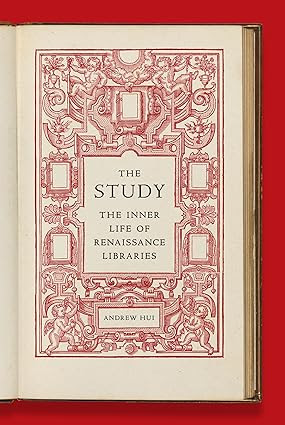
Pg. 99: Andrew Hui's "The Study"

Featured at the Page 99 Test: The Study: The Inner Life of Renaissance Libraries by Andrew Hui.

About the book, from the publisher:
A uniquely personal account of the life and enduring legacy of the Renaissance library

With the advent of print in the fifteenth century, Europe’s cultural elite assembled personal libraries as refuges from persecutions and pandemics. Andrew Hui tells the remarkable story of the Renaissance studiolo—a “little studio”—and reveals how these spaces dedicated to self-cultivation became both a remedy and a poison for the soul.

Blending fresh, insightful readings of literary and visual works with engaging accounts of his life as an insatiable bookworm, Hui traces how humanists from Petrarch to Machiavelli to Montaigne created their own intimate studies. He looks at imaginary libraries in Rabelais, Cervantes, Shakespeare, and Marlowe, and discusses how Renaissance painters depicted the Virgin Mary and St. Jerome as saintly bibliophiles. Yet writers of the period also saw a dark side to solitary reading. It drove Don Quixote to madness, Prospero to exile, and Faustus to perdition. Hui draws parallels with our own age of information surplus and charts the studiolo’s influence on bibliographic fabulists like Jorge Luis Borges and Umberto Eco.

Beautifully illustrated, The Study is at once a celebration of bibliophilia and a critique of bibliomania. Incorporating perspectives on Islamic, Mughal, and Chinese book cultures, it offers a timely and eloquent meditation on the ways we read and misread today.
Learn more about The Study at the Princeton University Press website.

The Page 99 Test: A Theory of the Aphorism.

The Page 99 Test: The Study.

--Marshal Zeringue

Seven top thrillers about the role of the witness

Jacqueline Faber is an author and freelance writer. She holds a PhD in Comparative Literature from Emory University, where she was the recipient of a Woodruff Scholarship, and taught in the Expository Writing Program at New York University, where she received an award for excellence in teaching. She studied philosophy in Bologna, Italy, and received a dissertation grant from Freie University in Berlin, Germany. Faber writes across genres, including thrillers, rom-coms, and essays. Her work explores questions about memory, loss, language, and desire. Steeped in philosophical, psychological, and literary themes, her writing is grounded in studies of character. She lives with her family in Los Angeles.

Faber's debut novel is The Department.

[My Book, The Movie: The Department; Q&A with Jacqueline Faber]

At Electric Lit Faber tagged seven books in which bystanders must decide whether to speak out or stay silent. One title on the list:
I Have Some Questions for You by Rebecca Makkai

Academia lends itself well to the complexities of the witness. This next book is about a professor who must confront her own buried knowledge about an old campus murder when she returns to her alma mater to teach a class. The novel feels like a fresh, exciting departure from Makkai’s stellar third book, The Great Believers, which was a finalist for the National Book Awards. In her latest novel, Makkai explores the dangers of refusing to acknowledge one’s past and the haunted form that memories take when one is relegated to the role of the bystander.
Read about another entry on the list.

I Have Some Questions For You is among Kat Davis's top ten feminist crime novels subverting the Dead Girl trope, Elise Juska’s eight best campus novels ever written, Nicole Hackett's six top mysteries about motherhood and crime, Brittany Bunzey's ten books that take you inside their characters’ heads, Anne Burt's four top recent titles with social justice themes, and Heather Darwent's nine best campus thrillers.

--Marshal Zeringue

Monday, February 03, 2025

Q&A with Jacqueline Faber

From my Q&A with Jacqueline Faber, author of The Department:
How much work does your title do to take readers into the story?

Like all departments, the eponymous department of my novel hints at some kind of authority, bureaucracy, a place where boundaries might be transgressed. But it holds back as much as it gives away. Something has gone very wrong in this academic setting, but it’s not quite what you think.

What's in a name?

There are two protagonists in The Department. Neil Weber and Lucia Vanotti. Neil’s name feels like a blank slate. A man who has yet to claim agency over his life. Lucia’s name bears within it a kind of indeterminacy. There’s a debate in chapter one over the proper way to pronounce it. Lu-see-ah or Lu- chia. She’s...[read on]
Visit Jacqueline Faber's website.

My Book, The Movie: The Department.

Q&A with Jacqueline Faber.

--Marshal Zeringue

Pg. 99: Peter Ekman's "Timing the Future Metropolis"

Featured at the Page 99 Test: Timing the Future Metropolis: Foresight, Knowledge, and Doubt in America's Postwar Urbanism by Peter Ekman.

About the book, from the publisher:
Timing the Future Metropolis―an intellectual history of planning, urbanism, design, and social science―explores the network of postwar institutions, formed amid specters of urban "crisis" and "renewal," that set out to envision the future of the American city. Peter Ekman focuses on one decisive node in the network: the Joint Center for Urban Studies, founded in 1959 by scholars at Harvard and MIT.

Through its sprawling programs of "organized research," its manifold connections to universities, foundations, publishers, and policymakers, and its years of consultation on the planning of a new city in Venezuela―Ciudad Guayana―the Joint Center became preoccupied with the question of how to conceptualize the urban future as an object of knowledge. Timing the Future Metropolis ultimately compels a broader reflection on temporality in urban planning, rethinking how we might imagine cities yet to come―and the consequences of deciding not to.
Learn more about Timing the Future Metropolis at the Cornell University Press website.

The Page 99 Test: Timing the Future Metropolis.

--Marshal Zeringue

Seven spy novels that take you around the world

Barbara Nickless is the Wall Street Journal and Amazon Charts bestselling author of At First Light and Dark of Night in the Dr. Evan Wilding series as well as the Sydney Rose Parnell series, which includes Blood on the Tracks, a Suspense Magazine Best of 2016 selection and winner of the Colorado Book Award and the Daphne du Maurier Award for Excellence; Dead Stop, winner of the Colorado Book Award and nominee for the Daphne du Maurier Award for Excellence; Ambush; and Gone to Darkness.

[The Page 69 Test: At First Light; Q&A with Barbara Nickless; The Page 69 Test: Play of Shadows]

Nickless's newest novel is The Drowning Game.

At Novel Suspects the author tagged "seven novels from cities around the globe to whet your appetite" for "historical espionage or modern-day hijinks." One title on the list:
The Peacock and the Sparrow by I.S. Berry

This debut novel exploded onto the literary world, quickly scooping up acknowledgements as diverse as Mystery Writers of America’s Edgar Award and a New Yorker Best Book of the Year. The prose leaps off the page, but it’s in world-weary CIA spy Shane Collins that we find the dark heart of any honest book on spydom: spying takes a terrible toll on its practitioners. Collins has become an alcoholic burnout just as the monarchy of Bahrain (an island country in the Persian Gulf) is under attack by Iran through their proxies (sound familiar?). Berry has real-world experience of Bahrain and the CIA, and this knowledge shines through. Bonus: Learning about a Middle Eastern country you might not have heard of and seeing it vividly portrayed through the eyes of the poverty-doomed locals, the jaded expat community, and in the glittering beaches, skyscrapers, and palaces of royalty and the well-to-do.
Read about another entry on the list.

The Peacock and the Sparrow is among Ayo Onatade's favorite crime and thriller reads of 2024, The Guardian's best crime and thrillers of 2024, and David McCloskey's top five spy novels.

Q&A with I.S. Berry.

The Page 69 Test: The Peacock and the Sparrow.

--Marshal Zeringue

Sunday, February 02, 2025

Pg. 69: William Boyle's "Saint of the Narrows Street"

Featured at the Page 69 Test: Saint of the Narrows Street by William Boyle.

About the book, from the publisher:
As an Italian American family's decades-old secret begins to unravel, they will have to bear the consequences—and face each other—in this thrilling southern Brooklyn-set tragic opera of the highest caliber from crime fiction luminary William Boyle.

Gravesend, Brooklyn, 1986: Risa Franzone lives in a ground-floor apartment on Saint of the Narrows Street with her bad-seed husband, Saverio, and their eight-month-old baby, Fabrizio. On the night Risa's younger sister, Giulia, moves in to recover from a bad breakup, a fateful accident occurs: Risa, boiled over with anger and fear, strikes a drunk, erratic Sav with a cast-iron pan, killing him on the spot.

The sisters are left with a choice: notify the authorities and make a case for self-defense, or bury the man's body and go on with their lives as best they can. In a moment of panic, in the late hours of the night, they call upon Sav's childhood friend—the sweet, loyal Christopher "Chooch" Gardini—to help them, hoping they can trust him to carry a secret like this.

Over the vast expanse of the next eighteen years, life goes on in the working-class Italian neighborhood of Gravesend as Risa, Giulia, Chooch, and eventually Fabrizio grapple with what happened that night. A standout work of character-driven crime fiction from a celebrated author of the form, Saint of the Narrows Street is a searing and richly drawn novel about the choices we make and how they shape our lives.
Visit William Boyle's website.

My Book, The Movie: Gravesend and The Lonely Witness.

The Page 69 Test: Gravesend and The Lonely Witness.

The Page 69 Test: City of Margins.

My Book, The Movie: City of Margins.

Q&A with William Boyle.

The Page 69 Test: Shoot the Moonlight Out.

My Book, The Movie: Shoot the Moonlight Out.

Writers Read: William Boyle (December 2021).

The Page 69 Test: Saint of the Narrows Street.

--Marshal Zeringue

Jacqueline Faber's "The Department," the movie

Featured at My Book, The Movie: The Department by Jacqueline Faber.

The entry begins:
The Department is set in an unnamed Southern university town. Imagine a vivid green lawn, manicured hedges where new buds emerge in pinks and whites, cut-off shorts and tank tops at the first signs of spring. The kind of lawn where you can be central, a game of hacky sack, lunch on the grass, students studying for tests on the benches, peals of laughter lifting into the outstretched arms of trees. Surrounding the quad are brick buildings, windows that peer down, to see but not be seen, a voyeur behind a pane of glass.

Two lead characters hold this fictional world aloft. A philosophy professor, Neil Weber, whose life is imploding. His wife has left him for someone else in the department. His work has stalled and in its place, an intellectual (and existential) lethargy has crept in. Mark Ruffalo could nail this performance, delivering the right combination of charm and despair. A soul we can root for, but not...[read on]
Visit Jacqueline Faber's website.

My Book, The Movie: The Department.

--Marshal Zeringue
Pg. 99: Michael Cannell's "Blood and the Badge"

Featured at the Page 99 Test: Blood and the Badge: The Mafia, Two Killer Cops, and a Scandal That Shocked the Nation by Michael Cannell.

About the book, from the publisher:
For the first time in forty years, former New York Times editor Michael Cannell unearths the full story behind two ruthless New York cops who acted as double agents for the Mafia.

No episode in NYPD history surpasses the depravities of Louis Eppolito and Stephen Caracappa, two decorated detectives who covertly acted as mafia informants and paid assassins in the Scorsese world of 1980s Brooklyn.

For more than ten years, Eppolito and Caracappa moonlighted as the mob’s early warning alert system, leaking names of mobsters secretly cooperating with the government and crippling investigations by sharing details of surveillance, phone taps and impending arrests. The Lucchese boss called the two detectives his crystal ball: Whatever detectives knew, the mafia soon learned. Most grievously, Eppolito and Caracappa earned bonuses by staging eight mob hits, pulling the trigger themselves at least once.

Incredibly, when evidence of their wrongdoing arose in 1994, FBI officials failed to muster an indictment. The allegations lay dormant for a decade and were only revisited due to relentless follow up by Tommy Dades, a cop determined to break the cold case before his retirement. Eppolito and Caracappa were finally tried and then sentenced to life in prison in 2009, nearly thirty years after their crimes took place.

Cannell’s Blood and the Badge is based on entirely new research and never-before-released interviews with mobsters themselves, including Sammy “the Bull” Gravano. Eppolito and Caracappa’s story is more relevant than ever as police conduct comes under ever-increasing scrutiny.
Visit Michael T. Cannell's website.

My Book, The Movie: The Limit.

The Page 99 Test: The Limit.

My Book, The Movie: Incendiary.

My Book, The Movie: A Brotherhood Betrayed.

Writers Read: Michael Cannell.

My Book, The Movie: Blood and the Badge.

The Page 99 Test: Blood and the Badge.

--Marshal Zeringue

Five top hostage novels

Gillian McAllister has been writing for as long as she can remember. She graduated with an English degree before working as a lawyer. She lives in Birmingham, England, where she now writes full-time.

Her novels include Wrong Place Wrong Time and Just Another Missing Person.

McAllister's new novel is Famous Last Words.

At the Waterstones blog she tagged five favorite "novels that employ hostage situations as their main source of drama," including:
A Spark of Light by Jodi Picoult

This is a novel centering on a women’s reproductive health services clinic that is stormed by a gunman. The author ingeniously narrates this novel backwards, and so the reader learns less about the what, and more about the why and the how. It poses the question: what is a life worth? It’s an eminently sympathetic portrayal of a place nobody - on either side - wants to be on that day. In my opinion, this is Picoult at her insightful, character-driven best.
Read about another novel on the list.

--Marshal Zeringue

Saturday, February 01, 2025

Pg. 69: Christa Carmen's "Beneath the Poet’s House"

Featured at the Page 69 Test: Beneath the Poet's House: A Thriller by Christa Carmen.

About the book, from the publisher:
For a grieving writer, the secrets of the past and present converge in a novel of gripping psychological suspense from the author of The Daughters of Block Island.

Unmoored by her husband’s death and suffering from writer’s block, novelist Saoirse White moves to Providence, and into the historic home of Sarah Helen Whitman, the nineteenth-century poet and spiritualist once courted by Edgar Allan Poe. Saoirse’s certain she’ll find inspiration in the quiet rooms, as well as in the tucked-away rose garden and forgotten cemetery at the back of the property.

Saoirse is immediately welcomed by an effusive trio of transcendentalists obsessed with Whitman, the house, and Whitman’s mystic beliefs. Saoirse, emerging from grief and loneliness, welcomes the idea of new friends taking her mind off the past―even as they hope to summon it. When she meets Emmit Powell, a charismatic and charming prize-winning author, Saoirse thinks she’s finally turned a corner.

Emboldened by new romance, Saoirse begins to write again and, through her writing, rediscover herself. But as old fears return, she finds that nothing about her new life is what it seems―and a secret she’s tried so hard to bury may not be the only thing that comes back to haunt her.
Visit Christa Carmen's website.

The Page 69 Test: Beneath the Poet's House.

--Marshal Zeringue

Pg. 99: Tom Smith's "Word across the Water"

Featured at the Page 99 Test: Word across the Water: American Protestant Missionaries, Pacific Worlds, and the Making of Imperial Histories by Tom Smith.

About the book, from the publisher:
In Word Across the Water, Tom Smith brings the histories of Hawai'i and the Philippines together to argue that US imperial ambitions towards these Pacific archipelagos were deeply intertwined with the work of American Protestant missionaries. As self-styled interpreters of history, missionaries produced narratives to stoke interest in their cause, locating US imperial interventions and their own evangelistic projects within divinely ordained historical trajectories.

As missionaries worked in the shadow of their nation's empire, however, their religiously inflected historical narratives came to serve an alternative purpose. They emerged as a way for missionaries to negotiate their own status between the imperial and the local and to come to terms with the diverse spaces, peoples, and traditions of historical narration that they encountered across different island groups.

Word Across the Water encourages scholars of empire and religion alike to acknowledge both the pernicious nature of imperial claims over oceanic space underpinned by religious and historical arguments, and the fragility of those claims on the ground.
Learn more about Word across the Water at the Cornell University Press website.

The Page 99 Test: Word across the Water.

--Marshal Zeringue

Five top novels with tantalizing anti-heroes

Taylor Hutton is the pseudonym of a pair of writer friends, one of whom has twice been a finalist for the National Book Award and the other who is a New York Times bestselling author and Edgar Award finalist. Between the two of them, they have written over forty books. When they are not passing their latest sexy thriller back and forth on Google Doc, they are browsing bookstores, sending each other ridiculous memes, walking their dogs Trudy and Potato around their Los Angeles neighborhood, and making their children cringe with their TikTok videos.

Their new novel is Strike and Burn.

At CrimeReads the authors tagged five novels in which "readers can’t help but find themselves occasionally rooting for the dark side." One title on the list:
Yellowface by R.F. Kuang

Like [Jean Hanff Korelitz's] The Book Series, Yellowface is an anti-hero story about a novelist appropriating and stealing another writer’s work (in this case a white woman stealing a book written by an Asian American woman about the Chinese Labor Corp) and passing it off as their own. At times a fun satiric inside-baseball skewering of the publishing industry, it’s also an exploration of white privilege, discrimination, cultural appropriation and professional envy. Kuang uses first person present tense to take us right into the mind of our unreliable narrator, and like all the books above, half the fun is the squeamishness and disgust we feel at the shamelessness of our anti-hero–as one of many examples, she takes on a pen name that misleads readers into thinking she’s Chinese. This literary thriller–like most of the best anti-hero novels–makes the reader compulsively turn the pages while simultaneously making us reach for the Costco size bottle of Tums.
Read about another novel on the list.

Yellowface is among Elizabeth Staple's eight books about youthful mistakes that come back to haunt you, Lauren Kuhl's eight top novels about toxic relationships, Elly Griffiths's top ten books about books, Toby Lloyd's seven books that show storytelling has consequences, Sophie Wan's seven top titles with women behaving badly, Leah Konen's six top friends-to-frenemies thrillers, and Garnett Cohen's seven novels about characters driven by their cravings.

--Marshal Zeringue