Sunday, March 19, 2023

Third reading: D.W. Buffa on Jorge Luis Borges

D.W. Buffa's recent novel is The Privilege, the ninth legal thriller involving the defense attorney Joseph Antonelli. The tenth, Lunatic Carnival, will be published soon. He has also just published Neumann's Last Concert, the fourth novel in a series that attempts to trace the movement of western thought from ancient Athens, in Helen; the end of the Roman Empire, in Julian's Laughter; the Renaissance, in The Autobiography of Niccolo Machiavelli; and, finally,  America in the twentieth century, in Neumann's Last Concert.

Buffa writes a monthly review for the Campaign for the American Reader that we're calling "Third Reading." Buffa explains. "I was reading something and realized that it was probably the third time that I knew it well enough to write something about it. The first is when I read it when I was in college or in my twenties, the second, however many years later, when I wanted to see if it was as good as I remembered, and the third when I knew I was going to have to write about it."

Buffa's "Third Reading" of the unforgettable Jorge Luis Borges begins:
The great Argentine writer Jorge Borges put into the mouth of one of his inimitable characters a line that has never left me: “I have often begun the study of metaphysics but have always been interrupted by happiness.” I cannot remember in which of his many short stories I first read it. I know it was a short story because Borges never wrote, and almost never read, a novel, on the obvious, but still dubious, ground that to devote five hundred pages to something that could be explained in a conversation of not more than five minutes was to forget the importance of time. Borges often spent weeks, if not longer, on a story it would not take more than five minutes to read. I do not know how long he took to write “I have often begun the study of metaphysics but have always been interrupted by happiness.” I remember the line; I do not remember the story. And the stories I do remember I seem not to have remembered the way I thought I remembered them. This may not be my fault. Borges may have done something to make sure that the stories are no longer what they were.

When Borges was a young boy in Bueno Aires, he “used to marvel that the letters in a closed book did not get scrambled and lost overnight.” He may have wondered, when he was older, why he assumed they did not. In at least some of his stories, things go missing, things change, change with time, change with the memories of men, change by accident, or, sometimes, change on purpose. In “Tlon Uqbar, Orbis Tertius,” a story the title of which tells you...[read on]
About Buffa's recent novel Neumann’s Last Concert, from the publisher:
Neumann’s Last Concert is a story about music and war and the search for what led to the greatest evil in modern history. It is the story of an American boy, Wilfred Malone, who lost his father in the early days of the Second World War and a German refugee, Isaac Neumann, the greatest concert pianist of his age when he lived in Berlin, but who now lives, anonymous and alone, in a single rented room in a small town a few miles from San Francisco.

Wilfred has a genius for the piano, “a keen curiosity not yet corrupted by vanity” and “a memory that forgot nothing essential.” Neumann, alone in his room, is constantly writing, an endless labyrinth of questions and answers, driving him farther and farther back into the past, searching for the causes, searching for the meaning, of what happened in Germany, trying to understand what had led him, a German Jew, to stay in Germany when he could have left but instead continued to perform right up to the night that during his last concert they took his wife away.

Neumann’s Last Concert is a novel about the great catastrophe of the 20th century and the way in which music, great music, preserves both the hope of human decency amidst the carnage of human insanity and the possibility of what human beings might still accomplish.
Visit D.W. Buffa's website.

Third reading: The Great Gatsby. 

Third reading: Brave New World.

Third reading: Lord Jim.

Third reading: Death in the Afternoon.

Third Reading: Parade's End.

Third Reading: The Idiot.

Third Reading: The Decline and Fall of the Roman Empire.

Third Reading: The Scarlet Letter.

Third Reading: Justine.

Third Reading: Patriotic Gore.

Third reading: Anna Karenina.

Third reading: The Charterhouse of Parma.

Third Reading: Emile.

Third Reading: War and Peace.

Third Reading: The Sorrows of Young Werther.

Third Reading: Bread and Wine.

Third Reading: “The Crisis of the Mind” and A Man Without Qualities.

Third reading: Eugene Onegin.

Third Reading: The Collected Works of Thomas Babington Macaulay.

Third Reading: The Europeans.

Third Reading: The House of Mirth and The Writing of Fiction.

Third Reading: Doctor Faustus.

Third Reading: the reading list of John F. Kennedy.

Third Reading: Jorge Luis Borges.

--Marshal Zeringue

Saturday, March 18, 2023

Ten books that take you inside their characters’ minds

At B&N Reads Brittany Bunzey tagged ten books that take you inside their characters’ heads, including:
Lady in the Lake by Laura Lippman

Laura Lippman, author of Sunburn and the Tess Monaghan series, returns to the streets of Baltimore in this classic story of ambition, dreams and murder with perfectly placed elements of noir and sly humor. This historical thriller weaves together 20 points of view as a reporter tries to investigate the death of Cleo Sherwood. Fast paced and haunting, this riveting thriller delivers all the right twists and will keep your mind spinning until the very end.
Read about another entry on the list.

Lady in the Lake is among Kimberly Belle's six novels that show lakes are a perfect setting for a murder mystery and CrimeReads' ten best crime novels of 2019.

The Page 69 Test: Lady in the Lake.

--Marshal Zeringue

Pg. 99: Guian A. McKee's "Hospital City, Health Care Nation"

Featured at the Page 99 Test: Hospital City, Health Care Nation: Race, Capital, and the Costs of American Health Care by Guian A. McKee.

About the book, from the publisher:
Hospital City, Health Care Nation recasts the story of the U.S. health care system by emphasizing its economic, social, and medical importance in American communities. Focusing on urban hospitals and academic medical centers, the book argues that the country’s high level of health care spending has allowed such institutions to become vital, if often problematic, economic anchors for communities. Yet that spending has also constrained possibilities for comprehensive health care reform over many decades, even after the passage of the Affordable Care Act in 2010. At the same time, the role of hospitals in urban renewal, in community health provision, and as employers of low-wage workers has contributed directly to racial health disparities.

Guian A. McKee explores these issues through a detailed historical case study of Baltimore’s Johns Hopkins Hospital while also tracing their connections across governmental scales―local, state, and federal. He shows that health care spending and its consequences, rather than insurance coverage alone, are core issues in the decades-long struggle over the American health care system. In particular, Hospital City, Health Care Nation points to the increased role of financial capital after the 1960s in shaping not only hospital growth but also the underlying character of these vital institutions. The book shows how hospitals’ quest for capital has interacted with structural racism and inequality to shape and constrain the U.S. health care system. Building on this reassessment of the hospital system, its politics, and its financing, Hospital City, Health Care Nation offers ideas for the next steps in health care reform.
Learn more about Hospital City, Health Care Nation at the University of Pennsylvania Press website and on a book page on the website of the University of Virginia’s Miller Center of Public Affairs.

The Page 99 Test: Hospital City, Health Care Nation.

--Marshal Zeringue

Pg. 69: Malka Older's "The Mimicking of Known Successes"

Featured at the Page 69 Test: The Mimicking of Known Successes by Malka Older.

About the book, from the publisher:
On a remote, gas-wreathed outpost of a human colony on Jupiter, a man goes missing. The enigmatic Investigator Mossa follows his trail to Valdegeld, home to the colony’s erudite university—and Mossa’s former girlfriend, a scholar of Earth’s pre-collapse ecosystems.

Pleiti has dedicated her research and her career to aiding the larger effort towards a possible return to Earth. When Mossa unexpectedly arrives and requests Pleiti’s assistance in her latest investigation, the two of them embark on a twisting path in which the future of life on Earth is at stake—and, perhaps, their futures, together.
Follow Malka Older on Twitter and visit her website.

The Page 69 Test: Infomocracy.

The Page 69 Test: State Tectonics.

The Page 69 Test: The Mimicking of Known Successes.

--Marshal Zeringue

Friday, March 17, 2023

Five books on the rise of the Russian oligarchs in London

Alma Katsu is the award-winning author of eight novels, most recently Red London, Red Widow, The Deep, and The Hunger. Prior to the publication of her first novel, she had a thirty-five-year career as a senior intelligence analyst for several U.S. agencies, including the CIA and NSA, as well as RAND, the global policy think tank. Katsu is a graduate of the masters writing program at the Johns Hopkins University and received her bachelors degree from Brandeis University. She lives outside of Washington, DC, with her husband, where she is a consultant to government and private industry on future trends and analytic methods.

[The Page 69 Test: The Taker; My Book, The Movie: The Hunger; The Page 69 Test: The Hunger; The Page 69 Test: The Deep; The Page 69 Test: Red Widow; Q&A with Alma Katsu; The Page 69 Test: The Fervor; My Book, The Movie: Red London; The Page 69 Test: Red London]

At CrimeReads Katsu tagged five books that help us understand the impact of the Russian oligarchs on Great Britain, including:
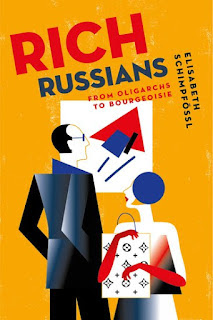
Rich Russians: From Oligarchs to Bourgeoisie, Elisabeth Schimpfössl

Being a former CIA analyst and researcher at a think tank, I gravitated toward this scholarly book by a university lecturer in sociology and policy. Schimpfossl conducted over 80 interviews with members of this socioeconomic class to give a detailed look at not only their circumstances but also the mindset and personal philosophies that enabled them to succeed. Rich Russians provided all the nuance I needed to create a believable and credible oligarch character, the banking tycoon and morally compromised Mikhail Rotenberg.
Read about another entry on the list.

--Marshal Zeringue

Pg. 99: Toby Matthiesen's "The Caliph and the Imam"

Featured at the Page 99 Test: The Caliph and the Imam: The Making of Sunnism and Shiism by Toby Matthiesen.

About the book, from the publisher:
The authoritative account of Islam's schism that for centuries has shaped events in the Middle East and the Islamic world.

In 632, soon after the Prophet Muhammad died, a struggle broke out among his followers as to who would succeed him. Most Muslims argued that the leader of Islam should be elected by the community's elite and rule as Caliph. They would later become the Sunnis. Others—who would become known as the Shia—believed that Muhammad had designated his cousin and son-in-law Ali as his successor, and that henceforth Ali's offspring should lead as Imams. This dispute over who should guide Muslims, the Caliph or the Imam, marks the origin of the Sunni-Shii split in Islam.

Toby Matthiesen explores this hugely significant division from its origins to the present day. Moving chronologically, his book sheds light on the many ways that it has shaped the Islamic world, outlining how over the centuries Sunnism and Shiism became Islam's two main branches, and how Muslim Empires embraced specific sectarian identities. Focussing on connections between the Indian subcontinent and the Middle East, it reveals how colonial rule and the modern state institutionalised sectarian divisions and at the same time led to pan-Islamic resistance and Sunni and Shii revivalism. It then focuses on the fall-out from the 1979 revolution in Iran and the US-led military intervention in Iraq. As Matthiesen shows, however, though Sunnism and Shiism have had a long and antagonistic history, most Muslims have led lives characterised by confessional ambiguity and peaceful co-existence. Tensions arise when sectarian identity becomes linked to politics.

Based on a synthesis of decades of scholarship in numerous languages, The Caliph and the Imam will become the standard text for readers looking for a deeper understanding of contemporary sectarian conflict and its historical roots.
Visit Toby Matthiesen's website.

Writers Read: Toby Matthiesen (January 2015).

The Page 99 Test: The Other Saudis.

The Page 99 Test: The Caliph and the Imam.

--Marshal Zeringue

Q&A with Vibhuti Jain

From my Q&A with Vibhuti Jain, author of Our Best Intentions:
How much work does your title do to take readers into the story?

The title Our Best Intentions evokes how the novel represents a community; the story is told through multiple perspectives to achieve as much. It also conveys how each of the characters is striving better themselves or their loved ones – even though, as we learn, this can bear ugly consequences.

What's in a name?

Babur was the name of the founder of the Mughal Empire in India. I liked the idea of naming Babur Singh, a mild mannered man, a name associated with might and strength.

Also, part of the Indian-American experience is trying to fit in with a name people may view as unusual or hard to pronounce, like Babur, and shortening that name or swapping it out for...[read on]
Visit Vibhuti Jain's website.

Q&A with Vibhuti Jain.

--Marshal Zeringue

Thursday, March 16, 2023

Pg. 69: John Keyse-Walker's "Bert and Mamie Take a Cruise"

Featured at the Page 69 Test: Bert and Mamie Take a Cruise by John Keyse-Walker.

About the book, from the publisher:
All aboard the good ship SS Columbus for an African adventure to die for...

February 1939.
Mamie Mason isn’t enthusiastic when Bert, her husband of thirty years, persuades her to join him on an African cruise. Bert might be pining for adventure, but Mamie’s perfectly content with her comfortable life in Hills Corners, Ohio.

But once the couple board the glamorous SS Columbus, Mamie has to admit – as much as it pains her – that Bert was right. Swimming in the pool, dancing under the stars, their own bedroom steward to serve their every whim . . . Mamie settles in and prepares to thoroughly enjoy all the sights that Africa has to offer, in the company of a motley collection of eccentric first-class passengers.

Then Mamie witnesses something shocking – and her vacation takes a twist that neither she nor Bert could ever have predicted. Far from home, with a killer in their midst, the couple’s only choice is to turn detective. But surrounded by Nazis, spies and passengers with secrets, how can they uncover the killer – enjoy their vacation of a lifetime – and make it back to Ohio alive?
Visit John Keyse-Walker's website.

My Book, The Movie: Sun, Sand, Murder.

My Book, The Movie: Beach, Breeze, Bloodshed.

The Page 69 Test: Palms, Paradise, Poison.

Q&A with John Keyse-Walker.

The Page 69 Test: Bert and Mamie Take a Cruise.

--Marshal Zeringue

Top ten visionary books about scientists

Martin MacInnes was born in Inverness in 1983. He has an MA from the University of York, has read at international science and literature festivals, and is the winner of a Scottish Book Trust New Writers Award and the 2014 Manchester Fiction Prize.

His debut novel, Infinite Ground, won the Somerset Maugham Award and was shortlisted for the Saltire Awards.

His second novel, Gathering Evidence, led to his inclusion in the National Centre for Writing / British Councils’s list of ten writers shaping the UK’s future.

MacInnes's newest novel is In Ascension.

At the Guardian he tagged ten titles "capturing scientists’ obsessive quest for knowledge," including:
Aurora by Kim Stanley Robinson

Perhaps the most predictable inclusion on this list, Robinson has made a career out of dramatising the lives of scientists, partly as a way to challenge the anthropocentrism and ecological-neglect of much literary fiction. Aurora charts an interstellar journey to a potential second Earth, in a vast ship containing large biomes with distinct ecosystems. Biologist and ship leader Devi is tasked with maintaining life throughout her stage of the multi-generation journey. It’s not much of a spoiler to say the real wonder in this novel is the return to Earth. It has become trite to say that this planet is our only home, but rarely has the sentiment been shown as spectacularly as in Aurora.
Read about another entry on the list.

--Marshal Zeringue

Pg. 99: Monique McDade's "California Dreams and American Contradictions"

Featured at the Page 99 Test: California Dreams and American Contradictions: Women Writers and the Western Ideal by Monique McDade.

About the book, from the publisher:
California Dreams and American Contradictions establishes a genealogy of western American women writers publishing between 1870 and 1965 to argue that both white women and women of color regionalized dominant national literary trends to negotiate the contradictions between an American liberal individualism and American equality. Monique McDade analyzes works by María Amparo Ruiz de Burton, Helen Hunt Jackson, Sui Sin Far, and a previously unstudied African American writer, Eva Rutland, to trace an archive of western American women writers who made visible what dominant genres subsumed under images of American progress and westward expansion.

Read together these writers provide new entry points into the political debates that have plagued the United States since the nation’s founding and that set the precedent for westward expansion. Their romances, regional sketches, memoirs, and journalism point to the inherently antagonistic relationship between a Rooseveltian rugged individualism that encouraged an Anglo male–dominated West and the progressive equality and opportunity the West seemingly promised disenfranchised citizens. The writers included in California Dreams and American Contradictions challenged literature’s role in creating regional division, conformist communities that support nationally sponsored images of gendered, ethnic, and immigrant others, and liberal histories validated through a strategic vocabulary rooted in “freedom,” “equality,” and “progress.”
Learn more about California Dreams and American Contradictions at the University of Nebraska Press website.

The Page 99 Test: California Dreams and American Contradictions.

--Marshal Zeringue

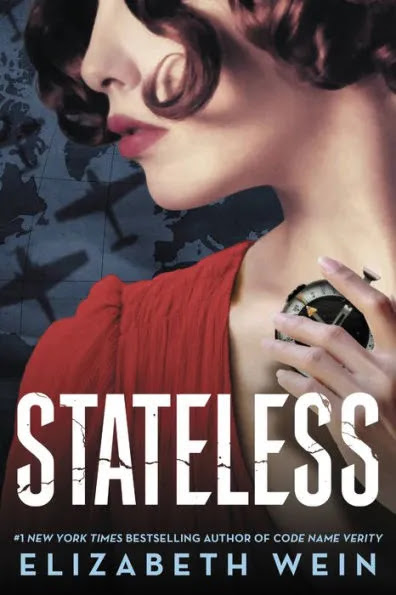
Elizabeth Wein's "Stateless," the movie

Featured at My Book, The Movie: Stateless by Elizabeth Wein.

The entry begins:
Stateless is a thriller and a mystery, set in a young people’s air race around Europe in 1937. Tensions are high anyway, with the Spanish Civil War in full swing and Hitler’s Nazi government in power in Germany. Our narrator is seventeen-year-old Stella North, the only girl out of twelve racing contestants all from different European nations, and on the very first day of the race she witnesses one pilot forcing another to his death over the English Channel. All the race contestants are hiding secrets, and so is Stella – and will there be another attack?

I have a very cinematic brain, and a lot of the scenes in this book are very visual. I can picture it as a film so easily, I have clear images in my head of what each character looks like, and yet I struggle to come up with actors to play them because they’re are all so young – everyone in the race is under 21.

But here’s my wish for Stateless...[read on]
Visit Elizabeth Wein's website.

The Page 69 Test: Black Dove, White Raven.

The Page 69 Test: The Pearl Thief.

Writers Read: Elizabeth Wein (January 2019).

The Page 99 Test: A Thousand Sisters.

My Book, The Movie: Stateless.

--Marshal Zeringue

Wednesday, March 15, 2023

What is David Handler reading?

Featured at Writers Read: David Handler, author of The Girl Who Took What She Wanted.

His entry begins:
Whenever I’m working on a new Stewart Hoag mystery, which I’m currently doing, I rarely read crime fiction by anyone else because I don’t want my writing style to be influenced by another writer’s voice or plot structure. But I’m a devoted bookworm, as are most writers, so I absolutely must seek out something else to read.

Right now, I’m curled up with one of the most cherished volumes in my home library, Essays of E.B. White, a treasure chest by the man who I and millions of other devotees consider to be mid-twentieth century America’s finest writer of prose. I am forever in awe of the crisp, clean, clarity of his voice, his dry wit, keen insights and remarkable ability to make you feel as if he’s sitting right there in the room simply talking to you. His writing style is so brilliant that he makes it looks easy.

It’s no accident that he’s the White of Strunk and White’s indispensable The Elements of Style.

The collection of essays I’m reading...[read on]
About The Girl Who Took What She Wanted, from the publisher:
In this new installment of the Edgar award-winning Stewart Hoag mystery series, the ghostwriting sleuth investigates a trail of murder amidst Hollywood’s rich and famous.

Stewart “Hoagy” Hoag hasn’t written any fiction since his debut novel rocked the literary world of the 1980s and then left him with a paralyzing case of writer’s block. Since then, he’s been reduced to ghostwriting celebrity memoirs. But his newest project could have him diving back into the world of fiction in a way he never imagined.

Nikki Dymtryk is Hollywood’s hottest reality TV star, known for her wild party lifestyle and prolific sexual conquests across the music, film, and sports industries. But when the ratings for her show Being Nikki begin to drop, the Dymtryk family engineers a new plan to keep Nikki in the limelight: reinventing the young star as a bestselling author. Nikki’s team hires Hoagy to ghostwrite a steamy romance novel showcasing the glitz and glamor of the Hollywood elite.

Reluctantly, Hoagy flies out to L.A. with his trusty basset hound Lulu to see what he’s gotten himself into with Nikki. But when he finally meets the starlet, she’s nothing like the aimless, airhead image she presents to the media. This project may just be the key to getting Hoagy’s creative juices flowing again―and staying in L.A. might also give him a chance at getting back together with his actress ex-wife, Merilee. But spending time with Nikki isn’t all parties and poolside lounging. As Hoagy gets closer to the young woman, he begins to uncover the Dymtryk family’s dark secrets. Secrets that are worth killing for.
Learn more about the book and author at David Handler's website.

Writers Read: David Handler (October 2011).

Writers Read: David Handler (October 2012).

Writers Read: David Handler (August 2013).

Writers Read: David Handler (March 2014).

Writers Read: David Handler (February 2015).

Writers Read: David Handler (March 2016).

Writers Read: David Handler (September 2017).

Writers Read: David Handler.

--Marshal Zeringue

Ten books that celebrate the bonds between women

At B&N Reads Brittany Bunzey tagged ten books that highlight the bonds between women, including:
Daughters of Nantucket: A Novel by Julie Gerstenblatt

Travel back to 1846 with Julie Gerstenblatt’s debut, Daughters of Nantucket. This novel is a triumph of courage and friendship centered around three women who must decide what to save and what to let go while their town goes up in flames. Full of resilience and redemption, this book is certain to consume readers within its striking story.
Read about another entry on the list.

--Marshal Zeringue

Pg. 99: Tatjana Višak's "Capacity for Welfare across Species"

Featured at the Page 99 Test: Capacity for Welfare across Species by Tatjana Višak.

About the book, from the publisher:
Is my dog, with his joyful and carefree life, better off than I am? Do hens in battery cages have worse lives than cows at pasture? Will my money improve welfare more if I spend it on helping people or if I benefit chickens? How can we assess the harm of climate change for both humans and non-humans? If we want to systematically compare welfare across species, we first need to explore whether welfare subjects of different species have the same or rather a different capacity for welfare.

According to what seems to be the dominant philosophical view, welfare subjects with higher cognitive capacities have a greater capacity for welfare and are generally much better off than those with lower cognitive capacities. Višak carefully explores and rejects this view. She argues instead that welfare subjects of different species have the same capacity for welfare despite different cognitive capacities. This book prepares the philosophical ground for comparisons of welfare across species. It will inform and inspire ethicists and animal welfare scientists alike, as well as a broader readership interested in wellbeing, animals, and ethics. Besides different views about capacity for welfare across species, the book discusses animal capacities, moral status, harm of death, whether bringing additional well-off individuals into existence is a good thing, and practical implications of these topics for counting and comparing the welfare of animals of different species.
Visit Tatjana Višak's website.

The Page 99 Test: Capacity for Welfare across Species.

--Marshal Zeringue

Pg. 69: Alma Katsu's "Red London"

Featured at the Page 69 Test: Red London by Alma Katsu.

About the book, from the publisher:
CIA agent Lyndsey Duncan’s newest asset might just be her long-needed confidante…or her greatest betrayal.

After her role in taking down a well-placed mole inside the CIA, Agent Lyndsey Duncan arrives in London fully focused on her newest Russian asset, deadly war criminal Dmitri Tarasenko. That is until her MI6 counterpart, Davis Ranford, personally calls for her help.

Following a suspicious attack on Russian oligarch Mikhail Rotenberg’s property in a tony part of London, Davis needs Lyndsey to cozy up to the billionaire’s aristocratic British wife, Emily Rotenberg. Fortunately for Lyndsey, there’s little to dissuade Emily from taking in a much-needed confidante. Even being one of the richest women in the world is no guarantee of happiness. But before Lyndsey can cover much ground with her newfound friend, the CIA unveils a perturbing connection between Mikhail and Russia’s geoplitical past, one that could upend the world order and jeopardize Lyndsey’s longtime allegiance to the Agency.

Red London is a sharp and nuanced race-against-the-clock story ripped from today’s headlines, a testament to author Alma Katsu’s thirty-five-year career in national security. It’s a rare spy novel written by an insider that feels as prescient as it is page-turning and utterly unforgettable.
Visit Alma Katsu's website.

The Page 69 Test: The Taker.

My Book, The Movie: The Hunger.

The Page 69 Test: The Hunger.

Writers Read: Alma Katsu (March 2020).

The Page 69 Test: The Deep.

The Page 69 Test: Red Widow.

Q&A with Alma Katsu.

The Page 69 Test: The Fervor.

Writers Read: Alma Katsu (April 2022).

My Book, The Movie: Red London.

The Page 69 Test: Red London.

--Marshal Zeringue

Tuesday, March 14, 2023

Four top recent titles with social justice themes

Anne Burt is the editor of My Father Married Your Mother: Dispatches from the Blended Family and coeditor, with Christina Baker Kline, of About Face: Women Write About What They See When They Look in the Mirror. Her essays and fiction have appeared in numerous publications and venues, including Salon, NPR, and The Christian Science Monitor; she is a past winner of Meridian’s Editors’ Prize in Fiction. Burt lives in New York City.

Her debut novel is The Dig.

At CrimeReads Burt tagged "four recent crime novels that seamlessly thread issues of social justice throughout their propulsive storytelling," including:
I Have Some Questions For You by Rebecca Makkai

Sophisticated crime fiction can propel the reader inward to think about their own complicity perpetuating injustice. Pulitzer Prize finalist Rebecca Makkai’s does just that in her newest book, I Have Some Questions For You. Makkai gives us both a murder mystery set on a boarding school campus and a multifaceted lens into society’s obsession with violent true crime stories – especially when the victims are young white women. Bodie Kane, a successful podcaster and professor, returns to teach a course at the boarding school where her former roommate was murdered years before. The victim was a white teenager, and the man convicted of the crime was the school’s Black athletic trainer, Omar Evans. Bodie opens up the past to ask if the school’s rush to convict Omar left the real killer at large. But Makkai’s investigation goes beyond the story at the center – she’s investigating the tendency of true crime junkies to fetishize gore, guts, and intrigue as the expense of challenging systemic racism and sexism that destroys lives and feeds them into a profit-generating entertainment meat grinder.

This meta reading experience encourages the reader to ask: “who am I in relation to what I’m witnessing?”: an important goal in any social justice movement.
Read about another entry on the list.

I Have Some Questions For You is among Heather Darwent's nine best campus thrillers.

--Marshal Zeringue

Pg. 99: Frank Gerits's "The Ideological Scramble for Africa"

Featured at the Page 99 Test: The Ideological Scramble for Africa: How the Pursuit of Anticolonial Modernity Shaped a Postcolonial Order, 1945–1966 by Frank Gerits.

About the book, from the publisher:
In The Ideological Scramble for Africa, Frank Gerits examines how African leaders in the 1950s and 1960s crafted an anticolonial modernization project. Rather than choose Cold War sides between East and West, anticolonial nationalists worked to reverse the psychological and cultural destruction of colonialism.

Kwame Nkrumah's African Union was envisioned as a federation of liberation to challenge the extant imperial forces: the US empire of liberty, the Soviet empire of equality, and the European empires of exploitation. In the 1950s, the goal of proving the potency of a pan-African ideology shaped the agenda of the Bandung Conference and Ghana's support for African liberation, while also determining what was at stake in the Congo crisis and in the fight against white minority rule in southern and eastern Africa. In the 1960s, the attempt to remake African psychology was abandoned, and socioeconomic development came into focus. Anticolonial nationalists did not simply resist or utilize imperial and Cold War pressures but drew strength from the example of the Haitian Revolution of 1791, in which Toussaint Louverture demanded the universal application of Europe's Enlightenment values. The liberationists of the postwar period wanted to redesign society in the image of the revolution that had created them.

The Ideological Scramble for Africa demonstrates that the Cold War struggle between capitalism and Communism was only one of two ideological struggles that picked up speed after 1945; the battle between liberation and imperialism proved to be more enduring.
Visit Frank Gerits's website.

The Page 99 Test: The Ideological Scramble for Africa.

--Marshal Zeringue

Q&A with Lee Mandelo

From my Q&A with Lee Mandelo, author of Feed Them Silence:
How much work does your title do to take readers into the story?

As a title, Feed Them Silence serves to set the story's tone first and foremost. There's an unsettling effect, a bleakness, created by juxtaposing "feed"—with its implications of nourishment, consumption, and hunger—with "silence," a word at the least partly associated with death, isolation, and absence. Plus, silence is an inedible thing! Then, lastly, "them" calls to the readers' mind an outsider: someone whose needs for survival, perhaps, are being left unsatisfied.

Between the title and the cover design, my goal is for...[read on]
Visit Lee Mandelo's website.

The Page 69 Test: Summer Sons.

Q&A with Lee Mandelo.

--Marshal Zeringue

Monday, March 13, 2023

Pg. 69: Christopher Bollen's "The Lost Americans"

Featured at the Page 69 Test: The Lost Americans: A Novel by Christopher Bollen.

About the book, from the publisher:
A young woman finds herself in the crosshairs of powerful and very dangerous enemies when she travels to Cairo to uncover the truth about her brother’s mysterious death in this smart, atmospheric, and propulsive literary thriller from the acclaimed author of A Beautiful Crime and Orient

“Bollen writes expansive, psychologically probing novels in the manner of Updike, Eugenides and Franzen, but he is also an avowed disciple of Agatha Christie."—Daily Telegraph (UK)

When the lifeless body of Eric Castle, a weapons technician for a major American defense contractor, is found under his hotel balcony, both his employer and the Egyptian authorities quickly declare his death a suicide. But the dead man’s sister, Cate, doesn’t believe Eric took his own life and is determined to get to the truth. Traveling to Egypt she begins to piece together her brother’s life in Cairo with the help of a handsome, young, gay Egyptian man named Omar, who yearns to escape the brutality of his nation’s harsh, restrictive government.

Unfortunately, Cate’s quest raises more questions—and problems—than she ever imagined, as she takes on not only the arms company’s top brass but the Egyptian military, secret police, and a slew of American expats with their own reasons to keep the dead buried once and for all. Soon she’s in over her head, and it’s not clear if either she or Omar will get out alive. This riveting thriller of set in loud, boisterous Cairo of Americans lost and found showcases Bollen’s depth of characterization and haunting descriptive powers.
Visit Christopher Bollen's website.

The Page 69 Test: A Beautiful Crime.

My Book, The Movie: A Beautiful Crime.

Writers Read: Christopher Bollen (February 2020).

The Page 69 Test: The Lost Americans.

--Marshal Zeringue

Five of the best maternal thrillers

Gillian McAllister has been writing for as long as she can remember. She graduated with an English degree before working as a lawyer. She lives in Birmingham, England, where she now writes full-time.

McAllister's latest novel is Wrong Place Wrong Time.

At the Waterstones blog she tagged five favorite "novels in the rising genre of maternal page-turners," including:
The It Girl by Ruth Ware

Ruth Ware is one of the most versatile crime thriller authors out there. She’s written about hen parties, AI houses, a shareholder’s buyout meeting gone wrong, and miscarriages of justice, but in this one she turns her hand to the elite of Oxbridge and a crime committed a decade earlier. It’s a fabulous whodunnit with a real heartstopper of a denouement, but what I loved most about this is the careful depiction of the heroine’s pregnancy: never a driver of the plot, but all the same Ware captures so well the ongoing humdrum of midwife appointments, high blood pressure and ongoing anxiety, while adding stakes to the safety of the protagonist, too. Read it to find out who really killed the IT girl, but also to experience first-hand how it feels to be pregnant and vulnerable. Ruth Ware can write anything and anyone, and I will be reading all of them.
Read about another entry on the list.

--Marshal Zeringue

Pg. 99: Molly Farneth's "The Politics of Ritual"

Featured at the Page 99 Test: The Politics of Ritual by Molly Farneth.

About the book, from the publisher:
An illuminating look at the transformative role that rituals play in our political lives

The Politics of Ritual is a major new account of the political power of rituals. In this incisive and wide-ranging book, Molly Farneth argues that rituals are social practices in which people create, maintain, and transform themselves and their societies. Far from mere scripts or mechanical routines, rituals are dynamic activities bound up in processes of continuity and change. Emphasizing the significance of rituals in democratic engagement, Farneth shows how people adapt their rituals to redraw the boundaries of their communities, reallocate goods and power within them, and cultivate the habits of citizenship.

Transforming our understanding of rituals and their vital role in the political conflicts and social movements of our time, The Politics of Ritual examines a broad range of rituals enacted to just and democratic ends, including border Eucharists, candlelight vigils, and rituals of mourning. This timely book makes a persuasive case for an innovative democratic ritual life that can enable people to create and sustain communities that are more just, inclusive, and participatory than those in which they find themselves.
Follow Molly Farneth on Twitter.

The Page 99 Test: Hegel's Social Ethics.

The Page 99 Test: The Politics of Ritual.

--Marshal Zeringue

Alma Katsu's "Red London," the movie

Featured at My Book, The Movie: Red London by Alma Katsu.

The entry begins:
Casting ideas for Red London has actually been front of mind because--and I can't give details yet--there's been a lot of Hollywood interest. The book is about a British aristocrat married to a Russian oligarch who has made London his home. Russia's invasion of Ukraine forced the UK government to deal with the Russian population, many of them billionaires who had dug into the British economy, Emily thinks her husband is feeling the pressure. In Red London, there's a new Russian president. Putin literally disappeared in the night and the new man says all the right things about making peace, but CIA and MI6 aren't so sure. They want to get Emily Rotenberg to find out where her husband has stashed his billions before the new Russian president can get to it, and they send in CIA officer Lyndsey Duncan to recruit Emily.

Red London is modeled after one of my favorite le Carré books, The Night Manager. It's about sending someone to live in a nest of thieves in order to pull off an operation. My book is part spy novel, part domestic suspense, a little "Real Wives" where you get a peek into the world of the Russian oligarchs.

The main character is Lyndsey Duncan, and I'm...[read on]
Visit Alma Katsu's website.

The Page 69 Test: The Taker.

My Book, The Movie: The Hunger.

The Page 69 Test: The Hunger.

Writers Read: Alma Katsu (March 2020).

The Page 69 Test: The Deep.

The Page 69 Test: Red Widow.

Q&A with Alma Katsu.

The Page 69 Test: The Fervor.

Writers Read: Alma Katsu (April 2022).

My Book, The Movie: Red London.

--Marshal Zeringue

Sunday, March 12, 2023

Ten top novels featuring bees and beekeepers

Julie Carrick Dalton is the author of Waiting for the Night Song and The Last Beekeeper.

[Julie Carrick Dalton's top ten works of fiction about climate disaster]

At Electric Lit she tagged ten novels from around the world about bees and their keepers, including:
Mad Honey by Jodi Picoult and Jennifer Finney Boylan

Mad Honey is part coming-of-age, part romance, part courtroom drama, all of which add up to a riveting and tender page-turner. Olivia, a beekeeper, is desperate to believe her son did not kill his girlfriend, Lily, who tells her own version of the story in reverse, moving backward from the time of her mysterious death. Mad Honey’s structure—Olivia’s timeline moving forward while Lily’s timeline moves in reverse— builds suspense as the reader tears through the book to find out what really happened to Lily and why. Throughout Mad Honey, Olivia’s observations about bees burst with metaphors for how we survive in community, and about identity, gender, vulnerability, and selflessness.
Read about another entry on the list.

--Marshal Zeringue

Pg. 99: Maeve Kane's "Shirts Powdered Red"

Featured at the Page 99 Test: Shirts Powdered Red: Haudenosaunee Gender, Trade, and Exchange across Three Centuries by Maeve Kane.

About the book, from the publisher:
Beginning with a purchased shirt and ending with a handmade dress, Shirts Powdered Red shows how Haudenosaunee women and their work shaped their nations from the sixteenth century through the nineteenth century.

By looking at clothing that was bought, created, and remade, Maeve Kane brings to life how Haudenosaunee women used access to global trade to maintain a distinct and enduring Haudenosaunee identity in the face of colonial pressures to assimilate and disappear. Drawing on rich oral, archival, material, visual, and quantitative evidence, Shirts Powdered Red tells the story of how Haudenosaunee people worked to maintain their nations' cultural and political sovereignty through selective engagement with trade and the rhetoric of civility, even as Haudenosaunee clothing and gendered labor increasingly became the focus of colonial conversion efforts throughout the upheavals and dispossession of the nineteenth century.

Shirts Powdered Red offers a sweeping, detailed cultural history of three centuries of Haudenosaunee women's labor and their agency to shape their nations' future.
Visit Maeve Kane's website.

The Page 99 Test: Shirts Powdered Red.

--Marshal Zeringue

Pg. 69: Sarah Lyu's "I Will Find You Again"

Featured at the Page 69 Test: I Will Find You Again by Sarah Lyu.

About the book, from the publisher:
All the Bright Places meets Ace of Spades in this smart, twisty teen thriller about a girl who can’t stop pushing herself to be the best—even after losing her best friend and the love of her life.

Welcome to Meadowlark, Long Island—expensive homes and good schools, ambition and loneliness. Meet Chase Ohara and Lia Vestiano: the driven overachiever and the impulsive wanderer, the future CEO and the free spirit. Best friends for years—weekend trips to Montauk, sleepovers on a yacht—and then, first love. True love.

But when Lia disappears, Chase’s life turns into a series of grim snapshots. Anger. Grief. Running. Pink pills in an Altoids tin. A cheating ring at school. Heartbreak and lies. A catastrophic secret.

And the shocking truth that will change everything about the way Chase sees Lia—and herself.
Visit Sarah Lyu's website.

Q&A with Sarah Lyu.

My Book, The Movie: I Will Find You Again.

The Page 69 Test: I Will Find You Again.

--Marshal Zeringue

Saturday, March 11, 2023

Five novels featuring witchcraft

Emilia Hart grew up in Australia and studied English Literature at university before training as a lawyer.

Weyward is her debut novel.

At CrimeReads Hart tagged five novels featuring witchcraft, including:
Circe by Madeline Miller

Witch lit blends beautifully with mythology in Miller’s lyrical novel about the infamous sorceress from The Odyssey. Circe, child of a god and a nymph, is lonely and unloved from birth (her parents wanted a son, but concede she might be traded in marriage for “something better”). An encounter with Prometheus sparks her curiosity of mortals, and through her transformation of fisherman into a god (he later leaves her for the nymph Scylla, who Circe turns into a monster for revenge)— she discovers that she is a pharmakis. A witch. The gods punish her for the possession of a “power greater than their own” and she is banished to live alone on an island, Aiaia. There, she hones her craft. By the time Odysseus and his men wash up on her shoes, she is at the height of her powers—but their union will have devastating consequences. Miller imbues the old story of Odysseus’ marooning on Aiaia with new magic, crafting an unforgettable heroine in the process.
Read about another entry on the list.

Circe is among Brittany Bunzey's top ten books centering women in mythology, Mark Skinner's twenty top books in witch lit, Hannah Kaner's five best novels featuring gods, the B&N Reads editors' twenty-four best mythological retellings, Ashleigh Bell Pedersen's eight novels of wonder and darkness by women writers, Kelly Barnhill's eight books about women's rage, Sascha Rothchild's most captivating literary antiheroes, Rachel Kapelke-Dale's eleven top unexpected thrillers about female rage, Kat Sarfas's thirteen enchanted reads for spooky season, Fire Lyte's nine current classics in magic and covens and spells, Elodie Harper's six top novels set in the ancient world, Kiran Millwood Hargrave's seven best books about islands, Zen Cho's six SFF titles about gods and pantheons, Jennifer Saint's ten top books inspired by Greek myth, Adrienne Westenfeld's fifteen feminist books that will inspire, enrage, & educate you, Ali Benjamin's top ten classic stories retold, Lucile Scott's eight books about hexing the patriarchy, E. Foley and B. Coates's top ten goddesses in fiction, Jordan Ifueko's five fantasy titles driven by traumatic family bonds, Eleanor Porter's top ten books about witch-hunts, Emily B. Martin's six stunning fantasies for nature lovers, Allison Pataki's top six books that feature strong female voices, Pam Grossman's thirteen stories about strong women with magical powers, Kris Waldherr's nine top books inspired by mythology, Katharine Duckett's eight novels that reexamine literature from the margins, and Steph Posts's thirteen top novels set in the world of myth.

--Marshal Zeringue

Pg. 99: Thomas Aiello's "Practical Radicalism and the Great Migration"

Featured at the Page 99 Test: Practical Radicalism and the Great Migration: The Cultural Geography of the Scott Newspaper Syndicate by Thomas Aiello.

About the book, from the publisher:
This book’s predecessor, The Grapevine of the Black South, emphasized the owners of the Atlanta Daily World and its operation of the Scott Newspaper Syndicate between 1931 and 1955. In a pragmatic effort to avoid racial confrontation developing from white fear, newspaper editors developed a practical radicalism that argued on the fringes of racial hegemony, saving their loudest vitriol for tyranny that was not local and thus left no stake in the game for would-be white saboteurs. Thomas Aiello reexamined historical thinking about the Depression-era Black South, the information flow of the Great Migration, the place of southern newspapers in the historiography of Black journalism, and even the ideological and philosophical underpinnings of the civil rights movement.

With Practical Radicalism and the Great Migration, Aiello continues that analysis by tracing the development and trajectory of the individual newspapers of the Syndicate, evaluating those with surviving issues, and presenting them as they existed in proximity to their Atlanta hub. In so doing, he emphasizes the thread of practical radicalism that ran through Syndicate editorial policy. Practical Radicalism and the Great Migration is a supplement to The Grapevine of the Black South, providing a fuller picture of the Scott Newspaper Syndicate and the Black press in the 1930s, 1940s, and 1950s.
Follow Thomas Aiello on Twitter and visit his website.

The Page 99 Test: Jim Crow's Last Stand.

The Page 99 Test: Practical Radicalism and the Great Migration.

--Marshal Zeringue

What is Cara Black reading?

Featured at Writers Read: Cara Black, author of Night Flight to Paris.

Her entry begins:
I've been reading a non-fiction book, The S.S. Officer's Armchair, that I heard about on the BBC.

The title grabbed me and it's a fascinating deep dive into a real story. Daniel Lee, the author is a historian and professor, who uncovers the hidden life of a Nazi. Lee, like a detective dips into the biography of this S.S man whose swastika - covered documents were uncovered inside the cushion of an armchair by an upholsterer in...[read on]
About Night Flight to Paris, from the publisher:
It is once again up to American markswoman Kate Rees to take the shot that just might win—or lose—World War II, in the followup to national bestseller Three Hours in Paris.

Three missions. Two cities. One shot to win the war.

October 1942: it’s been two years since Kate Rees was sent to Paris on a British Secret Service mission to assassinate Hitler. Since then, she has left spycraft behind to take a training job as a sharpshooting instructor in the Scottish Highlands. But her quiet life is violently disrupted when Colonel Stepney, her former handler, drags her back into the fray for a risky three-pronged mission in Paris.

Each task is more dangerous than the next: Deliver a package of forbidden biological material. Assassinate a high-ranking German operative whose knowledge of invasion plans could turn the tide of the war against the Allies. Rescue a British agent who once saved Kate’s life—and get out.

Kate will encounter sheiks and spies, poets and partisans, as she races to keep up with the constantly shifting nature of her assignment, showing every ounce of her Oregonian grit in the process.

New York Times bestselling author Cara Black has crafted another heart-stopping thrill ride that reveals a portrait of Paris at the height of the Nazi occupation.
Visit Cara Black's website and follow her on Twitter.

The Page 69 Test: Murder at the Lanterne Rouge.

My Book, the Movie: Murder at the Lanterne Rouge.

The Page 69 Test: Murder below Montparnasse.

The Page 69 Test: Murder in Pigalle.

My Book, The Movie: Murder in Pigalle.

My Book, The Movie: Murder on the Champ de Mars.

The Page 69 Test: Three Hours in Paris.

The Page 69 Test: Night Flight to Paris.

Writers Read: Cara Black.

--Marshal Zeringue