Thursday, November 10, 2016

Five top literary secret shared universes

Whitney Collins is the author of The Hamster Won't Die: A Treasury of Feral Humor, creator of the website The Zen of Gen X. At B&N Reads she tagged five top shared universes--"the idea of re-using characters from one story in another, or creating a fictional universe in which to set different stories"--in literature, including:
William Faulkner’s Yoknapatawpha County Novels

Yes, none other than William Faulkner was an enthusiastic builder of shared universes. His series of novels and stories set in Yoknapatawpha County, Mississippi are famously linked by the members of the Compson family, the main characters of The Sound and the Fury, who also appear in Absalom, Absalom! and are referred to in other novels and stories. As in any other multiverse, you can keep your eyes peeled for characters from one book or story to appear in the background of others, ultimately building Yoknapatawpha County into one of the most realistic fictional universes of all time.
Read about another entry on the list.

--Marshal Zeringue

What is Brad Osborn reading?

Featured at Writers Read: Brad Osborn, author of Everything in its Right Place: Analyzing Radiohead.

His entry begins:
I teach a graduate seminar on analyzing popular music, so I’m (re-)reading music-analytical articles along with my students. We just read Robert Fink’s excellent 2011 article on rhythmic teleology in African-American popular music. It’s all about how late-60s Motown sometimes withheld that signature 4-on-the-floor beat until a pivotal moment, and how this plays directly into lyrical themes of the time, which preach striving for the American (bourgeois) dream instead of ingesting instant (chemical) pleasures. We also just read Suzanne Cusick’s article “On the Musical Performances of Gender and Sex,” after which I had each student share a music video in which they saw (and heard) an artist performing various gender roles in interesting ways.

Even when I’m not working, in truth, I’m not much of a fiction reader. I consume, voraciously, every issue of The New Yorker the moment it hits my door, but I often skip the fiction.

That said, I just finished Dubliners, which really transported me into...[read on]
About Everything in its Right Place, from the publisher:
More than any rock artist since The Beatles, Radiohead's music inhabits the sweet spot between two extremes: on the one hand, music that is wholly conventional and conforms to all expectations of established rock styles, and, on the other hand, music so radically experimental that it thwarts any learned notions. While averting mainstream trends but still achieving a significant level of success in both US and UK charts, Radiohead's music includes many surprises and subverted expectations, yet remains accessible within a framework of music traditions. In Everything in its Right Place: Analyzing Radiohead, Brad Osborn reveals the functioning of this reconciliation of extremes in various aspects of Radiohead's music, analyzing the unexpected shifts in song structure, the deformation of standard 4/4 backbeats, the digital manipulation of familiar rock 'n' roll instrumentation, and the expected resolutions of traditional cadence structures.

Expanding on recent work in musical perception, focusing particularly on form, rhythm and meter, timbre, and harmony, Everything in its Right Place treats Radiohead's recordings as rich sonic ecosystems in which a listener participates in an individual search for meaning, bringing along expectations learned from popular music, classical music, or even Radiohead's own compositional idiolect. Radiohead's violations of these subjective expectation-realization chains prompt the listener to search more deeply for meaning within corresponding lyrics, biographical details of the band, or intertextual relationships with music, literature, or film.

Synthesizing insights from a range of new methodologies in the theory of pop and rock, and specifically designed for integration into music theory courses for upper level undergraduates, Everything in its Right Place is sure to find wide readership among scholars and students, as well as avid listeners who seek a deeper understanding of Radiohead's distinctive juxtapositional style.
Learn more about Everything in its Right Place at the Oxford University Press.

The Page 99 Test: Everything in its Right Place.

Writers Read: Brad Osborn.

--Marshal Zeringue

Top ten books about the Himalayas

Robert Twigger's books include White Mountain: Real and Imagined Journeys in the Himalayas. One of his ten top books about the Himalayas, as shared at the Guardian:
Seven Years in Tibet by Heinrich Harrer

This is such a strange book, even if, on the surface it presents a kind of attractive peasant naivety. It tells of Harrer’s escape from a British PoW camp in India near the end of the second world war. (He knew Germany had lost, so escaping was an existential choice rather than a practical one.) He went over the Himalayas and into Tibet, which was very much a closed country at the time. The adventures and indignities that Harrer suffers makes his book great reading, and it just gets better and better when he meets the current Dalai Lama, then a teenager, and becomes his teacher.
Read about another book on the list.

--Marshal Zeringue

Wednesday, November 09, 2016

Pg. 99: Kedron Thomas's "Regulating Style"

Featured at the Page 99 Test: Regulating Style: Intellectual Property Law and the Business of Fashion in Guatemala by Kedron Thomas.

About the book, from the publisher:
Fashion knockoffs are everywhere. Even in the out-of-the-way markets of highland Guatemala, fake branded clothes offer a cheap, stylish alternative for people who cannot afford high-priced originals. Fashion companies have taken notice, ensuring that international trade agreements include stronger intellectual property protections to prevent brand “piracy.” In Regulating Style, Kedron Thomas approaches the fashion industry from the perspective of indigenous Maya people who make and sell knockoffs, asking why they copy and wear popular brands, how they interact with legal frameworks and state institutions that criminalize their livelihood, and what is really at stake for fashion companies in the global regulation of style.
Learn more about Regulating Style at the University of California Press.

The Page 99 Test: Regulating Style.

--Marshal Zeringue

Rick Wilber's "Alien Morning," the movie

Featured at My Book, The Movie: Alien Morning by Rick Wilber.

The entry begins:
A few months ago we were contacted by an acquisitions editor at a major media company, about Alien Morning. Nothing has come of that initial contact (yet), but it certainly got me thinking about who might play the lead roles in a movie version of Alien Morning.

My male lead, Peter Holman, is an ex-pro second-division basketball player in Europe whose knee injuries ended his career. He’s now trying to make a go of it in media work, using a new technology called sweepcasting, which captures all the sender’s sensory input (sight, smell, sound, touch, taste) and transmits it to anyone wearing the receiver. He winds up as a kind of PR person for the aliens, and complications ensue when he discovers the job isn’t quite what he thought it would be. The movie version needs someone who can play a little basketball during the flashbacks, carry himself with the self-confident air of a professional athlete, and be ambitious, naïve, and openly emotional from time to time. Chris...[read on]
Visit Rick Wilber's website.

My Book, The Movie: Alien Morning.

--Marshal Zeringue

Eight top books for fans of HBO’s "Westworld"

At the B&N Sci-Fi & Fantasy Blog Ceridwen Christensen tagged eight books for fans of HBO’s Westworld. One title on the list:
The Alchemy Wars, by Ian Tregillis

Ian Tregillis’s Alchemy Wars trilogy is a suffusion of alternate history, technology, and magic that is, in some ways, far removed from the shiny tech of Westworld, but thematically, they’re cooking the same noodles. In The Mechanical, the year is 1926, but we are decidedly not in the Jazz Age. We know Christiaan Huygens as a 17th century Enlightenment mathematician, horologist, and astronomer who invented the pendulum clock, among many, many other things. In Tregillis’ timeline, he also builds clockwork mechanical men. Using alchemical magic, he imbues the “clakkers” with artificial intelligences bounded by geas, or hierarchical compulsions to serve humans. Though this wondrous new technology, the Dutch conquer the world, and the industrial revolution as we know it never occurs. The concept of the geas—the binding magic of either allegiance or servitude—is in some ways the pivot point of the series. Who do you live for? Who will you die for? What compels you? And what can compel you, force you to act against your will? We’re asking all the same questions about Westworld‘s hosts. It’s no accident that the most morally clean character in Tregillis’ novels is a robot; the human characters are bent on scheming and war-mongering, while Jax, the clakker, freed from the geas, revels in his newfound agency. He’s on quest for other free clakkers, a voyage of self-discovery and self-determination.
Read about another entry on the list.

The Mechanical is among io9's very best science fiction & fantasy books of 2015.

The Page 69 Test: The Rising.

--Marshal Zeringue

Pg. 69: Marcus Sedgwick's "Blood Red Snow White"

Featured at the Page 69 Test: Blood Red Snow White by Marcus Sedgwick.

About the book, from the publisher:
There never was a story that was happy through and through.

When writer Arthur Ransome leaves his unhappy marriage in England and moves to Russia to work as a journalist, he has little idea of the violent revolution about to erupt. Unwittingly, he finds himself at its center, tapped by the British to report back on the Bolsheviks even as he becomes dangerously, romantically entangled with Trotsky's personal secretary.

Both sides seek to use Arthur to gather and relay information for their own purposes ... and both grow to suspect him of being a double agent. Arthur wants only to elope far from conflict with his beloved, but her Russian ties make leaving the country nearly impossible. And the more Arthur resists becoming a pawn, the more entrenched in the game he seems to become.

Blood Red Snow White, a Soviet-era thriller from renowned author Marcus Sedgwick, is sure to keep readers on the edge of their seats.
Visit Marcus Sedgwick's website.

The Page 69 Test: The Ghosts of Heaven.

The Page 69 Test: Blood Red Snow White.

--Marshal Zeringue

Tuesday, November 08, 2016

Pg. 99: Andrew W. M. Smith's "Terror and Terroir"

New from the Page 99 Test: Terror and Terroir: The Winegrowers of the Languedoc and Modern France by Andrew W. M. Smith.

About the book, from the publisher:
Terror and terroir investigates the Comité Régional d'Action Viticole (CRAV), a loose affiliation of militant winegrowers in the sun-drenched, southern vineyards of the Languedoc. Since 1961, they have fought to protect their livelihood. They were responsible for sabotage, bombings, hijackings and even the shooting of a policeman. Against the backdrop of European integration and decolonisation they have rallied around banners of Resistance and their strong Republican heritage, whilst their peasant protests fed into Occitan and anti-globalisation movements.

At heart, however, the CRAV remain farmers championing the right of people to live and work the land. Between the romantic mythology of terroir, and the misguided, passionate violence of terror, this book unpicks the contentious issues of regionalism, protest and violence. It offers an insight into a neglected area of France's past that continues to impinge on its future, infused with one of the most potent symbols of French culture: wine.
Visit Andrew W. M. Smith's website.

The Page 99 Test: Terror and Terroir.

--Marshal Zeringue

Twelve moving novels of World War II

At Off the Shelf Caitlin Kleinschmidt tagged twelve moving novels of the Second World War, including:
All the Light We Cannot See by Anthony Doerr

A stunningly ambitious and beautiful novel about a blind French girl and a German boy whose paths collide in occupied France as they both try to survive the devastation of World War II. A finalist for the National Book Award and now the winner of the Pulitzer Prize, this novel is already beloved for how it illuminates the ways, against all odds, that human beings try to be good to one another.
Read about another entry on the list.

All the Light We Cannot See is among Maureen Corrigan's 12 favorite books of 2014.

--Marshal Zeringue

What is Robin Blake reading?

Featured at Writers Read: Robin Blake, author of Skin & Bone.

His entry begins:
I’ve got three books on the go at the moment. One is So Pretty a Problem, a crime mystery by the British author Francis Duncan. It was first published in 1950, during the period known as the Golden Age of crime fiction – i.e. the time when Queen Agatha was in her pomp. The bookshop shelves were infested with Christie-esque amateur sleuths whose interference in police murder investigations was accepted by the Constabulary (as they tended to be called) with unbelievable tolerance. Duncan’s hero is typical of the genre: a meek retired tobacconist called Mordecai Tremaine who wears pince-nez instead of regular glasses, reads for preference romantic fiction (and certainly not crime) yet happens to possess a mind that cuts through a murderer’s lies and obfuscations with the sharpness of a cut-throat razor. To magic this kind of character into a believable human being can be...[read on]
About Skin & Bone, from the publisher:
It’s 1743, and the tanners of Preston are a pariah community, plying their unwholesome trade beside a stretch of riverside marsh where many Prestonians by ancient right graze their livestock. When the body of a newborn child is found in one of their tanning pits, Cragg’s inquiry falls foul of a cabal of merchants dead set on modernizing the town’s economy and regarding the despised tanners—and Cragg’s apparent championship of them—as obstacles to their plan. The murder of a baby is just the evidence they need to get rid of the tanners once and for all.

But the inquest into the baby’s death is disrupted when the inn where it is being held mysteriously burns down, and Cragg himself faces a charge of lewdness, jeopardizing his whole future as a coroner. But the fates have not finished playing with him just yet. The sudden and suspicious death of a very prominent person may just, with the help of Fidelis’s sharp forensic skills, bring about Cragg’s redemption...
Visit Robin Blake's website.

The Page 69 Test: Skin & Bone.

My Book, The Movie: Skin & Bone by Robin Blake.

Writers Read: Robin Blake.

--Marshal Zeringue

Six of the best literary antiheroines

At B&N Reads Tara Sonin tagged her six literary antiheroines you’ll love to hate (and maybe love, too), including:
Zenia (The Robber Bride, by Margaret Atwood)

Margaret Atwood is a mistress of complex female characters, and this gender-swapped re-imagining of a Brothers Grimm fairytale is no exception. Zenia is a villainess who has inserted herself into the lives of three friends and upended their romantic ambitions, finances, and reputations. She is relentless in her pursuit of her own success even if it is at the detriment of others, and there is a part of all of us that roots for her to win.
Read about another entry on the list.

The Robber Bride is among Kit Whitfield's top ten genre-defying novels.

--Marshal Zeringue

Monday, November 07, 2016

Pg. 99: Stephen D. Engle's "Gathering to Save a Nation"

Featured at the Page 99 Test: Gathering to Save a Nation: Lincoln and the Union's War Governors by Stephen D. Engle.

About the book, from the publisher:
In this rich study of Union governors and their role in the Civil War, Stephen D. Engle examines how these politicians were pivotal in securing victory. In a time of limited federal authority, governors were an essential part of the machine that maintained the Union while it mobilized and sustained the war effort. Charged with the difficult task of raising soldiers from their home states, these governors had to also rally political, economic, and popular support for the conflict, at times against a backdrop of significant local opposition.

Engle argues that the relationship between these loyal-state leaders and Lincoln’s administration was far more collaborative than previously thought. While providing detailed and engaging portraits of these men, their state-level actions, and their collective cooperation, Engle brings into new focus the era’s complex political history and shows how the Civil War tested and transformed the relationship between state and federal governments.
Learn more about Gathering to Save a Nation at the publisher's website.

My Book, The Movie: Gathering to Save a Nation.

Writers Read: Stephen D. Engle.

The Page 99 Test: Gathering to Save a Nation.

--Marshal Zeringue

Yan Lianke's 6 favorite books

Yan Lianke's latest book is The Explosion Chronicles. One of his six favorite books, as shared at The Week magazine:
Captain Pantoja and the Special Service by Mario Vargas Llosa

When we discuss the humor and power of satire, we typically focus on a work's story and characters. It is primarily at a structural level, however, that Vargas Llosa's novel about a stuffy captain on a mission in the hinterlands of Peru has an astonishingly chaotic beauty. Its rhythmic narration creates the work's ironic, satirical tone.
Read about another entry on the list.

--Marshal Zeringue

Leah Kaminsky's "The Waiting Room," the movie

Featured at My Book, The Movie: The Waiting Room: A Novel by Leah Kaminsky.

The entry begins:
When I first started writing The Waiting Room, I imagined the characters moving about on a stage. Later, the scenes felt more filmic, as if I was peering in on someone’s life from behind a camera lens. Although I knew what each of my characters looked like, I’ve never actually thought about which actors I would cast in the role until now. It’s been such fun trawling through photos trying to come up with the perfect fit. In the end I’ve chosen Natalie Portman to play the role of Dina. She is intelligent, witty and edgy, like my character, but...[read on]
Visit Leah Kaminsky's website.

My Book, The Movie: The Waiting Room.

--Marshal Zeringue

Pg. 69: Martha Freeman's "Strudel's Forever Home"

Featured at the Page 69 Test: Strudel's Forever Home by Martha Freeman.

About Strudel's Forever Home, from the publisher:
Middle-grade readers will get a dog's eye view as an irrepressible dachshund narrates this touching story of a dog who needed a family, and a struggling family who needed a dog.

Strudel, a homeless dachshund, loves listening to Jake read from Chief, Dog of the Old West at the animal shelter. When Jake decides to adopt him, Strudel vows to be as brave and loyal as Chief. Only trying to fend off danger in his new home leads to trouble when Strudel makes mistakes such as shredding a "rattlesnake" that is actually a garden hose. But despite Strudel's humorous miscalculations, his instincts are mostly correct. He knows who is really a member of his pack, and that Mom's boyfriend Arnie can't be trusted.
Visit Martha Freeman's website.

My Book, The Movie: Strudel's Forever Home.

Writers Read: Martha Freeman.

The Page 69 Test: Strudel's Forever Home.

--Marshal Zeringue

Sunday, November 06, 2016

Pg. 99: Brad Osborn's "Everything in its Right Place"

Featured at the Page 99 Test: Everything in its Right Place: Analyzing Radiohead by Brad Osborn.

About the book, from the publisher:
More than any rock artist since The Beatles, Radiohead's music inhabits the sweet spot between two extremes: on the one hand, music that is wholly conventional and conforms to all expectations of established rock styles, and, on the other hand, music so radically experimental that it thwarts any learned notions. While averting mainstream trends but still achieving a significant level of success in both US and UK charts, Radiohead's music includes many surprises and subverted expectations, yet remains accessible within a framework of music traditions. In Everything in its Right Place: Analyzing Radiohead, Brad Osborn reveals the functioning of this reconciliation of extremes in various aspects of Radiohead's music, analyzing the unexpected shifts in song structure, the deformation of standard 4/4 backbeats, the digital manipulation of familiar rock 'n' roll instrumentation, and the expected resolutions of traditional cadence structures.

Expanding on recent work in musical perception, focusing particularly on form, rhythm and meter, timbre, and harmony, Everything in its Right Place treats Radiohead's recordings as rich sonic ecosystems in which a listener participates in an individual search for meaning, bringing along expectations learned from popular music, classical music, or even Radiohead's own compositional idiolect. Radiohead's violations of these subjective expectation-realization chains prompt the listener to search more deeply for meaning within corresponding lyrics, biographical details of the band, or intertextual relationships with music, literature, or film.

Synthesizing insights from a range of new methodologies in the theory of pop and rock, and specifically designed for integration into music theory courses for upper level undergraduates, Everything in its Right Place is sure to find wide readership among scholars and students, as well as avid listeners who seek a deeper understanding of Radiohead's distinctive juxtapositional style.
Learn more about Everything in its Right Place at the Oxford University Press.

The Page 99 Test: Everything in its Right Place.

--Marshal Zeringue
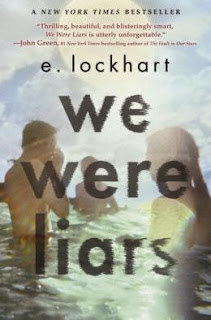
Five top books featuring unreliable narrators

Avery Hastings is the author of Feuds and Torn. One of her five favorite books featuring unreliable narrators, as shared at Tor.com:
We Were Liars

We Were Liars needs no introduction for most; but this suspenseful tale of a girl whose very existence revolves around the happy summers she spends on her family’s private island is one that begs multiple reads for the twists it reveals each time. This novel is where onion similes are born. With layers both beautiful and horrific and tension so anxiety-laden you may need a Xanax, E. Lockhart’s beautiful prose will captivate. Although experienced readers of psychological thrillers may anticipate the truth behind Cadence’s headaches and her family’s grief, the twist will feel no less gratifying (or haunting). Cadence is an unreliable narrator whom you feel for…and whom your heart breaks for.
Read about another entry on the list.

We Were Liars is among Darren Croucher's five favorite YA novels featuring liars, Michael Waters's six must-read YA books for Mr. Robot fans, Lindsey Lewis Smithson's top seven sob-inducing books that deserve to be made into movies, Ruth Ware's top ten psychological thrillers, and Meredith Moore's five favorite YA thrillers.

--Marshal Zeringue

What is Christian Lee Novetzke reading?

Featured at Writers Read: Christian Lee Novetzke, author of The Quotidian Revolution: Vernacularization, Religion, and the Premodern Public Sphere in India.

His entry begins:
Amitav Ghosh is a writer I admire. Ghosh is a trained anthropologist and he taught at Columbia for many years. When I was a graduate student there, I attended a few of his lectures. I love his writing and the linguistic worlds he creates, especially in the Ibis trilogy. Now I’ve been reading The Great Derangement by Ghosh. It’s about the madness of our ecological self-destruction. I’ve only just started the book, but I like what he does in the beginning: he reminds us that the story of the earth around us, of the climate in which our lives transpire, is also the story of...[read on]
About The Quotidian Revolution, from the publisher:
In thirteenth-century Maharashtra, a new vernacular literature emerged to challenge the hegemony of Sanskrit, a language largely restricted to men of high caste. In a vivid and accessible idiom, this new Marathi literature inaugurated a public debate over the ethics of social difference grounded in the idiom of everyday life. The arguments of vernacular intellectuals pushed the question of social inclusion into ever-wider social realms, spearheading the development of a nascent premodern public sphere that valorized the quotidian world in sociopolitical terms.

The Quotidian Revolution examines this pivotal moment of vernacularization in Indian literature, religion, and public life by investigating courtly donative Marathi inscriptions alongside the first extant texts of Marathi literature: the Lilacaritra (1278) and the Jñanesvari (1290). Novetzke revisits the influence of Chakradhar (c. 1194), the founder of the Mahanubhav religion, and Jnandev (c. 1271), who became a major figure of the Varkari religion, to observe how these avant-garde and worldly elites pursued a radical intervention into the social questions and ethics of the age. Drawing on political anthropology and contemporary theories of social justice, religion, and the public sphere, The Quotidian Revolution explores the specific circumstances of this new discourse oriented around everyday life and its lasting legacy: widening the space of public debate in a way that presages key aspects of Indian modernity and democracy.
Learn more about The Quotidian Revolution at the Columbia University Press website.

The Page 99 Test: The Quotidian Revolution.

Writers Read: Christian Lee Novetzke.

--Marshal Zeringue

Five top books about inspiring writers

At the BN Teen blog, Jenny Kawecki tagged five top novels about inspiring writers, including:
Fangirl, by Rainbow Rowell

Cath has always shared her life with her twin sister, Wren, who understands her weird quirks and her obsession with Simon Snow and her dedication to writing fanfics. So when Wren refuses to room with Cath their freshman year of college, Cath is left to navigate a completely new environment without her backup. Add in a cute boy who doesn’t read, a writing buddy who’s totally self-absorbed, and a professor who doesn’t think fan fiction is real writing, and Cath starts wishing she could just crawl into a Simon and Baz story and be done with it. For all the moments when you’re not sure you can go on writing, Fangirl is the book you need.
Read about another entry on the list.

--Marshal Zeringue

Saturday, November 05, 2016

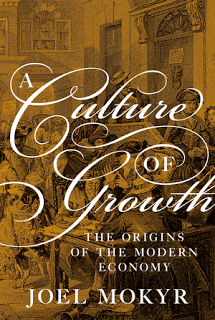
Pg. 99: Joel Mokyr's "A Culture of Growth"

Featured at the Page 99 Test: A Culture of Growth: The Origins of the Modern Economy by Joel Mokyr.

About the book, from the publisher:
During the late eighteenth century, innovations in Europe triggered the Industrial Revolution and the sustained economic progress that spread across the globe. While much has been made of the details of the Industrial Revolution, what remains a mystery is why it took place at all. Why did this revolution begin in the West and not elsewhere, and why did it continue, leading to today’s unprecedented prosperity? In this groundbreaking book, celebrated economic historian Joel Mokyr argues that a culture of growth specific to early modern Europe and the European Enlightenment laid the foundations for the scientific advances and pioneering inventions that would instigate explosive technological and economic development. Bringing together economics, the history of science and technology, and models of cultural evolution, Mokyr demonstrates that culture—the beliefs, values, and preferences in society that are capable of changing behavior—was a deciding factor in societal transformations.

Mokyr looks at the period 1500–1700 to show that a politically fragmented Europe fostered a competitive “market for ideas” and a willingness to investigate the secrets of nature. At the same time, a transnational community of brilliant thinkers known as the “Republic of Letters” freely circulated and distributed ideas and writings. This political fragmentation and the supportive intellectual environment explain how the Industrial Revolution happened in Europe but not China, despite similar levels of technology and intellectual activity. In Europe, heterodox and creative thinkers could find sanctuary in other countries and spread their thinking across borders. In contrast, China’s version of the Enlightenment remained controlled by the ruling elite.

Combining ideas from economics and cultural evolution, A Culture of Growth provides startling reasons for why the foundations of our modern economy were laid in the mere two centuries between Columbus and Newton.
Learn more about A Culture of Growth at the Princeton University Press.

The Page 99 Test: The Enlightened Economy.

The Page 99 Test: A Culture of Growth.

--Marshal Zeringue
What is Stephen D. Engle reading?

Featured at Writers Read: Stephen D. Engle, author of Gathering to Save a Nation: Lincoln and the Union's War Governors.

His entry begins:
I'm reading Richard Wightman Fox's Lincoln’s Body: A Cultural History…..which explores the many (and varied) uses of...[read on]
About Gathering to Save a Nation, from the publisher:
In this rich study of Union governors and their role in the Civil War, Stephen D. Engle examines how these politicians were pivotal in securing victory. In a time of limited federal authority, governors were an essential part of the machine that maintained the Union while it mobilized and sustained the war effort. Charged with the difficult task of raising soldiers from their home states, these governors had to also rally political, economic, and popular support for the conflict, at times against a backdrop of significant local opposition.

Engle argues that the relationship between these loyal-state leaders and Lincoln’s administration was far more collaborative than previously thought. While providing detailed and engaging portraits of these men, their state-level actions, and their collective cooperation, Engle brings into new focus the era’s complex political history and shows how the Civil War tested and transformed the relationship between state and federal governments.
Learn more about Gathering to Save a Nation at the publisher's website.

My Book, The Movie: Gathering to Save a Nation.

Writers Read: Stephen D. Engle.

--Marshal Zeringue

Seven top classic science fiction space odysseys

At the BookBub Blog Elisabeth Delp tagged seven classic science fiction space odysseys, including:
The Martian by Andy Weir

Six days ago, astronaut Mark Watney became one of the first people to walk on Mars. Now, he’s sure he’ll be the first person to die there.

After a dust storm nearly kills him and forces his crew to evacuate while thinking him dead, Mark finds himself stranded and completely alone with no way to even signal Earth that he’s alive — and even if he could get word out, his supplies would be gone long before a rescue could arrive.

Chances are, though, he won’t have time to starve to death. The damaged machinery, unforgiving environment or plain-old “human error” are much more likely to kill him first. But Mark isn’t ready to give up yet. Drawing on his ingenuity, his engineering skills — and a relentless, dogged refusal to quit — he steadfastly confronts one seemingly insurmountable obstacle after the next. Will his resourcefulness be enough to overcome the impossible odds against him?

Perfect for: Everyone. Seriously.
Read about another entry on the list.

The Martian is among Alexandra Oliva's five novels that get important aspects of survival right, Jeff Somers's seven works of speculative fiction that don’t feel all that speculative and  five top sci-fi novels with plausible futuristic technology, Ernest Cline’s ten favorite SF novels, and James Mustich's five top books on visiting Mars.

--Marshal Zeringue

Pg. 69: Tabish Khair's "Just Another Jihadi Jane"

Featured at the Page 69 Test: Just Another Jihadi Jane by Tabish Khair.

About Just Another Jihadi Jane, from the publisher:
A novel about friendship, faith, and alienation, Just Another Jihadi Jane tells the tale of Islamist radicalization from the inside. Two children of Muslim immigrants in England's industrial north--thoughtful Jamilla and rebellious Ameena--become best friends, and find in religion and social media a community as welcoming and encouraging as their public education is estranging. After Jamilla's father dies and her brother marries, the two girls leave England and join the Islamist cause in Syria. The intellectual and emotional poverty as well as the violence they find there creates a story as gripping as it is heart-wrenching. As did All Quiet on the Western Front, Tabish Khair's novel reminds a new generation that heroism and sacrifice are not limited to one side in a conflict, and that the first victims of a murderous regime are those who live within it.
Visit Tabish Khair's website.

The Page 69 Test: The Thing about Thugs.

My Book, The Movie: The Thing About Thugs.

Writers Read: Tabish Khair.

My Book, The Movie: Just Another Jihadi Jane.

The Page 69 Test: Just Another Jihadi Jane.

--Marshal Zeringue

Friday, November 04, 2016

Jeff Kinney's 6 best books

Jeff Kinney is the author of the bestselling Diary Of A Wimpy Kid series. One of his six best books, as shared at the Daily Express:
THE LIFE AND TIMES OF THE THUNDERBOLT KID by Bill Bryson

I like the clarity of his writing and this is his funniest book. It’s a kindred spirit to Diary Of A Wimpy Kid. It covers his early years growing up and the overriding message is life was better in the old days. It inspired me to open a bookstore in my town of Plainville, Massachusetts.
Read about another entry on the list.

The Life and Times of the Thunderbolt Kid is among the books that made a difference to Brian Williams.

--Marshal Zeringue

Pg. 99: Christian Lee Novetzke's "The Quotidian Revolution"

Featured at the Page 99 Test: The Quotidian Revolution: Vernacularization, Religion, and the Premodern Public Sphere in India by Christian Lee Novetzke.

About the book, from the publisher:
In thirteenth-century Maharashtra, a new vernacular literature emerged to challenge the hegemony of Sanskrit, a language largely restricted to men of high caste. In a vivid and accessible idiom, this new Marathi literature inaugurated a public debate over the ethics of social difference grounded in the idiom of everyday life. The arguments of vernacular intellectuals pushed the question of social inclusion into ever-wider social realms, spearheading the development of a nascent premodern public sphere that valorized the quotidian world in sociopolitical terms.

The Quotidian Revolution examines this pivotal moment of vernacularization in Indian literature, religion, and public life by investigating courtly donative Marathi inscriptions alongside the first extant texts of Marathi literature: the Lilacaritra (1278) and the Jñanesvari (1290). Novetzke revisits the influence of Chakradhar (c. 1194), the founder of the Mahanubhav religion, and Jnandev (c. 1271), who became a major figure of the Varkari religion, to observe how these avant-garde and worldly elites pursued a radical intervention into the social questions and ethics of the age. Drawing on political anthropology and contemporary theories of social justice, religion, and the public sphere, The Quotidian Revolution explores the specific circumstances of this new discourse oriented around everyday life and its lasting legacy: widening the space of public debate in a way that presages key aspects of Indian modernity and democracy.
Learn more about The Quotidian Revolution at the Columbia University Press website.

The Page 99 Test: The Quotidian Revolution.

--Marshal Zeringue

Ten top books about exile

Nada Awar Jarrar's latest novel is An Unsafe Haven. One of her ten favorite books about exile, as shared at the Guardian:
Brooklyn by Colm Tóibín

Beset by homesickness as an Irish immigrant to the US, Eilis Lacey manages to fashion a new and more sophisticated version of herself there which, once she returns home for a visit, is impossible to shake. This is a haunting depiction of what it means to reinvent oneself and permanently suffer the loss of belonging. Tóibín’s writing is austere and seemingly effortless, and is evocative of the depth of loneliness plaguing his characters, no matter where they happen to be.
Read about another book on the list.

--Marshal Zeringue

Robin Blake's "Skin and Bone," the movie

Featured at My Book, The Movie: Skin & Bone by Robin Blake.

The entry begins:
Unlike some novelists I don’t spend much time fantasizing about my Cragg and Fidelis stories being turned into Hollywood films. However, just for the sake of argument, to cast the right actor in these roles would mean forming a proper understanding of their characters. Cragg is no tough guy, but a lawyer with a humane heart, a sharp eye for injustice and a serviceable intelligence. Atticus Finch as played by Gregory Peck in To Kill a Mockingbird comes to mind. Also James Stewart’s performance as Paul Biegler in Anatomy of a Murder, or, in British terms the defence lawyer Sir Wilfred Roberts in Agatha Christie’s Witness for the Prosecution, wonderfully played by Charles Laughton. The perfect actor of today would, I suppose, be...[read on]
Visit Robin Blake's website.

The Page 69 Test: Skin & Bone.

My Book, The Movie: Skin & Bone by Robin Blake.

--Marshal Zeringue

Thursday, November 03, 2016

Five of the best thrillers that resist easy fixes

Jeff Somers is the author of the Avery Cates series, The Ustari Cycle, Lifers, and Chum (among many other books) and numerous short stories.

At the B&N Reads blog he tagged five thrillers that resist easy fixes, including:
The Day of the Jackal, by Frederick Forsyth

The attention to detail and real-life roots of Forsyth’s 1971 novel are legendary. He was working as a journalist in Paris when he wrote the story about an assassin hired to kill the President of France, and drew on actual events he witnessed or heard about through firsthand accounts, setting many of the novel’s scenes in well-researched places. In fact, rumor has it the assassin’s sniping spot can still be located—with the precise view described in the text. When you can physically visit the settings of the story and inspect them for accuracy, it’s safe to say nothing was handwaved.
Read about another entry on the list.

The Day of the Jackal is among Sam Bourne's five favorite classic thrillers and Christopher Timothy's six best books.

--Marshal Zeringue

Pg. 99: Caroline Winterer's "American Enlightenments"

Featured at the Page 99 Test: American Enlightenments: Pursuing Happiness in the Age of Reason by Caroline Winterer.

About the book, from the publisher:
A provocative reassessment of the concept of an American golden age of European-born reason and intellectual curiosity in the years following the Revolutionary War

The accepted myth of the “American Enlightenment” suggests that the rejection of monarchy and establishment of a new republic in the United States in the eighteenth century was the realization of utopian philosophies born in the intellectual salons of Europe and radiating outward to the New World. In this revelatory work, Stanford historian Caroline Winterer argues that a national mythology of a unitary, patriotic era of enlightenment in America was created during the Cold War to act as a shield against the threat of totalitarianism, and that Americans followed many paths toward political, religious, scientific, and artistic enlightenment in the 1700s that were influenced by European models in more complex ways than commonly thought. Winterer’s book strips away our modern inventions of the American national past, exploring which of our ideas and ideals are truly rooted in the eighteenth century and which are inventions and mystifications of more recent times.
Learn more about American Enlightenments at the Yale University Press website.

The Page 99 Test: American Enlightenments.

--Marshal Zeringue

What is Martha Freeman reading?

Featured at Writers Read: Martha Freeman, author of Strudel's Forever Home.

Her entry begins:
About a year ago I joined a take-no-prisoners book group, by which I mean we read only serious stuff, and we are crazy opinionated. We keep scaring new members away. This year we’ve read Swann’s Way and The Magic Mountain, along with a book of essays on botany, Cabaret of Plants. Currently, we are reading Invisible Man by Ralph Ellison, a book I hadn’t read since high school. I am happy to report that a) it stands up well, and b) I am smarter than I was in high school.

Invisible Man, National Book Award winner in 1953, is the story of a never-named black man who is increasingly disillusioned after being expelled from college in the south and moving to New York City. Almost everyone he meets seems to...[read on]
About Strudel's Forever Home, from the publisher:
Middle-grade readers will get a dog's eye view as an irrepressible dachshund narrates this touching story of a dog who needed a family, and a struggling family who needed a dog.

Strudel, a homeless dachshund, loves listening to Jake read from Chief, Dog of the Old West at the animal shelter. When Jake decides to adopt him, Strudel vows to be as brave and loyal as Chief. Only trying to fend off danger in his new home leads to trouble when Strudel makes mistakes such as shredding a "rattlesnake" that is actually a garden hose. But despite Strudel's humorous miscalculations, his instincts are mostly correct. He knows who is really a member of his pack, and that Mom's boyfriend Arnie can't be trusted.
Visit Martha Freeman's website.

My Book, The Movie: Strudel's Forever Home.

Writers Read: Martha Freeman.

--Marshal Zeringue

Pg. 69: Tina Connolly's "Seriously Shifted"

Featured at the Page 69 Test: Seriously Shifted by Tina Connolly.

About Seriously Shifted, from the publisher:
Tina Connolly's Seriously Shifted is a sparkling new adventure about teen witch Camellia and her mother, wicked witch Sarmine, introduced to readers in Seriously Wicked.

Teenage witch Cam isn’t crazy about the idea of learning magic. She’d rather be no witch than a bad one. But when a trio of her mother’s wicked witch friends decide to wreak havoc in her high school, Cam has no choice but to try to stop them.

Now Cam’s learning invisibility spells, dodging exploding cars, and pondering the ethics of love potions. All while trying to keep her grades up and go on a first date with her crush. If the witches don’t get him first, that is.

Can’t a good witch ever catch a break?
Visit Tina Connolly's website and Twitter perch.

My Book, The Movie: Seriously Wicked.

The Page 69 Test: Seriously Wicked.

Writers Read: Tina Connolly.

The Page 69 Test: Seriously Shifted.

--Marshal Zeringue

Wednesday, November 02, 2016

Three top books on Argentina

At the Guardian, Pushpinder Khaneka named three of the best books on Argentina. One title on the list:
The Tango Singer by Tomás Eloy Martínez

Bruno Cadogan, a doctoral student in New York, is having trouble with his dissertation on Jorge Luis Borges’s essays on the tango. He decides to travel to Buenos Aires in search of inspiration and a disabled, haemophiliac tango singer named Julio Martel – rumoured to be even better than the legendary Carlos Gardel.

Cadogan arrives in the Argentinian capital in 2001, in the midst of financial meltdown and political instability. He traverses Buenos Aires in pursuit of the elusive singer, who makes unscheduled appearances in seemingly random locations across the city. But as he begins to unravel the mystery of Martel’s life, he learns that the tango singer’s performances map the city’s murky past.

Cadogan also develops an obsession with the “The Aleph” – the imaginary point in space that contains the entire universe – as described in a Borges short story.

In this vibrant and passionate novel, Tomás Eloy Martínez marries fact with fiction to reveal unsavoury events – human trafficking, torture and killings – in the history of “a city where unpunished crimes abound”. But it’s also an homage to both Buenos Aires and Borges.

Martínez, one of Argentina’s best-known journalists and authors, was forced into exile in the 1970s. He went to Venezuela, later moving to the US, and didn’t return to live in Argentina until 2006. He died in 2010.
Read about another entry on the list.

--Marshal Zeringue

Pg. 99: Clifton Hood's "In Pursuit of Privilege"

Featured at the Page 99 Test: In Pursuit of Privilege: A History of New York City's Upper Class and the Making of a Metropolis by Clifton Hood.

About the book, from the publisher:
A history that extends from the 1750s to the present, In Pursuit of Privilege recounts upper-class New Yorkers' struggle to create a distinct world guarded against outsiders, even as economic growth and democratic opportunity enabled aspirants to gain entrance. Despite their efforts, New York City's upper class has been drawn into the larger story of the city both through class conflict and through their role in building New York's cultural and economic foundations.

In Pursuit of Privilege describes the famous and infamous characters and events at the center of this extraordinary history, from the elite families and wealthy tycoons of the eighteenth and nineteenth centuries to the Wall Street executives of today. From the start, upper-class New Yorkers have been open and aggressive in their behavior, keen on attaining prestige, power, and wealth. Clifton Hood sharpens this characterization by merging a history of the New York economy in the eighteenth century with the story of Wall Street's emergence as an international financial center in the late nineteenth and early twentieth centuries, as well as the dominance of New York's financial and service sectors in the 1980s. Bringing together several decades of upheaval and change, he shows that New York's upper class did not rise exclusively from the Gilded Age but rather from a relentless pursuit of privilege, affecting not just the urban elite but the city's entire cultural, economic, and political fabric.
Learn more about In Pursuit of Privilege at the Columbia University Press.

The Page 99 Test: In Pursuit of Privilege.

--Marshal Zeringue

Five top historical fiction YA novels set during World War II

Ryan Graudin's new novel is Blood for Blood. Among her five favorite historical fiction YAs, all set during World War II, as shared at the BN Teen Blog:
Code Name Verity and Rose Under Fire, by Elizabeth Wein

...I’ve decided Elizabeth Wein is indeed the queen of World War II YA. Both Code Name Verity and Rose Under Fire ground the reader in war-torn Europe, and Wein’s characters feel so real I expected to find photographs of them at the end of these novels. I’m so excited that there’s a prequel to Code Name Verity in the works.
Read about another entry on the list.

Code Name Verity also appears on Kelly Anderson's list of seven awesome books that celebrate female friendship, Natalie Zutter's top seven list of YA books where friendship trumps romance, Arwen Elys Dayton's top five list od books about false identities, Melissa Albert's top five list of YA books that might make one cry, Sara Brady's list of six of the best spies in romance, Lenore Appelhans's top ten list of teen books featuring flashbacks and Lydia Syson's list of ten of the best historical novels for young readers.

--Marshal Zeringue

Michael Kun & Susan Mullen's "We Are Still Tornadoes," the movie

Featured at Our Book, The Movie: We Are Still Tornadoes by Michael Kun and Susan Mullen.

From the entry:
Okay, so you want to know about casting a movie based on our book.

Well, by way of background, We Are Still Tornadoes is the story of two high school friends in the early 1980s when one (Cath) leaves for college and the other (Scott) stays home. It’s told entirely through their correspondence over the course of about 8 months of their lives apart. Letters, notes, cards, etc., etc., you get the point.

(This is where one of your readers says, “Doesn’t this jackass know that’s called an epistolarly novel?” First, let me say first that reader is very rude. And, second, yes, I know that our book is an epistolary novel. I've written two other epistolary novels, The Locklear Letters and Everybody Says Hello, and I’ve learned from them not to assume that everyone is familiar with that phrase. And I’ve also learned that people get embarrassed if you explain the phrase to them. I have no interest in embarrassing anyone. I always try to find a way to explain the phrase without embarrassing anyone. Like this paragraph.)

You might think that the epistolary format would render our novel completely unfilmable -- how the hell do you make a movie about letters, right? -- but I disagree. In fact, in the right hands, I could see We Are Still Tornadoes being a very unique – and very funny – movie...[read on]
Visit Michael Kun's website.

Our Book, The Movie: We Are Still Tornadoes.
--Marshal Zeringue

Tuesday, November 01, 2016

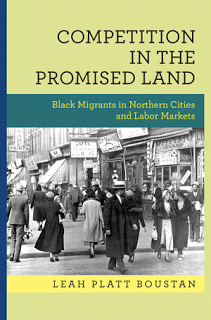
What is Leah Platt Boustan reading?

Featured at Writers Read: Leah Platt Boustan, author of Competition in the Promised Land: Black Migrants in Northern Cities and Labor Markets.

Her entry begins:
Most of my reading these days is with my two kids. We especially enjoy Jake Makes a World: Jacob Lawrence, A Young Artist in Harlem. The setting of the book, Harlem in the early 20th century, interests me because of my work on the Great Black Migration. My kids like the book because the illustrations are gorgeous, the colors are bright, almost as if Jacob Lawrence himself was the illustrator. And they like imagining that their art could...[read on]
About Competition in the Promised Land, from the publisher:
From 1940 to 1970, nearly four million black migrants left the American rural South to settle in the industrial cities of the North and West. Competition in the Promised Land provides a comprehensive account of the long-lasting effects of the influx of black workers on labor markets and urban space in receiving areas.

Traditionally, the Great Black Migration has been lauded as a path to general black economic progress. Leah Boustan challenges this view, arguing instead that the migration produced winners and losers within the black community. Boustan shows that migrants themselves gained tremendously, more than doubling their earnings by moving North. But these new arrivals competed with existing black workers, limiting black–white wage convergence in Northern labor markets and slowing black economic growth. Furthermore, many white households responded to the black migration by relocating to the suburbs. White flight was motivated not only by neighborhood racial change but also by the desire on the part of white residents to avoid participating in the local public services and fiscal obligations of increasingly diverse cities.

Employing historical census data and state-of-the-art econometric methods, Competition in the Promised Land revises our understanding of the Great Black Migration and its role in the transformation of American society.
Learn more about Competition in the Promised Land at the Princeton University Press website.

Writers Read: Leah Platt Boustan.

--Marshal Zeringue

Pg. 99: Paul Staiti's "Of Arms and Artists"

Featured at the Page 99 Test: Of Arms and Artists: The American Revolution through Painters' Eyes by Paul Staiti.

About the book, from the publisher:
The images accompanying the founding of the United States--of honored Founders, dramatic battle scenes, and seminal moments--gave visual shape to Revolutionary events and symbolized an entirely new concept of leadership and government. Since then they have endured as indispensable icons, serving as historical documents and timeless reminders of the nation's unprecedented beginnings.

As Paul Staiti reveals in Of Arms and Artists, the lives of the five great American artists of the Revolutionary period--Charles Willson Peale, John Singleton Copley, John Trumbull, Benjamin West, and Gilbert Stuart--were every bit as eventful as those of the Founders with whom they continually interacted, and their works contributed mightily to America's founding spirit. Living in a time of breathtaking change, each in his own way came to grips with the history being made by turning to brushes and canvases, the results often eliciting awe and praise, and sometimes scorn. Ever since the passing of the last eyewitnesses to the Revolution, their imagery has connected Americans to 1776, allowing us to interpret and reinterpret the nation's beginning generation after generation. The collective stories of these five artists open a fresh window on the Revolutionary era, making more human the figures we have long honored as our Founders, and deepening our understanding of the whirlwind out of which the United States emerged.
Visit Paul Staiti's website.

The Page 99 Test: Of Arms and Artists.

--Marshal Zeringue

Ten top train stories

Kenneth Oppel is the author of many award-winning books, including The Boundless. One of his ten favorite train stories, as shared at the Guardian:
Around the World in 80 Days by Jules Verne

There are, of course, many enticing modes of transportation in this hectic novel, but one of my favourite sequences is the transcontinental train trip across the American West, complete with uncooperative bison, a rickety suspension bridge, and a Sioux Indian attack.
Read about another entry on the list.

--Marshal Zeringue

Pg. 69: Robin Blake's "Skin and Bone"

Featured at the Page 69 Test: Skin & Bone by Robin Blake.

About the book, from the publisher:
It’s 1743, and the tanners of Preston are a pariah community, plying their unwholesome trade beside a stretch of riverside marsh where many Prestonians by ancient right graze their livestock. When the body of a newborn child is found in one of their tanning pits, Cragg’s inquiry falls foul of a cabal of merchants dead set on modernizing the town’s economy and regarding the despised tanners—and Cragg’s apparent championship of them—as obstacles to their plan. The murder of a baby is just the evidence they need to get rid of the tanners once and for all.

But the inquest into the baby’s death is disrupted when the inn where it is being held mysteriously burns down, and Cragg himself faces a charge of lewdness, jeopardizing his whole future as a coroner. But the fates have not finished playing with him just yet. The sudden and suspicious death of a very prominent person may just, with the help of Fidelis’s sharp forensic skills, bring about Cragg’s redemption...
Visit Robin Blake's website.

The Page 69 Test: Skin & Bone.

--Marshal Zeringue