Saturday, August 09, 2014

What is Jon Keller reading?

Featured at Writers Read: Jon Keller, author of the novel, Of Sea and Cloud.

His entry begins:
I recently moved out of my house and onto a sailboat, so the books I’m able to have around have been drastically reduced. One week aboard and I’m already missing some—last night, it was Homer that I was missing.

Although I’m a fiction writer, most of the two dozen books that made the cut are poetry—Wright, Yeats, Neruda, Wordsworth, Ikkyu…

On the fiction to-read list are: David Copperfield, The Son, The Plover, and Forest of Fortune.

Notable among the non-fiction is the Autobiography of Mark Twain.

For several years now, I’ve had two books that I consistently go back to. The Stephen Mitchell edition of Song of Myself, and...[read on]
About Of Sea and Cloud, from the publisher:
Nicolas Graves raised his sons to be lobstermen. Bill and Joshua (known as Jonah) Graves grew up aboard their father’s boat—the Cinderella—learning the rules and rites of the antiquated business they love. But when their father is lost at sea and the price of lobster crashes worldwide, Bill and Jonah must decide how much they are willing to risk for their family legacy.

Standing against them is Osmond Raymond— former Calvinist minister, mystic, captain of the Sanctity, and their father’s business partner for more than twenty years. Together with his grandson and heir, Julius, Osmond is determined to push the Graves family out of their lobster pound, regardless of the cost or the consequences.

In the tradition of Russell Banks’ Affliction, Annie Proulx’s The Shipping News or Philipp Meyer’s The Son, Of Sea and Cloud is a powerful, haunting novel that, with extraordinary depth and compassion, explores the relationships between fathers and sons, tradition and change, and the surprising ways in which globalization is affecting some of the most isolated harbors on this planet.
Visit Jon Keller's website.

Writers Read: Jon Keller.

--Marshal Zeringue

Friday, August 08, 2014

Four top novels set in awesome, unimaginable cold places

At The Barnes & Noble Book Blog Ellen Wehle tagged four top stories of ice and snow, including:
Above All Things, by Tanis Rideout

In 1924, George Mallory made his final attempt to scale Mount Everest and then vanished; his frozen body wasn’t discovered on the mountain until 1999. People of his day assumed he never reached the summit…but perhaps he did? This story alternates between George’s grand adventure and the more ordinary adventures of his wife, Ruth, back home raising three children while he’s off hogging the limelight. Fans of The Paris Wife will love this behind-the-scenes look at what it’s like to be married to a Great Man. Their courtship (shown in flashback) is especially moving—as when George, leaving Ruth for a climb, tears out the last page of her book, saying, “You’ll never know how it ends unless you agree to see me again.” Who wouldn’t fall in love with the guy? Such tenderness makes George’s fate all the more heartbreaking.
Read about another entry on the list.

My Book, The Movie: Above All Things.

--Marshal Zeringue

Pg. 69: Kim Boykin's "Palmetto Moon"

Featured at the Page 69 Test: Palmetto Moon: A Lowcountry Novel by Kim Boykin.

About the book, from the publisher:
June, 1947. Charleston is poised to celebrate the biggest wedding in high-society history, the joining of two of the oldest families in the city. Except the bride is nowhere to be found

Unlike the rest of the debs she grew up with, Vada Hadley doesn’t see marrying Justin McLeod as a blessing—she sees it as a life sentence. So when she finds herself one day away from a wedding she doesn’t want, she’s left with no choice but to run away from the future her parents have so carefully planned for her.

In Round O, South Carolina, Vada finds independence in the unexpected friendships she forms at the boarding house where she stays, and a quiet yet fulfilling courtship with the local diner owner, Frank Darling. For the first time in her life, she finally feels like she’s where she’s meant to be. But when her dear friend Darby hunts her down, needing help, Vada will have to confront the life she gave up—and decide where her heart truly belongs.
Learn more about the book and author at Kim Boykin's website.

The Page 69 Test: The Wisdom of Hair.

My Book, The Movie: The Wisdom of Hair.

Coffee with a Canine: Kim Boykin & Wylie, Molly and Toby.

Writers Read: Kim Boykin.

The Page 69 Test: Palmetto Moon.

--Marshal Zeringue

Joseph Spillane's "Coxsackie: The Life and Death of Prison Reform," the movie

Featured at My Book, The Movie: Coxsackie: The Life and Death of Prison Reform by Joseph F. Spillane.

The entry begins:
Coxsackie tells the story of a “reform” prison built in Depression-era New York State, built to educate young men who were thought to be more promising than adult male felony offenders. Built on a foundation of good intentions, Coxsackie prison quickly foundered on the shoals of violence and racial division. For the thousands of young men who experienced imprisonment there, Coxsackie was an education of the worst kind. The collapse of progressive good intentions is a powerful one, but ultimately a depressing one, and I am not sure that it contains the sort of redemptive element that would make for a mainstream film. Still, one can fantasize…

When thinking about casting a film based on the book, I can’t help but think back to the 1955 film...[read on]
Visit Joseph Spillane's website.

My Book, The Movie: Coxsackie.

--Marshal Zeringue

Pg. 99: Saul Dubow's "Apartheid, 1948-1994"

Featured at the Page 99 Test: Apartheid, 1948-1994 by Saul Dubow.

About the book, from the publisher:
This new study offers a fresh interpretation of apartheid South Africa. Emerging out of the author's long-standing interests in the history of racial segregation, and drawing on a great deal of new scholarship, archival collections, and personal memoirs, he situates apartheid in global as well as local contexts. The overall conception of Apartheid, 1948-1994 is to integrate studies of resistance with the analysis of power, paying attention to the importance of ideas, institutions, and culture.

Saul Dubow refamiliarizes and defamiliarizes apartheid so as to approach South Africa's white supremacist past from unlikely perspectives. He asks not only why apartheid was defeated, but how it survived so long. He neither presumes the rise of apartheid nor its demise. This synoptic reinterpretation is designed to introduce students to apartheid and to generate new questions for experts in the field.
Learn more about Apartheid, 1948-1994 at the Oxford University Press website.

The Page 99 Test: Apartheid, 1948-1994.

--Marshal Zeringue

Thursday, August 07, 2014

Ten top books about The First World War

Justin Go is author of The Steady Running Of The Hour. For the Telegraph, he tagged his ten favorite works about The First World War, including:
ALL QUIET ON THE WESTERN FRONT by Erich Maria Remarque

This classic novel derives its tragic power from its simplicity. By following a group of young soldiers in their journey from naïve schoolchildren to hardened soldiers, Remarque gives us intimate access to a generation coming to age in brutal combat.

One of the great anti-war novels, it has shaped our image not only of the Great War but of all warfare and its human consequences.
Read about another entry on the list.

All Quiet on the Western Front is among Molly Schoemann-McCann's top ten books about World War I.

--Marshal Zeringue

Pg. 69: Kelli Stanley's "City of Ghosts"

Featured at the Page 69 Test: City of Ghosts (A Miranda Corbie Mystery) by Kelli Stanley.

About the book, from the publisher:
June, 1940.

For the United States, war is on the horizon.

For Miranda Corbie, private investigator and erstwhile escort, there are debts to be paid and memories—long-suppressed and willfully forgotten—to be resurrected. Enter the U.S. State Department and the man who helped Miranda get her PI license. A man she owes. A man who asks her to track a chemistry professor here in San Francisco whom he suspects is a spy for the Nazis. Playing along may get Miranda a ticket to Blitz-bombed England and answers about her past…if she survives.

Through sordid back alleys and art gallery halls, from drag dress nightclubs to a Nazi costume ball, Miranda's journey into fear takes her on the famed City of San Francisco streamliner and to Reno, Nevada, the Biggest Little City in the World…where she finds herself framed for a murder she never anticipated. Forced to go underground, Miranda soldiers on alone, determined to find the truth about a murder, a Nazi spy, and her own troubling past.

But Miranda will have to learn the difference between reality and illusion, from despair to deceit and factual to fake, as she tries to get her life back…and navigates a City of Ghosts.

Miranda Corbie's back. Noir will never be the same.

And Kelli Stanley will once again mesmerize readers with the most thrilling novel yet in her award-winning series.
Learn more about the novel and author at Kelli Stanley's website.

The Page 69 Test: City of Dragons.

My Book, The Movie: City of Dragons.

Coffee with a Canine: Kelli Stanley & Bertie.

My Book, the Movie: City of Secrets.

The Page 69 Test: City of Secrets.

The Page 69 Test: City of Ghosts.

--Marshal Zeringue

Four books where psychiatrists take center stage

At The Barnes & Noble Book Blog Ellen Wehle tagged "four mind-bending books, in which therapists and the life of the mind take center stage," including:
The House on the Cliff, by Charlotte Williams

In shrink-as-detective #2, Jessica Mayhew has a successful therapy practice and a personal life that’s been in tatters ever since her husband confessed to a one-night stand. Enter hunky actor Gwydion Morgan, who comes to Jessica for treatment of a phobia I guarantee you’ve never heard of: koumpounophobia (really). Even though Jessica’s first rule is “Never get too involved with clients,” she’s attracted to Gwydion from the get-go. When she hears he may be suicidal, she makes a house call to the Morgan family home, a mansion perched on the bleak Welsh coast, despite her better judgment.

This is a great debut with plenty of humorous peeks “behind the curtain,” as Jessica reveals what therapists really think about their patients. I especially enjoyed seeing a mature woman tempted to have a fling with a younger man, since we see the opposite so much more often. Cougars, and cougar-appreciators, this one’s for you.
Read about another entry on the list.

The Page 69 Test: The House on the Cliff.

--Marshal Zeringue

James Howard Kunstler's "A History of the Future," the movie

Featured at My Book, the Movie: A History of the Future by James Howard Kunstler.

The entry begins:
This book is third in a four-book cycle called collectively the World Made By Hand novels, named after the first of the series. They are all set in a small town in far upstate New York in the years following the economic collapse of the USA. I’ve already made two journeys (2009, 2011) to the top level of HBO with these books — both times I was beaten out by rival books that featured zombies (mine lacked zombies). A central character in all the books is the evangelical minister, Brother Jobe, head honcho of a Jesus cult that has left the “disorders” of the south to settle his 78 “brothers and sisters” in my northern village of Union Grove, New York. Early on, I had imagined Philip...[read on]
Visit James Howard Kunstler's website.

Writers Read: James Howard Kunstler.

The Page 69 Test A History of the Future.

My Book, the Movie: A History of the Future.

--Marshal Zeringue

What is Mandy Hager reading?

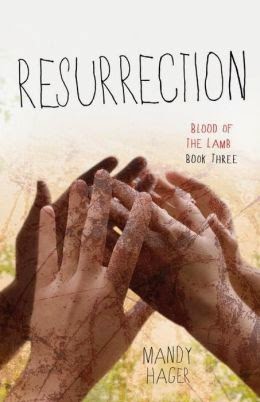
Featured at Writers Read: Mandy Hager, author of Resurrection.

Her entry begins:
I’m currently in Menton in the South of France, thanks to the Katherine Mansfield Menton Fellowship – a writing award that allows me to stay here for six months as I research a new book project. As a result I’ve been reading mainly non fiction books related to my subject: the 12th century French nun Héloïse d'Argenteuil. She and her religious philosopher lover Peter Abelard have been famous since the 15th century, after the discovery of a series of letters they wrote to each other following a passionate and scandalous love affair. The letters reveal Héloïse as a passionate, fiercely intelligent and forward-thinking woman at a time when the place (and rights) of women were under siege by a reformation in Christian thinking and politics. Her beautiful writing and her raw, pain-filled honesty have captured people’s imaginations ever since – including mine! So I plan to write a novel from her point of view … but here’s a lot of reading I need to do first!

I have worked my way through a number of academic texts, essays and biographies, and am now re-reading the novel that first introduced me to her story: Helen Waddell’s classic 1933 novel Peter Abelard. Reading it again, after the last four months of intense research...[read on]
About Resurrection, from the publisher:
A futuristic novel for young adults, The Blood of the Lamb trilogy is, at its heart, political - a reflection on the way a few very powerful (mostly white) men hold the balance of power all around the world and maintain it through intimidation, incarceration, and fear.

When Maryam arrives back at Onewēre and tries to loosen the Apostles' religious stranglehold by sharing the miraculous remedy for Te Matee lai, she finds herself captured once again - prey to the Apostles' deadly game. The ruling elite manipulate her return by setting in motion a highly orchestrated ritual before a hysterical and brain-washed crowd. Somehow Maryam must get the islanders to listen to her plea that they start thinking for themselves - hoping to stir the independence in their hearts, even as she finds herself on the brink of death.
Learn more about the book and author at Mandy Hager's website and Facebook page.

My Book, The Movie: Into the Wilderness.

The Page 69 Test: Into the Wilderness.

Writers Read: Mandy Hager.

--Marshal Zeringue

Wednesday, August 06, 2014

Ten top novels about childbirth

Bethan Roberts's novels are The Pools, The Good Plain Cook, My Policeman, and Mother Island.

At the Guardian she tagged her top ten novels about childbirth, including:
The Handmaid's Tale by Margaret Atwood

A nightmarish vision of biological determinism, as practised by a speculative vision of a totalitarian former-USA. The Handmaid's Tale reminds us of the terrors of defining women solely by their reproductive abilities. Under Gilead's regime, our heroine Offred has no choice but to breed, and is allowed to do little else. But the lyrical flashbacks to her past also serve to offer a vision of the joys of motherhood and family life. Thus Atwood gives us the two sides of motherhood, magnified and distorted to compelling, vivid, terrifying effect.
Read about another entry on the list.

The Handmaid's Tale made Rachel Cantor's list of the ten worst jobs in books, Charlie Jane Anders and Kelly Faircloth's list of the best and worst childbirth scenes in science fiction and fantasy, Lisa Tuttle's critic's chart of the top Arthur C. Clarke Award winners, and PopCrunch's list of the sixteen best dystopian books of all time.

--Marshal Zeringue

Pg. 69: Ellen Cooney's "The Mountaintop School for Dogs and Other Second Chances"

Featured at the Page 69 Test: The Mountaintop School for Dogs and Other Second Chances by Ellen Cooney.

About the book, from the publisher:
The Sanctuary. High up on the mountain, the Sanctuary is a place of refuge. It is a place where humans save dogs, who, in turn, save the humans. It is a place where the past does not exist, where hopelessness is chased away, where the future hasn’t been written, where orphans and strays can begin to imagine a new meaning for “family.”

Evie is making her way to the Sanctuary. She has lied to gain entry. She has pretended to know more than she does about dogs, but she is learning fast. Once the indomitable Mrs. Auberchon lets her pass, she will find her way. Like the racing greyhound who refuses to move, the golden retriever who returns to his job as the Sanctuary’s butler every time he’s adopted, and the Rottweiler who’s a hopeless candidate for search-and-rescue, Evie comes from a troubled past. But as they all learn, no one should stay prisoner to a life she didn’t choose.

This is the story of two women and a whole pack of dogs who, having lost their way in the world, find a place at a training school—and radical rescue center—called the Sanctuary. It is a story of strays and rescues, kidnappings and homecomings, moving on and holding on and letting go. And it is, ultimately, a moving and hilarious chronicle of the ways in which humans and canines help each other find new lives, new selves, and new hope.
Visit Ellen Cooney's website.

Read--Coffee with a Canine: Ellen Cooney & Andy, Skip, and Maxine.

My Book, The Movie: The Mountaintop School for Dogs and Other Second Chances.

The Page 69 Test: The Mountaintop School for Dogs and Other Second Chances.

--Marshal Zeringue

Katrina Leno's "The Half Life of Molly Pierce," the movie

Featured at My Book, The Movie: The Half Life of Molly Pierce by Katrina Leno.

The entry begins:
This is a hard one because there are so many phenomenal younger actors right now, so instead of naming names, I’m going to be a bit more vague. I’d love to see someone with a larger body type playing Molly. I think all bodies are great and beautiful (small bodies, big bodies, short bodies, tall bodies) but I think we currently have an underrepresentation in media of fuller figured women (and young women). I’d love to see...[read on]
Visit Katrina Leno's website.

Writers Read: Katrina Leno.

The Page 69 Test: The Half Life of Molly Pierce.

My Book, The Movie: The Half Life of Molly Pierce.

--Marshal Zeringue

Pg. 99: R. John Williams's "The Buddha in the Machine"

Featured at the Page 99 Test: The Buddha in the Machine: Art, Technology, and the Meeting of East and West by R. John Williams.

About the book, from the publisher:
The famous 1893 Chicago World’s Fair celebrated the dawn of corporate capitalism and a new Machine Age with an exhibit of the world’s largest engine. Yet the noise was so great, visitors ran out of the Machinery Hall to retreat to the peace and quiet of the Japanese pavilion’s Buddhist temples and lotus ponds. Thus began over a century of the West’s turn toward an Asian aesthetic as an antidote to modern technology.

From the turn-of-the-century Columbian Exhibition to the latest Zen-inspired designs of Apple, Inc., R. John Williams charts the history of our embrace of Eastern ideals of beauty to counter our fear of the rise of modern technological systems. In a dazzling work of synthesis, Williams examines Asian influences on book design and department store marketing, the commercial fiction of Jack London, the poetic technique of Ezra Pound, the popularity of Charlie Chan movies, the architecture of Frank Lloyd Wright, and the design of the latest high-tech gadgets. Williams demonstrates how, rather than retreating from modernity, writers, artists, and inventors turned to traditional Eastern technê as a therapeutic means of living with—but never abandoning—Western technology.
Learn more about The Buddha in the Machine at the Yale University Press website.

The Page 99 Test: The Buddha in the Machine.

--Marshal Zeringue

Ten top literary rodents

At the Guardian, author Kate DiCamillo tagged ten of the best rodents she has known and loved in children's books, including:
Tucker, The Cricket in Times Square, by George Selden

Tucker is a city mouse and a good friend to a musically gifted cricket named Chester. I loved this book when I was a kid. And I love this quote from George Selden about how the book came to be: "One night I was coming home on the subway, and I did hear a cricket chirp in Times Square. The story formed in my mind within minutes. An author is very thankful for minutes like those, although they happen all too infrequently."
Read about another rodent on the list.

Also see John Mullan's list of ten of the best rats in literature.

--Marshal Zeringue

Tuesday, August 05, 2014

What is Ken Kuhlken reading?

Featured at Writers Read: Ken Kuhlken, author of The Good Know Nothing.

His entry begins:
Recently I was preparing for a brief vacation during which I might get some reading time. As the vacation would cost plenty without buying books for it, I downloaded free kindle versions of a few classics I had read years ago. The one I'm reading now is Hardy's Tess of the d'Ubervilles.

Early on, I found the wealth of description tried my patience, but since the descriptions were vivid and often witty, I persevered, occasionally wondering if I'd made a bad choice to reread the novel, the suspense of which didn't hold me because I remembered the ending.
Then I notice a theme that drives the novel, which changed my whole outlook. After all, suspense isn't everything.

Here's my attempt to explain the theme:

Tess, in her simplicity and natural innocence, comes from a culture still rooted in an earlier time, when the Christian story and its literal interpretations hadn't yet been called into question by...[read on]
About The Good Know Nothing, from the publisher:
During the summer of 1936, destitute farmers from the Dust Bowl swarm into California, and an old friend brings police detective Tom Hickey a manuscript, a clue to the mystery of his father Charlie’s long-ago disappearance. Tom chooses to risk losing his job and family to follow this lead. Even his oldest friend and mentor, retired cop Leo Weiss, opposes Tom’s decision. Why so passionately?

Tom lures the novelist B. Traven to a meeting on Catalina and accuses him of manuscript-theft and homicide. Traven replies that the Sundance Kid, having escaped from his reputed death in Bolivia, killed Charlie. Tom crosses the desert to Tucson, tracking the person or ghost of the legendary outlaw, and meets a young Dust Bowl refugee intent on avenging the enslavement of his sister by an L.A. cop on temporary border duty in Yuma. Tom frees the sister, delivers the boy’s revenge, and becomes a fugitive, wanted for felony assault by the L.A.P.D., his now former employer.

What he learns in Tucson sends Tom up against powerful newspaper baron William Randolph Hearst. He hopes to enlist Leo, but instead Leo offers evidence that Tom’s father was a criminal. For Tom and his sister, both victims of Charlie’s wife, their crazy mother, what now?

This is the final chapter in the Hickey saga that ranges across the 1900s, the California Century.
Visit Ken Kuhlken's website.

Writers Read: Ken Kuhlken.

--Marshal Zeringue

Pg. 69: James Howard Kunstler's "A History of the Future"

Featured at the Page 69 Test A History of the Future: A World Made By Hand Novel by James Howard Kunstler.

About the book, from the publisher:
A History of the Future is the third thrilling novel in Kunstler’s World Made By Hand series, set in a dystopian future version of upstate New York after the energy crisis has plunged the world into chaos.

Following the catastrophes of the twenty-first century—the pandemics, the environmental disaster, the end of oil, the ensuing chaos—people are doing whatever they can to get by and pursuing a simpler and sometimes happier existence. In little Union Grove, the townspeople are preparing for Christmas. Without the consumerist shopping frenzy that dogged the holidays of the previous age, the season has become a time to focus on family and loved ones. It is a stormy Christmas Eve when Robert Earle’s son Daniel arrives back from his two years of sojourning throughout what is left of the United States. He collapses from exhaustion and illness, but as he recovers tells the story of the break-up of the nation into three uneasy independent regions and his journey into the dark heart of the New Foxfire Republic centered in Tennessee and led by the female evangelical despot, Loving Morrow. In the background, Union Grove has been shocked by the Christmas Eve double murder by a young mother, in the throes of illness, of her husband and infant son. Town magistrate Stephen Bullock is in a hanging mood.

A History of the Future is attention-grabbing and provocative, but also lyrical, tender, and comic—a vision of a future of America that is becoming more and more convincing and perhaps even desirable with each passing day.
Visit James Howard Kunstler's website.

Writers Read: James Howard Kunstler.

The Page 69 Test A History of the Future.

--Marshal Zeringue

Twelve top pandemic novels

At Slate, Torie Bosch tagged twelve great pandemic novels, including:
World-ending diseases don’t have to kill victims immediately. They can also stop humanity from bringing forth new life. In Children of Men by P.D. James, women can no longer get pregnant; in The Testament of Jessie Lamb by Jane Rogers, a new disease kills any woman who becomes pregnant. Birth control never seemed so important.
Read about some other novels on the list.

The Children of Men is on Joel Cunningham's list of eleven scary fictional diseasesJohn Mullan's list of the ten most notable New Years in literature, Amanda Yesilbas and Charlie Jane Anders's list of the twelve most unfaithful movie versions of science fiction and fantasy books, Ben H. Winters' list of three books to read before the end of the world, and John Sutherland's list of the five best books about the end of England.

--Marshal Zeringue

Ellen Cooney's "The Mountaintop School for Dogs and Other Second Chances," the movie

Featured at My Book, The Movie: The Mountaintop School for Dogs and Other Second Chances by Ellen Cooney.

The entry begins:
My novel takes place at a mountaintop sanctuary for rescued dogs. It has more characters on four legs than on two, so liking dogs is automatically a requirement for anyone who wants to do a movie. It’s about healing abuses of the past, and how people who harm animals are basically scum. The book comes with a sense of humor too, along with a hardcore belief in making connections with each other and “being real.”

My dream director? I’m not thinking along the lines of Eight Below or any other “dog movie.” I’m thinking: Sofia Coppola. So what if there’s nothing in her work (so far) that has animals, and my novel isn’t in another country, or California? She has a style all her own, sensitive and strong at the same time. She takes chances. She’s humane. She’s does amazing things with...[read on]
Visit Ellen Cooney's website.

Read--Coffee with a Canine: Ellen Cooney & Andy, Skip, and Maxine.

My Book, The Movie: The Mountaintop School for Dogs and Other Second Chances.

--Marshal Zeringue

Monday, August 04, 2014

Eight of the bone-chillingest books

At The Barnes & Noble Book Blog Ginni Chen tagged eight bone-chilling books to help beat the summer heat, including:
Child of God, by Cormac McCarthy

By far the most disturbing book I’ve ever read, but also one of the most beautifully written. In a mere 200 pages, McCarthy takes you through one social outcast’s descent into isolation, violence, and depravity in the deep South.
Read about another entry on the list.

--Marshal Zeringue

What is James Howard Kunstler reading?

Featured at Writers Read: James Howard Kunstler, author of A History of the Future.

His entry begins:
I recently finished Laurent Binet’s HHhH — a Novel, which is mostly a fictional account of the assassination of Reinhard Heydrich, the Nazi governor of occupied Czechoslovakia, known as “the Butcher of a Prague.” I say mostly because parts of the book include memoiresque digressions into the novelist’s own past in his struggle to write the novel. I generally don’t like authors getting this cute with breaking the envelope of dramatic form, but Binet is a winning voice and his artistry ...[read on]
About A History of the Future, from the publisher:
A History of the Future is the third thrilling novel in Kunstler’s World Made By Hand series, set in a dystopian future version of upstate New York after the energy crisis has plunged the world into chaos.

Following the catastrophes of the twenty-first century—the pandemics, the environmental disaster, the end of oil, the ensuing chaos—people are doing whatever they can to get by and pursuing a simpler and sometimes happier existence. In little Union Grove, the townspeople are preparing for Christmas. Without the consumerist shopping frenzy that dogged the holidays of the previous age, the season has become a time to focus on family and loved ones. It is a stormy Christmas Eve when Robert Earle’s son Daniel arrives back from his two years of sojourning throughout what is left of the United States. He collapses from exhaustion and illness, but as he recovers tells the story of the break-up of the nation into three uneasy independent regions and his journey into the dark heart of the New Foxfire Republic centered in Tennessee and led by the female evangelical despot, Loving Morrow. In the background, Union Grove has been shocked by the Christmas Eve double murder by a young mother, in the throes of illness, of her husband and infant son. Town magistrate Stephen Bullock is in a hanging mood.

A History of the Future is attention-grabbing and provocative, but also lyrical, tender, and comic—a vision of a future of America that is becoming more and more convincing and perhaps even desirable with each passing day.
Visit James Howard Kunstler's website.

Writers Read: James Howard Kunstler.

--Marshal Zeringue

Pg. 69: Tammy Kaehler's "Avoidable Contact"

Featured at the Page 69 Test: Avoidable Contact by Tammy Kaehler.

About the book, from the publisher:
Racecar driver Kate Reilly is suited up and ready for the start of the legendary 24 Hours of Daytona. But what’s ahead will test her will and nerve more than any other endurance race….

Even before the green flag waves over Daytona International Speedway comes word that Kate’s boyfriend Stuart is fighting for his life after a hit-and-run earlier in the day. Still reeling from that news, Kate must absorb other shocks in the race’s opening hours, including an on-track accident with tragic consequences and an eyewitness who claims Stuart was run down deliberately.

Convinced the reason for Stuart’s attack can be found in the race paddock, Kate and her best friend Holly join forces with an investigative reporter to find out who’s after Stuart and why. Alternating stints behind the wheel of her Corvette racecar with stretches of quizzing colleagues and searching for clues, Kate taps every possible source—friend, foe, and family—to help her unmask Stuart’s attacker.

As the race clock counts down to zero hour, Kate must confront her own deeply held fears about life, death, love, and trust before she can sort the truth from the lies around her. Only then can she identify who’s willing to kill to keep a secret buried—and stop them before they lash out again.
Learn more about the book and author at Tammy Kaehler's website and blog.

The Page 69 Test: Dead Man’s Switch.

My Book, The Movie: Dead Man's Switch.

The Page 69 Test: Braking Points.

Writers Read: Tammy Kaehler.

The Page 69 Test: Avoidable Contact.

--Marshal Zeringue

Jaclyn Moriarty's "The Cracks in the Kingdom," the movie

Featured at My Book, The Movie: The Cracks in the Kingdom by Jaclyn Moriarty.

The entry begins:
There are plenty of characters in The Cracks in the Kingdom so I think there is room for all of my favourite actors. I love Frances McDormand, Rebecca Pidgeon, Lauren Graham, Meryl Streep, Laura Linney and Mark Ruffalo and I think they should all live in the farming town of Bonfire in the Kingdom of Cello. Mark Ruffalo could...[read on]
Visit Jaclyn Moriarty's website and blog.

The Page 69 Test: The Cracks in the Kingdom.

Writers Read: Jaclyn Moriarty.

My Book, The Movie: The Cracks in the Kingdom.

--Marshal Zeringue

Pg. 99: Emily Erikson's "Between Monopoly and Free Trade"

Featured at the Page 99 Test: Between Monopoly and Free Trade: The English East India Company, 1600-1757 by Emily Erikson.

About the book, from the publisher:
The English East India Company was one of the most powerful and enduring organizations in history. Between Monopoly and Free Trade locates the source of that success in the innovative policy by which the Company's Court of Directors granted employees the right to pursue their own commercial interests while in the firm's employ. Exploring trade network dynamics, decision-making processes, and ports and organizational context, Emily Erikson demonstrates why the English East India Company was a dominant force in the expansion of trade between Europe and Asia, and she sheds light on the related problems of why England experienced rapid economic development and how the relationship between Europe and Asia shifted in the eighteenth and nineteenth centuries.

Though the Company held a monopoly on English overseas trade to Asia, the Court of Directors extended the right to trade in Asia to their employees, creating an unusual situation in which employees worked both for themselves and for the Company as overseas merchants. Building on the organizational infrastructure of the Company and the sophisticated commercial institutions of the markets of the East, employees constructed a cohesive internal network of peer communications that directed English trading ships during their voyages. This network integrated Company operations, encouraged innovation, and increased the Company's flexibility, adaptability, and responsiveness to local circumstance.

Between Monopoly and Free Trade highlights the dynamic potential of social networks in the early modern era.
Learn more about Between Monopoly and Free Trade at the Princeton University Press website.

The Page 99 Test: Between Monopoly and Free Trade.

--Marshal Zeringue

Coffee with a canine: Ellen Cooney & Andy, Skip, and Maxine

Featured at Coffee with a Canine: Ellen Cooney & Andy, Skip, and Maxine.

The author, on her dogs' contribution to her writing:
Andy loves to have me read aloud to him! He swipes me with his paw if he feels I read too little for that day. Skip and Maxine both hang out in my room while I’m writing, even though I keep telling them I would rather be alone. Sometimes I’m very annoyed when I forget they’re with me and they suddenly start barking at who knows what they see out the window. I make them leave but of course they just sit outside the door like their hearts are broken...[read on]
About The Mountaintop School for Dogs and Other Second Chances, from the publisher:
The Sanctuary. High up on the mountain, the Sanctuary is a place of refuge. It is a place where humans save dogs, who, in turn, save the humans. It is a place where the past does not exist, where hopelessness is chased away, where the future hasn’t been written, where orphans and strays can begin to imagine a new meaning for “family.”

Evie is making her way to the Sanctuary. She has lied to gain entry. She has pretended to know more than she does about dogs, but she is learning fast. Once the indomitable Mrs. Auberchon lets her pass, she will find her way. Like the racing greyhound who refuses to move, the golden retriever who returns to his job as the Sanctuary’s butler every time he’s adopted, and the Rottweiler who’s a hopeless candidate for search-and-rescue, Evie comes from a troubled past. But as they all learn, no one should stay prisoner to a life she didn’t choose.

This is the story of two women and a whole pack of dogs who, having lost their way in the world, find a place at a training school—and radical rescue center—called the Sanctuary. It is a story of strays and rescues, kidnappings and homecomings, moving on and holding on and letting go. And it is, ultimately, a moving and hilarious chronicle of the ways in which humans and canines help each other find new lives, new selves, and new hope.
Visit Ellen Cooney's website.

Read--Coffee with a Canine: Ellen Cooney & Andy, Skip, and Maxine.

--Marshal Zeringue

Sunday, August 03, 2014

Daisy Goodwin's 6 favorite historical fiction books

Daisy Goodwin's new novel is The Fortune Hunter.

One of her six favorite historical fiction books, as shared at The Week magazine:
The Baklava Club by Jason Goodwin

This is the latest in a wonderful series of detective stories set in 19th-century Istanbul. Yashim may be a eunuch, but he has all the equipment he needs to unlock the mysteries of the Ottoman Empire. I have to declare an interest here, as the author is my brother, but I think non-family members will love these books as well.
Read about the other entries on the list.

Writers Read: Jason Goodwin.

--Marshal Zeringue

What is Kim Boykin reading?

Featured at Writers Read: Kim Boykin, author of Palmetto Moon.

Her entry begins:
My biggest book hangover last year was from Karen White's The Time Between. I am savoring her new title, A Long Time Gone and am bracing myself for another massive hangover when I'm done. Truly...[read on]
About Palmetto Moon, from the publisher:
June, 1947. Charleston is poised to celebrate the biggest wedding in high-society history, the joining of two of the oldest families in the city. Except the bride is nowhere to be found

Unlike the rest of the debs she grew up with, Vada Hadley doesn’t see marrying Justin McLeod as a blessing—she sees it as a life sentence. So when she finds herself one day away from a wedding she doesn’t want, she’s left with no choice but to run away from the future her parents have so carefully planned for her.

In Round O, South Carolina, Vada finds independence in the unexpected friendships she forms at the boarding house where she stays, and a quiet yet fulfilling courtship with the local diner owner, Frank Darling. For the first time in her life, she finally feels like she’s where she’s meant to be. But when her dear friend Darby hunts her down, needing help, Vada will have to confront the life she gave up—and decide where her heart truly belongs.
Learn more about the book and author at Kim Boykin's website.

The Page 69 Test: The Wisdom of Hair.

My Book, The Movie: The Wisdom of Hair.

Coffee with a Canine: Kim Boykin & Wylie, Molly and Toby.

Writers Read: Kim Boykin.

--Marshal Zeringue

Pg. 69: Katrina Leno's "The Half Life of Molly Pierce"

Featured at the Page 69 Test: The Half Life of Molly Pierce by Katrina Leno.

About the book, from the publisher:
A gorgeous and visceral page-turner reminiscent of the film Memento, The Half Life of Molly Pierce is perfect for fans of Gabrielle Zevin's Elsewhere and Lauren Oliver's Before I Fall.

For all of her seventeen years, Molly feels like she's missed bits and pieces of her life. Now she's figuring out why. Now she's remembering her own secrets. And in doing so, Molly uncovers the separate life she seems to have led . . . and the love that she can't let go.
Visit Katrina Leno's website.

Writers Read: Katrina Leno.

The Page 69 Test: The Half Life of Molly Pierce.

--Marshal Zeringue

Eight top books on the golden days of Hollywood

Jennifer Niven's books include American Blonde, book four in the Velva Jean series. Niven lives in Los Angeles (where her film Velva Jean Learns to Drive won an Emmy Award).

For the Huffington Post she tagged eight books that will transport you to Old Hollywood, including:
My Wicked, Wicked Ways by Errol Flynn

Sexy. Wild. Epic. Tragic. Exciting. This is one of my desert island books because it's such terrific company. The swashbuckler Flynn played onscreen was nothing compared to the swashbuckler he was in real life. With humor and humility, swagger and sensitivity, he recounts his childhood in Tasmania, his soldier-of-fortune years in the South Seas, his stint as a Cuban newspaper correspondent alongside Fidel Castro's rebels, and the days he spent in glimmering, immoral Hollywood -- not to mention the ex-wives, love affairs, and that infamous rape trial of 1943. Flynn spills it all, and spins a few tales in the process, so that you never know whether what he's telling you is true or not. Either way, it's the best autobiography I've ever read, every bit as colorful and charismatic as Flynn himself.
Read about another entry on the list.

Also see Stefan Kanfer's five best books on remarkable Hollywood lives and Jane Ciabattari's five best list of novels on Hollywood.

--Marshal Zeringue

Laurie Faria Stolarz's "Welcome to the Dark House," the movie

Featured at My Book, The Movie: Welcome to the Dark House by Laurie Faria Stolarz.

The entry begins:
When I was writing this book, I was picturing Nina Dobrev from Vampire Diaries. I did this for descriptive purposes - hair, eyes, the shape of her face - and so that when I was writing the dialogue, I could hear her voice in my head, since I know...[read on]
Visit Laurie Stolarz's website.

The Page 69 Test: Welcome to the Dark House.

My Book, The Movie: Welcome to the Dark House.

--Marshal Zeringue

Saturday, August 02, 2014

Four tough, savvy female characters

At The Barnes & Noble Book Blog Ellen Wehle tagged four "tough, savvy female characters who don’t just pad the story, they are the story," including:
The Hundred-Year House, by Rebecca Makkai

This book also has a surplus of wild women, but for my money the real maverick is Zee. Born to privilege, Zee rejected her family’s wealth and made her own way in life, teaching literature at a small Midwestern college. When her slacker husband, Doug, fails to get a job, they have no choice but to move back into her (haunted) childhood home. Zee will do anything, and I mean anything, to get out of that house again. The Hundred-Year House is hard to classify, combining elements of ghost story, mystery, and academic satire. A funky combination, sure, but it works. Watching Doug secretly write YA books for quick cash—while alpha-wife Zee tries to lie, cheat, and burgle him into a tenure-track job at the college—is the most fun I’ve had in ages. The story darts back in time to show us the origin of the house’s ghosts, and everything comes together with a satisfying click.
Read about another entry on the list.

The Page 69 Test: The Hundred-Year House.

My Book, The Movie: The Hundred-Year House.

--Marshal Zeringue

Pg. 69: Spencer Quinn's "Paw and Order"

Featured at the Page 69 Test: Paw and Order: A Chet and Bernie Mystery by Spencer Quinn.

About the book, from the publisher:
In the seventh book in the brilliant New York Times bestselling mystery series, canine narrator Chet and P.I. Bernie journey to Washington, DC, and the dog-eat-dog world of our nation’s capital.

Stephen King has called Chet “a canine Sam Spade full of joie de vivre.” Robert B. Parker dubbed Spencer Quinn’s writing “major league prose.” Now the beloved team returns in another suspenseful novel that finds Chet sniffing around the capital city and using his street smarts to uncover a devilish plot.

Chet and Bernie pay a visit to Bernie’s girlfriend, Suzie Sanchez, a crack reporter living in far-off Washington, DC. She’s working on a big story she can’t talk about, but when her source, a mysterious Brit with possible intelligence connections, runs into trouble of the worst kind, Bernie suddenly finds himself under arrest.

Meanwhile Chet gets to know a powerful DC operative who may or may not have the goods on an ambitious politician. Soon Chet and Bernie are sucked into an international conspiracy, battling unfamiliar forces under the blinking red eyes of a strange bird that Chet notices from the get-go but seems to have slipped by everybody else. Most menacing of all is Barnum, a guinea pig with the fate of the nation in his tiny paws.

As Harry Truman famously quipped, “If you want a friend in Washington, get a dog.” Too bad he didn’t get to meet Chet!
Visit Chet the Dog's blog and Facebook page, and Peter Abrahams's website.

The Page 69 Test: Spencer Quinn's The Dog Who Knew Too Much.

Coffee with a Canine: Peter Abrahams and Audrey (September 2011).

Coffee with a Canine: Peter Abrahams and Pearl (August 2012).

The Page 69 Test: Paw and Order.

--Marshal Zeringue

What is Jaclyn Moriarty reading?

Featured at Writers Read: Jaclyn Moriarty, author of The Cracks in the Kingdom: Book 2 of The Colors of Madeleine.

Her entry begins:
I am in the middle of a reading experiment. There’s been a lot of talk around, lately, about whether enough attention is paid to novels written by women. There’s also been talk about whether adults should be reading books written for young adults. All this talk has made me realise that, mostly, and without meaning to, all I seem to read are novels by women or YA fiction.

So I’ve decided that, for one year, every second book I read will be an adult novel by a male author. I’m a few months into the experiment. Some of the authors I’ve read as my alternates include Tim Gautreaux, James Joyce, Joseph Heller, Ernest Hemingway and Haruki Murakami. Here are my initial observations:
  1. When I’m reading one of my usual choice of book, I smile whenever I think about it. All day, I look forward to reading. But when I’m reading one of the alternates, I tend to get a neutral expression on my face when I think about it. (When I was reading Joyce, I got a grim yet resolute expression.) In fact, I’ve thoroughly enjoyed all of the alternates––I found them brilliant, intriguing and rewarding––they just (mostly) haven’t shouted at me to drop everything, put my child in front of the TV, get a cup of tea, and read. This is what my usual choices do.
  2. But some did shout at me. Gabriel Garcia Marquez’s Love in the Time of Cholera and Nabokov’s Pnin are examples. They both had the irony and inventiveness that I admired in some of the other alternates, but...[read on]
About The Cracks in the Kingdom, from the publisher:
The second in Jaclyn Moriarty's brilliant, acclaimed fantasy trilogy, The Colors of Madeleine!

Picking up where A CORNER OF WHITE left off, Elliot is more determined to find his father than ever, now that he knows he's still alive. But first he must help Princess Ko find her own missing family, as the secret search for the royals of Cello begins. As part of the Royal Youth Alliance, Elliot will travel all over the Kingdom of Cello looking for any clue or detail or spell that could bring them (and maybe his own father) home. But once he learns that the royal family has been trapped in the World all this time, with no memory of their former lives, his real value to the Alliance becomes clear: He's the only one with a connection to the World, through Madeleine.

Together, through notes, letters, and late nights, Elliot and Madeleine must find a way to travel across worlds and bring missing loved ones home. The stakes are high, the writing both hilarious and heart-poundingly suspenseful, and the experience of reading it, sheer pleasure.
Visit Jaclyn Moriarty's website and blog.

The Page 69 Test: The Cracks in the Kingdom.

Writers Read: Jaclyn Moriarty.

--Marshal Zeringue

Pg. 99: Eric Grynaviski's "Constructive Illusions"

Featured at the Page 99 Test: Constructive Illusions: Misperceiving the Origins of International Cooperation by Eric Grynaviski.

About the book, from the publisher:
Are the best international agreements products of mutual understanding? The conventional wisdom in economics, sociology, and political science is that accurate perceptions of others' interests, beliefs, and ideologies promote cooperation. Obstacles to international cooperation therefore emerge from misperception and misunderstanding. In Constructive Illusions, Eric Grynaviski challenges this conventional wisdom by arguing that when nations wrongly believe they share a mutual understanding, international cooperation is actually more likely, and more productive, than if they had a genuine understanding of each other's position.

Mutual understanding can lead to breakdowns in cooperation by revealing intractable conflicts of interest, identity, and ideology. Incorrectly assuming a mutual understanding exists, in contrast, can enhance cooperation by making actors confident that collaborative ventures are in both parties’ best interest and that both parties have a reliable understanding of the terms of cooperation. Grynaviski shows how such constructive misunderstandings allowed for cooperation between the United States and the Soviet Union between 1972 and 1979.

During détente, the superpowers reached more than 150 agreements, established standing consultative committees, regularly held high-level summit meetings, and engaged in global crisis management. The turn from enmity to cooperation was so stark that many observers predicted a permanent end to the Cold War. Why did the superpowers move from confrontation to cooperation? Grynaviski’s theory of the role of misunderstanding in cooperation provides an explanation that is significantly different from liberal institutionalist and constructivist approaches. This book’s central claim is that states can form what French president Valéry Giscard d’Estaing called "a superb agreement based on complete misunderstanding."
Learn more about Constructive Illusions at the Cornell University Press website, and visit Eric Grynaviski's website.

The Page 99 Test: Constructive Illusions.

--Marshal Zeringue

Friday, August 01, 2014

Six of the best Australian YA lit classics

At The Barnes & Noble Book Blog Janet Manley tagged six of the most widely read Australian classics for teens, including:
If you loved Persuasion, by Jane Austen, try My Brilliant Career, by Miles Franklin

Were it published today, the subtitle of this book would be My Brilliant Career: *Sarcasm Hand Raised*. Miles Franklin is a big deal in Australia, mostly because of this shouty book, written while she was still a teenager. The main character, Sybilla, is marooned out on her alcoholic father’s farm, and is over-freaking-joyed when she receives an invitation to go live at her aunt’s property (think of it like a trip to Bath; this book is set in the 1890s, so it’s written to seem somewhat Victorian). There, a handsome, older farm fellow proposes to her, but Sybilla (who is a bit of a tomboy) doesn’t want to be stuck out on some farm with a hunk of man meat for the rest of her life, so she turns him down. Franklin’s debut looks at the limited options available to women “back then,” and the process of growing up and realizing you have finite options.
Read about another book on the list.

--Marshal Zeringue

Pg. 69: Tessa Harris's "The Lazarus Curse"

Featured at the Page 69 Test: The Lazarus Curse by Tessa Harris.

About the book, from the publisher:
In 1780s London, American anatomist Dr. Thomas Silkstone is plunged into a swirling cauldron of sorcery, slavery, and cold-blooded murder...

When the sole survivor of an ill-fated scientific expedition to Jamaica goes missing upon his return to London, Dr. Thomas Silkstone--entrusted with cataloging the expedition's New World specimens--feels compelled to investigate. There are rumors of a potion that has the power to raise the dead--and the formula is suspected to be in the private journal that has disappeared along with the young botanist.

As Dr. Silkstone searches for clues to the man's whereabouts, he is drawn deeper into a dark and dangerous world of vengeance, infidelity, murder, and the trafficking of corpses for profit. Without the support of his beloved Lady Lydia Farrell--from whom he has been forcibly separated by law--he must confront the horrors of slavery, as well the very depths of human wickedness. And after a headless corpse is discovered, Dr. Silkstone begins to uncover the sinister motives of those in power who would stop at nothing to possess the Lazarus potion...
Visit Tessa Harris's website.

My Book, The Movie: The Devil's Breath.

The Page 69 Test: The Lazarus Curse.

--Marshal Zeringue

Ten top birds in books

Childrens' author Gill Lewis lives in Somerset with her young family and a motley crew of pets. She writes from a tree house, in the company of squirrels.

One of the author's top ten birds in books, as shared at the Guardian:
Silent Spring by Rachel Carson

Carson's classic read about the damage to our environment through the indiscriminate use of pesticides is as relevant today as it was in the 1960s. With our current knowledge of the adverse effects of the accumulation of organochlorines in birds and mammals and the link between the demise of bee populations and the use of more recent pesticides such as the neonicotinoids, Silent Spring is a worthwhile reminder and warning of what we stand to lose.
Read about another entry on the list.

Silent Spring made a list of the best books on global warming at the Guardian in 2009. It is one of John Kerry's five top books about progressivism.

--Marshal Zeringue

Emily Arsenault's "What Strange Creatures," the movie

Featured at My Book, The Movie: What Strange Creatures by Emily Arsenault.

The entry begins:
What Strange Creatures is about a woman, Theresa, whose brother is accused of a murder. Theresa is quirky and self-deprecating and loyal. When I considered who I’d have play her, a particular actress came to mind so immediately that I going to ignore the fact that she is probably a little too old for the role now: Joan Cusack. She has just the right balance of intelligence and goofiness. I’m thinking of how entertaining she was in School of Rock. Of course, I’d probably want her to tone down the silliness just a bit for this role, since What Strange Creatures is a murder mystery and of course, consequently, some pretty tragic things happen. Still, I wrote several of Theresa’s amateur sleuthing scenes to be comedically uncomfortable for her, and I think Joan Cusack could convey that kind of humor rather well.

No actor came so immediately to mind for Theresa’s brother, but Jake...[read on]
Learn more about the book and author at Emily Arsenault's website.

Arsenault is also the author of The Broken Teaglass, In Search of the Rose Notes, and Miss Me When I'm Gone.

The Page 69 Test: The Broken Teaglass.

My Book, The Movie: What Strange Creatures.

--Marshal Zeringue