Wednesday, January 16, 2013

Pg. 69: Haywood Smith's "Out of Warranty"

The current feature at the Page 69 Test: Out of Warranty by Haywood Smith.

About the book, from the publisher:
If you’ve ever struggled with a health insurance claim, you’ll love Haywood Smith’s witty send-up of the health insurance industry, the drug companies, the medical profession, and falling apart ten years before Medicare. From the beloved author of The Red Hat Club and Wife-in-Law, Out of Warranty is a witty story of two lonely misfits who find exactly what they need in the most unlikely of situations, with a bonus of humor and heart.

“If you have anything weird wrong with you in this country, you’d better be Canadian.”

So says widowed Cassie Jones when, after being written off by countless doctors, she finally finds one who diagnoses her with a rare genetic form of arthritis. The condition is manageable, but not curable, and a new diagnosis, so her health insurance refuses to pay for most of her expensive medications and treatment. So widowed Cassie, still grieving for the love of her life and facing destitution because of her medical bills, decides she has to remarry for better health coverage. Enter one-legged hermit and curmudgeon Jack Wilson, on the same appointment schedule at their specialist’s, who’s rude and obnoxious, but eventually tries to help by setting up e-dating for Cassie. After a hilarious round of fix-ups and e-dating, Cassie’s left with no hope and no prospects.

That’s when Jack offers a strictly business marriage that could solve both their problems, with a serious set of house rules, including separate bedrooms. How well it will work remains to be seen.

With her trademark humor and sass, Haywood brings these two characters to life in an unlikely grown-up relationship that transcends their medical problems and will leave readers smiling long after the last page is turned.
Learn more about the book and author at Haywood Smith's website.

Writers Read: Haywood Smith.

The Page 69 Test: Out of Warranty.

--Marshal Zeringue

What is Dean Crawford reading?

The current featured contributor at Writers Read: Dean Crawford, author of Covenant, Immortal, and Apocalypse.

His entry begins:
I've recently read a non-fiction book called Paranormality by Professor Richard Wiseman, which does a fabulous job of blowing away some of the greatest myths of humanity. Mediums, psychics, spoon benders and all manner of charlatans all get a hammering from the voice of common sense and scientific endeavour. Although my novels all have a slightly paranormal edge to them, I prefer to stay grounded in...[read on]
About Immortal, from the publisher:
WOULD YOU KILL TO LIVE FOREVER?

When the body of a gunshot victim rolls into the Santa Fe morgue, it should be a day like any other for medical investigator Lillian Cruz. Yet upon examination, the corpse appears to be over a hundred years old with smallpox scars, and an odd wound protrudes from the victim’s leg. Lodged in the femur, under decrepit scar tissue, is a bullet shaped like a musket ball. The bullet looks like it was fired during the Civil War and had remained in the victim’s leg ever since.

Rattled by the discovery, Cruz instructs her assistant to take specimens to the state authorities immediately and not to tell a soul about it. Minutes after the assistant leaves, the lights go dark in the morgue and Cruz is kidnapped.

The Defense Intelligence Agency calls in former war correspondent Ethan Warner and his partner, Nicola Lopez, to discreetly investigate the disappearance. And very quickly, a relatively simple case turns into something much more sinister. With each new lead they uncover, Warner and Lopez are inadvertently bringing a warped and dangerous individual closer to achieving a catastrophic goal: immortality. In the spine-chilling tradition of Michael Crichton and James Rollins, Immortal is an action-packed blockbuster that combines science, suspense, and ingenious speculation.
Learn more about the book and author at Dean Crawford's website and blog.

Writers Read: Dean Crawford (October 2011).

My Book, The Movie: Covenant.

The Page 69 Test: Covenant.

The Page 69 Test: Immortal.

Writers Read: Dean Crawford.

--Marshal Zeringue

Pg. 99: Angus Burgin's "The Great Persuasion"

The current feature at the Page 99 Test: The Great Persuasion: Reinventing Free Markets since the Depression by Angus Burgin.

About the book, from the publisher:
Just as today’s observers struggle to justify the workings of the free market in the wake of a global economic crisis, an earlier generation of economists revisited their worldviews following the Great Depression. The Great Persuasion is an intellectual history of that project. Angus Burgin traces the evolution of postwar economic thought in order to reconsider many of the most basic assumptions of our market-centered world.

Conservatives often point to Friedrich Hayek as the most influential defender of the free market. By examining the work of such organizations as the Mont Pèlerin Society, an international association founded by Hayek in 1947 and later led by Milton Friedman, Burgin reveals that Hayek and his colleagues were deeply conflicted about many of the enduring problems of capitalism. Far from adopting an uncompromising stance against the interventionist state, they developed a social philosophy that admitted significant constraints on the market. Postwar conservative thought was more dynamic and cosmopolitan than has previously been understood.

It was only in the 1960s and ’70s that Friedman and his contemporaries developed a more strident defense of the unfettered market. Their arguments provided a rhetorical foundation for the resurgent conservatism of Barry Goldwater and Ronald Reagan and inspired much of the political and economic agenda of the United States in the ensuing decades. Burgin’s brilliant inquiry uncovers both the origins of the contemporary enthusiasm for the free market and the moral quandaries it has left behind.
Learn more about the book and author at Angus Burgin's website.

The Page 99 Test: The Great Persuasion.

--Marshal Zeringue

Top 10 books for children with dyslexia

Severely dyslexic Sally Gardner couldn't read until she was 14. "A book without any illustration was as good as useless," the award-winning author writes in the Guardian: "My fantasy as a child hungry for stories was that I had a kind actor living in my wardrobe whom I could take out when I needed reading to."

One of Gardner's top ten books for children with dyslexia, as told to the Guardian:
Five Children and It by E Nesbitt

Imagination, imagination, nothing quite like it for dragging in the most reluctant of readers, and E Nesbitt had it in bucket loads. The Psammead is such a wonderful character. In spelling terms he's easier to think of as the sand fairy. Recommended to be read as an ebook where you can blow the text up to a size that works better if you're dyslexic, so the words stop jumping around on the page.
Read about another entry on the list.

--Marshal Zeringue

Mary Robinette Kowal's "Glamour in Glass," the movie

Now showing at My Book, The Movie: Glamour in Glass by Mary Robinette Kowal.

The entry begins:
Jane Vincent: Laura Carmichael best known for her role as Lady Edith Crawley on Downton Abbey would be perfect. Granted, she's prettier than Jane is in my head, but she can do the awkward lack of self-confidence so beautifully and yet has force when she needs it.

David Vincent: Nathan Fillion -- If he were younger, had curls, and were British. He has the right build and can brood like Vincent. The brooding is really what Vincent needs, and he's a physically powerful man, but not lean. Tall, broad shoulders and a heavy brow. Plus, Vincent does have a streak of...[read on]
Learn more about the book and author at Mary Robinette Kowal's website, Facebook page, and Twitter perch.

My Book, The Movie: Glamour in Glass.

--Marshal Zeringue

Tuesday, January 15, 2013

8 book adaptations that won 2013 Golden Globe awards

Book adaptations did very well at this year's Golden Globe awards. One winner:
"Les Misérables"

A movie based on a Broadway musical based on a novel by Victor Hugo, "Les Misérables" is the classic story of love, redemption and revenge set on the backdrop of the French Revolution. All the singing was recorded live. "Les Mis" (as it is popularly known) won Golden Globes for Best Motion Picture – Comedy or Musical, Best Performance by an Actor in a Motion Picture – Comedy or Musical (Hugh Jackman), and Best Performance by an Actress In A Supporting Role in a Motion Picture (Anne Hathaway).
Read about another entry on the list.

Les Misérables is among Catherine Crier's five top crime books and Paulette Jiles's 12 favorite books.

--Marshal Zeringue

What is Haywood Smith reading?

The current featured contributor at Writers Read: Haywood Smith, author of Out of Warranty.

Her entry begins:
I'm currently re-reading De Toqueville's Democracy in America.

Also, I just finished and enjoyed Julia Quinn's Just Like Heaven. (I met her at Moonlight and Magnolias Conference and was very impressed.) Accurate historical epics are my favorites, but I have almost no free time to read for pleasure these days. Also...[read on]
About Out of Warranty, from the publisher:
If you’ve ever struggled with a health insurance claim, you’ll love Haywood Smith’s witty send-up of the health insurance industry, the drug companies, the medical profession, and falling apart ten years before Medicare. From the beloved author of The Red Hat Club and Wife-in-Law, Out of Warranty is a witty story of two lonely misfits who find exactly what they need in the most unlikely of situations, with a bonus of humor and heart.

“If you have anything weird wrong with you in this country, you’d better be Canadian.”

So says widowed Cassie Jones when, after being written off by countless doctors, she finally finds one who diagnoses her with a rare genetic form of arthritis. The condition is manageable, but not curable, and a new diagnosis, so her health insurance refuses to pay for most of her expensive medications and treatment. So widowed Cassie, still grieving for the love of her life and facing destitution because of her medical bills, decides she has to remarry for better health coverage. Enter one-legged hermit and curmudgeon Jack Wilson, on the same appointment schedule at their specialist’s, who’s rude and obnoxious, but eventually tries to help by setting up e-dating for Cassie. After a hilarious round of fix-ups and e-dating, Cassie’s left with no hope and no prospects.

That’s when Jack offers a strictly business marriage that could solve both their problems, with a serious set of house rules, including separate bedrooms. How well it will work remains to be seen.

With her trademark humor and sass, Haywood brings these two characters to life in an unlikely grown-up relationship that transcends their medical problems and will leave readers smiling long after the last page is turned.
Learn more about the book and author at Haywood Smith's website.

Writers Read: Haywood Smith.

--Marshal Zeringue

Pg. 99: Dan Lainer-Vos's "Sinews of the Nation"

The current feature at the Page 99 Test: Sinews of the Nation: Constructing Irish and Zionist Bonds in the United States by Dan Lainer-Vos.

About Sinews of the Nation, from the publisher:
Fundraising may not seem like an obvious lens through which to examine the process of nation-building, but in this highly original book Lainer-Vos shows that fundraising mechanisms - ranging from complex transnational gift-giving systems to sophisticated national bonds - are organizational tools that can be used to bind dispersed groups to the nation.

Sinews of the Nation treats nation-building as a practical organizational accomplishment and examines how the Irish republicans and the Zionist movement secured financial support in the United States during the first half of the twentieth century. Comparing the Irish and Jewish experiences, whose trajectories of homeland-diaspora relations were very different, provides a unique perspective for examining how national movements use economic transactions to attach disparate groups to the national project.

By focusing on fundraising, Lainer-Vos challenges the common view of nation-building as only a matter of forging communities by imagining away internal differences: he shows that nation-building also involves organizing relationships so as to allow heterogeneous groups to maintain their difference and yet contribute to the national cause. Nation-building is about much more than creating unifying symbols: it is also about creating mechanisms that bind heterogeneous groups to the nation despite and through their differences.
Learn more about Sinews of the Nation at the John Wiley & Sons website.

Writers Read: Dan Lainer-Vos.

The Page 99 Test: Sinews of the Nation.

--Marshal Zeringue

Sonja Lyubomirsky's six favorite books

Sonja Lyubomirsky's latest book is The Myths of Happiness: What Should Make You Happy, But Doesn't, What Shouldn't Make You Happy, But Does.

One of her six favorite books that examine the idea of happiness, as told to The Week magazine:
The Post-Birthday World by Lionel Shriver

Shriver's inventive novel, which follows one character along two potential life paths that emerge from a single decision, was engineered to pose one question: Should we give up a safe, loyal partnership for a novel passion? Not if we understand how love ages, we won't.
Read about another novel on Lyubomirsky's list.

Sonja Lyubomirsky's The How of Happiness is one of Oliver Burkeman's ten best self-help gurus.

--Marshal Zeringue

Nancy Kress's "After the Fall, Before the Fall, During the Fall"

The current feature at the Page 69 Test: After the Fall, Before the Fall, During the Fall by Nancy Kress.

About the book, from the publisher:
In the year 2035, all that is left of humanity lives in the Shell. After ecological disasters have nearly destroyed the Earth, twenty-six survivors are imprisoned in a sterile enclosure built by an alien race. Fifteen-year-old Pete is one of the six children who were born in the Shell. Though he possesses birth defects common to the Six, including sterility, Pete is resolved to lead humanity to a new beginning.

However, as one by one the adults of the Shell grow mysteriously sick and die, Pete struggles to control his dangerous anger at the aliens. Though the Earth appears to be slowly healing itself, the survivors may not live long enough to repopulate it. Their only hope lies within randomly brief time-portals into the recent past, where Pete and the Six are abducting children to increase their gene pool.

In the year 2013, brilliant mathematician Julie Kahn is working with the FBI to track the seemingly-random kidnappings. Her predictive algorithms and investigatory intuition are beginning to reveal more than just criminal activity. As Julie nears the catastrophe about to happen both on the Earth and in the Shell, she is closing in on the truth, and realizing that she may have to make a terrible sacrifice. Julie and Pete are rapidly converging in both the past and the future-a future that might never unfold for humanity.
Learn more about the author and her work at Nancy Kress' website and her blog.

The Page 69 Test: Dogs.

The Page 69 Test: After the Fall, Before the Fall, During the Fall.

--Marshal Zeringue

Monday, January 14, 2013

What is Scott Kenemore reading?

The current featured contributor at Writers Read: Scott Kenemore, author of Zombie, Illinois.

His entry begins:
I'm pleased to be asked to write a little bit about some books I've recently read. I tend to read about 50% horror, and 50% non-horror/literary works. An interesting thing about being a horror writer (or, subset of subsets, a "zombie writer") is that only about 40% of what I write is about zombies and horror...but of that 40%, nearly 100% gets published. And of the other 60% of my writing-- which is about a variety of non-horror topics-- only about 10% gets published. Consequently, when I read books, one of the things I like to notice is the way the writer I am reading has been-- or has not been-- categorized and labeled.

Fall of Giants by Ken Follett

I'm on page 750 of Fall of Giants, a sweeping epic novel about WW I (and the third novel I've read by Follett). When he's at his best, Follett's books are like wrapping yourself up in a warm blanket. Of history. They contain gripping tensions and fascinating historical facts you may have missed in school. (I, for example, was not aware that the head of the British conservative party during WW I was named "Bonar Law." Zounds!) But for all of his gifts, I sometimes struggle with the way Follett writes about sex. Something in the...[read on]
About Zombie, Illinois:
The sequel to the bestselling Zombie, Ohio, this explosive supernatural thriller from Scott Kenemore tells the story of three Chicagoans who have been thrown together by a bizarre, interconnected series of events during the first twenty-four hours of a zombie outbreak in the Midwest's largest city. A partnership is crafted between a pastor from Chicago's rough South Side, an intrepid newspaper reporter, and a young female musician, all of whom are fighting for survival as they struggle to protect themselves and their communities in a city overrun with the walking dead. Between the barricaded neighborhoods and violent zombie hunters, the trio encounters many mysterious occurrences that leave them shaken and disturbed. When the mayor of Chicago is eaten by zombies on live television, and a group of shady aldermen attempt to seize power in the vacuum, these unlikely friends realize that they have stumbled upon a conspiracy to overthrow the city ... and that they alone may be qualified to combine their talents to stop it.

Zombie, Illinois will delight devoted zombie fans and put readers in mind of some of the best recent works of supernatural horror. You will be left shocked, horrified, and craving brains! This novel will grab you from the first page and not let go until the riveting finale.
Learn more about the book and author at Scott Kenemore's blog.

Zombie, Illinois made Paul Goat Allen's list of the 13 best zombie fiction releases of 2012.

Writers Read: Scott Kenemore.

--Marshal Zeringue

Top 10 secret society books

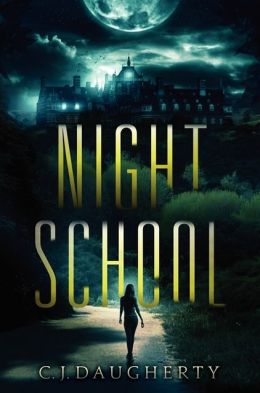
C. J. Daugherty is the author of Night School, which is set in an English boarding school and centers on an elite, secret society spinning out of control, threatening to take everyone down with it.

For the Guardian, Daugherty named her top ten secret society books, including:
The Mockingbirds by Daisy Whitney

This disturbing and extraordinary book follows the experiences of Alex, a teenager at the elite Themis Academy. The private school is known for its modern approach to education in which teachers and students are essentially equals. But when Alex is date-raped by another student, nobody will help her. The incident is brushed under the carpet. Desperate, she turns to The Mockingbirds, a secret society of students who act as a sort of vigilante group, providing the discipline and justice the adults at the school fail to offer. Shocking and eye-opening, this book is hard to put down.
Read about another book on the list.

My Book, The Movie: The Mockingbirds.

--Marshal Zeringue

Kate Watterson's "Frozen," the movie

Now showing at My Book, The Movie: Frozen by Kate Watterson.

The entry begins:
Frozen is the first in a series about Detective Ellie MacIntosh -- followed by Thaw (April 2013), Charred (June), Bleed (Sept.) and Buried (Jan. 2014). Hmm. I think for Ellie I’d pick maybe  Joelle Carter (Justified, FX) because she’s able to play a convincingly tough lady and she fits the character, and I’d love to see if she could do a Wisconsin accent. I also think Piper Perabo (Covert Affairs) would be perfect. Savvy and self-reliant.

Male actors… Matt...[read on]
Learn more about the book and author at Kate Watterson's website.

My Book, The Movie: Frozen.

--Marshal Zeringue

Pg. 99: Kathleen C. Schwartzman's "The Chicken Trail"

The current feature at the Page 99 Test: The Chicken Trail: Following Workers, Migrants, and Corporations across the Americas by Kathleen C. Schwartzman.

About the book, from the publisher:
In The Chicken Trail, Kathleen C. Schwartzman examines the impact of globalization—and of NAFTA in particular—on the North American poultry industry, focusing on the displacement of African American workers in the southeast United States and workers in Mexico. Schwartzman documents how the transformation of U.S. poultry production in the 1980s increased its export capacity and changed the nature and consequences of labor conflict. She documents how globalization—and NAFTA in particular—forced Mexico to open its commodity and capital markets, and eliminate state support of corporations and rural smallholders. As a consequence, many Mexicans were forced to abandon their no longer sustainable small farms, with some seeking work in industrialized poultry factories north of the border.

By following this chicken trail, Schwartzman breaks through the deadlocked immigration debate, highlighting the broader economic and political contexts of immigration flows. The narrative that undocumented worker take jobs that Americans don't want to do is too simplistic. Schwartzman argues instead that illegal immigration is better understood as a labor story in which the hiring of undocumented workers is part of a management response to the crises of profit making and labor-management conflict. By placing the poultry industry at the center of a constellation of competing individual, corporate, and national interests and such factors as national debt, free trade, economic development, industrial restructuring, and African American unemployment, The Chicken Trail makes a significant contribution to our understanding of the implications of globalization for labor and how the externalities of free trade and neoliberalism become the social problems of nations and the tragedies of individuals.
Learn more about The Chicken Trail at the Cornell University Press website.

The Page 99 Test: The Chicken Trail.

--Marshal Zeringue

Sunday, January 13, 2013

Top 12 picture books and chapter books of 2012

Meghan Cox Gurdon, who reviews children's books for the Wall Street Journal, named her favorite picture books and chapter books from 2012, including:
Julie Fogliano's And Then It's Spring

Green is what the bespectacled boy in Julie Fogliano's "And Then It's Spring" eagerly hopes to see as he waits for seeds he has planted to sprout from the brown earth. Did birds eat the seeds? Did bears trample them? In Erin E. Stead's finely drawn illustrations, we see the imagined bears lounging in the seedbeds with a sign that reads: "Please do not stomp here—there are seeds and they are trying."
Read about another book Gurdon tagged.

--Marshal Zeringue

What is Walter Greatshell reading?

The current featured contributor at Writers Read: Walter Greatshell, author of Terminal Island.

His entry begins:
At the moment I’m re-reading a book I loved years ago, called Dino, by Nick Tosches. It’s a wonderfully gonzo (in the true Hunter S. Thompson sense of the word) biography of Dean Martin, a performer I mainly knew of from his sloppy, lascivious TV appearances in the ‘60s and ‘70s. To me, Dino was a prime example of the hideous drunken misogyny that passed for sophistication in the ‘50s, a hipster dinosaur that refused to go extinct.

Dino captures Dean Martin’s rise and fall by going deep, not only into the place and time, but into Martin’s terrifying pit of a soul, which derived fleeting satisfactions from booze and broads, but...[read on]
About the book, from the publisher:
Henry Cadmus grew up on Catalina Island, a scenic vacationland off the Southern California coast. But Henry’s experiences were far from idyllic. Today, even though Henry has seen firsthand the horrors of war, the ghastly images that haunt his dreams are ones he associates with his childhood… and the island: a snarling pig-man holding a cleaver; a jackal-headed woman on a high balcony, dripping blood; strange occult rituals… and worse. If it was up to Henry, he would avoid the island entirely.

But Henry is returning to Catalina Island. At his wife Ruby’s insistence, Henry, Ruby, and their infant daughter are coming to Avalon, so that Henry can face his fears, exorcise his demons, and reconcile with the one he fears most… his mother.

From Walter Greatshell, author of Xombies comes Terminal Island, a novel of cosmic horror.
View the video trailer for Terminal Island, and visit Walter Greatshell's website and blog.

My Book, The Movie: Xombies: Apocalypse Blues.

The Page 69 Test: Xombies: Apocalypticon.

Writers Read: Walter Greatshell (December 2010).

The Page 69 Test: Mad Skills.

My Book, The Movie: Mad Skills.

The Page 69 Test: Terminal Island.

My Book, The Movie: Terminal Island.

Writers Read: Walter Greatshell.

--Marshal Zeringue

Five top books on obstacles to political reform in China

Richard Baum was a distinguished professor in the political science department at UCLA. A specialist on Chinese and comparative politics and foreign relations and a past director of the UCLA Center for Chinese Studies, Baum was the founder and list manager of Chinapol, the world's largest dedicated listserv for professional China scholars, journalists, and policy analysts.

In October 2010 he and The Browser's Sophie Roell discussed five top books on obstacles to political reform in China, including:
China’s Trapped Transition
by Minxin Pei

Do you want to start with Minxin Pei’s China’s Trapped Transition? There’s a comment on the back by Elisabeth Perry of Harvard, that the book ‘directly challenges much of the conventional wisdom about the rise of China…’

Minxin Pei’s book is important because it poses most directly a question that is at the heart of the debate about whether China can survive an entrepreneurial revolution with its political system substantially intact. His argument, in a nutshell, is that a Leninist political party is communism’s ‘original sin’– an innate impediment to transparency and accountability in governance. His argument is interesting and controversial. He suggests that the self-appointed political power monopoly enjoyed by the Chinese Communist Party makes it, in effect, a closed autocratic society, and that such societies, as Lord Acton observed, over time tend to become deeply corrupted in the absence of countervailing power. Pei argues that Chinese communism is unable to overcome its absolutist, conspiratorial origins, its ‘original sin’. This, in turn, makes the party highly suspicious of spontaneous economic and socio-political activity, especially when such activity is organised. Consequently, economic reform in China has spawned not market democracy, but a state-dominated form of bureaucratic capitalism, involving the subordination of private sector initiative to the dictates of the party-state.

According to Pei, China is thus in a ‘trapped transition’. Although its leaders have adopted policies designed to encourage economic growth through enhanced productivity and controlled market competition, the country nevertheless remains trapped within an archaic Leninist political framework from which it cannot seem to escape. Eventually, he concludes, the deepening contradictions between the party’s obsessive desire to retain monopolistic political control and the pluralising pressures of an increasingly open, market-based society will catch up with China’s leaders, leading to some form of systemic paralysis and/or traumatic power transition.
Read about another book Baum tagged at The Browser.

--Marshal Zeringue

Pg. 69: Adam Mansbach's "Rage Is Back"

The current feature at the Page 69 Test: Rage Is Back by Adam Mansbach.

About the book, from the publisher:
Welcome to the Great American Graffiti Novel

Number one New York Times bestselling author Adam Mansbach returns with a blockbuster tale of revenge, redemption, and the world’s most beautiful crime. Dondi Vance is the son of two famous graffiti artists from New York City’s “golden era” of subway bombing. Recently kicked out of his prestigious prep school for selling weed—and his mother’s Brooklyn apartment for losing his scholarship— he’s couch-surfing his way through life, compulsively immune to rumors that his long-lost father, Billy Rage, has returned after sixteen years on the lam.

But Dondi’s old man really is back—what’s left of him, that is. A wizened shell of his former self, Billy is still reeling from a psychic attack by an angry sha-man in the Amazon basin when Dondi finds him at the top of a pseudo-magical staircase in DUMBO. The uneasy reunion comes just in time: Anastacio Bracken, the transit cop who ruined Billy’s life and shattered his crew back in 1987, is running for mayor. Only by rallying the forgotten writers of the eighties for an epic, game-changing mission can Billy and Dondi bring Bracken down.

In this mind-bending journey through a subterranean world of epic heroes, villains, and eccentrics, Adam Mansbach balances an intricately plot­ted, high-stakes caper with a wildly inventive tale of time travel and shamanism, prodigal fathers and sons, and the hilariously intertwined realms of art, crime, and spirituality. Moving throughout New York City’s unseen com­munities, from the tunnel camps of the Mole People to the drug dens of Crown Heights, Rage Is Back is a kaleidoscopic tour de force from a writer at the top of his game.
Learn more about the book and author at Adam Mansbach's website.

Mansbach’s books include the number one international bestseller Go the Fuck to Sleep, the California Book Award– winning novel The End of the Jews, and the cult classic Angry Black White Boy.

My Book, The Movie: Rage Is Back.

The Page 69 Test: Rage Is Back.

--Marshal Zeringue

Saturday, January 12, 2013

What is Christine Wade reading?

The current featured contributor at Writers Read: Christine Wade, author of Seven Locks.

Her entry begins:
Well, it is not hard for anyone to imagine that when you are researching and writing a novel you can only read books that pertain to it. But what surprised me as a first-time novelist is that during the production year it is also difficult to read randomly or at all. At times I like to read in a focused way: all of one century, all of Bloomsbury or The Beats, all of one author. But at other times I like to read randomly and jump around to books as I come upon them. It is interesting that even then reading themes emerge.

Both of my recent picks just happened to be about New York in the 70’s: Just Kids by Patti Smith and...[read on]
About Seven Locks, from the publisher:
The Hudson River Valley, 1769: A man mysteriously disappears without a trace, abandoning his wife and children on their farm at the foot of the Catskill Mountains. At first many believe that his wife, who has the reputation of being a scold, has driven her husband away, but as the strange circumstances of his disappearance circulate, a darker story unfolds. And as the lines between myth and reality fade in the wilderness, and an American nation struggles to emerge, the lost man’s wife embarks on a desperate journey to find the means to ensure her family’s survival...
Learn more about the book and author at Christine Wade's website.

The Page 69 Test: Seven Locks.

My Book, The Movie: Seven Locks.

Writers Read: Christine Wade.

--Marshal Zeringue

Five top books of narrative nonfiction

Catherine S. Manegold was a reporter for the New York Times, Newsweek and the Philadelphia Inquirer before turning her attention to longer works. Her books are Ten Hills Farm: The Forgotten History of Slavery in the North and In Glory’s Shadow: The Citadel, Shannon Faulkner and a Changing America.

She discussed five top books of narrative non-fiction with Daisy Banks at The Browser, including:
A Chorus of Stones
by Susan Griffin

Let’s move on to your next book, A Chorus of Stones: The Private Life of War by Susan Griffin.

This book is much more philosophical, meditative, personal. Gary Kinder never really injects himself into the narrative in Ship of Gold and, frankly, I appreciate that. For too many authors it is just the easy way out. But Susan Griffin succeeds here and writes with purpose, humility and conviction, making exceptionally sophisticated links between subjects as diverse as the psychology of war, legacies of abuse, the history of a German education, the development of the atom bomb, the Gulf War, and the rise of military cultures. It makes war intimate. In some ways, it makes war understandable on an almost cellular level. Having covered various wars and spent much time considering the legacies of abuse and abusive structures, I found it absolutely revelatory. To my mind, it is one of the best books I have read in terms of moving between disparate subjects, times and places. In addition, her prose in this work is seamless, and often deeply poetic.

This is a very disturbing book. But, by its close, Griffin pulls the material together in a way that profoundly shifts the reader’s perspective. I’m not sure it ever sold very well but I think her twining of different subjects makes this a masterpiece.
Read about another book on the list.

--Marshal Zeringue

Mitchell Scott Lewis's "Death in the 12th House," the movie

Now showing at My Book, The Movie: Death in the 12th House: Where Neptune Rules by Mitchell Scott Lewis.

The entry begins:
When they make my book into a movie, astrologer-detective David Lowell could be played by several actors. Al Pacino, or Liam Neeson come to mind. My first choice would have been Dennis Hopper, who I was fortunate enough to meet and spend an afternoon with shortly before his death; a truly exhilarating experience. I had a bit part in a movie Dennis made with Jackie...[read on]
Learn more about the book and author at Mitchell Scott Lewis's website.

My Book, The Movie: Death in the 12th House.

--Marshal Zeringue

Pg. 99: Paul Bracken's "The Second Nuclear Age"

The current feature at the Page 99 Test: The Second Nuclear Age: Strategy, Danger, and the New Power Politics by Paul Bracken.

About The Second Nuclear Age, from the publisher:
A leading international security strategist offers a compelling new way to "think about the unthinkable."

The cold war ended more than two decades ago, and with its end came a reduction in the threat of nuclear weapons—a luxury that we can no longer indulge. It’s not just the threat of Iran getting the bomb or North Korea doing something rash; the whole complexion of global power politics is changing because of the reemergence of nuclear weapons as a vital element of statecraft and power politics. In short, we have entered the second nuclear age.

In this provocative and agenda-setting book, Paul Bracken of Yale University argues that we need to pay renewed attention to nuclear weapons and how their presence will transform the way crises develop and escalate. He draws on his years of experience analyzing defense strategy to make the case that the United States needs to start thinking seriously about these issues once again, especially as new countries acquire nuclear capabilities. He walks us through war-game scenarios that are all too realistic, to show how nuclear weapons are changing the calculus of power politics, and he offers an incisive tour of the Middle East, South Asia, and East Asia to underscore how the United States must not allow itself to be unprepared for managing such crises.

Frank in its tone and farsighted in its analysis, The Second Nuclear Age is the essential guide to the new rules of international politics.
Learn more about The Second Nuclear Age at the Times Books website.

Paul Bracken is the author of Fire in the East and The Command and Control of Nuclear Forces. He is a professor of management and political science at Yale University.

Writers Read: Paul Bracken.

The Page 99 Test: The Second Nuclear Age.

--Marshal Zeringue

Friday, January 11, 2013

Top 10 magical objects in fiction

Conrad Mason is the author of the children’s novel The Demon’s Watch, and other books.

One entry on his list of the top ten magical objects in fiction, as told to the Guardian:
The One Ring (The Lord of the Rings by JRR Tolkien)

...probably the most famous magical object of all time and the MacGuffin par excellence. Plain gold except when exposed to fire, which makes it all the more beguiling – its secrets are locked up within. Surely the most malevolent inanimate object in all of literature.
Read about another entry on the list.

The Lord of the Rings also made Linus Roache's six best books list, Derek Landy's top ten list of villains in children's books, Charlie Jane Anders and Michael Ann Dobbs' list of ten classic SF books that were originally considered failures, Lev Grossman's list of the six greatest fantasy books of all time, and appears on John Mullan's lists of ten of the best women dressed as men, ten of the best bows and arrows in literature, ten of the best beards in literature, ten of the best towers in literature, ten of the best volcanoes in literature, ten of the best chases in literature, and ten of the best monsters in literature. It is one of Salman Rushdie's five best fantasy novels for all ages. It is a book that made a difference to Pat Conroy.

--Marshal Zeringue

What is Marilyn Yalom reading?

The current featured contributor at Writers Read: Marilyn Yalom, author of How the French Invented Love: 900 Years of Passion and Romance.

Her entry begins:
Robert Massie’s Catherine the Great lives up to its best-selling hype. It really is meticulously researched, artfully crafted, and immediately compelling. Surprisingly, this massive biography reads like a novel seen from the point of view of its heroine, the very great Catherine, who comes across as exceedingly human, even approachable, as she ascends to power and learns to command a vast empire. Massie seems to have entered into her skin and given her voice.

Unlike many other rulers, male and female, Catherine left behind a treasure trove of personal as well as state documents. Written in French, Russian, and her native German, these documents give us rare access into Catherine’s mind as she corresponded with French philosophes like Voltaire and Diderot, as she beckoned her lovers in intimate missives, and as she took it upon herself to write a new set of laws for her empire. How this offspring of minor German nobility made her way to Russia as a teenager, was married off to the hapless heir to the Russian crown, learned Russian, changed her religion from Lutheranism to Russian Orthodoxy, got rid of her husband and...[read on]
About How the French Invented Love, from the publisher:
Oh, how the French love love! For hundreds of years, they have championed themselves as guides to the art de l'amour through their literature, paintings, songs, and cinema. A French man or woman without amorous desire is considered defective, like someone missing the sense of smell or taste. Now revered scholar Marilyn Yalom intimately examines the tenets of this culture's enduring gospel of romance.

Basing her delightfully erudite findings on her extensive readings of French literature, as well as memories of her personal experiences in la belle France, Yalom explores the many nuances of love as it has evolved over the centuries, from the Middle Ages to the present. Following along, step-by-step, on her romance-tinged literary detective hunt, the reader discovers how the French invented love, how they have kept it vibrant for more than nine centuries, what is unique in the French love experience, and what is universal.
Learn more about the book and author at Marilyn Yalom's website.

How the French Invented Love is one of Publishers Weekly's top nonfiction books of 2012.

Writers Read: Marilyn Yalom.

--Marshal Zeringue

Coffee with a canine: Linda Lombardi & Lilly and Rose

This weekend's featured trio at Coffee with a Canine: Linda Lombardi & Lilly and Rose.
Photo credit: Paul McRae

The author, on each dog's best quality:
Lilly is dangerously clever, opinionated, bossy... oh, you said "best"? Actually, I like those things about her. I like a dog that is a bit of a challenge, one that talks back. We're a good match.

Rose is a perfect complement because no matter how much you love the kind of dog Lilly is, two of her would be a bit much. Here's the difference between Rose and Lilly: When I first got Rose, when I came home, she would actually greet me at the door! Just like everyone else says dogs do! I'd never seen that before. Lilly would lie on the couch and thought it was my job to walk over there and pet her.

Rose will also still come for walks with me most of the time because she thinks that anything I suggest will be fun! Whereas Lilly wants to know exactly...[read on]
About Linda Lombardi's Animals Behaving Badly: Boozing Bees, Cheating Chimps, Dogs with Guns, and Other Beastly True Tales:
There's a lot that animals don't want you to know, and the better their public image, the worse their secrets are: gang-rapist dolphins; lazy, infanticidal lions; and, of course, our own dogs, who eat our money, set our houses on fire, and in more than one case, actually shoot their owners with guns.

Animals Behaving Badly shows that animals are just like us: gluttonous, selfish, violent, lustful, and always looking out for number one. Using anecdotes from the news and from scientific research, Linda Lombardi pokes fun at our softhearted preconceptions about animals, makes us feel a little better about humanity's basest impulses, and painlessly teaches us a bit more about our furry and feathered friends.

You'll learn:
  • Bees love alcohol: even, says one researcher, more than college students
  • Pandas enjoy pornographic movies-they're particularly aroused by the soundtrack-and macaques will pay with juice to look at dirty pictures
  • A rabbit who lives in a pub in England is addicted to gambling with a slot machine
  • African elephants raised by teenage mothers form violent youth gangs
Visit the Animals Behaving Badly Blog. To read Linda's newspaper and web writing and sample chapters of The Sloth's Eye, visit her website.

Read--Coffee with a Canine: Linda Lombardi & Lilly and Rose.

--Marshal Zeringue

Pg. 69: Sam Thomas's "The Midwife’s Tale"

The current feature at the Page 69 Test: The Midwife's Tale by Sam Thomas.

About the book, from the publisher:
In the tradition of Arianna Franklin and C. J. Sansom comes Samuel Thomas’s remarkable debut, The Midwife’s Tale

It is 1644, and Parliament’s armies have risen against the King and laid siege to the city of York. Even as the city suffers at the rebels’ hands, midwife Bridget Hodgson becomes embroiled in a different sort of rebellion. One of Bridget’s friends, Esther Cooper, has been convicted of murdering her husband and sentenced to be burnt alive. Convinced that her friend is innocent, Bridget sets out to find the real killer.

Bridget joins forces with Martha Hawkins, a servant who’s far more skilled with a knife than any respectable woman ought to be. To save Esther from the stake, they must dodge rebel artillery, confront a murderous figure from Martha’s past, and capture a brutal killer who will stop at nothing to cover his tracks. The investigation takes Bridget and Martha from the homes of the city’s most powerful families to the alleyways of its poorest neighborhoods. As they delve into the life of Esther’s murdered husband, they discover that his ostentatious Puritanism hid a deeply sinister secret life, and that far too often tyranny and treason go hand in hand.
View the trailer for The Midwife’s Tale, and learn more about the book and author at Sam Thomas's website, blog, and Facebook page.

My Book, The Movie: The Midwife’s Tale.

The Page 69 Test: The Midwife's Tale.

--Marshal Zeringue

Thursday, January 10, 2013

Pg. 99: Siobhan Roberts' "Wind Wizard"

The current feature at the Page 99 Test: Wind Wizard: Alan G. Davenport and the Art of Wind Engineering by Siobhan Roberts.

About the book, from the publisher:
With Wind Wizard, Siobhan Roberts brings us the story of Alan Davenport (1932-2009), the father of modern wind engineering, who investigated how wind navigates the obstacle course of the earth's natural and built environments--and how, when not properly heeded, wind causes buildings and bridges to teeter unduly, sway with abandon, and even collapse.

In 1964, Davenport received a confidential telephone call from two engineers requesting tests on a pair of towers that promised to be the tallest in the world. His resulting wind studies on New York's World Trade Center advanced the art and science of wind engineering with one pioneering innovation after another. Establishing the first dedicated "boundary layer" wind tunnel laboratory for civil engineering structures, Davenport enabled the study of the atmospheric region from the earth's surface to three thousand feet, where the air churns with turbulent eddies, the average wind speed increasing with height. The boundary layer wind tunnel mimics these windy marbled striations in order to test models of buildings and bridges that inevitably face the wind when built. Over the years, Davenport's revolutionary lab investigated and improved the wind-worthiness of the world's greatest structures, including the Sears Tower, the John Hancock Tower, Shanghai's World Financial Center, the CN Tower, the iconic Golden Gate Bridge, the Bronx-Whitestone Bridge, the Sunshine Skyway, and the proposed crossing for the Strait of Messina, linking Sicily with mainland Italy.

Chronicling Davenport's innovations by analyzing select projects, this popular-science book gives an illuminating behind-the-scenes view into the practice of wind engineering, and insight into Davenport's steadfast belief that there is neither a structure too tall nor too long, as long as it is supported by sound wind science.
Learn more about the book and author at Siobhan Roberts' website.

Roberts is a Toronto journalist and author whose work focuses on mathematics and science. Her first book, King of Infinite Space: Donald Coxeter, The Man Who Saved Geometry, won the Mathematical Association of America's 2009 Euler Prize for expanding the public's view of mathematics.

The Page 69 Test: King of Infinite Space.

The Page 99 Test: Wind Wizard.

--Marshal Zeringue

What is Fiona Halloran reading?

The current featured contributor at Writers Read: Fiona Halloran, author of Thomas Nast: The Father of Modern Political Cartoons.

Her entry begins:
My reading these days veers wildly between books that interest me for some reason and books I’ve assigned to students. One price of teaching such smart, thoughtful young people is that I have to keep up. I don’t mind – even with books I’ve read before my school-related reading introduces me to new ideas and reminds me of my favorite stories in American history.

One such book, which I finished for the third time last week, is John Mack Faragher’s Daniel Boone. Tracing Boone’s life from his origins in a Quaker-dominated village settled by his grandparents to his death in Missouri, Faragher encouraged me to watch the settlement of Kentucky from a variety of perspectives. For Boone, it was an adventure, a challenge, a business and a vocation. For many settlers from North Carolina and Virginia, Kentucky represented freedom from planter domination. Native people, especially the Shawnee, feared the aggression of white settlers and sought to protect hunting lands. Faragher’s greatest strength lies in his ability to...[read on]
About Thomas Nast, from the publisher:
Thomas Nast (1840-1902), the founding father of American political cartooning, is perhaps best known for his cartoons portraying political parties as the Democratic donkey and the Republican elephant. Nast's legacy also includes a trove of other political cartoons, his successful attack on the machine politics of Tammany Hall in 1871, and his wildly popular illustrations of Santa Claus for Harper's Weekly magazine. Throughout his career, his drawings provided a pointed critique that forced readers to confront the contradictions around them.

In this thoroughgoing and lively biography, Fiona Deans Halloran focuses not just on Nast's political cartoons for Harper's but also on his place within the complexities of Gilded Age politics and highlights the many contradictions in his own life: he was an immigrant who attacked immigrant communities, a supporter of civil rights who portrayed black men as foolish children in need of guidance, and an enemy of corruption and hypocrisy who idolized Ulysses S. Grant. He was a man with powerful friends, including Mark Twain, and powerful enemies, including William M. "Boss" Tweed. Halloran interprets Nast's work, explores his motivations and ideals, and illuminates Nast's lasting legacy on American political culture.
Learn more about Thomas Nast at The University of North Carolina Press website.

My Book, The Movie: Thomas Nast.

Writers Read: Fiona Halloran.

--Marshal Zeringue

Top 10 journeys across the Mediterranean and Caspian seas

James Marriott and Mika Minio-Paluello are the authors of The Oil Road – Journeys from the Caspian Sea to the City of London.

For the Guardian they named a top ten list of literary journeys that follow "crude oil from deep beneath the Caspian Sea as it is pumped through the Caucasus Mountains, over the Anatolian Plateau, across the Mediterranean and Adriatic to Trieste, and onwards over the Austrian Alps to Bavaria," including:
Trieste and the Meaning of Nowhere by Jan Morris

In her best book – according to author herself – Morris explores the port town's role in centuries of trade and movement across the Mediterranean and the Balkans. Having first visited at the tail-end of the second world war as a British cavalry officer, Morris developed a close relationship with the Adriatic, with a further three books on Venice – both as a city and as a naval empire.
Read about another book on the list.

--Marshal Zeringue

Adam Mansbach's "Rage Is Back," the movie

Now showing at My Book, The Movie: Rage Is Back by Adam Mansbach.

The entry begins:
First, let me say that it's a pleasure to answer this question about Rage Is Back instead of Go the Fuck to Sleep (which is being made into a feature film by Fox 2000, and I have absolutely no idea how). These days, when I think about adaptation, I'm as drawn to high-end cable as to film: building out a story over several seasons, instead of shaving the novel down into a two hour story.

That said, I feel like Rage Is Back moves quickly to enough to go either way, and I've been lucky enough to have some film and theatrical interest already. I didn't write it with any actors in mind – though there are real-life graffiti writers like PHASE 2, RAMMELLZEE and KASE 2 who are partial models for some of the characters.

Danny Hoch performs most of the audiobook, with The GZA and Wyatt Cenac contributing smaller roles, and I think Danny, who's an old friend of mine, would be great as Billy Rage, the famed graff writer who returns to NYC after sixteen years on the run, and also makes his way back to sanity after a psychic attack by a rival shaman in the Amazon basin.

As Cloud 9, a graffiti writer and grand larcenist who was Billy's best friend back in the day and plays a crucial role in the epic mission to paint every subway train in the NYC system in one weekend, I'm thinking Michael...[read on]
Learn more about the book and author at Adam Mansbach's website.

Mansbach’s books include the number one international bestseller Go the Fuck to Sleep, the California Book Award– winning novel The End of the Jews, and the cult classic Angry Black White Boy.

My Book, The Movie: Rage Is Back.

--Marshal Zeringue

Wednesday, January 09, 2013

Pg. 99: Hélène Landemore's "Democratic Reason"

The current feature at the Page 99 Test: Democratic Reason: Politics, Collective Intelligence, and the Rule of the Many by Hélène Landemore.

About the book, from the publisher:
Individual decision making can often be wrong due to misinformation, impulses, or biases. Collective decision making, on the other hand, can be surprisingly accurate. In Democratic Reason, Hélène Landemore demonstrates that the very factors behind the superiority of collective decision making add up to a strong case for democracy. She shows that the processes and procedures of democratic decision making form a cognitive system that ensures that decisions taken by the many are more likely to be right than decisions taken by the few. Democracy as a form of government is therefore valuable not only because it is legitimate and just, but also because it is smart.

Landemore considers how the argument plays out with respect to two main mechanisms of democratic politics: inclusive deliberation and majority rule. In deliberative settings, the truth-tracking properties of deliberation are enhanced more by inclusiveness than by individual competence. Landemore explores this idea in the contexts of representative democracy and the selection of representatives. She also discusses several models for the "wisdom of crowds" channeled by majority rule, examining the trade-offs between inclusiveness and individual competence in voting. When inclusive deliberation and majority rule are combined, they beat less inclusive methods, in which one person or a small group decide. Democratic Reason thus establishes the superiority of democracy as a way of making decisions for the common good.
Learn more about Democratic Reason at the Princeton University Press website.

Hélène Landemore is assistant professor of political science at Yale University. She is the author of Hume: Probability and Reasonable Choice.

The Page 99 Test: Democratic Reason.

--Marshal Zeringue

What is Carola Dunn reading?

The current featured contributor at Writers Read: Carola Dunn, author of The Valley of the Shadow.

Her entry begins:
Half the Sky by Nicholas Kristof and Sheryl WuDunn

An old Chinese proverb says: Women hold up half the sky. Until recent years, China didn't do very well at observing the implication, that women's contribution to society is as important as men's.

Nicholas Kristof and his wife, intrepid journalists, have been all over the world documenting the condition of women. Their book starts out with some appalling stories of horrible things done to women just because they are women, so appalling I wasn't sure I could go on reading. But gradually they introduce ways of helping to change how societies treat the female half of humanity. They end on a hopeful note: Things are changing, will change, and while never perfect can be much improved. They...[read on]
About The Valley of the Shadow, from the publisher:
A cryptic message spurs Eleanor, Megan, and Nick Gresham on a frantic search for a refugee's missing family

While out on a walk, Eleanor Trewynn, her niece Megan, and her neighbor Nick spot a young, half-drowned Indian man floating in the water. Delirious and concussed, he utters a cryptic message about his family being trapped in a cave and his mother dying. The young man, unconscious and unable to help, is whisked away to a hospital while a desperate effort is mounted find the missing family in time.

The local police inspector presumes that they are refugees from East Africa, abandoned by the smugglers who brought them in, so while the countryside is being scoured for the family, Eleanor herself descends into a dangerous den of smugglers in a desperate search to find the man responsible while there is still time.
Learn more about the book and author at Carola Dunn's website and blog.

Read--Coffee with a Canine: Carola Dunn and Trillian.

The Page 69 Test: Manna from Hades (the 1st Cornish Mystery).

The Page 69 Test: A Colourful Death (the 2d Cornish Mystery).

The Page 69 Test: The Valley of the Shadow (the 3d Cornish Mystery).

Writers Read: Carola Dunn.

--Marshal Zeringue