Tuesday, February 07, 2012

Pg. 69: William Landay's "Defending Jacob"

The current feature at the Page 69 Test: Defending Jacob by William Landay.

About the book, from the publisher:
Andy Barber has been an assistant district attorney in his suburban Massachusetts county for more than twenty years. He is respected in his community, tenacious in the courtroom, and happy at home with his wife, Laurie, and son, Jacob. But when a shocking crime shatters their New England town, Andy is blindsided by what happens next: His fourteen-year-old son is charged with the murder of a fellow student.

Every parental instinct Andy has rallies to protect his boy. Jacob insists that he is innocent, and Andy believes him. Andy must. He’s his father. But as damning facts and shocking revelations surface, as a marriage threatens to crumble and the trial intensifies, as the crisis reveals how little a father knows about his son, Andy will face a trial of his own—between loyalty and justice, between truth and allegation, between a past he’s tried to bury and a future he cannot conceive.

Award-winning author William Landay has written the consummate novel of an embattled family in crisis—a suspenseful, character-driven mystery that is also a spellbinding tale of guilt, betrayal, and the terrifying speed at which our lives can spin out of control.
Learn more about the book and author at William Landay's website and blog.

Writers Read: William Landay (May 2007).

The Page 69 Test: The Strangler.

The Page 69 Test: Defending Jacob.

--Marshal Zeringue

Monday, February 06, 2012

What is Howard Shrier reading?

The current featured contributor at Writers Read: Howard Shrier, author of Boston Cream.

His entry begins:
Raylan, by Elmore Leonard. The latest work by my all-time favourite crime writer features U.S. Marshal Raylan Givens, the hero of the novels Pronto and Riding the Rap, and the story “Fire in the Hole,” which launched the hit series Justified. Less of a novel than three interconnected stories—an organ theft ring, an arrogant and ruthless strip-mining company and a hip young poker-playing college girl who may or may not rob banks on the side.

It’s interesting to see Leonard bend reality to suit the TV show. Boyd Crowder dies in the original story after being shot by Raylan. But actor Walton Goggins’ portrayal proved so popular in the pilot, they allowed him to survive. So Boyd is back in this book, guarding a coal company's killer executive, courting local beauty and former sister-in-law Ava, and generally getting in Raylan’s way.

The dialogue is...[read on]
About Boston Cream, from the publisher:
Canada's top private eye is back as Jonah Geller resumes his vagabond ways in Boston Cream, the Vintage World of Crime trade paperback original and sequel to the Arthur Ellis-winning novels Buffalo Jump and High Chicago.

David Fine is not the kind of guy to go missing. Or so his father tells PI Jonah Geller. A brilliant young surgeon-in-training, devout, devoted to his parents--last seen 2 weeks ago leaving the Boston hospital where he worked. Still recovering from a concussion, Jonah and partner Jenn Raudsepp soon find out that David fled for his life after a vicious Irish crime boss tried to abduct him. And that he's more likely dead than alive. Then Jenn joins the ranks of the missing, and Jonah needs help from former hit man Dante Ryan and two local wise guys as he races the clock to save her life, one step ahead of the Boston law.
Learn more about the book and author at Howard Shrier's website.

Writers Read: Howard Shrier (May 2009).

Writers Read: Howard Shrier.

--Marshal Zeringue

Ten of the best erotic dreams in literature

At the Guardian, John Mullan named ten of the best erotic dreams in literature.

One novel on the list:
Anna Karenina by Leo Tolstoy

Anna, married to Karenin, has fallen for Vronsky and begins to be visited nightly by the same weird and sexy dream. "She dreamt that both at once were her husbands, and lavished their caresses on her." In the dream it seems like a lovely solution: both men kiss and stroke her and are "contented and happy". But when she wakes the dream weighs on her like a nightmare.
Read about another novel on the list.

Anna Karenina also appears on Howard Jacobson's list of his five favorite literary heroines, Eleanor Birne's top ten list of books on motherhood, Esther Freud's top ten list of love stories, Chika Unigwe's six favorite books list, Elizabeth Kostova's list of favorite books, James Gray's list of best books, Marie Arana's list of the best books about love, Ha Jin's most important books list, Tom Perrotta's ten favorite books list, Claire Messud's list of her five most important books, Alexander McCall Smith's list of his five most important books, Mohsin Hamid's list of his ten favorite books, Louis Begley's list of favorite novels about cheating lovers, and among the top ten works of literature according to Peter Carey and Norman Mailer. John Mullan put it on his lists of ten of the best coups de foudre in literature, ten of the best births in literature, ten of the best ice-skating episodes in literature, and ten of the best balls in literature.

--Marshal Zeringue

Pg. 99: Yunas Samad's "The Pakistan-US Conundrum"

The current feature at the Page 99 Test: The Pakistan-US Conundrum: Jihadists, the Military and the People–The Struggle for Control by Yunas Samad.

About the book, from the publisher:
Yunas Samad’s trenchant analysis of contemporary Pakistan illuminates five key players: the country’s people, army, Islamists, and politicians, and the American forces struggling to maintain Pakistan’s social and political stability. Samad describes the alliances borne of political and strategic expediency that continually undermine the legitimacy of the state, and he measures the extent to which the country’s existence is now in jeopardy.

Much of Pakistan operates under the de facto rule of an indigenous, “Pakistani” Taliban. Yet instead of addressing this precarious situation, Pakistan’s remaining military and intelligence apparatus remains focused on a proxy war with India, whether in Kashmir or Afghanistan. This high-stakes contest for strategic and political victory has irreparably harmed Pakistan’s economy, impoverishing many of its people while bolstering the military’s “state within a state elite.” At the same time, a tiny business contingent continues to flourish on the rich pickings of neoliberal policies enacted at the request of international organizations.

Samad follows these provocative issues in detail before returning to his key themes: the mistreatment of ordinary Pakistanis by military and civilian rulers, the steady decline of citizens’ material circumstances over the past twenty years or more, and the grand designs of Islamabad and Washington that continue to undermine Pakistani political life while ushering in new forms of Islamist and sectarian politics.
Learn more about The Pakistan-US Conundrum at the publisher's website.

Yunas Samad is Professor of South Asian Studies and the Director of the Ethnicity and Social Policy Research Centre (ESPRC) at the University of Bradford.

The Page 99 Test: The Pakistan-US Conundrum.

--Marshal Zeringue

Coffee with a canine: Susan Sherman & Henry and Bessie

The current featured trio at Coffee with a Canine: Susan Sherman & Henry and Bessie.

The author on how she and the dogs were united:
I found Henry when I was working in TV. I used to take long walks whenever I had to come up with story ideas and one day there he was looking terrified and hungry. I tried to coax him with kind words, but he kept running away. I finally gave up and went to Jack in the Box for a plain hamburger, no pickles, no ketchup or mustard. Well, the rest they say is history. Only it’s not really, because Henry had had a terrible life and hadn’t been socialized. He’d growl and show his teeth to everyone he’d meet. The vet said he would never make a family pet and advised me to put him down. But instead I put the vet down or at least erased her number from my contacts and now, after fifteen years, Henry is the friendliest dog you’d ever want to meet. Except if you happen to be another dog and then he still growls and shows his teeth.

Bessie came to us from Downtown Rescue. She had belonged to homeless people who were placed in a shelter that didn’t allow dogs. By now she has completely forgotten her roots and is...[read on]
About Susan Sherman's The Little Russian, from the publisher:
The Little Russian spotlights an exciting new voice in historical fiction, an assured debut that should appeal to readers of Away by Amy Bloom or Cold Mountain by Charles Frazier. The novel tells the story of Berta Alshonsky, who revels in childhood memories of her time spent with a wealthy family in Moscow –a life filled with salons, balls and all the trappings of the upper class — very different from her current life as a grocer’s daughter in the Jewish townlet of Mosny. So when a mysterious and cultured wheat merchant walks into the grocery, Berta’s life is forever altered. She falls in love, unaware that he is a member of the Bund, The Jewish Worker’s League, smuggling arms to the shtetls to defend them against the pogroms sweeping the Little Russian countryside.

Married and established in the wheat center of Cherkast, Berta has recaptured the life she once had in Moscow. So when a smuggling operation goes awry and her husband must flee the country, Berta makes the vain and foolish choice to stay behind with her children and her finery. As Russia plunges into war, Berta eventually loses everything and must find a new way to sustain the lives and safety of her children. Filled with heart-stopping action, richly drawn characters, and a world seeped in war and violence; The Little Russian is poised to capture readers as one of the hand-selling gems of the season.
Learn more about the book and author at Susan Sherman's website and blog.

The Page 69 Test: The Little Russian.

Read--Coffee with a Canine: Susan Sherman & Henry and Bessie.

--Marshal Zeringue

Bill Fitzhugh's "The Exterminators," the movie

Now showing at My Book, The Movie: The Exterminators by Bill Fitzhugh.

The entry begins:
My first novel, Pest Control, started life as a screenplay that every studio in Los Angeles rejected. After I turned it into a novel, Warner Brothers bought the rights and paid several people to turn it back into a screenplay and then didn't bother to make it. And now, I've just published the sequel, The Exterminators. Warner Brothers owns the rights to the characters to this too. Back in 1991 when my then screenwriting partner and I were writing the script, we had Billy...[read on]
Learn more about the book and author at Bill Fitzhugh's website.

The Page 69 Test: The Exterminators.

My Book, The Movie: The Exterminators.

--Marshal Zeringue

Sunday, February 05, 2012

Elizabeth Hand's 6 favorite books

Elizabeth Hand is the author of several novels and short-story collections. She has won the Shirley Jackson Award, the James Tiptree Award, the Nebula Award (twice), the World Fantasy Award (three times), and many others.

Her new novel is Available Dark. Robert Crais calls it “A skin-blistering crime novel, as edgy and black as dried blood on a moonlit night.”

One of Hand's six favorite books, as told to The Week magazine:
Blackwater by Kerstin Ekman

A teenage couple on a camping trip are found stabbed to death in their tent in the Swedish countryside. Years later, the truth behind both their deaths and the denizens of Starhill, a commune, gradually unfolds in a series of spare, beautifully written scenes. Ekman's exceptionally complex novel is the rare thriller that rewards rereading.
Read about another entry on Hand's list.

--Marshal Zeringue

What is Wessel Ebersohn reading?

The current featured contributor at Writers Read: Wessel Ebersohn, author of The October Killings and Those Who Love Night.

His entry begins:
Much of my readings is about my own country and continent. Recently I have been reading Robert Guest’s The Shackled Continent, a gripping account of the many challenges Africa faces.

I am also fascinated by human behaviour and...[read on]
About Those Who Love Night, from the publisher:
When Abigail Bukula, a young lawyer in the South African Justice Department, learns that the secret son of her aunt, who died in a massacre years ago, has been arrested by the Zimbabwean government, she races to his aid. She’s as determined as ever but perhaps a bit naive as well. Accused of being a part of the so-called Harare Seven, her cousin is being held as a political prisoner in the country’s most brutal prison.

With only an eager young lawyer as an ally and a director of the country’s intelligence agency either helping her or setting her up, Bukula will not leave without winning her cousin’s freedom and learning what really happened to her aunt so many years ago. By cunning, by bribery, by sheer audacity—and with the help of her friend prison psychologist Yudel Gordon—Abigail is determined to prevail in Those Who Love Night, Wessel Ebersohn’s explosive follow-up to his critically acclaimed series debut.
Learn more about the book and author at Wessel Ebersohn's website and blog.

The Page 69 Test: The October Killings.

My Book, The Movie: The October Killings and Those Who Love Night.

Writers Read: Wessel Ebersohn.

--Marshal Zeringue

Five notable books on U.S. generals in an era of change

One title on the Barnes & Noble Review's list of top books about American generals in an era of change:
The Operators: The Wild and Terrifying Inside Story of America's War in Afghanistan
by Michael Hastings

After three decades of service, four-star General Stanley McChrystal resigned after Hastings' Rolling Stone article (which the Army had hoped would highlight the achievements of a "rock star" general) brought surprising and unwelcome attention from the public in the spring of 2010. The Operators extends Hastings' reach into the personalities leading the war in Afghanistan, unveiling a world of combat, intrigue, infighting, and carousing that few outsiders have seen.
Read about another book on the list.

--Marshal Zeringue

Pg. 69: Margot Livesey's "The Flight of Gemma Hardy"

The current feature at the Page 69 Test: The Flight of Gemma Hardy by Margot Livesey.

About the book, from the publisher:
When her widower father drowns at sea, Gemma Hardy is taken from her native Iceland to Scotland to live with her kind uncle and his family. But the death of her doting guardian leaves Gemma under the care of her resentful aunt, and it soon becomes clear that she is nothing more than an unwelcome guest at Yew House. When she receives a scholarship to a private school, ten-year-old Gemma believes she’s found the perfect solution and eagerly sets out again to a new home. However, at Claypoole she finds herself treated as an unpaid servant.

To Gemma’s delight, the school goes bankrupt, and she takes a job as an au pair on the Orkney Islands. The remote Blackbird Hall belongs to Mr. Sinclair, a London businessman; his eight-year-old niece is Gemma’s charge. Even before their first meeting, Gemma is, like everyone on the island, intrigued by Mr. Sinclair. Rich (by Gemma’s standards), single, flying in from London when he pleases, Hugh Sinclair fills the house with life. An unlikely couple, the two are drawn to each other, but Gemma’s biggest trial is about to begin: a journey of passion and betrayal, redemption and discovery, that will lead her to a life of which she’s never dreamed.

Set in Scotland and Iceland in the 1950s and ’60s, The Flight of Gemma Hardy—a captivating homage to Charlotte Brontë’s Jane Eyre—is a sweeping saga that resurrects the timeless themes of the original but is destined to become a classic all its own.
Learn more about the book and author at Margot Livesey's website and Facebook page.

Writers Read: Margot Livesey (September 2009).

The Page 69 Test: The Flight of Gemma Hardy.

--Marshal Zeringue

Pg. 99: Frank Costigliola's "Roosevelt’s Lost Alliances"

Today's feature at the Page 99 Test: Roosevelt's Lost Alliances: How Personal Politics Helped Start the Cold War by Frank Costigliola.

About the book, from the publisher:
In the spring of 1945, as the Allied victory in Europe was approaching, the shape of the postwar world hinged on the personal politics and flawed personalities of Roosevelt, Churchill, and Stalin. Roosevelt's Lost Alliances captures this moment and shows how FDR crafted a winning coalition by overcoming the different habits, upbringings, sympathies, and past experiences of the three leaders. In particular, Roosevelt trained his famous charm on Stalin, lavishing respect on him, salving his insecurities, and rendering him more amenable to compromise on some matters.

Yet, even as he pursued a lasting peace, FDR was alienating his own intimate circle of advisers and becoming dangerously isolated. After his death, postwar cooperation depended on Harry Truman, who, with very different sensibilities, heeded the embittered "Soviet experts" his predecessor had kept distant. A Grand Alliance was painstakingly built and carelessly lost. The Cold War was by no means inevitable.

This landmark study brings to light key overlooked documents, such as the Yalta diary of Roosevelt's daughter Anna; the intimate letters of Roosevelt's de facto chief of staff, Missy LeHand; and the wiretap transcripts of estranged adviser Harry Hopkins. With a gripping narrative and subtle analysis, Roosevelt's Lost Alliances lays out a new approach to foreign relations history. Frank Costigliola highlights the interplay between national political interests and more contingent factors, such as the personalities of leaders and the culturally conditioned emotions forming their perceptions and driving their actions. Foreign relations flowed from personal politics--a lesson pertinent to historians, diplomats, and citizens alike.
Learn more about Roosevelt's Lost Alliances at the Princeton University Press website.

The Page 99 Test: Roosevelt's Lost Alliances.

--Marshal Zeringue

Saturday, February 04, 2012

Five best books about boundary-pushing women

John T. Matteson has an A.B. in history from Princeton University and a Ph.D. English from Columbia University. He also holds a J.D. from Harvard and has practiced as a litigation attorney in California and North Carolina. His work has appeared in The Wall Street Journal; The New York Times; The Harvard Theological Review; New England Quarterly; Leviathan: A Journal of Melville Studies; and other publications.

His 2007 book, Eden's Outcasts: The Story of Louisa May Alcott and Her Father, was awarded the 2008 Pulitzer Prize for Biography.

Matteson's new book is The Lives of Margaret Fuller: A Biography.

One of his five best portraits of pioneering women, as told to the Wall Street Journal:
First Lady of Letters
by Sheila L. Skemp (2009)

Born the same year as James Madison, Judith Sargent Murray shared her great contemporary's fascination with the laws of nature and the rights of human beings. But Murray undertook her inquiries with a different objective in mind. She began with a seemingly simple question: Was it true that "one half of the human species is endowed with unquestionable superiority over the other?" When she posed this question in 1779, most of her fellow Americans would have answered yes. Murray, however, spent decades arguing that women were the intellectual equals of men. Sheila L. Skemp's "First Lady of Letters" is an admirable history of this all but forgotten Federalist-era women's rights advocate, who argued powerfully that girls could shine as brightly as boys if only they were given the benefits of a classical education and parents who encouraged them to "reverence themselves."
Read about another book on the list.

--Marshal Zeringue

Jeffrey Abt's "American Egyptologist," the movie

Now showing at My Book, The Movie: American Egyptologist: The Life of James Henry Breasted and the Creation of His Oriental Institute by Jeffrey Abt.

The entry begins:
Harrison Ford, of course, is my first choice. But I’d cast him as he is today: older, seasoned by life’s travails, less swashbuckling, but still charismatic. Though seemingly far-fetched, my preference comes from Indiana Jones’s remark, near the beginning of Raiders of the Lost Ark, that he studied archaeology at the University of Chicago—the school where my subject, James Henry Breasted, created his Oriental Institute. When George Lucas was asked why he wrote Chicago into the film, he replied it was because he believed Chicago was “one of the best universities for archaeological study.” That impression underscores the impact of Breasted’s career on the American imagination.

Breasted was not just an Egyptologist and daring explorer, however. He was also...[read on]
Learn more about American Egyptologist at the University of Chicago Press website and Jeffrey Abt's website.

Jeffrey Abt is associate professor in the James Pearson Duffy Department of Art and Art History at Wayne State University. He is also the author of A Museum on the Verge: A Socioeconomic History of the Detroit Institute of Arts, 1885–2000.

My Book, The Movie: American Egyptologist.

--Marshal Zeringue

What is Jo Anderton reading?

The current featured contributor at Writers Read: Jo Anderton, author of Debris (Book One the Veiled Worlds Series) and the forthcoming Suited.

Her entry begins:
I'm just about to finish When We Have Wings by Claire Corbett. I met Claire at a science fiction convention last year. After listening to her speak on a panel I just knew I had to read her book, and I was so right, I'm loving it. Set in a future divided between people rich enough to afford wings and everyone else, it's both a mystery and a thought provoking look at class structures in society. It's beautifully written, and the world is disturbingly believable. Also, coming from a family full of flyboys, the loving way Claire writes about flight and flying itself rings so true for me!

Before that I read...[read on]
About Debris, from the publisher:
In a far future where technology is all but indistinguishable from magic, Tanyana is one of the elite. She can control pions, the building blocks of matter, shaping them into new forms using ritual gestures and techniques. The rewards are great, and she is one of most highly regarded people in the city. But that was before the “accident”. Stripped of her powers, bound inside a bizarre powersuit, she finds herself cast down to the very lowest level of society. Powerless, penniless and scarred, Tanyana must adjust to a new life collecting “debris”, the stuff left behind by pions. But as she tries to find who has done all of this to her, she also starts to realize that debris is more important than anyone could guess.
Learn more about the book and author at Jo Anderton's website and Facebook page.

Writers Read: Jo Anderton.

--Marshal Zeringue

Friday, February 03, 2012

Five best books about the prosecution of Nazi war criminals

William Shawcross is a widely renowned writer and broadcaster. His books include Dubcek (1970), Sideshow: Kissinger, Nixon and the Destruction of Cambodia (1979), The Shah’s Last Ride (1989), Deliver Us From Evil: Warlords and Peacekeepers in a World of Endless Conflict (2001), and Justice and the Enemy: Nuremberg, 9/11, and the Trial of Khalid Sheikh Mohammed (2012).

One of his five best books about the Nuremberg trials and the prosecution of Nazi war criminals, as told to the Wall Street Journal:
The Anatomy of the Nuremberg Trials
by Telford Taylor (1992)

Telford Taylor was not intimately involved in the prosecutions of all the major German defendants that began the Nuremberg trials. But this U.S. Army intelligence officer and member of the prosecution team ultimately succeeded the chief American prosecutor, Supreme Court Justice Robert Jackson, for the subsequent trials of lesser war criminals. Taylor went on to became a prominent lawyer and a fierce critic of Sen. Joseph McCarthy in the 1950s and of the war in Vietnam. Late in life (he died in 1998), Taylor published this book, subtitled "A Personal Memoir." It indeed provides an insider's view of the whole extraordinary process. He is particularly strong on the charges against the German military, but he also exposes many of the problems the prosecution encountered in bringing the defendants to justice.
Read about another entry on the list.

--Marshal Zeringue

Pg. 99: Robert Mason's "The Republican Party and American Politics from Hoover to Reagan"

The current feature at the Page 99 Test: The Republican Party and American Politics from Hoover to Reagan by Robert Mason.

About the book, from the publisher:
During a long period of the twentieth century, stretching from the Great Depression until the Reagan years, defeat generally characterized the electoral record of the Republican party. Although Republicans sometimes secured victory in presidential contests, a majority of Americans identified with the Democratic party, not the GOP. This book investigates how Republicans tackled the problem of their party's minority status and why their efforts to boost GOP fortunes usually ended in failure. At the heart of the Republicans' minority puzzle was the profound and persistent popularity of New Deal liberalism. This puzzle was stubbornly resistant to solution. Efforts to develop a Republican version of government activism met little success. The same was true of conservative strategies that stressed a more fundamental rejection of the Democrats' arguments. Technocratic initiatives to improve party organization and communications similarly failed to facilitate an electoral breakthrough. Only the Democratic party's decline eventually created opportunities for Republican resurgence. This book is the first to offer a wide-ranging analysis of the topic, which is of central importance to any understanding of modern U.S. political history.
Learn more about The Republican Party and American Politics from Hoover to Reagan at the Cambridge University Press website.

Robert Mason is a Senior Lecturer in the School of History, Classics and Archaeology at the University of Edinburgh.

The Page 99 Test: The Republican Party and American Politics from Hoover to Reagan.

--Marshal Zeringue

Coffee with a canine: Dominique Tobbell & Taka

This weekend's featured duo at Coffee with a Canine: Dominique Tobbell and Taka.

The scholar, on Taka's role in the creation of her new book, Pills, Power, and Policy: The Struggle for Drug Reform in Cold War America and Its Consequences:
Although I wrote most of the book before Taka joined my family, he played a very important role as I finished the manuscript. Every writing day would begin and end with a lengthy cuddle with Taka on the futon in my office. Taka would also let me know throughout the day when it was time to take a break. He had several strategies for this: a) barking or pawing at me to “come play,” b) gently nibbling at my sleeve or leg to get my attention, c) bringing his favorite toy and depositing it either on my lap or my desk, or, more often than not, d) all of the above! These playful “disruptions” and the frequent neighborhood walks and trips to the dog park with Taka provided the best relief from writing and ...[read on]
About Pills, Power, and Policy, from the publisher:
Since the 1950s, the American pharmaceutical industry has been heavily criticized for its profit levels, the high cost of prescription drugs, drug safety problems, and more, yet it has, together with the medical profession, staunchly and successfully opposed regulation. Pills, Power, and Policy offers a lucid history of how the American drug industry and key sectors of the medical profession came to be allies against pharmaceutical reform. It details the political strategies they have used to influence public opinion, shape legislative reform, and define the regulatory environment of prescription drugs. Untangling the complex relationships between drug companies, physicians, and academic researchers, the book provides essential historical context for understanding how corporate interests came to dominate American health care policy after World War II.
Visit Dominique A. Tobbell's website, and read more about her book, Pills, Power, and Policy: The Struggle for Drug Reform in Cold War America and Its Consequences.

Writers Read: Dominique A. Tobbell.

Read--Coffee with a Canine: Dominique Tobbell and Taka.

--Marshal Zeringue

Pg. 69: Jane Finnis's "Danger in the Wind"

The current feature at the Page 69 Test: Danger in the Wind by Jane Finnis.

About the book, from the publisher:
A fine summer in 100 AD and good government under Trajan Caesar promise well for the Roman settlers in the frontier province of Britannia.

Aurelia Marcella runs a mansio on a busy road to York. June is always busy, but one day two unusual events occur: a soldier is murdered in his bed at the inn, and a letter arrives from Isurium, a small fort north of the city. It is from a cousin, Jovina, inviting Aurelia to a midsummer birthday party. But the missive also reads as a plea for help, referring to “danger in the wind.”

The murdered soldier also bore a message, locked in Aurelia’s strongbox, indicating violence would erupt at the very same fort on the day of the party.

At Isurium, Aurelia finds Jovina and her drunken husband and unruly children caught in a tangled web of greed, love, intrigue, and death. When violence engulfs the district, Aurelia suddenly finds herself in peril from enemies engaged in an anti- Roman plot and from family members bent on misguided or evil agendas of their own. This is the 4th in a series.
Jane Finnis' Aurelia Marcella novels tell of life and death in first-century Roman Britain, the turbulent province of Britannia, on the very edge of the Roman Empire. The three previous books in the series are Get Out or Die, A Bitter Chill, and Buried Too Deep.

Visit the official Jane Finnis website.

The Page 69 Test: Buried Too Deep.

Read--Coffee with a Canine: Jane Finnis & Copper and Rosie.

The Page 69 Test: Danger in the Wind.

--Marshal Zeringue

Thursday, February 02, 2012

What is Colin Cotterill reading?

The current featured contributor at Writers Read: Colin Cotterill, author of Slash and Burn.

His entry begins:
My response to the question, ‘What are you reading?’ usually amounts to The Bangkok Post or one of a heap of textbooks I plough through for research for the books. Fiction doesn’t often make it to the top of the pile. But when I was in South Africa last year (see how casually I drop in the exotic) Deon Meyer signed me a copy of his book, Thirteen Hours. Deon’s a big fella so I started reading it in case he asked me how the book was going. I was on the road – or rather stuck in airports for the next month so I got into it. And I did – get into it. One plotline was a chase thriller, the type of thing I’d happily watch on film but not read. Yet old Deon did a great job of keeping me sucked in. The book came all the way back to Thailand with me and last night, with the power off again here on the rain-swept gulf, I put on the hurricane lamp and finally got the last chapter read. I rarely give a toss as to whether the helpless victim makes it or not...[read on]
About Slash and Burn, from the publisher:
Dr. Siri might finally be allowed to retire (again). Although he loves his two morgue assistants, he's tired of being Laos's national coroner, a job he never wanted in the first place. Plus, he's pushing 80, and wants to spend some time with his wife before his untimely death (which has been predicted by the local transvestite fortune teller).

But retirement is not in the cards for Dr. Siri after all. He's dragged into one last job for the Lao government: supervising an excavation for the remains of U.S. fighter pilot who went down in the remote northern Lao jungle ten years earlier. The presence of American soldiers in Laos is a hot-button issue for both the Americans and the Lao involved, and the search party includes high-level politicians and scientists. But one member of the party is found dead, setting off a chain of accidents Dr. Siri suspects aren't completely accidental. Everyone is trapped in a cabin in the jungle, and the bodies are starting to pile up. Can Dr. Siri get to the bottom of the MIA pilot's mysterious story before the transvestite fortune teller's prediction comes true?
Learn more about the book and author at Colin Cotterill's website.

The Page 69 Test: Anarchy and Old Dogs.

My Book, The Movie: Curse of the Pogo Stick.

The Page 69 Test: Killed at the Whim of a Hat.

My Book, The Movie: Killed at the Whim of a Hat.

Writers Read: Colin Cotterill (August 2011).

The Page 69 Test: Slash and Burn.

Writers Read: Colin Cotterill.

--Marshal Zeringue

Top ten literary believers

Alex Preston's books include This Bleeding City and The Revelations.

One of his top ten fictional characters struggling with faith, as told to the Guardian:
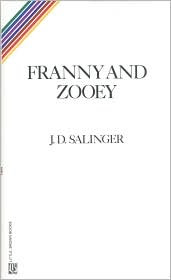
Franny in Franny and Zooey by JD Salinger

Marcus and Abby Glass, two of the heroes of The Revelations, take their surname from Salinger's precocious family. Franny's breakdown in the second story perfectly captures the headrush of adolescent spirituality (and its resultant comedown). I have always been a little bit in love with her which is, I suppose, creepy, now I'm over 30 and she's still at college.
Read about another entry on the list.

Franny and Zooey also appears among Colette McIntyre's list of eight books every college-bound student should read.

--Marshal Zeringue

Pg. 99: Andrea Hiott's "Thinking Small"

Today's feature at the Page 99 Test: Thinking Small: The Long, Strange Trip of the Volkswagen Beetle by Andrea Hiott.

About the book, from the publisher:
Sometimes achieving big things requires the ability to think small. This simple concept was the driving force that propelled the Volkswagen Beetle to become an avatar of American-style freedom, a household brand, and a global icon. The VW Bug inspired the ad men of Madison Avenue, beguiled Woodstock Nation, and has recently been re-imagined for the hipster generation. And while today it is surely one of the most recognizable cars in the world, few of us know the compelling details of this car’s story. In Thinking Small, journalist and cultural historian Andrea Hiott retraces the improbable journey of this little car that changed the world.

Andrea Hiott’s wide-ranging narrative stretches from the factory floors of Weimar Germany to the executive suites of today’s automotive innovators, showing how a succession of artists and engineers shepherded the Beetle to market through periods of privation and war, reconstruction and recovery. Henry Ford’s Model T may have revolutionized the American auto industry, but for years Europe remained a place where only the elite drove cars. That all changed with the advent of the Volkswagen, the product of a Nazi initiative to bring driving to the masses. But Hitler’s concept of “the people’s car” would soon take on new meaning. As Germany rebuilt from the rubble of World War II, a whole generation succumbed to the charms of the world’s most huggable automobile.

Indeed, the story of the Volkswagen is a story about people, and Hiott introduces us to the men who believed in it, built it, and sold it: Ferdinand Porsche, the visionary Austrian automobile designer whose futuristic dream of an affordable family vehicle was fatally compromised by his patron Adolf Hitler’s monomaniacal drive toward war; Heinrich Nordhoff, the forward-thinking German industrialist whose management innovations made mass production of the Beetle a reality; and Bill Bernbach, the Jewish American advertising executive whose team of Madison Avenue mavericks dreamed up the legendary ad campaign that transformed the quintessential German compact into an outsize worldwide phenomenon.

Thinking Small is the remarkable story of an automobile and an idea. Hatched in an age of darkness, the Beetle emerged into the light of a new era as a symbol of individuality and personal mobility—a triumph not of the will but of the imagination.
Learn more about Thinking Small at the publisher's website.

The Page 99 Test: Thinking Small: The Long, Strange Trip of the Volkswagen Beetle.

--Marshal Zeringue

Wessel Ebersohn's "Those Who Love Night," the movie

Now showing at My Book, The Movie: The October Killings and Those Who Love Night by Wessel Ebersohn.

The entry begins:
These two thrillers have the same central characters, Yudel Gordon and Abigail Bukula, but the settings are very different. The October Killings takes place in South Africa, a country where utilities work and much of the population lives by the standards of developed countries. The future is still uncertain but, for now, things function and human rights are observed.

Those Who Love Night, on the other hand, takes place in Zimbabwe, a dictatorship where the electric power comes and goes without warning, where traffic lights only work intermittently and where only the well-heeled shop in supermarkets. For the impoverished majority life is a continual struggle for survival.

Of the two central characters, Yudel Gordon, has been around longer than Abigail, having appeared in three earlier books without Abigail. He is ageing, Jewish, very intelligent and intuitive. His strengths are balanced by surprising vulnerability. He sometimes lacks confidence, but makes up for this, by great tenacity.

If I could choose an actor to play him Al Pacino would be my choice. Pacino possesses the subtlety and sensitivity, underlain by strength, that would be needed to do justice to Yudel. He is also about the right age and build. His obvious intelligence means that he would not have to pretend it. His...[read on]
Learn more about the books and author at Wessel Ebersohn's website and blog.

The Page 69 Test: The October Killings.

My Book, The Movie: The October Killings and Those Who Love Night.

--Marshal Zeringue

Wednesday, February 01, 2012

Dispatches from Sundance 2012: 4

Ray Taras regularly reviews world literature for the Campaign for the American Reader and has represented the site at the Sundance Film Festival since 2008.

Taras's fourth report from Sundance 2012 (read Dispatches from Sundance 2012: Part 1, Part 2, Part 3):

The prerequisite to making a new film adaptation of Wuthering Heights is reinvention of the novel, and that is exactly what Andrea Arnold, director and screenwriter, does in her 2011 version, shown as part of Sundance’s Spotlight series. Emily Brontë’s text provides the arc along which the film explores the relationship between Heathcliff and Cathy. The twists to the tragic story is that Hindley is cast as a skinhead and the actor playing Heathcliff is Black. “Fuck you all, you cunts,” he says shortly after arriving in Mr. Earnshaw’s family farmhouse. The belligerence remains with Heathcliff throughout the film. He becomes progressively more loathsome – a racialized reinvention by Arnold that takes risks.

Anyone expecting anything romantic from this film will be disappointed. Dialogue is sparse in Arnold’s screenplay. Instead she gives the film an elementary physicality that overpowers the mental functions. The Yorkshire Moors provide the pungent sounds, the earthiness, the sky and wind, a sensual banquet that, within its technical limits, this film tries to provide. It contains “all creatures great and small” - the title of the 1970s BBC TV series about the experiences of a veterinarian, which was also filmed in north Yorkshire. Be on guard, though: there is no legal rider insisting that animal subjects were treated humanely in the shooting of the film. Mud, sweat, murkiness, galloping horses, petrified hare, barking border collies, circling birds-of-prey, fowl of all descriptions are the co-stars of Arnold’s film, alongside a primordial Heathcliff, Cathy, and Hindley.

Even at 128 minutes in length, the film does not complete the telling of Brontë’s story. Brontë purists may also be puzzled by how different - in looks and personality - the adult actor playing Cathy is from the young actor. It inserts disconcerting discontinuity in contrast to the novel’s linearity. The young Heathcliff possesses charm and evokes pity that his older counterpart fails to do, though that may well be Arnold’s intention. If there is a flaw to this film, it may be the atomistic characters floating randomly across the Moors, past each other, never connecting.

For a stark alternative to Wuthering Heights, Sundance premiered a British thriller directed by James Marsh, whose two recent films were the documentaries Project Nim and Man on Wire. Shadow Dancer is a film about IRA activities in Northern Ireland at the height of the conflict in the 1970s. But it is also about less often examined British intelligence operations in the Six Counties. The efforts of both sides (the Ulster Protestants are not central to the story) to outwit the other drive the action of this film. The labyrinthian networks established by the opposing forces are documented in the film. As in a game of chess, it is taking an opponent’s piece off the board that can be decisive to the outcome.

A blithe summary of the moral of the film might be, counterintuitively, that the IRA always gets their man. Through water boarding, beatings, intimidation of family members, shooting through the knees (not depicted in this film), and the final solution – the dreaded phrase “let’s go for a drive” said by an IRA member to someone suspected of collaborating with the other side - the IRA was able to weather the fierce dirty war launched by British special services in the 1970s. Crucial to its organizational survival was disciplining members and ruthlessly punishing defectors.

The romantic interest that develops between Collette, member of a Republican family in Belfast, and MI5 officer Mac, charged with infiltrating the IRA, is unconvincing in this screenplay; it’s a better fit for an Angelina Jolie story. Through a series of twists and turns in the plot, driven largely by Collette’s evolving relationship with Mac, it is the British who pay dearly, and disproportionately, for obtaining the information needed to kill a minor IRA hit man.

I saw a fraction of the world cinema dramatic and documentary films shown at Sundance 2012. The one I enjoyed most was Liberal Arts – utterly predictable, it may be, since that is what I have practiced in life. Josh Radnor (star of the TV sitcom How I Met Your Mother and many other television credits) triples up as director, screenwriter, and low-key star of the film. It is set at his alma mater, Kenyon College in Ohio – one of the best of its kind: the four-year undergraduate teaching college where studying liberal arts is seen as neither a stigma nor a burden in today’s corporate world of American universities.

Holding a mind-numbing job in the admissions office of a college in New York City, Jesse enthusiastically accepts an invitation to visit his former Kenyon professor who is retiring. Jesse is all of 35 and feels awkward being on a campus that is populated by 18 to 22 year olds. When he meets Zibby, 19, an apparent soul mate who introduces him to classical music like Beethoven’s Sixth – what did Jesse do when he studied at Kenyon? – the two agree to exchange old-fashioned letters sent through the U.S. mail. They become emotionally involved. But are they destined for a sexual relationship?

The screenplay addresses the issue of age appropriate relationships. Zibby is 16 years younger than Jesse and though that doesn’t matter to the girl, it matters to the boy. He gets even more squeamish when she tells him she’s a virgin. As this relationship is put on hold, age appropriateness becomes irrelevant when the seducer is a middle-aged female professor of English Romantic Literature (played with verve by Allison Janney, Kenyon class of '82) who toys with Jesse, her former student and newfound boy toy. It all works out in the end: back in New York he finds a young woman running the local bookstore. “Age appropriate,” says Jesse in an aside to the camera.

Most enjoyable film - really? Radnor’s dialogue is unceasingly clever, introspective, and witty. But could we expect anything else from someone with a liberal arts degree from a liberal arts college? In a moment of plot resolution, Jesse klutzily asks the bookshop manager whether her husband or boyfriend would mind if they went out for coffee together. “No, they won’t, they’re both out of town,” she says.--Ray Taras

Ray Taras is professor of political science at Tulane University in New Orleans where he also directed its World Literature Program until Hurricane Katrina forced its closure. Comparative literature and world cinema have been teaching and research interests of his for many years.

Read--Dispatches from Sundance 2012: Part 1, Part 2, Part 3.

--Marshal Zeringue

What is Jennifer R. Hubbard reading?

The current featured contributor at Writers Read: Jennifer R. Hubbard, author of The Secret Year and Try Not to Breathe.

Her entry begins:
I’m usually reading more than one book at a time, and now is no exception. Last week, in the throes of writing my own novel, I found myself incapable of absorbing new fiction written in anyone else’s voice. I was desperately trying to keep my own novel’s narrator’s voice in my head. So I picked up two books I’ve reread many times before:

Babbitt, by Sinclair Lewis. Lewis wrote this about ninety years ago, but nobody else captures the American societal conflict that we now call the “red-blue” divide as effectively as he does. I like to reread Babbitt and Main Street when I’m trying to make sense of my own political times—when I find the current names, personalities and issues too volatile, but I want to see through to the underlying structure. These aren’t just novels about Issues, though; the characters are...[read on]
About Try Not to Breathe, from the publisher:
A dark and provocative novel from the author of The Secret Year

Ryan spends most of his time alone at the local waterfall because it's the only thing that makes him feel alive. He's sixteen, post-suicidal, and trying to figure out what to do with himself after a stint in a mental hospital. Then Nicki barges into his world, brimming with life and energy, and asking questions about Ryan's depression that no one else has ever been brave enough - or cared enough - to ask. Ryan isn't sure why he trusts Nicki with his darkest secrets, but that trust turns out to be the catalyst that he desperately needs to start living again. Jennifer R. Hubbard has created a riveting story about a difficult but important subject.
Learn more about the book and author at Jennifer R. Hubbard's website and blog.

Writers Read: Jennifer R. Hubbard.

--Marshal Zeringue

Five top novels on American frontier social history

Simon Winchester's books include Krakatoa, The Map That Changed the World, and Atlantic: Great Sea Battles, Heroic Discoveries, Titanic Storms,and a Vast Ocean of a Million Stories, a history of the world’s second-largest ocean.

With Daisy Banks at The Browser, he discussed five novels about the social history of America's expanding frontiers from the late 19th century to the Great Depression, including:
Sister Carrie
by Theodore Dreiser

...Let’s finish with Sister Carrie, a novel by Theodore Dreiser which first came out in a censored version in 1900.

This is really the converse of most of the things I have been talking about here. Carrie is a very beautiful woman who came from Wisconsin. Some people thought this was a book about nuns, but it wasn’t. There is no nun-like behaviour in the book at all. Quite the reverse! Carrie goes to Chicago and falls in with a swell [a dandy]. He takes her on as his mistress, and her life is tremendously up and down. She has an affair with a man who is married, and is then taken to New York and lives in Lower Manhattan with a man who ultimately treats her badly.

But she is determined to succeed, and makes it as a well-known starlet in up-market theatrical performances, while her lover declines to beggary. She ultimately leaves him and gives him $20, – the same sum, ironically, that she was given on her first date with the swell in Chicago. So this is an urban story which is gritty and shows real life. As a consequence of that it was frowned upon hugely at the time it was published, and as you mentioned it was heavily censored. But now it is regarded as a classic of early American modernist literature.
Read about another novel Winchester tagged at The Browser.

Sister Carrie is one of Neil Pearson's six best books.

Also see Simon Winchester's six favorite books about sailing.

--Marshal Zeringue

Pg. 99: Elizabeth Popp Berman's "Creating the Market University"

Today's feature at the Page 99 Test: Creating the Market University: How Academic Science Became an Economic Engine by Elizabeth Popp Berman.

About the book, from the publisher:
American universities today serve as economic engines, performing the scientific research that will create new industries, drive economic growth, and keep the United States globally competitive. But only a few decades ago, these same universities self-consciously held themselves apart from the world of commerce. Creating the Market University is the first book to systematically examine why academic science made such a dramatic move toward the market. Drawing on extensive historical research, Elizabeth Popp Berman shows how the government--influenced by the argument that innovation drives the economy--brought about this transformation.

Americans have a long tradition of making heroes out of their inventors. But before the 1960s and '70s neither policymakers nor economists paid much attention to the critical economic role played by innovation. However, during the late 1970s, a confluence of events--industry concern with the perceived deterioration of innovation in the United States, a growing body of economic research on innovation's importance, and the stagnation of the larger economy--led to a broad political interest in fostering invention. The policy decisions shaped by this change were diverse, influencing arenas from patents and taxes to pensions and science policy, and encouraged practices that would focus specifically on the economic value of academic science. By the early 1980s, universities were nurturing the rapid growth of areas such as biotech entrepreneurship, patenting, and university-industry research centers.

Contributing to debates about the relationship between universities, government, and industry, Creating the Market University sheds light on how knowledge and politics intersect to structure the economy.
Learn more about Creating the Market University at the Princeton University Press website and Elizabeth Popp Berman’s website.

Elizabeth Popp Berman is a sociologist at the University at Albany, SUNY.

Writers Read: Elizabeth Popp Berman.

The Page 99 Test: Creating the Market University.

--Marshal Zeringue

Coffee with a canine: Nancy Jensen & Gordy

Today's featured duo at Coffee with a Canine: Nancy Jensen & Gordy.

The author, on how she and Gordy were united:
It was a frigid mid-February day, five inches of snow on the ground with more expected. The sun was just going down when I heard a piteous cry coming from the hill sloping down from my deck. I saw a tiny black smudge racing across the yard, so I ran out to my front porch and saw the smudge about to disappear over another hill beyond my neighbor’s house. Very quietly, so quietly I could barely hear it myself, I whispered, “Puppy?” The little smudge flipped around, came racing toward me, leapt into my arms, snuffled with relief and fell asleep. Suddenly I, confirmed cat lady, had...[read on]
About Nancy Jensen's The Sisters, from the publisher:
In the tradition of Marilynne Robinson’s Housekeeping and Elizabeth Strout’s Olive Kitteridge, a dazzling debut novel about the family bonds that remain even when they seem irretrievably torn apart

Growing up in hardscrabble Kentucky in the 1920s, with their mother dead and their stepfather an ever-present threat, Bertie Fischer and her older sister Mabel have no one but each other—with perhaps a sweetheart for Bertie waiting in the wings. But on the day that Bertie receives her eighth-grade diploma, good intentions go terribly wrong. A choice made in desperate haste sets off a chain of misunderstandings that will divide the sisters and reverberate through three generations of women.

What happens when nothing turns out as you planned? From the Depression through World War II and Vietnam, and smaller events both tragic and joyful, Bertie and Mabel forge unexpected identities that are shaped by unspeakable secrets. As the sisters have daughters and granddaughters of their own, they discover that both love and betrayal are even more complicated than they seem.

Gorgeously written, with extraordinary insight and emotional truth, Nancy Jensen’s powerful debut novel illuminates the far-reaching power of family and family secrets.
Learn more about the book and author at Nancy Jensen's website.

My Book, The Movie: The Sisters.

Writers Read: Nancy Jensen.

The Page 69 Test: The Sisters.

Read--Coffee with a Canine: Nancy Jensen & Gordy.

--Marshal Zeringue

Pg. 69: Susan Sherman's "The Little Russian"

The current feature at the Page 69 Test: The Little Russian by Susan Sherman.

About the book, from the publisher:
The Little Russian spotlights an exciting new voice in historical fiction, an assured debut that should appeal to readers of Away by Amy Bloom or Cold Mountain by Charles Frazier. The novel tells the story of Berta Alshonsky, who revels in childhood memories of her time spent with a wealthy family in Moscow –a life filled with salons, balls and all the trappings of the upper class — very different from her current life as a grocer’s daughter in the Jewish townlet of Mosny. So when a mysterious and cultured wheat merchant walks into the grocery, Berta’s life is forever altered. She falls in love, unaware that he is a member of the Bund, The Jewish Worker’s League, smuggling arms to the shtetls to defend them against the pogroms sweeping the Little Russian countryside.

Married and established in the wheat center of Cherkast, Berta has recaptured the life she once had in Moscow. So when a smuggling operation goes awry and her husband must flee the country, Berta makes the vain and foolish choice to stay behind with her children and her finery. As Russia plunges into war, Berta eventually loses everything and must find a new way to sustain the lives and safety of her children. Filled with heart-stopping action, richly drawn characters, and a world seeped in war and violence; The Little Russian is poised to capture readers as one of the hand-selling gems of the season.
Learn more about the book and author at Susan Sherman's website and blog.

The Page 69 Test: The Little Russian.

--Marshal Zeringue