Friday, September 15, 2006

Janet Fitch's book list

Janet Fitch is the author of the 1999 best-seller White Oleander.

Her second novel, Paint It Black, will be published this week.
"Paint It Black [is] a passionate novel," Alden Mudge discovered in an interview, "that Fitch likens to Edgar Allan Poe's The Fall of the House of Usher—not because it follows Poe's storyline in any way but because it concerns itself, in part, with the internal corruption and destruction of a prominent musical family, and because the novel does cast a Poe-like shadowy spell."
Click here to read an excerpt from Paint It Black.

She picked six books for The Week magazine. Here are three of them:
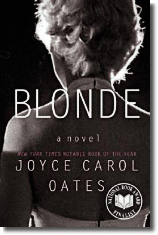
Blonde by Joyce Carol Oates

All the prodigious imagination and stylistic bravura of Joyce Carol Oates comes to bear upon the often-told but little-examined mythic life of Marilyn Monroe, with breathtaking results. This is my favorite JCO since the great short story collections of the ’60s and early ’70s—Upon the Sweeping Flood, By the North Gate, Marriages and Infidelities, and The Wheel of Love.

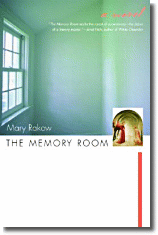
The Memory Room
by Mary Rakow

A hugely talented stylist builds a novel from musically related fragments, with echoes and refrains. The work, which centers on a woman grappling with the primal knowledge of evil in our mundane world, gains its power through the gradual accumulation of these tiny, shimmering fragments.

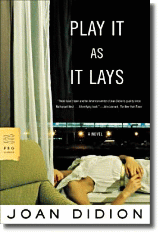
Play It as It Lays by Joan Didion

The radioactive lives of late-’60s showbiz Angelenos play themselves out in minimalist gritty chapters that can punch you in the face with a single line. Nobody writes a dialogue scene like Didion.
To read about Fitch's other picks, click here.
To read or listen to an excerpt from Blonde, click here.
Click here to read an excerpt adapted from Mary Rakow's The Memory Room.

--Marshal Zeringue

Is there a distinctive Brooklyn literary tradition?

Is there a distinctive Brooklyn literary tradition?
You could make an argument for it, though the Brooklyn voice has evolved [writes Dinitia Smith in today's New York Times]. In the earliest colonial days, Brooklyn was seen as a kind of Eden. Writers celebrated its light, its air. The man sometimes called the first Brooklyn writer, Jasper Danckaerts, wrote in his journal in 1679 of its open roads and little woods: “It is impossible to tell how many peach trees we passed, all laden with fruit to breaking down.” And the first really famous Brooklyn writer, Walt Whitman, saw it in the same golden light: “Stand up, beautiful hills of Brooklyn!” he cried in “Crossing Brooklyn Ferry.”
Among the writers who have lived in Brooklyn more recently: Marianne Moore, Norman Mailer, W. H. Auden, Carson McCullers, Paul and Jane Bowles, Richard Wright, and Truman Capote.

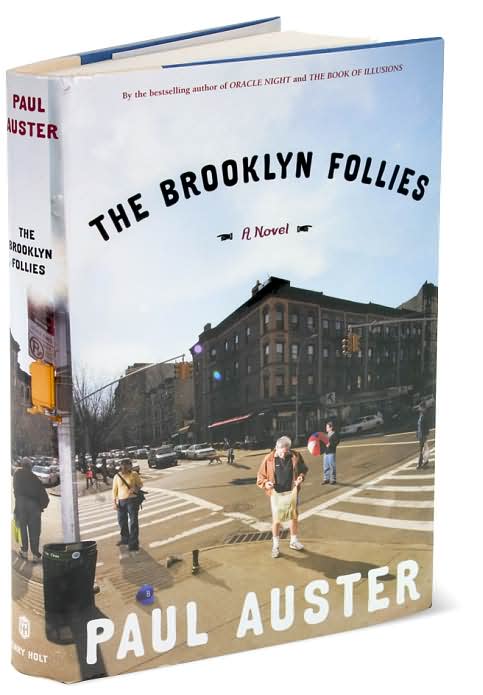
Current writer-Brooklynites include Paul Auster, Jonathan Safran Foer and his wife Nicole Krauss, Susan Choi, Jennifer Egan, and Jhumpa Lahiri.

Get your fill of the subject tomorrow at The Brooklyn Book Festival, which will go on from 10 a.m. to 6 p.m. in and around Brooklyn Borough Hall, Downtown Brooklyn. A full schedule of readings, panels and other events is at brooklynbookfestival.org.

In related news on the blog:
click here for a literary guide to Brooklyn;
click here for the most shoplifted novelist in New York;
click here for Cary Federman's Brooklyn-centric take on The Great New York City Novel.

--Marshal Zeringue

An interview with Martin Amis

There is a long interview with Martin Amis in the (London) Times. I'm not sure how intelligible it will be for the reader who does not know most of his biography, much of the gossip around him, and at least some of his books.

I'm reminded of what his father Kingsley said (somewhere, I can't remember where) about young Martin, now age 57: it's all very well for a young man like Martin to have these liberal ideas--in fact it's a good thing--but it would be very stupid for him to not trade them for more conservative notions as an older man. (That's not even a paraphrase, but I'm reasonably certain that I remember the sense of Kingsley's observation accurately.)

Martin Amis certainly no longer sounds like the young man who burst on the scene in 1973 with The Rachel Papers, his very engaging debut novel. The interviewer (Ginny Dougary) suggests to him:

as with most serious novelists near the top of their game, surely for him what really matters, in the final reckoning, is the work? But while this may once have been true, Amis says it is no longer the case.

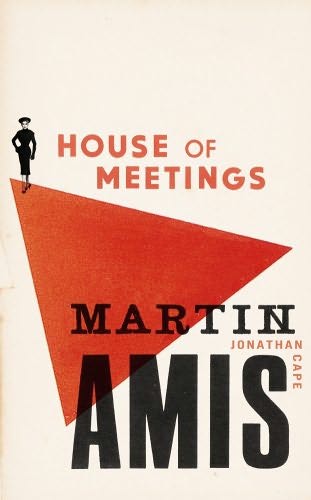
“I’ll tell you why. It has become clearer and clearer to me that when you get into the last lap of your life, you don’t really think about your work at all. What you think about is (a) how it went with the women in your life and (b) your children, and work comes very much third. There’s even a hint of it in there [pointing to his new book, House of Meetings] when the main character says that men always die in torment because they’re not congratulating themselves on their achievements in the world; they’re reproaching themselves for the bad things they did.”

Perhaps Amis is over-identifying with Saul Bellow, one of his two main literary inspirations (Nabokov is the other), with these autumnal sentiments.

“You would think Saul would be in a stupor of self-satisfaction because his work was so celebrated. He didn’t say it till quite close to the end when a friend came in, who was almost the same age, and asked, ‘Well, what have you got to say for yourself, Bellow?’ And Saul, from his hospitalic bed in his own house, said, ‘I’ve been thinking. Now which is it? Is it: there goes a man or there goes a jerk?’ And his friend, Karl, said, ‘There goes a man.’ And Saul said, ‘OK. I’ll take your word for it.’

“So that’s what you’re thinking. He had five marriages – and four children – and the last was his longest and his best. But there had been a lot of wounds and blows given and received in four divorces. It’s there [he refers again to the book; its story takes the form of a letter as a manuscript from the Russian narrator to his Am­eri­can stepdaughter], when he says to Venus that there’s a difference between men and women in the last round. Men break the habit of a lifetime and start blaming themselves; women break the habit of a lifetime and stop blaming themselves. Good news for women.”

The absence of a hopefulness about how he and others will look back on his writing is mirrored in at least one aspect of his thinking about dealing with terrorists.

“What can we do to raise the price of them doing this? There’s a definite urge – don’t you have it? – to say, ‘The Muslim community will have to suffer until it gets its house in order.’ What sort of suff­­er­­­ing? Not letting them travel. Deportation – further down the road. Curtailing of freedoms. Strip-searching people who look like they’re from the Middle East or from Pakistan… Discriminatory stuff, until it hurts the whole community and they start getting tough with their children. They hate us for letting our children have sex and take drugs – well, they’ve got to stop their children killing people. It’s a huge dereliction on their part. I suppose they justify it on the grounds that they have suffered from state terrorism in the past, but I don’t think that’s wholly irrational. It’s their own past they’re pissed off about; their great decline. It’s also masculinity, isn’t it?”
There is a lot more in the interview about Amis' coming work, his thinking about the Booker prize, his daughters' Jewishness, etc. Click here to read it.

--Marshal Zeringue

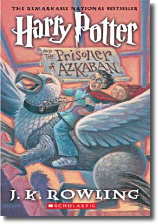
Harry Potter and the prisoner of Guantanamo

The Pentagon has posted a document at its website titled "Ten Facts about Guantanamo."

Number 8:
Entertainment includes Arabic language TV shows, including World Cup soccer games. The library has 3,500 volumes available in 13 languages — the most requested book is “Harry Potter.”
(Hat tip to Al Kamen of the Washington Post, who gives his usual wry treatment to the report.)

--Marshal Zeringue

Thursday, September 14, 2006

Can men write romantic fiction?

The poetry anthologiser and television producer Daisy Goodwin has suggested that "men...don't figure very largely as writers in the romantic fiction pantheon."

Is that accurate?

Boyd Tonkin gives the question a good working over at the Independent: click here to read his interesting commentary.

Included with Tonkin's thoughts are reflections by seven women writers on male-created female characters that worked well (or not) on the page. Here are three of the responses.

Kathy Lette, author of Dead Sexy and other books, suggested:
"Becky Sharp," William Thackeray
For the most part, men cannot write female characters convincingly. The exception is Thackeray's Vanity Fair. Becky Sharp was a literary antidote to all the wet and wimpy female fictional characters of the time; heroines who were polite and one-dimensional and invariably got rescued by something tall, dark and bankable... With tongue in chic and lashings of chutzpah, Becky Sharp was the Madonna of her day, flaunting tradition and challenging hypocritical sexual mores. OK, she had a few minor faults - snobbery and sexual kleptomania (Becky climbed the social ladder lad by lad); husband-hunting (she wasn't interested in Mr Right, but Lord, Sir, Marquis Right at the very least). But we're talking 1810. With no vote, no union, no fixed wage, no welfare state, no contraception, what options were available to women? Apart from governessing or domestic service, it was prostitution or marriage. (Often a tautology in those days.) And what a survivor. After the nuclear holocaust, all that will be left are a couple of cockroaches and Becky. Now that's a real woman!
Katie Fforde, the best-selling author of Highland Fling, came up with one of my favorite minor characters in a great series:

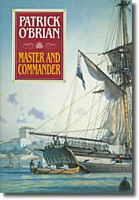
"Sophie Aubrey," Patrick O'Brian
Patrick O'Brian was a fantastic portrayer of intimacy. He produced the most tender romantic scenes and really got under the skin of his female characters. In Sophie, Jack Aubrey's romantic interest in the Aubrey/Maturin novels, he captured the complexities of women, showing the maternal feelings women can have towards men and the fact that women don't expect constant heroism from them - men can have their failings. O'Brian was fantastic at characterisation - very, very good at reading people, whether male or female. There are a lot of men who know a great deal about women but aren't able to convey this on paper. But not O'Brian. I think the theory that men can't write romantic fiction is wrong. A lot of men are very romantic and would go to the ends of the earth for the people they love. Women can often be more pragmatic.
Amanda Craig, author of Love in Idleness and other books, named one of my favorites:

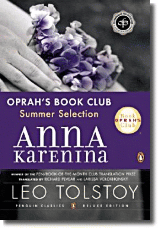
"Anna Karenina," Leo Tolstoy
There is a clear difference between what we call "ChickLit" and the broader sense of romantic literature. But in Anna Karenina, Tolstoy got totally inside the mind of a woman who is prepared to lose everything for the sake of man and who is so much in love that she commits suicide. I don't like her as a woman, but I think it is a brilliant portrait, unequalled in literature. However, while many male writers, such as Nabokov, can write wonderful love scenes, I do not think they ever get how important love is for women and how their entire life hangs on it.
Click here to read the other comments.

--Marshal Zeringue

Jails without judges

I've just posted a new item titled "Jails without judges" over at Spot-on.

It summarizes some of the books recommended in the series on what's at stake in the debate over habeas corpus and includes a few notes about some of the books I read based on those recommendations.

Since the series started, the Supreme Court ruled on an important related case, Hamdan v. Rumsfeld; click here for a brief summary of that case and decision.

When the Hamdan decision was announced, law professor Walter Dellinger called it "simply the most important decision on presidential power and the rule of law ever. Ever." (Shortly thereafter, he thought he might have overstated the point.)

--Marshal Zeringue

Shocking shortlist for the Man Booker prize

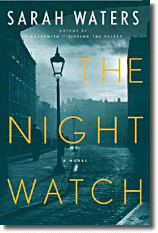
"Author Sarah Waters was installed as 2-1 favourite on Thursday to land the Booker Prize [for her novel, The Night Watch] after the judges left a string of literary heavyweights off their shortlist for one of the world's top book awards," reports Reuters.

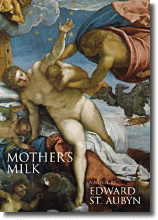
Also making the shortlist were Edward St Aubyn for Mother's Milk, Kiran Desai's The Inheritance of Loss, Kate Grenville's The Secret River, M.J. Hyland's Carry Me Down, and Hisham Matar's In The Country of Men.

David Mitchell's Black Swan Green had been considered the favorite to win the prize; it was not even nominated. The judges also left out previous winners Peter Carey and Barry Unsworth.

The shortlist pleased the Booker bookies: "We couldn't have compiled a better short-list from a bookmaking point of view," the spokesman for oddsmaking firm William Hill told the Guardian. "Many of the well fancied runners like David Mitchell, Peter Carey, Barry Unsworth and Howard Jacobson have all fallen by the wayside and most punters have already lost their money."
The judging panel for the 2006 Man Booker Prize for Fiction is: Hermione Lee (Chair), biographer, academic and a reviewer; Simon Armitage, poet and novelist; Candia McWilliam, award-winning novelist; critic Anthony Quinn; and actor Fiona Shaw.
--Marshal Zeringue

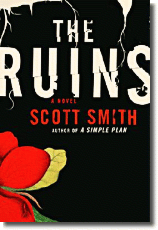
Should you read Scott Smith's "The Ruins"?

Bryan Curtis covered Scott Smith's The Ruins for Slate.
The Ruins is Smith's first novel since his best-selling A Simple Plan (1993). After that book, Smith was hailed by Stephen King and others as a thriller writer with literary ambitions. The Ruins has so many ditzy metaphors and leaden characterizations—"Jeff had something about him that made people trust him"—that it succeeds in proving the opposite. Yet what makes this book so readable, and what separates Smith from his thriller-writing brethren, is his furious devotion to situational ethics. Smith's books pose the kind of dilemmas that ethics professors lob out to helpless undergraduates. To take one gruesome example from The Ruins: When your friend's mangled legs threaten to become gangrenous, do you leave him in agony? Or do you tap yourself to save his life by performing meatball surgery? ("There was the stench of the hot knife against Pablo's flesh, a cooking smell, meat burning … ")
Would you do the surgery? Would Bryan Curtis do the surgery? Would Bryan Curtis have you read the book? Click here to learn the answer to the last question.

Click here to learn what Bryan thinks about The Great Texas Novel.

Click here to visit the official site of The Ruins where you'll find more about the book and the author, an excerpt, and reviews.

--Marshal Zeringue

The best (and worst) of John le Carré

Peter Millar, who reviews thrillers for the Times (London), came up with a list of the best and the worst of John le Carré's novels.

The best:
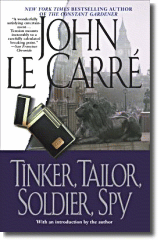
Tinker, Tailor, Soldier, Spy
The best spy novel written, and certainly the most literary. Read the first chapter again if you don’t understand the ending. In fact, read it again anyway.
The worst:
The Naive and Sentimental Lover
No, don’t. A love story and an exotic aberration. Only for those who want to read the complete canon.
Click here to read about the titles that come in between.

--Marshal Zeringue

"The Meaning of Night"

Melissa Katsoulis closes her review of Michael Cox's The Meaning of Night by writing, "Any adult who has secretly enjoyed Harry Potter will love this book." (What about those of us who have openly enjoyed Harry Potter?)

Anyway, the book sounds interesting:

The Meaning of Night is a gripping adventure story about a man’s thirst for revenge on the nemesis who has stolen his birthright. It is extraordinary because its literary influences are not only obvious, but integral.

The story is the confession of Edward Glyde, whose quiet life as a solicitor’s clerk and amateur photographer hides a murderous desire for the scalp of the annoying literary wunderkind Phoebus Daunt, and unfolds in a flurry of epistolary outpourings between London, France, Northamptonshire and Cambridge.

As in Wilkie Collins’s The Woman In White, the narrator’s florid account is qualified by sober testimony from a professional witness. Like Dickens, Cox leads us down London’s most foetid, dangerous alleyways where we meet a cast of shady characters with names such as Josiah Pluckrose and Captain LeGrice. And from Sir Arthur Conan Doyle comes a convoluted but ingenious plot.

The ill-fated Glyde is a sensitive bibliophile with a penchant for oyster suppers and night-time walks through London. Between trips to the brothel and the opium den he sorts through the papers of his late mother, a prolific writer of romantic fiction whose health was ruined by long hours at the writing table.

But as he delves into the past he discovers a betrayal far worse than he had imagined, and falls under the spell of a dangerous beauty named Miss Carteret, who has huge brown eyes and plays a lot of Chopin.

Click here to read an excerpt from The Meaning of Night.

Cox's biography and the making of the book is an interesting story in itself:
In April 2004, [Cox] began to lose his sight as a result of cancer. In preparation for surgery he was prescribed a steroidal drug, one of the effects of which was to initiate a temporary burst of mental and physical energy. This, combined with the stark realization that his blindness might return if the treatment wasn't successful, spurred Michael finally to begin writing in earnest the novel that he had been contemplating for over thirty years, and which up to then had only existed as a random collection of notes, drafts, and discarded first chapters. Following surgery, work continued on what is now The Meaning of Night, and in January 2005, after a hotly contested UK auction, it was sold to John Murray.
Click here to read a Q & A with Michael Cox.

--Marshal Zeringue

Wednesday, September 13, 2006

Michael Connelly's "The Overlook"

Michael Connelly will publish The Overlook, an original Harry Bosch novella, starting September 17, 2006, in the New York Times Magazine. This story will be serialized every Sunday for 16 weeks. Click here to access the magazine online. Registration is free but required.

Click here to read a Q & A with Connelly about The Overlook.

Echo Park, Connelly's latest Harry Bosch novel, will be released on October 9. From Connelly's official website:

In 1993, Marie Gesto disappeared after walking out of a supermarket in Hollywood. Fearing the worst, the case was elevated by LAPD commanders from the missing persons squad to the Homicide Division, where Harry Bosch was assigned the case. But the 22-year-old woman never turned up — dead or alive — and it was a case Bosch couldn't crack.

Thirteen years later Bosch is in the Open-Unsolved Unit when he gets a call from the DA's office. A man accused of two heinous killings is willing to come clean in regard to several other murders in a deal to avoid the death penalty. One of those murders, he says, is the killing of Marie Gesto. Bosch is now assigned to take Raynard Waits' confession and to make sure the killer is not scamming authorities to avoid a date with death.

In confirming the confession Bosch must get close to the man he has sought for thirteen years. Bosch's whole being as a cop begins to crack when he comes to realize that he and his partner missed a clue back in 1993 that could have led them to Waits and would have stopped the nine murders that followed the killing of Marie Gesto.

Click here to read an excerpt from Echo Park and here to listen to an excerpt.

--Marshal Zeringue

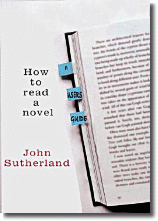
Pg. 69: "How to Read a Novel"

I learned about Marshall McLuhan's "page 69 test" from an excerpt from John Sutherland's How to Read a Novel.

So how does Sutherland's book do by this criterion?

Clever Claire Harman checked it out for the Telegraph: "page 69 of his book (which is about D.H. Lawrence and censorship) is pretty good."

In the Independent D.J. Taylor also gave Sutherland's book high marks, though there's no mention of how well the "page 69 test" would have worked.

Previous "page 69 tests":
Steven Miles, Oath Betrayed
Alan Brown, Audrey Hepburn's Neck
Richard Dawkins, The Ancestor's Tale

--Marshal Zeringue

What was Jodi Picoult reading last spring?

Back in March, Jodi Picoult talked to the Christian Science Monitor about what she was listening to and watching on screens, large and small. And what she was reading:
I'm reading a book called Maybe a Miracle by Brian Strause. It's narrated by an 18-year-old-boy who saves his sister after she's found floating face down in a pool. After she recovers she begins performing miracles and healing people who come into contact with her. Whenever I see a first-person narrator done extremely well - and by that I mean a narrator who never really breaks out of character no matter what goes on in the plot of the book - I'm always driven to want to go to my computer and do something just as good as that. I really hope we hear from this writer again in the future. I read an advance copy of a book by Jo-Ann Mapson called The Owl and Moon Cafe.... It's a multigenerational story about a family of women and the trials and tribulations that have got them to the point where they are running a small cafe in Southern California. Nobody does funny female characters as well as Jo-Ann Mapson. It's a departure from her ... "Bad Girl Creek" series. Here's a book I recently read that I really liked. It's called The Distance Between Us and it's by a woman named Maggie O'Farrell that I don't think anyone knows about. It is almost a two-pronged book about a very shiftless woman, who can't seem to find the ground beneath her feet, and a man who has had a complete change of life in the wake of a trauma. Most of the book goes back and forth between these two characters and you're waiting to see how they're going to pull it all together. It was such an interesting book because of how it was executed - to have two completely different lives, completely different characters, in completely different places... you feel them move closer to each other throughout the book. I think readers are going to fall just as hard for these characters as they did for her previous ones. Another book I read, that should be out quite soon, is Cage of Stars by Jacquelyn Mitchard. She's the author of "The Deep End of the Ocean." (I believe that was the first Oprah Book Club pick.) It's the story of a young Mormon girl whose family and security falls apart after her sisters are murdered. It's ultimately a story about how revenge can be weighed against faith. Like most of Mitchard's books, it's an unbelievable character exploration with a very honest first-person narrative.
Click here to read about Picoult's interests in television, movies, and music.

At this site:
If she could invite anyone, living or dead, to a dinner party, Picoult's guest list would include Ernest Hemingway, Alice Hoffman, William Shakespeare, Mel Gibson, and Emeril Lagasse.
Picoult's most recent book is The Tenth Circle. Click here to read Elizabeth Hand's review of it in the Washington Post. An article about the novel in USA Today opens:
In Jodi Picoult's new novel, The Tenth Circle, ninth-grade girls are doing a lot more than playing spin the bottle. In fact, the book's unchaperoned party has the kind of sexual servicing that sounds more suited to the Rat Pack at its most debauched in Vegas than a high school gathering in Maine.
Picoult's official website is chock full of information, including book tour details, a Q & A, interviews, and an excerpt of her coming novel.

--Marshal Zeringue

Another novel about a plague

I recently ran an item on five books about plagues: only one was a novel.

Reader François Tournigy wrote in with a suggestion of another work of fiction in that category: Jean Giono's The Horseman on the Roof.

Upon its reissue, the New York Times wrote of the novel:
A handsome, naive young Italian nobleman and his beautiful female companion are confronted by moral dilemmas when they're caught in a cholera plague in Provence in the early 19th century. This 1951 novel impressed our reviewer Frances Keene with its ''beautiful writing'' and ''the power of its portrayal of the implacable forces of nature.'' Its author, the prolific French writer Jean Giono (1895-1970), was critically acclaimed, but never won wide popularity in this country during his lifetime.
Jan Marta's commentary at the "Literature, Arts, and Medicine Database" hosted by NYU spells out the role of cholera in the story:
Jean Giono's portrait of the horseman on the roof is as much a social portrait of the 1832 Provencal cholera epidemic as it is of the reflections and actions of his Stendhalian protagonist. Cholera is at once background and foreground, a social context and a primary agent of the narrative (see Greimas's actantial theory of narrative). The initial chapter illustrates the interconnection of time, voice and perspective in narrative technique (see Genette's theory of narrative discourse), of medical and non-medical (social, religious) perspectives on contagion, and of different forms of medical expertise (knowledge, experience).

Chapters 1, 2 and 13 highlight medical ethics through the attitudes and actions of four physician-characters, while the book as a whole reflects the social ethics of epidemics. Specific episodes represent the dynamics of scapegoating, rebellion, and familial relationships, including that between Angelo and his mother.

The rich descriptive detail gives the reader a vivid sensorial experience of the time, the region, the epidemic, the illness, and the agonizing deaths of the victims. Read together, Giono's The Horseman on the Roof and Camus' The Plague..., written only four years before, dramatically underscore the diversity and autonomy of literary representation of medical subject matter.

Jean-Paul Rappeneau directed a movie version of the novel, which Roger Ebert reviewed:

The Horseman on the Roof is a rousing romantic epic about beautiful people having thrilling adventures in breathtaking landscapes. Hollywood is too sophisticated (or too jaded) to make movies like this anymore; it comes from France, billed as the most expensive movie in French history.

Thanks to François (who also nominated Fifth Business by Robertson Davies as the best Canadian novel) for the suggestion.

--Marshal Zeringue

Upton Sinclair, resurrected

Upton Sinclair has received a fair measure of attention this year on the 100th anniversay of the publication of The Jungle.

Chris Bachelder did much more to celebrate the Pulitizer Prize-winning muckraker: he put Sinclair at the center of his book, U.S.!.

Jay Parini reviewed U.S.! for the Guardian. The review opens:
I've never been able to eat a sausage since, at the age of 15, I read Upton Sinclair's 1906 novel The Jungle. "There would be meat that had tumbled out on the floor, in the dirt and sawdust, where the workers had tramped and spit uncounted billions of consumption germs," he wrote. "There would be meat stored in great piles in rooms; and the water from leaky roofs would drip over it, and thousands of rats would race about on it." Sinclair was the ultimate muckraker, the scourge of capitalists and greedy politicians, and a vibrant man of the left, when there was a left. Now he's at the centre of a larky novel by Chris Bachelder.
Click here to read the rest of the review.

Justin Taylor reviewed U.S.! for Bookslut. His bottom line should suffice--"if I haven’t sold you on U.S.! yet, you’re obviously either some sort of fascist or else just tired of listening to me"--but here's a quality passage that nicely captures the book:
In Chris Bachelder's new novel, U.S.!, Upton Sinclair is the dark glass through which he sees. Equal parts troubling and funny, this book about the demise of the American Left and the increasingly Lear-like madness of the American Right is impressive and affecting, a deft mash-up of the real and the allegorical, the political and the pathetic (as in pathos, that is). U.S.! imagines an America where earnest muckraker and second-rate novelist Upton Sinclair is serially resurrected from the grave by a world that still needs him, only to be just as serially assassinated by that same world, which has no interest whatsoever in being told what it needs. Aided by a fragile, mostly broke, ever-shifting cadre of supporters (identifiable to one another primarily by their discreet red shovel tattoos), Sinclair travels the country preaching his gospel to both those with ears to hear; as well as those with mouths to heckle and fingers to squeeze triggers. He’s for socialism, temperance, abstinence, and the metric system. He makes points by using exclamation points. He thinks every social ill can be solved by writing a novel about it.
Click here to read the rest of the review.

To read an excerpt from U.S.!, click here.
Click here and here for previous items about The Jungle here on the blog.

--Marshal Zeringue

Tuesday, September 12, 2006

How are book reviewers like financial analysts?

Over at Asymmetrical Information, "Jane Galt" has an interesting take on the book reviewing business: both financial analysts and book reviewers “write in a way that signals to insiders that a book is a piece of crap, while convincing outsiders that they should buy it, read it, or at least talk earnestly at their next cocktail party about how they mean to read it as soon as the Peterson deal is finished.”

That sounds relatively harmless when it comes to choosing what to read next--unless you value your reading time as much as I do--but you may have no other choice...unless you are prepared to judge a book by its cover. Or by the author's flyleaf photograph.

But the stakes may be higher if you are, say, trying to invest the meager savings of a widow or orphan. "Galt" again:

Professional analysts do not take buy recommendations seriously. But sell-side researchers do not stick them into their reports simply because they have a big square space in the layout that needs to be filled with a chunk of brightly coloured text. They put them in there because some Osteopath in Dallas actually believes that if Merrill Lynch is telling him to buy something, that means that, well, they think he should buy it. He forthwith does.
That sad story, alas, is not history; but it was worse back when the internet bubble was expanding. Cisco, for example, was one highly touted share that fed off these reports back in the day. The osteopaths of Dallas have yet to recover.

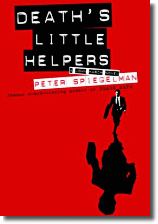
The comparison of book reviewers to financial analysts is intriguing enough, but the real reason I'm sharing it here is because I just finished a fine thriller, Death's Little Helpers by Peter Spiegelman. I'm not the only one who liked the novel, either.

John March, Spiegelman's private detective who we first met in Black Maps, takes on the job of finding a Blodget-like financial analyst gone missing.

Click here to read a Q & A with Spiegelman about his novel.

Click here to read a New York Times profile of the author.

For an excerpt from the novel--it opens, "As a husband, he was a lying, selfish prick," Nina Sachs said, and lit yet another cigarette.--click here.

--Marshal Zeringue

"Souvenir of the Ancient World"

Is there a poem fitting for the first anniversary of the post-Katrina flooding of New Orleans and the fifth anniversary of the 9/11 attacks?

Robert Pinsky proposes one that is, interestingly enough, decades old and written by a Brazilian. Click here to read the poem--"Souvenir of the Ancient World" by Carlos Drummond de Andrade--and Pinsky's brief, clear explication of it. Or click here to read the poem without the commentary.

Pinsky nominated the poem for Slate's collection of art that helped make sense of 9/11; he also found some solace in a "table read" of a script for The Simpsons he was invited to on September 12, 2001, having been stranded in Los Angeles when air travel was suspended. Read about the experience here.

--Marshal Zeringue

Ten notable books about dining

Trevor White, editor of The Dubliner and author of Kitchen Con, a memoir of a life lived at the heart of the restaurant business, named his top 10 books about dining for the Guardian.

Here's a taste [ahem] of his list:
A Meal Observed by Andrew Todhunter

Arguably the longest restaurant review in history, and one of the wisest, was published just four years ago. Todhunter's passionate and forensic examination of one meal--at Taillevent, "a Michelin three-star restaurant considered by many critics to be the finest in France and thus the world"--is social history, culinary adventure, and, at its best, a love letter.

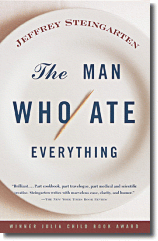
The Man Who Ate Everything by Jeffrey Steingarten

Described as a cross between MFK Fisher and HL Mencken, Jeffrey Steingarten is the most gregarious food writer in America today. This collection of the lawyer's essays for Vogue is a scintillating introduction to the work of a man who will literally eat anything for a headline.

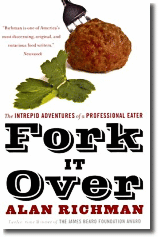
Fork it Over by Alan Richman

Critics who advertise their ignorance are an English specialty. In this collection of culinary musings, American GQ's food critic Alan Richman exhibits his outré charm--he calls honey "bee-puke". "I have been known," writes Richman, "to stand in front of my microwave, reheating coffee, wondering why it takes so long."

Kitchen Confidential by Anthony Bourdain

This celebrated memoir is a homage to the "whacked-out moral degenerates, dope fiends, refugees ... drunks, sneaks, thieves, sluts and psychopaths" who work in restaurant kitchens. Are critics any less criminal than chefs? Look at the title of my book. Call it an act of worship if you wish. It was in fact a steal. Such acts are typical in the restaurant world, which is full of rip-off artists. Imitation explains why so many second-rate chefs survive. But a cook who dares to tell the truth? Now that's unusual. No wonder he did so well.
Click here to read about the other titles.

Bourdain's book is the only one of the ten that I've read...and I'm not sure I'm happy to have done so. It's a fine read, but I've not been able to enjoy swordfish since. Which may be a good thing.

The publisher on Trevor White's Kitchen Con:
Offering a hilarious account of life as a restaurant critic, this work presents a social history of restaurant criticism and an expose of the restaurant business. It reveals how diners are ripped off by self-styled artists and greedy restaurateurs, while arguing that anyone can become a food critic--all you need is a pen and an appetite.
--Marshal Zeringue

Monday, September 11, 2006

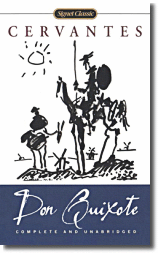
Kadare: Quixote in the Balkans

I've just come across an interesting essay by the Albanian novelist Ismail Kadare. It's the sort of thing that will take re-reading and some concentrated noodling for me to altogether understand what he's getting at, but you may be quicker.

Among other things, Kadare explains the place of Don Quixote in Balkan folklore and how it came to be translated in Albania, and the reason that today's political leaders ought to be prohibited from using Quixote's name as a term of abuse.

I was particularly struck by this observation of Kadare's:
the fact [is] that the trip of Don Quixote is not a trip through space, but an inner trip through humanity.

Don Quixote's trip takes place at the time of important journeys, including the most famous and spectacular in the history of mankind: the discovery of America. It is impossible that a greater journey than this exists in history. All at once, the world, the earth, the globe was twice as big. But a strange thing happened: this endless discovery left no trace on world literature. Nevertheless, the trip of an insane person from one village of Spain to another, a trip that had not the least importance to humanity, that brought it nothing, and perhaps never happened, gives to humanity one of the greatest masterpieces of literature.
That had never occurred to me.

John Carey, chairman of the panel that awarded Kadare the first International Man Booker prize, said the author mapped a culture, "its history, its passion, its folklore, its politics and its disasters. He is a universal writer in a tradition of storytelling that goes back to Homer."

--Marshal Zeringue

What does Joe Theismann read?

In honor of the first regular season game of Monday Night Football--Minnesota visits Washington--here's an item about what Joe Theismann, one of MNF's broadcast team, reads:
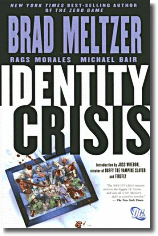
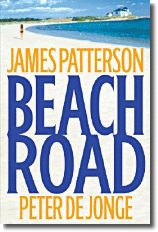
I enjoy James Patterson's books. I try to stay up on the National Football League [so] I read USA Today; I like to look at People
magazine to see what's happening [in entertainment], and I read The Wall Street Journal on occasion. I like [thriller novelist] Brad Meltzer, too.
Theismann led the Washington Redskins to a Super Bowl win in 1983. He also played a stint in the Canadian Football League for the Toronto Argonauts but it seems he's not remembered as fondly there as in Washington. He has been an NFL TV analyst since 1988.

--Marshal Zeringue

Five books about fashion

On Slate's behalf, Troy Patterson attended Diane von Furstenberg's Sunday-night fashion show. There he ran into Salman Rushdie. When Patterson "asked [Rushdie] if he could think of any novels that were especially sharp about the fashion business, Rushdie said jovially, 'No—other than The Devil Wears Prada.'" (Has Rushdie read it? No...or so he says.)

Last fall Barneys New York's creative director Simon Doonan (also an author) listed his five best books about fashion for the Opinion Journal.

Number 5:

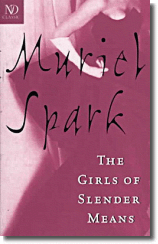
The Girls of Slender Means by Muriel Spark (Knopf, 1963)

Fashion and style are, for better or worse, the gasoline that fuels the chick-lit juggernaut--distressingly popular books packed with references to Prada and Bergdorfs. For worthy chick lit we need to go all the way back to "The Girls of Slender Means." Though written with all the subtlety we expect from La Spark, it has all the chick-lit basics: man problems, the cruel triumph of the thin over the fat, the power of a beautiful dress to draw a girl back into a burning building. The scene, though, is one of postwar deprivation. It must have been so wonderful to spend your days longing for a new lipstick or a fresh pair of nylons. And when you finally got your paws on them--the pure unadulterated joy!
His first four selections are not as appealing to me: click here to read about them.

Muriel Spark, who died earlier this year, was perhaps best known as the author of The Prime of Miss Jean Brodie. Read her BBC obituary here.

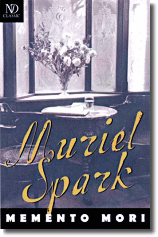
My favorite Spark novel is Momento Mori, of which Stephen Shiff wrote in the New Yorker:

She had been a starving writer and editor in the classic style when success bonked her on the head in the late fifties...with Memento Mori, a complex, beautiful, and terrifyingly insightful novel about old age, which Graham Greene claimed 'has delighted me as much as any novel that I have read since the war.' [Her oeuvre] now makes up one of the most trenchant and accomplished bodies of literary work since the Second World War.
In 2003 the novelist Carol Shields wrote an insightful essay on re-reading The Girls of Slender Means; click here to read it.

--Marshal Zeringue

"American Ground"

William Langewiesche's slim American Ground, an account of the rescue effort at Ground Zero and the subsequent excavation of the nearly 2 million tons of debris from the site, is one of the finer nonfiction books I've read this decade.

I wrote more about what this book means to me in my Spot-on column.

From the publisher:

Unlike any other writer, William Langewiesche has had complete and unrestricted access to Ground Zero and the crew involved in the cleanup of the World Trade Center collapse. Throughout the urgent and often dangerous effort, he has accompanied the engineers, laborers, rescue workers, and city officials as they bring order to an instance of chaos unprecedented on our soil.

American Ground is a tour of the interlocking circles of this Dantesque world. With the "knowledge and passion as well as . . . careful eloquence" for which his reportage is known (The New York Times Book Review), Langewiesche anatomizes the physical details of the collapse and deconstruction, capturing in the process the contests of politics and personality that were its aftershock. At the center of the book is the team of engineers, many of them instrumental in building the towers, who now must orchestrate their disassembly. As the difficult work of extracting the rubble and the thousands of dead buried there gets under way, firefighters, police, widows, bureaucrats, and profiteers attempt to claim the work--and the tragedy--as their own. Down on the ground, the responses are as dramatic and unpredictable as the movements of the piles of debris and the surrounding "slurry wall" that constantly threatens to collapse, potentially flooding a large part of underground Manhattan.

In all of its aspects--emotionalism, impulsiveness, corruption, territoriality, ingenuity, and fundamental, cacophonous democracy--Langewiesche reveals the story of the deconstruction to be uniquely American and oddly inspiring, a portrait of resilience and improvisation in the face of disaster.

Click here to read Jeffrey Goldberg's positive review in the New York Times Book Review. Click here to read Michiko Kakutani's negative review in the New York Times.

Some controversy followed the book; see this Tim Noah essay in Slate that weighed in on the matter.

Click here to read an excerpt from American Ground.

--Marshal Zeringue

A literary guide to Norway

The writer William T. Vollmann is passionate about the Eddic poems, the medieval source of Old Norse mythology. For a capsule description of what these poems say and their place in the literary history of Norway, click here. And:
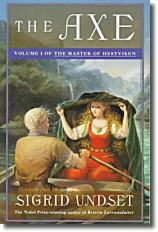
For readers who prefer their heroes and characters to be a little more introspective, ambiguous, modern, [Vollmann] cannot wholeheartedly enough recommend the two great novel cycles of Sigrid Undset, "Kristin Lavransdattar" and "The Master of Hestviken." Undset was a devout Roman Catholic who lived in Lillehammer, site of the Norwegian Olympics in 1994. I have visited her home, which will soon be open to the public, and a brief inspection of her bookshelves showed me that her mind was not only Catholic but catholic in the other sense of the word, all-encompassing. If an Eddic protagonist lives out the agony of proud defiance to doom, Undset's characters live out the ever-repeated conflict between the spiritual and the material. One need not be Catholic (I am not) to be utterly caught up in Undset's imagined medieval Norway.

Kristin Lavransdattar's three novels (1920-1922) follow their eponymous heroine from her early childhood to her death from the Black Plague. It is one of the greatest love stories ever written, because it is one of the truest. For the sake of a man, Kristin sacrifices a great deal that she values, including her purity, her honesty and her obedience to her father, who is one of the most lovingly delineated characters in literature. She finally marries her sweetheart, only to learn that he and she cannot make each other happy. But Undset manages to convince us that if happiness will not be hers, perhaps she has won something similar to the treasure of an Eddic heroine: a destiny, a doom, that simultaneously fulfills and befits her. At the end, one feels that she could not have lived her life in any other way, with any other man.

"The Master of Hestviken" (1925-1927) is also a love story of sorts. The hero of this tetralogy is a friendless orphan named Ă˜lav who cleaves only to his foster sister, Ingunn, a weak-willed, sickly girl to whom he was betrothed by his dying father. When the young couple are parted by violent legal difficulties, Ingunn has a fling with an Icelander and gets pregnant. To save her honor, Ă˜lav kills the seducer, marries Ingunn and gives out that the child is his. All his life he longs to confess the manslaughter and do penance for it, but first Ingunn pleads with him not to, and then later, after she has suffered a long and ghastly death, he feels a mixture of duty to Ingunn's memory and revolted pity for the bastard, who adores him; and so the years go by, until this faithful, loving, bravely steadfast man has been utterly eaten up by his unshrived sin. Every time I reread this book I try to find the place where Olav "went wrong," and I cannot. This work reminds me of Sophocles -- or, better yet, of the old Norse sagas, whose heroes are simply "fated" to do what they do. Indeed, Undset's Norway retains its Eddic dwarfs, elf temptresses and mountain dwellers. Even Odin and the death goddess Hel get mentioned. And both Kristin and Olav are Eddic in their uncomplaining bearing of destiny's burden.

William T. Vollmann is the author of You Bright and Risen Angels, Whores for Gloria, Rising Up and Rising Down, and Europe Central, winner of the National Book Award.

Click here to read about Vollmann's ten favorite books.

Other items in Salon's literary guide series include:
A literary guide to Turkey
A literary guide to Japan
A literary guide to Martha's Vineyard
A literary guide to West Texas
A literary guide to Togo
A literary guide to Brooklyn
A literary guide to Miami

--Marshal Zeringue

9/11

In the days and months after the attacks of September 11, 2001, the Guardian published the reflections of a number of prominent writers.

Among them:

Don DeLillo: History overturned December 22: The World Trade Centre attack was the defining moment of the year--and will haunt us for decades.

Salman Rushdie: living without fear October 6: How do we defeat terrorism? By embracing our everyday lives without fear,

Arundhati Roy: diplomacy and vengeance Sept 29: As the US prepares to wage a new kind of war, Arundhati Roy challenges the instinct for vengance

Peter Carey: Who am I praying to? There is no God Sept 23: The last week is a great blur with no divisions between night and day. Time is broken. The events of the first day bleed into the next and all the powerful emotions and disturbing sights are now so hard to put in proper sequence.

Jay McInerney: Remembering the disappeared Sept 22: In the week following the attacks, many New Yorkers have felt a need to gather in public, to express a complex set of needs to mourn, to express their solidarity with each other as well as with the dead.

Martin Amis: Fear and loathing Sept 18: That second plane looked eagerly alive, and galvanised with malice, and wholly alien. For those thousands in the south tower, the second plane meant the end of everything. For us, its glint was the worldflash of a coming future.

Jeanette Winterson: Forgive but don't forget Sept 18: There are only three possible endings to any story: revenge, tragedy, forgiveness. We need to forgive.

Richard Dawkins: Religion's misguided missiles Sept 15: I am trying to call attention to the elephant in the room that everybody is too polite--or too devout--to notice: religion, and specifically the devaluing effect that religion has on human life. Religion teaches the dangerous nonsense that death is not the end.

Simon Schama: The day America took the hit of its life Sept 14: This time the go-and-get-em American responses are scrambled by the terrifying diffuseness of the threat and the inconvenience of the enemy not being any sort of discernable nation state.

Ian McEwan: Beyond belief Sept 12: For most of us, at a certain point, the day froze, the work and all other obligations were left behind, the screen became the only reality. We entered a dreamlike state. We had seen this before, with giant budgets and special effects, but so badly rehearsed.

Click here to see other Guardian essays on 9/11 by prominent writers.

--Marshal Zeringue

Sunday, September 10, 2006

Can a novel help you make sense of 9/11?

An interesting exercise:
To mark the fifth anniversary of 9/11, Slate asked novelists, artists, journalists, and other thoughtful people a question: What work of art or literature has helped you make sense of the attacks and the world after them?
A few of the respondents cited poems, Hanif Kureishi named his own film (My Son the Fanatic), the novelist Gish Jen found some consolation in a Brancusi exhibit, and Harold Bloom has "seen absolutely nothing adequate to the event."

It is difficult to know how serious one should regard other proposed works ("the best 9/11 movie is probably Snakes on a Plane," wrote Tom Ricks, author of Fiasco: The American Military Adventure in Iraq).

Here are a few of the entries that cited novels:
Christopher Benfey, Slate art critic

I was spooked to find in Gravity's Rainbow so many anticipations of 9/11, from its familiar opening words ("A screaming comes across the sky") to stray details ("But then last September the rockets came"), and, on the last page, a reference to "the Light that brought the Towers low." Back in 1973, Pynchon gave us our great paranoid dream of a world ruled by "The Firm," where "there is a Pearl Harbor every morning, smashing invisibly from the sky." But he also offers some refuge in the quiet precincts of Emily Dickinson's poetry, invoked more than once, and in the sheer imaginative arc of his onrushing book.

Pankaj Mishra, author, Temptations of the West: How to Be Modern in India, Pakistan, Tibet, and Beyond

So much of our intellectual energy since 9/11 has been spent on understanding the so-called Muslim world. However, no literary genre has seemed more capable of illuminating its complex emotional reality than fiction. I found Nadeem Aslam's novel Maps for Lost Lovers to be particularly insightful. Describing with exceptional fidelity the inner lives of a devout Muslim woman, her secular husband, and their rebellious children in a British town, Aslam lays bare the often painful ways in which people negotiate their way out of the security of tradition, and then struggle to realize the promise of personal fulfillment held out by modernity.

Jane Smiley, author, Good Faith

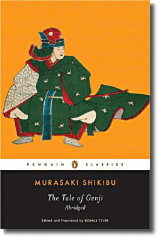
It happens that I wrote a whole book about this very topic—Thirteen Ways of Looking at the Novel. My initial response to 9/11 was to try to get as far away from it as possible, so I read the Seidensticker translation of The Tale of Genji, written in 1004, generally considered to be the first "novel." However, since The Tale of Genji was written at a time when the Japanese were much influenced by Buddhist thought, the great theme of the novel is the ephemerality of life, so the characters are always reflecting on the fleeting nature of all things that seem real and permanent, which of course was quite pertinent to 9/11. I found the paradox of reading a 1,000-year-old novel that repeatedly explores these ideas and images quite comforting and salutary, and then went on to read other old books from different parts of the world (Iceland, Italy, France) that looked at mortality from sometimes wildly different perspectives. Somehow, reading about ancient feuds, the Black Death, and the cruelties of the Reformation and Counter-Reformation turned out to be life-affirming after all.

Sam Tanenhaus, editor, New York Times Book Review

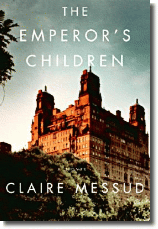
Two exceptional novels come to mind. First, Orhan Pamuk's Snow, which illuminates the world of political Islam in much the way Dostoevsky and Conrad illuminated the revolutionary-terrorist politics of their eras. Second, Claire Messud's The Emperor's Children, which captures, in all its comfortable fatuity, the New York City that, in retrospect, seemed poised for disaster.

Click here to read all the entries.

--Marshal Zeringue

15 spy novels

Peter Cannon compiled a list of 15 spy novels for Publishers Weekly. It's unclear if these are bestsellers or Cannon's favorites or...whatever.

Here are the five on the list published after 1990:
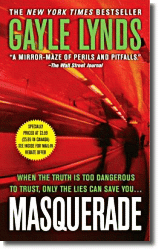
MASQUERADE
Gayle Lynds 1996

Government agent Liz Sansborough enters a terrifying underworld that encompasses the posh beach communities of California, a highly secret CIA training camp, the netherworld of Washington super spies, and the dangerous back streets of Paris.

THE MOSCOW CLUB
Joseph Finder 1991
Finder's first novel imagines a KGB coup against Soviet leader Mikhail Gorbachev. Six months after the book’s publication, such a coup actually happened. The Moscow Club was eventually published in 30 foreign countries, and became a bestseller throughout Europe.

HARLOT'S GHOST
Norman Mailer 1991
Harlot's Ghost, a 1300 page chronicle of the CIA, was published in 1991. Norman Mailer considers it one of his best novels. The characters comprise a mixture of real people and fictional characters, the logic of this mix is explained in Mailer's postscript to the novel. Atmospheric and troubling, Harlot's Ghost exemplifies Mailer's skills as both a novelist & a chronicler. Although it should not be read as a factual account of the CIA's activities, it evokes the mood and methods of this organization and the men who created it.

THE UNLIKELY SPY
Daniel Silva 1996
A history professor named Alfred Vicary is handpicked by Winston Churchill to expose a highly dangerous traitor. The Nazis have their own unlikely agent—the babelicious Catherine Blake, a beautiful war widow under direct orders from Hitler to uncover the Allies plans for D-Day.

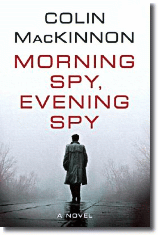
MORNING SPY, EVENING SPY
Colin MacKinnon 2006
Mixing fact and faction, MacKinnon chronicles the poignant personal story of a senior CIA agent, Paul Patterson, on the trail of Osama bin Laden. The case leads Patterson to a disturbing chain of events—porous U.S. immigration policies, White House indifference, CIA bungling—that in hindsight provides the perfect set of circumstances for 9/11.
Click here to read about the other 10 titles.

(Hat tip to David J. Montgomery via The Rap Sheet.)
Another list of top spy novels is here.

--Marshal Zeringue

"Nicole Kidman"

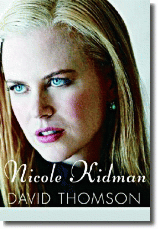
David Thomson's Nicole Kidman comes out this month.

From the publisher:

Here is the story of how this actress began her career, has grown through her roles, taken risks, made good choices and bad, and worried about money, aging, and image.

Here are the details of an actress’s life: her performances in To Die For, The Portrait of a Lady, Eyes Wide Shut, Moulin Rouge!, The Hours, and Birth, among other films; her high-visibility marriage to Tom Cruise; her intense working relationship with Stanley Kubrick and her collaborations with Anthony Minghella and Baz Luhrmann; her work with Jude Law, Anthony Hopkins, RenĂ©e Zellweger, and John Malkovich; her decisions concerning nudity, endorsements, and publicity.

I'm not sure I want to read this book but it may prove irresistible. Here's the passage where Thomson writes about Kidman's breakthrough role:

And then came the turning point: To Die For, the black comedy in which she played a homicidal television weather girl.

“Suddenly I had something,” she says. “The earlier parts that I’d had in America, so many were lame. But now, I thought, ‘I can say these words.’ I didn’t change a line... The sexuality was something I had never had a chance to do. And I relished the darkness of it all. It felt like being set free to play.”

To Die For altered most people’s ideas of Kidman as an actress and as a force that might generate and sustain whole movies. The best thing about the film is the direct-to-camera narration that Kidman’s character gives — uninfected by the immorality of what she has done — spinning the story to her own best ends. There could not be a better model for the way in which vanity and self-love have obliterated critical thinking.

Nicole had difficulty with these scenes, and the difficulty is close to her engine as an actress. “I battle with being shy,” she tells me. “I have lots of ideas — many more than I actually give in a film. And shyness embarrasses me. I’ve never given a performance I think is really good. It’s why I can blush on camera — because I am embarrassed, because I’ve blown it. Perfection never comes.

I still remember how astonished I was by how truly excellent she was in that role. Today, having seen other exceptional screen work by Kidman, I doubt I would be so surprised. But at time I had only seen her in Dead Calm and Billy Bathgate, both well-acted parts; but To Die For was really something else. Watch it if you haven't already. Read more of that lengthy excerpt, click here.
There is another excerpt, from Chapter 1, here.

To read a Q & A with the author--first question: "You are a well-known film scholar and historian. Why did you decide to do a book about a movie star—and why Nicole?"--click here.
--Marshal Zeringue

Saturday, September 09, 2006

James Ellroy and "The Black Dahlia"

The film version of The Black Dahlia is only a week away from opening. Jeff Pierce reports that the book's author, the incomparable James Ellroy, was not even consulted by the filmmakers. Read the details of Ellroy's latest thoughts on the Black Dahlia story (the crime, the book)--and learn what Ellroy thinks about the film--here.

Last month Otto Penzler wrote of Ellroy's place in crime fiction history:

In the evolution of the modern police story, there is a straight line from Ed McBain, the greatest of all procedural writers, to Joseph Wambaugh, who showed the real life of police officers, on and off the job, to James Ellroy, whose ambitious novels involve cops as they are integrated into a greater political and sociological universe.

Tips of the hat go to other significant figures, such as Lawrence Treat, who invented the procedural; Robert Daley, whose best sellers rivaled the successes of Mr. Wambaugh's in the 1970s; Georges Simenon, whose Maigret novellas relied more on intuition than procedure; the impeccable Michael Connelly; the inspired Lucas Davenport in the Prey series of John Sanford; the always inventive George Pelecanos; and the British superstars: Ian Rankin, Peter Robinson, and John Harvey.

Mr. Ellroy is probably best known for "L.A. Confidential" and, the world being what it is, this is largely due to the Oscar-nominated film based on it. This may well change as the movie version of "The Black Dahlia" will be released next month and which, if advance word is any indication, is a humdinger. To coincide with the opening of the motion picture, a new trade paperback edition of "The Black Dahlia" (Mysterious Press, $13.99, 337 pages) has just been released.

One of the authors I have most admired and respected for more than 20 years, Mr. Ellroy has produced works of such power, originality, and integrity that it is not unreasonable to say he is among the handful of the most influential writers of the past two decades. The machine gun staccato of his prose often reads like a very long telegram composed by a mad genius, perhaps with violent tendencies.

Everything nonessential is pruned, yet the dense pages mercilessly hold the reader throughout stories of crime and murder, moral degeneracy and violence, but also of nobility, courage, and redemption. If the novels are not understood as serious literature, then the reader needs to be offered a different kind of fiction in tune with his intellect, like comic books or Hardy Boys novels.

Full disclosure: Near the beginning of Mr. Ellroy's career, I was his editor and publisher, then also became a friend close enough to be the best man at his first wedding, so I am not unbiased. Nonetheless, with unstinting praise from such individuals as Elmore Leonard, Jonathan Kellerman, and Harlan Ellison, as well as from every major American publication, I (for a change) fall into the mainstream of critical opinion.

Of all his books, I have always regarded "The Black Dahlia" as his masterpiece. It is based on the true story of a young woman, Elizabeth Short, who was murdered in an especially brutal fashion in Los Angeles in 1947. Her body, cut in half and eviscerated, was found in a vacant lot — a crime that remains unsolved to this day.

Read the rest of Penzler's article here.

There's more on Ellroy here.

--Marshal Zeringue

Five books about great plagues

Steven Johnson has come up with a list of the five best books about great plagues. One book is over 2,000 years old, another almost 400 years old.

Here are the two more recent titles:

Plagues and Peoples by William H. McNeill (Anchor Books, 1976)

The primary challenge for modern historians of epidemic: creating a storytelling technique capable of zooming across multiple scales, from the now-visible kingdom of microbes all the way to the vast superorganisms of the cities where those microbes so often thrive. "Plagues and Peoples" is a sweeping history of human society with microscopic agents of disease as the main protagonists. McNeill describes the parallels between what he calls the "micro-parasites" of disease agents and the "macro-parasites" of human organizations--barbarian hordes, say, or urban centers: "Looked at from the point of view of other organisms, humankind . . . resembles an acute epidemic disease."

The Hot Zone by Richard Preston (Random House, 1994)

Ironically, the most compulsively readable book in the literature of epidemic takes as its subject matter an outbreak that didn't quite happen. Preston's account of a near-miss with Ebola in the suburbs of Washington reads like a thriller, but the book manages an artful fusion of Thucydides and McNeill in its portrait of Ebola. No one has ever captured the gruesome physical assault of a disease with such engaged repulsiveness. (Preston's descriptions of live human bodies liquefying stay with you for years.) But this is not merely a gross-out diversion. Preston also places that intimate assault in a global context, in the reservoirs of unknown viruses lurking in the world's tropical rainforests, now introduced to mankind by incursions like Africa's Kinshasa Highway, the curse of an all-too-connected world.

To read about the other three titles, click here.

Steven Johnson's The Ghost Map, about a cholera outbreak in 19th-century London, will be published in October. He wrote about the book (before it was finished) on his blog:

It's the story of the Broad Street cholera outbreak that took place in London in September of 1854. The outbreak itself was arguably the deadliest in London's history--it literally decimated the western side of Soho, killing more than ten percent of the population there in a matter of eight days--but it is most famous for the map that the physician and epidemiologist John Snow made of the outbreak, a map that eventually helped convince the world that cholera was in fact a waterborne illness, and not transmitted via the air as the then-dominant miasma theory maintained....

The Ghost Map is in part a disease thriller, with some genuinely spooky and unsettling narrative turns. But it also widens its focus to tell the history of London's sewer system, the evolutionary history of bacteria, the biological and cultural roots of the miasma theory, the bizarre waste management techniques of Victorian society, and so on. It is the story of ten days in London in 1854, but it's also an attempt to tell that story at three different scales of experience: from the point of view of the humans living through it, but also from the point of view of the cholera itself, and the city.

--Marshal Zeringue

Friday, September 08, 2006

What is Bob Vila reading?

The Christian Science Monitor recently asked television's home-improvement guru Bob Vila what he was listening to, watching on screens large and small, and reading.

Here's the reading part of his answer:

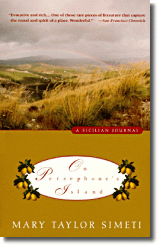
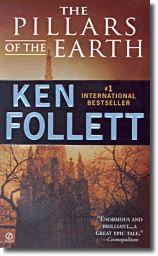
I just read a terrific book about Sicily, On Persephone's Island: A Sicilian Journal, by Mary Taylor Simeti. I love to read travel books and this is one I read after having been to Sicily. She's a wonderful writer with a great understanding and command of mythology and history. It's one of those books where you savor the prose as you're going through it. Before I read that book, I read a Ken Follett book called Pillars of the Earth. It's about a builder in the 12th century, in England. It's about the life of people subjugated by the sheriffs and nobles and knights, and the life of a man who is essentially a stonemason and a builder. Very, very entertaining book and, obviously, on a subject matter that's dear to me. The other one I read by Ken Follett a couple of months ago was called A Dangerous Fortune. It's set in London in the 1860s and it's about a character who becomes a great banker and creates a great fortune. They are not typical of what you think [Follett] writes. It's a very good book to enjoy when you have a lot of time, like when you're in an airplane. There's another book I read by a fellow I've actually met, a guy named Dallas Murphy, called Rounding the Horn, which is about an adventurer on a boat. Dallas Murphy's book is choc full of terrific information about that whole [Cape Horn] coast. I guess I like adventure books and I like history and I like to be really knocked out by terrific prose. I always go back to Hemingway. In fact, I recently got on the board of the Hemingway Preservation Society. We're a small group involved in a partnership with the Cuban government to restore Hemingway's homestead outside of Havana. He lived in this place outside of Havana from 1939 to the year before he committed suicide. It was the one residence where he lived the longest and where he left behind the bulk of his memorabilia, his personal library, and about 10,000 documents. We have a wonderful cross-cultural collaboration [with] the Cuban preservationists.
Click here to read about what Vila is watching and listening to.

For more than you probably want to know about Bob Vila and his various enterprises, click here.

--Marshal Zeringue