Thursday, August 24, 2006

Ian McEwan's favorite novels about work

"The world of work--so defining in most lives--is rather underrepresented in literary fiction. However, there are some honorable, and even brilliant, excursions."

Or so claimed Atonement's author Ian McEwan back in 1999; click here to read about the five favorite novels about work--by Updike, Atwood, Michael Frayn, Frank Conroy, and Fred Hoyle--he shared with Salon.

A few years later, in an interview about his novel Saturday, Salon asked McEwan about the genesis of the novel. Part of his answer:
I'd also formed an ambition to write about work. I thought whoever my next central character will be, he's going to damn well have a job. Too many characters in literary fiction mope around and don't have any job. For very good reasons. Or, they're college professors, especially in America. This part of London I arrived in is very much a medical area. There are big hospitals here. So already I was beginning to think he'd be a neurosurgeon.
Click here to read the entire interview.

For previous appearances here on the blog by McEwan, click here, here, here, and here.

So much for work; are you more interested in slackers? Click here to read about Tom Lutz's Doing Nothing: A History of Loafers, Loungers, Slackers, and Bums in America.

--Marshal Zeringue

Is "Fight Club" philosophy masquerading as a thrill ride?

I am a fan of Fight Club, a book I re-read only ten months after first picking it up because my eager anticipation for the film version needed a fix. The movie was a bit of a let down--I'm not sure what I expected--but it did several things brilliantly, and it got more interesting with the second and third viewings. So I thought I had a pretty good grasp on what was going on with the story.

Then I read a paper on Fight Club by the political philosopher Eduardo Velásquez. His argument and insights blew me away and opened my eyes to elements of the story that I'd not noticed. The paper went on to win the critical admiration of the professor's academic peers.

Here is an adapted version of Professor Velásquez's essay:

According to Roger Ebert, “‘Fight Club’ is the most frankly and cheerfully fascist big-star movie since ‘Death Wish,’ a celebration of violence in which the heroes write themselves a license to drink, smoke, screw and beat one another up.” It is “macho-porn—the sex movie Hollywood has been moving toward for years, in which eroticism between the sexes is replaced by all-guy locker-room fights.” Regarding one of the main protagonists (played by Brad Pitt), Ebert asks: “Is Tyler Durden in fact a leader with a useful philosophy?” Durden’s philosophy is succinctly captured in the claim that “It’s only after we’ve lost everything that we’re free to do anything,” which, according to Ebert, sounds “like a man who tripped over the Nietzsche display on his way to the coffee bar in Borders. In my opinion, he has no useful truths. He’s a bully—Werner Erhard plus S&M, a leather club operator without the décor.” At the end of the day, “None of the Fight Club members grows stronger and freer because of his membership; they’re reduced to pathetic cultists. Issue them black shirts and sign them up as skinheads.”

It is not the plot alone against which Ebert rails. The Chicago Sun-Times critic protests against the “numbing effects of movies like this,” which “cause people to go a little crazy.” School shootings and a proliferation of Fight Club-type activities give credence to Ebert’s concerns. And to those of us in the Academy, he warns: “Although sophisticates will be able to rationalize the movie as an argument against the behavior it shows, my guess is that [the] audience will like the behavior but not the argument. Certainly they’ll buy tickets because they can see Pitt and [Edward] Norton [another main protagonist] pounding each other; a lot more people will leave this movie and get in fights than leave it discussing Tyler Durden’s moral philosophy. The images in movies like this argue for themselves, and it takes a lot of narration (or Narration) to argue against them.” Ebert concludes his review as unequivocally as he began. “‘Fight Club’ is a thrill ride masquerading as philosophy—the kind of ride where some people puke and others can’t wait to get it on again.”

Ebert provides a commendable response to Fight Club: dismissal with a touch of ridicule. I am not of the opinion that art is without effects or consequences, though not all find their source in the artifact itself. But one may rightly wonder if Ebert provides a sufficient and adequate response. To begin, the tone and scope of Ebert’s review is likely to speak only to those who feel indignation and revulsion at all things “popular,” that is, to those not likely to see the movie in the first place. Second, for all the animadversions of the likes of Ebert, such indignation seems to have little effect on the growing popularity of Fight Club, discernible to anyone who spends but a few minutes on the Web. To suggest that Fight Club entices cultists is now true in a way even Ebert seems not to have anticipated. Discussion of this book and movie, and books and movies like them abound, and not just among the “demos.” An “academic conference” devoted to Palahniuk’s novels was organized at Edinboro University in April 2001. Sophisticates and cultists alike are intrigued by this book and movie, and not in a manner Ebert would find edifying. Fight Club’s brand of eroticized violence fits very well with various themes of “Liberation,” which among numerous “sophisticates” in the Academy for whom it is the sine qua non to “enlightenment.” To rebel against convention, or to deconstruct it, is to know.

Indignation should not take the place of argument. More importantly, indignation alone will not get us to the hard, pressing, and vexing question, namely, What is it about Palahniuk’s novel and the Fincher/Uhls movie that resonates in the souls of so many? If indignation is the right response to the movie and book, our indignation ought to be informed by our understanding. The tremendous appeal of this movie and book is precisely in its capacity to go beyond the simple-minded characterizations critics such as Ebert ascribe to them. These are not stories about “boys being boys,” yet another episode in Hollywood’s misogynistic history. The protagonists in Fight Club are not reducible to a band of malcontents, whose depravity and remoteness from the “main stream” concerns us only to the extent that their message translates into acts of violence. Fight Club presents us with a host of themes and questions that resonate deeply with the ills of our time. Palahniuk goes further. Fight Club is a serious and very clever meditation on the human condition. A few examples will serve as introduction.

The philosophic proponents of our liberal, enlightened modernity advanced a variety of teachings intended to tame the transcendent aspirations of the soul, or at least to make them compatible with wealth and the satisfaction of basic pleasures and needs, in short, what Hobbes called “commodious living.” This is not a “project” devoid of strong arguments in its favor, liberty chief among them. But, as Palahniuk himself shows, there are good reasons to question the objectives of the modern, liberal, commercial experiment. However, Palahniuk’s critique of (what several thinkers of the sixteenth and seventeenth century thinkers called) “commercial republicanism” is, in my estimation, something of a ruse. Commentators are mistaken to focus their attention there. The ills of commercial life are only one part of a massive genetic defect we as children of the “Western Tradition” inherit. This inheritance finds its source in the biblical God, “the Great and Powerful . . . God and father.” Palahniuk invites us to think about our origins, how we understand those origins, and, not least, whether our origins bear on who and what we are now. His book is a serious meditation on the problematic relationship between human freedom and the extent to which “history” and various other kinds of “inheritances” determine who we are. He demonstrates a sensitive awareness of the various kinds of thinking that seek to provide an answer to the question “What is human,” among them science, psychoanalysis, the Bible, and the combination of Eastern and Western religions and philosophies that now take shape within the peculiar amalgamation we call America.

Palahniuk does not stop there. Less than ten pages into the book, the author of Fight Club extends his reflections to the problem of human attachment. The movement to attachment from “history” is not accidental. “History” is not merely about who we are, or how we are constituted. It sheds light on the influence that other human beings have upon us. How we are nurtured or “cultivated” has a decisive bearing on who we are, and, in turn, on our capacity to engage our fellow human beings. Readers are mistaken if they assume in advance that what we get from Palahniuk is some easygoing sentimentalism, or its opposite. As readers of Jean-Jacques Rousseau’s great invective against the Enlightenment (his Discourse on the Science and Arts or First Discourse) know, the commercial regime sanctioned by the Enlightenment is supposedly the source of the emasculation, reification, and alienation of “man.” Rousseau invites us to think seriously about the relationship between enlightenment and virtue, science and goodness, citizenship and martial virtue. His psychological portrait of modernity takes us to the problems of fragmentation, anger, love, and despair in the context of our devotion to wealth-getting. His writings invite us to think back to the classical authors who shared similar reservations, though on different terms. Commerce and sentiment are intimately linked. Rousseau’s invective stands in sharp contrast to the Enlighteners across the channel, Hobbes, John Locke, David Hume, and Adam Smith. The Scottish thinkers in particular argued that commercial life could be elevated, perhaps ennobled, by the proper cultivation and channeling of moral sensibility, a relationship that finds its most elaborate expression in Adam Smith’s two great works, The Wealth of Nations and The Theory of Moral Sentiments. To put this differently, the proponents of our modern arrangements, institutions, and virtues argue that commerce is connected to, and may be the condition for the right kind of “civilization.” The possibility of “civilization” is intimately connected to the biblical God, or gods we worship, the means by which we are constituted as a “people,” the conclusions we draw about who we are, our “nature,” the hopes we share about our present and future happiness, the obligations we incur from our debts to the past. Palahniuk strikes me as a thinker of a sophistication and depth sufficient to engage his modern predecessors. He sees the intimate connections between God, nature, human nature, commerce, virtue, and civilization. He contemplates the relative merit and the inherent goodness of our modern inheritance.

In rethinking the Christian God, Palahniuk shows Him to be “Beyond Good and Evil.” Ebert is correct to discern that Palahniuk is a nihilist. Unlike Ebert, however, I am persuaded there are many good reasons for us to engage the meaning of nihilism, especially of Palahniuk’s variety. Of special concern to us is the manner in which Palahniuk links nihilism to religion. He plays on religion’s call to “nothing,” that is, to a kind of death, for which there is a corresponding “rebirth” or “resurrection.” His apparent impiety comes to us in the shape of pious hopes and possibilities. We are therefore compelled to ask: Is Palahniuk’s work another iteration in the long history of nihilism that calls on us to the “eternal” recurrence of the same, a “history” without direction or end, a “history” without narcotic “Providence” or “Progress?” Do we shed pious illusions in order to embrace a dark god of chaotic urgings, whom we simultaneously acknowledge and conceal in various acts of self-creation, self-forgetting, and willful affirmation? Or does Palahniuk return us to a different kind of “nothing,” to a new Genesis, from which Light, Word, and Life emerge? Fight Club finds a way of appealing to our ever-present longings, to our basic sentiments, to our highest aspirations, earthly and transcendent. We must ask if Palahniuk’s efforts to stoke these fires provide the kind of light and heat we need, or whether our new pyrotechnics threaten to consume us.

In an interview given to Spin magazine, Palahniuk claims to “hate books where people contemplate things.” More importantly, we are told, “I don’t write them.” Instead, so the story goes, “I write books where things are always happening to up the ante." Why does Palahniuk “hate” books that contemplate things, or, if you give me some license, why does Palahniuk hate philosophy? As students of political philosophy know, some strands of modern political theory try to collapse the distinction between theory and practice, to render theory in the service of action. In Marx’s (in)famous phrase, the aim of philosophy is not to interpret the world but to change it. Wisdom is power. Philosophy is ideology. It could very well be that Palahniuk’s thought falls within the orbit of our modern distain for philosophy. We will only know that by mustering arguments that explain why this is so. Further reasons are needed to make an adequate judgment about the merits and demerits of this view. Is philosophy at an “end”? Why should we believe this? Is Palahniuk’s novel a plausible illustration of this “end”? Is his book an example of “creative work” that eclipses Logos? That Palahniuk hates books that “contemplate things” does not mean that his book does not lend itself to contemplation, or that his book is devoid of contemplation.

Many intelligent men and women have put their good minds to the question of why a piece of literature, poetry, music, or film appeals to us immediately, why unadulterated “philosophy” (if there is such a thing) does not affect us as immediately. To recognize this may concede much to Palahniuk and the philosophers of late modernity who give primacy to the arational parts of the soul. “Man” may be decisively alogon. “Philosophy” may thus be an ineffective, even pernicious way of tapping into and trying to govern our primal and chaotic stirrings. Perhaps, then, we ought to yield to the ministering effects of music and stories. Let us make this concession, since it is animated by much truth. But let us also add that to “represent” the chaos that is around and within us is still to re-present it in some way, which is to say, to subject it to speech and thus to logos. Palahniuk’s novel is far from “non-sense.” It makes more than “sense” if seen in light of those enduring problems and questions Palahniuk engages, which precede him in the long history of religious and political thought. Again, by this I do not mean to assert the superiority of philosophy over Palahniuk’s poetic art. Art does indeed possess its unique power as art, and Palahniuk knows very well how to protect his art and its power over us. He is a master storyteller, who with the rarest talent, disguises his deepest and most disturbing insights. He knows that excessive contemplation is damaging to his art, and may even diminish its influence. But it we are to embrace or to reject it properly, we have to move beyond art. This is what I propose here. Ebert says that “‘Fight Club’ is a thrill ride masquerading as philosophy.” Without collapsing philosophy into poetry, or poetry into philosophy, I am tempted to suggest (with qualification and some exaggeration) that Fight Club is philosophy masquerading as a thrill ride.

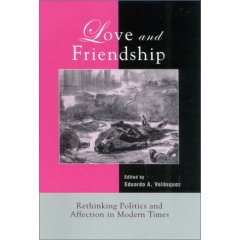
--adapted from, “‘Where the Wild Things Are’: Re-Creation, Fall, Re- and In-surrection in Chuck Palahniuk’s Fight Club,” in Love and Friendship: Rethinking Politics and Affection in Modern Times (Lanham, MD: Lexington Books, 2002), pp. 575-616, Eduardo Velásquez, contributing editor.

Eduardo Velásquez, Associate Professor of Politics at Washington and Lee University, is the author of the forthcoming, A Student’s Guide to the Apocalypse.

Many thanks to Eduardo for sharing his essay.

--Marshal Zeringue

"Audrey Hepburn's Neck"

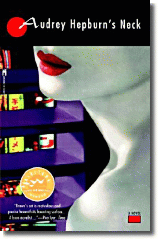
To do my part to sell readers on Alan Brown's first novel, Audrey Hepburn's Neck (1996), I've got a fresh post up at Spot-on.

It's not only a wonderful read but it will make you (a little) smarter about life in Japan.

This is more than I'm willing to say about Sophia Coppola's film, Lost in Translation (2003). But it's a fine film for other reasons, all spelled out in the Spot-on post.

If my enthusiasm for Brown's book doesn't persuade you to put it on your reading list, click here for a second opinion.

--Marshal Zeringue

Wednesday, August 23, 2006

In praise of David Mitchell

Wayne Terwilliger, an admitted "occasionally obsessive follower of the Booker Prize," graciously agreed to share his view on "bad Booker beats," i.e., novels that should have won the (Man) Booker Prize but were beat out by less deserving books.

Here's his take:

I agree with Perry Middlemiss' opinion on the 1986 prize: I've read all of the shortlisted titles from that year except The Handmaid's Tale and any of them would have been a better choice than The Old Devils (which was by no means a bad book, just a minor one).

My concurrence with Martyn Goff's assessment of the 1980 prize is even more avid. Earthly Powers is, I think, one of the outstanding British novels of the 20th century, grand in scope & incisive in characterization. Moreover, A Month in Country is also, I think, a great novel, far smaller in scope but in its way nearly perfect. Both of these books would have proven a more worthy winner than Golding's Rites of Passage (again, not a bad book but not really up to the competition).

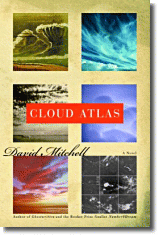
To choose a year myself in which I think the wrong book won the Booker Prize, I only need look back two years to 2004 when the judges selected Alan Hollinghurst's The Line of Beauty over David Mitchell's Cloud Atlas. I found The Line of Beauty, though well written line by line, ultimately a tedious story of small-minded people acting nastily. (Yes, one could say the same about Madame Bovary but The Line of Beauty is not of that caliber.)

Cloud Atlas, on the other hand, is simply brilliant: a technical high-wire act of styles and genres that embraces the widest scope of human history (& history still to come).

David Mitchell just wows me. He's not yet 40, has written 4 novels, been short-listed for the Booker twice and, as of last week, long-listed for a third time. I've read all four of his novels and think they are all outstanding. The scope of his imagination astounds me: no re-hashed semi-autobiographical domestic drama here. Perhaps this year, the Booker judges will make a selection with which I can't disagree.
Many thanks to Wayne for such a stimulating response to the question.

I've obviously got to catch up on my David Mitchell reading.

Wayne Terwilliger has one of those of those jobs that every book-lover (at least thinks he or she) would love to have: he's the Assistant Director of the University of Virginia Bookstore.

Click here to see the Man Booker Prize for Fiction 2006 longlist.

--Marshal Zeringue

Another French writer on the presidential bookshelf

Mark Sanderson writes in the (London) Telegraph:

Eagle-eyed viewers of The West Wing, the long-running television political drama, may have been somewhat surprised to glimpse the works of Michel Foucault being taken off the shelves of the Oval Office as removal men cleared the way for President Bartlet's successor.

Then again, maybe the most powerful man in the world ought to be familiar with the philosophy of a man who gained his wisdom in the sex dungeons of San Francisco.

Perhaps, in George W. Bush's library, his prized copy of Eric Carle's The Very Hungry Caterpillar is rubbing shoulders with Jacques Derrida's Of Grammatology. As if …

--Marshal Zeringue

Nora Roberts' 166th book

Ginia Bellafante profiles romance writer Nora Roberts in today's New York Times. This paragraph caught my eye:
With the publication next week of her 166th book, Morrigan’s Cross, Ms. Roberts remains one of the top-selling novelists of the last decade and the most prolific romance writer of all time. At 55 she has written more books than Sidney Sheldon, Harold Robbins, Judith Krantz and [Danielle] Steele combined.
What does Roberts read when she's not writing? Click here to find out.

--Marshal Zeringue

An interview with Imre Kertész

In an interview which originally appeared in the Hugarian weekly Elet es Irodalow, Eszter Radai talks with the Hungarian author Imre Kertész about his new novel Dossier K., the breed of Euro-anti-Semitism after Auschwitz, and how to survive a dictatorship.

Click here to read the interview at signandsight.

Kertész won the Nobel Prize in Literature in 2002. Click here to read his biography, and here to see a video of his Nobel lecture.

Click here to read an excerpt from Fatelessness, which the New York Review of Books called, "“Remarkable . . .an original and chilling quality, surpassed only by Primo Levi’s Survival in Auschwitz.”

--Marshal Zeringue

Tuesday, August 22, 2006

Vargas Llosa: Madame Bovary reads pulp fiction

Hurree at Kitabkhana snagged this catch from the Daily Star (Lebanon):

Mario Vargas Llosa on readers and reading:

"Madame Bovary doesn't read masterworks. She reads ... pulp fiction. That's what she reads: pulp fiction, love stories, very banal, very superficial. But these stories disturb her profoundly, because they give her the idea of a very different kind of life. A life of pleasure. A life of romantic deeds. A life in which women become heroines, martyrs. Romantic martyrs of love. And so what does she do with all this? She does exactly the same thing that Don Quixote does when he reads chivalry novels. He thinks life is like life in chivalry novels! ... In the case of Madame Bovary it's tragic. We admire Don Quixote because he doesn't accept the world as it is. Well, I think that is the function of literature: to make us desire a different kind of world and to create in us a kind of dissatisfaction with the world as it is. I think this is a very important function, because this gives you a kind of motivation to act for changing things, for transforming not only the society but moral values, cultural values."

Mario Vargas Llosa's fixation with Flaubert and Madame Bovary goes much deeper than this observation, according to new novel Travesuras de la niña mala (The Bad Girl’s Escapades).
In The Perpetual Orgy (1975), Vargas Llosa describes his own long love affair with Flaubert’s Emma Bovary. On first meeting her, he confesses, “I knew that from that moment on, till my dying day, she would be for me, as for Léon Dupuis in the first days of their affair, ‘the beloved of every novel, the heroine of every play, the vague she of every volume of verse’”. What makes her so compelling is her rebellion against the humdrum condition to which her destiny has condemned her, her determination to snatch at a more highly coloured, glamorous life. The bad girl [in the new novel] resembles Mme Bovary in this: in her case too we find a reminder that, as Flaubert’s lawyer Antoine-Marie-Jules Senard put it at the author’s prosecution over Madame Bovary, with masterful reductiveness, “dangers lie ahead for a girl who receives an education superior to that of her class”.
Kerrigan again:
The other great virtue of Flaubert in Vargas Llosa’s eyes is that this most rigorous of artists, this most meticulous of stylists, was so open in his engagement with vulgarity. Madame Bovary’s yearnings may seem absurd to us, yet her resolve to realize them remains inspiring, her failure tragic. “It pleases me”, writes Vargas Llosa, “that Madame Bovary can also be read as a collection of clichés–that it is peopled with stock characters.”... Vargas Llosa’s taste for such vulgarities has always been evident, as has been the transparent sincerity of his sensibility: this is no slumming aesthete or patronizing wit. He is being neither perverse nor condescending when he writes, in The Perpetual Orgy, “the melodramatic element moves me because melodrama is closer to the real than drama”. Overblown language and exaggerated gestures express a Bovaryesque rebellion against quotidian realities, though Vargas Llosa would resist any temptation to intellectualize them. Despising the sensibilities of kitsch and camp for the knowing detachment they presuppose, he insists on a straightforwardly emotional response to the most imbecilic extravagances of popular stories and song.
--Marshal Zeringue

Three new books from Latin American masters

Anderson Tepper praises three recent books of Latin American fiction in the Village Voice: The Tango Singer by Tomás Eloy Martínez, Last Evenings on Earth by Roberto Bolaño, and Voices of Time: A Life in Stories by Eduardo Galeano. Click here for his review.
It's tempting to generalize after reading three recent books from the southern tip of Latin America. What do they tell us about the continent and its literature today? Yet what is most interesting is what the books tell us about themselves: that the era of military dictatorships in Chile, Argentina, and Uruguay, in the '70s and '80s, imbues them with an unforgettable sense of melancholy and loss, nostalgia and rage; that the spirit of Borges, more than García Márquez, hovers over these haunted tales of bloody pasts.
About The Tango Singer, from the publisher:
Restless in Manhattan, student Bruno Cadogan heads to the city of his dreams, Buenos Aires, where the inflation crisis of 2001 is beginning to spiral out of control. He is on the trail of Julio Martel, a legendary but elusive singer, who he hopes will inspire and enlighten his writings on the tango. But the moment he meets El Tucumano at the airport, not only does his new friend find him a cheap room in an expensive city, but a place in the very building where Borges set his celebrated story 'The Adelp'. With El Tucumano's unpredictable help, Bruno is increasingly drawn to the mystery of Martel and his strange and evocative performances in a series of apparently arbitrary sites around the city. And as he untangles the story of the singer's life, Bruno begins to believe that Martel's increasingly rare performances map a dark labyrinth of the city's past.
Click here for a strong review of The Tango Singer in the Independent and here for the equally positive review in the Guardian.

Of Bolaño's collection, Tepper writes:
Last Evenings on Earth contains some of the most achingly dark stories you'll read for a long time—farewell letters from a drowning generation and a dying man. Here, we travel out from Chile to Mexico City and Barcelona and beyond, following the autobiographical trajectory of Bolaño himself. And what a bedraggled lot of characters we cross: second-rate writers, fringe poets and revolutionaries, aging adventurers, insomniacs, recluses, and vagabonds.

But their grainy, wayward existences don't mean they're out of focus: Bolaño has a laser eye and a frank, confessional first-person voice as relentless as it is irresistible.
And, for all his praise, Tepper is hardly Bolaño's greatest fan: for that role I'm tempted to nominate Francine Prose. Click here to read her effusive review in the New York Times.

"If Bolaño's writing...is an incantation—against horror, against defeat, against oblivion—Eduardo Galeano's is a bittersweet affirmation," writes Tepper.
The Uruguayan author's vignettes stitch together tales of wonder and terror, love and war, and just about everything in between. Are these koans, fables, experiences, or testimonials? And why is a passage about Diego Maradona shimmying up next to ones about Rigoberta Menchú, Sebastião Salgado, José Saramago's grandfather, and an anonymous tango singer? Because Galeano, author of the groundbreaking "Memory of Fire" trilogy, is a collector of stories, a clairvoyant reared in the cafés of Montevideo who, like Bolaño, carries with him a multitude.
In May, Tepper interviewed Galeano in New York for Vanity Fair "to discuss his own version of literary tapestries, the marvels—and pitfalls—of technology, and, as the World Cup commences, the unsurpassed joy of watching Ronaldinho." Click here to read the interview.

--Marshal Zeringue

Five unforgettable memoirs

Roger Kahn, author of The Boys of Summer and the memoir Into My Own, recently described five outstanding memoirs for Opinion Journal.

Here are two of the titles:

The Nightmare Years: 1930-1940 by William L. Shirer (Little, Brown, 1984)

The personal account by the famous foreign correspondent of what it was like to cover Germany during the Hitler years and to live inside the Third Reich. We join him as he drinks beer and eats sausage with such as Hermann Göring and Heinrich Himmler. In the Bavarian Alps he sees a Nazi road sign: "Drive Carefully! Sharp Curve. Jews 75 Kilometers an Hour!" Shirer read Hitler's intentions sooner than most. He relates titanic events in a warm human voice that makes unforgettable reading.

Wait Till Next Year by Carl T. Rowan with Jackie Robinson (Random House, 1960)

This is a wholly honest account of the life of baseball's great pioneer, and the best of all the Robinson books. Jack speaks, sounding much as he did in life, and Rowan provides connective material. Robinson remembers his early days in Pasadena, Calif., after his mother had fled racist Georgia, and one very hot afternoon when a sheriff ordered him out of the reservoir where Robinson and some friends were wading. "Looka here," said the sheriff behind a gun. "Niggers in my drinking water." Robinson lettered in four sports at UCLA and was commissioned a captain in the U.S. cavalry. The Army actually court-martialed him for refusing to sit in the back of a military bus. After a harsh trial, he was acquitted. Triumph came when Robinson joined the Brooklyn Dodgers in 1947, the first African-American allowed to play major league baseball since 1884. He recounts his Dodger years with great vigor. Unfortunately, Doris Kearns Goodwin later wrote a memoir about her supposed days as a Brooklyn Dodgers fan, lifting Robinson's title verbatim. That is not illegal but neither is it very nice. Stick with the original, by an original.

Click here to see Kahn's other three selections.

--Marshal Zeringue

Monday, August 21, 2006

What seven classic novels say about the stages of life

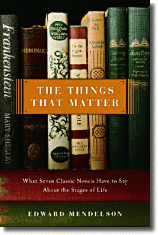
Friend of the Blog Cary Federman pointed me to Adam Begley's interesting review of Edward Mendelson's The Things That Matter: What Seven Classic Novels Have to Say About the Stages of Life.
The book is a study of seven novels—Frankenstein, Wuthering Heights, Jane Eyre, Middlemarch, Mrs. Dalloway, To the Lighthouse and Between the Acts—which, his subtitle promises, have something to say about “the stages of life”: birth, childhood, growth, marriage, love, parenthood and (a touch of euphemism here) “The Future.” The Things That Matter makes very few startling claims (provocation isn’t friendly), but taken as a whole, it is startling—especially in the way it relates novels to the “inner life” of the reader.

In the old days, lit crit would teach us how a novel works (or fails to work, due to the tragic disconnect between signifier and signified), or how the world works (or fails to work, due to the perfidy of capitalism). Mr. Mendelson is more like a highly literate self-help guru: He wants to teach us about ourselves as “autonomous persons”; he wants to reach “readers … who are still deciding how to live their lives.”
There's more of interest in the review: click here to check it out.

--Marshal Zeringue

What does a book say about its reader?

"With people evaluating your intelligence, background, politics and even how likeable you are by your selected reading, choosing the right book could be the key to projecting aspects of your personality," according to the spokesperson for Borders bookstore who spoke to the Guardian about a survey the book merchants conducted.

The survey revealed that the "majority of the British public--57%--believe they can determine someone's personality by their choice of reading matter, while 42% think that a person's intelligence can be gauged in the same way."

But interpreting the data can be tricky:
Borders' "rough guide", which summarises what characteristics can be gleaned from a person's choice of book, marks [George W.] Bush as a reader of "literary fiction" [because his staff recently let it be known that he had read Camus' The Stranger while on vacation]. This means he is likely to be "a well-educated person who reads The Independent or Guardian and tunes in to Channel 4 or BBC 2 to satisfy more leftfield interests".
Make of that what you will.

Click here for the Guardian article.

The writer Nick Hornby argues you shouldn't infer anything in particular from what one reads and you shouldn't care what they infer about you from your reading choices.

[P]lease, please stop patronising those who are reading a book--The Da Vinci Code, maybe--because they are enjoying it.

For a start, none of us knows what kind of an effort this represents for the individual reader. It could be his or her first full-length adult novel; it might be the book that finally reveals the purpose and joy of reading to someone who has hitherto been mystified by the attraction that books exert on others. And anyway, reading for enjoyment is what we should all be doing.

I don't mean we should all be reading chick-lit or thrillers (although if that's what you want to read, it's fine by me, because here's something else no one will ever tell you: if you don't read the classics, or the novel that won this year's Booker Prize, then nothing bad will happen to you; more importantly, nothing good will happen to you if you do); I simply mean that turning pages should not be like walking through thick mud.

The whole purpose of books is that we read them, and if you find you can't, it might not be your inadequacy that's to blame. 'Good' books can be pretty awful sometimes.

--Marshal Zeringue

Shortlist for the 2006 Ned Kelly Awards

Yesterday, Jeff Pierce of the "The Rap Sheet" posted an item about the shortlist for the 2006 Ned Kelly Awards, to be presented by the Crime Writers’ Association of Australia.

Click here to read the list of contenders for best novel, best first novel, and best true crime.

The winner will be announced at the end of August.

Click here to see the 2005 winners.

--Marshal Zeringue

Attractive author, seductive book

Last month I asked, What's crazier than judging a book by its cover?

The answer: Judging it by its author's photo.

Crazy though it may be, that hasn't stopped a number of individuals from doing just that. Today's New York Times reports the story (that has already buzzed around the books blogs) of the author whose good looks led some in the publishing industry to doubt her talent.

(Oddly--perversely?--the Times runs the least attractive of the several photos I've seen of the writer.)

Actually, that "controversy" is merely the seductive lead-in for an article about Marisha Pessl's background, industry, and talent.

Click here to read a previous item about her debut novel and a few books she loves.

--Marshal Zeringue

"Doing Nothing"

Tom Lutz, author of Doing Nothing, submitted to a brief Q & A with Powell's .com.

Among other subjects--including why he might have liked to have been Hitler, Mao, or Stalin--Lutz discussed a project that might become his next book:
Driven, which is in part the flip side of Doing Nothing, is a study of the way automobile culture manages to transform our basic relation to the world, infiltrating our notions of psychology and social life and even such notions as spiritual transport and, as the title suggests, getting ahead. It will include sections on Southeast Asia, the countries along the old Silk Road, and Africa--places where automotive culture is just taking off--as well as examinations of older automotive cultures in the West.
Asked about the last great book he read, he named more than twelve titles.

Click here to read about those books and the rest of the Q & A.

Lutz's Doing Nothing: A History of Loafers, Loungers, Slackers, and Bums in America was published in May. Celia Wren, a theater critic for the Washington Post, wrote a fine review of the book for the Boston Globe that included some industrious footwork (no slacker, she) to check on Lutz's argument that Benjamin Franklin, America's patron saint of industriousness, was actually something of a slacker himself. Click here for her review.

Click here to read an excerpt from Doing Nothing.

--Marshal Zeringue

Sunday, August 20, 2006

Coming attractions

This week on the blog:
  • an exclusive essay from a political philosopher who argues that Fight Club may be "philosophy masquerading as a thrill ride"
  • another entry in the "bad Booker beats" series
  • the best poem of the last millenium
  • a book recommendation for fans of HBO's The Wire
  • the best novel of 1986
--Marshal Zeringue

Marisha Pessl tags six books

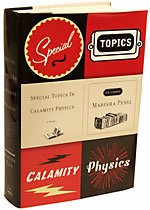
Marisha Pessl's debut novel, Special Topics in Calamity Physics, has been getting rave reviews.

Laura Miller called it "a real novel, one of substance and breadth, with an arresting story and that rarest of delights, a great ending." said "this skylarking book will leave readers salivating for more."

The bottom line from Janet Maslin's New York Times review: "Q: Is Special Topics in Calamity Physics required reading for devotees of inventive new fiction? A: Yes."

Pessl can write a rave, too. The verve with which she described some books for The Week not only whet my anticipation for her novel but made me want to read these books she loves.

Two of the titles:

The Dead Fish Museum by Charles D’Ambrosio

In these tales, which range from a screenwriter in a psychiatric ward to weary grifters wandering the American West, D’Ambrosio displays a talent and versatility of language that is jaw-dropping. I’m crossing my fingers he’s working on an 800-page novel so I can spend weeks with his work, rather than a cherished afternoon.

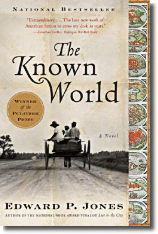
The Known World by Edward P. Jones

Biblical in scale but nimble in execution. Not since Toni Morrison’s Beloved have stories about the effects of slavery been so heartbreaking, or powerfully rendered. Jones’ prose is deceitfully plain, pitch-perfect, fascinating. I’m awaiting his upcoming book of stories, All Aunt Hagar’s Children.

Click here to read about the other four books on Pessl's list.

The Known World won the Pulitzer Prize and earned excellent reviews. Click here to read an interview with Edward P. Jones, and here to read an excerpt from the novel.

D'Ambrosio's short story collection enjoyed wide praise; click here to read an excerpt from one of the stories, "The High Divide."

--Marshal Zeringue

Saturday, August 19, 2006

Books on the Bible

Robert Alter, who has written a number of important books on the subject, recommended five top books on the Bible for Opinion Journal.

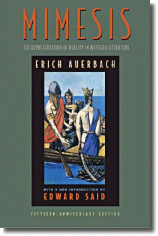
Mimesis is the only one with which I am familiar. Or, I should say, some years ago it was a book that that I loved to dip into, struggle with and be fascinated by, and then set down not sure that really understood what I had read. Alter's take:
Mimesis by Erich Auerbach (Princeton, 1953)

The formidable challenge that Erich Auerbach set himself with Mimesis is made clear by its subtitle: "The Representation of Reality in Western Literature." But the German scholar succeeded brilliantly, producing a masterwork of 20th-century criticism that also happens to have pioneered a modern literary understanding of the Bible. Though only the first chapter is strictly focused on the Bible--a comparison of a passage from The Odyssey with one from Genesis--a biblical grounding is essential to Auerbach's discussions of Dante and other important writers of the medieval and early modern periods. His enduring contribution: making us see that the Bible is not somehow apart from literature, sequestered in a special preserve of theology and spirituality, but is rather a manifestation of a high literary art.

Mary Douglas's is another book from Alter's list that looks interesting. I'm tempted to skim it to see what she says about eating crustaceans.

Leviticus as Literature by Mary Douglas (Oxford, 2000)

British anthropologist Mary Douglas takes us on an intellectual adventure with Leviticus as Literature. No small feat, given that Leviticus is notoriously the driest of biblical books--it consists mainly of elaborate instructions for the sacrificial cult. But Douglas proposes that these cultic procedures reflect a sophisticated system of thought: In describing the ritual preparation of the sacrificial animal and the sanctuary's spatial divisions, the Leviticus writers may have also been explaining the structure of the cosmos as they understood it, a place where the vertical division of Mount Sinai (God and Moses at the top, the elders of Israel halfway up, the Israelites below) is mirrored horizontally in the sanctuary (the Holy of Holies within, the inner court for the Levites, the outer court for the Israelites). Douglas makes a persuasive case that more is going on in this book of the Bible than is generally supposed--and she shows that modern condescension toward biblical writing is misguided--but I am still tempted to say that Douglas is more interesting to read than Leviticus.

Click here to read about Alter's other recommendations.

Robert Alter's most recent books are The Five Books of Moses: A Translation With Commentary and Imagined Cities.

--Marshal Zeringue

New fiction this fall

Recently Fritz Lanham at the Houston Chronicle offered up some selected new fiction coming soon to a bookstore near you.

Here are a few titles from the list that I'll be reading:
Memorial by Bruce Wagner (Simon & Schuster). Dark comedy combines with a family's redemptive journey, all rendered in Wagner's typical high-voltage prose.

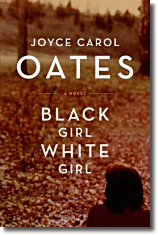
Black Girl/White Girl by Joyce Carol Oates (Ecco). Fifteen years after the death of an assertive black student at a mostly white liberal-arts college, her former roommate plumbs the mysteries of her death.

The Mission Song by John le Carré (Little, Brown). Naive young interpreter, son of an Irish father and Congolese mother, gets drawn into a seamy British intelligence plot in this latest post-Cold War thriller from the master of the genre.

Bleeding Hearts by Ian Rankin (Little Brown). Professional assassin decides his mysterious employer has set him up for a fall.
Click here to see the rest of Lanham's list of forthcoming fiction.

Click here to read the publisher's description of Wagner's Memorial.

Interested in a list of Ian Rankin's "desert island discs"? Click here to check it out.

Click here to read the publisher's description of Joyce Carol Oates' Black Girl/White Girl.

Click here to read the publisher's description of The Mission Song by John le Carré.

Earlier on the blog I linked to the Denver Post's coverage of books coming this fall; click here to read it.

--Marshal Zeringue

Friday, August 18, 2006

If you could recommend one book...

This week David Ignatius of the Washington Post proposed a question to some of his international associates: "What one book would you suggest to summer readers and why?"

Michael Young, the opinion editor and a columnist for Lebanon’s The Daily Star and a contributing editor at Reason magazine, responded from Beirut. In part:
...if I had to recommend the mother of all summer books, blending humor and drama, fantastic prose and all the other qualities publishers will splash across a cover, I would recommend Evelyn Waugh's The Sword of Honor Trilogy (Men at Arms, Officers and Gentlemen, and Unconditional Surrender). Probably the best opening pages I've ever read followed by a dark middle, and a compassionate equilibrium returning at the end.
Bashir Goth, a veteran journalist, the first Somali blogger and editor of a leading news website, replied (with a "Somalia/United Arab Emirates" dateline):
In a region living with the stigma of terrorism, I recently read one refreshing book that portrays the Arabs as just ordinary people who are keen to achieve prosperity through hard work and business acumen. With its English version expected soon, My Vision, by General Sheikh Mohammed bin Rashid Al Maktoum, UAE Vice President and Ruler of Dubai, sums up the story that turned Dubai into a world metropolitan where all cultures and races rub shoulders with only one common goal in mind--to make profit. (Click here to read the rest of his reply.)
Mahmoud Sabit is a historian and an authority on Egypt’s 19th century political reforms. He responded from Cairo:

If I had to choose one book with which to spend my vacation, I would want something escapist, but not fictional--a sort of analogy for today. The book would be A Distant Mirror: The Calamitous 14th Century by Barbara Tuchman.

It certainly feels escapist as far as it goes. It recounts events from seven hundred years ago. Yet it's definitely not fictional. I usually find non-fictional events far more fascinating than pure fiction, possibly because reality is far more strange and more fantastic than a fictional narrative. It's also informative as it profiles a human condition, and human reactions to extraordinary events, filled as it is with examples of human fortitude, and human endurance against unimaginable odds. It's entertaining. What after all are we entertained by? Intrigue, action, love, outright evil and outright good, bliss and pain in equal measure, yes it is entertaining. There are of course modern analogies: greed, piety, cruelty, compassion, deep love, and bitter hatred, in short all those personality traits that we recognize as so very human. (Click here to read the rest of his reply.)

Mubashar Jawed Akbar is a leading Indian journalist and author. He's the founder and editor-in-chief of The Asian Age, a daily multi-edition Indian newspaper with a global perspective. From New Delhi, India, he wrote:
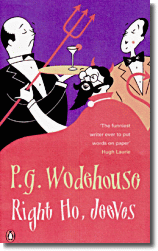
Alternatively the question could be framed thus: The British authorities permit you to carry one book in your assigned plastic bag on an air journey. Which one book would you carry on-board? In either scenario, dream-holiday or nightmare, the book I would recommend is any Jeeves-Bertie Wooster novel by P.G. Wodehouse (Right Ho, Jeeves is at the top of my list). (Click here to read the rest of his reply.)
Leon Krauze, a Mexican blogger and a founder of letraslibres.com, replied from Mexico City:
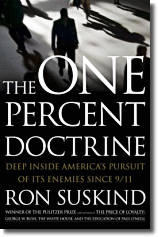
It certainly isn't light summer reading, but I highly recommend Ron Suskind's new book, The One Percent Doctrine. Suskind's honest--sometimes even brutal--account of American foreign policy after 9/11 is indispensable for an understanding of how the world has worked for the last few years. I tend to agree with Ian McEwan, who, after what happened in New York and Washington, decided that pure fiction was no longer entirely appropriate. This world of ours begs to be understood rather that dramatized. (Krauze allowed himself to recommend a book of poetry as well.)
Miklós Vámos, a Hungarian novelist, screenwriter and talk show host, recommended a book that regular blog readers may have heard enough about already. Click here to read about his recommendation. He also puts in a plug for his own latest book (but does so with charm).

Daoud Kuttab, a Palestinian journalist and the director of the Institute of Modern Media at Al Quds University in Ramallah, does not recommend a book. Click here to read why not.

--Marshal Zeringue

John Irving on Günter Grass

John Irving, having initially refused to take a public position on the Günter Grass debate, has now written a letter to the Frankfurter Rundschau.
My friend and one-time mentor Kurt Vonnegut would have called the nationalistic babble in the German press a 'shit storm'. What I read from all the lead editorials, the lofty comments of my colleagues, the critics and journalists from all political camps is the following: all this is a predictable, hypocritical stripping down of Grass' life and work, carried out from the oh so cowardly standpoint of hindsight.
Signandsight has a bit more of the letter here.

If you read German, click here for the whole letter.

Perhaps this is the same letter Irving sent to the Associated Press, which does not appear to be available (yet) online. The Australian summarizes parts of the letter, however, and has additional background on the controversy here, as does the New York Times here.

--Marshal Zeringue

A top 10 list of wildlife books

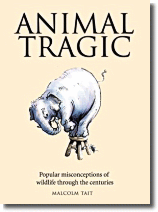
Malcolm Tait, editor of Going, Going, Gone?, an illustrated compilation of 100 animals and plants in danger of extinction, and the author of Animal Tragic, a collection of common misunderstandings about the natural world, came up with a list of wildlife books for the Guardian.

His frame of reference:
There's a tendency among some to think of wildlife writing as being a waffly little affair that rambles on about otters or daffodils or babbling brooks, while the rest of us get on with something a good bit meatier like a juicy novel or a well-researched biography. How wrong that thinking is. It is our relationship with the natural world that over the millennia has formed us, informed us, and shaped the way we live and, when we are disconnected from it, we are left with a hollow void into which pour stress, depression and a vague sense of meaninglessness. Good wildlife books don't just tell us about wildlife, they tell us about the people who wrote them, and most importantly, they tell us about ourselves.
Here are two of his picks:

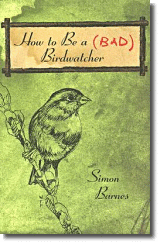
How to be a Bad Birdwatcher by Simon Barnes

You know the feeling: you're reading a book, and as you turn every page you're nodding in agreement, as if the writer has popped into your head and committed your own thoughts to paper. This is one of books. It's about being a normal birdwatcher, reasonably knowledgeable, constantly passionate, but often a bit confused as to what you've seen or heard, and with the vague feeling that everyone else you're with knows so much more. It's the book for those of us who find birdwatching pleasurable, not competitive, and it's terribly funny to boot. I always smile, now, when I see a sparrowhawk. I urge you to read this book to find out why.

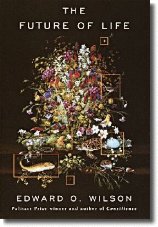
The Future of Life by E.O. Wilson

Talking of Wilson, here's a fascinating book that he brought out in 2002 which is a great example of conservation-based writing. The ecological debate will always rage on--should mankind continue to experiment with new sciences and discoveries, or are we destroying our world and ourselves in the process--and Wilson gets to the heart of the arguments superbly, driven by a constant love of the animals with which we share the planet. Agree with him or not, he's a stimulating writer and this is a stimulating book.

Click here to read about his other eight choices--and his explanation for why Darwin's Origin of the Species got bumped from the list.

It appears that Going, Going, Gone? is not scheduled for U.S. release anytime soon, but here's what his publisher says about Animal Tragic:
Crocodiles lure unsuspecting, sympathetic victims towards them by crying. Hedgehogs steal apples by collecting them on their spikes. The chronicle of natural history is absolutely littered with mistaken notions like these, some embarrassing, some bizarre, and some downright hilarious. How did these fantasies ever come about? Take a look at a bevy of bestial booboos, wildlife no-nos, and artistic animal atrocities and discover the reality behind each myth. Among the astounding beliefs: that swallows hibernate under riverside mud (which explained their winter absence); that lemmings hurl themselves over cliffs (blame that one on Walt Disney); and that some creatures could kill with just a glance. Plus, there's a look at misconceptions from everyday speech—including "blind as a bat." (They're not!)
--Marshal Zeringue

Thursday, August 17, 2006

The Great Indonesian Novel

I just posted an item about the great Indonesian novel over at Spot-on.

Please click here and have a look.

--Marshal Zeringue

A literary guide to Martha's Vineyard

There are no famous novels about Martha's Vineyard despite the many famous novelists who have summered there, observes Nicole Galland in Salon's literary guide to the community.

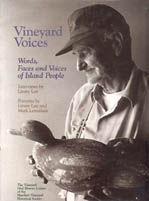
The memoir and its ilk represent the best the island has to offer. The most extraordinary sampling, a tribute to a passing generation of indomitable Yankees, can be found in the two-volume Vineyard Voices, by Linsey Lee. Here--along with dozens of gorgeous photographic portraits--are oral histories taken in recent years of largely working-class fisherman, seafarers, farmers, lighthouse keepers, civic leaders, Wampanoag tribal members, and a peppery island legend named Craig Kingsbury whose entry is dubiously titled "I Didn't Bring Any Skunks to the Island." (His supposed guilt on this topic generated more speculative gossip over the years than did Ted Kennedy's driving skills.)
Of course, we the Unwashed know Martha's Vineyard best from a certain movie that scared us out of the water and on to the beaches.
[The Vineyard] inspired and hosted the filming of one of the biggest blockbusters of all times -- and was forever changed from that experience, as you can read in Edith Blake's intimate, photo-filled On Location..... On Martha's Vineyard (The Making of the Movie Jaws). Written after production wrapped but before the movie was a hit, this is a breezy, behind-the-scenes depiction by one of the many islanders who worked on the film.

And, of course, the Vineyard has one of the most pristine and diverse shorelines on the East Coast; the 100-square-mile island boasts a range of beaches from sandy dunes to salt marshes to rocky cliffs to deeply sheltered harbors. Nobody can describe it like Paul Schneider. In The Enduring Shore (2000) he weaves an ingenious narrative of human and natural history from a most original vantage point: a kayak, with which he circumnavigated not only Martha's Vineyard, but neighboring Nantucket and Cape Cod.
Galland offers a few more titles about The Vineyard: click here to read her essay.

Nicole Galland's first novel is The Fool's Tale. Her second novel, Revenge of the Rose, is out this month.

Click here to read about Salon's literary guide to Brooklyn and here for its literary guide to Miami. Click here for a literary guide to Togo. Click here for a literary guide to West Texas.

--Marshal Zeringue

"...adulterous, callously selfish, and financially vindictive"

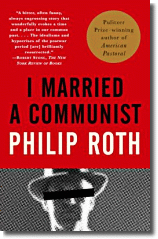
In the late 1990s Philip Roth published I Married a Communist, the second novel of his "American trilogy." To my mind it was the weakest book of the three: the first, American Pastoral, was not only the best of the trilogy but one of the better American novels of the decade, and The Human Stain was fine.

I Married a Communist was widely "known" to be an allegory, set in the McCarthy era, of Roth's real-life marriage to and divorce from Claire Bloom, which was apparently very messy, unpleasant stuff. Roth's novel was in retaliation to Bloom's 1996 memoir, Leaving the Doll's House.

I may revisit Roth's trilogy at some point, but I've written this much so far only to give some context for the real object of this post: Roth's reaction to an essay about literary biography in the New York Review of Books by John Updike which rehearses some of the allegations Bloom made about Roth--"...adulterous, callously selfish, and financially vindictive" is not nearly the whole of it--in her memoir.

Updike's essay is available free only to subscribers, but Roth's complaint and Updike's brief reply are available here. There's a lesson about clarity in writing--and the (mis)perceived slight--in there.

Sticks and stones may break one's bones...and words can be pretty hurtful, too.

--Marshal Zeringue

Wednesday, August 16, 2006

Dispatches from the troops in Iraq

Today's Washington Post has a report (on the inside pages) about deadly secterian strife spreading outside Baghdad. "We see the challenges of Baghdad being exported," said Maj. John Digiambattista, operations officer for a U.S. Army battalion in Diyala.

U.S. and Iraqi officials acknowledge that Iraqi police in Khan Bani Sad are heavily infiltrated by Mahdi Army militiamen and that some soldiers also are sympathetic to the group....

Unsure of the loyalties of Iraqi forces, U.S. officers sometimes lie to Iraqi army commanders about where they are going on joint missions and require Iraqi soldiers to give up their cellphones before leaving camp. Police are distrusted even more.

I'm not sure U.S. troops signed up for that....

Earlier this summer the New Yorker published a selection of missives by troops who served in the current war in Iraq. The writings are part of a project sponsored by the National Endowment for the Arts called Operation Homecoming.

Click here for an audio slide show--five of the servicemen read from their work, accompanied by their photographs--produced by Matt Dellinger.

--Marshal Zeringue

"Why aren't you doing anything?"

I asked Deborah Klosky if she had any ideas for fiction that illuminates what's at stake in the debate over habeas corpus.

She came through with two solid suggestions:

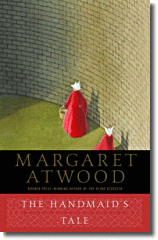
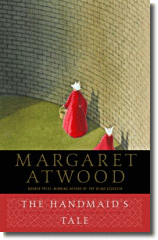
The first is The Handmaid's Tale, by Margaret Atwood.

It's set in a totalitarian theocracy, so that of course pretty much does it for any individual rights. The main character is one of the women who have essentially been sentenced to arrest and servitude for the crime of having shown they can bear children.

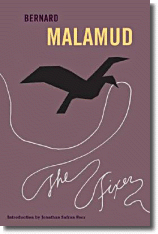
The other is The Fixer, by Bernard Malamud.

Malamud wrote about a Jew who is imprisoned and awaits trial on a false ritual murder charge brought by officials of Tsarist Russia. It's somewhat based on an early twentieth-century case (where the accused was finally found innocent), and the book shows an individual trapped in an unjust system.

There is a good summary/review of The Fixer here.

Malamud's New York Times obituary--he died in 1986--noted: "The Fixer (1966) was inspired by the ordeal of Mendel Beiliss, a Jew tried and acquitted of ritual murder in Kiev in czarist Russia of 1913."

Jonathan Safran Foer wrote an introduction to a recent edition of The Fixer. It includes this passage:
When I finished reading this novel, I felt castigated and inspired. Grumbling about the state of the world suddenly wasn't enough. And excusing myself from political activity felt wrong. In light of this book, my inaction felt immoral. While The Fixer isn't a book about morality, it is a moral book. That is, rather than offering a flimsy directive, it presents the reader with a forceful question: Why aren't you doing anything.
While I hope that Margaret Atwood's story is not prophetic, she has told the story of one reader who insisted she lived through such an experience: "One man was absolutely convinced that The Handmaid's Tale was autobiographical. I said, 'But it's about the future.' He said, 'You could not have written about this unless something like it had happened to you'."

Deborah Klosky has worked as a journalist and writer for 15 years, while living in the U.S. and Europe. You can learn more about her at her brief biography posted at Spot-on.com, and click here to read some of Deborah's recent columns.

Thanks to Deborah for her reading suggestions.

Click here for the growing list of titles in this series.

--Marshal Zeringue

Reading and misreading Camus

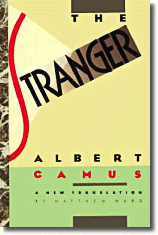
You might think this is yet another post about the shocking reports that George W. Bush read Camus' The Stranger on his recent vacation.

You'd be wrong. Been there, done that.

Coincidentally (it seems), this very week Nicholas Blincoe, writing in the Telegraph (U.K.), uses The Stranger and one of the Cure's earliest singles, "Killing an Arab," to develop a semi-interesting point:

It is easier to misread any literary form than the novel. Give me a poem, song, play or film and, with low cunning and some wit, I guarantee I can make a coherent argument that it means the opposite of what it appears to say.

Each assumes a performance--or, at least, an idealised reader--and what can be said one way, can be said another: with winks and nudges. With a novel, there is no one but oneself and the text, and to read against the grain becomes more difficult. In part, it is an insult to the good faith all novels demand. But, chiefly, it is simply masochistic: who but a pain junkie would enjoy performing the mental contortions a misreading requires?

Blincoe goes on to point out that when Camus wrote, "Arab" had a broader meaning than it does today, and the man Meursault kills on the beach in Camus' novel could well have been a Berber, Kurd, or even a Middle-Eastern Jew.

Click here to read the brief article that spells it all out.

--Marshal Zeringue

Tuesday, August 15, 2006

Advice for writers

Over at "The Outfit" the writer Barbara D'Amato offers some short but sweet advice for would be novelists.

A sample of what she's encountered in some rough-but-hopeful manuscripts:
Too many adjectives, and especially too many double adjectives. Example: “The hot, amber sun rose over the wide, green lawn on that last, long day of my vacation.” The reader feels like he’s wading through a swamp. A good exercise is to take any three pages of the manuscript and go through with a red pen, asking, “Is this adjective necessary?” Also, see if you can show the same info by action, or by the reaction of characters in the story.
Click here (the post is dated Monday, August 14) for more helpful advice.

Incidentally, this "rule" about too many adjectives may apply to other kinds of writing. This passage from a movie review by David Edelstein is stuck in my memory:
My first professional movie reviews were written in 1982 at the weekly Boston Phoenix under the tutelage of Stephen Schiff, then a magisterial film critic as well as an exacting editor. Presented with a sentence containing two adjectives in succession ("Jason Tiddlywinks gives a funky, severe performance"), Schiff would say, "Choose one." "Well, gee, I dunno, the performance is funky but also kinda severe so you kinda need both." "Choose one," he would repeat. Squirming, I would direct him to eliminate an adjective and then Schiff, after a respectful beat, would strike the other. Where adjectives are concerned, there's no substitute for tough love.
Looking for more advice from a successful writer? Click here for the master's "Ten Rules of Writing."

Writing a screenplay instead of a novel? Here's a tidbit that yours truly--someone who has written over 30,000 pages of screenplays and thrown away over 29,000 pages of them--offers: try to avoid voiceovers and flashbacks. Yes, some great films use both devices; and, yes, certain scripts demand them; and, yes, I've used them in one of my scripts. Voiceovers and flashbacks are too often a crutch to bad writing and lame storytelling: maybe your script will be better if you write it without these tricks.

--Marshal Zeringue
What is George W. Bush reading?

John Dickerson, Slate's chief political correspondent and author of the forthcoming On Her Trail, posted an interesting item yesterday about what Bush read on his just completed vacation in Crawford: Albert Camus' novel The Stranger.

Dickerson's take is half-joking, half-serious. Read the article here.

The joking bit is fair enough: too much is made over presidential practices that may mean nothing, and no one knows that better than the journalists who cover politics and (wittingly, alas) retail that shuck to the rest of us.

But there is a serious side to presidential reading: why is the president reading what he's reading and, perhaps more important, what is the administration signaling by letting the world know which titles have the president's interest?

These things have consequences:
Camus' story line is ripe for geopolitical literary misinterpretation. The main character, Meursault, spends much of his life as the young George Bush did, engaging in escapades that demonstrate little drive or motivation. On a visit to the beach with friends, he gets into a fight with some Arabs. Later, he finds one of the Arabs and without much further provocation shoots him repeatedly. During the circus-trial that follows, and the long hours Meursault spends in jail, he is remorseless and unable to engage in contemplation. On the day of his execution, he has a flickering thought that he might have lived another life. But mostly he's excited about the day and hopes that everyone will cheer for his death.
Dickerson connects the dots:
The president uttered the word "crusade" a single time when talking about fighting terrorists and critics in Europe and the Middle East still use it as proof that his war aims are motivated by 11th-century wide-eyed religious zealotry. Surely someone is going to think that Bush read the book because he identifies with Meursault. There's got to be another explanation. Does his experience in Iraq push him to read works replete with themes of angst, anxiety, and dread? Was the president trying to gain insight into the thinking of Europeans who are skeptical of his plan for democracy in the Middle East, founded as it is on the idea of a universal rational essence that existentialists reject? Did he just want to read something short for his truncated vacation? This may be the first time that national security demands an official version of literary criticism. We want a book report!
Perhaps Bush was re-reading Camus: in a speech last year in Belgium he invoked Camus in the penultimate paragraph:

Albert Camus said that, "Freedom is a long-distance race." We're in that race for the duration--and there is reason for optimism. Oppression is not the wave of the future; it is the desperate tactic of a few backward-looking men. Democratic nations grow in strength because they reward and respect the creative gifts of their people. And freedom is the direction of history, because freedom is the permanent hope of humanity.
--Marshal Zeringue

What is Nora Roberts reading?

The Christian Science Monitor recently asked Nora Roberts what she was reading (and watching and listening to).

Here's what she said:

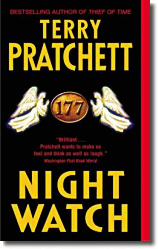
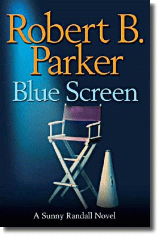
My husband owns a bookstore. I read a lot: Patricia Gaffney, Elizabeth Berg, Dennis Lehane, Michael Connelly, Lawrence Block, Sue Grafton, Stephen King. I've just finished Terry Pratchett's Night Watch, and I'm just about to start Robert B. Parker's new book, Blue Screen. I think Terry Pratchett's kind of a cross between Monty Python and Douglas Adams. There's so much there: the humor, of course--you can laugh your way all the way through his books--and the world he's built; Discworld is so interesting and layered and hysterically funny. There's also a lot of really clever and snide political commentary.
Parker's use of language is completely different from Pratchett's, of course. He's to the point, and I like that. While good and evil have their subtle shades, they're very well defined. I know when I sit down, I'm going to be intrigued by the story. I know that I'm going to get a really good look at the characters who, especially in his series with Spencer, Jesse Stone, or the new one, Sunny Randall, you get to know over the course of time with layers peeled off. I like the fact that good will probably get a few bumps and bruises, but good is going to overcome evil at the end of the day.

Click here to see what Roberts listens to and what she watches on the big and small screens.

--Marshal Zeringue