Showing posts sorted by relevance for query hannibal. Sort by date Show all posts

Sunday, May 10, 2015

Eve MacDonald's "Hannibal: A Hellenistic Life," the movie

Featured at My Book, The Movie: Hannibal: A Hellenistic Life by Eve MacDonald.

The entry begins:
What a movie Hannibal’s life would make. He was brave and fierce and arguably the greatest general of antiquity. A sword and sandals epic comes to mind – part Gladiator, part Alexander the Great – but there was no happy ending to Hannibal’s story, no redemption for him or Carthage.

Against a backdrop of vast landscapes I would start the film at Hannibal’s tomb at Libyssa (near Istanbul today). The tale would be told by a soldier who had fought with Hannibal, one of the many loyal followers whose life was shaped by his encounter with the great man. Then we would turn back in time through Hannibal’s life beginning with childhood at Carthage and moving to Spain, across France and down through Italy via the mighty Alps with elephants. The sets and cities would be magnificent with scenes at Carthage, Rome, the bay of Naples, Etruria and Ephesus.

I have often thought about who should play Hannibal in a film; it would have to be an actor who could convey the right mix of brave soldier and wise, charismatic and inspirational leader. It would have to be someone who could roughly fit the ethnic make-up of the multi-cultural Carthaginians - part Middle Eastern, part Berber - but really anyone from across the Mediterranean basin might fit the bill. There is a certain exoticism to Hannibal so my preference might be for a Spanish actor as Spain was a region deeply influenced by the Carthaginians and key to the story of Hannibal. Javier Bardem would be perfect because I think he could convey the complexity of Hannibal’s character, a man with razor sharp intelligence and a hugely inspirational leader. Another of my favourites for Hannibal would be...[read on]
Learn more about Hannibal: A Hellenistic Life at the Yale University Press website.

The Page 99 Test: Hannibal: A Hellenistic Life.

My Book, The Movie: Hannibal: A Hellenistic Life.

--Marshal Zeringue

Thursday, December 14, 2006

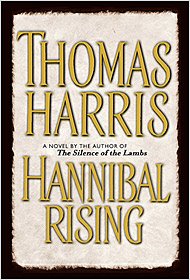
Anthony Lane on "Hannibal Rising"

Anthony Lane's book and film reviews are often more entertaining than the works he analyzes. I haven't yet read the new Thomas Harris novel chronicling the early life of Hannibal Lecter, so I cannot say if the review is better than the book. But the review is pretty entertaining. It opens:

The new Thomas Harris novel goes by the title of “Hannibal Rising” (Delacorte; $27.95). This has the effect of making Dr. Hannibal Lecter sound like a soufflé, a fever chart, or a storm—all comparisons that the good doctor, who prides himself as an epicure and a force of nature, would be bound to welcome. This is his fourth outing in print. He made his blushing début in “Red Dragon” (1981), then returned to the fray in “The Silence of the Lambs” (1988) and “Hannibal” (1999). As the dates testify, there has been a decorous interval between appearances, as if Lecter, like any other star who understands the value of rarity, were keen to insure that his public should be neither glutted nor bored. Naturally, he himself never suffers from boredom, floating far above such vulgar impedimenta as ennui, and free to disport himself within his “memory palace.” This spacious and well-appointed dwelling is located, according to the opening sentence of “Hannibal Rising,” “in the darkness at the center of his mind.” Typical Lecter. The rest of us have to make do with a memory shed, or a mildewed memory cupboard filled with memory junk. He gets a palace.

Our hero began life, we learn from the new book, in prewar Lithuania. He lived in Lecter Castle, which has been the family seat of the Lecters since the time of Hannibal the Grim (1365-1428). That is a pleasantly morbid joke with which to start the book, but anybody who hopes that it will herald a feast of mirth from Thomas the Funny will turn the final page without a smile. We are on serious ground here, and one of the tasks of the novel is to see it hallowed, defiled, and then reconsecrated. There are images of a childhood Eden, in which Hannibal plays with his little sister, Mischa, but these are erased by the arrival of German troops, aided by a gang of collaborative local thugs. For three and a half years, the family—headed by Count Lecter, Hannibal’s father—survives in a hunting lodge in the woods, but at last the thugs catch up with them. Everybody dies except Hannibal, although we are led to believe that something in his soul, too, has perished, as a result of seeing Mischa killed and eaten. It remains possible, though unconfirmed, that he unwittingly drank hot soup made from her bones.

Click here to read the rest of Lane's review.

For a different take, Ali Karim offers a mini-review of Hannibal Rising over at The Rap Sheet.

--Marshal Zeringue

Thursday, May 07, 2015

Pg. 99: Eve MacDonald's "Hannibal: A Hellenistic Life"

Featured at the Page 99 Test: Hannibal: A Hellenistic Life by Eve MacDonald.

About the book, from the publisher:
Hannibal lived a life of incredible feats of daring and survival, massive military engagements, and ultimate defeat. A citizen of Carthage and military commander in Punic Spain, he famously marched his war elephants and huge army over the Alps into Rome’s own heartland to fight the Second Punic War. Yet the Romans were the ultimate victors. They eventually captured and destroyed Carthage, and thus it was they who wrote the legend of Hannibal: a brilliant and worthy enemy whose defeat represented military glory for Rome.

In this groundbreaking biography Eve MacDonald expands the memory of Hannibal beyond his military feats and tactics. She considers him in the wider context of the society and vibrant culture of Carthage which shaped him and his family, employing archaeological findings and documentary sources not only from Rome but also the wider Mediterranean world of the third century B.C. MacDonald also analyzes Hannibal’s legend over the millennia, exploring how statuary, Jacobean tragedy, opera, nineteenth-century fiction, and other depictions illuminate the character of one of the most fascinating military personalities in all of history.
Learn more about Hannibal: A Hellenistic Life at the Yale University Press website.

The Page 99 Test: Hannibal: A Hellenistic Life.

--Marshal Zeringue

Monday, September 18, 2006

"Hannibal Rising"

Hannibal "the Cannibal" Lecter is back. Or he will be back this coming Christmas season. (Forget the fava beans and chianti: break out the cranberry sauce and egg nog.)

The New York Times reports:
In a last-minute addition to its holiday-season list, Delacorte Press, an imprint of the Bantam Dell Publishing Group, is expected to announce today that it will publish “Hannibal Rising” on Dec. 5. The 356-page novel chronicles the early life of Dr. Lecter.
....
Close readers of Mr. Harris’s previous novels, which also include “The Silence of the Lambs” and “Red Dragon,” may recall that Dr. Lecter saw his entire family killed during World War II in Eastern Europe. The new novel, which covers the young Hannibal from age 6 through 20, will shed more light on the circumstances of those deaths, with a focus on Dr. Lecter’s memories of his younger sister, Mischa.
The film version, Young Hannibal: Behind the Mask, is due to be released in early 2007.

--Marshal Zeringue

Friday, April 11, 2025

Seven of the greatest cooks in literature

Samuel Ashworth has been a bartender, a dancer, and a reporter. He has gutted seafood in the back of Michelin-starred restaurants and assisted with autopsies in a Pittsburgh hospital. His fiction and nonfiction appear in the Atlantic, the Washington Post, Longreads, Eater, Hazlitt, Gawker, The Rumpus, and so on. He is a professor of creative writing at George Washington University, and assistant fiction editor at Barrelhouse Magazine. A native New Yorker, he now lives with his wife and two sons in Washington, DC.

At Electric Lit Ashworth tagged seven great cooks in literature, including:
Hannibal Lecter from Red Dragon by Thomas Harris (followed by multiple sequels and TV/film adaptations)

Let’s pretend we can get Donald Trump’s sneering pronunciation of the name out of our head for a while, and focus instead on the actual character, for whom good manners are as important as they are to Paddington Bear. Of course, while Paddington handles people who forget their manners by giving them a Hard Stare, Lecter kills and eats them. But if that were all he did, he wouldn’t have spawned four decades of multimedia franchising. We keep coming back to Hannibal not because he turns people into food, but into cuisine. He gave us the most famous wine pairing in American culture, liver and Chianti. The most recent portrayal of Harris’s character, by Mads Mikkelsen, is food porn at its most exquisite. The show’s food stylist, Janice Poon, released a full cookbook of Hannibal’s recipes. Small wonder that our response to Hannibal’s killing sprees is usually: “let him cook.”
Read about another entry on the list.

Red Dragon appears on Jen Williams's list of four unforgettable fictional serial killers, Caroline Louise Walker's list of six terrifying villain-doctors in fiction, Peter Swanson's list of ten thrillers that explore mental health, John Verdon's list of the ten best whodunits, Laura McHugh's list of ten favorite books about serial killers, Kimberly Turner's list of the ten most disturbing sociopaths in literature, John Mullan's lists of ten of the best dragons in literature and ten of the best tattoos in literature, and the (U.K.) Telegraph 110 best books; Andre Gross says "it should be taught as [a text] in Thriller 101."

--Marshal Zeringue

Monday, December 11, 2006

"Hannibal Rising"

Ali Karim offers a mini-review of Thomas Harris' Hannibal Rising over at The Rap Sheet.

Karim makes several interesting observations, then offers his bottom line:
To be honest, I don’t really care what other critics have to say about Hannibal Rising, because for me the novel provided such a wonderful opportunity to be back in the embrace of Harris’ prose and his dark, witty imagination.
Karim also includes a summary of and links to some of the major U.K. reviews.

Click here to read the post.

--Marshal Zeringue

Thursday, July 06, 2017

What is Estep Nagy reading?

Featured at Writers Read: Estep Nagy, author of We Shall Not All Sleep: A Novel.

His entry begins:
I’ve been re-reading Livy’s History of Rome, specifically the Oxford World Classics volume called Hannibal’s War.

That war (between Rome and Carthage, ca. 200 BC) lasted nearly twenty years, during most of which the Carthaginian general Hannibal occupied much of Italy. On a few occasions, Hannibal nearly captured Rome itself. Like all existential crises, that war produced impressive personalities who rose to the occasion. I’m especially drawn to Publius Cornelius Scipio, later known as Scipio Africanus, who took over the Spanish front of that war at a very young age (24!) after the horrific deaths of his father and uncle, who were generals there before him. Like Julius Caesar 150 years later, Scipio was a thoughtful leader with preternatural talents for...[read on]
About We Shall Not All Sleep, from the publisher:
Seven Island has two houses. One for Hillsingers and one for Quicks.

1964. The Hillsingers and the Quicks have shared the small Maine island of Seven for generations. But though technically family--Jim Hillsinger and Billy Quick married Park Avenue sisters Lila and Hannah Blackwell--they do not mix. Now, on the anniversary of Hannah's death, Lila feels grief pulling her toward Billy. And Jim, a spy recently ousted from the CIA on suspicion of treason, decides to carry out the threat his wife has explicitly forbidden: to banish their youngest son, the twelve-year-old Catta, to the neighboring island of Baffin for twenty-four hours in an attempt to make a man out of him.

With their elders preoccupied, the Hillsinger and Quick children run wild, playing violent games led by Catta's sadistic older brother James. The island manager Cyrus and the servants tend to the families while preparing for the Migration, a yearly farming ritual that means one thing to their employers, and something very different to them.

Set during three summer days, Estep Nagy's debut novel moves among the communities of Seven as longstanding tensions become tactical face-offs in which everything is fair game for ammunition. Vividly capturing the rift between the cold warriors of Jim's generation and the rebellious seekers of Catta's, We Shall Not All Sleep is a richly told story of American class, family, and manipulation--a compelling portrait of a unique and privileged WASP stronghold on the brink of dissolution.
Visit Estep Nagy's website.

The Page 69 Test: We Shall Not All Sleep.

Writers Read: Estep Nagy.

--Marshal Zeringue

Wednesday, June 26, 2019

Six terrifying villain-doctors in fiction

Caroline Louise Walker grew up in Rock Island, Illinois. For her fiction and nonfiction, she has received fellowships from The MacDowell Colony, The Kerouac Project, Jentel Arts and Hambidge Center for the Creative Arts & Sciences. She holds an MA from NYU.

Man of the Year is Walker's first novel.

At CrimeReads she tagged six medical men with terrible designs, including:
HANNIBAL LECTER from Red Dragon, The Silence of the Lambs, by Thomas Harris

Hannibal the Cannibal is skilled at many things—for example, infiltrating our nightmares. He is a legend on the page and in pop culture, thanks to Harris’s brilliant choice to balance depravity against refined taste and class. Lecter speaks beautifully, lives beautifully, and yes, eats his victims’ remains. But his threat to his victims’ minds is the first point of vulnerability—and the piece that keeps us up at night, shuddering at the thought of fava beans.

Lecter is a psychiatrist, not a surgeon, but the prospect of having one’s thoughts penetrated by this character is sufficiently disturbing. We can imagine ourselves trusting him, in his civilized life, in his office, in our naïveté. We do it all the time.

And yet, there is no rest for the weary. Even in a maximum security prison, Lecter is asked to keep his criminal mind sharp, rather than taking a break.
Read about another entry on the list.

Red Dragon appears on Peter Swanson's list of ten thrillers that explore mental health, John Verdon's list of the ten best whodunits, Laura McHugh's list of ten favorite books about serial killers, Kimberly Turner's list of the ten most disturbing sociopaths in literature, John Mullan's lists of ten of the best dragons in literature and ten of the best tattoos in literature, and the (U.K.) Telegraph 110 best books; Andre Gross says "it should be taught as [a text] in Thriller 101."

The Silence of The Lambs is among Kathy Reichs's six best books, Matt Suddain's five great meals from literature, Elizabeth Heiter's ten favorite serial killer novels, Jill Boyd's five books with the worst fictional characters to invite to Thanksgiving, Monique Alice's six great fictional evil geniuses, sixteen book-to-movie adaptations that won Academy Awards.

--Marshal Zeringue

Tuesday, December 09, 2014

Molly Cochran's "Seduction," the movie

Featured at My Book, The Movie: Seduction by Molly Cochran.

The entry begins:
Who is Gaspard Ulliel?

He's the French hottie who played young Hannibal Lechter in Hannibal Rising, and more recently, the nameless but gorgeous Male Face of Chanel. Temptation personified!

My latest YA novel, Seduction, is all about temptation--or, rather, Temptation, with a capital T. The hapless characters in Seduction--Katy Ainsworth, played in this mental movie by Zooey Deschanel (whom I've always, from the beginning of the series, pictured as Katy), and her erstwhile boyfriend, Peter Shaw (Liam Hemsworth, using his superb, if studied, American accent)--are tempted at every turn by riches, beauty, ambition, knowledge, and even immortality.

From the moment Peter learns that he can make gold from base metal, his life takes a sharp upturn. Living in Paris with a house full of beautiful, if shallow, women who adore him, he is...[read on]
Learn more about the book and author at Molly Cochran's website and blog.

My Book, The Movie: Legacy.

The Page 69 Test: Poison.

Writers Read: Molly Cochran (February 2013).

My Book, The Movie: Seduction.

--Marshal Zeringue

Tuesday, June 27, 2017

Coffee with a canine: Melissa Scholes Young & Huckleberry Nacho Finn

Featured at Coffee with a Canine: Melissa Scholes Young & Huckleberry Nacho Finn.

The author, on how Huck got his name:
I grew up in Hannibal, Missouri, Mark Twain's boyhood home, so I'm a big literary fan of Twain's. Huck just seemed to be a Huck, but the first time he ate an entire stick of butter off of our table Huckleberry Finn came out of my mouth in a certain tone that Widow Douglass would have used. My youngest daughter added the Nacho part to his name. He mostly goes by Huckanoodles and...[read on]
About Scholes Young's debut novel, Flood, from the publisher:
A sparkling debut set in Mark Twain's boyhood town, Flood is a story of what it means to be lost ... and found.

Laura Brooks fled her hometown of Hannibal, Missouri, ten years ago after a historic flood and personal heartbreak. Now she's returned unannounced, and her family and friends don't know what to make of it. She says she's just home for a brief visit and her high-school reunion, but she's carrying too much luggage for that: literal and metaphorical. Soon Laura is embroiled in small-town affairs—the contentious divorce of her rowdy best friend Rose; the campaign of her twelve-year-old godson, Bobby, to become the town's official Tom Sawyer; and the renewed interest of the man Laura once thought she'd marry, Sammy McGuire.

Leaving town when she was eighteen had been Laura's only option. She feared a stifling existence in a town ruled by its past, its mythological devotion to Mark Twain, and the economic and racial divide that runs as deep as the Mississippi River. She can't forget that fateful Fourth of July when the levees broke or the decisions that still haunt her. Now as the Mississippi rises again, a deep wound threatens to reopen, and Laura must decide if running away once more might be the best way to save herself.
Visit Melissa Scholes Young's website.

Coffee with a Canine: Melissa Scholes Young & Huckleberry Nacho Finn.

--Marshal Zeringue

Saturday, June 12, 2021

Four unforgettable fictional serial killers

Jen Williams lives in London with her partner and their small ridiculous cat. Having been a fan of grisly fairy tales from a young age, these days Williams writes dark unsettling thrillers with strong female leads, as well as character-driven fantasy novels with plenty of adventure and magic. She has twice won the British Fantasy Award for her Winnowing Flame trilogy, and when she's not writing books she works as a bookseller and a freelance copywriter.

Her new novel is A Dark and Secret Place.

At CrimeReads Williams tagged four favorite dark and twisted villains of fictional lore, including:
Francis Dolarhyde of Red Dragon

You could hardly have a list like this without talking about Thomas Harris and his iconic cast of serial killers, and, specifically of course, Dr Hannibal Lector. First appearing in 1981’s Red Dragon, the doctor is in many ways the grandfather of fictional serial killers, undoubtedly giving birth to hordes of murderers after the huge success of The Silence of the Lambs. After all, it’s Dr. Lector who has really sold us on the idea of a murderer who is just so much cleverer than anyone else in the room, and if you’re a fan of the TV series Hannibal, one who dresses impeccably well, too. But for me the killer that truly haunts me from Thomas Harris’s excellent books is Francis Dolarhyde. Dubbed “the Tooth Fairy” by the press (and what a fantastically rubbish nickname that is), Dolarhyde is murdering entire families to quicken his transformation into a being he calls “the Great Red Dragon,” and Will Graham must enlist the help of Dr. Lector to stop him. Dolahyde is equal parts fascinating, terrifying, and tragic. He is obsessed with William Blake’s painting “The Great Red Dragon and the Woman Clothed With the Sun,” even going so far as to eat the original watercolour, and there is something flatly alien about his transformation into a beast. Yet Harris undercuts all this by having Dolahyde unexpectedly fall for a blind woman at his work place. This, combined with flashbacks to his horrifically abusive childhood, give the reader an uncomfortably intimate portrait of a monster.
Read about another entry on the list.

Red Dragon appears on Caroline Louise Walker's list of six terrifying villain-doctors in fiction, Peter Swanson's list of ten thrillers that explore mental health, John Verdon's list of the ten best whodunits, Laura McHugh's list of ten favorite books about serial killers, Kimberly Turner's list of the ten most disturbing sociopaths in literature, John Mullan's lists of ten of the best dragons in literature and ten of the best tattoos in literature, and the (U.K.) Telegraph 110 best books; Andre Gross says "it should be taught as [a text] in Thriller 101."

--Marshal Zeringue

Sunday, November 25, 2007

David Wellington's "13 Bullets" & "99 Coffins," the movies

Now showing at My Book, The Movie: David Wellington's 13 Bullets and 99 Coffins.

Wellington laid out the backstory before he named actors he'd like to see in screen adaptations of the books:
My novels, 13 Bullets and the upcoming 99 Coffins, are set in a world where vampires have long been a historical fact, having always lived beside, and preying on, the human population. They’re bigger than us, much faster, and almost impossible to kill even before they start drinking blood. Afterwards they’re virtually bulletproof. They can only be brought down by destroying their hearts — all other wounds heal instantly. They are hairless, pigment-free freaks with rows of wicked teeth and they don’t read poetry and date cute vampire hunters, and they don’t daintily sip blood from a pair of hickeys on your neck. They’d rather tear off your head and suck the blood from your spurting stump.

Needless to say humanity tries to fight back — and though we’re severely outmatched, the numbers are on our side. Over the centuries we’ve managed to turn the tide, ferreting out vampire lairs during the light of day and exterminating these predators wherever we find them. By the 1980s vampires are believed by most people to be extinct. Then, in the twenty-first century, evidence comes to light that this was nothing more than a fond hope. A cadre of vampires are back and slaughtering the good people of Pennsylvania. It falls on a pair of law enforcement agents to put them back in their coffins for good. One is an aging U.S. Marshal, the only living American who has fought a vampire before and lived. The other is a young State Trooper, a member of the Highway Patrol who has never discharged her weapon outside of a firing range. [read on to see who the author would cast to play these characters in a film adaptation]
Among the praise for 13 Bullets:
“In 13 Bullets, David Wellington focuses his ample powers of imagination on modernizing the vampire legend. The result is a charming, funny, bloody, and best of all, thrilling adventure. FBI vampire hunters Caxton and Arkeley make an electric duo. Thwarting them at every turn from within the walls of a maximum security prison, ringleader Malvern is a diabolical cross between Hannibal Lecter and one of Anne Rice's ancients.”
—Sarah Langan, author of The Keeper

“Lace collars and kerchiefs are nowhere to be found in this breakneck, blood-spattered, totally original vampire novel. Breathless, exciting and totally kick ass.”
—B. H. Fingerman, author of Bottomfeeder

"...the action is nonstop, the pace relentless and absorbing."
—Paul Witcover, SciFi.com
99 Coffins is due out on December 31, 2007.

David Wellington is also the author of the Monster Island trilogy and Plague Zone, a new serial novel available at www.plaguezone.net.

Read more about 13 Bullets and 99 Coffins, and visit David Wellington's website.

The Page 69 Test: Monster Nation.

My Book, The Movie: 13 Bullets and 99 Coffins.

--Marshal Zeringue

Saturday, July 07, 2007

Pg. 69: Anthony Flacco's "The Last Nightingale"

Today's feature at the Page 69 Test: Anthony Flacco's The Last Nightingale.

About the novel, from the publisher:
San Francisco, 1906. The great West Coast city is a center of industry and excitement – and also, to many, of sin. When the Great Earthquake hits, some believe it is the day of reckoning for the immoral masses.

Meanwhile, twelve-year-old Shane Nightingale is witness to the violent deaths of his adoptive mother and sisters – not from the earthquake, but at the hands of a serial killer. As Shane wanders the city appearing to be just another anonymous orphan, he keeps what he has seen a secret. But when his path crosses that of Sergeant Randall Blackburn, who is in pursuit of the killer, the two become an investigative team that will use both a youth’s intuitive gifts and a policeman’s new deductive techniques and crime-fighting tools to unmask a vicious murderer whose fury can be as intense as that of Mother Nature herself.
Among the praise for The Last Nightingale:
"Every historical mystery tries to hone in on the ideal setting at the perfect moment in time. Anthony Flacco succeeds on both counts in his first novel …. Flacco imagines the chaos in precise and vivid detail while contributing his own distinctive narrative touch.
--Marilyn Stasio, NY Times Book Review

"…Few literary depictions of the 1906 San Francisco earthquake match the intensity and visceral power of those in Flacco's gripping first novel. The author's screenwriting talent shines in this story of the earth's destructive power and humanity's moral depravity. …The emerging maniacal personality, revealed in increasingly gruesome and venomous detail, rivals the Ripper.…Dickens meets Hannibal Lecter. Brace yourself."
--Booklist

"Screenwriter Flacco nicely evokes the aftermath of San Francisco's 1906 earthquake in his fiction debut, a novel of suspense."
--Publishers Weekly

…A fast-moving tale of serial killing…. Where Flacco especially shines is in his depiction of the two children, newly orphaned Shane Nightingale and the plucky girl who calls herself Vignette… It's clearly deserving of a very wide audience.
--Sarah Weinman, Confessions of an Idiosyncratic Mind

"A marvelous page-turner of a thriller set against the fascinating aftermath of the great 1906 earthquake and fire."
--James Dalessandro, bestselling author of 1906

"Set in a world on the edge of Armageddon, this is a gripping and completely original thriller that will raise the hair on the back of your neck."
--William Bernhardt, bestselling author of Capitol Threat

"From its opening pages-when we are plunged headlong into the terrifying chaos of the Great San Francisco Earthquake of 1906-to its riveting climax, The Last Nightingale offers an abundance of those page-turning pleasures readers seek in historical thrillers: a time-trip through a richly imagined past, a story that never loosens its suspenseful grip, and a fascinating look at the roots of modern forensic science."
--Harold Schechter, author of The Serial Killer Files

"Atmospheric, chilling, and with more twists and turns than crooked Lombard Street. The Last Nightingale has it all. I couldn't put it down."
--Cara Black, author of Murder On The Ile St. Louis
Visit Anthony Flacco's website and read an excerpt from the novel.

The Page 69 Test: The Last Nightingale.

--Marshal Zeringue

Wednesday, January 26, 2011

Six books that encourage tourism

Oberlin professor Anne Trubek's new book, A Skeptic’s Guide to Writers' Houses, has been hailed as "a remarkable book: part travelogue, part rant, part memoir, part literary analysis and urban history."

At The Week magazine she tagged six books that draw visitors to their authors' home towns.

One title on her list:
The Innocents Abroad by Mark Twain

Twain’s novel about Americans traveling through Europe and the Holy Land mocks Americans’ penchant for tacky tourism: “We find a piece of the true cross in every old church we go into... And as for the bones of St. Denis, I feel certain we have seen enough of them to duplicate him if necessary.” What would he make of the Twain-land erected in his hometown of Hannibal, Mo.?
Read about another book on Trubeck's list.

The Innocents Abroad also appears on Michael Oren's five best list of books that vividly capture the long history of America's encounters with the Arab world and among Laura Landro's five best travel books.

--Marshal Zeringue

Monday, January 14, 2019

What is Matthew Carr reading?

Featured at Writers Read: Matthew Carr, author of The Savage Frontier: The Pyrenees in History and the Imagination.

His entry begins:
When I'm writing non-fiction, my reading tends be dominated by the subject in hand. I try to read obsessively on whatever project i'm writing about so that I'm completely filled up by it. When I'm in between books, as I am now, I try to read more freely, either catching up on books I've been looking forward to, or following possibilities that interest me. I'm currently looking into the possibility of a book on the Arctic, so I read Barry Lopez's Arctic Dreams. Few people write more eloquently or gracefully about landscape and nature than Lopez. Every time I read him...[read on]
About The Savage Frontier, from the publisher:
With the Catalonia crisis making international headlines, the unique cultural and geographic region bordering Spain and France has once again moved to the center of the world’s attention. In The Savage Frontier, acclaimed author and journalist Matthew Carr uncovers the fascinating, multilayered story of the Pyrenees region—at once a forbidding, mountainous frontier zone of stunning beauty, home to a unique culture, and a site of sharp conflict between nations and empires.

Carr follows the routes taken by monks, soldiers, poets, pilgrims, and refugees. He examines the people and events that have shaped the Pyrenees across the centuries, with a cast of characters including Napoleon, Hannibal, and Charlemagne; the eccentric British climber Henry Russell; Francisco Sabaté Llopart, the Catalan anarchist who waged a lone war against the Franco regime across the Pyrenees for years after the civil war; Camino de Santiago pilgrims; and the cellist Pablo Casals, who spent twenty-three years in exile only a few miles from the Spanish border to show his disgust and disapproval of the Spanish regime.

The Savage Frontier is a book that will spark a new awareness and appreciation of one of the most haunting, magical, and dramatic landscapes on earth.
Visit Matthew Carr's website.

The Page 69 Test: The Devils of Cardona.

Writers Read: Matthew Carr.

--Marshal Zeringue

Saturday, September 26, 2009

The best tattoos in literature

At the Guardian, John Mullan named ten of the best tattoos in literature.

One novel on his list:
Red Dragon by Thomas Harris

Though the serial killer – and penpal of Hannibal Lecter – is hard to track down, he is not exactly concealed. Possessed by a spirit that he calls "the Dragon", he has a great red dragon (based on a design by William Blake) tattooed on his back. However, Reba, the women who befriends him, is blind, so no giveaway.
Read about another famous tattoo on Mullan's list.

Red Dragon also appears among the (U.K.) Telegraph 110 best books; Andre Gross says "it should be taught as [a text] in Thriller 101."

--Marshal Zeringue

Sunday, August 20, 2023

Five novels in which love conquers & sometimes destroys

T.M. Dunn is the author of three novels, Her Father's Daughter (2023), Last Stop On The 6 (2021,) and Rebels By Accident (2014). She has served as Senior Director of the Writing Institute at Sarah Lawrence College, where she holds a MFA in creative writing, and currently coaches aspiring and established writers and teaches creative writing workshops.

At CrimeReads Dunn tagged five "novels where love drives characters to dangerous extremes," including:
Meg Gardiner’s UNSUB was published in 2017, and when the Boston Globe wrote that it had hints of “Silence of the Lambs,” I immediately clicked and purchased the hardcover. Anyone who had ever taken one of my creative writing classes knows that Hannibal Lecter is one of my favorite characters of all time. How the author, Thomas Harris, manages to get you, me, to root for a serial killer is extraordinary. I shamefully admit I let life get in my way and never read the novel. It was only recently, with a very long drive ahead of me to see my sister, I downloaded the audiobook and was captivated, no serial killer pun intended. There’s no question that the protagonist’s love for her father is the inspiration for her to become a detective who solves crimes and protects people.

When the serial killer, to whom her father devoted years of his life and most of Caitlin’s childhood trying and failing to stop, surfaces again, the love for her father, the need to save him, leads her down the similar destructive path that in many ways destroyed her father.
Read about another entry on the list.

The Page 69 Test: UNSUB.

--Marshal Zeringue

Monday, March 01, 2010

Pg. 99: John David Lewis' "Nothing Less than Victory"

The current feature at the Page 99 Test: Nothing Less than Victory: Decisive Wars and the Lessons of History by John David Lewis.

About the book, from the publisher:
The goal of war is to defeat the enemy's will to fight. But how this can be accomplished is a thorny issue. Nothing Less than Victory provocatively shows that aggressive, strategic military offenses can win wars and establish lasting peace, while defensive maneuvers have often led to prolonged carnage, indecision, and stalemate. Taking an ambitious and sweeping look at six major wars, from antiquity to World War II, John David Lewis shows how victorious military commanders have achieved long-term peace by identifying the core of the enemy's ideological, political, and social support for a war, fiercely striking at this objective, and demanding that the enemy acknowledges its defeat.

Lewis examines the Greco-Persian and Theban wars, the Second Punic War, Aurelian's wars to reunify Rome, the American Civil War, and the Second World War. He considers successful examples of overwhelming force, such as the Greek mutilation of Xerxes' army and navy, the Theban-led invasion of the Spartan homeland, and Hannibal's attack against Italy--as well as failed tactics of defense, including Fabius's policy of delay, McClellan's retreat from Richmond, and Chamberlain's appeasement of Hitler. Lewis shows that a war's endurance rests in each side's reasoning, moral purpose, and commitment to fight, and why an effectively aimed, well-planned, and quickly executed offense can end a conflict and create the conditions needed for long-term peace.

Recognizing the human motivations behind military conflicts, Nothing Less than Victory makes a powerful case for offensive actions in pursuit of peace.
Read an excerpt from Nothing Less than Victory, and learn more about the book and author at John David Lewis' website.

The Page 99 Test: Nothing Less than Victory.

--Marshal Zeringue

Saturday, November 04, 2006

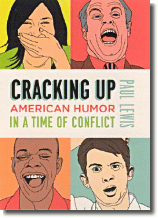
Pg. 69: "Cracking Up"

Paul Lewis is Professor of English at Boston College and the author of the new book, Cracking Up: American Humor in a Time of Conflict.

I asked him to apply the "page 69 test" to his book. Here is his reply:
Cracking Up focuses on provocative American humor since 1980: jokes, satires and parodies intended to do more than amuse. Coming early in a chapter on the positive humor movement, page 69 introduces readers to a merry band of consultants and public speakers determined to bring mirth into our classrooms, offices, hospitals and homes. Inspired by Norman Cousins, the editor and writer who in 1977 claimed to have cured himself of collagen disease with large doses of vitamin C and laughter, these advocates come prepared with red clown noses and an inclination to pun. Specifically, the page mentions Ron Culberson, “Director of Everything! At FUNsulting,” Larry Wilde, “America’s Good Humor Man,” and the “caring clowns based at Rex Hospital in Raleigh, North Carolina: ‘She’s Nola Nurse, RN! In case you don’t know what RN stands for, in her case it means really nutty.’” Written from a skeptical position from which it asks whether these practitioners promise too much and try too hard, the chapter moves onto discussions with movement figures, an account of a Laughing Club workout, the story of my participation in conferences sponsored by pro-humor organizations, and descriptions of humor-stimulating products (such as fake dog poop, yellow smiley face plastic shapes, and fart-sound-producing machines). Jolly, jolly, ho-ho-ho!

Elsewhere the book explores strains of intentional humor designed to terrify or persuade. Just as Norman Cousins inspired a generation of humor boosters, so Freddy Krueger, the killing joker of Nightmare on Elm Street fame, provided a much-imitated model for such villains as The Joker, Hannibal Lecter and the Vampire Lestat. With these extremes—Freddy vs. Norman—established and with questions asked about whether they represent contrasting responses to a set of widely shared anxieties—Cracking Up moves out across landscapes of recent political and social argument. Chapters called “Shut Up! No, You Shut Up! Fighting With and About Humor” and “Ridicule to Rule: The Strange Case of G. W. Bush” consider how the Freddy and Norman impulses (that is, the use of humor to terrify or soothe) figure in our angry politics. Topics discussed include jokes used to sell alcohol and tobacco to kids; the battle between the forces of political correctness and anti-political correctness; and the hotly debated question of whether Jesus ever laughed. Intentional humorists contrasted include Rush Limbaugh and Garry Trudeau, Ronald Reagan and Bill Clinton, Jay Leno and Jon Stewart. By exploring realms of controversial, manipulative and disturbing laughter, Cracking Up challenges common sense notions about how American humor has been operating in recent years.
Many thanks to Paul for the input.

Whet your appetite for Cracking Up with these Op-Eds by Lewis:
"Liberal Bias of the Late-Night Comics?" The Providence Journal, October 21, 2006.
"Funny Thing About Elections," Philadelphia Inquirer, September 8, 2006.
"Rush Limbaugh: Court Jester for the Apocalypse," Courier-Journal.com, August 6, 2006.
“Politics as ‘bait and witch,’” Philadelphia Inquirer, June 22, 2006.
“The Nattering Nabobs of... Patriotism?” Philadelphia Inquirer, March 8, 2006.
“Islamic Rage: Sometimes, It Hurts To Laugh,” Hartford Courant, February 6, 2006.
Paul Lewis is also the author of Comic Effects: Interdisciplinary Approaches to Humor in Literature.

Here's a cool item from Paul's biography: he's the neologist who coined the word Frankenfood.

Previous "page 69 tests":
Pagan Kennedy, Confessions of a Memory Eater
David Greenberg, Nixon's Shadow
Duane Swierczynski, The Wheelman
George Levine, Darwin Loves You
John Barlow, Intoxicated
Alicia Steimberg, The Rainforest
Alan Wolfe, Does American Democracy Still Work?
John Dickerson, On Her Trail
Marcus Sakey, The Blade Itself
Randy Boyagoda, Governor of the Northern Province
John Gittings, The Changing Face of China
Rachel Kadish, Tolstoy Lied
Eric Rauchway, Blessed Among Nations
Tim Brookes, Guitar and other books
Ruth Padel, Tigers in Red Weather
William Haywood Henderson, Augusta Locke
Jed Horne, Breach of Faith
Robert Greer, The Fourth Perspective
David Plotz, The Genius Factory
Michael Allen Dymmoch, White Tiger
Patrick Thaddeus Jackson, Civilizing the Enemy
Tom Lutz, Doing Nothing
Libby Fischer Hellmann, A Shot To Die For
Nelson Algren, The Man With the Golden Arm
Bob Harris, Prisoner of Trebekistan
Elaine Flinn, Deadly Collection
Louise Welsh, The Bullet Trick
Gregg Hurwitz, Last Shot
Martha Powers, Death Angel
N.M. Kelby, Whale Season
Mario Acevedo, The Nymphos of Rocky Flats
Dominic Smith, The Mercury Visions of Louis Daguerre
Simon Blackburn, Lust
Linda L. Richards, Calculated Loss
Kevin Guilfoile, Cast of Shadows
Ronlyn Domingue, The Mercy of Thin Air
Shari Caudron, Who Are You People?
Marisha Pessl, Special Topics in Calamity Physics
John Sutherland, How to Read a Novel
Steven Miles, Oath Betrayed
Alan Brown, Audrey Hepburn's Neck
Richard Dawkins, The Ancestor's Tale

--Marshal Zeringue

Tuesday, May 14, 2019

What is Lara Elena Donnelly reading?

Featured at Writers Read: Lara Elena Donnelly, author of Amnesty: Book 3 in the Amberlough Dossier.

Her entry begins:
Back in 2012, one of my Clarion instructors mentioned The Talented Mr. Ripley in workshop. The name was vaguely familiar, but only as a received pop culture artifact. But she talked about it in such glowing terms I thought, I guess I’d better read this.

And I tried. But I bounced off it like a superball.

Years passed. My tastes changed. My own writing, and my understanding of other authors’ craft, improved. And, after a bout with another thriller many blurbs and reviews hailed as “Ripleyesque,” which I found equal parts un-put-downable and deeply frustrating on a couple of craft levels, I thought, maybe I should try Ripley again.

I tore through it this time. Whenever I set it aside to do something else, I was back on the sofa within half an hour. Patricia Highsmith makes every moment of that book feel like a potential turning point in Tom Ripley’s hectic, high-stakes scam. None of the characters is a hero or a villain; the book is a masterclass in winning reader empathy through characterization and context.

Recently, after looking at some pages for a proposed new project, my editor said they reminded her of Highsmith, and asked if I could lean even harder on that tone, those characters, that voice. I had pitched the project as Perfume: The Story of a Murderer meets Brian Fuller’s Hannibal, in the style of Donna Tartt. But as soon as she said “Highsmith,” I knew she was right.

So I’ve lately finished Strangers on a Train, her debut, and...[read on]
About Amnesty, from the publisher:
In Amberlough City, out of the ASHES of revolution, a TRAITOR returns, a political CAMPAIGN comes to a roaring head, and the people demand JUSTICE for crimes past.

As a nation struggles to rebuild, who can escape retribution?

Amnesty is a smart, decadent, heart-pounding conclusion to Lara Elena Donnelly’s widely-praised glam spy trilogy that will have readers enthralled until the very end.
Visit Lara Elena Donnelly's website.

My Book, The Movie: Amberlough.

Writers Read: Lara Elena Donnelly.

--Marshal Zeringue