Saturday, November 23, 2013

Jon Meacham's 6 favorite books

Jon Meacham is the Pulitzer Prize-winning author of American Lion, a biography of Andrew Jackson, and the 2012 best-seller Thomas Jefferson: The Art of Power.

One of his six favorite books, as shared with The Week magazine:
Some Sort of Epic Grandeur by Matthew J. Bruccoli

An engrossing, elegant biography of F. Scott Fitzgerald that — forgive the cliché — reads as compellingly as the best of Fitzgerald's own fiction. This is the finest literary life that I have ever encountered.
Read about another entry on the list.

--Marshal Zeringue

What is Renée Rosen reading?

The current featured contributor at Writers Read: Renée Rosen, author of Dollface, A Novel of the Roaring Twenties.

Her entry begins:
Two really wonderful novels that stand out in my mind are In Need of a Good Wife by Kelly O’Connor McNees and Astor Place Vintage by Stephanie Lehmann. In Need of a Good Wife is about a mail order bride service after the Civil War. In a lot of ways it was the precursor to Match.Com and the online dating world that exists today. And oddly enough...[read on]
About Dollface, from the publisher:
America in the 1920s was a country alive with the wild fun of jazz, speakeasies, and a new kind of woman—the flapper.

Vera Abramowitz is determined to leave her gritty childhood behind and live a more exciting life, one that her mother never dreamed of. Bobbing her hair and showing her knees, the lipsticked beauty dazzles, doing the Charleston in nightclubs and earning the nickname “Dollface.”

As the ultimate flapper, Vera captures the attention of two high rollers, a handsome nightclub owner and a sexy gambler. On their arms, she gains entrée into a world filled with bootleg bourbon, wailing jazz, and money to burn. She thinks her biggest problem is choosing between them until the truth comes out. Her two lovers are really mobsters from rival gangs during Chicago’s infamous Beer Wars, a battle Al Capone refuses to lose.

The heady life she’s living is an illusion resting on a bedrock of crime and violence unlike anything the country has ever seen before. When the good times come to an end, Vera becomes entangled in everything from bootlegging to murder. And as men from both gangs fall around her, Vera must put together the pieces of her shattered life, as Chicago hurtles toward one of the most infamous days in its history, the St. Valentine’s Day Massacre.
Learn more about Dollface at Renée Rosen's website, blog, and Facebook page.

Renée Rosen is a former advertising copywriter who always had a novel in her desk drawer. When she saw the chance to make the leap from writing ad copy to fiction, she jumped at it. A confirmed history and book nerd, Rosen loves all things old, all things Chicago and all things written. Her previous book is Every Crooked Pot.

The Page 99 Test: Every Crooked Pot.

My Book, The Movie: Dollface.

Writers Read: Renée Rosen.

--Marshal Zeringue

Friday, November 22, 2013

Seven books for people who like Malcolm Gladwell's books

At The Barnes & Noble Book Blog Josh Sorokach tagged seven books for people who love Malcolm Gladwell, including:
Sway: The Irresistible Pull of Irrational Behavior, by Ori Brafman & Rom Brafman

Admirers of Gladwell’s unique brand of outside-the-box sociology will appreciate the Brafman brothers’ analytical approach to explaining society’s proclivity for irrational behavior. One such example is the rather antiquated practice of modern job interviews. Sway posits that being cognizant of our own diagnostic bias—our tendency to label people based on our initial opinions of them and our inability to recalibrate those judgments—will help improve our evaluation skills when conducting interviews of a professional or personal nature.
Read about another title on the list.

Sway is also on Sorokach's list of six books you’ll need to survive the zombie apocalypse.

Learn about Malcolm Gladwell's six best books.

--Marshal Zeringue

Pg. 99: Susan Carle's "Defining the Struggle"

The current feature at the Page 99 Test: Defining the Struggle: National Organizing for Racial Justice, 1880-1915 by Susan D. Carle.

About the book, from the publisher:
Since its founding in 1910--the same year as another national organization devoted to the economic and social welfare aspects of race advancement, the National Urban League--the NAACP has been viewed as the vanguard national civil rights organization in American history. But these two flagship institutions were not the first important national organizations devoted to advancing the cause of racial justice. Instead, it was even earlier groups -- including the National Afro American League, the National Afro American Council, the National Association of Colored Women, and the Niagara Movement - that developed and transmitted to the NAACP and National Urban League foundational ideas about law and lawyering that these latter organizations would then pursue.

With unparalleled scholarly depth, Defining the Struggle explores these forerunner organizations whose contributions in shaping early twentieth century national civil rights organizing have largely been forgotten today. It examines the motivations of their leaders, the initiatives they undertook, and the ideas about law and racial justice activism they developed and passed on to future generations. In so doing, it sheds new light on how these early origins helped set the path for twentieth century legal civil rights activism in the United States.
Learn more about Defining the Struggle at the Oxford University Press website.

Susan Carle teaches legal ethics, anti-discrimination law, labor and employment law, and torts at American University Washington College of Law.

My Book, The Movie: Defining the Struggle.

The Page 99 Test: Defining the Struggle.

--Marshal Zeringue

Three top books on the Kennedy assassination

Peter Cannon named three essential books on the Kennedy assassination for PWxyz, the news blog of Publishers Weekly, including:
For anyone who wants to understand how and why Oswald shot the president without help or encouragement from anyone else, I recommend Marina and Lee: The Tormented Love and Fatal Obsession Behind Lee Harvey Oswald’s Assassination of John F. Kennedy by Priscilla Johnson McMillan. This detailed, psychological portrait of Oswald, based largely on interviews with his widow, Marina, wasn’t well received when it was first published in 1977, when skepticism was running high about our government, but today only diehard conspiracy believers will find its arguments unpersuasive.
Read about another book on the list.

--Marshal Zeringue

Keith Raffel's "A Fine And Dangerous Season," the movie

Now showing at My Book, The Movie: A Fine And Dangerous Season by Keith Raffel.

The entry begins:
How about a little reminder of the plot of Fine and Dangerous? Twenty-three-year-old John F. Kennedy is spending the fall quarter of 1940 at Stanford as a special student. (That’s true in the real world, too.) He meets law student Nate Michaels who is in some respects JFK’s mirror image: secular Jew rather than observant Catholic; San Franciscan rather than Bostonian; son of a crusading left-wing union official rather than of a buccaneering capitalist. Opposites attract and the two become best friends until an irrevocable falling out. Twenty-two years later, in the midst of the Cuban Missile Crisis, now-President Kennedy needs Michaels’ help to avert nuclear war.

So (drumroll)…. Here’s what I came up with in my daydream of playing movie producer.

Casting JFK is the key to the movie. My wife was watching TV the other night and I saw Dr. McDreamy on Grey’s Anatomy. Patrick Dempsey is charismatic, outgoing, attractive to women, and even close to the right age. (JFK was just about 46 at the time of the Cuban Missile Crisis.) On top of that Dempsey has even had practice in the role. He played the lead in JFK: Reckless Youth back in 1993. (Here's a clip.)

So now who is going to be Nate Michaels? Intense. Introverted. Intellectual. How about Robert...[read on]
Learn more about the book and author at Keith Raffel's website, blog, Facebook page, and Twitter perch.

My Book, The Movie: A Fine And Dangerous Season.

--Marshal Zeringue

Thursday, November 21, 2013

Pg. 69: Tamar Ossowski's "Left"

The current feature at the Page 69 Test: Left by Tamar Ossowski.

About the book, from the publisher:
Therese Wolley is a mother who has made a promise. She works as a secretary, shops for groceries on Saturdays, and takes care of her two girls. She doesn’t dwell on the fact that her girls are fatherless, mostly because her own father abandoned her before she was born and she has done just fine without him.

Even though her older daughter regularly wakes with nightmares and her younger one whispers letters under her breath, she doesn’t shift from her resolve that everything will be fine. She promises ... and they believe.

Until the morning an obituary in the newspaper changes everything. Therese immediately knows what she has to do. She cannot delay what she has planned, and she cannot find the words to explain her heartbreaking decision to her daughters. She considers her responsibilities, her girls, and her promise. Then she does the only thing that any real mother would do. She goes on the run with one daughter ... and abandons the other.

Left is told from the perspectives of Franny, the autistic sister who is left behind; Matilda, the troubled older sister who vows to go back and save her; and Therese, a mother on the run.
Learn more about the book and author at Tamar Ossowski's website, Facebook page, and Twitter perch.

My Book, The Movie: Left.

The Page 69 Test: Left.

--Marshal Zeringue

Fifty books that define the past half-decade in literature

At Flavorwire, Jason Diamond tagged 50 books that define the past five years in literature. One title on the list:
The Magicians, Lev Grossman (2009)

Grossman came up with a formula that seems so simple that it’s shocking somebody didn’t beat him to it: adults like YA, and everybody loves a good fantasy novel, so why not write a YA trilogy that’s geared more towards the 18-plus crowd? It certainly paid off, and has lots of writers following suit.
Learn about another book on the list.

The Magicians is on Joel Cunningham's list of eight great books for fans of Donna Tartt's The Secret History.

The Page 69 Test: The Magicians.

--Marshal Zeringue

What is Leslie Morgan Steiner reading?

The current featured contributor at Writers Read: Leslie Morgan Steiner, author of The Baby Chase: How Surrogacy Is Transforming the American Family.

Part of her entry:
[M]y sister told me to read Stephen King's Dolores Claiborne, which I had somehow missed when it was originally published in 1992.... I believe that Stephen King is the most underrated writer of my lifetime, and I am awestruck by his range, productivity, ability to work a plot effortlessly, and love of writing. Most recent King favorites include 11/22/63 and Joyland. I have been...[read on]
About The Baby Chase, from the publisher:
From the New York Times bestselling author of Crazy Love comes a riveting new narrative about surrogate pregnancy from both sides of the equation—the parents and the gestational carrier.

Once considered a desperate, even morally suspect option, surrogacy is now sweeping headlines, transforming the lives of celebrities like Sarah Jessica Parker, Nicole Kidman and Elton John, and changing the face of the American family. But how much do we really know about it? And is it really as easy and accessible – emotionally, financially, legally and physically – as magazines make it out to be? We often hear about successful outcomes, but little about the journey – about the precious hope that starts it all, the ups and downs of finding a surrogate, the heartache and obstacles, the risks and expenses at every step, or the unbelievable joy when years of determination pay off. In The Baby Chase, acclaimed writer Leslie Morgan Steiner weaves three stories together — of a nurse, a firefighter, and the Indian gestational carriers and doctors who helped them — to provide one intensely personal look at what makes surrogacy so controversial, fascinating, and in some cases, the only ray of hope for today's infertile parents-to-be.

Rhonda Wile and her husband Gerry struggled for years with infertility. With perseverance that shocked everyone around them, they tried every procedure and option available – unsuccessfully – until they finally decided to hire a surrogate. While surrogacy was being touted as a miracle for hopeful parents, for Rhonda and Gerry, it seemed an impossible and unaffordable dream. Until they came across the beaming smile of a beautiful Indian woman on the internet… and, within a few short months, embarked on a journey that would take them deep into the emerging world of Indian carriers, international medical tourism, and the global surrogacy community.

Moving, page-turning, and meticulously researched, this complex human story is paired with an examination of the issues—religious, legal, medical and emotional—that shapes surrogacy as a solution both imperfect and life-changing.
Read more about The Baby Chase at Leslie Morgan Steiner's website and Facebook page.

My Book, The Movie: The Baby Chase.

Writers Read: Leslie Morgan Steiner.

--Marshal Zeringue

Pg. 99: Ronen Shamir's "Current Flow"

The current feature at the Page 99 Test: Current Flow: The Electrification of Palestine by Ronen Shamir.

About the book, from the publisher:
Whether buried underfoot or strung overhead, electrical lines are omnipresent. Not only are most societies dependent on electrical infrastructure, but this infrastructure actively shapes electrified society. From the wires, poles, and generators themselves to the entrepreneurs, engineers, politicians, and advisors who determine the process of electrification, our electrical grids can create power—and politics—just as they transmit it.

Current Flow examines the history of electrification of British-ruled Palestine in the 1920s, as it marked, affirmed, and produced social, political, and economic difference between Arabs and Jews. Considering the interplay of British colonial interests, the Jewish-Zionist leanings of a commissioned electric company, and Arab opposition within the case of the Jaffa Power House, Ronen Shamir reveals how electrification was central in assembling a material infrastructure of ethno-national separation in Palestine long before "political partition plans" had ever been envisioned. Ultimately, Current Flow sheds new light on the history of Jewish-Arab relations and offers broader sociological insights into what happens when people are transformed from users into elements of networks.
Learn more about Current Flow at the Stanford University Press website.

Ronen Shamir is Professor of Sociology and Anthropology at Tel-Aviv University and author of The Colonies of Law: Colonialism, Zionism and Law in Early Mandate Palestine (2000) and Managing Legal Uncertainty: Elite Lawyers in the New Deal (1996).

The Page 99 Test: Current Flow.

--Marshal Zeringue

Five books to read before your trip to France

At The Barnes & Noble Book Blog Kat Rosenfield tagged five books to read before traveling to France, including:
The Hunchback of Notre Dame, by Victor Hugo

Before you walk into the soaring interior of the most famous cathedral in Paris, see the city from atop its belfry in Victor Hugo’s classic novel about architecture, passion, romance, and religion. Written to immortalize Notre Dame’s beauty and history at a time when the cathedral was beginning to crumble, this book ensured that it would instead become a beloved, iconic relic of ancient France.
Read about another novel on the list.

The Hunchback of Notre Dame appears among Malcolm Burgess's top ten books set in Paris, Jessica Duchen's top ten literary Gypsies and John Mullan's lists of ten of the best cathedrals in literature and ten of the best bells in literature.

--Marshal Zeringue

Wednesday, November 20, 2013

Pg. 69: Jordi Punti's "Lost Luggage"

The current feature at the Page 69 Test: Lost Luggage: A Novel by Jordi Punti.

About the book, from the publisher:
Christof, Christophe, Christopher, and Cristòfol are four brothers—sons of the same father and four very different mothers—yet none of them knows of the others’ existence. They live in four different cities: Frankfurt, Paris, London, and Barcelona. Unbeknownst to them, they have one thing in common: Gabriel Delacruz—a truck driver—abandoned them when they were little and they never heard from him again.

Then one day, Cristòfol is contacted by the police: his father is officially a missing person. This fact leads him to discover that he has three half-brothers, and the four young men come together for the first time. Two decades have passed since their father last saw any of them. They barely remember what he was like, but they decide to look for him to resolve their doubts. Why did he abandon them? Why do all four have the same name? Did he intend for them to meet?

Divided by geography yet united by blood, the “Christophers” set out on a quest that is at once painful, hilarious, and extraordinary. They discover a man who during thirty years of driving was able to escape the darkness of Franco’s Spain and to explore a luminous Europe, a journey that, with the birth of his sons, both opened and broke his heart.
Learn more about Lost Luggage at the publisher's website.

Writers Read: Jordi Punti.

The Page 69 Test: Lost Luggage.

--Marshal Zeringue

Ten top unsinkable characters in literature

Anakana Schofield is an Irish-Canadian writer of fiction, essays, and literary criticism. In Malarky, her widely-acclaimed first novel, Schofield writes, she was "was determined to create a portrait of a woman who wouldn't be sunk by what life served her and would interrogate it instead."

One of the author's top ten unsinkable characters in literature, as shared with the Guardian:
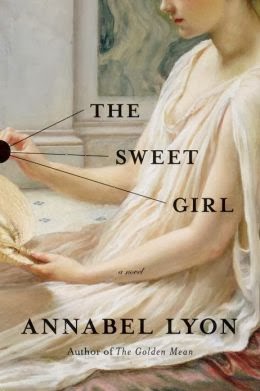
The Sweet Girl by Annabel Lyon

If Aristotle is your dad, as is the case of Pythias in The Sweet Girl, he's not an easy fella to say no to. Pythias however, proves uncrushable and will not be denied answers, nor will she hide in her father's shadow. She has questions and she is going to have them answered. When Aristotle dies suddenly, she must decide whether to live the ancient life of sex and veils and magic, or to step forward as history's first modern woman.
Read about another entry on the list.

--Marshal Zeringue

Pg. 99: Mical Raz's "What’s Wrong with the Poor?"

The current feature at the Page 99 Test: What's Wrong with the Poor?: Psychiatry, Race, and the War on Poverty by Mical Raz.

About the book, from the publisher:
In the 1960s, policymakers and mental health experts joined forces to participate in President Lyndon Johnson's War on Poverty. In her insightful interdisciplinary history, physician and historian Mical Raz examines the interplay between psychiatric theory and social policy throughout that decade, ending with President Richard Nixon's 1971 veto of a bill that would have provided universal day care. She shows that this cooperation between mental health professionals and policymakers was based on an understanding of what poor men, women, and children lacked. This perception was rooted in psychiatric theories of deprivation focused on two overlapping sections of American society: the poor had less, and African Americans, disproportionately represented among America’s poor, were seen as having practically nothing.

Raz analyzes the political and cultural context that led child mental health experts, educators, and policymakers to embrace this deprivation-based theory and its translation into liberal social policy. Deprivation theory, she shows, continues to haunt social policy today, profoundly shaping how both health professionals and educators view children from low-income and culturally and linguistically diverse homes.
Learn more about What's Wrong with the Poor? at the University of North Carolina Press website.

Mical Raz, M.D., Ph.D., is a physician and historian of medicine. She is author of The Lobotomy Letters: The Making of American Psychosurgery.

The Page 99 Test: What's Wrong with the Poor?.

--Marshal Zeringue

What is Trish J. MacGregor reading?

The current featured contributor at Writers Read: Trish J. MacGregor, author of Apparition.

Her entry begins:
Stephen King’s Doctor Sleep. In the years since I read The Shining, I wondered what had happened to Danny Torrance, the traumatized kid living at the Overlook Hotel with his odd mother, crazy father, and all those awful ghosts. Now King lets us know and takes us deep into Dan Torrance’s adult life, which has certainly not been a picnic. He’s still got the shining, but considers it...[read on]
About Apparition, from the publisher:
Trish J. MacGregor returns to a mythic city high in the Ecuadorian Andes in Apparition.

Tess and Ian have been living in the high city of Esperanza for years, along with Tess’s niece, Maddie, and her partner, Nick Sanchez. They thought they could rest, that they had defeated the brujo threat to our plane of existence. But they were wrong.

A new and greater threat has formed, a new tribe of the hungry dead, seeking to possess the bodies of the living in order to experience the passions of physical life. This new tribe has found the door to the physical plane that is Esperanza, and they threaten all human life. Only the outnumbered Light Chasers and their human allies can stand against the evil brujos.
Learn more about the book and author at Trish J. MacGregor's website.

Apparition is the third book in the Hungry Ghost trilogy, and takes place in the mystical city of Esperanza, Ecuador, high in the Andes.

The Page 69 Test: Esperanza.

My Book, The Movie: Esperanza.

The Page 69 Test: Ghost Key.

My Book, The Movie: Apparition.

Writers Read: Trish J. MacGregor.

--Marshal Zeringue

Fifteen top stories about greed

At The Barnes & Noble Book Blog Kathryn Williams came up with a reading list on greed. One book she tagged:
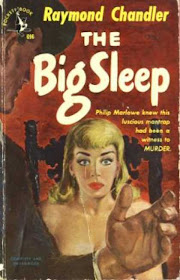
The Big Sleep, by Raymond Chandler

Greed, extortion, and double-crossing in L.A. It sounds so familiar…
Read about another entry on the list.

The Big Sleep also appears on Gigi Levangie Grazer's list of six favorite books that became movies, Megan Wasson's list of five top books on Los Angeles, Greil Marcus's six recommended books list, Barry Forshaw's critic's chart of six American noir masters, David Nicholls' list of favorite film adaptations, and the Guardian's list of ten of the best smokes in literature.

--Marshal Zeringue

Coffee with a canine: Sarah McCoy & Gilbert

Today's featured duo at Coffee with a Canine: Sarah McCoy and Gilbert.

The author, on how she and Gilbert were united:
I went through a breeder outside of Chicago. Gilly was my second fur darling. Our first was a loving cockapoo named Gatsby who sadly passed away of cancer at age two. The breeder contacted me on Facebook when she saw how heartsick I was over Gatsby’s dying. She said she felt a divine connection—and it turned out to be so!

I was waiting for Gilly before he was even conceived, then had the privilege of watching his dog mama grow beautifully round with his litter and give birth. From his first breath of air, I knew he was mine. When he was...[read on]
Sarah McCoy is the author of the international bestseller The Baker’s Daughter, the forthcoming novella, The Branch of Hazel (Penguin, summer 2014) and the forthcoming novel New Charlestown (Crown, summer 2015).

About The Baker’s Daughter, from the publisher:
In 1945, Elsie Schmidt is a naive teenager, as eager for her first sip of champagne as she is for her first kiss. She and her family have been protected from the worst of the terror and desperation overtaking her country by a high-ranking Nazi who wishes to marry her. So when an escaped Jewish boy arrives on Elsie’s doorstep in the dead of night on Christmas Eve, Elsie understands that opening the door would put all she loves in danger.

Sixty years later, in El Paso, Texas, Reba Adams is trying to file a feel-good Christmas piece for the local magazine. Reba is perpetually on the run from memories of a turbulent childhood, but she’s been in El Paso long enough to get a full-time job and a fiancé, Riki Chavez. Riki, an agent with the U.S. Border Patrol, finds comfort in strict rules and regulations, whereas Reba feels that lines are often blurred.

Reba’s latest assignment has brought her to the shop of an elderly baker across town. The interview should take a few hours at most, but the owner of Elsie’s German Bakery is no easy subject. Reba finds herself returning to the bakery again and again, anxious to find the heart of the story. For Elsie, Reba’s questions are a stinging reminder of darker times: her life in Germany during that last bleak year of WWII. And as Elsie, Reba, and Riki’s lives become more intertwined, all are forced to confront the uncomfortable truths of the past and seek out the courage to forgive.
Learn more about the book and author at Sarah McCoy’s website, Facebook page, and Twitter perch.

The Page 69 Test: The Time It Snowed in Puerto Rico.

The Page 69 Test: The Baker's Daughter.

Read--Coffee with a Canine: Sarah McCoy and Gilbert.

--Marshal Zeringue

Renée Rosen's "Dollface," the movie

Now showing at My Book, The Movie: Dollface by Renée Rosen.

The entry begins:
Wow, it’s been a long time since I’ve played “Central Casting” with Dollface. When I started working on this book about ten years ago, I had it all mapped out, only now I fear some of my picks are too old for the roles! But back in the day, Natalie Portman was a dead ringer for Vera, Adrien Brody was Shep Green, Sean...[read on]
Learn more about Dollface at Renée Rosen's website, blog, and Facebook page.

Renée Rosen is a former advertising copywriter who always had a novel in her desk drawer. When she saw the chance to make the leap from writing ad copy to fiction, she jumped at it. A confirmed history and book nerd, Rosen loves all things old, all things Chicago and all things written. Her previous book is Every Crooked Pot.

The Page 99 Test: Every Crooked Pot.

My Book, The Movie: Dollface.

--Marshal Zeringue

Tuesday, November 19, 2013

Five films that improved the book

At Cracked, Ryan Menezes tagged five movies that improved the book (according to the author), including:
Blade Runner Kills, Saves Philip K. Dick

Most of the authors on this list feared how their books' adaptations would turn out, but Phillip K. Dick is the only one who literally shat blood over it. Dick was in an emotional slump by the '80s. According to a letter he sent to producers, he had lost faith in the entire realm of science fiction. He now thought sci-fi was "inbred," "derivative," and "stale." The whole field had "settled into a monotonous death."

Blade Runner, an adaptation of Dick's Do Androids Dream of Electric Sheep?, seemed set to continue the trend. After reading an early script, Dick thought the filmmakers had removed all nuance and meaning from his story, leaving it just a bunch of brainless fight scenes between robots and a bounty hunter. By the spring of 1981, he was popping painkillers and chugging glasses of scotch. On Memorial Day, he began hemorrhaging through his guts. Hollywood was spiritually murdering the man before his film was even released, which is weird, because they usually wait until the box office is in to call the gypsies.

And it turns out all of Dick's fears were justified. At the last minute, the studio forced a happy ending and tacked on an awful voice-over, which indeed sucked all subtlety from the film. Luckily, Dick never saw the finished product. He had only previewed early cuts, which were much closer to the incredible director's cut we have today. Dick was relieved that the world of the film was "so gritty and detailed and authentic and goddam convincing." In fact, he saw the film's effects as a new sort of visual expression altogether. Sure, sure -- but was it as good as the book?

No!

Dick thought it went far beyond the book -- he couldn't imagine that anything he'd written could ever be "escalated into such stunning dimensions." This one film justified his entire career up until that point. Dick died soon after sharing his thoughts with the studio, which presumably saw an author ecstatic with an adaptation for once and thought, "Well, this just won't do."
Read about another entry on the list.

Do Androids Dream of Electric Sheep? also appears on Amanda Yesilbas and Charlie Jane Anders's list of the twelve most unfaithful movie versions of science fiction and fantasy books, Katharine Trendacosta and Charlie Jane Anders's list of the ten greatest personality tests in sci-fi & fantasy, John Mullan's list of ten of the best titles in the form of questions, Charlie Jane Anders and Michael Ann Dobbs's list of ten classic sci-fi books that were originally considered failures and Robert Collins's top ten list of dystopian novels.

--Marshal Zeringue

Pg. 99: Emily Mayhew's "Wounded"

The current feature at the Page 99 Test: Wounded: A New History of the Western Front in World War I by Emily Mayhew.

About the book, from the publisher:
The number of soldiers wounded in World War I is, in itself, devastating: over 21 million military wounded, and nearly 10 million killed. On the battlefield, the injuries were shocking, unlike anything those in the medical field had ever witnessed. The bullets hit fast and hard, went deep and took bits of dirty uniform and airborne soil particles in with them. Soldier after soldier came in with the most dreaded kinds of casualty: awful, deep, ragged wounds to their heads, faces and abdomens. And yet the medical personnel faced with these unimaginable injuries adapted with amazing aptitude, thinking and reacting on their feet to save millions of lives.

In Wounded, Emily Mayhew tells the history of the Western Front from a new perspective: the medical network that arose seemingly overnight to help sick and injured soldiers. These men and women pulled injured troops from the hellscape of trench, shell crater, and no man's land, transported them to the rear, and treated them for everything from foot rot to poison gas, venereal disease to traumatic amputation from exploding shells. Drawing on hundreds of letters and diary entries, Mayhew allows readers to peer over the shoulder of the stretcher bearer who jumped into a trench and tried unsuccessfully to get a tightly packed line of soldiers out of the way, only to find that they were all dead. She takes us into dugouts where rescue teams awoke to dirt thrown on their faces by scores of terrified moles, digging frantically to escape the earth-shaking shellfire. Mayhew moves her account along the route followed by wounded men, from stretcher to aid station, from jolting ambulance to crowded operating tent, from railway station to the ship home, exploring actual cases of casualties who recorded their experiences.

Both comprehensive and intimate, this groundbreaking book captures an often neglected aspect of the soldier's world and a transformative moment in military and medical history.
Learn more about Wounded at the Oxford University Press website.

Emily Mayhew is a Research Associate at Imperial College London and an examiner at the Imperial College School of Medicine.

The Page 99 Test: Wounded.

--Marshal Zeringue