Showing posts sorted by relevance for query booker. Sort by date Show all posts

Monday, August 14, 2006

The Man Booker Prize matters because it’s so unfair

The longlist for the Man Booker Prize should be announced today. To mark the occasion in the (London) Times, former Booker judge Michael Holroyd recalled some of his conflicts with the founder of the prize.

Holroyd contends that the first big leap in getting the book-reading public to care about the Booker Prize was the result of
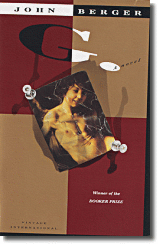
provocative speeches made by its winners, who criticised Booker for its business ethics. When John Berger’s G won in 1972, he handed half his prize to the Black Panthers and attacked Booker for “sweating blacks” in the West Indies.
Holroyd would later urge Michael Caine, the chairman of Booker McConnell and sponsor of the prize, to award the losers on the shortlist a modest monetary prize. Holroyd tried to appeal to Caine's sense of justice and even implied he was miserly. Caine didn't buy it.
"Do you know, Michael,” he asked, “why the Booker Prize is so successful?” I murmured something about its similarity to the Prix Goncourt in France, but he raised his hand and silenced me. “They love it,” he said, “because it’s so unfair!”
If only more American readers and writers cared so much about, say, the Pulitzer Prize to worry about whether it was unfair.

Click here to read the full Holroyd article.
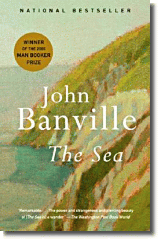
Last year's winner of the Man Booker Prize was The Sea by John Banville.

Other Booker-related posts on the blog include:
Martyn Goff, the (now-retired) administrator of the Booker Prize since 1969, thought the 1980 prize went to the wrong nominee.

An Australian academic thought that the judges usually got it right.

Australia's preeminent Booker-watcher, Perry Middlemiss, wrote up a very smart argument for why Kingsley Amis was probably the worst choice for the prize in 1986.
A few days ago Middlemiss was bold enough to predict which titles would make the Man Booker shortlist. Click here to see what he came up with.

Michael Holroyd was mentioned recently on the blog: I disagreed with his opinion on which writer, Shaw or Shakespeare, would be more useful in the post 9/11 world. Click here to read more about the question.

--Marshal Zeringue

Wednesday, April 05, 2006

The Booker Prize's "Henry Fonda" year

When I started the series on "bad Booker beats" (see here, here, and here) I thought it might shed some light on worthy (Man) Booker prize nominees that failed to capture the top prize. The idea was not to perpetuate the worst aspect of literary prizes--the competitive comparison of works of art--but to amplify one of their better features--the discussion of quality fiction that encourages more readers to read more quality books.

My most optimistic hopes for the series are fulfilled by this superb consideration of the issue by Perry Middlemiss:
Leaving aside minor judging glitches such as 1991, when Ben Okri's magic realism beat out the better "real realism" of Rohinton Mistry, the major Booker Prize gaffe occurred in 1986 when Kingsley Amis got the gong. I like to think of this as the Booker’s “Henry Fonda” year.

In 1981 Henry Fonda was the ageing doyen of a famous acting family and near the end of his career when he appeared in “On Golden Pond” with his daughter Jane and Katherine Hepburn. Fonda was nominated for a Best Actor Award in a relatively weak year (Dudley Moore?) which had one stand-out performance, that of Burt Lancaster in “Atlantic City”. I don’t know what odds were given on Fonda going in to the ceremony but having seen both films that year I thought Lancaster was a shoe-in. And then sentiment over-ruled logic and Fonda was given the Oscar, for a performance which reeked of sentimentality and which was carried by Fonda's two female co-stars. Fonda died within a few months of the award ceremony.

In 1986 Kingsley Amis was on the Booker list for the third time and hardly likely to win for his novel The Old Devils. Beloved by the old school of British critics, Amis had produced little of worth since his debut, Lucky Jim, in 1954. He had never won anything and the prospects of him ever doing so looked decidedly thin. His time was past and he was falling out of favour as authors such as his son Martin, Julian Barnes and Ian McEwan were in the ascendant.

I’ve only read four of the six novels included on the 1986 Booker shortlist and can safely say that, of the four, the Amis ranks a very distant fourth. Best of the lot was Paul Bailey’s Gabriel’s Lament, a semi-autobiographical novel depicting the damage that fathers can inflict on their sons. Somehow or other, the Booker judges in 1986 thought Amis’s novel the best of the year: better than the Bailey, Margaret Atwood’s The Handmaid’s Tale, and An Artist of the Floating World by Kazuo Ishiguro. And this leaves out novels by Robertson Davies and Timothy Mo which I haven't read. Both, I suspect, in a class above Amis’s phoned-in effort. It was a strong year, yet we are left with a novel about middle-class, middle-aged has-beens drinking themselves to death. A novel about Amis and his friends, presumably.

A major mistake.

Perry Middlemiss's websites are treasures for book lovers, particularly those readers interested in Australian and Commonwealth fiction. Click here for his pages on "everything pertaining to the Booker Prize."

Thanks to Perry for such a stimulating discussion.

I hope his argument will spur readers to consider Bailey’s Gabriel’s Lament, Atwood’s The Handmaid’s Tale, and Ishiguro's An Artist of the Floating World. And don't pity Amis--he won the prize, after all--but do him the honor of reading his Lucky Jim, perhaps the greatest comic campus novel.

--Marshal Zeringue

Wednesday, October 11, 2006

John Sutherland's bad Booker beat

The 2006 Man Booker prize has been awarded to Kiran Desai for her second novel, The Inheritance of Loss.

John Sutherland, chairman of last year’s Booker judges, told the London Times: “It is a really good novel but it needs a going-over by a good editor. The novel needs control.”

And while the Guardian quotes Sutherland's positive comments for Desai's novel--he said, "Desai's novel registers the multicultural reverberations of the new millennium with the sensitive instrumentality of fiction, as Jhabvala and Rushdie did previous eras ... It is a globalised novel for a globalised world"--it also noted that his favorite novel on the shortlist was Edward St Aubyn's Mother's Milk.

Click here to read an excerpt from The Inheritance of Loss.

As Perry Middlemiss noted, "bookmakers had Desai ranked 5th favourite out of the six shortlisted novels."

Previous "bad Booker beats":
Erica Wagner's bad Booker beat
In praise of David Mitchell
Martyn Goff's bad Booker beat
The Booker Prize's "Henry Fonda" year
On the Booker and other literary prizes

--Marshal Zeringue

Monday, December 04, 2006

A.L. Kennedy's bad Booker beat

In 2001, novelist and sometime Booker prize judge A.L. Kennedy called the award "a pile of crooked nonsense."

And it was not only that year to which she pointed. Of her own experience as a judge in 1996: "I read the 300 novels and no other bastard [on the panel] did."

As you may have guessed, her fellow panelists were not exactly in accord with that statement. The Guardian reported:
Jonathan Coe was a fellow judge of Kennedy's in 1996 when Graham Swift's Last Orders won, and says he is surprised by [Kennedy's] bitterness. "It was certainly not corrupt that year. She was aggrieved because she didn't feel we had chosen the right book, but frustration is not corruption. She has exaggerated the number of books we had to read by a factor of three, and maybe you should scale her other comments back accordingly."
So which novel did she unsuccessfully champion? I'm not sure. Click here for the 1996 shortlist.

Previous "bad Booker beats":
John Sutherland's bad Booker beat
Erica Wagner's bad Booker beat
In praise of David Mitchell
Martyn Goff's bad Booker beat
The Booker Prize's "Henry Fonda" year
On the Booker and other literary prizes

--Marshal Zeringue

Friday, March 24, 2006

On the Booker and other literary prizes

Earlier on the blog I ruminated on the idea that the (Man) Booker prize might not have always gone to the best novel on the shortlist. Obviously, this is a subjective matter...which makes it all the more interesting to kick around with readers of contemporary Commonwealth fiction. I wrote up my own thinking on the contest for a few recent years and intend to soon follow up with reflections on earlier years.

And I've been asking around about what others think about Booker winners and losers. I've even gone half-way around the world in search of enlightenment on the question.

Kerryn Goldsworthy runs a blog called "A Fugitive Phenomenon" which is "dedicated to the discussion of Australian literature past and present: information, opinions, gossip, hearsay, scuttlebutt etc." She is extremely well-qualified to take up the question about "bad Booker beats" and did so in a thorough post (click here to read the whole thing) from which I pull a few passages:
I checked out available lists of shortlists and winners and was ashamed to discover that I hadn't read a large enough proportion of them to be able to give a meaningful answer to his question. My excuse is that when one reads for a living, one's reading, while reasonably voluminous, is of necessity shockingly skewed. All I could say for sure was that there were a handful of winners I thought would have deserved the prize no matter what the competition was: Coetzee for Disgrace, Byatt for Possession, Pat Barker for The Ghost Road, Arundhati Roy for The God of Small Things and Kazuo Ishiguro for The Remains of the Day. Even that list is a tad meaningless, as there are many other winners I've not read. (Which of these Titans woud be the über-winner? Could such a choice be made, and if it could, could it possibly mean anything?)
Actually, there is a "Booker of Bookers." Nevertheless, as Kerryn suggests, does it it possibly mean anything? Probably not.

Readers get passionate and writers get vulnerable whenever the topic of prizes comes up. People on judging committees stare at each other in wide-eyed, jaw-dropped disbelief, unable to process whatever mad opinions they have just heard coming out of each others' mouths. Writers who get shortlisted and then don't win are unable to keep up the exultation of getting shortlisted and instead just sulk because someone else beat them.

(Amusingly, sometimes their partners sulk vicariously; you can tell a great deal about what drives a writer's relationship with his or her partner by watching the partner's behaviour on prize nights.)

Are literary prizes a good thing or not? The same arguments tend to get trotted out and rehashed over and over, and I'm usually quite up to arguing sincerely on both sides of the issue. Yes, prizes are bad because they encourage the idea of competition in art (corruptive) as well as the idea that it's possible to come up with an evaluative hierarchy and say with conviction 'This book is better than that book', an activity I dislike. But on the other hand, no, prizes are not a bad thing, because they mean money for writers. Can't go past that one.

Prizes for books are a bad thing, precisely for the reason Kerryn states.

Yet I think they are also a good thing, and that the positive case is stronger than she suggests. For one thing, these contests generate discussion among readers about all the contenders, not only the winners. This argument is strongest for a prize like the Man Booker, where being shortlisted is a blurbable achievement. ("Shortlisted for a Pulitzer" isn't so boastworthy in America.) This added discussion almost certainly means more readers and more sales for the handful of nominated books.

Moreover, readers with too little time--and who has too much time to read?--are made aware of a few books that might otherwise escape their attention. Yes, I realize the greatest injustices are not between the shortlisted and the winner of the prize but rather among the books not shortlisted. But I think the net effect is that more people read more books due to buzz around the prizes.

And that is good for readers as well as for writers.

Kerryn's post has much more to say, particularly about Australian and Southeast Asian Commonwealth fiction. Click over to "A Fugitive Phenomenon" for more.

Click here for a recent post about Booker Prize gossip from the prize's long-time administrator. And click here for my original post about "bad Booker beats."

Thanks to Kerryn Goldsworthy for taking up the question.

--Marshal Zeringue
Wednesday, August 23, 2006

In praise of David Mitchell

Wayne Terwilliger, an admitted "occasionally obsessive follower of the Booker Prize," graciously agreed to share his view on "bad Booker beats," i.e., novels that should have won the (Man) Booker Prize but were beat out by less deserving books.

Here's his take:

I agree with Perry Middlemiss' opinion on the 1986 prize: I've read all of the shortlisted titles from that year except The Handmaid's Tale and any of them would have been a better choice than The Old Devils (which was by no means a bad book, just a minor one).

My concurrence with Martyn Goff's assessment of the 1980 prize is even more avid. Earthly Powers is, I think, one of the outstanding British novels of the 20th century, grand in scope & incisive in characterization. Moreover, A Month in Country is also, I think, a great novel, far smaller in scope but in its way nearly perfect. Both of these books would have proven a more worthy winner than Golding's Rites of Passage (again, not a bad book but not really up to the competition).

To choose a year myself in which I think the wrong book won the Booker Prize, I only need look back two years to 2004 when the judges selected Alan Hollinghurst's The Line of Beauty over David Mitchell's Cloud Atlas. I found The Line of Beauty, though well written line by line, ultimately a tedious story of small-minded people acting nastily. (Yes, one could say the same about Madame Bovary but The Line of Beauty is not of that caliber.)

Cloud Atlas, on the other hand, is simply brilliant: a technical high-wire act of styles and genres that embraces the widest scope of human history (& history still to come).

David Mitchell just wows me. He's not yet 40, has written 4 novels, been short-listed for the Booker twice and, as of last week, long-listed for a third time. I've read all four of his novels and think they are all outstanding. The scope of his imagination astounds me: no re-hashed semi-autobiographical domestic drama here. Perhaps this year, the Booker judges will make a selection with which I can't disagree.
Many thanks to Wayne for such a stimulating response to the question.

I've obviously got to catch up on my David Mitchell reading.

Wayne Terwilliger has one of those of those jobs that every book-lover (at least thinks he or she) would love to have: he's the Assistant Director of the University of Virginia Bookstore.

Click here to see the Man Booker Prize for Fiction 2006 longlist.

--Marshal Zeringue

Friday, April 28, 2006

Do women deserve a book prize of their own?

The Orange Prize, established by Kate Mosse in 1996 and based in Great Britain, is open to any woman writing fiction in English, whatever her nationality or country of residence. It was won last year by Lionel Shriver for her powerful examination of motherhood, We Need to Talk About Kevin. Now it its 11th year, the prize bestows on the winner £30,000 and a limited edition bronze known as a "Bessie," created and donated by the artist Grizel Niven.

The shortlist for this year was just announced:
Nicole Krauss, The History of Love
Hilary Mantel, Beyond Black
Zadie Smith, On Beauty
Ali Smith, The Accidental
Sarah Waters, The Night Watch
Carrie Tiffany, Everyman's Rules for Scientific Living

Natasha Walter, writing in the Guardian, notes that these are all first-rate novels and that two were nominated for the Man Booker prize. If these books would be competitive for the Booker (Krauss' would be ineligible because she's American), why is it necessary for women to have a prize that excludes male writers? Walter defends the prize:

given that it would be hard to find a bookseller or a critic who would discount the imaginative energy of these writers, why is there a need for this prize? Once a prize that was there to put women writers on the map becomes predictable, has it had its day?

The prize is necessary because the most prestigious prize-giving culture in Britain still often shows itself weirdly unable to recognise and reward the greatest writing, and for some reason books by women are still often the ones that lose out. When Zadie Smith's ferocious and heartfelt novel On Beauty lost out in the Booker race last year to John Banville's desiccated The Sea, it was only what one has come to expect from the Booker prize. From time to time the panel gets it right and finds a winning book that is truly a work of great imagination, but all too often it steers towards an easy consensus. The differing opinions, often refereed by an academic or politician, tend to cancel each other out, leaving the panel on the polite middle ground. What you get as a winner is a book that will be accepted by all the judges, rather than one passionately espoused by any of them.

That argument sounds reasonable enough to me.

As it happens, I read and enjoyed both the Zadie Smith and Banville books and would not have been unhappy if Smith and not Banville had won the Booker. (Had I been on the committee, I might have voted for Kazuo Ishiguro's Never Let Me Go or Julian Barnes' Arthur & George).

I'm on record as being moderately pro-prize: sure, competition among artists has its downside, but these prizes mean more exposure for the writers and a nice payoff for the winner.

So what's the matter with yet another prize, even if it's only open to women who write in English? It's good for the writers and their publishers, and good for readers who might be induced to pick up a book mentioned in conjunction with the competition.

And yet: would I think the same thing about a prize open only to men?

So much for male and female writers: click here for my take on the differences between male and female readers.

As for the Booker prize, click here for an intelligent account of a Booker prize that went to the weakest nominee on the list.

--Marshal Zeringue

Tuesday, September 19, 2006

Erica Wagner's bad Booker beat

Erica Wagner, the literary editor of the Times (London), recently listed her Booker Prize top six.

The only one on the list that was not a winner:

Master Georgie by Beryl Bainbridge (1998)

Ian McEwan won this year for the slight Amsterdam. A real shame.

See the 1998 shortlist here.

As I wrote here, "the interesting angle for me in 1998 was that McEwan published another novel, Enduring Love, and I had a slight preference for it over Amsterdam."

Bainbridge's Every Man For Himself is one of my favorite books by a living author, and The Birthday Boys is also very good.

The Guardian summed up the critical verdict on her work:
She has experimented in many genres - drawing on a Liverpool childhood for her early work, writing a travel book (English Journey) and recently excelling at historical fiction (Every Man For Himself was a brilliant retelling of the Titanic story, The Birthday Boys charted the Scott expedition, Master Georgie follows Liverpudlians in the Crimean War). Overlooked at the beginning of her career, her no-word-wasted style and tight plotting have now won her critical acclaim and a committed following.
Click here to read chapter one from Master Georgie, and click here to read news and reviews of Bainbridge's books in the New York Times.

Previous "bad Booker beats":
In praise of David Mitchell
Martyn Goff's bad Booker beat
The Booker Prize's "Henry Fonda" year
On the Booker and other literary prizes

--Marshal Zeringue

Sunday, March 19, 2006

"...but you see they’re all so good.“

Perhaps the most interesting feature in the Financial Times is "Lunch with the FT," a report from a journalist who has dined with an interesting person. (OK, sometimes the guest is only semi-interesting.)

In the March 17, 2006 installment, Jan Dalley reports on her lunch with Martyn Goff, who has been the administrator of the Booker Prize since 1969, the year after its creation.

Interested as I am in "bad Booker beats," I relished the gossip about outwardly-disappointed Booker also-rans:
Pressed only a little by me, [Goff] revisited the well-known moments of high public emotion - the time Paul Bailey burst into tears at the table when he didn’t win (1986, Kingsley Amis’s The Old Devils won), the night when Julia Neuberger flounced out of the grand dinner to express her disgust at her judging panel’s decision (1994, James Kelman’s How Late it Was, How Late). Then the anatomically unlikely thing Salman Rushdie suggested he do to himself when they met at the door of the gents shortly after the announcement that Rushdie’s novel Shame had not won (1983, J.M. Coetzee’s Life and Times of Michael K) - and how Rushdie got in touch, months later, to apologise. How the famously reticent Anita Brookner ran up and hugged him in a Chelsea supermarket after her win (1984, Hotel du Lac). How Anthony Burgess was waiting in a nearby London hotel on his big night, refusing to attend the dinner
unless he’d won but ready to jump in a taxi just in case (1980, William Golding’s Rites of Passage). After Goff phoned to tell him he hadn’t won, he put it about that he’d been at home in Monaco all the time. And so on.
If some nominees need nerves of steel until the prize is announced, how about the judges? Goff shared a vignette about frustration on the selection panel from a few years ago:
Then the whole question of how the judging panel picks the winner. The year that the Oxford professor John Bayley was chair, voting reached a third round on the final day. One of the panel, exasperated beyond endurance, pointed out to Bayley that their task was to reach a decision by narrowing the field, but in each of the three rounds the Prof had voted for a different book. “Oh yes I know but you see they’re all so good.“
Were you disappointed in a Booker nominee that didn't capture the prize? Email me with your compliant.

For another report of Goff's long goodbye from his post as the prize's administrator, click here.

For the first installment of my take on "bad Booker beats," click here.

--Marshal Zeringue

Thursday, September 14, 2006

Shocking shortlist for the Man Booker prize

"Author Sarah Waters was installed as 2-1 favourite on Thursday to land the Booker Prize [for her novel, The Night Watch] after the judges left a string of literary heavyweights off their shortlist for one of the world's top book awards," reports Reuters.

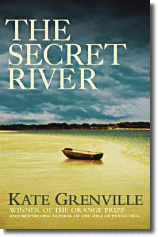
Also making the shortlist were Edward St Aubyn for Mother's Milk, Kiran Desai's The Inheritance of Loss, Kate Grenville's The Secret River, M.J. Hyland's Carry Me Down, and Hisham Matar's In The Country of Men.

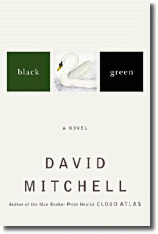
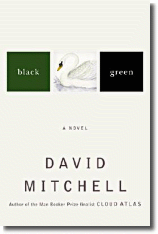
David Mitchell's Black Swan Green had been considered the favorite to win the prize; it was not even nominated. The judges also left out previous winners Peter Carey and Barry Unsworth.

The shortlist pleased the Booker bookies: "We couldn't have compiled a better short-list from a bookmaking point of view," the spokesman for oddsmaking firm William Hill told the Guardian. "Many of the well fancied runners like David Mitchell, Peter Carey, Barry Unsworth and Howard Jacobson have all fallen by the wayside and most punters have already lost their money."
The judging panel for the 2006 Man Booker Prize for Fiction is: Hermione Lee (Chair), biographer, academic and a reviewer; Simon Armitage, poet and novelist; Candia McWilliam, award-winning novelist; critic Anthony Quinn; and actor Fiona Shaw.
--Marshal Zeringue

Monday, January 14, 2008

Pg. 99: Nicola Barker's "Darkmans"

The current feature at the Page 99 Test: Nicola Barker's Darkmans.

About the book, from the publisher:
Shortlisted for the Man Booker Prize, Darkmans is an exhilarating, extraordinary examination of the ways in which history can play jokes on us all... If History is just a sick joke which keeps on repeating itself, then who exactly might be telling it, and why? Could it be John Scogin, Edward IV's infamous court jester, whose favorite pastime was to burn people alive - for a laugh? Or could it be Andrew Boarde, Henry VIII's physician, who kindly wrote John Scogin's biography? Or could it be a tiny Kurd called Gaffar whose days are blighted by an unspeakable terror of - uh - salad? Or a beautiful, bulimic harpy with ridiculously weak bones? Or a man who guards Beckley Woods with a Samurai sword and a pregnant terrier?

Darkmans is a very modern book, set in Ashford [a ridiculously modern town], about two very old-fashioned subjects: love and jealousy. It's also a book about invasion, obsession, displacement and possession, about comedy, art, prescription drugs and chiropody. And the main character? The past, which creeps up on the present and whispers something quite dark - quite unspeakable - into its ear.

The third of Nicola Barker's narratives of the Thames Gateway, Darkmans is an epic novel of startling originality.
Among the praise for Darkmans:
"The book of the year for me — and I suspect it'll be a book of the many years to come — was Nicola Barker's Darkmans (Fourth Estate). It's a novel of prestigious craft, energy, risk, sleight of hand and linguistic generosity and acuity, and a funny, faster-than-virtual take on what's contemporary and what's history and how the twain meet and never will meet."
--Ali Smith, The Observer

"In this epic, delirium-inducing Mad Tea Party ride, we're parachuted into the lives of some eccentric English everymen. They include immaculately dull hospital laundryman Daniel Beede; his prescription-drug-dealing son, Kane (a Nick Hornby character for the cheap seats); Elen, an ominous chiropodist; and Gaffar, a smart-alecky Kurdish immigrant. Though Darkmans is set in modern-day Ashford, Kent, the spirit of John Scogin, court jester to 15th-century king Edward IV, shows up from time to time to wreak havoc. Nicola Barker's novel like no other — hilarious, bizarre, and possibly mind-altering. A-"
--Karen Karbo, Entertianment Weekly

"The hip, the square and the crazy trip over their pasts and each other in this boisterous latest from Barker... you'll find plenty to enjoy."
--Kirkus Reviews

"The Man Booker Prize is often criticised for being too serious and elitist. My gift to the naysayers is Nicola Barker's Darkmans, a tour-de-force of contemporary life set in Ashford, Kent. When it was long-listed, the writer and journalist D J Taylor described Darkmans as a 'left-field 838-page weird out'; and I celebrated. Barker is a comic genius. Her imagination is incendiary. Her subject matter is Tesco, daytime TV, builders, chiropody, the family outing from hell when Dad's kagool has not been packed. She is also fascinated by history and language. Darkmans is the novel of the decade."
--Ruth Scurr, The Daily Telegraph

"Hilarious and erudite, spooky and unconventional, Darkmans is a dazzling achievement."
--Washington Post

"[O]nce you’re in the grip of this broad, funny, deeply strange book — once you and Darkmans are grappling with each other — neither you nor the novel is likely to let go."
--Sylvia Brownrigg, New York Times Book Review
Learn more about Darkmans at the publisher's website.

Nicola Barker is the author of two short-story collections: Love Your Enemies and Heading Inland. Her novels include Reversed Forecast, Small Holdings, Wide Open, Behindlings, and Clear, the last of which was long-listed for the 2005 Man Booker Prize. Darkmans was shortlisted for the 2007 Man Booker Prize.

The Page 99 Test: Darkmans.

--Marshal Zeringue

Wednesday, May 17, 2006

Martyn Goff's bad Booker beat

Martyn Goff, the administrator of the Booker Prize since 1969, has finally retired. He went gladly but not quietly, happily (it seems) sharing his experiences on the job with a few journalists. See here and here, for example.

Although I'm very interested in others' views of when the Booker was wrongly decided--see here, here, and here--I dared not hope to learn of Goff's view of the worst Booker beat.

But Mark Sanderson of the Daily Telegraph asked Goff which winner didn't deserve the prize and, surprisingly, Goff answered:
'William Golding's Rites of Passage in 1980,' came Mr Goff's prompt reply. 'Anthony Burgess's Earthly Powers is an infinitely superior work.'
--Marshal Zeringue

Tuesday, February 28, 2006

The greatest Booker Prize injustices

Q. If you could abolish one thing in the book world, what would it be?

A. Literary prizes — they wrongly encourage seeing literature as a contest or a news story. They’ve got to go.

--the novelist Jonathan Coe, with wonderful timing, in a TV interview aired just before his life of B.S. Johnson won the £30,000 Samuel Johnson prize.


So it may be crass to pay undue attention to literary prizes. Nevertheless, I'm usually curious how they turn out. (I watch the Oscars, too.)

And the award I watch the closest is The Man Booker Prize, open to any full-length novel written by a citizen of the (British) Commonwealth or the Republic of Ireland and published in the award year. The novel must be an original work in English (not a translation) and must not be self-published.

A complete list of winners and short-listed novels can be found here.

I've read fewer than half the novels short-listed for the Booker, and I've never read all the short-listed novels for any given year. The closest I've come is having read four of the six 2005 nominees and four of the six 1990 nominees.

Not having read all the nominees does not prevent me from sharing some thoughts on past contests, however.

2005. I liked the winner, The Sea by John Banville, and his 1997 The Untouchable is a favorite of mine. But I also enjoyed Zadie Smith's On Beauty and Kazuo Ishiguro's Never Let Me Go and, had I been a judge, I probably would have voted for Julian Barnes' Arthur & George.

2001. I didn't read the winner, Peter Carey's True History of the Kelly Gang, though I do very much like and admire three of his earlier novels. Ian McEwan's Atonement, which may be the best novel written in the last 25 years that I've read, lost out. The petty side of me is outraged, but I guess the reasonable thing is to first read the Carey book before giving vent to my disappointment.

2000 and 1999. I read only the winners--Margaret Atwood's The Blind Assassin (2000) and J.M. Coetzee's Disgrace (1999)--and thought they were excellent. Disgrace may be the bleakest, most soul-crushing great novel I've ever read.

1998. I read the winner, Ian McEwan's Amsterdam as well as two of the other nominated novels, and liked them all. I was glad to see Amsterdam win; the interesting angle for me in 1998 was that McEwan published another novel, Enduring Love, and I had a slight preference for it over Amsterdam.

Part 2 of this post is coming soon.

Meanwhile, do you have a bad Booker beat? Share your story/rage: email me.

--Marshal Zeringue

Monday, February 11, 2013

What is Anne Zouroudi reading?

The current featured contributor at Writers Read: Anne Zouroudi, author of The Mysteries of the Greek Detective, a series of novels based on one of the Deadly Sins.

Her entry begins:
Though I've come very late to this particular party, I'm reading Hilary Mantel's Wolf Hall. It's a book I've considered reading for some time, but whilst the subject matter (political intrigue at the court of Henry VIII) interests me, I've suffered disappointment many times from books so heavily hyped, especially, I'm sorry to say, when it comes to winners of the Booker Prize. But when the sequel Bring up the Bodies also won the Booker, I began to feel more and more I might be missing out, so - still reluctant to pay out hard cash for what I feared might turn out to be another Booker turkey - I borrowed Wolf Hall from the local library.

And you know what? I think it's a triumph. Many of the players, of course, are hard-wired into that tumultuous period of 16th-century English history, and their names have been known to me since my schooldays. But in Wolf Hall, it's like having a spot-light shone onto a dark stage. Thomas Cromwell, Cardinal Wolsey, the spoilt, capricious king - these historical figures live and breathe through the minutiae of their imagined lives.

The writing is beautiful, too. The...[read on]
About The Doctor of Thessaly, the third of The Mysteries of the Greek Detective, from the publisher:
A jilted bride weeps on an empty beach. A local doctor is attacked in an isolated churchyard. Trouble arrives at a bad time to the backwater village of Morfi, just as the community is making headlines with a visit from a high-ranking government minister. Fortunately, where there's trouble, there's Hermes Diaktoros, the mysterious fat man whose tennis shoes are always pristine and whose investigative methods are always unorthodox.

Hermes must investigate a brutal crime, thwart the petty machinations of the town's ex-mayor and his cronies, and try to settle the troubled waters of two sisters' relationship. But how can he unravel a mystery that not even the victim wants solved?

Set against a radiant Mediterranean backdrop, THE DOCTOR OF THESSALY is a spellbinding mystery about the dark consequences of envy.
Learn more about the book and author at Anne Zouroudi's website and blog.

Writers Read: Anne Zouroudi.

--Marshal Zeringue

Monday, April 14, 2014

What is Sandra Gulland reading?

Featured at Writers Read: Sandra Gulland, author of The Shadow Queen.

Her entry begins:
I am very slowly reading Penelope Fitzgerald: A Life by Hermione Lee.

Fitzgerald, if you're not familiar with her work, was a Booker Prize–winning English novelist, poet, essayist and biographer. Many of her novels are historical, and yet they are all amazingly slim, often under 200 pages. I admire Fitzgerald's novels for their spare yet rich quality. (They are also playfully funny.) She was short-listed for the Booker for The Bookshop, won the Booker for Offshore, and her final book, The Blue Flower—considered her masterpiece—won the National Book Critics Circle Award. The Blue Flower was named one of "the ten best historical novels" by The Observer, and The Times included Fitzgerald in a list of "The 50 greatest British writers since 1945." What's astonishing to me—and no doubt to any writer—is that she was first published at the age of 58.

The biography of Fitzgerald details her life, but Hermione Lee...[read on]
About The Shadow Queen, from the publisher:
1660, Paris

Claudette’s life is like an ever-revolving stage set. From an impoverished childhood wandering the French countryside with her family’s acting troupe, Claudette finally witnesses her mother's astonishing rise to stardom in Parisian theaters. Working with playwrights Corneille, Molière and Racine, Claudette’s life is culturally rich, but like all in the theatrical world at the time, she's socially scorned.

A series of chance encounters gradually pull Claudette into the alluring orbit of Athénaïs de Montespan, mistress to Louis XIV and reigning "Shadow Queen." Needing someone to safeguard her secrets, Athénaïs offers to hire Claudette as her personal attendant.

Enticed by the promise of riches and respectability, Claudette leaves the world of the theater only to find that court is very much like a stage, with outward shows of loyalty masking more devious intentions. This parallel is not lost on Athénaïs, who fears political enemies are plotting her ruin as young courtesans angle to take the coveted spot in the king's bed.

Indeed, Claudette's "reputable" new position is marked by spying, illicit trysts and titanic power struggles. As Athénaïs, becomes ever more desperate to hold onto the King's favor, innocent love charms move into the realm of deadly Black Magic, and Claudette is forced to consider a move that will put her own life—and the family she loves so dearly—at risk.

Set against the gilded opulence of a newly-constructed Versailles and the War of Theaters, THE SHADOW QUEEN is a seductive, gripping novel about the lure of wealth, the illusion of power, and the increasingly uneasy relationship between two strong-willed women whose actions could shape the future of France.
Visit Sandra Gulland's website.

Writers Read: Sandra Gulland.

--Marshal Zeringue

Tuesday, November 04, 2025

Seven Booker Prize-nominated novels with a sporting edge

Emily Facoory curated a list of Booker Prize-nominated novels "that incorporate sports, whether as a central theme or simply a brief scene." One title on the list:
Netherland by Joseph O’Neill

Featuring another sport set to be included in the 2028 Olympic Games, Netherland – longlisted for the Booker Prize in 2008 – follows Hans, a wealthy Dutch banker living in New York just after the tragedy of 9/11. Feeling lost and alone after his wife leaves him and returns to London with their son, he stumbles across a New York subculture of cricket players.

There, he befriends Chuck Ramkissoon, a Gatsby-like figure helps Hans to find a community within the sport and rediscover his childhood passion for the game, providing a much-needed sense of stability. As Hans becomes part of the team, he begins to rebuild his life and find his footing in the post-9/11 world.

The New York Times praised author Joseph O’Neill for his depiction. He ‘writes about cricket not with Beckettian economy, but with an insider’s knowledge and a metaphorical sweep,’ they said, hailing Neverland as ‘the first great American novel underpinned by a deep understanding of the complexity of spin bowling’.
Read about another novel on the list.

Netherland is among Jimmy So's five top 9/11 novels, Richard Tomlinson's top ten cricket scenes in fiction, and Brooke Hauser's six favorite books about immigrants.

--Marshal Zeringue

Tuesday, August 15, 2006

The Man Booker longlist

The Guardian posted the longlist for the 2006 Man Booker prize last night. Click here to see who made it--and who didn't.

Punters' angle:

[Bookies] William Hill made David Mitchell 5/1 favourite for Black Swan Green, [Peter] Carey second for Theft: a Love Story, and Sarah Waters third for The Night Watch at 7/1.

Odds of 8/1 were quoted on Barry Unsworth and 10/1 for Jacobson.

Waterstone's fiction buyer Rodney Troubridge told the Guardian: "It's wonderful to see one of our funniest, most acerbic writers, Howard Jacobson, get listed. The booksellers' favourite will be David Mitchell. The public's favourite will be Sarah Waters."

Yesterday on the blog: The Man Booker Prize matters because it’s so unfair

--Marshal Zeringue

Sunday, March 12, 2006

Judges of the 2006 Man Booker Prize announced

The judges of the Man Booker Prize for Fiction 2006 were announced last week.

Chaired by Hermione Lee, the line-up consists of poet and novelist Simon Armitage, novelist Candia McWilliam, critic Anthony Quinn and actress Fiona Shaw.

For more information on these judges, click here.

For part one of my inquiry into previous Booker competitions wrongly decided, click here.

And for Michael Kinsley's honest (and witty) admission that he didn't read every nominated book when he served as a judge of the National Book Award--and his suggestion that none of the other judges read them all either--click here.

--Marshal Zeringue

Tuesday, June 08, 2010

Pg. 99: Andrew Zimmerman's "Alabama in Africa"

Today's feature at the Page 99 Test: Alabama in Africa: Booker T. Washington, the German Empire, and the Globalization of the New South by Andrew Zimmerman.

About the book, from the publisher:
In 1901, the Tuskegee Institute, founded by Booker T. Washington, sent an expedition to the German colony of Togo in West Africa, with the purpose of transforming the region into a cotton economy similar to that of the post-Reconstruction American South. Alabama in Africa explores the politics of labor, sexuality, and race behind this endeavor, and the economic, political, and intellectual links connecting Germany, Africa, and the southern United States. The cross-fertilization of histories and practices led to the emergence of a global South, reproduced social inequities on both sides of the Atlantic, and pushed the American South and the German Empire to the forefront of modern colonialism.

Zimmerman shows how the people of Togo, rather than serving as a blank slate for American and German ideologies, helped shape their region's place in the global South. He looks at the forms of resistance pioneered by African American freedpeople, Polish migrant laborers, African cotton cultivators, and other groups exploited by, but never passive victims of, the growing colonial political economy. Zimmerman reconstructs the social science of the global South formulated by such thinkers as Max Weber and W.E.B. Du Bois, and reveals how their theories continue to define contemporary race, class, and culture.

Tracking the intertwined histories of Europe, Africa, and the Americas at the turn of the century, Alabama in Africa shows how the politics and economics of the segregated American South significantly reshaped other areas of the world.
Read an excerpt from Alabama in Africa, and learn more about the book at the Princeton University Press website.

Andrew Zimmerman is associate professor of history at George Washington University. He is the author of Anthropology and Antihumanism in Imperial Germany.

The Page 99 Test: Alabama in Africa.

--Marshal Zeringue

Saturday, August 13, 2011

Penelope Lively's 6 favorite books

Penelope Lively is the author of many prize-winning novels and short story collections for both adults and children. She has twice been shortlisted for the Booker Prize; once in 1977 for her first novel, The Road to Lichfield, and again in 1984 for According to Mark. She later won the 1987 Booker Prize for her highly acclaimed novel Moon Tiger.

Her novels include Passing On, shortlisted for the 1989 Sunday Express Book of the Year Award, City of the Mind, Cleopatra's Sister and Heat Wave, and Family Album.

One of Lively's six favorite books, as told to The Week magazine:
The Good Soldier by Ford Madox Ford

Ford Madox Ford’s best-known novel is wonderfully clever, with a story that unfolds little by little, its shape changing all the time as we learn more—or as what we have already learned from its narrator is shown to be unreliable. Two couples and two young women—predators and victims.
Read about another book on the list.

The Good Soldier also appears on John Mullan's lists of ten of the best spas in literature, ten of the best failed couplings in literature, and ten great novels with terrible original titles, and on the Guardian's list of ten of the best unconsummated passions in fiction and Adam Haslett's list of the five best novelists on grief. One line from the novel appears among Stanley Fish's top five sentences.

The Page 99 Test: The Good Soldier.

See Penelope Lively's five best list of books that evoke time & place.

--Marshal Zeringue