Monday, October 27, 2014

What is Susan McBride reading?

Featured at Writers Read: Susan McBride, author of Very Bad Things.

Her entry begins:
I normally don’t read two books at once, but I’m doing that now.

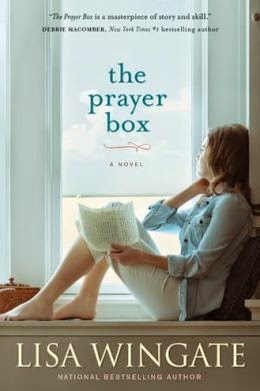
First, I’ve got Lisa Wingate’s The Prayer Box on my Android. So it goes with me to doctors’ appointments and anywhere I’ll be sitting for a while, twiddling my thumbs and waiting. It’s about a woman named Tandy whose life has come apart at the seams. She has two kids, and she’s recently run from an abusive marriage. So she’s trying to lie low, pick up some cash, and rebuild her messed-up life from scratch. In the process, she becomes the caretaker of a dead woman’s house. She finds scads of letters this woman wrote to God, asking all sorts of questions and trying to figure out her own confusing life. I’ve never really read Christian fiction before, but I met Lisa a few years back at the Southern Indie Booksellers convention and I figured it was about time I checked out her bestselling fiction. I’ve definitely been sucked into the story, which...[read on]
About Very Bad Things, from the publisher:
A dark, moody, boarding-school murder mystery teens won’t be able to put down.

Katie never thought she’d be the girl with the popular boyfriend. She also never thought he would cheat on her—but the proof is in the photo that people at their boarding school can’t stop talking about. Mark swears he doesn’t remember anything. But Rose, the girl in the photo, is missing, and Mark is in big trouble. Because it looks like Rose isn’t just gone . . . she’s dead.

Maybe Mark was stupid, but that doesn’t mean he’s a killer.

Katie needs to find out what really happened, and her digging turns up more than she bargained for, not just about Mark but about someone she loves like a sister: Tessa, her best friend. At Whitney Prep, it’s easy to keep secrets . . . especially the cold-blooded kind.
Learn more about the book and author at Susan McBride's website.

The Page 69 Test: Little Black Dress.

Writers Read: Susan McBride.

--Marshal Zeringue

Charlie Lovett's "First Impressions," the movie

Featured at My Book, The Movie: First Impressions: A Novel of Old Books, Unexpected Love, and Jane Austen by Charlie Lovett.

The entry begins:
OK, I have to be honest here. My wife, Janice, and I have been casting this movie ever since she read an early draft of my new novel First Impressions. The book is subtitled A Novel of Old Books, Unexpected Love, and Jane Austen, so it’s pretty clear where one of the casting challenges lies, but we first attacked the modern story, and I think we came up with some pretty exciting casting.

The book has two story lines, one involving a friendship between Jane Austen and an aging cleric in 1796 and the other set in the present day featuring young Sophie Collingwood. Sophie is freshly out of Oxford, dislikes her father, and loves her uncle Bertram, who has been her mentor in the world of old books. When he turns up dead, her world is turned upside down. What will excite moviegoers about the casting of Sophie’s family is that it will reunite three British actors who worked together as university students as Cambridge. Hugh Laurie will play the crotchety Mr. Collingwood, Emma...[read on]
Learn more about the book and author at Charlie Lovett's website.

The Page 69 Test: The Bookman's Tale.

My Book, The Movie: The Bookman's Tale.

Writers Read: Charlie Lovett.

The Page 69 Test: First Impressions.

My Book, The Movie: First Impressions.

--Marshal Zeringue

Coffee with a canine: Yona Zeldis McDonough & Willa and Holden

Featured at Coffee with a Canine: Yona Zeldis McDonough & Willa and Holden.

The author's response to a question about dogs in her new novel:
There is indeed a Pom in You Were Meant for Me. His name is Fluff and he’s a bit of a bad boy: snapping, snarling, chewing on slippers etc. The fiancé of the character who owns him wants to get rid of him but they manage to come to an understanding that accommodates both man and...[read on]
About You Were Meant For Me, from the publisher:
What do you do when you have to give up the person you love most?

Thirty-five-year-old Miranda is not an impulsive person. She’s been at Domestic Goddess magazine for eight years, she has great friends, and she’s finally moving on after a breakup. Having a baby isn’t even on her radar—until the day she discovers an abandoned newborn on the platform of a Brooklyn subway station. Rushing the little girl to the closest police station, Miranda hopes and prays she’ll be all right and that a loving family will step forward to take her.

Yet Miranda can’t seem to get the baby off her mind and keeps coming up with excuses to go check on her, until finally a family court judge asks whether she’d like to be the baby’s foster parent—maybe even adopt her. To her own surprise, Miranda jumps at the chance. But nothing could have prepared her for the ecstasy of new-mother love—or the heartbreak she faces when the baby’s father surfaces….
Learn more about the author and her work at Yona Zeldis McDonough's website.

Coffee with a Canine: Yona Zeldis McDonough & Queenie, Willa and Holden (October 2012).

Coffee with a Canine: Yona Zeldis McDonough & Willa and Holden (September 2013).

The Page 69 Test: You Were Meant For Me.

Writers Read: Yona Zeldis McDonough.

My Book, The Movie: You Were Meant for Me.

Coffee with a Canine: Yona Zeldis McDonough & Willa and Holden.

--Marshal Zeringue

Sunday, October 26, 2014

Gillian Anderson's 6 favorite books

Gillian Anderson is an award-winning film, television, and theatre actress whose credits include the roles of Special Agent Dana Scully in FOX Television's long-running and critically-acclaimed drama series, The X-Files, ill-fated socialite Lily Bart in Terence Davies' masterpiece The House of Mirth (2000), and Lady Dedlock in the very successful BBC production of Charles Dickens' Bleak House.

Her first novel, with Jeff Rovin, is the science fiction thriller A Vision of Fire.

One of Anderson's six favorite books, as shared with The Week magazine:
The Kitchen House by Kathleen Grissom

A young Irish immigrant begins working in the kitchen of a Southern plantation. As an indentured servant, she straddles two worlds: the world of her white master and mistress, and that of her adoptive slave family. A unique and unforgettable novel.
Read about another book on the list.

Learn about the books that made a difference to Gillian Anderson.

--Marshal Zeringue

Pg. 99: Andrew Needham's "Power Lines"

Featured at the Page 99 Test: Power Lines: Phoenix and the Making of the Modern Southwest by Andrew Needham.

About the book, from the publisher:
In 1940, Phoenix was a small, agricultural city of sixty-five thousand, and the Navajo Reservation was an open landscape of scattered sheepherders. Forty years later, Phoenix had blossomed into a metropolis of 1.5 million people and the territory of the Navajo Nation was home to two of the largest strip mines in the world. Five coal-burning power plants surrounded the reservation, generating electricity for export to Phoenix, Los Angeles, and other cities. Exploring the postwar developments of these two very different landscapes, Power Lines tells the story of the far-reaching environmental and social inequalities of metropolitan growth, and the roots of the contemporary coal-fueled climate change crisis.

Andrew Needham explains how inexpensive electricity became a requirement for modern life in Phoenix—driving assembly lines and cooling the oppressive heat. Navajo officials initially hoped energy development would improve their lands too, but as ash piles marked their landscape, air pollution filled the skies, and almost half of Navajo households remained without electricity, many Navajos came to view power lines as a sign of their subordination in the Southwest. Drawing together urban, environmental, and American Indian history, Needham demonstrates how power lines created unequal connections between distant landscapes and how environmental changes associated with suburbanization reached far beyond the metropolitan frontier. Needham also offers a new account of postwar inequality, arguing that residents of the metropolitan periphery suffered similar patterns of marginalization as those faced in America’s inner cities.

Telling how coal from Indian lands became the fuel of modernity in the Southwest, Power Lines explores the dramatic effects that this energy system has had on the people and environment of the region.
Learn more about Power Lines at the Princeton University Press website.

The Page 99 Test: Power Lines.

--Marshal Zeringue

Pg. 69: Mary Elizabeth Summer's "Trust Me, I’m Lying"

Featured at the Page 69 Test: Trust Me, I'm Lying by Mary Elizabeth Summer.

About the book, from the publisher:
Fans of Ally Carter's Heist Society novels will love this teen mystery/thriller with sarcastic wit, a hint of romance, and Ocean’s Eleven–inspired action.

Julep Dupree tells lies. A lot of them. She’s a con artist, a master of disguise, and a sophomore at Chicago’s swanky St. Agatha High, where her father, an old-school grifter with a weakness for the ponies, sends her to so she can learn to mingle with the upper crust. For extra spending money Julep doesn’t rely on her dad—she runs petty scams for her classmates while dodging the dean of students and maintaining an A+ (okay, A-) average.

But when she comes home one day to a ransacked apartment and her father gone, Julep’s carefully laid plans for an expenses-paid golden ticket to Yale start to unravel. Even with help from St. Agatha’s resident Prince Charming, Tyler Richland, and her loyal hacker sidekick, Sam, Julep struggles to trace her dad’s trail of clues through a maze of creepy stalkers, hit attempts, family secrets, and worse, the threat of foster care. With everything she has at stake, Julep’s in way over her head . . . but that’s not going to stop her from using every trick in the book to find her dad before his mark finds her. Because that would be criminal.
Visit Mary Elizabeth Summer's website.

The Page 69 Test: Trust Me, I'm Lying.

--Marshal Zeringue

Four top urban fantasy series

At The Barnes & Noble Book Blog, Ella Cosmo tagged four urban fantasy series you should be reading, including:
The Jane Yellowrock series, by Faith Hunter

Set largely in a fictional version of New Orleans, Hunter’s series does an excellent job of making the city as important as the characters. Hunter’s New Orleans is one filled with spicy étouffée, the rhythmic beat of jazz music, the fragrant smell of night-blooming jasmine…and vampires. Lots and lots of sexy, bloodsucking vampires. Which is why New Orleans is the perfect place for Jane Yellowrock, a mercenary with a talent for hunting “vamps,” as she likes to call them. Jane is a skinwalker, a gift of her Native American heritage and a legacy she grapples with throughout the series. In the first book, Skinwalker, Hunter introduces readers to giant mountain lion “Beast,” with whom Jane uneasily shares her body and spirit. Beast has her own personality and beliefs, and the relationship between the two characters is one of the story’s most compelling aspects.
Learn about another entry on the list.

The Page 69 Test: Black Arts (Jane Yellowrock Series #7).

--Marshal Zeringue

Saturday, October 25, 2014

What is Karen Miller reading?

Featured at Writers Read: Karen Miller, author of The Falcon Throne.

Part of her entry:
When it comes to new fiction (or at least fiction that's new to me!), [my] recent trip gave me a chance to enjoy books I've not read before. One of them was Joe Abercrombie's new novel, Half a King, which I enjoyed enormously. Abercrombie's work is always good, vivid and engaging, but I was particularly taken with this adventure. I was especially impressed with how he used our world's Viking history to inform his imaginary world. I believe there are more books to come in this tale, and I'm really...[read on]
About The Falcon Throne, from the publisher:
NO ONE IS INNOCENT. EVERY CROWN IS TARNISHED.

A royal child, believed dead, sets his eyes on regaining his father's stolen throne.

A bastard lord, uprising against his tyrant cousin, sheds more blood than he bargained for.

A duke's widow, defending her daughter, defies the ambitious lord who'd control them both.

And two brothers, divided by ambition, will learn the true meaning of treachery.

All of this will come to pass, and the only certainty is that nothing will remain as it once was. As royal houses rise and fall, empires are reborn and friends become enemies, it becomes clear that much will be demanded of those who follow the path to power.
Learn more about the author and her work at Karen Miller's website.

My Book, The Movie: The Falcon Throne.

The Page 69 Test: The Falcon Throne.

Writers Read: Karen Miller.

--Marshal Zeringue

Pg. 99: Kara Cooney's "The Woman Who Would Be King"

Featured at the Page 99 Test: The Woman Who Would Be King: Hatshepsut's Rise to Power in Ancient Egypt by Kara Cooney.

About the book, from the publisher:
An engrossing biography of the longest-reigning female pharaoh in Ancient Egypt and the story of her audacious rise to power.

Hatshepsut—the daughter of a general who usurped Egypt's throne and a mother with ties to the previous dynasty—was born into a privileged position in the royal household, and she was expected to bear the sons who would legitimize the reign of her father’s family. Her failure to produce a male heir was ultimately the twist of fate that paved the way for her improbable rule as a cross-dressing king. At just over twenty, Hatshepsut ascended to the rank of pharaoh in an elaborate coronation ceremony that set the tone for her spectacular reign as co-regent with Thutmose III, the infant king whose mother Hatshepsut out-maneuvered for a seat on the throne. Hatshepsut was a master strategist, cloaking her political power plays in the veil of piety and sexual reinvention. Just as women today face obstacles from a society that equates authority with masculinity, Hatshepsut shrewdly operated the levers of power to emerge as Egypt's second female pharaoh.

Hatshepsut successfully negotiated a path from the royal nursery to the very pinnacle of authority, and her reign saw one of Ancient Egypt’s most prolific building periods. Scholars have long speculated as to why her monuments were destroyed within a few decades of her death, all but erasing evidence of her unprecedented rule. Constructing a rich narrative history using the artifacts that remain, noted Egyptologist Kara Cooney offers a remarkable interpretation of how Hatshepsut rapidly but methodically consolidated power—and why she fell from public favor just as quickly. The Woman Who Would Be King traces the unconventional life of an almost-forgotten pharaoh and explores our complicated reactions to women in power.
Visit Kara Cooney's website.

The Page 99 Test: The Woman Who Would Be King.

--Marshal Zeringue

Bob Odenkirk's 6 favorite books

Actor, director, and comedy sketch writer Bob Odenkirk was a prominent co-star on AMC's Breaking Bad. His new book of comic essays is A Load of Hooey.

One of his six favorite books, as shared at The Week magazine:
The Dog of the South by Charles Portis

A hilarious narrator goes on a loony mission to catch up with his runaway wife, following the trail of credit card receipts she leaves from Arkansas to Belize. He's driven by resentment and pettiness — and yet he is also clearly entertained by the world around him. This is, to me, a very American voice.
Read about another entry on the list.

--Marshal Zeringue

Peter Watts's "Echopraxia," the movie

Featured at My Book, The Movie: Echopraxia by Peter Watts.

The entry begins:
Let's start behind the camera. It's almost tempting to nominate Shane Carruth for Director— after Primer and Upstream Color, don't you want to see what he could do with a budget of more than $8.67?— but given that Echopraxia seems to have left about half its readers confused, we might not want a director whose claim to fame is that his first movie took three viewings to understand. I've got nothing against challenging one's audience, but there can be too much of a good thing.

David Fincher, maybe— the man has a real way with mood, he's received more than his fair share of rave reviews, and bad direction was definitely not one of Alien 3's many faults. Fight Club was brilliant. Also, after The Social Network and The Girl with the Dragon Tattoo, Fincher could probably get Trent Reznor back on board for soundtrack duties, which would be a bonus. I'd green-light Fincher in a second. He'd be the safe choice.

But if I didn’t want to play it safe, I'd risk the whole wad on Steven Soderburgh. He's shown a deft and subtle hand at first-contact scenarios (yeah, Solaris tanked commercially, but I liked it better than Tarkovsky's version). Contagion proves that he knows how to do Science right, which is almost unheard-of in Hollywood. And he was executive producer on what was, if not the best movie based on a Philip K. Dick novel, certainly the most Dickish movie based on a Philip K. Dick novel. I'd be fascinated to see what Soderburgh could do with Echopraxia.

Prometheus alumni need not apply. Sorry Ridley.

Screenplay? That would be me. Not because I've...[read on]
Learn more about the book and author at Peter Watts's website.

Blindsight is one of Charlie Jane Anders's ten great science fiction novels, published since 2000, that raise huge, important questions.

My Book, The Movie: Peter Watts's Rifters trilogy.

The Page 69 Test: Echopraxia.

My Book, The Movie: Echopraxia.

--Marshal Zeringue

Friday, October 24, 2014

Eight top scary stories for the Halloween season

At Time Out New York Tiffany Gibert tagged eight scary stories for the Halloween season, including:
The Boy Who Drew Monsters: A Novel by Keith Donohue

No one in Jack Peters's small coastal town is safe when the monsters he draws come alive. Dissolving notions of reality and fiction, this hypnotic read leaves behind an eerie narrative about what haunting aberrations might lurk just outside our peripheral vision.
Read about another entry on the list.

The Page 69 Test: The Boy Who Drew Monsters.

Writers Read: Keith Donohue.

--Marshal Zeringue

Pg. 69: Natalie C. Parker's "Beware the Wild"

Featured at the Page 69 Test: Beware the Wild by Natalie C. Parker.

About the book, from the publisher:
Southern Gothic gets a whole new twist in this debut novel, sure to appeal to fans of the New York Times bestselling Beautiful Creatures series.

The swamp in Sterling's small Louisiana town proves to have a power over its inhabitants when her brother disappears and no one but Sterling even remembers that he existed. Now Sterling, with the help of brooding loner Heath, who's had his own creepy experience with the swamp, must fight back and reclaim what—and who—the swamp has taken.

Beware the Wild is a riveting and atmospheric page-turner readers won't want to miss.
Visit Natalie C. Parker's website.

The Page 69 Test: Beware the Wild.

--Marshal Zeringue

Pg. 99: Ran Zwigenberg's "Hiroshima: The Origins of Global Memory Culture"

Featured at the Page 99 Test: Hiroshima: The Origins of Global Memory Culture by Ran Zwigenberg.

About the book, from the publisher:
In 1962, a Hiroshima peace delegation and an Auschwitz survivor's organization exchanged relics and testimonies, including the bones and ashes of Auschwitz victims. This symbolic encounter, in which the dead were literally conscripted in the service of the politics of the living, serves as a cornerstone of this volume, capturing how memory was utilized to rebuild and redefine a shattered world. This is a powerful study of the contentious history of remembrance and the commemoration of the atomic bomb in Hiroshima in the context of the global development of Holocaust and World War II memory. Emphasizing the importance of nuclear issues in the 1950s and 1960s, Zwigenberg traces the rise of global commemoration culture through the reconstruction of Hiroshima as a 'City of Bright Peace', memorials and museums, global tourism, developments in psychiatry, and the emergence of the figure of the survivor-witness and its consequences for global memory practices.
Learn more about Hiroshima: The Origins of Global Memory Culture at the Cambridge University Press website.

The Page 99 Test: Hiroshima: The Origins of Global Memory Culture.

--Marshal Zeringue

Six top new thought-provoking novels

Susan K. Perry, Ph.D., is a social psychologist and author. At Psychology Today she tagged six new memorable and thought-provoking novels, including:
All I Love and Know by Judith Frank begins simply enough. When Daniel’s twin brother and sister-in-law, Joel and Ilana, are killed in an explosion in Jerusalem, Daniel and his partner Matt fly to Israel. Matt passes the time listing the many thoughts he’d been having of which he was ashamed, including: "Will he ever get to just be a normal, young, shallow queen again, or would tragedy dog him for the rest of his born days?" Then:
But Matt knew these questions were bullshit, that he was evading the real issue: If Joel and Ilana had really done what they said they were going to do, he and Daniel would be returning home with their kids, and the life he knew would open up into dark seas he couldn’t even begin to chart.
Will the Israeli court give the two young orphaned children, as instructed in the will, to the gay couple, or to their Israeli grandparents or to Daniel’s parents who want them very much? Author Judith Frank does a masterful job of letting readers feel what the protagonists feel. Relationships are strained all around as the would-be fathers try to mesh their former dreams with this new kind of family life.

It all rings true, from the deeply psychological personal struggles and the ways children mourn, to the question of how to feel and respond to the terrorist act. This issue-packed novel repeatedly moved me.
Read about another book on the list.

The Page 69 Test: All I Love and Know.

--Marshal Zeringue

Thursday, October 23, 2014

What is Patrick Taylor reading?

Featured at Writers Read: Patrick Taylor, author of An Irish Doctor in Peace and at War: An Irish Country Novel.

The entry begins:
Ten Fighter Boys. Foreward by Jimmy Corbin: First published by Collins in 1942, reissued by Collins 2008

There are sentences from books indelibly etched in my mind from boyhood. “Call me Ishmael,” “I am born.” There is another. I’ll tell you about it later. My father served in the Royal Air Force Volunteer Reserve during WWII. When I was a boy he used my bedroom as his library. Two of my favourite books were Spitfire Pilot by David Crook, and Ten Fighter Boys. Reading them I began to appreciate the immense bravery of the young men who fought in the Battle of Britain in the sumer and autumn of 1940. My interest in military history sprang from those works. Ten Fighter Boys was an unedited collection of the stories of ten Spitfire pilots on 66 Squadron stationed at Biggin Hill.

To my intense delight while looking for something to read on a recent flight to England and Ireland in part to visit a naval hospital which...[read on]
About An Irish Doctor in Peace and at War, from the publisher:
Long before Doctor Fingal Flahertie O’Reilly became a fixture in the colourful Irish village of Ballybucklebo, he was a young M.B. with plans to marry midwife Dierdre Mawhinney. Those plans were complicated by the outbreak of World War II and the call of duty. Assigned to the HMS Warspite, a formidable 30,000-ton battleship, Surgeon Lieutenant O’Reilly soon found himself face-to-face with the hardships of war, tending to the dreadnought’s crew of 1,200 as well as to the many casualties brought aboard.

Life in Ballybuckebo is a far cry from the strife of war, but over two decades later O’Reilly and his younger colleagues still have plenty of challenges: an outbreak of German measles, the odd tropical disease, a hard-fought pie-baking contest, and a local man whose mule-headed adherence to tradition is standing in the way of his son’s future. Now older and wiser, O’Reilly has prescriptions for whatever ails…until a secret from the past threatens to unravel his own peace of mind.

Shifting deftly between two very different eras, Patrick Taylor’s latest Irish Country novel reveals more about O’Reilly’s tumultuous past, even as Ballybucklebo faces the future in its own singular fashion.
Learn more about the book and author at Patrick Taylor's website.

My Book, The Movie: An Irish Doctor in Peace and at War.

The Page 69 Test: An Irish Doctor in Peace and at War.

Writers Read: Patrick Taylor.

--Marshal Zeringue

Pg. 69: Karen Miller's "The Falcon Throne"

Featured at the Page 69 Test: The Falcon Throne by Karen Miller.

About the book, from the publisher:
NO ONE IS INNOCENT. EVERY CROWN IS TARNISHED.

A royal child, believed dead, sets his eyes on regaining his father's stolen throne.

A bastard lord, uprising against his tyrant cousin, sheds more blood than he bargained for.

A duke's widow, defending her daughter, defies the ambitious lord who'd control them both.

And two brothers, divided by ambition, will learn the true meaning of treachery.

All of this will come to pass, and the only certainty is that nothing will remain as it once was. As royal houses rise and fall, empires are reborn and friends become enemies, it becomes clear that much will be demanded of those who follow the path to power.
Learn more about the author and her work at Karen Miller's website.

My Book, The Movie: The Falcon Throne.

The Page 69 Test: The Falcon Throne.

--Marshal Zeringue

Pg. 99: Ryan K. Smith's "Robert Morris's Folly"

Featured at the Page 99 Test: Robert Morris's Folly: The Architectural and Financial Failures of an American Founder by Ryan K. Smith.

About the book, from the publisher:
In 1798 Robert Morris—“financier of the American Revolution,” confidant of George Washington, former U.S. senator—plunged from the peaks of wealth and prestige into debtors' prison and public contempt. How could one of the richest men in the United States, one of only two founders who signed the Declaration of Independence, the Articles of Confederation, and the Constitution, suffer such a downfall?

This book examines for the first time the extravagant Philadelphia town house Robert Morris built and its role in bringing about his ruin. Part biography, part architectural history, the book recounts Morris’s wild successes as a merchant, his recklessness as a land speculator, and his unrestrained passion in building his palatial, doomed mansion, once hailed as the most expensive private building in the United States but later known as “Morris’s Folly.” Setting Morris’s tale in the context of the nation’s founding, this volume refocuses attention on an essential yet nearly forgotten American figure while also illuminating the origins of America’s ongoing, ambivalent attitudes toward the superwealthy and their sensational excesses.
Learn more about Robert Morris's Folly at the Yale University Press website.

The Page 99 Test: Robert Morris's Folly.

--Marshal Zeringue

Ten top civil war novels

Prize-winning author Robert Wilton worked in a number of British Government Departments, including a stint as Private Secretary to three successive UK Secretaries of State for Defence.

At the Guardian he named ten top civil war novels, including:
Kidnapped by Robert Louis Stevenson

The divisions in Britain continued to fester, over the religion and thus the identity of the king. In Scotland, the effects were bitter and lasting, and they inspired two great novelists. Sir Walter Scott pretty much invented historical fiction and, indeed, historical Scotland; his masterstroke was getting the Prince Regent to wear tartan on a visit to Edinburgh, reconciling Hanoverian and Jacobite traditions with a healthy dose of pantomime. But arguably he’s lasted less well than Robert Louis Stevenson, now recognised as a writer of high literary skill and brilliant imagination, as well as a pioneering critic of colonialism. The Samoans, among whom he settled, called him “the teller of tales”, and readers who return to him as adults are still caught up in the engaging pace and clarity of those tales. Set against the lingering Jacobite tensions, and built around real individuals and incidents, Kidnapped is a simple, timeless adventure.
Read about another entry on the list.

Kidnapped also appears among Janis MacKay's top ten books set on the ocean, Joshua Glenn's top 32 adventure novels of the 19th century, Charlie Fletcher's top ten swashbuckling tales of derring-do, M. C. Beaton's five best cozy mysteries and on John Mullan's lists of ten of the best wicked uncles in literature, ten of the best misers in literature, ten of the best shipwrecks, and ten of the best towers in literature.

--Marshal Zeringue

Dave Zeltserman's "The Boy Who Killed Demons," the movie

Featured at My Book, The Movie: The Boy Who Killed Demons by Dave Zeltserman.

The entry begins:
The Boy Who Killed Demons has a number of teenage leads, and since I'm not up on teenage actors, I'm going to cop out here and use some adult actors, but when they were teenagers.

Henry Dudlow: Tom Hanks at fifteen

Sally Freeman: Evangeline Lilly at fifteen

Henry's father: Ty Burrell

Henry's mother: Julie...[read on]
Learn more about the book and author at Dave Zeltserman's website and blog.

My Book, The Movie: Small Crimes.

The Page 69 Test: Pariah.

The Page 69 Test: Outsourced.

My Book, The Movie: Outsourced.

The Page 69 Test: A Killer's Essence.

My Book, The Movie: A Killer's Essence.

Writers Read: Dave Zeltserman.

The Page 69 Test: The Boy Who Killed Demons.

My Book, The Movie: The Boy Who Killed Demons.

--Marshal Zeringue