Saturday, June 11, 2022

Five top books about fragile worlds

Erin Swan was born in Manhattan and lived there for ten years until her family moved upstate, where she started writing stories and poems. She used her early adulthood to travel, write children’s books, and work for a literary agency before going to teach English in India and Thailand. Swan earned her MA from Teacher’s College at Columbia University and began teaching in New York’s public school system in 2008.

[ Q&A with Erin Swan; The Page 69 Test: Walk the Vanished Earth]

While teaching full-time, Swan attended the MFA program at the New School and graduated with a degree in fiction. Her work has been published in various journals, including Portland Review, Atticus Review, The South Carolina Review, and Inkwell Journal, and her stories have been nominated for the Pushcart Prize and Best of the Net.

Walk the Vanished Earth is Swan's first novel.

At Tor.com she tagged "five books that feature fragile worlds. Though they come from different genres, each one explores this tension between apparent weakness and actual strength, between our known world and others that may exist, if only we can discover how to part the curtain between them." One title on the list:
Girl in Landscape by Jonathan Lethem

Part sci-fi, part Western, and part post-apocalyptic dystopian dream, Girl in Landscape begins with disaster. Not only has Earth’s climate crumbled, but Pella Marsh’s mother has died from a brain tumor. Grieving and abruptly ousted from
political office, Pella’s father Clement whisks her and her siblings off to the Planet of the Archbuilders to attempt a fresh start. Here, they find a hot dry land populated by the structures of a failed civilization, semi-transparent “household deer” that skitter around the corners of their home, and the remaining Archbuilders themselves: furry, scaled creatures with twenty thousand languages at their command. It is 13-year-old Pella’s fierce will to survive and intense curiosity about her new environment that captured me most. Everything seems to be collapsing around her, but she resists all attempts to keep her fragile, whether it is the stupefying acclimatization pills being pushed on her or the dismissive attitude adults so often adopt towards the young.
Read about another entry on the list.

--Marshal Zeringue

Pg. 99: Carolyn Vellenga Berman's "Dickens and Democracy in the Age of Paper"

Featured at the Page 99 Test: Dickens and Democracy in the Age of Paper: Representing the People by Carolyn Vellenga Berman.

About the book, from the publisher:
This book examines Charles Dickens's fiction alongside publications emanating from Parliament. It argues that Dickens and Parliament were engaged in competitive efforts to represent the People at a crucial moment in the history of representative democracy--when the British government was under enormous political pressure to expand the franchise beyond a narrow band of male landowners. Contending that fiction and the literature of Parliament interacted at a host of levels--jostling one another in the same bookshops--it reads Dickens's novels in tandem with blue books, the practice texts of shorthand manuals, and Dickens's journalism. It shows how his fiction mocks parliamentary form (as in Pickwick Papers), canvasses the history of parliamentary representation (as in Bleak House), and depicts the relation of the People to the state as well as commerce (as in Little Dorrit). It thus rethinks the history of the Victorian novel by examining its rivalry with Parliament in the expanding world of print publication.
Learn more about Dickens and Democracy in the Age of Paper at the Oxford University Press website and follow Carolyn Vellenga Berman on Twitter.

The Page 99 Test: Dickens and Democracy in the Age of Paper.

--Marshal Zeringue

Friday, June 10, 2022

Eight wedding novels (four for lovers, four for haters)

Celia Laskey is the author of So Happy for You and Under the Rainbow, a finalist for the 2020 Center for Fiction First Novel Prize. Her other work has appeared in Guernica, The Minnesota Review, Day One, and elsewhere. She has an MFA from the University of New Mexico and currently lives in Los Angeles with her wife and their dog Whiskey.

At Lit Hub Lasky tagged eight novels for "either a wedding lover who gets teary-eyed at every ceremony and hits the dance floor hard at the reception, or a wedding hater who begrudgingly buys plane tickets, bristling at the disturbing sameness of most weddings." One of the titles for a wedding lover:
Leah Hager Cohen, Strangers and Cousins

Like many of the books in the “wedding haters” section, this novel focuses on a dysfunctional family, but in this case it’s a charming one. Yes, they may be dysfunctional, but they also love each other and try their best. When the novel opens, Bennie and Walter are preparing to host the queer, interracial wedding of their eldest daughter Clem at their ramshackle house. Thankfully, none of the drama in the book comes from the queer interracial aspect of the wedding, but instead a secret from the past and a controversy in the small town. Despite these doses of drama, it’s a very quirky, sweet book that will leave you feeling hopeful.
Read about another entry on the list.

The Page 69 Test: Strangers and Cousins.

--Marshal Zeringue

Peter Colt's "Death at Fort Devens," the movie

Featured at My Book, The Movie: Death at Fort Devens by Peter Colt.

The entry begins:
Death at Fort Devens is set in Boston and at Fort Devens (an Army base in Massachusetts) in the summer of 1985. Boston PI and former Green Beret/Vietnam vet Andy Roark is asked for help by an old Army buddy of his, Lieutenant Colonel Dave Billings. Dave saved Andy’s life in Vietnam and is newly stationed at Fort Devens. Dave has a teenaged daughter who has run away from home. Dave tries to hire Andy to find her, but Andy takes the case for free because of his obligation to Dave. Andy’s search leads him into Boston’s notorious Combat Zone, five square acres of sex, strippers, prostitution, and drugs. The search also leads Andy to a very dark, violent place within himself and forces him to consider how far he will go to save a young woman from a life of drug addiction and prostitution.

The characters I would like to see cast are: Andy Roark, Dave Billings, Sue Teller and Sailor.

Every writer since the invention of film has contemplated who they want to play their lead character if the book was made into a film. I am no different. Since I wrote the first book, I have gone around and around in my mind about it. Ideally, I want someone who seems credible playing a veteran, not just a veteran but someone who had been an elite soldier and who still carries his war with him every day. While I kept thinking about this over the months and years two or three names came to the top of the list and for very different reasons.

The first was Adam Driver. Driver, a former Marine, and extremely talented actor has the dramatic chops to play the part. Not only that but his service also gives him a great deal of insight into what makes my character tick. Driver is a versatile actor who can easily transition from dramatic to comedic and back. Driver could easily capture Andy’s sense of humor.

For years Adam Driver was the only actor that made sense to me. Then I saw...[read on]
Visit Peter Colt's website.

My Book, The Movie: Back Bay Blues.

The Page 69 Test: Back Bay Blues.

Q&A with Peter Colt.

The Page 69 Test: Death at Fort Devens.

My Book, The Movie: Death at Fort Devens.

--Marshal Zeringue

Pg. 69: Eva Gates's "Death By Beach Read"

Featured at the Page 69 Test: Death By Beach Read by Eva Gates.

About the book, from the publisher:
Librarian Lucy’s new historic house comes with a lot of baggage and family secrets. Can she put them to rest or will a killer bring Lucy’s family to their downfall, in the 9th Lighthouse Library mystery.

It’s spring in the Outer Banks of North Carolina, and Lucy and Connor have moved into their new home at last, a historic cottage on the Nags Head Beach. The house needs a lot of renovations, but they worked hard over the winter to get it ready. Lucy is now happily immersed in her work at the Bodie Island Lighthouse Library, planning her wedding, and decorating the house. That is, until a dead body disrupts their peaceful new abode.

The first night Lucy’s alone in the house, with the company of Charles the library cat, she hears sounds. Investigating they see footsteps in the dust of the unfinished living room, and the door to the outside is open. Lucy’s reminded that the house is said to be haunted: forty years ago the teenage daughter of the owners fled in the night, and never again stepped foot inside her family home.

But the sounds have an all-too-human origin and one evening Lucy and Connor find the dead body of a man they don’t even recognize in their kitchen. They soon realize he has a long-time connection to their house. Lucy’s forced to find out what happened all those years ago and why it’s threatening her happiness today.

Meanwhile, the Classic Novel Reading Club is reading The House of the Seven Gables by Nathanial Hawthorne, a book about another old house full of secrets. Can Lucy find parallels to her own situation in Hawthorne’s fiction before the killer strikes again?
Follow Eva Gates on Twitter and visit Vicki Delany's website.

The Page 69 Test: Death By Beach Read.

--Marshal Zeringue

Thursday, June 09, 2022

Top ten novels about things that go wrong on islands

Rebecca Rukeyser is the recipient of the inaugural Berlin Senate grant for non-German literature. Her fiction has appeared in such publications as ZYZZYVA, The Massachusetts Review, and The Best American Nonrequired Reading. She earned her M.F.A. from the Iowa Writers' Workshop and teaches fiction writing at Bard College Berlin.

Rukeyser's new novel is The Seaplane on Final Approach.

At the Guardian she tagged ten books that "might be termed 'beach reads,' although they may make you reconsider ever spending time on a beach again." One title on the list:
The Autobiography of My Mother by Jamaica Kincaid (1996)

Xuela Claudette Richardson is a woman whose ferocious intelligence is ground into a sharp, observational blade during
her troubled upbringing. An African-Caribbean girl growing up on Dominica with a deceased mother and an often absent father, Xuela is all alone as she contends with the racism of her schoolteacher, the murderous jealousy of her stepmother, the sexual abuse of her foster father and resulting pregnancy. Once she reaches adulthood, Xuela rages against everything she can’t escape by choosing relentless self-sufficiency. Kincaid is always brilliant, but this lyrical book might be her most eviscerating.
Read about another entry on the list.

--Marshal Zeringue

Q&A with Samit Basu

From my Q&A with Samit Basu, author of The City Inside:
How much work does your title do to take readers into the story?

I think The City Inside does a fair bit of work: even without any context readers would know it’s an urban setting and expect some sort of exploration, or interiority, or mystery. The information that it’s a near-future sci-fi novel set in Delhi, India, with a focus on internal change as its protagonists try to cope with multiple-choice 21st-century crises that affect everyone in the world, with an additional Indian layer of chaos? Not so much.

Two years ago, the Indian edition was called Chosen Spirits - that title was from an old Urdu poem about Delhi, but when I sold the book to Tordotcom in the US, my agent suggested the new title - the older title sounded too spiritual for a book that would be read as dystopian/cyberpunk, and I agreed. It’s also a book about power, privilege, belonging, popularity and conformity - so I thought The City Inside totally...[read on]
Visit Samit Basu's website.

Q&A with Samit Basu.

--Marshal Zeringue

Pg. 99: Brian Levack's "Distrust of Institutions in Early Modern Britain and America"

Featured at the Page 99 Test: Distrust of Institutions in Early Modern Britain and America by Brian P. Levack.

About the book, from the publisher:
Distrust of public institutions, which reached critical proportions in Britain and the United States in the first two decades of the twenty-first century, was an important theme of public discourse in Britain and colonial America during the early modern period. Demonstrating broad chronological and thematic range, the historian Brian P. Levack explains that trust in public institutions is more tenuous and difficult to restore once it has been betrayed than trust in one's family, friends, and neighbors, because the vast majority of the populace do not personally know the officials who run large national institutions. Institutional distrust shaped the political, legal, economic, and religious history of England, Scotland, and the British colonies in America. It provided a theoretical and rhetorical foundation for the two English revolutions of the seventeenth century and the American Revolution in the late eighteenth century. It also inspired reforms of criminal procedure, changes in the system of public credit and finance, and challenges to the clergy who dominated the Church of England, the Church of Scotland, and the churches in the American colonies. This study reveals striking parallels between the loss of trust in British and American institutions in the early modern period and the present day.
Learn more about Distrust of Institutions in Early Modern Britain and America at the Oxford University Press website.

The Page 99 Test: Distrust of Institutions in Early Modern Britain and America.

--Marshal Zeringue

Wednesday, June 08, 2022

Nine top books about interracial relationships

Kasim Ali works at Penguin Random House, and has previously been shortlisted for Hachette’s Mo Siewcherran Prize and longlisted for the 4th Estate BAME Short Story Prize, and has contributed to The Good Journal.

Good Intentions is his debut novel.

He comes from Birmingham and lives in London.

At Electric Lit Ali tagged nine favorite books about interracial relationships, including:
Girl Woman Other by Bernardine Evaristo

Booker-prize winner Girl Woman Other is a tour de force. The novel is a brilliant exploration of today’s Britain through a cast of Black women that force you to accept their depth. These Black women are in all kinds of relationships, with men, with women, with themselves. These tight vignettes are intimate and intense, coming together in a vivid ending. A worthy winner.
Read about another entry on the list.

--Marshal Zeringue

Pg. 69: Peter Colt's "Death at Fort Devens"

Featured at the Page 69 Test: Death at Fort Devens by Peter Colt.

About the book, from the publisher:
It’s a race against time to find a teenager missing on the mean streets of Boston, in this hardboiled mystery featuring Andy Roark, Vietnam veteran turned Private Investigator.

Boston, 1985.
Private Investigator Andy Roark left the military behind years ago, but his past comes flooding back when he’s hired by an old army buddy who’s worried about his rebellious teenage daughter’s safety. There are bonds of blood between Roark and the highly-decorated Lieutenant Colonel Dave Billings, forged in the steamy Vietnamese jungle, and some debts aren’t easy to forget.

Working the case for free, Roark’s investigation quickly leads him to Boston’s Combat Zone, five acres of sex, drugs and crime, right in the heart of one of America’s oldest cities – and to Judy’s unsavory new boyfriend, the drug-dealing K-nice.

Then Judy runs away, and the clock starts ticking in earnest. Roark is determined to save his friend’s daughter from a life of drugs and prostitution, but it’ll take more than missing-person flyers and polite questions to save the girl and get them both out of the concrete jungle of the Combat Zone alive.

This page-turning hard-edged mystery, written by a US Army veteran and New England police officer, is a great choice for readers who enjoy military detail, twisty plots and classic PI heroes with plenty of flaws, humour and attitude.
Visit Peter Colt's website.

My Book, The Movie: Back Bay Blues.

The Page 69 Test: Back Bay Blues.

Q&A with Peter Colt.

The Page 69 Test: Death at Fort Devens.

--Marshal Zeringue

Katie Tallo's "Poison Lilies," the movie

Featured at My Book, The Movie: Poison Lilies: A Novel by Katie Tallo.

The entry begins:
I spent my early career making films and writing screenplays so as I transitioned to novel writing, the visual focus in storytelling always stayed with me. When I’m writing I often imagine the lights, the sounds, locations and sets, the actors, and I hear the dialogue (often saying it out loud).

If Poison Lilies was made into a film, I’ve love to see either Sadie Sink (Stranger Things) or Sophia Lillis (It, Uncle Frank) cast as the lead, Augusta Monet. I think both these actors can play tough, sassy, fearless, independent and vulnerable characters—like Gus. It also doesn’t hurt that...[read on]
Visit Katie Tallo's website.

The Page 69 Test: Dark August.

Q&A with Katie Tallo.

The Page 69 Test: Poison Lilies.

My Book, The Movie: Poison Lilies.

--Marshal Zeringue

Tuesday, June 07, 2022

Q&A with Marty Ambrose

From my Q&A with Marty Ambrose, author of Forever Past:
How much work does your title do to take readers into the story?

When I played with the title of my final novel in the Claire Clairmont historical mystery trilogy, Forever Past, I was very conscious that it had to signal the end of this series but, also, reflect that nothing in life is every truly finished until we draw our last breath. So, while Claire is finally learning the fate of her lost daughter, Allegra, conceived out of wedlock with Lord Byron, she has to keep delving into the past to find the last clues to the mystery—a “forever” journey that is both exhilarating and painful. And, along the way, she realizes it is long past time for her to put those days behind her and make peace with the turmoil of her youth.

But I also wanted my readers to connect the title with Claire’s undiminished love for her daughter; it has been both a joy and torment at the emotional center of her being. Her relationship with Lord Byron was hauntingly...[read on]
Visit Marty Ambrose's website.

My Book, The Movie: Forever Past.

The Page 69 Test: Forever Past.

Q&A with Marty Ambrose.

--Marshal Zeringue

Pg. 99: Megan Threlkeld's "Citizens of the World"

Featured at the Page 99 Test: Citizens of the World: U.S. Women and Global Government by Megan Threlkeld.

About the book, from the publisher:
Between 1900 and 1950, many internationalist U.S. women referred to themselves as "citizens of the world." This book argues that the phrase was not simply a rhetorical flourish; it represented a demand to participate in shaping the global polity and an expression of women's obligation to work for peace and equality. The nine women profiled here invoked world citizenship as they promoted world government—a permanent machinery to end war, whether in the form of the League of Nations, the United Nations, or a full-fledged world federation.

These women agreed neither on the best form for such a government nor on the best means to achieve it, and they had different definitions of peace and different levels of commitment to genuine equality. But they all saw themselves as part of a global effort to end war that required their participation in the international body politic. Excluded from full national citizenship, they saw in the world polity opportunities for engagement and equality as well as for peace. Claiming world citizenship empowered them on the world stage. It gave them a language with which to advocate for international cooperation.

Citizens of the World not only provides a more complete understanding of the kind of world these women envisioned and the ways in which they claimed membership in the global community. It also draws attention to the ways in which they were excluded from international institution-building and to the critiques many of them leveled at those institutions. Women's arguments for world government and their practices of world citizenship represented an alternative reaction to the crises of the first half of the twentieth century, one predicated on cooperation and equality rather than competition and force.
Learn more about Citizens of the World at the University of Pennsylvania Press website.

The Page 99 Test: Citizens of the World.

--Marshal Zeringue

Seven of the best unlikeable characters in thrillers

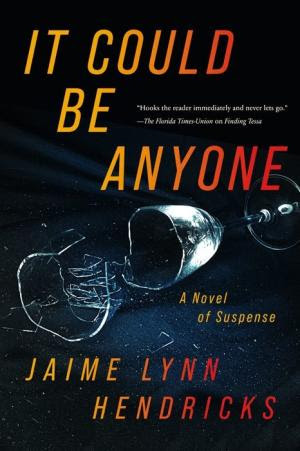
Jaime Lynn Hendricks is an author with nearly 20 years experience in print media and marketing. She lives with her husband in New Jersey.

It Could Be Anyone is her second novel.

At CrimeReads she tagged seven thrillers featuring "despicable characters that I loved to read." One entry on the list:
AMBER PATTERSON, The Last Mrs. Parrish, by Liv Constantine

Amber is such a schemer that she invents a way to insert herself into the life of Daphne Parrish, a rich, beautiful do-gooder with a perfect family. Despite coming from nothing, Amber convinces herself that she should not only have that kind of life, but that she deserves Daphne’s life. Amber lies, steals, goes after Daphne’s husband, her foundation, her children…but did I dislike her? No way. Give me more! Did I want her to win? Also no way, but why does hating her have to be bad? A morally grey character is the hallmark of this genre, and for me, this one was the OG of thrillers.
Read about another entry on the list.

The Last Mrs. Parrish is among Eliza Jane Brazier's nine books that pit the Have against the Have-Nots, Seraphina Nova Glass's seven top obsession thrillers, Allison Dickson's top ten thrillers featuring a dance of girlfriends and deception, Kristyn Kusek Lewis's eight shocking thrillers featuring scandals, Margot Hunt's top nine thrillers featuring duplicitous spouses, and Jennifer Hillier's eight crime novels of women starting over.

The Page 69 Test: The Last Mrs. Parrish.

--Marshal Zeringue

Monday, June 06, 2022

Pg. 69: Marty Ambrose's "Forever Past"

Featured at the Page 69 Test: Forever Past by Marty Ambrose.

About the book, from the publisher:
Claire Clairmont’s perilous quest to learn the fate of her daughter with Lord Byron enters its final stages in this last in a captivating historical trilogy based on the ‘summer of 1816’ Byron/Shelley group.

Italy, 1873.
Claire Clairmont, one of the last surviving members of the Byron/Shelley circle, is determined to uncover the true fate of Allegra, her daughter conceived with Lord Byron. But her quest so far has been fraught with danger, and Claire knows she has enemies who will stop at nothing to keep past secrets hidden.

When she learns of a stunning revelation involving the abbess and Allegra, Claire returns to the convent of Bagnacavallo with her close companions to confront the abbess, and soon finds herself grappling with a series of chilling and threatening events.

As Claire finally closes in on the truth, could someone in her closest circle be plotting against her? And can she survive long enough to get the answers she craves for?
Visit Marty Ambrose's website.

My Book, The Movie: Forever Past.

The Page 69 Test: Forever Past.

--Marshal Zeringue

Pg. 99: Jefferson Morley's "Scorpions' Dance"

Featured at the Page 99 Test: Scorpions' Dance: The President, the Spymaster, and Watergate by Jefferson Morley.

About the book, from the publisher:
For the 50th anniversary of the Watergate break-in: The untold story of President Richard Nixon, CIA Director Richard Helms, and their volatile shared secrets that ended a presidency.

Scorpions' Dance
by intelligence expert and investigative journalist Jefferson Morley reveals the Watergate scandal in a completely new light: as the culmination of a concealed, deadly power struggle between President Richard Nixon and CIA Director Richard Helms.

Nixon and Helms went back decades; both were 1950s Cold Warriors, and both knew secrets about the disastrous Bay of Pigs invasion of Cuba as well as off-the-books American government and CIA plots to remove Fidel Castro and other leaders in Latin America. Both had enough information on each other to ruin their careers.

After the Watergate burglary on June 17, 1972, Nixon was desperate to shut down the FBI's investigation. He sought Helms' support and asked that the CIA intervene—knowing that most of the Watergate burglars were retired CIA agents, contractors, or long-term assets with deep knowledge of the Agency's most sensitive secrets. The two now circled each other like scorpions, defending themselves with the threat of lethal attack. The loser would resign his office in disgrace; the winner, however, would face consequences for the secrets he had kept.

Rigorously researched and dramatically told, Scorpions' Dance uses long-neglected evidence to reveal a new perspective on one of America's most notorious presidential scandals.
Visit Jefferson Morley's website.

The Page 99 Test: Scorpions' Dance.

--Marshal Zeringue

Ten top books on heartbreak

Jessie Stephens is a Sydney-based writer and podcaster, with a Master’s degree in History and Gender Studies. She’s the assistant head of content at Mamamia and co-host of the podcast Mamamia Out Loud. She also hosts Mamamia’s True Crime Conversations and Book Club podcasts, where she’s had the pleasure of interviewing some of her favorite authors.

Heartsick: Three Stories about Love, Pain, and What Happens in Between is her first book.

At Lit Hub Stephens shared a reading list for love, loss, and everything in between. One title on the list:
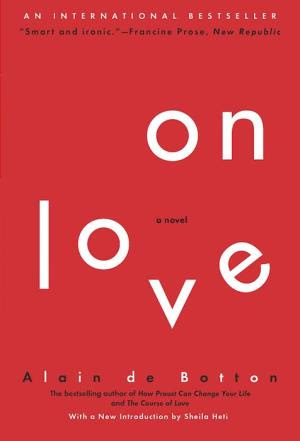
Alain de Botton, Essays in Love [US title: On Love]

A novel about a man and a woman slowly falling in love, Essays in Love charts the ascent and eventual descent of a relationship in astonishing detail. While the story is fictional, our narrator is full of observation and insight, elucidating a wealth of truths about love and what happens when it falls apart. The greatest strength of this book is in the details—tiny things you likely believe only you’ve done or felt. Gripping, funny and warm, de Botton offers his own philosophical sensibility to the stories we tell about love and heartbreak.
Read about another entry on the list.

--Marshal Zeringue

Sunday, June 05, 2022

Wendy Church's "Murder on the Spanish Seas," the movie

Featured at My Book, The Movie: Murder on the Spanish Seas by Wendy Church.

The entry begins:
The main protagonist in Murder on the Spanish Seas is Jesse O’Hara, a profane, introverted, hard drinking, 30-year-old woman. She’s smart, impatient, and fiercely loyal to her few close friends. She’s also really smart/witty, which helps her unravel mysteries, and solve crimes. When I think about casting her in a movie, I imagine Angie Harmon in her role as Rizzoli, or Jennifer Lawrence in Hunger Games, if they remade it with an ongoing internal dialogue from Katniss that was snarky and funny.

Jesse’s best friend and sidekick, Sam, I envision being played by...[read on]
Visit Wendy Church's website.

The Page 69 Test: Murder on the Spanish Seas.

Q&A with Wendy Church.

My Book, The Movie: Murder on the Spanish Seas.

--Marshal Zeringue

Seven suspense novels in which paradise is not what it seems

Laura Griffin is a New York Times and USA Today bestselling author of more than thirty books and novellas. She is a two-time RITA® Award winner (for Scorched and Whisper of Warning) as well as the recipient of the Daphne du Maurier Award (for Untraceable). Her book Desperate Girls was named one of the Best Books of 2018 by Publishers Weekly.

Griffin's latest romantic thriller is Midnight Dunes.

At CrimeReads the author tagged seven "suspense novels [that] will take you from the white sands of the Caribbean isles to the windswept cliffs of New Zealand. Adventure awaits, but don’t expect a smooth trip." One title on the list:
They All Fall Down by Rachel Howzell Hall

When Miriam Macy gets a surprise invitation to participate in a reality show on a luxurious private island in the Sea of Cortez, she jumps at the chance to get away from the mounting legal problems that have followed her messy divorce. She has barely stepped off the boat, however, when her dreams of fame and fortune are dashed, and she realizes she will be lucky to make it off the island alive. Guests begin turning up dead one after another. Isolated from help and with only her ingenuity and some ever-shifting alliances to save her, Miriam must figure out who is behind the murders or end up becoming the next victim.

Hall’s Anthony Award-nominated story is told with wit and dark humor, and her vivid writing makes you feel the steamy walls of the jungle closing in as the heroine struggles to make it through the survival game from hell.
Read about another entry on the list.

They All Fall Down is among Nell Pattison's top ten crime novels with isolated settings, Karen Hamilton's twelve best thrillers in a vacation setting, Sandie Jones's six mysteries featuring large casts of characters, Andrea Bartz's seven thrillers about vacations gone wrong, Amy Suiter Clarke's seven great thrillers that play with form, Catriona McPherson's five top mystery novels set on islands, CrimeReads' ten best crime novels of 2019, Kristen Lepionka's seven favorite unlikable female characters.

The Page 69 Test: They All Fall Down.

--Marshal Zeringue

Pg. 99: Paul Kaplan & Daniel LaChance's "Crimesploitation"

Featured at the Page 99 Test: Crimesploitation: Crime, Punishment, and Pleasure on Reality Television by Paul Kaplan and Daniel LaChance.

About the book, from the publisher:
"Due to the graphic nature of this program, viewer discretion is advised." Most of us have encountered this warning while watching television at some point. It is typically attached to a brand of reality crime TV that Paul Kaplan and Daniel LaChance call "crimesploitation": spectacles designed to entertain mass audiences by exhibiting "real" criminal behavior and its consequences. This book examines their enduring popularity in American culture. Analyzing the structure and content of several popular crimesploitation shows, including Cops, Dog: The Bounty Hunter, and To Catch a Predator, as well as newer examples like Making a Murderer and Don't F**K with Cats, Kaplan and LaChance highlight the troubling nature of the genre: though it presents itself as ethical and righteous, its entertainment value hinges upon suffering. Viewers can imagine themselves as deviant and ungovernable like the criminals in the show, thereby escaping a law-abiding lifestyle. Alternatively, they can identify with law enforcement officials, exercising violence, control, and "justice" on criminal others. Crimesploitation offers a sobering look at the depictions of criminals, policing, and punishment in modern America.
Learn more about Crimesploitation at the Stanford University Press website.

The Page 99 Test: Crimesploitation.

--Marshal Zeringue

Saturday, June 04, 2022

Coffee with a canine: Sulari Gentill & Rowly, Alfie, Miss Higgins and Pig

Featured at Coffee with a Canine: Sulari Gentill & Rowly, Alfie, Miss Higgins and Pig.

The author, on how her dogs got their names:
Rowly and Miss Higgins were named after the protagonists of the Rowland Sinclair Mysteries. Alfie came to us with his name and Pig was so named because pigs were traditionally used to...[read on]
About Sulari Gentill's new novel, The Woman in the Library, from the publisher:
Ned Kelly award winning author, Sulari Gentill sets this mystery-within-a-mystery in motion with a deceptively simple, Dear Hannah, What are you writing? pulling us into the ornate reading room at the Boston Public Library.

But fair reader, in every person's story, there is something to hide...

The tranquility is shattered by a woman's terrified scream. Security guards take charge immediately, instructing everyone inside to stay put until the threat is identified and contained. While they wait for the all-clear, four strangers, who'd happened to sit at the same table, pass the time in conversation and friendships are struck. Each has his or her own reasons for being in the reading room that morning—it just happens that one is a murderer.

Sulari Gentill delivers a sharply thrilling read with The Woman in the Library, an unexpectedly twisty literary adventure that examines the complicated nature of friendship and shows us that words can be the most treacherous weapons of all.
Visit Sulari Gentill's website.

Coffee with a Canine: Sulari Gentill & Rowly, Alfie, Miss Higgins and Pig.

--Marshal Zeringue

Pg. 69: Katie Tallo's "Poison Lilies"

Featured at the Page 69 Test: Poison Lilies: A Novel by Katie Tallo.

About the book, from the publisher:
In this eerily riveting thriller—the follow-up to the international bestseller Dark August—Gus Monet becomes dangerously entangled with a powerful family whose wealth and success are built on dark and deadly secrets.

After moving back to her hometown and solving her mother's murder, Augusta (Gus) Monet thought she was finally settled. Content for the first time in her life. Done with digging into the past.

But it’s not to be. Cue hard reset number whatever.

When Gus makes a mistake she can’t undo, she does the only thing she can: cuts and runs. Packs all her things in the dead of night and takes off. Gus lands at The Ambassador Court, an art-deco apartment building with cheap rent in one of Ottawa’s oldest neighborhoods where no one knows her. The perfect place for a fresh start—or at least a good place to hide.

She soon meets Poppy Honeywell, her reclusive elderly neighbor who wanders about in a pink kimono like an aging Hollywood starlet and who happens to be a descendant of the Mutchmores, one of the city's founding families. When a body emerges from an icy pond in a nearby park, Gus’s growing curiosity with Poppy and her influential family suddenly takes a perilous turn with deadly consequences.

The Mutchmores have been hiding a treacherous secret for decades—one they are willing to sacrifice anything—and anyone—to keep buried. Little do they know, that’s just the kind of secret Gus can’t resist.
Visit Katie Tallo's website.

The Page 69 Test: Dark August.

Q&A with Katie Tallo.

The Page 69 Test: Poison Lilies.

--Marshal Zeringue

Six books by women writing worlds in crisis

Erin Swan was born in Manhattan and lived there for ten years until her family moved upstate, where she started writing stories and poems. She used her early adulthood to travel, write children’s books, and work for a literary agency before going to teach English in India and Thailand. Swan earned her MA from Teacher’s College at Columbia University and began teaching in New York’s public school system in 2008.

[Q&A with Erin Swan; The Page 69 Test: Walk the Vanished Earth]

While teaching full-time, Swan attended the MFA program at the New School and graduated with a degree in fiction. Her work has been published in various journals, including Portland Review, Atticus Review, The South Carolina Review, and Inkwell Journal, and her stories have been nominated for the Pushcart Prize and Best of the Net.

Walk the Vanished Earth is Swan's first novel.

At Lit Hub she tagged "six standout books by fellow women writers, books I believe are must-reads for those seeking to explore this current juncture in history, as we challenge our past and question what our future will bring." One title on the list:
Kim Fu, Lesser Known Monsters of the 21st Century

I love a good short story collection, and if that collection is packed with sea monsters and experimental technology and bizarre infestations of June bugs, not to mention love and grief and rage, I am sold. Kim Fu’s story collection is an imaginative leap into what it means to be a human being in the 21st century. I adored each one of these twelve stories in turn, but a few felt particularly evocative. Structured as a conversation between a customer and a company representative, “Pre-Simulation Consultation XF007867” presents a grieving daughter who longs to meet with her deceased mother in virtual reality, a desire strictly prohibited by the company, which fears the possible litigation if customers became addicted to such experiences. The young woman’s insistence that she walk with her mother in the botanic garden they once strolled felt acutely poignant in the way it explores the persistent nature of grief.

“Twenty Hours” is another tale that uses technology to examine the depths of human relationships. In this story, a married couple has splurged on a 3-D printer than can recreate a human body after it is dead. The husband and wife use this printer as an excuse to kill each other off when they become bored, and then resurrect their spouse on the printer’s tray when they tire of their brief respite from the burden of marriage. “June Bugs” places a young woman in a house in the middle of nowhere and fills that house with scores of June bugs, a stunning reflection of the horror she experienced in the abusive relationship she has just fled. “Bridezilla,” the collection’s penultimate story, has a sea monster rise from the polluted Pacific on a woman’s wedding day and carry the bride-to-be away. The way her body dissolves into the monster’s back works as a superb metaphor for how what we have wrought on this planet may just consume us in the end.
Read about another entry on the list.

--Marshal Zeringue

Friday, June 03, 2022

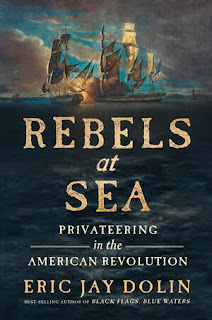
Pg. 99: Eric Jay Dolin's "Rebels at Sea"

Featured at the Page 99 Test: Rebels At Sea: Privateering in the American Revolution by Eric Jay Dolin.

About the book, from the publisher:
The best-selling author of Black Flags, Blue Waters reclaims the daring freelance sailors who proved essential to the winning of the Revolutionary War

The heroic story of the founding of the US Navy during the American Revolution has been told before, yet missing from most maritime histories of the country’s first war is the ragtag fleet of private vessels, from 20-foot whaleboats to 40-cannon men-of-war, that truly revealed the new nation’s character—above all, its ambition and entrepreneurial ethos.

In Rebels at Sea, best-selling historian Eric Jay Dolin corrects that significant omission and contends that privateers, though often seen as profiteers at best and pirates at worst, were in fact critical to the American Revolution’s outcome. Armed with cannons, swivel guns, muskets and pikes—as well as government documents granting them the right to seize enemy ships—thousands of privateers tormented the British on the broad Atlantic and in bays and harbours on both sides of the ocean. Abounding with tales of daring manoeuvers and deadly encounters, Rebels at Sea presents the American Revolution as we have rarely seen it before.
Visit Eric Jay Dolin's website.

The Page 99 Test: Fur, Fortune, and Empire.

The Page 99 Test: When America First Met China.

The Page 69 Test: Brilliant Beacons.

The Page 99 Test: Brilliant Beacons.

The Page 99 Test: Black Flags, Blue Waters.

The Page 99 Test: A Furious Sky.

Writers Read: Eric Jay Dolin.

The Page 99 Test: Rebels At Sea.

--Marshal Zeringue

Six top feminist thrillers

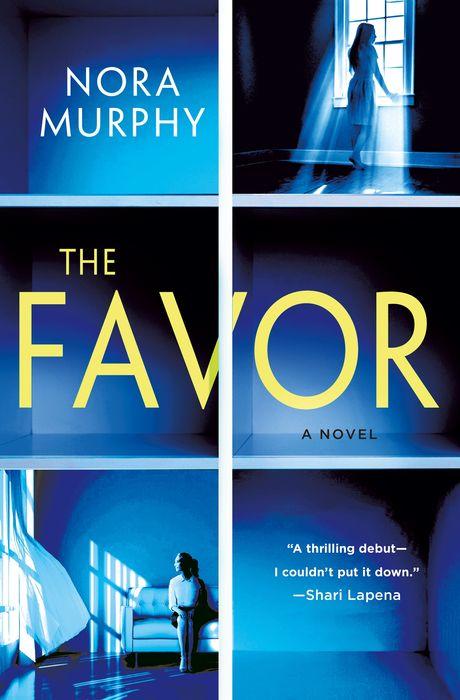
Nora Murphy attended law school in Washington, D.C., then worked as a judicial law clerk before transitioning to private practice. During law school, she participated in two clinics through which she represented and studied the issues facing survivors of intimate partner violence. A practicing attorney, Murphy writes as much as she can, usually long before the sunrise or on her phone for brief moments when the inspiration strikes. She resides in Maryland with her husband, young son, and five rescue pets.

The Favor is Murphy's first novel.

At CrimeReads she tagged some of her favorite feminist thrillers, including:
Every Tess Monaghan book by Laura Lippman

Laura Lippman’s protagonist, Private Investigator Tess Monaghan, is, to put it simply, a badass. She is strong, sharp, and smart, all of which is only exemplified once she becomes a mother. I can’t help but feel that any book in which she is prominently featured—Lipman has written thirteen so far—is innately feminist.
Read about another entry on the list.

--Marshal Zeringue
Thursday, June 02, 2022

Marty Ambrose's "Forever Past," the movie

Featured at My Book, The Movie: Forever Past by Marty Ambrose.

The entry begins:
I would love to see a one-woman tour de force film of my novel, Forever Past, the final installment in the Claire Clairmont mystery trilogy. This book is really the story of Claire’s search for her lost daughter, Allegra, conceived out of wedlock with English poet, Lord Byron, and it is told in her words. For so long, Claire was the missing voice in the Byron/Shelley circle, eclipsed by the more famous members of this glittering literary group, and it would be fitting to see her take the center of a cinematic interpretation--alone.

I’ve always been fascinated by films with a single actor who is the lynchpin for making a movie captivating and intense, much like the vintage Vincent Price movie, An Evening with Edgar Allen Poe. I’ve seen this film many times, and it never grows old as he evokes the sinister world of Gothic horror. In his role, Price narrates four of Poe’s short stories and, with his bravura performance, he is mesmerizing during the entire film. No other actors are needed. No complex setting is required. No musical score is necessary.

In that vein, Helena Bonham-Carter would be...[read on]
Visit Marty Ambrose's website.

My Book, The Movie: Forever Past.

--Marshal Zeringue

Top ten books about listening to nature

David George Haskell is a writer and biologist. His latest book, Sounds Wild and Broken, is an Editor’s Choice at the New York Times and explores the story of sound on Earth. Starting with the origins of animal song and traversing the whole arc of Earth history, he illuminates and celebrates the emergence, diversification, and loss of the sounds of our world, including human music and language.

At the Guardian Haskell tagged ten books that "helped me to hear better and to understand the stories behind the sounds I was hearing" in nature. One title on the list:
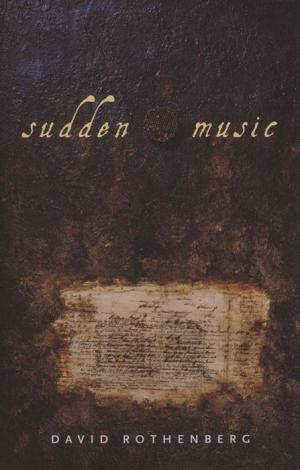
Sudden Music by David Rothenberg

A wonderfully creative exploration of the improvisational nature of sound and life. My copy is full of underlined passages. Rothenberg is a philosopher and musician whose writing and music play at the boundaries between the human and non-human. Our music, he claims, “offers us up to the more-than-human world” and listening in turn opens us to the many presences of other species. Music that begins with listening to the world – to rain, cicadas, birds and whales – can then tap deep wells of creativity. As non-musicians, too, such listening to the musicality of “nature” is generative and expands our ability to respond to life in the moment.
Read about another entry on the list.

--Marshal Zeringue

Pg. 99: Anadelia A. Romo's "Selling Black Brazil"

Featured at the Page 99 Test: Selling Black Brazil: Race, Nation, and Visual Culture in Salvador, Bahia by Anadelia A. Romo.

About the book, from the publisher:
In the early twentieth century, Brazil shifted from a nation intent on whitening its population to one billing itself as a racial democracy. Anadelia Romo shows that this shift centered in Salvador, Bahia, where throughout the 1950s, modernist artists and intellectuals forged critical alliances with Afro-Brazilian religious communities of Candomblé to promote their culture and their city. These efforts combined with a growing promotion of tourism to transform what had been one of the busiest slaving depots in the Americas into a popular tourist enclave celebrated for its rich Afro-Brazilian culture. Vibrant illustrations and texts by the likes of Jorge Amado, Pierre Verger, and others contributed to a distinctive iconography of the city, with Afro-Bahians at its center. But these optimistic visions of inclusion, Romo reveals, concealed deep racial inequalities. Illustrating how these visual archetypes laid the foundation for Salvador’s modern racial landscape, this book unveils the ways ethnic and racial populations have been both included and excluded not only in Brazil but in Latin America as a whole.
Learn more about Selling Black Brazil at the University of Texas Press website.

The Page 99 Test: Selling Black Brazil.

--Marshal Zeringue

Q&A with Wendy Church

From my Q&A with Wendy Church, author of Murder on the Spanish Seas:
How much work does your title do to take readers into the story?

Originally I really liked Shipfaced for the title, as I thought it conveyed the context (lots of drinking on a ship) and the humor concisely. But cooler heads prevailed, and we took a more direct, Snakes on a Plane marketing approach, eventually settling on Murder on the Spanish Seas, which makes more sense to use for an unknown, debut author. And should the novel be published overseas, it’s likely a more universally digestible title.

What's in a name?

This book is the first in a series of Jesse O’Hara novels, so I had to feel pretty solid about the name of the main protagonist, as she’s going to be around for a while.

I knew I wanted her to be...[read on]
Visit Wendy Church's website.

The Page 69 Test: Murder on the Spanish Seas.

Q&A with Wendy Church.

--Marshal Zeringue

Wednesday, June 01, 2022

Five top books about big money New York real estate

Adam Piore is an award-winning journalist based in New York. A former editor and correspondent for Newsweek magazine, his narrative features have appeared in Conde Nast Traveler, GQ, Discover Magazine, Mother Jones, Playboy, Scientific American, the Atavist, BusinessWeek and many others.

Piore's new book is The New Kings of New York.

At Lit Hub he tagged five of his favorite books about New York City's "most iconic properties, and the big personalities behind them." One title on the list:
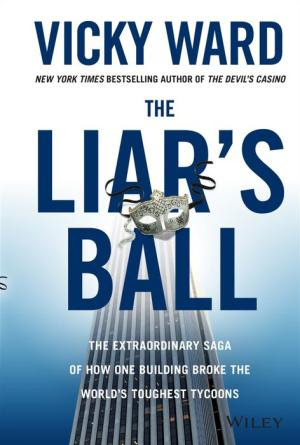
Vicky Ward, The Liar’s Ball: The Extraordinary Saga of How One Building Broke the World’s Toughest Tycoons (Wiley)

Ward, a bestselling author and former Vanity Fair contributing editor, is a masterful storyteller. In Liar’s Ball, she recounts the antics surrounding the ownership of midtown Manhattan’s famous GM building, a luxury office tower and hedge-fund haven across the street from Central Park that long commanded the highest rents in the city and attracted the desire of some of the city’s biggest egos. Its owners included, among others, Donald Trump and the aforementioned Harry Macklowe, who bought it with almost no money down, unlocked tens of millions of dollars in value—and then lost it all when he offered it up as collateral in a ruinous deal to buy a $2 billion portfolio of midtown office portfolio with just $50 million of his own money, at the height of the 2008 real estate bubble.
Read about another entry on the list.

--Marshal Zeringue

Pg. 99: Susan Grant's "Soviet Nightingales"

Featured at the Page 99 Test: Soviet Nightingales: Care under Communism by Susan Grant.

About the book, from the publisher:
In Soviet Nightingales, Susan Grant tracks nursing care in the Soviet Union from its nineteenth-century origins in Russia through the end of the Soviet state. With the advent of the USSR, nurses were instrumental in helping to build the New Soviet Person and in constructing a socialist society.

Disease and illness were rampant in the early 1920s after years of war, revolution, and famine. The demand for nurses was great, but how might these workers best serve the country's needs? By examining living and working conditions, nurse-patient relations, education, and attempts at international nursing cooperation, Grant recounts the history of the Bolshevik effort to define the "Soviet" nurse and organize a new system of socialist care for the masses. Although the Bolsheviks aimed to transform healthcare along socialist lines, they ultimately failed as the struggle to train skilled medical workers became entangled in politics. Soviet Nightingales draws on rich archival research from Russia, the United States, and Britain to describe how ideology reinvented the role of the nurse and shaped the profession.
Learn more about Soviet Nightingales at the Cornell University Press website.

The Page 99 Test: Soviet Nightingales.

--Marshal Zeringue

Pg. 69: Erin Swan's "Walk the Vanished Earth"

Featured at the Page 69 Test: Walk the Vanished Earth: A Novel by Erin Swan.

About the book, from the publisher:
In the tradition of Station Eleven, Severance and The Dog Stars, a beautifully written and emotionally stirring dystopian novel about how our dreams of the future may shift as our environment changes rapidly, even as the earth continues to spin.

The year is 1873, and a bison hunter named Samson travels the Kansas plains, full of hope for his new country. The year is 1975, and an adolescent girl named Bea walks those very same plains; pregnant, mute, and raised in extreme seclusion, she lands in an institution, where a well-meaning psychiatrist struggles to decipher the pictures she draws of her past. The year is 2027 and, after a series of devastating storms, a tenacious engineer named Paul has left behind his banal suburban existence to build a floating city above the drowned streets that were once New Orleans. There with his poet daughter he rules over a society of dreamers and vagabonds who salvage vintage dresses, ferment rotgut wine out of fruit, paint murals on the ceiling of the Superdome, and try to write the story of their existence. The year is 2073, and Moon has heard only stories of the blue planet—Earth, as they once called it, now succumbed entirely to water. Now that Moon has come of age, she could become a mother if she wanted to–if only she understood what a mother is. Alone on Mars with her two alien uncles, she must decide whether to continue her family line and repopulate humanity on a new planet.
A sweeping family epic, told over seven generations, as America changes and so does its dream, Walk the Vanished Earth explores ancestry, legacy, motherhood, the trauma we inherit, and the power of connection in the face of our planet’s imminent collapse.

This is a story about the end of the world—but it is also about the beginning of something entirely new. Thoughtful, warm, and wildly prescient, this work of bright imagination promises that, no matter what the future looks like, there is always room for hope.
Visit Erin Swan's website.

Q&A with Erin Swan.

The Page 69 Test: Walk the Vanished Earth.

--Marshal Zeringue