Monday, November 10, 2014

Renée Rosen's "What the Lady Wants," the movie

Featured at My Book, The Movie: What the Lady Wants by Renée Rosen.

The entry begins:
What the Lady Wants is a novel about a lover’s quadrangle between the Chicago retail tycoon, Marshall Field, his wife, Nannie, his mistress Delia and her husband Arthur Caton.

Given that the story spans more than 30 years, starting with the Great Chicago Fire of 1871 and continuing through the death of the Merchant Prince in 1906, we have to take the aging process into account as well as the fact that Field was 20 years older than Delia. So given all that, this is a smattering of who I could see bring these real characters back to life:

Marshall Field: Donald Sutherland, Clint Eastwood, Sam Waterston or Tom Hanks. Picture them with white hair and bushy mustache.

Delia Spencer Caton: Keira Knightley, Anne Hathaway, Kate...[read on]
Visit Renée Rosen's website, blog, and Facebook page.

The Page 99 Test: Every Crooked Pot.

My Book, The Movie: Dollface.

The Page 69 Test: Dollface.

Writers Read: Renée Rosen.

The Page 69 Test: What the Lady Wants.

My Book, The Movie: What the Lady Wants.

--Marshal Zeringue

Sunday, November 09, 2014

Five YA books that look at social media through a very dark lens

At The Barnes & Noble Book Blog, Jenny Kawecki tagged five Young Adult that will make you swear off social media forever, including:
Life By Committee, by Corey Ann Haydu

This book. It may feel lighthearted at times, but it’s actually terrifying. When Tabitha’s friends abandon her, she turns to an online committee that runs on a somewhat sinister system of Truth or Dare—users confess a secret, then complete an increasingly high-stakes series of assignments to keep it that way. It’s essentially a confirmation of that thing your parents always warned you about: be careful what you put online, because it will always be there…for other people to blackmail you with. Also, people you think you trust may be major creeps.
Read about another entry on the list.

Writers Read: Corey Ann Haydu (May 2014).

--Marshal Zeringue

What is Tina Whittle reading?

Featured at Writers Read: Tina Whittle, author of Deeper Than the Grave.

Her entry begins:
Sassy Southern Crime Fiction: Death in Perspective by Larissa Reinhart

Cherry Tucker is my kind of sleuth – whip-smart, quick-tongued, and big-hearted as all get out – and Death in Perspective shows her at her sweetly reckless best. If you like your heroines feisty, your menfolk sexy, and your plots as twisty as a dirt road racetrack, then put Larissa Reinhart’s latest on top of your Must Read list. She’s currently at work on the fifth book in the series – rumor has it that Hogzilla makes an appearance. I...[read on]
About Deeper Than the Grave, from the publisher:
Will the Civil War add two modern-day casualties to its death toll?

It’s taken almost a year, but Tai Randolph has her new life together. She’s running a semi-successful Atlanta gun shop catering to Civil War re-enactors. Her lover, the sexy if security-obsessed Trey Seaver, is sorting out his challenges. There’s not a single corpse on her horizon, and her previously haphazard existence is finally stable, secure… and unsurprising. Then a tornado blows by a Kennesaw Mountain cemetery, scattering the skeletal remains of a Confederate hero. Assisting the bones recovery effort is a job her late Uncle Dexter would have relished, as does Tai. Does she hit the jackpot on discovering a jumble of bones in the underbrush?

No. The bones reveal a more recent murder, with her deceased uncle leading the suspect list. As Tai struggles to clear Dexter’s name — and save the business he left her — she uncovers deadly secrets were also buried in the red Georgia clay. And realizes there’s a live murderer on the loose, a clever killer who has tried to conceal the crimes of the present in the stories of the past. As she risks her own life to unravel two mysteries — one from a previous century, one literally at her doorstep — Tai rediscovers her dangerous taste for murder and mayhem.
Learn more about the book and author at Tina Whittle's website and blog.

The Page 69 Test: Darker Than Any Shadow.

The Page 69 Test: Blood, Ash, and Bone.

Writers Read: Tina Whittle.

--Marshal Zeringue

Pg. 69: Marcus Wynne's "The Sword of Michael"

Featured at the Page 69 Test: The Sword of Michael by Marcus Wynne.

About the book, from the publisher:
Book One in a new hard-hitting contemporary fantasy saga.

Marius Winter doesn’t walk the road of the shaman-warrior alone. He has powerful allies in the Other Realms and in ordinary reality. His spirit guides are a Lakota war-chief and medicine man, First In Front; Tigre, a powerful feminine spirit who appears as a white tiger; and Burt, a spirit raven who channels an old Jewish bookie from the Bronx.

Now Marius is targeted by a powerful sorcerer. In the battle for the souls of his friends and lover, he must storm the gates of the underworld and fight through the Seven Demi-Demons of Hell to the deepest dungeons to confront Belial himself.
Visit Marcus Wynne's website.

The Page 69 Test: The Sword of Michael.

--Marshal Zeringue

Saturday, November 08, 2014

Pg. 99: Jamie Malanowski's "Commander Will Cushing"

Featured at the Page 99 Test: Commander Will Cushing: Daredevil Hero of the Civil War by Jamie Malanowski.

About the book, from the publisher:
The lead writer of the New York Times’s award-winning “Disunion” series introduces William Barker Cushing, the Civil War’s most celebrated naval hero.

October 1864. The confederate ironclad CSS Albemarle had sunk two federal warships and damaged seven others, taking control of the Roanoke River and threatening the Union blockade. Twenty-one-year-old navy lieutenant William Barker Cushing hatched a daring plan: to attack the fearsome warship with a few dozen men in two small wooden boats. What followed, the close-range torpedoing of the Albemarle and Cushing’s harrowing two-day escape downriver from vengeful Rebel posses, is one of the most dramatic individual exploits in American military history.

Theodore Roosevelt said that Cushing “comes next to Farragut on the hero roll of American naval history,” but most have never heard of him today. Tossed out of the Naval Academy for “buffoonery,” Cushing proved himself a prodigy in behind-the-lines warfare. Given command of a small union ship, he performed daring, near-suicidal raids, “cutting out” confederate ships and thwarting blockade runners. With higher commands and larger ships, Cushing’s exploits grow bolder, culminating in the sinking of the Albemarle.

A thrilling narrative biography, steeped in the tactics, weaponry, and battle techniques of the Union Navy, Commander Will Cushing brings to life a compelling yet flawed figure. Along with his three brothers, including one who fell at Gettysburg, Cushing served with bravery and heroism. But he was irascible and complicated—a loveable rogue, prideful and impulsive, who nonetheless possessed a genius for combat.

In telling Cushing’s story, Malanowski paints a vivid, memorable portrait of the army officials, engineers, and politicians scrambling to win the war. But he also goes deeper into the psychology of the daredevil soldier—and what this heroic and tragic figure, who died before his time, can tell us about the ways we remember the glories of war.
Learn more about the book and author at Jamie Malanowski's blog.

Writers Read: Jamie Malanowski.

My Book, The Movie: Commander Will Cushing.

The Page 99 Test: Commander Will Cushing.

--Marshal Zeringue

Top ten fathers in fiction

At the Telegraph Jamie Fewery tagged the ten best fictional fathers, including:
Will Freeman in About a Boy by Nick Hornby

No, not a father as such (at least not to begin with). But Will Freeman is an example to all those who worry that parenthood might be beyond them. At first feckless and lazy, he soon sees the value in his relationship with Marcus and embraces his place in the boy’s life.

Ever the master of men's fiction, Hornby adeptly examines the fear of fatherhood and the responsibility that comes with being a role model in About a Boy, which was turned into a successful film featuring Hugh Grant.
Read about another father on the list.

About a Boy is one of Kay S. Hymowitz's five best books on the won't-grow-up modern male.

--Marshal Zeringue

Robyn Muncy's "Relentless Reformer," the movie

Featured at My Book, The Movie:  Relentless Reformer: Josephine Roche and Progressivism in Twentieth-Century America by Robyn Muncy.

Her entry begins:
The central character in Relentless Reformer is the indomitable Josephine Roche, a progressive reformer who achieved political celebrity in the 1930s as a pro-labor and feminist member of Franklin Roosevelt’s New Deal government.

To play the adult Josephine Roche, I would cast Meryl Streep. Streep has the range and vitality to play this bronco-busting westerner who castigated anyone with no “guts” and at the same time charmed the Washington press corps with her easy grace.

Roche’s dramatic life would give Streep’s versatility full expression. Roche was in 1912 Denver’s first policewoman; in the 1920s, she took over and ran a coal mining company; in the 1930s, she served as the second-highest-ranking woman in the New Deal government; and, as Assistant Secretary of the Treasury, she started the conversation Americans are still having about the federal role in health care. She shaped the Social Security Act in 1935 and eventually pioneered managed care in medicine. She remained an activist into the 1970s, when she was, in her 80s, trying to bring down a murderous regime within the United Mine Workers of America, a labor union she had allied with for over 40 years.

Since Roche was active in public life from her teens into her old age, we might need additional actors for earlier moments of Roche’s life. Jennifer...[read on]
Learn more about Relentless Reformer at the Princeton University Press website.

My Book, The Movie:  Relentless Reformer.

--Marshal Zeringue

Friday, November 07, 2014

Sixteen must-have books for Generation X

Whitney Collins is the author of The Hamster Won't Die: A Treasury of Feral Humor and the creator and editor of two humor sites -- errant parent and The Yellow Ham.

At The Barnes & Noble Book Blog she tagged sixteen totally awesome books that every Gen Xer needs, including:
American Psycho, by Bret Easton Ellis

A compelling, disturbing, and oft-banned novel, American Psycho describes the lavish and horrific life of highly educated pretty boy Patrick Bateman, who commandeers Wall Street by day and murders innocents by night. Both a chilling social commentary that’s rife with satire as well as an important literary milestone, American Psycho reveals the darkest sides of both humanity and society in the face of material excess.
Read about another book on the list.

American Psycho appears on Chrissie Gruebel's top six list of fictional fashion icons, Jonathan Lee's list of the ten best office dramas in print and on screen, John Mullan's lists of ten of the best bankers in literature and ten of the best zoos in literature, Richard Gwyn's list of ten books in which things end badly, Nick Brooks' top ten list of literary murderers and Chris Power's list of his six top books on the 1980s. It is a book that Nick Cross "Finished Reading but Wanted My Time Back Afterwards."

--Marshal Zeringue

Pg. 69: Renée Rosen's "What the Lady Wants"

Featured at the Page 69 Test: What the Lady Wants: A Novel of Marshall Field and the Gilded Age by Renée Rosen.

About the book, from the publisher:
In late-nineteenth-century Chicago, visionary retail tycoon Marshall Field made his fortune wooing women customers with his famous motto: “Give the lady what she wants.” His legendary charm also won the heart of socialite Delia Spencer and led to an infamous love affair.

The night of the Great Fire, as seventeen-year-old Delia watches the flames rise and consume what was the pioneer town of Chicago, she can’t imagine how much her life, her city, and her whole world are about to change. Nor can she guess that the agent of that change will not simply be the fire, but more so the man she meets that night.…

Leading the way in rebuilding after the fire, Marshall Field reopens his well-known dry goods store and transforms it into something the world has never seen before: a glamorous palace of a department store. He and his powerhouse coterie—including Potter Palmer and George Pullman—usher in the age of robber barons, the American royalty of their generation.

But behind the opulence, their private lives are riddled with scandal and heartbreak. Delia and Marshall first turn to each other out of loneliness, but as their love deepens, they will stand together despite disgrace and ostracism, through an age of devastation and opportunity, when an adolescent Chicago is transformed into the gleaming White City of the Chicago’s World’s Fair of 1893.
Visit Renée Rosen's website, blog, and Facebook page.

The Page 99 Test: Every Crooked Pot.

My Book, The Movie: Dollface.

The Page 69 Test: Dollface.

Writers Read: Renée Rosen.

The Page 69 Test: What the Lady Wants.

--Marshal Zeringue

What is Valerie Geary reading?

Featured at Writers Read: Valerie Geary, author of Crooked River.

Her entry begins:
I first learned about Emily St. John Mandel’s fourth novel Station Eleven during one of my favorite podcasts. Both hosts of Books on the Nightstand were raving about Mandel’s book months before its scheduled release, and once I heard the description, I knew it was one I had to read as soon as it came out. I love stories set in some end-of-the-world landscape, and Station Eleven takes place several years after a deadly flu decimates the population. Through this bleak future roams a Traveling Symphony, a motley and optimistic group bringing music and theater to pockets of survivors scattered throughout the region. They run into their fair share of troubles, sure, but this book is about so much more than just surviving a post-apocalyptic nightmare. It is about...[read on]
About Crooked River, from the publisher:
With the inventiveness and emotional power of Promise Not to Tell, The Death of Bees, and After Her, a powerful literary debut about family and friendship, good and evil, grief and forgiveness.

He is not evil. I am not good.

We are the same: broken and put back together again.


Still grieving the sudden death of their mother, Sam and her younger sister Ollie McAlister move from the comforts of Eugene to rural Oregon to live in a meadow in a teepee under the stars with Bear, their beekeeper father. But soon after they arrive, a young woman is found dead floating in Crooked River, and the police arrest their eccentric father for the murder.

Fifteen-year-old Sam knows that Bear is not a killer, even though the evidence points to his guilt. Unwilling to accept that her father could have hurt anyone, Sam embarks on a desperate hunt to save him and keep her damaged family together.

I see things no one else does.

I see them there and wish I didn’t. I want to tell and can’t.


Ollie, too, knows that Bear is innocent. The Shimmering have told her so. One followed her home from her mom’s funeral and refuses to leave. Now, another is following Sam. Both spirits warn Ollie: the real killer is out there, closer and more dangerous than either girl can imagine.

Told in Sam and Ollie’s vibrant voices, Crooked River is a family story, a coming of age story, a ghost story, and a psychological mystery that will touch reader’s hearts and keep them gripped until the final thrilling page.
Learn more about the book and author at Valerie Geary's website.

Writers Read: Valerie Geary.

--Marshal Zeringue

Pg. 99: Bartow J. Elmore's "Citizen Coke"

Featured at the Page 99 Test: Citizen Coke: The Making of Coca-Cola Capitalism by Bartow J. Elmore.

About the book, from the publisher:
An absorbing history of how Coke’s insatiable thirst for natural resources shaped the company and reshaped the globe.

How did Coca-Cola build a global empire by selling a low-price concoction of mostly sugar, water, and caffeine? The easy answer is advertising, but the real formula to Coke’s success was its strategy, from the start, to offload costs and risks onto suppliers, franchisees, and the government. For most of its history the company owned no bottling plants, water sources, cane- or cornfields. A lean operation, it benefited from public goods like cheap municipal water and curbside recycling programs. Its huge appetite for ingredients gave it outsized influence on suppliers and congressional committees. This was Coca-Cola capitalism.

In this new history Bartow J. Elmore explores Coke through its ingredients, showing how the company secured massive quantities of coca leaf, caffeine, sugar, and other inputs. Its growth was driven by shrewd leaders such as Asa Candler, who scaled an Atlanta soda-fountain operation into a national empire, and “boss” Robert Woodruff, who nurtured partnerships with companies like Hershey and Monsanto. These men, and the company they helped build, were seen as responsible citizens, bringing jobs and development to every corner of the globe. But as Elmore shows, Coke was usually getting the sweet end of the deal.

It continues to do so. Alongside Coke’s recent public investments in water purification infrastructure, especially in Africa, it has also built—less publicly—a rash of bottling plants in dangerously arid regions. Looking past its message of corporate citizenship, Elmore finds a strategy of relentless growth.

The costs shed by Coke have fallen on the public at large. Its annual use of many billions of gallons of water has strained an increasingly scarce global resource. Its copious servings of high-fructose corn syrup have threatened public health. Citizen Coke became a giant in a world of abundance. In a world of scarcity it is a strain on resources and all who depend on them.
Learn more about the book and author at Bartow J. Elmore's website.

The Page 99 Test: Citizen Coke.

--Marshal Zeringue

Thursday, November 06, 2014

Ten top books about the 1970s

Ian Plenderleith’s latest book is Rock’n’Roll Soccer: The Short Life and Fast Times of the North American Soccer League.

One of his top ten books about the 1970s, as shared at the Guardian:
What You Want Is in the Limo by Michael Walker

In 1973 The Who, Led Zeppelin and Alice Cooper all undertook ambitious tours of the US as stadium rock concerts became the preferred way of experiencing live music in the harder, louder times that followed flower power. Walker tells the stories of each tour, and it says a lot for this book that I’ve never cared for these three bands, yet still devoured and loved every page of multi-level excess.
Read about another entry on the list.

--Marshal Zeringue

Pg. 69: Tina Whittle's "Deeper Than the Grave"

Featured at the Page 69 Test: Deeper Than the Grave by Tina Whittle.

About the book, from the publisher:
Will the Civil War add two modern-day casualties to its death toll?

It’s taken almost a year, but Tai Randolph has her new life together. She’s running a semi-successful Atlanta gun shop catering to Civil War re-enactors. Her lover, the sexy if security-obsessed Trey Seaver, is sorting out his challenges. There’s not a single corpse on her horizon, and her previously haphazard existence is finally stable, secure… and unsurprising. Then a tornado blows by a Kennesaw Mountain cemetery, scattering the skeletal remains of a Confederate hero. Assisting the bones recovery effort is a job her late Uncle Dexter would have relished, as does Tai. Does she hit the jackpot on discovering a jumble of bones in the underbrush?

No. The bones reveal a more recent murder, with her deceased uncle leading the suspect list. As Tai struggles to clear Dexter’s name — and save the business he left her — she uncovers deadly secrets were also buried in the red Georgia clay. And realizes there’s a live murderer on the loose, a clever killer who has tried to conceal the crimes of the present in the stories of the past. As she risks her own life to unravel two mysteries — one from a previous century, one literally at her doorstep — Tai rediscovers her dangerous taste for murder and mayhem.
Learn more about the book and author at Tina Whittle's website and blog.

The Page 69 Test: Darker Than Any Shadow.

The Page 69 Test: Blood, Ash, and Bone.

The Page 69 Test: Deeper Than the Grave.

--Marshal Zeringue

Jamie Malanowski's "Commander Will Cushing," the movie

Featured at My Book, The Movie: Commander Will Cushing: Daredevil Hero of the Civil War by Jamie Malanowski.

The entry begins:
My book is about a little-remembered hero of the Civil War, a brash, rebellious, instinctual naval officer named Will Cushing. A midshipman at Annapolis, Will managed to so infuriate the administration with his antics and his underachievement that he was expelled on the slenderest of pretexts a mere two months before he was to graduate. Fortunately for Cushing, war broke out, and an almost fully-trained officer was too valuable a commodity to discard. The navy took him in, and soon he began developing a record that showed him to be courageous, inventive, and a prodigy at behind-the-lines warfare. In his greatest exploit, he led what was generally thought to be a suicide mission to sink the Albemarle, a fearsome confederate ironclad, an act that, in true David vs. Goliath fashion, he accomplished while standing in an open boat.

Who could play Cushing? The contentious, combative, resourceful Steve...[read on]
Learn more about the book and author at Jamie Malanowski's blog.

Writers Read: Jamie Malanowski.

My Book, The Movie: Commander Will Cushing.

--Marshal Zeringue

Coffee with a canine: Peg Kehret & Lucy

Featured at Coffee with a Canine: Peg Kehret & Lucy.

The author, on how she and Lucy were united:
She was picked up by Animal Control as a stray and taken to a county shelter where they decided she was too afraid to be adoptable. A rescue group agreed to take her and I adopted her from them. Before we even got home, I discovered that she was in heat and had kennel cough. My veterinarian thought she was about one year old. Lucy was terrified of any man in a baseball cap. She cowered and hid when my husband picked up a yard stick. It took a long time for her to trust people but now...[read on]
About Kehret's new book, Dangerous Deception, from the publisher:
Peg Kehret includes humor, animal rescue, and heart-pounding suspense in this story about good intentions gone wrong.

Sixth-grader Emmy Rushford decides to provide food for a needy family, but the project turns perilous when Emmy must deal with a car crash, a cat thrown into a Dumpster, and a belligerent neighbor. Then she discovers an apartment full of stolen goods. Her courageous efforts to help hungry children, rescue the cat, and break up a ring of thieves soon put her life at risk.
Visit Peg Kehret's website and Facebook page.

Coffee with a Canine: Peg Kehret & Lucy.

--Marshal Zeringue

Wednesday, November 05, 2014

What is Renée Rosen reading?

Featured at Writers Read: Renée Rosen, author of What the Lady Wants: A Novel of Marshall Field and the Gilded Age.

Her entry begins:
My TBR pile is overflowing but the following three books really stood out in my mind.

After The War Is Over by Jennifer Robson.

This gorgeous novel by the international bestselling author of Somewhere in France, won’t be published until June—but trust me, it’s so worth the wait. I was fortunate enough to read an advanced copy and for fans of the Great War era, this is a true gem. Meticulously researched and beautifully portrayed, I simply didn’t want this book to end....[read on]
About What the Lady Wants, from the publisher:
In late-nineteenth-century Chicago, visionary retail tycoon Marshall Field made his fortune wooing women customers with his famous motto: “Give the lady what she wants.” His legendary charm also won the heart of socialite Delia Spencer and led to an infamous love affair.

The night of the Great Fire, as seventeen-year-old Delia watches the flames rise and consume what was the pioneer town of Chicago, she can’t imagine how much her life, her city, and her whole world are about to change. Nor can she guess that the agent of that change will not simply be the fire, but more so the man she meets that night.…

Leading the way in rebuilding after the fire, Marshall Field reopens his well-known dry goods store and transforms it into something the world has never seen before: a glamorous palace of a department store. He and his powerhouse coterie—including Potter Palmer and George Pullman—usher in the age of robber barons, the American royalty of their generation.

But behind the opulence, their private lives are riddled with scandal and heartbreak. Delia and Marshall first turn to each other out of loneliness, but as their love deepens, they will stand together despite disgrace and ostracism, through an age of devastation and opportunity, when an adolescent Chicago is transformed into the gleaming White City of the Chicago’s World’s Fair of 1893.
Visit Renée Rosen's website, blog, and Facebook page.

The Page 99 Test: Every Crooked Pot.

My Book, The Movie: Dollface.

The Page 69 Test: Dollface.

Writers Read: Renée Rosen.

--Marshal Zeringue

Pg. 69: Lindsay Hunter's "Ugly Girls"

Featured at the Page 69 Test: Ugly Girls: A Novel by Lindsay Hunter.

About the book, from the publisher:
Perry and Baby Girl are best friends, though you wouldn’t know it if you met them. Their friendship is woven from the threads of never-ending dares and power struggles, their loyalty fierce but incredibly fraught. They spend their nights sneaking out of their trailers, stealing cars for joyrides, and doing all they can to appear hard to the outside world.With all their energy focused on deceiving themselves and the people around them, they don’t know that real danger lurks: Jamey, an alleged high school student from a nearby town, has been pining after Perry from behind the computer screen in his mother’s trailer for some time now, following Perry and Baby Girl’s every move—on Facebook, via instant messaging and text,and, unbeknownst to the girls, in person. When Perry and Baby Girl finally agree to meet Jamey face-to-face, they quickly realize he’s far from the shy high school boy they thought he was, and they’ll do whatever is necessary to protect themselves. Lindsay Hunter's stories have been called "mesmerizing. . . visceral . . . exquisite" (Chicago Tribune), and in Ugly Girls she calls on all her faculties as a wholly original storyteller to deliver the most searing, poignant, powerful debut novel in years.
Visit Lindsay Hunter's website.

The Page 69 Test: Ugly Girls.

--Marshal Zeringue
Five books with a standalone scene that can be read on its own, out of context

Jeff Somers is the author of Lifers, the Avery Cates series from Orbit Books, Chum from Tyrus Books, and We Are Not Good People from Pocket/Gallery. He has published over thirty short stories as well.

At The Barnes & Noble Book Blog Somers tagged five books with an outstanding standalone scene that can be read on its own, out of context, including:
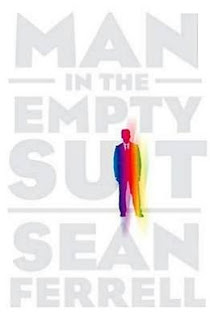
Man in the Empty Suit, by Sean Ferrell: The First Hotel Sequence

This brilliant literary sci-fi novel, about a man who invents time travel and returns to a specific point in the future every year on his birthday to gather with his younger and older selves, is a brain-bending achievement. The scene where the narrator enters the dilapidated hotel and we see him—dozens of him, older, younger, broken and blustering, each version the result of the particular challenges that version of the man has dealt with in his subjective year since the “last” party. It’s an amazing sequence that leads directly into the central mystery of the story, but if you were trying to convince someone that time travel doesn’t have to be silly, show them this sequence and mission accomplished.
Read about another entry on the list.

The Page 69 Test: Man in the Empty Suit.

My Book, The Movie: Man in the Empty Suit.

Writers Read: Sean Ferrell (April 2013).

--Marshal Zeringue

Pg. 99: Thomas Maier's "When Lions Roar"

Featured at the Page 99 Test: When Lions Roar: The Churchills and the Kennedys by Thomas Maier.

About the book, from the publisher:
The first comprehensive history of the deeply entwined personal and public lives of the Churchills and the Kennedys and what their “special relationship” meant for Great Britain and the United States

When Lions Roar begins in the mid-1930s at Chartwell, Winston Churchill's country estate, with new revelations surrounding a secret business deal orchestrated by Joseph P. Kennedy, the soon-to-be American ambassador to Great Britain and the father of future American president John F. Kennedy. From London to America, these two powerful families shared an ever-widening circle of friends, lovers, and political associates – soon shattered by World War II, spying, sexual infidelity, and the tragic deaths of JFK's sister Kathleen and his older brother Joe Jr. By the 1960s and JFK's presidency, the Churchills and the Kennedys had overcome their bitter differences and helped to define the “greatness” in each other.

Acclaimed biographer Thomas Maier tells this dynastic saga through fathers and their sons – and the remarkable women in their lives – providing keen insight into the Churchill and Kennedy families and the profound forces of duty, loyalty, courage and ambition that shaped them. He explores the seismic impact of Winston Churchill on JFK and American policy, wrestling anew with the legacy of two titans of the twentieth century. Maier also delves deeply into the conflicted bond between Winston and his son, Randolph, and the contrasting example of patriarch Joe Kennedy, a failed politician who successfully channeled his personal ambitions to his children. By approaching these iconic figures from a new perspective, Maier not only illuminates the intricacies of this all-important cross-Atlantic allegiance but also enriches our understanding of the tumultuous time in which they lived and the world events they so greatly influenced.

With deeply human portraits of these flawed but larger-than-life figures, When Lions Roar explores the “special relationship” between the Churchills and Kennedys, and between Great Britain and the United States, highlighting all of its emotional complexity and historic significance.
Learn more about the book and author at Thomas Maier's website.

The Page 99 Test: Masters of Sex.

The Page 99 Test: When Lions Roar.

--Marshal Zeringue

Tuesday, November 04, 2014

Eight top novels set at the world's preppiest universities

At Town & Country magazine Adrienne Westenfeld tagged eight novels set at the world's preppiest universities, including:
Small Blessings by Martha Woodroof: Southern liberal arts school

In her debut novel, veteran essayist Martha Woodroof turns her attention to a lonesome literature professor charged with the care of his reclusive mother-in-law. When his friendship with the new-in-town bookstore clerk portends life-changing news, Woodroof navigates a quaint, penetrating narrative about life's changing directions.
Read about another entry on the list.

My Book, The Movie: Small Blessings.

The Page 69 Test: Small Blessings.

Writers Read: Martha Woodroof.

--Marshal Zeringue

Pg. 69: Bradford Morrow's "The Forgers"

Featured at the Page 69 Test: The Forgers by Bradford Morrow.

About the book, from the publisher:
From acclaimed novelist Bradford Morrow, called “a mesmerizing storyteller who casts an irresistible spell” by Joyce Carol Oates, and “one of America’s major literary voices” by Publishers Weekly, comes a richly told literary thriller about the dark side of the bibliophile community.

The rare book world is stunned when a reclusive collector, Adam Diehl, is found on the floor of his Montauk home: hands severed, surrounded by valuable inscribed books and original manuscripts that have been vandalized beyond repair. Adam’s sister, Meghan, and her lover, Will—a convicted if unrepentant literary forger—struggle to come to terms with the incomprehensible murder. But when Will begins receiving threatening handwritten letters, seemingly penned by long-dead authors but really from someone who knows secrets about Adam’s death and Will’s past, he understands his own life is also on the line—and attempts to forge a new beginning for himself and his beloved Meg.
Learn more about the book and author at Bradford Morrow's website.

Writers Read: Bradford Morrow (February 2011).

The Page 69 Test: The Diviner’s Tale.

The Page 69 Test: The Forgers.

--Marshal Zeringue

Louisa Treger's "The Lodger," the movie

Now featured at My Book, The Movie: The Lodger by Louisa Treger.

The entry begins:
The Lodger is a biographical novel about the writer, Dorothy Richardson. She was a little-known peer of Virginia Woolf, a lover of H.G. Wells, and a pioneer of a new style of fiction that became known as ‘stream of consciousness’. My novel is set in England in 1906: Dorothy is in her early twenties, existing just above the poverty line, working as a dental secretary, and living in a seedy boarding house in Bloomsbury. She is full of contradictions: torn between being bohemian and being respectable, exulting in her independence but frightened by it, attracted to men and women, wanting close relationships but repudiating them. She has a demure, proper exterior, beneath which turbulent feelings rage. I would choose Mia Wasikowska to play Dorothy, because as Jane Eyre, she excelled at being cool and sedate on the outside, yet passionate at the right moment.

The other main female character is Dorothy’s strikingly beautiful friend, Veronica, who comes from a wealthier background than Dorothy, but is just as rebellious. Veronica becomes involved with the militant suffragette movement: she has the courage to go to prison and endure the horrors of forcible feeding for the sake of her beliefs. She is vibrant, capricious and captivating; I think that Rachel...[read on]
Visit Louisa Treger's website.

The Page 69 Test: The Lodger.

My Book, The Movie: The Lodger.

--Marshal Zeringue

What is Jamie Malanowski reading?

Featured at Writers Read: Jamie Malanowski, author of Commander Will Cushing: Daredevil Hero of the Civil War.

His entry begins:
I am reading Chronicles, Volume One, the memoir Bob Dylan published in 2004.

What does it say about me, and about the book, that it stood on my shelf for a decade before I cracked its cover? Maybe it has something with Dylan's monumentality, the hugeness of his presence. Like the New Yorkers who see the Empire State Building every day, who walk past it every day, without ever going in, let alone going to the top, I have taken Dylan for granted, probably been less curious about someone who seems so obvious. No doubt I made the lazy assumption that I knew the man through his songs--his anger, his sarcasm, his wit, his longing have helped me express the same feelings. But of course, there is much more.

From this memoir, which I am now about halfway through, it's clear that there is...[read on]
About Commander Will Cushing, from the publisher:
The lead writer of the New York Times’s award-winning “Disunion” series introduces William Barker Cushing, the Civil War’s most celebrated naval hero.

October 1864. The confederate ironclad CSS Albemarle had sunk two federal warships and damaged seven others, taking control of the Roanoke River and threatening the Union blockade. Twenty-one-year-old navy lieutenant William Barker Cushing hatched a daring plan: to attack the fearsome warship with a few dozen men in two small wooden boats. What followed, the close-range torpedoing of the Albemarle and Cushing’s harrowing two-day escape downriver from vengeful Rebel posses, is one of the most dramatic individual exploits in American military history.

Theodore Roosevelt said that Cushing “comes next to Farragut on the hero roll of American naval history,” but most have never heard of him today. Tossed out of the Naval Academy for “buffoonery,” Cushing proved himself a prodigy in behind-the-lines warfare. Given command of a small union ship, he performed daring, near-suicidal raids, “cutting out” confederate ships and thwarting blockade runners. With higher commands and larger ships, Cushing’s exploits grow bolder, culminating in the sinking of the Albemarle.

A thrilling narrative biography, steeped in the tactics, weaponry, and battle techniques of the Union Navy, Commander Will Cushing brings to life a compelling yet flawed figure. Along with his three brothers, including one who fell at Gettysburg, Cushing served with bravery and heroism. But he was irascible and complicated—a loveable rogue, prideful and impulsive, who nonetheless possessed a genius for combat.

In telling Cushing’s story, Malanowski paints a vivid, memorable portrait of the army officials, engineers, and politicians scrambling to win the war. But he also goes deeper into the psychology of the daredevil soldier—and what this heroic and tragic figure, who died before his time, can tell us about the ways we remember the glories of war.
Learn more about the book and author at Jamie Malanowski's blog.

Writers Read: Jamie Malanowski.

--Marshal Zeringue

Monday, November 03, 2014

Ten top underground menaces

Paul Southern's latest YA horror novel is Killing Sound.

One of his ten top underground menaces, as shared at the Guardian:
The Balrog in The Fellowship of the Ring by J. R. R. Tolkien

This fire demon of the ancient world has driven the dwarves from Moria and now threatens the fellowship. Tolkien rightly doesn’t spend a lot of time describing it, but rather lets our imagination, and the reactions of the characters to it, do the work. Peter Jackson recreates this brilliantly in the film, when we are given an aerial shot of hundreds of orcs scaling a cavernous underground hall to get out of its way. The balrog’s confrontation with Gandalf at the bridge of Khazad-Dum is one of the highlight reels of The Lord of the Rings. As a child, the ‘drums in the deep’ line filled me with every kind of primordial fear. It still does.
Read about another entry on the list.

The Lord of the Rings also made SF Said's top ten list of unlikely heroes, Nicole Hill's top eight list of notable royal figures in fiction, Becky Ferreira's top seven list of bromances in literature, Nicole Hill's list of eleven of the most eccentric relatives in fiction, Nicole Hill's top seven list of literary wedding themes, Charlie Jane Anders's list of fifteen moments from science fiction and fantasy that will make absolutely anyone cry, Elizabeth Wein's top ten list of dynamic duos in fiction, Katharine Trendacosta and Charlie Jane Anders's list of the ten sources that inspired the dark storytelling of Game of Thrones, Rob Bricken's list of 11 preposterously manly fantasy series, Conrad Mason's top ten list of magical objects in fiction, Linus Roache's six best books list, Derek Landy's top ten list of villains in children's books, Charlie Jane Anders and Michael Ann Dobbs' list of ten classic SF books that were originally considered failures, Lev Grossman's list of the six greatest fantasy books of all time, and appears on John Mullan's lists of ten of the best women dressed as men, ten of the best bows and arrows in literature, ten of the best beards in literature, ten of the best towers in literature, ten of the best volcanoes in literature, ten of the best chases in literature, and ten of the best monsters in literature. It is one of Salman Rushdie's five best fantasy novels for all ages. It is a book that made a difference to Pat Conroy.

--Marshal Zeringue

Nose in a book ... by John Steinbeck

Who: unknown

What: Travels with Charley by John Steinbeck

When: August 17, 2014

Where: Cafe at Borderlands Books, The Mission District, San Francisco

Photo credit: Mark Coggins

--Marshal Zeringue

Interview: Cara Caddoo

Author and professor Jason McGraw interviewed the historian Cara Caddoo about her new book, Envisioning Freedom: Cinema and the Building of Modern Black Life.

From the Q & A:
What is the story you tell in your book?

Before Oscar Micheaux, or Hollywood, or even the nickelodeon theater, African Americans exhibited and produced their own motion pictures. This began in the 1890s, shortly after the Supreme Court’s Plessy v. Ferguson “separate but equal” decision, when hundreds of thousands of black migrants were leaving the countryside. In cities across the South and West, film became a way that black folk could have fun together, fundraise for their organizations, and broadcast ideas about black progress.

This history helps explain the responses of African Americans to D.W. Griffith’s 1915 film Birth of Nation. In what effectively became the first mass black protest movement of the twentieth century—we’re talking railroad porters, housewives, gangsters, and schoolchildren—African Americans weren’t just reacting to a terrible new medium they knew nothing about; they were fighting to reclaim a form of popular culture that they had helped to create. The demands and political organizations that emerged from those protests were...[read on]
Learn more about Envisioning Freedom at the Harvard University Press website.

The Page 99 Test: Envisioning Freedom.

--Marshal Zeringue

Pg. 69: Louisa Treger's "The Lodger"

Featured at the Page 69 Test: The Lodger: A Novel by Louisa Treger.

About the book, from the publisher:
Dorothy Richardson is existing just above the poverty line, doing secretarial work at a dentist's office and living in a seedy boarding house in Bloomsbury, when she is invited to spend the weekend with a childhood friend. Jane has recently married a writer who is hovering on the brink of fame. His name is H.G. Wells, or Bertie, as they call him.

Bertie appears unremarkable at first. But then Dorothy notices his grey-blue eyes taking her in, openly signaling approval. He tells her he and Jane have an agreement which allows them the freedom to take lovers, although Dorothy can tell her friend would not be happy with that arrangement.

Not wanting to betray Jane, yet unable to draw back, Dorothy free-falls into an affair with Bertie. Then a new boarder arrives at the house—beautiful Veronica Leslie-Jones—and Dorothy finds herself caught between Veronica and Bertie. Amidst the personal dramas and wreckage of a militant suffragette march, Dorothy finds her voice as a writer.

Louisa Treger's The Lodger is a beautifully intimate novel that is at once an introduction to one of the most important writers of the 20th century and a compelling story of one woman tormented by unconventional desires.
Visit Louisa Treger's website.

The Page 69 Test: The Lodger.

--Marshal Zeringue

Pg. 99: Edward F. Fischer’s "The Good Life"

Featured at the Page 99 Test: The Good Life: Aspiration, Dignity, and the Anthropology of Wellbeing by Edward F. Fischer.

About the book, from the publisher:
What could middle-class German supermarket shoppers buying eggs and impoverished coffee farmers in Guatemala possibly have in common? Both groups use the market in pursuit of the "good life." But what exactly is the good life? How do we define wellbeing beyond material standards of living? While we all may want to live the good life, we differ widely on just what that entails.

In The Good Life, Edward Fischer examines wellbeing in very different cultural contexts to uncover shared notions of the good life and how best to achieve it. With fascinating on-the-ground narratives of Germans' choices regarding the purchase of eggs and cars, and Guatemalans' trade in coffee and cocaine, Fischer presents a richly layered understanding of how aspiration, opportunity, dignity, and purpose comprise the good life.
Learn more about the book and author at Ted Fischer's website.

The Page 99 Test: The Good Life.

--Marshal Zeringue

Sunday, November 02, 2014

Ten of the best short story collections

Elizabeth Day is an author and journalist. Her critically-acclaimed debut novel Scissors Paper Stone won a Betty Trask Award for first novels written by authors under the age of 35. Her second novel Home Fires is also published by Bloomsbury.

One of her ten best short story collections, as shared at the Guardian:
Runaway
Alice Munro (2004)

The Canadian writer won the Nobel prize for literature in 2013 for her extraordinary work as “master of the contemporary short story”. She also won the 2009 Man Booker International prize for her lifetime body of work and has been called a modern-day Chekhov. Runaway is among her best collections and displays all of Munro’s mastery: the effortless shifts in time, sometimes across decades; the ability to convey an entire life in a few pages; the exploration of complex truths in uncomplicated language.
Read about another entry on the list.

Alice Munro is among Sarah Crown's six great female short story authors.

--Marshal Zeringue

Susan McBride's "Very Bad Things," the movie

Featured at My Book, The Movie: Very Bad Things by Susan McBride.

The entry begins:
Oh, how I would love to see what a director could do with Very Bad Things, considering the story unravels from three different character’s points of view, one of whom may be a killer. I’d vote for Chris Columbus to take it on as I think he did an amazing job with the first two Harry Potter films. Casting the movie would be a challenge as I haven’t really seen much TV or film in the past two or three years because of book deadlines and having a baby (now a full-fledged, tantrum-throwing toddler—yay!). But I did some sleuthing online and spied a few faces that might work.

This guy would make a perfect Mark Summers: Nicholas Hoult, the ex-boyfriend of Jennifer Lawrence. He might have to lighten his hair, but I read that he’s 6’ 3” so I could picture him as the hockey jock that steals Katie’s heart and was the last to see Rose Tatum alive.

As for Katie Barton…hmm, my first instinct is Shailene Woodley. Katie’s pretty, but not a great beauty. She loves poetry and she’s a little shy, but...[read on]
Learn more about the book and author at Susan McBride's website.

The Page 69 Test: Little Black Dress.

Writers Read: Susan McBride.

The Page 69 Test: Very Bad Things.

My Book, The Movie: Very Bad Things.

--Marshal Zeringue

What is CB McKenzie reading?

Featured at Writers Read: CB McKenzie, author of Bad Country.

His entry begins:
I just finished Michael McGarrity's Hard Country and enjoyed it because it is a classical Western but with a modern sensibility. I also like the meta-discursive element of this book since it is the backstory for his Kevin Kearny Mystery series. I think that's brilliant and something I like to do myself -- create a metadiscourse by constructing an actual back story, one that is complete and makes sense...[read on]
About Bad Country, from the publisher:
The newest winner of the Tony Hillerman Prize, a debut mystery set in the Southwest starring a former rodeo cowboy turned private investigator, told in a transfixingly original style.

Rodeo Grace Garnet lives with his old dog in a remote corner of Arizona known to locals as El Hoyo. He doesn't get many visitors in The Hole, but a body found near his home has drawn police attention to his front door. The victim is not one of the many undocumented immigrants who risk their lives to cross the border in Rodeo's harsh and deadly "backyard," but a member of a major Southwestern Indian tribe, whose death is part of a mysterious rompecabeza—a classic crime puzzler—that includes multiple murders, cold-blooded betrayals, and low-down scheming, with Rodeo caught in the middle.

Retired from the rodeo circuit and scraping by on piecework as a bounty hunter, warrant server, and divorce snoop, Rodeo doesn't have much choice but to say yes when offered an unusual case. An elderly Indian woman from his own Reservation has hired him to help discover who murdered her grandson, but she seems strangely uninterested in the results. Her attitude seems heartless, but as Rodeo pursues interrelated cases, he learns that the old woman's indifference is nothing compared to true hatred, and aligned against a variety of creative and cruel foes, the hard-pressed PI is about to discover just how far hate can go.

CB McKenzie's Bad Country is a noir novel that is as deep and twisty as a desert arroyo. With confident, accomplished prose, McKenzie captures the rough-and-tumble outer reaches of the Southwest in a transfixingly original style that transcends the traditional crime novel.
Read more about Bad Country.

Writers Read: CB McKenzie.

--Marshal Zeringue

Saturday, November 01, 2014

Five not-to-be-trusted YA characters

At The Barnes & Noble Book Blog, Jenny Kawecki tagged five Young Adult characters you just can’t trust, including:
Julep Dupree (Trust Me, I’m Lying, by Mary Elizabeth Summer)

Part-time school “fixer,” full-time badass, Julep’s a con woman with only one problem: she loves her family and friends too much. So when her con-artist dad disappears, Julep has to decide who she wants to involve in the rescue plot. Her dedication to keeping people safe is admirable, but it’s her confidence and determination that fill the Veronica Mars–shaped hole in our hearts and makes us want buy her a cup of coffee. (Or maybe she just conned us into paying for that.)
Read about another entry on the list.

The Page 69 Test: Trust Me, I'm Lying.

Writers Read: Mary Elizabeth Summer.

My Book, The Movie: Trust Me, I'm Lying.

--Marshal Zeringue

Pg. 99: Paula Rabinowitz's "American Pulp"

Featured at the Page 99 Test: American Pulp: How Paperbacks Brought Modernism to Main Street by Paula Rabinowitz.

About the book, from the publisher:
“There is real hope for a culture that makes it as easy to buy a book as it does a pack of cigarettes.”—a civic leader quoted in a New American Library ad (1951)

American Pulp tells the story of the midcentury golden age of pulp paperbacks and how they brought modernism to Main Street, democratized literature and ideas, spurred social mobility, and helped readers fashion new identities. Drawing on extensive original research, Paula Rabinowitz unearths the far-reaching political, social, and aesthetic impact of the pulps between the late 1930s and early 1960s.

Published in vast numbers of titles, available everywhere, and sometimes selling in the millions, pulps were throwaway objects accessible to anyone with a quarter. Conventionally associated with romance, crime, and science fiction, the pulps in fact came in every genre and subject. American Pulp tells how these books ingeniously repackaged highbrow fiction and nonfiction for a mass audience, drawing in readers of every kind with promises of entertainment, enlightenment, and titillation. Focusing on important episodes in pulp history, Rabinowitz looks at the wide-ranging effects of free paperbacks distributed to World War II servicemen and women; how pulps prompted important censorship and First Amendment cases; how some gay women read pulp lesbian novels as how-to-dress manuals; the unlikely appearance in pulp science fiction of early representations of the Holocaust; how writers and artists appropriated pulp as a literary and visual style; and much more. Examining their often-lurid packaging as well as their content, American Pulp is richly illustrated with reproductions of dozens of pulp paperback covers, many in color.

A fascinating cultural history, American Pulp will change the way we look at these ephemeral yet enduringly intriguing books.
Learn more about American Pulp at the Princeton University Press website.

The Page 99 Test: American Pulp.

--Marshal Zeringue

Ten of the best ghost stories

Lauren Oliver's latest novel is Rooms.

One of the author's ten favorite ghost stories, as shared at Publishers Weekly:
The Woman in Black by Susan Hill

Borrowing heavily in tradition and tone from the great gothic novels, Hill’s novel, like The Turn of the Screw, begins with a narrative: a man named Kipps tells the story of a strange and secluded house and the woman who haunted it, presaging the death of children. Deliciously creepy, and subsequently made into a good movie.
Read about another entry on the list.

The Woman in Black is one of Kate Mosse's top ten ghost stories.

Also see: Sandra Greaqves's top ten ghost stories, Rebecca Armstrong's ten best ghost stories, the Barnes & Noble Review's list of five top books of ghost stories, Kate Mosse's top 10 ghost stories, Peter Washington's top ten ghost stories, and Brad Leithauser's five best ghost stories.

--Marshal Zeringue

Pg. 69: Sophie Littlefield's "The Missing Place"

Featured at the Page 69 Test: The Missing Place by Sophie Littlefield.

About the book, from the publisher:
Set against the backdrop of North Dakota’s oil boom, two very different mothers form an uneasy alliance to find their missing sons in this heartrending and suspenseful novel from the Edgar Award–nominated author of Garden of Stones.

The booming North Dakota oil business is spawning “man camps,” shantytowns full of men hired to work on the rigs, in towns without enough housing to accommodate them. In such twilight spaces, it’s easy for a person to vanish. And when two young men in their first year on the job disappear without a trace, only their mothers believe there’s hope of finding them. Despite reassurances that the police are on the case, the two women think the oil company is covering up the disappearances—and maybe something more.

Colleen, used to her decorous life in a wealthy Massachusetts suburb, is determined to find her son. And hard-bitten Shay, from the wrong side of the California tracks, is the only person in town even willing to deal with her—because she’s on the same mission. Overtaxed by worry, exhaustion, and fear, these two unlikely partners question each other’s methods and motivations, but must work together against the town of strangers if they want any chance of finding their lost boys. But what they uncover could destroy them both...

Sure to please fans of Sandra Brown and Gillian Flynn, The Missing Place is a moving chronicle of survival, determination, and powerful bonds forged in the face of adversity.
Learn more about the book and author at Sophie Littlefield's website and blog.

The Page 69 Test: A Bad Day for Sorry.

The Page 69 Test: A Bad Day for Pretty.

My Book, The Movie: A Bad Day for Pretty.

The Page 69 Test: Aftertime.

My Book, The Movie: Aftertime.

The Page 69 Test: Garden of Stones.

The Page 69 Test: The Missing Place.

--Marshal Zeringue